Seminus
Kin and Classes of the World of Seminus
\page
# Contents – ### [**Map of Seminus**](#p2)
– ### [**Welcome to Seminus**](#p5)
– ### [**Kin of Seminus**](#p5)
– – #### [Ad’am (Dwarf)](#p12) – – [Azilean dwarf (Azil Ad’am)](#p13) – – [Deep dwarf (Al’em Ad’am)](#p15) – – [Emerald dwarf (Zumaridi Ad’am)](#p16) – – [The Expelled (Kovmar Ad’am)](#p17) – – [Fire dwarf (Gehen Ad’am)](#p19) – – [Grey dwarf (Külden Ad’am)](#p20) – – [Henna dwarf (Çöl Ad’am)](#p23) – – [Steelhame dwarf](#p24) – – [Stone dwarf, The Örökös (Gri Ad’am)](#p5) – – #### [Autognome](#p25) – – #### [Automaton](#p27) – – #### [Dholf (Dogkin)](#p8) – – [Arbitar](#p47) – – [Blan’dar](#p47) – – [He’dar](#p48) – – [Le’kar](#p48) – – [Teh’lar](#p50) – – [Vagh’tar](#p50) – – [Yey’gar](#p50) – – #### [Ezen (Genasi)](#p9) – – [Od Ezen (Fire Genasi)](#p11) – – [Orman Ezen (Wood Genasi)](#p12) – – [Shakhta Ezen (Metal Genasi)](#p11) – – [Su Ezen (Water Genasi)](#p13) – – [Yel Ezen (Air Genasi)](#p13) – – [Yer Ezen (Earth Genasi)](#p14) – – #### [Gnome](#p19) – – [Deep Gnome](#p5) – – [Feral Gnome](#p5) – – [Zilverhome Gnome (Common Gnome)](#p5) – – #### [Hara](#p45) – – #### [Half-Kedakai (Half-Elf)](#p45) – – [Half-Hara](#p45) – – [Half-Kishin (Half-Sun Folk)](#p45) – – [Half-Tsukimin (Half-Moon Folk)](#p45) – – [Half-Yami (Half-Drow)](#p45) – – #### [Human](#p5) – – #### [Kedakai](#6) – – [Kishin (Sun Folk)](#p45) – – [Tsukimin (Moon Folk)](#p45) – – [Yami (Drow)](#p45) – – #### [Khemet (Jackalkin)](#p17) – – #### [Ko / Lilkin (Halfling)](#p17) – – #### [Kumotai (Bearkin)](#p47) – – #### [Kýrosian (Minotaur)](#p17) – – #### [Lin (Pangolinkin)](#p5) – – #### [Pantareï](#p5) – – #### [Sa’ren (Trollkin)](#p5) – – #### [Sujani (Ratfolk)](#p45) – – #### [Streng (Goliath)](#p5) – – #### [Tekuâni](#p19) – – [Ch’yarr (tiger)](#p3) – – [Dumali (cheetah)](#p3) – – [Kesari (lion)](#p3) – – [Miztani (domestic cat variant)](#p3) – – [Miztli (puma)](#p3) – – [Na’huani (snow leopard)](#p3) – – [Ocelotli (ocelot)](#p3) – – [Rahim (serval and caracal)](#p3) – – [Te’kuatli (leopard)](#p3) – – #### [Var (Orc)](#p5) – – #### [Zelen (Goblin)](#p5) – ### [**Kin of the Northern Vast**](#p5) – #### [Ad’amlar (Dwarves)](#p13) – [Emerald Dwarf (Zumaridi Ad’am)](#p23) – [Expelled Dwarf (Kovmar Ad’am)](#p17) – [Henna Dwarf (Çöl Ad’am)](#p16)
– #### [Ezen (Genasi)](#p3)
– #### [Half-Hara](#p45) – #### [Hara](#p45) – #### [Human](#p16) – [Iterun](#p3) – [Khepreshi](#p3) – [Mu’şüri](#p3) – [Nazâri](#p3)
– #### [Khemeti (Jackalkin)](#p17)
– #### [Kýrosian (Minotaur)](#p18)
– #### [Tekuâni](#p19) – ### [**Kin of the Western Lands**](#p4) – #### [Ad’amlar (Dwarves)](#p2) – [Azilean dwarf (Azil Ad’am)](#p2) – [Steelhamean Ad’am (Steelhamean Dwarf)](#p4)
– #### [Dholf (Dogkin)](#p8)
– #### [Gnome](#p6)
– #### [Human](#p16) – [Bezbjedanian](#p3) – [Kraškazemljan](#p8)
CONTENTS
\page
– [Obilani](#p8) – [Plavarijekan](#p8) – [Kovnostati](#p3) – [Luccan](#p3) – [Ritterreich](#p3) – [San Monteditorrean](#p3) – [Selinian](#p3) – [Volterran](#p3) – [Zargorazan](#p3) – [Zenevian](#p3) – #### [Streng](#p3) – #### [Var (Orc)](#p3) – #### [Zelen (Goblin)](#p3) – ### [**Kin of the Eastern Realms**](#p4) – #### [Human](#p16) – [Durrâni](#p3) – [Ghazâli](#p3) – [Khotâni](#p3) – [Jin](#p3) – [Nazâri](#p3) – [Ryō](#p3) – [Sa’kâlese](#p3) – [Tarim](#p3) – #### [Kedakai](#p19) – #### [Pantareï](#p19) – #### [Sa’ren](#p19) – #### [Tekuâni](#p19) – ### [**The Southern Wastes**](#p4) – #### [Human](#p16) – [Borovijan](#p3) – [Stórkaltlander](#p3) – [Zakopanijan](#p3) – #### [Kumotai](#p4) – ### [**Kin of The Under Realm**](#p5) – [Deep Dwarf (Alem Ad’am)](#p3) – [Fire Dwarf (Gehen)](#p3) – [Grey Dwarf (Külden-Ad’am)](#p3) – [Stone Dwarf / Örökös (Gri Ad’am)](#p3) – #### [Lin](#p3) – #### [Myrmex](#p3) – ### [**New Classes**](#p137) – #### [**Mechanician**](#p137) – #### [**Mystic of Raz**](#p163) – ### [**New Subclasses**](#p188) – #### **Barbarian:** – [Urban Vagabond](#p191) – #### **Cleric:** – [Agriculture Domain](#p192) – [Air Domain](#p194) – [Anguish Domain](#p196) – [Battle Domain](#p197) – [Blood Domain](#p198) – [Chaos Domain](#p215) – [Cold Domain](#p200) – [Curse Domain](#p201) – [Darkness Domain](#p203) – [Desert Domain](#p204) – #### [**Dragon Domain**](#p205) – #### [**Dream Domain**](#p205) – #### [**Earth Domain**](#p206) – #### [**Fire Domain**](#p207) – #### [**Freedom Domain**](#p208) – #### [**Gold Domain**](#p209) – #### [**Harvest Domain**](#p210) – #### [**Hearth Domain**](#p212) – #### [**Hedonism Domain**](#p213) – #### [**Hunt Domain**](#p214) – #### [**Ice Domain**](#p215) – #### [**Infernal Domain**](#p215) – #### [**Law Domain**](#p215) – #### [**Lightning Domain**](#p215) – #### [**Lunar Domain**](#p215) – #### [**Mischief Domain**](#p215) – #### [**Music Domain**](#p215) – #### [**Ocean Domain**](#p215) – #### [**Plague Domain**](#p215) – #### [**Protection Domain**](#p215) – #### [**Shadow Domain**](#p215) – #### [**Star Domain**](#p215) – #### [**Strife Domain**](#p215) – #### [**Tech Domain**](#p215) – #### [**Undeath Domain**](#p215) – #### [**Virtue Domain**](#p215) – #### [**Vermin Domain**](#p215) – #### [**Water Domain**](#p215) – #### [**Wayfare Domain**](#p215) – #### [**Wealth Domain**](#p215) – #### **Druid:** – [Circle of the Blood Moon](#p215) – #### [**Circle of Nazar**](#p235) – #### [**Circle of Undeath**](#p236) – #### **Fighter:** – #### [**Janissary**](#p238) – #### **Monastic Tradition:** – #### [**Dervish of Ifus**](#p239) – #### [**Way of the Elements (Revised)**](#p241) – #### **Warlock:** – #### [**Pact of the Genie**](#p250) – #### [**Pact of the Lamp**](#p251) – #### [**Pact of the Machine**](#p338) – #### [**Pact of the Primordial**](#p340) – #### **Wizard:** – #### [**Flame Mage**](#p258) – #### [**Sand Mage**](#p259) – #### [**Sea Mage**](#p260) – #### [**Wind Mage**](#p262)
CONTENTS
\page
\page
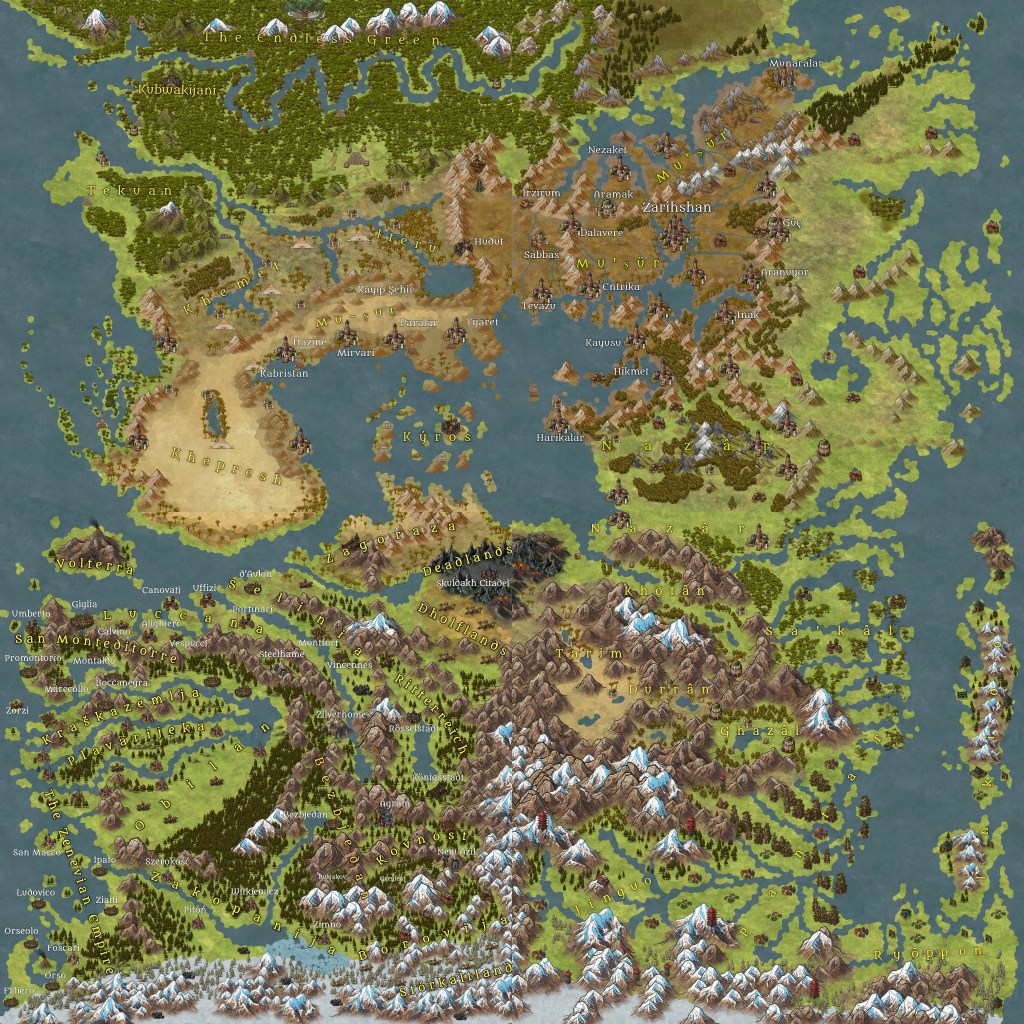
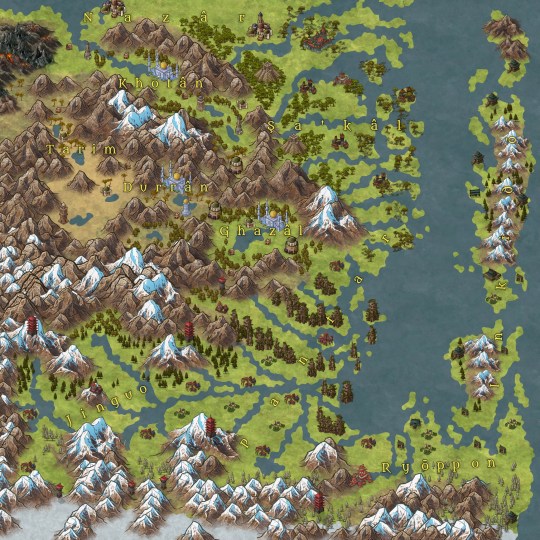
# Welcome to Seminus Seminus is a world that has been designed since about 1992 to pretty much offer the opportunity for almost any fantasy and steampunk setting and character a player of DM could ever want. There are three main areas, The Northern Vast, the Western Lands and the Eastern Realms, and while those generally correspond to vaguely real-life geographical and cultural tropes and mores, they are better seen as a guiding framework to springboard your character out of rather than rigid and hard-and-fast rules. Ideally, your character represents what you want to play – and the world is meant to be a backdrop more than an oppression, if that makes sense.
Generally-speaking, the world is a multicultural one, with few areas being exclusively mono-cultural, so, no matter the area that happens to be the current setting for the narrative, your character could very easily have come from pretty much anywhere. You are encouraged to be free in your choices – and while balance is an aspect, things like species are meant to be more of a flavour. I take the Tasha’s approach in that the ability bonuses for each species is meant to be a general one – you are free to tweak away at this and that (with DM approval of course).
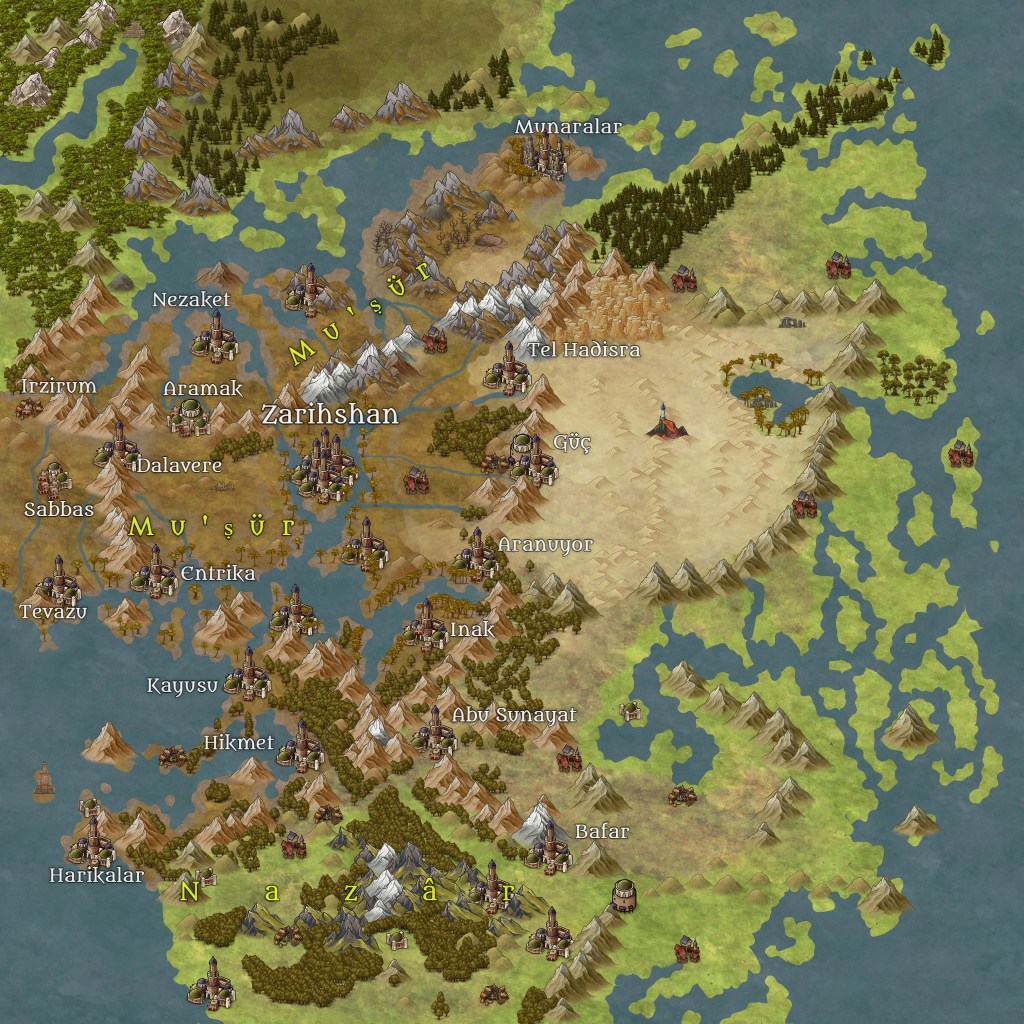
### The Northern Vast In terms of overall topography and cultural infleunces, the Northern Vast ranges from a supernaturally Feyworld threshold endless jungle forest in the extreme north that includes South American / African and South East Asian influences in its vicinity, down into more Nile delta ancient Egyptian and Central Asian mountain ranges into what is essentially the Ottoman Empire. Indeed, much of this region has been inspired by the AD&D 2nd Edition Al-Qadim setting, material and references, but placed within the world of Seminus. Inspiration has come from the real world Mediterranean and Silk Road nations from across history, and includes but is not limited to: Afghanistan, Ancient Egypt, Ancient Greece, Bactria, various incarnations of the Ottoman Empire (in particular Istanbul), various Persian Empires, Sogdia, the jungles of South America (in particular Aztec, Incan and Mayan cultures), the Tarim basin, Uzbekistan and the Venetian Empire.
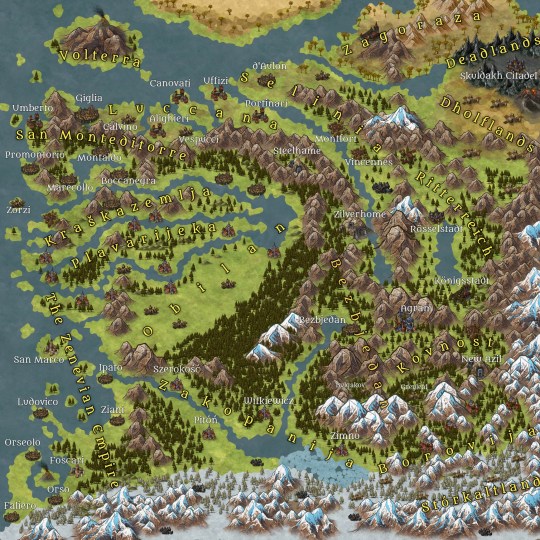
Most of the Northern Vast at the height of its economic, mathematical, scientific, magical and military might, and, under the auspicious eyes of the Royal Court of the Sultan of Zarihshah, opulent capital of the Mu’şüri Empire, the world here is far more peaceful and trade-concerned than in other regions. ### The Western Lands The many societies of the Western Lands reflect the topography and cultures of European fantasy tropes, myths and histories, ranging from includes Deliberately open to player input, there are nonetheless many areas that are fleshed out already (but nonetheless still open to player \page ##### COMMON D&D RACES AND THEIR SEMINUS KIN EQUIVALENTS | D&D Race | KIN | |:—-:|:————-| | Aarakocra | Does not exist in Seminus (sorry!) | | Deep Gnomes | Deep Gnomes | | Dragonborn | Does not exist in Seminus (sorry!) | | Drow | Ya’mi kedakai | | Duergar | Külden Ad’amlar | | Elves | Kedakai | | Forest Gnomes | Feral Gnomes | | Genasi | Ezen | | Gnolls | Gnolls / Khemeti | | Goblins | Zel’en | | Goliaths | Streng | | Half-Elves | Half-Kedakai | | Halflings | Lilkin / Ko | | Hill Dwarves | Steelhame Ad’amlar | | Humans | Humans | | Minotaurs | Kýrosians | | Mountain Dwarves | Azil Ad’amlar| | Orcs | Var’en | | Rock Gnomes | Zilverhome Gnomes | | Tabaxi | Tekuâni / Leonids | | Tieflings | Does not exist in Seminus (sorry!) | | Tortles | Lin | | Warforged | Automata |
\page

\page
\page
The Kin of the Northern Vast: Ma’halli
Broadly speaking, the people of the Northern Vast can be divided into two categories: the city-dwelling folk known as Al-Hadari, and the generally nomadic wilderness-dwellers known as Al-Badawi.
#### Ma’halli: Kin of the Northern Vast While almost any kin can be found in the metropoli of the Northern Vast, especially in the multicultural quarters of the Nazari and the Mu’şüri Empires, the following kin are considered to be ‘Ma’halli’, a Mu’şüri word that means ‘indingenous’ or ‘inside’ or ‘internal’, depending on the context. These peoples either trace their origin to this region of the world, have evolved into a distinctly different ‘branch’ of their kin family, or have forged and maintained intrinsic communities in the Northern Vast for so long that they have inherently assimilated into its social and historical fabric. ### Ad’amlar (Dwarves) – **The Henna People** (Çöl Halku) – **The Expelled** (Kovmar Halku) – **The Emerald People** (Zumaridi Halku) ### Ezen (Genasi) – **Od** (Fire) – **Orman** (Wood) – **Shakhta** (Metal) – **Su** (Water) – **Yel** (Air) – **Yer** (Earth) ### Hara (Desert Elves) ### Humans While humans exist throughout Seminus, those who are indigenous to The Northern Vast include the following cultural groups: – **Iterun** (based more on historical Ancient Egypt) – **Khepreshi** (based more on a magical Ancient Egypt) – **Mu’şüri** (based on Ottoman Empire at its height) – **Nazâri** (based on medieval Anatolia)
### Khemeti (Jackalkin) ### Kýrosians (Minotaurs) ### Tekuâni (Tabaxi) – **Ch’yarr** (tigerkin) – **Dumali** (cheetahkin) – **Kesari** (lions) – **Miztani** (domestic cat variants) – **Miztli** (pumas) – **Na’huani** (snow leopards) – **Oselotli** (ocelotkin) – **Rahim** (servalkin and caracalkin) – **Te’kuatli** (leopardkin)
#### Sh’rijai: Kin not of the Northern Vast Being a multicultural part of the world, any kin who is not native to the Northern Vast can be found in smaller or larger numbers.
Indeed, in certain rural areas or else in the more cosmopolitan cities of the Northern Vast, expatriate communities of almost any kin can be found. That said, however the following kin are so numerous as to have named city quarters or towns or settlements in many of the larger cities of the region.
Irregardless of this, they, like any who are not called ‘Ma’Halli’ are considered to be ‘Sh’rijai’, a Mu’şüri word that means ‘foreign’ or ‘outside’ or ‘external’, depending on the context. While many places in the Northern Vast are tolerant of ‘Sh’rijai’, or even welcoming (such as in the Mu’şüri Empire), discrimination (both intentional and unintentional) does exist.
Additionally, in parts of Seminus, as in historical societies throughout the world, slavery exists, although most of the more enlightened societies see the practice as barbaric – and social shifts are slowly changing.
**Please note: This is not an excuse for racism at the game table, in fact racism is never ok at the table. Rather, this is intended to offer roleplaying opportunities for diversity of interactions – or backgrounds for a player to develop their character.**{color:brown}
**If a table wants to downplay or remove this aspect of the world, that is ABSOLUTELY fine – and none of this is ever intended to actually hurt or target any real life cultural groups or provide an excuse for inappropriate talk or behaviour at the table.**{color:brown}
Examples of how sh’rijai are discriminated against include the following: when a crime occurs, it is often the sh’rijai who is suspected first. Loans can be harder for sh’rijai to acquire. Some areas tax sh’rijai to a greater extant than ma’halli, although often this is technically illegal.
Irrespective, many guards (especially if they are ma’halli themselves) will turn a blind eye to the practice so long as they get a percentage.
That said, throughout the Northern Vast every kin has certain intrinsic rights that are guaranteed by the ruler of the land, and these rights extend to every subject equally, regardless of social status.
The one exception to this stigma is the autognome, who is rarely seen as an actual person, and more treated as an object that is neither ma’halli nor sh’rijai.
CONTENTS
\page ### Ad’amlar (Dwarves) – **The Azilean People** (Azilu Halku) – **The Grey People** (Külden Halku) – **The People of Steelhame** (Steelhamean Dwarves) ### Automata ### Autognomes ### Dholves – **Arbitar** – **Blan’dar** – **He’dar** – **Le’kar** – **Teh’lar** – **Vagh’tar** – **Yey’gar** ### Gnomes – **Feral Gnome** – **Grey Gnome** – **Zilverhome Gnome** (Common Gnome) ### Kedakai (Elves) ### Ko / Lilkin (Halflings) ### Kumotai (Bearkin) ### Lin (Pangolinkin) ### Pantarei (Centaur-like Pantherkin) ### Sa’ren (Trollkin) ### Streng (Goliaths) ### Sujani (Ratfolk) – **Packlings** – **Direlings** – **Wanlings** ### Var’en (Orcs) ### Zel’en (Goblins)
INTRODUCTION
\page
\page
\page
KIN OF SEMINUS
AD’AMLAR (DWARVES)

Ad’am (singular), ad’amlar (plural). Kingdoms rich in ancient grandeur, halls carved into the roots of mountains, the echoing of picks and hammers in deep mines and blazing forges, a commitment to clan and tradition — these common threads unite all ad’amlar (ADD-ARM-lar), also known as dwarves by other kin.
The ad’amlar of Seminus are similar to the ‘classic’ dwarves of D&D, although there are different subraces and culturally they differ from the stereotypical Celtic beer-swilling dwarf so prominently featured in most D&D game settings. While that trope is possible in Seminus, it means that that particular ad’am (dwarf) comes from Steelhame in the Western Lands. Unless otherwise noted, most ad’amlar are Sh’rijai in the Northern Vast. They are not indigenous and are immediately obvious as cultural outsiders.
Two main subraces of ad’amlar that populate The Western Lands are the Azilean and Steelhamean. While Azilean ad’amlar roughly correspond to the mountain dwarves of the Player’s Handbook and Steelhamean ad’amlar more closely correspond to hill dwarves from the same sourcebook, what makes an ad’am Azilean or Steelhamean is more of a cultural aspect than a hard and fast mechanical facet.
Like ‘traditional’ dwarves from Tolkien-influenced D&D tropes, the ad’amlar of Steelhame are more stereotypically Celtic, Germanic or Nordic in culture (and they are the unparalelled brewers and drinkers of this world).
They also call themselves “dwarves” and frown on any association with Azil and Azilean dwarves, although there is no official hostility between the two groups. It is more of a ‘friendly’ rivalry, like Melbourne and Sydney, Tokyo and Osaka or New York and Los Angeles.
The ad’amlar of New Azil (and formerly Old Azil which was lost in the Great Catastrophes of the end of the Second Age) are more of a combination of Turkish, Hungarian and Mesopotamian tropes. They are also the ‘original’ ad’amlar who were created from magical metal by the All-Mother after she first made the Stone Dwarves (the Gri-Ad’amlar).
The various ad’amlu halku (ADD-ARM-loo HULL-koo) or ‘dwarven peoples’ are not always exclusively ‘small’ either, ranging more from Small to Medium in height and build. The following halku of ad’amlar populate the lands of Seminus:
- Azilean dwarves (Azil Ad’amlar)
- Deep dwarves (Al’em Ad’amlar)
- Emerald dwarves (Zumaridi Ad’amlar)
- The Expelled (Kovmar Ad’amlar)
- Fire dwarves (Gehen Ad’amlar)
- Grey dwarves (Külden Ad’amlar)
- Henna dwarves (Çöl Ad’amlar)
- Steelhamean dwarves (Steelhame Dwarves)
- Stone dwarves, also known as The Örökös (Gri Ad’amlar)
The ad’amlar were one of the first halku in Seminus, from before even the First Age, and their ‘original birthplace’ geographically is in the mountainous spine that divides the Western Lands and the Eastern Realms, although there are various subgroups that have migrated around the world.
While other regions of Seminus are populated with other kinds of ad’amlar, in the Northern Vast there are three main halku of ad’am: the çöl halku (CHOLL HULL-koo), the kovmar halku (KOV-mar HULL-koo) and the zumaridi halku (zOO-ma-REE-dee HULL-koo).
In the Common Tongue, the çöl are known as Henna Dwarves, the kovmar are called The Expelled and those who know of the Zumaridi sometimes call them Emerald Dwarves.
To make an ad’am character for our campaign, choose one of these subraces or one from another source.
Dwarves: AD’AMLAR
\page
Ad’amlu Traits
Your ad’am character has an assortment of inborn abilities, part and parcel of ad’amlu nature.
Ability Score Increase. Your Constitution score increases by 2.
Age. Ad’amlar mature at the same rate as humans, but they’re considered young until they reach the age of 100. On average, they live about 1000 years.
Size. Most ad’amlar stand between 4 and 5 and a half feet tall and average about 150 pounds. Your size is Medium.
Speed. Your base walking speed is 25 feet. Your speed is not reduced by wearing heavy armor.
Darkvision. Accustomed to life underground, you have superior vision in dark and dim conditions. You can see in dim light within 60 feet of you as if it were bright light, and in darkness as if it were dim light. You can’t discern color in darkness, only shades of gray.
Ad’amlu Resilience. You have advantage on saving throws against poison, and you have resistance against poison damage.
Ad’amlu Combat Training. You have proficiency with the battleaxe, handaxe, light hammer, and warhammer.
Tool Proficiency. You gain proficiency with the artisan’s tools of your choice: smith’s tools, brewer’s supplies, or mason’s tools.
Stonecunning. Whenever you make an Intelligence (History) check related to the origin of stonework, you are considered proficient in the History skill and add double your proficiency bonus to the check, instead of your normal proficiency bonus
Languages. You can speak, read, and write Common and Azilean. Azilean is full of hard consonants and guttural sounds, and those characteristics spill over into whatever other language an ad’am might speak.
Subrace. Several ‘peoples’ of ad’amlar populate the lands of Seminus: Azilean dwarves, deep dwarves, emerald dwarves, fire dwarves, grey dwarves, henna dwarves, Steelhamean dwarves, stone dwarves and The Expelled. Choose one of these subraces.
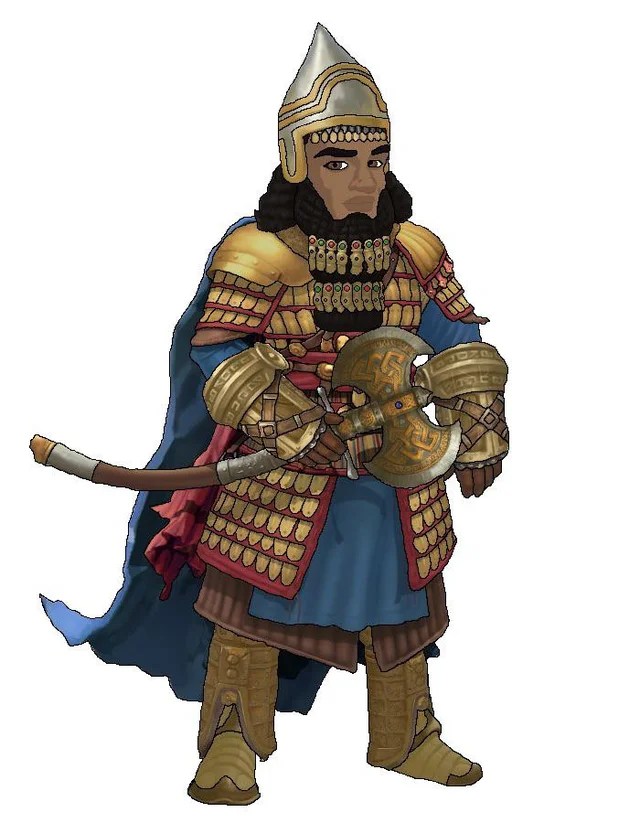
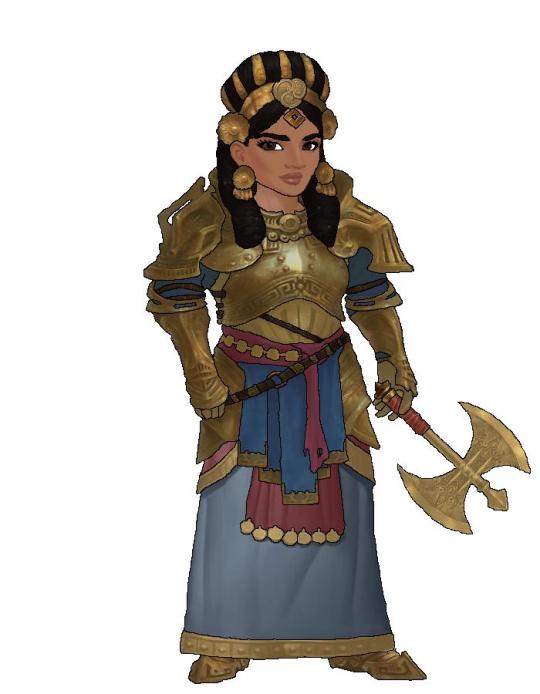
Azilean Dwarf (Azil Ad’am)
The first ad’amlar were the Azilean dwarves, who were created out of a magical metal called Orichalcum by their goddess, Nazrin, one of the Original Eight Deities known as the Ogdoad.
As an Azilean dwarf, you’re strong and hardy, accustomed to a difficult life in rugged terrain.
Ability Score Increase. Your Strength score increases by 2.
Azilean Armor Training. You have proficiency with light and medium armor.
Size You’re probably on the tall side (for a dwarf), typically between 5 and 5 a half feet tall, and tend toward lighter coloration. You average around 150 pounds. Your size is Medium.
Speed. Azilean dwarves are famed for their brisk walking speed, even in heavy armour. Your base walking speed is 30 feet. Your speed is not reduced by wearing heavy armor.
House Affiliation. Azilean dwarves are culturally based around Houses and Thanes. If you choose to become an Azilean dwarf, you can swap out your Strength score increase by choosing one of the following House Affiliation options:
- Copperclaw House. Your Wisdom score increases by 2, rather than your Strength.
- Goldenfoot House. Your Dexterity score increases by 2, rather than your Strength.
- Opalweaver House. Your Intelligence score increases by 2, rather than your Strength.
- Silvertongue House. Your Charisma score increases by 2, rather than your Strength.
Azilean Dwarves: AZIL AD’AMLAR
\page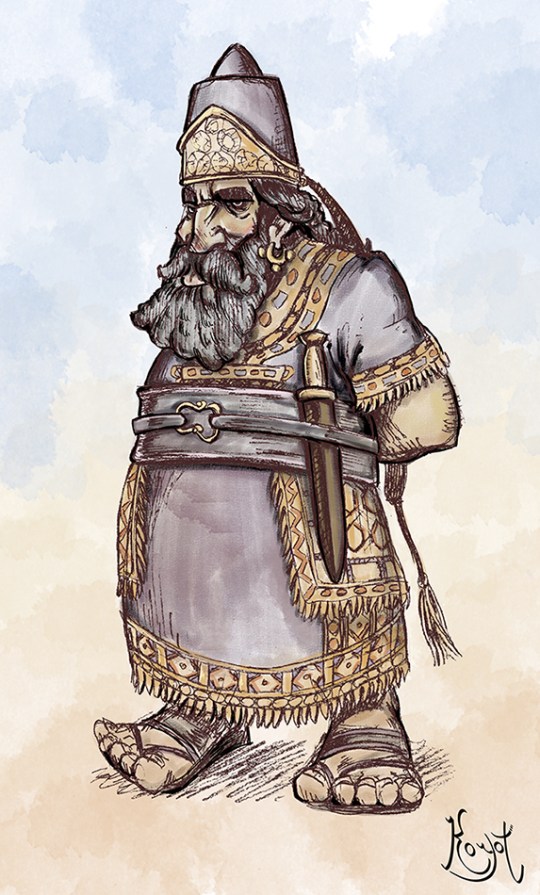
Azilean Dwarves: AZIL AD’AMLAR
\page
Deep Dwarf (Al’em Ad’am)

The deep dwarves, or al’em ad’amlar, are mostly unknown by the majority of the kin of Seminus, for they typically dwell far underground, below even the cities of other ad’amlar, in the Alem-Alt’ta, the Great Under-Realm Below. Because of this, they are sometimes mistaken for their ashen-skinned cousins, the grey dwarves, but this is not the case.
Shorter than most dwarves, and far more wiry and lean of build, deep dwarves have eyes that are either pure black with no whites or else a washed out blue. Their skin and hair resemble stone – and they easily blend in to their subterranean environment. Like most ad’amlar, the males generally grow long beards.
They have very little contact with surface dwellers, and there are not many who can claim to have seen a deep dwarf above ground.
Unlike the grey dwarves, deep dwarves do not worship Külrengi. While they might be wary or standoffish of strangers, they are not inherently evil and do not see themselves are superior to other kin. They have a close alliance with the deep gnomes and also myconids and other subterranean kin, although they have a deep-seated hatred of the Myrmex.
They have the typical ad’amlu appreciation for order, tradition, and impeccable craftsmanship, but their goods are often seen as strange and esoteric to outsiders for they seem to have an almost alien technological prowess and their magic makes their blackstone temples resemble something like the Necrons of the 40k universe.
Few al’em ad’am become adventurers, fewer still on the surface world, because they are very much a subterranean-dwelling race. Those who leave their subterranean cities are usually exiles. Check with your Dungeon Master to see if you can play a deep dwarf character.
Size. You’re much shorter than the average dwarf, typically between 3 and 3 a half feet tall, and tend toward stone-like coloration. You average around 120 pounds. Your size is Small.
Ability Score Changes. Your Constitution is raised by an additional +2 (on top of the base +2 from being an Ad’am), however your Charisma is reduced by -2.
Superior Darkvision. Your darkvision has a radius of 120 feet.
Blindvision. You can function just fine with no light at all. In no-light conditions, you effectively have blindvision up to 60 feet.
Superior Stonecunning. You have additional +2 bonus on Stonecunning checks to notice unusual stonework, such as sliding walls, stonework traps, new construction (even when built to match the old), unsafe stone surfaces, shaky stone ceilings, and the like. Something that isn’t stone but that is disguised as stone also counts as unusual stonework. If you merely come within 10 feet of unusual stonework you can make a passive Search check as if you were actively searching. You can also intuit depth, sensing your approximate depth underground as naturally as a human can sense which way is up.
Al’em ad’amlu Resilience. You have advantage on saving throws against illusions and against being charmed or paralyzed.
Al’em ad’amlu Magic. When you reach 3rd level, you can cast the enlarge/reduce spell on yourself once with this trait. When you reach 5th level, you can cast the invisibility spell on yourself once with this trait. When you reach 7th level, you can cast the greater invisibility spell on yourself once with this trait.
You don’t need material components for either spell, and you can’t cast them while you’re in direct sunlight, although sunlight has no effect on them once cast. You regain the ability to cast these spells with this trait when you finish a long rest. Intelligence is your spellcasting ability for these spells.
Deep Dwarves: ALEM AD’AMLAR
\page
Sunlight Sensitivity. You have disadvantage on attack rolls and on Wisdom (Perception) checks that rely on sight when you, the target of your attack, or whatever you are trying to perceive is in direct sunlight.
Additionally, when you are in bright sunlight or within the radius of a spell that creates daylight, you must make a concentration check (DC 10) to see if your concentration is broken.
Languages. Common and Azilean.
Bonus Languages. Pick one of the following:
- Gnome,
- Goblin,
- Orc
- Terran
- Undercommon.
Emerald Dwarf (Zumaridi Ad’am)

As an Emerald Dwarf, alongside whatever other social function you serve, from a very young age you have been trained to hunt, both solitarily and in small groups or ‘points’.
While there are many regions of Seminus that have never even heard of your people, some of the more worldly folk of the Northern Vast whisper improbable stories about your survival skills, hiding abilities, and emerald weapons, although they are unfamiliar with your nature, history or culture.
Those who live in the Endless Green region of the Northern Vast fear your ferocious and mysterious nature and also your guerrilla battle tactics.
Your social structures are typically tribal and more likely to exist in a jungled or forested rural setting than other ad’amlar societies in Seminus.
Where other ad’amlar have a natural affinity to stone and earth, your people have a natural affinity to wood.
Ability Score Increase: Increase an ability score of your choice by 2 and a different ability score of your choice by 1. Traditionally, for Zumaridi ad’amlar, this would be +2 Constitution and +1 Dexterity, but feel free to go against the grain.
Age: Zumaridi mature at the same rate as humans, but they’re considered young until they reach the age of 50. On average, they live about 400 years.
Size: Zumaridi stand between 5 and 5 and a half feet tall and average about 150 pounds. Your size is Medium.

Speed. Your base walking speed is 30 feet. Your speed is not reduced by wearing heavy armor nor are you impeded by rough terrain caused by plants. You have a climb speed of 20 feet.
Darkvision, You have superior vision in dark and dim conditions. You can see in dim light within 60 feet of you as if it were bright light, and in darkness as if it were dim light. You can’t discern color in darkness, only shades of gray.
Emerald Dwarves: ZUMARIDI AD’AMLAR
\page
Zumaridi Resilience. You have superior resilience to poison compared to your ad’amlı relatives. Not only do you have advantage on Constitution saving throws against poison, but regardless of your usual Constitution ability score bonus modifier, for Constitution saving throws against poison you may always add +4 to the roll. In addition, you have resistance against poison damage, and, if an attack would allow you a Constitution saving throw against poison to halve any poison damage, if you pass your saving throw against poison (which you make at advantage), you take no poison damage at all for that attack.
Zumaridi Combat Training. You have proficiency with the battleaxe, handaxe, light hammer, and warhammer.
Tool Proficiency. You gain proficiency with the artisan’s tools of your choice: carpenter’s tools, brewer’s supplies, smith’s tools or woodcarver’s tools.
Woodcunning. Whenever you make an Intelligence (History) check related to the origin of a type of wood or woodwork, you are considered proficient in the History skill and add double your proficiency bonus to the check, instead of your normal proficiency bonus.
Languages. You can speak, read, and write Common and Azilean.
The Expelled (Kovmar Ad’am)

In the Aftermath of the Great Betrayal, when the Khurun-Dar, the Betrayer, slew the All-Mother and usurped her Divinity, there was a civil war amongst the many ad’amlar peoples. In this time many now-forgotten deities rose to positions of power, rising from the ranks of various clan domovoi.
One of those, Cehennem, the Burning One, a bronze dwarf of fire and brimstone, rose to prominence in Alem-Alt’ta, The Great Under Realm Below.
While his followers were from various ad’amlar denominations, the most numerous were Grey Dwarves, also known as Külden ad’amlar because they were the Children of Külrengi.
The countless wars waged bitterly in the dark bowels of the world between these two gods is unknown to most ad’amlar, let alone those of the Overlight Above.
However, when Külrengi’s Children sacked Cehennem’s capital city of Otaşi Kalon, many of the Kovmar ad’amlar were enslaved or killed by the Külden ad’amlar.
Those who escaped fled to the surface and found themselves in the burning deserts of Khemet.
This place of extreme heat and sunlight was not too different to the volcanic homes they had made in the intestines of volcanoes, and while the sunlight made them suffer at first, they grey over time to withstand the sensitivity of their former natures as Grey Dwarves.
Expelled from their homeland, the Kovmar ad’amlar began to thrive in the Greater Khemeti region, as well as in the Mu’şüri Empire.
However, Kovmar ad’am communities can now be found in many of the more extremely hot places throughout the Northern Vast.
When you are angry, your hair becomes hot to the touch and the ends of each strand glow like fire.
In sunlight your typically greyish skin shines with a brassy glow, which sometimes leads to you being ostracised by the less inclusive of your ad’amlu relatives.
Even still, your natural affinity for fire often drives you to a close relationship with Efreeti djinn, or else a life of adventure because you fight with the flaming intensity of an inferno.
The Expelled: KOVMAR AD’AMLAR
\page

Ability Score Increase. Increase one ability score of your choice by 2, and increase a different ability score of your choice by 1.
Age. As an ad’amlar, you mature at the same rate as humans, but you’re considered young until you reach the age of 50. On average, your people live for about 450 years.
Size. Like most ad’amlar, the Expelled stand between 4 and 5 feet tall and average about 150 pounds. Your size is Medium.
Speed. Your base walking speed is 25 feet. Your speed is not reduced by wearing heavy armour.
Ad’amlu Combat Training. You have proficiency with the battle-axe, hand axe, jambiya, katar, light hammer, shortsword, shortbow, staff sling and warhammer.
Ad’amlu Resilience. Your ad’amli heritage gives you advantage on saving throws against poison, and you have resistance against poison damage.
Expert Artisan. You gain proficiency with glassblower’s tools or smith’s tools. Choose one of those tools. Your proficiency bonus is doubled for any ability check you make that uses the chosen tool.
Eyes of Cehennem. Although you have Kovmar Darkvision (see below), as a bonus action, you may ‘ignite’ your eyes so that they resemble a bullseye lantern and cast bright light in the direction you are looking in a 60-foot cone and dim light for an additional 60 feet. Once ‘ignited’ in this way, you can maintain the light for 6 hours before you have to extinguish them or suffer one level of exhaustion for every additional 6 hours you maintain their light. Once you have ‘ignited’ your eyes in this manner, you cannot ignite them again until you have finished a long rest.

Heat Weapon. As a bonus action, you can cause one metal melee weapon you are holding to ignite. For the next minute, when you hit a creature with that weapon, the attack deals extra fire damage equal to half your proficiency bonus (rounded up). Once you use this trait you can’t use it again until you finish a long rest.
Külrengi’s Discernment. You have advantage on saving throws against illusions and against being charmed or paralyzed.
Kovmar Darkvision. As a Kovmar ad’am, you can see further in the dark than most ad’amlar, with the exception of Grey Dwarves. You can see in dim light within 90 feet of you as if it were bright light, and in darkness as if it were dim light. You can’t discern color in darkness, only shades of gray.
Languages. You can speak, read, and write Common, Ad’amlu and Ignan. Ad’amlu is full of hard consonants and guttural sounds, and those characteristics spill over into whatever other language an ad’am might speak.
Metalcunning. Whenever you make an Intelligence (History) check related to the origin or nature of metalwork, you are considered proficient in the History skill and add double your proficiency bonus to the check, instead of your normal proficiency bonus.
Reforge. You have an innate connection with elemental fire and can repair forged items with a touch. You know the mending cantrip, and you can cast it as an action. However, you can use this trait to repair only objects made of metal, such as reconnecting two halves of a broken sword.
Volcanic Resilience. You have resistance to fire damage.
The Expelled: KOVMAR AD’AMLAR
\page
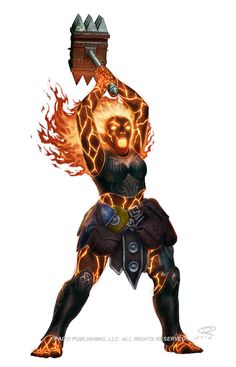
Fire Dwarf (Gehen)

Pillars of flame and pools of lava are common sights to a gehen, with tunnels of earth bringing just as much of an image of home.
Made of metal and run on fire, the gehen are an immortal race which is slow to change, and only when a new one is born does innovation usually take place.
However, when a gehen leaves its ancestral home, its natural flame slightly weakens, sacrificing its natural immunity to magical flames within that locality.
Made, Not Born
Gehen don’t reproduce. They are each crafted from bronze by another gehen or by a cleric of Cehennem, The Burning One, and imbued with a portion of the crafter’s inner flame and the soul of a faithful of Cehennem.
Each gehen is sculpted with unique features. This crafting process limits the growth of the gehen population and is the primary reason that these creatures remain relatively rare.
Craftsfolk
Gehen are masterful artisans, and create beautiful works from the gems and precious metals found in their typically volcanic habitat. They rate the value of such treasures above all other things, sometimes dispatching parties across the planes to seek out rare metals and gemstones.
When gehen are called by magic to the Material Plane, it is typically to help forge an elaborate magic item or work of art, for it is said that their skill in such craft knows no equal.
Betrayal
Long ago, the efreet and the gehen were allies. Gehen helped create the Burning One’s City of Brass, which is linked to the Elemental Plane of Fire, forging that home of the efreet into one of the most wondrous places in creation.
When the gehen had finished their work, the efreet betrayed them, making a failed attempt to enslave the gehen so as to protect the secrets of the city. Despite occasional raids and skirmishes, however, the two sides have so far refrained from all-out conflict.
The gehen believe that only the threat of them revealing the hidden ways into the City of Brass keeps the efreet in check.
Volcanic Dwellers
Gehen dwell in a subterranean kingdom on the border between the Elemental Planes of Metal, Earth and Fire – that has direct portals into the Al’em Alt’ta in the deep bowels of the Prime Material Plane of Seminus – a range of underground mountains and volcanoes whoes spires rise as a series of fortresses.
Beneath these subterranean mountain peaks, under volcanic calderas, and amid rivers of magma, gehen extract gleaming metals and glittering gems from the earth.
Squads of gehen patrol the passes and tunnels of their realm, fending off the salamander raiders whose efreet masters order strikes against the gehen kingdom.
Additionally, gehen and grey dwarves typically war against each other sight due to historical grievances between the faithful of The Burning One and Külrengi.
Gehen Traits
As a gehen, you gain the following benefits.
Ability Score Increase. Your Constitution score increases by 1, and your Strength score increases by 2.
Age. Gehen are made fully grown, but still grow in personality over several centuries. You do not die of natural causes and could potentially live forever. Violent means (whether magical or mundane) is still one way to destroy you, however.
Size. Gehen stand between 3 and 5 feet tall, and average about 400 pounds. Your size is either Medium or Small.
Speed. Your base walking speed is 30.
Elemental Being. Your creature type is Elemental. Additionally, while you are on the Elemental Plane of Fire, you are immune to fire damage.
Living Fire. You do not need to eat, sleep, or drink, and you shed bright light in a 10 foot radius, and dim light for an additional 10 feet.
To gain the benefits of a long rest, you can spend all 8 hours doing light activity, such as reading and keeping watch.
Fire Resistance. You have resistance to fire and non-magical flames and heat do not hurt you.
Gehen Constitution. You have advantage on saves against poison and resistance against poison damage.
Tool Proficiencies. You gain proficiency with smith’s tools.
Fire Dwarf: GEHEN
\page
Metal Body. As a Favoured of Cehennem, The Burning One, your magically created metal body is naturally tough. When you aren’t wearing armour, your AC is 12 + your Constitution modifier. You can use your natural armour to determine your AC if the armour you wear would leave you with a lower AC. A shield’s benefits apply as normal while you use your natural armour.
Languages. You can speak, read, and write Common and Ignan.
Grey Dwarf (Külden Ad’am)
The grey dwarves, or külden ad’am, live deep in the Alem-Alt’ta, the Great Under-Realm Below. These grim ashen-skinned dwarves are tyrannical slavers and oppressive warmongers who see all other kin as inferior.
Physically similar to other dwarves in some ways, külden ad’amlar are often wiry and lean, with black eyes and white hair. Like many ad’amlar, the generally males grow long beards.
Külden ad’am value toil above all else. Showing emotions other than grim determination or wrath is frowned on in their culture, but they can sometimes seem joyful when at work. They have the typical ad’amlu appreciation for order, tradition, and impeccable craftsmanship, but their goods are purely utilitarian, disdaining aesthetic or artistic value.
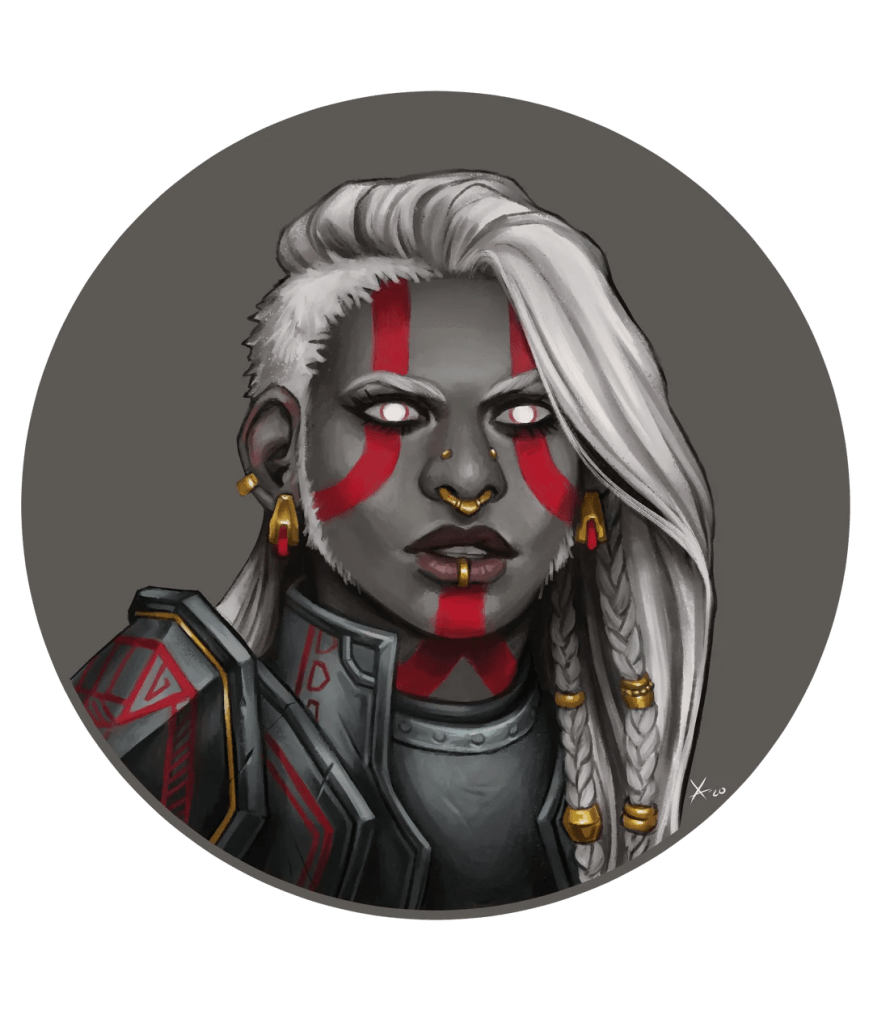
Few külden ad’am become adventurers, fewer still on the surface world, because they are a hidebound and suspicious race. Those who leave their subterranean cities are usually exiles. Check with your Dungeon Master to see if you can play a grey dwarf character.
Külden ad’amlar see themselves as the true manifestation of ad’amlu ideals, clever enough not to be taken in by the treacherous deceptions of Azgruil and his false promises. Their indoctrination into the zealous ways of Külrengi has purged the influence of the other ad’amlu gods from their souls and thus made them into the superior race.
The külden ad’amlar lead bleak, grim lives devoid of happiness or satisfaction, but they see that as their defining strength — the root of külden ad’amlu pride, as it were — rather than a drawback to be corrected.
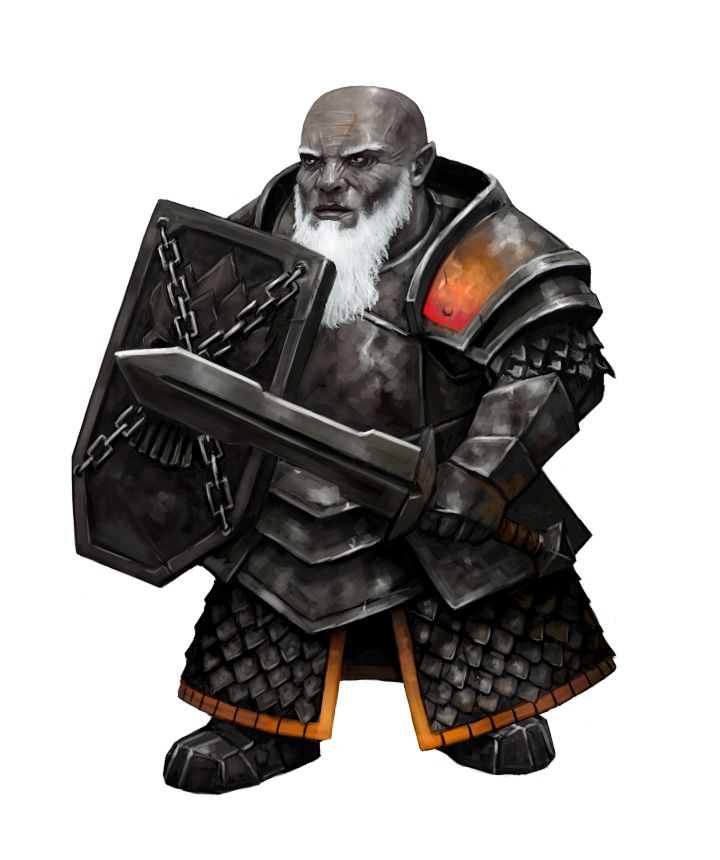
Fire Dwarf: GEHEN Grey Dwarf: KÜLDEN AD’AMLAR
\page

Külden Ad’amlu Traits
Ability Score Increase. Your Strength score increases by 1.
Superior Darkvision. Your darkvision has a radius of 120 feet.
Extra Language. You can speak, read, and write Undercommon in addition to Common and Ad’amlu.
Külden ad’amlu Resilience. You have advantage on saving throws against illusions and against being charmed or paralyzed.
Külden ad’amlu Magic. When you reach 3rd level, you can cast the enlarge/reduce spell on yourself once with this trait, using only the spell’s enlarge option. When you reach 5th level, you can cast the invisibility spell on yourself once with this trait.
You don’t need material components for either spell, and you can’t cast them while you’re in direct sunlight, although sunlight has no effect on them once cast. You regain the ability to cast these spells with this trait when you finish a long rest. Intelligence is your spellcasting ability for these spells.
Sunlight Sensitivity. You have disadvantage on attack rolls and on Wisdom (Perception) checks that rely on sight when you, the target of your attack, or whatever you are trying to perceive is in direct sunlight.

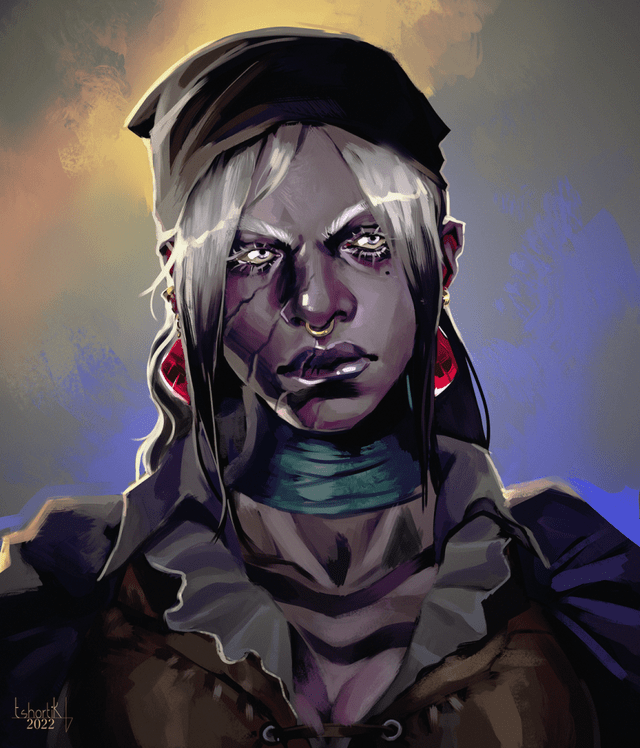

Grey Dwarf: KÜLDEN AD’AMLAR
\page
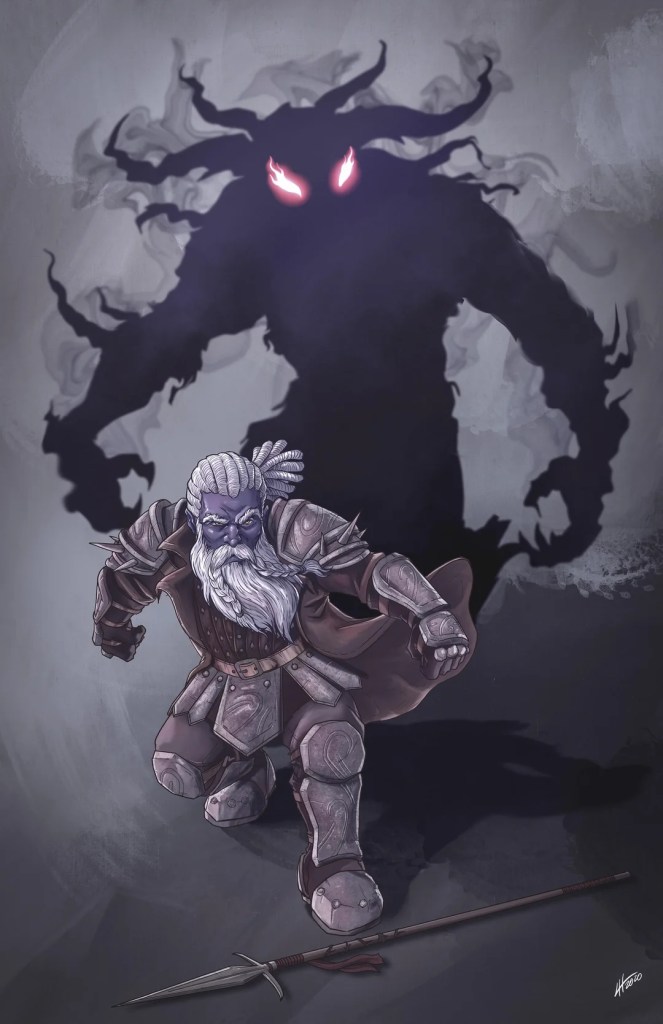
Grey Dwarf: KÜLDEN AD’AMLAR
\page
Henna Dwarf (Çöl Ad’am)
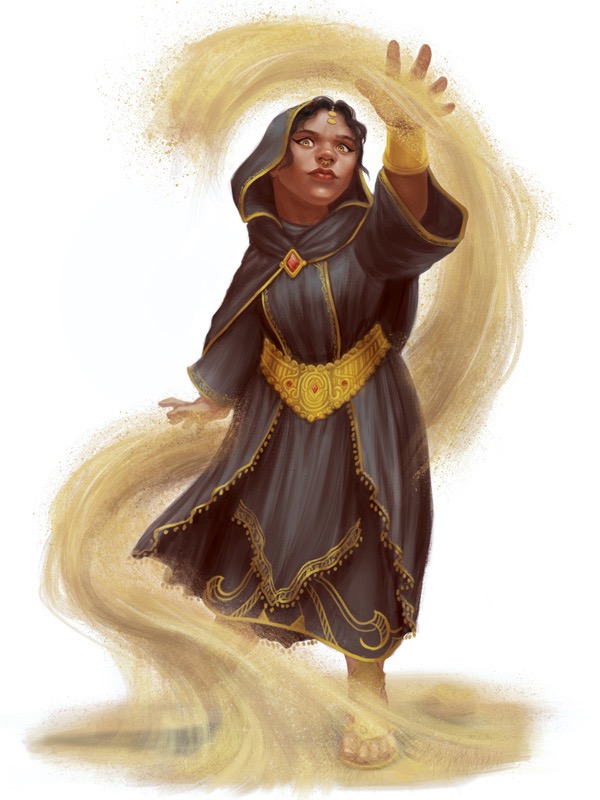
Your çöl ad’am character has an assortment of inborn abilities related to their ability to live and thrive in the desert.
Çöl Ad’amlu Traits
Ability Score Increase. Increase one ability score of your choice by 2, and increase a different ability score of your choice by 1.
Age. Henna people mature at the same rate as humans, but they’re considered young until they reach the age of 50. On average, they live about 450 years.
Size. Henna people tend to be taller than most ad’amlar, standing at the higher end of between 4 and 5 feet tall. Your size is Medium.
Speed. Your base walking speed is 30 feet.
Languages. You can speak, read, and write Common and Ad’amlu (Dwarven).
No Darkvision. Unlike other ad’amlar, you do not have darkvision, because your eyes have adjusted to your desert habitat.
Resilience to Being Blinded. Millenia in sun-scorched and sandy regions has given you and your people a natural resistance to being blinded. You can make saving throws and checks to avoid being blinded with advantage.
Desert Resilience. You have resistance against both poison and radiant damage, and you have advantage on saving throws you make to avoid or end the Poisoned condition on yourself. You are also naturally adapted to hot climates, as described in Chapter 5 of the Dungeon Master’s Guide.
Dune Strider. You have advantage on Intelligence (Investigation) checks made to discern illusions, and you can move across difficult terrain made of sand or earth without expending extra movement.
Ad’amlu Combat Training. You have proficiency with the battle-axe, hand axe, jambiya, katar, shortsword, shortbow and staff sling.
Glassblowing. Whenever you make an Intelligence (History) check related to the origin of glasswork, you are considered proficient in the History skill and add double your proficiency bonus to the check, instead of your normal proficiency bonus.
Tool Proficiency. You gain proficiency with the artisan’s tools of your choice: smith’s tools, brewer’s supplies, mason’s tools, or glassblower’s tools.
Wasteland Survivor. You have proficiency in the Survival skill, and can go twice as long as normal without consuming food or water.
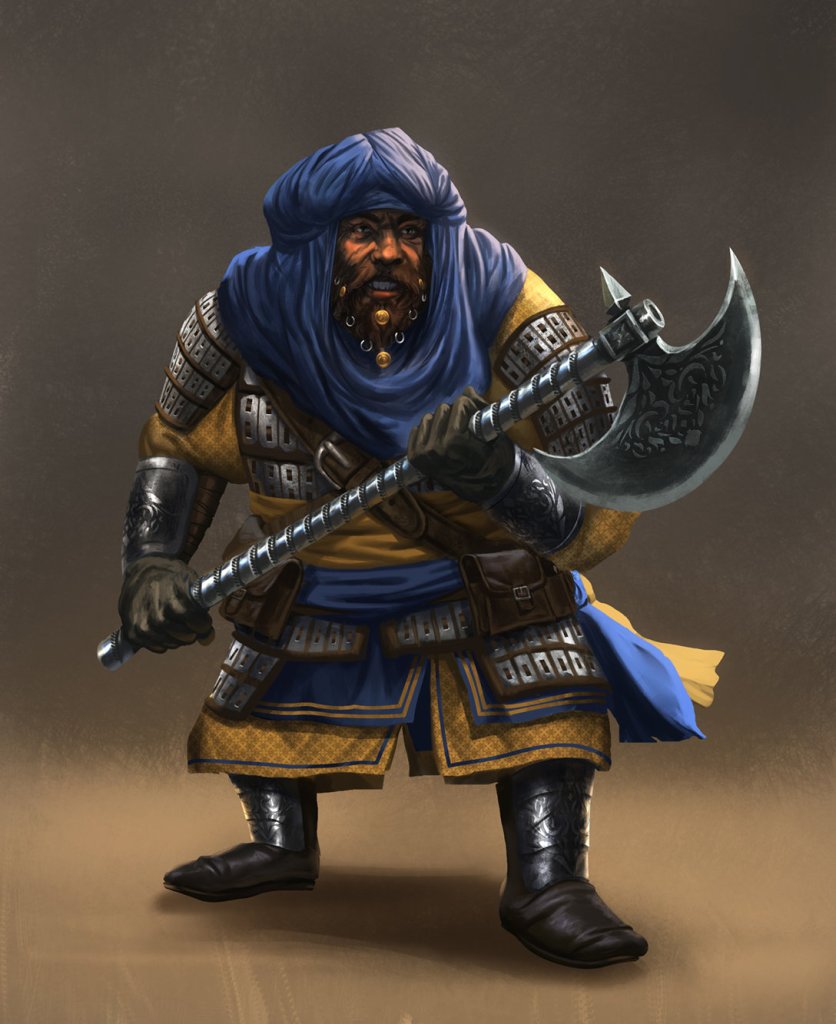
Henna Dwarf: ÇÖL AD’AM
\page
Steelhamean Dwarf

Ah, Steelhame! The City of Beers. Endless are its Brewery Districts and its distilleries are world-renowned. From good quality cheap swill to the absolute top shelf premium booze, look no further than a Steelhame brand.
It goes without saying that Steelhamean dwarves are famous for their drinking prowess and very few kin would be reckless enough to challenge a Steelhame dwarf to a drinking contest, unless their were either a glutton for punishment or in dire need of a hangover for some daft reason.

Steelhame is a city of engineering marvels as well, with endless tiers of pulleys, cranes, trains, trackwork and almost steampunk levels of ingenuity. It is not without some verity that many scholars place a link between the dwarves of Steelhame and the Gnomes of Zilverhome. Both kin share a passion for the Gods of Engineering, Mathematics, Architecture and the like.
As a Steelhame dwarf, you have keen senses, deep intuition, and remarkable resilience.

Steelhamean Dwarf Traits
Ability Score Increase. Your Wisdom score increases by 1.
Dwarven Toughness. Your hit point maximum increases by 1, and it increases by 1 every time you gain a level.
Unmatched Brewers. If you take proficiency in brewer’s tools you can double your proficiency bonus. If you take proficiency in other tools when you make your ad’amlar character, you can also add proficiency brewer’s tools in addition to other tools you might have taken proficiency in.
Unmatched Drinkers. You can double your constitution modifier when making saving throws to see if you are affected by alcohol and you also make these rolls at advantage.
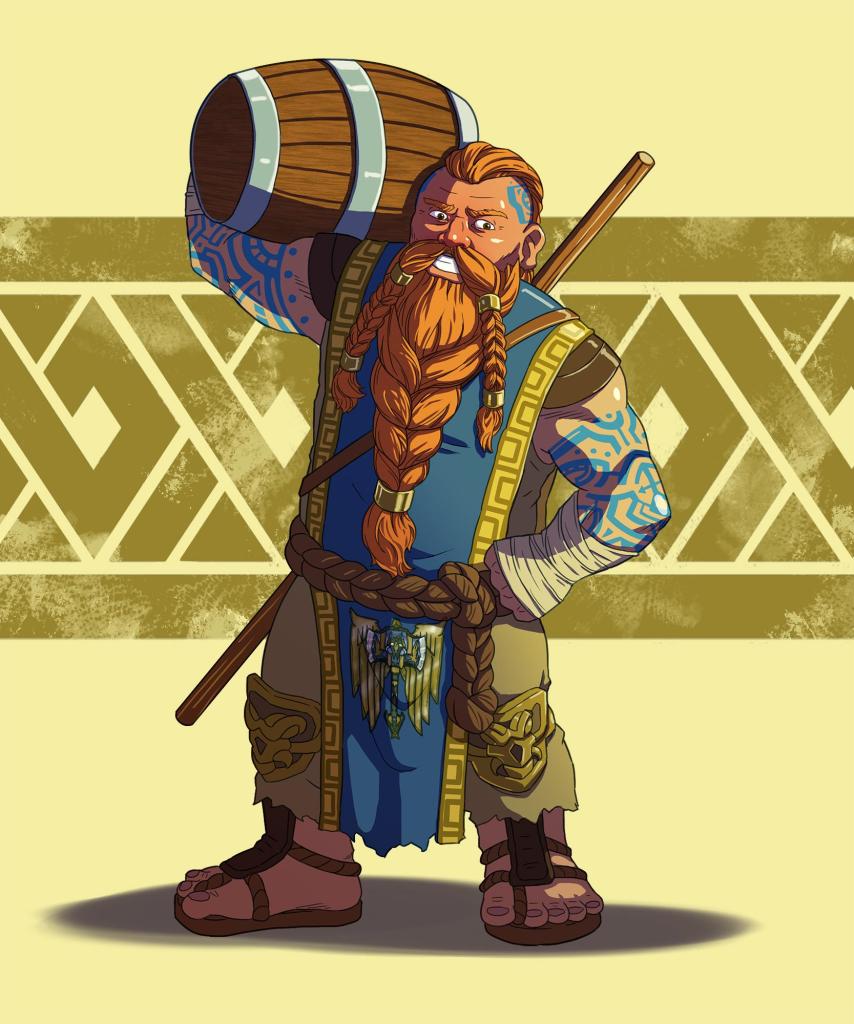
Steelhame Dwarf
\page
Autognome
\page
AUTOGNOME

Autognomes are mechanical beings built by Zilverhome gnomes, often in their image, usually with a particular purpose in mind. For example, a gnome might build an autognome to be a steadfast colleague or a loyal companion. Sometimes, because of a malfunction or a unique circumstance, an autognome becomes separated from its creator and strikes out on its own.
An autognome often bears a resemblance to its creator, and most autognomes are programmed to speak and understand Gnomish. The internal components used in an autognome’s manufacture can vary wildly; one autognome might have an actual beating heart in its chest cavity, while another might be powered by stardust or intricate clockwork gears.
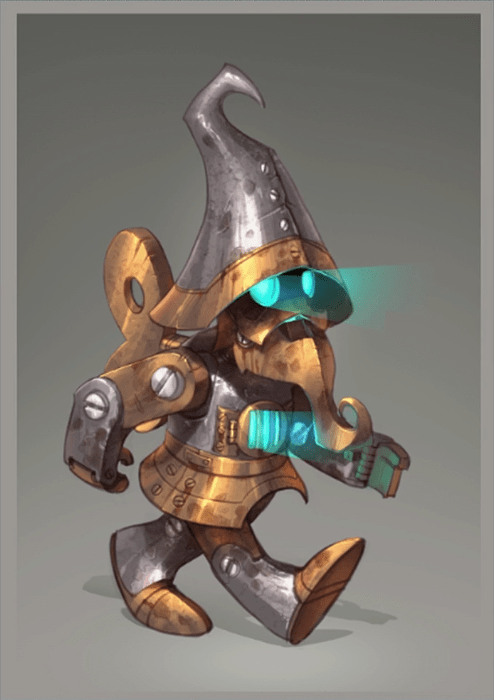
Roll on the Autognome History table or choose an entry to determine what event set your auto gnome on the path to adventure. If nothing on the table appeals to you, work with your DM to create an origin story for your autognome.
Like gnomes, autognomes can live for centuries, up to 500 years.
Autognome History
| d8 | Story |
|---|---|
| 1 | Your creator gave you autonomy and urged you to follow your dreams. |
| 2 | Your creator died, leaving you to fend for yourself. |
| 3 | A temporary malfunction caused you to harm your creator, and you fled rather than face reprisal. |
| 4 | A glitch caused you to forget your original programming. You don’t remember who made you or where you came from. |
| 5 | You were stolen from your creator and long to return to them. |
| 6 | You didn’t like how you were being treated by your creator, so you ran away from home. |
| 7 | Your creator built you to complete a special mission. |
| 8 | You felt trapped in the role for which you were built and abandoned your creator, determined to find a greater purpose. |
Autognome Traits

Ability Score Increase. Increase one ability score by 2, and increase a different one by 1, or increase three different scores by 1.
Creature Type. You are a Construct.
Size. You are Small.
Speed. Your walking speed is 30 feet
Autognomes
\page
Armored Casing. You are encased in thin metal or some other durable material. While you aren’t wearing armor, your base Armor Class is 13 + your Dexterity modifier.
Built for Success. You can add a d4 to one attack roll, ability check, or saving throw you make, and you can do so after seeing the d20 but before the effects of the roll are resolved. You can use this trait a number of times equal to your proficiency bonus, and you regain all expended uses when you finish a long rest.
Mechanical Nature. You have resistance to poison damage and immunity to disease, and you have advantage on saving throws against being paralyzed or poisoned. You don’t need to eat, drink, or breathe.
Sentry’s Rest. When you take a long rest, you spend at least 6 hours in an inactive, motionless state, instead of sleeping. In this state, you appear inert, but you aren’t unconscious.
Specialized Design. You gain two tool proficiencies of your choice.
True Life. If the mending spell is cast on you, you can expend a Hit Die, roll it, and regain a number of hit points equal to the roll plus your Constitution modifier (minimum of 1 hit point). In addition, your creator designed you to benefit from common spells that preserve life but that normally don’t affect Constructs: Cure Wounds, Healing Word, and Spare the Dying.
Languages. You can speak, read, and write Common and one other language that you and your DM agree is appropriate for the character.
AUTOMATA
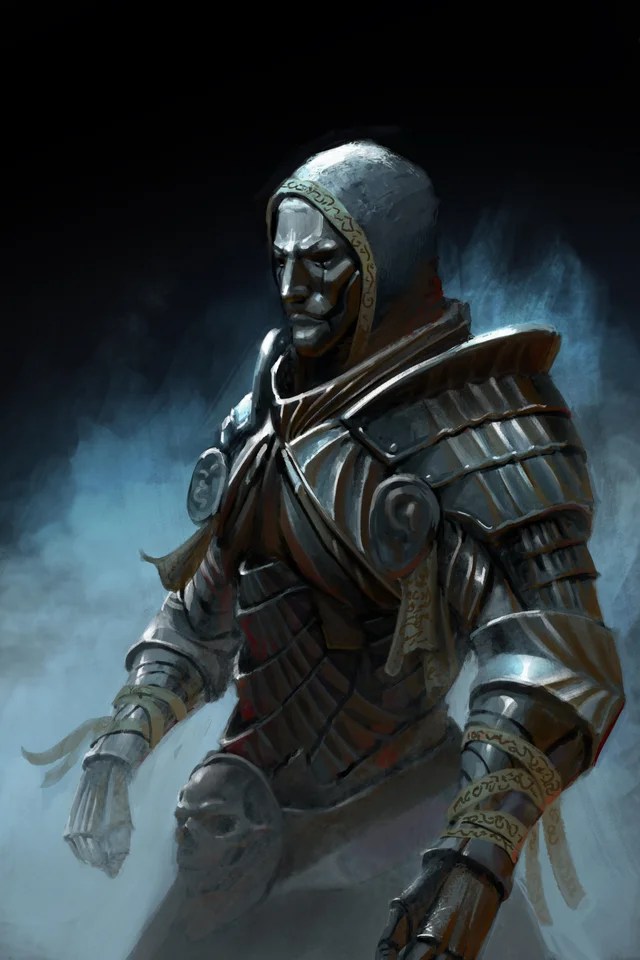
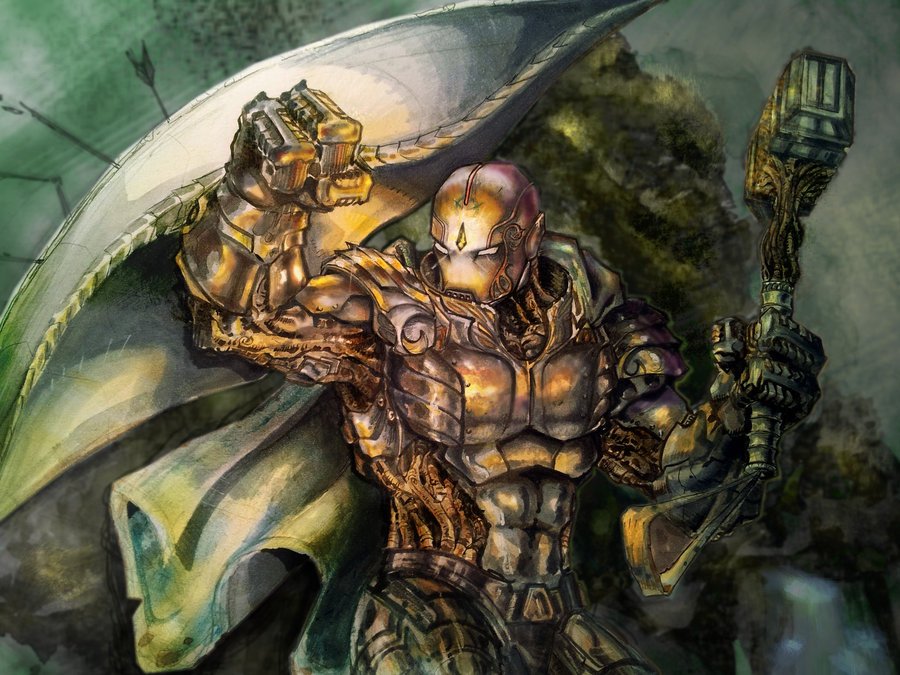
While automata are made from non-flesh-and-bone materials such as wood and metal, they nonetheless can feel pain and emotion. Many of them were originally built as untiring soldiers, but now they must find a purpose beyond war. An automaton can be a steadfast ally, a cold-hearted killer, or a visionary in search of meaning.
Living Steel and Stone
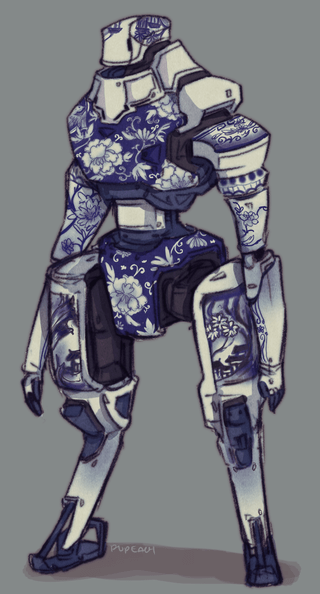
Automata are formed from a blend of organic and inorganic materials. Root-like cords infused with alchemical fluids serve as their muscles, wrapped around a framework of steel, darkwood, stone, terracotta or even porcelain. Armoured plates form a protective outer shell and reinforce joints. Automata share a common bipedal design, often with a hinged jaw and crystal or glass eyes embedded beneath a reinforced brow ridge. Beyond these common elements of automaton design, the precise materials and build of an automaton vary based on the purpose for which it was designed.
Although they were manufactured, automata are living humanoids. Resting, healing magic, and the Medicine skill all provide the same benefits to automata that they do to other humanoids.
Automaton Personality
While most automata were built to serve as soldiers and to fight, many struggle to find their own place in the world and to relate to the creatures who created them.
The typical automaton shows little emotion externally. Many automata embrace a concrete purpose — such as protecting allies, completing a contract, or exploring a land — and embrace this task as they once did war.
However, there are automata who delight in exploring their feelings, their freedom, and their relationships with others. Most automata have no interest in religion, but some embrace faith and mysticism, seeking higher purpose and deeper meaning.
The typical automaton has a sexless body shape. Some automata ignore the concept of gender entirely, while others adopt a gender identity.
The more an automaton develops its individuality, the more likely it is to modify its body, seeking out an artificer to customize the look of its face, limbs, and plating.
Autognomes | Automata
\page
\page
Quirks
Automata often display an odd personality trait or two, given how new they are to the world. The Automaton Quirks table contains example quirks.
Automaton Quirks
| d8 | Quirk |
|---|---|
| 1 | You analyze — out loud — the potential threat posed by every creature you meet. |
| 2 | You often misread emotional cues. |
| 3 | You are fiercely protective of your friends. |
| 4 | You try to apply wartime discipline to every situation. |
| 5 | You don’t know how to filter your feelings and are prone to dramatic emotional outbursts. |
| 6 | You don’t understand clothing beyond its utility and assume it denotes a person’s function. |
| 7 | You are obsessed with your appearance and constantly polish and buff yourself. |
| 8 | War is the only thing that makes sense to you, and you’re always looking for a fight. |
Automaton Names
Most automata were assigned numerical designations for use in military service. Many of them adopted nicknames, often given to them by their comrades. As independent individuals, some have chosen new names as a way to express their path in life. A few take on human names, often the name of a fallen friend or mentor.
Automaton Names: Anchor, Banner, Bastion, Blade, Blue, Bow, Cart, Church, Crunch, Crystal, Dagger, Dent, Five, Glaive, Hammer, Iron, Lucky, Mace, Oak, Onyx, Pants, Pierce, Red, Rod, Rusty, Scout, Seven, Shield, Slash, Smith, Spike, Temple, Vault, Wall
Automaton Traits
Your automaton character has the following traits. A few of the traits give you a choice; consider how your choice reflects the purpose for which your character was built.
Ability Score Increase. Your Constitution score increases by 2, and one other ability score of your choice increases by 1.
Age. A typical automaton is between two and thirty years old.
The maximum automaton lifespan remains a mystery; so far, automata have shown no signs of deterioration due to age. You are immune to magical aging effects.
Alignment. Most automata take comfort in order and discipline, tending toward law and neutrality. But some have absorbed the morality, or lack thereof, of the beings with which they served.
Size. Your size is Medium. To set your height and weight randomly, start with rolling a size modifier:
Size modifier = 2d6
Height = 5 feet + 10 inches + your size modifier in inches
Weight in pounds = 270 + (4 × your size modifier)
Speed. Your base walking speed is 30 feet.
Constructed Resilience. You were created to have remarkable fortitude, represented by the following benefits:
- You have advantage on saving throws against being poisoned, and you have resistance to poison damage.
- You don’t need to eat, drink, or breathe.
- You are immune to disease.
- You don’t need to sleep, and magic can’t put you to sleep.
Sentry’s Rest.
When you take a long rest, you must spend at least six hours in an inactive, motionless state, rather than sleeping. In this state, you appear inert, but it doesn’t render you unconscious, and you can see and hear as normal.
Integrated Protection.
Your body has built-in defensive layers, which can be enhanced with armour:
- You gain a +1 bonus to Armour Class.
- You can don only armour with which you have proficiency. To don armor other than a shield, you must incorporate it into your body over the course of 1 hour, during which you remain in contact with the armor. To doff armor, you must spend 1 hour removing it. You can rest while donning or doffing armor in this way. While you live, the armour incorporated into your body can’t be removed against your will.
Specialized Design. You gain one skill proficiency and one tool proficiency of your choice.
Languages. You can speak, read, and write Common and one other language of your choice.
Automata
\page
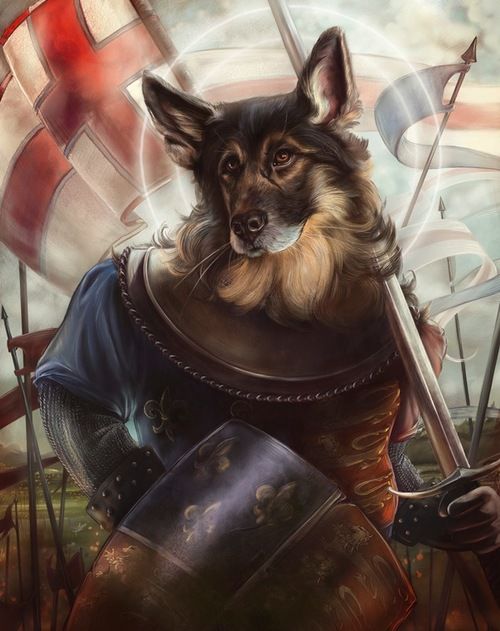
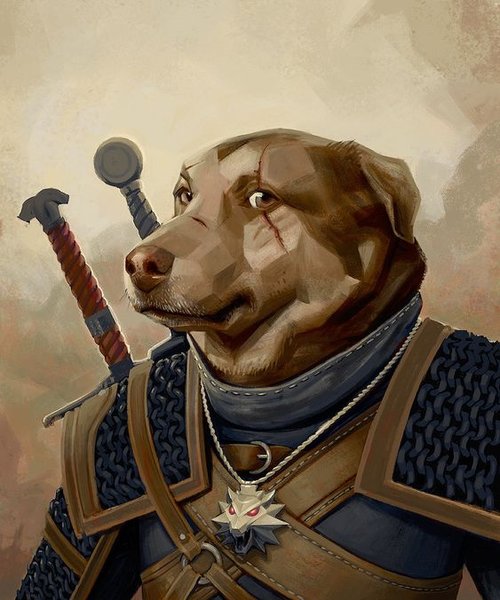
Dholves
Dholves are a kin of anthropomorphic canines that are believed to be related to both gnolls and khemeti, although very few kin understand how exactly. In fact, it is a point of contention amongst scholars for circumstances have meant the obliteration of much of dholven recorded history.
This is because while there are some ancient dholven communities in the cities of the Northern Vast, particulary those found scattered across the cities and rural communities of Khepresh, Iteru and Khemet, most of the dholves were displaced from their ancestral homeland in the Dholflands of the Western Lands by the roving and pillaging armies of Lord Skuldakh.
There are those in Agram, the City of Magic, who posit an arcane origin for the dholven race, arguing that gnolls are the products of the Mad One’s transmuters, and that a similar origin must likely hold true for the dholves as well.
However, there are others who point to the divine origins of the khemeti, whose long and proud histories are well chronicled in their libraries, religious and funereal pyramids, amongst other places. The khemeti were created from sand by the deity Inubis, and so it is perhaps logical that Inubis also created the dholves.
While much of their history has been lost, this has created a gregariousness and happy-go-lucky attitude in many dholves.
As such, many of them live in the moment or venerate deities of Luck.

Dholves often credit their successful survival in the face of their genocide to the wide range of skill, talent, and ability that each dholf possesses. If there is a job that needs to be done, there is a dholf who can do it.
While dholves will form strong tribal bonds, they are typically inclusive of other dholves. In general they care less about an outsider’s lineage or origin, so long as the newcomer puts the wellbeing and continued survival of the tribe first and foremost.
In fact, some dholf tribes include dholves from various lineages or even from kin who aren’t dholves themselves.
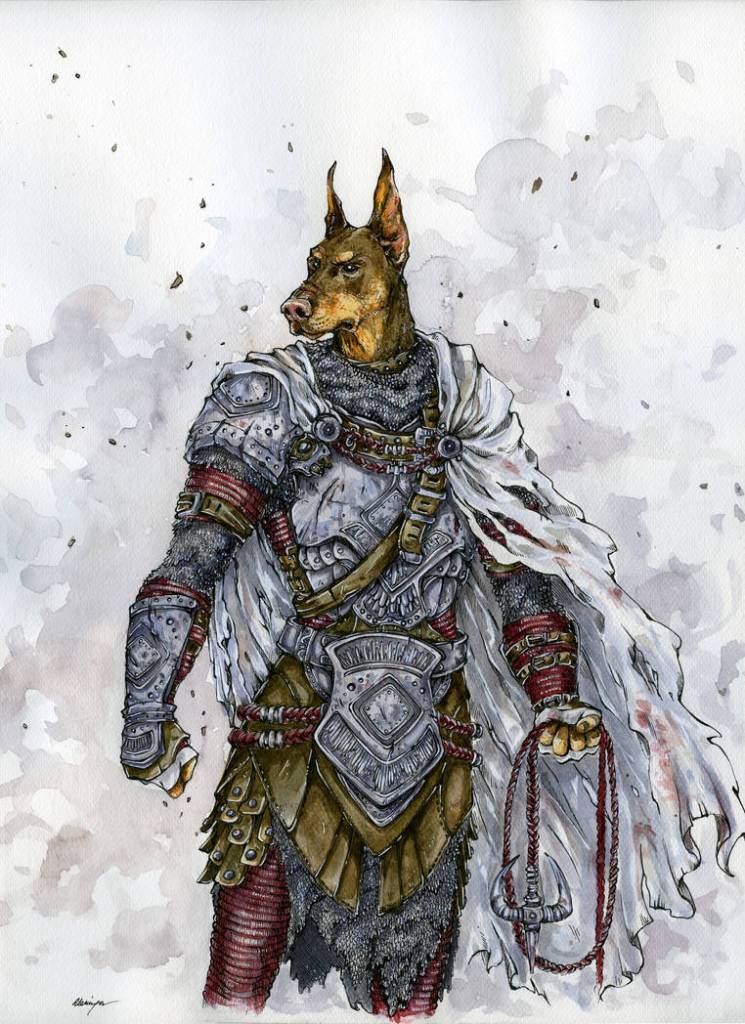
Traits
Your dholf character has a number of traits in common with all other dholves.
Ability Score Increase. Your Dexterity score increases by 1.
Age. Dholves life about as long as humans, however they rarely making it past 80 years old. However, they mature quicker than humans do and by 14 years they are considered an adult.
Alignment. Dholves lean towards lawful and good alignments, but some are prone to chaotic and evil alignments if they have experienced substantial abuse, neglect or ostracisation from their family or tribe.
Size. Dholves can range from heights of 3 feet to nearly 7 feet. Your size is determined by your lineage.
Speed. Your base walking speed is 30 feet.
Keen Senses. You have advantage on Wisdom (Perception) and Wisdom (Survival) checks that that involve hearing or smell. You also have advantage on checks to see if you are surprised.
Bark. When you roll initiative, you can immediately use your reaction to bark (if you are able to use your reaction). Barking readies allies against impending combat, removing the surprised condition from any ally that can hear your bark. Additionally, each enemy within 30 feet that can hear you must make a Wisdom saving throw or be frightened of you until the end of their turn. The DC is equal to 8 + your proficiency bonus + your Charisma modifier.
Dholves
\page
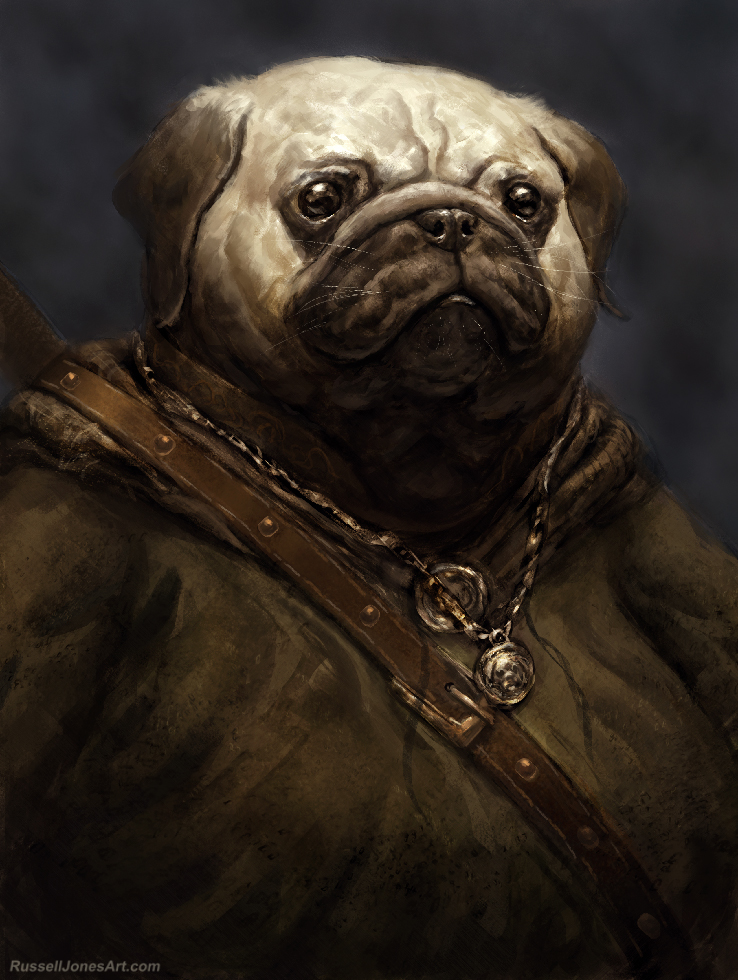
\page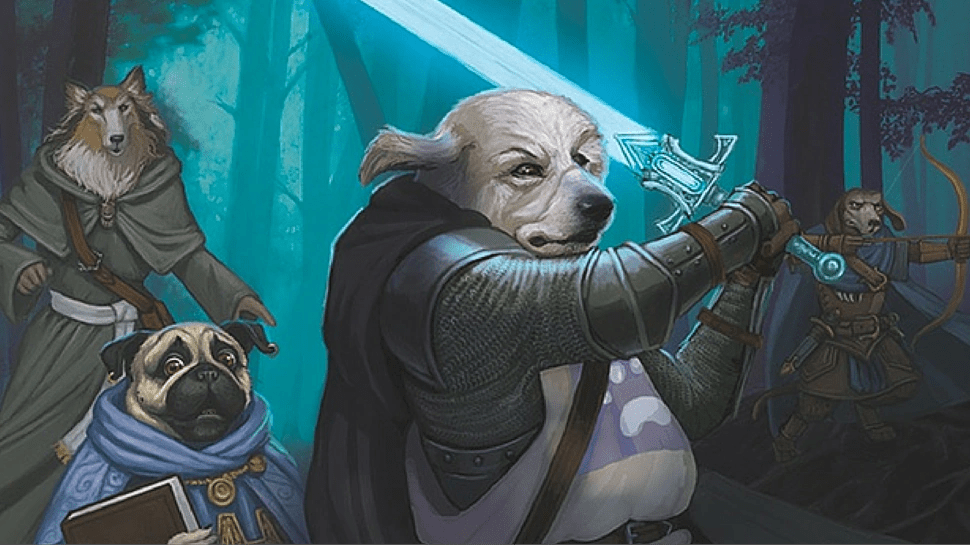
Languages. You can speak, read, and write Common, and you can speak Dholven, which is a verbal language.
Lineage. Dogfolk are extremely diverse and come in many different lineages. Choose one of these lineages (which roughly correlate to real-life dog breed groups) that your dholf belongs to.
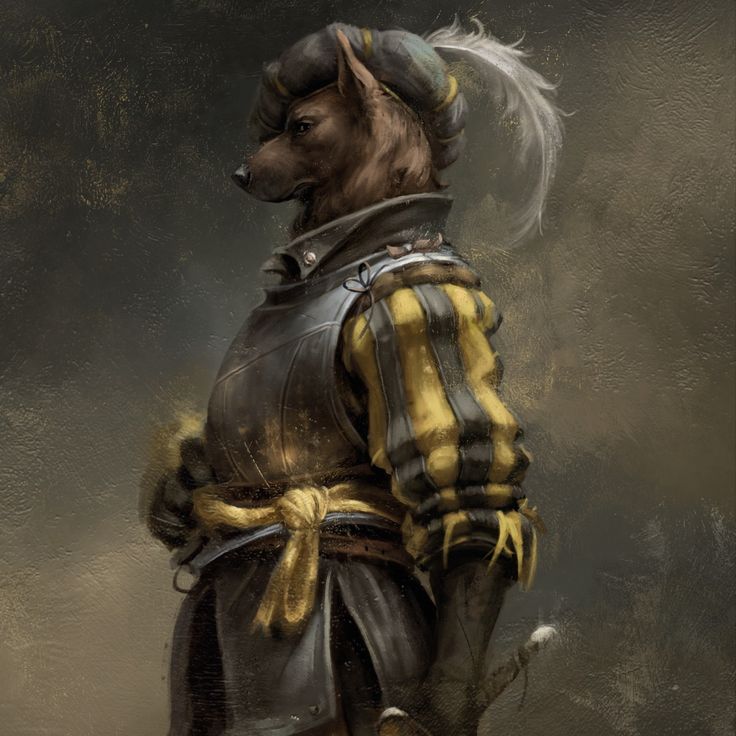
Dholven Lineages
The real-life breed categories outlined in relation to the various dholven lineages are vague and many breeds can fit into more than one category. Don’t feel restricted to certain categories, especially due to breed or group names. The breeds listed are simply suggestions. Choose the category you feel best represents your individual dholf’s heritage or strengths.
Don’t forget, you can use Tasha’s Cauldron of Everything to customize your origin to suit your dholf better by applying the Ability Score Increases to different ability scores. For instance, a Teh’lar with the Ability Score Increase changed to add Strength instead of Dexterity could be used for a very tough and hardy mastiff. Fun is more important than any notions of real-world dog breed ‘accuracy’.
The Arbitar
Arbitar dholves are some of the largest and strongest dholves and are often laborers or warriors. Often instead of training animals, dholves will have arbitar pull vehicles such as carts or sleds. Additionally, arbitar are very well suited for tasks such as search and rescue and couriering.
Spitz breeds, malamutes, huskies, mountain dogs, saint bernards, newfoundlands, and some larger mastiffs and shepherds are usually considered arbitar.
Ability Score Increase. Your Strength score increases by 1 and your Constitution score increases by 1.
Size. Your size is Medium.
Hard Worker’s Endurance. You have advantage on Constitution checks and saving throws against exhaustion.
Physical Laborer. You have proficiency in the Athletics skill.
Powerful Build. You count as one size larger when determining your carrying capacity and the weight you can push, pull, drag, or lift.

The Blan’dar
Mutts, mongrels, or mixed-breeds are dogfolk whose breed is difficult to determine or define due to cross-breeding. Although dogfolk are genetically diverse, they can successfully breed with any other dogfolk, regardless of breed. It used to be taboo to mix breeds due to a desire to maintain the presence of distinct breeds, but cross-breeding has become more acceptable in dog culture.
Ability Score Increase. Two different ability scores of your choice increase by 1.
Size. Your size is either Medium or Small, depending on your mixed lineage. You choose the size when you gain this subrace.
Diverse Skillset. You gain proficiency in two skills of your choice: Animal Handing, Athletics, Intimidation, Persuasion, or Survival.
Genetic Fortitude. The genetic diversity of mongrels tend to produce more robust and healthier dogfolk than purebreds. You have advantage on saving throws against disease.
Dholves: The Arbitar and the Blan’dar
\page
The He’dar

He’dar dholves excel at protecting, guiding, and leading groups — most often livestock or those seeking spiritual guidance. This lineage is often drawn towards being clerics, monks and druids.
Many shepherd dogs are herr’dar, like collies, heelers, corgis, and cattle dogs, but many livestock guardian breeds like great pyreness, shepherds, sheepdogs, and some mastiffs may also fall into this category.
Ability Score Increase. Your Wisdom score increases by 2.
Size. Your size is Medium.
Shepherd of the Flock. You gain proficiency in either the Animal Handling or Religion skill.
Herding Instinct. When a creature provokes an attack of opportunity from you, instead of attacking you can choose to force the creature to make a Wisdom saving throw. The DC is 8 + your proficiency bonus + your Charisma modifier.
On a failure, the creature uses as much its remaining speed as it can to move away from you. The creature will not endanger itself, such as by environmental hazards or traps it is aware of, by using this movement.
Creatures immune to the frightened condition are immune to this effect.

The Le’kar

Despite being the smallest dogfolk, the le’kar arguably have the largest personality and are skilled leaders, bards, and spellcasters.
Le’kar include breeds like pugs, pomeranians, chihuahuas, maltese, bichons, and chinese crested, but often any diminutive dholf could potentially be a le’kar.
Ability Score Increase. Your Charisma score increases by 2.
Size. Your size is Small, instead of Medium like most other dogfolk.
Speed. Your walking speed is 25 feet, due to your small stature.
Puppy Dog Eyes. You have advantage on Charisma checks when relying on appearing cute or otherwise non-threatening.
Dholves: The Herr’dar and the Le’kar
\page
\page
Calming Companion. You can cast the calm emotions spell. The spell is centered on you when you cast it. Once you cast the spell, you can’t cast it again using this trait until you finish a long rest. Charisma is your spellcasting ability for this spell.
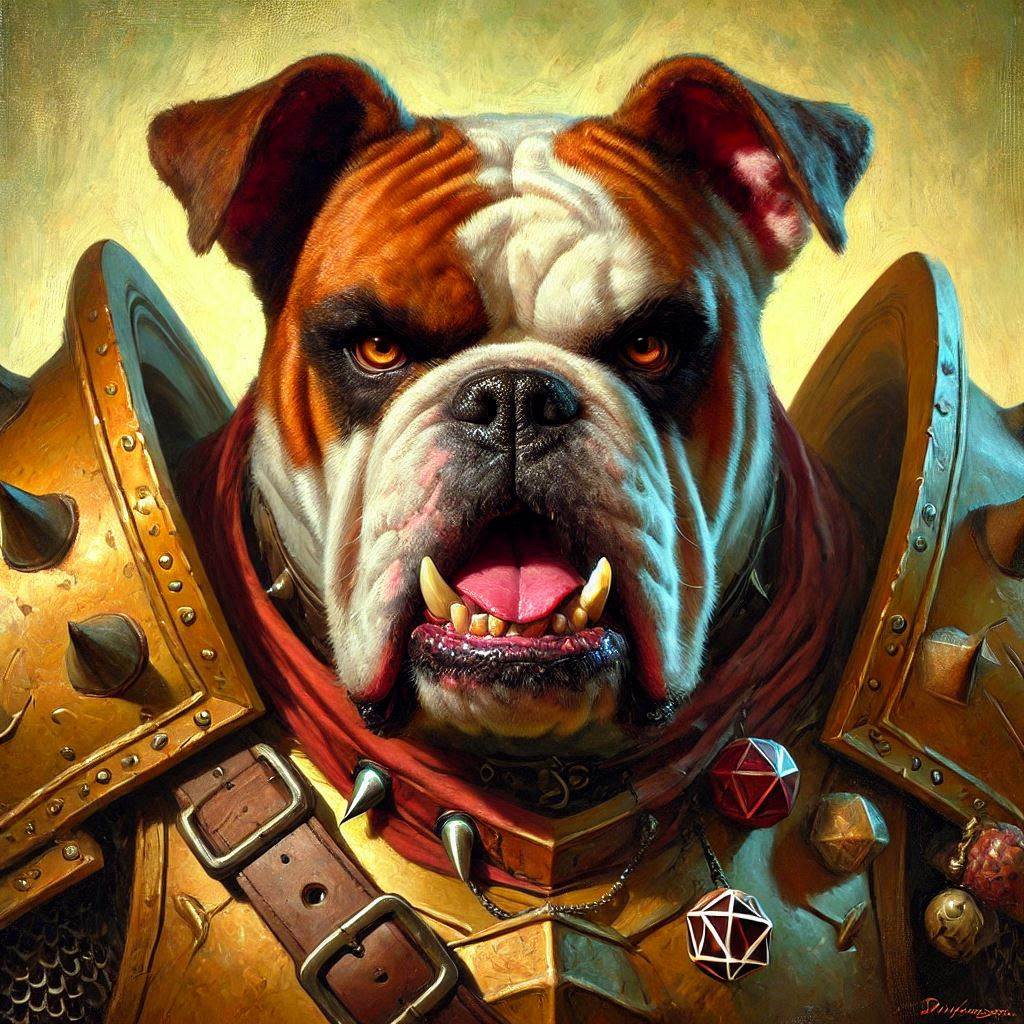
The Teh’lar
Teh’lar dholves are unusually scrappy and spirited, able to persevere despite the threat of or actual, serious injury. This quality is often called “game” or “gameness”. They are risk-takers and tend towards less lawful, violent, or dangerous life paths. Naturally, real-world breeds with terrier in their name usually belong to the group, but it also includes bull-type terriers that can be easily confused for guard dogs. Bulldogs and pitbulls, for instance, also fall into terrier groups, as well as dachshunds.
Ability Score Increase. Your Dexterity score increases by 1 and Constitution score increases by 1.
Size. Your size is Medium or Small, depending on your specific real-life dog breed. You choose the size when you gain this subrace.
Gamebred. When you are reduced to 0 hit points but not killed outright, you can drop to 1 hit point instead. You can’t use this feature again until you finish a long rest.
Got Gameness. You have advantage on saving throws against being frightened.
The Vagtar
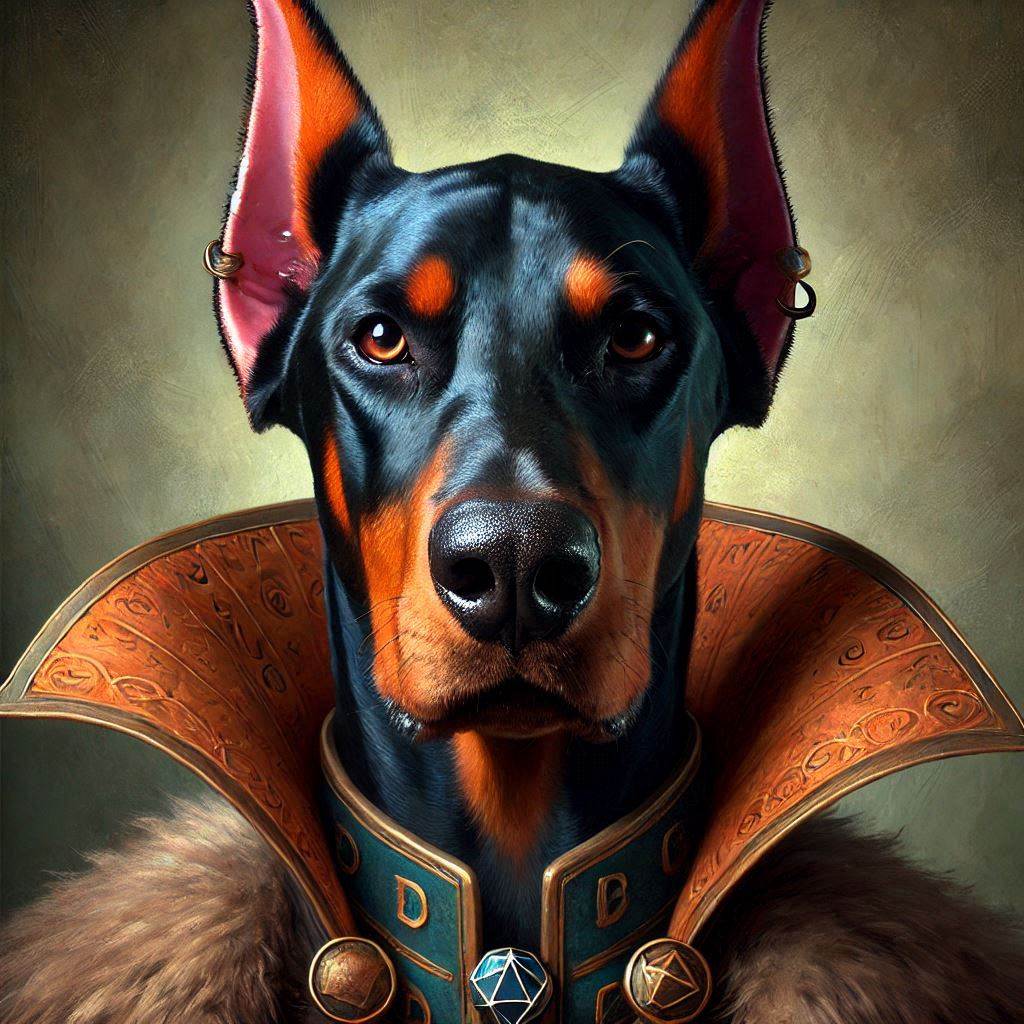
The Vagtar lineage of dholves are protective and vigilant, capable of noticing, neutralizing, and scaring off threats. This leads them to be excel in combat, and they are often great fighters, barbarians, and even paladins.
(Real-life breeds that tend to fall into this category include, but are not limited to, rottweilers, akitas, mastiffs, boxers, dobermann pinschers, chow chows, and great danes).
Ability Score Increase. Your Strength score increases by 2.
Size. Your size is Medium.
Threatening. You gain proficiency in the Intimidation skill.
Unmatched Vigilance. You cannot be surprised while you are conscious.

The Yeygar
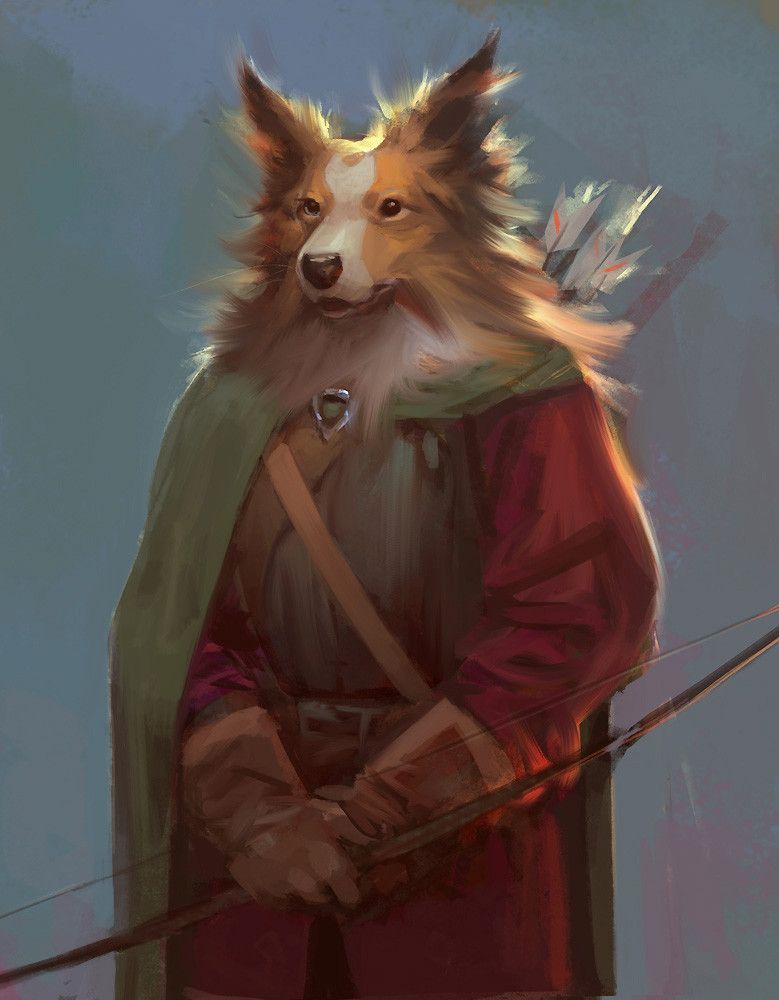
Yeygar dholves are the most at home in the wild; tracking, hunting, and retrieving wild game. They are highly focused with keen senses and very agile to keep up with game in rough terrain.
Unsurprisingly, they make excellent rangers and druids. (Hounds, retrievers, pointers, labradors, spaniels, beagles and more are usually considered yeyga dholves).
Dholves: The Vagtar and the Yeygar
\page
\page
Ability Score Increase. Your Dexterity score increases by 1 and your Wisdom score increases by 1.
Size. Your size is Medium.
Adept Tracker. When you make a Wisdom (Survival) check to track a creature, animal, object, or location you are considered proficient in the skill and add double your proficiency bonus, instead of your normal proficiency bonus.
Wild Agility. You can move across non-magical difficult terrain without expending extra movement.
Ezen (GENASI)
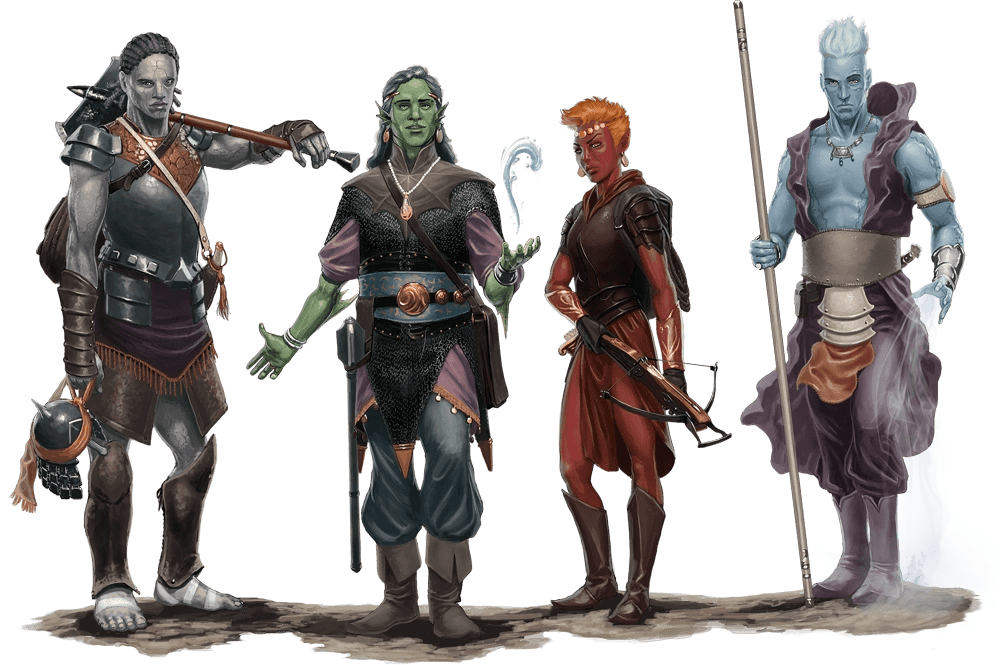
Those who think of other planes at all consider them remote, distant realms, but planar influence can be felt throughout the world. It sometimes manifests in beings who, through an accident of birth, carry the power of the planes in their blood.
The ezen are one such people. While some of them are the offspring of genies and mortals, others are fortuitously born of the elements through circumstance. Those ezen who are the children of genies and mortals are individuals with ties to two worlds, yet belonging to neither.
Other ezen have two ezen as parents, and a rare few have a genie further up their family tree, manifesting an elemental heritage that’s lain dormant for generations.
Occasionally, ezen result from exposure to a surge of elemental power, through phenomena such as an eruption from the Inner Planes or a planar convergence. Elemental energy saturates any creatures in the area and might alter their nature enough that their offspring with other mortals are born as ezen.

EZEN TRAITS
Your ezen character has certain characteristics in common with all other ezen.
Ability Score Increase. Increase an ability score of your choice by 2 and a different ability score of your choice by 1.
Age. Ezen mature at about the same rate as humans and reach adulthood in their late teens. They live somewhat longer than humans do, typically up to 150 years, although there are stories of some existing as long as 300 years.
Alignment. Typically independent and self-reliant, ezen tend toward a neutral alignment.
Size. Ezen are as varied as their mortal parents but are generally built like humans, standing anywhere from 5 feet to over 6 feet tall. Your size is Medium.
Speed. Your base walking speed is 35 feet.
Languages. You can speak, read, and write Common and Primordial Primordial is a guttural language, filled with harsh syllables and hard consonants.
The specific dialect of Primordial you are most familiar with is determined by your subrace: Aquan (Water) Auran (Air), Ignan (Fire), Sylvan (Wood) or Terran (Earth, Metal)
Geniekin. Your genie heritage allows you to connect more easily to creatures that share your elemental nature. Whenever you make a Charisma check when interacting with elementals, your proficiency bonus is doubled if it applies to the check.
Zumaridi Halkı (THE EMERALD PEOPLE) | Ezen (GENASI)
\page

\page
Od Ezen (FIRE GENASI)
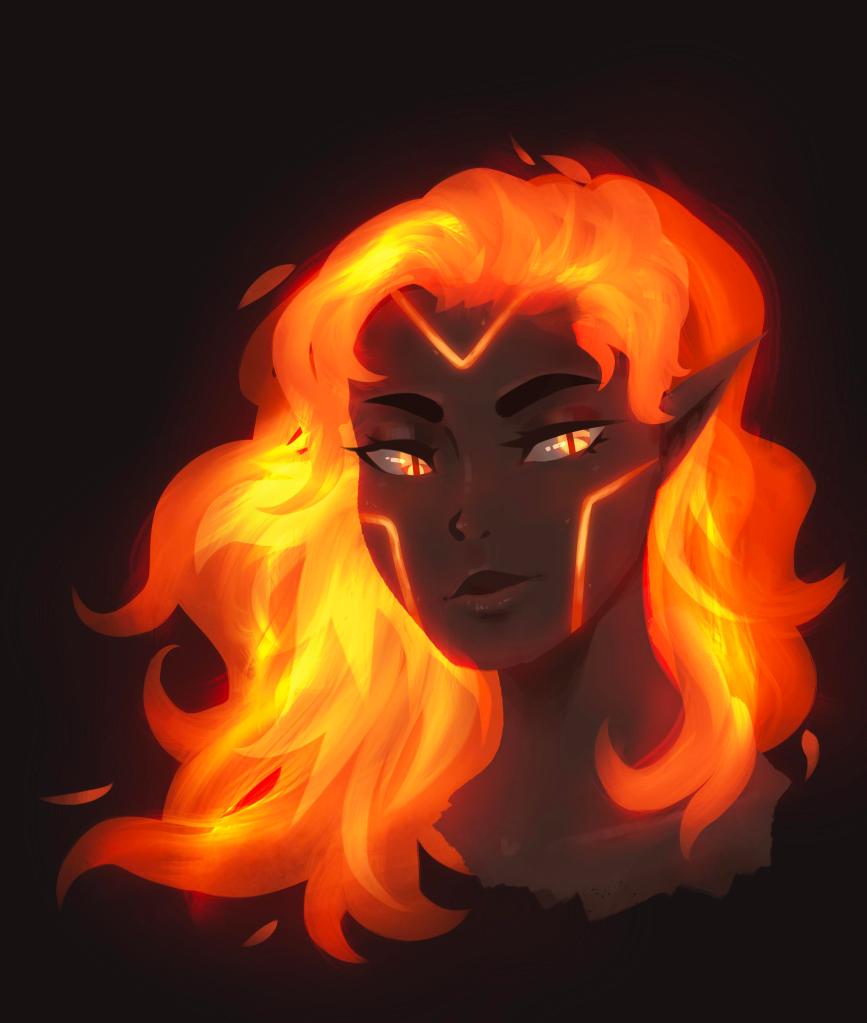
As an od ezen, you have inherited the volatile mood and keen mind of the efreet. You tend toward impatience and frequently make snap judgments. Rather than hide your distinctive appearance, you tend to exult in it.
Nearly all od ezen are feverishly hot as if burning inside, an impression reinforced by flaming red or flaming blue, coal-black, or ash-gray skin tones. The more human-looking have fiery red or fiery blue hair that writhes under extreme emotion, while more exotic specimens sport actual orange or blue flames dancing on their heads. Od ezen voices might sound like crackling flames, and their eyes flare when angered. Some are accompanied by the faint scent of brimstone.
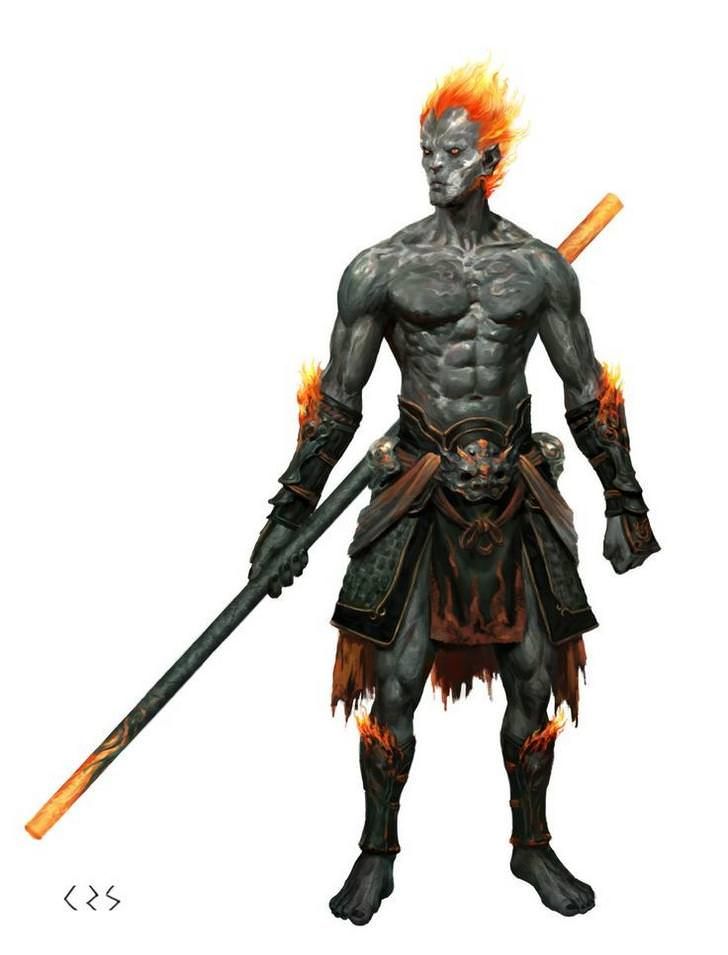

Efreet’s Legacy. You know the Control Flames cantrip. This spell doesn’t count against the number of spells you can prepare each day. Constitution is your spellcasting ability for this spell.
Fire Resistance. You have resistance to fire damage.
Hand of Flame. As an action, you can ignite an object you are touching. The object must be flammable, and the fire starts in a circle no larger than 1 foot in diameter.
Inner Fire. As an action, you can cause your body to glow with internal heat, shedding bright light in a 15-foot radius around you and dim light for an additional 15 feet. This light persists until you end it as an action or until you become unconscious.
Reach to the Blaze. You know the Produce Flame cantrip. Starting at 3rd level, you can cast the Burning Hands spell with this trait. Starting at 5th level, you can also cast the Flame Blade spell with this trait, without requiring a material component. Once you cast Burning Hands or Flame Blade with this trait, you can’t cast that spell with it again until you finish a long rest. You can also cast either of those spells using any spell slots you have of the appropriate level.
- Intelligence, Wisdom, or Charisma is your spellcasting ability for these spells when you cast them with this trait (choose when you select this race).

Od Ezen (FIRE GENASI)
\page
Orman Ezen (WOOD GENASI)
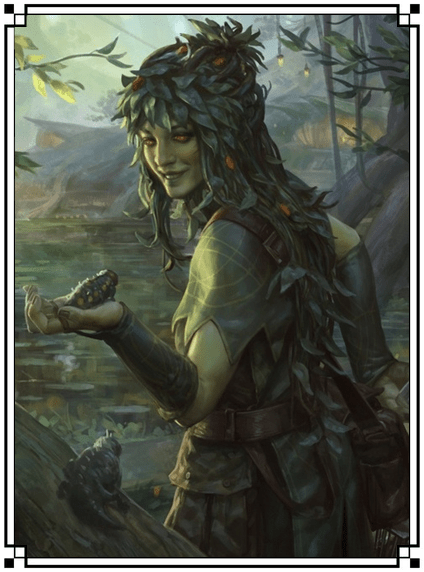
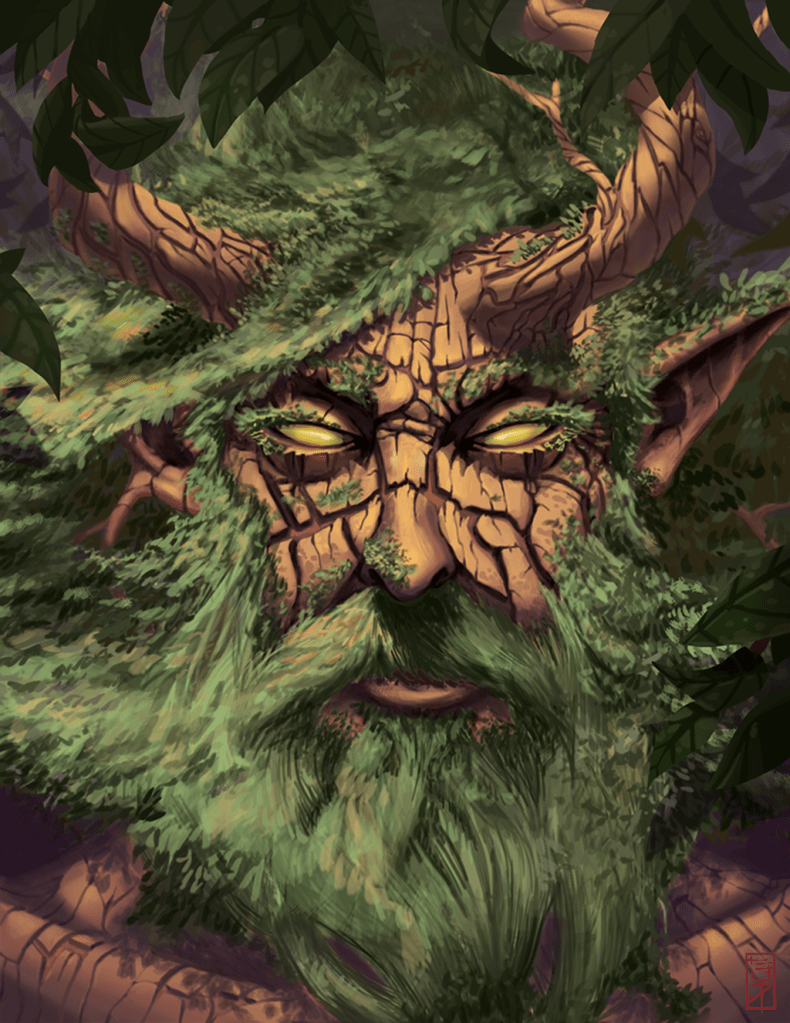
As an orman ezen, you have inherited the patience and passion of Vesna, the Emerald Queen of the Forest, although in the Northern Vast she is more commonly known as Dhat-Kishar, Queen of the Oases. You tend towards carefully considered decisions and rarely make impulsive judgments. You may try to hide your distinctive appearance, or you may feel more comfortable being true to your nature. Nearly all orman ezen have plant-like hair, whether mossy or lichen in appearance, or else leafy and fronded. Some even seem to have hair that follows the seasons, blooming in spring, green in summer, changing colour in the autumn and bare in the winter. Orman ezen also tend to have bark-like skin that, similar to plants, can range from earthy browns to forest greens, creamy fir-like whites to sappy yellows and oranges. Orman ezen voices might sound like leaves rustling, or the swishing of long grass. Some are accompanied by floral perfumes or the smell of organic matter.

Skin Made of Bark: When unarmored, you treat your default AC as 13 + your Constitution modifier unless the attack type is slashing.
Vesna’s Legacy: You know the Thorn Whip cantrip. This spell doesn’t count against the number of spells you can prepare each day. When you reach 3rd level, you can cast Entangle once per long rest with this trait. Dexterity is your spellcasting ability score for these traits.
Vegetative Vitality: You have Resistance to Poison. When you are subject to an effect that restores your hit points, you may add your Constitution modifier to the roll.
Wood Walk: You can move across difficult terrain made of plants and vegetation without expending extra movement. In addition, you have advantage on stealth checks made for moving silently or for leaving no traces of your passage if you are moving through grasslands, forests or other heavily vegetated areas.
Shakhta Ezen (METAL GENASI):
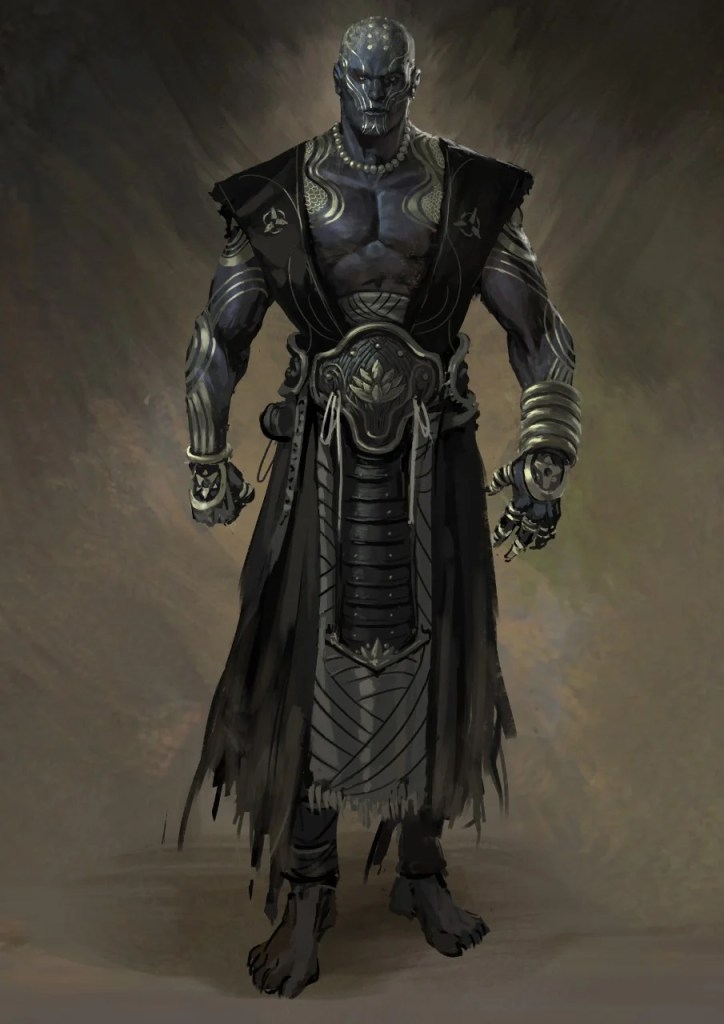
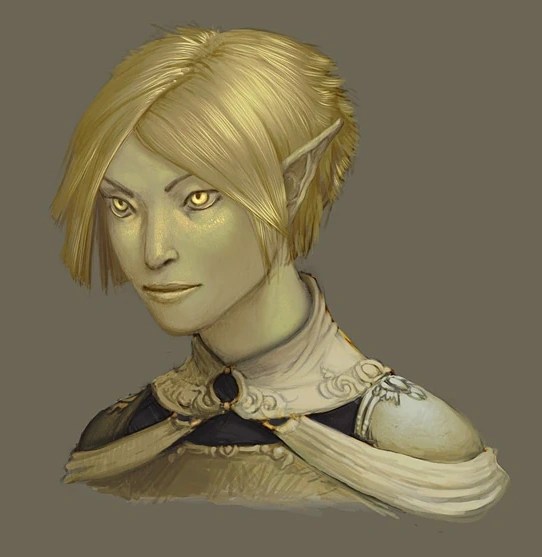
While any kin can produce shakhta ezen, a disproportionately large number of them seem to manifest amongst ad’amlar, gnomes and other kin with an innate and intrinsic connection to the element of metal. Shakhta ezen wear their elemental heritage on their skin, with most having some amount of metallic sheen. Their skin tone varies, with colors ranging from gold and silver to copper-green and dull, oxide gray.
Conductive. As long as you are on the ground, you are immune to lightning damage. If you are airborn, you are resistant to lightning damage.
Skin Made of Iron: When unarmored, you treat your default AC as 13 + your Constitution modifier.
Steel In Your Bones: You have Resistance to Force Damage and immunity to disease. You also have advantage on saving throws against being paralyzed or poisoned.
Zilvergast’s Legacy: You know the mending cantrip. This spell doesn’t count against the number of spells you can prepare each day. You treat Constitution as your spellcasting ability score for the spell.
Orman Ezen (WOOD GENASI) | Shakhta Ezen (METAL GENASI)
\page
\page
Su Eezen (WATER GENASI)

The lapping of waves, the spray of seafoam on the coastal wind, the ocean depths – all of these things call to your heart. You wander freely and take pride in your independence, though some might consider you selfish.
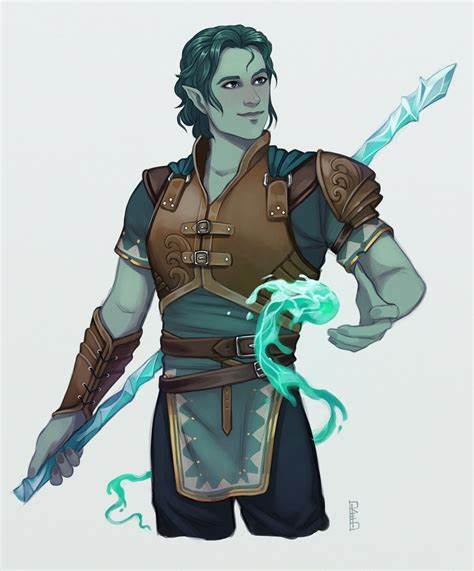
Most su ezen look as if they just finished bathing, with beads of moisture collecting on their skin and hair. They smell of fresh rain and clean water, or else they have a perfumed hint of brine about them. Blue or green skin is the most common, and many have somewhat overlarge eyes that are typically blue-black in color.
A su ezen’s hair might float freely, swaying and waving as if underwater. Some have voices with undertones reminiscent of whale song or trickling streams.
Natural Swimmer. You have a swimming speed of 35 feet.
Acid Resistance. You have resistance to acid damage.
Amphibious. You can breathe air and water.
Darkvision. You can see in dim light within 60 feet of you as if it were bright light and in darkness as if it were dim light. You discern colors in that darkness only as shades of gray.
Marid’s Legacy. You know the Shape Water cantrip. This spell doesn’t count against the number of spells you can prepare each day. Constitution is your spellcasting ability for this spell.
Call to the Wave. You know the Acid Splash cantrip. Starting at 3rd level, you can cast the Create or Destroy Water spell with this trait. Starting at 5th level, you can also cast the Water Walk spell with this trait, without requiring a material component. Once you cast Create or Destroy Water or Water Walk with this trait, you can’t cast that spell with it again until you finish a long rest. You can also cast either of those spells using any spell slots you have of the appropriate level.
- Intelligence, Wisdom, or Charisma is your spellcasting ability for these spells when you cast them with this trait (choose when you select this race).

Su Ezen (WATER GENASI) | Yel Ezen (AIR GENASI)
\page
Yel Ezen (AIR GENASI)

As a yel ezen, you are descended from the djinn. As changeable as the weather, your moods shift from calm to wild and violent with little warning, but these storms rarely last long.
Yel ezen typically have light blue skin, hair, and eyes, however sometimes their hair is the colour of clouds and changes with the oncoming weather. This has made them popular with Meteorologists and the Royal Court of Zarihshan.
A faint but constant breeze accompanies them, tousling the hair and stirring the clothing. Some yel ezen speak with breathy voices, marked by a faint echo.

Djinn’s legacy. You know either the Gust or the Shocking Grasp cantrip. This spell doesn’t count against the number of spells you can prepare each day. Starting at 3rd level, you can cast the Feather Fall spell with this trait, without requiring a material component. Starting at 5th level, you can also cast the Levitate spell with this trait, without requiring a material component. Once you cast Feather Fall or Levitate with this trait, you can’t cast that spell with it again until you finish a long rest. You can also cast either of those spells using any spell slots you have of the appropriate level.
- Intelligence, Wisdom, or Charisma is your spellcasting ability for these spells when you cast them with this trait (choose when you select this race).
Light-footed. The gentle breezes that surround you help soften the impact of a fall. You have resistance to damage from falling.
In addition, you have advantage on stealth checks made for moving silently.
Lightning Resistance. You have resistance to thunder damage.
Wind’s grace. You are always proficient in the Acrobatics skill.
Unending Breath. You can hold your breath indefinitely while you’re not incapacitated.

Yel Ezen (AIR GENASI) | Yer Ezen (EARTH GENASI)
\page

\page
Yer Ezen (EARTH GENASI)

As a yer ezen, you are descended from the dao, although you aren’t necessarily cruel, greedy or evil yourself. You have inherited some measure of control over the element of earth..
You tend to avoid rash decisions, pausing long enough to consider your options before taking action.
Elemental earth manifests differently from one individual to the next. Some yer ezen always have bits of dust falling from their bodies and mud clinging to their clothes, never getting clean no matter how often they bathe. Others are as shiny and polished as gemstones, with skin tones of deep brown or black, eyes sparkling like agates. Yer ezen can also have smooth metallic flesh, dull iron skin spotted with rust, a pebbled and rough hide, or even a coating of tiny embedded crystals. Their hair can resemble crystals or metals of any kind.
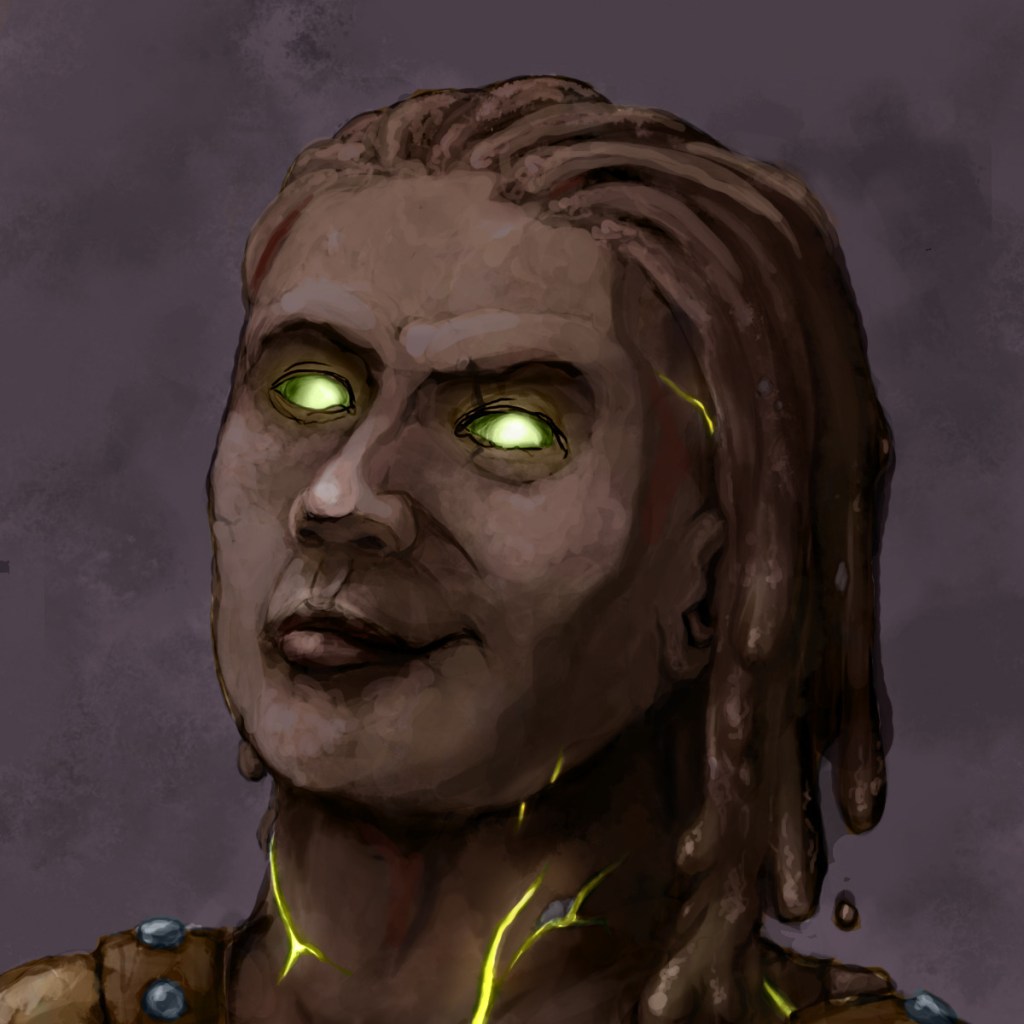
Dao’s Legacy. You know the Mold Earth cantrip. This spell doesn’t count against the number of spells you can prepare each day. Constitution is your spellcasting ability for it.
Darkvision. You can see in dim light within 60 feet of you as if it were bright light and in darkness as if it were dim light. You discern colors in that darkness only as shades of gray.
Earth Walk. You can move across difficult terrain made of earth or stone without expending extra movement. In addition, you have advantage on stealth checks made for moving silently or for leaving no traces of your passage if you are moving across sand, dirt, rock, gravel or stone.
Merge with Stone. You know the Blade Ward cantrip. You can cast it as normal, and you can also cast it as a bonus action a number of times equal to your proficiency bonus, regaining all expended uses when you finish a long rest.
Starting at 5th level, you can cast the Pass Without Trace spell with this trait, without requiring a material component. Once you cast that spell with this trait, you can’t do so again until you finish a long rest. You can also cast it using any spell slots you have of 2nd level or higher.
- Intelligence, Wisdom, or Charisma is your spellcasting ability for these spells when you cast them with this trait (choose when you select this race).
Rugged Body. You are always proficient in the Athletics skill.
Sure-Footed. While on the ground, you have advantage on all checks and saving throws to resist effects that force you to move or to knock you prone.

Yer Ezen (EARTH GENASI) | Humans
\page
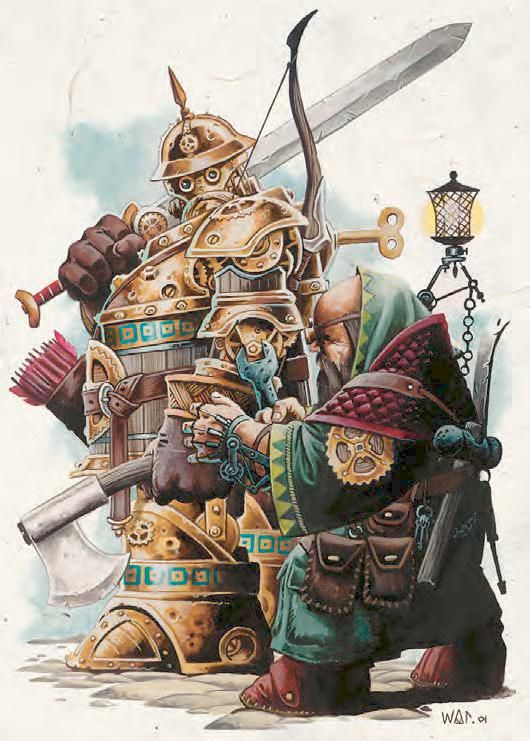
\page
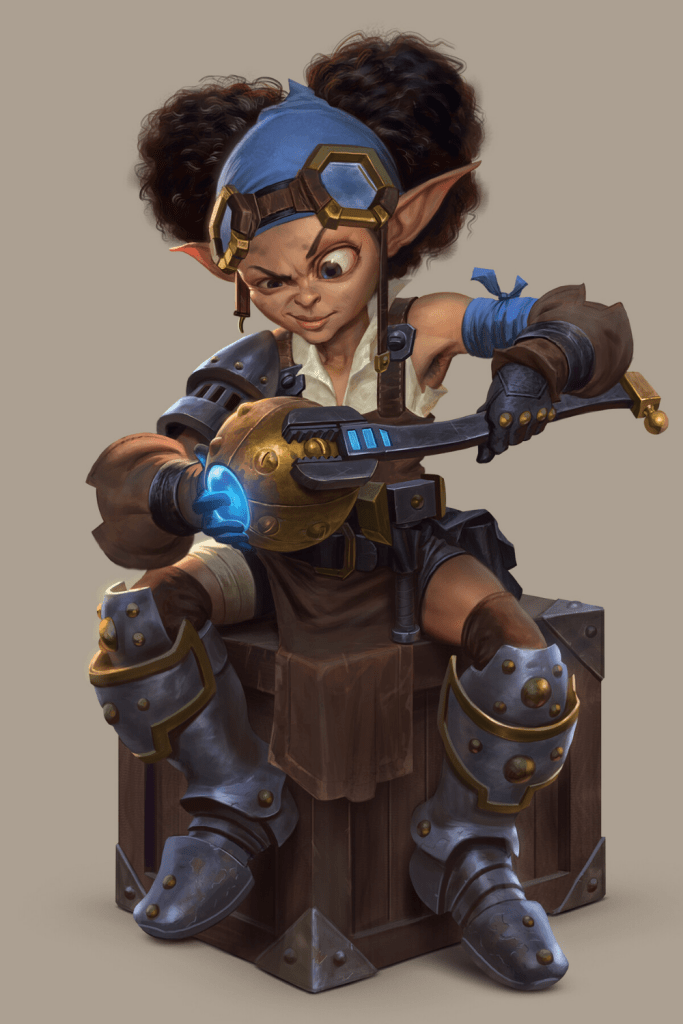
\page
Gnomes

A constant hum of busy activity pervades the warrens and neighborhoods where gnomes form their close-knit communities. Louder sounds punctuate the hum: a crunch of grinding gears here, a minor explosion there, a yelp of surprise or triumph, and especially bursts of laughter. Zilvergast’s children, gnomes take delight in life, enjoying every moment of invention, exploration, investigation, creation, and play.
Vibrant Expression
A gnome’s energy and enthusiasm for living shines through every inch of his or her tiny body. Gnomes average slightly over 3 feet tall and weigh 40 to 45 pounds. Their tan or brown faces are usually adorned with broad smiles (beneath their prodigious noses), and their bright eyes shine with excitement. Their fair hair has a tendency to stick out in every direction, as if expressing the gnome’s insatiable interest in everything around.
A gnome’s personality is writ large in his or her appearance. A male gnome’s beard, in contrast to his wild hair, is kept carefully trimmed but often styled into curious forks or neat points. A gnome’s clothing, though usually made in modest earth tones, is elaborately decorated with embroidery, embossing, or gleaming jewels.

Delighted Dedication
As far as gnomes are concerned, being alive is a wonderful thing, and they squeeze every ounce of enjoyment out of their three to five centuries of life. Humans might wonder about getting bored over the course of such a long life, and elves take plenty of time to savor the beauties of the world in their long years, but gnomes seem to worry that even with all that time, they can’t get in enough of the things they want to do and see.
Gnomes speak as if they can’t get the thoughts out of their heads fast enough. Even as they offer ideas and opinions on a range of subjects, they still manage to listen carefully to others, adding the appropriate exclamations of surprise and appreciation along the way.
Though gnomes love jokes of all kinds, particularly puns and pranks, they’re just as dedicated to the more serious tasks they undertake. Many gnomes are skilled engineers, alchemists, tinkers, and inventors. They’re willing to make mistakes and laugh at themselves in the process of perfecting what they do, taking bold (sometimes foolhardy) risks and dreaming large.
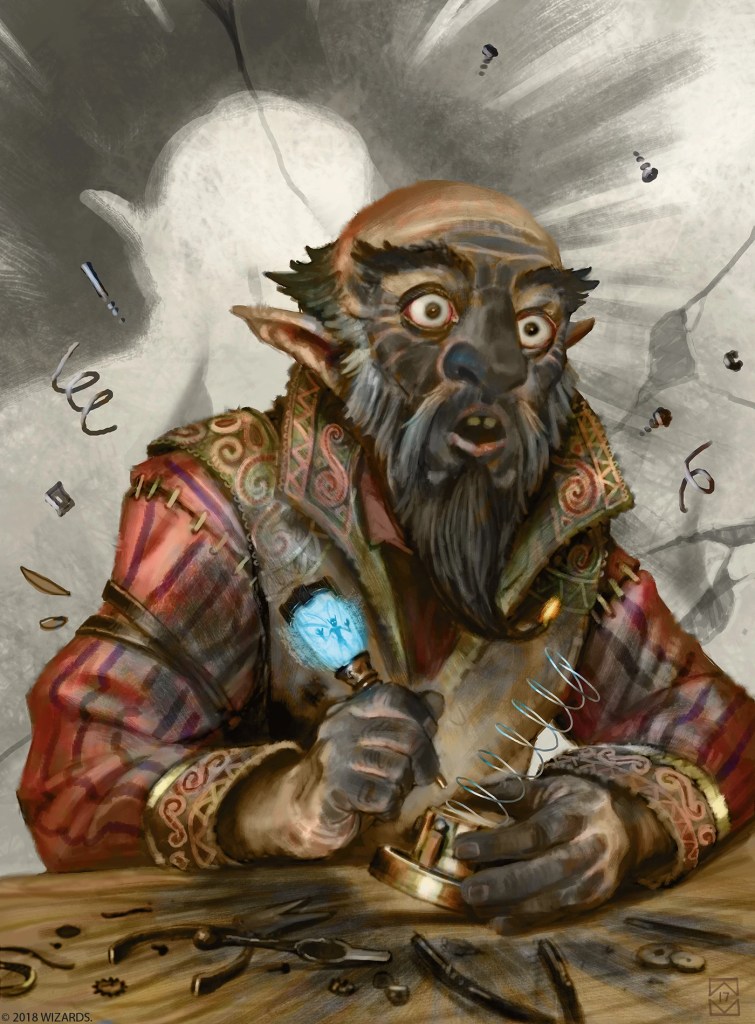
Dholves | Gnomes
\page
Bright Burrows
Gnomes make their homes in hilly, wooded lands. They live underground but get more fresh air than dwarves do, enjoying the natural, living world on the surface whenever they can. Their homes are well hidden by both clever construction and simple illusions. Welcome visitors are quickly ushered into the bright, warm burrows. Those who are not welcome are unlikely to find the burrows in the first place.
Gnomes who settle in human lands are commonly gemcutters, engineers, sages, or tinkers. Some human families retain gnome tutors, ensuring that their pupils enjoy a mix of serious learning and delighted enjoyment. A gnome might tutor several generations of a single human family over the course of his or her long life.
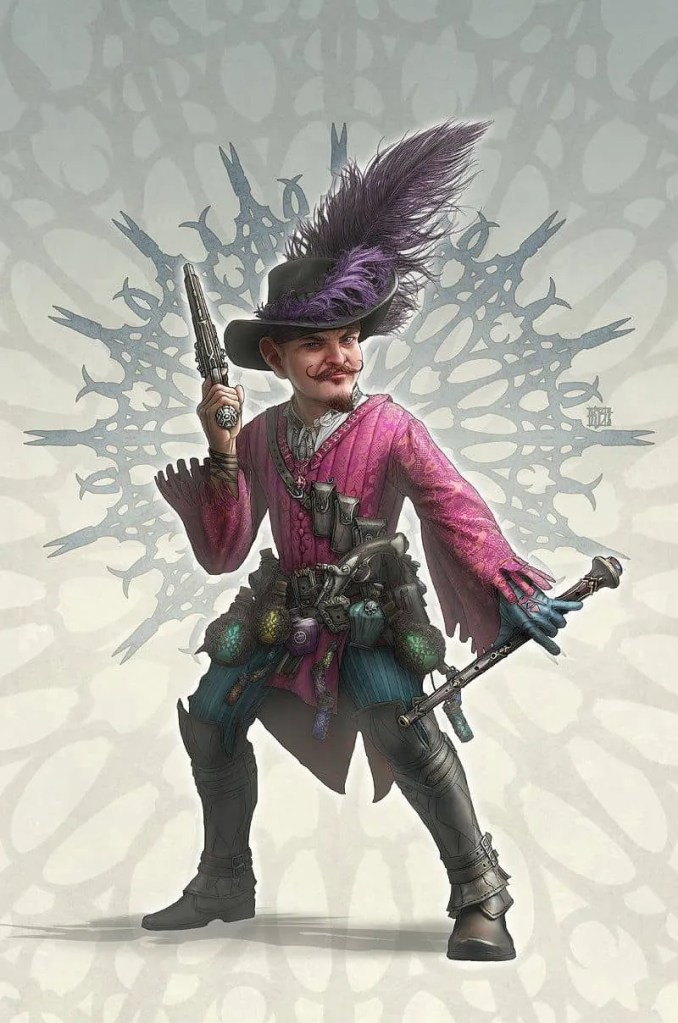
Gnome Names
Gnomes love names, and most have half a dozen or so. A gnome’s mother, father, clan elder, aunts, and uncles each give the gnome a name, and various nicknames from just about everyone else might or might not stick over time. Gnome names are typically variants on the names of ancestors or distant relatives, though some are purely new inventions.
When dealing with humans and others who are “stuffy” about names, a gnome learns to use no more than three names: a personal name, a clan name, and a nickname, choosing the one in each category that’s the most fun to say.
Clan Names: Beren, Daergel, Folkor, Garrick, Nackle, Murnig, Ningel, Raulnor, Scheppen, Timbers, Turen
Female Names: Bimpnottin, Breena, Caramip, Carlin, Donella, Duvamil, Ella, Ellyjobell, Ellywick, Lilli, Loopmottin, Lorilla, Mardnab, Nissa, Nyx, Oda, Orla, Roywyn, Shamil, Tana, Waywocket, Zanna
Male Names: Alston, Alvyn, Boddynock, Brocc, Burgell, Dimble, Eldon, Erky, Fonkin, Frug, Gerbo, Gimble, Glim, Jebeddo, Kellen, Namfoodle, Orryn, Roondar, Seebo, Sindri, Warryn, Wrenn, Zook
Nicknames: Aleslosh, Ashhearth, Badger, Cloak, Doublelock, Filchbatter, Fnipper, Ku, Nim, Oneshoe, Pock, Sparklegem, Stumbleduck
Seeing the World
Curious and impulsive, gnomes might take up adventuring as a way to see the world or for the love of exploring. As lovers of gems and other fine items, some gnomes take to adventuring as a quick, if dangerous, path to wealth. Regardless of what spurs them to adventure, gnomes who adopt this way of life eke as much enjoyment out of it as they do out of any other activity they undertake, sometimes to the great annoyance of their adventuring companions.

Gnome Traits
Your gnome character has certain characteristics in common with all other gnomes.
Ability Score Increase. Your Intelligence score (or another ability score of your choice) increases by 2.
Gnomes
\page
Age. Gnomes mature at the same rate humans do, and most are expected to settle down into an adult life by around age 40. They can live 350 to almost 500 years.
Size. Gnomes are between 3 and 4 feet tall and average about 40 pounds. Your size is Small.
Speed. Your base walking speed is 30 feet.
Darkvision. Accustomed to life underground, you have superior vision in dark and dim conditions. You can see in dim light within 60 feet of you as if it were bright light, and in darkness as if it were dim light. You can’t discern color in darkness, only shades of gray.
Gnome Cunning. You have advantage on all Intelligence, Wisdom, and Charisma saving throws against magic.
Languages. You can speak, read, and write Common and Gnomish. The Gnomish language, which uses its own script, is renowned for its scientific and technical treatises and its catalogs of knowledge about the natural world.
Subrace. Choose one of the three gnome subraces below.
Common Gnome
When someone says ‘gnome’ they usually refer to the most common type of gnome, sometimes called a Zilverhome gnome after the sprawling steampunk metropolis known as Mount Zilverhome. This amazing multilayered collection of machinery, factories, laboratories and workshops extends deep into the bowels of the earth and is home to all manner of jaw-dropping wonders of science. Most gnomes can trace their lineage back to that location, where the god Zilvergast created the first tinkerers from slivers of copper. As a tinkerer yourself, you have a natural inventiveness and hardiness beyond that of other gnomes.

Ability Score Increase. Your Constitution score (or another ability score of your choice) increases by 1.
Artificer’s Lore. Whenever you make an Intelligence (History) check related to magic items, alchemical objects, or technological devices, you can add twice your proficiency bonus, instead of any proficiency bonus you normally apply.
Tinker. You have proficiency with artisan’s tools (tinker’s tools). Using those tools, you can spend 1 hour and 10 gp worth of materials to construct a Tiny clockwork device (AC 5, 1 hp). The device ceases to function after 24 hours (unless you spend 1 hour repairing it to keep the device functioning), or when you use your action to dismantle it; at that time, you can reclaim the materials used to create it. You can have up to three such devices active at a time.
When you create a device, choose one of the following options:
- Clockwork Toy. This toy is a clockwork animal, monster, or person, such as a frog, mouse, bird, dragon, or soldier. When placed on the ground, the toy moves 5 feet across the ground on each of your turns in a random direction. It makes noises as appropriate to the creature it represents.
- Fire Starter. The device produces a miniature flame, which you can use to light a candle, torch, or campfire. Using the device requires your action.
- Music Box. When opened, this music box plays a single song at a moderate volume. The box stops playing when it reaches the song’s end or when it is closed.

Feral Gnome
The feral gnome, sometimes called a forest gnome in sylvan parts of the world, has a natural knack for illusion and inherent quickness and stealth. These kinds of gnomes tend to make homes in wildernesses and out-of-the-way places. In the Endless Green of the Northern Vast and in the Ancient Forests of the Western Lands, these kinds of gnomes are rare and secretive. They gather in hidden communities in sylvan forests, using illusions and trickery to conceal themselves from threats or to mask their escape should they be detected.
Gnomes
\page
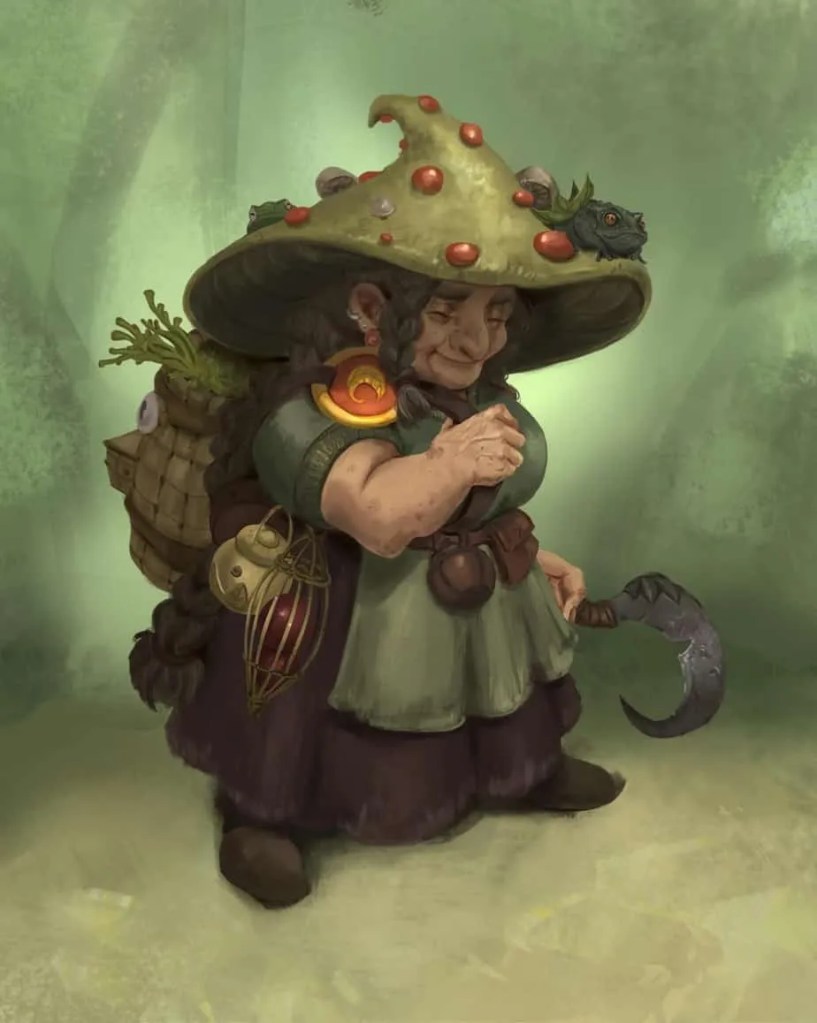
\page
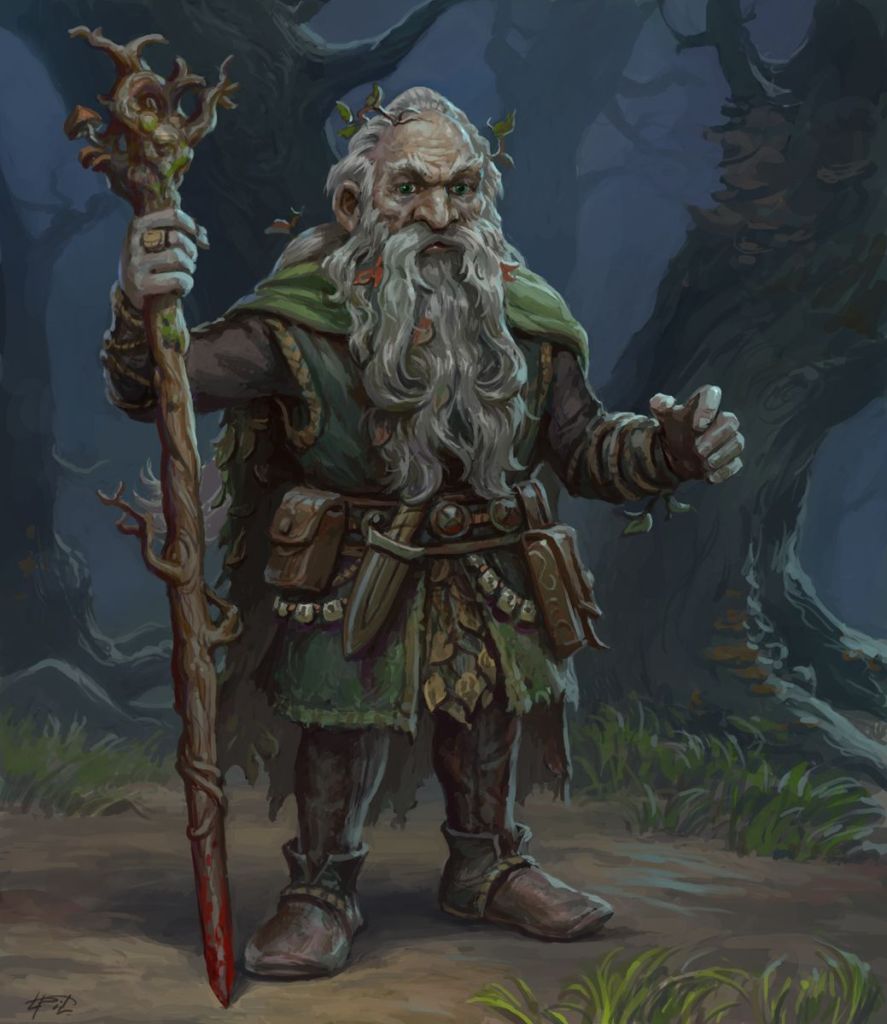
Other feral gnomes live in the grasslands of Iteru or the deserts of Khepresh and Khemet. Feral gnomes tend to be friendly with other good-spirited woodland or wilderness folk, and they regard kedakai and good fey as their most important allies. These gnomes also befriend small animals and beasts and rely on them for information about threats that might prowl their lands.
Ability Score Increase. Your Dexterity score (or another ability score of your choice) increases by 1.
Natural Illusionist. You know the Minor Illusion cantrip. Intelligence is your spellcasting ability for it.
Speak with Small Beasts. Through sounds and gestures, you can communicate simple ideas with Small or smaller beasts. Feral gnomes love animals and often small creatures as their beloved pets. In a forest setting, they might keep squirrels, badgers, rabbits, moles, woodpeckers, however those in a more arid landscape might keep desert hedgehogs, fennec foxes, jackrabbits, jerboas, meerkets, pallid bats, ring-tailed cats or sand cats as their companions or associates.
This ability also grants you proficiency in Animal Handling. Furthermore, because you are a true friend of the animals you may always use advantage on Animal Handling checks when required in relation to Small or smaller beasts.

Grey Gnome

A third subrace of gnomes, the grey gnomes, live in the Great Under-Realm Below. Unlike the grey dwarves, the sa’ren, the zel’en or the grey kedakai, grey gnomes are as good as their surface cousins. However, their humor and enthusiasm are dampened by their oppressive environment, and their inventive expertise is directed mostly toward working with stone, gems, minerals or fungus.
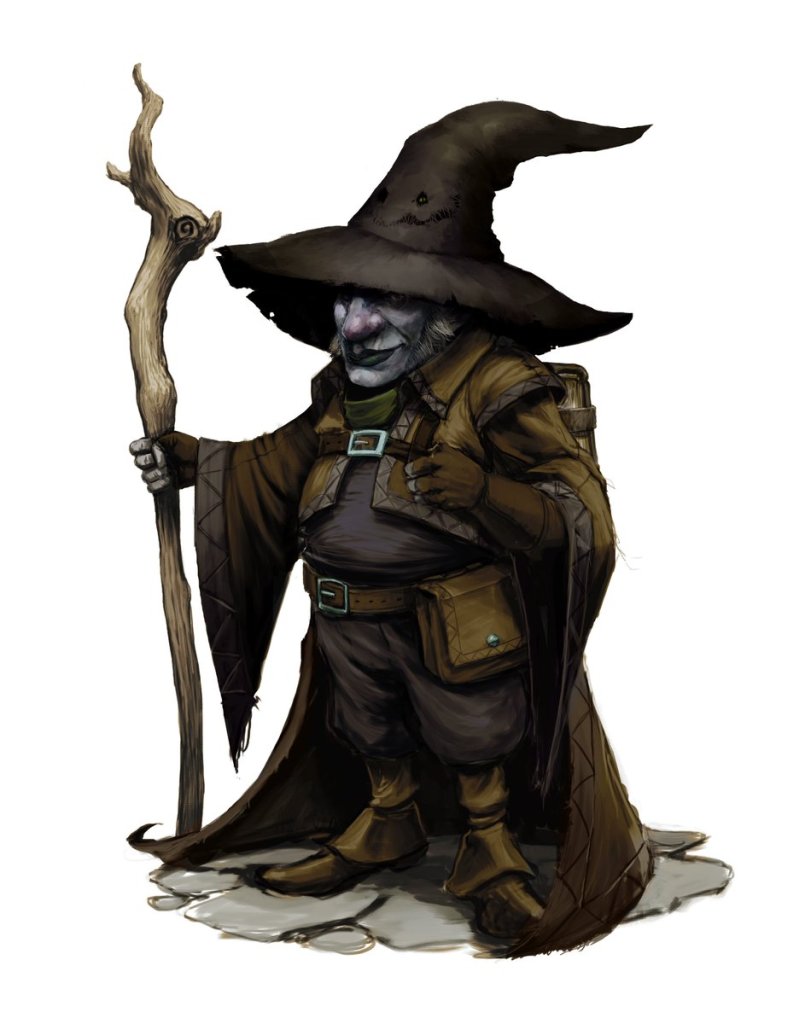
Gnomes
\page
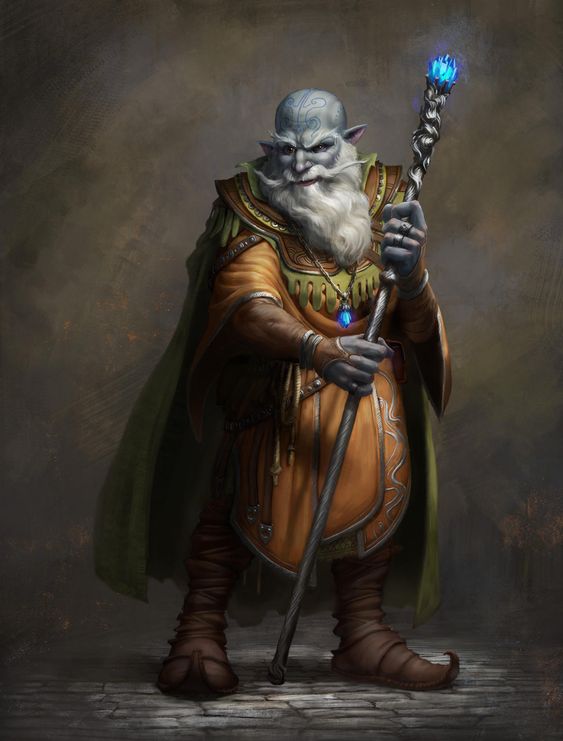
Rarely Seen in the Overlight
Common and feral gnomes are the gnomes most commonly encountered in the lands of the surface world. However, while there is another subrace of gnomes, they are far less commonly seen by any surface-dweller.
Guarded, and suspicious of outsiders, grey gnomes are cunning and taciturn, but can be just as kind-hearted, loyal, and compassionate as their surface cousins.
When you create a gnome character, you may choose the grey gnome as an alternative to the other gnome subraces.
Ability Score Increase. Your Dexterity score (or another ability score of your choice) increases by 1.
Age. Grey gnomes are short-lived for gnomes. They mature at the same rate humans do and are considered full-grown adults by 25. They live 200 to 250 years, although hard toil and the dangers of the Great Under-Realm Below often claim them before their time.
Alignment. Grey gnomes believe that survival depends on avoiding entanglements with other creatures and not making enemies, so they typically favor more neutral alignments. While they rarely wish others ill, and also are just as are unlikely to take risks on behalf of others, unless they have a strong filial bond of some kind with that person.
Size. A typical grey gnome stands about 3 to 3½ feet tall and weighs 80 to 120 pounds. Your size is Small.
Superior Darkvision. Your darkvision has a radius of 120 feet.
Illusionist’s Eye. You have advantage on Intelligence (Investigation) or Wisdom (Perception) checks when trying to perceive if something is real or an illusion. You get this even passively when you aren’t actively trying to find an illusion.
Stone Camouflage. When you make a Dexterity (Stealth) check, you can make the check with advantage. You can use this trait a number of times equal to your proficiency bonus, and you regain all expended uses when you finish a long rest.
Gift of the Underdark. Starting at 3rd level, you can cast the Disguise Self spell with this trait. Starting at 5th level, you can also cast the Nondetection spell with it, without requiring a material component. Once you cast either of these spells with this trait, you can’t cast that spell with it again until you finish a long rest. You can also cast these spells using spell slots you have of the appropriate level.
- Intelligence, Wisdom, or Charisma is your spellcasting ability for these spells when you cast them with this trait (choose when you select this race).
Languages. You can speak, read, and write Common, Gnomish, and Undercommon. The grey gnomish dialect is more guttural than surface Gnomish. While most grey gnomes know little Common, those who deal with outsiders (and that includes you as an adventurer) pick up enough Common to get by in other lands.
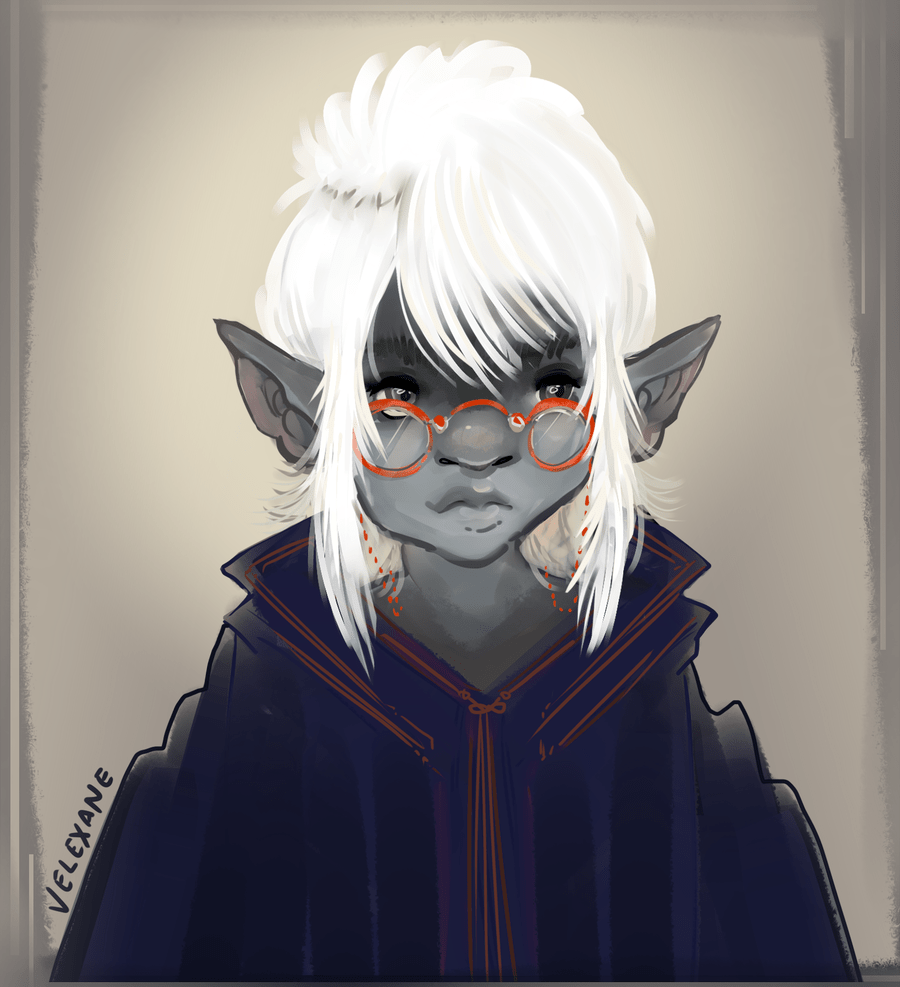
\page
\page
The Hara (Desert Kedakai)
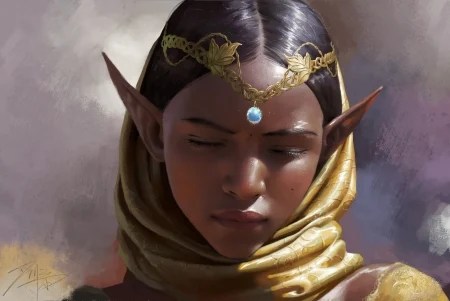
In the world of Seminus, there are no ‘elves’ per se. The closest equivalent are the fey folk known as ‘kedakai’. While kedakai have pointed ears, almond shaped eyes and mechanically resemble ‘elves’ when using 5e D&D rules, they are not conceived in the same vein as the Tolkien-strain of elves and instead are more East Asian in their original conception, of a people who embody the Japanese concept of the Floating World, although the Hara are markedly different.
While kedakai are generally viewed as Sh’rijai by the people of the Northern Vast, there is an offshoot of kedakai that are considered Ma’Halli. In fact, many kindred of the Northern Vast are unaware that the Hara are actually a variant of kedakai because of how much these people differ from their Eastern Realm cousins, both physically and culturally. In fact, many hara and kedakai themselves would be unaware of this fact, given their divergence from each other in the Great Migrations of the First Age almost 10,000 years ago.
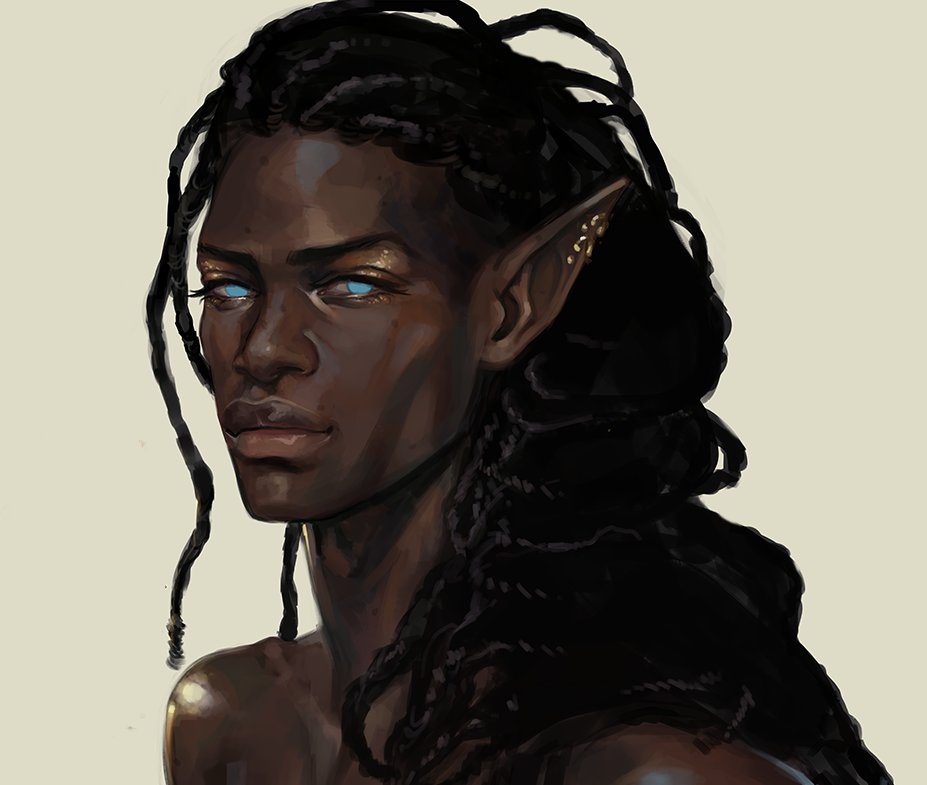
Appearance
Most kedakai are taller than humans, and average around 6 feet, however the hara are slightly shorter, averaging around 5 and a half feet. In terms of physique, they are very naturally very athletic of build, with tightly muscled and toned bodies.
While their ears are pointed like all kedakai, many of them have much shorter helixes on their auricles.
Their hair colour is typically a rich and very dark brown that is almost black, or black itself, although some hara will dye their hair red or orange with henna, depending on their local customs. There are some rare tribes of hara that actually have naturally white hair, as well.
Hara skin tones are generally darker than the cooler-undertoned paler complexions of the kedakai, and can include umbers, sepias, ochres, russets and taupes, amongst other possibilities. However, there are lighter skinned hara. The eyes of the hara are typically one of two colours: a very distinctive bright blue or vivid orange.
Hara also have the custom of tattooing themselves with swirling sand or wind motifs that show their connection to the land and the wind that sweeps across it, much like how they move across the land from season to season. Other hara tribes will paint their skin in distinctive patterns that have religious or social significance and these are worn proudly, even when dealing with outsiders. Some women will tattoo their lips with earthy tones, while others will paint them vivid blues, oranges or reds.
As Harsh As The Desert Itself
As a hara, you are accustomed to the difficult, unforgiving environment that is the desert. Navigating, hunting and foraging in inhospitable places is your forte. Your body has acclimated to harsh conditions and the urgent need to trade for survival has forced you to be a person of the world. Your people are a classic example of Al-Badawi, and your tribe usually resides in the deserts of the world.
The Hara
\page
However, you may also have come from other environments that most other kin would not consider hospitable, such as remote and mountainous regions, savannahs, wastelands, dense forests or barren tundra.
While most hara will remain with their nomadic tribes, moving with the seasons, you are one of the hara that has come to find some use for cities.
You are not alone – in the Nazari and the Mu’şüri Empires there are even ‘Hara Quarters’ in some cities, such as Abu Sunayat, Bafar, Tel Hadisra, and of course, Zarihshan itself.
Yours are generally a warm people. They assume well and, if shown good intentions, they will treat a guest as a family member. But if a hara is slighted or disrespected, the offender will be ousted and shamed.
All hara will somehow quickly know what the offender has done. If someone were to injure or even kill a hara, there would be no place for the villain to hide as the tribe will hunt them down, and probably, their entire family as retribution.
Nomadic Roots
In the wilderness, the hara follow their traditional Al-Badawi nomadic lifestyles. They herd horses, cattle, and goats across the lands, sleeping during the day and working or traveling at night.
Their wandering takes them many places and puts them in contact with many cultures. As a result, they are welcome everywhere for the news and exotic trade goods they carry with them.

Hara Traits
Your hara character has a variety of natural abilities, the result of thousands of years of evolutionary refinement.
Ability Score Increase. Increase 1 ability score by 2 and a different ability score by 1.
Age. Hara mature at the same rate as humans, though they are considered children among their race until they reach the age of 60, when they receive their tattoos. Like all kedakai, the hara basically live forever unless they meet a violent end or are laid waste by illness or disease.
Size. Hara range from 4.5 to around 5.5 feet tall. They typically weigh about 105 pounds. Your size is Medium.
Speed. Your base walking speed is 30 feet.
Child of the Desert. Innate magical power courses through your veins, brought on by your peoples’ affinity to life in the harsh desert.
- You may cast Mold Earth with this trait.
- Starting at 3rd level, you may cast Protection from Poison with it.
- Starting at 5th level, you may cast Erupting Earth with it.
Once you cast a spell with this trait, you cannot do so again until you finish a long rest. Wisdom is your spellcasting ability for these spells.
Desert Dweller. You are adapted to desert life. You suffer no ill effects from high temperatures, and require no additional water in such conditions. You are proficient in the Survival skill.
The Hara
\page
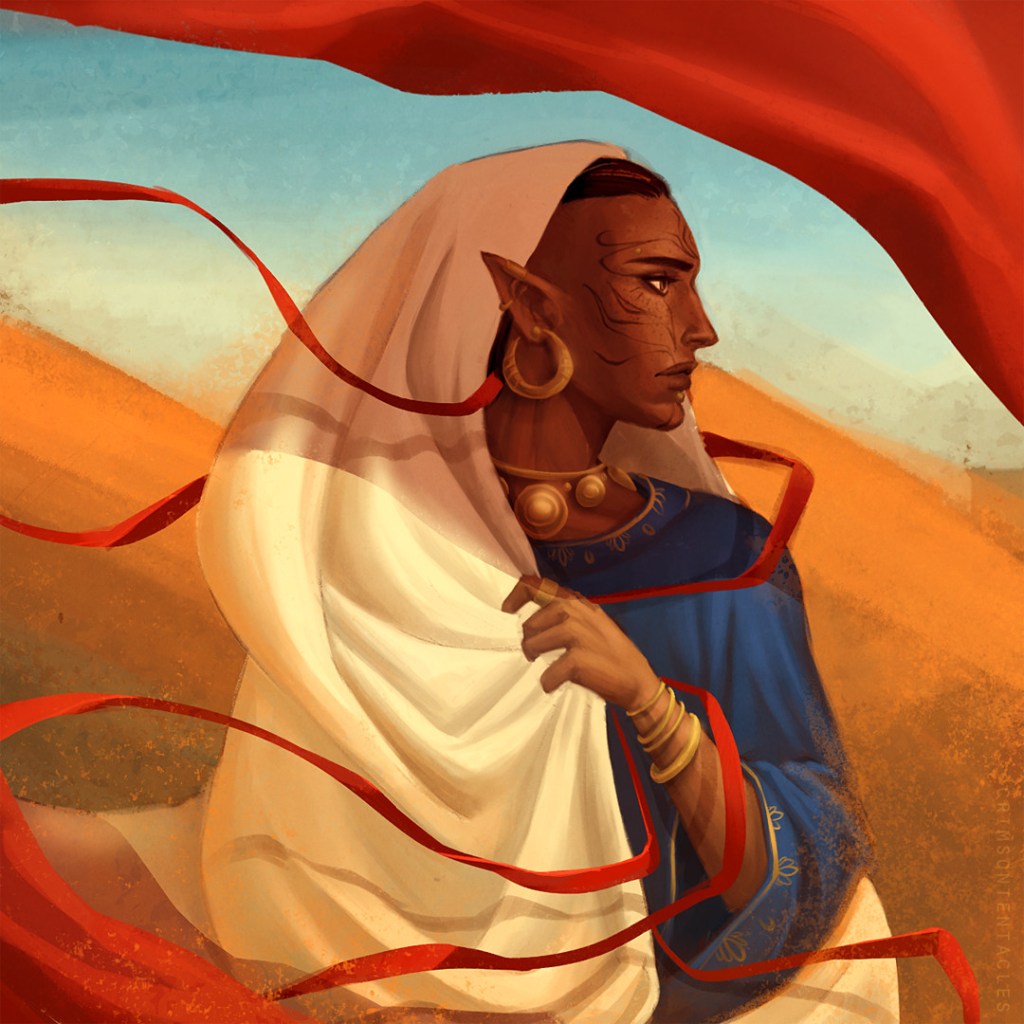
Desert Mirage. While outdoors in a sunny area with an ambient temperature warmer than freezing, you can use a bonus action to create a minor natural phenomenon that surrounds you and up to a number of allies within 10 feet of you equal to your proficiency bonus. The mirage lightly obscures each of you from the view of any creature more than 30 feet away from you for 1 minute. For the duration, each target can attempt to hide even if a target is obscured only by this mirage. You can’t use this trait again until you finish a short or long rest.
Fey Ancestry. You have advantage on saving throws against being charmed, and magic can’t put you to sleep.
Friend of Animals. Your people spend most of their lives riding and working with animals. You are proficient in the Animal Handling skill and you have advantage on Animal Handling checks.
Guided by the Constellations. The hara use the stars to guide their journeys and migrations. You have advantage on Survival checks to navigate in remote areas such as deserts, wildernesses, tundras and the like, provided that you are moving by night and the stars are visible to you.
Languages. You can speak, read, and write Common and the Hara dialect of Kedakai. Your language is fluid, with subtle intonations and intricate grammar. Your literature is rich and varied, and the songs and poems of your people are legendary among the other kin of the Northern Vast, although they are often misremembered or altered by outsiders who don’t know any better. Many bards and rawuns learn your language so they can add hara ballads to their repertoires.
Low-light Vision and Darkvision. Accustomed to twilit deserts and living by the night sky, you have superior vision in dark and dim conditions. You can see in dim light within 60 feet of you as if it were bright light, and in darkness as if it were dim light. You can’t discern color in darkness, only shades of gray. However, if there are conditions of dim illumination, such as starlight, moonlight or torchlight, then you retain the ability to distinguish color and detail under these conditions.

Keen Senses. You have proficiency in the Perception skill.
Piercing Vision. Lightly and heavily obscuring effects due to foliage, heavy rain, falling snow, mist, or other natural phenomena don’t impede your vision. You do not suffer disadvantage on Search or Investigation checks in these conditions like other kin.
Sand Spirit. Difficult terrain comprised of sand or similar desert environs doesn’t cost you extra movement.
Tool Proficiency. You gain proficiency with one of the following artisan’s tools of your choice: Astronomer’s Tools, Calligrapher’s Supplies, Cartographer’s Tools, Coffee Brewing Kit, Leatherworker’s Tools, Painter’s Supplies or Weaver’s Tools.
Trance. Hara don’t need to sleep. Instead, they meditate deeply, remaining semiconscious, for 4 hours a day. (The Common word for such meditation is “trance.”) While meditating, you can dream after a fashion; such dreams are actually mental exercises that have become reflexive through years of practice. After resting in this way, you gain the same benefit that a human does from 8 hours of sleep.
Weapon Proficiency. You have proficiency with the cutlass, glaive, scimitar, shamshir, shortbow.
The Hara
\page
Half-Kedakai

Walking in two worlds but truly belonging to neither, half-kedakai combine what some say are the best qualities of their kedakai and human parents: human curiosity, inventiveness, and ambition tempered by the refined senses, love of nature, and artistic tastes of the kedakai.
Some half-kedakai live among humans, set apart by their emotional and physical differences, watching friends and loved ones age while time barely touches them.
Others live with the kedakai, growing restless as they reach adulthood in the timeless kedakai realms, while their peers continue to live as children.
Many half-kedakai, unable to fit into either society, choose lives of solitary wandering or join with other misfits and outcasts in the adventuring life.
Of Two Worlds
To humans, half-kedakai look like kedakai, and to kedakai, they look human.
In height, they’re on par with both parents, though they’re neither as slender as kedakai nor as broad as humans. They range from under 5 feet to about 6 feet tall, and from 100 to 180 pounds, with men only slightly taller and heavier than women.
Half-kedakai men do have facial hair, and sometimes grow long hair and beards to mask their kedakai ancestry.
Half-kedakai coloration and features lie somewhere between their human and kedakai parents, and thus show a variety even more pronounced than that found among either race.
They tend to have the eyes of their kedakai parents.
Diplomats or Wanderers
Half-kedakai have no lands of their own, though they are welcome in human cities and somewhat less welcome in kedakai bamboo forests.
In large cities in regions where kedakai and humans interact often, half-kedakai are sometimes numerous enough to form small communities of their own. There are many places in the Vast where such interactions occur – and most major cities have a sizeable half-kedakai population. They enjoy the company of other half-kedakai, the only people who truly understand what it is to live between these two worlds.
In most parts of the world, though, half-kedakai are uncommon enough that one might live for years without meeting another. Some half-kedakai prefer to avoid company altogether, wandering the wilds as trappers, foresters, hunters, or adventurers and visiting civilization only rarely. Like kedakai, they are driven by the wanderlust that comes of their longevity. Others, in contrast, throw themselves into the thick of society, putting their charisma and social skills to great use in diplomatic roles or as swindlers.
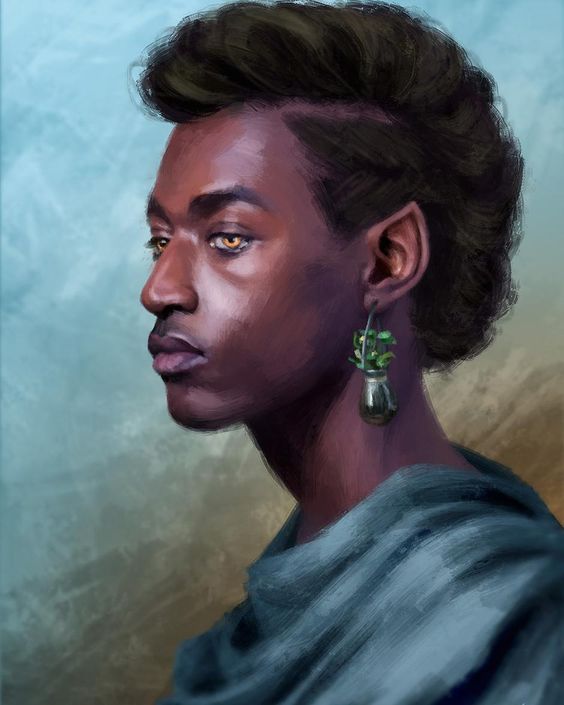
Kedakai: Half-Kedakai
\page

Half-Kedakai Names
Half-kedakai use either human or kedakai naming conventions.
As if to emphasize that they don’t really fit in to either society, half-kedakai raised among humans are often given kedakai names, and those raised among kedakai often take human names.
Half-Kedakai Variants
Some half-kedakai have a racial trait in place of the Skill Versatility trait. If your DM allows it, your half-kedakai character can forgo Skill Versatility and instead take the kedakai trait Keen Senses or else a trait based on your kedakai parentage:
Half-Kedakai Traits
Your half-kedakai character has some qualities in common with kedakai and some that are unique to half-kedakai.
Ability Score Increase. Your Charisma score increases by 2, and two other ability scores of your choice increase by 1. Alternatively, you can increase one ability score of your choice by 2, and two other ability scores of your choice by 1.
Age. Half-kedakai mature at the same rate humans do and reach adulthood around the age of 20. They live much longer than humans, however, often exceeding 180 years.
Size. Half-kedakai are about the same size as humans, ranging from 5 to 6 feet tall. Your size is Medium.
Speed. Your base walking speed is 30 feet.
Darkvision. Thanks to your kedakai blood, you have superior vision in dark and dim conditions. You can see in dim light within 60 feet of you as if it were bright light, and in darkness as if it were dim light. You can’t discern color in darkness, only shades of gray.
Fey Ancestry. You have advantage on saving throws against being charmed, and magic can’t put you to sleep.
Skill Versatility. You gain proficiency in two skills of your choice.
Languages. You can speak, read, and write Common, Elvish, and one extra language of your choice.
Hara Half-Kedakai

Some half-kedakai have a racial trait in place of the Skill Versatility trait. If your DM allows it, your half-kedakai character can forgo Skill Versatility and instead take the kedakai trait Keen Senses or else a trait based on your kedakai parentage:
Hara Kedakai Descent
A half-kedakai of hara kedakai descent can forgo Skill Versatility and instead choose the hara kedakai’s Child of the Desert, Desert Dweller, Desert Mirage, Friend of Animals, Guided by the Constellations or Weapon Proficiency racial traits.
Child of the Desert
Innate magical power courses through your veins, brought on by your peoples’ affinity to life in the harsh desert.
- You may cast Mold Earth with this trait.
- Starting at 3rd level, you may cast Protection from Poison with it.
- Starting at 5th level, you may cast Erupting Earth with it.
Once you cast a spell with this trait, you cannot do so again until you finish a long rest. Wisdom is your spellcasting ability for these spells.
Kedakai: Half-Kedakai
\page
Desert Dweller
You are adapted to desert life. You suffer no ill effects from high temperatures, and require no additional water in such conditions. You are proficient in the Survival skill.
Desert Mirage
While outdoors in a sunny area with an ambient temperature warmer than freezing, you can use a bonus action to create a minor natural phenomenon that surrounds you and up to a number of allies within 10 feet of you equal to your proficiency bonus. The mirage lightly obscures each of you from the view of any creature more than 30 feet away from you for 1 minute. For the duration, each target can attempt to hide even if a target is obscured only by this mirage. You can’t use this trait again until you finish a short or long rest.
Friend of Animals
Your people spend most of their lives riding and working with animals. You are proficient in the Animal Handling skill and you have advantage on Animal Handling checks.
Guided by the Constellations
The hara use the stars to guide their journeys and migrations. You have advantage on Survival checks to navigate in remote areas such as deserts, wildernesses, tundras and the like, provided that you are moving by night and the stars are visible to you.
Weapon Proficiency
You have proficiency with the cutlass, glaive, scimitar, shamshir, shortbow.
Kishin Half-Kedakai

Some half-kedakai have a racial trait in place of the Skill Versatility trait. If your DM allows it, your half-kedakai character can forgo Skill Versatility and instead take the kedakai trait Keen Senses or else a trait based on your kedakai parentage:
Kishin Kedakai Descent
A half-kedakai of kishin kedakai descent can forgo Skill Versatility and instead choose the kishin kedakai’s Kishin Weapon Training or Cantrip racial traits.
Kishin Weapon Training
You have proficiency with the longsword, shortsword, shortbow, and longbow.
Cantrip Racial Trait
You know one cantrip of your choice from the wizard spell list. Intelligence is your spellcasting ability for it. This spell does not count towards your known spells or cantrip spell slots.
Tsukimin Half-Kedakai

Some half-kedakai have a racial trait in place of the Skill Versatility trait. If your DM allows it, your half-kedakai character can forgo Skill Versatility and instead take the kedakai trait Keen Senses or else a trait based on your kedakai parentage:
Tsukimin Kedakai Descent
A half-kedakai of tsukimin kedakai descent can forgo Skill Versatility and instead choose the tsukimin kedakai’s Blessing of the Moon, Fleet of Foot, Incisive Sense, Mask of the Wild or Tsukimin Weapon Training racial traits.
Blessing of the Moon
You know the light cantrip, however the light it sheds is a silvery moonlight. When you reach 3rd level, you can cast the sleep spell once with this trait and regain the ability to do so when you finish a long rest. When you reach 5th level, you can cast the invisibility spell (targeting yourself only) once with this trait and regain the ability to do so when you finish a long rest. Casting these spells with this trait doesn’t require material components. Wisdom is your spellcasting ability for these spells.
Kedakai: Half-Kedakai
\page

Fleet of Foot
Your base walking speed increases to 35 feet.
Incisive Sense
You have advantage on Intelligence (Investigation) and Wisdom (Insight) checks.
Mask of the Wild
You can attempt to hide even when you are only lightly obscured by foliage, heavy rain, falling snow, mist, and other natural phenomena.
Tsukimin Weapon Training
You have proficiency with the longsword, shortsword, shortbow, and longbow.

Yami Half-Kedakai

Some half-kedakai have a racial trait in place of the Skill Versatility trait. If your DM allows it, your half-kedakai character can forgo Skill Versatility and instead take the kedakai trait Keen Senses or else a trait based on your kedakai parentage:
Yami Kedakai Descent
Yami Magic
A half-kedakai of yami descent can forgo Skill Versatility and instead choose the yami’s Yami Magic racial trait:
Yami Magic Racial Trait
You know the dancing lights cantrip. When you reach 3rd level, you can cast the faerie fire spell once with this trait and regain the ability to do so when you finish a long rest. When you reach 5th level, you can cast the darkness spell once with this trait and regain the ability to do so when you finish a long rest. Charisma is your spellcasting ability for these spells.

Kedakai: Half-Kedakai
\page ## Humans Of all the kin of Seminus, humans are the most diverse and adaptable. Humans can be found in every region of the world, in almost every country and major city, even if they only form a minority in that particular place. Different humans train in a wide variety of fighting styles, including those particularly favored by other races. Humans defy trends and categorization. Because Seminus has been conceived as a fluid means for players to express their own spin on a given character, there are pretty much an analogue between real-world countries and a Human country of some kind somewhere in the game world. Partly this is left open-ended for greater player freedom of backstory creation, and partly this is because Seminus is so huge that not every corner has been immaculately developed – and even if it was, such a presentation would be beyond the scope of this resource book. What follows is an alphabetical list of country and brief real-world ‘equivalence’. If a player would like to know more about a specific country, please let the DM know. A reference for kindred by region can also be found near the front of this book, along with maps of each region. {{wide ##### Human countries of Seminus | Country Name | Adjective | Region of the World | Type of Government | Real-life ‘Equivalence’ | |:——————–|:—–:|:—————-:|:——–:|:———-:| | Bezbjedan | Bezbjedanian|The Western Lands|Tsardom |Medieval Russia| | Borovija| Borovijan| The Southern Wastes|Tsarinadom |Medieval Romania / Macedonia / Ukraine / Transylvania | | Durrân | Durrâni | The Eastern Realms|Khanate |Medieval Afghanistan / Balochistan / Mongolia | | Ghazâl | Ghazâli | The Eastern Realms | Bardic Kings| Poetic Hanging Gardens of Babylon Mesopotamia| | Iteru | Iterun | The Northern Vast | Pharoah Dynasty| Nile Delta Ancient Egypt| | Jinguo | Jin | The Eastern Realms | Empire and Provinces | Later Tang / Song Dynasty Imperial China| | Khepresh | Khepreshi | The Northern Vast | Necromancer Kings | High Magic Tech Ancient Egyptian / Necron| | Khotân | Khotâni | The Eastern Realms | Emperor and Satrapies| Ancient Persia| | Kovnost | Kovnostati| The Western Lands| Plutocracy| Medieval Hungary | | Kraškazemlja | Kraškazemljan|The Western Lands| Kingdom|Medieval Istrija, Montenegro and Venetian Dalmatia| | Luccana | Luccan | The Western Lands | Signoria of Six and Two| Renaissance Florence and Rome| | Mu’şür | Mu’şüri | The Northern Vast | Enlightened Grand Sultanate | Ottoman Empire at its mathematical, scientific and miltiary might| | Nazâr | Nazâri | The Northern Vast and The Eastern Realms | Confederacy of Trading City-States | Medieval Anatolia / Medieval Armenia / Silk Road cities like Samarkand| | Obilan|Obilani| The Western Lands|Kingdom | Medieval Croatia and Bosnia| | Plavarijeka | Plavarijekan | The Western Lands | Kingdoms and Fiefdoms | Medieval Serbia| |Ritterreich| Reichlander| The Western Lands| Imperial Theocracy| Medieval Germany under the Witch Hunts and Inquisition| |Ryōppon | Ryō | The Eastern Realms | Emperor and Provincial Daimyo| Joseon Dynasty Korea and Tokugawa Japan| |Şa’kâl | Şa’kâlese| The Eastern Realms | Kingdoms| Medieval India and Thailand| |San Monteditorre| Monteditorrean| The Western Lands |Theocratic Principality | Medieval Montenegro under the Ottomans| | Selinia | Selinian | The Western Lands | Kingdoms and Fiefdoms | *Tales of King Arthur* type Medieval England and France | |Stórkaltland|Stórkaltlander|The Southern Wastes | Thanedoms and Jarldoms|Medieval Scandinavia / Vikings | |Tarim|Tarim| The Eastern Realms | Warring Warlords and nomadic tribes| Medieval Afghanistan / Uzbekistan / Central Asian Steppes| |Volterra | Volterran| The Western Lands and the Northern Vast | Democratic Republic| Ancient Greece and Rome / Medieval Malta with Knight Strongholds| | Zakopanija | Zakopanijan| The Southern Wastes | Kingdoms and Fiefdoms | Medieval Poland | | Zargoraza |Zargorazan|The Western Lands | Kingdoms and Fiefdoms| Medieval Spain after The Reconquista| | The Most Serene Republic of Zenevia | Zenevian|The Western Lands|Doge and Great Council of Ten| Renaissance Venice| }} \page
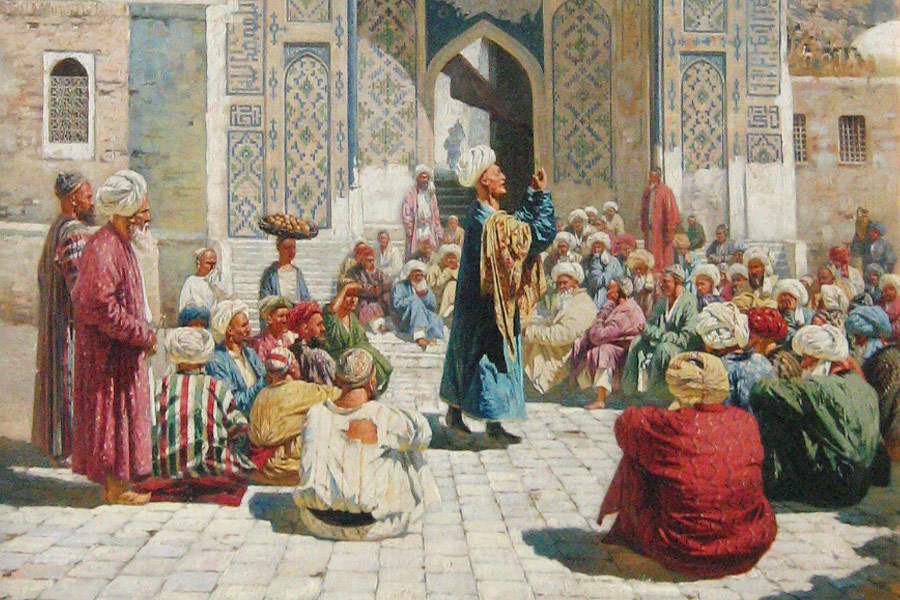
### Human Traits By default, the humans of Seminus use the Variant Human traits as presented in the ***Player’s Handbook***. This allows them greater specialization from the very beginning of their careers, and emphasizes the diversity of humans. Feel free to use the vanilla version of Humans if you prefer. **Ability Score Increase.** Two different ability scores of your choice increase by 1. **Age.** Humans reach adulthood in their late teens. While some stories talk of humans who have unnaturally long lifespans due to their arcane practices, in general humans live to be around 60, although some live as long as 120. **Alignment.** Humans tend toward no particular alignment. The best and the worst of kin are found among them. **Size.** Humans vary widely in height and build, from barely 5 feet to well over 6 feet tall. Regardless of your position in that range, your size is Medium. **Speed.** Your base walking speed is 30 feet. **Skills.** You gain proficiency in one skill of your choice. **Feat.** You gain one feat of your choice from Level 1. **Languages.** You can speak, read, and write Common (typically Mu’şüri) and one extra language of your choice.
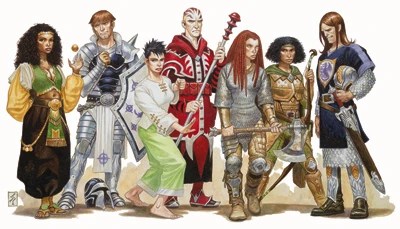



\page

\page
Kedakai (Elves)
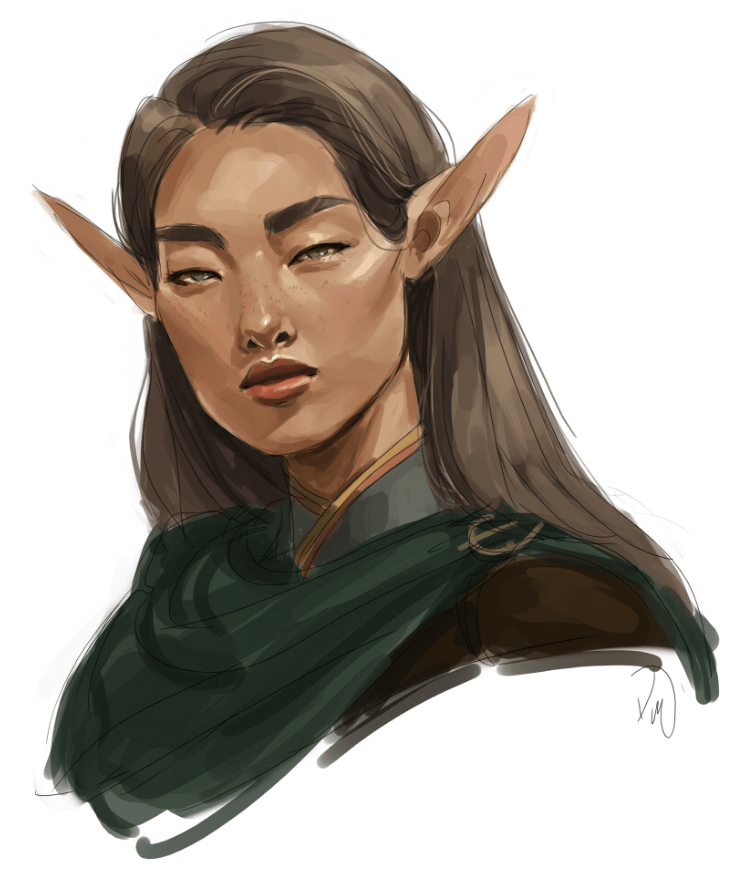
Native to the Eastern Realms, the kedakai are a people of otherworldly grace.
Theirs is a floating world of ethereal beauty, and theirs is a culture that focuses on finding that fleeting beauty in life’s transience.
Graced with practically immortally long lives, kedakai can spend several lifetimes of other kin refining their practice in a given trade or artistry to become unparalleled at what they do.
Nonetheless, culturally they are expected to be prepared to sacrifice their existence in the blink of an eye to maintain the honour of their liege, clan or family.
The kedakai live in ornately decorated metropoli, with many intricately sculpted gardens and water features. Many of their cities have canals instead of roads.
Otherwise they are located in the midst of ancient forests or in tiered pagoda spires that glitter with firefly light, where soft and tranquil music drifts through the air and gentle fragrances waft on the breeze.
Kedakai feel most at ease in nature, which they adore immensely. They also love magic, art and artistry, music and poetry, and the good things of the world.
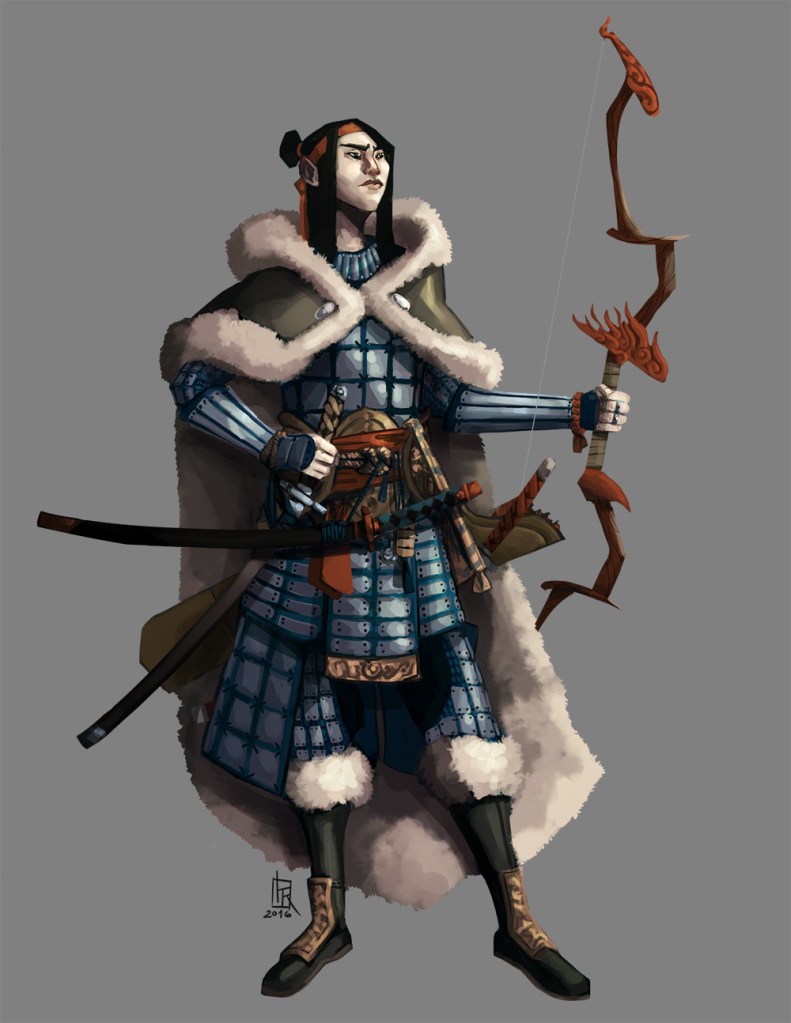
Slender and Graceful
With their unearthly grace and fine features, kedakai appear hauntingly beautiful to humans and members of many other races.
They are slightly taller than humans on average, ranging from 6 feet tall to almost 7 feet.
They are more slender than humans, weighing only 100 to 145 pounds. Males and females are about the same height, and males are only marginally heavier than females.
Kedakai colouration encompasses the normal human range and also includes skin in shades of copper, bronze, ash-grey and almost bluish-white.
Their hair is often as black as night, or else snow-white, however some kedakai have hair that is silvery or golden, coppery or orange, or green or blue.
Their almond-shaped eyes resemble pools of liquid gold or silver.
Kedakai have little body hair, however the males can grow beards once they reach about 1,000 years of age.
In general they favour elegant clothing in natural or vivid colors, and they enjoy simple yet lovely jewelry.
Kedakai
\page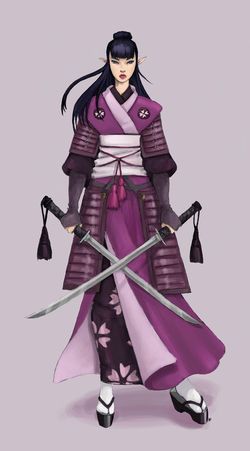
A Timeless Perspective
Unless they are killed by violence, illness or disease, kedakai will essentially live forever.
This practically immortal existence gives them a broad perspective on events that might trouble the shorter-lived races more deeply. They are more often amused than excited, and more likely to be curious than greedy.
They tend to remain aloof and unfazed by petty happenstance.
When pursuing a goal, however, whether adventuring on a mission or learning a new skill or art, kedakai can be focused and relentless.
They are slow to make friends and enemies, and even slower to forget them. They reply to petty insults with disdain and to serious insults with vengeance.

Like the branches of a young tree, kedakai are flexible in the face of danger.
They trust in diplomacy and compromise to resolve differences before they escalate to violence.
They have been known to retreat from intrusions into their island nation, confident that they can simply wait the invaders out.
In fact, there have been times throughout history when the kedakai imperial family has, by official decree, sealed off their entire archipelago to outsiders. These periods of time are known as Closed Country.
However, when the need arises, kedakai reveal a stern martial side, demonstrating supreme skill with the sword, the bow, and with military strategy.

Kedakai
\page
People of the Island Realms
Most kedakai dwell on their mountainous archipelago nation of Inkido, in small, terraced rice paddy villages hidden in bamboo forests or in forested mountains. They hunt game, gather food, and grow rice and vegetables, and while they clear and plow the land, they do so in a sustainable way that has little negative impact on their environment.
They are talented artisans, crafting finely worked clothes and artistic objects. Their contact with outsiders is usually limited, though a few kedakai make a good living by trading crafted items for metals which, while their island nation is rich in such resources, they have no interest in mining.
Kedakai encountered outside their own lands are commonly traveling minstrels, artists, or sages. Human nobles compete for the services of kedakai instructors to teach swordplay or magic to their children.

Exploration and Adventure
Kedakai take up adventuring out of wanderlust. Since they are so long-lived, they can enjoy centuries of exploration and discovery. They dislike the pace of human society, which is regimented from day to day but constantly changing over decades, so they find careers that let them travel freely and set their own pace. Kedakai also enjoy exercising their martial prowess or gaining greater magical power, and adventuring allows them to do so. Some might join with rebels fighting against oppression, and others might become champions of moral causes.
Kedakai Traits
Your kedakai character has a variety of natural abilities.
Ability Score Increase. Your Dexterity score increases by 2. Alternatively, pick an ability score to increase by 2.
Age. Theoretically, kedakai can live forever. They do not age the same way that other kin do. Although kedakai reach physical maturity at about the same age as humans, the kedakai understanding of adulthood goes beyond physical growth to encompass worldly experience. A kedakai typically claims adulthood and an adult name around the age of 1000 and can continue to live unless they are struck down by illness, disease or violence. That said, kedakai are far more asexual than most kindred and their procreation rates are the lowest in the known world.
Size. Kedakai range from 5 and a half feet to 6 and a half feet tall, with the average height being about 6 feet. They have naturally thin, wiry and slender builds. Your size is Medium.
Speed. Your base walking speed is 30 feet.
Darkvision. Accustomed to twilit forests and the night sky, you have superior vision in dark and dim conditions. You can see in dim light within 60 feet of you as if it were bright light, and in darkness as if it were dim light. You can’t discern color in darkness, only shades of gray.
Keen Senses. You have proficiency in the Perception skill.
Fey Ancestry. You have advantage on saving throws against being charmed, and magic can’t put you to sleep.
Trance.
Kedakai don’t need to sleep. Instead, they meditate deeply, remaining semiconscious, for 4 hours a day. (The Common word for such meditation is “trance.”) While meditating, you can dream after a fashion; such dreams are actually mental exercises that have become reflexive through years of practice. After resting in this way, you gain the same benefit that a human does from 8 hours of sleep.
Languages. You can speak, read, and write Common and Kedakai. Your language is fluid, with subtle intonations and intricate grammar.
Your literature is rich and varied, and the songs and poems of your people are legendary among the other kin of the Northern Vast, although they are often misremembered or altered by outsiders who don’t know any better. Many bards and rawuns learn your language so they can add kedakai ballads to their repertoires.
Kedakai
\page
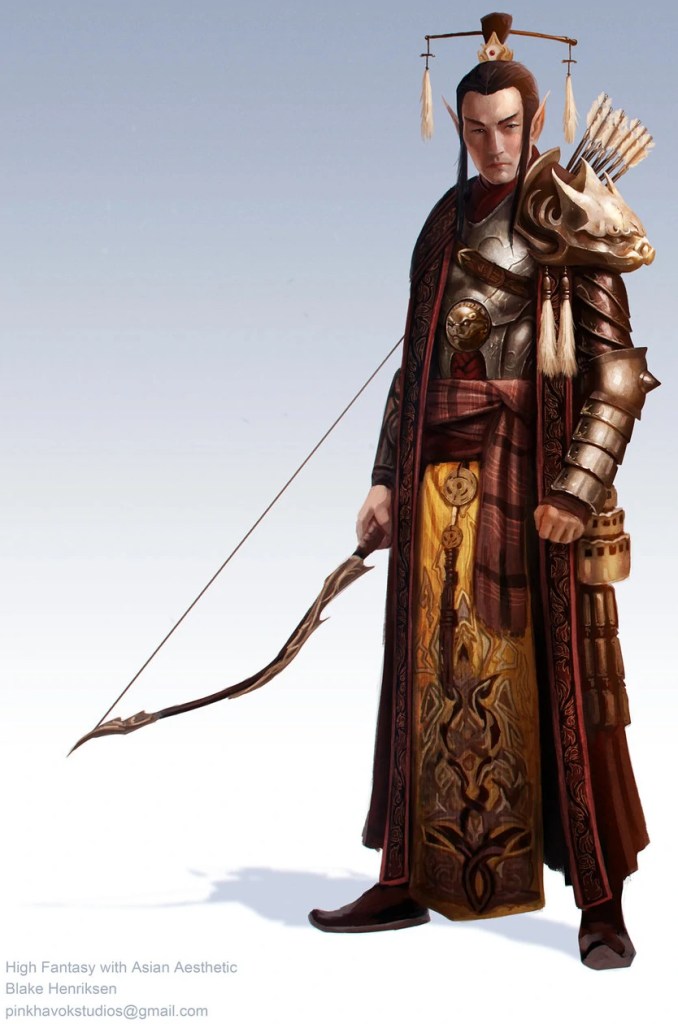
\page

Subraces
While the Hara are also technically a variant of kedakai, most people in the world are unaware of this and indeed, even between the hara and the kedakai themselves, very few consider them to be of the same distant lineages.
To most, the Great Migrations of the First Age resulted in ancient divides among the kedakai people that have remained over the millenia, and essentially created three main subraces: Kishin (sun folk), Tsukimin (moon folk), and Yami (dark folk, also known as drow in the Common tongue).
Choose one of the subraces presented below.
Kishin (Sun folk)

As a kishin kedakai, you have a keen mind and a mastery of at least the basics of magic. Your folk are natural leaders and many kedakai provinces are ruled over by kishin damiyō. The current shōgun of Inkido is a kishin, as is the emperor of the kedakai.
Many kishin have bronze skin, however some are much paler, with alabaster skin sometimes tinged with blue. Their hair can be black, brown, copper or golden blond, but some have hair of silver-white, henna red, or even blue. Their almond shaped eyes are black, blue or green and flecked with gold, or else luminscently golden, red or silver.
Ability Score Increase. Your Intelligence score increases by 1. Alternatively, increase one ability score by 1 (but not the one you increased by 2 when you picked the kedakai option for your character).
Kishin Weapon Training.
You have proficiency with the longsword, shortsword, shortbow, and longbow.
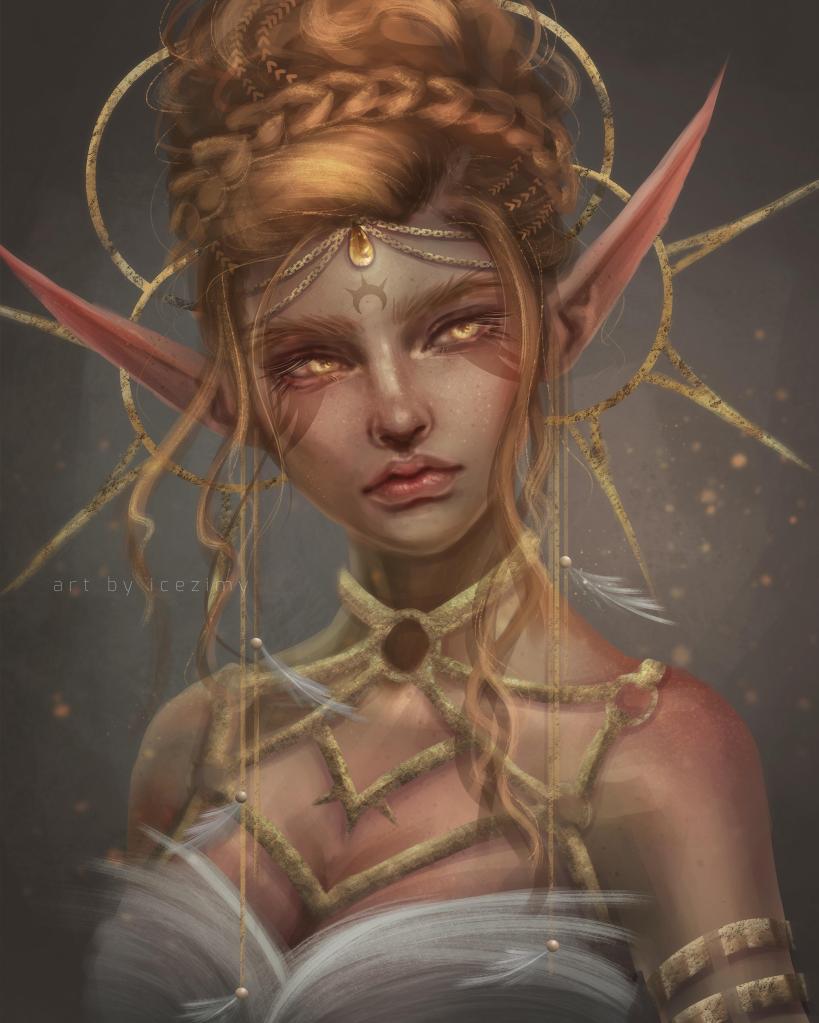
Cantrip. You know one cantrip of your choice from the wizard spell list. Intelligence is your spellcasting ability for it. This spell does not count towards your known spells or cantrip spell slots.
Extra Language. You can speak, read, and write one extra language of your choice.
Kedakai: Kishin
\page

Tsukimin (Moon folk)
As a Tsukimin, you have keen senses and intuition. Your fleet feet carry you quickly and stealthily through your native bamboo forests.
Often alabaster pale white of complexion, but not always, tsukimin kedakai skin can include silvery hues to something more copperish, sometimes with traces of blue or green. Their hair tends toward browns and blacks, but it is also known to be blond, silvery or copper-colored. Their eyes are often green, brown, or hazel.

Ability Score Increase. Your Wisdom score increases by 1. Alternatively, increase one ability score by 1 (but not the one you increased by 2 when you picked the kedakai option for your character).
Blessing of the Moon.
You know the light cantrip, however the light it sheds is a silvery moonlight. When you reach 3rd level, you can cast the sleep spell once with this trait and regain the ability to do so when you finish a long rest. When you reach 5th level, you can cast the invisibility spell (targeting yourself only) once with this trait and regain the ability to do so when you finish a long rest. Casting these spells with this trait doesn’t require material components. Wisdom is your spellcasting ability for these spells.

Fleet of Foot. Your base walking speed increases to 35 feet.
Incisive Sense. You have advantage on Intelligence (Investigation) and Wisdom (Insight) checks.
Mask of the Wild. You can attempt to hide even when you are only lightly obscured by foliage, heavy rain, falling snow, mist, and other natural phenomena.
Tsukimin Weapon Training. You have proficiency with the longsword, shortsword, shortbow, and longbow.

Kedakai: Tsukimin
\page

\page

Yami (Drow)
As a yami, you are infused with the magic of the Great Under-Realm Below, known in your language as Yama. Yama is an underground realm of wonders and horrors rarely seen on the surface above. You are at home in shadows and, thanks to your innate magic, learn to conjure forth both light and darkness. Your kin tend to have either stark white, coal black or luminescently blue-green hair and grayish skin of many hues.
Ability Score Increase. Your Charisma score increases by 1.
Alternatively, increase one ability score by 1 (but not the one you increased by 2 when you picked the kedakai option for your character).
Superior Darkvision. Your darkvision has a radius of 120 feet.
Sunlight Sensitivity. You have disadvantage on attack rolls and on Wisdom (Perception) checks that rely on sight when you, the target of your attack, or whatever you are trying to perceive is in direct sunlight.
Yami Magic. You know the dancing lights cantrip. When you reach 3rd level, you can cast the faerie fire spell once with this trait and regain the ability to do so when you finish a long rest. When you reach 5th level, you can cast the darkness spell once with this trait and regain the ability to do so when you finish a long rest.
- Charisma is your spellcasting ability for these spells.
Yami Weapon Training. You have proficiency with rapiers, shortswords, and hand crossbows.


Kedakai: Yami
\page

\page
Khemeti (Jackalkin)
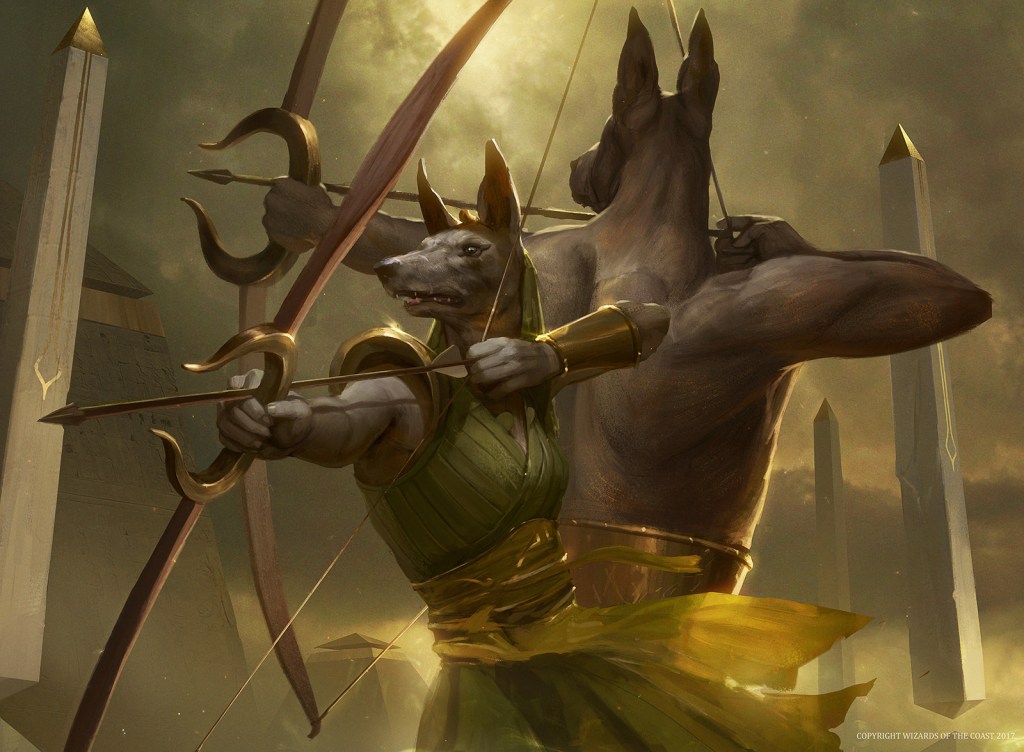
Khemeti are tall and lean, with graceful bodies and heads that strongly resemble jackals. Their snouts are long and sharp, and their angular ears rise straight above their heads. Their bodies are covered in dark, sleek hair that ranges from the brown of the desert sands to ebony black. Despite their sharp teeth, they consider biting to be an uncouth and unworthy combat tactic.
Nearly every khemeti is born a fraternal or identical twin, and a pair of khemeti twins forms an extremely close emotional bond unknown to most other residents of Khemet. The death of one twin in training or the trials causes a tremendous shock to the survivor, who typically grows more aggressive and foolhardy in battle.
The rare khemeti who are born without twins are believed to have killed their siblings in the womb, and are thus viewed as natural-born initiates, sure to achieve a glorified death in the Rites of Zeal.
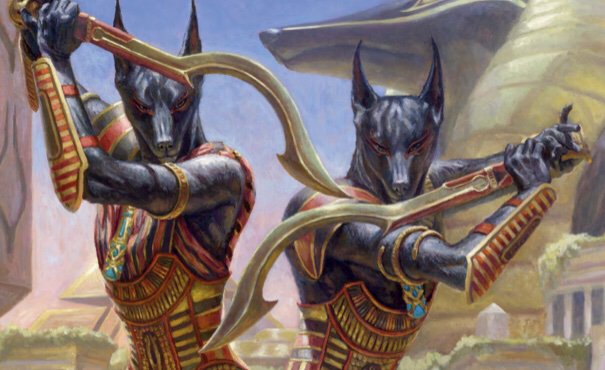
Khemeti names are inspired by real-world ancient Egyptian names, and usually only have one name.
Female: Sudi, Teti, Omorose, Subira, Eopei
Male: Anebni, Adom, Rashidi, Sekani, Bau
Khemeti Traits
Ability Score Increase. One ability score of your choice increases by 2, and another ability score increases by 1.
Age. Khemeti mature quickly, reaching adulthood in their early teens. Khemeti initiates are usually the youngest in a litter, completing the Rites by their late teens.
Although physically a khemeti could live to an age as old as 250, this is extremely rare, for they typically die a violent death before the age of 60. The only caste that regularly reaches old age is the priest class. If they survive that long, Khemeti fur starts to grey at around 150 years of age.
Alignment. Most khemeti lean toward chaotic alignments. They have no particular inclination toward good or evil.
Darkvision. Your eyes are adapted to low light conditions.
You can see in dim light within 60 feet of you as if it were bright light, and in darkness as if it were dim light. You can’t discern color in darkness, only shades of gray.
Devout. Paladin or not, you are a firm worshiper of a god, or at least you’ve learned plenty about them. You have proficiency in the Religion skill.
Size. Khemeti have similar builds to humans. Your size is Medium.
Speed. Your base walking speed is 35 feet.
Keen Senses. You have advantage on Wisdom (Perception) and Wisdom (Survival) checks that that involve hearing or smell. You also have advantage on checks to see if you are surprised.
Khemeti Weapon Training. You have proficiency with the cutlass, khopesh, jambiya, javelin, spear and staff sling.
Khemeti Twins. If your twin is alive and you can see your twin, whenever you roll a 1 on an attack roll, ability check, or saving throw, you can reroll the die and must use the new roll.
If your twin is dead (or if you were born without a twin), you can’t be frightened.
Languages. You can speak, read, and write Common and Khemeti.
You also have advantage on checks made to see if you are surprised, provided you are not deafened or your nose is not covered up.
The Desert Is Your Home. The Khemeti are a desert-living race, and as such are well-adapted to extremely hot weather conditions, droughts, and feel more at home in sandy environments.
You gain advantage on Survival checks made in desert conditions.
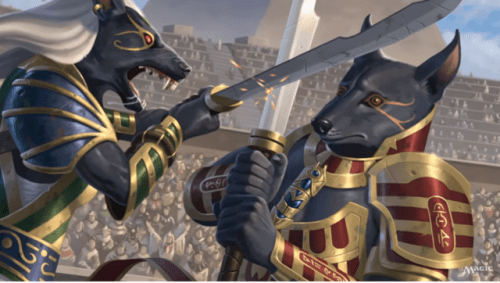
Khemeti (JACKALKIN)
\page
Kýrosians (MINOTAURS)
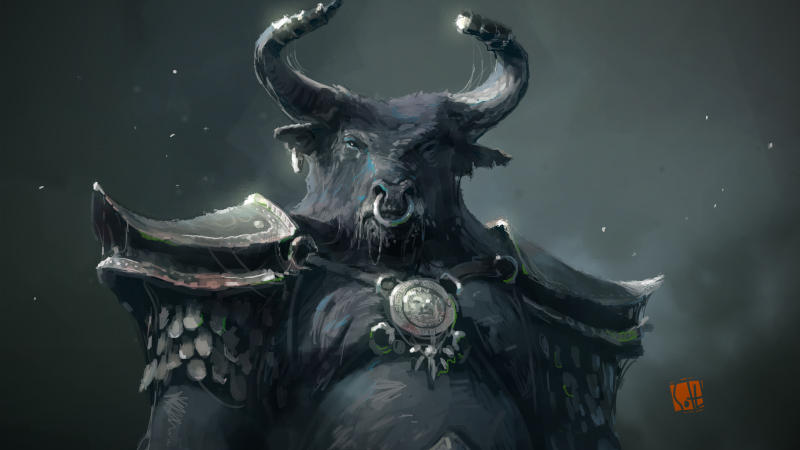
Kýrosians are powerfully built, barrel-chested humanoids with heads resembling bulls, cows, buffalo or rams. Their horns either extend outwards to sharp points, or else curl tightly against the sides of their heads to encircle their ears, and manes of shaggy fur — shorter in females — fall over their (typically broad) shoulders. Although they are as varied in temperament as humans, many Kýrosians combine physical strength with determination, stubbornness, bravado or reckless bravery. Their native culture is a contradiction, for while it revels in combat and warfare, it also exemplifies agriculture, architecture, commerce, mathematics, navigation, philosophy, religion, seafaring, science and technology.
Kýrosians typically rise to a challenge, especially when the odds against them seem overwhelming – and they take great pride in overcoming adversity in their own fashion. The worst Kýrosians are rowdy, boisterous, and direct to the point of rudeness, having no qualms about declaring what they want and defying others to keep it from them. However, they are also capable of great generosity, honesty, compassion and gentleness. In combat, they traditionally bellow loud challenges in defiance of their foes, and roar with laughter as they triumph. They keep a tally of foes slain in battle and compete against each other to prove the most tenacious on the battlefield.
Kýrosians believe they hold a unique place among the races of the Northern Vast as the ‘origin of civilisation itself,’ and, while this is demonstrably false, no Kýrosian would ever admit otherwise, regardless of the evidence presented to them, so great is the propaganda of the tyrannical regime of their Polis.
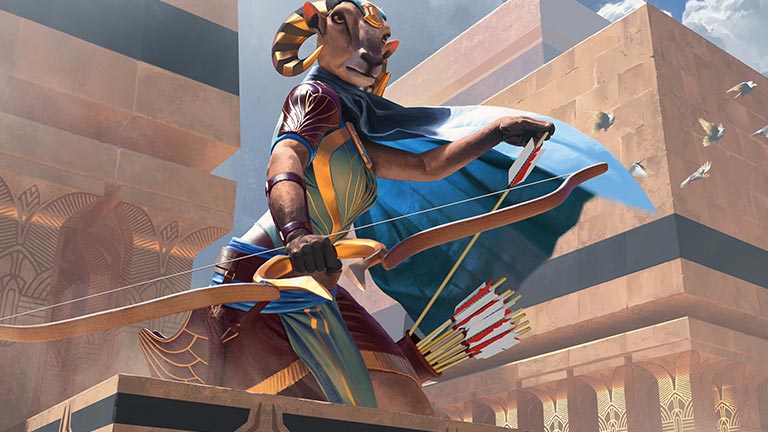
Kýrosian Traits
Ability Score Increase. One ability score of your choice increases by 2, and another ability score increases by 1.
Age. Kýrosians mature and age at about the same rate as humans.
Alignment. Kýrosians who grow up in the Kýrosian Isles tend to be influenced by the strict laws and propaganda of the regime of the Polis, and so typically have a lawful alignment. Those who leave or grow up elsewhere may pursue more chaotic alignments.
Size. Kýrosians average around 7 feet in height, and while they often have stocky builds, this is not strictly always the case. There are plenty of lithe Kýrosians.
Your size is Medium.
Speed. Your base walking speed is 30 feet. Unless your Strength is below 13, your speed is not reduced by wearing heavy armour.
Horns. Your horns are natural melee weapons, which you can use to make unarmed strikes.
If you hit with them, you deal piercing damage equal to 1d6 + your Strength modifier, instead of the bludgeoning damage normal for an unarmed strike.
Goring Rush. Immediately after you use the Dash action on your turn and move at least 20 feet, you can make one melee attack with your horns as a bonus action.
In this case, if you hit with them, you deal piercing damage equal to 2d6 + your Strength modifier, instead of the bludgeoning damage normal for an unarmed strike.
Hammering Horns. Immediately after you hit a creature with a melee attack as a part of the Attack action on your turn, you can use a bonus action to attempt to shove that target with your horns. The target must be within 5 feet of you and no more than one size larger than you. Unless it succeeds on a Strength saving throw against a DC equal to 8 + your proficiency bonus + your Strength modifier, you push it up to 10 feet away from you.
Imposing Presence. You have proficiency in one of the following skills of your choice: Intimidation or Persuasion.
Languages. You can speak, read, and write Common, Kýrosian and an additional language of your choice.
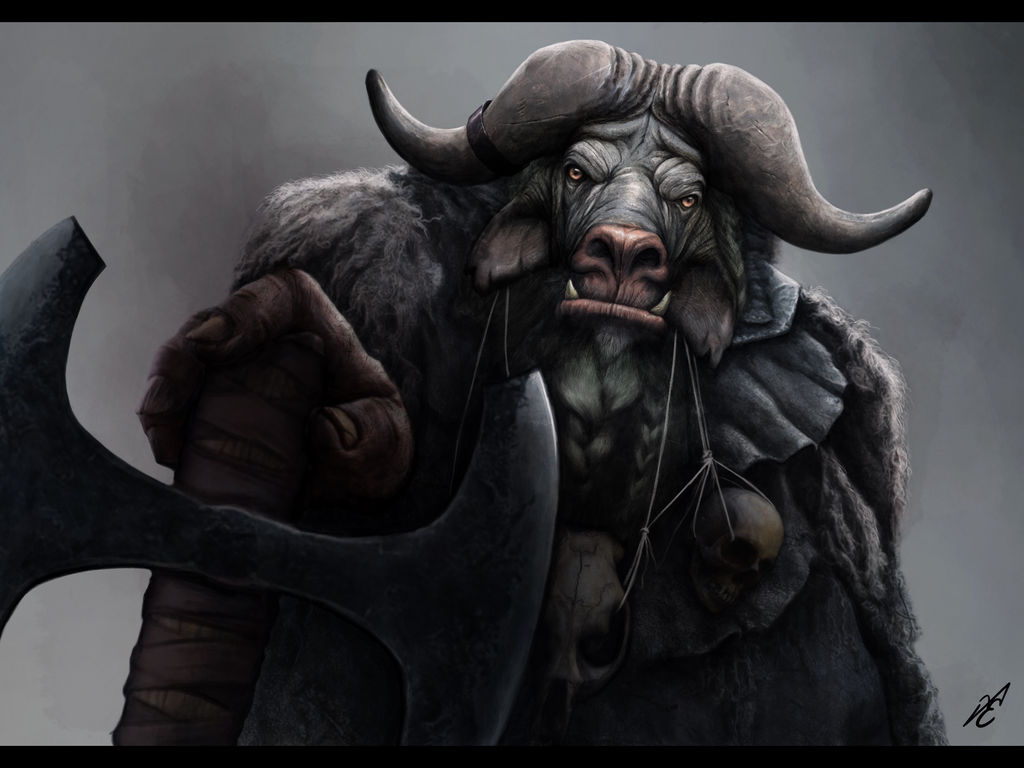
Kýrosians (MINOTAURS)
\page
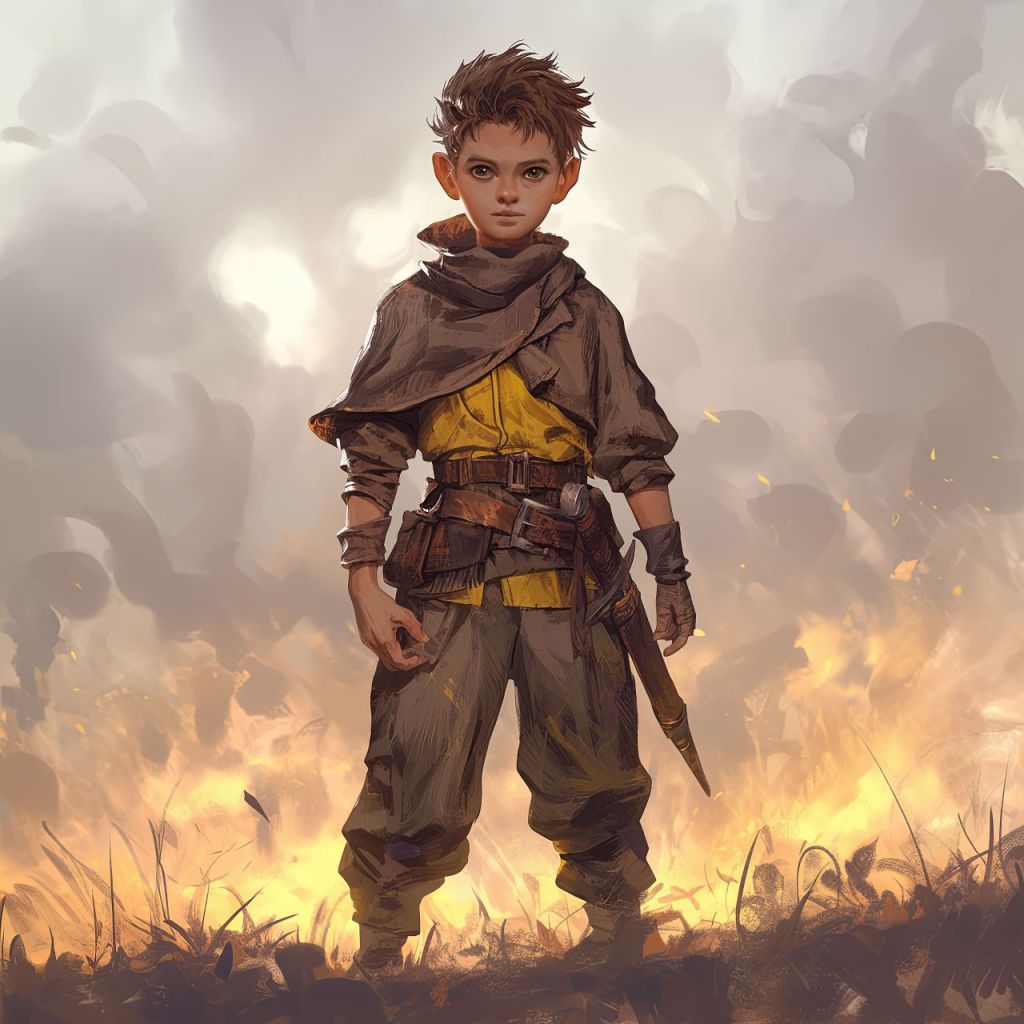
\page
Ko / Lilkin

The ko are actually a kind of gnome, although they are very different to the tinkerers and scientists of Zilverhome or the so-called ‘common gnome’ of the forest and wilderness. Known as ‘lilkin’ in the Common tongue by other kindred, the diminutive ko survive in a world full of larger creatures by avoiding notice or, barring that, avoiding offense. Standing about 3 feet tall, they appear relatively harmless and so have managed to survive for centuries in the shadow of empires and on the edges of wars and political strife. They are inclined to be stout, weighing between 40 and 45 pounds.
Ko skin ranges from tan to pale with a ruddy cast, and their hair is usually brown or sandy brown and wavy. They have brown or hazel eyes. Ko men often sport long sideburns, but beards are rare among them and mustaches even more so. They like to wear simple, comfortable, and practical clothes, favoring bright colors.
Ko practicality extends beyond their clothing. They’re concerned with basic needs and simple pleasures and have little use for ostentation. Even the wealthiest of lilkin keep their treasures locked in a cellar rather than on display for all to see. They have a knack for finding the most straightforward solution to a problem.
Kind and Curious
Ko are an affable and cheerful people who cherish the bonds of family and friendship as well as the comforts of hearth and home, harboring few dreams of gold or glory. Even adventurers among them usually venture into the world for reasons of community, friendship, wanderlust, or curiosity.
They love discovering new things, even simple things, such as an exotic food or an unfamiliar style of clothing.
Lilkin are easily moved to pity and hate to see any living thing suffer. They are generous, happily sharing what they have even in lean times.
Blend into the Crowd
Ko are adept at fitting into a community of ad’amlar, gnomes, humans or kedakai, making themselves valuable and welcome. The combination of their inherent stealth and their unassuming nature helps lilkin to avoid unwanted attention.
Lilkin work readily with others, and they are loyal to their friends, whether ko or otherwise. They can display remarkable ferocity when their friends, families, or communities are threatened.
Ko Society
Most ko live in small, peaceful communities with large farms and well-kept groves. They rarely build kingdoms of their own or even hold much land beyond their quiet shires. They typically don’t recognize any sort of lilkin nobility or royalty, instead looking to family elders to guide them. Families preserve their traditional ways despite the rise and fall of empires. In the Northern Vast, many ko have made agricultural communities in the lands of Khemet, Iteru, Nazar and the Mu’şüri Empire, and, although they are considered Sh’rijai in theory, due to their kindess, generosity and hospitality, most are considered a welcome addition to any city, town or village.
Many ko live among other races, where the lilkins’ hard work and loyal outlook offer them abundant rewards and creature comforts. Some ko communities travel as a way of life, driving wagons or guiding boats from place to place and maintaining no permanent home.
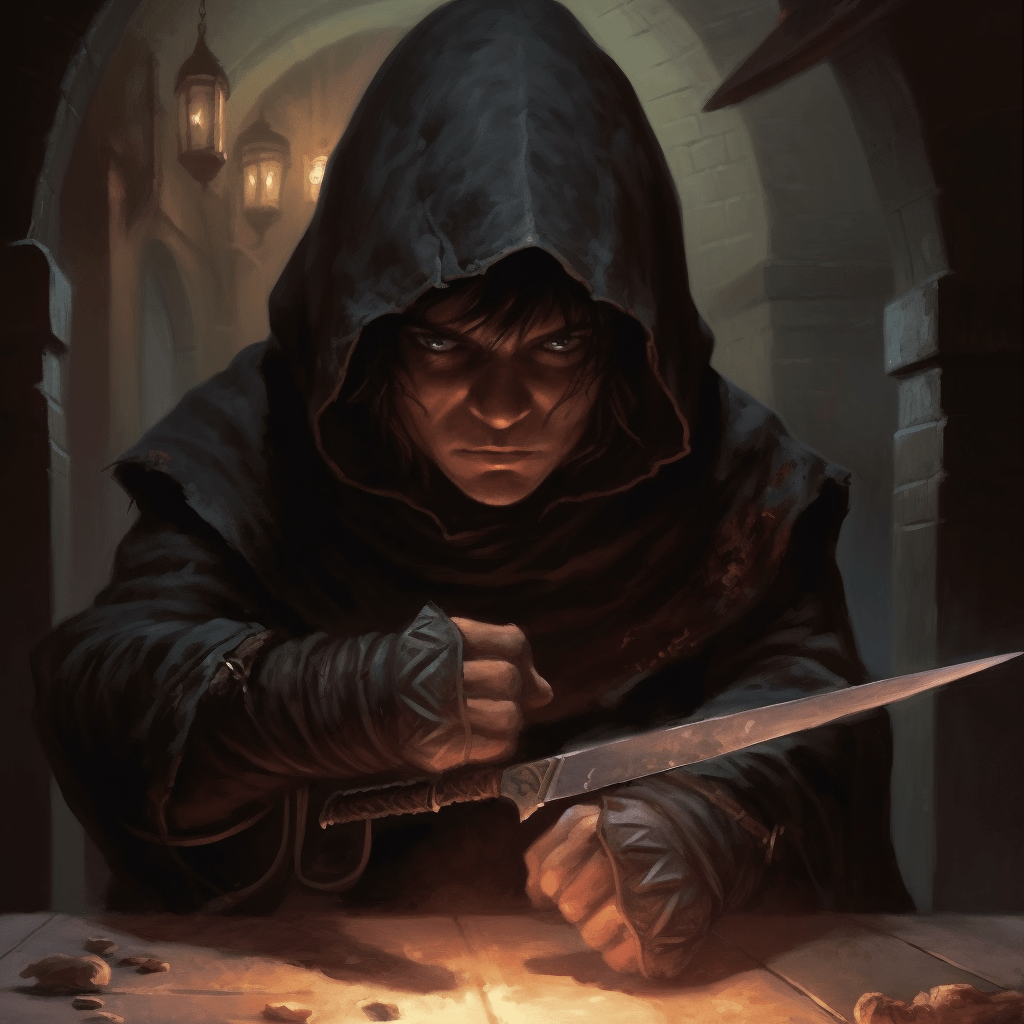
Ko / Lilkin
\page
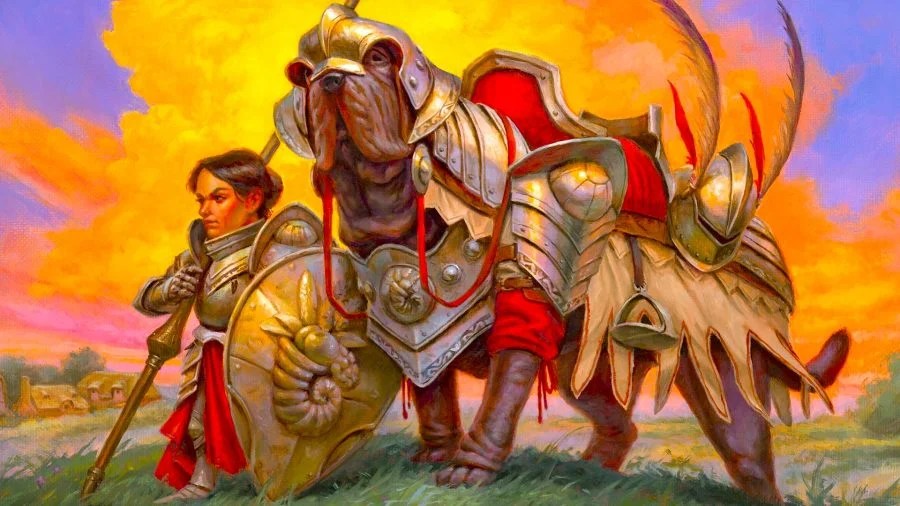
Ko Names
A ko has a given name, a family name, and possibly a nickname.
Family names are often nicknames that stuck so tenaciously they have been passed down through the generations.
Family Names: Brushgather, Goodbarrel, Greenbottle, High-hill, Hilltopple, Leagallow, Tealeaf, Thorngage, Tosscobble, Underbough
Female Names: Aki, Andry, Bree, Callie, Cora, Euphemia, Jillian, Kithri, Lavinia, Lidda, Merla, Nedda, Paela, Portia, Seraphina, Shaena, Trym, Vani, Verna, Yarra, Yuki
Male Names: Alton, Ander, Atsu, Bilby, Cade, Corrin, Eldon, Errich, Finnan, Garret, Hiro, Lindal, Lyle, Merric, Milo, Murray, Osborn, Perrin, Reed, Roscoe, Wellby
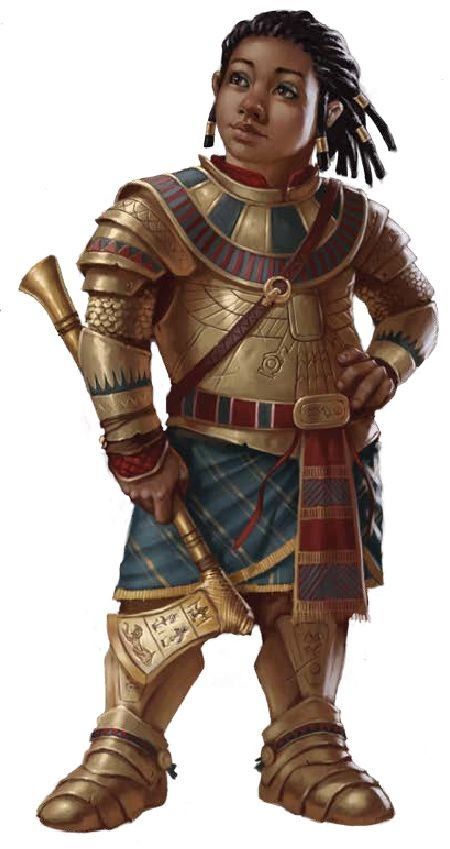
Ko Traits
Your ko character has a number of traits in common with all other lilkin.
Ability Score Increase. You can increase an ability score by 2. Traditionally, this would be Dexterity, but feel free to go against the grain.
Age. A lilkin reaches adulthood at the age of 20 and generally lives into the middle of his or her second century.
Size. Ko average about 3 feet tall and weigh about 40 pounds. Your size is Small.
Speed. Your base walking speed is 25 feet.
Lucky. When you roll a 1 on the d20 for an attack roll, ability check, or saving throw, you can reroll the die and must use the new roll.
Brave. You have advantage on saving throws against being frightened.
Ko Nimbleness. You can move through the space of any creature that is of a size larger than yours. You also have advantage on acrobatics checks.
Languages. You can speak, read, and write Common and the Ko dialect of Gnomish, which is pretty much its own language when spoken, but on paper it can be understood by Gnomes and vice versa. That said, Ko are voracious readers and writers and many ko pride themselves on a ‘diwan’ or collection of their best poems or short stories. Most of these stories or poems are memorised and shared orally, but many ko will publish their own ‘magnus opus’ at some point in their life. Their oral tradition is likewise very strong. Almost all ko speak Common to converse with the people in whose lands they dwell or through which they are traveling.

Ko / Lilkin
\page
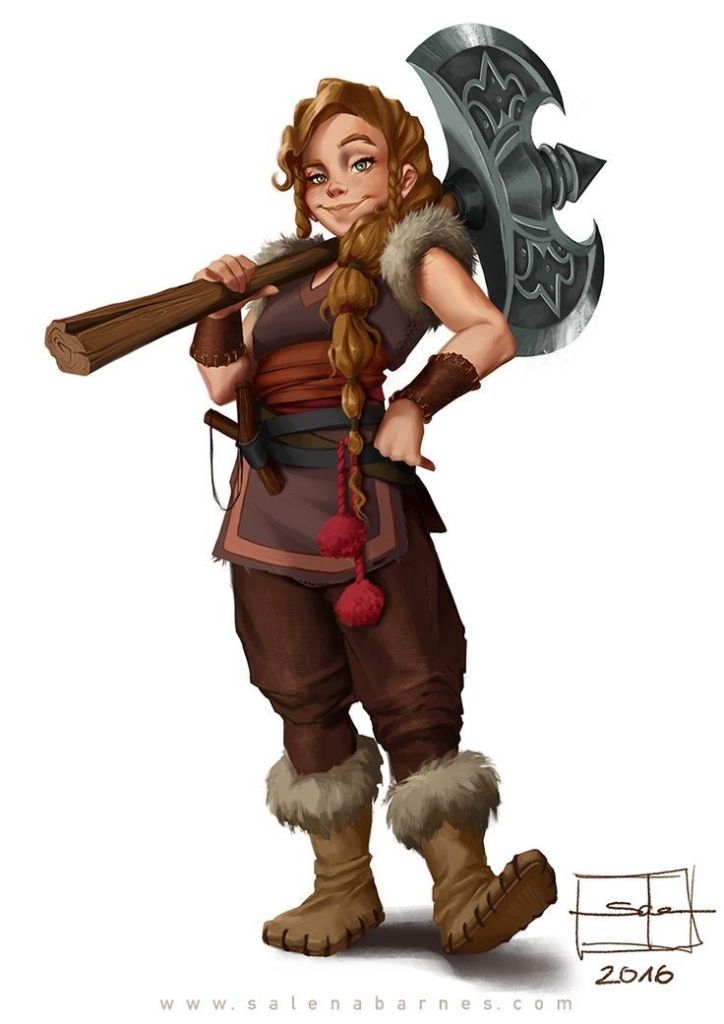
\page

\page

Kumotai
The kumotai are a sentient polar bear-like kin from the distant lands of the South, beyond the Frozen Fangs, in the endless White Wastes at the bottom of the world. A highly spiritual people, they live in settlements built on the vast polar ice or even in it. There are legends of floating iceberg cities in the southernmost reaches of the Southern Ocean. They are a tribal people that rarely war amongst each other, but have been known to band together against a common enemy, such as the Jotun, or giants.
History
According to the histories of the kumotai, the world was created long ago by the bear deity Kumot (known elsewhere as Veles), and with it, the many spirits of the world. Over time, these spirits began to take form, becoming the beasts of the world we see today. One day, the bear stood up and took notice of the restlessness and chaos, of the endless cycles of creation and destruction. And Kumot took notice, and offered the bear guardianship of the world, tasking them with guiding the lesser spirits to enlightenment. Those that accepted Kumot’s offer, became the kumotai.
Society
Kumotai are a highly spiritual race that for centuries has lived in cities built upon, and carved into, icebergs in the antarctic seas, or else on the endless White Wastes. Their society is divided into tribes, each one having their own iceberg and leaders. The kumotai live in close communities within their cities, towns and villages, acting in concert and living in peace. The kumotai are not without disputes and disagreements, but they consider themselves “above” most interpersonal conflict. To them, balance is more important than an individual’s needs and the will of their god, Kumot, supersedes any single kumotai’s wishes. Each member of the tribe contributes and works to maintain peace, encouraging the sharing of resources, and provide support for others within the community. Kumotai young are said to be weak and easily susceptible to outside influence. As such, they are heavily guarded and rarely—if ever—seen by outsiders.
Their communities both act as shelters and as spiritual havens. Within the core of the community there is typically a shrine to Kumot, a building that houses the Voice of the tribe and also a building that is for the Claw of the community. The kumotai typically a very religious kin, with their beliefs of balance and Kumot at the core of their culture and society. Each tribe has two equally important leaders: the Voice and the Claw. The Voice is the spiritual leader of a tribe, passing on messages of Kumot and giving guidance to the Claw. They are capable of sensing the balance of the community and the world around it. The Claw is the physical leader of the tribe, protecting the community and the Voice, and turns the Voice’s words into actions. Outside a small group of shamans, who tend to the Voice’s needs to keep him alive, only the Claw may speak to the Voice. The Claw also leads the hunters and warriors of the community. Neither of the two leaders has the power to overturn the others’ decisions. The Claw and Voice are often chosen at the same time, and end their rule together. If one dies, it is tradition for the other to retire. Between these two kumotai, the community of the tribe is very organized.
Kumotai Names
The kumotai choose their own names, basing it off of their personality, past, actions, occupations, or something that they find suitable. In essence, they chose a name which they feel describes them best. As such, their names are usually descriptions or nouns of some form. For example, Still Waters chose his name to remind himself of a past event and Farthest Shore took that name because she felt distant from her people. Kumotai will also change their names to suit their evolving personalities or changed circumstances, for example, Watchful Moon changed his name from “Laughs at the Dawn” after his wife died. Newborn kumotai are given placeholder names based on the circumstances of their birth, such as the time of year or the constellations, until they are old enough to choose for themselves.

Kumotai
\page

Kumotai are practically unheard of in the Northern Vast and their presence would cause quite a stir!
Kumotai Traits
Your kumotai character has the following traits.
Ability Score Increase. Your Wisdom score increases by 2 and your Strength score increases by 1. Alternatively, increase one of your ability scores by 2 and another ability score by 1.
Age. Kumotai have a lifespan of around 300 years.
Alignment. Kumotai consider themselves to be guardians of nature’s spirits and hold themselves above interpersonal conflict. As such, they tend toward law, neutrality, and good.
Size. Kumotai stand between 8 and 10 feet tall. Your size is Medium.
Speed. Your base walking speed is 30 feet.
Antarctic Survivor. You can hold your breath for up to 15 minutes at a time. You’re also naturally adapted to cold climates and never feel the effects of freezing temperatures like most other kin do.
Bite. Your fanged maw is a natural weapon, which you can use to make unarmed strikes. If you hit with it, you deal piercing damage equal to 1d6 + your Strength modifier, instead of the bludgeoning damage normal for an unarmed strike.
Cold Doesn’t Bother Me. You have natural resistance to cold damage.
Kumot’s Flame. You know one cantrip of your choice from the following list: produce flame, create bonfire, or word of radiance. Wisdom is your spellcasting ability for this spell.
Languages. You can speak, read, and write Common, Kumotai and one other language of your choice.
Natural Swimmer. You have a swimming speed of 30 feet.
Not Made For the Tropics. You are not accustomed to hot climates and tire easily when the temperature is at or above 30 degrees Celsius. In such conditions you require four gallons of water a day or else you will suffer as follows. If you are exposed to the heat and have no access to drinkable water you must succeed on a Constitution saving throw at the end of each hour or gain one level of exhaustion. The DC is 5 for the first hour and increases by 1 for each additional hour. If you are wearing medium or heavy armor, or if you are clad in heavy clothing, you have disadvantage on this saving throw.
Powerful Build. You count as one size larger when determining your carrying capacity and the weight you can push, drag, or lift.
Reinforced Body and Soul. Any creature that could for any reason move through your space, cannot do so.
Roar of Kumot. As a bonus action, you let out a roar and your whole body is covered in the sheen of permafrost. Until the end of your turn, all weapon, spell and ability damage that you deal is converted into magical Cold damage. You can use this ability as many times as your proficiency bonus per day until you finish a long rest.
Wisdom of Kumot. You gain proficiency with two of the following skills of your choice: Insight, Nature, Religion, Medicine, and Survival.

Kumotai
\page

\page
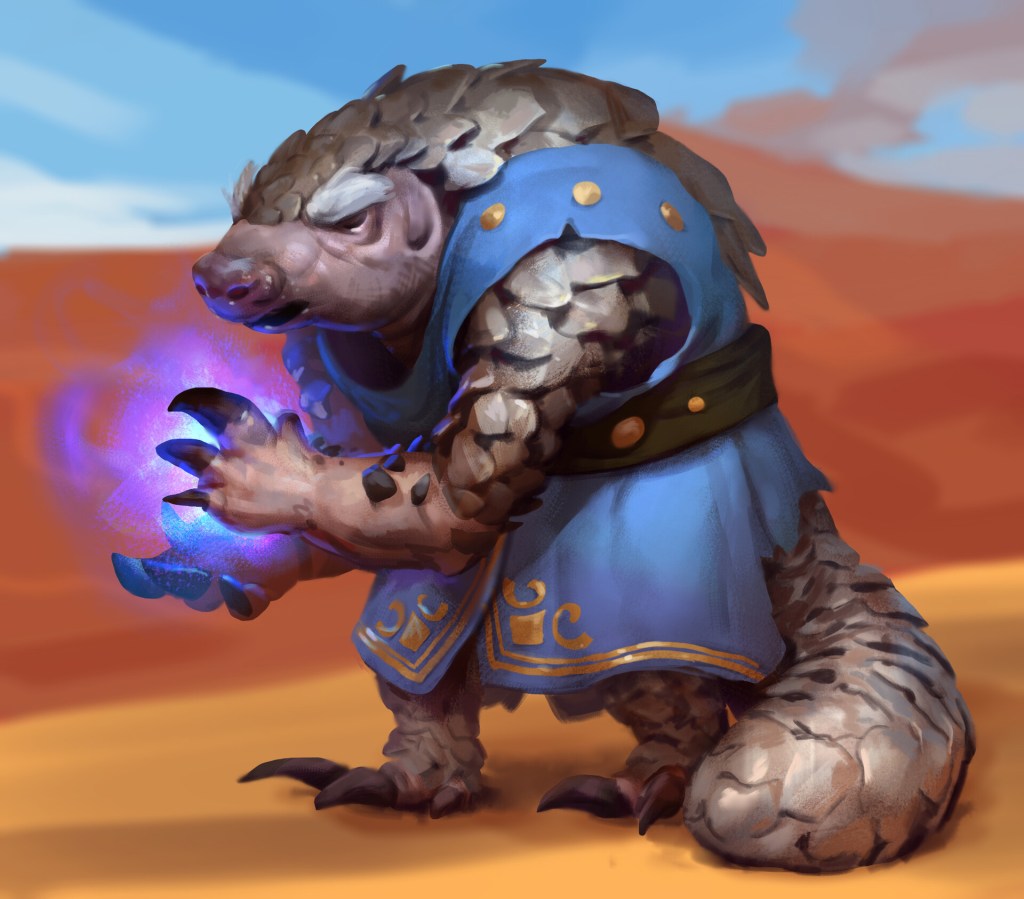
Lin
The Lin are humanoid creatures covered in reinforced scales of chitin.
These scales are connected by the base and can stick out when bent, showing a sharp edge.
The underbelly of a Lin is unprotected by this and so is more vulnerable to attack. They often curl to protect this weakness. Lin have long claws on their hands usually used for digging, more so than fighting. They have a long tail that is also armored.
Due to their scale plates possibly shredding clothing, the Lin usually wear minimal clothes, usually just enough to maintain their modesty.
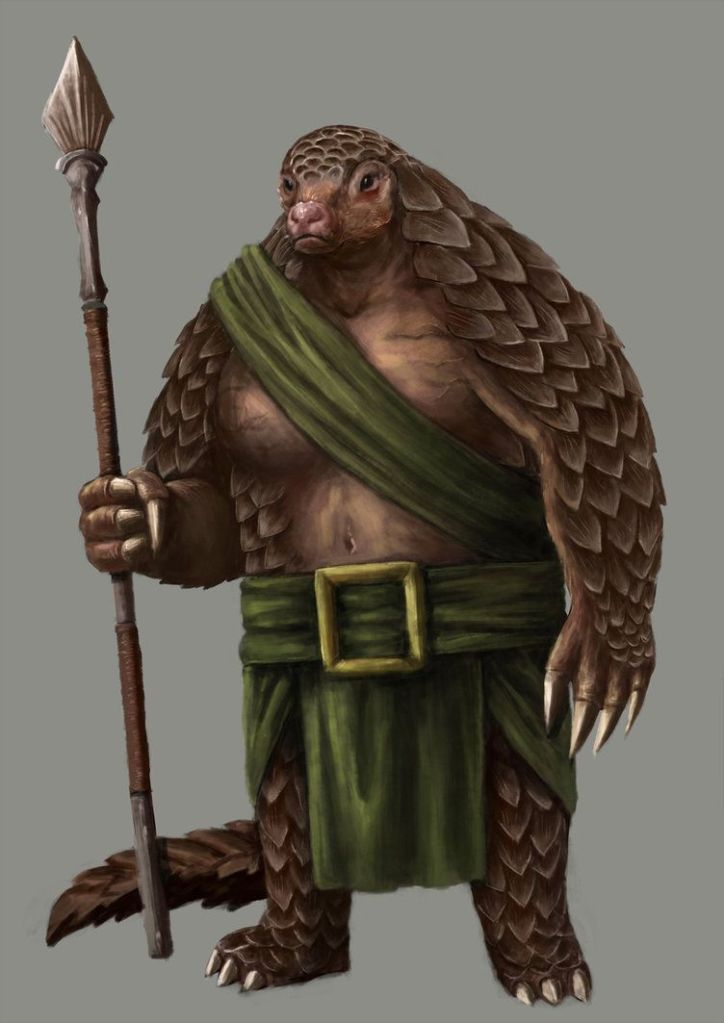
History
The origin of the Lin is not well understood. Although no historical evidence accounts for the following, the Lin have folktales of a idyllic island which crashed violently into the mainland. On the island were the original Lin, who lived in a bounteous jungle that had everything the Lin ever needed.
However, this same island was full of ferocious lizards of immense size that preyed upon the Lin, who at that time, were without any armour or scales at all.
The Lin prayed to Anlah, their goddess of the sea, for armour, even something as flimsy as that of a fish. Their kind goddess fashioned them armor modeled after fish but suited to protect these larger beings. And so, they gained protection.
When their island impacted with the mainland, they came ashore upon this strange new land and wandered with curiosity. They were greeted with caution. Other creatures like the kedakai and humans were wary of these armoured beings.
According to folklore, a human once found the corpse of a Lin. The human was sick, and so butchered the Lin to make a tea that had been steeped in the Lin’s scales. After he had eaten and drank, he slept. When he awoke, he was no longer hungry, and his illness was cured. His loose lips spread the word that began a horrific new craze: people now wanted Lin scales to use as medicine.
Terrified, most of the Lin fled from the deserts and savannahs of the Northern Vast. They ventured into its far northern jungles that stretch forever or else into the far northeastern mountains, far away into mountain caves where they practiced an aesthetic and monastic spirituality and withdrew their presence from the world.
It is said some tried to return to their island, begging their goddess to save them. But the sea was silent and the island did not move. Many were slaughtered in that location, prompting their mass migrations north and north east. Some Lin reason that because their scales had come from fish to armour them, the penalty was that the other kin would now hunt them like fish for their meat.
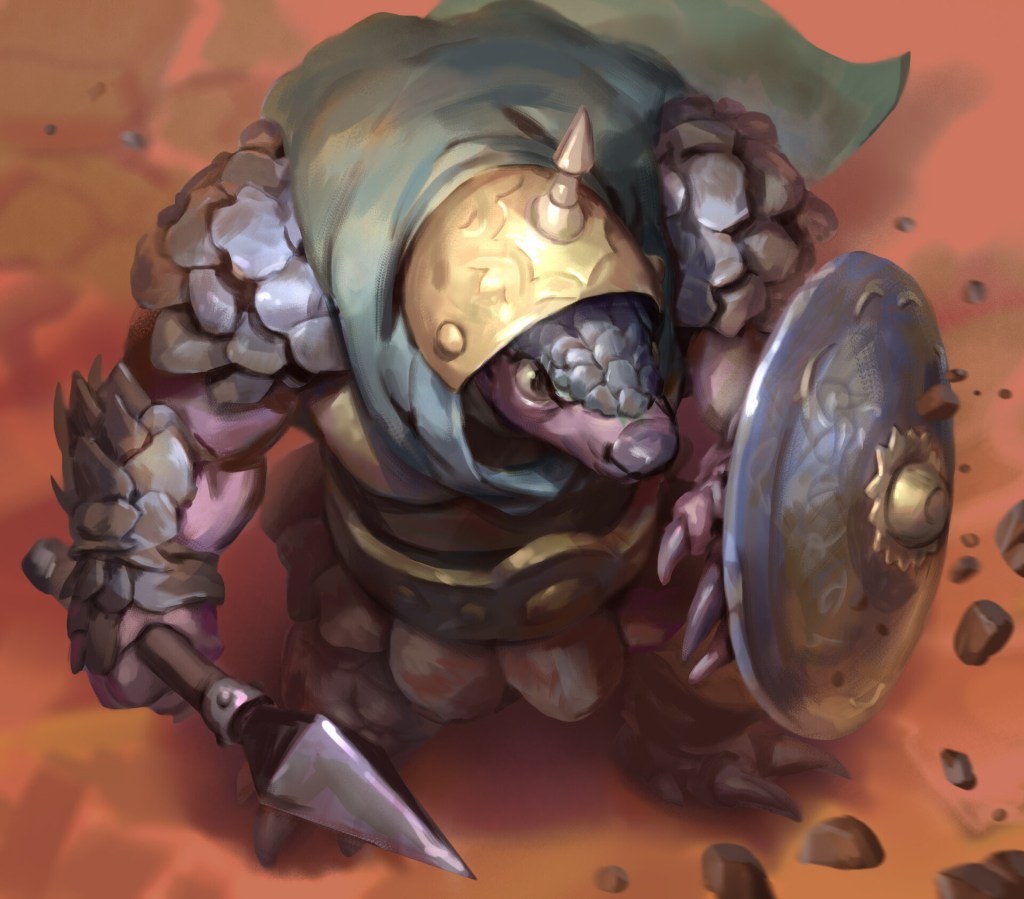
Lin
\page
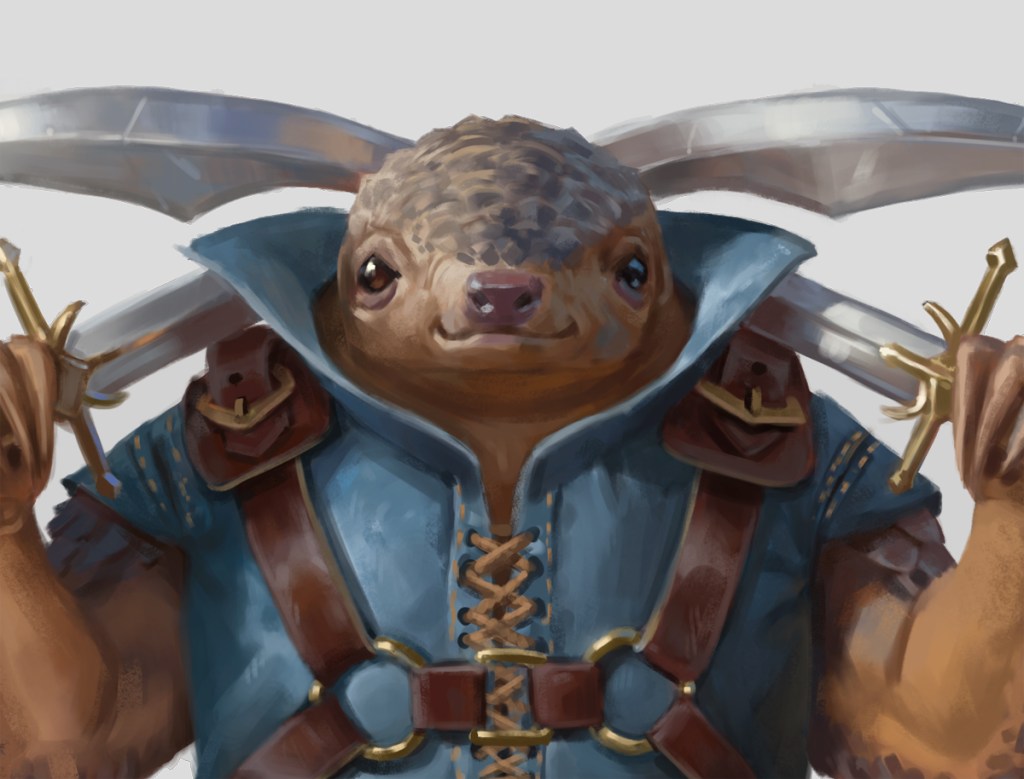
Society
The Lin tend to be rather social when talking to other Lin. They live in small tribes in caves obscured in steppes or cliff faces near plains. Others have made their homes in treehouse villages in the jungles of the Endless Green. Usually, Lin prefer to be active at night and are solitary. When talking to non-Lin they tend to be rather reserved and wary. They often would never reach out to strangers and are suspicious of any who would want their scales. Lin children tend to paint their plates. This paint is commonly made out of plants and roots and applied to the scales. This tradition trails into adulthood where they dye their plate-like scales to indicate status, achievements. It is also a beauty trend.
Religion
The Lin no longer pray to their goddess, An’lah. As they were pushed inland, they lost their original ways of island life. It is observed they follow mainly a plant or insect-based diet. Many Lin now revere the goddess Vesna, whom they know as An’sheva, or else they follow the Middle Path, a religion that has no deities and is more of a spiritual lifestyle similar to Buddhism in the real world.
Lin Traits
Your Lin character shares these traits with other Lin.
Ability Score Increase. Your Constitution score increases by 2, and your Wisdom score increases by 1. Alternatively, you can choose to increase one ability score by 2 and a different ability score by 1.
Age. Lin age similarly to humans. Though they mature at around 10 years of age, they are not actually considered adults by their community until they are around 30.
From around 60 years of age they are thought of as elderly and rarely live beyond 90 years of age.
Alignment. Lin tend to keep to themselves and adhere to a rather simple set of morals they give themselves, living neutrally. However any Lin that is adventuring will be doing so because they are more free-wheeling and adventurous. As such, their alignment might tip more towards chaotic.
Size. Lin can range in size from around 4 feet to almost 5 feet in height. They weigh much more than humans due to their chitin plating averaging about 200 to 250 lbs. Your size is Medium.
Speed. Your base walking speed is 25 feet.
Darkvision. You have the eyes to see in the night as a nocturnal animal. You can see in dim light within 60 feet of you as if it were bright light, and in darkness as if it were dim light. You can’t discern color in darkness, only shades of gray.
Defensive Curl. You can curl into a protected ball as a bonus action. Until you emerge, you gain a +3 bonus to AC, and you have advantage on Dexterity saving throws. While in a ball, you are prone, your speed is 0 and can’t increase, you have disadvantage on Strength saving throws, you can’t take reactions, and the only action you can take is a bonus action to emerge from your curl.
Languages. You can speak, read, and write Common, Linnish and one other language of your choice.
Long Memory. You have advantage on Intelligence (History) checks to recall something from within the past year.
Long Claws. Your claws are natural weapons, which you can use to make unarmed strikes. If you hit with them, you deal slashing damage equal to 1d4 + your Strength modifier, instead of the bludgeoning damage normal for an unarmed strike.
Natural Lin Armour. Your base Armor Class when unarmoured is 13 + your Constitution modifier. You may wear a shield and still gain this benefit.
Subterranean. Your powerful claws give you a Burrowing Speed of 15 feet. You cannot burrow if both hands are holding something. If only one of your hands is free, any burrowing counts as difficult terrain. You can burrow through loose earth, but not rock, or similar solid surfaces.
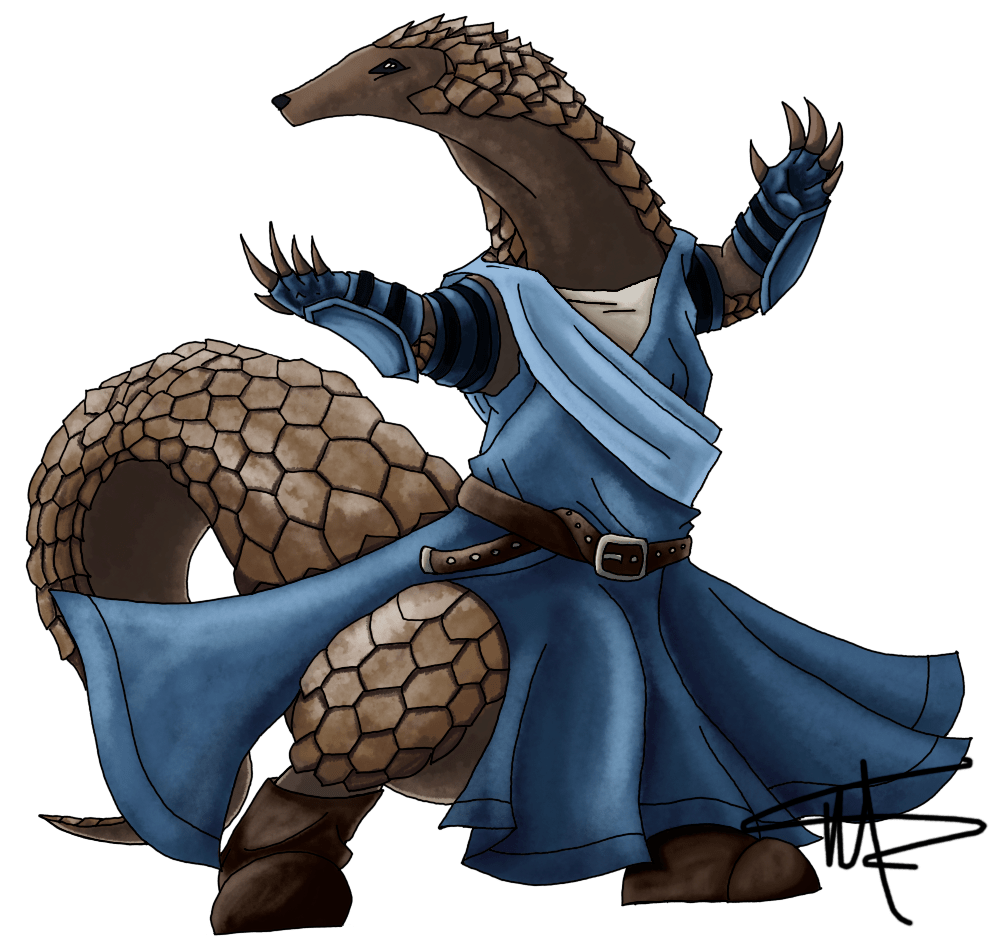
Lin
\page
Survivalist. You have a knack for getting the most out of even barren of lands. You gain proficiency in Nature and Survival.
Unfazed Amble. Your stride cannot be interrupted or hastened. You are immune to effects that would alter your speed. Spells like haste or slow cannot change your movement speed, however you will still gain the other benefits or detriments of these spells. Feats and class features can still give you extra movement speed.
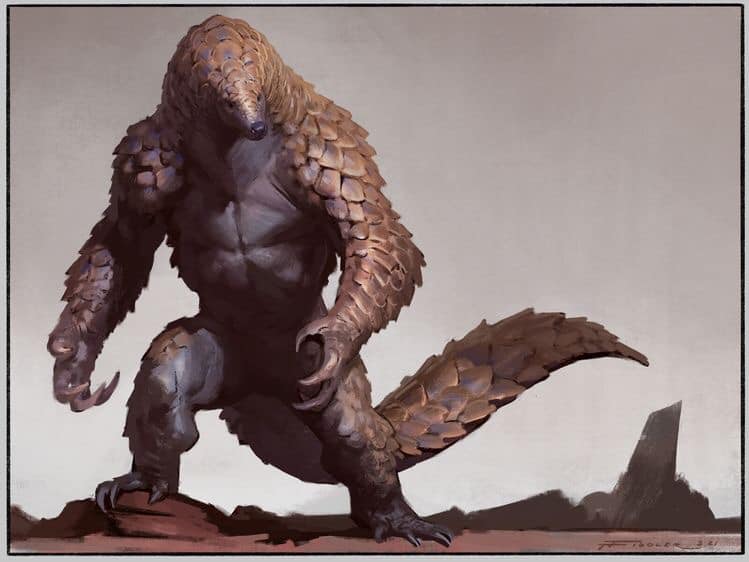
Pantareï
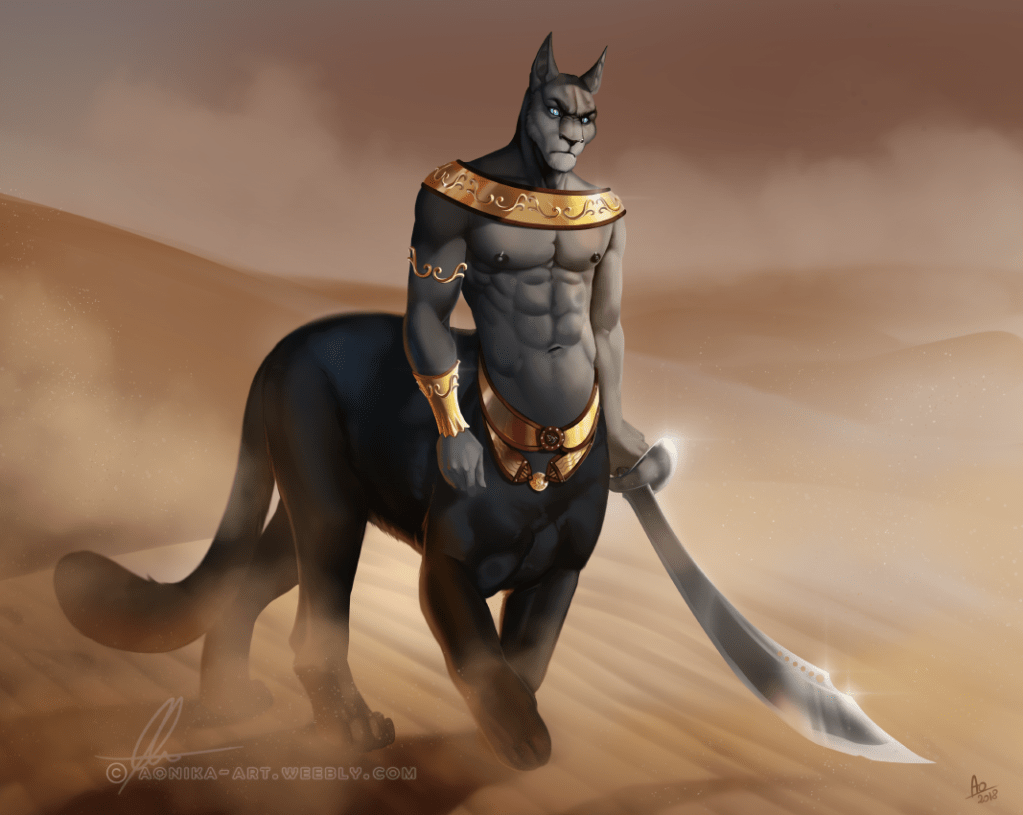
The pantareï (pan-TAR-rey-ee) are majestic kin that have the lower body of a black panther on all fours and a tekuâni-like top half, giving them six limbs in total. Each arm has human-like hands, but, like the lower legs, each finger is tipped in razor-like claws. Pantareï use their claws for both climbing and attacking.
They often have sharp feline teeth and long whiskers. Neither male nor female pantareï have manes, and physically they are similar in size.
The entire body is covered in a dark furry pelt, but pantareï are known to wear clothing. Their eyes are golden brown or yellow-green hues with feline pupil slits.
History
Pantareï were created by the goddess Nǚshén and many pantareï names retain one of the characters of their goddess’s name in honour of her. One of the first kin to learn the secrets of magic, the pantareï have a long history with many cultural firsts developed in their home nation, which, though currently unified and enjoying peace, has known tumultuous civil wars and several invasions.
The Land of a Thousand Rivers

Their home nation is the Eastern Realm of Pantar, sometimes called the Land of a Thousand Rivers, and from which their name is derived in the Common Tongue. Culturally, it has been inspired by Imperial China at various stages of real-world history as well as the Joseon Dynasty of Korea. Pantar is known and respected throughout Seminus as a nation of intelligent, generous, fierce, refined, proficient, efficient and wise people. Many artistic traditions began in Pantar, including the consumption of tea and its associated ceremonies, the practice of calligraphy and its associated ceremonies, the use of silk, the use of chopsticks, not to mention the practice of monastic orders devoted to martial artistries. There are many communities of pantareï found throughout the world of Seminus, for they are savvy traders and arcane users, as well as historians and scholars. Some of them bring their martial art schools with them and establish a new dojo in a foreign land to cultivate new students.

Lin | Pantareï
\page
Society

Pantareï live in both urban and rural communities. Theirs is a society founded on notions of hard work, respect, etiquette, honour, diligence, devotion, determination and service. Pantareï have a profoundly hierarchical society of many layers, complex and hard for outsiders to fathom. There are castes and clans that are associated with the castes. Intermarriage between clans is permissible, but generally, this is not permissible between castes, except for in extraordinary circumstances.

Pantareï Names
Pantareï are named by their parents upon birth. However this is seen as their ‘baby’ name and it is only after they have matured and graduated from one of the many Imperial Academies in Pantar that they choose an official name for themselves. These names are carefully considered by professional Digitologists who specialise in names, lineages and finding auspicious characters for the names to reflect Pantareï ideals. As such, many Pantareï names mean things like ‘strength’, ‘devotion’, ‘dutiful,’ ‘honourable’ and ‘tenacity’, amongst others.
Female: Eun-Hee, Jin’gura, Mi Yon, Nǚwa, Shén Wu
Male: Chen, Hyun, In-Su, Kungu, Shin, Yushén
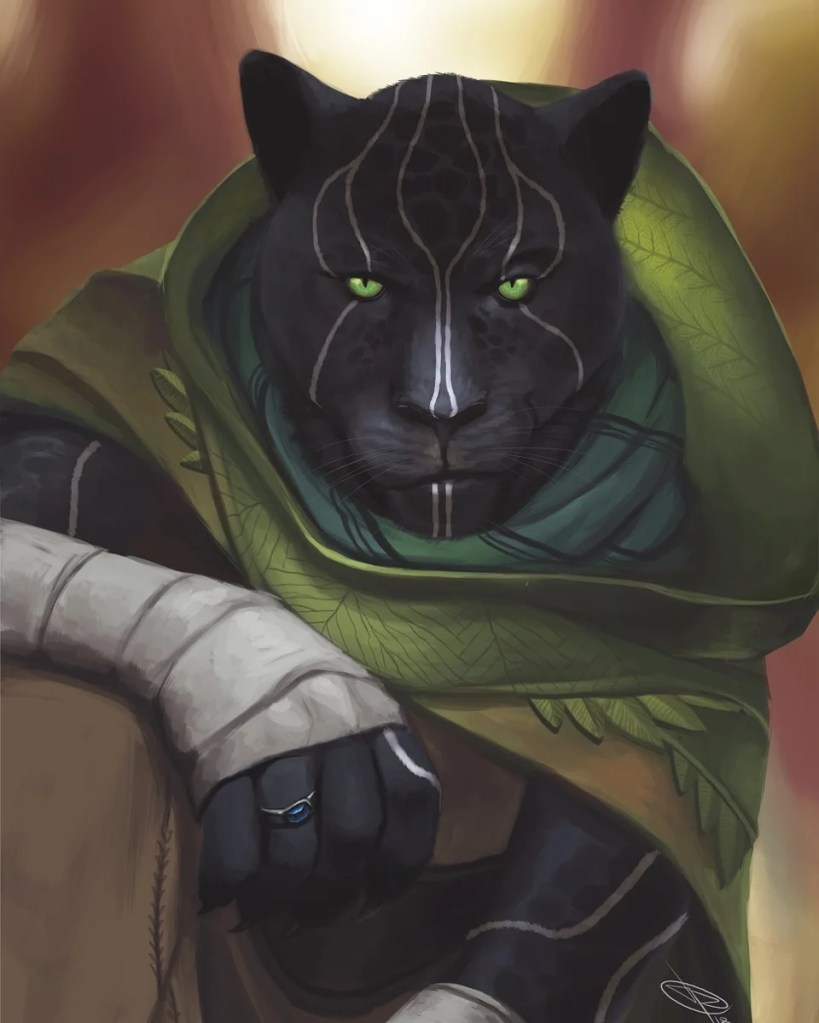
Pantareï Traits
Ability Score Increase. Your Strength score increases by 2 and your Constitution score increases by 1. Alternatively, you can increase one ability score by 2 and a different ability score by 1.
Age. Pantareï mature by the age of 15 and few live to be over 80 years of age.
Alignment. The rigid social structure and social mores and etiquettes that all pantareï are raised and educated into has an intrinsic imprint on most of them, so that they tend towards lawful alignments.
Size. Pantareï are typically over 6 feet tall, with some standing over 7 feet. Your size is Medium.
Speed. Your base walking speed is 35 feet. You have a climbing speed of 20 feet.
Languages. You can speak, read, and write Common and Pantareï.
Darkvision. You can see in dim light within 60 feet of you as if it were bright light, and in darkness as if it were dim light. You can’t discern color in darkness, only shades of gray.
Pantareï
\page
Daunting Roar. As a bonus action, you can let out an especially menacing roar. Creatures of your choice within 10 feet of you that can hear you must succeed on a Wisdom saving throw or become frightened of you until the end of your next turn. The DC of the save equals 8 + your proficiency bonus + your Constitution modifier. Once you use this trait, you can’t use it again until you finish a short or long rest.
Hunter’s Instincts. You have proficiency in one of the following skills of your choice: Athletics, Intimidation, Perception, or Survival.
Natural claws. Your claws are natural weapons, which you can use to make unarmed strikes. If you hit with them, you deal slashing damage equal to 1d6 + your Strength modifier, instead of the bludgeoning damage normal for an unarmed strike. When you make this kind of attack, you may reroll attack rolls of 1, but you must take the second result.
Sublime Education. You have proficiency in one of the following skills of your choice: Arcana, History, Nature, Medicine, Persuasion or Religion.
Sa’ren

One of the older kin on Seminus, the sa’ren (sa-REN) are the work of the Mad One, Loon of Zul, who took the graceful kedakai and the brutish troll and twisted them together into something vastly different from what they were.
Although outsiders know little about them and consider them uncivilised and barbaric, their civilisations are actually quite ancient. They fall into a strange situation in that although they actually are Ma’Halli, they are considered Sh’rijai by every other race except for the similarly positioned Var’en (Orcs) and Zel’en (Goblin) kin.
The sa’ren are generally blue or green skinned, sometimes with warty protrusions or crocodilian scales. Their hair can range from silvery white, to vivid pinks or purples, to vibrant reds and oranges, to dull browns and jet blacks.
They have long prominent pointed ears and generally they sport tusks that grow as they age, which they often decorate with rings of gold, silver or bronze to denote social ranks. Some of the Blood Clan have incredibly long tusks that are a source of pride for them.
Some sa’ren paint their bodies with tribal colours, and though there are countless tribes, each will fall broadly into one of two main clans.
Society
Sa’ren maintain their own primal civilisations that blend their savage nature with a collective order that creates a cohesive society.
These societies often are based around practices that more modern societies consider barbaric, however the savage aspects of sa’ren culture give them profound insights into the natural world.
They have an affinity with the elements of earth or wood and many become masterful hunters, mystics who call upon primordial spirits for aid, or nurturers of menageries of trained beasts ready to tear apart any who stand against their sa’ren masters.

Of the two main clans, the Blood Clan are mostly warmongers and conquerers who revel and delight in war, carnage and power over those who are weaker than them. The other group, the Stone Clan, is less savage and more culturally refined. Those sa’ren who fall in with adventurers or take up residence in cities and towns, especially in the Northern Vast, typically come from the Stone Clan, but this is not always the case.

Pantareï | Sa’ren
\page
\page

Sa’ren Names
All sa’ren will have a first name, which, more often than not is given to them by their parents in consultation with a shaman who communes with primordial spirits to find an auspicious and appropriate title for the newborn. Sa’ren believe that the name chosen will lock that infant into a particular destiny and that it can be very difficult to change one’s pre-determined fate unless a new name given to one by others supplants the original name.
While naming conventions can differ from tribe to tribe, in general sa’ren do not bother with surnames, however those that do will typically take one that reflects their deeds or occupation, and it often originates from a nickname given to them by others. In fact, nicknames are considered just as important as birth names and many sa’ren are deeply superstitious and consider themselves pawns of the gods. They crave a suitably impressive nickname and will throw themselves into whatever occupation or role their birth name has thrust them into.
Those sa’ren who leave their tribe and join up with adventurers are less likely to fixate on this aspect of their culture, and, more often than not, one of the reasons they have left their tribe is to make a break with the severity of the superstitions that dominate an individual’s life and rob them, somewhat ironically given the sa’ren focus on individual liberty, of the very freedom they idolise.
Female names. Ara, Grin’ji, Jul’jin, Or’mina, Razel, Var’ki, Zina
Male names. Aro, Brik, Grung, Kazkor, Or’mok, Thrag, Zin
Nicknames. the Backbreaker, the Bloodletter, the Kinhunter, the Spiritweaver, the Red Handed, the Woodwalker

Sa’ren Traits
As a sa’ren, you possess the following traits.
Ability Score Increase. Your Constitution score increases by 2. Alternatively, you can choose a different ability score to increase by 2.
Age. While the sa’ren were created from the practically immortal kedakai, they do not have the same long lifespans. Sa’ren grow rapidly through childhood and are considered mature by the age of 10. They live for approximately 300 years before their intrinsic healing factor begins to break down and ceases to sustain them.
Alignment. Sa’ren love competing, hunting, and lifestyles that are independent, but they almost always respect their tribe. They lean strongly toward the liberating aspects of chaos. They value the freedom and strength of others, and they are more often neutral than not. However many of the Blood Clan are spiteful and dangerous. Sa’ren from this Clan are more often evil than not.
Size. Sa’ren are between 6 and 9 feet tall and weigh between 200 and 350 pounds. Very little of that weight is fat. Your size is Medium.
Speed. Your base walking speed is 30 feet.
Sa’ren
\page

\page
Voracious Appetites
Sa’ren are infamous for their insatiable appetites, high metabolism and willingness to devour anything even remotely edible. If you wish to reflect this with your sa’ren character, you can add the following traits:
- The amount of food you need to consume daily is doubled.
- Creatures that are foraging for rations for you to consume can do so with advantage, as you will happily eat almost anything.
Darkvision. You can see in dim light within 60 feet of you as if it were bright light, and in darkness as if it were dim light. You can’t discern color in darkness, only shades of gray.
Environmental Adaptation. Sa’ren quickly adapt to their habitat within only a few generations. You have inherited natural adaptations that are suitable to your home village’s environment. Choose an environment from the Environmental Adaptations table below to gain the associated traits for that environment.
Environmental Adaptations
| Environment | Abilities |
|---|---|
| Arctic | You ignore the harmful effects of cold climates up to -30 degrees Celsius and gain resistance to cold damage. |
| Cave | You gain superior darkvision out to 120 feet and areas of dim light are not considered lightly obscured to you. |
| Desert | You ignore the harmful effects of hot climates up to 65 degrees Celsius and gain resistance to radiant damage. |
| Forest / Jungle | Your movement is not impeded by rough terrain caused by plants and you gain a 20 ft. climb speed |
| Grasslands / Savannahs | Your movement speed increases by 5 ft. |
| Mountain | You ignore the harmful effects of high altitudes. You gain a climb speed of 20 ft. You also have advantage on checks and saving throws against effects that would move you or knock you prone. |
| River / Sea | You can hold your breath for up to 15 minutes. You gain a swimming speed of 30 ft. You gain superior darkvision out to 90 ft. |
| Swamp | Your movement is not impeded by rough terrain caused by plants or mud. You gain a 25 ft. swim speed. You have advantage on saving throws against diseases. |
Iron stomach. You are naturally immune to the Poisoned condition. You also have resistance to poison damage. Additionally, you may add double your Constitution modifier to any saving throw against poison damage. If you succeed such a saving throw, you do not take any poison damage at all from that specific attack.
Keen Senses. You are proficient in the Perception skill.

Keen Smell. You have advantage on Wisdom (Perception) checks that rely on smell.
Limited Regeneration. At the start of your turn, even if you are unconscious, as a free action you may expend one of your hit die to regain hit points as if you had finished a short rest. You gain hit points equal to the result of the roll + your Constitution modifier. You cannot use this ability if you have taken fire or acid damage since the end of your last turn. You can only use this ability a number of times equal to your proficiency modifier. You regain all uses of this ability after you complete a long rest. Additionally, when you finish a long rest, you regain one additional expended hit die.

Sa’ren
\page
Sujan (Ratfolk)
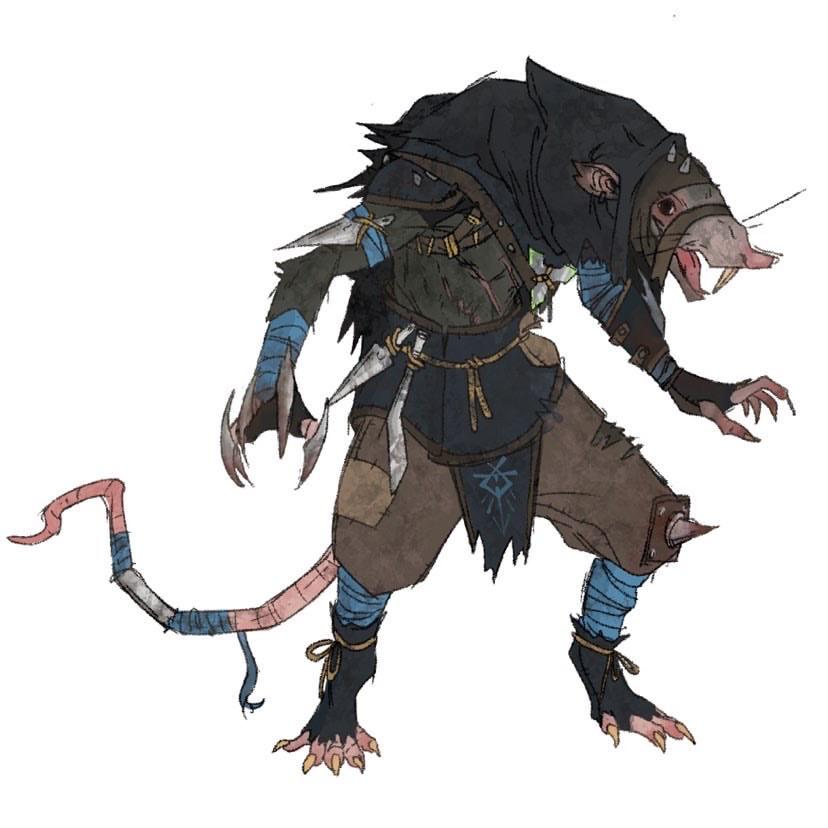
Often misunderstood and regarded with suspicion (or even outright shunned) by the majority of the Overlight kin, the sujan are ratlike small humanoids, with the absolute tallest of their race being just about 3 and a half or 4 feet tall, and the heaviest about 80 or 90 pounds.
They have either sleek or rough fur, which can be white, black, grey, or, rarely, green. Their eyes can be brown, red, white, or black. They have a long tail, about half of the height of their body, and small claws, with large teeth.
History
While they are derogatorily referred to as ‘ratmen’ or ‘ratfolk’ by many of the world’s nations, in the Northern Vast, the sujan have more of a space within Overlight society. Here they have managed to be granted a tenuous status as itinerant junk and scrap merchants, tradesmen, and artisans, providing other kin with whatever they might need, provided they had the right price and no questions to go with the exchange.
It is well known in the Vastland that the sujan originated in the depths of the Great Underrealm Below, but the extent of their history is not common knowledge to most. Whatever reason they had for leaving their homeland is not something the avergae Vastlander is aware of – and so long as a sujan knows their station, they are cautiously accepted. The larger cities of the Vastland have quarters with sizeable sujani populations – and in fact, some are unaware of the fact that many of these major cities have an even sizeable sujani community beneath them in the catacombs or sewer systems.
Society
Sujani society is similar to what one would expect in a more honorable thieves’ guild; Pickpocket from those who have more than they need, never steal from another from the group, and never travel without an accomplice. These three unwritten rules have allowed most sujani societies to grow into places of haphazard prosperity, at least for those who live there. The leader of a sujani community is known as the Whiskerking or Whiskerqueen, and while their powers are somewhat absolute, it is rare for such an individual to last a long time on the throne, for backstabbing political scheming aside, there is a contest every three years to determine who is the best theif in the land under very strict rules – and the winner is awarded the responsibility of being the High Whisker (the gender neutral term for Whiskerking or Whiskerqueen).
Relationships
Sujani are typically not seen as the most trustworthy by most kin, due to their reputation of pickpocketing even those that they invite into their home, however in the Vastlands they are often tolerated for their ability to procure the most expensive items and reagents in the land.
Sujani Personality
You can use the Sujani Quirks table to determine a personality quirk for a sujan character or to inspire how your character might act.
Sujani Quirks
| d8 | Quirks |
|---|---|
| 1 | I involuntarily squeak when I am startled. |
| 2 | I constantly dream of bathing in riches. |
| 3 | I’m better at cutting a throat than cutting a deal. |
| 4 | When I’m lying, my tail swishes in anticipation of their reaction to my ruse. |
| 5 | I enjoy telling people’s secrets. |
| 6 | I gnaw on things when I’m nervous. |
| 7 | I constantly reach into my pocket when anyone is near me, expecting someone to pickpocket me. |
| 8 | I constantly survey my surroundings, calculating possible escape routes and plans. |
Sujani Names
Sujani names typically are more simple than most kin, just consisting of rat-like noises or sounds. They take on a last name based on the group that they are currently aligned with, which may be a party of adventurers, band of thieves, or even just a town they live in.
Male: Twitch, Tiq, Zez, Skat, Rirzet
Female: Vech, Frukehm, Jumu, Kuni, Tetich
Group: York, Alexandria, Wound, Sight, Scars
Sujani Traits
Merchants by trade, cowards by mind, and agile by nature, the sujan are common for being the swindlers and party faces of most groups.
Sujan
\page

Ability Score Increase. Your Dexterity score increases by 3. Alternatively, you can choose a different Ability Score to raise by 3, or 3 separate Ability Scores to raise by 1.
Age. The sujan mature at a much faster pace than humans, and they die earlier. They are considered mature at age 9, and usually die of natural causes before they are 50 years old.
Alignment. The sujan typically don’t take sides in conflicts, preferring to be merchants for both. They are typically Neutral.
Size. Most sujan are between 3-4 feet tall, and weigh up to 80 lbs. Your size is Small.
Speed. Your base walking speed is 25 feet. You can drop to all fours to increase your movement speed to 40 ft., but it takes half of your movement to stand back up. While on all fours, you cannot hold objects in either hand.
Bite. You have mighty incisors, which are natural weapons that you are proficient with. They deal 1d4 piercing damage, and have the finesse property.
Fleeing Bite. If you take the Disengage action on your turn, you can make a Bite attack as a bonus action.
Darkvision. You have 60 ft. of Darkvision.
Keen Smell. You have advantage on Perception checks that rely on smell.
Languages. You can speak, read, and write Common, Undercommon, and a language of your choice.
Sujani Variants
Packlings
Packlings are a variety of sujan that excel in killing creatures by fighting together, relying on help from others compared to helping themselves.
Ability Score Increase. In addition to the Ability Score Increase granted by your base kin traits, you can also increase your Charisma score by 1.
Pack Tactics. You have advantage on attack rolls against a creature if at least one of your allies is within 5 ft. of the creature, and the ally isn’t incapacitated.
Direlings
Direlings are sujan that are similar to dire beasts, with bone-like spikes all along their flesh, and being a bit bigger than most other sujan.
Ability Score Increase. In addition to the Ability Score Increase granted by your base kin traits, you can also increase your Strength score by 1.
Powerful Bite. Your bite attack deals 1d8 piercing damage instead of 1d4.
Rough Jaw. After landing a successful bite attack on a creature, you may use your bonus action to make a shove attack against it. You’re Athletics (Strength) check made to shove the creature has advantage on the roll.
Wanlings
Wanlings are clever, as they have to be to survive in the streets of large cities. They rely on their intellect to make a meager life for themselves.
Ability Score Increase. In addition to the Ability Score Increase granted by your base kin traits, you can also increase your Intelligence score by 1.
Keen Mind. You learn the one cantrip of your choice from the wizard spell list. Intelligence is your spellcasting ability for this spell. This does not count towards any spells granted by your class.
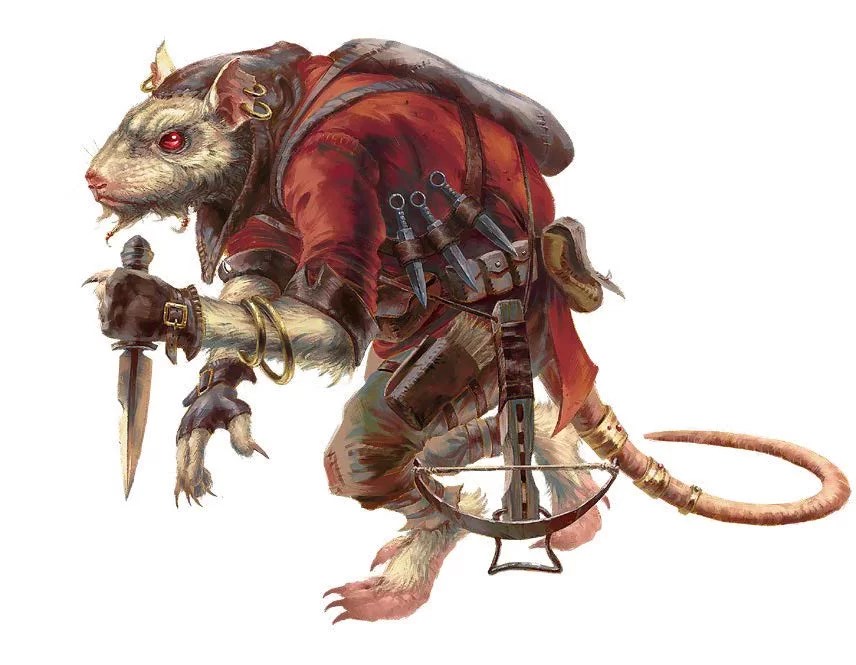
Sujan
\page

\page
Streng (Goliaths)
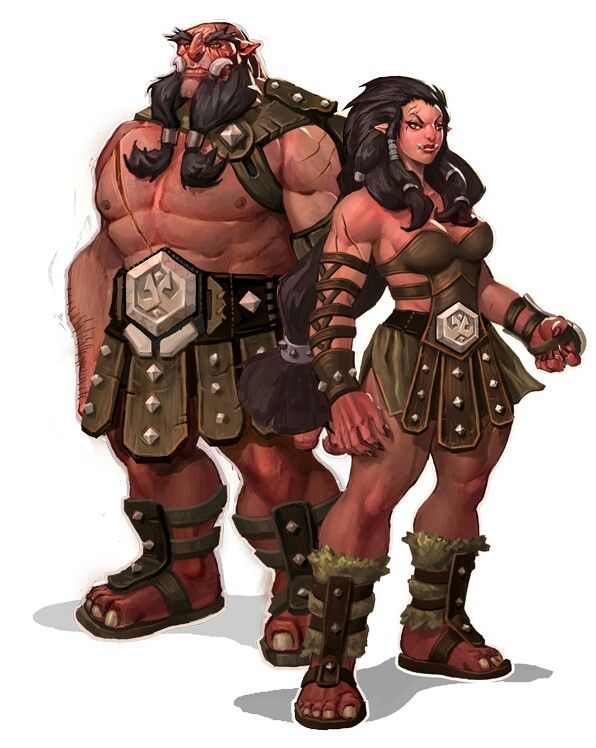
Descended from the divine Titans of mythology, the streng are a martial race that originate from the frigid wastelands of Storkaltland, although they have since coupled with enough kin to have entered the genepools of most major cities in the Western Lands. Many streng venture further north and can be found in the cities of the Northern Vast, especially in the Nazari and Mu’şüri Empires. “Pure” streng are tribal and wander a bleak realm of rock, wind, and cold. Their bodies look as if they are carved from mountain stone and give them great physical power. Their spirits take after the wandering wind, making them nomads who wander from peak to peak. Their hearts are infused with the cold regard of their frigid realm, leaving each streng with the responsibility to earn a place in the tribe or die trying. Urban streng typically look more like enormous humans, but their towering stature and impressive physique make them natural body-guards, gladiators or mercenaries.
Driven Competitors
Every day brings a new challenge to a rural streng. Food, water, and shelter are rare in the uppermost mountain reaches. A single mistake can bring doom to an entire tribe, while an individual’s heroic effort can ensure the entire group’s survival. Urban streng typically follow a charismatic leader whose combat prowess they respect. Intelligence and wisdom are not their forte, typically, and they excel at manual work.
Streng typically place a premium on self-sufficiency and individual skill. They have a compulsion to keep score, counting their deeds and tallying their accomplishments to compare to others. Streng love to win, but they see defeat as a prod to improve their skills.
This dedication to competition has a dark side. Streng are ferocious competitors, but above all else they are driven to outdo their past efforts. If a streng slays a dragon, he or she might seek out a larger, more powerful wyrm to battle. Few streng adventurers reach old age, as most die attempting to surpass their past accomplishments.

Fair Play
For streng, competition exists only when it is supported by a level playing field. Competition measures talent, dedication, and effort. Those factors determine survival in their home territory, not reliance on magic items, money, or other elements that can tip the balance one way or the other. Streng happily rely on such benefits, but they are careful to remember that such an advantage can always be lost. A streng who relies too much on them can grow complacent, a recipe for disaster in the mountains.
This trait manifests most strongly when rural streng interact with other folk. The relationship between peasants and nobles puzzles rural streng. If a king lacks the intelligence or leadership to lead, then clearly the most talented person in the kingdom should take his place.
Rural streng rarely keep such opinions to themselves, and mock folk who rely on society’s structures or rules to maintain power.
Streng
\page
That said, urban streng have learnt to accept their place as pack mules, manual labourers, soldiers or deputies. They appreciate any leader whose military prowess or strength they respect, and will more likely stubbornly martyr themselves for their ‘leader’.
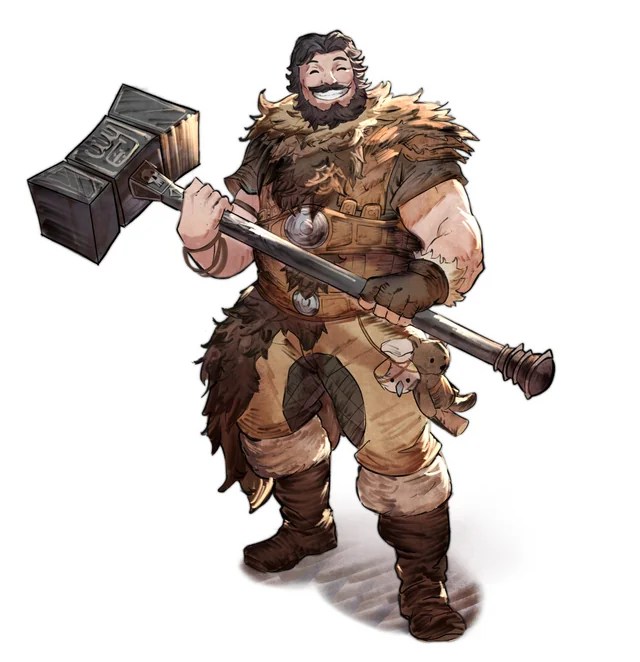
Survival of the Fittest
Among rural streng, any adult who can’t contribute to the tribe is expelled. A lone streng has little chance of survival, especially an older or weaker one. Streng have little pity for adults who can’t take care of themselves, though a sick or injured individual is treated, as a result of the streng concept of fair play.
A permanently injured streng is still expected to pull his or her weight in the tribe. Typically, such a streng dies attempting to keep up, or the streng slips away in the night to seek the cold will of fate.
In some ways, the streng drive to outdo themselves feeds into the grim inevitability of their decline and death. A streng would much rather die in battle, at the peak of strength and skill, than endure the slow decay of old age. Few folk have ever meet an elderly streng, and even those streng who have left their people grapple with the urge to give up their lives as their physical skills decay.
Because of their risk-taking, streng tribes suffer from a chronic lack of the experience offered by long-term leaders. They hope for innate wisdom in their leadership, for they can rarely count on a wisdom grown with age.
Streng Names
Every streng has three names: a birth name assigned by the newborn’s mother and father, a nickname assigned by the tribal chief, and a family or clan name. A birth name is up to three syllables long. Clan names are five syllables or more and end in a vowel.
Birth names are rarely linked to gender. Streng see females and males as equal in all things, and they find societies with roles divided by gender to be puzzling or worthy of mockery. To a streng, the person who is best at a job should be the one tasked with doing it.

A streng’s nickname is a description that can change on the whim of a chieftain or tribal elder. It refers to a notable deed, either a success or failure, committed by the streng. Streng assign and use nicknames with their friends of other races, and change them to refer to an individual’s notable deeds.
Streng present all three names when identifying themselves, in the order of birth name, nickname, and clan name. In casual conversation, they use their nickname.

Streng
\page
Birth Names: Aukan, Eglath, Gae-Al, Gauthak, Ilikan, Keothi, Kuori, Lo-Kag, Manneo, Maveith, Nalla, Orilo, Paavu, Pethani, Thalai, Thotham, Uthal, Vaunea, Vimak
Nicknames: Bearkiller, Dawncaller, Fearless, Flintfinder, Horncarver, Keeneye, Lonehunter, Longleaper, Rootsmasher, Skywatcher, Steadyhand, Threadtwister, Twice-Orphaned, Twistedlimb, Wordpainter
Clan Names: Anakalathai, Elanithino, Gathakanathi, Kalagiano, Katho-Olavi, Kolae-Gileana, Ogolakanu, Thuliaga, Thunukalathi, Vaimei-Laga
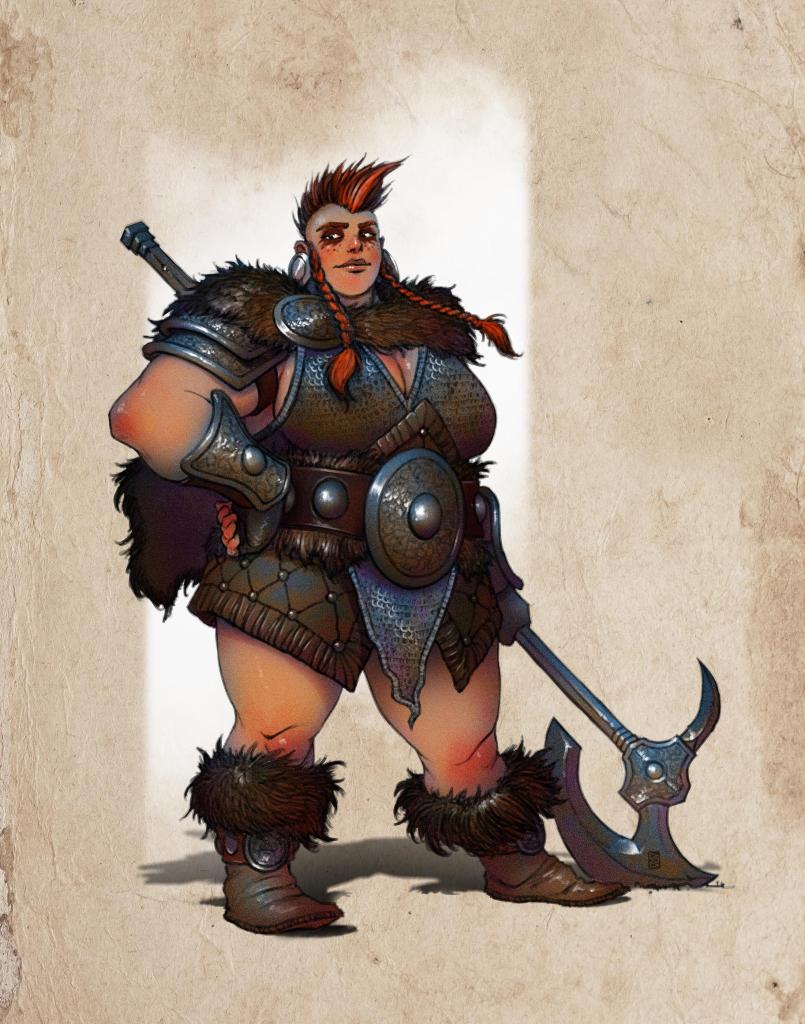
Streng Traits
Streng share a number of traits in common with each other.
Ability Score Increase. Your Strength score increases by 3, and your Constitution score increases by 1. Alternatively, if you do not choose Strength as your primary stat increase, you could increase one of your ability scores by 2, and a different ability score by 1.
Age. Streng have lifespans comparable to humans. They enter adulthood in their late teens and usually live less than a century.
Size. Streng are between 7 and 8 feet tall and weigh between 280 and 340 pounds. Your size is Medium.
Speed. Your base walking speed is 30 feet.
Natural Athlete. You have proficiency in the Athletics skill.
Stone’s Endurance. You can focus yourself to occasionally shrug off injury. When you take damage, you can use your reaction to roll a d12. Add your Constitution modifier to the number rolled and reduce the damage by that total. After you use this trait, you can’t use it again until you finish a short or long rest.
Powerful Build. You count as one size larger when determining your carrying capacity and the weight you can push, drag, or lift.
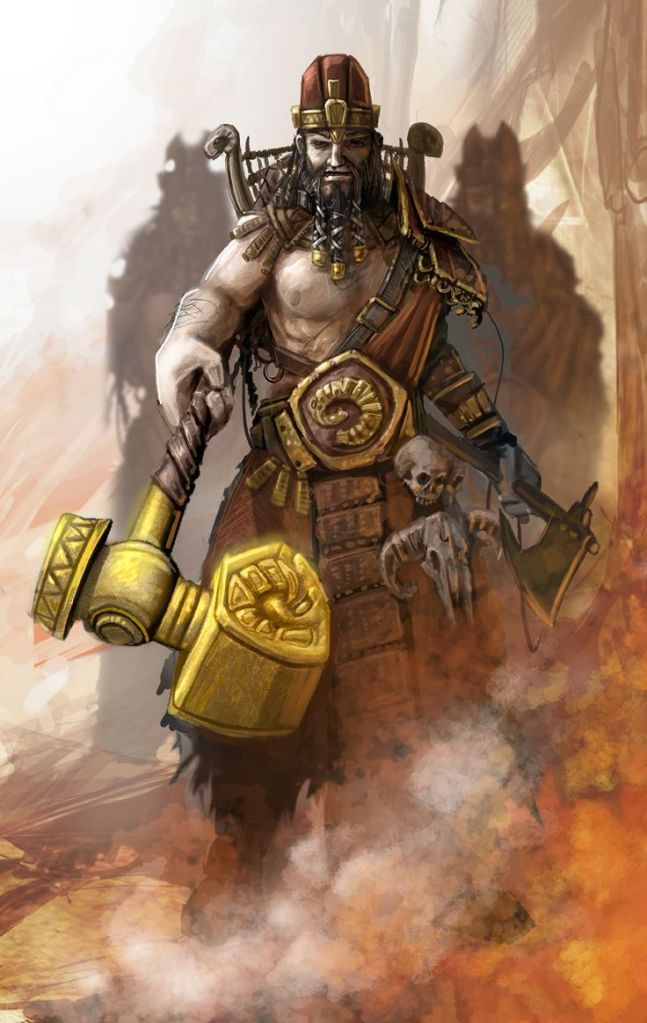
Mountain Born. You have resistance to cold damage. You’re also acclimated to high altitude, including elevations above 20,000 feet.
Languages. You can speak, read, and write Common and Giant.

Streng
\page

\page
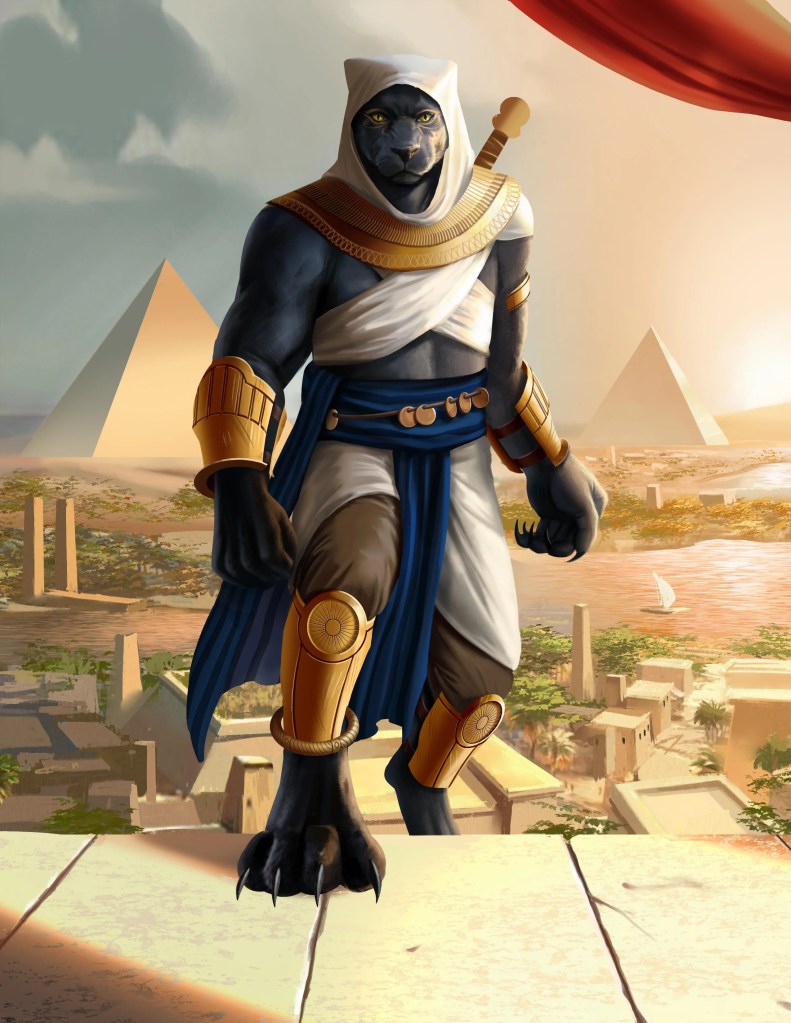
\page
Tekuâni (TABAXI)
The tekuâni races resemble anthropomorphic wild felines that would have a real-world equivalent as follows: Kesari (lions), Ch’yarr (tigers), Dumali (cheetahs), Miztli (pumas), Te’kuatli (leopards), Na’huani (snow leopards), Rahim (servals and caracals), Ocelotli (ocelots) and Miztani (domestic cat variants).
Their whole bodies are covered in fur that is similar to their real-life counterparts. Their hands are as dexterous as a human’s, but are completely covered in fur, although there is rough padding on the palms and fingers, similar to the forepaws of a feline.
All tekuâni have sharp retractable claws. Their back paws are similar to their hands with the fur and padding, which makes it difficult to craft boots to fit them. Most simply go barefooted since the padding protects them almost as well as a thick leather sole.
Pantareïsm
All tekuâni are susceptible to a condition called “Pantareïsm” where their fur is completely black.
They are often mistaken for their own race of tekuâni, however this is technically not the case. When one is born a ‘pantar’, it’s often seen by the tekuâni as an omen and such cubs are usually sent away to be raised and trained in the arcane arts or as an assassin.
Society
Other than Kesari and their close-knit prides, and the tribal villages of the Te’kuatli and Na’huani, most tekuâni prefer lives of solitude away from others of their kind. Even after mating, or especially after, depending on one’s perspective, the couple splits up and the mother raises the young alone or sometimes with a small group of matrons watching over each others’ cubs and hunting to feed the whole group. Males, more often than not, remain as hermits and sages. It’s not entirely uncommon for tekuâni to join a multicultural community, such as a city, viewing other tekuâni as nothing more than competitors or potential mates for a season. It’s rare for a tekuâni to be monogamous and culturally, they tend to view marriage as a social oddity of the other kindred of the world, either amusing at best and cruel at worst.
Kesari differ socially from most other tekuâni in that they live in small “prides” consisting of a single male patriarch and a matriarchy of females that have a strict social hierarchy. These females are the true tribe and while they will care for the patriarch and his offspring, their social structure is designed around the eventual replacement of the male. The first born male cub of a given generation is kept close and trained to replace the patriarch while others that come of age are promptly sent on their own to start their own pride or do whatever they desire elsewhere in the world.
The other tekuâni that have a more communal society are the Te’kuatli and Na’huani, who live in tribal villages that are run by a council of elders. This council is typically neither male-dominated nor female-dominated and usually reflects the most experienced and wise tekuâni of the village. The idea of balance is strong in these societies and the council is usually comprised of an even number of members, often in groups of 4 or 6 or 8. Stalemates of opinion are typically solved through special rites that often have an arcane, acrobatic or athletic nature, depending on the shared abilities of its members. If a council member is too old to participate, they are allowed to nominate a representative who will participate on their behalf.
Language
The tekuâni language is simple in structure like a form of yowling and mewling latin. Interestingly, each subspecies has its own dialect of the same language, though the differences are subtle enough that anyone fluent in tekuâni finds the various dialects mutually intelligble. The differences are more in inflection and tone, and have a widely varying degree of insults specific to each subspecies.
Tekuâni writing uses a unique and scratchy thirty-seven letter alphabet that was initially developed by carving the symbols into tree trunks or hard-packed soil with sharp claws. While in the distant past Tekuâni used tally marks as a number system, they have now borrowed numbers from the Common script and have used those for hundreds of years.
Tekuâni Names
While most tekuâni are named by their parents, the Te’kuatli and Na’huani have a slightly different system. In order to differentiate between offspring, Te’kuatli and Na’huani cubs are given temporary names at birth based on the time, place, or circumstances of their birth. At their coming of age, they perform tests of strength, will, magic (if they have the ability) and intellect. Upon success of this test, they are rewarded by being allowed to choose their own permanent name. Those who fail the tests too many times keep their childhood name as a mark of shame.
Tekuâni Traits
The following traits are shared by all tekuâni.
Ability Score Increase. Tekuâni are naturally elegant and pleasant. Your Charisma score increases by 1.
Age. Tekuâni mature at 20 years and live up to 80 years.
Alignment. Due to their low communal nature and lack of regard for other races and their rules, most tekuâni tend to lean towards being chaotic.
However this is not true for Kesari, Te’kuatli and Na’huani, who tend to be more lawful due to their more stringent social mores.
Tekuâni (TABAXI)
\page
Size. Tekuâni are taller on average than humans. Your size is Medium.
Speed. Your base walking speed is 30 feet.
Darkvision. You can see in dim light within 60 feet of you as if it were bright light, and in darkness as if it were dim light. You can’t discern color in darkness, only shades of gray.
Retractable claws. You have a climbing speed of 20 feet, unless your subrace notes otherwise. Your claws are natural weapons, which you can use to make unarmed strikes. If you hit with them, you deal slashing damage equal to 1d4 + your Strength modifier, instead of the bludgeoning damage normal for an unarmed strike.
Languages. You can speak, read, and write Common and Tekuâni.
Subrace. Choose one between Kesari (lions), Ch’yarr (tigers), Dumali (cheetahs), Miztli (pumas), Te’kuatli (leopards), Na’huani (snow leopards), Rahim (servals and caracals), Ocelotli (ocelots) or Miztani (domestic cat variants).
Kesari

Male Kesari (lions) sport a thick regal mane that can range from golden brown to pitch black and every shade in between, while the rest of their fur, male or female, is typically a golden tawn.
Kesari Traits
Ability Score Increase. Kesari are powerful and thick-muscled. Your strength score increases by 2.
Brute Savagery. Your natural attacks increase to 1d6 damage and you may reroll attack rolls of 1, but you must take the second result.
Intimidating Presence. You have proficiency in the Intimidation skill.
Roar of Royalty. As a bonus action you can roar. When you roar, you create a burst of thunderous sound that can be heard up to 100 feet away. Each enemy creature within 15 feet of you must make a DC 13 Constitution saving throw.
On a success, there is no effect and that creature becomes immune to your roar until their next long or short rest. Upon a failure, that creature becomes Frightened for 1d4+1 rounds.
Strength of the Pride. You have proficiency in the Athletics Skill.
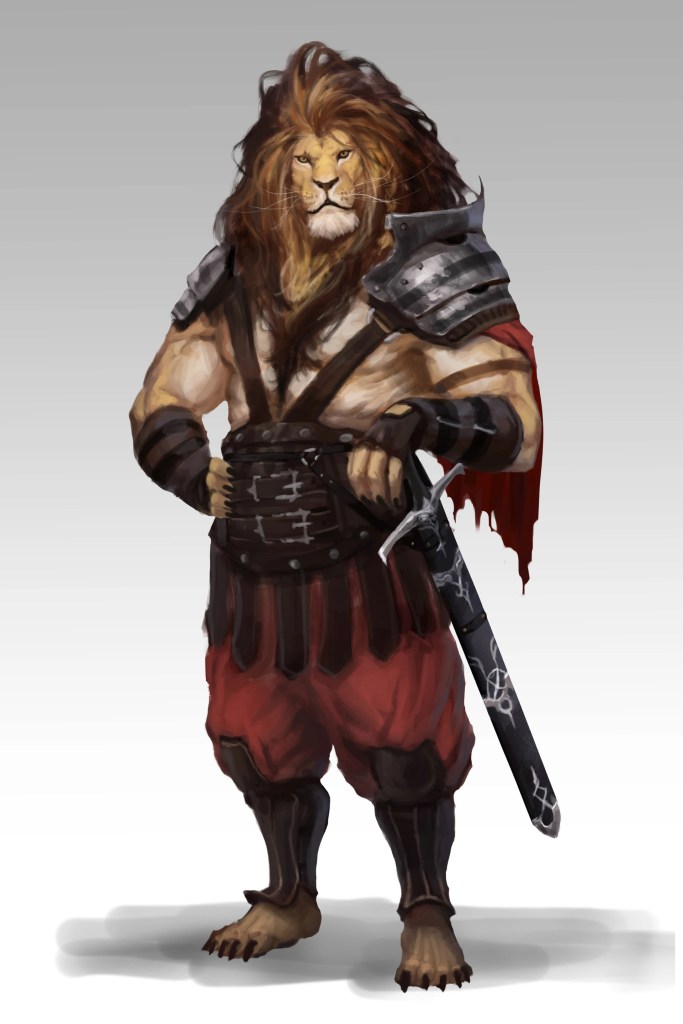
Ch’yarr
Ch’yarr (tigers) have a varying range of colours from bright reddish rust to full orange to snowy white with black stripes. They are the largest of the tekuâni races. Each Ch’yarr’s stripes are as different as the finger prints of a human.

Ch’yarr Traits
Ability Score Increase. Ch’yarr are lean but mighty and tall. Your strength score increases by 2.
Brute Savagery. Your natural attacks increase to 1d6 damage and you may reroll attack rolls of 1, but you must take the second result.
Tekuâni (TABAXI)
\page
Hunter’s Physique. When you are prone, standing up only takes 5 feet from your movement.
Natural athlete. You have proficiency in the Athletics skill.
Natural climber. You have a climb speed equal to your base movement speed.
Natural jumper. You can make a running long jump or a running high jump after moving only 5 feet on foot, rather than 10 feet.

Dumali
Dumali (cheetahs) are typically tall and thin, with exceptionally long tails. Their fur is usually a bright orange tawn with spots all over except the belly.
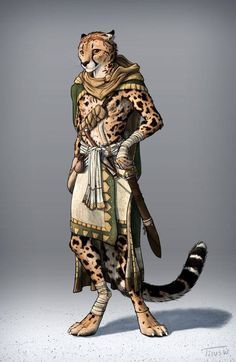
Dumali Traits
Ability Score Increase. Dumali are both lithe and quick. Your dexterity score increases by 2.
Hunter’s physique. When you are prone, standing up only costs 5 feet of your movement.
Natural athlete. You have proficiency in the Athletics skill.
Thrill of the Hunt. A number of times per day equal to your proficiency modifier, you may gain a boost of adrenaline to increase your speed for a number of rounds equal to your constitution modifier plus 1d4. Your base movement speed doubles, you gain +2 AC, and you gain advantage on dexterity saving throws. Once the effect ends, you gain 1 level of exhaustion. You cannot use this ability if you have any levels of exhaustion.
Unmatched speed. Your base movement speed becomes 40 feet. In addition, when you use your action to Dash, you can use a bonus action to make one melee weapon attack with advantage. If you do not attack during or after a dash action, difficult terrain does not cost you extra movement on that turn.
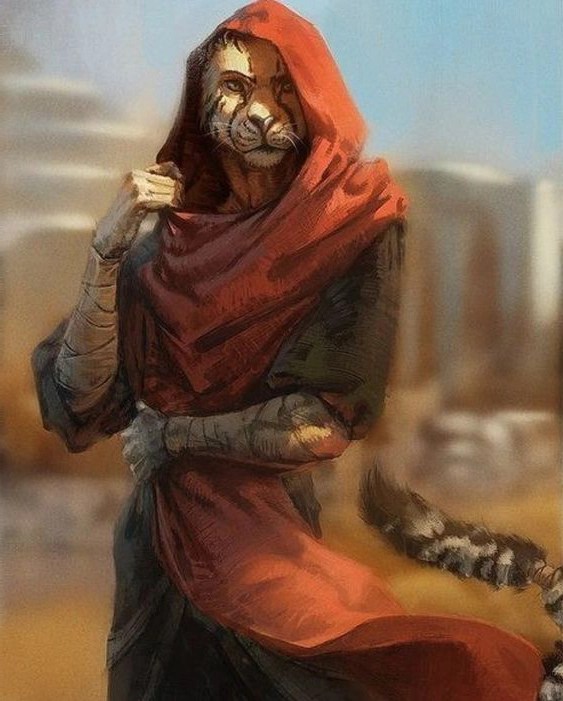
Miztli
Miztli (pumas) are similar to Kesari in their body structure, however they tend to be slightly smaller, broader of shoulder (both male and female), and never have manes. Miztli also generally have very tall and sharply pointed ears.
Tekuâni (TABAXI)
\page

Ability Score Increase. Miztli are both strong and agile. Your Strength and Dexterity scores each increase by 1.
Hunter’s Physique. When you are prone, standing up only takes 5 feet from your movement.
Natural athlete. You have proficiency in the Athletics skill.
Natural climber. You have a climb speed equal to your base walking speed.
Natural jumper. You can make a running long jump or a running high jump after moving only 5 feet on foot, rather than 10 feet.
Spirit of the Mountain. You have advantage when you make climb checks, even in difficult conditions. You can move through nonmagical difficult terrain in mountainous areas without reducing your speed.
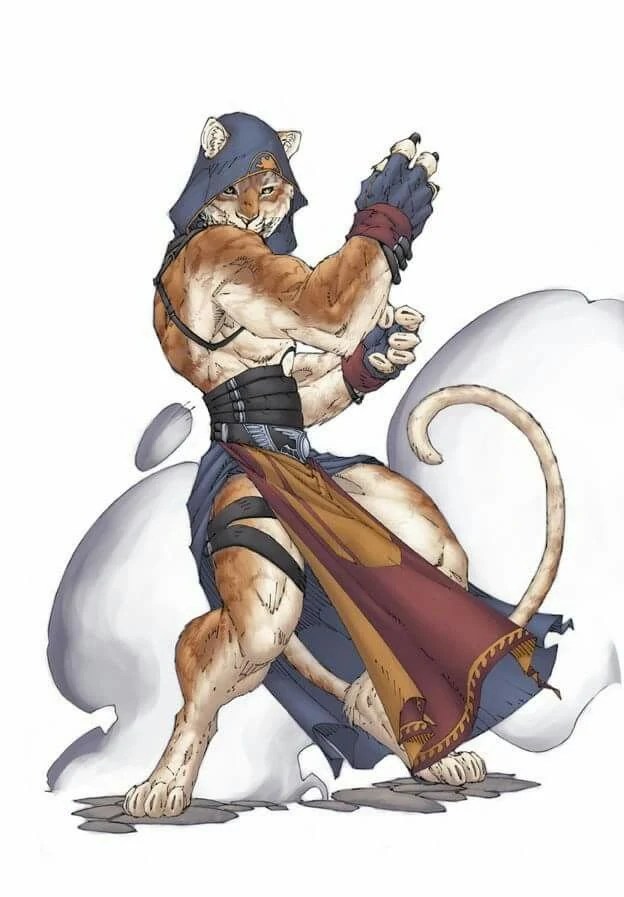
Te’kuatli and Na’huani
Te’kuatli (leopards) and Na’huani snow leopards have orange, brown, yellow, or white fur with thick black spots. Na’huani (snow leopards) are a few inches shorter than Te’kuatli (leopards) on average.
Te’kuatli Traits
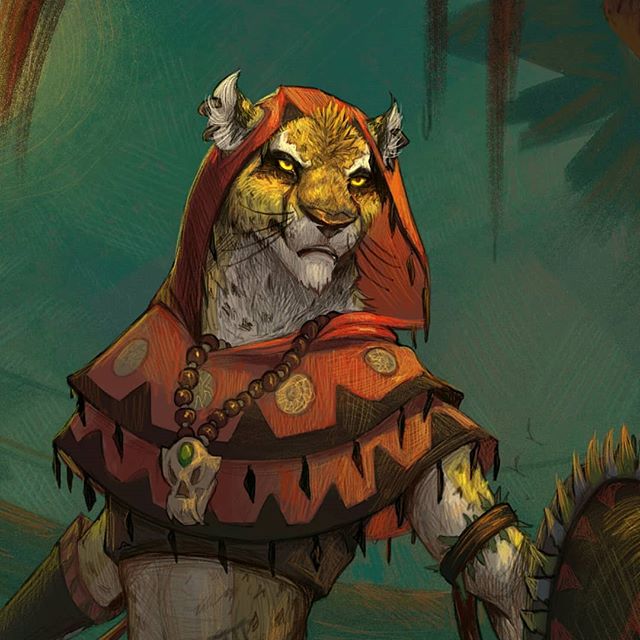
Ability Score Increase. Te’kuatli are swift and agile. Your dexterity score increases by 2.
Natural climber. You have a climb speed equal to your base walking speed.
Spirit of the Rainforest. You are proficient in both the Acrobatics and Athletics skills. You also have advantage on climb and jump checks.
Unnatural Camouflage. When in forests or grasslands, you can attempt to hide when lightly obscured and you have advantage on stealth checks in such geographic locations. In addition, when you are hidden from your target and miss with a ranged weapon attack, making the attack doesn’t reveal your position.
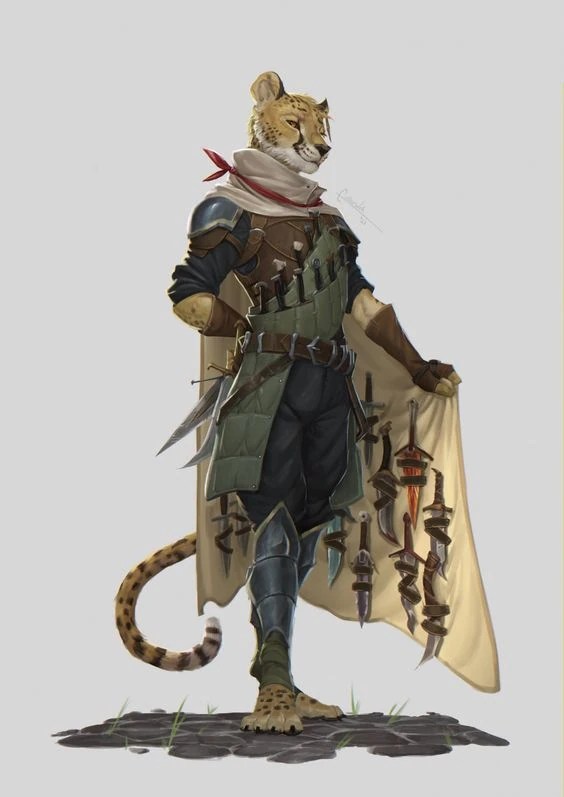
Tekuâni (TABAXI)
\page
Na’huani Traits
Ability Score Increase. Na’huani are naturally hardy. Your constitution score increases by 2.
Natural climber. You have a climb speed equal to your base walking speed.
Spirit of the Ice. You are proficient in both the Acrobatics and Athletics skills. You also gain advantage on Acrobatics checks to remain stable on slippery surfaces. In addition, you have resistance to cold damage.
Unnatural Camouflage. In snowy or icy environments, you can attempt to hide when only lightly obscured and you have advantage on stealth checks in such geographic locations. In addition, when you are hidden from your target and miss with a ranged weapon attack, making the attack doesn’t reveal your position.

Rahim and Ocelotli

Rahim (servals and caracals) and Ocelotli (ocelots) are smaller than most of the tekuâni races (except for the Miztani) and have similar fur patterns to leopards with round ears for Ocelotli (ocelots), spotted/striped coats with tall, round ears for Rahim (servals) similar to the cheetah, or pointed ears with fur-tips and a solid coat similar to the bobcat.

RAHIM AND OCELOTLI TRAITS
Ability Score Increase. Your dexterity score increases by 2.
Lithe and Lethal. Creatures provoke attacks of opportunity from you even if they take the Disengage action before leaving your reach, unless they have the Mobile feat or a similar class feature. When a creature within your reach makes an attack against a target other than you, you can use your reaction to make a melee weapon attack against the attacking creature.
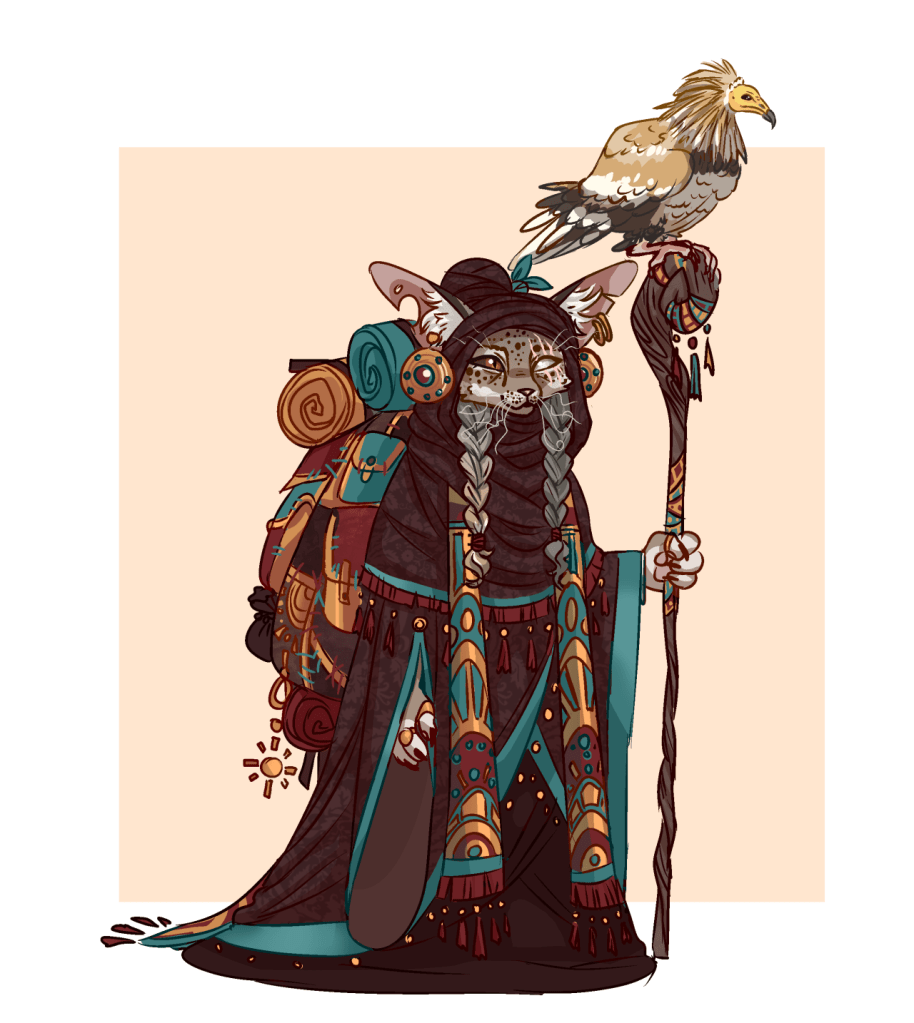
Tekuâni (TABAXI)
\page
Little One. Your size is small, but your speed remains 30 feet.
Naturally Agile. You have proficiency in the Agility skill.
Silver tongued. You gain advantage on either Persuasion or Deception skill checks (choose one when you create your character).

Miztani
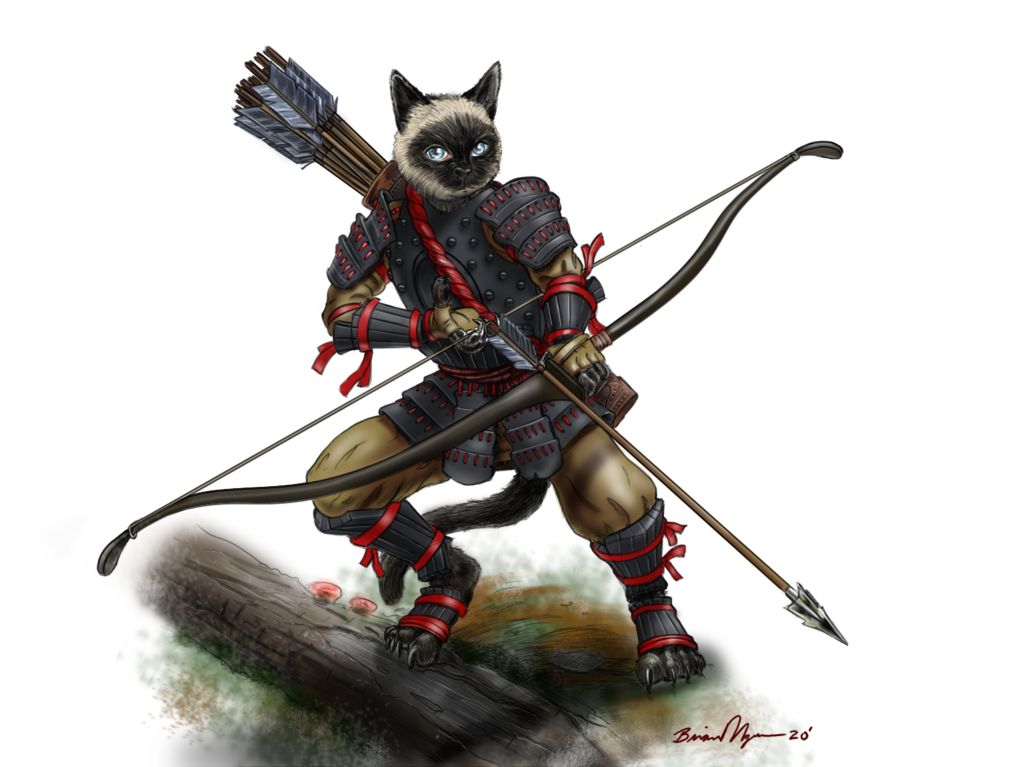
The Miztani are the smallest of all tekuâni races.
With the exception of those Miztani from Khepresh and Khemet, which pride themselves on their supposed ‘purity’ and ‘closeness to the gods’, most Miztani are seen as ‘mongrels’ and ‘half-breeds’ by the other tekuâni races.
As such, they can have many different appearances and colours, however, they are typically smaller than any of the other tekuâni races, including the much smaller Rahim and Ocelotli.
Of the Khemeti Miztani there is a subspecies that is almost completely hairless, and as such they are often revered as a priest caste in that society.
Miztani Traits
Ability Score Increase. Your Dexterity score increases by 2.
Feline Agility. Your reflexes and agility allow you to move with a burst of speed. When you move on your turn in combat, you can double your speed until the end of the turn. Once you use this trait, you can’t use it again until you move 0 feet on one of your turns.
Languages. You can speak, read, and write Common, Tekuâni and one other language of your choice.
Little One. Your size is small, but your speed remains 30 feet.
Natural Talent. You have proficiency in the Perception and Stealth skills.
Silver tongued. You gain advantage on either Persuasion or Deception skill checks (choose one when you create your character).
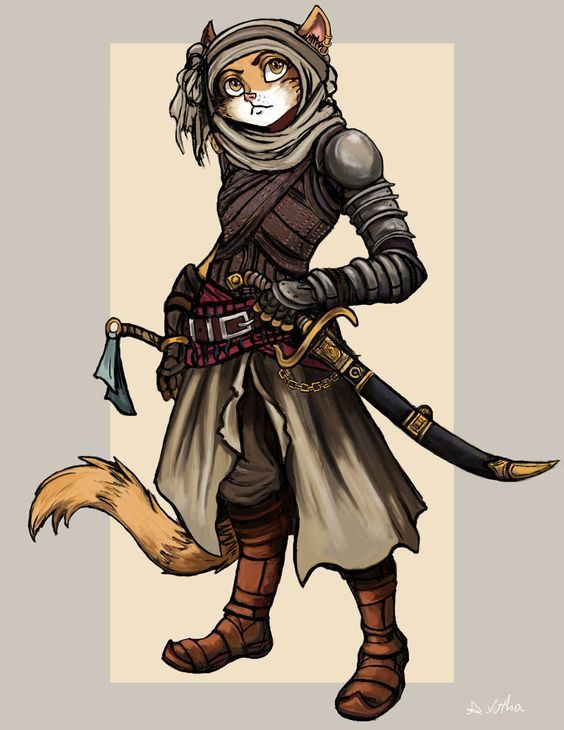
Tekuâni (TABAXI)
\page
\page

\page
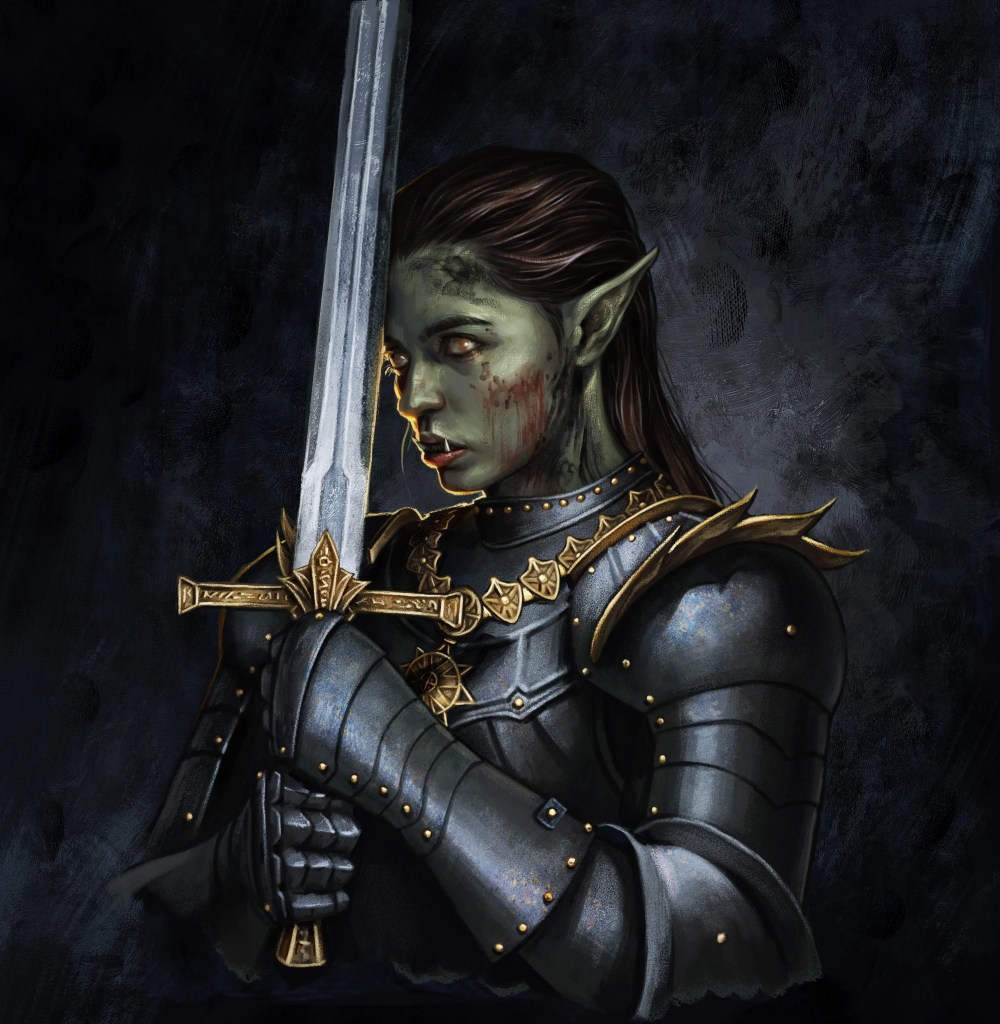
Var’en (Orcs)
Var’en (VAR-en) trace their creation to the Mad One, Loon of Zul, who took humans and zel’en (ZEL-en), refashioning them in her own way to be something more primal and in connection with their passionate natures. The var’en conceive of the Mad One as Zu’lūsh (Zoo-LOOSH), an unstoppable warrior and powerful leader. The divine qualities of Zu’lūsh resonate within var’en, granting them a reflection of His toughness and tenacity that can’t be matched, and the god equipped his children to be able to live above or below ground. Zu’lūsh’s blessings have made var’en tireless guardians and mighty allies wherever they are found, even when they turn their devotion to other gods.
Var’en have pointed ears, pronounced canine teeth and skin that ranges from a pale ashen complexion to one that is more greenish or khaki in colour. Their hair is typically black, and the males are capable of growing full beards. They are as varied as humans in temperament and alignment, with the best of them devout, loyal, faithful and determined, and the worst of them callous, selfish, frivolous and brutal.

Var’en Traits
As a a var’en, you have the following racial traits.
Ability Score Increase. Your Strength score increases by 2 and your Constitution score increases by 1. Alternatively, when determining your character’s ability scores, increase one score by 2 and increase a different score by 1, or increase three different scores by 1.
Age. Var’en reach adulthood at age 16 and live up to 80 years.
Creature Type. You are a Humanoid.
Size. Var’en stand easily 8 feet tall and corded with powerful muscles, weighing up to 280 pounds. Your size is Medium.
Speed. Your walking speed is 30 feet.
Adrenaline Rush. You can take the Dash action as a bonus action. You can use this trait a number of times equal to your proficiency bonus, and you regain all expended uses when you finish a long rest. Whenever you use this trait, you gain a number of temporary hit points equal to your proficiency bonus.
Darkvision. You can see in dim light within 60 feet of you as if it were bright light, and in darkness as if it were dim light. You discern colors in that darkness only as shades of gray.
Menacing. You gain proficiency in the Intimidation skill.
Powerful Build. You count as one size larger when determining your carrying capacity and the weight you can push, drag, or lift.
Primal Intuition. You have proficiency in two of the following skills of your choice: Animal Handling, Insight, Medicine, Nature, Perception, and Survival.
Relentless Endurance. When you are reduced to 0 hit points but not killed outright, you can drop to 1 hit point instead. Once you use this trait, you can’t do so again until you finish a long rest.
Savage Attacks. When you score a critical hit with a melee weapon attack, you can roll one of the weapon’s damage dice one additional time and add it to the extra damage of the critical hit.
Languages. You can speak, read, and write Common and Var’ish.

Var’en
\page

\page
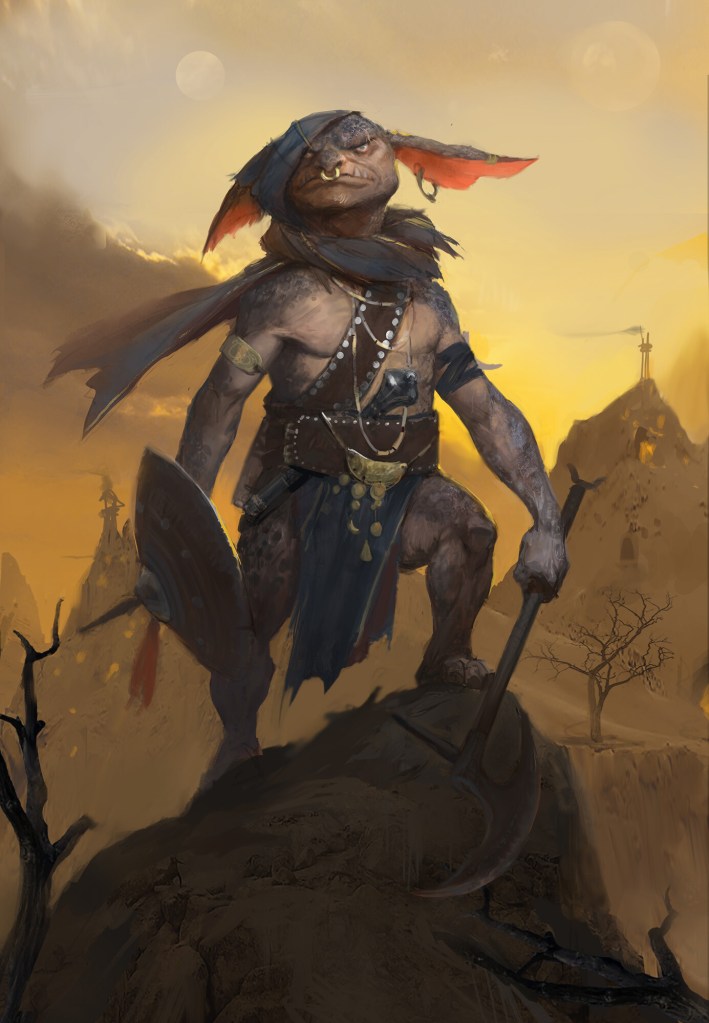
\page
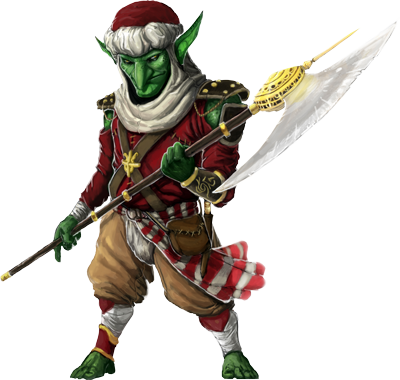
Zel’en (Goblins)
A subterranean folk, the zel’en (ZELL-en), also known as goblins in the Common tongue, can be found in every corner of Seminus, like ants. Long before the goddess Loon of Zul conquered them en masse, and tricked them into believing that she had created them and thus they must serve her without question, the earliest zel’en served in Lemurija at the court of the Dark Tsarina of Air and Shadow, an archfey of immense arcane power. It was with the Tsarina that they acquired their physical form, a form not unlike that of a gnome, but with longer ears and longer noses. Like gnomes they were already inherently curious and good at working on mechanics and complicated processes.
The zel’en thrived in the Tsarina’s dangerous domain thanks to a special boon from her — a supernatural knack for finding the weak spots in foes larger than themselves and for quickly getting out of trouble. Goblins brought this fey boon with them to worlds across the Material Plane, even if they don’t remember the fey realm they inhabited before Loon of Zul’s manifestation on this Plane of Existence.


Without meaning to, goblins often find themselves overtaken with a childlike and insatiable curiosity – and they just have to touch the source of their curiosity, if not to better appreciate it up close, then to just tactilely confirm its existence. This curiosity and the resulting ‘acquisition’ of things that ostensibly don’t belong to them often lends zel’en a bad reputation as having ‘sticky fingers’ at best and ‘selfish greed’ at worst.
There are stories that the reason the sun trails across the sky every day is because it is being chased by zel’en who wish to grab it and put it in their pockets on behalf of the moon goddess, Loon of Zul, who would see it extinguished and thus Eternal Night would prevail &emdash; a situation that would enable her luminesence to no longer be outshone.
Now many goblins pursue their own destinies, escaping the plots of both archfey and gods.
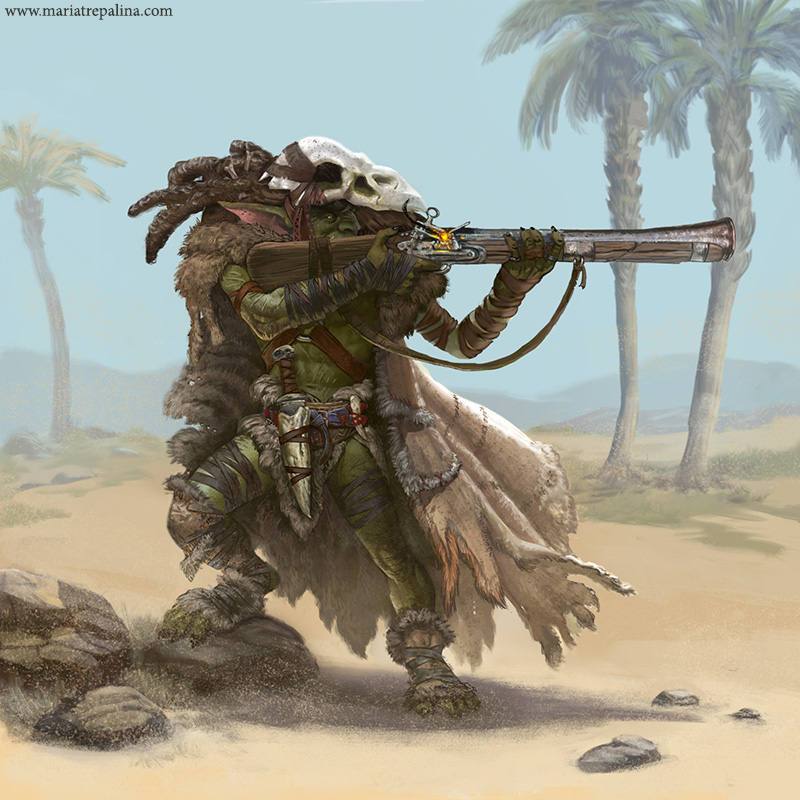
Zel’en
\page
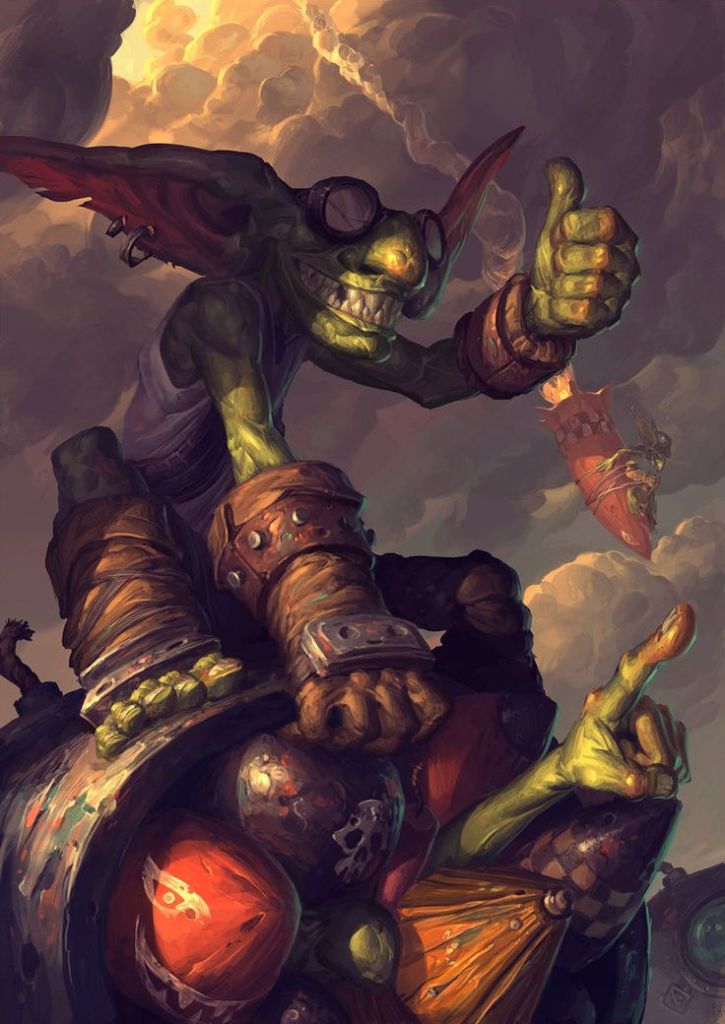
\page
Zel’en Traits
As a zel’en, you have the following racial traits.
Creature Type. You are a Humanoid. You are also considered a goblinoid for any prerequisite or effect that requires you to be a goblinoid.
Size. Zel’en average about 3 feet tall and weigh about 40 pounds. Your are Small.
Speed. Your walking speed is 30 feet.
Darkvision. You can see in dim light within 60 feet of you as if it were bright light and in darkness as if it were dim light. You discern colors in that darkness only as shades of gray.
Agile Climber. You have a climbing speed of 25 feet. You can’t use your climbing speed while you wear medium or heavy armor. (If your campaign uses the variant rule for encumbrance, you can’t use your climbing speed if you are encumbered.)
Fey Ancestry. You have advantage on saving throws you make to avoid or end the charmed condition on yourself.
Fury of the Small. When you damage a creature with an attack or a spell and the creature’s size is larger than yours, you can cause the attack or spell to deal extra damage to the creature. The extra damage equals your proficiency bonus.
You can use this trait a number of times equal to your proficiency bonus, regaining all expended uses when you finish a short rest.
Give Them The Slip. When you are wearing no armor, your AC is equal to 12 + your Dexterity modifier.
Insult. You have a legendary ability to hone in on a creature’s emotional raw nerves and craft a taunt that flusters that creature. As a bonus action, you can unleash a barrage of insults at a creature within 60 feet of you that can hear and understand you. The target must succeed on a Wisdom saving throw (DC equal to 8 + your proficiency bonus + your Charisma modifier), or it has disadvantage on attack rolls until the start of your next turn. You can use this bonus action a number of times equal to your proficiency bonus, and you regain all expended uses when you finish a long rest.
Nimble Escape. You can take the Disengage or Hide action as a bonus action on each of your turns.
Nimble Fingers. You just happen to “acquire” things which are not yours. You are proficient in the Sleight of Hand skill.
…Now You Don’t. You have advantage on Dexterity (Stealth) checks made to hide.
What’s It Got In Its Pocketses? You have an uncanny knack for pulling random items out of a bag, a pocket, a pouch or any other container in an almost Looney Tunes ‘hammerspace’ fashion.
As a bonus action, you can reach into a container you’re carrying and roll on the Zel’en Lucky Find table to determine what item you pull out. Somehow you always seem to lose the object if you haven’t used it within an hour, either by absentmindedly replacing it in another container (and after which – dang nam it! – you can’t recover it again) or by dropping it in such a way that it becomes unrecoverable. If you give it to someone else, somehow (no matter how improbably!) they also seem to misplace it within the hour.
You can use this bonus action a number of times equal to your proficiency bonus, and you regain all expended uses when you finish a long rest.
Zel’en Lucky Find table
| d10 | Item |
|---|---|
| 1 | You find something COMPLETELY unexpected. (roll a d20 and consult the Huh? table below). |
| 2 | 5d6 gold pieces |
| 3 | 1 simple weapon (roll on the Simple Weapon table below). |
| 4 | 1 item of adventuring gear (roll on the Adventuring Gear table below). |
| 5 | 1 accessory (roll on the Accessories table below). |
| 6 | A crowbar. |
| 7 | A grappling hook. |
| 8 | 1 set of tools (roll on the Tools table below). |
| 9 | 1 trinket (roll on the Trinkets table below). |
| 10 | Roll another 1d10 and consult this table again (Unless you roll another 10 in which case you find a diamond worth 1d10 x 100gp!) |
Huh? Table
| d20 | Item found |
|---|---|
| 1 | A rubber chicken that squeaks |
| 2 | A bunch of bananas |
| 3 | A mousetrap |
| 4 | A stepladder |
| 5 | A large rubber mallet |
| 6 | A half-full canteen |
| 7 | An alarm clock |
| 8 | A finger trap ‘toy’ |
| 9 | A boomerang |
| 10 | A bright red balloon |
| 11 | A pamphlet for the Temple of Loon of Zul |
| 12 | A bar of soap |
| 13 | A bread knife |
| 14 | A tub of vanilla-scented coconut yoghurt |
| 15 | A set of Groucho Marx glasses |
| 16 | A cannonball |
| 17 | An anvil |
| 18 | A pair of rollerskates |
| 19 | A live octopus |
| 20 | A teapot |
Zel’en
\page
Simple Weapon Table
| d8 | Item found |
|---|---|
| 1 | A club |
| 2 | A dagger |
| 3 | A handaxe |
| 4 | A jambiya |
| 5 | A light hammer |
| 6 | A sickle |
| 7 | A dirk |
| 8 | A shortsword |
Adventuring Gear Table
| d20 | Item found |
|---|---|
| 1 | 20 arrows |
| 2 | Sprig of Mistletoe (Druidic Focus) |
| 3 | A bell |
| 4 | A candle |
| 5 | A crossbow bolt case |
| 6 | A scroll or a map case |
| 7 | Chalk |
| 8 | A flask or a tankard |
| 9 | An ink pen |
| 10 | A lamp |
| 11 | Oil (1 flask) |
| 12 | Paper or parchment (1 sheet) |
| 13 | A whetstone |
| 14 | A quiver |
| 15 | Sealing Wax |
| 16 | A cannonball |
| 17 | Totem (Druidic Focus) |
| 18 | A torch |
| 19 | A tinderbox |
| 20 | A pouch or sack |
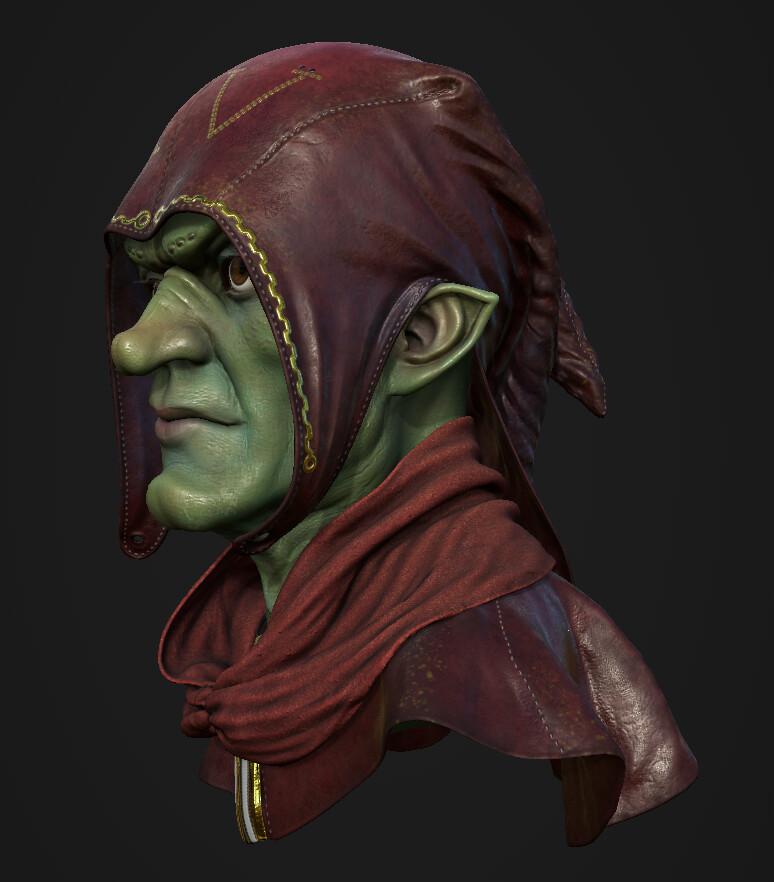

Accessories Table
| d12 | Item found |
|---|---|
| 1 | Dice set |
| 2 | Dragonchess set |
| 3 | Playing Card set |
| 4 | Knucklebones set |
| 5 | Hand drum |
| 6 | Ney flute |
| 7 | Long-necked lute |
| 8 | Finger cymbals |
| 9 | Kanun Zither (lap harp) |
| 10 | Oud (stringed) |
| 11 | Rebab (stringed ) |
| 12 | Henna Kit |
Tools Table
| d20 | Item found |
|---|---|
| 1 | Calligrapher’s Supplies |
| 2 | Carpenter’s Tools |
| 3 | Cobbler’s Tools |
| 4 | Cook’s Utensils |
| 5 | Leatherworker’s Tools |
| 6 | Mason’s Tools |
| 7 | Thieves’ Tools |
| 8 | Painter’s Supplies |
| 9 | Potter’s Tools |
| 10 | Weaver’s Tools |
| 11 | Woodcarver’s Tools |
| 12 | Herbalism Kit |
| 13 | Medicine Kit |
| 14 | Prospector’s Tools |
| 15 | Sculptor’s Tools |
| 16 | Tinker’s Tools |
| 17 | Tailor’s Tools |
| 18 | Climber’s Kit |
| 19 | Forgery Kit |
| 20 | Disguise Kit |
Zel’en
\page
Trinkets Table
| d20 | Item found |
|---|---|
| 1 | A mummified goblin hand |
| 2 | A piece of crystal that faintly glows in the moonlight |
| 3 | A gold coin minted in an unknown land |
| 4 | A diary written in a language you don’t know |
| 5 | A brass ring that never tarnishes |
| 6 | An old chess piece made from glass |
| 7 | A pair of knucklebone dice, each with a skull symbol on the side that would normally show six pips |
| 8 | A small idol depicting a nightmarish creature that gives you unsettling dreams when you sleep near it |
| 9 | A rope necklace from which dangles four mummified kedakai fingers |
| 10 | The deed for a parcel of land in a realm unknown to you |
| 11 | A 1-ounce block made from an unknown material |
| 12 | A small cloth doll skewered with needles |
| 13 | A tooth from an unknown beast |
| 14 | An enormous scale, perhaps from a dragon |
| 15 | A bright green feather |
| 16 | An old divination card bearing your likeness |
| 17 | A glass orb filled with moving smoke |
| 18 | A 1-pound egg with a bright red shell |
| 19 | A pipe that blows bubbles |
| 20 | A glass jar containing a weird bit of flesh floating in pickling fluid |
| 21 | A tiny gnome-crafted music box that plays a song you dimly remember from your childhood |
| 22 | A small wooden statuette of a smug ko |
| 23 | A brass orb etched with strange runes |
| 24 | A multicolored stone disk |
| 25 | A tiny silver icon of a raven |
| 26 | A bag containing forty-seven humanoid teeth, one of which is rotten |
| 27 | A shard of obsidian that always feels warm to the touch |
| 28 | A dragon’s bony talon hanging from a plain leather necklace |
| 29 | A pair of mismatched socks |
| 30 | A blank book whose pages refuse to hold ink, chalk, graphite, or any other substance or marking |
| 31 | A silver badge in the shape of a five-pointed star |
| 32 | A knife that belonged to a relative |
| 33 | A glass vial filled with nail clippings |
| 34 | A rectangular metal device with two tiny metal cups on one end that throws sparks when wet |
| 35 | A white, sequined glove sized for a human |
| 36 | A vest with one hundred tiny pockets |
| 37 | A small, weightless stone block |
| 38 | A tiny sketch portrait of a goblin – nude |
| d20 | Item found |
|---|---|
| 39 | An empty glass vial that smells of perfume |
| 40 | A gemstone that looks like a lump of coal when examined by anyone but you |
| 41 | A scrap of cloth from an old banner |
| 42 | A rank insignia from a lost legionnaire |
| 43 | A tiny silver bell without a clapper |
| 44 | A mechanical canary inside a gnomish lamp |
| 45 | A tiny chest carved to look like it has numerous feet on the bottom |
| 46 | A dead sprite inside a clear glass bottle |
| 47 | A metal can that has no opening but sounds as if it is filled with liquid, sand, spiders, or broken glass (your choice) |
| 48 | A glass orb filled with water, in which swims a clockwork goldfish |
| 49 | A silver spoon with an ‘M’ engraved on the handle |
| 50 | A whistle made from gold-colored wood |
| 51 | A dead scarab beetle the size of your hand |
| 52 | Two toy soldiers, one with a missing head |
| 53 | A small box filled with different-sized buttons |
| 54 | A candle that can’t be lit |
| 55 | A tiny cage with no door |
| 56 | An old key |
| 57 | A collection of bawdry poetry |
| 58 | A hilt from a broken sword |
| 59 | A rabbit’s foot |
| 60 | A glass eye |
| 61 | A cameo carved in the likeness of a hideous person |
| 62 | A silver skull the size of a coin |
| 63 | An alabaster mask |
| 64 | A pyramid of sticky black incense that smells very bad |
| 65 | A nightcap that, when worn, gives you pleasant dreams |
| 66 | A single caltrop made from bone |
| 67 | A golden monocle frame without the lens |
| 68 | A d20 that only rolls 1s or 20s |
| 69 | The complete adventures of the hero Asterix |
| 70 | A small packet filled with pink dust |
| 71 | A fragment of a beautiful song, written as musical notes on two pieces of parchment that earworms the reader for days |
| 72 | A silver teardrop earring made from a starstone |
| 73 | The shell of an egg painted with scenes of human misery in disturbing and incredibly miniscle detail |
| 74 | A fan that, when unfolded, shows an Inkido panorama |
| 75 | A set of bone pipes |
| 76 | A four-leaf clover pressed inside a book discussing manners and etiquette |
| 77 | A sheet of parchment upon which is drawn a complex mechanical contraption |
Zel’en
\page
| d20 | Item found |
|---|---|
| 78 | A simple glass slipper |
| 79 | An invitation to a noble’s ball |
| 80 | A bronze pentacle with an etching of a rat’s head in its center |
| 81 | An emerald green handkerchief embroidered with the name ‘Malachi’ |
| 82 | Half of the floorplan for a temple, castle, or some other structure |
| 83 | A tricorne hat |
| 84 | A map with an X that marks ‘buried treasure’ |
| 85 | A book of sudoku puzzles |
| 86 | An empty silver snuffbox bearing an inscription on the surface that says “dreams” |
| 87 | An iron holy symbol devoted to an unknown god |
| 88 | A book that tells the story of a legendary hero’s rise and fall, with the last chapter missing |
| 89 | A vial of dragon blood |
| 90 | An ancient arrow of kedakai design |
| 91 | A needle that never bends |
| 92 | An ornate brooch of ad’amlu design |
| 93 | An empty wine bottle bearing a pretty label that says, “The Wizard’s Brewery, Bulgakov Valley, 331422-W” |
| 94 | A mosaic tile with a multicolored, glazed surface |
| 95 | A petrified mouse |
| 96 | A black pirate flag adorned with a dragon’s skull and crossbones |
| 97 | A tiny mechanical crab or spider that moves about when it’s not being observed |
| 98 | A glass jar containing lard with a label that reads, “Griffon Grease” |
| 99 | A wooden box with a ceramic bottom that holds a living worm with a head on each end of its body |
| 100 | A metal urn containing the ashes of a hero |




Zel’en
\page

\page
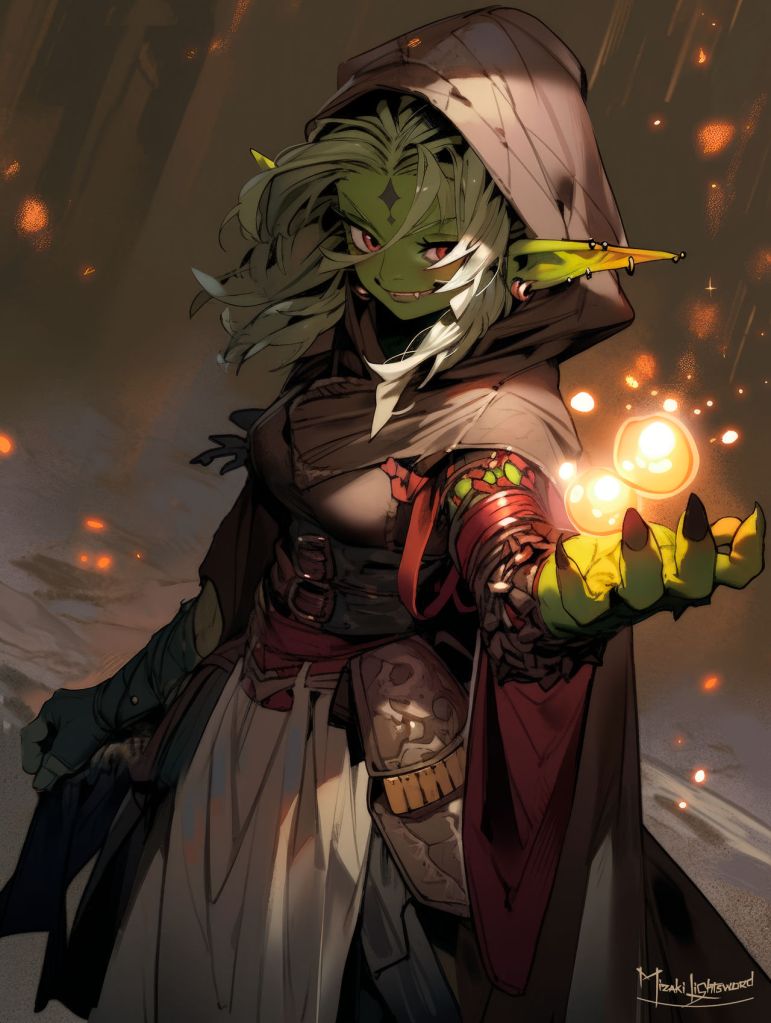
\page

\page
CHARACTERS
The cultures of the Northern Vast have unique social roles and needs, reflected in this collection of backgrounds for Vastlanders. Of course, you can use any Player’s Handbook Backgrounds that suit the character you are trying to create – and if there is a Background you’ve found in a 3rd party sourcebook, let your DM know and they might allow you use that Background into your character.
Many players struggle with the “Why?”s of their character creation – and this section is to help those players who find this process tricky. If that’s not you, feel free to jump ahead to where the Backgrounds are listed to peruse for any that might suit your playstyle or the character you have in mind.
So, You Want To Be A Hero
What follows here is a narrative that you construct with your DM. The Journey To First Level will tie your character to the land and to NPCs. It will flesh out the campaign setting in surprising ways. And, perhaps most importantly, it will give you and your DM a much stronger sense of each player’s character’s motivations.
There may be some dice rolling but there doesn’t have to be. This is a cooperative exercise between the DM and the player, not a scenario where failure is a possibility. The goal is to get the character from their humble beginnings to their first steps into adventuring.
Phase 1: Establish Mundane Normacy
The Heroic Cycle, a.k.a. The Hero’s Journey, begins with mundane, comfortable normalcy. Consider the early years of your character, think only on their background, their origin – and describe their everyday life. Ask yourself these pertinent questions:
- Where do they work?
- Who do they interact with in their daily routines?
- Where do they sleep at night and who shares their home?
Normal doesn’t have to be boring but it usually is. Routines become monotonous. Life becomes ordinary and unfulfilling. This is the safe, predictable life they have lived for years. If you have not chosen or rolled for your Personality trait, Ideal, Bond, and Flaw yet, this would be the perfect time to do that.
Phase 2: Introduce Your Character’s Class
How does a blacksmith become a wizard? How does a shepherd turn into cleric? A farmer does not typically wake up one morning and decide to be a paladin. Events generally conspire to enable such a transformation. Here are some common ways to make that happen:
Mentor: A person who interacts with your character a few times takes notice of them and realizes their potential. The mentor is of the class which you have chosen for your chracter and trains them in the relevant abilities.
Conscription: Due do a need for particular skills, the government/church/organization/etc.drafts promising recruits into their ranks. This could be due to falling enlistment, an external threat, or because your character has made an enemy
and this is somehow some kind of revenge or punishment.
Stalking: A variant of the Mentor approach (see above). Having met a traveler of your desired class, your chracter realizes they want to be just like that traveler. They force themselves upon the stranger by following them and begging for apprenticeship. The traveler, seeing their commitment, eventually relents and accepts the role of mentor.
Competition: Apprenticeship in your character’s class might be rare and handed out via a competition. The PC could prevail and win their spot or be forced to return each year until they succeed.
Ancestor’s journal: Your character discovers a journal from their grandparent/greatuncle/“real father”/etc. that details their life as a hero of that desired class. The journal contains enough information and techniques that the PC is able to study on their own and make it to Level 1 in that class after a period of study and appropriation.
Phase 3: Disaster strikes
In truth, protagonists rarely answer the call to adventure. They are instead forced into it. Something upsets the routine of daily life and shatters the plans they had for their future or their easy life of safety and comfort. Your campaign will begin here. The characters will be thrown together by circumstance and bonded through their common objective. Here are some ways this might start:
It’s all in flames: Your familiar surroundings are destroyed. Loved ones have been killed or have fled. There’s no home to return to anymore.
Captured: A superior force has conquered your home town. The PCs have been captured, thrown together, and are being transported somewhere for a purpose they won’t enjoy.
They’re coming for us: The PCs have been identified as a threat to some malevolent power. Forces are converging on you and working together is the only way to escape.
Characters
\page
Drafted: Facing a new, menacing threat, the PCs are drafted into service and commanded to perform missions for the greater good. Alternatively, some benefactor or patron might sponsor the characters or offer them employment to complete a particular job.
Afflicted: The PCs or members of their families are afflicted by a curse, disease, or strange phenomenon. The reason and the cure for this affliction can be found in a far away and dangerous place.
Phase 4: The Mission
At this point it should be very clear who the good guys and the bad guys are. The good guys, bonded by circumstance, should be presented with a very clear objective. Accomplishing that objective will, without a doubt, go a long way to
rectifying the disaster that just befell them and their loved ones.
BACKGROUNDS
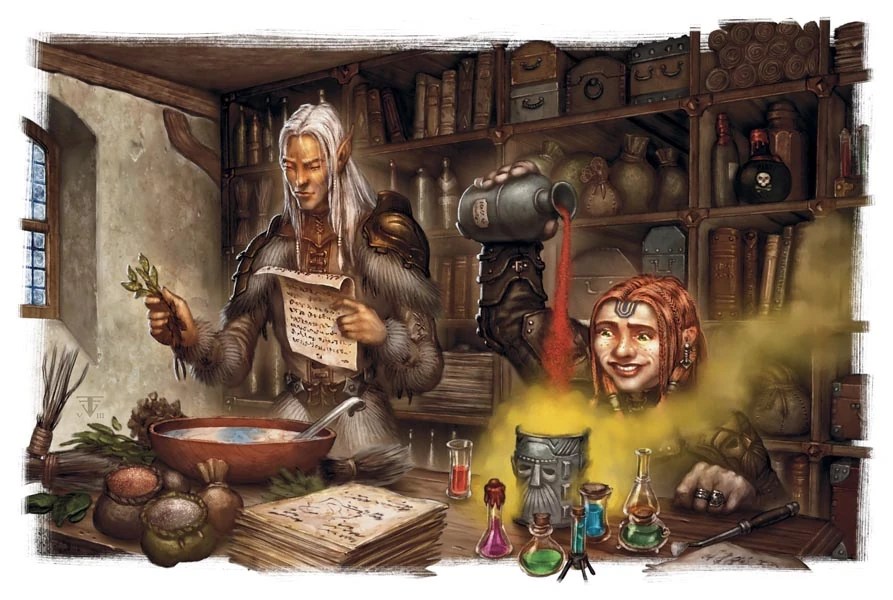
Alchemist
Alchemists study the natural world. They combine their knowledge of herbalism, medicine, and the elements to produce new and useful substances. The alchemist is an herbalist, an apothecary, and a scientist all rolled into one invaluable scholar. You would most likely have apprenticed with an alchemist for ten years or more, learning all the various uses for plants, minerals, and even animal byproducts. Over time you compiled your own book of recipes and collected your own set of alchemical supplies. You were then able to produce and sell your own concoctions. As an alchemist you could also identify plants, poisons, and potions.
Skill Proficiencies: Medicine, Nature
Tool Proficiencies: Herbalism kit, alchemist
supplies
Equipment: An herbalism kit, alchemist supplies, a vial of antitoxin that you made, a book of alchemical recipes, a backpack containing 10 days of rations, a mess kit, a tinderbox, and a waterskin. A belt pouch containing 10 gp and 10 silver.
Feaure: Quick Crafter
Years of training and practice in your craft have refined your technique and cut your crafting time in half. You can make 5 gold pieces worth of any of the common alchemical products in an uninterrupted four hour work period. At the end of the period, a Wisdom (Medicine) check reveals the success of the process. A check of less than 10 means that the batch is ruined. 10-14 means that only half the quantity of the product was produced. 15-19 is a success. 20 or more means that twice as much of the product was produced than expected. A roll of a natural 1 typically results in a toxic, smoking, bubbling disaster.
Common Alchemical Products:
paints, dyes, inks, stains, insect repellent, perfumes, glues, solvents, itch cream, anti-fungal cream,
analgesics, laxatives, soaps, deodorant, toothpaste, teas, candy, chewing gum, acid, acid neutralizer, smoke powder, matches, sun block, and other similar products.
Suggesed Characteristics
Alchemist Personality Traits
| d8 | Personality Trait |
|---|---|
| 1 | My knowledge isn’t a treasure I keep locked away. I share it freely. |
| 2 | I’m not good at doing nothing. I will start new projects if things get easy. |
| 3 | I’m flexible and able to adapt to whatever situation I’m placed in. |
| 4 | Sometimes I think I must be invisible because nobody notices me. |
| 5 | What I do isn’t magic, it’s science. However, I still pretend that it’s magic. |
| 6 | I’m very old-fashioned in my manners and in my sense of fashion. |
| 7 | In my line of work it pays to pay homage to thegods. |
| 8 | I’m a businessman. I like to do business, and I like to stay out of other people’s business. |
| d6 | Ideal |
|---|---|
| 1 | Diligence. Plan your work and work your plan. (Lawful) |
| 2 | Reverence. Demonstrate respect towards the sources of knowledge and life. (Good) |
| 3 | Greed. No one ever got rich by giving away their labors. (Evil) |
| 4 | Cleanliness. Clean hands plus clean tools equals pure outcomes. (Any) |
| 5 | Spontaneity. Each day should be like opening a new book, full of surprises. (Chaotic) |
| 6 | Fairness. There is a form of justice in dealing fairly with people. (Lawful) |
Backgrounds: Alchemist
\page
| d6 | Bond |
|---|---|
| 1 | My baby sister has a disease that can only be cured if I find a rare and elusive plant. |
| 2 | A priest of the god of alchemists said I was a heretic for not following their practices. |
| 3 | I’m carrying the seeds to an herb plant thought to have gone extinct. |
| 4 | I was driven from my home village when someone died from one of my potions. |
| 5 | I want to control the alchemists guild so I can make some needed changes. |
| 6 | My alchemical equipment is borrowed from my master and I’ll have to return it within two years. |
| d6 | Flaw |
|---|---|
| 1 | My allergies make herb collection aggravating. |
| 2 | I always charge guild rates for my products, even to my friends. |
| 3 | I put on a show to make it seem like what I’m doing is dangerous even when it isn’t. |
| 4 | I have become addicted to a potion I brew. |
| 5 | I named a product after myself but I actually copied the recipe from someone else. |
| 6 | I’ve somehow given my skin a yellowish tint. |
Potion Crafting
Unless the DM has alternate rules, use these guidelines for making potions:
A single potion of antitoxin normally takes two eight-hour work days to produce. Though, the alchemist’s Quick Crafter feature can cut this time to one day.
Magical potions require the alchemist, or someone aiding the alchemist, to know the spell contained in the potion and to spend the appropriate spell slot on each day of the potion crafting.
The crafting time for you to produce magic potions is as follows; Common potions take 1 day, Uncommon potions take 2 days. Rare potions take 10 days and the alchemist must be at least 5th level. Very rare potions take 100 days and the alchemist must be at least 11th level.

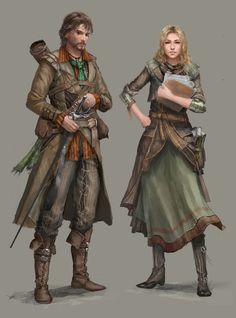
Anthropologist
You have always been fascinated by other cultures, from the most ancient and primeval lost lands to the most modern civilizations. By studying other cultures’ customs, philosophies, laws, rituals, religious beliefs, languages, and art, you have learned how tribes, empires, and all forms of society in between craft their own destinies and doom. This knowledge came to you not only through books and scrolls, but also through firsthand observation – by visiting far-flung settlements and exploring local histories and customs.
Skill Proficiencies: Insight, Religion
Tool Proficiencies: None
Languages: Two of your choice
Equipment: A leather-bound diary, a bottle of ink, an ink pen, a set of traveler’s clothes, one trinket of special significance, and a pouch containing 10gp
Features: Cultural Chameleon
Before becoming an adventurer, you spent much of your adult life away from your homeland, living among people different from your kin. You came to understand these foreign cultures and the ways of their people, who eventually treated you as one of their own. One culture had more of an influence on you than any other, shaping your beliefs and customs. Choose a race whose culture you’ve adopted.
Backgrounds: Alchemist | Anthropologist
\page
Adept Linguist
You can communicate with humanoids who don’t speak any language you know. You must observe the humanoids interacting with one another for at least 1 day, after which you learn a handful of important words, expressions, and gestures – enough to communicate on a rudimentary level.
Suggested Characteristics
Anthropologists leave behind the societies into which they were born to discover what life ls like in other parts of the world. They seek to see how other races and civilizations survive – or why they did not. Some anthropologists are driven by intellectual curiosity, while others want the fame and recognition that comes with being the first to discover a new people, a lost tribe, or the truth about an ancient empire’s downfall.
| d6 | Personality Trait |
|---|---|
| 1 | I prefer the company of those who aren’t like me, including people of other races. |
| 2 | I’m a stickler when it comes to observing proper etiquette and local customs. |
| 3 | I would rather observe than meddle. |
| 4 | By living among violent people, I have become desensitized to violence. |
| 5 | I would risk life and limb to discover a new culture or unravel the secrets of a dead one. |
| 6 | When I arrive at a new settlement for the first time, I must learn all its customs. |
| d6 | Ideal |
|---|---|
| 1 | Discovery. I want to be the first person to discover a lost culture. (Any) |
| 2 | Distance. One must not interfere with the affairs of another culture – even one in need of aid. (Lawful) |
| 3 | Knowledge. By understanding other races and cultures, we learn to understand ourselves. (Any) |
| 4 | Power. Common people crave strong leadership, and I do my utmost to provide it. (Lawful) |
| 5 | Protection. I must do everything possible to save a society facing extinction. (Good) |
| 6 | Indifferent. Life is cruel. What’s the point in saving people if they’re going to die anyway? (Chaotic) |
| d6 | Bond |
|---|---|
| 1 | My mentor gave me a journal filled with lore and wisdom. Losing it would devastate me. |
| 2 | Having lived among the people of a primeval tribe or clan, I long to return and see how they are faring. |
| 3 | Years ago, tragedy struck the members of an isolated society I befriended, and I will honor them. |
| 4 | I want to learn more about a particular humanoid culture that fascinates me. |
| 5 | I seek to avenge a clan, tribe, kingdom, or empire that was wiped out. |
| 6 | I have a trinket that I believe is the key to finding a long-lost society. |
| d6 | Flaw |
|---|---|
| 1 | Boats make me seasick. |
| 2 | I talk to myself, and I don’t make friends easily. |
| 3 | I believe that I’m intellectually superior to people from other cultures and have much to teach them. |
| 4 | I’ve picked up some unpleasant habits living among races such as zel’eni (goblins), lizardfolk, or var’en (orcs). |
| 5 | I complain about everything. |
| 6 | I wear a tribal mask and never take it off. |
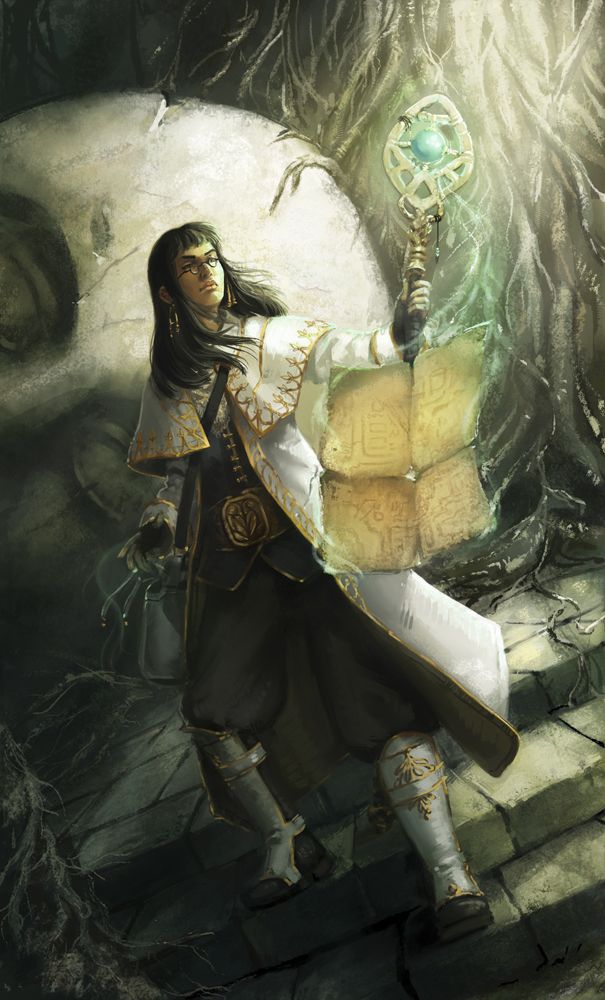
Archaeologist
An archaeologist learns about the long-lost and fallen cultures of the past by studying their remains – their bones, their ruins, their surviving masterworks, and their tombs. Those who practice archaeology travel to the far corners of the world to root through crumbled cities and lost dungeons, digging in search of artifacts that might tell the stories of monarchs and high priests, wars and cataclysms.
Skill Proficiencies: History, Survival
Tool Proficiencies: Cartographer’s tools or navigator’s tools
Languages: One of your choice
Backgrounds: Anthropologist | Archaeologist
\page
Equipment: A wooden case containing a map to a ruin or dungeon, a bullseye lantern, a miner’s pick, a set of traveler’s clothes, a shovel, a two-person tent, a trinket recovered from a dig site, and a pouch containing 25gp
Features: Dust Digger
Prior to becoming an adventurer, you spent most of your young life crawling around in the dust, pilfering relics of questionable value from crypts and ruins. Though you managed to sell a few of your discoveries and earn enough coin to buy proper adventuring gear, you have held onto an item that has great emotional value to you. Roll on the Signature Item table to see what you have, or choose an item from the table.
| d8 | Signature Item |
|---|---|
| 1 | 10-foot pole |
| 2 | Medallion |
| 3 | Crowbar |
| 4 | Shovel |
| 5 | Hat |
| 6 | Sledgehammer |
| 7 | Hooded lantern |
| 8 | Whip |
Historical Knowledge
When you enter a ruin or dungeon, you can correctly ascertain its original purpose and determine its builders, whether those were dwarves, elves, humans, yuan-ti, or some other known race. In addition, you can determine the monetary value of art objects more than a century old.
Suggested Characteristics
Few archaeologists can resist the lure of an unexplored ruin or dungeon, particularly if such a site is the source of legends or is rumored to contain the treasures and relics of wizards, warlords, or royalty. Some archaeologists plunder for wealth or fame, while others consider it their calling to illuminate the past or keep the world’s greatest treasures from falling into the wrong hands. Whatever their motivations, archaeologists combine the qualities of a scrappy historian with the self-made heroism of a treasure-hunting scoundrel.
| d8 | Personality Trait |
|---|---|
| 1 | I love a good puzzle or mystery. |
| 2 | I’m a pack rat who never throws anything away. |
| 3 | Fame is more important to me than money. |
| 4 | I have no qualms about stealing from the dead. |
| 5 | I’m happier in a dusty old tomb than I am in the centers of civilization. |
| 6 | Traps don’t make me nervous. Idiots who trigger traps make me nervous. |
| 7 | I might fail, but I will never give up. |
| 8 | You might think I’m a scholar, but I love a good brawl. These fists were made for punching. |
| d6 | Ideal |
|---|---|
| 1 | Preservation. That artifact belongs in a museum. (Good) |
| 2 | Greed. I won’t risk my life for nothing. I expect some kind of payment. (Any) |
| 3 | Death Wish. Nothing is more exhilarating than a narrow escape from the jaws of death. (Chaotic) |
| 4 | Dignity. The dead and their belongings deserve to be treated with respect. (Lawful) |
| 5 | Immortality. All my exploring is part of a plan to find the secret of everlasting life. (Any) |
| 6 | Danger. With every great discovery comes grave danger. The two walk hand in hand. (Any) |
| d6 | Bond |
|---|---|
| 1 | Ever since I was a child, I’ve heard stories about a lost city. I aim to find it, learn its secrets, and earn my place in the history books. |
| 2 | I want to find my mentor, who disappeared on an expedition some time ago. |
| 3 | I have a friendly rival. Only one of us can be the best, and I aim to prove it’s me. |
| 4 | I won’t sell an art object or other treasure that has historical significance or is one of a kind. |
| 5 | I’m secretly in love with the wealthy patron who sponsors my archaeological exploits. |
| 6 | I hope to bring prestige to a library, a museum, or a university. |
| d6 | Flaw |
|---|---|
| 1 | I have a secret fear of some common wild animal – and in my work, I see them everywhere. |
| 2 | I can’t leave a room without searching it for secret doors. |
| 3 | When I’m not exploring dungeons or ruins, I get jittery and impatient. |
| 4 | I have no time for friends or family. I spend every waking moment thinking about and preparing for my next expedition. |
| 5 | When given the choice of going left or right, I always go left. |
| 6 | I can’t sleep except in total darkness. |

Backgrounds: Archaeologist
\page
Athlete
You were a celebrated athlete in your local community. At adolescence you clearly stood apart from your peers when it came to feats of strength and endurance. Soon you were competing against the best athletes from other communities and besting them, too. Before long, you were representing your region and your lord. As an athlete, you were excused from everyday chores so that you could train. Your family was given a small stipend from your lord to make up for your lack of contribution to the household. Your days were instead spent with a trainer, pushing yourself to your physical limits. You represented your region in seasonal tournaments.
You would have competed in many events but, in one of them, you were the best.
Choose your specialty from the list below.
| d6 | Your specialty |
|---|---|
| 1 | Long distance running |
| 2 | Sprinting |
| 3 | Javelin throw |
| 4 | Wrestling |
| 5 | Long jump |
| 6 | High jump |
Saving Throw Proficiencies: Strength
Skill Proficiencies: Acrobatics, Athletics
Equipment: Two javelins, a backpack containing 10 days of rations, a mess kit, a tinderbox, and a waterskin. 50 feet of rope hangs from the pack. A belt pouch containing 15 gold pieces and 20 silver pieces.
Feaure: Trained Athlete
Thanks to your years of training, you gain a +2 bonus to Strength (Athletics) checks. In addition, you may make thrown javelin attacks using a Strength (Athletics) check instead of a making a normal ranged attack.
Suggested Characteristics
| d8 | Personality Trait |
|---|---|
| 1 | I’m slow to start things but once I begin something I do it with enthusiasm. |
| 2 | I may be a brute but that doesn’t mean that I’m a thug. |
| 3 | I try to always act courteously, even with my fellow competitors. |
| 4 | I just want to be the hero, adored by my fans. Is that so much to ask? |
| 5 | I always expect the worst outcome so I’m surprised when things work out in my favor. |
| 6 | I never give up. I will push myself to my absolute limit and even further. |
| 7 | I’m actually a very lazy person, just not when it comes to athletics. |
| 8 | I tend to make rash decisions and jump into situations without giving them much thought. |
| d6 | Ideal |
|---|---|
| 1 | Tactical. I take time to understand my objectives before planning action. (Lawful) |
| 2 | Responsibility. Never let anyone shoulder a burden that should be carried upon your own shoulders. (Good) |
| 3 | Peace. There is always a path to success that doesn’t require violence. (Good) |
| 4 | Enthusiasm. Go big or go home! (Chaotic) |
| 5 | Reverent. I praise the gods on the field and on my knees. (Any) |
| 6 | Wonder. The world is a vast place full of exciting possibilities. (Any) |
| d6 | Bond |
|---|---|
| 1 | My younger brother is a better athlete than me, but our father won’t allow him to compete. |
| 2 | The love of my life cannot marry me because she is of noble birth. So, I need to earn myself a title, or buy one. |
| 3 | My lord said that I am owed a favor for representing him so well in tournaments. |
| 4 | My home village will not have enough stores of grain to survive the coming winter. |
| 5 | My parents need me to send money so they can pay the taxes on their land. |
| 6 | My greatest athletic rival has sent me a message. He has a secret he wants to share with me. |
| d6 | Flaw |
|---|---|
| 1 | In my heart I know I’m cursed to fail at whatever I try to do. |
| 2 | My own interests come before what’s legal or right or moral. |
| 3 | I’m a solo competitor. I do not work well within a team. |
| 4 | Once I choose a course of action, nothing can change my mind. |
| 5 | The world is a wildly chaotic place. Why should I act any differently? |
| 6 | Everyone has problems. I have my problems. You have your problems. Let’s not confuse the two. |
Backgrounds: Athlete
\page
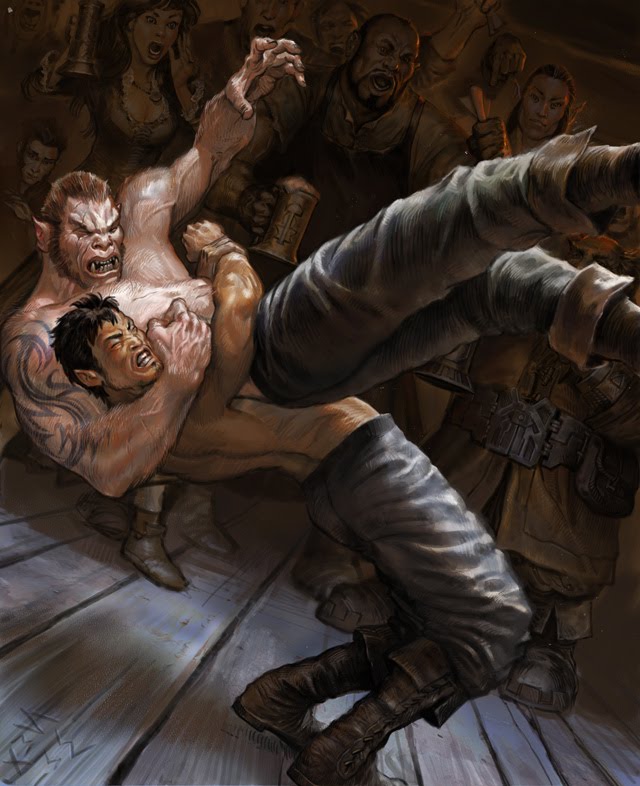
\page
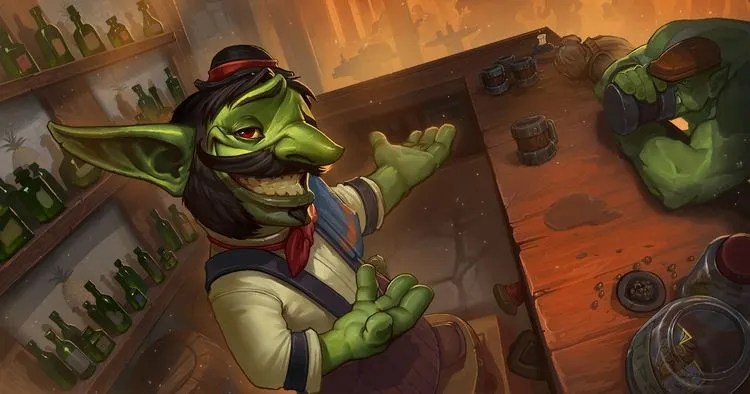
Bartender
Your formative years were spent polishing the oak of your local tavern bar. Beyond the obvious duties of serving up tankards and cleaning, you were also responsible for maintaining the atmosphere.
You learned how to keep the drinkers drinking, the talkers talking, and the gamers playing. You began as a barback, a helper to the bartender.
You learned what drinks were which, how to pour, how to mix, and what to water down.
Eventually, you were blessed with the opportunity to tend the bar yourself. As bartender, you were the central figure of a nightly drama.
A parade of characters entered, interacted with you in their scripted way, and then exited again.
You had a front row seat to those fascinating characters as you fueled their joys, their sorrows, and their tales.
Skill Proficiencies: Insight, Intimidation
Tool Proficiencies: One type of gaming set, brewer’s tools
Languages: One of your choice
Equipment: A small cask of your favorite brew or bottle of your favorite wine, a gaming set, a simple melee weapon of your choice. A backpack containing 10 days of rations, a mess kit, a tinderbox, and a waterskin. A belt pouch containing 11 gold pieces.
Feature: Malleable Ear
Your days behind the bar trained you to listen and participate in more than one conversation at a time. However, for each conversation beyond the first, you suffer -2 to any skill rolls made towards affecting that conversation, such as Persuasion, Deception, or Intimidation.
Additionally, you are very easy to talk to. You gain advantage on Charisma (Persuasion) checks to engage someone in conversation who otherwise might not be interested in starting a dialog.
Suggested Characteristics
| d8 | Personality Trait |
|---|---|
| 1 | I believe that hard work is its own reward. |
| 2 | I have a witty aphorism for every occasion. |
| 3 | If I’m smoking, I’m drinking. If I’m not smoking, I’m asleep. |
| 4 | I believe cleanliness is next to godliness. |
| 5 | My actions are efficient and graceful so I can do the most work with the least exertion. |
| 6 | I’m only acting as your friend for the big tips. |
| 7 | Even easy jobs can be turned into an art form. |
| 8 | I know 78 words for beer and use them all. |
| d6 | Ideal |
|---|---|
| 1 | Secrecy. I never betray someone’s trust by revealing their secrets. (Lawful) |
| 2 | Counselor. Everyone needs someone to complain to and I always try to be available. (Good) |
| 3 | Inebriation. Getting everyone drunk is how the best memories are made. (Chaotic) |
| 4 | Friend. I am friends to everyone and try to keep everyone happy. (Good) |
| 5 | Generous. My pours are always a finger above what others would serve. (Any) |
| 6 | Work Hard, Play Hard. I work harder than anyone and I party harder than anyone. (Chaotic) |
| d6 | Bond |
|---|---|
| 1 | My first employer rescued me from poverty. |
| 2 | Someday I will brew the best ale in the world and it will become famous. |
| 3 | I will search out and collect all the greatest wines. |
| 4 | My true love will accept me once she realizes I’m more than just a bartender. |
| 5 | In time I will open my own tavern and retire there. |
| 6 | I will never set foot in another tavern again. |
| d6 | Flaw |
|---|---|
| 1 | I’m a snob about fine ales and wines. |
| 2 | I drink too much and can’t show up on time. |
| 3 | If someone is already drunk, why give them the good stuff? |
| 4 | I’m an angry drunk. |
| 5 | I offer advice even if it isn’t asked for. |
| 6 | I play pranks on people when they have had one too many. |
Variant Bartender: Innkeeper
Instead of tending bar, you may have tended to guests of the inn. In a small tavern inn, the bartender and innkeeper are often one in the same. In a larger inn, however, the innkeeper mostly oversees the maids, the stables, and the kitchen.
If you choose this option, replace the brewer’s tools proficiency with cook’s tools proficiency.
Also, because you are more likely to deal with sober patrons than with drunk ones, replace the Intimidation proficiency with Persuasion.
Backgrounds: Bartender
\page

Blacksmith
The blacksmith is vital to a community’s success. Not only do they forge their own tools, they are responsible for making everyone else’s tools, too. From the farmer’s plow to the leatherworker’s awl, the blacksmith is the only manufacturer of
iron tools. You worked your way up from a simple blacksmith’s apprentice, through your journeyman years, to eventually developing your master’s piece and becoming a master blacksmith.
A master’s piece (or masterpiece) is a work of exceptional craftsmanship which is given to your master in exchange for his approval of you earning your own title of master.
The bulk of your days as a blacksmith, however, were filled with the usual orders of horseshoes, nails, hinges, and eating utensils.
| d6 | Your master’s piece |
|---|---|
| 1 | An elaborate scroll-work gate |
| 2 | A perfectly weighted battle axe |
| 3 | A new, gleaming anvil |
| 4 | A hanging chandelier |
| 5 | An iron sculpture of an animal |
| 6 | An embossed steel shield |
Skill Proficiencies: Animal Handling, Intimidation
Tool Proficiencies: Smith’s tools, one type of gaming set
Languages: Choose one from Ad’amlu (Dwarven), Zilvertongue (Gnomish), or Va’reni (Orcish).
Equipment: Smith’s tools, a smith’s stamp with your craftsman’s mark, six thin iron rods, 20 nails, a thrown weapon of your choice, a backpack containing 10 days of rations, a bed roll, a mess kit, a tinderbox, and a waterskin. A belt pouch containing 12 gold pieces.
Feature: Heat Resistance
Consistently standing before the intense heat of the forge has hardened your mind and body to the effects of heat.
You have a natural resistance to fire damage. This does not apply to magical sources of fire such as fireballs or dragon’s breath but non-magical fires do half damage to you.
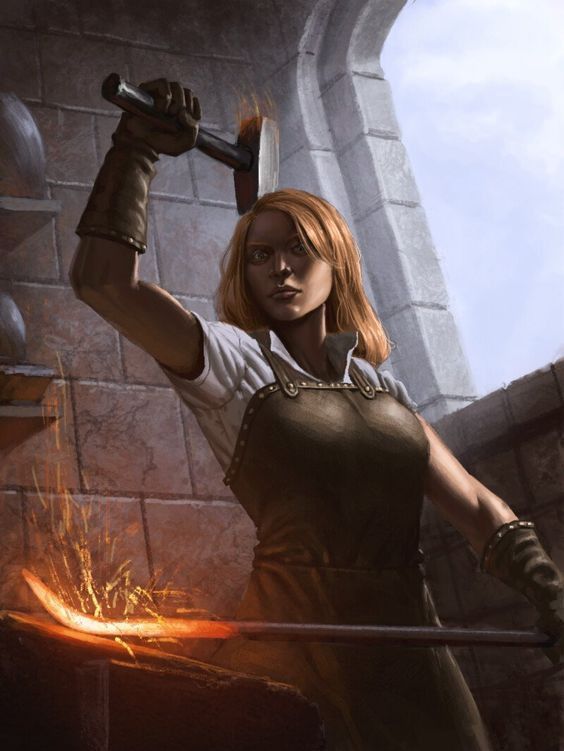
Suggested Characteristics
| d8 | Personality Trait |
|---|---|
| 1 | I tend to get preoccupied with my work and shut out the rest of the world. |
| 2 | It isn’t in my nature to discuss what I’m working on. I keep my own counsel. |
| 3 | Once I begin down a certain path, I rarely change my mind. |
| 4 | When I feel I have been wronged I find vindictive ways of getting even. |
| 5 | Despite my appearance, I am actually a very fragile person. |
| 6 | I keep myself and my equipment tidy. |
| 7 | There is my way and then there are the ways that aren’t going to happen. |
| 8 | When I get in a bad mood it may take hours before I’m pleasant to talk to again. |
| d6 | Ideal |
|---|---|
| 1 | Forgiveness. To forgive another person is to give oneself the gift of peace. (Good) |
| 2 | Dignity. Have respect for yourself or no one else will. (Any) |
| 3 | Strength. Raw physical power is the only thing people truly respect. (Any) |
| 4 | Gratitude. Thankfulness for one’s victories shuts out the pain of one’s failures. (Lawful) |
| 5 | Reverence. Always pay the proper respect to those in positions of honor. (Lawful) |
| 6 | Idealism. The trick to envisioning the best is to never settle for what’s in front of you. (Chaotic) |
Backgrounds: Blacksmith
\page
| d6 | Bond |
|---|---|
| 1 | I want to achieve glory and make my nation proud. |
| 2 | My younger brother is a journeyman smith. I want to help him become a master. |
| 3 | My hometown smith will retire in a few years and I want to buy his smithy. |
| 4 | My true love was too highborn to marry a humble smith like myself. But with enough money, or a title, that could change. |
| 5 | My desires are simple; power and more power. |
| 6 | My greatest dream is to build an iron golem. |
| d6 | Flaw |
|---|---|
| 1 | I have no creativity or artistic ability. |
| 2 | My moral compass has no needle, if you know what I mean. |
| 3 | I’m generally uninspired and disinterested. |
| 4 | I’m suspicious of what others are saying about me. What are they planning? |
| 5 | Fear controls my heart and my actions. |
| 6 | I’m overly aggressive and tend to attack when words would be better. |
New Spell
The following utility spell is practical magic. It is considered to be on the spell list of any spellcaster who has Blacksmith as their background. A trained blacksmith with an intelligence of 12 or higher can cast this spell as a ritual even if they have no other spellcasting ability.
Journey Forge
Evocation cantrip (ritual)
Casting Time: 1 action
Range: 5 feet
Components: V,S,M (a bit of sulphur)
Duration: Concentration, up to 30 minutes
For the duration, a single piece of iron or steel, held by the caster with glove or tongs, will heat up and remain red hot. The metal is hot enough to work in all the ways a blacksmith would normally do so. The spell ends if the metal leaves the grasp of the caster or if the caster’s concentration is broken.

Body Artist
Whether ceremonial or celebratory, body art is important to many cultures. Tattoos, piercings, and brandings must all be performed by a person with artistic skill and some knowledge of medicine. The body artist is that person.
You were trained as a helper or apprentice for many years. During that time you learned how to mark the skin with safety and with artistry. You pierced and tattooed countless pig skins and other animal hides during your practice sessions. It all paid off when you were deemed a master of your trade by your fellow artists.
Skill Proficiencies: Medicine
Tool Proficiencies: Tattoo artist’s tools
Languages: One of your choice
Equipment: Tattoo artist’s tools, body piercing instruments, 5 gp worth of body jewelry in a pouch, a backpack containing 10 days of rations, a bed roll, a mess kit, a tinderbox, and a waterskin. A belt pouch containing 8 gp and 8 sp.
Feature: Seal of Aegis
When you became a master body artist, your mentor convened some fellow masters and they performed an ancient ritual on your behalf. They inscribed a large tattoo glyph across your back that protects you against harm, granting you proficiency in one type of saving throw.
Choose from the list below.
| Tattoo | Saving Throw Proficiency |
|---|---|
| Roaring Bear | Constitution |
| Stamping Bull | Strength |
| Stalking Tiger | Dexterity |
| Soaring Gryphon | Charisma |
| Sly Fox | Intelligence |
| Watchful Owl | Wisdom |
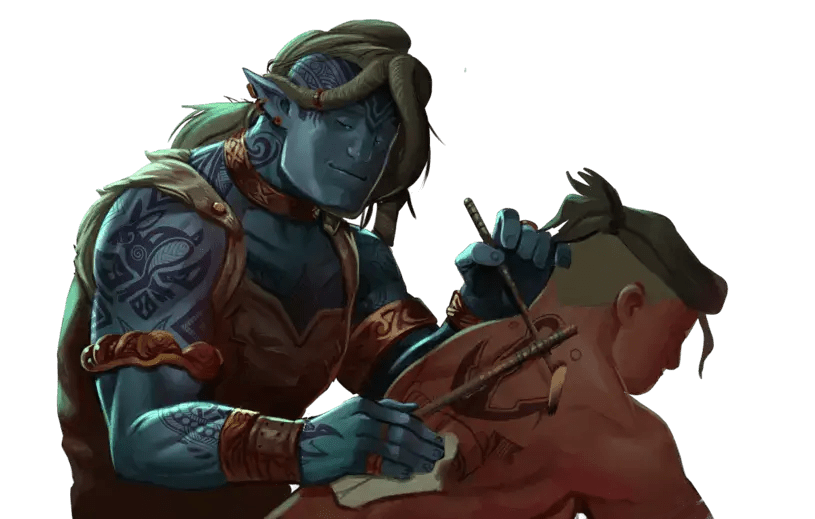
Backgrounds: Blacksmith | Body Artist
\page

Suggested Characteristics
| d8 | Personality Trait |
|---|---|
| 1 | I may look intimidating, but I’m actually sweet and kind. |
| 2 | Don’t be fooled by my appearance. I’m actually quite sophisticated. |
| 3 | I’m always looking for new, inspiring people and experiences. |
| 4 | I am diligent, thorough, and extremely attentive to details. |
| 5 | I’m a very outgoing and social person. |
| 6 | I don’t mean to be discouraging but, when people have dumb ideas I let them know they are dumb. |
| 7 | You can trust me to be on time and to do exactly what I said I would do. |
| 8 | I wield sarcasm like a weapon, a very sharp weapon. |
| d6 | Ideal |
|---|---|
| 1 | Enthusiasm. Whatever you decide to do, do it without looking back. (Chaotic) |
| 2 | Perseverance. When the going gets tough, I get tougher. (Any) |
| 3 | Acceptance. Be willing to be led toward your destiny. (Chaotic) |
| 4 | Contentment. Happiness can be found in life’s simple routines. (Lawful) |
| 5 | Humility. It doesn’t pay to boast about abilities you cannot actually perform. (Any) |
| 6 | Harmony. Being in agreement with one’s comrades brings good luck. (Good) |
| d6 | Bond |
|---|---|
| 1 | I’m going to give myself a tattoo after every adventure I survive. |
| 2 | I was raised without a father, which is a detail that I keep secret. |
| 3 | A monster attack left me scarred from childhood. I will have my revenge on that monster. |
| 4 | For years I avoided paying taxes. Now the tax collectors say I owe them a small fortune. |
| 5 | I steadfastly worship the god I discovered through my mentor. |
| 6 | My true love, my soul mate, is locked away in a debtor’s prison. |
| d6 | Flaw |
|---|---|
| 1 | I may be crazy, but at least I keep things interesting. |
| 2 | My worries about monsters are nothing compared to my worries about making decisions. |
| 3 | I see the mug as half empty, even when it has just been poured. |
| 4 | I can be gullible. When people tell me their stories it doesn’t occur to me that they might be lying. |
| 5 | I have a strange, quirky obsession with this trinket. (Roll a random trinket) |
| 6 | Some people say I’m overly emotional and I say they can all burn in hell. I’m sorry, I didn’t mean that. |

Builder
Using raw materials, classical know-how, and raw strength, the builders sculpt the world people live in. They construct and repair the buildings, walls, bridges, streets, and vehicles that define towns and cities. As a guilded craftsperson you began as an apprentice studying under a skilled master. In time, you matured in your physical stature and in your skills. You rose to the rank of journeyman within the guild. After some more years, dedicating yourself to your craft and to your guild, you became a master builder. In your career you picked up techniques in a wide variety of building specialties. However, there was one field that you spent most of your time in and in which you made a name for yourself.
Backgrounds: Body Artist | Builder
\page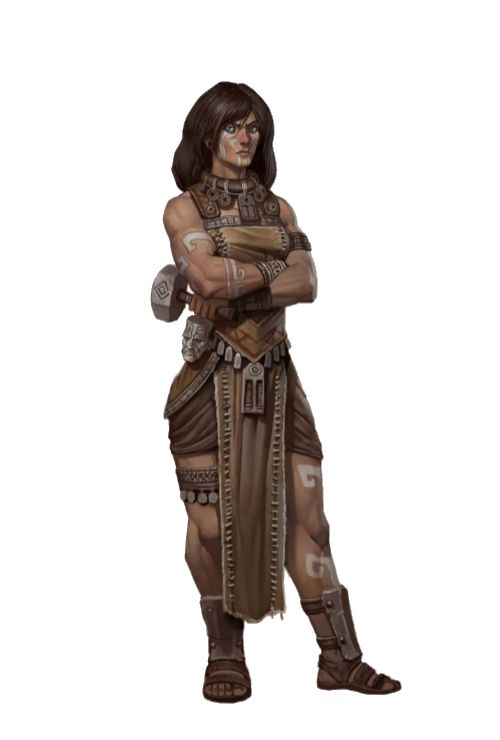
| d6 | Your building specialty |
|---|---|
| 1 | General carpentry |
| 2 | Cabinetry and furnishings |
| 3 | Wagon and cart building |
| 4 | Ship building |
| 5 | Stone masonry |
| 6 | Brick and tile masonry |
Skill Proficiencies: Athletics, Investigation
Tool Proficiencies: Carpenter’s tools, mason’s tools, one type of gaming set
Equipment: Carpenter’s tools, mason’s tools, a backpack containing 10 days of rations, a bed roll, a mess kit, a tinderbox, a waterskin, and a wineskin. A belt pouch containing 10 gp.
Feaure: Structural Vulnerability
You know where the weakest spot is on an object or structure. An Intelligence (Investigation) check of 10 reveals to you the thing’s vulnerable point. Any bludgeoning damage delivered to that point is doubled.
Additionally, you can reinforce the weak spot using the appropriate tools and materials. Reinforcing adds 1 hit point,
per minute spent, to the object’s durability up to double its original hit points.
Suggested Characteristics
| d8 | Personality Trait |
|---|---|
| 1 | I’m flexible. Show me what needs doing and I’ll take care of it. |
| 2 | I have gotten burned by being too trusting. |
| 3 | I’m the best at what I do and anyone who says otherwise is probably just jealous. |
| 4 | Don’t touch my stuff and we’ll get along fine. |
| 5 | I don’t get invested in other people’s problems. |
| 6 | I am a very competitive person and a bit of an ass when I win. |
| 7 | I ride people hard when they do a sloppy job at something or don’t put in enough effort. |
| 8 | I have grown lazy and always look for shortcuts. |
| d6 | Ideal |
|---|---|
| 1 | Childishness. The body will grow up but the spirit doesn’t have to. (Chaotic) |
| 2 | Self-sufficiency. Be prepared in every way because life will become difficult. (Any) |
| 3 | Conform. Contentment results from belonging to a group that accepts you. (Lawful) |
| 4 | Devotion. Find something to believe in and be willing to die for that thing. (Any) |
| 5 | Transparency. Live your life in the most humble and honest way you can. (Good) |
| 6 | Cultured. Don’t get left behind while society moves forward. (Any) |
| d6 | Bond |
|---|---|
| 1 | My guild failed to pay the correct taxes and now the government says I owe them 8000 gold. |
| 2 | My rival says that I’m a fool for choosing adventuring but I’ll show him. |
| 3 | I accidentally crippled a fellow builder on a work site and now he can’t work. |
| 4 | I smoke a pipe from morning until night, pausing only to chew my food. |
| 5 | My mother relies on me to send her money each month. |
| 6 | I dream of the home I will one day build. |
| d6 | Flaw |
|---|---|
| 1 | I am easily distracted by a pretty face. |
| 2 | My constant shouts to attractive passers-by rarely get me the response I’m after. |
| 3 | I eat too much but I balance it out by also drinking too much. |
| 4 | I don’t like change. If it was good enough for my grandfather, it’s good enough for me. |
| 5 | I feel a compulsive need to constantly impress people I don’t know. |
| 6 | I hate to spend any money. |
Backgrounds: Builder
\page
Cartographer
The art of cartography is more about history and symbology than about measurements or scale. Maps are visual guides that show relationships between nature, societies, and trade routes. Without the ability to peer down upon the world from the heavens, map making is merely an attempt to construct a useful tool for enterprising travelers.
Maps are compiled from experiences but they don’t all have to be your experiences. In crafting your maps you collect as much information as you can about the area you are mapping. You talk to merchants, sailors, guides, and explorers. You ask them for details that few others would think to ask. From which direction was the wind and what did it smell of? Did the sun rise from behind mountains or from the flat horizon? What colors were the sunset? What was the animal life like? What dangers were you warned to avoid? Which banners flew from which strongholds? All of these details are like puzzle pieces, slowly coming together to form a picture of a distant place.
Cartographers are very rare. You may have been fortunate enough to be apprenticed to one, but more likely you were inspired by maps you viewed and began on your own without any formal training. Over time you acquired better tools, better parchments, and better techniques. One of the most important of these techniques is persuading travelers to elucidate on all of your varied, probing questions.
Skill Proficiencies: History, Persuasion
Tool Proficiencies: Cartographer’s tools
Languages: Two of your choice
Equipment: Cartographer’s tools, a scroll tube containing a map of your region and a vague map of the world, a backpack containing 10 days of rations, a bed roll, a mess kit, a tinderbox, and a waterskin. A belt pouch containing 25 gp.
Feaure: Optimal Route
Your knowledge of geography is useful in charting the best possible route from one place to another. By searching your memories of all known routes, you are able to pick the one that is fastest. Be it a journey of a few hours or a journey
of a few months, your Intelligence (History) check determines how much faster your way is when compared to the most obvious route. Although, you should point out to your traveling companions that faster rarely means easier.
| DC 10: | 10% faster |
| DC 15: | 20% faster |
| DC 20: | 30% faster |
| DC 25+: | 40% faster |
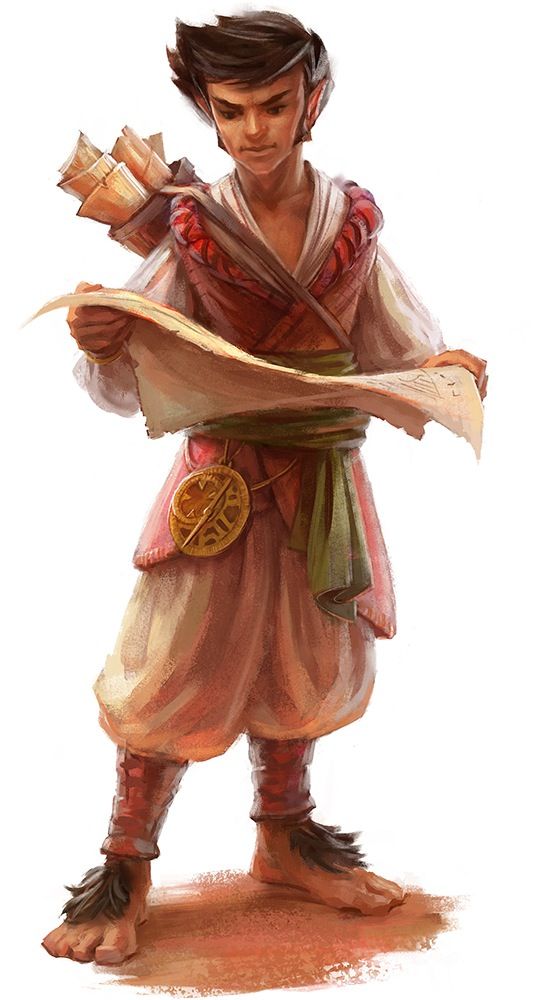
Backgrounds: Cartographer
\page
Suggested Characteristics
| d8 | Personality Trait |
|---|---|
| 1 | I am a naturally distrusting person so I always verify new information with a second source. |
| 2 | I tend to become focused on one person at a time, lavishing attention on them. |
| 3 | My time is valuable and I expect people to acknowledge that. |
| 4 | I dress in bright colors and floppy hats to elicit the respect due an artist. |
| 5 | I choose my words very carefully so there is no confusion as to what I’m asking or saying. |
| 6 | I’m very humble and apologetic, a trait that endears me to the common man and the aristocrat alike. |
| 7 | I enjoy my time alone with my work. I don’t tolerate interruptions gracefully. |
| 8 | I’m a fount of knowledge and trivial information. |
| d6 | Ideal |
|---|---|
| 1 | Perseverance. A large project, just like a small one, can only be taken one step at a time. (Any) |
| 2 | Creativity. There’s more than one way to sketch a cat. (Chaotic) |
| 3 | Truth. Hidden within the memories of men lurks a deeper, more accurate history. (Lawful) |
| 4 | Exploration. There’s no better experience than a firsthand one. (Any) |
| 5 | Beauty. There is no better passage into a man’s soul than through beauty. (Good) |
| 6 | Logic. When building a tower of knowledge, a logical foundation is strongest. (Lawful) |
| d6 | Bond |
|---|---|
| 1 | I still carry a scroll tube with all my earliest maps, each of whom are laughably bad. |
| 2 | I have a ridiculous fear of getting wet, even refusing to be outside in the rain. |
| 3 | Someday I will create a detailed map of my home region. |
| 4 | An inferior cartographer is selling his maps by impersonating me. |
| 5 | One of my maps led a merchant ship to run aground on a rocky coast and cost many lives. |
| 6 | My love was sold to the Corsair King in Buccaneer’s Cove, a place I’ve never seen on any map. |
| d6 | Flaw |
|---|---|
| 1 | My habit of sucking on my quill has colored my lips black. |
| 2 | I start arguments over trivial matters. |
| 3 | My appearance and clothing must always be of the latest fashion trend. |
| 4 | Criticizing my work is grounds for a duel. |
| 5 | I spend too much time on my maps and charge too little money for them. |
| 6 | I get so distracted by geography and landmarks that I miss what’s right in front of me. |
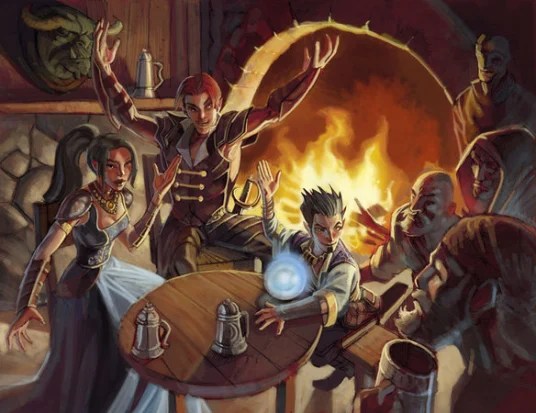
Celebrity Adventurer’s Scion
Your family name strikes fear and admiration in the hearts of the common folk – but that’s got nothing to do with you. Songs and stories celebrating the adventuring exploits of your famous parent are widely known. Kids across the land grew up wishing they were you. But being the child of a famous adventurer wasn’t all hugs and kisses.
You seldom saw your celebrity-adventurer parent, and when they were around, it was all about them and tales of slaying this demon or vanquishing that dragon. All too often, you’d be woken out of a sound sleep by someone standing outside your home screaming about the latest threat to the town, the region, or the world.
In the end, all you have to show for your lineage is your name. Most of the family’s money went for consumables, from potions of healing and spell scrolls to copious amounts of dwarven ale. And everyone expects you to swing a sword or sling spells like your famous forebear, making it doubly hard for you to prove yourself.
Skill Proficiencies: Perception, Performance
Tool Proficiencies: Disguise kit
Languages: Two of your choice
Equipment: A disguise kit, a set of fine clothes, and a belt pouch containing 30 gp.
Feature: Name Dropping
You know and have met any number of powerful people across the land – and some of them might even remember you. You might be able to wrangle minor assistance from a major figure in the campaign, at the DM’s discretion.
Additionally, the common folk treat you with deference, and your heritage and the stories you tell might be good for a free meal or a place to sleep.
Backgrounds: Cartographer | Celebrity Adventurer’s Scion
\page

Suggested Characteristics
Scions of celebrity adventurers must deal with fame that’s not theirs, wealth they didn’t earn. and expectations they can never hope to meet. These hardships can have adverse effects, but those who cope with them can arrive at a decent attitude and a grounded worldview. Those who fail become bitter – or worse.
| d8 | Personality Trait |
|---|---|
| 1 | I will never get out of my famous parent’s shadow, and no one else will ever understand this burden. |
| 2 | I’ve seen enough of the adventuring life to have realistic expectations and empathy for my peers. |
| 3 | Living up to my legacy will be difficult, but I’m going to do it. |
| 4 | I’m used to the very best in life, and that’s a hard habit to break. |
| 5 | My parent taught me a sense of duty. I strive to uphold it, even when the odds are against me. |
| 6 | No one can fake a smile, a handshake, or an interested nod like I can. |
| 7 | I’ve been part of the adventuring life since I was old enough to walk. Let me explain a few things to you. |
| 8 | No risk is too great for the rewards of defeating my enemies … and taking their stuff. |
| d6 | Ideal |
|---|---|
| 1 | Power. The only way to get ahead in this world is to attain power and hold onto it with all your might. (Evil) |
| 2 | Peace. Those who can find or make peace in the chaotic world around them have everything. (Lawful) |
| 3 | Fame. I’ve seen what fame can bring. And I’ll do anything to get all that for myself. (Neutral) |
| 4 | Training. Hard work, sacrifice, and training lead to success – and eventually to perfection. (Any) |
| 5 | Anonymity. I want to be successful. And alone. With lots of guards and wards between me and everyone else in the world. (Any) |
| 6 | Wisdom. Material wealth is an illusion. Wisdom is the real treasure. (Good) |
| d6 | Bond |
|---|---|
| 1 | While my parent was out adventuring, a servant raised me, and I care about that person more than anyone. |
| 2 | I consider every member of my parent’s former adventuring party to be family. |
| 3 | Despite their absences, my famous parent was kind and generous. I love them and want to make them proud. |
| 4 | My parent once brought a cursed magic item home. It is my obsession. |
| 5 | My childhood home holds all my best memories, and its upkeep is my primary concern. |
| 6 | Growing up, I had an imaginary friend I could always count on. That friend is still with me. |
| d6 | Flaw |
|---|---|
| 1 | You don’t know what I’m going through. You never can. |
| 2 | You. Fetch my cloak. And maybe rub my feet for a while. |
| 3 | My comrades are brave, but I must defeat this threat alone to prove my worth. |
| 4 | Oh, yeah, that spell? Named after my parent’s best friend. Let me tell you about them. |
| 5 | My best days are behind me. Ahead lies only toil, pain, and death. |
| 6 | You have to look out for yourself. No one else will. |
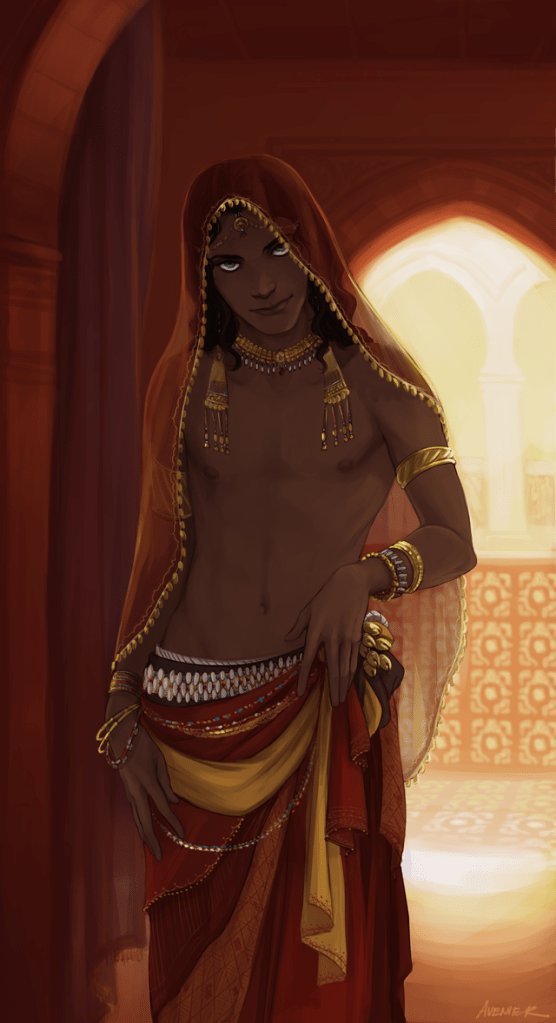
Concubine
You served as a concubine to a great Lord or Lady. One member of a larger harem, you were trained in the arts of bodily pleasure. When your lord died, their heir saw fit to exile many within the harem, and you were among those cast out from the great palace you had always
Backgrounds: Celebrity Adventurer’s Scion | Concubine
\page
\page
called home. An outcast, you have fought to make your own way in the wider world.
Skill Proficiencies: Persuasion, Acrobatics.
Tool Proficiencies: Disguise Kit.
Languages: One of your choice.
Equipment: A set of fine clothing, a disguise kit, and a bag containing 15 gold coins.
Feature: Honeyed Words
Your words are like honeyed milk to the ears of those to whom you whisper. You gain advantage on any persuasion or deception roll made to seduce your target.
Feature: World’s Oldest Profession
Any settlement large enough to house a brothel is an opportunity for you as you may find gainful employment at any of these establishments. Provided you work, you will receive free lodging and food and earn 15 GP per day.
| d6 | Personality Trait |
|---|---|
| 1 | I’m very shy. |
| 2 | I am incredibly outgoing in my personal and professional lives. |
| 3 | I want for a life of comfort and plenty. |
| 4 | I know I’m beautiful and will use it to get what I want. |
| 5 | I am embarrassed to tell others of my past. |
| 6 | I am proud of my profession, no matter how others see me. |
| d6 | Ideal |
|---|---|
| 1 | Wealth: Enough coin to never work again. |
| 2 | Freedom: The people should be free to make their own choices without the lords and kings of the world. |
| 3 | Privileges: The upper classes have powers and privilege that I covet. |
| 4 | Comfort: To live comfortably and safely is the most one can ask. |
| 5 | Peace: War is bad for business. |
| 6 | Lust: It’s nothing to be ashamed of. |
| d6 | Bond |
|---|---|
| 1 | I have a certain patron whose embrace I miss dearly. |
| 2 | The first brothel I worked; it has always felt like home to me. |
| 3 | Coin is the only company I need. |
| 4 | The world is a dark place, I don’t feel strong connections with anyone. |
| 5 | A fellow concubine I met in my youth; we have always been there to support one another. |
| 6 | In a world like this, I can only rely on myself. |
| d6 | Flaw |
|---|---|
| 1 | I’m actually a bit of a prude. |
| 2 | I complain if I have to walk long distances. |
| 3 | I talk too much. |
| 4 | I like to steal from my clients. |
| 5 | Seeing someone prettier than me drives me into a rage. |
| 6 | I always want to be the center of attention. |
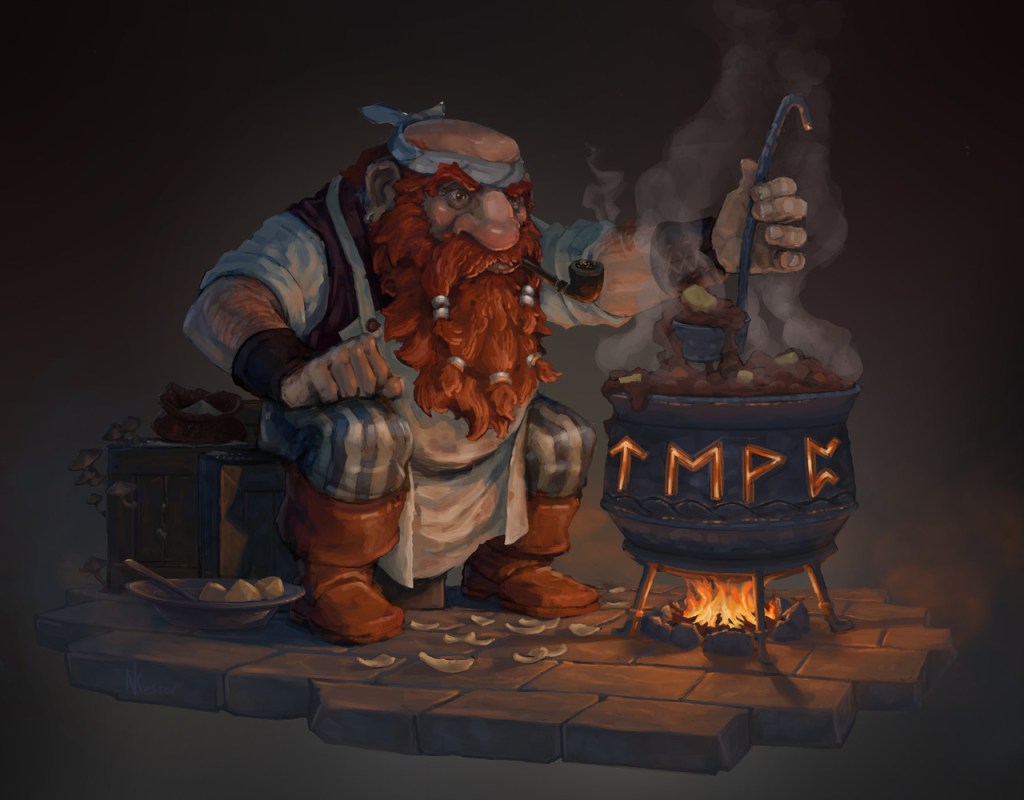
Cook
Food, like music, is an indispensable pillar of society. Just as there are only so many musical notes, there are only so many flavors of food. Combining those flavors into chords, movements, and symphonies, is the true artform of the cook. While anyone could throw edible scraps into a kettle, few could do it with the thought and passion that you do.
Your fascination with ingredients, cooking methods, and seasonings quickly led you into a kitchen job. You held various roles during your life as a cook, perhaps serving drunken commoners, voracious soldiers, or refined aristocrats.
Regardless of your audience, you always delivered a memorable performance.
| d10 | Your cooking specialty |
|---|---|
| 1 | Baked goods such as cakes, pies, breads, and pastries. |
| 2 | Fried foods such as stir-fried, panfried, and deep-fried food. |
| 3 | Potage foods such as soups, stews, porridges, and bisques. |
| 4 | Grilled foods such as kebabs, rotisseries, and grilled meats. |
| 5 | Preserved foods such as pickled foods, smoked meats, jellies & jams. |
| 6 | Raw foods such as salads, fruit, nuts, raw fish, fish eggs, and steak tartare. |
| 7 | Sauces such as mayonnaise, soy, roux, pesto and béchamel. |
| 8 | Dumplings such as xialongbao, shumai, pierogi, mantu, momo and samosa. |
| 9 | Noodle dishes such as ramen, biangbiang, hokkien, udon, soba and pastas. |
| 10 | Spice rubs and spice mixes such as garam masala, ras el hanout and similar seasonings. |
Skill Proficiencies: Nature, Survival
Tool Proficiencies: Cook’s utensils
Languages: One of your choice
Backgrounds: Concubine | Cook
\page
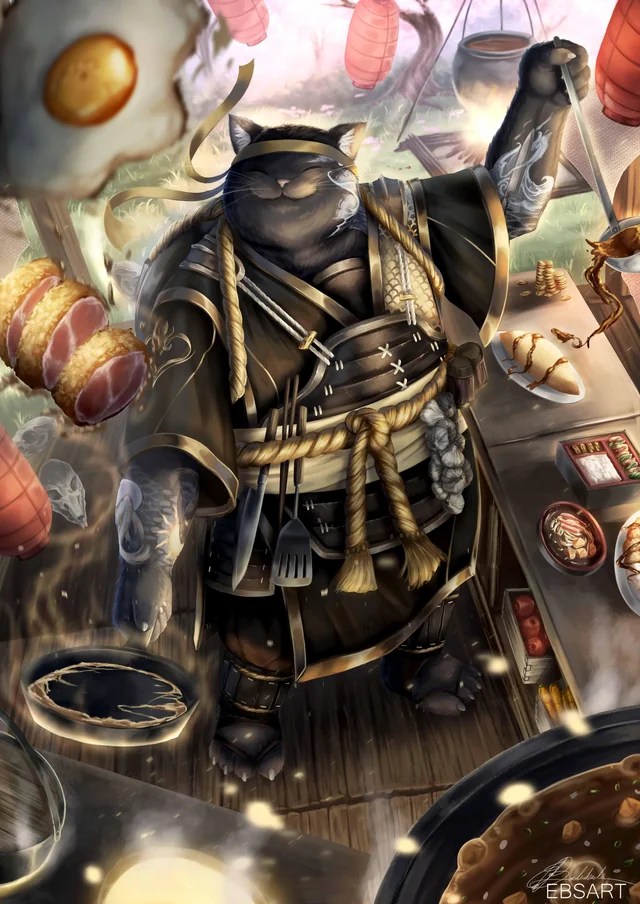
\page

Equipment: Cook’s utensils, four sets of silverware, four wooden bowls, ten pouches containing dried herbs and spices, a whetstone, a backpack containing 10 days of rations, a bed roll, a tinderbox, and a waterskin. A belt pouch containing 15 gp.
Feature: Cook’s Advantage
When using cook’s utensils your proficiency bonus is doubled. In addition, you have advantage when preparing foods within your specialty (see above).
You can also use cook’s utensils to extend rations by mixing them with foraged items.
||
|:–:|
|DC 10: Extend rations by 50%|
|DC 15: Extend rations by 100%|
|DC 20: Extend rations by 150%|
Suggested Characteristics
| d8 | Personality Trait |
|---|---|
| 1 | I’m hostile when I’m hungry. I’m always hungry. |
| 2 | I’m not saying I’m the greatest, because it should be obvious to everyone. |
| 3 | I prefer quiet contemplation over chaotic revelry. |
| 4 | I try to understand the tastes of others because everyone is different. |
| 5 | I keep my ideas and recipes to myself. |
| 6 | I value beauty far above function or efficiency. |
| 7 | I thrive under leadership. I’m not good on my own. |
| 8 | I enjoy cooking with wine. In fact, I prefer doing most things with wine. |
| d6 | Ideal |
|---|---|
| 1 | Modesty. Do good work without looking for praise. (Good) |
| 2 | Commitment. Once begun, continue without hesitation or regret. (Lawful) |
| 3 | Confidence. Try new things and new combinations without fear of failure. (Chaotic) |
| 4 | Tradition. We keep history alive through our rituals and traditional feasts. (Lawful) |
| 5 | Joy. There is nothing better than seeing the faces of those enjoying my food. (Good) |
| 6 | Perfection. Good is the sinister enemy of perfect. (Any) |
| d6 | Bond |
|---|---|
| 1 | My recipe collection has been passed down through six generations of my family. |
| 2 | I once prepared a dish so badly that a man nearly died from eating it. It still haunts me. |
| 3 | The foods of other races are laughable when compared to the food of my people. |
| 4 | I was once paid to poison the food of a certain person. I couldn’t go through with it. |
| 5 | One of my herb pouches contains a rare dried root that I am addicted to chewing on. |
| 6 | Before I got work in the kitchens I was an orphan, starving on the street. |
| d6 | Flaw |
|---|---|
| 1 | I’m an insufferable snob when it comes to food and drink. |
| 2 | Whenever I kill a monster I also need to know how its meat tastes. |
| 3 | I can’t keep myself from criticizing the food I order at an eating establishment. |
| 4 | My habit of drinking myself into unconsciousness is becoming a problem. |
| 5 | Although absurd in my line of work, I get very squeamish around blood. |
| 6 | I thirst for novelty and get quickly bored when anything becomes predictable. |
New Spell
The following utility spell is practical magic. It is considered to be on the spell list of any spellcaster who has Cook as their background. A trained cook with an Intelligence of 12 or higher can cast this spell as a ritual even if they have no spellcasting ability.
Unspoil
Transmutation cantrip (ritual)
Casting Time: 1 action
Range: 5 feet
Components: V,S,M (a pinch of salt)
Duration: Instantaneous
Up to five pounds of food stuffs are freshened
by this spell. The target food stuffs have a day’s
worth of natural decay reversed. Multiple uses of
this spell do not remove any additional decay.
Backgrounds: Cook
\page
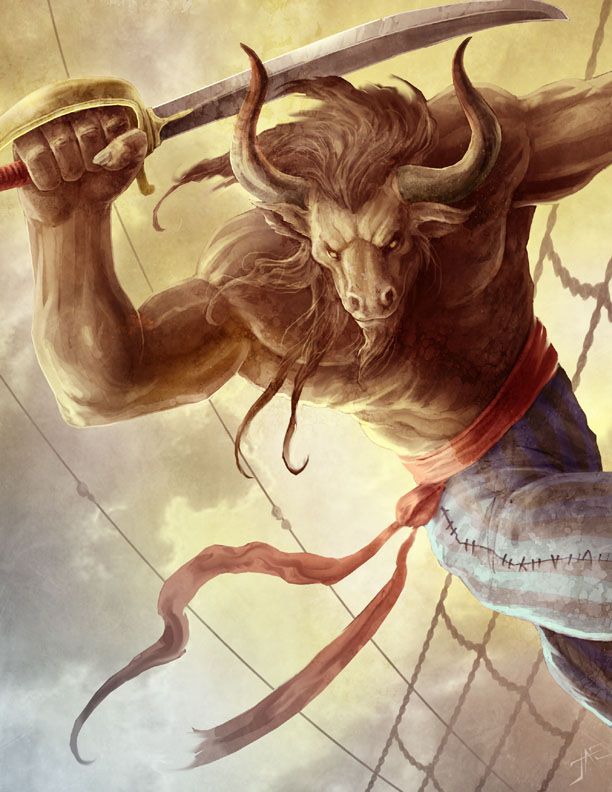
\page

Corsair
You have embraced the life of a corsair, a pirate who sails the high seas in search of plunder and adventure. Whether driven by greed, the desire for freedom, or a thirst for vengeance, you live by your own rules, thriving on the chaos and danger of piracy. You might serve under a notorious pirate captain, lead your own crew, or operate as a lone wolf, but your reputation as a fearsome and cunning pirate precedes you wherever you go.
Skill Proficiencies: Athletics, Intimidation
Tool Proficiencies: Navigator’s Tools
Weapon Proficiencies: Hooks, Pistols
Languages: One of your choice
Equipment: A set of common clothes, a pirate weapon (such as a scimitar or a pistol), a piece of a treasure map, a set of navigator’s tools, and a pouch containing 10 gp.
Feature: Swashbuckler’s Swagger
Your life as a pirate has given you a natural charisma and fearlessness that commands respect and fear. You can easily gain access to pirate dens, black markets, and other seedy establishments where your reputation as a corsair precedes you.
Additionally, you can use your intimidating presence to make others more likely to comply with your demands or back down from a confrontation, granting you advantage on any Charisma (Intimidation) checks you make.
Suggested Characteristics
Corsairs are bold and adventurous individuals, driven by a desire for wealth and freedom. Their lives are marked by a combination of cunning and a willingness to take risks.
| d8 | Personality Trait |
|---|---|
| 1 | I live for the thrill of the chase and the excitement of battle. |
| 2 | My confidence borders on arrogance, and I believe I can talk my way out of anything. |
| 3 | I have a code of honor that I adhere to, even if it differs from the law. |
| 4 | I enjoy the finer things in life, especially when they are taken from others. |
| 5 | I am fiercely loyal to my crew and will do anything to protect them. |
| 6 | I have a silver tongue and can charm my way into or out of almost any situation. |
| 7 | I am always looking for the next big score or the next adventure. |
| 8 | I have a soft spot for those who remind me of my past before I became a pirate. |
| d6 | Ideal |
|---|---|
| 1 | Freedom. The sea is a place of freedom, where no one can tell me what to do. (Chaotic) |
| 2 | Honor. Even pirates have a code, and I live by mine. (Lawful) |
| 3 | Greed. I will take what I want and let nothing stand in my way. (Evil) |
| 4 | Adventure. Life is an adventure, and the sea is the greatest of all. (Neutral) |
| 5 | Redemption. I seek to atone for my past misdeeds and find a new path. (Good) |
| 6 | Revenge. I will make those who wronged me pay dearly. (Any) |
| d6 | Bond |
|---|---|
| 1 | My ship is my home, and I will do anything to protect it. |
| 2 | I seek to find a legendary treasure that will make me immortal in the annals of history. |
| 3 | I am driven by a vow I made to a lost loved one. |
| 4 | A fellow crew member saved my life, and I owe them a debt I can never repay. |
| 5 | I seek to bring down a notorious pirate who has eluded capture for years. |
| 6 | My loyalty lies with my crew, who are like family to me. |
| d6 | Flaw |
|---|---|
| 1 | I am reckless, often putting myself and others in unnecessary danger. |
| 2 | My obsession with revenge can blind me to other priorities. |
| 3 | I have a hard time trusting anyone outside of my crew. |
| 4 | I am haunted by the faces of those I have wronged in my pursuit of wealth and power. |
| 5 | I am prone to bouts of excessive drinking to drown my sorrows. |
| 6 | My pride often leads me to underestimate my enemies. |
Backgrounds: Corsair
\page
Courtier
A courtier is an aristocrat who frequents the courts of important nobles. They are generally high-born or wealthy or both. They orbit the seats of power because that is where all the excitement is. Relationships are their assets and rumours are their currency.
You were most likely brought to court by your parents, or, if those parents died when you were young, a wealthy aunt or uncle, or even grandparent, who, like all courtiers, were motivated by better business deals, better military alliances, or better marriage opportunities. To survive this maelstrom of intrigue you had to become cautious and strategic, constantly jockeying to move up the social strata.
Now is the time to broaden your horizons, to look for opportunities beyond the dining halls and the dance floors. The court will be there when you return. The names may change but the game stays the same.
Skill Proficiencies: History, Insight
Tool Proficiencies: One type of gaming set
Languages: Two of your choice
Equipment: A horse (or similar mount) with tack, harness, cloth barding, and saddlebags, three fine outfits, a signet ring, 5 days of rations, a one-person tent, a bed roll, a goose down pillow, a gaming set, and a wineskin. A belt pouch containing 35 gp and 15 sp.
Feature: Influential Impression
As a practiced courtier, you have mastered the art of introduction. When aristocrats meet you for the first time, you are able to sculpt their impression of you, and subsequently how they behave towards you. This is a delicate art requiring at least a minute of conversation with the individual.
Roll Wisdom (Insight) to establish your level of success in reading the other person. Then choose a behavior that falls within your level of success.
You can choose any of the options that are equal to or lower than your check.
| Insight Check | How you are regarded by your new aristocratic acquaintance. |
|---|---|
| <10 | Suspicious. They do not trust you. |
| 10 | Uninterested. Your bore them. |
| 13 | Inferior. They treat you as someone clearly below their station. |
| 16 | Peer. They regard you as an equal and will be willing to talk more. |
| 19 | Superior. They believe you are of a higher social status than they and may try to win your favor. |
| 22+ | Trustworthy. They believe you share their loyalties, a political ally. They will trust you with secrets and introduce you to like-minded friends. |
Suggested Characteristics
| d8 | Personality Trait |
|---|---|
| 1 | I am a highly educated and well-read person. |
| 2 | I’m a serious person, not a mountebank. |
| 3 | There is just so much I want to see! |
| 4 | I like to ponder big philosophical questions. |
| 5 | Why learn a trade when I can hire a tradesman? |
| 6 | How do I look? Fabulous, right? Fabulous! |
| 7 | Behind every great man is a great puppeteer. |
| 8 | I don’t live a life of leisure. I prefer to be busy. |
| d6 | Ideal |
|---|---|
| 1 | Uniqueness. Be yourself. Everyone else is already taken. (Chaotic) |
| 2 | Civility. Only fools resort to violence when conversation will suffice. (Good) |
| 3 | Glory. A great first-hand story is more valuable than rubies at court. (Any) |
| 4 | Soberness. A careless slip of the tongue can cost one their head. (Lawful) |
| 5 | Influence. People are easily manipulated because they don’t like to think. (Evil) |
| 6 | Wealth. One must accumulate assets to prepare for the unexpected. (Any) |
Backgrounds: Courtier
\page
| d6 | Bond |
|---|---|
| 1 | I am persona non grata in the court of my land. |
| 2 | My dream is to become an ambassador. |
| 3 | I’m addicted to an expensive, exotic substance found only at court. |
| 4 | I made a powerful enemy at court. |
| 5 | I will acquire a noble title, somehow. |
| 6 | I swore allegiance to a secret society. |
| d6 | Flaw |
|---|---|
| 1 | I’m known for only wearing one specific color. |
| 2 | I won’t be seen with any of the mongrel races. |
| 3 | I can’t keep a secret to save my life. |
| 4 | I treat commoners with disdain and impatience. |
| 5 | I can’t stand silence and will fill any I encounter. |
| 6 | I deserve everything that I have and apologize for nothing. |
New Spell
The following spell is practical magic. It is considered to be on the spell list of any spellcaster who has Courtier as their background. A trained courtier with an Intelligence of 12 or higher can cast this spell as a ritual even if they have no spellcasting ability.
Garbletongue
Illusion cantrip (ritual)
Casting Time: 1 action
Range: Self
Components: V,S,M (a bite of birch root)
Duration: Concentration, up to 10 minutes
For the duration, your speech becomes unintelligible to anyone further than 5 feet away. It likewise becomes impossible to accurately read your lips.
Court Servant
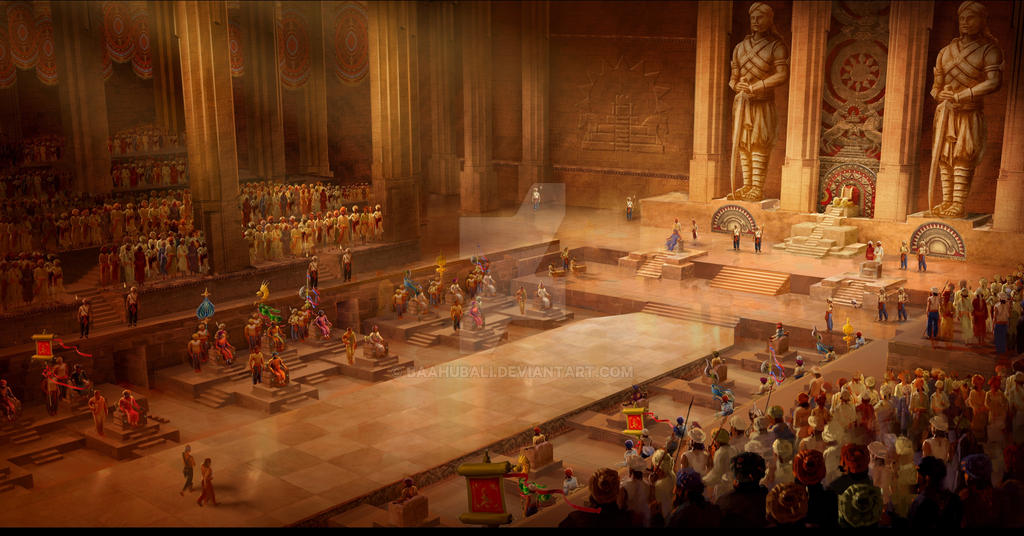
Even though you are independent now, you were once a servant to a merchant, noble, regent, or other person of high station. You are an expert in complex social dynamics and knowledgeable in the history and customs of courtly life. Work with your DM to determine whom you served and why you are no longer a servant: did your master or masters retire and no longer require servants, did you resign from the service of a harsh master, did the court you served fall to a neighboring empire, or did something else happen?
Skill Proficiencies. History, Insight
Tool Proficiencies. One artisan’s tools set of your choice
Languages. One of your choice
Equipment. A set of artisan’s tools of your choice, a unique piece of jewelry, a set of fine clothes, a handcrafted pipe, and a belt pouch containing 20 gp
Feature: Servant’s Invisibility
The art of excellent service requires a balance struck between being always available and yet unobtrusive, and you’ve mastered it. If you don’t perform a visible action, speak or be spoken to, or otherwise have attention drawn to you for at least 1 minute, creatures nearby have trouble remembering you are even in the room. Until you speak, perform a visible action, or have someone draw attention to you, creatures must succeed on a Wisdom (Perception) check (DC equal to 8 + your Charisma modifier + your proficiency bonus) to notice you. Otherwise, they conduct themselves as though you aren’t present until either attention is drawn to you or one of their actions would take them into or within 5 feet of the space you occupy.
Suggested Characteristics
Court servants tend to be outwardly quiet and soft-spoken, but their insight into the nuances of conversation and societal happenings is unparalleled. When in crowds or around strangers, most court servants keep to themselves, quietly observing their
surroundings and later sharing such observations with those they trust.
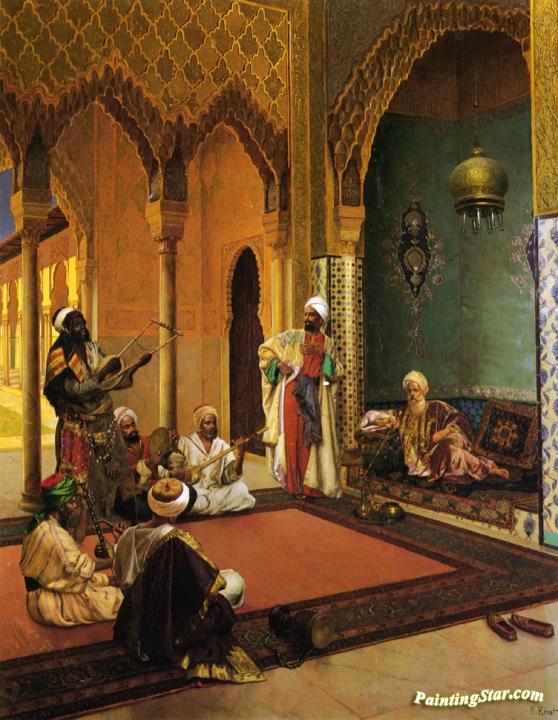
Backgrounds: Courtier | Court Servant
\page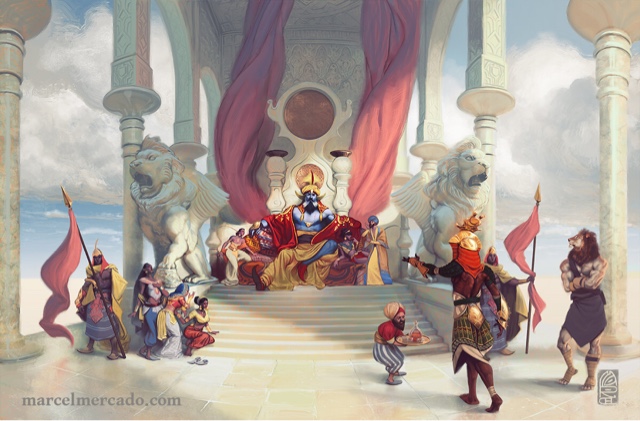
| d8 | Personality Trait |
|---|---|
| 1 | Unless I must speak, I hold my breath while serving others. |
| 2 | It takes all my effort not to show the effusive emotions I feel when I help others. Best to quietly serve. |
| 3 | It’s getting harder to tolerate the prejudices of those I serve daily. |
| 4 | Though the old ways are hard to give up, I want to be my own boss. I’ll decide my path. |
| 5 | Serving my family and friends is the only thing I truly care about. |
| 6 | City life is killing my soul. I long for the old courtly ways. |
| 7 | It’s time for my fellows to wake up and be taken advantage of no longer. |
| 8 | It’s the small things that make it all worthwhile. I try to be present in every moment. |
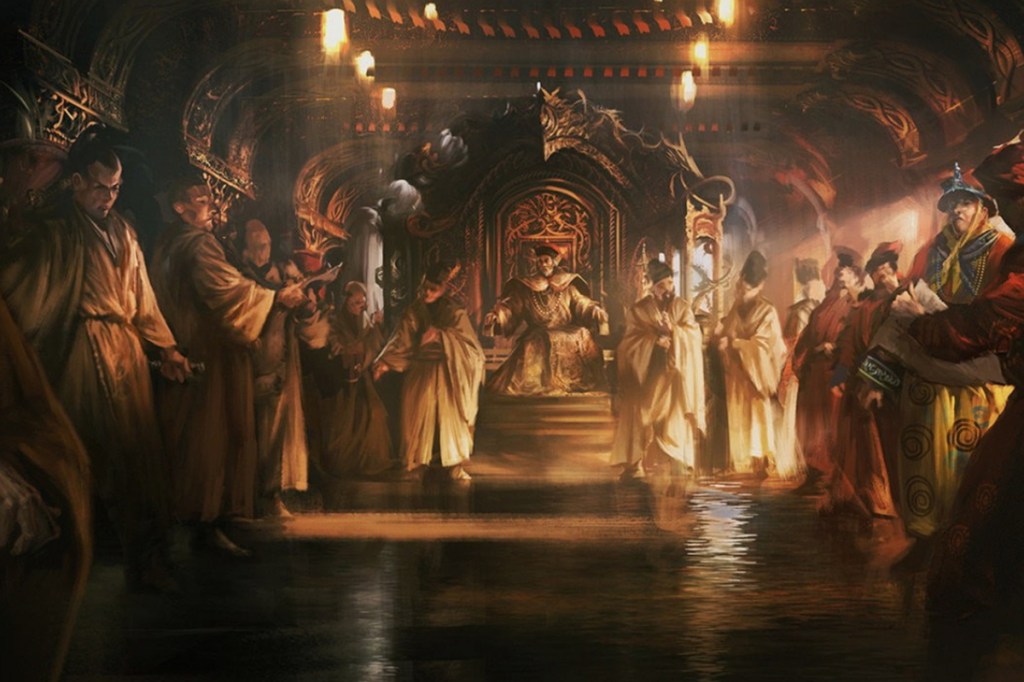
| d6 | Ideal |
|---|---|
| 1 | Family. My family, whether the one I come from or the one I make, is the thing in this world most worth protecting. (Any) |
| 2 | Service. I am most rewarded when I know I have performed a valuable service for another. (Good) |
| 3 | Sloth. What’s the point of helping anyone now that I’ve been discarded? (Chaotic) |
| 4 | Compassion. I can’t resist helping anyone in need. (Good) |
| 5 | Tradition. Life under my master’s rule was best, and things should be kept as close to their ideals as possible. (Lawful) |
| 6 | Joy. The pursuit of happiness is the only thing worth serving anymore. (Neutral) |
| d6 | Bond |
|---|---|
| 1 | My family needs me to provide for them. They mean everything to me, which means I’ll do whatever it takes. |
| 2 | My kin have served this holding and its lords and ladies for generations. I serve them faithfully to make my lineage proud. |
| 3 | I can’t read the inscriptions on this odd ring, but it’s all I have left of my family and our history of loyal service. |
| 4 | I’m with the best friends a person can ask for, so why do I feel so lonesome and homesick? |
| 5 | I’ve found a profession where my skills are put to good use, and I won’t let anyone bring me down. |
| 6 | I found peace in a special garden filled with beautiful life, but I only have this flower to remind me. Someday I’ll remember where to find that garden. |
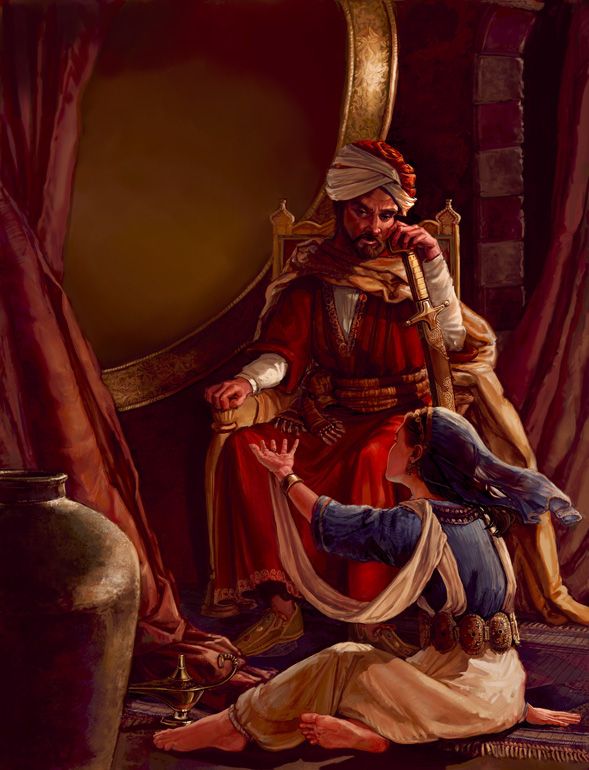
| d6 | Flaw |
|---|---|
| 1 | I would rather serve darkness than serve no one. |
| 2 | I’m afraid of taking risks that might be good for me. |
| 3 | I believe my master’s people are superior to all others, and I’m not afraid to share that truth. |
| 4 | I always do as I’m told, even though sometimes I don’t think I should. |
| 5 | I know what’s best for everyone, and they’d all be better off if they’d follow my advice. |
| 6 | I can’t stand seeing ugly or depressing things. I’d much rather think happy thoughts. |
Backgrounds: Court Servant
\page
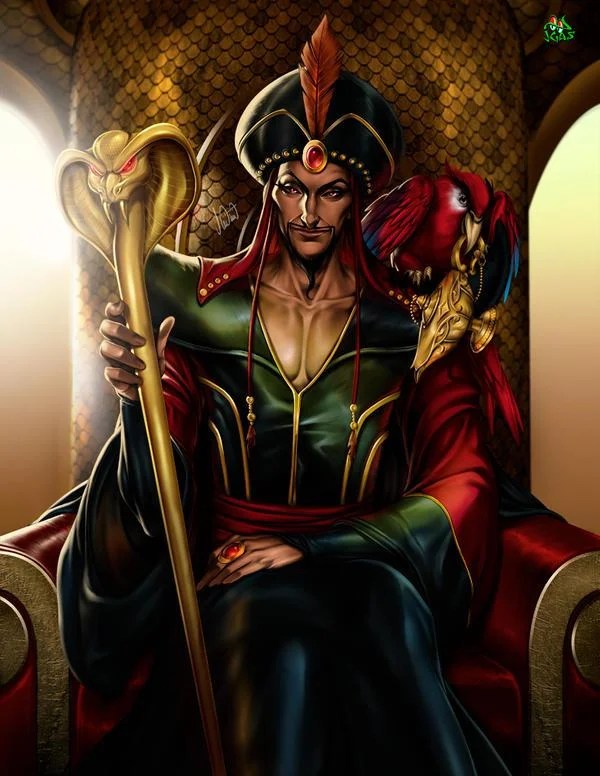
\page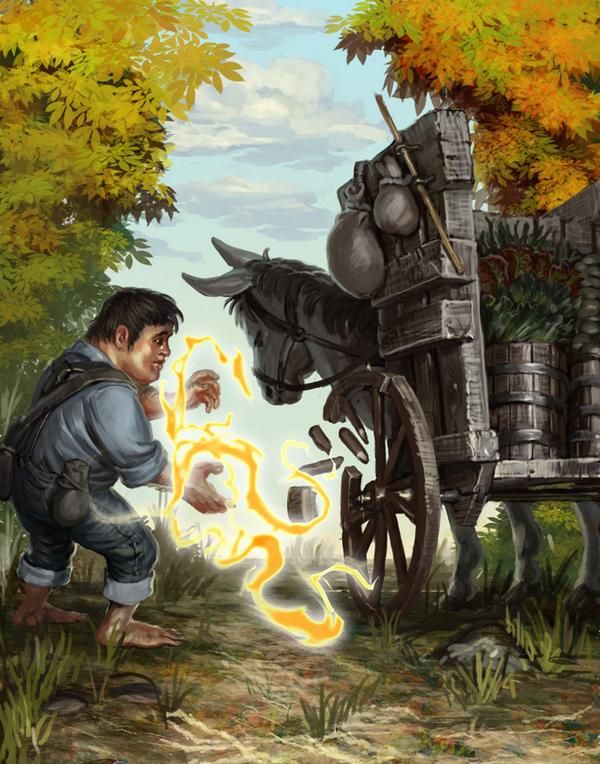
Dabbler
For as long as people have had magic, they have had practical magicians. For every spell that has been developed to combat monsters, there is another, simpler spell designed to make everyday life a little easier. The dabbler is a handyman who provides a list of specific services commonly needed by the common folk. For a simple coin, the dabbler can cast a simple spell which saves time and labor.
Skill Proficiencies: Arcana, Persuasion
Languages: Choose one from Kedakai (Elven), Ad’amlu (Dwarven), Zilvertongue (Gnomish), or Kogo (Halfling)
Equipment: A fishing pole, a backpack containing 10 days of rations, a bed roll, a mess kit, a tinderbox, and a waterskin. A belt pouch containing 20 gp. You also have one material component for each of the dabbler spells you can cast.
Feature: Practical Magician
Dabblers cast spells like wizards do, with Intelligence being your spellcasting ability. Choose 4 spells from the following list of Dabbler Spells. These are the spells that you know. They are all cantrips and therefore don’t use up spell slots. If you gain levels in a spellcasting class, these spells do not count against the number of spells you can have prepared. Your dabbler spells are always able to be cast.
Dabbler Spells
The following spells have been passed down orally through the ages from dabbler to dabbler.
Furrowground
Transmutation cantrip
Casting Time: 1 minute
Range: 60 feet
Components: V,S,M (a ball of twine or yarn)
Duration: Instantaneous
You lay out a length of twine or yarn, up to 50 feet, upon the ground and then cast the spell. A shallow trench is created by the spell. The trench is suitable for sewing seeds or as an irrigation channel.
Goodshear
Transmutation cantrip
Casting Time: 1 minute
Range: Touch
Components: V,S,M (a wicker hoop)
Duration: Instantaneous
The hardest part of this spell is to get the sheep to stand inside the wicker hoop for the whole minute of casting time. The wool all falls off the sheep, leaving her with a perfect springtime coat.
Mending
Transmutation cantrip
(See D&D Player’s Handbook for description)
Rethatch
Transmutation cantrip
Casting Time: 5 minutes
Range: 60 feet
Components: V,S,M (a specially prepared bundle of thatch)
Duration: Instantaneous
An area of thatch up to 50 square feet is refreshed and repaired as if newly thatched.
Sootsweep
Transmutation cantrip
Casting Time: 5 minutes
Range: 60 feet
Components: V,S,M (a white dove)
Duration: Instantaneous
You release a white dove up a chimney. The dove emerges from the top of the chimney black and accompanied by a burst of soot. The chimney is cleaned as well as a good sweeper could have done. The dove can be brushed clean.
Backgrounds: Dabbler
\page
Welldeep
Transmutation cantrip
Casting Time: 5 minutes
Range: 200 feet
Components: V,S,M (a dowsing rod)
Duration: Instantaneous
This spell deepens an existing well by 10 feet. The material removed is transformed into bricks that fortify the wall. The target well must be at least 10 feet deep already for the spell to operate.
Suggested Characteristics
| d8 | Personality Trait |
|---|---|
| 1 | People think I’m not educated because I’m a commoner but I’m a very sophisticated person. |
| 2 | I’m obsessed with details and preparation. |
| 3 | I love being around kids and showing them magic tricks. |
| 4 | A wise person would never say they were wise, but others have called me wise. |
| 5 | I don’t like to compete. I like to cooperate. |
| 6 | I don’t mull options, I decide and act. |
| 7 | Don’t tell me what to do. I’ll tell you what to do. |
| 8 | I don’t even trust my own family, let alone you! |
| d6 | Ideal |
|---|---|
| 1 | Love. Care deeply for one’s family, friends and community. (Good) |
| 2 | Authenticity. Know who you are and never let anyone change you. (Lawful) |
| 3 | Hope. The future is not known. With luck it will be better than today. (Chaotic) |
| 4 | Excellence. Don’t do things well, do them perfectly. (Lawful) |
| 5 | Beauty. Don’t forget to pause and enjoy nature’s beauty. (Any) |
| 6 | Humility. Know thy limits and admit to them freely. Tis better than being a fraud. (Any) |
| d6 | Bond |
|---|---|
| 1 | I’m in the process of founding a guild for dabblers. |
| 2 | My younger brothers stole my inheritance while I was out traveling. |
| 3 | I feel bad that my home town has no dabbler to turn to since I left. |
| 4 | I was accused of performing witchcraft and driven out of my home town. |
| 5 | I have an idea for a new spell. I just need to get a gryphon’s feather to make it work. |
| 6 | My local lord gave me a letter of recommendation which I carry in my backpack. |
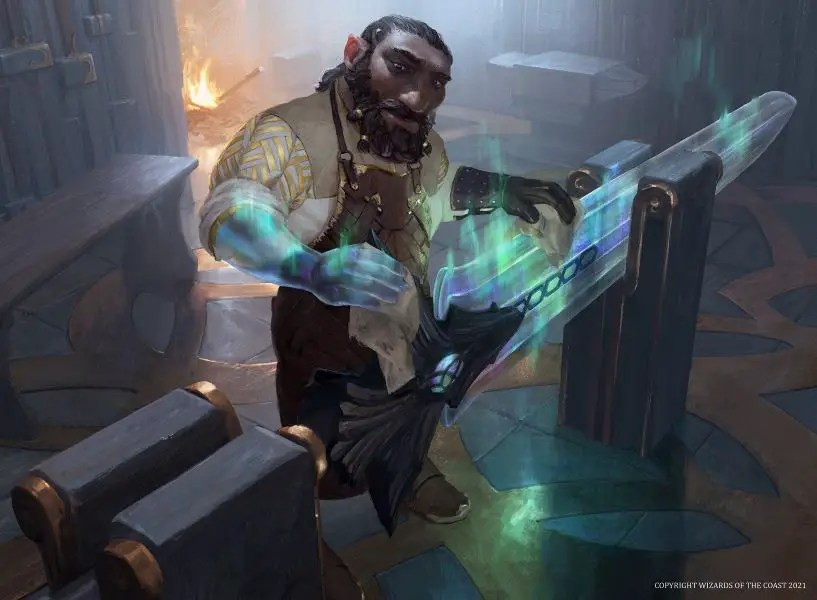
| d6 | Flaw |
|---|---|
| 1 | I put on a good show but I have no confidence. |
| 2 | I have very little respect for those not smart enough to cast spells. |
| 3 | My supplies are a mess. I’m never on time. Frankly, I’m horribly disorganized. |
| 4 | I’m always either super excited or terribly sad. |
| 5 | I’m a terrible teammate. I’d rather do my own thing and try to impress everyone. |
| 6 | If things don’t work out the first time, I give up. |
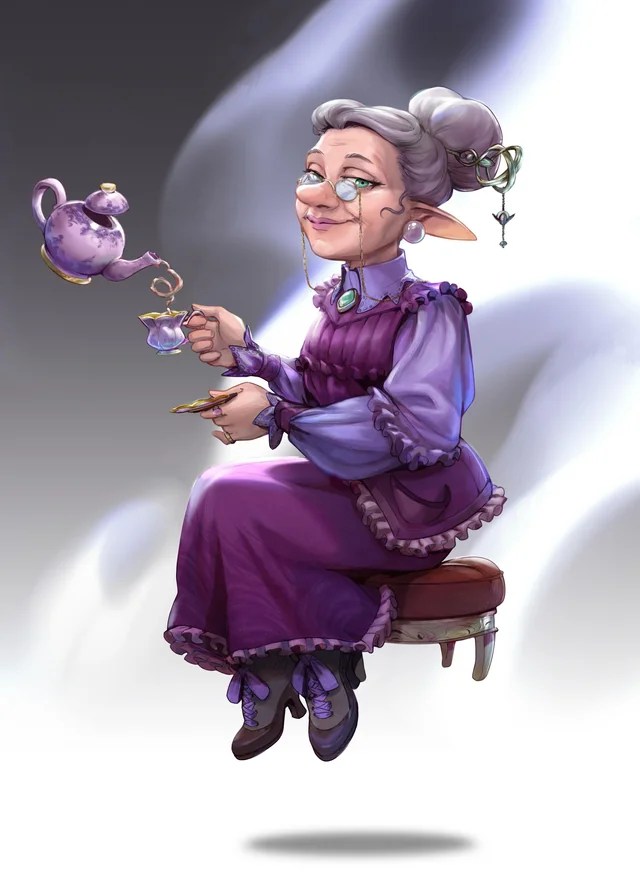
Backgrounds: Dabbler
\page
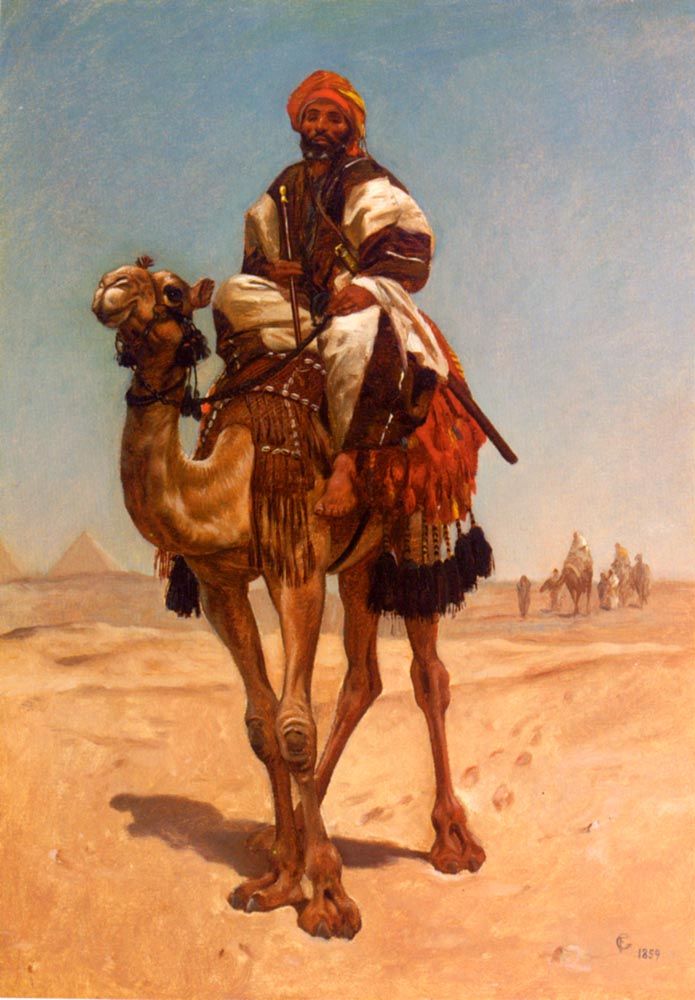
\page
Desert Dweller
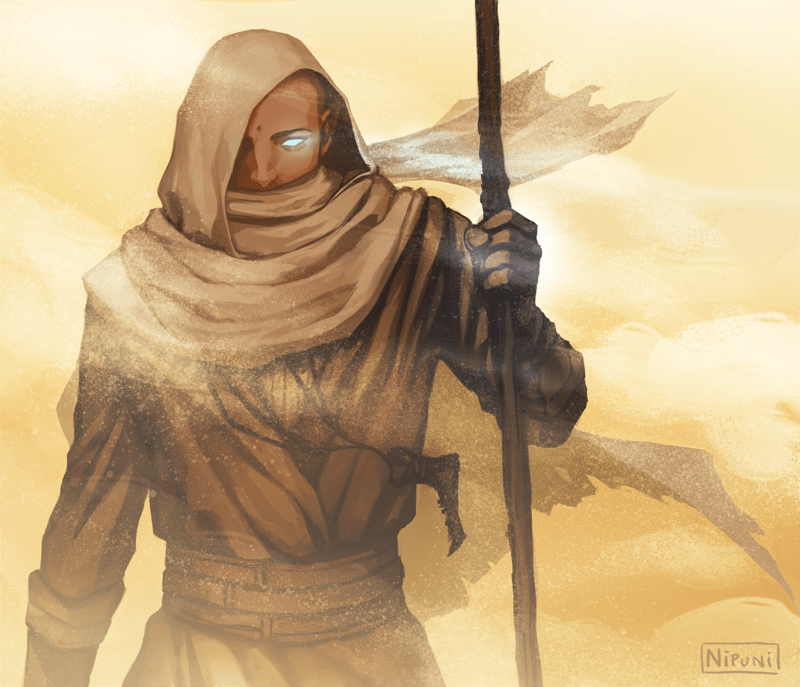
You grew up in one of the desert areas in the southern half of the Northern Vast, possibly from among the Al-Badawi nomads, the ezen, the hara or henna dwarves.
As a nomad, you are used to moving from place to place, following the caravan trails.
Your upbringing makes you more than just used to desert living — you thrive there.
Your tribe has lived in the desert for centuries, and you know more about desert survival than life in the towns and cities.
Skill Proficiencies. Perception, Survival
Tool Proficiencies. Herbalist kit
Languages, One of your choice
Equipment. Traveler’s clothes, herbalist kit, waterskin, pouch with 10 gp.
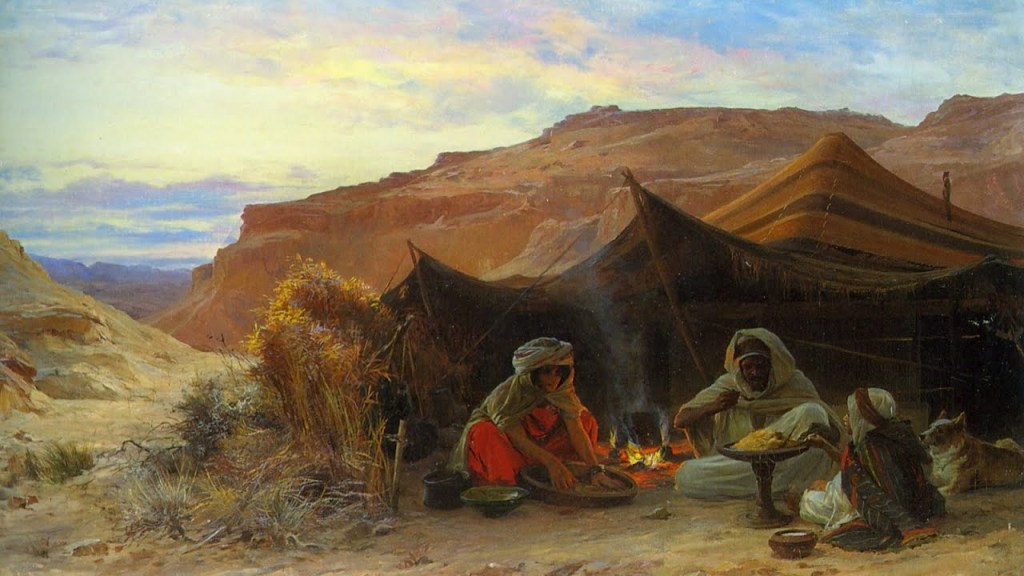
Homeland
The endless deserts of the Vast stretch for at least three thousand miles, from the Western Ocean eastward to the Marbled Coasts.
Roll on the table below to determine where your tribe comes from, or choose the area that best fits your character.
| d10 | Homeland |
|---|---|
| 1 | Sea of Sand, Eastern |
| 2 | Sea of Sand, Western |
| 3 | Khemeti Desert, Northern |
| 4 | Khemeti Desert, Southern |
| 5 | Samarklan Desert |
| 6 | Whispering Sands |
| 7 | Hara Hills |
| 8 | Tarim Basin |
| 9 | Henna Hills |
| 10 | Garden of Standing Stones |
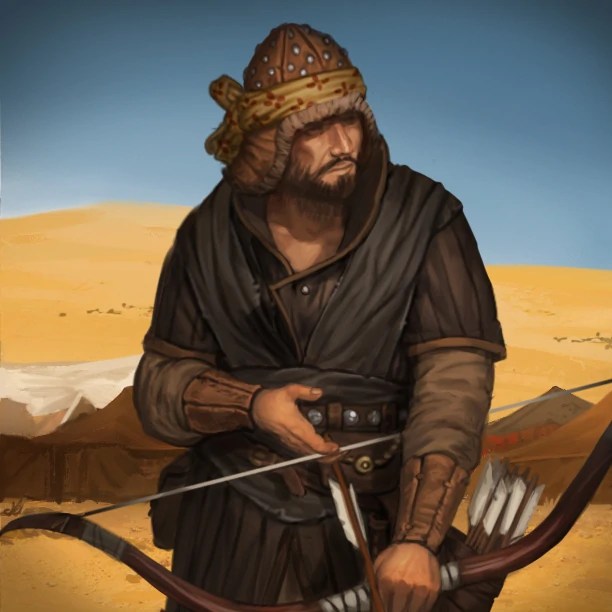
Feature: Nomad
Living in the open desert has allowed your body to adapt to a range of environmental conditions. You can survive on 1 gallon of water in hot conditions (or 1⁄2 gallon in normal conditions) without being forced to make Constitution saving throws, and you are considered “naturally adapted” to hot climates (see DMG). You can read the environment to predict natural weather patterns and temperatures for the next 24 hours, allowing you to cross dangerous terrain at the best times. The accuracy of your predictions is up to the DM, but they should be reliable unless affected by magic or unforeseeable distasters, either natural or unnatural.
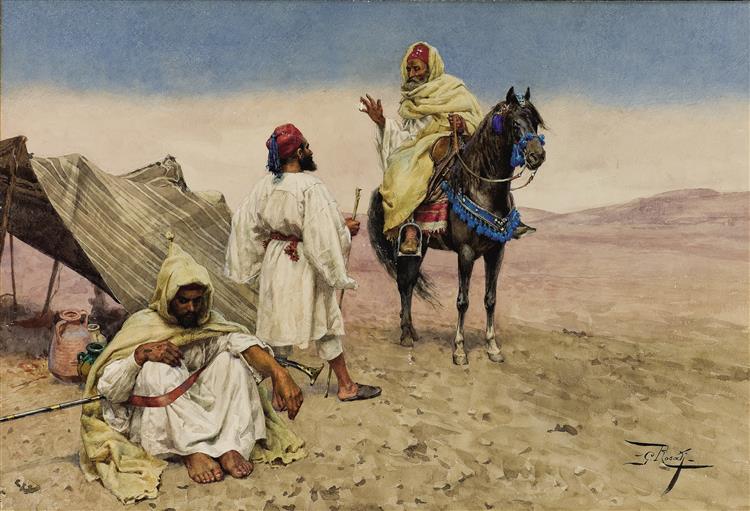
Backgrounds: Desert Dweller
\page
Suggested Characteristics
Those raised among the desert tribes can be the friendliest of humanoids — knowing allies are better than enemies in that harsh environment — or territorial and warlike, believing that protecting food and water sources by force is the only way to survive.
| d8 | Personality Trait |
|---|---|
| 1 | I’m much happier sleeping under the stars than in a bed in a stuffy caravanserai. |
| 2 | It’s always best to help a traveler in need; one day it might be you. |
| 3 | I am slow to trust strangers, but I’m extremely loyal to my friends. |
| 4 | If there’s a camel race, I’m the first to saddle up! |
| 5 | I always have a tale or poem to share at the campfire. |
| 6 | I don’t like sleeping in the same place more than two nights in a row. |
| 7 | I’ve been troubled by strange dreams for the last month. I am determined to uncover their meaning. |
| 8 | I feel lonelier in a crowded city than I do out on the empty desert sands. |
| d6 | Ideal |
|---|---|
| 1 | Greater Good. The needs of the whole tribe outweigh those of the individuals who are part of it. (Good) |
| 2 | Nature. I must do what I can to protect the beautiful wilderness from those who would do it harm. (Neutral) |
| 3 | Tradition. I am duty‑bound to follow my tribe’s age‑old route through the desert. (Lawful) |
| 4 | Change. Things seldom stay the same and we must always be prepared to go with the flow. (Chaotic) |
| 5 | Honour. If I behave dishonourably, my actions will bring shame upon the entire tribe. (Lawful) |
| 6 | Greed. Seize what you want if no one gives it to you freely. (Evil) |
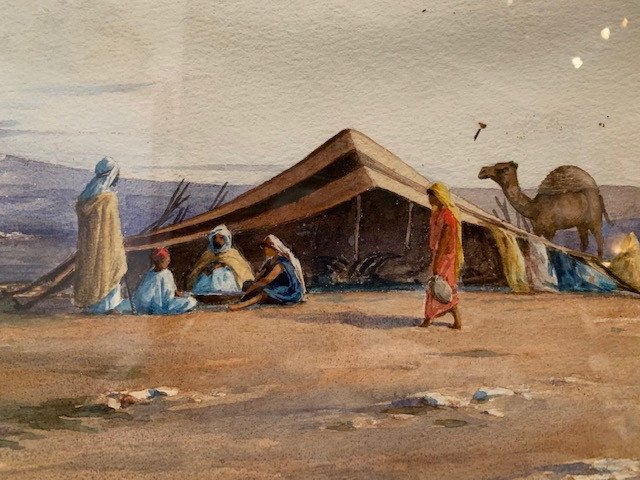
| d6 | Bond |
|---|---|
| 1 | I am the last living member of my tribe, and I cannot let their deaths go unavenged. |
| 2 | I follow the spiritual path of my tribe; it will bring me to the Hidden World when the time comes. |
| 3 | My best friend has been sold into slavery, and I need to rescue them before it is too late. |
| 4 | A nature spirit saved my life when I was dying of thirst in the desert. |
| 5 | My sword is my most prized possession; for over two centuries, it’s been handed down from generation to generation. |
| 6 | I have sworn revenge on the sheikh who unjustly banished me from the tribe. |
| d6 | Flaw |
|---|---|
| 1 | I enjoy the company of camels more than people. |
| 2 | I can be loud and boorish after a few wineskins. |
| 3 | If I feel insulted, I’ll refuse to speak to anyone for several hours. |
| 4 | I enjoy violence and mayhem a bit too much. |
| 5 | You can’t rely on me in a crisis. |
| 6 | I betrayed my brother to the followers of Shai to save my own skin. |
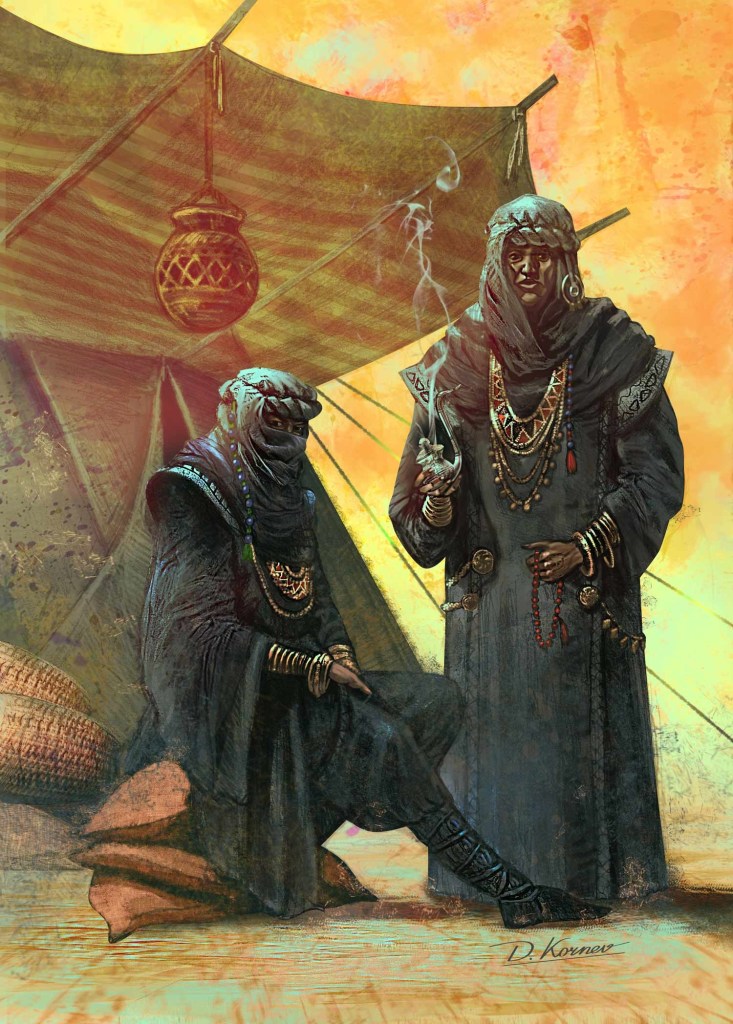
Backgrounds: Desert Dweller
\page
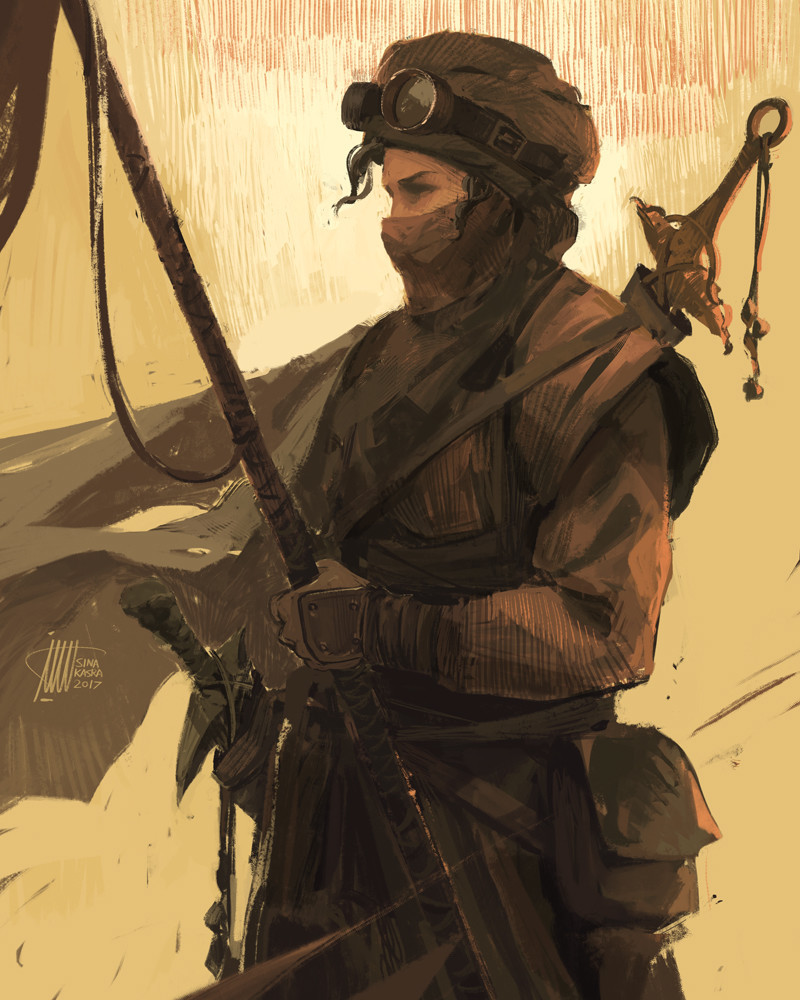
\page
DESTINED
Duty is a complicated, tangled affair, be it filial, political, or civil. Sometimes, there’s wealth and intrigue involved, but more often than not, there’s also obligation and responsibility. You are a person with just such a responsibility. This could involve a noble title, an arranged marriage, a family business you’re expected to administer, or an inherited civil office. You promised to fulfill this responsibility, you are desperately trying to avoid this duty, or you might even be seeking the person intended to be at your side. Regardless of the reason, you’re on the road, heading toward or away from your destiny.
Skill Proficiencies. History, Insight
Languages. One of your choice
Equipment. A dagger, quarterstaff, or spear, a set of traveler’s clothes, a memento of your destiny (a keepsake from your betrothed, the seal of your destined office, your family signet ring, or similar), a belt pouch containing 15 gp
Destiny
You’re a person who’s running from something or hurtling headfirst towards something, but just what is it? The responsibility or event might be happily anticipated or simply dreaded; either way, you’re committed to the path. Choose a destiny or roll a d8 and consult the table below.
| d8 | Destiny |
|---|---|
| 1 | You are running away from a marriage. |
| 2 | You are seeking your runaway betrothed. |
| 3 | You don’t want to take over your famous family business. |
| 4 | You need to arrive at a religious site at a specific time to complete an event or prophecy. |
| 5 | Your noble relative died, and you’re required to take their vacant position. |
| 6 | You are the reincarnation of a famous figure, and you’re expected to live in an isolated temple. |
| 7 | You were supposed to serve an honourary but dangerous position in your people’s military. |
| 8 | Members of your family have occupied a civil office (court scribe, sheriff, census official, or similar) for generations. You don’t want to share that same fate. |
Feature: Reputation of Opportunity
Your story precedes you, as does your quest to claim — or run away from — your destiny. Those in positions of power, such as nobles, bureaucrats, rich merchants, and even mercenaries and brigands, all look to either help or hinder you, based on what they think they may get out of it. They’re always willing to meet with you briefly to see just how worthwhile such aid or interference might be. This might mean a traveler pays for your passage on a ferry, a generous benefactor covers your group’s meals at a tavern, or a local governor invites your adventuring entourage to
enjoy a night’s stay in their guest quarters. However, the aid often includes an implied threat or request.
Some might consider delaying you as long as politely possible, some might consider taking you prisoner for ransom or to do “what’s best” for you, and others might decide to help you on your quest in exchange for some future assistance. You’re never exactly sure of the associated “cost” of the person’s aid until the moment arrives. In the meantime, the open road awaits.
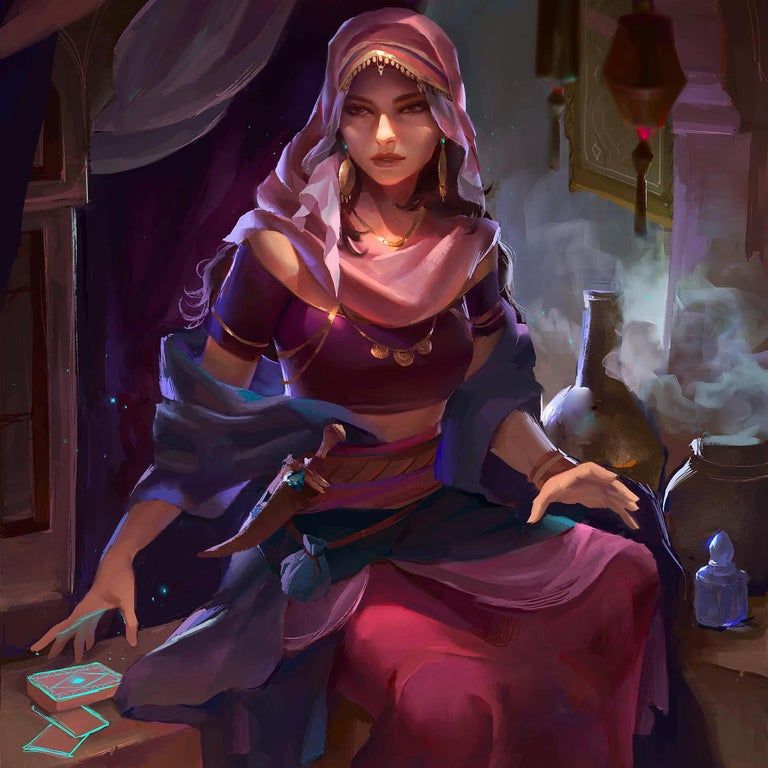
Suggested Characteristics
Destined characters might be running toward or away from destiny, but whatever the case, their destiny has shaped them. Think about the impact of your destiny on you and the kind of relationship you have with your destiny. Do you embrace it? Accept it as inevitable? Or do you fight it every step of the way?
| d8 | Personality Trait |
|---|---|
| 1 | I’m eager to find this destiny and move on with the next stage in my life. |
| 2 | I keep the fire of my hope burning bright. I’m sure this will work out for the best. |
| 3 | Fate has a way of finding you no matter what you do. I’m resigned to whatever they have planned for me, but I’ll enjoy my time on the way. |
| 4 | I owe it to myself or to those who helped establish this destiny. I’m determined to follow this through to the end. |
| 5 | I don’t know what this path means for me or my future. I’m more afraid of going back to that destiny than of seeing what’s out in the world. |
| 6 | I didn’t ask for this, and I don’t want it. I’m bitter that I must change my life for it. |
| 7 | Few have been chosen to complete this lifepath, and I’m proud to be one of them. |
| 8 | Who can say how this will work out? The world is an uncertain place, and I’ll find my destiny when it finds me. |
Backgrounds: Destined
\page
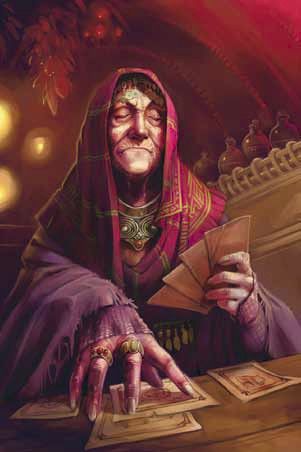
| d6 | Ideal |
|---|---|
| 1 | Inevitability. What’s coming can’t be stopped, and I’m dedicated to making it happen. (Evil) |
| 2 | Tradition. I’m part of a cycle that has repeated for generations. I can’t deny that. (Any) |
| 3 | Defiance. No one can make me be something I don’t want to be. (Any) |
| 4 | Greater Good. Completing my duty ensures the betterment of my family, community, or region. (Good) |
| 5 | Power. If I can take this role and be successful, I’ll have opportunities to do whatever I want. (Chaotic) |
| 6 | Responsibility. It doesn’t matter if I want it or not; it’s what I’m supposed to do. (Lawful) |
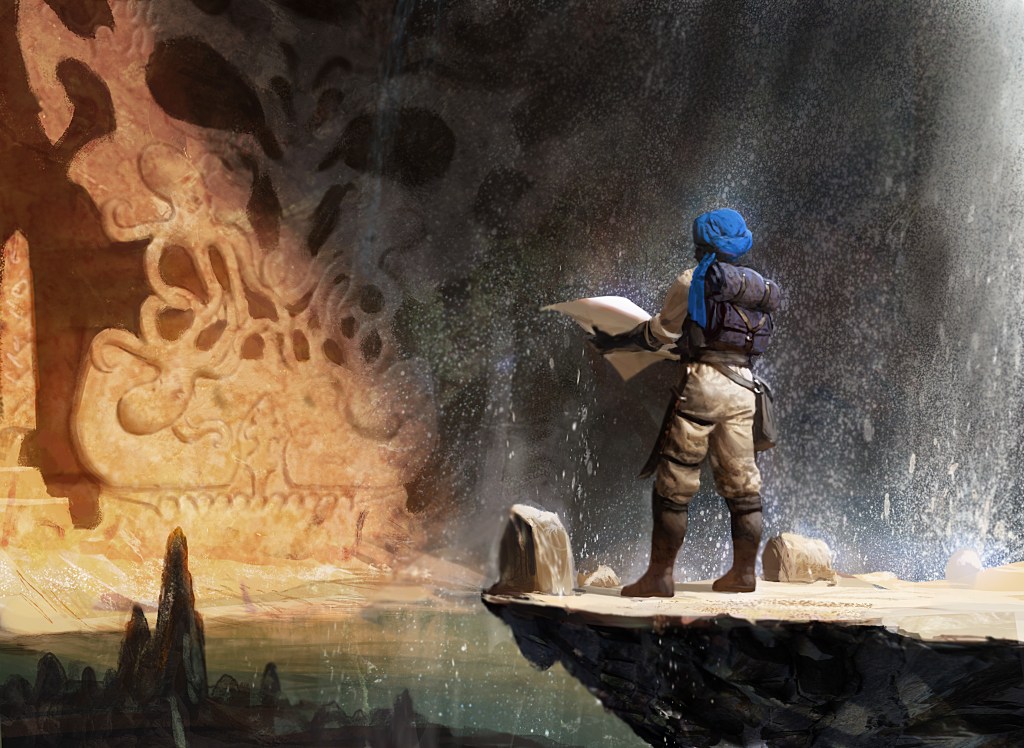
| d6 | Bond |
|---|---|
| 1 | The true gift of my destiny is the friendships I make along the way to it. |
| 2 | The benefits of completing this destiny will strengthen my family for years to come. |
| 3 | Trying to alter my decision regarding my destiny is an unthinkable affront to me. |
| 4 | How I reach my destiny is just as important as how I accomplish my destiny. |
| 5 | People expect me to complete this task. I don’t know how I feel about succeeding or failing, but I’m committed to it. |
| 6 | Without this role fulfilled, the people of my home region will suffer, and that’s not acceptable. |
| d6 | Flaw |
|---|---|
| 1 | If you don’t have a destiny, are you really special? |
| 2 | But I am the “Chosen One.” |
| 3 | I fear commitment; that’s what this boils down to in the end. |
| 4 | What if I follow through with this and I fail? |
| 5 | It doesn’t matter what someone else sacrificed for this. I only care about my feelings. |
| 6 | Occasionally — ok, maybe “often” — I make poor decisions in life, like running from this destiny. |
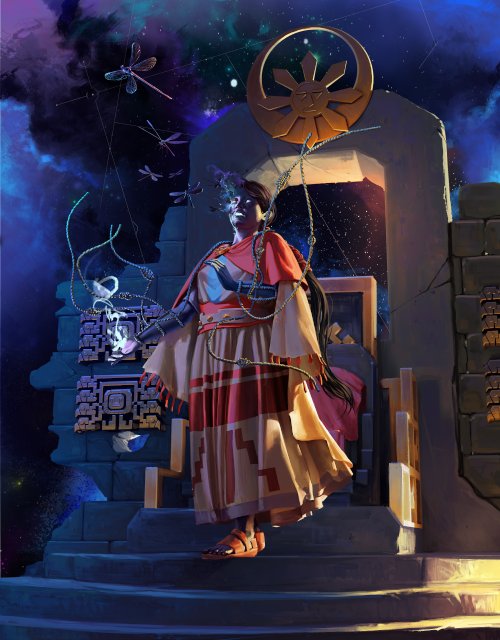
Backgrounds: Destined
\page
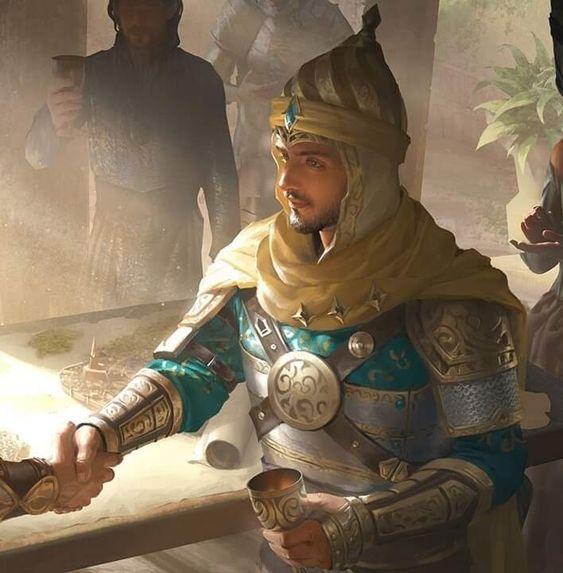
Diplomat
You have always found harmonious solutions to conflict. You might have started mediating family conflicts as a child. When you were old enough to recognize aggression, you sought to defuse it. You often resolved disputes among neighbors, arriving at a fair middle ground satisfactory to all parties.
Skill Proficiencies. Insight, Persuasion
Languages. Two of your choice
Equipment. A set of fine clothes, a letter of passage from a local minor authority or traveling papers that signify you as a traveling diplomat, and a belt pouch containing 20 gp
Feature: Peacemaker Reputation
Your reputation as a peacemaker precedes you, or people recognize your easy demeanor, typically allowing you to attain food and lodging at a discount.
In addition, people are predisposed to warn you about dangers in a location, alert you when a threat approaches you, or seek out your help for resolving conflicts between locals.
Suggested Characteristics
Diplomats always have kind words and encourage their companions to think positively when encountering upsetting situations or people. Diplomats have their limits, however, and are quick to discover when someone is negotiating in bad faith.
| d8 | Personality Trait |
|---|---|
| 1 | I like to travel, meet new people, and learn about different customs. |
| 2 | I intercede in minor squabbles to find common ground on all sides. |
| 3 | I never disparage others, even when they might deserve such treatment. |
| 4 | I always try to make a new friend wherever I travel, and when I return to those areas, I seek out my friends. |
| 5 | I have learned how to damn with faint praise, but I only use it when someone has irked me. |
| 6 | I am not opposed to throwing a bit of coin around to ensure a good first impression. |
| 7 | Even when words fail at the outset, I still try to calm tempers. |
| 8 | I treat everyone as an equal, and I encourage others to do likewise. |
| d6 | Ideal |
|---|---|
| 1 | Harmony. I want everyone to get along. (Good) |
| 2 | Contractual. When I resolve a conflict, I ensure all parties formally acknowledge the resolution. (Lawful) |
| 3 | Selfishness. I use my way with words to benefit myself the most. (Evil) |
| 4 | Freedom. Tyranny is a roadblock to compromise. (Chaotic) |
| 5 | Avoidance. A kind word is preferable to the drawing of a sword. (Any) |
| 6 | Unity. It is possible to achieve a world without borders and without conflict (Any) |
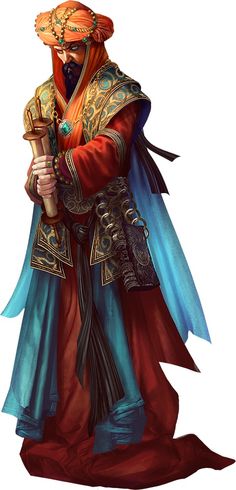
Backgrounds: Diplomat
\page
| d6 | Bond |
|---|---|
| 1 | I want to engineer a treaty with far-reaching effects in the world. |
| 2 | I am carrying out someone else’s agenda and making favorable arrangements for my benefactor. |
| 3 | A deal I brokered went sour, and I am trying to make amends for my mistake. |
| 4 | My nation treats everyone equitably, and I’d like to bring that enlightenment to other nations. |
| 5 | A traveling orator taught me the power of words, and I want to emulate that person. |
| 6 | I fear a worldwide or major conflict is imminent, and I want to do all I can to stop it. |
| d6 | Flaw |
|---|---|
| 1 | I always start by appealing to a better nature from those I face, regardless of their apparent hostility. |
| 2 | I assume the best in everyone, even if I have been betrayed by that trust in the past. |
| 3 | I will stand in the way of an ally to ensure conflicts don’t start. |
| 4 | I believe I can always talk my way out of a problem. |
| 5 | I chastise those who are rude or use vulgar language. |
| 6 | When I feel I am on the verge of a successful negotiation, I often push my luck to obtain further concessions. |

Drunkard
The drunkard is a habitual drinker and source of constant frustration. As a permanent fixture in the local tavern, the drunkard is a friend to all and embarrassment to many. He is a butt of jokes and a reminder to others of what comes from too much booze. Circumstances of life led you down a path of irresponsibility. You couldn’t hold down a job, your love life was a tragic disappointment, and you had to beg friends and strangers for money. Somehow you managed to answer the call to adventure and set off on a new chapter in your life. It is your choice whether to move on from your life of drunkenness or not as you head into your adventuring career.
| d6 | Your drinking philosophy |
|---|---|
| 1 | I have not had any strong drink in years and am committed to a sober future. |
| 2 | I have taken an oath to never drink again and plan to stick to it. |
| 3 | My drinking will never get in the way of my responsibilities again. |
| 4 | I love drinking and at least I know my limits now. |
| 5 | I need to drink. I’m better at everything when I’ve had a few. |
| 6 | Drinking is a…a lifestyle. You..would… wouldn’t under…understand. |
Skill Proficiencies: Deception
Tool Proficiencies: Dice set, playing card set, three-dragon ante set
Languages: One of your choice
Equipment: Dice set, playing card set, threedragon ant set, 4 darts, a backpack containing 10 days of rations, a tent, a bed roll, a mess kit, a tinderbox, and two wineskins. A belt pouch containing 3 gold pieces and 8 silver pieces.
Feature: Psychic Impairment
Years of constant inebriation have left your mind somewhat muddled. This has one benefit, though. You have resistance to psychic damage. This means that you only take half damage from psychic sources.
Suggested Characteristics
| d8 | Personality Trait |
|---|---|
| 1 | Once I resolve to be loyal to someone or something, I never waver. |
| 2 | I tend to be overly flattering to people to make them like me more. |
| 3 | I’m happy to go along with what everyone else has decided to do. |
| 4 | Things always seem to go my way. |
| 5 | I hate relying on other people. I like being selfsufficient. |
| 6 | I know I can be miserable at times but I make no apologies. |
| 7 | There’s never been anyone with a more vibrant personality than me. |
| 8 | I know what it’s like to let people down so I’m quick to forgive others. |
| d6 | Ideal |
|---|---|
| 1 | Encouragement. Everyone deserves at least one person in their lives who believes in them. (Good) |
| 2 | Honesty. Nothing sabotages relationships like lying. (Lawful) |
| 3 | Joy. A round of drinks and a good song combine to produce infectious happiness. (Chaotic) |
| 4 | Humility. Sleeping in the town square reminds one that pride makes poor company. (Any) |
| 5 | Reverence. Always pay the proper respect to those in positions of honor. (Lawful) |
| 6 | Idealism. The trick to envisioning the best is to never settle for what’s in front of you. (Chaotic) |
Backgrounds: Diplomat | Drunkard
\page
\page
| d6 | Bond |
|---|---|
| 1 | I long to be married and to start a family. |
| 2 | A bugbear stole everything I once owned. I will have my revenge. |
| 3 | I chose booze over my sweetheart. I’m hoping I can redeem myself to that person. |
| 4 | I made a friend during my drinking days who now holds a powerful political position. |
| 5 | My brother said I was a lost cause, but I’m going to make him eat his words. |
| 6 | I drank all the ceremonial wine from the local temple and they banned me for life. |
| d6 | Flaw |
|---|---|
| 1 | I’m an angry, violent drunk, quick to start fights with anyone I can. |
| 2 | I’m a depressed drunk, prone to fits of crying and wailing. |
| 3 | I’m a sloppy drunk, falling over things and slurring my words. |
| 4 | I’m a sentimental drunk, constantly telling people how much I love them and how happy I am to have met them. |
| 5 | I’m an inappropriate drunk, taking off my clothes and urinating in public places. |
| 6 | I’m an infantile drunk, acting increasingly like a baby and even talking in a baby voice. |
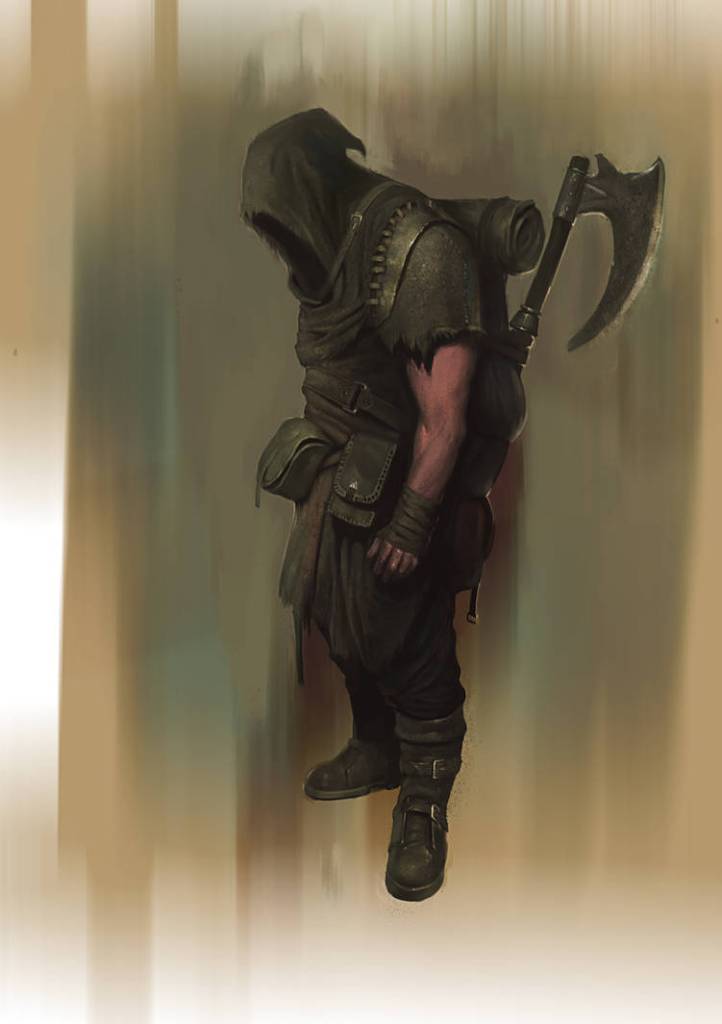
Executioner
The executioner, following the orders of a Tsar or other legal authority, ends the life of the condemned. A warrant protects the executioner from the charge of murder. Many executioners are professionals who travel a circuit or go throughout a region performing their duty since executions are rarely numerous. Within this region, a resident executioner also administers non-lethal physical punishments, or torture.
You probably began your career as a prison guard. Once, when an execution needed to be carried out and the regular guy couldn’t do it, you stepped into the role. Your courage to face the crowd and to kill a man, who never did any wrong to
you personally, marked you as professional worthy of the title of executioner.
Killing and torturing can be a lucrative business but so can adventuring. So, you eventually left your career to begin a new one.
Skill Proficiencies: Intimidation, Medicine
Armor Proficiencies: Light armor
Weapon Proficiencies: Battleaxe, Broadsword, Greataxe, Greatsword
Equipment: Studded leather armor, a healing kit, a broadsword, a backpack containing 10 days of rations, a bed roll, a mess kit, a tinderbox, and a waterskin. A belt pouch containing 20 gp.
Feature: Callous Compunction
You have had to repeatedly overrule your moral qualms to do your job. This habit has hardened your mind, making certain mindaffecting attacks less effective against you. You gain proficiency in Wisdom saving throws. If you also gain proficiency in Wisdom saves from your chosen class, you gain a +2 bonus instead.
Suggested Characteristics
| d8 | Personality Trait |
|---|---|
| 1 | I respect the authority given to others by their office. |
| 2 | Forgiveness is a silly notion. Pay for your transgressions with blood and pain. |
| 3 | I don’t hate the guilty but I won’t tolerate the abuse of the innocent. |
| 4 | I don’t trust clerics. They speak in absolutes and yet their gods are capricious. |
| 5 | I refuse to hide in the shadows like a coward. |
| 6 | I try to use big words so people will think that I am educated. I often use them wrong. |
| 7 | I never confuse what is right with what the law says is legal. |
| 8 | When the blood and the fur start flying, I have no problem keeping calm. |
| d6 | Ideal |
|---|---|
| 1 | Justice. The rich and the poor are equal in my eyes, both in virtue and in sin. (Lawful) |
| 2 | Shock. There’s no feeling as powerful as shocking a crowd with a gruesome sight. (Evil) |
| 3 | Death. The death blow is the beginning of a new adventure in the afterlife. (Neutral) |
| 4 | Fate. Sometimes one isn’t guilty of an offence but merely guilty of having bad luck. (Lawful) |
| 5 | Piety. Those brought before me have been judged wicked and will be punished. (Good) |
| 6 | Anarchy. The law is whatever the powerful say it is, but right and wrong are written on the souls of mankind. (Chaotic) |
Backgrounds: Drunkard | Executioner
\page
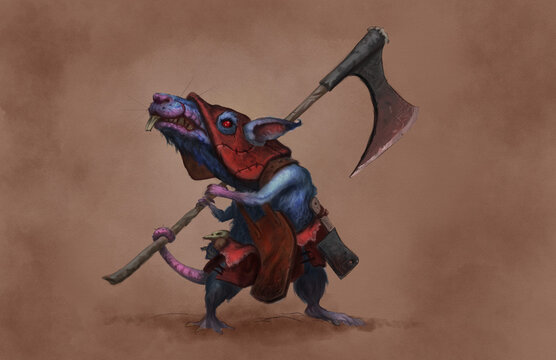
| d6 | Bond |
|---|---|
| 1 | When a cousin was brought before me for execution, I helped him escape. |
| 2 | A powerful family holds me responsible for their scion’s death even though it was not I who condemned him. |
| 3 | Each night I dream the people I have executed are inviting me to join them in the afterlife. |
| 4 | I was once tricked into beheading an illusion. I was made a fool of and I will have my revenge. |
| 5 | I am not welcome in my home town because of my job as a torturer and executioner. |
| 6 | One day I will slay a dragon and people will forget about my previous life. |
| d6 | Flaw |
|---|---|
| 1 | I have stolen organs from my victims to sell. |
| 2 | I refuse to use bladed weapons anymore because of what they remind me of. |
| 3 | I tend to kill first and ask questions later. |
| 4 | My loyalty is to my coin purse first and to my friends second. |
| 5 | I despise the gods because I have seen them forsake so many of their believers. |
| 6 | I’ll wait to deal a killing blow until I have a good number of spectators to witness it. |
Failed Merchant
Maybe you come from a long line of merchants. Perhaps you were an entrepreneur. Regardless. your ventures ended poorly. Whether it was because of outside influences, bad luck, or simply because your business acumen was weak, you lost everything. With failure, however. comes experience. You’re free of that old life, having made some connections and learned your lessons. Prepared to pursue the life of an adventurer, your insight into the world of commerce has served you well whenever you happen to be in a town, conducting business.
Skill Proficiencies: Investigation, Persuasion
Tool Proficiencies: One type of artisan’s tools
Languages: Any one of your choice
Equipment: One set of artisan’s tools, merchant’s scale, a set of fine clothes, and a belt pouch containing 10 gp.
Feature: Supply Chain
From your time as a merchant, you retain connections with wholesalers, suppliers, and other merchants and entrepreneurs. You can call upon these connections when looking for items or information.
Suggested Characteristics
Being a merchant involved having a head for numbers, a strong personality. the ability to make deals with hostile adversaries, a strong sword arm to fight off bandits, and the intuition for knowing what people want and need. The art of business is the art of finding the best path to profit, and that path might be different with each transaction. It takes a strong mind and a stronger stomach to succeed. So why did you fail?

Backgrounds: Executioner | Failed Merchant
\page
| d8 | Personality Trait |
|---|---|
| 1 | I didn’t have the cutthroat attitude necessary to succeed. I won’t make that mistake again. |
| 2 | Even my competitors said I was affable and talented. Those traits should serve me well. |
| 3 | To prosper, you have to be in control. |
| 4 | The customer is always right. |
| 5 | I was cutting corners and breaking deals to maximize profit. That’s why I failed. |
| 6 | When I get an idea, I am single-minded in its execution – even if it’s a terrible idea. |
| 7 | If I can be everyone’s friend, I’ll always have support. |
| 8 | My heart wasn’t in being a merchant, so I failed. I’m not all that keen on adventuring either, but I need the money. |
| d6 | Ideal |
|---|---|
| 1 | Survival. Where there’s life, there’s hope. If I remain alive and flexible, I can succeed. (Any) |
| 2 | Generosity. People helped me when I was down. Now that I’m back on my feet, I’ll pay it forward. (Good) |
| 3 | Tenacity. Caution got me nowhere in my previous business. I’m not going to let it hold me back now. (Chaotic) |
| 4 | Wealth. With enough coin, I can buy comfort, power, knowledge, and even eternal life. Nothing will stand between me and money. (Evil) |
| 5 | Stability. The mercantile trade was too chaotic for me. I need a nice stable profession, like adventuring. (Lawful) |
| 6 | Redemption. Too many people consider me a failure. So I need to prove them wrong. (Any) |
| d6 | Bond |
|---|---|
| 1 | My family means everything to me. I failed them before, and I must not do so again. |
| 2 | My church provides a connection to my god, so I must ensure that it is protected and funded. |
| 3 | My former business partner fell ill, and then our business failed. Part of my new venture involves earning enough to take care of their family. |
| 4 | If I take care of my possessions, they’ll take care of me. People come and go, but a weapon or a wand is something you can always rely on. |
| 5 | Although my business failed, my community was kind to me. I’ll do everything in my power to protect them. |
| 6 | I owe a dangerous person a lot of money. As long as they’re happy, they let my debt rest unpaid. |
| d6 | Flaw |
|---|---|
| 1 | Why spend gold here when you can buy the same thing for copper in the next town? |
| 2 | I must have the best of everything. Like, right now. |
| 3 | You haven’t heard of me? I’m sure that’s because of your ignorance and low breeding. |
| 4 | I failed, but I’m awesome. So when anyone else is successful, it must be because of nepotism, dishonesty, or dumb luck. |
| 5 | I find that most people are trustworthy. Hey, where’s my belt pouch? |
| 6 | Nothing gets between me and danger except my fellow adventurers. So I’ll be sure to put them there. |

Falconer
Your bird of prey is your constant companion. You trained your falcon from a young age to take down other birds for you both to share. Depending on the size of the bird, it will hunt small birds like quail up to full size geese. When not in flight, your falcon sits at hand, literally. The falcon will sit on your leather gauntlet where it feels safe and where it is kept well fed. Otherwise, it will be perched within a few feet of you.
Skill Proficiencies: Animal Handling, Survival
Tool Proficiencies: Falconry tools
Languages: Choose one of Kedakai (Elven) or Kogo (Halfling)
Equipment: Falconry tools (includes gauntlet, calming hood, treat pouch, grooming tools, and training aids), a backpack containing 10 days of rations, a mess kit, a tinderbox, and a waterskin. A belt pouch with 15 gp.
Feature: Trained Bird of Prey
Despite the name, the falconer isn’t limited to only falcons. A trained bird of prey is often referred to as a falcon but may in fact be a very different type of bird. Choose one from the list below or roll a d6 to decide.
| d6 | Type of Bird |
|---|---|
| 1 | Peregrine Falcon |
| 2 | Great Horned Owl |
| 3 | Golden Eagle |
| 4 | Gyrfalcon |
| 5 | Goshawk (goose hawk) |
| 6 | Sea Eagle |
Regardless of the bird species chosen, your bird has AC 13, 3 Hps, and a fly speed of 60. It has a +5 to attack with its talons and deals 1 point of slashing damage on a hit. Your falcon requires daily exercise and training but, will reward you with enough poultry and rodent meat to keep you both well fed. You may keep up to three falcons at a time but must spend at least one hour a day training each of them. Failure to train your falcons adequately will result in them not returning to your hand when called.
Backgrounds: Failed Merchant | Falconer
\page
When dealing with birds of prey, you have advantage on Wisdom (Animal Handling) checks.
In combat situations, falcons will fly off. They can be trained to attack enemies but sending them into combat requires a DC15 Wisdom (Animal Handling) check as an action or as a bonus action.
Suggested Characteristics
| d8 | Personality Trait |
|---|---|
| 1 | I’ve never really grown up. I’m basically a big kid. |
| 2 | My spending habits are, let’s say, inconsistent with my income. |
| 3 | I put on noble airs and hope I’m treated with more dignity than I really deserve. |
| 4 | I can get lost in my work and become forgetful. |
| 5 | There is a right way to do things and a million wrong ways. Why not do it the right way? |
| 6 | I’m unimpressed by the gods and their priests. |
| 7 | I listen to the words that people use and to the ones they choose not to. I’m sensitive in that way. |
| 8 | I am proud and confident and will pummel anyone who says differently. |
| d6 | Ideal |
|---|---|
| 1 | Leadership. I’m used to being in charge and making decisive choices. (Any) |
| 2 | Temperance. In all things moderation serves one better than exuberance. (Lawful) |
| 3 | Rustic. Nature is my church and I am closer to the gods when I’m in the wilderness. (Neutral) |
| 4 | Cautious. One should always know the risks before committing to a course of action. (Lawful) |
| 5 | Perseverance. Never give up. Never, never, ever give up. Where there’s a will there’s a way. (Chaotic) |
| 6 | Esprit de Corps. My troupe is my flock. We are one family with one shared goal. (Good) |
| d6 | Bond |
|---|---|
| 1 | I would give up my own life to save one of my falcons. |
| 2 | I stole my falcon from my teacher, so I hope to never cross paths with him again. |
| 3 | I will become the greatest falconer that ever lived. |
| 4 | I idolize a great falconer from history and seek to emulate that person in every way. |
| 5 | Wherever I go I share my love for the art of falconry in hopes of making it more popular. |
| 6 | I always keep my self and my falcon in the most respectable condition. |
| d6 | Flaw |
|---|---|
| 1 | My falcon is the only friend I need. |
| 2 | When I’m in a bad mood, my falcon gets neglected. |
| 3 | I’m tired of eating birds and rodents. |
| 4 | I’m great with birds but people confound me. |
| 5 | I train and train until everything is perfect. |
| 6 | Aside from my birds, I can’t stand being around animals. |

Farmer
Farming is the cornerstone of civilization. Villages and towns wouldn’t exist if not for the ability to draw continual sustenance from the land. Farmer is, by far, the most common occupation among the civilized races. Many work as subsistence farmers, feeding themselves and their families. In feudal lands the farmers are often serfs or share-croppers, who work land owned by nobles. Many others raise animals instead of growing plants such as on pig farms or dairy farms. It is from these humble, ordinary beginnings that many a legendary hero has emerged.
| d6 | Type of farming |
|---|---|
| 1 | Subsistence farming |
| 2 | Serfdom or indentured servitude |
| 3 | Share-cropper |
| 4 | Pig and chicken farming |
| 5 | Sheep and goat farming |
| 6 | Cattle and dairy farming |
Skill Proficiencies: Animal Handling, Nature, Survival
Languages: One of your choice
Equipment: A sickle, a jar of insect repelling ointment, a fifty foot length of hemp rope, a backpack containing 15 days of rations, a bed roll, a mess kit, a tinderbox, and a waterskin. A belt pouch containing 8 gp and 5 sp.
Feature: Weather Prediction
The farmer is acutely accustomed to reading the skies. He can use Wisdom (Survival) to accurately predict the coming weather.
||
|:–:|
|DC 10: Predicts 2 hours ahead|
|DC 15: Predicts 8 hours ahead|
|DC 20: Predicts 2 days ahead|
|DC 25+: Predicts 5 days ahead|
Backgrounds: Falconer | Farmer
\page
Suggested Characteristics
| d8 | Personality Trait |
|---|---|
| 1 | I like to recite folksy proverbs. |
| 2 | My way is to save up for a time of need. |
| 3 | I keep one eye on the sky. It’s just habit. |
| 4 | I will eat pickled anything. |
| 5 | I’ve never left the farm before. It’s all new. |
| 6 | Life is hard but I’ve learned to be harder. |
| 7 | I always rise before the sun. |
| 8 | I always keep my tools sharp and oiled. |
| d6 | Ideal |
|---|---|
| 1 | Orderliness. An everyday routine is good for the body and the mind. (Lawful) |
| 2 | Patience. Everything has a season. There is no use in hurrying what will not hurry. (Neutral) |
| 3 | Fairness. Not every hog eats the same. Equal isn’t always fair nor fair always equal. (Any) |
| 4 | Perseverance. Sleep is not deserved. It is earned by completing one’s work. (Lawful) |
| 5 | Gratitude. All good things come from the love of the heavens. (Good) |
| 6 | Nature. Take care of the land and animals and they will take care of you. (Neutral) |
| d6 | Bond |
|---|---|
| 1 | I sold my baby daughter to save my farm. |
| 2 | I dream of owning my own manor house and raising a large family. |
| 3 | My farm was ruined by decisions I made. |
| 4 | I’m absolutely terrified of goblins. |
| 5 | I once traded a cow for “magic beans.” |
| 6 | My parents need me on the farm but I can’t bear to stay there any longer. |
| d6 | Flaw |
|---|---|
| 1 | I don’t need or want anyone else in my life. |
| 2 | I’m gullible and will buy any old line. |
| 3 | I pretend that I am much poorer than I am. |
| 4 | I don’t know how to handle money and rush to spend it all on luxuries I never had. |
| 5 | I will argue and argue until it is agreed I won. |
| 6 | I refuse to bathe and I smell accordingly. |

New Spell
The following utility spell is practical magic.
It is considered to be on the spell list of any
spellcaster who has Farmer as their background.
A trained farmer with a Wisdom of 12 or higher
can cast this spell as a ritual even if they have no
spellcasting ability.
Boodsoil Bessing
Enchantment cantrip (ritual)
Casting Time: 10 minutes
Range: see text
Components: V,S,M (a baby sheep or goat)
Duration: Instantaneous
To cast this spell, you must walk up and down the rows of newly planted crops, dripping the blood of a slowly dying baby sheep or goat upon the soil. At the end of the ritual the deceased animal must be buried in the center of the area.
The affected area, roughly 4000 square feet, will produce better crops for a season. The yield will be 10 to 60% (1d6x10) above what it otherwise would have been.
Backgrounds: Farmer
\page
Feral Child
Some people are abandoned or lost when they are young, and subsequently survive in the wild by some freak stroke of luck. You are one such person.
Were you raised by animals, or did you survive entirely by yourself?
Are you an orphan?
Did your parents abandon you in the woods because of poverty or apathy? Were you accidentally lost when your relatives were walking through the wilderness with you?
It is possible you have no memory at all of your parents or how you ended up separated from them in the first place. After your first encounter with humanoids, how did you come to live in humanoid society?
Did you seek out other people or were you forced away from your home and into a world you had no connection to or understanding of?
Skill Proficiencies: Survival and Animal Handling
Tool Proficiencies: Herbalism kit, Poisoner’s kit
Equipment: A herbalism kit, an object you collected from the wilderness such as a shiny stone or seashell, a set of traveler’s clothes, a patch of fur from an animal, and a large waterskin that can hold two gallons of water.
Animal Caretakers
If you were raised by animals, you should choose between being raised by predators or primates; here’s a list of possible animals you could have been raised by:
| d10 | Predators | Primates |
|---|---|---|
| 1 | Wolves | Baboons |
| 2 | Black Bears | Gorillas |
| 3 | Brown Bears | Orangutans |
| 4 | Lions | Chimpanzees |
| 5 | Tigers | Bonobos |
| 6 | Mountain Lions | Spider Monkeys |
| 7 | Panthers | Howler Monkeys |
| 8 | Foxes | Lemurs |
| 9 | Wolverines | Gibbons |
| 10 | Hyenas | Mandrills |
You understand the body language of the species of animal you were raised by, and can use your own body language to indicate non-hostility towards those animals.
Feature: Scent of the Wild lands
Your sense of sight and smell was finely tuned during your years in the wild. When you enter a forest or thick meadows, you can correctly ascertain tracks of any beast or humanoid. In addition, you can determine a safe harbor closest to you.

Suggested Characteristics
Due to the fact that you didn’t grow up around humanoids, you have a difficulty learning their languages and social rules. While growing up among wild animals it is very possible that you had a constant nagging feeling that you were somehow abnormal or malformed. After all, you didn’t look at all like the creatures around you. You have always felt like an outsider in some way. It wasn’t until you encountered humanoids that you knew there were others in the world that looked like yourself. This may have been a relief or a disturbing realization. Due to the fact that you didn’t grow up around humanoids, you have a difficulty learning their languages and social rules. After you entered humanoid society you were probably treated as
Backgrounds: Feral Child
\page
a freak or a fascination. It took you a while to learn to speak to other people and you still have some trouble with communication. Social rules are confusing and difficult for you to remember.
| d8 | Personality Trait |
|---|---|
| 1 | I didn’t grow up wearing clothes, and I still don’t like the feel of them on my body. |
| 2 | I am more comfortable around animals than people. |
| 3 | I don’t put much stock into money. I would rather have things that are useful or beautiful than valuable. I don’t need material possessions to keep me happy. |
| 4 | I love learning new words and hearing them roll off my tongue. I’ll often repeat a word I just learned over and over again. |
| 5 | I would rather live in the woods than in a city. |
| 6 | I don’t understand the role of religion. |
| 7 | People’s problems in civilized society seem trivial to me. |
| 8 | I’m fascinated by technology. |
| d6 | Ideal |
|---|---|
| 1 | Nature. I grew up in the wild and I’ll do anything to preserve my first home. (Neutral) |
| 2 | Freedom. I never fit into society. The only way to be content is to express myself without worrying about rules. (Chaotic) |
| 3 | Learning. Ever since I discovered the humanoid world I have felt an unending desire to learn more about myself and the world around me. There are so many wonderful new things I have been exposed to. (Any) |
| 4 | Harmony. I think of myself as an ambassador between the wild and civilization. This comes with the responsibility of balancing the needs of people and animals for the mutual good of everyone. (Good) |
| 5 | Dominance. I worked to be dominant in the group of animals I grew up with and now I want to work to exert my dominance in humanoid society. (Evil) |
| 6 | Friendship. Relationships matter to me more than ideals or material goods. (Neutral) |
| d6 | Bond |
|---|---|
| 1 | Somebody hurt my animal family and they will pay for it. |
| 2 | I want to discover where I came from and who my birth parents are. |
| 3 | I feel a deep connection to the wild and want to protect it from destruction. |
| 4 | I fell in love with one of the humanoids who discovered me and I want to impress them. |
| 5 | I feel a deep bond to my animal family. |
| 6 | I want to see as much of the world or the humanoid world as I can. |
| d6 | Flaw |
|---|---|
| 1 | I am impulsive. I often follow my whims even when it’s inappropriate. |
| 2 | I believe the natural order is for the strong to rule over the weak. |
| 3 | In the wild, my animal friends were my lifeline. Now, I often become possessive of my friends. |
| 4 | I’d give up my own blood before sharing my food. |
| 5 | I’m suspicious of people I don’t know. |
| 6 | I have deep anger and hold long grudges towards those who harm animals or animals from the species that raised me. |

Forest Dweller
You are a creature of the forest, born and reared under a canopy of green. You expected to live all your days in the forest, at one with the green things of the world, until an unforeseen occurrence, traumatic or transformative, drove you from your familiar home and into the larger world. Civilization is strange to you, the open sky unfamiliar, and the bizarre ways of the so-called civilized world run counter to the truths of the natural world.
Skill Proficiencies: Nature, Survival
Tool Proficiencies: Woodcarver’s tools, herbalism kit
Backgrounds: Feral Child | Forest Dweller
\page
Languages: Sylvan
Equipment: A set of common clothes, a hunting trap, a wood staff, a whetstone, an explorer’s pack, and a pouch containing 5 gp
Feature: Forester
Your experience living, hunting, and foraging in the woods gives you a wealth of experience to draw upon when you are traveling within a forest. If you spend 1 hour observing, examining, and exploring your surroundings while in a forest, you are able to identify a safe location to rest. The area is protected from all but the most extreme elements and from the nonmagical native beasts of the forest. In addition, you are able to find sufficient kindling for a small fire throughout the night.
Life-Changing Event
You have lived a simple life deep in the sheltering boughs of the forest, be it as a trapper, farmer, or villager eking out a simple existence in the forest.
But something happened that set you on a different path and marked you for greater things. Choose or randomly determine a defining event that caused you to leave your home for the wider world.
| d8 | Event |
|---|---|
| 1 | You were living within the forest when cesspools of magical refuse from a nearby city expanded and drove away the game that sustained you. You had to move to avoid the prospect of a long, slow demise via starvation. |
| 2 | Your village was razed by a contingent of undead. For reasons of its own, the forest and its denizens protected and hid you from their raid. |
| 3 | A roving band of skeletons and zombies attacked your family while you were hunting. |
| 4 | You are an ardent believer in the preservation of the forest and the natural world. When the people of your village abandoned those beliefs, you were cast out and expelled into the forest. |
| 5 | You wandered into the forest as a child and became lost. For inexplicable reasons, the forest took an interest in you. You have faint memories of a village and have had no contact with civilization in many years. |
| 6 | You were your village’s premier hunter. They relied on you for game and without your contributions their survival in the winter was questionable. Upon returning from your last hunt, you found your village in ruins, as if decades had passed overnight. |
| 7 | Your quiet, peaceful, and solitary existence has been interrupted with dreams of the forest’s destruction, and the urge to leave your home compels you to seek answers. |
| 8 | Once in a hidden glen, you danced with golden fey and forgotten gods. Nothing in your life since approaches that transcendent moment, cursing you with a wanderlust to seek something that could. |
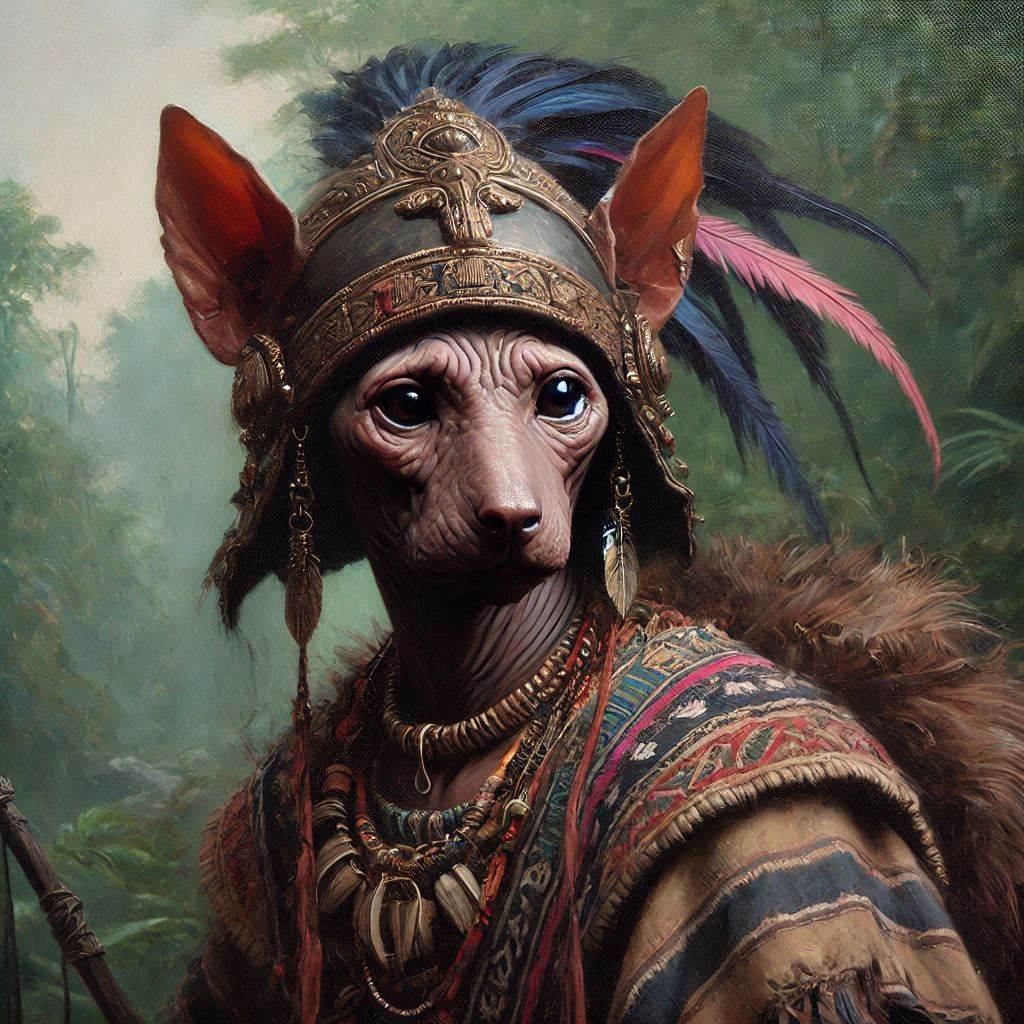
Suggested Characteristics
Forest dwellers tend toward solitude, introspection, and self-sufficiency. You keep your own council, and you are more likely to watch from a distance than get involved in the affairs of others. You are wary, slow to trust, and cautious of depending on outsiders.
| d8 | Personality Trait |
|---|---|
| 1 | I will never forget being hungry in the winter. I field dress beasts that fall to blade or arrow so that I am never hungry again. |
| 2 | I may be alone in the forest, but I am only ever lonely in cities. |
| 3 | Walking barefoot allows me to interact more intuitively with the natural world. |
| 4 | The road is just another kind of wall. I make my own paths and go where I will. |
| 5 | Others seek the gods in temples and shrines, but I know their will is only revealed in the natural world, not an edifice constructed by socalled worshippers. I pray in the woods, never indoors. |
| 6 | What you call personal hygiene, I call an artificially imposed distraction from natural living. |
| 7 | No forged weapon can replace the sheer joy of a kill accomplished only with hands and teeth. |
| 8 | Time lived alone has made me accustomed to talking loudly to myself, something I still do even when others are present. |
Backgrounds: Forest Dweller
\page
| d6 | Ideal |
|---|---|
| 1 | Change. As the seasons shift, so too does the world around us. To resist is futile and anathema to the natural order. (Chaotic) |
| 2 | Conservation. All life should be preserved and, if needed, protected. (Good) |
| 3 | Acceptance. I am a part of my forest, no different from any other flora and fauna. To think otherwise is arrogance and folly. When I die, it will be as a leaf falling in the woods. (Neutral) |
| 4 | Cull. The weak must be removed for the strong to thrive. (Evil) |
| 5 | Candor. I am open, plain, and simple in life, word, and actions. (Any) |
| 6 | Balance. The forest does not lie. The beasts do not create war. Equity in all things is the way of nature. (Neutral) |
| d6 | Bond |
|---|---|
| 1 | When I lose a trusted friend or companion, I plant a tree upon their grave. |
| 2 | The voice of the forest guides me, comforts me, and protects me. |
| 3 | The hermit who raised me and taught me the ways of the forest is the most important person in my life. |
| 4 | I have a wooden doll, a tiny wickerman, that I made as a child and carry with me at all times. |
| 5 | I know the ways of civilizations rise and fall. The forest and the Old Ways are eternal. |
| 6 | I am driven to protect the natural order from those that would disrupt it. |
| d6 | Flaw |
|---|---|
| 1 | I am accustomed to doing what I like when I like. I’m bad at compromising, and I must exert real effort to make even basic conversation with other people. |
| 2 | I won’t harm a beast without just cause or provocation. |
| 3 | Years of isolated living has left me blind to the nuances of social interaction. It is a struggle not to view every new encounter through the lens of fight or flight. |
| 4 | The decay after death is merely the loam from which new growth springs—and I enjoy nurturing new growth. |
| 5 | An accident that I caused incurred great damage upon my forest, and, as penance, I have placed myself in self-imposed exile. |
| 6 | I distrust the undead and the unliving, and I refuse to work with them. |
FORMER ADVENTURER
As you belted on your weapons and hoisted the pack onto your back, you never thought you’d become an adventurer again. But the heroic call couldn’t be ignored. You’ve tried this once before—perhaps it showered you in wealth and glory or perhaps it ended with sorrow and regret. No one ever said adventuring came with a guarantee of success.
Now, the time has come to set off toward danger once again. The reasons for picking up adventuring again vary. Could it be a calamitous threat to the town? The region? The world? Was the settled life not what you expected? Or did your past finally catch up to you?
In the end, all that matters is diving back into danger. And it’s time to show these new folks how it’s done.
Skill Proficiencies. Perception, Survival
Languages. One of your choice
Equipment. A dagger, quarterstaff, or shortsword (if proficient), an old souvenir from your previous adventuring days, a set of traveler’s clothes, 50 feet of hempen rope, and a belt pouch containing 15 gp.
Reason for Retirement
Giving up your first adventuring career was a turning point in your life. Triumph or tragedy, the reason why you gave it up might still haunt you and may shape your actions as you reenter the adventuring life.
Choose the event that led you to stop adventuring or roll a d12 and consult the table below.
| d12 | Event |
|---|---|
| 1 | Your love perished on one of your adventures, and you quit in despair. |
| 2 | You were the only survivor after an ambush by a hideous beast. |
| 3 | Legal entanglements forced you to quit, and they may cause you trouble again. |
| 4 | A death in the family required you to return home. |
| 5 | Your old group disowned you for some reason. |
| 6 | A fabulous treasure allowed you to have a life of luxury… that is, until the money ran out! |
| 7 | An injury forced you to give up adventuring. |
| 8 | You suffered a curse which doomed your former group, but the curse has finally faded away. |
| 9 | You rescued a young child or creature and promised to care for them. They have since grown up and left. |
| 10 | You couldn’t master your fear and fled from a dangerous encounter, never to return. |
| 11 | As a reward for helping an area, you were offered a position with the local authorities, and you accepted. |
| 12 | You killed or defeated your nemesis. Now they are back, and you must finish the job. |
Feature: Old Friends and Enemies
Your previous career as an adventurer might have been brief or long. Either way, you certainly journeyed far and
Backgrounds: Forest Dweller | Former Adventurer
\page

met people along the way. Some of these acquaintances might remember you fondly for aiding them in their time of need.
On the other hand, others may be suspicious, or even hostile, because of your past actions. When you least expect it, or maybe just when you need it, you might encounter
someone who knows you from your previous adventuring career. These people work in places high and low, their fortunes varying widely. The individual responds appropriately based on your mutual history, helping or hindering you at the DM’s discretion.
Suggested Characteristics
Former adventurers bring a level of practical experience that fledgling heroes can’t match. However, the decisions, outcomes, successes, and failures of your previous career often weigh heavily on your mind. The past seldom remains in the past.
How you rise to these new (or old) challenges determines the outcome of your new career.
| d8 | Personality Trait |
|---|---|
| 1 | I have a thousand stories about every aspect of the adventuring life. |
| 2 | My past is my own, and to the pit with anyone who pushes me about it. |
| 3 | I can endure any hardship without complaint. |
| 4 | I have a list of rules for surviving adventures, and I refer to them often. |
| 5 | It’s a dangerous job, and I take my pleasures when I can. |
| 6 | I can’t help mentioning all the famous friends I’ve met before. |
| 7 | Anyone who doesn’t recognize me is clearly not someone worth knowing. |
| 8 | I’ve seen it all. If you don’t listen to me, you’re going to get us all killed. |
| d6 | Ideal |
|---|---|
| 1 | Strength. Experience tells me there are no rules to war. Only victory matters.(Evil) |
| 2 | Growth. I strive to improve myself and prove my worth to my companions — and to myself. (Any) |
| 3 | Thrill. I am only happy when I am facing danger with my life on the line. (Any) |
| 4 | Generous. If I can help someone in danger, I will. (Good) |
| 5 | Ambition. I may have lost my renown, but nothing will stop me from reclaiming it. (Chaotic) |
| 6 | Responsibility. Any cost to myself is far less than the price of doing nothing. (Lawful) |
| d6 | Bond |
|---|---|
| 1 | I will end the monsters who killed my family and pulled me back into the adventuring life. |
| 2 | A disaster made me retire once. Now I will stop it from happening to anyone else. |
| 3 | My old weapon has been my trusted companion for years. It’s my lucky charm. |
| 4 | My family doesn’t understand why I became an adventurer again, which is why I send them souvenirs, letters, or sketches of exciting encounters in my travels. |
| 5 | I was a famous adventurer once. This time, I will be even more famous, or die trying. |
| 6 | Someone is impersonating me. I will hunt them down and restore my reputation. |
| d6 | Flaw |
|---|---|
| 1 | It’s all about me! Haven’t you learned that by now? |
| 2 | I can identify every weapon and item with a look. |
| 3 | You think this is bad? Let me tell you about something really frightening. |
| 4 | Sure, I have old foes around every corner, but who doesn’t? |
| 5 | I’m getting too old for this shit. |
| 6 | Seeing the bad side in everything just protects you from inevitable disappointment. |

Backgrounds: Former Adventurer
\page
\page
Freebooter

You sailed the seas surrounding the Northern Vast and the Marbled Coast as a freebooter, part of a pirate crew.
You should come up with a name for your former ship and its captain, as well as its hunting ground and the type of ships you preyed on.
Did you sail under the flag of a bloodthirsty captain, raiding coastal communities and putting everyone to the sword?
Or were you part of the Saffron Raiders, the former slaves turned pirates, who wear vivid yellow sashes or turbans and who battle to end the vile slave trade in the Pearl Seas?
If you’re a Kýrosian, you likely sailed the Med Sea, preying on ships between the ruined cities of the Manos Kingdom and the current strongholds of Lythos, Kassaria and Scythros.
Or perhaps your hunting ground was the Western Ocean and the stretch of coastline running from the Luccan cities of Giglia and Umbria down to the Free Cities of the Zenevian Empire?
Maybe your vessel sailed the Marbled Coasts, attacking merchant ships traveling the lucrative routes to and from the Eastern Realms?
Whatever ship you sailed on, you feel at home on board a seafaring vessel, and long periods on dry land take some getting used to.
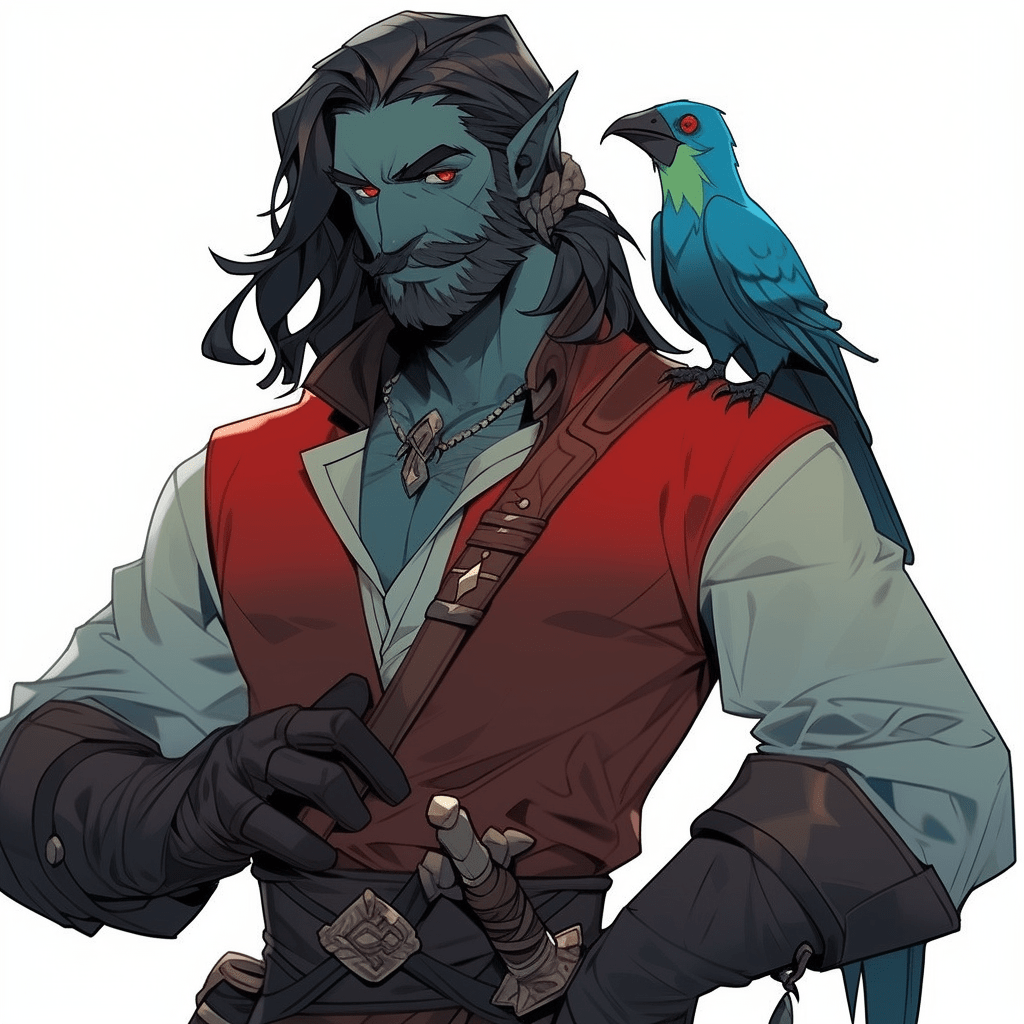
Skill Proficiencies. Athletics, Survival
Tool Proficiencies. Navigator’s tools, vehicles (water)
Equipment. a pirate flag from your ship, several tattoos, 50 feet of rope, a set of traveler’s clothes, and a belt pouch containing 10 gp.
Feature: A Friend in Every Port
Your reputation precedes you.
Whenever you visit a port city in the Northern Vast, you can always find someone who knows of (or has sailed on) your former ship and is familiar with its captain and crew.
They are willing to provide you and your traveling companions with a roof over your head, a bed for the night, and a decent meal.
If you have a reputation for cruelty and savagery, your host is probably afraid of you and will be keen for you to leave as soon as possible.
Otherwise, you receive a warm welcome, and your host keeps your presence a secret if required.
They may also provide you with useful information about recent goings‑on in the city, including which ships have been in and out of port.

Backgrounds: Freebooter
\page

Suggested Characteristics
Freebooters are a boisterous lot, but their personalities include freedom‑loving mavericks and mindless thugs. Nonetheless, sailing a ship requires discipline, so
freebooters tend to be reliable and aware of their role on board, even if they do their own thing once fighting breaks out. Most still yearn for the sea; some feel shame or regret for past deeds.
| d8 | Personality Trait |
|---|---|
| 1 | I’m happiest when I’m on a gentle rocking vessel, staring at the distant horizon. |
| 2 | Every time we hoisted the mainsail and raised the pirate flag, I felt butterflies in my stomach. |
| 3 | I have lovers in a dozen different ports. Most of them don’t know about the others. |
| 4 | Being a pirate has taught me more swear words and bawdy jokes than I ever knew existed. I like to try them out when I meet new people. |
| 5 | One day I hope to have enough gold to fill a tub so I can bathe in it. |
| 6 | There’s nothing I enjoy more than a good scrap — the bloodier, the better. |
| 7 | When a storm is blowing and the rain is lashing down on the deck, I’ll be out there getting drenched. It makes me feel so alive! |
| 8 | Nothing annoys me more than a badly tied knot. |
| d6 | Ideal |
|---|---|
| 1 | Freedom. No one tells me what to do or where to go. Apart from the captain. (Chaotic) |
| 2 | Greed. I’m only in it for the booty. I’ll gladly stab anyone stupid enough to stand in my way. (Evil) |
| 3 | Comraderie. My former shipmates are my family. I’ll do anything for them. (Neutral) |
| 4 | Greater Good. No kin has the right to enslave another, or to profit from slavery. (Good) |
| 5 | Code. I may be on dry land now, but I still stick to the Freebooter’s Code. (Lawful) |
| 6 | Aspiration. One day I’ll return to the sea as the captain of my own ship. (Any) |
| d6 | Bond |
|---|---|
| 1 | Captain Al-Shafi’i and the Saffron Raiders rescued me from a Khopreshi slave ship. I owe them my life. |
| 2 | I still feel a deep attachment to my ship. Some nights I dream her figurehead is talking to me. |
| 3 | I was the ship’s captain until the crew mutinied and threw me overboard to feed the sharks. I swam to a small island and survived. Vengeance will be mine! |
| 4 | 200 years ago, when the volcano erupted on Manos, I fled the city on a Kýrosian fleet bound for Lythos. I arrived back in the ruined city a few weeks ago on the same ship and can remember nothing of the voyage. |
| 5 | I fell asleep when I was supposed to be on watch, allowing our ship to be taken by surprise. I still have nightmares about my shipmates who died in the fighting. |
| 6 | One of my shipmates was captured and sold into slavery. I need to rescue them from the orchards on the Spice Coast. |
| d6 | Flaw |
|---|---|
| 1 | I’m terrified by the desert. Not enough water, far too much sand. |
| 2 | I drink too much and end up starting barroom brawls. |
| 3 | I killed one of my shipmates and took his share of the loot. |
| 4 | I take unnecessary risks and often put my friends in danger. |
| 5 | I sold captives taken at sea to Khopreshi traders at Karmani Bay. |
| 6 | Most of the time, I find it impossible to tell the truth. |

Backgrounds: Freebooter
\page
Grave Robber
It is possible to have no respect for anything, not yourself, not for the gods, not for the dead or the grieving. No respect for anything except gold, and to a lesser extent, silver. Such a person is the lowest of the low; the grave robber.
The recently deceased may have little of value, and yet, what little they have finds its way into the pockets of the grave robber. Gold and silver tooth fillings, wedding bands, and burial clothing are all quickly scavenged. Skulls are scalped and sold to wig makers. Teeth are extracted to make into dentures. Sometimes body parts are harvested for fiendish spell components. Whole bodies can even be sold to necromancers. Desperation and a lack of moral fiber led you into grave robbing. Cemeteries have fences and gates to keep out miscreants just like you. They couldn’t stop you though. You figured out how to sneak into any cemetery or crypt you wanted under the cover of night to perform your terrible deeds.
Skill Proficiencies: Investigation, Stealth
Tool Proficiencies: Thieves’ tools, one type of gaming set
Equipment: Thieves’ tools, a shovel, an oil lantern, a knife, a backpack containing 10 days of rations, a blanket, a mess kit, a tinderbox, and a waterskin. A belt pouch containing 3 gold pieces and 8 silver pieces.
Feature: Macabre
You are not fazed by the things that terrify most normal people. The natural aversions that people have to death and creepy crawlers are simply absent in you. You are practically immune to fear. Spells, monsters, items, or other effects
that cause the Frightened condition fail to work on you. There is a downside to your macabre nature. People pick up on your unsettling mannerisms and inherently don’t trust you. You creep them out. The result is that every Charisma (Persuasion) check you make is done with disadvantage.
Suggested Characteristics
| d8 | Personality Trait |
|---|---|
| 1 | I don’t show my feelings. I have feelings, I think, but I they don’t rise to the surface. |
| 2 | My lack of fear also means a lack of caution. I leap before I look. |
| 3 | I have little self control. I’m driven by impulse. |
| 4 | I call everyone sir, miss, or madam. |
| 5 | I see things objectively, unclouded by burdensome emotions or morality. |
| 6 | If offended I launch into violent retaliation. |
| 7 | I know hundreds of jokes. I tell jokes all the time. |
| 8 | I’m very protective of the people around me, especially the young or small people. |
| d6 | Ideal |
|---|---|
| 1 | Spontaneity. Just take what’s been put in front of you. (Chaotic) |
| 2 | Authentic. Don’t pretend a fancy exterior changes the filthy cretin within. (Neutral) |
| 3 | Uniqueness. The world is already too full of uninteresting people. (Chaotic) |
| 4 | Taking. I will take that treasure from your cold dead hands. (Evil) |
| 5 | Autonomy. Life is too precious to be constrained by laws and morality. (Chaotic) |
| 6 | Murder. Your death is merely the end of a chapter, in my book anyway. (Evil) |
| d6 | Bond |
|---|---|
| 1 | A necromancer paid me for ten bodies but I only delivered three. |
| 2 | I was orphaned when my parents were killed by cultists. |
| 3 | My true love is dead but that doesn’t keep us apart. |
| 4 | My back is striped with lash scars after being punished a few times. |
| 5 | I’m set on having a full set of golden dentures one day. |
| 6 | I carry a pouch of teeth that are so interesting that I’d hate to sell them. |
| d6 | Flaw |
|---|---|
| 1 | I’ll pause to loot bodies while combat is still raging around me. |
| 2 | I’m addicted to chewing on mandrake root. |
| 3 | I rarely talk for fear of revealing clues to my despicable past. |
| 4 | I’m suspicious of Kedakai. I’ve never seen a dead one and that’s just not natural. |
| 5 | Personal hygiene is something other people do. |
| 6 | I collect dogs. They are flea-bitten mongrels that bark constantly but I love them. |
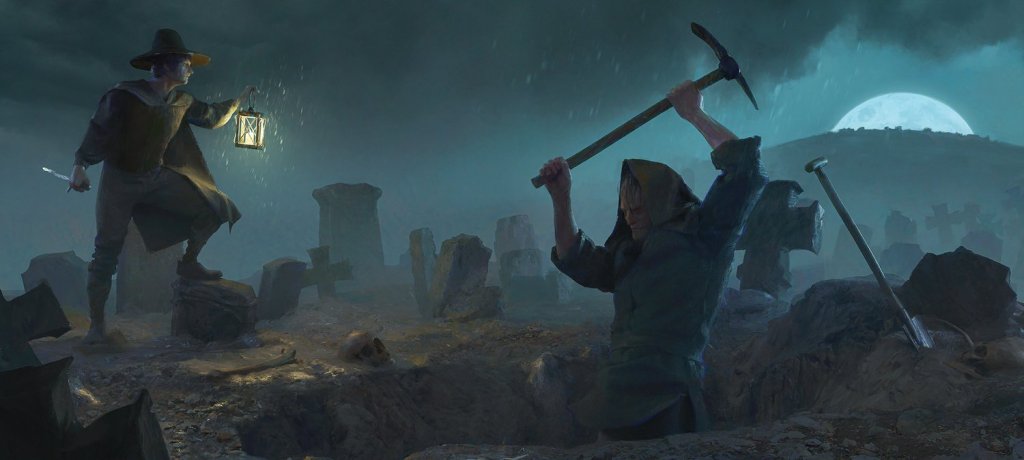
Backgrounds: Grave Robber
\page
Highwayman
Wealthy travelers often use the king’s roads leading into and out of large towns and cities. They are easy targets for enterprising gentlemen of low moral character. Eager for excitement and some easy coin, you joined the ranks of degenerate young men stalking the king’s roads. Using more guile than actual force, you lightened the loads of countless priests, aristocrats, nobles, and merchants.
On occasion, when some hothead considered not playing along, you had to make an example of them. Yet, you didn’t kill anyone. At least, they didn’t die in front of you.
If you were forced to shoot someone you would make sure they were bandaged up before sending them on their way. It’s always best to avoid murder charges. Sometimes a carriage might be hiding a surprise; bodyguards. In those instances you were forced to flee for your life.
You chose your ambush points carefully for this very purpose. Since you were already putting your life on the line for a little treasure, perhaps adventuring would make a better career for you.
Skill Proficiencies: Intimidation, Stealth
Tool Proficiencies: One type of gaming set
Languages: One of your choice
Equipment: A hooded cloak, a light crossbow with 20 bolts, a backpack containing 10 days of rations, a bed roll, a mess kit, a tinderbox, and a waterskin. A belt pouch containing 30 gold pieces and 10 silver pieces.
Feature: I Know A Guy
The highwayman must quickly divest himself of any illicit goods obtained on the road. In order to turn these into coin, the highwayman needs to know some fences, people willing to buy stolen goods. You personally know many fences and have heard the names of still more.
As a result, you have advantage on any checks made to locate buyers of treasures, both legal and illegal, when in cities or large towns.
Suggested Characteristics
| d8 | Personality Trait |
|---|---|
| 1 | I’m truly a thoughtless, unsympathetic jerk. |
| 2 | I spend money quickly and without much forethought. |
| 3 | I prefer to work alone because I have little patience for fools. |
| 4 | I’m always polite and courteous, even to the people who I am robbing. |
| 5 | People find me hard to tolerate in anything other than small doses. |
| 6 | I’ve never met a person more clever or witty than myself. |
| 7 | I try to find imaginative solutions to problems instead of resorting to violence. |
| 8 | I’m not a big talker. I say only what I need to get my point across. |
| d6 | Ideal |
|---|---|
| 1 | Authenticity. Never restrain your personality to suit your company. (Chaotic) |
| 2 | Charity. A small share of your wealth can double the wealth of the impoverished. (Good) |
| 3 | Excellence. Just because you are doing something bad, doesn’t mean you have to do it badly. (Any) |
| 4 | Faith. Thankfully, there are patron gods for every profession. (Any) |
| 5 | Liberty. Never allow the tyranny of the law to restrict one’s freedom. (Chaotic) |
| 6 | Terror. Terrified people make the most predictable choices. (Evil) |
| d6 | Bond |
|---|---|
| 1 | I am ashamed of my thieving past and keep it a closely guarded secret. |
| 2 | I have vowed to make amends to every person I have robbed. |
| 3 | I carry a trinket (roll on Trinkets table in PHB) which I stole from my last victim. I vow to never sell it but instead keep it as a reminder of the person I used to be. |
| 4 | My family is wealthy but has disowned me because of my reputation. |
| 5 | My mother has been imprisoned as a way to punish me because they cannot catch me. |
| 6 | My true love has been promised to another after my deeds became known. |
| d6 | Flaw |
|---|---|
| 1 | There is a warrant for my arrest. |
| 2 | There’s a bounty on my head. |
| 3 | I’m a notorious outlaw and everyone has heard my name. |
| 4 | I still get a thrill out of robbing travelers. |
| 5 | When the going gets tough, I look for an easy escape. |
| 6 | I refuse to dress in anything but the finest outfits. |
Backgrounds: Highwayman
\page

Hunter
Hunters are a vital to rural life. They provide
valuable protein to the community in the form of
deer, fowl, and other quarry. Their skills are also
vital to tracking down predators that have been
feeding on the community’s flocks of domestic
animals.
You would have joined the hunts at
adolescence. With each season you learned more
of the lore necessary to succeed. You learned
the sights, the smells, and other signs of animal
activity. You learned to read the tracks of an
animal, to judge its speed, its size, and how tired
it is. You learned how and when to sneak up on
your prey to maximize your chance
at a successful attack. Also, you
learned how to clean and dress
your kill, optimizing the usage of
the carcass. Altogether, you have
become very skilled at living in
the wilderness.
Skill Proficiencies: Nature, Stealth, Survival
Weapon Proficiencies: Short bow or spear
Equipment: A spear or a short bow and quiver of 20 arrows, a knife, a backpack containing a jar of insect repellent balm, a jar of dried doe urine, 10 days of rations, a folded tent canvas, a bed roll, a mess kit, a tinderbox, and a
waterskin. A belt pouch with 10 gp.

Feature: Acquired Quarry
You are an excellent tracker. Once you have located the tracks of your target, you are very unlikely to lose their trail. You gain advantage on any subsequent tracking rolls to keep following your target. This lasts until you take a short rest
or a long rest.
Suggested Characteristics
| d8 | Personality Trait |
|---|---|
| 1 | I’m skeptical. I need to see it for myself before I will believe it. |
| 2 | I don’t rush. I prepare carefully, then proceed. |
| 3 | I hold no allegiance to any lord or nation. My only loyalty lies with my family. |
| 4 | I like to play practical jokes on my hunting companions. |
| 5 | My words aren’t fancy. I speak plainly and definitely curse too much. |
| 6 | I have a good sense for what others are feeling, which makes me a better hunter. |
| 7 | I’m grateful to the gods for my victories. |
| 8 | I’m very patient. I’ll sit and wait quietly for hours if I have to. |
| d6 | Ideal |
|---|---|
| 1 | Safety. Anything that can go wrong, will go wrong. It shouldn’t be a surprise. (Any) |
| 2 | Hospitable. Share your fire with all who need comfort. (Good) |
| 3 | Athleticism. The day will be won with speed, strength, and endurance. (Any) |
| 4 | Solemnity. Treat the gifts of the forest with dignity and humility. (Lawful) |
| 5 | Adaptation. It is the habit of Nature to change. Adapt or perish. (Chaotic) |
| 6 | Death. In the vast continuum of death, it is life which stands out as unusual. (Neutral) |

Backgrounds: Hunter
\page

| d6 | Bond |
|---|---|
| 1 | My best friend has been imprisoned for poaching. He didn’t know they were the lord’s personal hunting grounds. |
| 2 | I was gored by a stag and barely survived. That’s what these scars are from. |
| 3 | A fawn once leapt in front of my arrow intended for a buck. I nursed it back to health. |
| 4 | An evil wizard hired me to find the location of a forest gnome village, but I warned them instead. |
| 5 | I have a list of seven beasts I dream of bringing down. |
| 6 | My true love was seduced away by an enchanting fey creature. I have lost their trail. |
| d6 | Flaw |
|---|---|
| 1 | I suffer from a paralyzing fear of snakes. |
| 2 | I’ve been told that I’m dull because all I do is tell hunting tales. |
| 3 | I’m jealous of the faith others have and react by belittling their gods. |
| 4 | I won’t kill females or children, even if that means putting my life in danger. |
| 5 | I always check my equipment three times which holds everyone up. |
| 6 | I tend to venture forth alone instead of staying with my group. |
New Spell
The following utility spell is practical magic.
It is considered to be on the spell list of any
spellcaster who has Hunter as their background.
A trained hunter with a Wisdom of 12 or higher
can cast this spell as a ritual even if they have no
spellcasting ability.
Scent Mask
Illusion cantrip (ritual)
Casting Time: 1 minute
Range: Touch
Components: V,S,M (fresh dirt)
Duration: 2 hours
Freshly gathered soil is vigorously rubbed into the target’s face and neck. For the duration, the target’s odours are masked to resemble the dirt so as not to alert any prey that are down wind. Odours from the hunter’s equipment is also
masked, such as oils from leather. The spell ends if the dirt is removed from the target’s skin or if the duration runs out.
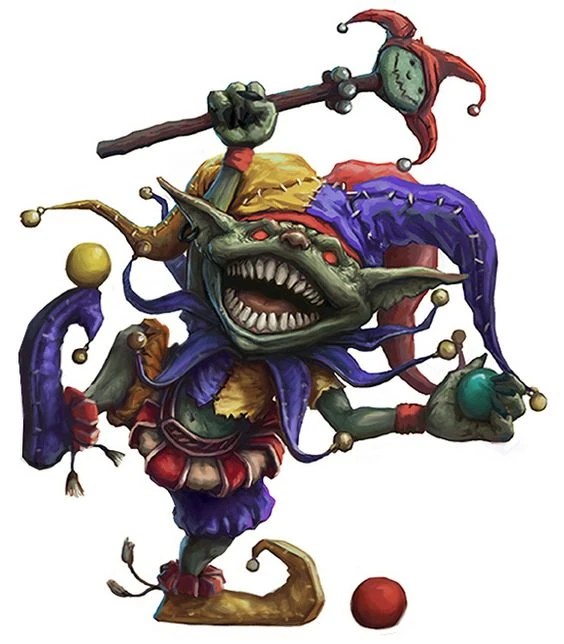
Jester
The jester, or fool, is the principal entertainer of a nobleman’s household, employed to entertain them and their guests. A jester might also be an itinerant performer, entertaining common folk at fairs and markets. Like a one-person circus, jesters have to entertain in a wide variety of ways. They could use anything from song and dance to daring acrobatics, or from dramatic storytelling to comedic insults. Even their outfits are intended to entertain, often dressing in eccentric hats and motley patterns.
Jesters aren’t usually made, they are typically born. An over-the-top personality plus natural exuberance are all you need to fall into the role of jester. You matched that description perfectly. You lived for the attention, the laughs, and the gasps of surprise. Your comedic calling easily led you into markets and eventually noble houses wher your talents could turn into coin.
Backgrounds: Hunter | Jester
\page
Skill Proficiencies: Acrobatics, Performance
Languages: Two of your choice
Equipment: Juggling balls, a sock puppet, a motley outfit with a jaunty hat, a backpack containing 10 days of rations, a bed roll, a mess kit, a tinderbox, and a waterskin. A belt pouch containing 20 gold pieces.
Feature: Taunting Tumbler
When you take the Dodge action in combat you may attempt a Dexterity (Acrobatics) check. If you score a 15 or higher, you gain +2 to your AC for as long as you continue taking the dodge action. This is in addition to the normal benefits of using dodge.
Moreover, as a bonus action while dodging, you may insult an opponent, goading them into focusing on you instead of someone else. The target of your taunt must be within 5 feet of you and be fluent in the language you are taunting
with. You make a Charisma (Performance) check to set the DC. The target of your taunt must make a Wisdom saving throw or be forced to aim their efforts at you on their turn. The victim of the taunt isn’t limited to melee attacks. They may use any means at their disposal to shut you up, including spells.
This effect lasts only for one round, after which your victim may decide to redirect their attacks, until you successfully taunt them again.
Suggested Characteristics
| d8 | Personality Trait |
|---|---|
| 1 | I take my craft seriously and work hard at it. |
| 2 | I have a plan, even when it looks like I don’t. |
| 3 | I like to get people out of their comfort zones and shake them up a bit. |
| 4 | When I’m alone, I am calm and meditative. |
| 5 | I’m not one to take unnecessary risks. If what I do looks dangerous it’s only because I have taken precautions that you don’t know about. |
| 6 | I’m always trying to get a laugh. |
| 7 | My mind is sharp despite the dumb things I might say to get a laugh. |
| 8 | I still get nervous before I start a performance. |
| d6 | Ideal |
|---|---|
| 1 | Irreverence. Comedy requires ignoring the rules of propriety. (Chaotic) |
| 2 | Cooperation. A successful troupe requires practice and teamwork. (Any) |
| 3 | Humility. One cannot use pride to cast barbs at friends, but only with humility. (Good) |
| 4 | Reliability. Show up on time, every time. (Lawful) |
| 5 | Curiosity. You can’t poke fun at someone until you understand them. (Chaotic) |
| 6 | Forgiveness. When one trades in insults, one must learn not to hold grudges. (Neutral) |
| d6 | Bond |
|---|---|
| 1 | My older brother thinks my profession is a disgrace and won’t talk to me anymore. |
| 2 | I’ve spent a few years in a noble’s household and made good connections there. |
| 3 | I will form my own performing troupe one day. |
| 4 | My mother is my biggest supporter and sews all my outlandish outfits. |
| 5 | My sweetie and I have professed eternal love for each other. Too bad one of us is married already. |
| 6 | Another jester who I crossed paths with stole my best jokes and routines. |
| d6 | Flaw |
|---|---|
| 1 | I tend to be self-centered and not care about the feelings of others. |
| 2 | I get impatient easily and rush ahead. |
| 3 | When alone I become lonely and depressed. |
| 4 | I’m utterly incapable of keeping secrets. |
| 5 | My wit was recently aimed at a powerful noble who is petty and vengeful. He wants my head. |
| 6 | I’ve seen what money can buy and I’m obsessed with it. |
New Spell
The following utility spell is practical magic. It is
considered to be on the spell list of any spellcaster
who has Jester as their background.
Ventriloquism
Illusion cantrip
Casting Time: 1 action
Range: 15 feet
Components: V,S,M (a sock puppet)
Duration: Concentration, up to 2 minutes
You can make your voice, or any sound that you can normally vocalize, seem to originate from a different source. Anyone who hears the sound and rolls a successful Wisdom saving throw recognizes it as illusory, though they still hear it.

Backgrounds: Jester
\page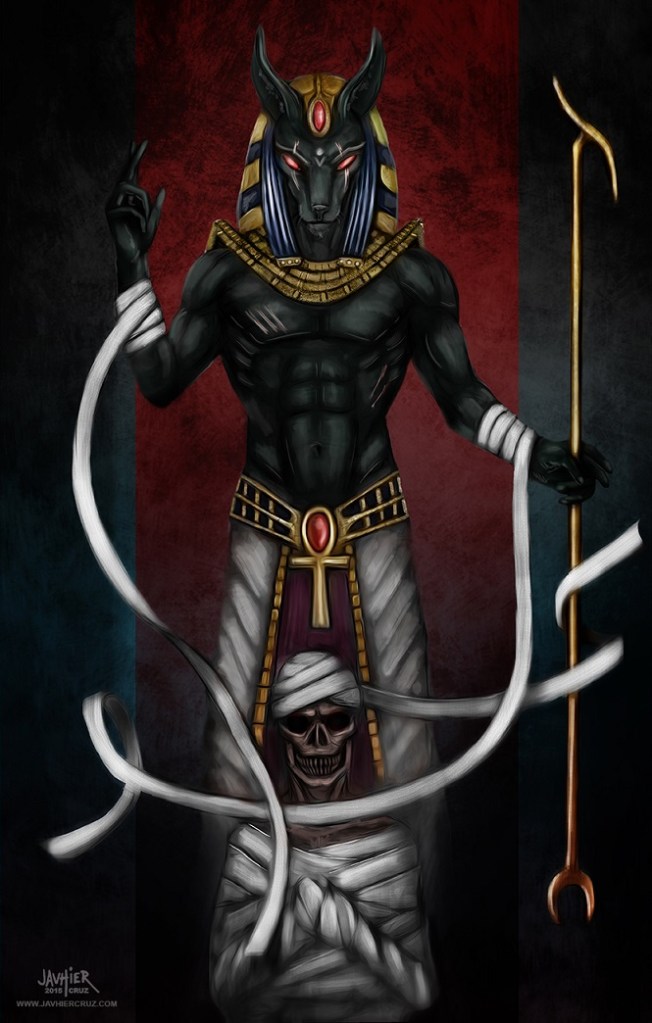
\page
KHEMETI EMBALMER
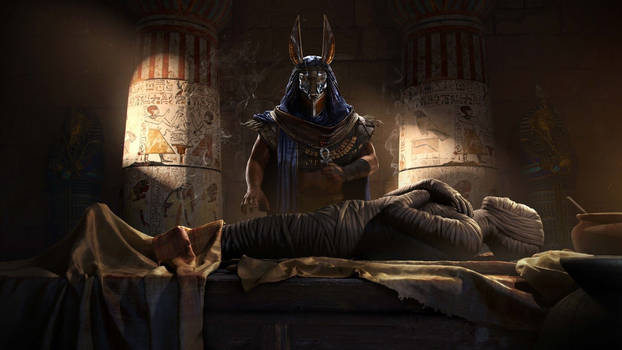
In Khemet, dealing with the dead is the livelihood of a select few families. You are a member of one of the families of Khemet’s gravebinders, or you have apprenticed to one of them. You are trained in the making of shrouds, leading mourning ceremonies, and the methods one must use to consecrate both body and gravesite to prevent the dead from rising as undead. As one of the few who truly knows the streets and avenues of the Great Necropolis, you are afforded a measure more respect than most simple gravediggers.
Skill Proficiencies: Medicine, Religion
Tool Proficiencies: Choose one of the following: alchemist’s supplies, carpenter’s tools, mason’s tools,
weaver’s tools, or woodcarver’s tools
Equipment: A set of tools you are proficient with, a flask of holy water, a set of traveler’s clothes, and a pouch containing 10 gp.
Feature: Secrets of the Gravekeeper
You spent your formative years walking the streets and alleys of graveyards and understand similar logic dictates the layout and architecture of most burial grounds. When you are in a graveyard, cemetery, or other burial site, you have advantage on Intelligence (Investigation) checks to find the location of individuals or families interred at the site.
Having grown up around death and dead bodies, you are not easily riled by them and not easily frightened. Whenever you need to make a saving throw against being Frightened, you may do so with advantage.
You have a pathological hatred of undead and any melee attacks you make against them are made with advantage, however, conversely, in your blind furor, you do not defend as readily against undead who make melee attacks against you, as you are too driven into a frenzy to be as careful as you normally are, defensively.
In addition, you have advantage on Intelligence (History) checks to discover information about those interred at a burial site if you have visited the site at least once.
You also spent much of your life experiencing and sharing the grief of those who have lost loved ones. You are adept at bringing solace to grieving people, and when you do, you receive their gratitude in return. Whether this gratitude is given immediately or at some point in the future is at the GM’s discretion. This gratitude might come as a minor gift, monetary aid, much‑needed information, or other token of their appreciation.

Suggested Characteristics
Khemeti embalmers spent the bulk of their time ensuring the dead were respectfully prepared for eternity, which often makes them seem distant or disinterested when they must interact with the living. Dedicated to the task of properly disposing of the dead, Khemeti embalmers despise the undead.
When they come across the remains of a humanoid creature that has been improperly laid to rest, they take as much time as they can spare to ensure the body, and hopefully the spirit, are properly put to rest.
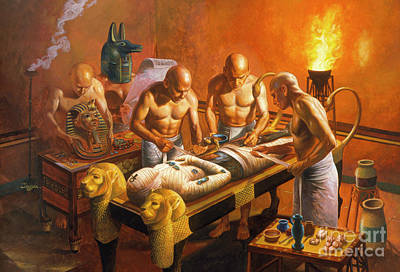
Backgrounds: Khemeti Embalmer
\page
| d8 | Personality Trait |
|---|---|
| 1 | I have no reason to fear death; it is merely the next step in our journey. |
| 2 | I enjoy the quiet stillness of the dead. The living are far too busy and loud. |
| 3 | I hide my fear of death from my colleagues. |
| 4 | I cope with life’s uncertainties by ensuring my life is perfectly ordered. |
| 5 | I treat the dead with respect because I hope I am shown the same kindness when my end comes. |
| 6 | Every corpse I prepare gives me reason to rejoice that I still live. |
| 7 | How I treat the tools of my trade is representative of how I treat the living. |
| 8 | Our ends could come at any time, why should I not live each day as though it was my last? |
| d6 | Ideal |
|---|---|
| 1 | Tradition. The way our society treats those who have passed to the next life is indicative of how they treat those who still live this life. (Lawful) |
| 2 | Balance. We live, then we die—it is the cycle of life. (Neutral) |
| 3 | Service. If no one steps forward to ensure the dead are interred, we will be awash in restless spirits. (Good) |
| 4 | Knowledge. The more we understand how we die, the better we can live a healthy and productive life. (Neutral) |
| 5 | Greed. Every life that ends leaves more for those who remain living. (Evil) |
| 6 | Exultation. We must beat death back and live as fully as possible before the end takes us. (Chaotic) |
| d6 | Bond |
|---|---|
| 1 | My livelihood keeps the community safe from angry spirits. |
| 2 | I am required to know the funerary traditions of all the major religions of the region to ensure every spirit passes to its proper resting place, no matter its faith. |
| 3 | When I was young, I barely survived an encounter with a ghoul. |
| 4 | My family has tended to the needs of the dead for centuries. |
| 5 | I will pass my skill on to the next generation before it is time to put down my tools. |
| 6 | My deeds as a hunter and destroyer of the undead will be told and retold. |
| d6 | Flaw |
|---|---|
| 1 | After I am done with my work, I wash my hands until they are red and raw. |
| 2 | When I am questioned about my work, I get defensive and angry. |
| 3 | When I see something dying, I stare in fascination. |
| 4 | When matters of medicine or the dead are discussed, I discount anyone’s contributions other than my own. |
| 5 | I dislike being in open spaces and prefer close confines. |
| 6 | When performing my work, I talk to the dead and often pause while doing so, as if giving the dead time to respond. |

Mad Scientist
Fools! They could never understand the grand nature of your work! And you’re the greatest fool for ever trusting anyone else with such important work! You’re just a few steps away from unlocking the keys to life, or reality, or death, or magic, or any number of other improbable concepts. Your life’s work has led up to this point and if you could just make one more breakthrough, then you will have finished your research and can stop. But you know it won’t end there, you’ll never be satisfied with completing your work. There is so much more research to be done, so much more for you to discover, so many more rules for you to break. So, let the fools think you’re insane, let the ignorant enjoy their small lives and small minds; it’s not as though you could ever be content with that anyway. Ignorance is bliss and you’re downright mad.
Skill Proficiencies: Insight and either Arcana or Nature
Tool Proficiencies: Alchemist’s Supplies and either (a) poisoner’s kit or (b) herbalism kit
Languages: Two of your choice
Equipment: A set of common clothes, a lab coat and basic chemical protective equipment, alchemist’s supplies, 10 empty bottles, a book of your research notes, a warrant for your arrest, and 5 gp.
Feature: Efficacy Enhancer
Your extensive time spent researching in the scientific and arcane fields have given you insight into the exact workings of potions and poisons. You have the ability to augment the properties of both magical and mundane
Backgrounds: Khemeti Embalmer | Mad Scientist
\page

potions and poisons. You can delay their effects, make the effects subtler, subdue the effects without changing the appearance, change the color or consistency, or even sometimes increase the effectiveness (to a maximum of one corresponding dice). Changing a potion requires at least one hour of concentrated work and uses a great deal of your alchemist’s supplies. More powerful potions or poisons may require more time or more expense. Work with your GM to determine the limits of your ability and what it will take for you to be able to work on stronger potions or poisons.
Suggested Characteristics
Mad scientists are typically outcasts of society. They have delved too deep into areas of research considered taboo or outright forbidden. This has given them insights into concepts and desires far beyond those that would even be considered by typical citizens. It’s not that they have lost touch with reality, it’s that they can no longer partake in the shared illusions that comprise that “reality.” Because of this disconnect, they may be socially awkward and have trouble understanding how to communicate on even a basic level. They are obsessed with their work and will be overjoyed to speak with researchers in the same field; though they often believe themselves more enlightened than even the experts. They can seem distant, lost in their own worlds, but are amazingly intelligent and a boon to teams that struggle with puzzles.
| d8 | Personality Trait |
|---|---|
| 1 | I was tricked into servitude in my younger years. Now, I bow to no master, not even the laws of reality. |
| 2 | I have seen the cracks in what we perceive as truth. I want to expand those cracks by any means. |
| 3 | I love the rush I get from discovering something new. It’s an addiction. |
| 4 | I am tired of being caught in the tangle of other’s lives. I want to break free of their mental weakness. |
| 5 | In the grand scheme of things, nothing we do matters. Let’s make our own meanings. |
| 6 | I crave power above all else and I will take my research to terrible lengths to get it. |
| 7 | If we don’t teach the future generation everything we know; they will suffer the same as we do. |
| 8 | Magic is silly and fake; I can prove it too. |
| d6 | Ideal |
|---|---|
| 1 | Powers. I will use my vast intellect to rule the world! (Evil) |
| 2 | Light. I will make the world a better place, no matter how many times it is ruined by evil. (Good) |
| 3 | Strange. Magic is the only true constant. I will become the greatest magician in the omni-verse. (Any) |
| 4 | Manhattan. We’re all puppets, I’m just one that can see the strings. (Neutral) |
| 5 | Doom. I do not wish for godhood, for the gods are beneath me. (Law) |
| 6 | Seuss. What better way to learn about the world than by breaking all the rules? (Chaos) |
| d6 | Bond |
|---|---|
| 1 | I’ve seen the future and I will stop at nothing to prevent it. |
| 2 | Each of my creations are sacred to me and I abhor anyone who would destroy them. |
| 3 | I’ve always craved the comfort of a family, but no one seems to understand me. |
| 4 | A mentor showed me I could be more than I was. I’ll never forget their lessons and want to help others in the same way. |
| 5 | Animals are my only true companions. At least the ones I don’t experiment on. |
| 6 | Who needs to win friends when you can simply make them from raw components? |
| d6 | Flaw |
|---|---|
| 1 | I’ve done more than my share of humanoid experimentation and I plan to do far more. |
| 2 | I’m the smartest person in the room but I don’t understand why people take offense to me saying that. |
| 3 | You’re wrong, I’m right. End of discussion. |
| 4 | I’ve left behind everything I cared for so many times, I don’t know if I can be connected to anything anymore. |
| 5 | My plans always seem to be ruined by someone who is clearly inferior to me. It enrages me. |
| 6 | I have no respect for any type of law. Mortal, religious, moral, ritual, physical, or intangible. |
Backgrounds: Mad Scientist
\page
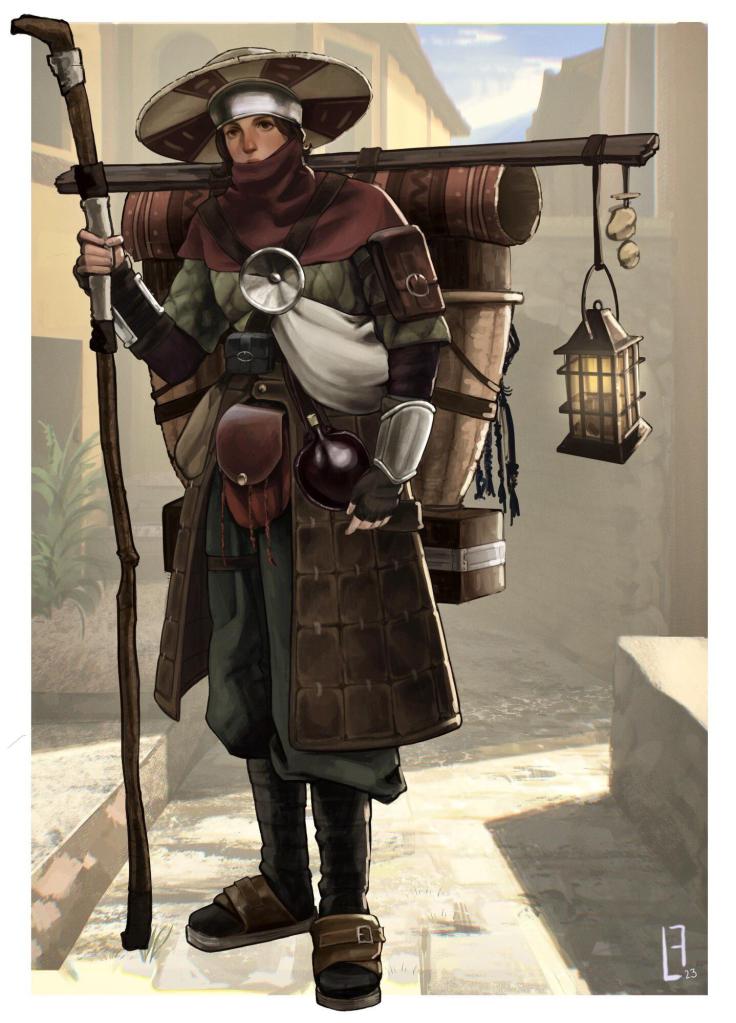
\page
Merchant
You have spent your life among traders, merchants, and the mercantile exchange of goods. Whether you grew up as child of settled merchants in a bazaar, or as a nomad amidst a caravan roaming the lands, or took it up as a way to become rich despite your birth – you’ve become attached to the profession.
Skill Proficiencies: Choose two from among Deception, Insight, Persuasion, and Sleight of Hand.
Tool Proficiencies: Your choice of one from Calligrapher’s supplies, Cartographer’s tools, or Navigator’s Tools.
Languages: Two of your choice
Equipment: A bottle of black ink, a quill, a mostly empty ledger with strange markings, a map case containing an old map of nearby trading routes, a set of common clothes or traveler’s clothes, and a leather pouch with 10 gp.
Feature: Art of the Haggle
When you trade or sell items of any kind, mundane or magical, you always gain at least 75% of the worth of that item in equal value items or currency. If you have access to a reliable trade, whether that be a marketplace or individual client, you can maintain a comfortable lifestyle while working as a merchant, and house yourself and up to ten other people as long as they work with you in some capacity.
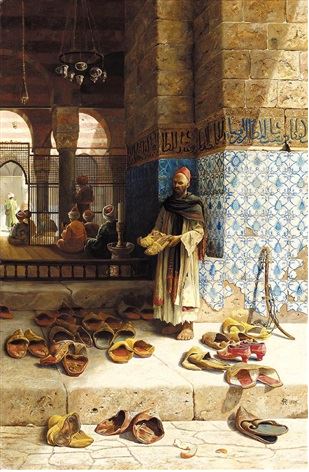
Unfortunate Bargain
Every merchant has one, the time a deal went sideways, or promise was too good to be true, or the instance they were double-crossed or in too deep. No matter the circumstances, your cupidity got the better of you and still haunts you. You can roll on the following table to determine this unfortunate bargain or choose one that best fits your character.
| d6 | Unfortunate Bargain |
|---|---|
| 1 | Fiendish Fortunes. You were dealing for a devil, whether you knew or not, you didn’t care. You’ve fallen out of their favor and you’ve been on the run ever since. |
| 2 | Trading Espionage. In the feud between two mercantile syndicates, you were sent as an agent to discover trade secrets. After your side triumphed, you’ve felt like you can never truly trust anyone. |
| 3 | Lost Wealth. Legend speaks of a lost fortune owned by your ancestor, you’ve gone to great lengths to get any information about it. |
| 4 | Switched Sides. Fellow smugglers gave you up to the local authority, you ratted out your accomplices and decided to work against dishonorable criminals. |
| 5 | Out of Time. A mysterious figure asked you to hold on to a strange package. You waited years for their return, successfully returning the items. Aged, you find out that not even a week has passed. |
| 6 | Forbidden Love. You made a deal with a powerful noble to ship their partner’s dowry to them, and fell in love with them when they accompanied you. |
Suggested Characteristics
Often merchants will value profit over anything else, having a strong work ethics, but a rare few value honesty or reputation. One could be a part of a larger organization, or might run a small trading post of their own.
| d8 | Personality Trait |
|---|---|
| 1 | I dislike bargaining; state your price and mean it. |
| 2 | I often crack jokes to lighten the mood. |
| 3 | I plan for every contingency. Leave nothing to chance! |
| 4 | I could sell snake oil to a yuan-ti. |
| 5 | I’m always trying to turn any situation into a sale. |
| 6 | I’m always thinking of the next opportunity, my face planted in books and scrolls planning out my schedule. |
| 7 | I treat everyone with kindness, and even though I love gold, I won’t cheat a client. |
| 8 | I’m always appraising the worth of things in my head, including my friends and foes. |
Backgrounds: Merchant
\page
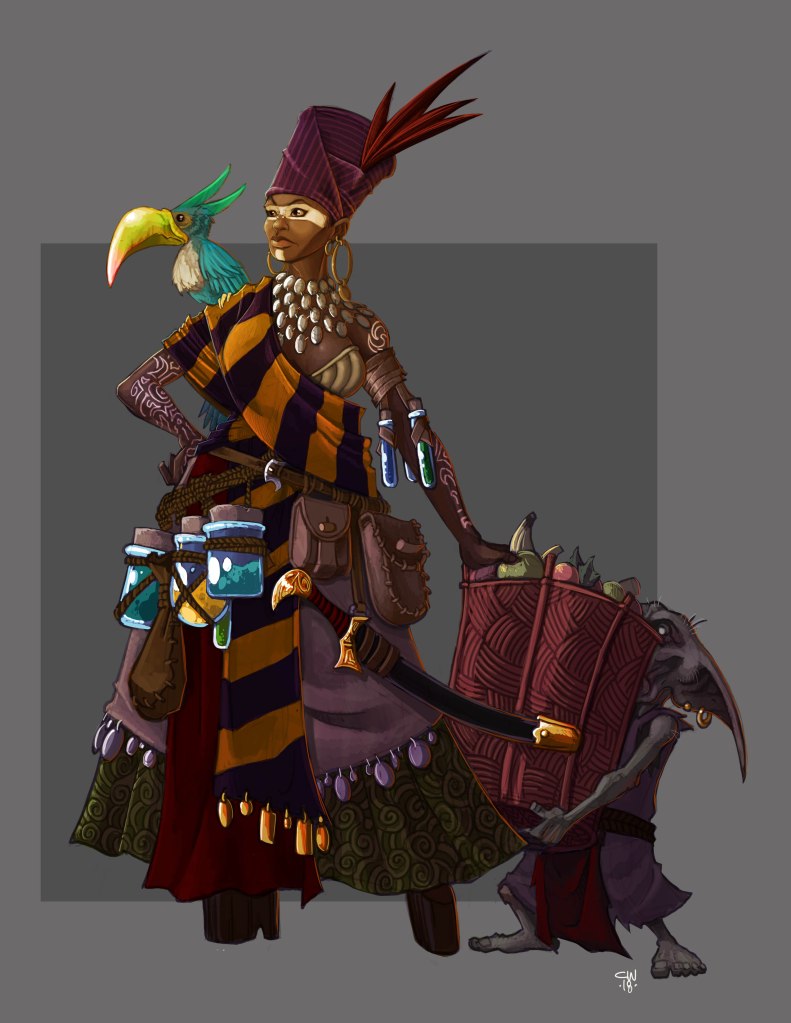
\page
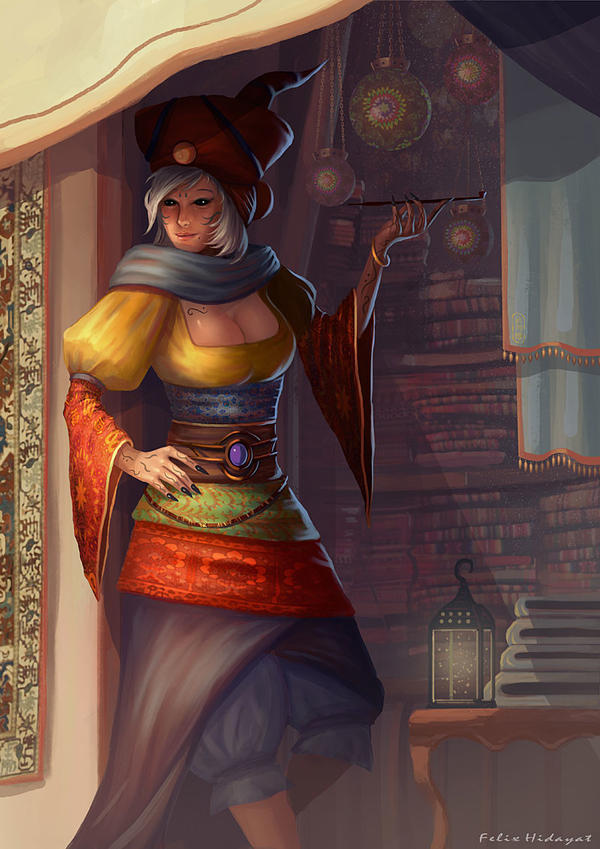
| d6 | Ideal |
|---|---|
| 1 | Fortune. I dream of accruing a vast fortune for myself, greater than anything anyone has ever seen. (Any) |
| 2 | Profit. I’d do anything, I’d even sell my soul, to make some coin. (Evil) |
| 3 | Community. My business is done in favor of those around me, all I wish to make is a good home. (Good) |
| 4 | Adventure. Trading helps me fund my goals of traveling the world, I don’t care how risky the journey is. (Chaotic) |
| 5 | Honor. Decorum in business is the utmost priority, clients respect and value style, quality, and structure. (Lawful) |
| 6 | Tradition. Your family has always been merchants, and you’re continuing the tradition. (Any) |
| d6 | Bond |
|---|---|
| 1 | War ravaged my homeland, I continue crafting my goods for sale to keep part of my home alive. |
| 2 | I always carry the first few coins I earned, for good luck. |
| 3 | My mentor died to save me, their fellow protégé and my best friend killed them. |
| 4 | A wealthy crimelord tricked me into massive amounts of debt I must repay. |
| 5 | The winds of fortune guide me, I’ll never let anything tie me down to one place. |
| 6 | I discovered an ancient artifact that leads to a lost city, if only I could understand how to glean its secrets. |
| d6 | Flaw |
|---|---|
| 1 | I can’t stand selfless generosity, and will be spiteful to anyone who is and the recipient of said generosity. |
| 2 | If something or someone loses value to me, I won’t hesitate to cut it or them off when convenient. |
| 3 | I value my pride and have trouble admitting my faults or when I’m wrong. |
| 4 | I’m unreasonable vengeful. I’ll never let someone disrespect me, I’ll always have the last laugh. |
| 5 | I think in terms of risk and reward, if the risk outweighs the reward – I’ll decline out of cowardice. |
| 6 | I’ll always take a trade too good to be true, cause I think I’ll always come out on top. |
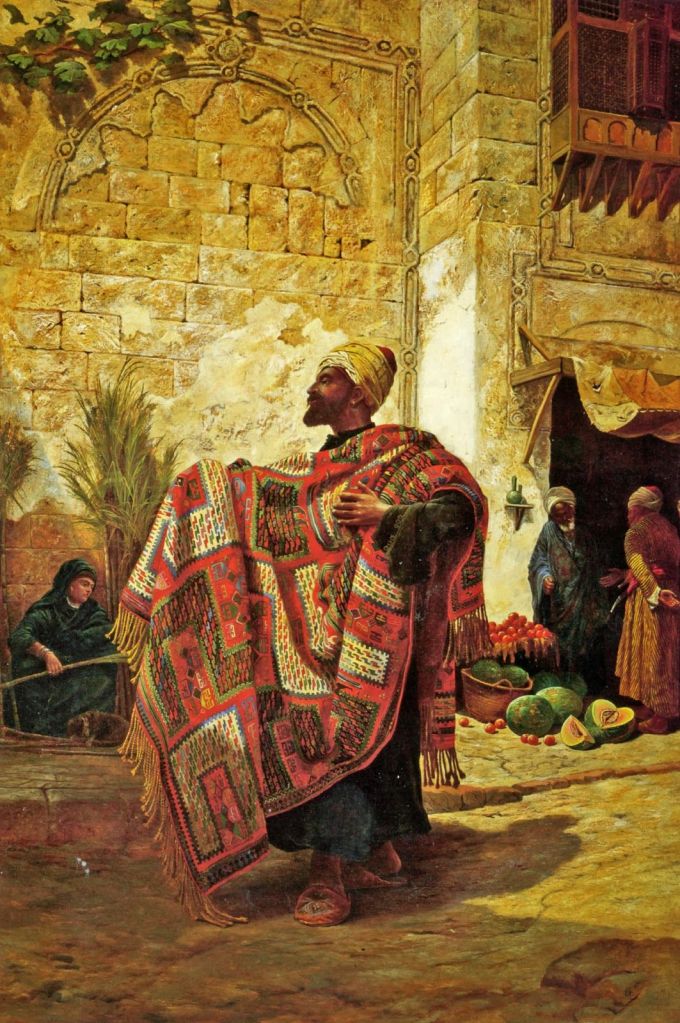
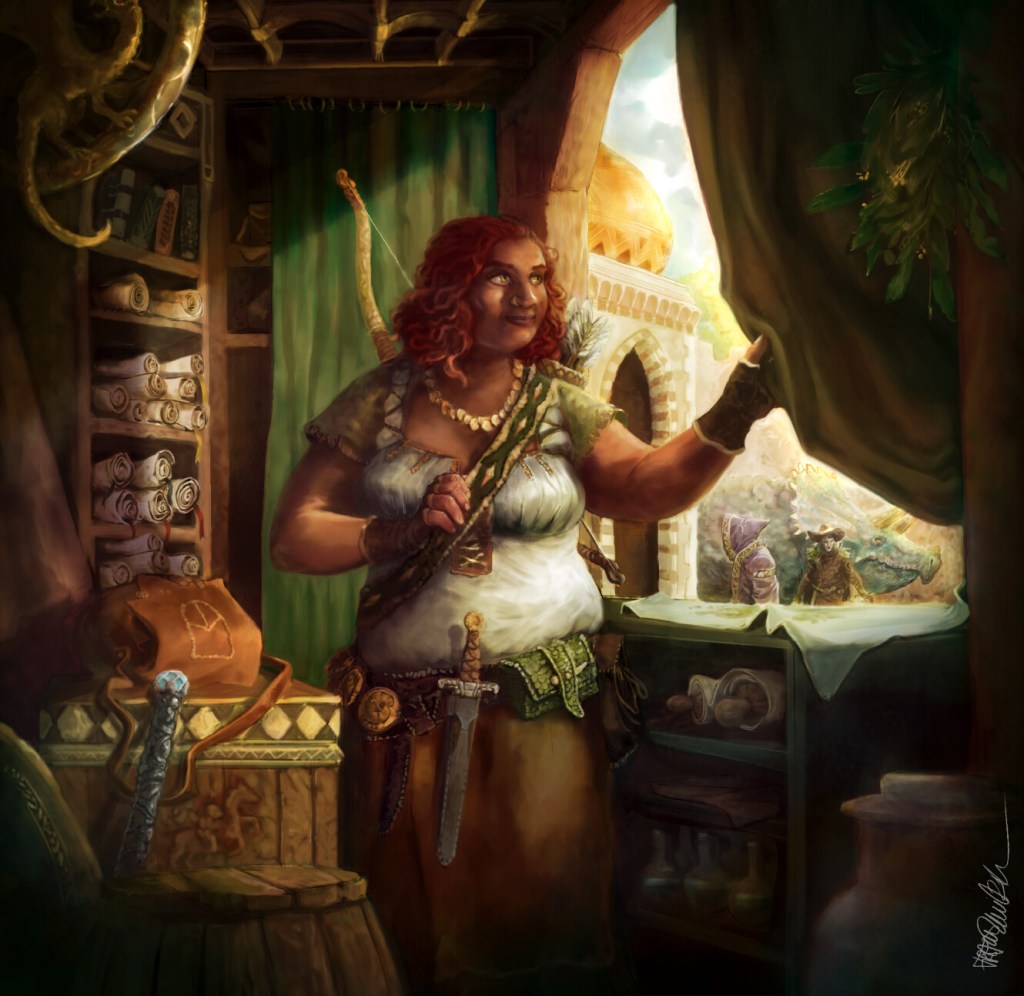
Backgrounds: Merchant
\page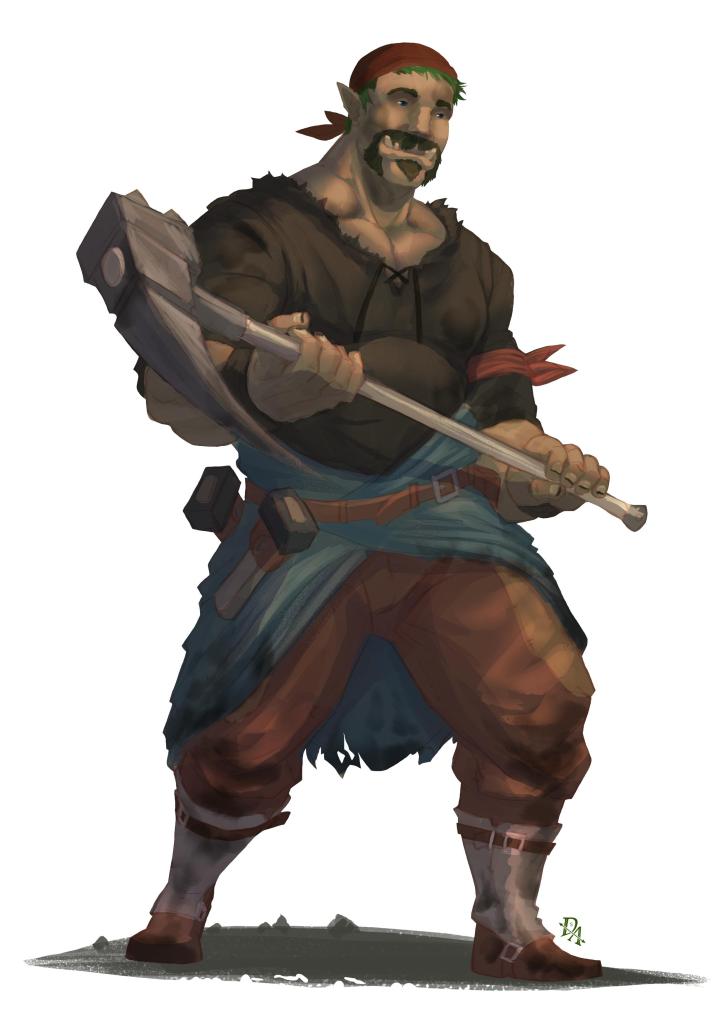
Miner
The life of a miner is both dirty and dangerous. The increasing need for copper and iron ores sends brave miners further and deeper than ever before. Siege warfare utilizes miners as sappers, undermining massive fortifications. Miners of gold and silver follow shimmering veins through twists and turns into the terrifying unknown.
You began as a helper, shoveling earth and stone into buckets and hauling it out of the tunnels. Eventually, when you were strong enough to heft a pickaxe, you joined the miners and learned how to make the stone surrender to your blows.
In time you gained an understanding of the underground environment. You learned the sounds and smells of mining dangers. You avoided gas pockets and cave-ins.
You managed to survive in an occupation where many others did not. And yet, you have little wealth to show for your labors.
Skill Proficiencies: Athletics, Survival
Tool Proficiencies: Miner’s tools
Languages: Choose one from Ada’amlu (Dwarven), Zilvertongue (Gnomish), or Undercommon
Equipment: Miner’s tools (see below), 50 feet of hemp rope, a backpack containing 10 days of rations, a bed roll, a mess kit, a tinderbox, and a waterskin. A belt pouch containing 7 gp.
Miner’s Tools:
This set of tools includes a shovel, pickaxe, hammer, two chisels, two horsehair brushes, six candles, and a helmet fitted with a reflector.
Feature: Subterranean Savvy
Years spent excavating underground passages has given you some uncanny insights. First, you gain a +5 bonus to checks made to retrace your route back out of underground passages. Second, you are able to determine your approximate depth underground and your distance from the entrance you used. The accuracy of this intuition is determined by a Wisdom (Survival) check.
| Wisdom (Survival) Check result | Subterranean Savvy Accuracy |
|---|---|
| 10 | 60% accurate |
| 15 | 80% accurate |
| 20 | 90% accurate |
| 25+ | 95% accurate |
Suggested Characteristics
| d8 | Personality Trait |
|---|---|
| 1 | I love to tell stories about my life, sometimes even true ones. |
| 2 | I like to guide those less experienced. |
| 3 | Nothing scares me but then nothing really excites me either. |
| 4 | I plan and plan and plan before taking action. |
| 5 | My pack has supplies for every situation. |
| 6 | I have big plans, big plans! |
| 7 | I’ll do my part, but don’t ever disrespect me. |
| 8 | Most worries can be solved with adequate ale. |
| d6 | Ideal |
|---|---|
| 1 | Loyalty. Those who descend with me into the depths are my brothers and sisters. (Good) |
| 2 | Courage. When faced with uncertainty, be the one to take the first swing. (Chaotic) |
| 3 | Peace. There are aways opportunities to avoid conflict if you look. (Good) |
| 4 | Death. The end of a life merely marks the beginning of an earned eternity. (Neutral) |
| 5 | Cleanliness. Avail oneself of opportunities to rid the body of dirt and pestilence. (Any) |
| 6 | Mettle. Devote oneself to completing assigned tasks regardless of circumstances. (Lawful) |
| d6 | Bond |
|---|---|
| 1 | I want to research a spell to make mining safer. |
| 2 | My brother fell into the Underdark and was lost. |
| 3 | I was conscripted into being a sapper but I fled. |
| 4 | A cave-in crushed my foot but I recovered. |
| 5 | My father and older brother both died in a mine when a gas pocket exploded. |
| 6 | I dream of discovering a vein of orichalcum ore. |
Backgrounds: Miner
\page
d6 Flaw
1 I cannot sit in full darkness without panicking.
2 I spend my coin as soon as it hits my hands.
3 People died in a mine because of my
carelessness. It doesn’t bother me.
4 My greed often exceeds my manners.
5 I never get rid of anything. My pack is
overflowing with useless possessions.
6 I have a hacking cough no priest can cure.
New Spell
The following utility spell is practical magic. It is
considered to be on the spell list of any spellcaster
who has Miner as their background. A trained miner
with Intelligence of at least 12 can cast this spell as a
ritual even if they have no spellcasting ability.
Precious Gleaming
Divination cantrip (ritual)
Casting Time: 1 action
Range: 15 feet
Components: V,S,M (a piece of pyrite)
Duration: 2 minutes
This spell induces halos of colored light around
various precious metals, visible only to the
caster. The color and intensity allow the caster to
identify the metal and also its purity.
When cast inside of a mine, the halo briefly
grants advantage to checks using miner’s tools.

Mu’şüri Traveler
You traveled the sands of the deserts as a youth, with the camel trains, as part of a sandship crew, or in a caravan.
Skill Proficiencies. Animal Handling, Survival
Tool Proficiencies. Navigator’s tools, Vehicles (land)
Equipment. A staff, a set of traveler’s clothes, waterskin, several small pouches of herbs and spices, and a belt pouch containing 10 gp.
Feature: Worldly
You know the local deserts, their cultures, and the customs of those people. You know where and when nomadic tribes typically pass through certain areas, which tribes claim which oasis at what time of year, and where food and water can likely be found (though no guarantee).
You also have one trade contact with a group or individual outside of your tribe. This contact may be friendly or barely tolerated, but trade between rival camps is a necessity for survival in the harsh environments.
You know when and where this contact will be at any time of year and can send messages to this contact even over great distances; you know the local messengers, caravan masters, and runners who can carry messages for you.
Suggested Characteristics
Mu’şüri tradesmen and caravanners travel among the great cities of the Vast, carrying dates, rare flowers, spices, salt, herbs, and other trade goods. Adventurers with this background are used to a range of cultures, languages, and laws and are typically a curious lot.
Wanderlust swings from one extreme to the other — you either become anxious and antsy staying in one town or city for more than a few weeks, or you have tired of life on the open road and long for a permanent home, friends, and family.
| d8 | Personality Trait |
|---|---|
| 1 | My powerful wanderlust has led me far from home. |
| 2 | I’m rude to people who lack my commitment to hard work and fair play. |
| 3 | I don’t part with my money easily and will haggle tirelessly to get the best deal possible. |
| 4 | I am utterly serene; panic won’t protect you from a sandstorm. |
| 5 | My friends know they can rely on me; teamwork is essential for survival in a caravan. |
| 6 | I never pass up a friendly wager. |
| 7 | Don’t let the truth get in the way of a good story. |
| 8 | I judge people by their actions, not their words. |
Backgrounds: Miner | Mu’şüri Traveler
\page
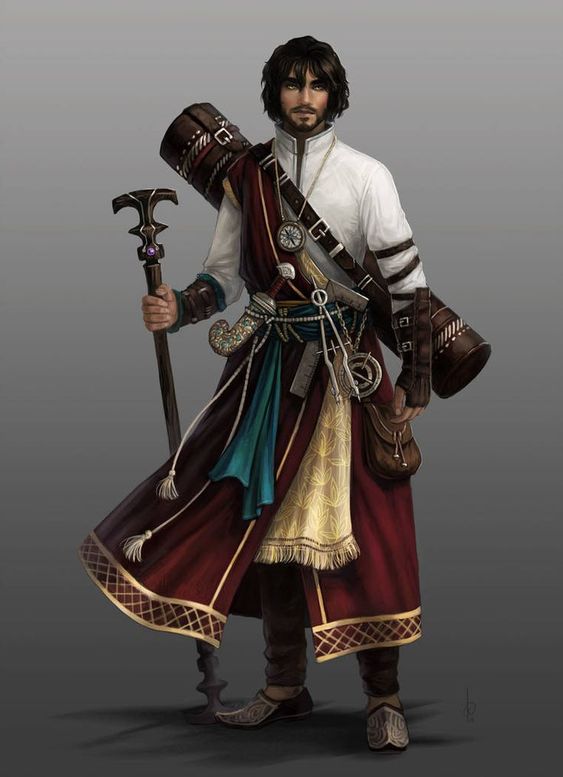
\page
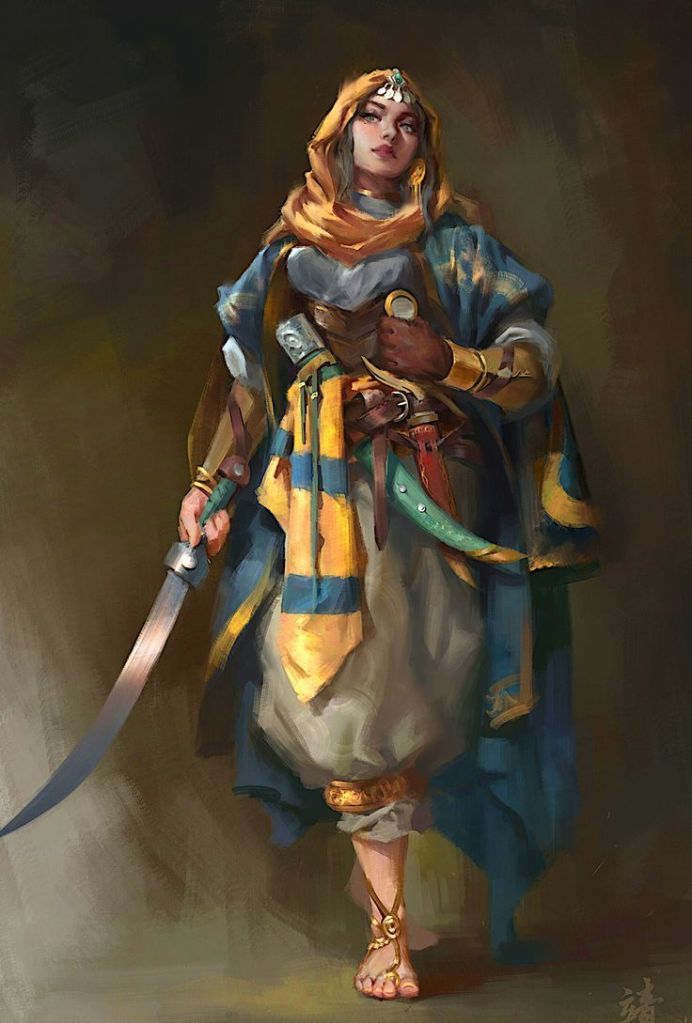
| d6 | Ideal |
|---|---|
| 1 | Freedom. Everyone should be free to travel and to pursue their own destiny. (Chaotic) |
| 2 | People. I’m committed to the people I care about, not to ideals. (Neutral) |
| 3 | Greed. I’m only in it for the money. (Evil) |
| 4 | Fairness. Order, teamwork, and fair treatment are the foundations of caravan survival. (Lawful) |
| 5 | Live and Let Live. Trade is trade; imposing your beliefs and traditions on others only leads to trouble. (Neutral) |
| 6 | Aspiration. Someday I will own my own caravan and be an example to traders everywhere. (Any) |
| d6 | Bond |
|---|---|
| 1 | Nothing is more important than the other members of my caravan. |
| 2 | I owe my life to the trader who raised me after my family died. |
| 3 | I long for the days when I can travel to my love’s home settlement. If only they had my love of the open road. |
| 4 | I was once cheated out of my fair share of profits and I’ll get what’s due me. |
| 5 | The caravan itself is the most important thing — masters, guards, and servants come and go. |
| 6 | I joined the caravans to avoid those who may still be hunting me. One day, I’ll be ready to confront them. |
| d6 | Flaw |
|---|---|
| 1 | Gossip shatters bonds built by action. I don’t talk, I do. |
| 2 | Life is lonely on the road. I have an insatiable desire for the pleasures of civilization. |
| 3 | I’ll do anything to get my hands on something rare or priceless. |
| 4 | No one can know I once stole from the caravan; betrayal on the road means death by eviction. |
| 5 | I have trouble keeping my thoughts to myself; my tongue often lands me in trouble. |
| 6 | I am suspicious of strangers and always think the worst of them. |
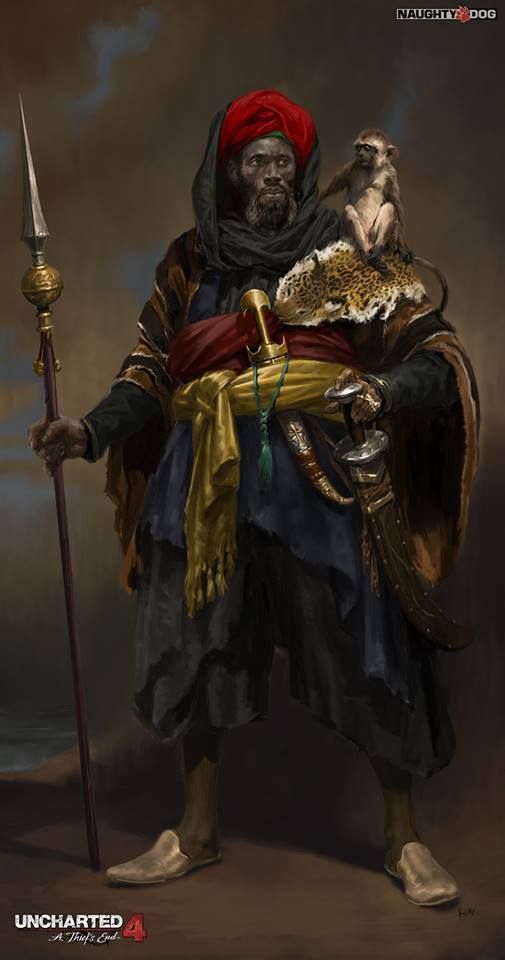
Backgrounds: Mu’şüri Traveler
\page
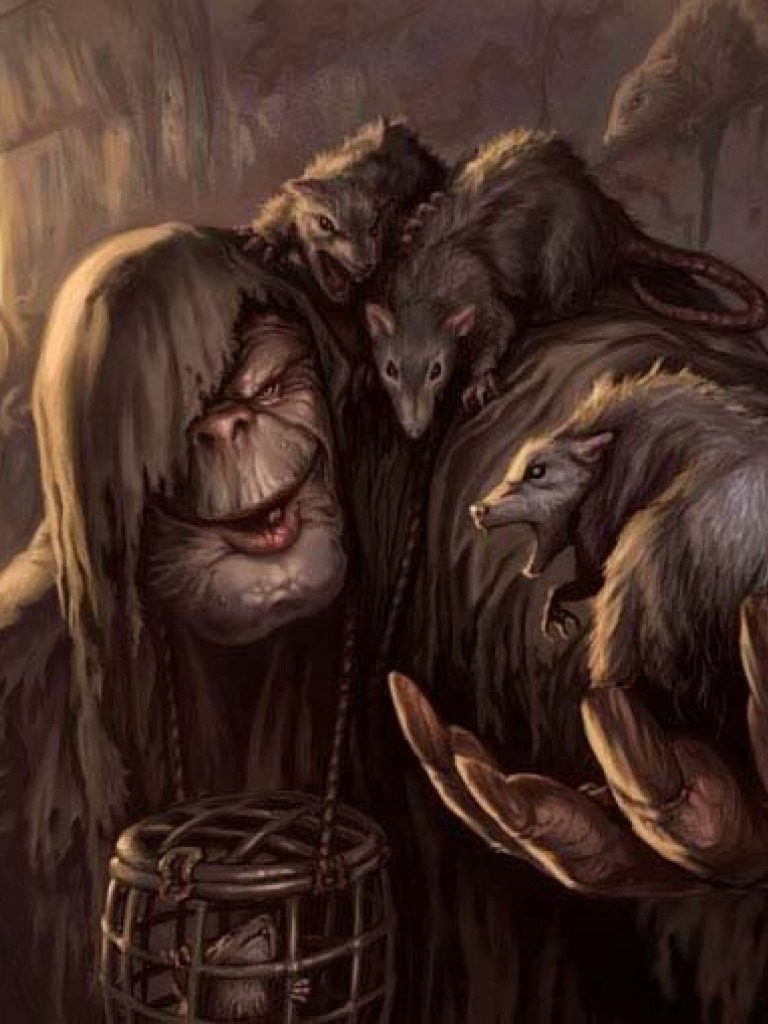
RATCATCHER
The dark places beneath the city are where you found your living. In the crevices and tunnels where the rats find comfort, you found opportunity.
Rats carry diseases that can cripple a city and the local government paid you a copper for each dead rat you brought them. It was dirty and dangerous work.
Your clothes got so filthy, they could never come clean again. Your skin was covered in scratches, bites, and rashes. Yet somehow, you survived.
You used your resourcefulness to kill and capture as many rats as you could and, in the process, you picked up some very useful skills.
Skill Proficiencies: Investigation, Survival
Tool Proficiencies: Poisoner’s kit, musical
instrument
Equipment: Poisoner’s kit, ratcatcher’s tools (includes small traps and other tools of the trade), a musical instrument, a backpack containing 10 days of rations, a mess kit, a tinderbox, and a waterskin. A belt pouch containing 7 gp, 2 sp, and 12 cp.
Feature: Acquired Tolerance
You have been exposed to many poisons and illnesses and survived them all.
As a result, you have advantage on Constitution saving throws against magical and non-magical diseases, gases, poisons and toxins.
Suggested Characteristics
| d8 | Personality Trait |
|---|---|
| 1 | When I’m not playing my instrument, I usually whistle a tune. |
| 2 | Sometimes I stare at people for too long without saying anything, which makes them uncomfortable. |
| 3 | People think a ratcatcher can’t read. I read more than anyone. |
| 4 | I know my place. Don’t tell me otherwise. |
| 5 | I’m a religious person who prays often. |
| 6 | I’m unimpressed by the gods and their priests. |
| 7 | You can keep your fancy words. I use the words that get the job done even if it makes me sound low-class. |
| 8 | I’m very self-deprecating. I don’t take myself too seriously. |
| d6 | Ideal |
|---|---|
| 1 | Merciful. Extra effort should be taken to kill without causing suffering. (Good) |
| 2 | Optimistic. The darkness is only temporary. (Good) |
| 3 | Thorough. Take care of the whole problem now and it won’t come back to haunt you later. (Any) |
| 4 | Absurdity. After what I’ve been through, I can’t take anything too seriously anymore. (Chaotic) |
| 5 | Patient. Don’t count your rats until you deliver them to the magistrate. (Lawful) |
| 6 | Tolerant. I can tolerate any circumstances for as long as I need. All things end. (Any) |
| d6 | Bond |
|---|---|
| 1 | In one of those dark places I lost a family heirloom but was too scared to go back for it. |
| 2 | My home city is where I will build my house. |
| 3 | I owe my life to another ratcatcher who taught me how to survive. |
| 4 | I developed an affinity for rodents and will always have one by my side as a pet. |
| 5 | Don’t ask me about my time in the tunnels. I don’t talk about my time in the tunnels. |
| 6 | I’m proud to have been a ratcatcher and one day I’ll form a ratcatcher’s guild. |
| d6 | Flaw |
|---|---|
| 1 | I’m not above taking shortcuts. |
| 2 | I have no patience for wimps and cowards. |
| 3 | Ratcatching has left me claustrophobic and afraid of the dark. |
| 4 | I’m ashamed of having been a ratcatcher and would do anything to keep it a secret. |
| 5 | I get joy from making my victims squeal with pain. |
| 6 | I’m not good at sharing. When there are treasures to be had, I hurry to collect them for myself. |
Backgrounds: Ratcatcher
\page

SAVANT
Sometimes insensitively referred to as ‘village idiots’, there seems to always be some special soul who is a rung below the common person on the intellectual or social ladder. They might be teased by their peers but ultimately they are loved by their communities. Despite their relatively small contributions, they are valued nonetheless. Amongst such ‘idiots’. however, there exist some really rare gems, like you. You are actually a savant. You may lack proficiency in some things but in one particular area, you are truly exceptional. This one thing is your obsession and your joy. You are immensely talented at this one, narrow discipline.
| d6 | Reason for your prowess |
|---|---|
| 1 | Born this way |
| 2 | Kicked in the head by a mule |
| 3 | Dropped as a baby |
| 4 | Suffered a severe fever as a child |
| 5 | Mother suffered a terrible disease prior to my birth. |
| 6 | No one will tell me the reason. |
Saving Throw Proficiencies: None
Skill Proficiencies: None
Tool Proficiencies: None
Languages: Two of your choice
Equipment: A backpack containing 10 days of rations, a bed roll, a mess kit, a tinderbox, and a waterskin. A belt pouch containing 20 gp.
Feature: Savant’s Advantage
You gain proficiency in one skill or tool set. In addition, whenever you use this proficiency you have advantage. If given disadvantage by the DM, the two cancel out and you roll normally.
Choose your talent from the following table or roll randomly.
| d20 | Proficiency | Starting equipment |
|---|---|---|
| 1 | Animal Handling | Groomer’s tools |
| 2 | Arcana | Book of arcanum |
| 3 | Blacksmithing | Smith’s tools |
| 4 | Calligraphy | Calligrapher’s supplies |
| 5 | Cartography | Cartographer’s tools |
| 6 | Cooking | Cook’s utensils |
| 7 | Forgery | Forger’s kit |
| 8 | Gaming Set (Choose one) | Chosen gaming set |
| 9 | History | Book of history |
| 10 | Investigation | Pencil and paper |
| 11 | Leather working | Leatherworker’s tools |
| 12 | Medicine | Healer’s kit |
| 13 | Musical instrument (choose one) | Chosen musical instrument |
| 14 | Nature | Book about nature |
| 15 | Navigation | Navigator’s tools |
| 16 | Painting | Painter’s supplies |
| 17 | Pottery | Potter’s tools |
| 18 | Religion | Book of religions |
| 19 | Sculpture | Sculptor’s tools |
| 20 | Woodcarving | Woodcarver’s tools |
Suggested Characeristics
| d8 | Personality Trait |
|---|---|
| 1 | I live in the moment, never dwelling on the past or worrying about the future. |
| 2 | I don’t judge other people by race, status, wealth, or beauty. Everyone is equal to me. |
| 3 | I have an excellent memory. |
| 4 | I always speak clearly and without embellishment or emotional emphasis. |
| 5 | I never look anyone in the eyes when speaking to them. |
| 6 | I don’t understand sarcasm and I don’t use it. |
| 7 | I find connections and patterns in complexity. |
| 8 | Everyone is my friend or at least a potential friend. |
| d6 | Ideal |
|---|---|
| 1 | Forgiveness. To forgive another person is to give oneself the gift of peace. (Good) |
| 2 | Humility. Always put others before yourself. (Good) |
| 3 | Cleanliness. Wash everything after every use, twice. (Any) |
| 4 | Faith. Place trust in the gods for they are the rulers of the world. (Any) |
| 5 | Order. Everything has a home where it belongs and is happiest. (Lawful) |
| 6 | Silence. Peace and quiet are the greatest sources of joy. (Any) |
| d6 | Bond |
|---|---|
| 1 | My parents gave up trying to understand me. |
| 2 | My older sister raised me and I hate to be apart from her. |
| 3 | There is an expert who shares my specialty and he hates me for my talent. |
| 4 | I fear that monsters are just misunderstood. |
| 5 | I fall in love with whoever gives me attention. |
| 6 | The guild for my specialty won’t accept me. |
Backgrounds: Savant
\page
| d6 | Flaw |
|---|---|
| 1 | I bang my head against things when I am frustrated. |
| 2 | When people touch my stuff I go into a rage. |
| 3 | I always tell the truth and am incapable of deception. |
| 4 | I don’t understand social status and sometimes address people I shouldn’t. |
| 5 | I talk about my interests incessantly and drive my friends crazy. |
| 6 | I don’t understand idioms or metaphors. |
SCOUNDREL
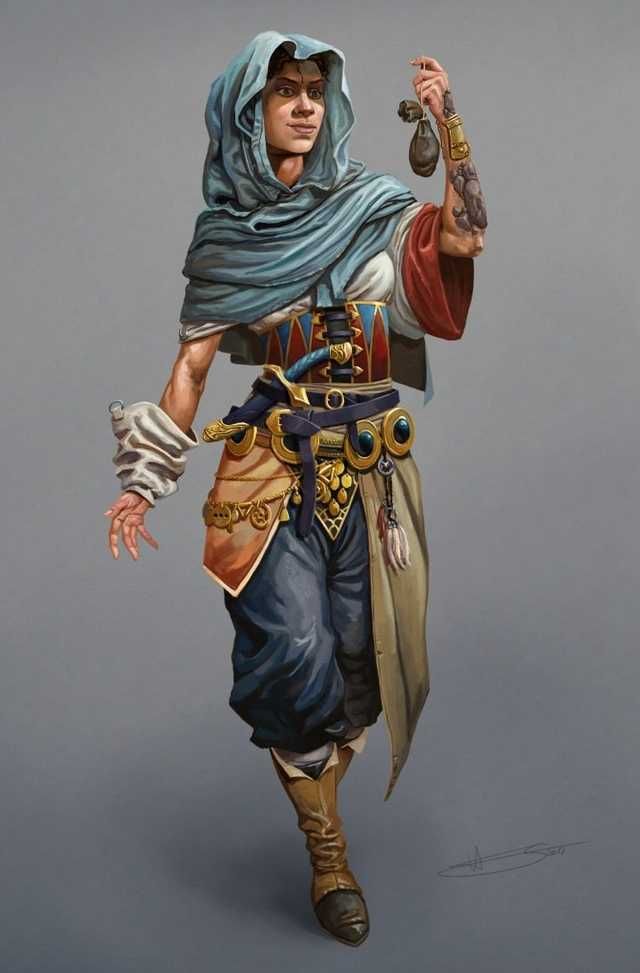
You were brought up in a poor neighborhood in one of the crowded towns or cities of the Vast. You may have been lucky enough to have a leaky roof over your head, or perhaps you grew up sleeping in doorways or on the rooftops. Either way, you didn’t have it easy, and you lived by your wits. While never a hardened criminal, you fell in with the wrong crowd, or you ended up in trouble for stealing food from an orange cart or clean clothes from a washing line. You’re no stranger to the city watch in your hometown and have outwitted or outrun them many times.
Skill Proficiencies. Athletics, Sleight of Hand
Tool Proficiencies. One type of gaming set, thieves’ tools
Equipment. A bag of 1,000 ball bearings, a pet monkey wearing a tiny fez, a set of common clothes, and a pouch containing 10 gp.
Feature: Urban Explorer
You are familiar with the layout and rhythms of towns and cities. When you arrive in a new city, you can quickly locate places to stay, where to buy good quality gear, and other facilities.
You can shake off pursuers when you are being chased through the streets or across the rooftops. You have a knack for leading pursuers into a crowded market filled with stalls piled high with breakable merchandise, or down a narrow alley just as a dung cart is coming in the other direction.
When you make a d20 roll for a Chase Complication (see DMG), you can choose to do so with a −5 penalty, making it more likely for the participant behind you to run into a complication.
Suggested Characteristics
Despite their poor upbringing, scoundrels tend to live a charmed life—never far from trouble, but usually coming out on top. Many are thrill‑seekers who delight in taunting their opponents before making a flashy and daring escape. Most are generally good‑hearted, but some are self‑centered to the point of arrogance. Quieter, introverted types and the lawfully‑inclined can find them very annoying.
| d8 | Personality Trait |
|---|---|
| 1 | Flashing a big smile often gets me out of trouble. |
| 2 | If I can just keep them talking, it will give me time to escape. |
| 3 | I get fidgety if I have to sit still for more than ten minutes or so. |
| 4 | Whatever I do, I try to do it with style and panache. |
| 5 | I don’t hold back when there’s free food and drink on offer. |
| 6 | Nothing gets me more annoyed than being ignored. |
| 7 | I always sit with my back to the wall and my eyes on the exits. |
| 8 | Why walk down the street when you can run across the rooftops? |

Backgrounds: Savant | Scoundrel
\page

\page
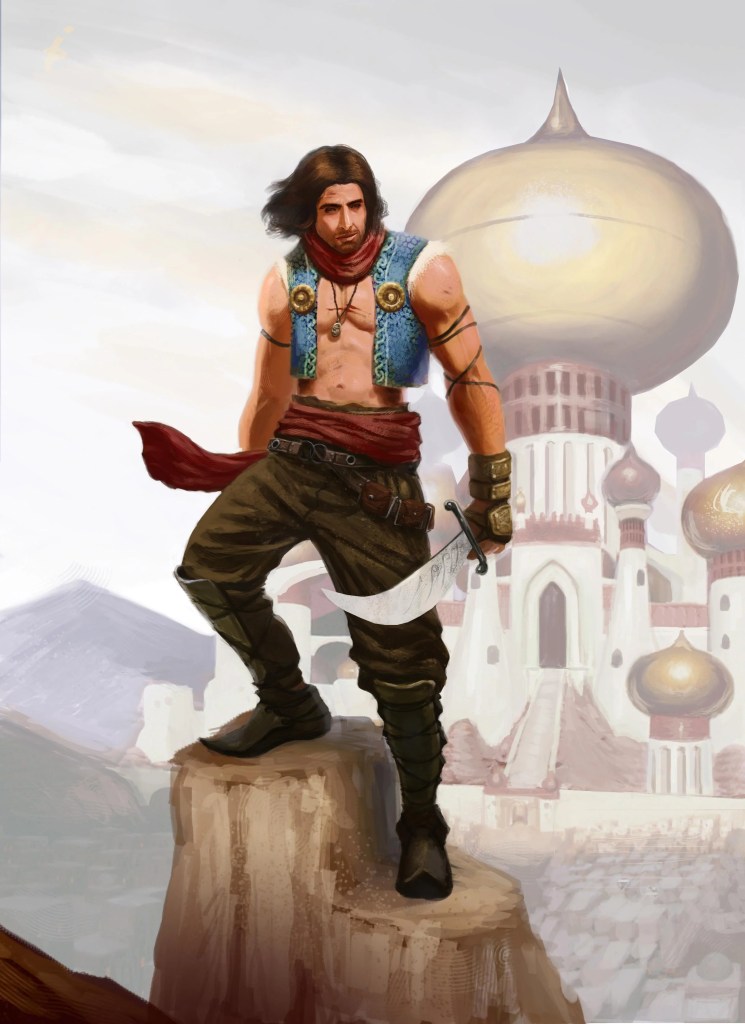
| d6 | Ideal |
|---|---|
| 1 | Freedom. Ropes and chains are made to be broken. Locks are made to be picked. Doors are meant to be opened. (Chaotic) |
| 2 | Community. We need to look out for one another and keep everyone safe. (Lawful) |
| 3 | Charity. I share my wealth with those who need it the most. (Good) |
| 4 | Friendship. My friends matter more to me than lofty ideals. (Neutral) |
| 5 | Aspiration. One day my wondrous deeds will be known from Khopresh to Inkido. (Any) |
| 6 | Greed. I’ll stop at nothing to get what I want. (Evil) |
| d6 | Bond |
|---|---|
| 1 | My elder sibling taught me how to find a safe hiding place in the city. This saved my life at least once. |
| 2 | I stole money from someone who couldn’t afford to lose it and now they’re destitute. One day I’ll make it up to them. |
| 3 | The street kids in my hometown are my true family. |
| 4 | My mother gave me an old brass lamp. I polish it every night before going to sleep. |
| 5 | When I was young, I was too scared to leap from the tallest tower in my hometown onto the hay cart beneath. I’ll try again some day. |
| 6 | A city guardsman let me go when he should have arrested me for stealing. I am forever in their debt. |
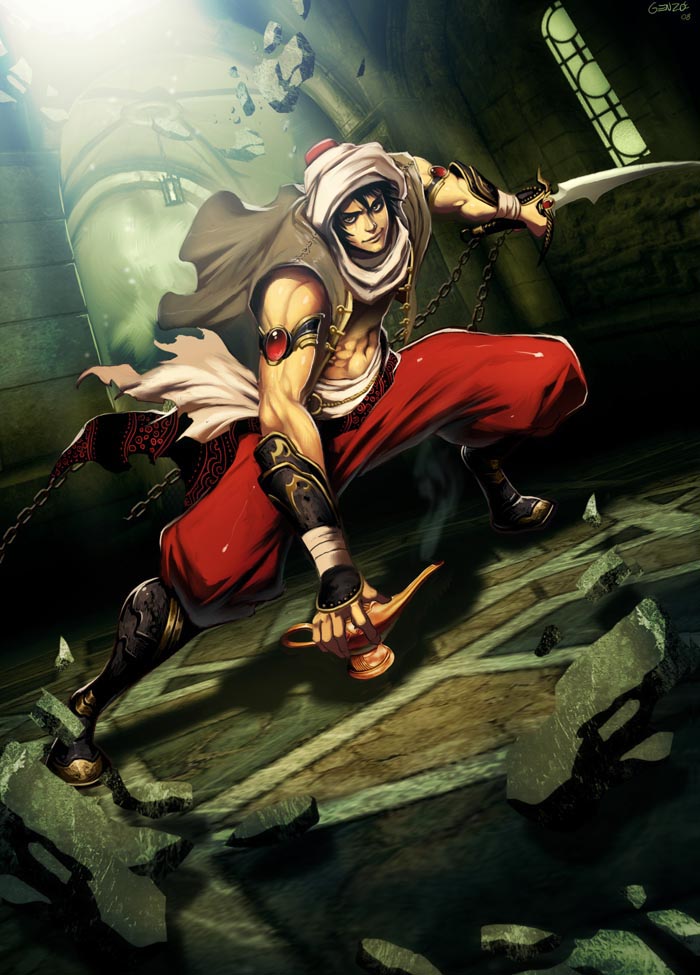
| d6 | Flaw |
|---|---|
| 1 | If there’s a lever to pull, I’ll pull it. |
| 2 | It’s not stealing if nobody realizes it’s gone. |
| 3 | If I don’t like the odds, I’m out of there. |
| 4 | I often don’t know when to shut up. |
| 5 | I swiped a pipe from a priest of Erhu. Now I think the god has cursed me. |
| 6 | I grow angry when someone else steals the limelight. |

Backgrounds: Scoundrel
\page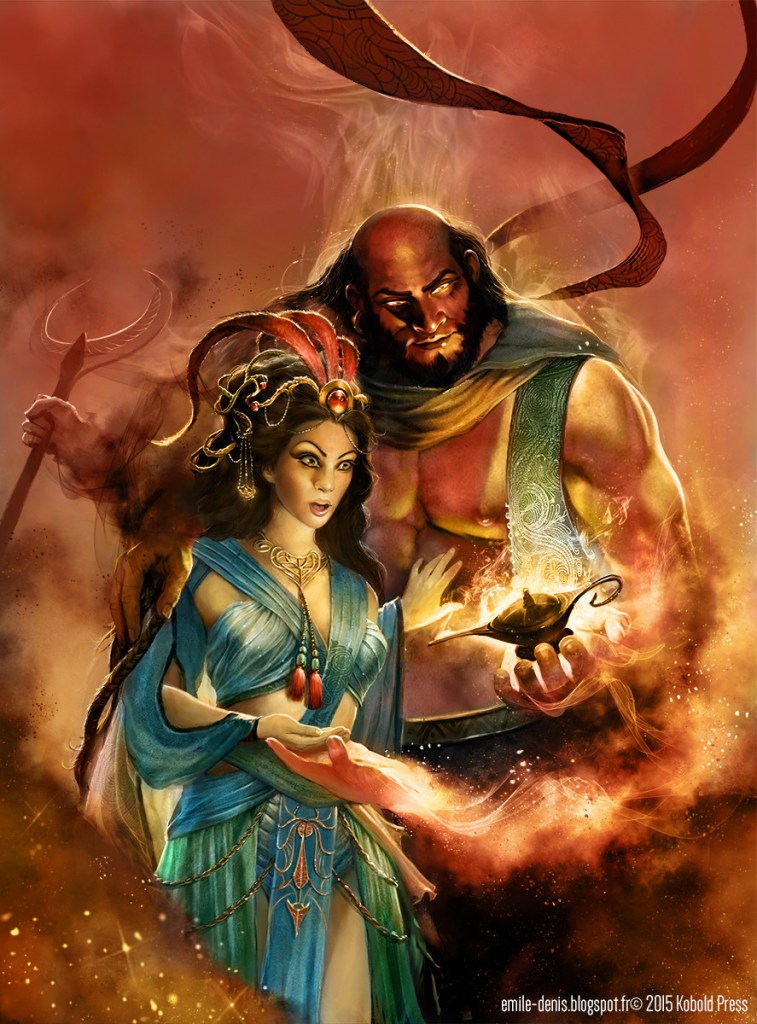
SERVANT OF THE JINN
You served in the court of a powerful jinn or a genie lord. For 1,001 days you lived at court on one of the elemental
planes, traveling as part of their entourage and always at their beck and call. You might be an ezen, in which case it was most likely your tribe’s patron jinn that called on you to serve, or you could be a hara nomad, or even a dholf or Kyrósian. Whatever your heritage, you served your master as best you could and were changed forever by the otherworldly experience.
Skill Proficiencies: Insight and one other skill determined by your role (see below)
Tool Proficiencies: One type of tools, determined by your role (see below)
Languages: Choose one from Aquan, Auran, Ignan or Terran, depending on your master’s elemental plane
Equipment: A set of tools or a musical instrument (one of your choice), a scroll of commendation from your former master, a set of fine clothes, a small brass lamp, and a pouch containing 10 gp.
Role
During your time at court, you performed a specific role. Roll 1d8 or choose from the options in the table below to determine your responsibilities and the skill and tool proficiencies you learned while carrying them out.
| d8 | Role | Skill | Tools |
|---|---|---|---|
| 1 | Advisor | History | Cartographer’s tools |
| 2 | Artist | Perception | Painter’s supplies |
| 3 | Chef | Intimidation | Cook’s utensils |
| 4 | Dancer | Performance | Disguise kit |
| 5 | Guard | Athletics | Gaming set (any one) |
| 6 | Falconer or Kennel Master | Animal Handling | Leatherworker’s tools |
| 7 | Master Musician | Performance | Musical instrument (any one) |
| 8 | Steward | Persuasion | Brewer’s supplies |
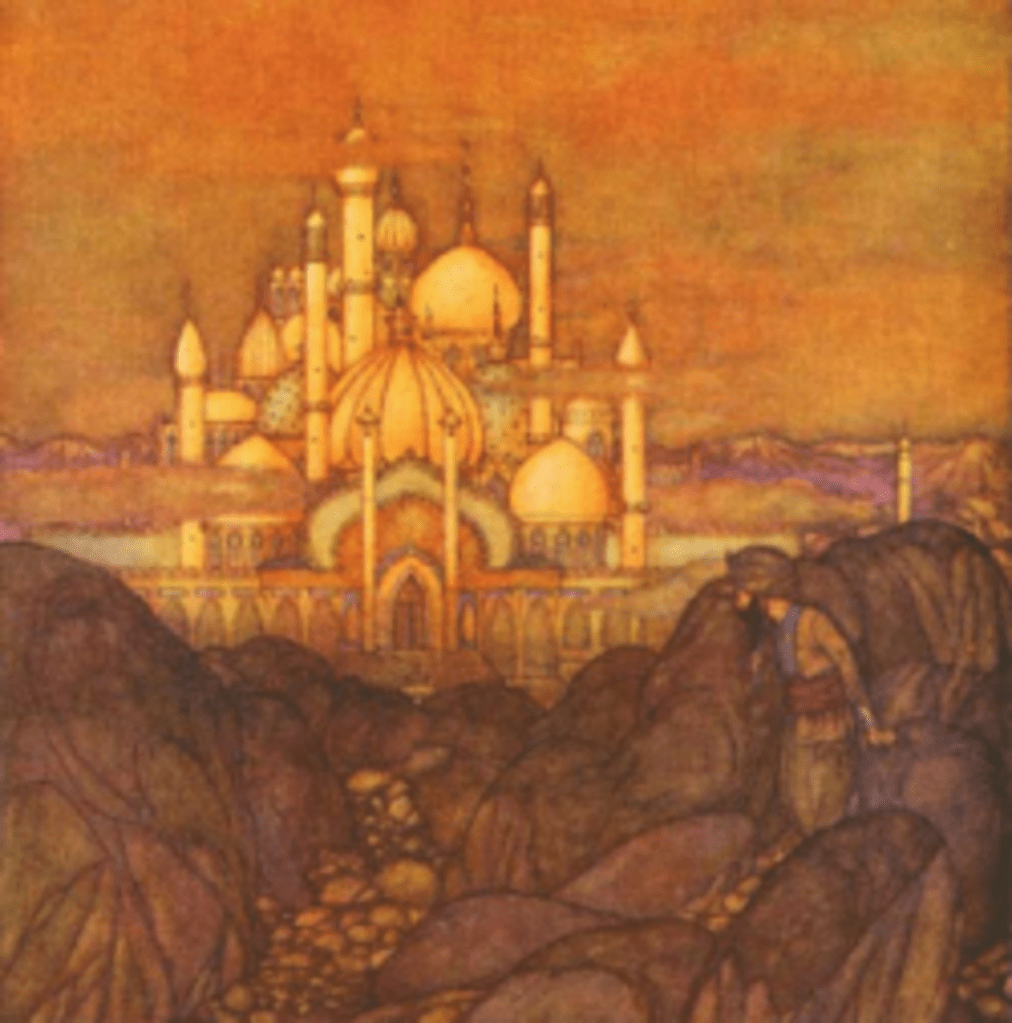
Feature: Marked by the Jinn
Spending so long in the presence of the jinn or noble genies has left its mark on you. This mark isn’t noticeable to most creatures, but genies and elementals sense that you have spent time at the courts of the jinn and are favorably disposed toward you when you first interact with them. Your affinity for jinn and geniekind also makes it easier for you to identify their influence on the world. You have advantage on Intelligence checks or saving throws to recognize items and magic created by genies and to see through their illusions and trickery.
Suggested Characteristics
The wonders witnessed by the servants of the jinn often shape their outlook on life once they return to their homes
on the Prime Material Plane. Time spent on the elemental planes can create powerful bonds or lead to unusual quirks.
Backgrounds: Servant of the Jinn
\page
| d8 | Personality Trait |
|---|---|
| 1 | I always bow deeply to show respect to those in authority. |
| 2 | I miss the hustle and bustle and splendor of the court. |
| 3 | You hear a lot of strange things when you’re standing on guard outside the seraglio. |
| 4 | Cutting corners just creates more corners. Do it properly or don’t do it all. |
| 5 | I worked for three days with only an hour’s sleep to make sure my master’s party was the most sensational ever thrown. I’d do it all over again in a heartbeat. |
| 6 | You can get away with a lot if you flash a winning smile while you do it. |
| 7 | Life was much easier when I had someone constantly telling me what to do. |
| 8 | Be careful what you wish for, particularly when an efreeti is the one granting the wish. |
| d6 | Ideal |
|---|---|
| 1 | Professionalism. I take pride in my appearance and how I conduct myself in public. (Lawful) |
| 2 | Freedom. Never again will I serve another. From now on, I answer to no one. (Chaotic) |
| 3 | Respect. All people, regardless of their station in life, deserve respect. (Good) |
| 4 | Greed. I will stop at nothing to have my own wondrous palace floating high above the clouds. (Evil) |
| 5 | Fellowship. The bonds formed between comrades when you serve together under a cruel and demanding master will never be broken. (Any) |
| 6 | Duty. It is our duty to work diligently to make something of our lives. (Neutral) |
| d6 | Bond |
|---|---|
| 1 | One day I will return to the City of Brass and bring my favorite hell hound home. |
| 2 | I will treasure the copper hookah my master gave me for my dedicated service until the day I die. |
| 3 | I yearn to look once more upon the glowing gemstones that light the tunnels through the Plane of Earth to the magnificent palace of the jinn. |
| 4 | I tasted the fruit served by Sultan Hajani the Benevolent at the Oasis of Figs once and will never forget it. |
| 5 | Although it is hard to be this far away from them, everything I do is for my family back home. |
| 6 | My true love still serves the jinn at the Court of Many‑Hued Exquisite Corals. I’m determined to find a way to free them from service so we can be together. |
| d6 | Flaw |
|---|---|
| 1 | I obey those in authority without thinking. |
| 2 | 1,001 days of service has made me an expert shirker. |
| 3 | I picked up expensive tastes in food, drink, and clothes at court and am never satisfied. |
| 4 | I am incredibly indiscreet and can’t be trusted with a secret. |
| 5 | Rich people don’t notice if a few of their things go missing. |
| 6 | Life is very dull if you don’t roll the dice. |
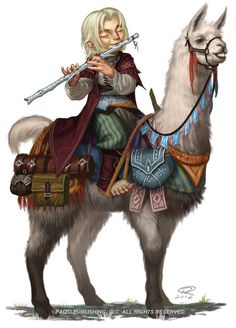
Shepherd
To maintain a large flock, the sheep (or goats, or camels, or llamas or alpacas) must be able to move from pasture to pasture. This requires a protector and guide to monitor the sheep. The duties of shepherds are to keep their flocks intact, protect them from predators, and guide them to market areas in time for shearing. Shepherds also commonly milk their sheep, and make cheese from this milk.
You would have been brought up in a shepherding family, traveling with the flock and learning the trade from a very young age. The days were long and generally peaceful. This left an abundance of time to dream about grand and heroic adventures. Now is the time to leave the sheep behind and see if the grass is truly greener on the other side.
Skill Proficiencies: Animal Handling, Nature, Survival
Tool Proficiencies: Musical instrument (chooseone)
Equipment: Sling, pouch of 20 sling stones, a shepherd’s crook, a musical instrument you are proficient with, a backpack containing 10 days of rations, a bed roll, a mess kit, a tinderbox, and a waterskin. A belt pouch containing 10 gp.
Backgrounds: Servant of the Jinn | Shepherd
\page

Feature: Keenslinger
You have spent countless hours slinging stones since you were very young. Your devastating accuracy causes painful wounds.
When using a sling, your sling bullets deal 1d6 bludgeoning damage instead of the usual 1d4 bludgeoning damage.
You have a keen eye for good ammunition. While traveling, you casually pick up 1d6 stones per day that are well-shaped for slinging. When actively hunting for stones, each hour you can roll Intelligence (Investigation) and pick up a number of excellent stones equal to your check result.
Suggested Characteristics
| d8 | Personality Trait |
|---|---|
| 1 | I find pleasure in the simplest of things. |
| 2 | I’m not a big thinker. I’m a narrowly focused thinker. |
| 3 | I’m kind to all living things. |
| 4 | I’m always cheerful and energetic, sometimes overly so. |
| 5 | I keep my thoughts and feelings to myself. |
| 6 | I have grand dreams and grand ideas. |
| 7 | I’m used to being in charge and having everyone else follow my lead. |
| 8 | I make quick decisions and stick with them. |
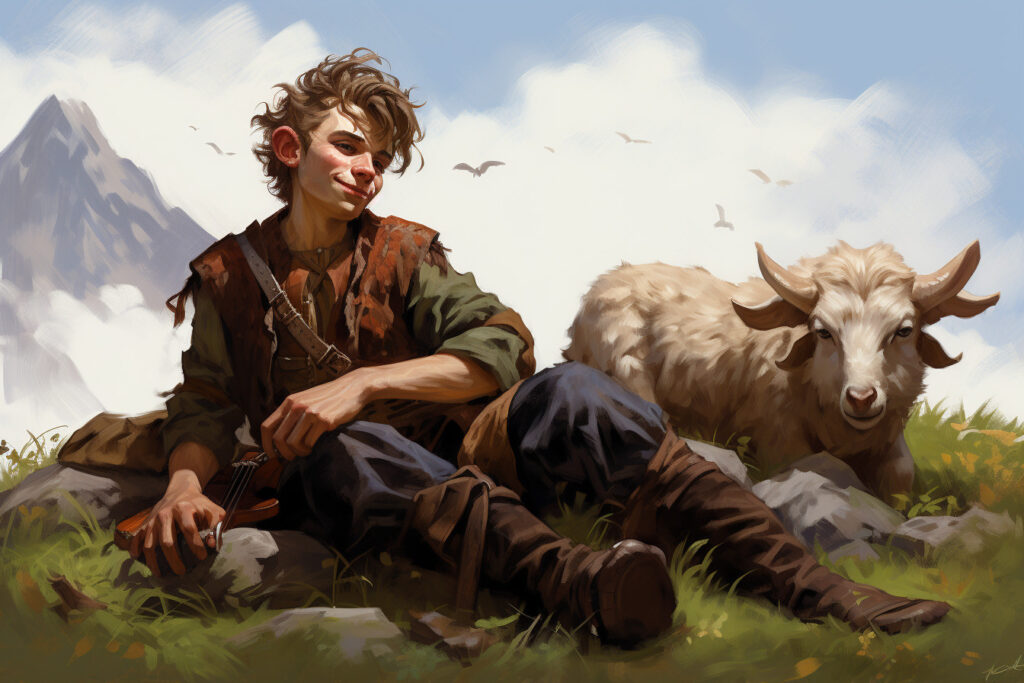
| d6 | Ideal |
|---|---|
| 1 | Honesty. The truth is an exuberant lamb but a lie is easy to chase down. (Lawful) |
| 2 | Perseverance. Keep tabs on all your sheep, even when the fog settles in. (Any) |
| 3 | Orderliness. Keep your tools clean, dry, and in their proper place. (Lawful) |
| 4 | Assertiveness. The ewes won’t heed a meek caller. (Any) |
| 5 | Understanding. Your flock will tell you their woes using the language of sorrow. (Good) |
| 6 | Strategy. Get to know the land before you plan your journey. (Neutral) |
| d6 | Bond |
|---|---|
| 1 | Someday I’ll have my own flocks and they will span the horizon. |
| 2 | My brother inherited all my family’s flocks. |
| 3 | My family’s flocks were decimated by zel’eni (goblins). |
| 4 | My sweetheart is waiting for me to return from adventuring with money to start a good life. |
| 5 | After a god spared our village from monsters I took an oath to serve that god. |
| 6 | I was wrongly accused of poaching on a lord’s land. |
| d6 | Flaw |
|---|---|
| 1 | I have a bad habit of embellishing the truth. |
| 2 | I’m easily distracted and lose track of time. |
| 3 | I’m always sneaking away for naps. |
| 4 | I tend to grab things that don’t belong to me. |
| 5 | I let romantic interests cloud my judgment. |
| 6 | I’m not big on bathing which is why I stink so bad. |
New Spell
The following utility spell is practical magic. It is considered to be on the spell list of any spellcaster who has Shepherd as their background.
Goodshear
Transmutation cantrip
Casting Time: 1 minute
Range: Touch
Components: V,S,M (a wicker hoop)
Duration: Instantaneous
The hardest part of this spell is to get the sheep to stand inside the wicker hoop for the whole minute of casting time. The wool all falls off the sheep, leaving her with a perfect springtime coat.

Backgrounds: Shepherd
\page

\page
Stunner
You have been called many things in your life; heart-breaker, beauty, vision, looker, and so on. From birth, your life has been defined by your extraordinary good looks. You have always been the pretty one. Not the smart one or the talented one, but always the pretty one. Regardless of your skills and talents, everyone leaves your presence thinking about your looks above all else. Your beauty has served you well so far. It made you a favorite among your family, peers, and clan. It has meant that you were protected from chores that were dangerous or dirty. Your looks have garnered you the promise of good marriage prospects without any regard for your skills or abilities.
Saving Throw Proficiencies: Charisma
Skill Proficiencies: Deception, Persuasion
Equipment: Fine clothes, fine leather satchel containing five days rations, three Trinkets given to you by admirers trying to win your attention (rolled randomly on the Trinkets table on pages 160-161 of the Player’s Handbook.). A belt pouch with 5 gold and 20 silver
| d6 | Your best feature |
|---|---|
| 1 | Eyes |
| 2 | Facial structure |
| 3 | Hair |
| 4 | Figure/Physique |
| 5 | Skin |
| 6 | Smile |
Feature: Inescapable Favour
Your extraordinary good looks cause people to regard you differently. People make many positive assumptions about you. They assume you are a good leader and, when given a choice, will promote you to leadership positions. They remember you as being smarter, wittier, and even taller than you really are.
A Charisma (Persuasion) check of 10 will cause free drinks and food to be sent your way. This benefit never extends to your less attractive friends.
Invitations to social gatherings are quick to clutter your doorstep. Upon arrival, the most favourable seating arrangements are made for you. Unfortunately, your looks also garner less wanted attention. Endless flirtation by people above and below your station becomes exhausting. Attempts to bribe you into bed make you feel more like a product than a person.
Lastly, true love is hard to find when everyone thinks they love you at first sight.
Suggested Characteristics
| d8 | Personality Trait |
|---|---|
| 1 | Because I have been treated nicely my whole life, I always treat others nicely. |
| 2 | I’m a very earthy person. I prefer being out in nature instead of living in a city. |
| 3 | Fine living and special treatment have spoiled me. I can’t stand sleeping in a tent. |
| 4 | I’m more than just a pretty face. I have, like, thoughts and stuff. |
| 5 | Looks be damned! I’m good at what I do and I expect recognition for it! |
| 6 | I am organized and meticulous. I plan in advance and am always prepared. |
| 7 | I don’t like when people get angry with each other and always help make peace. |
| 8 | I’m a huge risk taker and have the scars to prove it. |
| d6 | Ideal |
|---|---|
| 1 | Temperance. Maintaining sober judgment is vital when everyone is trying to manipulate you. (Lawful) |
| 2 | Dominance. Those who have the greatest gifts should have the greatest power. (Evil) |
| 3 | Gratitude. Other people have more difficult challenges than I and I am thankful for my lighter burden. (Good) |
| 4 | Restraint. It is better to say nothing than to say something hurtful. (Good) |
| 5 | Liberty. Never let anyone control you. (Chaotic) |
| 6 | Beauty. In the heart of all creatures lies true appreciation for natural beauty. (Neutral) |

Backgrounds: Stunner
\page
\page
| d6 | Bond |
|---|---|
| 1 | I was promised in marriage to a wealthy family, but I escaped, for now. |
| 2 | Love may be impossible, so I will marry for wealth and position. |
| 3 | I have taken a holy oath of chastity, to preserve my purity until I am married. |
| 4 | My beauty was a gift from a witch. My mother said the witch will collect on that favor one day. |
| 5 | A romantic partner proposed marriage to me and, instead of answering, I fled. |
| 6 | My dream is to have a warm home with many children running around. |
| d6 | Flaw |
|---|---|
| 1 | I’m used to being the best looking person around and react badly when that’s challenged. |
| 2 | I always get my way. That’s just life. |
| 3 | When I see myself in the mirror, I am just as entranced by myself as everyone else is. |
| 4 | Sometimes I believe the flattery that people heap upon me and I become arrogant. |
| 5 | Since people always want to do things for me, I have grown into a lazy person. |
| 6 | I find myself being rude to ugly people. |
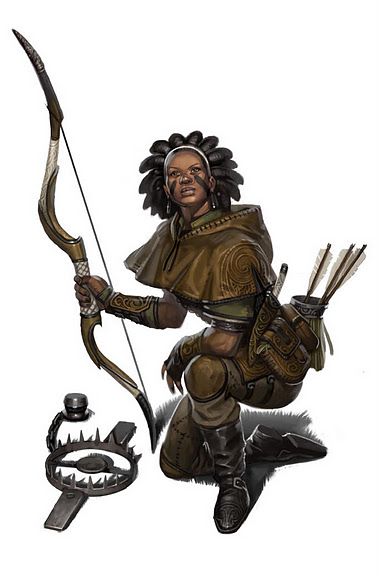
\column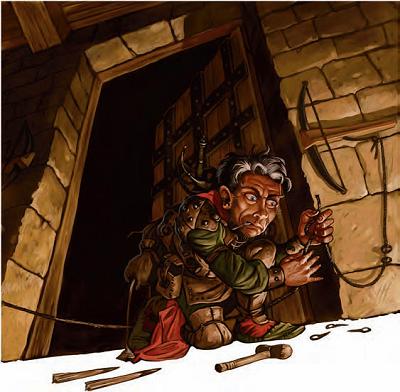
Trapmaker
Trapmakers are an elite group of craftsmen whose skills and techniques are closely guarded secrets. From ancient times, these highly sought after artisans have protected tombs, temples, and palaces with their ingenious contraptions. Designs are passed down from parent to child along with the oaths needed to preserve the family’s precious knowledge. You were raised by one of those few families who specialize in trap making. From an early age you were taught about tools, materials, counterweights, poisons, trickery, and death. As part of team, you helped craft traps for wealthy merchants, powerful lords, and maniacal spellcasters. Why you would leave such a prosperous life is anyone’s guess.
Skill Proficiencies: Investigation
Tool Proficiencies: Trapmaker’s tools (see below), stone mason’s tools, carpenter’s tools, poisoner’s kit
Equipment: Trapmaker’s tools (see below), stone mason’s tools, carpenter’s tools, poisoner’s kit, a backpack with 10 days of rations, a bed roll, a mess kit, a tinderbox, and a waterskin. A belt pouch
containing 6 gp and 10 sp.
Trapmaker’s Tools:
This heavy set of tools includes a long pry bar, an assortment of wrenches, a box of springs, hammer, chisel, metal files, a spool of braided steel wire, pliers, tweezers, a wood clamp, and a tin of axle grease.
Feature: Trap Expert
You can use trapmaker’s tools to build, disarm, and re-set mechanical traps. Trapmaker’s tools cannot be used to open locks. Building a trap requires skills, time, and materials. Only the DM can determine how long a trap will take to build and if the needed materials are at
Backgrounds: Stunner | Trapmaker
\page
hand. Checks may need to be made using stone mason’s tools, carpenter’s tools, or even smith’s tools.
Once all the building is complete, you roll your first check with your trapmaker’s tools.
If the result of your check is 12 or higher, the trap will work.
If not, the trap will require 1d6 hours of additional work before a new check can be attempted.
Once the first check is successful, a second check is made to determine how difficult the trap is to notice.
The result of that check equals the DC to spot the trap, or DC 10, whichever is higher.
Resetting a trap that has been triggered, assuming it can be reset, requires a DC 10 check with trapmaker’s tools.
Failing the check means the trap cannot be reset.
Traps containing poisons also require a check with a poisoner’s kit.
Any part of the trap making process can be completed by another person with the relevant proficiencies.
\column
Suggested Characteristics
| d8 | Personality Trait |
|---|---|
| 1 | I don’t trust the rich. They’re all back-stabbers. |
| 2 | I follow instructions exactly as they’re given to me. |
| 3 | I’m not crazy. I’m the only sane person in a crazy world. |
| 4 | Excuse me if my confidence makes you feel inadequate. |
| 5 | I enjoy learning about other cultures. |
| 6 | When I’m working on something I block out everything else. |
| 7 | I like to think ahead and have contingency plans for just about everything. |
| 8 | I can get very emotional when things don’t go according to plan. |
| d6 | Ideal |
|---|---|
| 1 | Secrecy. The best knowledge must be kept hidden from the world. (Lawful) |
| 2 | Craftsmanship Take pride in your work. (Any) |
| 3 | Creativity. New and unexpected innovations drive the artisan spirit. (Chaotic) |
| 4 | History. One cannot appreciate the present without the context of the past. (Any) |
| 5 | Brutality. Death should be delivered with pain and humiliation. (Evil) |
| 6 | Honor. One’s reputation must be defended and nurtured. (Lawful) |
| d6 | Bond |
|---|---|
| 1 | I want to make a name for myself as the greatest trapmaker ever. |
| 2 | We always traveled from project to project. I want a place to finally call home. |
| 3 | My father lost his foot when one of my traps misfired. |
| 4 | An evil necromancer has offered me work whenever I’m ready. |
| 5 | A prominent thieves guild has stolen my family’s trap designs. I need to get them back. |
| 6 | I want to learn how to incorporate magic into my mechanical traps. |
| d6 | Flaw |
|---|---|
| 1 | I suffer from a crippling fear of tight spaces. |
| 2 | I hold no allegiances except to my craft and to my coin purse. |
| 3 | I take pity on everyone in need and give up the shirt off my back if it helps. |
| 4 | I don’t know what I’m doing. Everyone’s going to realize what a fraud I am. |
| 5 | I often lose track of time and fail to show up where I am expected. |
| 6 | I consistently underestimate the cleverness and ingenuity of rogues. |
Backgrounds: Trapmaker
\page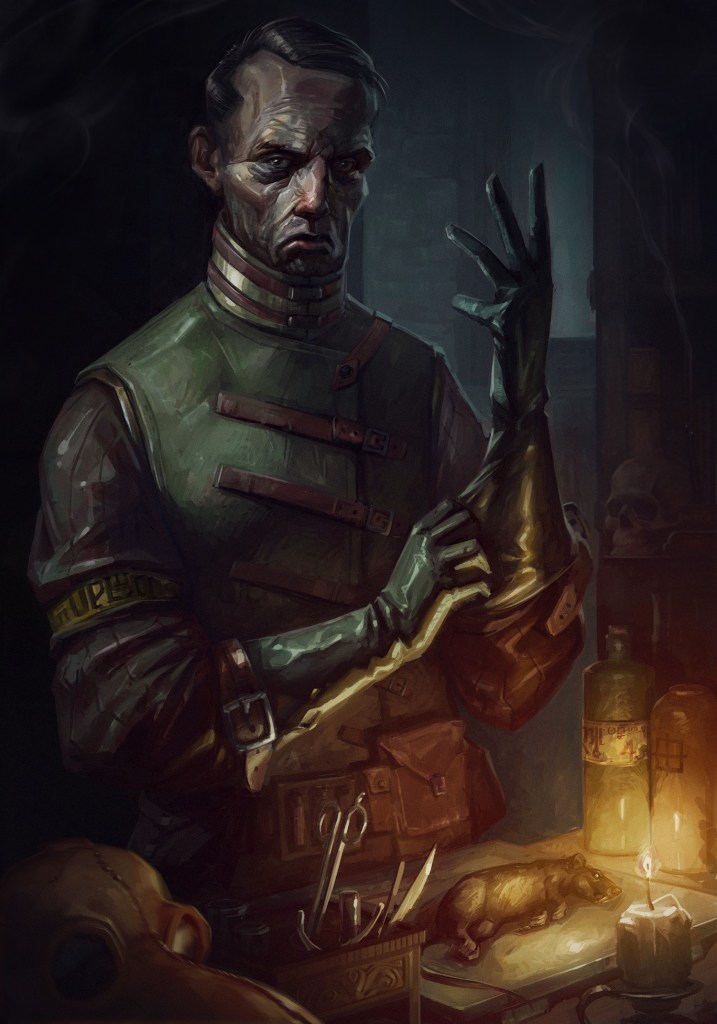
\page
Undertaker (Thanatologist)
You have spent your life in service of preparing, interring and protecting the dead. You tend to the dead, preparing corpses in a manner in keeping with your craft and preferred by the family of the deceased.
The handling of the dead is taboo in many societies, so the undertaker’s role is to do what others would not- many find themselves shunned by common folk. Though undertakers may be ridiculed and ignored, they are a necessary part of their communities.
Usually due to this line of work, those in your profession tend to be haunted by something so terrible that they dare not speak of it. You’ve tried to bury it or run away from your own, to no avail. Whatever this thing is that haunts you can’t be slain with a sword or banished with a spell. It might come to you as a shadow on the wall, a bloodcurdling nightmare, a memory that refuses to die, or a demonic whisper in the dark. The burden has taken its toll, isolating you further from most people and making you question your sanity at times. You must find a way to overcome it before it destroys you.
Skill Proficiencies: Choose four from among Arcana, Investigation, Religion, Medicine, Insight, Nature or Persuasion
Tool Proficiencies: Undertakers Tools and one more from among Painter’s Supplies, Carpenter’s Tools, Disguise Kit
Equipment: A hammer, a shovel, a set of common clothes, an Undertakers Tools, a scroll case in which you carry your medical notes taken from your studies, and a belt pouch containing 15 gp.
Undertaker’s Tools
This kit allows you to add your proficiency bonus to Wisdom (Medicine) or Intelligence (Investigation) skill checks made when examining the dead body, preserving it, dress-up, and present the dead for funerary services.
Undertaker’s Tools includes the following items: A holy Symbol, holy water, tinderbox, scalpel set, needle and thread, bone saw, vials of formaldehyde, incense & burner, small book or burial rites all pouch.
Harrowing Event
Prior to becoming an adventurer, your path in life was defined by one dark moment, one fateful decision, or one tragedy. Now you feel a darkness threatening to consume you, and you fear there may be no hope of escape.
Choose a harrowing event that haunts you, or roll one on the Harrowing Events table.
| d10 | Harrowing Event |
|---|---|
| 1 | A monster that slaughtered dozens of innocent people spared your life, and you don’t know why. |
| 2 | You were born under a dark star. You can feel it watching you, coldly and distantly. Sometimes it beckons you in the dead of night. |
| 3 | An apparition that has haunted your family for generations now haunts you. You don’t know what it wants, and it won’t leave you alone. |
| 4 | Your family has a history of practicing the dark arts. You dabbled once and felt something horrible clutch at your soul, whereupon you fled in terror. |
| 5 | An oni took your sibling one cold, dark night, and you were unable to stop it. |
| 6 | You were cursed with lycanthropy and later cured. You are now haunted by the innocents you slaughtered. |
| 7 | A hag kidnapped and raised you. You escaped, but the hag still has a magical hold over you and fills your mind with evil thoughts. |
| 8 | You opened an eldritch tome and saw things unfit for a sane mind. You burned the book, but its words and images are burned into your psyche. |
| 9 | A fiend possessed you as a child. You were locked away but escaped. The fiend is still inside you, but now you try to keep it bottled up. |
| 10 | You did terrible things to avenge the murder of someone you loved. You became a monster, and it haunts your waking dreams. |
Backgrounds: Undertaker / Thanatologist
\page
Feature: Burial Rites
You are familiar with the religious rites, funerary services, and corpse treatments of most societies.
Your experience often results in you having unquestioned access to unsavory places, such as crime scenes and morgues, and your presence in a cemetery or graveyard, or a church or temple attached to such, will not be questioned, so long as your actions or behavior are respectful. In some cases, your medical and anatomical expertise may be called upon to determine the cause and time of death.
Alternate Feature: Corpse Preparation
As an undertaker, you’ve become familiar with humanoid anatomy. People who are aware of your talents tend to be wary of you.
Despite this, work is rarely scarce. Higher end families are more than willing to pay top dollar to make sure their family is taken care of, even after death. Should a murder victim turn up, the crown might be persuaded to give you a few coins for your help in attempting to identify the body.
Additionally, other undertakers might be willing to give you a free room in return for your help with the embalming progress.
Alternate Feature: Mourning Affinity
You have a connection with those who are in mourning. Those family & friends, or others who have had a loved one pass, or even those who have found a body, will feel comfortable in your presence. They can sense you understand what they are going through.
You can talk people in this situation regardless of if they are homeless or nobles. These people will all act as though you are a friend unless you have acted against them and they know it.

Suggested Characteristics
Just like people, undertakers motivation and demeanor can vary wildly. They can be the calm serene type that loves to help the bereaved with planning the funeral, or they can have an unnatural fascination with death and be socially awkward
| d8 | Personality Trait |
|---|---|
| 1 | This is a vile existence that I have been cursed into! |
| 2 | I am horribly awkward in social situations. |
| 3 | I often get lost in my work because it enthralls me so! |
| 4 | The dead are the only people I really like. |
| 5 | What some call morbid, I call a good day’s work. |
| 6 | I’ve seen what death does to a person. A gloom hangs over me. |
| 7 | I enjoy the unease and discomfort others feel around me. That’s true power! |
| 8 | I respect life and death. Both are beautiful in their own way. |
Backgrounds: Undertaker / Thanatologist
\page
| d6 | Ideal |
|---|---|
| 1 | Kind. I take pride in helping a grieving family lay their loved one to rest in a respectful manner. (Good) |
| 2 | Manipulate. The body is a grand cathedral and I enjoy nothing more than exploring and manipulating it. (Evil) |
| 3 | Honor. Caring for those that have passed on is a sacred honor. (Lawful) |
| 4 | Due. It’s not pretty or glamorous but somebody has to do it. (Any) |
| 5 | Trust. The dead are the only people you can count on. (Neutral) |
| 6 | Peace. Death is just a new beginning and I help the deceased take the next step. (Good) |
| d6 | Bond |
|---|---|
| 1 | The graveyard I’ve worked in most of my life is very special to me – it’s very comforting. |
| 2 | I try to stay friendly to every family I’ve led funerals for. |
| 3 | My shovel is my greatest companion. |
| 4 | I pray to my god every night to help my clients find peace. |
| 5 | The local executioner is my best friend. |
| 6 | I’ve already dug my own grave back home. I hope to enter it later than sooner. |
| d6 | Flaw |
|---|---|
| 1 | My profession makes people uncomfortable around me. |
| 2 | The ways I’ve seen people die have made me superstitious about the strangest things. |
| 3 | My sense of humor can be described as depression, demoralizing, or just depraved. |
| 4 | I’ve woken up in empty graves that I’ve dug myself, and I’m not sure why. |
| 5 | I’m haunted by the time I saw a person I buried dig themselves out of their grave. |
| 6 | My sense of fashion is about on par with those that I bury. |
Watchman
The city guard or city watch is a law
enforcement body composed of reliable men and
women. The watchmen serve an authoritative
governing body such as a guild, city council, a
noble family, a magistrate, or a church. It is not
uncommon for there to be two or more city guard
branches working in different uniforms and
serving different authorities.
| d6 | Authority you served under |
|---|---|
| 1 | Guild council |
| 2 | City council |
| 3 | Noble family |
| 4 | Magistrate |
| 5 | Church or holy order |
| 6 | Military commander |
While the watchmen ultimately serve their masters, their principle job is to maintain the peace within the city walls.
This is done through the apprehension of criminals, patrolling the streets, fighting off the occasional monster, and
reporting on unusual or disruptive behavior. Positions in a uniformed guard are highly desirable. They offer consistent pay and a certain level of protection from low level street crime. You would have competed for your job against many other aspiring young applicants. Good physical attributes and some family connections may have helped.
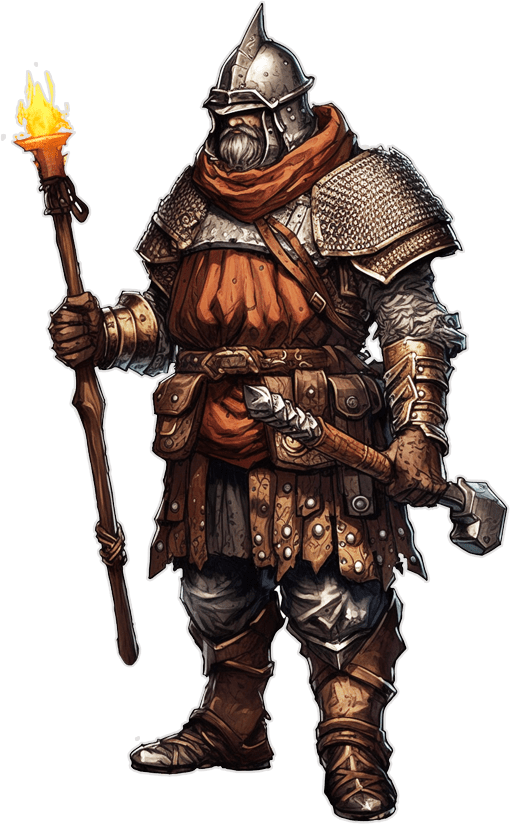
Skill Proficiencies: Insight, Investigation
Tool Proficiencies: One type of gaming set
Languages: One of your choice
Equipment: A steel helmet, a mace, a backpack containing 10 days of rations, a gaming set (of the type you are proficient with), a bed roll, a mess kit, a tinderbox, and a waterskin. A belt pouch containing 10 gold pieces and 7 silver pieces.
Feaure: Spirit Of The Law
You know the difference between how things are supposed to be done legally, and how things really get done legally.
Using your Insight skill, you can gain guidance from the DM about how a certain action would be looked upon by the authorities.
Backgrounds: Undertaker / Thanatologist | Watchman
\page
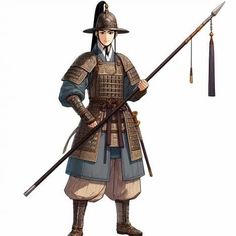
Suggested Characteristics
| d8 | Personality Trait |
|---|---|
| 1 | I am patient and gentle. |
| 2 | People think they know me but I have surprising talents. |
| 3 | I’m not an oaf. I am well-read and can eloquently quote the classics. |
| 4 | I try to brighten the days of all whom I interact with. A smile and a jest are always welcome. |
| 5 | If I have something to say, it will probably be my fists that say it. |
| 6 | I don’t steal things. I confiscate them. |
| 7 | I am forever debating the difference between good and evil, right and wrong. |
| 8 | I’m blunt, to the point, and no-nonsense. |
| d6 | Ideal |
|---|---|
| 1 | Loyalty. Devotion to a single cause is the cornerstone of honor. (Lawful) |
| 2 | Courage. Face down the enemies of peace quickly and fearlessly. (Chaotic) |
| 3 | Discernment. Never believe the words by themselves. Seek the whole truth. (Any) |
| 4 | Vigilance. Beware, the enemy will wait to strike until your most weary hour. (Any) |
| 5 | Peace. It is upon the table of peace that the feast of civilization is enjoyed. (Good) |
| 6 | Control. One must exercise power to ensure it is respected. (Evil) |
| d6 | Bond |
|---|---|
| 1 | This scar reminds me every day to check people for hidden weapons. |
| 2 | I swore an oath to the god of retribution to never let a fallen comrade go unavenged. |
| 3 | As I brought down my mace, his daughter ran between us and caught the blow in her skull. |
| 4 | I want to start a foundation to help the families of slain and crippled watchmen. |
| 5 | I can still be called into military service at a moment’s notice and cannot decline. |
| 6 | I’ve seen what happens when one forgets their helm. I never ever take mine off. |
| d6 | Flaw |
|---|---|
| 1 | I’m too trusting but I can’t help it. |
| 2 | Lilkin (halflings) are sneaky little cretins who can never be trusted. |
| 3 | I refuse to take watch duty. Never again. |
| 4 | Nobody else tells the truth so why should I? |
| 5 | For a little gold I will happily look the other way. |
| 6 | I will never, ever strike the first blow. |

Backgrounds: Watchman
\page
Wench
A wench is a female servant who takes care of others in a way similar to how a mother takes care of her family. She undertakes the mundane activities so that others don’t have to. Her work may include cleaning, polishing, cooking, serving
food and drink, making beds, doing laundry, wrangling children, running errands, keeping the fires lit, and any number of other menial chores.
It is important work even though it is looked down upon. The wench is doing the things that others find ordinary or distasteful. People may be inclined to abuse such a person so the wench needs to develop a strong backbone. Her attitude is her defense mechanism, although, it is a double-edged sword. The wench must be prickly enough to ward off exploitation but humble enough to keep her job.
You would have likely served in more than one establishment in your time as a wench.
Choose two from the chart below
or roll twice.
| d6 | Where you wenched |
|---|---|
| 1 | Tavern or inn |
| 2 | Public bar |
| 3 | Waterfront or slum dive bar |
| 4 | Aristocrat’s or merchant’s home |
| 5 | Noble’s household |
| 6 | Large passenger ship |
Skill Proficiencies: Insight, Intimidation
Tool Proficiencies: Cook’s utensils, seamstress’ tools, a gaming set of your choice
Equipment: A backpack containing 12 days of rations, seamstress’ tools (see below),
a bed roll, a mess kit, a tinderbox, and a waterskin. A belt pouch containing 3 gp and 12 sp.

Seamstress’ Tools:
This bundle of tools includes forty steel pins, three spools of thread (white, yellow, and red), knotted measuring twine, a thimble, three sewing needles, shears, and small strips of usable cloth.
Feaure: Servie Sass
You know the ways and words of wenches. Female servants are quick to accept you as one of their own and to impart a limited level of trust in you. You have witnessed the dirty laundry of the upper classes and can see through their
haughty facades.
You gain advantage on Wisdom (Insight) and Charisma (Deception) checks when dealing with aristocrats.
Suggested Characteristics
| d8 | Personality Trait |
|---|---|
| 1 | If you cross me I’ll smile and laugh but quietly plot revenge. |
| 2 | I have a thousand things in my bag and it takes me forever to find the one I want. |
| 3 | I like to sit by myself and create gloomy poetry in my mind. |
| 4 | I take pride in my work and am dedicated to my employer. |
| 5 | I’ve always been a compassionate and nurturing person. |
| 6 | I’m very proper. I won’t tolerate unseemly behavior. |
| 7 | I’m always putting together parties to loosen everyone up. |
| 8 | If there is something worth caring about in this world, I’ve yet to hear about it. |

Backgrounds: Wench
\page
| d6 | Ideal |
|---|---|
| 1 | Captivation. You can’t be left out when you are the center of attention. (Chaotic) |
| 2 | Peace. There’s a time for fighting but that time is never now. (Good) |
| 3 | Integrity. Be the same person, at all times, in all places. (Lawful) |
| 4 | Exploitation. Opportunities are always present, but most people refuse to do what it takes to exploit them. (Evil) |
| 5 | Piety. You can’t argue with the gods. Obey them or be punished. (Any) |
| 6 | Stability. Nature is neither good nor bad, it is fair and honest. (Neutral) |
| d6 | Bond |
|---|---|
| 1 | My mother was a household servant, knocked up by the married lord she worked for. I’ll find that man and demand validation. |
| 2 | I had a baby when I was young. My mother is raising him for me. |
| 3 | I was given a copper ring by my father. It is turning my finger green but I can’t bear to take it off. |
| 4 | I dream of having my own fancy home one day where I will employ servants and treat them like part of the family. |
| 5 | I offended a noblewoman once and received three lashes for it. I still have the scars. |
| 6 | My true love left on a doomed ship voyage but I believe he is still alive somewhere. |
| d6 | Flaw |
|---|---|
| 1 | I’m very clumsy, always tripping over my skirts and dropping things. |
| 2 | If I even think there is a rat nearby, I become sick with fear. |
| 3 | I’m convinced that sickness is hidden in filth so I clean compulsively. |
| 4 | I have a habit of doing things without help so that I can impress people. |
| 5 | I have a wicked temper and a violent streak. |
| 6 | Books are heavy and yet I still carry around at least a dozen of my favorites. |
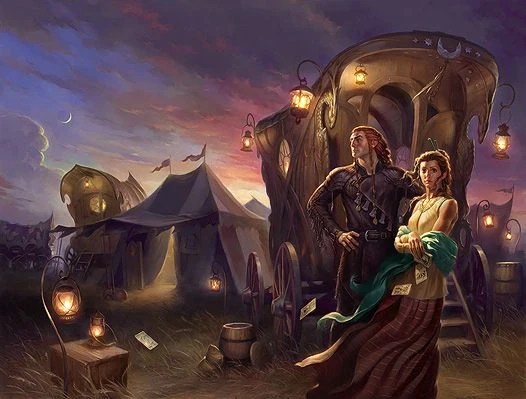
Vagabond
You have never had a permanent home. Home was with your family or your clan, and they were always picking up and moving on. There are numerous possible reasons for an itinerant lifestyle. Choose yours from below or roll randomly.
| d6 | Your reason for living on the move |
|---|---|
| 1 | Herders. Your people follow the grazing herd. |
| 2 | Nomads. Your people migrate annually to avoid winter, flooding, or monsters. |
| 3 | Merchants. Your family travels in search of exotic goods and people to sell them to. |
| 4 | Refugees. Your people were forced from their homeland by war or natural disaster. |
| 5 | Pilgrims. Your family travels for religious reasons; visiting prophets, temples, and relics. |
| 6 | Undesirables. Your people are despised and believed to be cursed. You are constantly being driven away from one place after another. |
Skill Proficiencies: Animal Handling, Survival
Tool Proficiencies: One type of artisan’s tools of your choice (PHB pg. 154)
Languages: One of your choice
Equipment: Ox-drawn vardo (a house wagon), a pair of oxen, a small pantry stocked with 3 weeks of cheese, preserved meats, preserved fruits and vegetables. Three complete clothing outfits, artisan’s tools (of the type you are proficient with), basic household items like flatware,
Backgrounds: Vagabond
\page

\page
cookware, cushions and blankets. A belt pouch containing 2 gold pieces and 12 silver pieces.
Feature: Lingua Francas
You’ve had extensive interactions with people from disparate cultures. Often lacking a shared language, you have learned to communicate via the various trade tongues, the common languages of traders.
You can communicate with any persons who have had regular trade with other people groups. These trade tongues, or lingua francas, are simple and imprecise. As a result, you have disadvantage on any checks made using the language such as Charisma (Persuasion), Charisma (Deception), Wisdom (Insight), and Charisma (Performance).
Lingua francas have no written form. They are strictly oral and constantly evolving.
Suggested Characteristics
| d8 | Personality Trait |
|---|---|
| 1 | What you see is what you get. I don’t lie or pretend to be something I’m not. |
| 2 | I don’t plan. I go wherever the road takes me. |
| 3 | I’m a different person in every place I visit. |
| 4 | I’ve learned not to get emotionally attached to people or places. |
| 5 | I know I’m a spectacle to behold and I play it up for my audience. |
| 6 | I try to be helpful to anyone I meet, especially other travelers. |
| 7 | Every place has their own traditions and I try not to upset any of them. |
| 8 | I’m a child at heart, and in behavior. |
| d6 | Ideal |
|---|---|
| 1 | Organization. One cannot live on the road and also neglect their equipment (Lawful) |
| 2 | Bewildering. Keep everyone guessing about who you are and what you’re about. (Chaotic) |
| 3 | Restraint. Don’t use more force than is required for the task. (Good) |
| 4 | Competition. In the game of life only the winners get prizes. (Any) |
| 5 | Leisure. Take your time. Enjoy the scenery. (Neutral) |
| 6 | Opportunism. A fool and his money are soon parted, on your way out of town. (Evil) |
| d6 | Bond |
|---|---|
| 1 | My vardo was a wedding gift. I got cold feet and fled with the vardo. |
| 2 | My parents disappeared mysteriously three years ago. |
| 3 | I’m wanted for kidnapping but I didn’t do it. |
| 4 | I hate ad’amlar (dwarves). Always have, always will. |
| 5 | My vardo, which I won in a game, has a secret compartment that I cannot find. |
| 6 | The caravan I have always traveled with have banished me for reasons I’m ashamed to say. |
| d6 | Flaw |
|---|---|
| 1 | I am rash and impulsive. |
| 2 | I’m a compulsive liar. Half the time I don’t even know why I’m doing it. |
| 3 | I have a fanatical devotion to a religion that requires numerous rituals each day. |
| 4 | I have special herbs for my pipe that keep me in touch with the spirit realm more than reality. |
| 5 | I hold to the old-fashioned traditions. |
| 6 | My people do not bathe. We use incense and perfumes. |
New Spell
The following utility spell is practical magic. It is considered to be on the spell list of any spellcaster who has Vagabond as their background. A trained vagabond with Intelligence of at least 12 can cast this spell as a ritual even if they have no spellcasting ability.
Wagon Ward
Abjuration cantrip (ritual)
Casting Time: 1 action
Range: Half of a mile
Components: V,S,M (a lit candle)
Duration: See text
A candle is lit and placed inside your personal wagon. The spell lasts as long as the candle burns, or a maximum of seven hours. For the duration, if someone attempts to enter your wagon, harm or steal the beasts in yoke to the wagon, or if your wagon catches fire, you will be alerted via a brief but painful ringing in your ears.
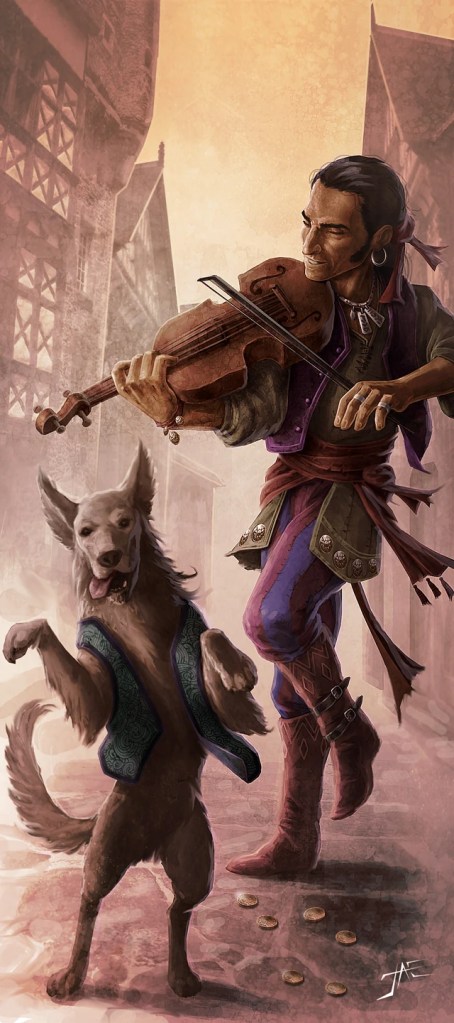
Backgrounds: Vagabond
\page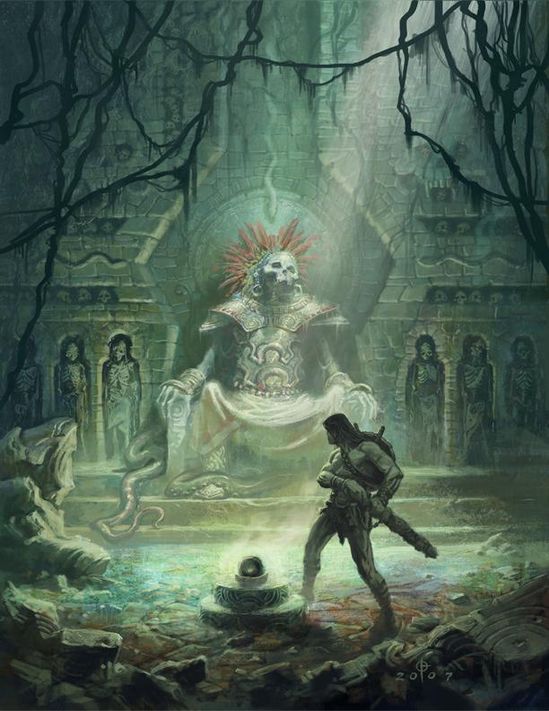
\page
Archetypes
Most character archetypes common to other settings or from the 5th Edition Player’s Handbook can fit into the Northern Vast, although many go by different names. Table 1 provides lists of classes and backgrounds from the core rules with the Northern Vast term for such a character.
In addition to references from the core rulebooks, the table lists a number of concepts unique to the Northern Vast. These concepts are described more fully in the Character Kits and New Subclasses sections, below.
Character Kits
The idea of a template that layers ‘over’ a character and provides them with new options is by no means new; such kits have existed in D&D since 1989.
While 5th Edition has used something like this idea with their character Background feature, sometimes a Background, even when it is combined with a character class, doesn’t quite flesh out the required role-playing niche.
The type of ‘kit’ presented here differs from a Background in that a character doesn’t necessarily start out with a kit. Each kit has prerequisites that a character must meet in order to take it, and most kits require a character to be at least 5th level. A character may only have 1 kit.
As always, not having a kit doesn’t prevent a character from doing anything: a character lacking the Mounted Warrior kit can fight from horseback the same way a character who isn’t a fighter can use a sword. The kit represents someone who has dedicated themselves to a given course of behaviour.
##### Table 1: Nothern Vast Archetypes | Northern Vast Name | Archetype | |:—-|:—-| | Askar | Martial Combatant, folk hero, citizen warrior | | Astrologer | Academic who looks to the stars for divination and scrying | | Barber | A groomer, gossiper, surgeon and occasionally a dentist | | Beggar-thief | Highly trained swindler who pretends to be destitute | | Clockwork Mage | Mechanician who creates automatons and geared toys | | Corsair | Sea-faring warrior | | Digitologist | Academic who to mathematics for divination and scrying | | Elementalist | Magician focused on the power of air, earth, fire, or water | | Ethoist | Preachers who promote a particular deity or faith over others but acknowledge or tolerate other faiths | | Farisa / Faris | Holy warrior fighting for their faith or for their people | | Hakima / Hakim | Preachers gifted with discernment and special sight | | Holy slayer | Assassin devoted to a holy order or faith | | Jackal | Magic user who steals spells and powers from others | | Kahin | Idol priest or druid | | Mageweaver | Artisan who weaves magic into textiles and cloth | | Mamluk | Slave warrior | | Moralist | Preacher who acknowledges only a select deity or deities | | Mounted Warrior | Specialist in animals and combat while riding them | | Mystic | Wandering preacher unaffiliated with a specific temple or shrine | | Mystic of Ifus | Combatant who enhances their body with magic and focus | | Pragmatist |Preacher who acknowledges the validity of many or all deities or faiths | Rawun | Storyteller, historian, poet, skilled in oratory, singing and / or instrumental performance | | Sa’luk | Scoundrel or general Rogue | | Sha’ir | Expert in genie lore and communication | | Sorcerer / Sâhir | General term for magic users of all kinds | | Spellslayer | Magic user who specialises in hunting and killing other magic users |
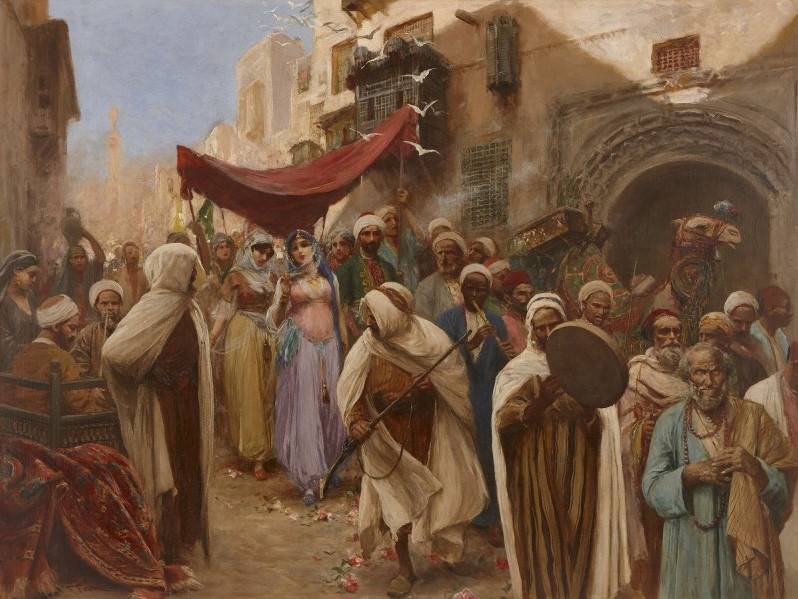
Character Kits
\page
Reading the Entries
Each of the kits below is presented in the following format. All text other than the kit name and description addresses the character. Note that not all kits include information from every category listed below.
Kit name. The name of the kit. In some cases, this is a name by which the character would refer to themselves; in others it is merely a reference for the player. The kit name is followed by a short description of the kit and its place in the world.
Prerequisites: Benchmarks a character must meet in order to take the kit, typically ability score or skill bonus minimums. These requirements vary, but in general a character must be at least 5th level in order to take a kit.
Skills: Skills gained by a character who takes the kit. If the character already has one or more of the listed skills, they do not gain additional or alternate skills instead of those listed. These skills represent proficiencies attained in the course of training for a kit, and no others are gained in their place.
Other proficiencies: This section provides additional proficiencies, such as tool proficiencies, gained by taking a kit. Like other skills, these proficiencies cannot be swapped out.
Special: Some kits provide additional benefits, which are listed in this section.
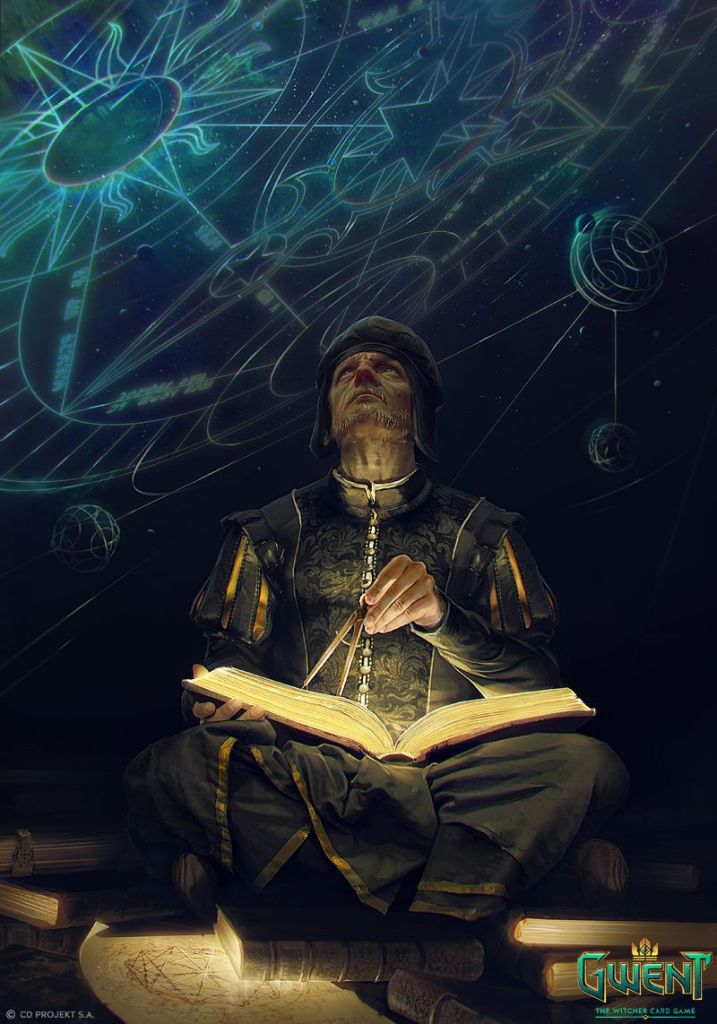
Astrologer / Digitologist
Students of the stars and numbers, astrologers and digitologists tend to come from wealthy families and are accustomed to both privacy and respect. Though two distinct disciples, astrologers and digitologists share enough features to occupy a single kit within this book. Note, however, that a character is either an astrologer or a digitologist; practitioners view the two disciplines as clearly and utterly distinct. Some astrologers and digitologists tend to avoid the clutter, noise and light pollution of cities, preferring to work from towers or observatories deep in the wilderness or from a high vantage point with an unobstructed view of the heavens. Others revel in the status-obsessed hierarchical bureaucracies of the Academies and Universities of the capitals and wear their station with hard-earnt pride. Yet others have a flair for the dramatic or else enjoy uninvited appearances in royal courts to make grand pronouncements.
Prerequisites: Intelligence 12+, Lawful alignment, proficiency bonus +3
Skills. Investigation, Nature
Tool Proficiency. Navigator’s Tools
Special. Your knowledge of the cosmos or numbers (respectively) is second to none. You have advantage on Intelligence checks related to the cosmos (astrologer) or numbers (digitologist).
In addition, you gain the ability to cast augury as a ritual by consulting the stars (astrologer) or pouring over mathematical texts (digitologist). Once your proficiency bonus reaches +5 you cast divination instead of augury.
Once you use this ability, you must finish a long rest before you can use it again.
Character Kits: Astrologist/Digitologist | Barber
\page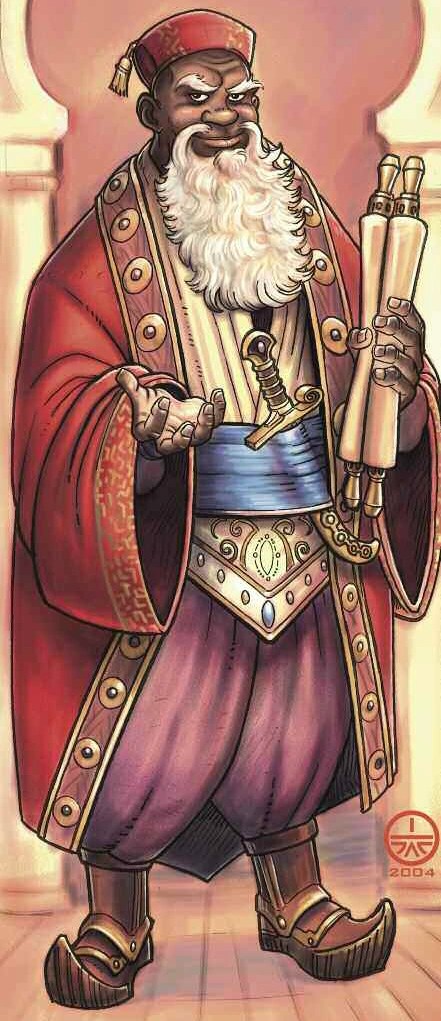
Barber
The Barbers of the Northern Vast, and in particular the region of the Marbled Coast, centered around the Mu’şüri Empire, are far more than mere groomers. They pass along stories and news, carry messages, and most importantly, provide surgical and dentristry services. A character who takes this kit spent time developing their information gathering and minor medical skills. Though they will never be able to provide the level of treatment a divinely gifted character can (unless, of course, they learn the revelant spells), barbers are able to handle most mundane treatments and analysis.
Prerequisites: Dexterity 14+, Wisdom 12+, Proficiency bonus +3
Skills: Medicine, Sleight of Hand
Tool Proficiency: Barbers gain proficiency with the healer’s kit. If a character already has this proficiency, they instead gain a +2 bonus on checks made using the kit.
Special: You have advantage on Charisma checks against creatures you have successfully treated with your dental or surgical skill, and disadvantage on Charisma checks against creatures you have treated unsuccessfully or harmed with those skills. While grooming a creature, you have advantage on skill checks against that creature.
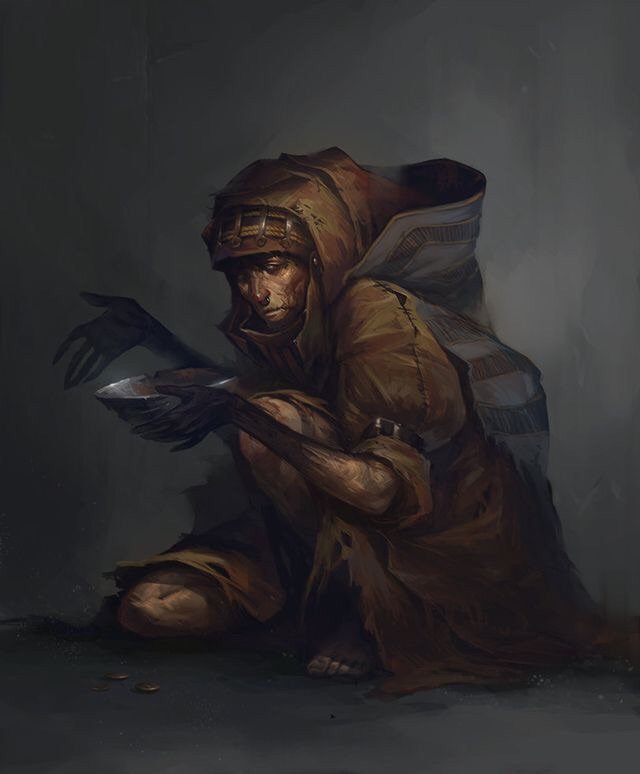
Beggar-thief
The plight of beggars varies greatly throughout the Northern Vast, but a life without family or home, subsisting on the kindness of strangers is typically not an easy one. Most afflicted with such a situation are plain and honest folk, but some malfortunates instead resort to deception and thievery, tailoring their pitiable stories to manipulate the generous.
Prerequisities: Dexterity 12+, Charisma 13+
Skills: Persuasion, Sleight of Hand
Special: When you succeed on a Charisma (Persuasion) check contested by a target’s Wisdom (Insight) check, you have advantage on Dexterity (Sleight of Hand) checks against that target until the end of your next turn.
Character Kits: Barber | Beggar-Thief
\page
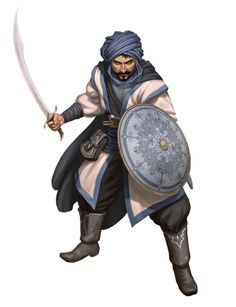
Farisa / Faris
In the long tangled histories of the nations of the Northern Vast there have been countless wars fought over territory, honour, vengeance and a slew of other reasons.
But for some warriors, war is a chance for personal redemption, an opportunity to cleanse their souls of sins and infractions, and to muster the faith and resolve of their beliefs and causes.
Those who dedicate themselves to such fervour are known as farisan (fah-REES-awn) (singluar farisa (feminine) or faris (masculine)) or holy warriors.
Prerequisites: Strength 12+, Wisdom 12+
Skills: Insight, Religion
Special: Your very presence is an inspiration to your fellows. You have advantage on Charisma checks to influence people who share your faith (both clergy and lay people).
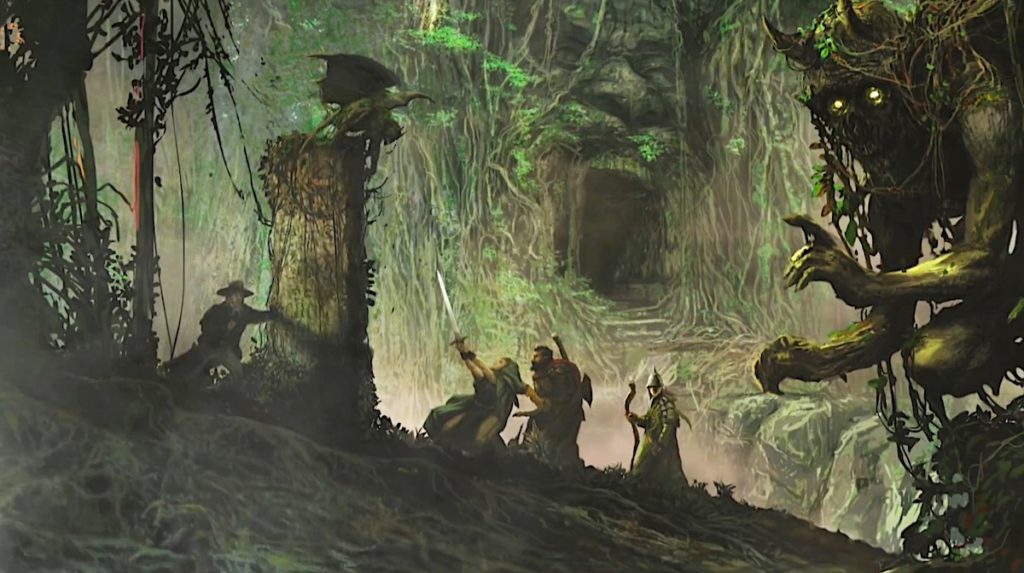
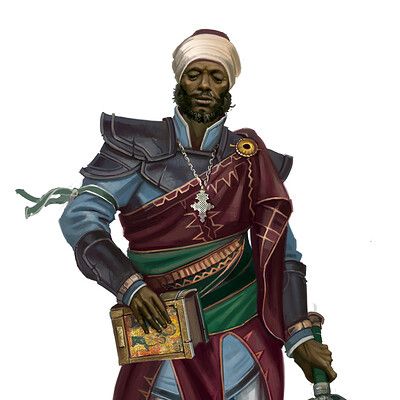
Hakima / Hakim
While the word ‘hakim’ simply means ‘wise’, those known as Hakimas (feminine) or Hakims (masculine) have powers of discernment far beyond those of the typical mortal. A Hakima can easily determine when a character is being truthful and can even see through many illusions or magical disguises.
Hakimas and hakims are considered to be ‘Free Priests’ in the Northern Vast – they are often found in the service of a deity or faith, but rarely confine themselves to a specific shrine or temple.
Prerequisites: Wisdom 16+, Proficiency bonus +3
Skills: Insight. A Hakima has advantage on Wisdom (Insight) checks made to determine if a creature is being truthful as far as the creature is aware. This ability cannot determine information a creature does not possess; if the creature truly believes that the information it is providing is accurate, even if the information later turns out to be false, the Hakima will not be able to tell that the creature is lying.
Special: You can speak a comman word to grant yourself truesight out to 120 feet for 10 minutes. Once you use this ability, you must finish a long rest before you can use it again.
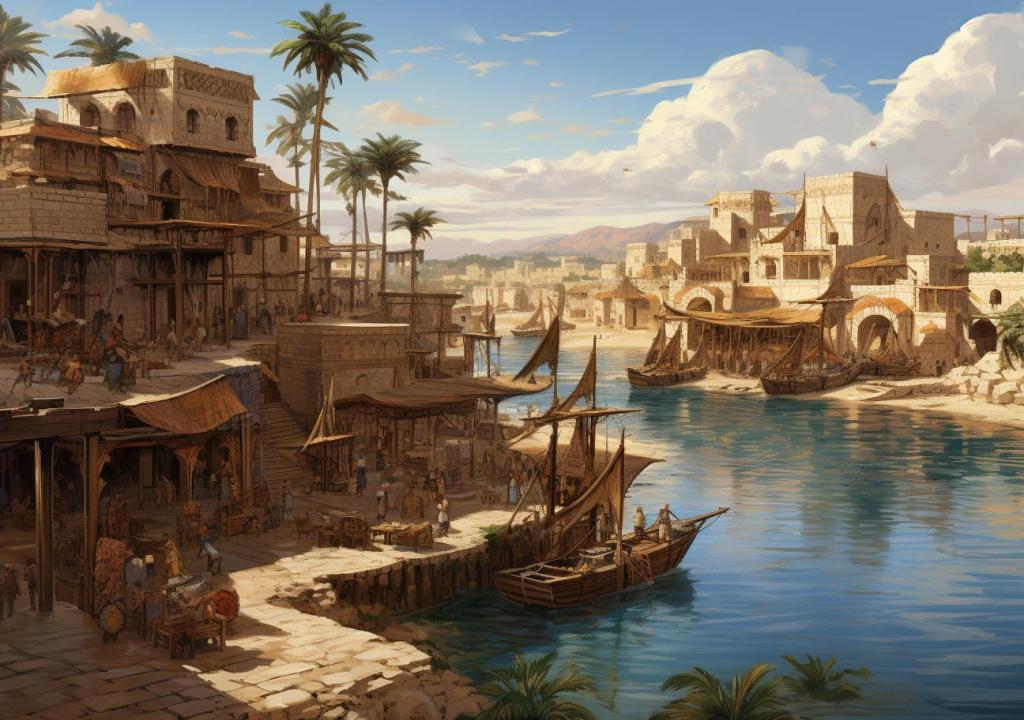
Character Kits: Farisa / Faris | Hakima / Hakim
\page
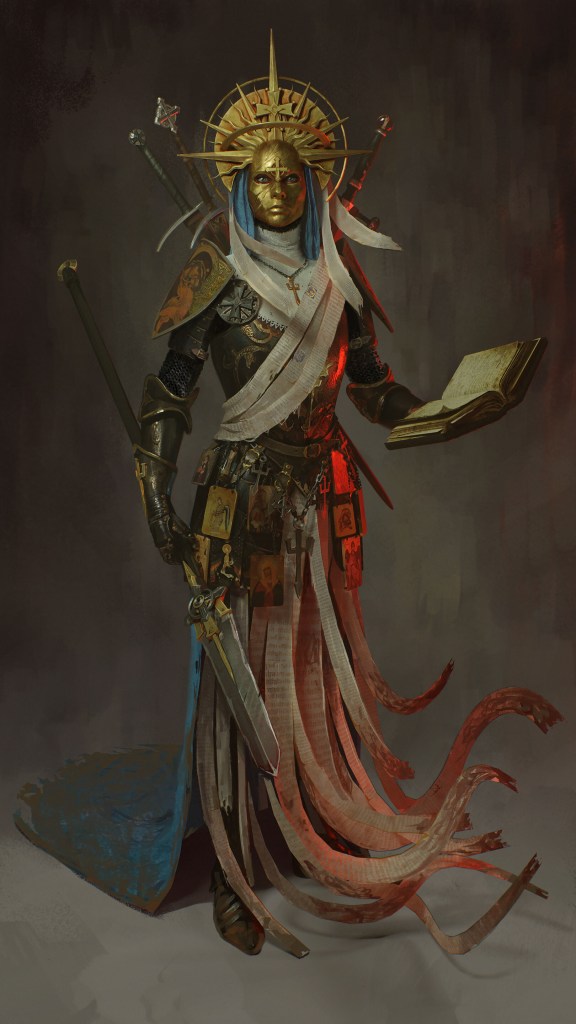
\page
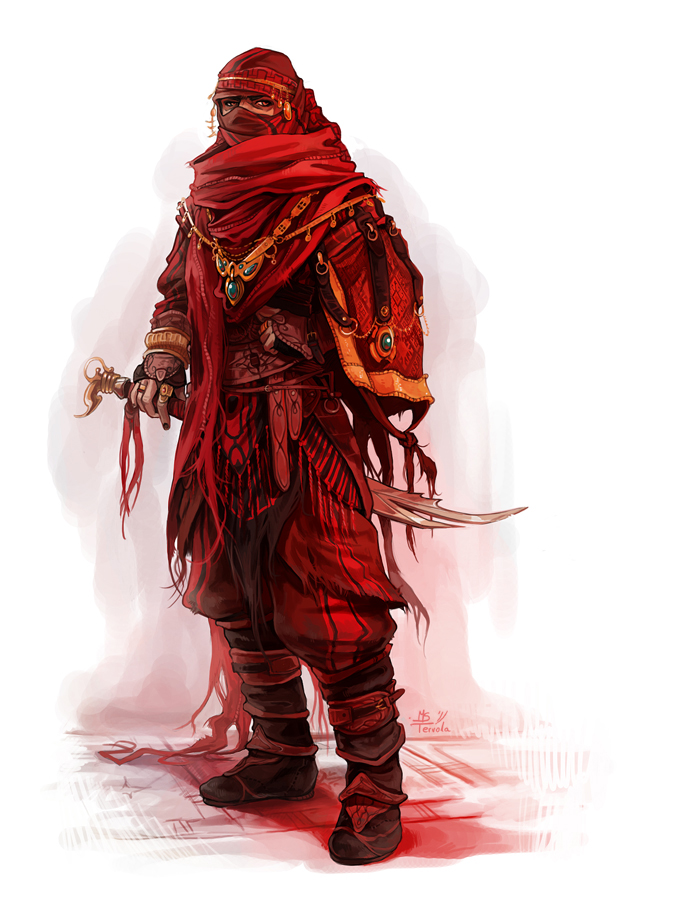
Holy Slayer
More than simply a killer raised in a temple, the holy slayers of the Northern Vast are part assassin, part mafia and part deacon. Sometimes seen as dangerous radicals, holy slayers live in secret amongst the common people. They are organised into discrete orders, each willing to mete out the justice of their faith at the behest of their order’s Grandmother or Grandfather – the absolute head of their organisation.
Prerequisites: Wisdom 14+, Disguise +6
Proficiencies: You are proficient with your deity’s holy weapon. Each order has a distinct weapon associated with it, and these weapons are as much a calling card or sigil as they are a tool.
Skills: Disguise Kit, Religion
Special: You know how to adjust your speech and body language in such a fashion as to make it clear your threats carry the weight of your order.
You have advantage on Intimidation checks made to cow enemies of your faith.
You can make this same type of check to characters friendly toward your order to gain preferential treatment.
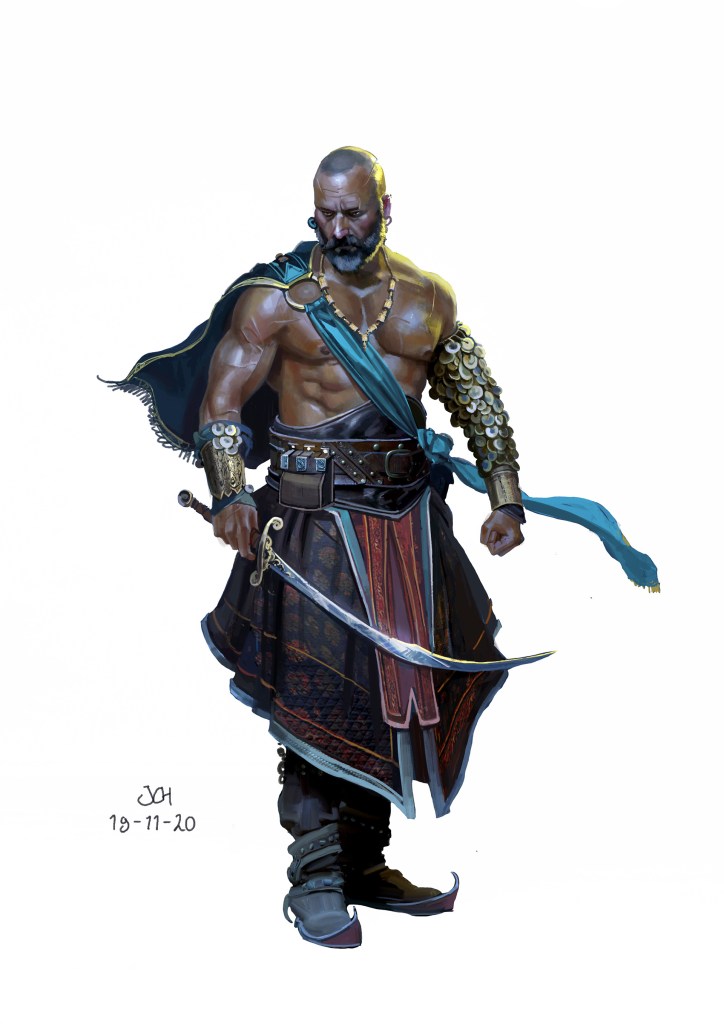
Mamluk
Mamluks are a caste of soldiers organised into a potent fighting force by various nobles and rulers, and sometimes ascended into rulership themselves. Highly trained and fanatically focused, mamluks pursue their goals with almost unshakeable determination and dedication.
Prerequisites. Strength 12+, Constitution 12+, Proficiency bonus +3
Proficiencies. Martial weapons
Skills Athletics, Intimidation
Special. You automatically succeed on any Intelligence, Wisdom or Charisma skill check made to resist being dissuaded from your goals. You also have advantage on saving throws to resist enchantments and illusions.

Character Kits: Holy Slayer / Mamluk
\page
Mounted Warrior
Warriors who specialise in fighting from the back of a horse, camel or other mount are common throughout the Northern Vast. As comfortable in the saddle as they are on foot, Mounted Warriors are a deadly addition to any military group.
Prerequisites. Dexterity 12+, Animal Handling +6
Skills Survival, Nature
Special. When you make a successful attack from the back of your mount, you can use your reaction to make one additional attack before the end of your turn.
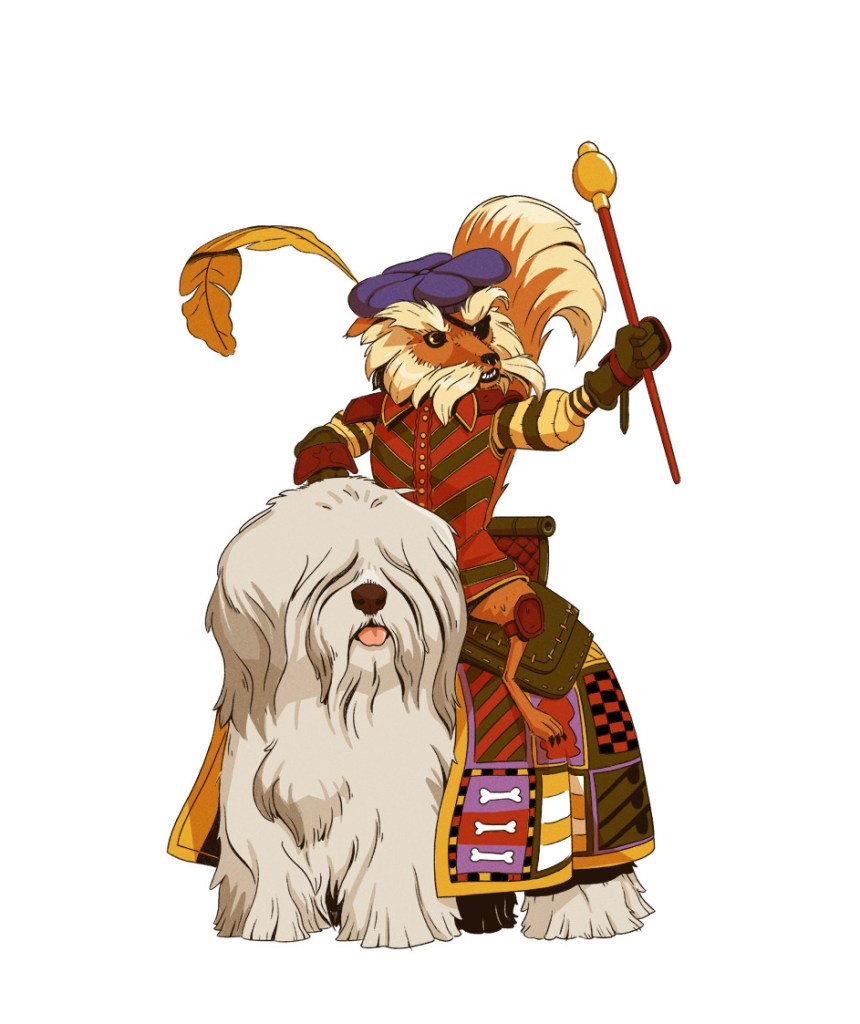
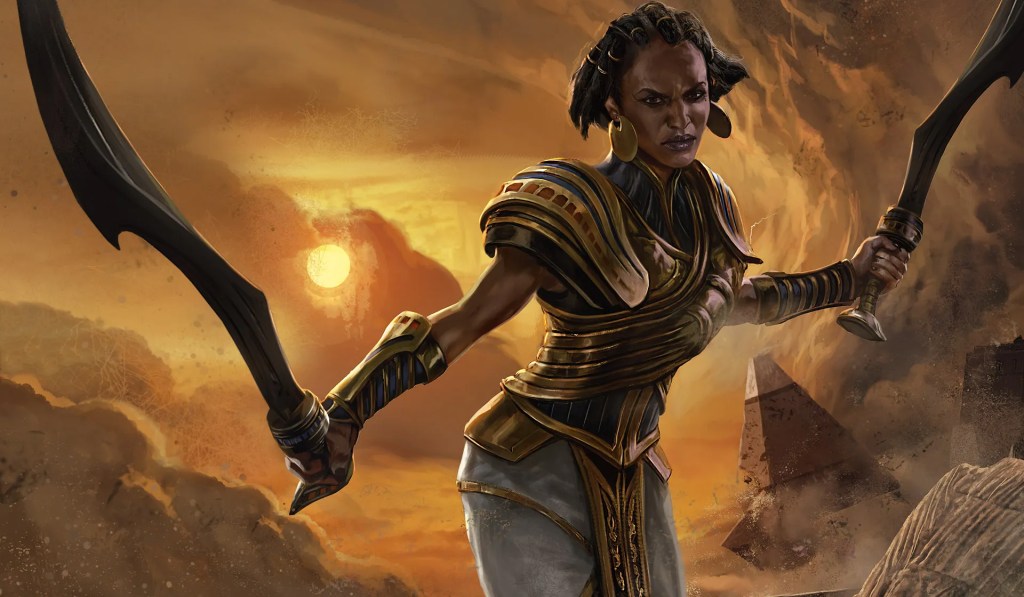
Mystic
Everyone follows the gods in their own way. Some seek security and consistency in priestly orders; some quietly give praise on their own. A few, however, engage in elaborate meditation practices: dancing, cavorting, or even making music to feel a closer connection to the divine.
Prerequisites. Wisdom 12+, Athletics, Acrobatics or Performance +5
Skills You can choose a skill of your choice, which must be tied to your chosen group’s mystic meditation method.
Special. Whenever you engage in your group’s meditation method, add twice your proficiency bonus to any skill checks made to use that skill.
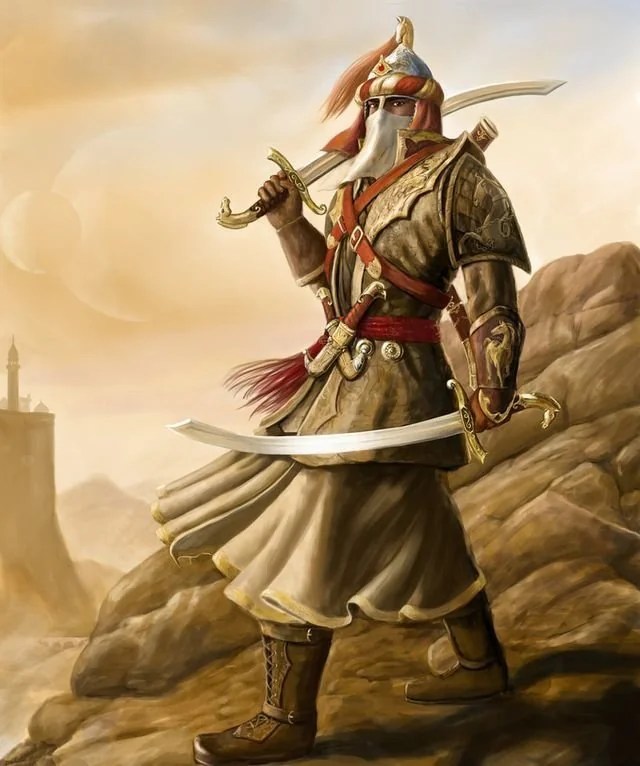
Character Kits: Mounted Warrior | Mystic
\page
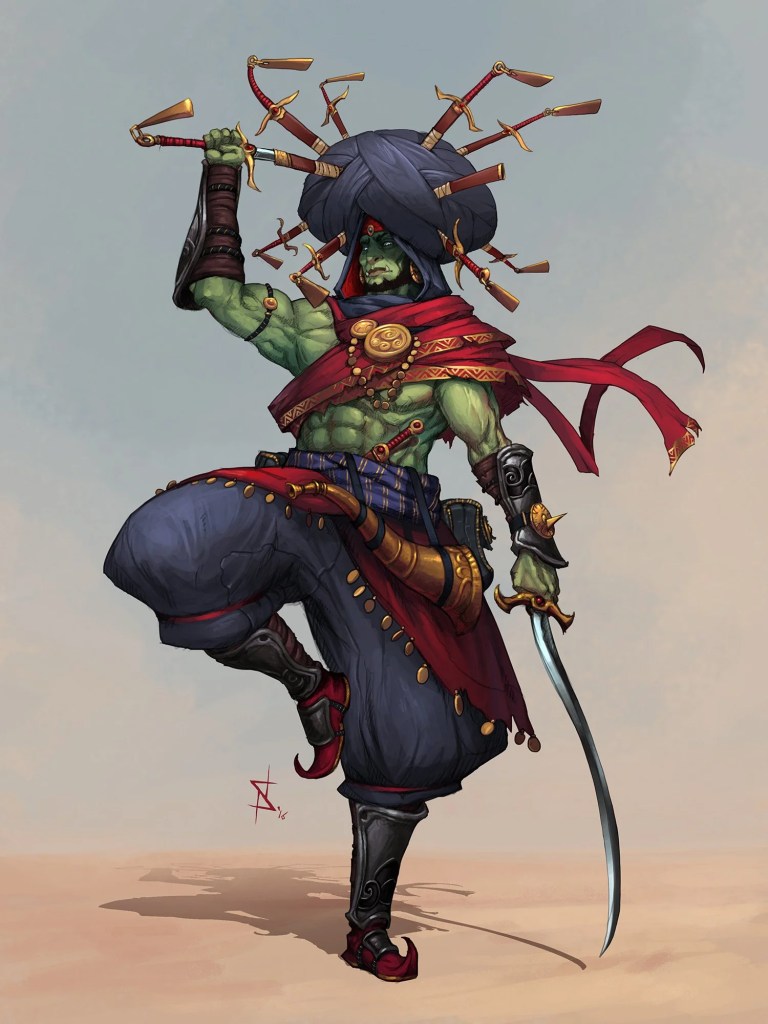
\page
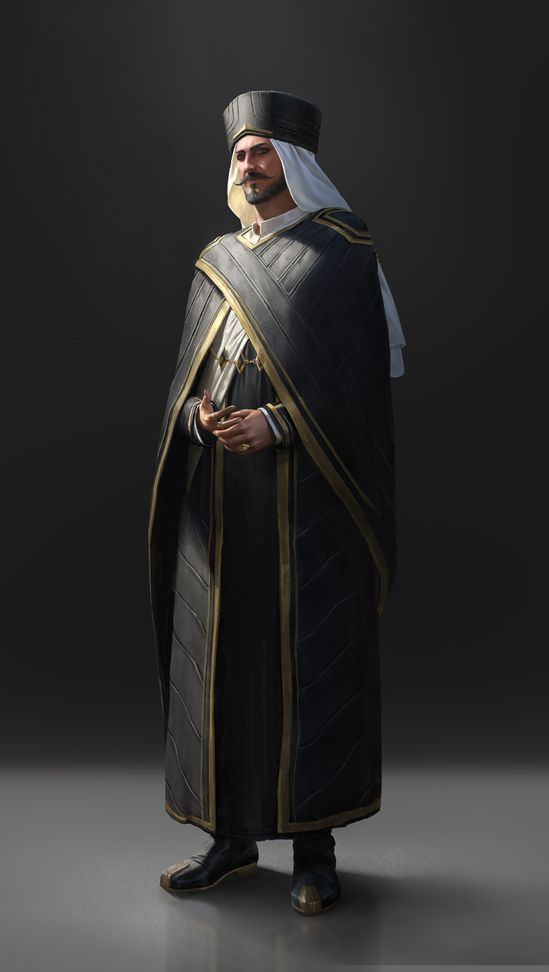
\page
Preachers of the Faith
The deities of the Northern Vast are numerous, and there are as many ways to worship them as their are grains of sand in the desert. Despite this fact, most gods, particularly the Enlightened gods and the gods of the Pantheon, have religious orders dedicated to their service, promotion and veneration. Preachers of these orders come from all walks of life and have many different career paths; the one thing they all have in common is a dedication to spreading the words of their faith.
These Ordered Preachers are broadly divided into three categories, depending on their view toward other gods and religions. Every faith has members that fit into all three camps, though the ratios vary greatly from religion to religion.
Preachers of the Faith Ethical
Preachers of the Faith Ethical, also known as Ethoists, form the backbone of every faith. While pragmatists wander the world and moralists spew fire and brimstone from the pulpit, Ethoists maintain temples and shrines, make sure everything is ready for prayer services, and call the faithful to communal prayer and sermon.
An Ethoist does not typically decry or deny other faiths and gods, but does actively seek to turn nonbelieves to their own ‘true path’.
Prerequisites. Wisdom 12+, non-Chaotic alignment
Skills History, Persuasion
Special. Double your ability modifier when making Charisma checks among the faithful of your own religion, and your Charisma modifier is effectively doubled when calculating your Station amongst the same. You are welcome in the home of any member of your flock, home or away, and you can maintain a Modest lifestlye by expending the amount that normally qualifies for a Poor lifestyle.

Preachers of the Faith Moral
Every faith has firebrands who loudly proclaim that one way is right and all others are wrong, who adhere rigidly to ancient traditions, rites or customs, and who decry any variation or deviation from traditional or established norms or forms.
In the Northern Vast, these firebrands are typically known as Preachers of the Faith Moral, or else as Moralists.
Prerequisites. Wisdom 12+, Lawful alignment
Character Kits: Preachers
\page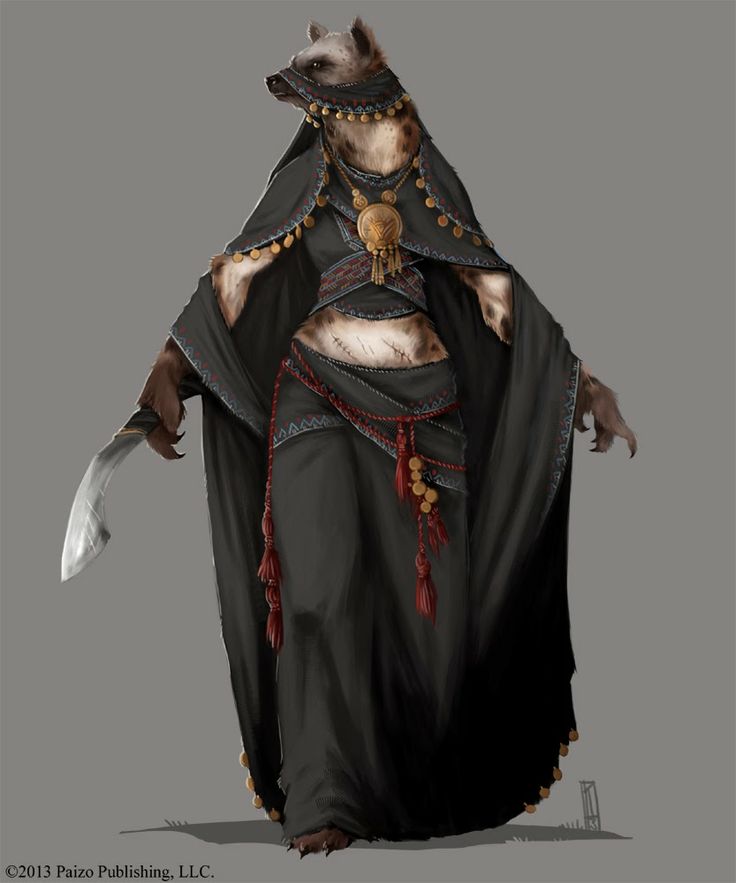
Skills Intimidation, Religion
Special. You have advantage on Charisma checks among the faithful of your own religion, and your Charisma modifier is effectively doubled when calculating your Station amongst the same. You are welcome in any temple that keeps ordered preachers of your religion, home or away, and you can maintain a Comfortable lifestlye by expending the amount that normally qualifies for a Poor lifestyle. You can issue commands to lower-ranking members of your order and expect immediate obedience.

Preacher of the Faith Pragma
The most common (and most easy-going) members of a religious order, Preachers of the Faith Pragma, commonly known as Pragmatists, are often wanderers, more comfortable on the road than within a temple or shrine.
Pragmatists easily acknowledge the value of all gods and religions and many enjoy lively theological debates.
Prerequisites. Wisdom 12+
Skills Persuasion, Survival
Special. Double your ability modifier when making Charisma checks among non-moralist faithful of any religion, and your Charisma modifier is effectively doubled when calculating your Station amongst the same.
You are welcome in the home of most people, home or away, and you can maintain a Poor lifestlye by expending the amount that normally qualifies for a Squalid lifestyle.
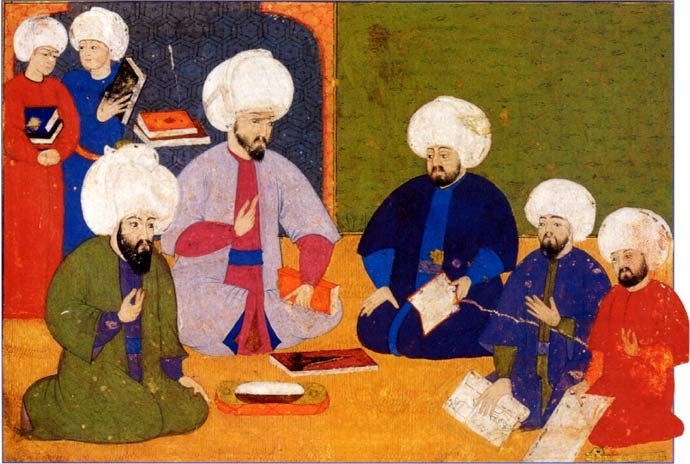
Rawun
The Northern Vast is known as a land of stories, and in all of Seminus, very few are more adept at telling those stories than the rawun (rah-OON). Legendary for their skill at spinning tales, rawuns also serve as historians and teachers, serving as everything from a clown in the bazaar to a sultan’s closest advisor.
Prerequisites. Charisma 12+, Intelligence 14+, History or Performance +5
Skills Athletics, Acrobatics, Insight
Special. While you are entertaining an audience, choose a number of creatures in the audience equal to your Charisma modifier (minimum of 1).
Each of those creatures must succeed on a Charisma saving throw with a difficulty class of 8 + your proficiency bonus + your Charisma modifier or focus its attention on you to the exclusion of everything else around it.
This effect lasts for 1d4 minutes, until you stop performing, or until the creature takes damage, whichever happens first.
Once you use this ability, you must finish a long rest before you can use it again.
Character Kits: Preachers | Rawun
\page
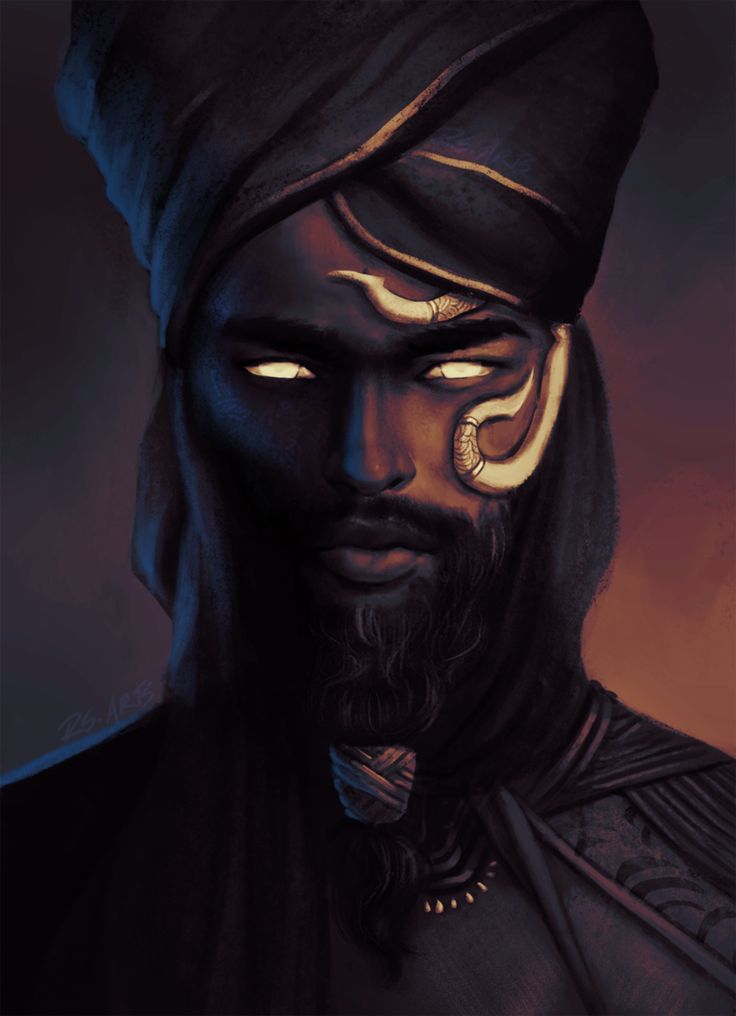
\page
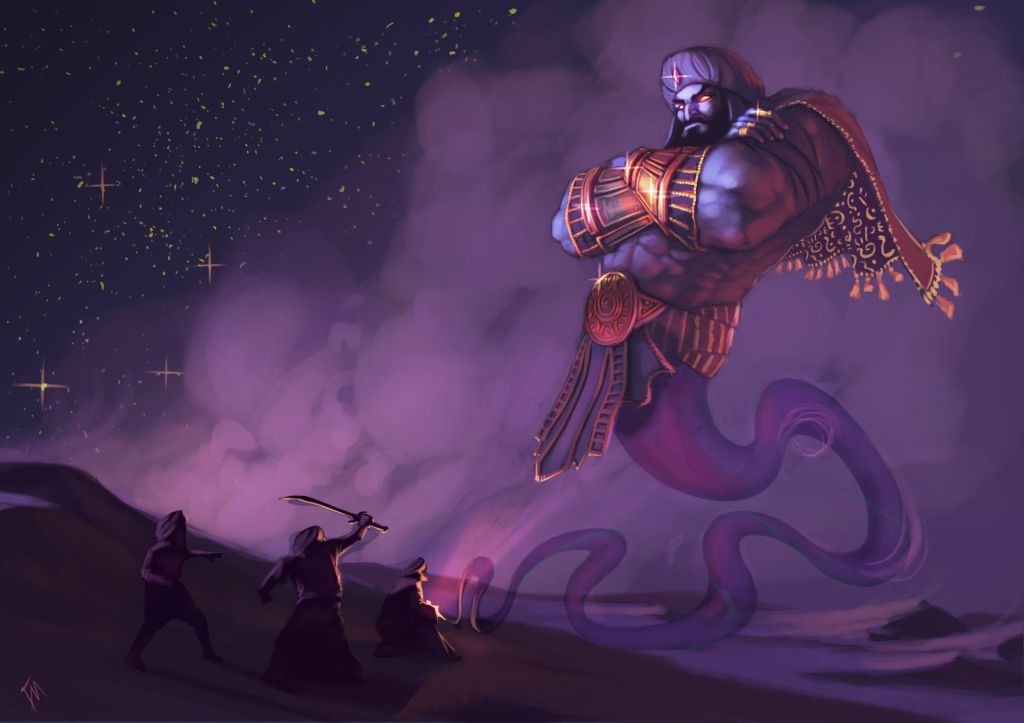
Sha’ir
Sha’irs (shah-EERS) are a wise folk skilled in interaction with genies. Some sha’irs go so far as to partner with elemental familiars known as gens, but all sha’irs know the proper etiquette and forms of address when communicating with geniekind. Some sharpen their skills to the point where they can demand (and receive) audience with genie rulers.
Prerequisites. Charisma 16+, Proficiency bonus +3, Able to speak Primordial or one of its dialects (Aquan, Auran, Ignan or Terran)
Skills Arcana, Persuasion
Special. Whenever you make a skill check involving or related to genies or the works of genies, you are considered proficient in that skill and add double your proficiency bonus to the check, instead of your normal proficiency bonus.
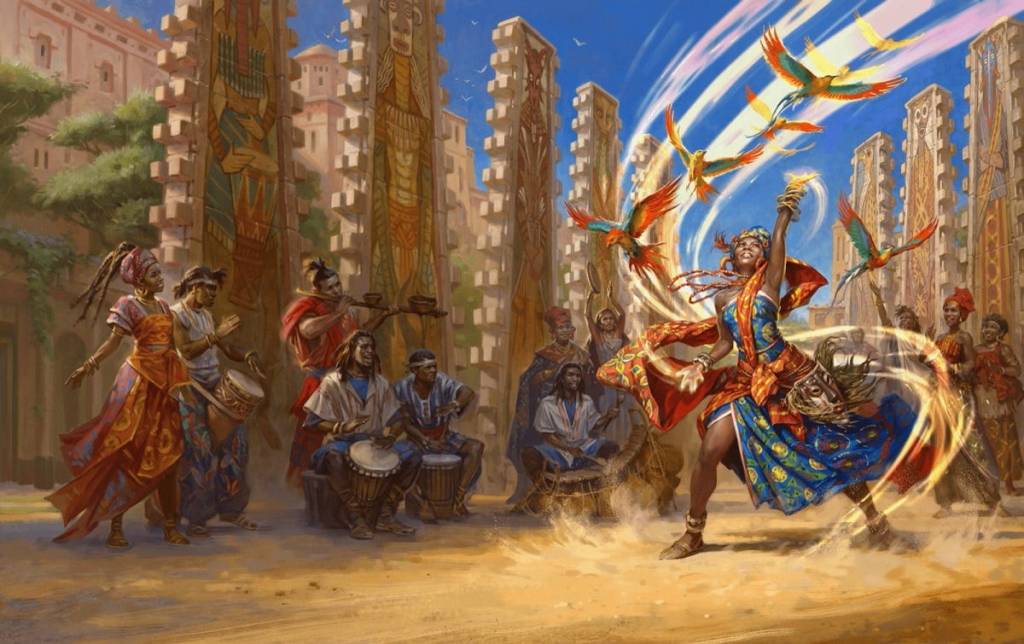
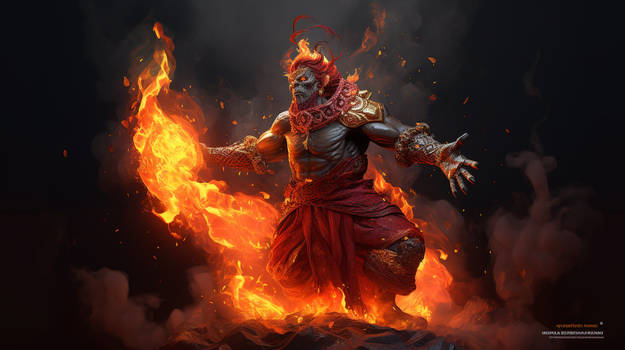
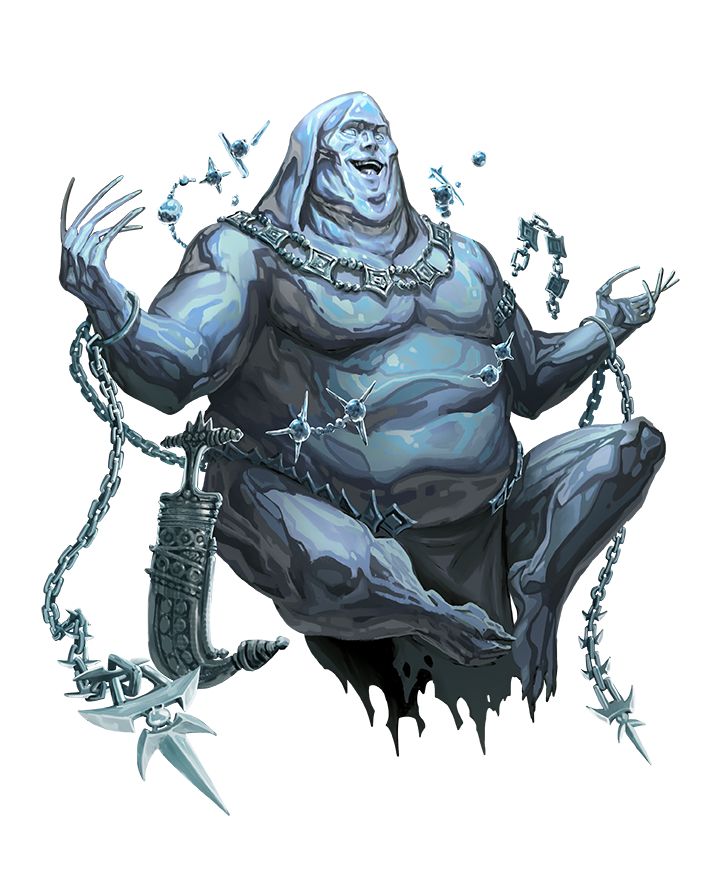
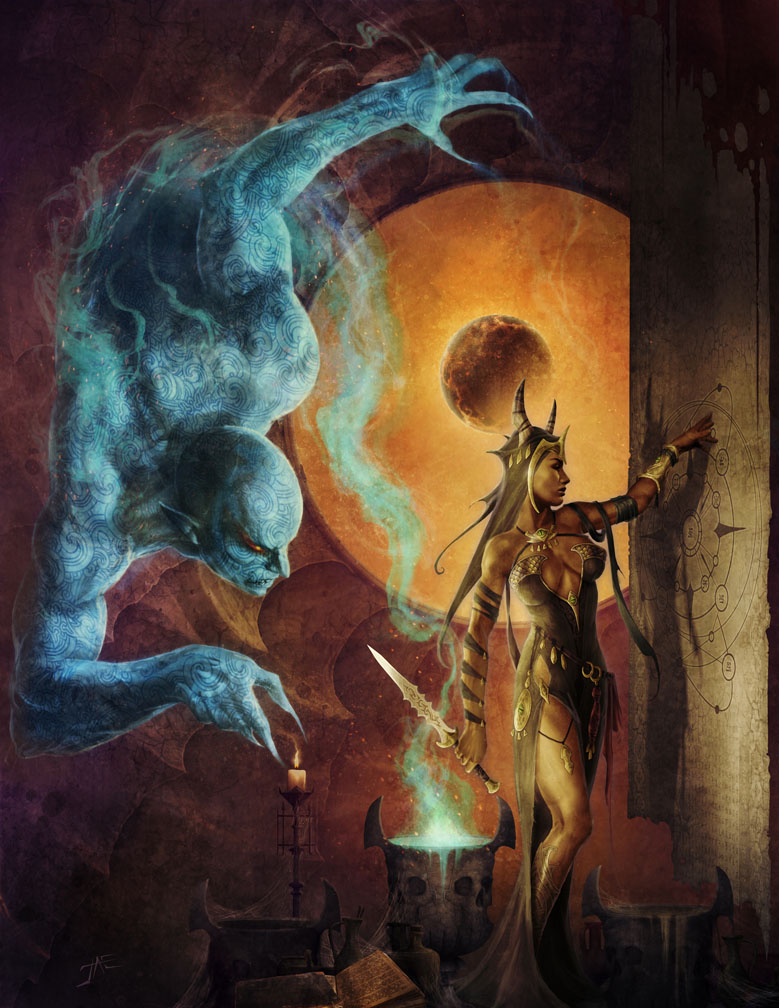
Character Kits: Sha’ir
\page
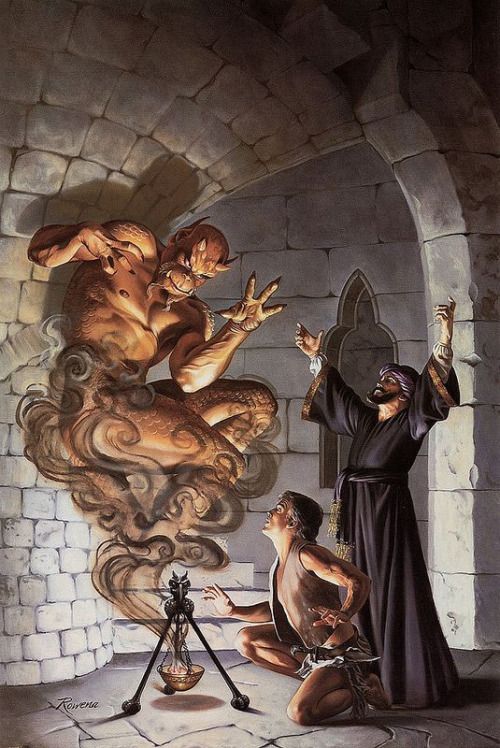
\page

\page
New Class: Guerrilla
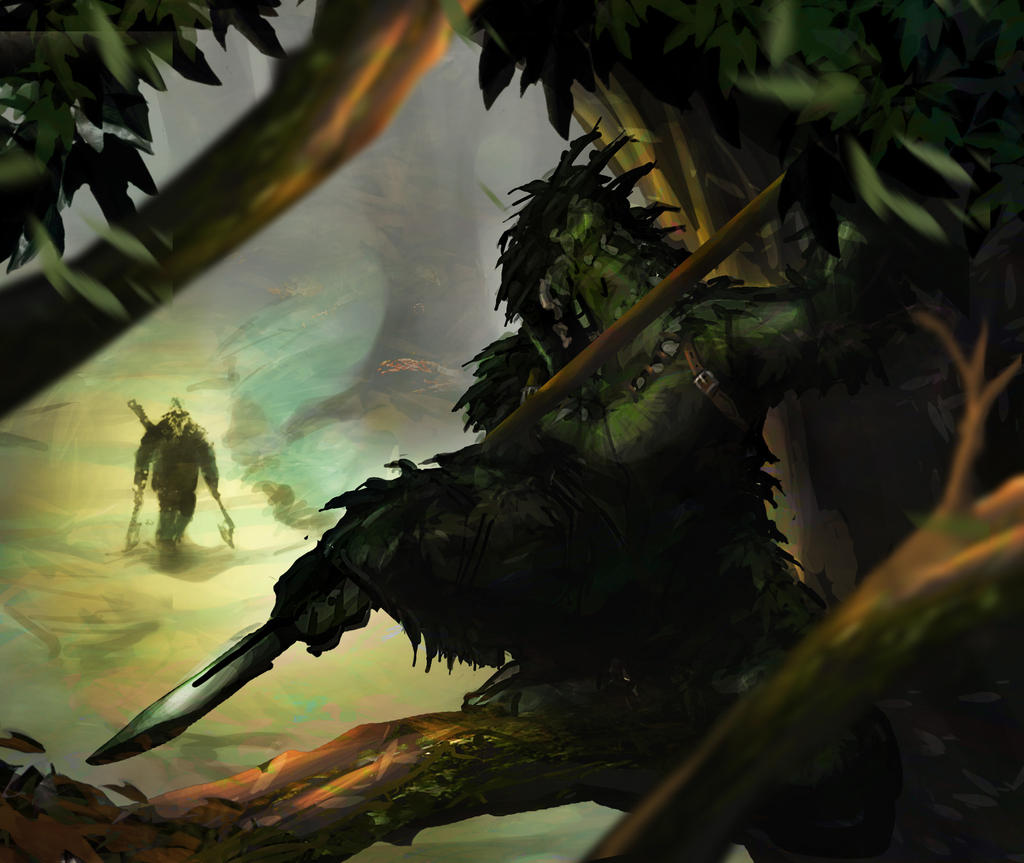
When the world is in need of a hero, greatness can arise from unexpected hovels. Guerrillas are commonfolk who have accepted the mantle of duty, displaying bravery against adversity. In lieu of formal weapon training, each guerrilla homebrews their own martial techniques, and can tactically adapt their style to the flow of battle.
Guerrillas begin their lives like many others do: as average folk in countryside hamlets, mud and brick desert communities, or in the boondocks of the bayous. They work as farmers, potters, smiths, ranchers, miners, gravediggers, weavers, and a whole slew of other mundane professions, never particularly striving for greatness, fame, or wealth. What sets a guerrilla apart from the rest is their determination and stubbornness in the face of difficulty. Guerrillas don’t back down when they’re told that they can’t do something, and instead take it as a challenge.
Only a natural born leader can transform from a peasant-in-need into a guerrilla. When only simple tools are available, quick witted thinking and group cohesion are a guerrilla warrior’s repertory. Even when the outlook is grim, a suave guerrilla with a plan can do the impossible.
Victims of Circumstance
Nobody chooses to be a guerrilla. When a village is under attack by a greater power and there are no saviors to be found, a guerrilla emerges out of necessity. Guerrillas, being extremely adaptable, are molded by the conditions of their misadventure. A farmer may become the holy warrior a village needs to fend off waves of rampaging undead, or a baker may discover they have a knack for casting fire spells after being burned by a red dragon. In any event, when you are making your guerrilla character, consider how your battlefield tactics and your choice of subclass reflect your character’s backstory.
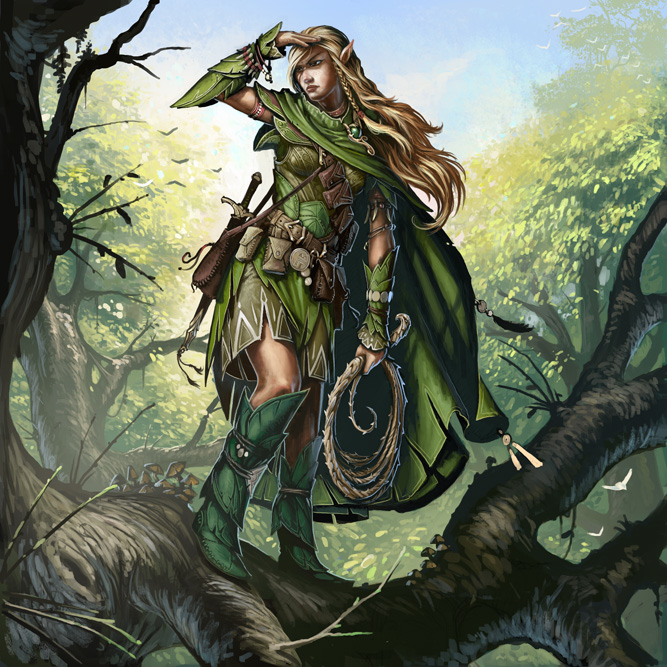
Underdog Tacticians
In combat, guerrillas eke out every advantage to turn hopeless defeats into victories. Tactics are unique to each guerrilla, but generally, guerrillas are keen on deploying ambushes and utilizing the environment. Scuffles are often fought on the home turf, allowing guerrillas to set traps or defend chokepoints.
Knack for Leadership
Guerrillas find strength in numbers. Successful leaders inspire their fellow commoners to combat, standing against the tide of whatever tyrannical force is to come. When creating your guerrilla character, talk to your DM and your fellow party members about your role in the party. Guerrillas often act as a de facto party leader, but make sure you don’t tread on others’ fun by being bossy.

New Class: Guerrilla
\page
#### The Guerrilla | Level | Proficiency Bonus | Features |:—:|:—:|:—| | 1st | +2 | Adaptable, Rally | 2nd | +2 | Fighting Style, Celerity | 3rd | +2 | Guerrilla Evolvement, Tempo | 4th | +2 | Ability Score Improvement, Martial Versatility | 5th | +3 | Extra Attack | 6th | +3 | Guerrilla Evolvement feature | 7th | +3 | Intimidating Strikes | 8th | +3 | Ability Score Improvement | 9th | +4 | Quick Action | 10th | +4 | Guerrilla Evolvement feature | 11th | +4 | Blitz | 12th | +4 | Ability Score Improvement | 13th | +5 | Ambush | 14th | +5 | Guerrilla Evolvement feature | 15th | +5 | Shrewd | 16th | +5 | Ability Score Improvement | 17th | +6 | Frenzied Rally | 18th | +6 | Awesome Strikes | 19th | +6 | Ability Score Improvement | 20th | +6 | Unwavering Leader
Creating a Guerrilla
To create a guerrilla, consult the following subsections, which give you hit points, proficiencies, and starting equipment. Then look at the Guerrilla table to see which features you get at each level. The descriptions of those features appear in the “Guerrilla Features” section.
Quick Build
You can make a guerrilla quickly by following these suggestions. First, put your highest ability score in Strength or Dexterity, followed by Charisma. Second, choose the folk hero background.
Hit Points
- Hit Dice: 1d10 per guerrilla level
- Hit Points at 1st Level: 10 + your Constitution modifier
- Hit Points at Higher Levels: 1d10 (or 6) + your Constitution modifier per guerrilla level after 1st
Proficiencies
- Armor: Light armor, shields
- Weapons Simple weapons, nets, improvised weapons
- Tools: Choose one type of artisan’s tools or one musical instrument
- Saving Throws: Dexterity, Charisma
- Skills: Choose two from Acrobatics, Animal Handling, Athletics, Deception, History, Intimidation, Performance, Persuasion, Stealth, or Survival
\column
Starting Equipment
You start with the following equipment, in addition to the equipment granted by your background:
- a shortbow and 20 arrows, any two simple melee weapons, or any simple melee weapon and a shield
- a flask of oil and a shovel
- a dungeoneer’s pack or an explorer’s pack
- leather armor
If you forgo this starting equipment, as well as the items offered by your bacgkround, you start with 3d4 × 10 gp to buy your equipment.
{{note
Multiclassing and the Guerrilla
When using the optional rule on multiclassing in the Player’s Handbook, here’s what you need to know if you choose guerrilla as one of your classes.
Ability Score Minimum. As a multiclass character, you must have at least a Charisma score of 13 and either a Strength or Dexterity score of 13 to take a level in this class, or to take a level in another class if you are already a guerrilla.
Proficiencies Gained. If guerrilla isn’t your initial class, here are the proficiencies you gain when you take your first level as a guerrilla: light armor, shields, improvised weapons.
Spell Slots. If you choose the Painted Mage subclass, you add one third of your levels (rounded down) in the guerrilla class to the appropriate levels from other classes to determine your available spell slots.
}}

{{descriptive
Sling of Giant Slaying
Legends tell of a magic sling that appears in the hands of a fabled guerrilla whose home is threatened by a goliath warlord. The DM can choose to grant this magic sling as a reward. It has the following characteristics.
Sling of Giant Slaying
Sling, legendary (requires attunement by a guerrilla)
You gain a +3 bonus to attack and damage rolls made with this magic sling.
If you use this sling to attack a giant or a goliath, you don’t have disadvantage if you are attacking at long range, and the attack deals an extra 8d4 bludgeoning damage on a hit.
}}
New Class: Guerrilla
\page
Guerrilla Features
As a guerrilla, you gain the following class features, which are summarized in the Guerrilla table.
Adaptable
1st-level guerrilla feature
When you finish a long rest, you gain proficiency in one skill of your choice. This benefit lasts until you finish a long rest.
Additionally, you can rapidly learn new talents. You can gain proficiency in one weapon, tool, instrument, armor type, or fluency in one language if you spend at least one hour each day for 7 days in a row practicing with another creature that has proficiency in the weapon, tool, instrument, or fluency in the language you wish to learn. Your proficiency or fluency vanishes if 7 days elapse without you practicing in the same manner.
Rally
1st-level guerrilla feature
As an action on your turn, you can choose a number of allies within 60 feet of you that can see or hear you equal to your proficiency bonus. You and those creatures enter a rally. While in a rally, you have the following rally features: Charge, Foray, and Unite. You can activate a rally feature as a bonus action on your turn while you are a part of a rally, and you can also activate one as part of the action you use to start the rally. A creature in the rally must be within 60 feet of you and be able to see or hear you to benefit from a rally feature.
The rally lasts until the end of combat, but it ends early if you become incapacitated or after you activate a number of rally features equal to your proficiency bonus. Once you start a rally, you can’t do so again until you finish a short or long rest.
Charge
When you use this feature during a rally, choose a hostile creature that you can see to target. Each creature in the rally can use their reaction to move up to their speed toward the target if they know its location.
Foray
When you use this feature during a rally, each creature in the rally gains a bonus to the damage roll of the first hit they score on their next turn. The bonus is equal to your Charisma modifier (minimum of 1 damage).
Unite
When you use this feature during a rally, choose a hostile creature that you can see to target. Each creature in the rally has advantage on the first attack roll they make against the target on their next turn.
\column
Celerity
2nd-level guerrilla feature
You have naturally quick reflexes. You have advantage on initiative rolls.
Fighting Style
2nd-level guerrilla feature
You adopt a particular style of fighting as your specialty. Choose one of the following options. You can’t take a Fighting Style option more than once, even if you later get to choose again.
Archery
You gain a +2 bonus to attack rolls you make with ranged weapons.
Dueling
When you are wielding a melee weapon in one hand and no other weapons, you gain a +2 bonus to damage rolls with that weapon.
Interception
When a creature you can see hits a target, other than you, within 5 feet of you with an attack, you can use your reaction to reduce the damage the target takes by 1d10 + your proficiency bonus (to a minimum of 0 damage). You must be wielding a shield or a simple or martial weapon to use this reaction.
Protection
When a creature you can see attacks a target other than you that is within 5 feet of you, you can use your reaction to impose disadvantage on the attack roll. You must be wielding a shield.
Two-Weapon Fighting
When you engage in two-weapon fighting, you can add your ability modifier to the damage of the second attack.
Thrown Weapon Fighting
You can draw a weapon that has the thrown property as part of the attack you make with the weapon.
In addition, when you hit with a ranged attack using a thrown weapon, you gain a +2 bonus to the damage roll.
Guerrilla Evolvement
3rd-level guerrilla feature
The impetus that caused you to become a guerrilla is realized, and you fully adapt to your conditions.
Your past determines the type of guerrilla you are: Avenger, Minuteman, Painted Mage, or Trapper, each of which is detailed at the end of the class’s description.
Your choice grants you features at 6th level and again at 10th and 14th level.
New Class: Guerrilla
\page
Tempo
3rd-level guerrilla feature
Before the start of your turn, you can choose to delay your place in the initiative order. When you do so, you decrease your initiative roll by an amount of your choosing.
Ability Score Improvement
4th-level guerrilla feature
When you reach 4th level and again at 8th, 12th, 16th, and 19th level, you can increase one ability score of your choice by 2, or you can increase two ability scores of your choice by 1. As normal, you can’t increase an ability score above 20 using this feature.
Martial Versatility
4th-level guerrilla feature
Whenever you reach a level in this class that grants the Ability Score Improvement feature, you can replace a fighting style you know with another fighting style available to guerrillas.
Extra Attack
5th-level guerrilla feature
You can attack twice, instead of once, whenever you take the Attack action on your turn.
Intimidating Strikes
7th-level guerrilla feature
When you hit a creature with an attack, you can choose for the creature to make a Wisdom saving throw with a DC equal to 8 + your proficiency bonus + your Charisma modifier. On a failed save, the creature is frightened of you until the start of your next turn. If the creature succeeds on its saving throw, you can’t use this feature on that creature again for 24 hours.
You can use this feature a number of times equal to your proficiency bonus. You regain any expended uses when you finish a long rest. While you are in a rally, you can use this feature without expending a use and while you have no uses remaining.
Quick Action
9th-level guerrilla feature
When you use your action to Dash, Disengage, Dodge, Help, Hide, Ready, Search, or Use an Object, you can use one of the other options as part of the same action.
You can’t ready a weapon attack or a spell when using the Ready action with this ability.
\column
Blitz
11th-level guerrilla feature
On your first turn of combat, your speed is doubled and your movement doesn’t provoke opportunity attacks.
Ambush
13th-level guerrilla feature
When you roll for initiative, you and creatures of your choice within 30 feet of you gain a bonus to your initiative rolls. The bonus is equal to your Charisma modifier (minimum of +1).
Additionally, you have advantage on attack rolls against creatures that haven’t had a turn in combat.
Shrewd
15th-level guerrilla feature
Non-skill proficiencies and languages you gain from your Adaptable feature are permanent.
Frenzied Rally
17th-level guerrilla feature
There is no limit to the amount of times you can use a rally feature during a rally. Your rally no longer ends early if you become incapacitated.
Additionally, the extra damage granted by the Foray rally feature now equals 2 × your Charisma modifier (minimum of 2 damage).
Awesome Strikes
18th-level guerrilla feature
When a creature makes a saving throw against your Intimidating Strikes feature for the first time in a 24 hour period, they have a -10 penalty to their saving throw.
Unwavering Leader
20th-level guerrilla feature
You have unlimited uses of your Rally feature.

New Class: Guerrilla
\page
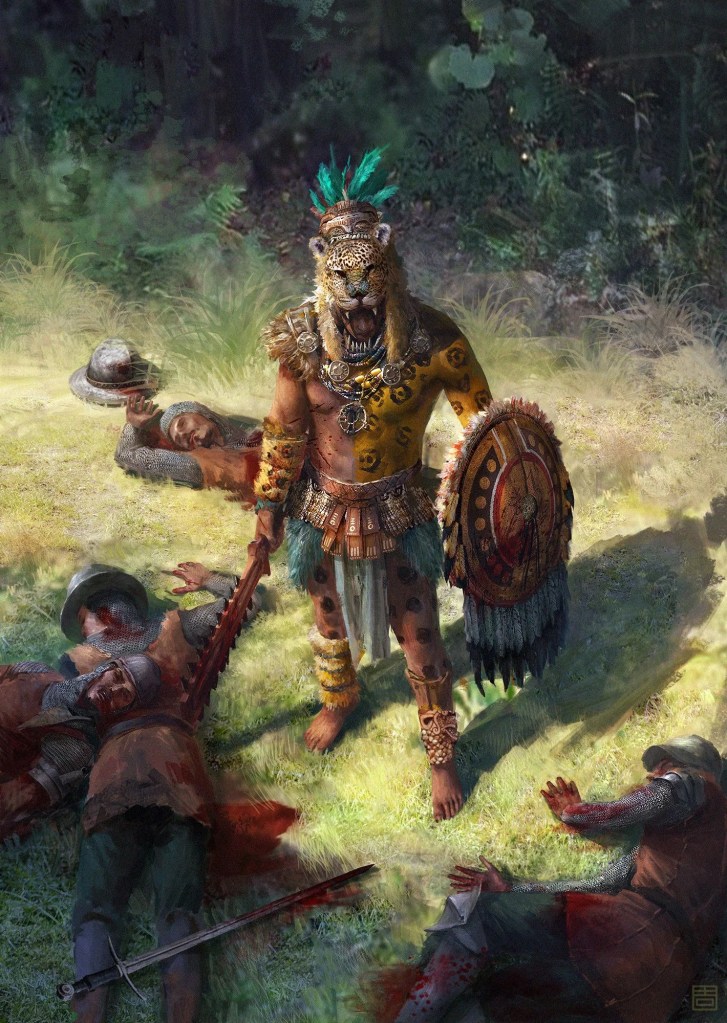
\page
Guerrilla Evolvements
Here are the evolvement options you can choose from at 3rd level.
Avenger
Avengers seek a higher power to guide their hand. In a moment of need, a religious fury awakens inside of them, and they wield a spark of the divine. Avengers enact righteous justice on wrongdoers who have threatened the balance of good and evil.

{{descriptive
Variant Avenger: Reaper
If you had a religious awakening involving an evil celestial or with a god of the death domain, you may choose to play a Reaper, a variant of the Avenger. Reapers are consumed by the urge to slay the living, with the intent of ferrying souls to the afterlife, or providing corpses for the necromantic arts. If you choose to play as a Reaper, you have the same features as the Avenger, except you deal necrotic damage instead of radiant damage with your Retribution and Zealous Rumble features.
Scythe. Scythes are simple weapons. They deal 2d4 slashing damage and have the Heavy, Reach and Two-Handed properties. Scythes weigh 7 pounds and cost 7 gp.
}}
\column
Extra Rally Features
3rd-level Avenger feature
You have the following rally features to use with your Rally: Bolster and Endure.
Bolster
When you use this feature during a rally, each creature in the rally gains a number of temporary hit points equal to 1d6 + your Charisma modifier (minimum of 1 temporary hit point) for the duration of the rally.
Endure
When you use this feature during a rally, each creature in the rally can reattempt one saving throw against an effect that is causing them to be charmed or frightened.
Retribution
3rd-level Avenger feature
Once per turn, you can deal an extra 1d8 radiant damage to a creature when you hit it with an attack if you saw that creature deal damage to you or an ally since the end of your last turn.
Zealous Strikes
6th-level Avenger feature
Your weapon attacks count as magical for the purpose of overcoming resistance and immunity to nonmagical attacks and damage.
Uplift the Needy
10th-level Avenger feature
When a creature that you can see within 30 feet of you fails a saving throw, you can use your reaction to grant that creature the ability to reroll their saving throw, potentially turning the failure into a success.
Once you change a failure into a success using this feature, you can’t do so again until you finish a short or long rest.
Zealous Rumble
14th-level Avenger feature
Once per turn, you can deal an extra 1d8 radiant damage to a creature when you hit it with an attack while you are in a rally. Radiant damage you deal ignores resistance.
New Class: Guerrilla
\page
Minuteman
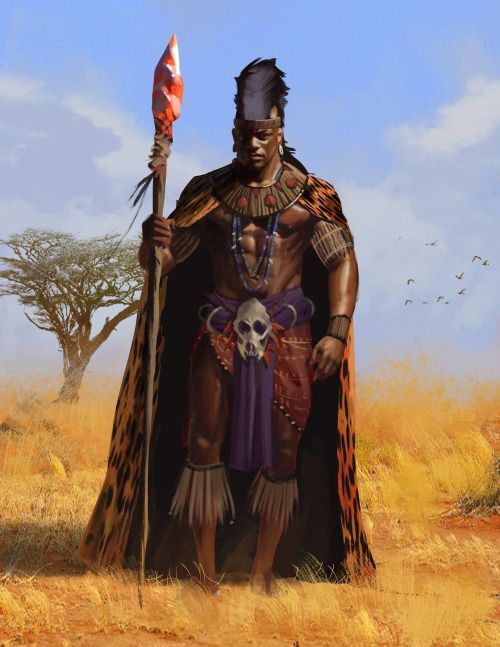
Willing to meet the throes of battle at a moment’s notice, Minutemen heed the call to action from their lords, country, or crown.
In places where the military is stretched thin, coffers are empty, and invaders are on the doorstep, Minutemen bear the onus of war.
Extra Rally Features
3rd-level Minuteman feature
You have the following rally features to use with your Rally: Mobilize and Prepare.
Mobilize
When you use this feature during a rally, each creature in the rally can use their reaction to stand up if they are prone and then move up to half their speed.
Prepare
When you use this feature during a rally, each creature in the rally can don or doff a shield, draw a weapon, and stow a weapon.
Rustic Champion
3rd-level Minuteman feature
Simple and improvised weapons you wield gain the finesse property and deal 1d6 damage if they would deal less damage otherwise.
\column
Ramshackle Combat
3rd-level Minuteman feature
When you roll for damage with a simple or improvised weapon and you roll the highest number on weapon’s damage die, you may reroll the damage die and add the result to the total damage. You can use this feature up to 3 times per turn.
Moment’s Notice
6th-level Minuteman feature
You are immune to being surprised. You can don or doff light armor as an action, and you can draw a weapon as part of the attack you make with that weapon.
Strength in Numbers
10th-level Minuteman feature
Your rallying party fights as one. Creatures in your rally have a +1 bonus to saving throws for each other creature in your rally within 10 feet of them, and they have half cover while within 5 feet of another creature in your rally.
Ambush Master
14th-level Minuteman feature
When you score a hit against a creature that hasn’t had a turn in combat, the hit is a critical hit if the weapon is a simple or improvised weapon. If the creature is also surprised, you can reroll the weapon’s damage dice and decide which result to use.
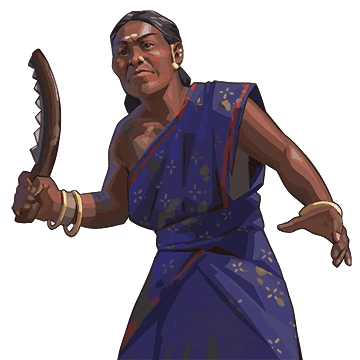
New Class: Guerrilla
\page
Painted Mage

A Painted Mage is a commoner transformed by magic. Raw elemental energy intertwines with the body, blood, and soul of the vessel. Painted Mages can be created by being exposed to the breath weapon of a dragon, handling a relic from another plane of existence, or having a partially realized sorcerous heritage.
Extra Rally Features
3rd-level Painted Mage feature
You have the following rally features to use with your Rally: Concentrate and Sculpt.
Concentrate
When you use this feature during a rally, each creature in the rally has advantage on Constitution saving throws made to maintain concentration on a spell until the start of your next turn.
Sculpt
When you use this feature during a rally, each creature in the rally has immunity to damage you deal with spells this turn.
Palette
3rd-level Painted Mage feature
When you gain this feature, choose one of the following damage types: acid, cold, fire, lighting, poison, or thunder.
When you cast a spell you learned from this class with a spell slot that deals damage, the damage type is changed to the damage type you chose when you gained this feature.
Spellcasting
3rd-level Painted Mage feature
You gain the ability to cast spells.
Cantrips. You learn two cantrips of your choice from the sorcerer spell list. You learn an additional sorcerer cantrip of your choice at 10th level.
Spell Slots. The Painted Mage spellcasting table shows how many spell slots you have to cast your sorcerer spells of 1st level and higher. To cast one of these spells, you must expend a spell slot of the spell’s level or higher. You regain all expended spell slots when you finish a long rest.
Spells Known of 1st-Level and Higher. You know two 1st-level sorcerer spells of your choice.
The Spells Known column of the Painted Mage Spellcasting table shows when you learn more sorcerer spells of 1st level or higher.
Painted Mage Spellcasting
|Guerrilla Level|Cantrips Known|Spells Known|1st|2nd|3rd|4th|
|:-:|:-:|:-:|:-:|:-:|:-:|:-:
3rd|2|2|2|—|—|—
4th|2|3|3|—|—|—
5th|2|3|3|—|—|—
6th|2|3|3|—|—|—
7th|2|4|4|2|—|—
8th|2|4|4|2|—|—
9th|2|4|4|2|—|—
10th|3|5|4|3|—|—
11th|3|5|4|3|—|—
12th|3|5|4|3|—|—
13th|3|6|4|3|2|—
14th|3|6|4|3|2|—
15th|3|6|4|3|2|—
16th|3|7|4|3|3|—
17th|3|7|4|3|3|—
18th|3|7|4|3|3|—
19th|3|8|4|3|3|1
20th|3|8|4|3|3|1
Whenever you gain a level in this class, you can replace one of the sorcerer spells you know with another spell of your choice from the sorcerer spell list.
Spellcasting Ability. Charisma is your spellcasting ability for your sorcerer spells. You use your Charisma whenever a spell refers to your spellcasting ability. In addition, you use your Charisma modiffier when setting the saving throw DC for a sorcerer spell you cast and when making an attack roll with one.
Spell Save DC = 8 + your proficiency bonus + your Charisma modifier
Spell attack modifier = your proficiency bonus + your Charisma modifier
New Class: Guerrilla
\page
Living Spell
6th-level Painted Mage feature
Your being is contaminated with raw magic. You are now a construct in addition to your other creature types. You have an aura of evocation magic, which is noticeable with spells and effects like detect magic.
Additionally, you gain the ability to see auras like your own. You can see a faint aura around any visible creature or object within 30 feet of you that bears evocation magic.
Dyed Blood
10th-level Painted Mage feature
You gain resistance to the damage type you chose for your Palette feature. If you already have resistance to that damage type, you can choose another damage type from among the options in the Palette feature, and gain resistance to that damage type instead.
Portrait of the Self
14th-level Painted Mage feature
Magic engulfs your entire being. Your body becomes a well of magic, making it so you can cast sorcerer spells of 4th-level and lower without having to provide any material components, even costly ones.
Additionally, spells and effects that only work on a specific creature type, such as hold person, no longer effect you unless you willingly allow the spell or effect to work on you or the spell or effect specifically works on constructs.
Trapper
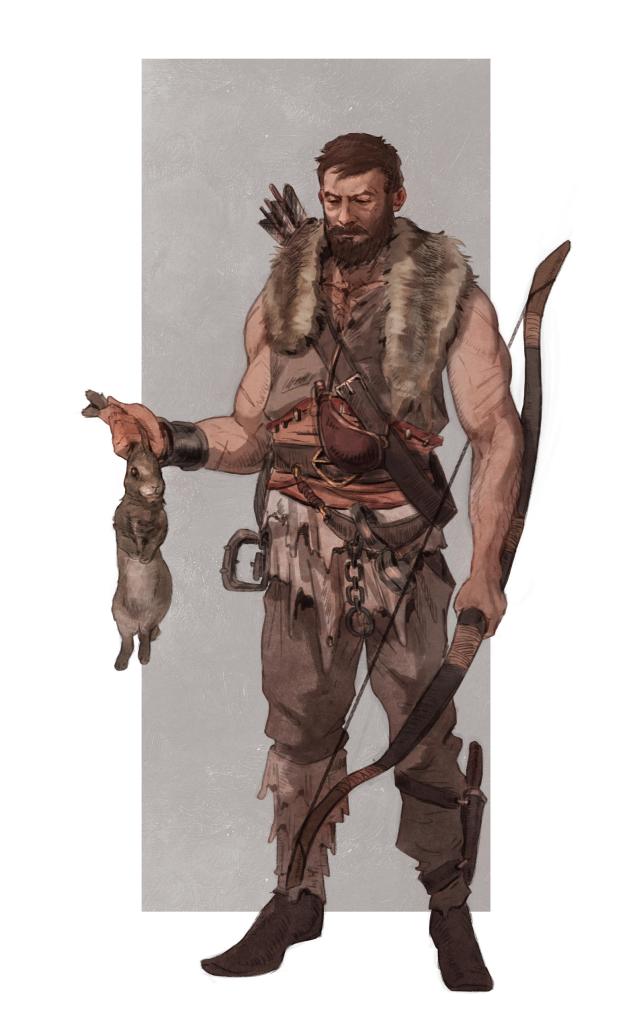
Trappers are devious experts at plotting ruses. They aim to end a fight before it comes to clashing weapons. Kobolds and other monstrous races are particularly drawn to becoming Trappers, using their expertise to defend their subterranean homes from prying adventurers.
This subclass utilizes the rules for setting traps as described under the description of thieves’ tools on page 84 of Xanathar’s Guide to Everything.
Extra Rally Features
3rd-level Trapper feature
You have the following rally features to use with your Rally: Footing and Scuffle.
Footing
When you use this feature during a rally, each creature in the rally has advantage on Dexterity saving throws until the start of your next turn.
Scuffle
When you use this feature during a rally, each creature in the rally can use their reaction to grapple or shove a creature.
Deploy Hazards
3rd-level Trapper feature
When you take the attack action on your turn, you can spread a bag of ball bearings or caltrops in place of one of your attacks.
Jury-Rigging
3rd-level Trapper feature
You gain proficiency with thieves’ tools. You have advantage on ability checks made to set the DC of traps, and the time it takes you to create a trap is reduced to 10 minutes.
Trap Sensibility
6th-level Trapper feature
You have advantage on Wisdom (Perception) and Intelligence (Investigation) checks made to detect traps, and you have advantage on ability checks made to disable traps.
Additionally, you don’t set off your own traps unless you choose to do so, and you automatically succeed on Dexterity saving throws against ball bearings and caltrops.
Superior Traps
10th-level Trapper feature
The damage dealt by your traps are doubled, and other creatures have disadvantage on Wisdom (Perception) and Intelligence (Investigation) checks made to spot them.
Snared Prey
14th-level Trapper feature
You have advantage on attack rolls against creatures that are grappled, and other creatures have advantage on attack rolls against creatures that you have grappled.
New Class: Guerrilla
\page
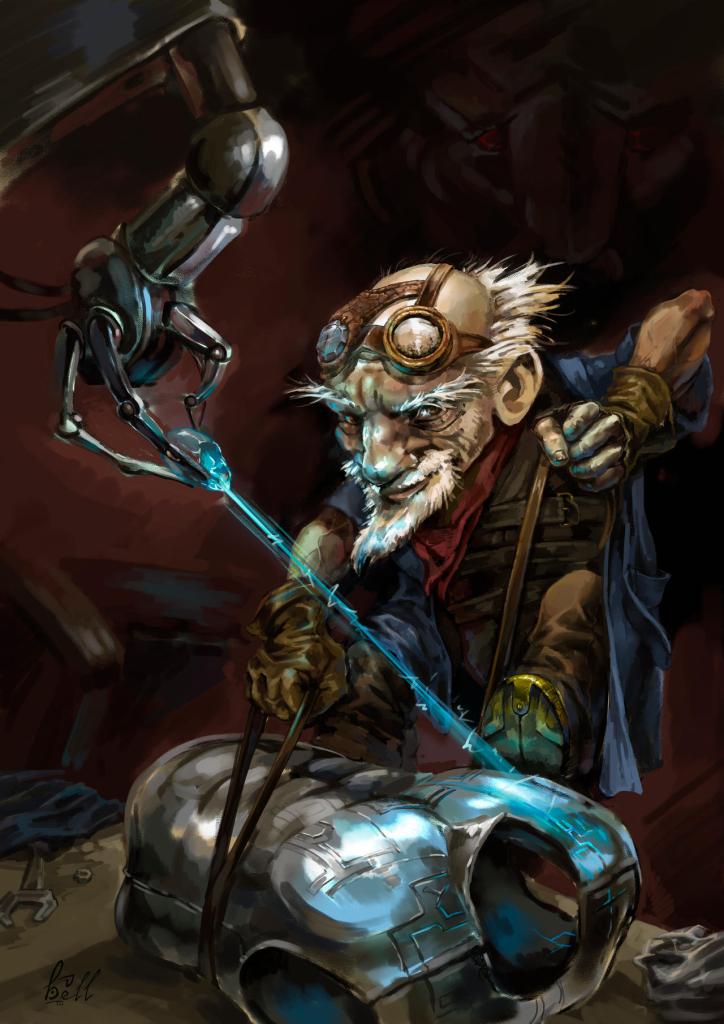
\page
New Class
The Mechanician
A.K.A. The Clockwork Mage
A.K.A. The Engineer

“The shadowlander pulls a small metallic object from her belt and flick it toward the chieftain. As the object moves forward it unspools into a scourge made of sharp interlocked links of chain. The var’en is no match for the whirling shadow. As the chieftain falls, the shadow flicks her wrist again and the weapon is once again safely and unobtrusively stowed on her belt. Now, time to find that treasure…”
“The gnome pulls his goggles down over his greasy hair to cover his eyes and presses a button on the back of his gauntlet. He feels the hot, acrid breath of the gigantic purple worm as the maw of the creature lunges hungrily down toward him. Steam shoots out of nozzles on the back of his boots. The wrenches and gears that adorn his outfit rattle and clank as he is propelled forward with a burst of speed, safely out of the creature’s grasp.”
“The alley ends in a high stone wall – a dead end! The bandits round the corner and advance on him, certain that he has no way to escape. The gunslinger flips a lever on his belt as the bandits near him. In a flash, he disappears. The thugs freeze, looking confused, unsure where their prey has gone. The sound of a firearm round being chambered behind them is the last thing that they hear.”
Though their motivations and tactics might be different, each of these engineers employs their superior skill with machinery and technology to overcome the various obstacles that stand between them and their goals.
Their resourcefulness allows them to invent and build devices which help them enhance their abilities and augment their weaknesses.
Wizards are well known for their study of secrets both esoteric and ephemeral.
There are, however, a rare few non-magical artisans who take advantage of advanced learning and study the ‘magic’ of applied science. Many of these artisans are gnomes, but not all of them.
The Northern Vast is full of universities and academies and science, both theoretical and applied, as well as mathematics, are both considered in high regard by the general populace. Moving even beyond such marvelous inventions as the astrolabe and quadrant, these technical adepts, sometimes called Clockwork Mages, create and power mechanical constructs and incredible gadgetry.
Although they call themselves “Mechanicians” or “Engineers”, Clockwork Mages closely guard the secrets of their trade, and will allow the appreciative but untrained common folk to pass them off as mere ‘toymakers’ if it means their true knowledge remains theirs’ or their guild’s alone.
Whether they come by their abilities by developing arcane theories, praying for guidance from their deities, or studying at the feet of a master tinker, those skilled in mechanics are rare enough that their work instills in their average observers a childlike wonder and marvel.
Such observers typically think of the work as a supreme talent or artistry, but to others with a deeper understanding of the underlying principles, mechanical aptitude is nothing more than theory made practical.
Background
Most Mechanicians guard their secrets and mechanical knowledge jealously; it is no surpise that many of them have the Hermit background, preferring a life of isolation to better perfect their craft. Many gnomes are naturally raised into the craft from a young age by their Engineer parents. On the other hand, some Clockwork Mages seek to use their abilities for the amusement or appreciation of the populace — if your character is of this disposition, consider the Entertainer background. In truth, Clockwork Mages and Mechanicians come from all walks of life — and from any kin — though they are undeniably more common among city-dwellers than those who live in the wilderness.
Gadgets & Strange Technology
Not every scholar or inventor has the skills it takes to become an engineer. Mechanicians are not only students of science, but they are masters of turning scientific principles into new technology that has practical applications in the real world. Most have some education, though for many this education is the result of years of experimentation and tinkering rather than formal study.
An Engineer might be a member of a prestigious university or technical academy, or else a guild of like-minded craftspeople, or even simply a self-taught loner with a talent for working with machinery. Clockwork Mages can do a little bit of everything. Whatever the challenge, they can invent, build, and adapt their gadgets to be the right tools for the job.
New Classes: The Mechanician
\page
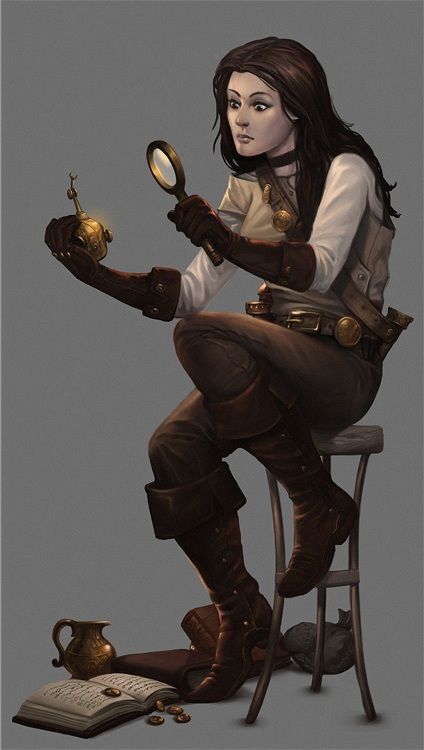
Creating a Mechanician
When creating a Clockwork Mage, think about how your character learned the skills needed to work with machines. Did they teach themselves? Or were they trained by a university, guild or society of Engineers?
Perhaps they come from a culture like that of the gnomes of Zilverhome, where such skills are extremely common. Or perhaps they just figured it out for themselves through experimentation and accumulated practice.
Quick Build
You can make a Mechanician quickly by following these suggestions. First, Intelligence should be your highest ability score, followed by Constitution or Dexterity. Second, choose the Engineer’s background.
Class Features
As a Mechanician you gain the following class features:
Hit Points
Hit Dice: 1d6 per Mechanician level
Hit Points at 1st Level: 6 + Constitution modifier
Hit Points at Higher Levels: 1d6 (or 4) + Constitution modifier per Mechanician level after 1st
Proficiencies
Armor: Light Armor
Weapons: all simple weapons, all firearms
Tools: Gunsmith’s Tools, Smith’s Tools, Tinker’s Tools
Saving Throws: Dexterity, Intelligence
Skills:
Choose four from:
- History
- Insight
- Investigation
- Medicine
- Perception
- Sleight of Hand
Equipment
You start with the following equipment, in addition to the equipment granted by your background:
- (a) Any simple melee weapon, or
- (b) a light crossbow & 20 bolts
- (a) Scholar’s Pack or (b) Explorer’s Pack
- (a) Set of mechanic’s clothes or (b) Tinker’s tools
##### The Mechanician | Level | Proficiency Bonus | Features | Energy | |:—:|:—:|:—|:—:| |1st |+2 |Gadget Schematics |—| |2nd |+2 |Energy, Signature Device |2| |3rd |+2 |Mechanician Specialization |3| |4th |+2 |Ability Score Improvement| 4| |5th |+3 |Academic Literacy| 5| |6th |+3 | —|6| |7th |+3 |Mechanician’s Expertise |7| |8th |+3 | Ability Score Improvement |8| |9th |+4 |Scavenger |9| |10th |+4 |—| 10| |11th |+4 |—| 11| |12th |+4 |Ability Score Improvement |12| |13th |+5 |Saboteur, Signature Device Upgrade |13| |14th |+5 |—| 14| |15th |+5 |Crafting Expertise |15| |16th |+5 |Ability Score Improvement |16| |17th |+6| — |17| |18th |+6| — |18| |19th |+6| Ability Score Improvement, Signature Device Upgrade |19| |20th| +6| — |20|
New Classes: The Mechanician
\page
Alternatively, you can choose to forego this starting equipment and instead begin with 5d4 x 10 gold pieces in addition to any wealth and equipment granted by your character background.
Mechanic’s Clothes (Cost: 10 gp, Weight: 5 lbs.)
These clothes protect the wearer from grease and grime while providing excellent comfort and utility. The basic outfit consists of a set of overalls or a heavy apron along with sturdy boots, heavy gloves, and a tool belt. Mechanic’s clothes often include other occupational safety equipment such as dark-tinted goggles and a face mask that can be pulled up to cover the mouth and nose.
1st Level: Gadget Schematics
You are skilled at building mechanical gadgets that perform various functions and incorporating them into your clothing, armour, weapons and other gear. Some gadgets provide a continuous benefit as long as the gadget is equipped (all unless noted by the DM).
Other gadgets have an effect that requires you to take an action in order to activate it. Gadgets are built using schematics which show the design parameters and intended operation of the device. Each schematic has a level of complexity that is classified as Trivial, Simple, Advanced and Intricate.
Gadget Slots per Complexity Level table
| Level | Schematics Known | Trivial | Simple | Advanced | Intricate |
|---|---|---|---|---|---|
| 1st | 7 | 4 | 3 | — | — |
| 2nd | 8 | 5 | 3 | — | — |
| 3rd | 9 | 5 | 4 | — | — |
| 4th | 10 | 5 | 4 | — | — |
| 5th | 11 | 5 | 4 | — | — |
| 6th | 12 | 6 | 5 | 1 | — |
| 7th | 13 | 6 | 5 | 1 | — |
| 8th | 14 | 6 | 5 | 2 | — |
| 9th | 15 | 7 | 5 | 2 | — |
| 10th | 16 | 7 | 6 | 3 | — |
| 11th | 17 | 7 | 6 | 3 | 1 |
| 12th | 18 | 7 | 6 | 4 | 1 |
| 13th | 19 | 7 | 6 | 4 | 2 |
| 14th | 20 | 7 | 6 | 4 | 2 |
| 15th | 22 | 7 | 7 | 5 | 3 |
| 16th | 23 | 7 | 7 | 5 | 3 |
| 17th | 23 | 7 | 7 | 5 | 4 |
| 18th | 24 | 7 | 7 | 6 | 4 |
| 19th | 25 | 7 | 7 | 6 | 5 |
| 20th | 26 | 7 | 7 | 6 | 5 |
At 1st level, you gain access to a limit of gadgets of your choice from the List of Schematics. The Schematics Known column of the above table shows when you learn additional gadget schematics. Additionally, when you gain a level, you can choose one of your gadgets and replace it with a different one from List of Gadget Schematics. Any new gadget that you learn must be of a level which you are able to equip. A gadget lost or destroyed must be replaced entirely.
Learning a schematic and turning the schematic into a working gadget costs an amount of money and time depending on the complexity. These costs include the parts and components needed to build the device as well the time spent prototyping, testing and troubleshooting the gadget to perfect its operation. The costs and time required for learning a new schematic are:
| Complexity Level | Cost |
|---|---|
| Trivial | 25gp / 2 hours |
| Simple | 40gp / 4 hours |
| Advanced | 75gp / 6 hours |
| Intricate | 150gp / 8 hours |
Equipping Gadgets
It takes time and effort to build and maintain your gadgets in working order. Repairs and preventive maintenance must be performed: sprockets greased, springs wound, coolant refilled, capacitors recharged, etc. For this reason, you can only maintain a limited number of equipped gadgets, as shown in the Gadget Slots per Complexity Level table.
As you level up, you become more skilled at building and maintaining these gadgets, able to keep more of them functional at any time. Because of the expertise required to operate these gadgets and the amount of personal customizations that each engineer makes to their gadgets, only the Mechanician that built it can use a gadget and benefit from its effects.
- Gadgets are somewhat “worn” like physical items. Each equipped gadget is integrated into one of your items of clothing as specified in the description. Multiple gadgets using different schematics each can be integrated into the same piece of equipment.
- You can equip gadgets, up to the maximum number shown in the Gadget Slots per Complexity Level table. In order to equip a gadget, you must have an available gadget slot of the same or higher level of complexity as the schematic for the gadget.
- Whenever you complete a long rest you can reconfigure your list of active gadgets, changing which gadgets you have equipped from among the schematics that you know.
Making Gadgets Feel Unique
While the descriptions explain what the gadgets do, exactly how the gadgets achieve these effects has been left up to you. You should work with your DM to describe exactly how each of your gadgets operates, tailoring the descriptions to best fit your character and campaign world. (For example, a Headlamp might be powered by a lemon juice, copper wire and iron tube galvanic cell battery or could harness the power of a rare type of crystal only found deep underground.)
New Classes: The Mechanician
\page
Describing your gadgets can help to make your character unique and memorable since no two Clockwork Mages will necessarily do things the same way.
Stacking Gadget Activations
You cannot activate two gadget effects that both require 1 action during the same turn. You can activate both a gadget that requires 1 action and another gadget that requires only an interaction by combining both activations into one action.
Gadget Attack Rolls and Saving Throws
Some gadgets can be used as weapons, allowing you to make an attack roll. The ability score bonus added to this attack roll is listed in the text for the schematic for that particular gadget. Your Intelligence modifier sets the DC for saving throws against effects created by the use of your gadgets.
- Gadget attack modifier = your Proficiency bonus + the ability score modifier listed in the gadget description
- Gadget save DC = 8 + your proficiency bonus + your Intelligence modifier
Non-magical in Nature
Although some gadgets create effects that are similar to those created by certain spells and magic items, gadgets and their effects are inherently non-magical. A gadget, or the effect created by a gadget, cannot be detected or dispelled using abilities that work on magic. Spells such as detect magic, dispel magic, counterspell or antimagic field have no effect on the operation of a gadget.
##### List of Schematics | Complexity Level | Gadgets | |:—-:|:————-| | Trivial | • Breathalyzer • Entropy Reducer • Fire Extinguisher • Flotation Device • Gnomish Tools • Headlamp • Rearview Mirror • Weapon Flinger • Water Condenser • Writing Pen • Flaregun • Eagle Lens • Retractable Ice Skates • Magitector | | Simple | • Antigravity Gloves • Chameleon Cloak • Defibrillator • Food Irradiator • Gyro Stabilizer • Inertial Dampener • Lie-Detecting Compass • Night Vision Goggles • Parachute Cloak • Rebreather • Recovery Field • Taser Gloves • Firestarter • Steam Spray • Universal Translator • Tinker’s Master Gloves | | Advanced | • Adrenaline Infusion • Ballistic Rounds • Chainsaw Sword • Holographic Disguise • Inflatable Shoes • Life Form Scanner • Mass Protoplaser • Reset Button • Suction Cup Climbers • Targeting Scope • Rocket Boots | | Intricate | • Advanced Opti-Visor • Invisibility Generator • Jetpack • Mining Drill • Teleporter • Quake Machine • Time-Dilation Zone • Neuroadaptive Headgear • Backup Energy Supply |
2nd Level: Energy
At 2nd level, you gain 2 Energy, a personal expendable pool of points with an amount equal to your Mechanician level. You regain 1d6 Energy during a short rest, and fully regain it during a long rest. Many Engineer features utilize energy, and the costs of these are denoted in the description of each abilities’ descriptions. The more powerful your Clockwork Mage becomes, the more energy you can invest into your gadgets and thus the more effective they can become. You regain 1d6 Energy during a short rest and fully regain it during a long rest.
2nd Level: Signature Device
At 2nd level, you build an archetype of the invention that you would contribute to the field of science, your signature device.
Your creation is a versatile, and customizable weapon, that proves your utter genius.
You can choose one of the following options:
- the D.R.A.G.O.N. Flame-Distributor
- the Fix-R-Upper Multi-Wrench™
- the Magitech Omnistaff
- the S.T.E.A.M. Gauntlet© or
- the Elixir Grenade Gizmo (E.G.G.)®.
If you lose your signature device, you can create a new one over the course of three days of work (8 hours each day) by expending 100 gp worth of metal and other raw materials.
Repairing it requires a DC = 15 Intelligence check, and half the money and time it takes to build it. At 7th, 13th, and 19th level, you gain upgrades for your signature device.
The D.R.A.G.O.N. Flame-Distributor
Hendrix’s “Dynamic Resource Allocation Generator Optimiser Nozzled Flame-Distributor” (patent pending).
A machine that tries to replicate the breath of a dragon. This device consists of a tank full of alchemical fuel worn as a backpack, connected by a fuel-line to a single handheld flame-gun, sometimes strapped to the forearm, sometimes held like a cabled pistol, which ejects and ignites the fuel. Most devices have a built-in perpetual motion recharging capacitor that uses ingenius methods to replenish its depleted fuelstock given enough time. By using the D.R.A.G.O.N. flame-distributor, you can select a variety of modes, some of which project extremely effective and very destructive fire. It’s useful for clearing trenches, bunkers, dungeon corridors and caves.
New Classes: The Mechanician
\page
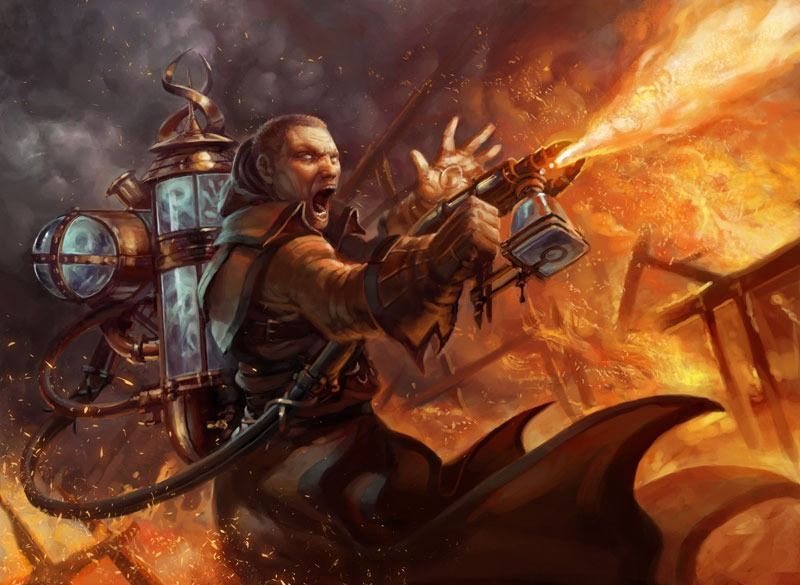
Basic mode. As an action, you can use the D.R.A.G.O.N. device to make a ranged attack as if casting firebolt, even if you have no energy left at that time. Use your Gadget Attack modifier (in this case, proficiency modifier + Intelligence modifier) to make the attack, which has the same range and limitations as the firebolt cantrip.
Fireblast mode. You concentrate the alchemical fire in your D.R.A.G.O.N. device and sear your enemies with every strike. As an action, spend 3 Energy points to shoot either A) a 30ft long, 5ft wide blazing stream, or B) a 15ft cone of flame. Any creature within the area of effect must make a Dex saving throw, using your Gadget Save DC, suffering 1d6 + your Intelligence modifier fire damage if they fail the throw, and half as much if they succeed.
As your Mechanician becomes more knowledgeable in refining their device’s mechanics, the flame-distributor’s fireblast mode damage increases by 1d6 when you reach certain levels: 7th level (2d6), 13th level (3d6), and 19th level (4d6).
The fire from the fireblast mode of your device can completely disintegrate large boulders and instantaneously evaporate puddles and smaller bodies of water with ease.
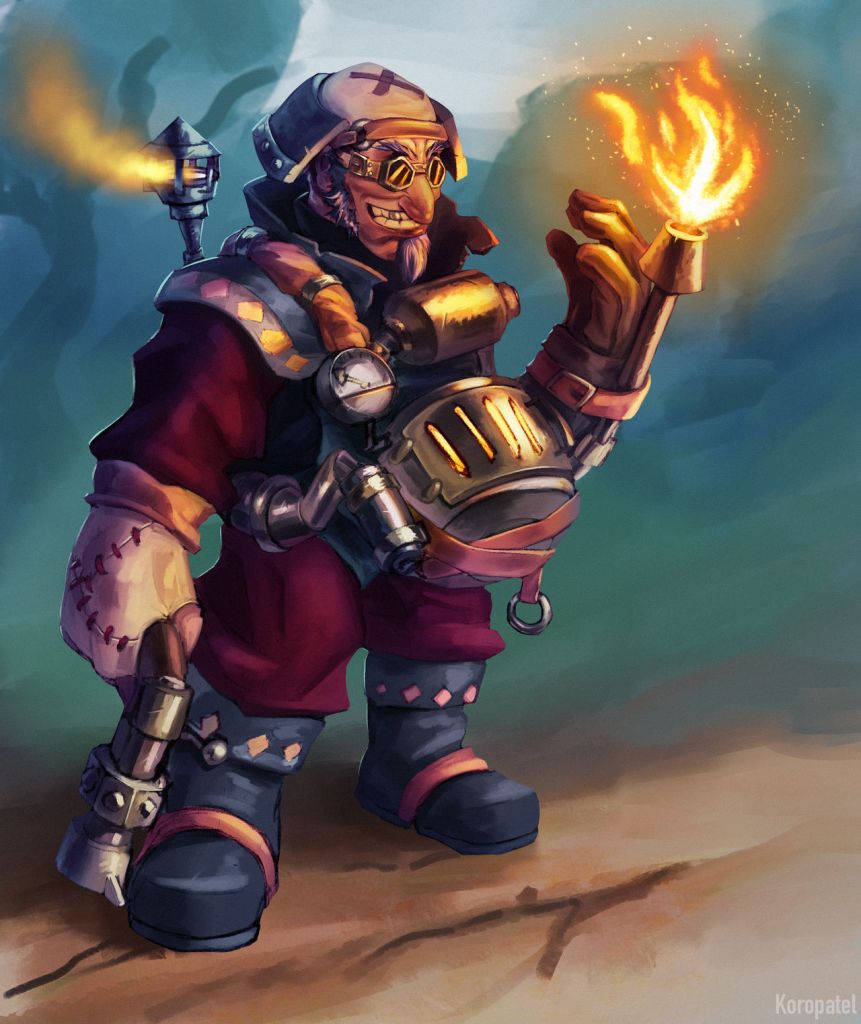
Smokescreen mode. As a bonus action, spend 2 Energy point to exhaust smoke from your D.R.A.G.O.N. device. A billowing dark cloud appears in a 20-foot-radius sphere centred around you. The area fills with thick and acrid smoke that heavily obscures all creatures within its area of effect. The smokescreen persists for 1d6 rounds, or until a strong wind disperses it.

Napalm mode. For 6 Energy, you hurl a mote of alchemical fire at a position within range. Make a ranged Gadget attack (with your proficiency bonus + your Intelligence modifier).
On successful hit, a 20-feet circular area centred on the target begins to burn in response to the napalm, transforming into difficult terrain and flammable materials with a low melting point ignite if they aren’t being worn or carried.
All creatures caught in the area of effect must make a Gadget saving throw or receive 1d8 fire damage at the start of each of their rounds until the fire is extinguished. The initially affected area persists for 2 rounds before the ground cools off.
The napalm’s damage increases by 1d8 when you reach certain levels: 7th level (2d8), 13th level (3d8), and 19th level (4d8).
Affected creatures can make additional Gadget saving throws at the end of their rounds, which are made with advantage if they use an action to drop prone and roll around to try and extinguish the flames.
If anyone helps them try to extinguish the flames, they can add a +4 to the Gadget saving throw.
New Classes: The Mechanician
\page
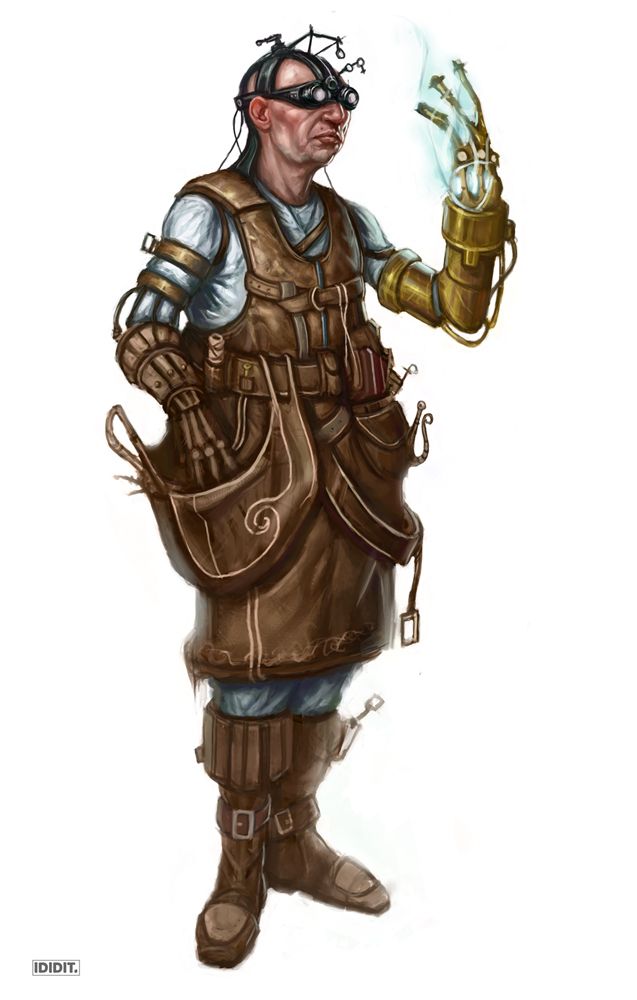
Air Vent. For 4 Energy, you trigger a valve in your D.R.A.G.O.N. device to direct an instantaneous blast of vapour that forces a creature or object within 10 feet of you to be pushed away from you. This blast of vapour doesn’t push with enough force to cause damage, however, the hot-air blast can extinguish candles, torches, and similar unprotected flames in the area. It may cause protected flames, such as those of lanterns, to dance wildly and has a 50% chance to extinguish them.
The Air Vent’s range increases when you reach certain levels: 7th level (15 feet), 13th level (20 feet), and 19th level (25 feet). Any creature caught in the Air Vent’s area of effect must make an Athletics check against your Gadget Save DC or be moved up to 10 feet in the direction you point your D.R.A.G.O.N. device’s nozzle.
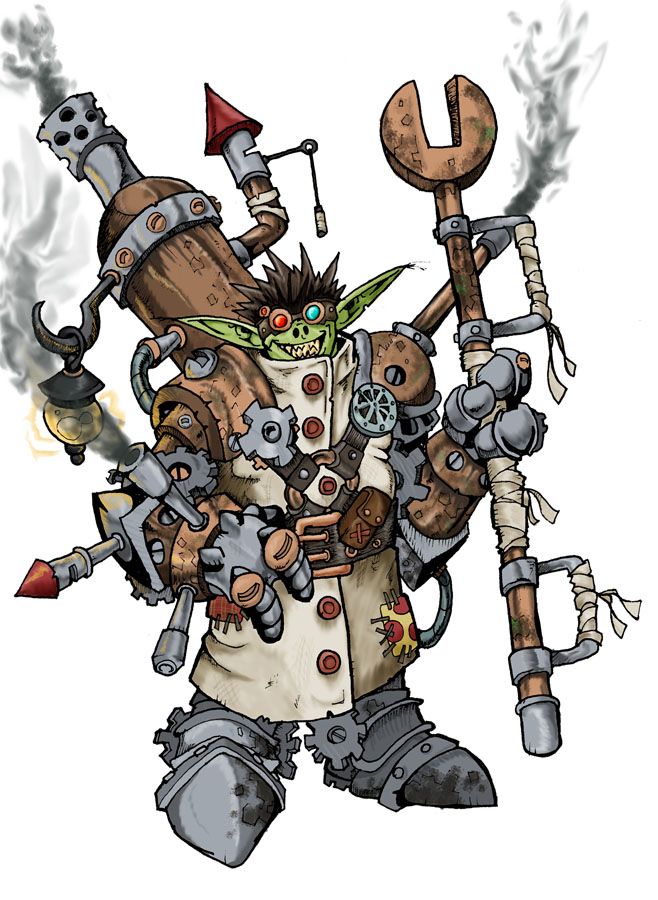
The Fix-R-Upper Multi-Wrench™
It’s a wrench. It’s a weapon. It’s a gadget. It’s Augustin Coppervein’s best-selling all-purpose performance-enhancing Fix-R-Upper Multi-Wrench™.
It doesn’t matter what you need – this device has it for every situation. Wrenches are commonly used as a mechanic’s tool for turning bolt cranks and repairing mechanical constructs, but this device can also be used as a club and deliver powerful attacks. It is a large wrench that holds a spinning metallic shell at its top.
You gain a +2 bonus to attack and damage rolls made with this device. Additionally, when you make a craft check to build or repair something, you add a +2 bonus to the roll while in possession of the Multi-wrenchTM, as it also functions as a tool.
Boomerang mode. In this mode, your Multi-wrench™ has the Thrown property, with a normal range of 20 feet and a long range of 60 feet. While wielding it, you can spend 2 Energy to make a ranged attack against a creature, dealing 1d4 lightning damage + Intelligence modifier on a hit, and it is considered a magical weapon for the purposes of overcoming resistance and immunity. Immediately after the attack, the Multi-wrenchTM propels itself back to your hand.
The damge of the Multi-wrench™ increases by 1d4 when you reach certain levels: 7th level (2d4), 13th level (3d4), and 19th level (4d4).

Efficient Repair mode. By spending 4 energy, your creations can last longer than expected. You can use your Multi-wrench™ to repair a damaged device made of stone, metal or wood within 30 feet.
You may also use this feature to repair a construct within 5 feet of you for 1d6 + your Intelligence modifier hit points as a bonus action, as long as the construct has at least 1 hit point. However, if the construct is unconscious and making death saving throws, you can use this feature to stablise it to 0 hit points.
The bonus to repair checks to constructs is increased when you reach certain levels: 7th level (2d6), 13th level (3d6), and 19th level (4d6).
Force Pulse mode. For 4 Energy, as an action, you can force all creatures (sizes Tiny to Large) within 10 feet of you to make a Strength save. On a failure, they are deafened and knocked prone until the end of your next turn. The pulse’s range increases when you reach certain levels: 7th level (15 feet), 13th level (20 feet), and 19th level (25 feet).
New Classes: The Mechanician
\page
Lockpick / Disarm Mode. For 3 Energy, you can use your Multi-wrench™ to attempt to open a non-magical mechanical lock or disarm a non-magical mechanical trap that you can see within range. The object can be a door, a box, a chest, a set of manacles, a padlock, or another object that prevents access.
You can attempt to pick the lock with your Multi-wrench™ and add 1d4 + your proficiency bonus to the check roll. If the object has multiple locks, only one of them is unlocked. The wrench’s lockpicking bonus increases when you reach certain levels: 7th level (1d4+1), 13th level (1d4+2), and 19th level (1d4+3).
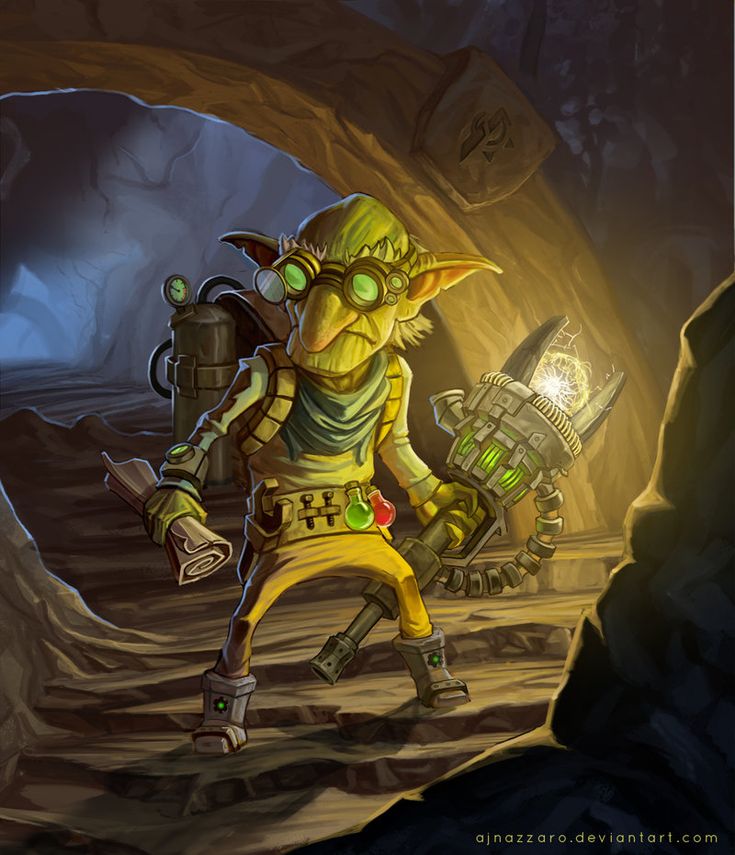
The Magitech Omnistaff
The Magitech Omnistaff houses an arcanite crystal at its top, which maximizes and stores energy output to generate the most out of it.
Successful melee weapon attacks against constructs or mechanical objects, made with this device, deal an additional 1d4 lightning damage.
Whenever you suffer lightning damage, you can use your reaction to use your Omnistaff to regain 1d4 Energy points. This can be done up to three times in total, restarting when you take a short or long rest.
Additionally, energy in the device must be depleted before it can be refilled.
Basic mode. As an action, you can use the D.R.A.G.O.N. device to make a ranged attack as if casting firebolt, even if you have no energy left at that time.
Use your Gadget Attack modifier (in this case, proficiency modifier + Intelligence modifier) to make the attack, which has the same range and limitations as the firebolt cantrip, however the damage type is lightning damage, rather than fire damage.

Spell Deflector mode. For 4 Energy, you gain +1d4 bonus in saving throws against the effects of spells until your next turn. When you succeed on the save against a spell that targets only you, the Omnistaff can redirect the spell’s effect to its original caster using their slot level, spell save DC, attack bonus, and spellcasting ability. The spell deflector’s bonus increases by 1d4 when you reach certain levels: 7th level (2d4), 13th level (3d4), and 19th level (4d4).
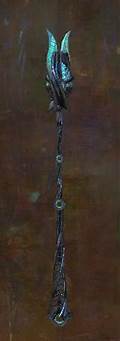
Lightning Rod. By harnessing its stored Energy points, the omnistaff’s arcanite crystal unleashes a 100-feet radius lightning burst in all directions. Each creature in the area suffers 1d4 lightning damage per Energy point on a failed Dexterity saving throw, or becomes dazed for 1 round on a successful one. The lightning’s damage increases when you reach certain levels: 7th level (2d4), 13th level (3d4), and 19th level (4d4).
New Classes: The Mechanician
\page
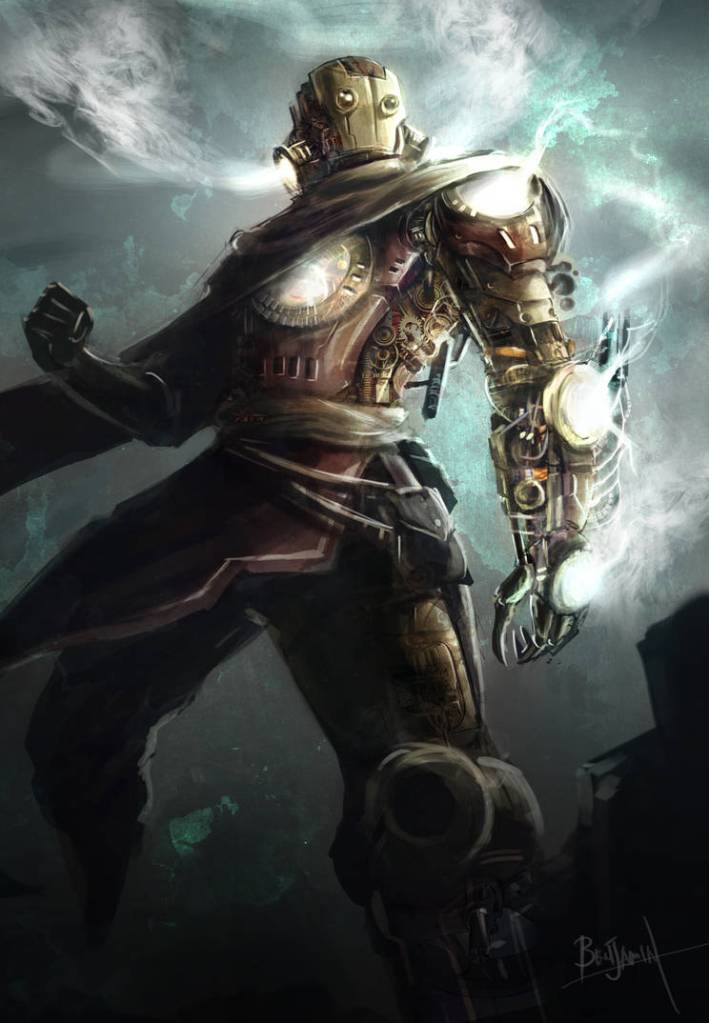
\page

S.T.E.A.M. Gauntlet©
Newell and Harrington’s Super Tenacious & Exemplary Amplifier Module (S.T.E.A.M.) Gauntlet© is the ultimate accessory for the combat-conscious Mechanician! Available now at all good Gadgetz-R-Us retail outlets and by mail order from our headquarters in Zilverhome. Send your courier pidgeon and first installment now!
This oversized steam-powered glove, which weighs 7 and a half pounds, is made to cover your main arm. It gives you a +2 bonus on any checks to brute-force open a stuck, non-magically locked or barred door with ease. The weight given is for a single gauntlet and while wearing it, it counts as a +2 to your Armour Class, unless it is worn with any other heavy type of armour, in which case it only grants you a +1 to your AC. It is possible to wear two S.T.E.A.M. Gauntlets©, however you can only ever benefit from a +2 to your AC from your gauntlets. Successful melee attacks with a S.T.E.A.M. Gauntlet© deals 1d6 + Strength modifier + your level in Force damage.
Rocket Grab mode. Ever wanted to unfairly armlock an ogre? Grappling can help you do all this and more. For 2 Energy, the Gauntlet’s mechanical fist can disconnect itself and perform a ranged grapple attack to a target, up to 10-feet away, pulling it towards you.
The device itself contains an amount of rolled up metallic chain which allows you to recall it. This requires a full-round action.
If a grappled creature does not try to escape, you automatically maintain the grapple from turn to turn. Additionally, you can reach and hold distant objects and pull yourself towards them, provided they can sustain your weight. The Gauntlet’s grapple range increases when you reach certain levels: 7th level (15 feet), 13th level (20 feet), and 19th level (25 feet).
Doombuster mode. Your foe might be expecting a strike of the sword, but instead, it gets a steam-empowered fist in the face! For 4 Energy, you can perform an attack that deals 1d8 + Strength modifier Bludgeoning damage. You push the target a number of yards equal to your Strength modifier and knock it prone. The Gauntlet’s damage increases by 1d8 when you reach certain levels: 7th level (2d8), 13th level (3d8), and 19th level (4d8).
Steam Barrier mode. For 6 Energy, your Gauntlet releases from its valves a semi-solid barrier of high-pressure steam, which can absorb incoming damage equal to 2d8 + your Constitution modifier, before it is destroyed. Although you can protect yourself and your companions behind the barrier, you cannot attack while sustaining it. When your foe moves too close to the barrier, you can use yourreaction to repel it up to 5 feet away from you.
Additionally, if the enemy gets within melee range, you can expend the rest of your remaining shield hitpoints as a damaging attack equal to the shield’s remaining hitpoints. The Gauntlet’s barrier increases when you reach certain levels: 7th level (3d8), 13th level (4d8), and 19th level (5d8).

New Classes: The Mechanician
\page
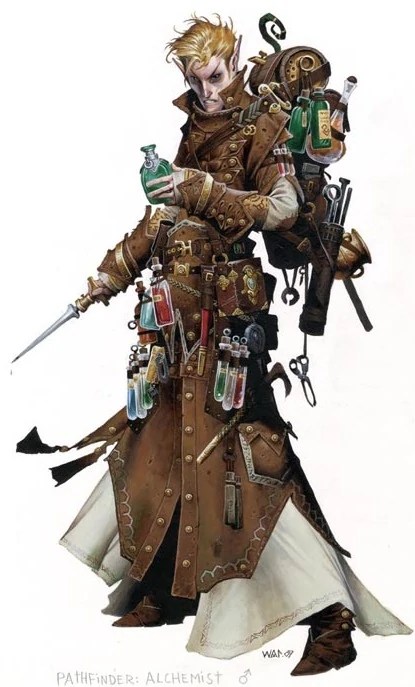
Elixir Grenade Gizmo (a.k.a. the E.G.G.)®
This explosive new option for the impressionable Mechanician is an absolute blast that will not only knock your socks off with its unignorable impact; it is guaranteed to absolutely blow away both friend and foe alike! (May or may not cause dismemberment, and / or full or partial death)
This backpack is actually a mobile chemical lab equipped with ingredients to make grenades on the move. The straps on the backpack contain a string of empty vials, which are passed to the interior of the bag and get injected by syringes of explosive chemicals.

Throwing Grenades
Drawing the components of, creating, and throwing a grenade requires an attack that can provoke an attack of opportunity from enemies within melee range of you who have not used their reaction. Thrown grenades have a maximum range of 20 feet and use the Throw Splash Weapon special attack. Grenades are considered improvised range weapons. To make a grenade attack, use 1 energy point and make a Gadget ranged attack using your proficiency bonus + your Intelligence modifier.
On a direct hit
On a direct hit, a Clockwork Mage’s grenade does 1d6 points of force damage + additional damage equal to the Mechanician’s Intelligence modifier. The damage of a Mechanician’s grenade increases by 1d6 at 7th level (2d6), 13th level (3d6), and 19th level (4d6).
Dud or Explosive surprise?
If a natural 1 is rolled on a grenade attack roll, there is a chance the grenade is a dud and a chance it detonates in the Mechanician’s hand, doing a direct hit to the wielder. In this case, roll a d6. On a 1, the grenade explodes in the Mechanician’s hand, doing a direct hit. On a 2-6 the grenade is a dud and fizzles out harmlessly.

On a miss…..
If a grenade misses its intended target, and a natural 1 was not thrown, a line of throwing must be established.
Draw a line between the Mechanican and the target. Roll a d6. If a 3-4 is rolled, use this direct straight line trajectory between the Mechanician and the target. If a 1-2 is rolled, the line veers to the left of the target at a 45o angle. If a 5-6 is rolled, the line veers to the right of the target at a 45o angle.
Once the direction of the line of throwing has been decided, now the power of the throw must be determined. To do this, roll a d4.
New Classes: The Mechanician
\page
On a 1, the grenade lands 5 feet away from the Mechanician on the line of throwing. On a 2, the grenade lands 10 feet away from the Mechanician in the direction of the line of throwing. On a 3, the the grenade lands 15 feet away along the line of throwing. On a 4 the grenade lands 20 feet away along the line of throwing.
Splash Damage
Splash damage from an engineer’s grenade is always equal to the grenade’s minimum damage (so if the grenade would deal 2d6+4 points of fire damage on a direct hit, its splash damage would be 6 points of fire damage). Those caught in the splash damage can attempt a Dexterity save for half damage.
The DC of this save is equal to 10 + 1/2 the Mechanician’s level + the Clockwork Mage’s Intelligence modifier.
Elemental Grenade. For 2 Energy, creatures within the blast radius of one of your grenades must succeed on a Dexterity saving throw against your Gadget Save DC or receive 1d6 elemental damage on a failed save. This damage replaces the typical force damage of your normal grenades.
For each additional Energy point spent, the damage increases by 1d6 (up to a maximum of 3 Energy points). Your elemental grenades can deal different types of base damage:
- Acid – In addition to the base damage of the grenade, creatures affected by this grenade type suffer additional acid damage equal to your Intelligence modifier on the turn they first take the grenade’s damage and on the start of their own turn, after which the corrosive effect wears off. Creatures immune to acid damage do not take this additional damage.
- Cold – In addition to the base damage of the grenade, creatures affected by this grenade type suffer halved movement speed until the end of your next turn, unless they are immune to cold.
- Fire – In addition to the base damage of the grenade, creatures affected by this grenade type take 1d4 fire damage at the start of each of their turns until they pass their Dexterity saving throw (against your Gadget Save DC), or unless they are immune to fire damage.
- Lightning – In addition to the base damage of the grenade, creatures affected by this grenade type who have half of their hit points or fewer and fail an additional Constitution saving throw are stunned for 1 round. Creatures immune to lightning damage are not affected by this.
The grenade’s additional Energy limit increases when you reach certain levels: 7th level (4 energy), 13th level (5 Energy), and 19th level (6 Energy).
Flash Powder. For 3 Energy, you can reach into your bag and pull out a vial filled with explosive flash powder. The vial explodes on impact, producing a bright flash.
Each creature within the 10-feet blast radius of the point of impact must succeed on a Constitution saving throw or become blinded until the end of your next turn.
The blast’s radius increases when you reach certain levels: 7th level (15 feet), 13th level (20 feet), and 19th level (25 feet).
Heavy Fumes. For 3 Energy, you can create and throw up to three ‘fume’ smoke grenades with a single action. Each fume grenade creates a 10-foot radius cloud of acrid black smoke that heavily obscures everything within its area of effect and lasts for 1d4 rounds.
Each fume cloud affects creatures who attempt to move through it, or if they start their turn in its area of effect. Affected creatures must make a Constitution saving throw against your Gadget Save DC or else be blinded. On each of their subsequent rounds they can make the Constitution saving throw again, which ends the blinded condition early, otherwise it remains until the smoke clouds dissipate.
The round limit the fume clouds remain in place for increases when you reach certain levels: 7th level (2d4), 13th level (3d4), and 19th level (4d4).
Double Throw. For 4 energy, two grenades can be created in a bonus action, and both can be thrown as part of a standard single action. Additionally, they can be thrown at different targets, however the second thrown grenade is thrown at disadvantage. The additional range increases when you reach certain levels: 7th level (10 feet), 13th level (15 feet), and 19th level (20 feet).
3rd Level: Mechanician Specialization
As an Mechanician, you sometimes draw inspiration from different sources for your creations or inventions. At 3rd level, you begin to follow one field of study that defines your skills, typically trained in higher education:
- Discipline of the Battletech
- Discipline of the Gadgeteer
- Discipline of the Technotheurge
- Discipline of the Mechanist
(Each choice grants you different features at additional levels.)
New Classes: The Mechanician
\page
4th Level: Ability Score Improvement
When you reach 4th level, and again at 8th, 12th, 16th and 19th level, you can increase one ability score of your choice by 2 points, or you can increase two ability scores of your choice by 1 point. You can’t increase an ability score above 20 using this feature.
Alternatively, if your DM allows the optional feat system, you can take a feat instead of an Ability Score Improvement.
5th Level: Academic Literacy
At the 5th level, you choose two Intelligence-based skills. As an alternative, you could choose one intelligence-based skill and one set of tools that you’re proficient in.
Your proficiency bonus is doubled for any ability check you make that uses those chosen skills / tools proficiencies.
7th Level: Engineer’s Expertise
At the 7th level, you choose two intelligence based skills, an intelligence based skill and tinker tools, or tinker tools and any other tool you have proficiency in. You may now add double your proficiency bonus to those skills / tools.
Additionally, you can also stow and draw a weapon or object as a bonus action.
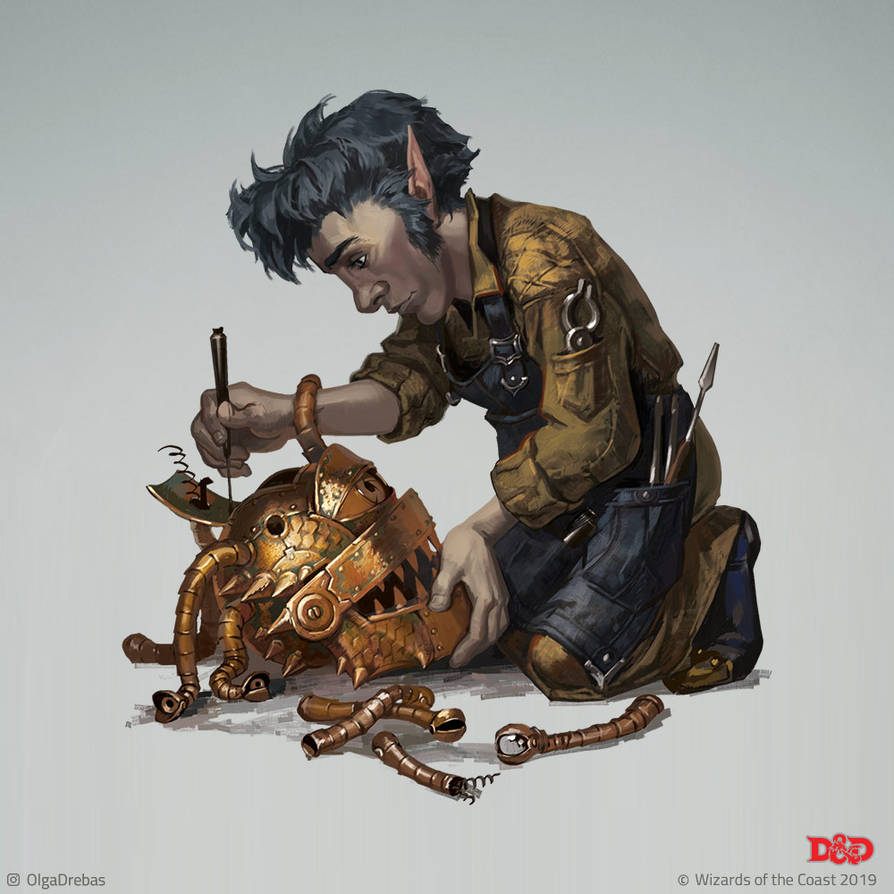
9th Level: Scavenger
Beginning at 9th level, you can use your downtime to scavenge spare parts, useful chemicals, and raw materials which you can use to build your gadgets or to craft items. In order to do so, you must be in a city, junkyard, or another location where such items can be found.
Your DM may limit the availability of certain types of materials depending on the location where you are scavenging.
For each hour that you spend scavenging, you can locate 1d4 gp + your level worth of such materials. You can use the resources you collect while scavenging to pay the material cost of learning new gadget schematics, creating or repairing, or as raw materials for crafting with tools with which you have proficiency.
13th Level: Saboteur
Starting at 13th level, on each of your turns in and out of combat, you can make an attempt to disarm a trap or open a lock, using your Tinker’s Tools as a bonus action. Use this skill to disarm a trap, jam a lock (in either the open or closed position), or rig a wagon wheel to fall off.
You can examine a fairly simple or fairly small mechanical device and disable it. The effort requires at least a simple tool of the appropriate sort (a pick, pry bar, saw, file, etc.). The DC depends on how tricky the device is. Disabling (or rigging or jamming) a fairly simple device has a DC of 10; more intricate and complex devices have higher DCs.
If the check succeeds, you disable the device. If it fails by 4 or less, you have failed but can try again. If you fail by 5 or more, something goes wrong. If the device is a trap, you spring it. If you are attempting some sort of sabotage, you think the device is disabled, but it still works normally.
New Classes: The Mechanician
\page
15th Level: Crafting Expertise
Starting at 15th level, you are a master crafter, capable of producing excellent work under the budget on time, when you craft an item using tools that you have proficiency with, you make progress every day by spending crafting increments equal to 1d6 + your level in gp until you reach the market value of the item.
Engineer Disciplines:
Discipline of the Battletech
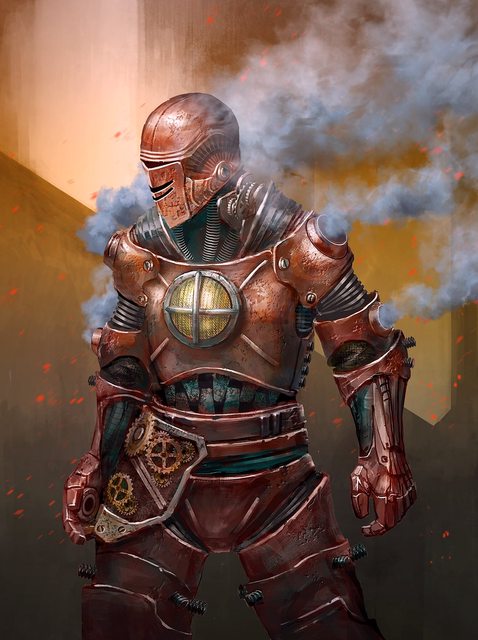
3rd Level: Advanced Proficiency
At 3rd level, you gain proficiency with all Martial Weapons, Shields and Heavy Armor.
4th Level: Power Suit
At 4th level, you discover that both the biological and the mechanical can simultaneously be upgraded. You build a steam-powered mechanical armor that you call a Power Suit.
The Power Suit functions as a Full Plate armor and augments your physical abilities to new levels. Your Signature Device and every new gadget schematics you create are assumed to be mechanical parts of the suit, for the purpose of overcoming the trouble of carrying the gear that would otherwise slow you down.
Whenever you are targeted by an attack, you add your Intelligence modifier to your AC against all attacks made against you, for the rest of the encounter. The suit provides this bonus, even when you are caught off-guard.
6th Level: Mechanical Advantage
At 6th level, in your pursuit of combat superiority, you use a combination of devices to augment your Power Suit even further. For 1d6 Energy points, you deal bonus bludgeoning damage equal to your Strength modifier on melee attacks.
9th Level: Volatile Evasion
Beginning at 9th level, you can nimbly dodge out of the way whenever an enemy, in your line of sight, subjects you to a certain effect that requires a saving throw. You instead take no damage if you succeed on the roll and only half damage if you fail. Additionally, you can draw a weapon on each of your turns in combat.
12th Level: Combat Energetics
Starting at 12th level, you thrive in the heat of combat. You have advantage on your initiative rolls. Whenever you land a successful hit with your Signature Device or a Gadget, you can use your bonus action to perform an additional attack.
15th Level: Full Steam Ahead
Beginning at the 15th level, anytime you come under the effect of exhaustion, for 5 Energy you can regain lost hit points equal to your Level and remove one condition from you. You must complete a short or long rest to use this feature again.
20th Level: Overcharge
At 20th level, your mastery of engineering enhances your Power Suit to live and breath for battle. For 1d10 Energy points, you can charge at your base speed and knock your target prone. You treat yourself as one size category larger for any rolls made during the charge. All attacks used in this way, gain the benefit of charging, including adding the equal amount of Energy to the attack and damage roll. The movement limitations of a charge also apply. If you don’t possess enough Energy, you consume what remaining Energy you have and perform the attack as if you had rolled that amount on the 1d10, however you take the same amount of damage.
New Classes: The Mechanician
\page
Discipline of the Gadgeteer
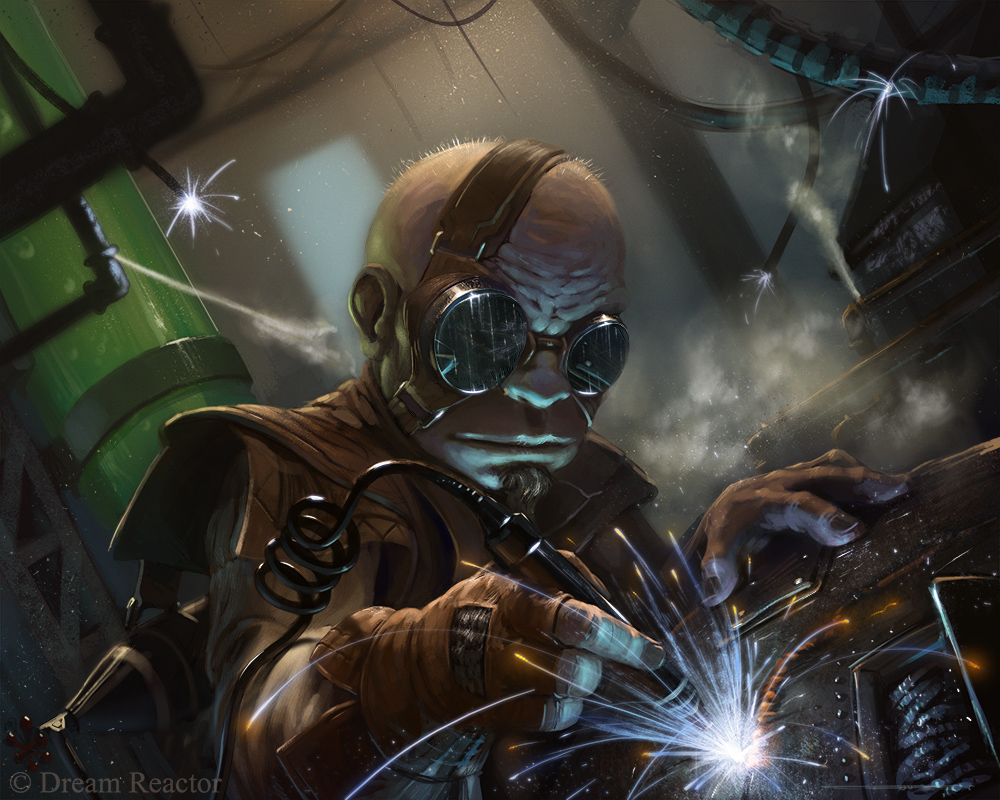
3rd Level: Diverse Inventor
At the 3rd level, you can choose a second Signature Device. Also, it takes you -50% less time and money to build gadgets.
Note: Your second Signature Device cannot be the same device as your first choice.
5th Level: Schematic Familiarity
When you reach 5th level, you learn 2 extra Gadget Schematics of your choice (in addition to the number shown in the Gadget’s Table).
You can choose an additional set of gadgets when you reach 8th level and 12th level, and again at 15th level. These schematics you learn must be of a level that you can equip.
7th Level: Advanced Gadget
At 7th level, all gadget and device requirements are reduced by 1 Energy point. Whenever you make check with a gadget, you can add 1d6 bonus to the result.
9th Lvel: Rapid Reconfiguration
Starting at 9th level whenever you complete a short rest, you may reconfigure up to three (3) of your equipped gadgets, switching them with different gadgets from the list of schematics that you know.
You must have access to your Tinker’s Tools in order to reconfigure your equipped gadgets.
At 13th level the number of equipped gadgets you can reconfigure increases to five (5) and it increases again to seven (7) gadgets at 17th level.
14th Level: Experienced Craftmanship
At the 14th level, you can choose a third Signature Device.
Note: Your third Signature Device cannot be the same device as either of your previous two Signature Device choices.
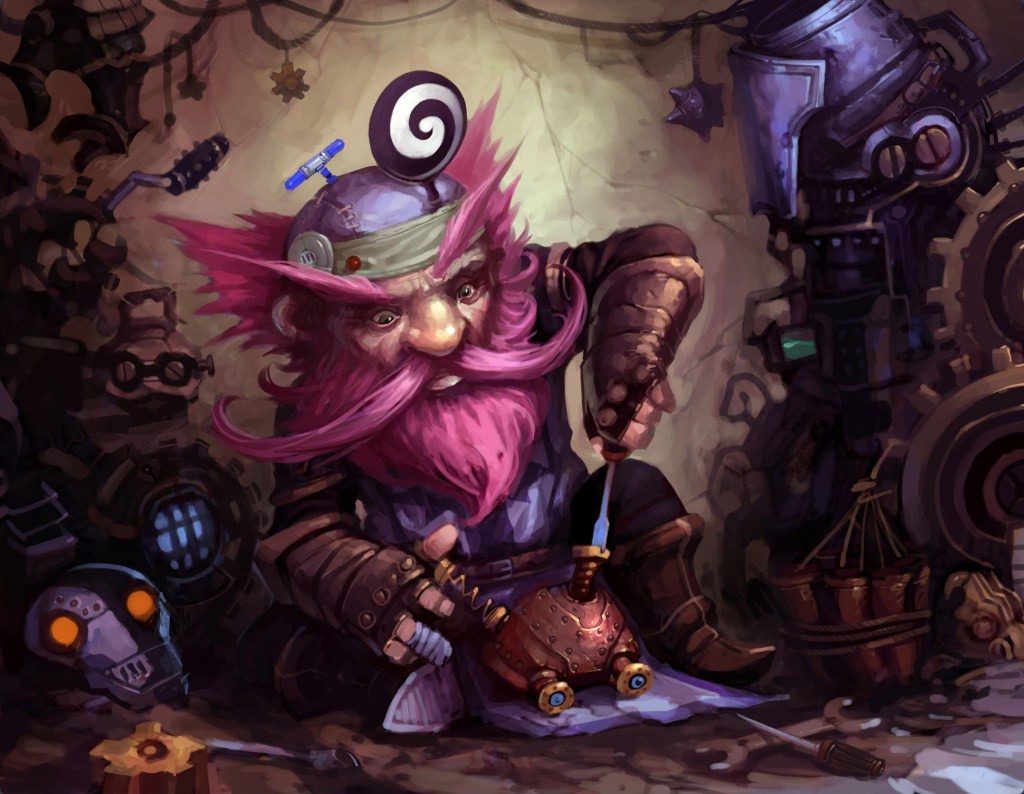
20th Level: Brilliant Mind
When you reach 20th level, you gain complete mastery over your gadgets. Choose a type of complexity for gadget schematics that you know. You always have these gadgets equipped and they do not count against your maximum number of equipped gadgets.
If one of these gadgets has an effect that requires a short or long rest to recharge, you can take a bonus action to recharge the effect of that gadget, but you must finish a long rest before you can use this feature on the same gadget again.
Discipline of the Technotheurge
The Technotheurge has learned to maximize the energy source of their devices and manipulate them in various ways. They understand that magic is merely a form of science that has not yet been completely understood.

New Classes: The Mechanician
\page
Technotheurgists commit themselves to finding objects or information through arcane means, in addition to using more conventional scientific methods of study for both magic and technology. They seek to integrate the two systems into a potent whole.

3rd Level: The N.O.V.A Gauntlet
Dapplefield’s Not-Officially-Valid-as-Arcane (N.O.V.A.) Gauntlet for the discerning technotheurgist acts as a bridge between the arcane and the mundane via the most recent and cutting-edge scientific principles of the little-mapped-out quantum realm – with amazing and almost MAGICAL practicalities!
At 3rd level, your knowledge of technotheurgic studies allows you to design a unique invention called the N.O.V.A. Gauntlet. This device can replicate the effects of various spells via arcane enhancements.
Spell effects produced by the gauntlet are inherently considered to be non-magical, for the purposes of overcoming resistance and immunity. You can convert your Energy points to synthesize a spell of the corresponding level.
| Spell Level | Energy Cost |
|---|---|
| Cantrip | 2 |
| 1st | 4 |
| 2nd | 6 |
| 3rd | 8 |
| 4th | 10 |
N.O.V.A Gauntlet Spells
| Spell Level | Spell |
|---|---|
| Cantrip | • Thunderclap • Fire Bolt • Hand of Radiance • Shocking Grasp • Poison Spray • Frostbite • Dancing Lights • On/Off |
| 1 | • Alarm • Burning Hands • Catapult • Cure Wounds • Earth Tremor • Grease • Remote Access • Shield |
| 2 | • Blur • Continual Flame • Pyrotechnics • Find Traps • Heat Metal • Chill Metal • Levitate • Skywrite |
| 3 | • Aura of Vitality • Blinding Smite • Dispel Magic • Erupting Earth • Lightning Bolt • Tongues • Protection from Energy • Hypnotic Pattern |
| 4 | • Control Water • Fabricate • Stone Shape • Synchronicity |
5th Level: Mana Battery
At 5th level, the maximum limit of your Energy Pool increases a number of points equal to your Intelligence modifier. Your maximum limit increases when you reach the 10th level and again at the 15th level.

8th Level: Arcane Recharge
Starting at 8th level, you gain one of the following options of your choice with effects made using your N.O.V.A. Gauntlet. You gain an additional feature at 12th and 16th level.
- Distant Charge. When you cast a spell-effect from a distance, you can spend 1 Energy point to double the range of the spell.
- Empowered Charge. When you roll damage for a spell-effect, you can spend 2 Energy points to reroll and add your Intelligence modifier to the new result.
- Duration Charge. When you cast a spell-effect that has a duration of one round, you can spend 3 Energy points to double the effect’s duration.
- Heightened Charge. When you cast a spell-effect that hits only one target, you can make the effect eligible and affect more targets equal to a number of Energy points spent.
14th Level: Intricate Mind
Starting at 14th level, you have learned enough about the workings of magic that you can improvise the use of magic items even when they are not intended for you. You ignore all class, race, and level requirements on the use of magic items.
17th Level: Adaptive Bulwark
At the 17th level, once per day, when you are targeted by a spell that deals a type of damage (acid, cold, fire, lightning, thunder, sonic…etc.) you gain bonus resistance equal to your Intelligence modifier to that type of damage. You must complete a short or long rest to use this feature again.
20th Level: Elite Technomancy
At level 20, your Intelligence score permanently increases by 2 points, up to a maximum of 22.
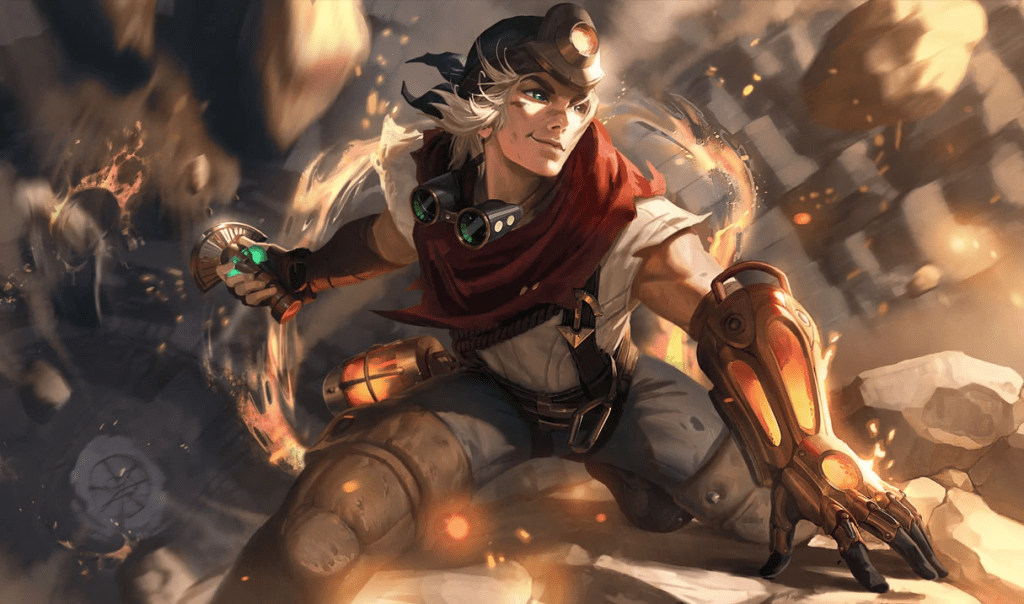
New Classes: The Mechanician
\page
Discipline of the Mechanist
3rd Level: Clockwork Knight
When you reach 3rd level, your fascination over clockwork mechanisms leads you to invent the most efficient and versatile construct: a Clockwork Knight. Creating a Clockwork Knight requires 4 hours of time and costs 100 gold worth of metal, rare threads, and other raw materials.
{{monster,frame
Clockwork Knight
Medium construct, neutral
Armor Class :: 15
Hit Points :: 25 (+1d4 at each Mechanician level)
Speed :: 30ft.
| STR | DEX | CON | INT | WIS | CHA |
|---|---|---|---|---|---|
| 15 (+2) | 13 (+1) | 15 (+2) | 7 (-2) | 10 (+0) | 8 (-2) |
Condition Immunities :: Poisoned
Senses :: Passive Perception 10
Proficiencies :: Simple Melee Weapons & Shields
Languages :: Understands the languages of its creator but can’t speak.
Challenge :: 3/4 (75 XP)
Clockwork Defender. See below.
:
Actions
Unarmed Strike. Melee Weapon Attack: +4 to hit, reach 5ft., one target. Hit 5 (1d6 + 2)
:
Melee Weapon attack. Melee Weapon Attack: use weapon statistics to determine to-hit bonus and damage.
}}
The Clockwork Knight is a powerful fearsome construct to face in battle, that will fight to the death for its creator. In combat, the Clockwork Knight acts as your personal guardian.
It’s friendly to you and your companions and obeys any verbal commands that you issue to it (no action required by you).
If you don’t issue any commands to your Clockwork Knight, it protects you from hostile creatures.
When a creature hostile to you moves within 10 feet of the Clockwork Knight on a turn or starts its turn there, the Clockwork Knight will initiate its Clockwork Defense ability and the creature must succeed on a Dexterity saving throw.
On a failed save, the creature receives 1d6 bludgeoning damage, or half as much damage on a successful one. If the Clockwork Knight drops to 0 hit points it ceases to function. However, it can be repaired, but that will require half the time and cost of raw materials it took to build it.
Note: The Clockwork Knight doesn’t require air to breathe, food, drink, and sleep.
5th Level: Conjure Mechanical Insect
At 5th level, you can create a mechanical device in the form of a tiny insect, such as a beetle, a cockroach, a butterfly or a cricket. Your new construct can fly, has 1 Hit Point and cannot attack. As an action on your turn, you can perceive through its senses, via a wireless communication up to 100 feet.
Transmission. For the cost of 4 Energy, you can specify the device will travel for up to 24 hours toward any location which you have visited or the general description of a person. Upon arrival, it can deliver a message to the person that you have described, perfectly replicating the sound of your voice.
If the Mechanical Insect is unable to locate the intended recipient within 24 hours, it gets destroyed. You can build a Mechanical Insect after a short or long rest.
Note: You can have only one Mechanical Insect at a time.
10th Level: Continual Labor
At 10th level, you learn to craft and maintain an additional Clockwork Knight, following the same rules as the first.
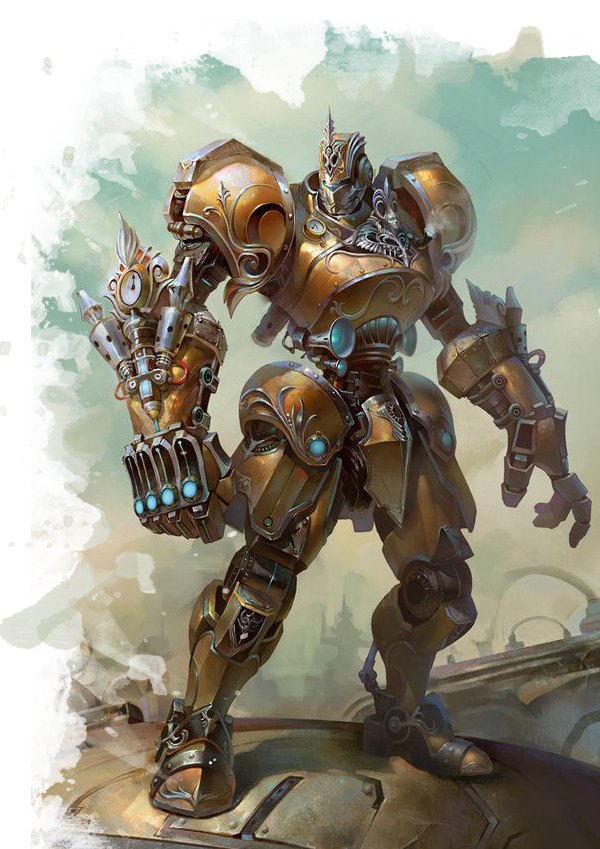
New Classes: The Mechanician
\page
13th Level: Reconfiguration Upgrade
At 13th level, you learn how to apply efficient modifications to your creations. Determine one upgrade of the following list to a Clockwork Knight. That Clockwork Knight now has the function to transform into a new combat mode for the equivalent amount of Energy, as a bonus action on your turn.
- Sentry Mode For 6 Energy, the Clockwork Knight will transform into a deployable turret, in a space immediately adjacent to you. Turrets are automated firearms used to defend and support the engineer and their allies. While in its Sentry Mode the construct cannot move from its position.
- Automated Strike. Enemy creatures that enter a 25-feet radius around the turret, or start their turn there, must make a Dexterity saving throw. On a failure, they suffer 1d4 + Intelligence modifier piercing damage. They take half the damage on a success. The piercing damage amount increases by 1d4 when at certain levels: 15th level (2d4), 17th level (3d4), and 19th level (4d4).
- Gyro Mode. For 4 Energy, the Clockwork Knight will transform into a deployable flying drone. The drone has a flying speed of 30 feet, gets a +2 bonus on all Dexterity saving throws & Stealth checks, but cannot move more than 120 feet away from you.
- Aerial Guard. The drone can detect threats with ease. It has a +1d4 bonus on Perception checks, but loses the bonus if immobilized. This bonus increases by 1d4 when at certain levels: 15th level (2d4), 17th level (3d4), and 19th level (4d4). Enemy creatures within a 25-feet radius around the drone must succeed on a Dexterity saving throw. If it fails, the target becomes restrained by an integrated net launcher from the drone. The trapped creature cannot take any actions until it gets free (Athletics DC 13). The drone can do this net launcher action as many times per day as half your proficiency bonus (rounded down, but at a minimum of once).
Note: Only one type of Reconfiguration Upgrade may be deployed per Clockwork Knight. You can’t have a Clockwork Knight with both Reconfiguration Upgrades.
16th Level: Fast Activation
At 16th level, you learn how to modify any device as if you were holding it. This allows you to visually see a device and immediately understand the intricacies of its use. You are only able to access functions that a person using the device manually could access, and can only target one device at a time.
In essence, this ability allows you to use only a bonus action to execute a device-related task that would normally require an action to undertake. You only need to have seen this device, even if it would normally require attunement, to understand its uses. This does not allow you to determine if an item is cursed just by looking at it, unless that is immediately obvious to any casual observer.
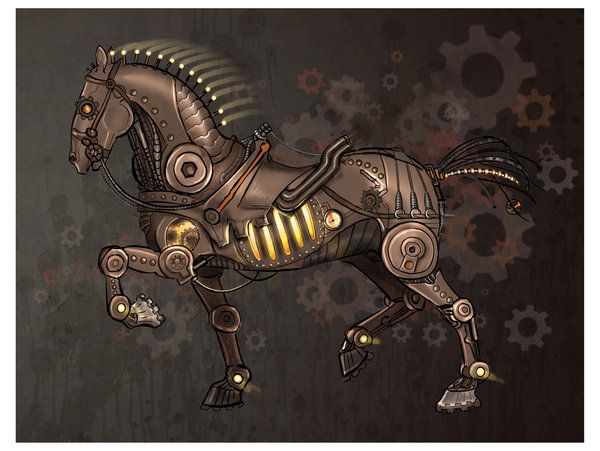
19th Level: Gearsmith Stallion
At 19th level, as an action, your Clockwork Knights can merge into a singular form. Your new construct takes the form of a mechanical warhorse that allows you to fight as a seamless unit, always obeying your commands and serving you as a mount, both in combat and out. While mounted on your steed, any ability you cast that targets only you, also targets your steed. If it doesn’t receive further directions from you, it preserves itself to the best of its ability. As an action on your turn, the Gearsmith Stallion can dismantle and re-build itself into two Clockwork Knights.
{{monster,frame
Gearsmith Stallion
Large construct, neutral
Armor Class :: 25
Hit Points :: 60 (2d4 for each Mechanician level)
Speed :: 50 ft.
| STR | DEX | CON | INT | WIS | CHA |
|---|---|---|---|---|---|
| 18 (+3) | 13 (+1) | 17 (+3) | 7 (-2) | 10 (+0) | 8 (-2) |
Condition Immunities :: Poisoned
Senses :: Passive Perception 10
Languages :: Understands the languages of its creator but can’t speak.
Challenge :: 2 (450 XP)
Actions
Hooves. Melee Weapon Attack: +6 to hit, reach 5 ft., one target. Hit: (2d6 + 4) bludgeoning damage.
:
Note: You can’t have more than one Gearsmith Stallion at a time.
}}
New Classes: The Mechanician
\page
New Classes: The Mechanician
List of Gadgets
A gadget is basically what Clockwork Mages call small pieces of machinery that serve a particular function. They follow the quality of being striking, original or unusual innovations. These devices may be the shared experience of a new cultural phenomenon or the subjective usage of an individual. For a gadget to be of use to its creator, it requires a small amount of energy to activate and fulfill the purpose of its task. The more complex the device is, the more amount of energy it requires.
| Complexity Level | Energy Cost |
|---|---|
| Trivial | 1 |
| Simple | 2 |
| Advanced | 4 |
| Intricate | 6 |
Trivial Complexity
Breathalyzer
Equipment Type: Tool belt
Activation Type: 1 action
You can use this gadget to identify a type of poison or disease that is affecting a creature. The afflicted creature must make an action to breathe into the gadget. After 1d4 rounds of analysis, the gadget will indicate the type of disease or poison or the type of creature that produced the venom.
Synthesise Antidote. After analyzing the breath of an infected creature, you can take an action to synthesize an antidote or antitoxin against that poison or disease. Once begun, it takes the gadget 1d4 rounds to create the antidote. Drinking the antidote gives the infected creature advantage on their next saving throw versus the same disease or poison. Only the creature which provided the breath sample can benefit from drinking the antidote.
Note: While this device can synthesise an antidote for most common diseases and poisons, there are some far more complex maladies that a DM may rule as being beyond the scope of this trivial complexity gadget’s capabilities to address.
Eagle Lens
Equipment Type: Eyewear
Activation Type: Continuous
While this gadget is equipped you can add your Intelligence Modifier (minimum 1) to Perception checks you make.
Eagle Sight. When you use an action with a ranged weapon to activate this gadget, you gain a +1d6 bonus to ranged attack rolls. Once used, this effect must be recharged and cannot be used again until you complete a short or long rest.
Entropy Reducer
Equipment Type: Headgear
Activation Type: 1 reaction
Whenever you roll a 1 on an attack roll, ability, check, or saving throw with this gadget equipped, you can use your reaction to activate it. If you do, reroll the die. You must use the new roll. Once used, this effect must be recharged and cannot be used again until you complete a short or long rest.
Fire Extinguisher
Equipment Type: Gloves
Activation Type: 1 action
As an action, you spray fire retardant foam out of your gloves in a 15-foot cone. This foam extinguishes any uncovered, nonmagical flames and sticks to any creatures in the affected area. Creatures covered in this foam have advantage on saving throws versus fire damage. The foam evaporates after 3 rounds. Once used, the gadget must be recharged and cannot be used again until you complete a short or long rest.
Flaregun
Equipment Type: Firearm
Activation Type: 1 action + 1 attack action
This gadget takes an action to equip onto a weapon. Then, when this gadget is equipped, you can use an attack action using the weapon that this gadget is integrated with to shoot a pyrotechnic flare into the air. The flare burns for 1 minute and can be used as a light source or for signaling someone across a distance. If used outdoors, the flare sheds dim light in a 120-feet radius and can be seen up to 3 miles away. Indoors the flare sheds bright light in a 30-foot radius and dim light for an additional 30 feet. If used to attack a creature, the flare deals 1d4 fire damage instead of the weapon’s normal damage.
Flotation Device
Equipment Type: Tool belt
Activation Type: 1 action
When you take an action to activate this gadget, your tool belt becomes buoyant for one hour, allowing you to float on the surface of any calm body of liquid. You have advantage on all Strength (Athletics) checks to swim. If you activate this gadget while you are submerged in a liquid, the device carries you to the surface of the liquid at a rate of 60 feet per round. You can end this effect by taking a second interaction.
Headlamp
Equipment Type: Headgear
Activation Type: 1 action
This gadget casts a bright light in a 30-feet cone and a dim light for an additional 30-feet in whatever direction you are facing. The light emits no heat and requires no
\page
New Classes: The Mechanician
fuel source. The light can be switched on or off by taking an action.
Magitector
Equipment Type: Eyewear
Activation Type: Continuous
When this gadget is equipped, you can always sense the presence of magic within 30 feet of you. If you sense magic in this way, you can use your action to see a faint aura around any visible creature or object in the area that bears magic, and you understand its school of magic.
Identify Magic. You learn the properties of a magic item or some other magic-imbued object. You learn whether any spells are affecting the item, what school they are and roughly how recently they were cast.
Rearview Mirror
Equipment Type: Eyewear
Activation Type: Continuous
In addition to your normal field of vision, you can also perceive objects which are behind you. You cannot be surprised by any creature sneaking up behind you.
Retractable Ice Skates
Equipment Type: Footwear
Activation Type: 1 action
When this gadget is equipped, you can deploy a small skate blade from the bottom of your boots. While the blade is deployed you ignore difficult terrain created by ice or snow but terrain without ice or snow counts as difficult terrain for you. You can toggle this effect off by taking another action to retract the blades. When the blades are deployed, you can use your attack action to make an unarmed strike (kick) against a creature within 5 feet of you. The attack deals 1d4 slashing damage if it hits.
Universal Utility Tool
Equipment Type: Tool belt
Activation Type: 1 action
This handheld gadget is stored on your tool belt when you aren’t using it. The gadget consists of numerous miniature tools which can be folded into or out of the body of the gadget by taking an action. The tools available vary depending on the needs of the engineer that made it, but likely include tools such as an awl, can opener, chisel, corkscrew, file, fingernail clippers, fire striker, fish scaler, hook, knife, lock pick, magnifying glass, measuring spoon, muddler, pliers, ruler, scissors, screwdriver, spanner wrench, spatula, spork, thermometer, toothpick, tweezers, vegetable peeler, wire cutter, and a whistle, among others.
Auxiliary. This gadget can be used in place of your tinker’s tools or any other artisan tools that you have proficiency in. Because of the small size and folding nature of the tools, any roll that you make using this gadget in place of proper full-sized tools is made with disadvantage. Starting at 11th level this gadget no longer imposes disadvantage on rolls when you use the gadget in place of your artisan’s tools.
Weapon Flinger
Equipment Type: Weapon (any without the two-handed property)
Activation Type: 1 action + 1 Attack
When this gadget is equipped, you can use an action in conjunction with an attack action using the weapon that this gadget is integrated with to make a ranged attack with the weapon. For purposes of this attack, treat the weapon as though it had the Thrown (range 20/40) property. Once this effect has been used, the gadget must be reset and cannot be used again until you have completed a short or long rest.
Water Condenser
Equipment Type: Tool belt
Activation Type: 1 action
This gadget condenses water vapor out of air and stores the water in a bladder on your tool belt. As an action, you can decant up to 1 gallon of clean, fresh water. Once used, the effect cannot be used again until you complete a short or long rest.
Writing Pen
Equipment Type: Gloves
Activation Type: 1 action
You have a vial of ink and a retractable mechanical writing pen built into your gloves. You may take an action to activate or hide the pen.
Invisible Ink. You can take an action to write a message on parchment, paper, or some other suitable writing material, with this gadget using special disappearing ink. The message can be up to 50 words long. One round after writing the message, the ink fades and thereafter can be read only by a creature with the ability to see invisible objects.
Simple Complexity
Antigravity Gloves
Equipment Type: Gloves
Activation Type: 1 action
When this gadget is equipped, you make an interaction with an object to activate it. Your push/drag/lift capacity is doubled.
Chameleon Cloak
Equipment Type: Cloak
Activation Type: 1 action
When you take an action to activate this gadget, your cloak begins to change color to match your environment. For the next three minutes you have advantage on all Dexterity (Stealth) checks and you gain
\page
an additional +10 bonus to Dexterity (Stealth) checks as long as you remain motionless without moving or taking actions.
Defibrillator
Equipment Type: Gloves
Activation Type: 1 action
When you take an action to activate this gadget, you can target an unconscious, dying creature within 10 feet. That creature regains 1 hit point. Once used, the gadget must be recharged and cannot be used again until you complete a short or long rest.
Firestarter
Equipment Type: Gloves
Activation Type: 1 action
When you take an object interaction to activate this gadget, it produces a small flame, which you can use to light a candle, torch, or campfire.
Hot Hands. You take an action to shoot a sheet of flames out of your gloves. Each creature in a 15-foot cone must make a Dexterity saving throw. A creature takes 2d6 fire damage on a failed save, or half as much damage on a successful one. The fire ignites any flammable objects in the area that aren’t being worn or carried. The damage dealt with the flames increases by 1d6 when you reach 11th level (3d6), and again when you reach 17th level (4d6).
Food Irradiator
Equipment Type: Gloves
Activation Type: 1 action
When you take an action to activate this gadget, all nonmagical food and drink within a 5-foot-radius sphere centered on you, are purified and rendered free of poison and disease.
Gyro Stabilizer
Equipment Type: Tool belt
Activation Type: 1 action
When you take an action to activate this gadget, for the next 3 minutes you have advantage on Dexterity (Acrobatic) checks to avoid falling. Once used, the effect must be reset and cannot be used again until you complete a short or long rest.
Inertial Dampener
Equipment Type: Footwear
Activation Type: 1 Reaction
You can activate this gadget as a reaction whenever you are the target of an effect which would push, pull, slide, or otherwise cause you to move against your will. The inertial dampener allows you to reduce the amount of space you are moved by up to 10 feet. Beginning at 11th level, you can reduce the effect of forced movement by an additional 10 feet (20 feet total), and another additional 10 feet (30 feet total) at 17th level.
Lie-Detecting Compass
Equipment Type: Headgear
Activation Type: Continuous
When this gadget is equipped, you always know which direction is north and what your approximate altitude or depth below ground is.
Lodestone of Truth. You may spend 1 Energy to activate this effect. For the next three minutes as long as you are looking at the gadget, you can perceive whether any creature who is speaking is intentionally lying or is telling the truth. Once this effect has been used, it must be recharged and it cannot be used again until you finish a short or long rest.
Night Vision Goggles
Equipment Type: Eyewear
Activation Type: Continuous
While this gadget is equipped you have darkvision out to a range of 60 feet. If you already have darkvision, its range is increased by 15 feet.
Parachute Cloak
Equipment Type: Cloak
Activation Type: 1 reaction
With this gadget equipped, you can use your reaction when you fall to reduce any falling damage you take by an amount equal to five times your engineer level. Once used, the gadget must be reset and this effect cannot be used again until you complete a short or long rest.
Rebreather
Equipment Type: Headgear
Activation Type: Continuous
You can breathe underwater while you have this gadget equipped.
Air Filter. While this gadget is equipped, you can take an action to activate an emergency air filter that is built into the gadget. For one minute after activation, you have advantage on saving throws made against harmful gases and vapors.
Recovery Field
Equipment Type: Tool belt
Activation Type: Continuous
While this gadget is equipped, if you or any friendly creature within 60 feet of you regain hit points at the end of a short rest, each such creature regains extra 1d4 hit points. The number of hit points healed increases to 1d6 hit points when you reach 11th level and again to 1d8 at 17th level.
Steam Spray
Equipment Type: Tool belt
Activation Type: 1 reaction
When this gadget is equipped, you can use your reaction to impose disadvantage on the attack roll of a creature
New Classes: The Mechanician
\page
within 5 feet of you. An attacker that can’t be blinded is immune to this effect.
Taser Gloves
Equipment Type: Gloves
Activation Type: 1 action
When this gadget is equipped, you can use an action in conjunction with an attack action to make an unarmed strike against a creature within 5 feet of you. You have advantage on the attack roll if the target is wearing armor made of metal. On a hit, the target takes your unarmed strike damage plus an additional 1d8 lightning damage, and it can’t take reactions until the start of its next turn. This attack’s damage increases by 1d8 when you reach 11th level (2d8), and 17th level (3d8).
Tinker’s Master Gloves
Equipment Type: Gloves
Activation Type: Continuous
When this gadget is equipped, you make an interaction with an object to activate it. You only use half as much time on the construction of mechanical items, including your gadgets and devices. You gain advantage on any construction and repair checks you make when using these gloves.
Oxy-fuel For 1 Energy, the pointer finger of the glove pushes out a lighter, that can produce a small hot flame that sheds bright light in a 5ft circular radius and dim light for 5ft beyond that.
Universal Translator
Equipment Type: Headgear
Activation Type: 1 action
You may take an action to activate this gadget. You understand the literal meaning of any spoken language that you hear.
Advanced Complexity
Adrenaline Infusion
Equipment Type: Armor
Activation Type: 1 action
When this gadget is equipped, you can use an action to activate it. During the same turn that the device is activated, you can take one additional action, on top of your regular action. This additional action can be used to take any action except an attack. Once you have used this gadget, its effect must be recharged and cannot be used again until you complete a short or long rest.
Ballistic Rounds
Equipment Type: Weapon (a bow, crossbow or firearm)
Activation Type: Continuous
This gadget increases the velocity of shots fired by the weapon it is attached to. When you hit with an attack using this weapon you roll the weapon’s damage dice twice. The weapon deals damage equal to the higher of the two rolls. You can use this gadget as many times as your Proficiency Bonus before it must be recharged and cannot be used again until you complete a short or long rest.
Chainsaw Sword
Equipment Type: Weapon (any bladed weapon that deals slashing damage)
Activation Type: Continuous
When this gadget is equipped, the weapon it is integrated into is outfitted with motorized teeth that increase the sharpness of the blade. Whenever you score a critical hit against an opponent with this weapon, you can roll one additional weapon damage dice for determining the extra damage done by the attack. This bonus increases to two additional damage dice when you reach 17th level.
Holographic Disguise
Equipment Type: Tool belt
Activation Type: Continuous
When you activate this gadget by taking an action, it projects a three-dimensional holographic image around you, making you — including your clothing, armour, weapons, and other belongings on your person — look different. You can’t change your body type, or size (if you are Medium, you can’t appear Small or Large, for example) so you must adopt a form that has the same basic arrangement of limbs. Otherwise, the extent of the disguise is up to you: you might use the hologram to add or change a minor feature, make yourself appear to be wearing different clothing or to look like a completely different person. The changes wrought by this gadget fail to hold up to physical inspection. The disguise lasts for 10 minutes or until you take an object interaction to cancel it. Once used, the gadget must be recharged and cannot be used again until you complete a short or a long rest.
Inflatable Shoes
Equipment Type: Footwear
Activation Type: Continuous
When this gadget is equipped, you gain the ability to move across any liquid (water, quicksand, lava, etc.) as if it were solid ground.
If the liquid is harmful (such as acid or lava) you still take damage for coming into contact with it, and the gadget will become damaged and inoperable if you take damage in this way for more than 1d8+2 rounds.
Life Form Scanner
Equipment Type: Tool belt
Activation Type: 1 action
When this gadget is equipped you can use your action to scan for living beings in your vicinity. You can sense how many small or larger sized creatures are within 100 feet of you. You know the number of creatures, the
New Classes: The Mechanician
\page
creature size, and their approximate distance and direction from you, but no other information about them. Constructs and undead cannot be detected by this device.
Protoplaser
Equipment Type: Gloves
Activation Type: 1 action
When you have this gadget equipped, you can activate it by taking an action. Chose a creature you can see within 50 feet of you. The targeted creature regains a number of hit points equal to 2d6 + your Intelligence modifier. The amount healed increases by 2d6 when you reach 11th level (4d6), and by an additional 2d6 at 17th level (6d6). This effect works on both living creatures and constructs but has no effect on undead. Regardless of how much energy you have, you can only use this gadget as many times per day as your Proficiency bonus before it needs to be recharged and cannot be used again until you complete a long rest.
Reset Button
Equipment Type: Tool belt
Activation Type: 1 reaction
You can activate this gadget as a reaction at the end of any other creature’s turn in combat. Once activated, the gadget alters the flow of time, reversing any events or actions that took place during that creature’s turn. The creature takes its turn again and can choose to take different actions or the same actions as previously, possibly with different results. Once used, this effect must be recharged and cannot be used again until you complete a short or long rest.
Suction Cup Climbers
Equipment Type: Gloves
Activation Type: Continuous
When this gadget is equipped, you have advantage on all Strength (Athletics) checks that you make to climb. Starting at 17th level, while this gadget is equipped climbing does not cost you extra movement.
Targeting Scope
Equipment Type: Weapon (a bow, crossbow or firearm)
Activation Type: Continuous
This gadget must be prepared by using an action to attach it to a suitable weapon. When it is attached, the targeting scope increases the accuracy when you make an attack with the weapon it is attached to. In its default mode, called Long Range Mode (L.R.M.), the targeting scope means that you do not suffer disadvantage when you use this weapon to attack a target at long range, however you do suffer disadvantage when trying to attack a target at short range. By using a bonus action, you can adjust the scope to Short Range Mode (S.R.M.), so that it grants you advantage to hit a target at short range and disadvantage at long range. You can switch between S.R.M. and L.R.M. by using your bonus action to adjust the scope.
Wheeled Boots
Equipment Type: Footwear
Activation Type: Continuous
While this gadget is equipped, you can use a bonus action on each of your turns to take the Dash action.
Rocket Thruster. You can take an object interaction to fire up tiny rocket thrusters built into your boots, causing your walking speed to be doubled and any creature that makes an opportunity attack against you has disadvantage on the attack roll.
This effect lasts for one minute.
Intricate Complexity
Advanced Opti-Visor
Equipment Type: Eyewear
Activation Type: 1 action
When you take an action to activate this gadget, for 1d6 x 10 minutes you gain Truesight, which allows you to notice hidden and secret doors, invisible creatures and objects, and you can see into the border region of the Ethereal Plane, all out to a range of 120 feet. Once this effect has been used, the gadget must be recharged and cannot be used again until you have completed a short or long rest.
Backup Energy Supply
Equipment Type: Tool belt
Activation Type: 1 action
When you activate this gadget by taking an action, you regain the entirety of your energy pool. Once used, this gadget must be recharged and cannot be used again until you complete a short or a long rest.
Invisibility Generator
Equipment Type: Tool belt
Activation Type: 1 action
When you use an action to activate it, this gadget projects a light-bending sphere of energy in a 10-feet radius around you. The sphere renders you and all other creatures inside of it invisible to any creature that is outside of the sphere. Equipment that is worn or carried by a creature inside of the sphere is invisible as long as it is on the creature’s person. The sphere and its effect moves when you move. The effect lasts for one minute or until you take a second object interaction to cancel it.
Jetpack
Equipment Type: Cloak
Activation Type: 1 action
When you take an action to activate this gadget, for the next minute you gain a flying speed of 40 feet. If you are still airborne when this effect ends, you fall.
New Classes: The Mechanician
\page
Mining Drill
Equipment Type: Gloves
Activation Type: 1 action
When you take an action to activate this gadget, you gain a burrowing speed of 15 feet which lasts until the end of the second turn after your current one. You leave a tunnel 5’ wide and as high as you are tall in your wake.

Neuroadaptive Headgear
Equipment Type: Headgear
Activation Type: Continuous
When this gadget is equipped, you can detect the presence or absence of surface thoughts (from conscious creatures with Intelligence scores of 3 or higher). The amount of information revealed depends on how long you study a particular area or subject. Your thoughts cannot be read and attempts to detect your presence through your consciousness fail while you are wearing the gadget.
Quake Machine
Equipment Type: Tool belt
Activation Type: 1 action
When this gadget is equipped, you can take an action to place a seismic reactor onto the ground at a point within 10 feet of you. At the beginning of your next turn, the device triggers, creating a seismic disturbance that causes an intense tremor in a 50-foot radius circle around the point where you placed it. This tremor shakes creatures and structures in contact with the ground in that area, with the following effects:
- The ground in the area becomes difficult terrain.
- Each creature on the ground must make a Dexterity saving throw. On a failed save, the creature is knocked prone.
- The tremor deals 50 bludgeoning damage to any structure in contact with the ground in the affected area. If a structure drops to 0 hit points, it collapses and potentially damages nearby creatures. On a successful save, the creature takes half as much damage and doesn’t become buried.
The above effects repeat at the beginning of each of your next two turns, unless you take an action to end the effect early. Once this gadget has been used, it must be recharged and cannot be used again until you complete a short or long rest.
Teleporter
Equipment Type: Tool belt
Activation Type: 1 action
When this gadget is equipped you can take an action to activate it, teleporting yourself and all items you are carrying to a location within 100 feet of you that you can see. Once per turn on your next two turns, you can take a bonus action to activate the gadget again, teleporting yourself again each time you do so. If you would arrive in a place already occupied by an object or creature you take 4d6 force damage and the gadget fails to teleport you.
Time-Dilation Zone
Equipment Type: Tool belt
Activation Type: 1 action
When you activate this gadget by taking an action, chose a spot within 60 feet of you that you can see. The gadget projects an invisible sphere of energy in a 40-feet sphere around the chosen point. The flow of time is altered for creatures inside the sphere. Movement costs double for each creature inside the energy sphere, it takes a -2 penalty to all Dexterity saving throws. Regardless of the creature’s abilities or magic items, it can’t make more than one melee or ranged attack during its turn. The energy sphere lasts for 1 minute unless you end it early by taking an object interaction. Once used, this gadget must be recharged and cannot be used again until you complete a short or a long rest.

New Classes: The Mechanician
\page
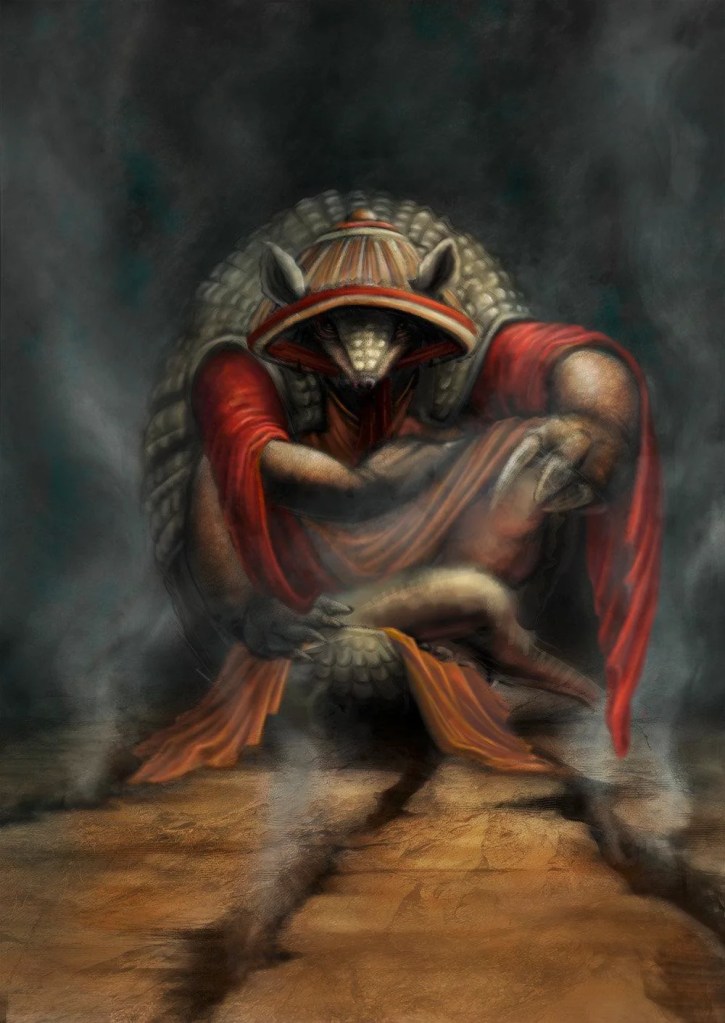
\page
MYSTIC: Mystic of Raz
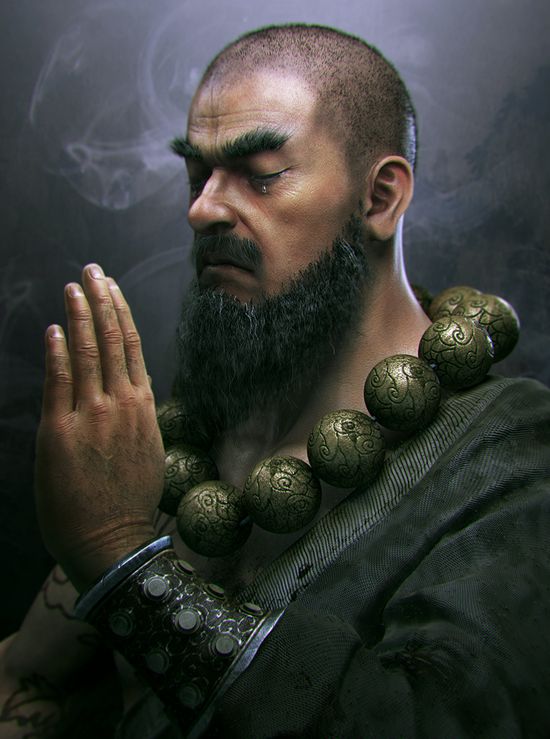
Mystics of Raz are devotees of an ancient tradition that allow them to channel magical energies to augment their physical forms. No mere aesthetics, Mystics of Raz are fearsome warriors in their own right. The ancient empire of Raz contained within its boundaries a sect of wizards who learned to not merely channel spells through their bodies, but to actually contain the energies of those spells within their flesh.
This ability allowed the Mystics of Raz to alter their physical forms to a greater or lesser degree, though it did reduce their ability to cast spells.
Role. The Mystics of Raz have learned to harness magical energies to enhance their own bodies. These enhancements last for a limited time, but can have
very powerful effects.
During the time in which Raz was a real power in the Northern Vast, the Razian mystic was a feared warrior on the battlefield. They served the dual function of elite troops and the home guard. Some say that the reason that Raz fell was because they turned against the empire they had so long served. In legendary tales, they were sometimes confused with the equally powerful and Razian geomancers, but the two are separate entities, and according to some tales, bitter rivals.
With the fall of Raz and its subsequent sinking into obscurity, the Razian sects that survive have become reclusive. There are but a few thousand Mystics of Raz left, and most of these live a hermit-like existence within the ruins of their homeland.
These men and women spend the majority of their time honing their abilities and studying the interplay of flesh and magic. The Razian mystics gather together from time to time to discuss the theory and practice of their art and to contemplate new discoveries and abilities.
Very few have left their homeland to journey into the world beyond. They hope to find a new homeland, a place where they can become what they once were the respected bodyguard and soldiers of an honorable land.
Hermits and Outcasts
Most Mystics of Raz are loners, discovering the secrets of their powers through vague references in tomes of lore or by ingratiating themselves to a master of the power.
In order to master their power, Mystics of Raz must first master themselves. They spend months and years in quiet contemplation, exploring their minds and leaving nothing uncovered, discerning how to use their bodies as conduits for arcane potency.
During this time, they shun society and typically live as
hermits at the edge of society.
A mystic who studied under a master worked as a virtual slave, toiling away at mundane tasks in return for the
occasional lesson or cryptic insight.
When mystics finally master their power, they return to the world to broaden their horizons and practice their craft. Some mystics prefer to remain isolated, but those who become adventurers aren’t content to remain on the fringe of the world.
Eccentric Minds
In order to maintain the strict discipline and intense self-knowledge needed to tap into their magical and spiritual powers, mystics develop a variety of practices to keep their focus sharp.
These practices are reflected in taboos and quirks, strange little behaviors that govern a mystic’s actions. These quirks are oaths or behavioral tics that help keep mystics in the proper frame of mind while maintaining perfect control over their minds, bodies and arcane and spiritual prowess.
While these taboos are harmless, they help cast mystics as outsiders. Few feel accepted by society, and fewer still care to become integrated with it. To mystics, the life of the mind is where they feel most at home.
Selecting Quirks
To add some texture to your mystic, consider the quirks your character has acquired. These behaviors have no game effect, but your character might become irritated or upset if forced to break them. They’re a great roleplaying tool to add character to the game.
You can roll on or pick from the table below, or create your own quirks.
New Class: Mystic of Raz
\page
Aim to create two quirks, to give them more of a chance to come into play. Finally, consider why your character chose these behaviors. What do they say about your character’s personality or background? Are they based on a specific incident or a belief?
Mystic of Raz Quirks
| d20 | Quirk |
|---|---|
| 1 | You never cut your hair. |
| 2 | You refuse to wear clothes of a specific colour. |
| 3 | You never say your name. |
| 4 | You never wear footwear. |
| 5 | You always wear a mask. |
| 6 | You dye your hair bright blue or green. |
| 7 | You pick a new name each day. |
| 8 | You never immerse yourself in water. |
| 9 | You sleep on bare earth. |
| 10 | You never consume alcohol. |
| 11 | You wear a veil to conceal your face. |
| 12 | You always wear a specific piece of clothing. |
| 13 | You refuse to light fires. |
| 14 | You refuse to write things down, instead using pictograms. |
| 15 | You never sit on a chair, preferring to stand or sit on the floor. |
| 16 | You always speak about yourself in the third person. |
| 17 | You write down the name of each creature you slay, and name ones that are unnamed. |
| 18 | You consume only water and raw vegetables. |
| 19 | You spend any money you earn within 1 week of gaining it. |
| 20 | You often speak to an imaginary companion, and act only with its blessing. |
Creating a Mystic
When creating a mystic, consider your character’s background.
How did you become a mystic?
What first drew you to this practice?
Are you self-taught, or did you have a master?
If you had a master, what is that relationship like?
Quick Build
You can make a mystic quickly by following these suggestions.
First, make Intelligence your highest ability score, followed by Dexterity or Constitution.
Second, choose the Hermit, Mystic or Sage background.
Class Features
As a mystic, you gain the following class features.
Hit Points
Hit Dice. 1d8 per mystic level
Hit Points at 1st Level. 8 + your Constitution modifier
Hit Points at Higher Levels. 1d8 (or 5) + your Constitution modifier per mystic level after 1st
Proficiencies
Armor. None
Weapons. Simple weapons, blowguns, shortswords, staff slings
Tools. Any one type of artisan’s tools or any one musical Instrument of your choice
Saving Throws. Intelligence, Wisdom
Skills. Choose two from Acrobatics, Arcana, History, Insight, Medicine, Nature, Perception and Religion
Equipment
You start with the following equipment, in addition to the equipment granted by your background:
- (a) a Shortsword or (b) any simple weapon
- (a) leather armor or (b) studded leather armor
- (a) a scholar’s pack or (b) an explorer’s pack
Alternatively, you can ignore the equipment here and in your background, and buy 5d4 × 10 gp worth of equipment from chapter 5 in the Player’s Handbook.
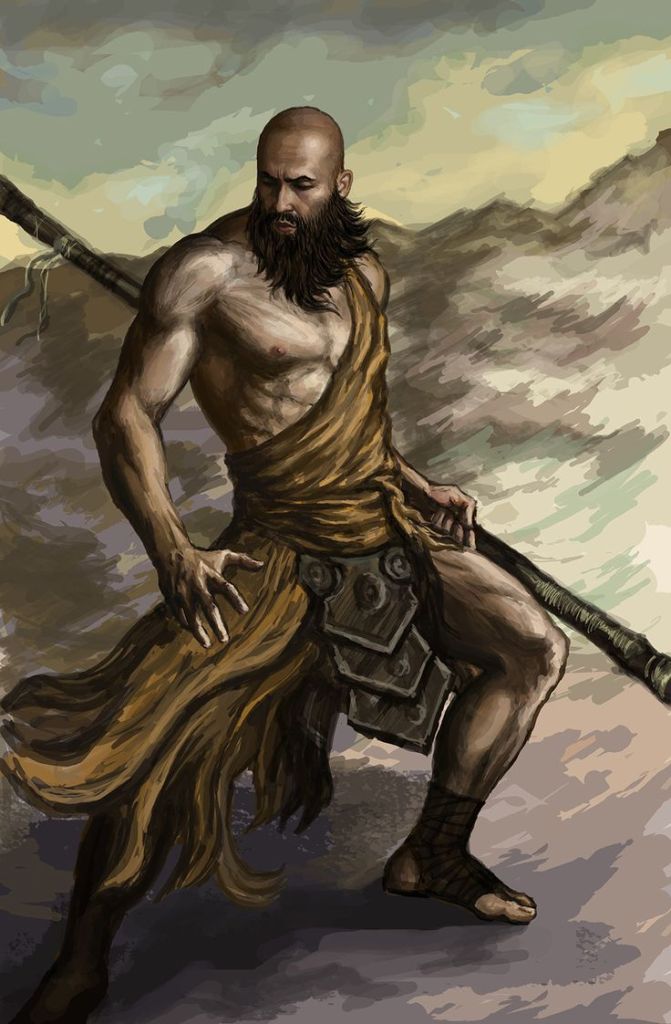
New Class: Mystic of Raz
\page
##### Mystic of Raz | Level | Proficiency Bonus | Martial Arts | Focus Die | Ki Points | Features | |:—:|:—:|:—:|:—:|:—:|:—| | 1st | +2 |1d4|1d4|—|Martial Arts, Mystical Awakening, Unarmoured Defence| | 2nd | +2 |1d4|1d4|2| Expressive Mantras, Focus Field, Ki | | 3rd | +2 |1d4|1d4|6|Minor Alteration, Psychic Discipline, Telepathy | | 4th | +2 |1d4 |1d4|8| Ability Score Improvement| | 5th | +3 |1d6|1d6|10|— | 6th | +3 |1d6|1d6|12| Boost Attribute, Psychic Discipline Feature| | 7th | +3 |1d6 |1d6|14|Quietude of the Soul| | 8th | +3 |1d6|1d6|16|Ability Score Improvement| | 9th | +4 |1d6 |1d8|18|—| | 10th | +4 |1d6|1d8|20|Heightened Focus (1)| | 11th | +4 | 1d8 |1d8|22|Fast Healing, Psychic Discipline Feature| | 12th | +4 | 1d8|1d8|24|Ability Score Improvement| | 13th | +5 |1d8 |1d10|26|—| | 14th | +5 | 1d8|1d10|28|Arcane Release, Heightened Focus (2)| | 15th | +5 |1d8 |1d10|30|—| | 16th | +5 | 1d8|1d10|32|Ability Score Improvement| | 17th | +6 |1d10 |1d12|34|Fists of Change| | 18th | +6 |1d10 |1d12|36|Epiphany| | 19th | +6 |1d10 |1d12|38|Ability Score Improvement| | 20th | +6 |1d10 |1d12|40|Psychic Discipline Feature|
A Psychic Gift
Mystics are able to tap into the arcane weave and turn their minds and bodies into a physical and metaphysical conduit for the spiritual and the sublime.
Many mystics were born with an innate psychic gift which is a mysterious gift from the universe.
In many who possess this gift it lies dormant for their entire lives, but certain circumstances — especially traumatic ones — can spark a sudden emergence.
To live with an uncontrolled psychic mind makes misery and misfortune for the wielder and all around them.
Trained mystics make careful study of a magical energy called ‘ki’ by most monastic traditions.
This energy is an element of magic that suffuses the multiverse — specifically, the element that flows through living bodies.
Where monks use this ki to enhance their physical prowesss, mystics harness this power to focus and direct their unruly mental strength towards meaningful use.
As they gain experience, their mastery of ki gives them not only peace of mind, but mastery over all matter through the use of refined mental power.
Class Features
Level 1: Martial Arts
At 1st level, your practice of martial arts gives you mastery of combat styles that use unarmed strikes and mystic weapons, which are shortswords and any simple melee weapons that don’t have the two-handed or heavy property.
You gain the following benefits while you are unarmed or wielding only mystic weapons and you aren’t wearing armour or wielding a shield:
- You can use Dexterity instead of Strength for the attack and damage rolls of your unarmed strikes and mystic weapons.
- You can roll a d4 in place of the normal damage of your unarmed strike or mystic weapon. This die changes as you gain mystic levels, as shown in the Martial Arts column of the Mystic table.
- When you use the Attack action with an unarmed strike or a mystic weapon on your turn, you can make one unarmed strike as a bonus action. For example, if you take the Attack action and attack with a quarterstaff, you can also make an unarmed strike as a bonus action, assuming you haven’t already taken a bonus action this turn.
Certain Razian mystical sects use specialized forms of mystic weapons.
For example, you might use a club that is two lengths of wood connected by a short chain (called a nunchaku) or a sickle with a shorter, straighter blade (called a kama).
Whatever name you use for a mystic weapon, you can use the game statistics provided for the weapon in the Weapons section later in this text.

New Class: Mystic of Raz
\page
Level 1: Mystical Awakening
Your mind is awake to the psychic and mystical hum of the universe, giving you the ability to influence your surroundings with the power of your mental focus.
The raw strength of your mind is represented by your Focus Die, the starting size of which is a d4. You roll the die when using a number of features gained through this class.
Changing the Size of the Die. If you roll a 1 on your Focus Die, it decreases by one die size after the roll, down to a minimum size of d2. This represents you losing clarity or focus. For example, if you are a 5th-level Mystic of Raz and roll a 1 on a d6, it becomes a d4 the next time you roll.
Conversely, if you roll the highest number on your Focus Die, it increases by one die size after the roll, up to its starting size. This represents you building momentum with your abilities. For example, if you are a 5th-level Mystic of Raz and you roll a 4 while your Focus Die is a d4, the die then becomes a d6 the next time you roll.
Whenever you finish a long rest, your Focus Die resets to its starting size. When you reach certain levels in this class, the starting size of your Focus Die increases, as shown in the Focus Die column of the Mystic of Raz table.
Dull Thoughts. When you take damage from a creature within 60 feet of you and your Focus Die is larger than a d2, you can use your reaction to diminish the ambient willpower in your vicinity. Your Focus Die decreases by one die size, and until the start of your next turn, any damage dice rolled by the creature (including those of the triggering effect) are decreased by one size as well, down to a minimum size of d2. Constructs and undead are immune to this effect.
Reorient Thoughts. As a bonus action, you can calm your mind for a moment and restore your Focus Die to its starting size. You can do this as many times as your proficiency bonus, and you regain all expended uses when you complete a long rest.
Level 1: Unarmored Defense
Beginning at 1st level, while you are wearing no armor and not wielding a shield, your AC equals 10 + your Dexterity modifier + your Intelligence modifier.
Level 2: Expressive Mantras
When you gain this feature, pick four expressive mantras to learn, choosing from the “Expressive Mantras” section at the end of the class’ description. You learn additional mantras of your choice when you reach certain levels in this class.
The number of mantras you know is equal to the maximum roll on your Focus Die, based on its starting size. For example, a 2nd-level Mystic of Raz would know 4 expressive mantras. A 5th-level Mystic of Raz would know 6 expressive mantras.
Whenever you gain a level in this class, you can replace one of the expressive mantras you learned with a new one, if you like.
Level 2: Focus Field
Your mental training has deepened your ability to focus with your mind so accutely that you can now manifest a tacticle influence upon the external world to create a focus field.
While you are not incapacitated and you aren’t wearing armour or wielding a shield, the field exists as an invisible Medium force that originates in a spot of your choosing within 10 feet of you.
The field has a hovering speed of 40 feet. It is intangible and doesn’t occupy its space. The field has blindsight within 5 feet of its space, but no other senses. You are telepathically aware of what it sees.
On your turn, the focus field can hover up to its speed to a space that you are aware of. It can pass through creatures and objects. If you take the Dash action, your focus field also gains the benefits of that action.
The field has a maximum range that it can move away from you. This range in feet equals 30 x your proficiency bonus.
New Class: Mystic of Raz
\page
If you recover from being incapacitated after losing your focus field, the field reforms within 10 feet of you.
Some of your features that make use of the focus field require your target to make a saving throw to resist that feature’s effects. The saving throw DC is calculated as follows:
Focus Save DC = 8 + your proficiency bonus + your
intelligence modifier
You can command the focus field in the following ways:
- When you take the Attack action, you can replace one or more of your attacks with a telekinetic attack made with your field against a target within 5 feet of it. You use Intelligence instead of Strength or Dexterity for the attack and damage rolls of this attack, which counts as a simple weapon attack that deals your choice of bludgeoning or psychic damage equal to one roll of your Focus Die (following the usual Focus Die roll rules).
- As a bonus action you can make one special shove attack through your focus field against your Focus Save DC or be moved 5 feet in any direction. A creature can willingly fail this save.
- Your focus field can carry, push, drag, or lift objects not being worn or carried, with a carrying capacity in pounds equal to your Intelligence score multiplied by 15. While carrying, pushing, dragging, or lifting any object that weighs more than your Intelligence score in pounds, you must concentrate on the task as if concentrating on a spell. A creature attempting to wrest an object from the grip of the field must succeed on a Strength (Athletics) check against your Focus Save DC to do so.
- You can manipulate objects with the field as if using the mage hand cantrip, or speak to a creature within 5 feet of it as if using the message cantrip.
- You learn if a creature within 5 feet of your field telepathically communicates, although you do not learn the contents of any such communication.
Level 2: Ki
Starting at 2nd level, your training allows you to harness the incredible power of the arcane weave by using your mental focus as a conduit for the meditative and mystic energy of ki. Your access to this energy is represented by a number of ki points. Your Mystic of Raz level determines the number of points you have, as shown in the Ki Points column of the Mystic of Raz class table.
You can spend these points to fuel various ki features. You start knowing six such features: Flurry of Blows, Guarded Thoughts, Inner Peace, Patient Defense, Sentient Sense and Step of the Wind, as well as four expressive mantras (described below).
You learn more ways to use ki as you gain levels in this class.
When you spend a ki point, it is unavailable until you finish a short or long rest, at the end of which you draw all of your expended ki back into yourself. You must spend at least 30 minutes of the rest meditating to regain your ki points.
Some of your ki features require your target to make a saving throw to resist the feature’s effects. The saving throw DC is equal to your Focus Save DC (8 + your proficiency bonus + your Intelligence modifier).
Flurry of Blows
Immediately after you take the Attack action on your turn, you can spend 2 ki point to make two unarmed strikes as a bonus action.
Guarded Thoughts
As a reaction when you take psychic damage, or when a creature attempts to read your mind, you can spend 1 ki point to gain resistance to psychic damage until the start of your next turn. For the duration, your thoughts can’t be read by any means.
Inner Peace
You can spend 1 ki point as a bonus action to gain advantage on Constitution, Intelligence, Wisdom and Charisma saving throws until the end of your next turn.
Patient Defense
You can spend 2 ki point to take the Dodge action as a bonus action on your turn.
New Class: Mystic of Raz
\page
Sentient Sense
As an action, you can spend 1 ki point to expand your awareness and scan for other thinking minds. Until the end of your next turn, you know the location of any creature within 60 feet of you that has an Intelligence score of 4 or higher. You do not know the type (for example, humanoid) of any being whose presence you sense. Within the same radius, you also become aware of any creature that has the ability to communicate telepathically.
Step of the Wind
You can spend 2 ki point to take the Disengage or Dash action as a bonus action on your turn, and your jump distance is doubled for the turn.
3rd Level: Minor Alteration
Starting at 3rd level, when you choose this tradition, you gain four additional ki features: Hammerblow, Hands of Stone, Silent Walk and Sudden Speed.
Hammerblow
You can spend 1 ki point as part of your action to deal double damage to any object you strike with one of your melee attacks. This feature also allows you to bypass an object’s damage threshold if that threshold is equal to one half your monk level or less.
Hands of Stone
You can spend 2 ki points as part of your action to temporarily increase the damage you do with your unarmed strikes. Until the start of your next turn, any unarmed strikes you successfully hit with will do the maximum damage possible on your martial arts dice, to which you can add your dexterity modifier as usual. In addition, you can add your current Focus Die to each of the Hands of Stone unarmed strikes that hit.
However, these additional Focus Die damage rolls follow the usual rules for Focus Die rolls, decreasing a die size on a 1 and increasing on the die’s maximum amount, to a maximum die size of your Mystic of Raz’s current level Focus Die starting size.
For example, Gara is a 6th-Level Mystic of Raz. Her Hands of Stone unarmed strikes would be 6 + her dexterity modifier + her current Focus Die. She has a dexterity modifier of +2. Her current Focus Die is 1d6. She hits an enemy successfully, doing 6 + 2 (dexterity modifier) + 1 (1d6 Focus Die) for a total of 9. Because she rolled a 1 on her Focus Die, the next time she rolls a Focus Die it will be one size down, a d4. As a bonus action, using her ki feature Flurry of Blows (which she pays an additional 2 ki points to use) she hits the enemy again, this time doing 6 + 2 (dexterity modifier) + 4 (1d4 Focus Die) for a total of 12. Because she rolled the maximum amount on her Focus Die, the next time she makes a Focus Die roll, it will be one size higher, a d6, which, coincidentally, is also the starting size for her current Mystic of Raz level.
The Hands of Stone ability can also be used without spending 1 ki point, however if the ki point is not spent, your character will suffer 1d6 points of damage for each unarmed strike that hits its target whenever the ability is used this way.
Silent Walk
You can use your reaction to spend 1 ki point and muffle the sound of your footfalls.
You have advantage on stealth checks for a number of minutes equal to your wisdom modifier.
Sudden Speed
When you move, you can spend 1 ki point to double your movement rate until the beginning of your next turn.
3rd Level: Psychic Discipline
Even at the height of Razian power, its Mystics were fractured into different sects that followed differing training disciplines and foci. Choose the psychic discipline, or Way, that your Mystic of Raz has trained in:
- The Way of the Diamond Mind
- The Way of the Mirrored Mind
- The Way of the Primal Fist
- The Way of the Selfless Heart
- The Way of the Ten Thousand Eyes
- The Way of the Thousand Tongues
- The Way of the Threshold Gate, or
- The Way of the Tortoise and Crane.
Each of these psychic disciplines is detailed after the class’ description. Your choice grants you features at 6th level and again at 11th and 20th level.
3rd Level: Telepathy
You have gained the ability to communicate with telepathy. As an action, you can roll your Focus Die to create a telepathic link with a number of creatures up to the result rolled that are within 120 feet of you.
You can telepathically speak with linked creatures while they are within this range, and they can respond in kind. You don’t need to share a language with a creature for it to understand your telepathic messages, but it must be able to understand at least one language or be telepathic itself. An existing telepathic link ends if you fall unconscious or if you use this feature again.
4th Level: Ability Score Improvement
When you reach 4th level and again at 8th, 12th, 16th, and 19th level, you can increase one ability score of your choice by 2, or you can increase two ability scores
New Class: Mystic of Raz
\page
of your choice by 1. As normal, you can’t increase an ability score above 20
using this feature.
6th Level: Boost Attribute
Beginning at 6th level, you can use your ki points to temporarily boost your physical prowess.
You can use your reaction to increase your Strength, Dexterity or Constitution score according to the Mystic of Raz Ki Points table (see below).
This ability can boost the chosen score to a maximum of 22.
This increase lasts for a number of minutes equal to your Wisdom modifier, at which point you gain one level of Exhaustion for each point by which you boosted your attribute (one level of Exhaustion for a +1 boost, two levels of Exhaustion for a +2 boost, etc).
These exhaustion levels remain until you finish a short or long rest.
Once you use this ability, you must finish a short or long rest before you can use it again.
Mystic of Raz Ki Points
| Ki Cost | Ability Score Boost | Exhaustion Suffered |
|---|---|---|
| 1 | +1 | 1 level |
| 3 | +2 | 2 levels |
| 6 | +3 | 3 levels |
| 10 | +4 | 4 levels |
7th Level: Quietude of the Soul
When you fail a saving throw that causes you to lose concentration, become subject to madness, or to become charmed or frightened, you can spend 1 ki point to reroll
the saving throw. If you do so, you must use the new roll.
10th Level: Heightened Focus
Before you take an action or a bonus action on your turn using your focus field, you can spend ki points to increase its size category by one (for example, from Medium to Large) for a number of minutes equal to the ki points spent. Your focus field’s carrying capacity and the weight it can push, drag, or lift is doubled for each size category above Medium it achieves, as if it were a creature.
Starting at 14th level, you can increase the size category of your focus field by two (for example, from Medium to Huge) when you use this feature, for a cost of 1 additional ki point per minute.
11th Level: Fast Healing
Beginning at 11th level, you can spend ki points to increase the speed at which your body heals. As an action, you can spend 6 ki points to roll one or more Hit Dice, up to 1/3 your maximum number of Hit Dice (rounded down). For each Hit Dice spent in this way, roll the die and add your Constitution modifier to it. You regain points equal to the total (minimum 1 per Hit Die spent).
You cannot exceed your maximum hit points using this ability. Any Hit Dice you use in this manner are not available the next time you take a short rest and return normally the next time you take a long rest.
14th Level: Arcane Release
Starting at 14th level, you’ve begun to unlock the secrets of a dangerous technique that converts your life force to arcane power and vice versa, allowing you to surpass your mortal limits.
As a bonus action, provided you meet the required Mystic level, you can choose an Arcane Limit and expend the number of ki points it costs to perform an Arcane Release at that Limit (as shown on the Arcane Release table below). Doing this turns your ki-fuelled body and mind into a living conduit for arcane energies to magically goad you past your physical limits. You gain the benefits and consequences of breaking one of the limits, which are also listed below. Breaking a limit emits a thunderous boom audible up to 300 feet away.
Your Arcane Release lasts for 1 minute, during which magical energy pours from your body, emitting bright light in a 5-foot radius and dim light 10 feet beyond that. While your Arcane Release remains active, you can use a bonus action on subsequent turns to break a different limit, gaining its benefits in addition to those already active.
Exhaustion levels suffered from breaking limits are cumulative; you suffer two levels of exhaustion if you break both the Limit of Space and Limit of Force during your Arcane Release, for example. You also suffer the exhaustion levels of any Limits in between; you suffer 3 levels of exhaustion if you first break the Limit of Strength and then the Limit of Will. However, you do not need to pay all of the ki point costs between the limits. Each time you choose a Limit you pay only the point cost for the limits you specifically choose. If you break the Limit of Strength and then the Limit of Will, you would pay 4 ki points to break the Limit of Strength
New Class: Mystic of Raz
\page
and then 16 ki points to break the Limit of Will. You can continue to break limits providing you meet the required Mystic level and have enough ki points.
Your broken limits’ benefits last for the duration of your Arcane Release. Your Arcane Release ends early if you fall unconscious, drop to 0 hit points, or die.
Once you’ve used this feature, you can’t use it again until you finish a long rest.
Arcane Release table
| Required Mystic Level | Arcane Limit | Ki Point Cost | Name of Threshold |
|---|---|---|---|
| 14 | 1st | 2 | Limit of Stamina |
| 14 | 2nd | 4 | Limit of Strength |
| 14 | 3rd | 6 | Limit of Speed |
| 15 | 4th | 8 | Limit of Thought |
| 15 | 5th | 10 | Limit of Skill |
| 15 | 6th | 12 | Limit of Space |
| 16 | 7th | 14 | Limit of Force |
| 16 | 8th | 16 | Limit of Will |
| 17 | 9th | 18 | The Forbidden Limit |
Arcane Limits
1st Arcane Limit – Limit of Stamina. Arcane energy becomes a second well of life force, allowing you to fight past any strain. You gain temporary hit points equal to your Intelligence modifier when you break this limit and again at the start of each of your turns.
2nd Arcane Limit – The Limit of Strength. You push past the limits of your muscles, striking your foes with uncanny strength. In addition to your usual unarmed strike damage roll, you can add your strength bonus and your proficiency bonus. You also have advantage on Strength checks and saving throws.
3rd Arcane Limit – The Limit of Speed. Arcane power propels your legs and heightens your reflexes. Your walking speed increases by 10 feet, you can Dash as a bonus action, and you have advantage on Dexterity checks and saving throws.
4th Arcane Limit – The Limit of Thought. You focus your mind, accelerating your thoughts with jolts of arcane power. You have advantage on Intelligence checks and saving throws, and if you fail a Constitution saving throw to maintain concentration on a spell or spell-like feature or ability, you can use your reaction to succeed instead.
5th Arcane Limit – The Limit of Skill. You become the perfect product of your training, maximizing the potential of your skill. You make melee attack rolls with advantage.
6th Arcane Limit – The Limit of Space. Your body becomes partially arcane, allowing you to bypass mundane laws of mortal movement. You gain a flying speed equal to your walking speed, and you can teleport up to 30 feet to an unoccupied space that you can see as a bonus action. Pushing past this limit taxes you greatly.
When your Arcane Release ends, you suffer 1 level of exhaustion.
7th Arcane Limit – The Limit of Force. The light of your Arcane Release becomes a mighty tide of magical force. The space within 10 feet of you is difficult terrain for your enemies. Whenever you deal damage with an attack or spell, you can change the damage type to force.
Once on each of your turns when you hit a creature with an attack, you can push it up to 10 feet towards or away from you. Pushing past this limit taxes you greatly. When your Arcane Release ends, you suffer 1 level of exhaustion.
8th Arcane Limit – The Limit of Will. Your conviction surges in waves of tangible presence. You have advantage on Wisdom saving throws, and you are immune to the charmed and frightened conditions. If you are charmed or frightened when you break this limit, the effect is suspended for the duration of your Arcane Release.
When a hostile creature ends its turn within 5 feet of you, you can use your reaction to attempt to startle it with the sheer force of your will. The creature must succeed on a Wisdom saving throw against your wizard spell save DC or be frightened of you until the end of your next turn. Pushing past this limit taxes you greatly. When your Arcane Release ends, you suffer 1 level of exhaustion.
9th Arcane Limit – The Forbidden Limit. Pure arcane power animates your body, combining devastating strikes with diamond-hard defense. Your melee attacks score a critical hit on a roll of 19 or 20, and you have resistance to all damage.
If you would drop to 0 hit points, you can spend 6 ki points to drop to 1 hit point instead. Pushing past this limit can prove fatal.
At the Forbidden Limit, when your Arcane Release ends, you suffer 1 level of exhaustion, and you must succeed on a DC 15 Constitution saving throw or immediately drop to 0 hit points, automatically failing two death saving throws.
17th Level: Fists of Change
You have mastered the art of dealing damage with your body.
When you make any kind of unarmed attack, you can spend 3 ki points to change the damage type to one of these listed types: acid, cold, fire, lightning, poison or thunder.
In addition, you can spend 6 ki points when you take the attack action to add your Intelligence modifier to the attack roll in addition to all other modifiers.
New Class: Mystic of Raz
\page
18th Level: Epiphany
A revelation close to the peak of enlightenment grants you proficiency in Charisma saving throws. In addition, choose one mantra that you know. Any ki cost required by the mantra is reduced by 1.
Psychic Disciplines
Mystics train their minds via adherence to strict doctrines. Here are psychic discipline options you can choose from at 3rd level.
The Way of the Diamond Mind
Those mystics who follow the way of the Diamond Mind are both highly respected and also peerless masters of philosophical, strategic and meditative fundamentals. They hone their formiddable focus on training their minds and spirits towards self-control and improvement. When what seemed certain becomes clouded, or when doubt creeps in to undermine assurance, leaders, scholars, and even other mystics seek out these sages of the Diamond Mind for their wisdom.
3rd Level: Adaptable Focus
Diamond Mind psychic discipline feature
Your mental exercises enhance your mind’s flexibility. Your focus field gains the following properties:
- Damage dealt through the telekinetic attacks of the field can be bludgeoning, piercing, psychic, or slashing damage, as you manipulate the field’s shape to your whim.
- The range of attacks or effects delivered through or triggered by the field is extended by 5 feet.
Furthermore, at the end of a short or long rest, you choose one of the following properties. Your focus field gains the chosen property until the start of your next short or long rest:
- When you make a telekinetic attack through the field as part of the Attack action, you can target a second creature within 5 feet of your target with the same attack roll.
- When a target is forcibly moved by an effect originating from your focus field as a result of failing a saving throw, the target is moved an additional 5 feet.
- Your field’s carrying capacity and the weight it can push, drag, or lift is doubled.
3rd Level: Philosopher of the Diamond Mind
Diamond Mind psychic discipline feature
To maintain mental balance, your mind is always open to exploring new ideas. At the end of a long rest, you can replace one of the expressive mantras you know with a new one, provided you meet any prerequisites required to learn it.
6th Level: Diamond Mind Advisor
Diamond Mind psychic discipline feature
Once per round when a creature other than yourself that you are telepathically linked to hits a target you can see with an attack, you can roll your Focus Die. The attacking creature adds the number rolled to the damage of the attack.
11th Level: Peaceful Existence
Diamond Mind psychic discipline feature
Once per round when you reroll a saving throw using your Quietude of the Soul feature, you can do so without expending a ki point.
20th Level: Serenity of the Diamond Mind
Diamond Mind psychic discipline feature
By meditating for a moment, you can enter a state of total psychic transcendence. The air around you might grow hot or cold, be whipped into winds, or eerily calmed.
Using your action, you spend 5 ki points to undergo a transformation. For 1 minute, you gain the following benefits:
- You gain a fly speed equal to your walking speed.
- At the start of each of your turns, you can roll your Focus Die, gaining a bonus to your Armor Class equal to the number rolled that lasts until the start of your next turn.
- Whenever you spend ki points on a feature that requires an action, you can use that feature with a bonus action instead, or reduce the ki cost of that feature by 1.
Once you use this feature, you can’t use it again until you finish a long rest.
New Class: Mystic of Raz
\page

The Way of the Mirror Mind
Mystics of this discipline are diligent students of the minds of others, keeping their own open to inspiration from without as well as within. Through highly attuned manipulation of their telekinetic powers, they also practice the mimicry of other lifeforms. A practitioner of the Mirror Mind might use their mental abilities to imitate the swaying tentacles of an octopus, the breath of a young dragon, or the ferocity of a chimera. To outside inspection, their own minds are highly polished surfaces that force interlopers to consider themselves, offering the Mirror Mind an opportunity to follow and learn.
3rd Level: Reflect Aspect
Mirror Mind psychic discipline feature
A combination of telepathic reconnaissance and telekinetic agility allows you to mimic the capabilities of other creatures with great accuracy. As a bonus action, you can copy one action you have prior knowledge of from those available to a creature within 5 feet of your focus field. The target must have a challenge rating equal to or lower than your mystic level divided by 3, and not be a construct or undead.Once you have copied an action in this way, you can use it yourself as an action on your turn. Attack rolls you make as part of a copied action use your Intelligence modifier and proficiency bonus, but any damage and additional effects of the action are resolved exactly as if performed by the target creature. The action is copied exactly as it is available to the target creature when you use this bonus action. For example, if you copy the Breath Weapon of a dragon wyrmling while the breath weapon has yet to recharge, your copy of it must also recharge. An action with a limited number of uses is copied with the current remaining number of uses available. A copied action remains available to you until you use this bonus action again.
3rd Level: Reflect Visage
Mirror Mind psychic discipline feature
You can expend 1 ki point to cast the disguise self spell, taking on the appearance of any target you currently have copied through your Reflect Aspect feature, so long as its appearance can be replicated within the limits of the spell.
3rd Level: Burnished Mind
Mirror Mind psychic discipline feature
The telepathic glare of your pysche subconsciously distracts and disorients others. When you aren’t wearing armor, your AC equals 13 + your Intelligence modifier.
In addition, you have advantage on saves against effects that read your mind or emotional state, such as the detect thoughts spell or similar magic.
6th Level: Dedicated Extrospection
Mirror Mind psychic discipline feature
After intensive study, you can better mimic other beings. You can now retain up to three copied actions using your Reflect Aspect feature, which can be curated from separate targets. In place of one possible action, you can also choose to copy one bonus action or reaction available to a target. If you spend at least 1 minute observing or interacting with another creature outside combat, you can learn a number of actions, bonus actions, or reactions it can take up to your Intelligence modifier, chosen at the DM’s discretion. If you copy an action, bonus action, or reaction that would exceed your limit of copies, you must choose one of your current copied actions, bonus actions, or reactions to forget.
11th Level: Ardent Reflection
Mirror Mind psychic discipline feature
To any being with the talent to see it, your psychic self is now a perfect, blazing mirror of metaphysical light. You have advantage on saving throws against any spell that targets only you. If you roll a 20 for the save against a spell and the spell is 7th level or lower, the spell has no effect on you and instead targets another creature of your choice within the maximum range of your focus field, using the slot level, spell save DC, attack bonus, and spellcasting ability of the caster.
20th Level: Uncanny Imagery
Mirror Mind psychic discipline feature
Your mastery of mental mirroring now creates perfect reflections. The number of copied options you can retain using your Reflect Aspect feature & the maximum challenge rating of your targets increases to 7.
In addition, when a creature within 5 feet of your focus field takes an action, you can use your reaction to perfectly mirror it, regardless of the target’s CR. You can immediately take the same action as the creature, and you gain access to all actions, bonus actions, reactions, and saving throw modifiers in its statblock until the end of your next turn.
Once you use this reaction to mirror a creature, you must complete a short or long rest before you can do so again.
New Class: Mystic of Raz
\page
The Way of the Primal Fist
While disciplining your psychic gifts, you have meditated deeply on the ways of war. With keenly tempered tactical awareness, those who follow the Way of the Primal Fist are able to observe and influence wide swathes of an engagement with keen insights and raw psychic strength. Displaying galling confidence, they cut decisively
forward to deliver a clean, clear victory.
3rd Level: Combat Acumen
Primal Fist psychic discipline feature
Your extensive study of warfare has granted you the following
benefits:
- You gain proficiency with martial weapons and light armor. You can manifest your focus field even while wearing armor you are proficient with.
- A focus field you manifest can wield a weapon that you are proficient with, and make attacks with the weapon in place of its normal telekinetic attacks. It can carry and use any ammunition required by the weapon.
- Weapon attacks you make from within one of your focus fields use your Intelligence modifier, instead of Strength or Dexterity modifier, for the attack and damage rolls.
3rd Level: Split Focus
Primal Fist psychic discipline feature
Your preternatural awareness allows you to hold sway over multiple dominions of the battlefield at once. As an action, you can split your focus field into two.
When split in this way, the focus fields cannot be any larger than size Medium. Each focus field has its own movement speed and can move independently of the other as you direct it on your turn. When using your focus field as part of an action, bonus action, or reaction, you choose which of the fields to act through. This effect ends if you become incapacitated, or if you choose to end it early by dismissing one of the fields as a bonus action.
6th Level: Extra Attack
Primal Fist psychic discipline feature
You can attack twice, rather than once, whenever you take the Attack action on your turn.
11th level: Iron Will
Primal Fist psychic discipline feature
You can now use your Quietude of the Soul feature to reroll a failed saving throw that would cause you to gain exhaustion or to become paralyzed, poisoned, or stunned.
20th Level: One Mind Army
Primal Fist psychic discipline feature
Your psychic-fuelled war machine unfolds with terrifying grace. When you hit with an attack made as part of the Attack action, you can immediately make up to two further weapon attacks. Each of these attacks must originate from a different space to the original attack.

The Way of the Selfless Heart
Your mind and heart are open to all the woes, worries, merriments, and fears of sapient life. More than other mystics, you have homed in on the underlying current of emotion tangled in a complex push and pull with the tides of all thought and action.
By extending your understanding — even to those who would call themselves your enemies — you offer the chance to dissolve and resolve conflicts in a way that few others could. When an emotional storm is brewing, you can guide all parties to the calm at its center.
3rd Level: Detect Feelings
Selfess Heart psychic discipline feature
Whenever you use your Sentient Sense, you can see the surface shape of emotions in creatures you detect.
The deeper truth of their thoughts is hidden from you, but you know whether a creature is feeling angry, afraid, happy, sad, or violent, for example, and gain a general sense of who or what, if anything, those emotions are being directed at if their subject is within 60 feet of you.
New Class: Mystic of Raz
\page
3rd Level: Soothe Ego
Selfess Heart psychic discipline feature
You understand how to redirect feelings of shame or fear to more rejuvenating pastures. As a bonus action, you can grant temporary hit points equal to one roll of your Focus Die + your Intelligence modifier (a minimum of 1 temporary hit point) to each creature of your choice within 5 feet of your focus field. When you grant temporary hit points to a creature in this way, you can choose one effect of the calm emotions spell to affect the target. You can use this bonus action a number of times equal to your Intelligence modifier, and regain all expended uses at the end of a long rest.
6th Level: Shared Pain
Selfess Heart psychic discipline feature
Once per turn when a creature within 5 feet of either you or your focus field deals damage to another creature, you can choose for it to take psychic damage equal to one roll of your Focus Die, as it is subjected to the psychic feedback of the pain it has caused. Constructs and undead are unaffected, as are creatures immune to effects that read thoughts or feelings.
11th Level: Swelling Emotion
Selfess Heart psychic discipline feature
When the size of your focus field increases using your Heightened Focus feature, creatures of your choice within 5 feet of the field must make a Charisma saving throw against your Focus Save DC.
A creature can willingly fail this save. On a failed save, you choose one of the following effects to influence the creature:
- Joy. Happiness fills every limb with warmth and energy. Until the end of your next turn, the target’s movement speed increases by a number of feet equal to 5 x your Intelligence modifier, and it adds your Intelligence modifier to attack rolls for the duration.
- Misery. Dolorous fatigue bears down on every fibre. The target is under the effects of the slow spell until the end of your next turn.
- Panic. Rising fear gives way to chaotic flight. The target must spend its next turn trying to move as far away from all other creatures as it can. It also can’t take reactions until the end of your next turn. For its action, it can use only the Dash action or try to escape from an effect that prevents it from moving. If there’s nowhere to move, the creature can use the Dodge action.
- Pride. Hubris solidifies even an untenable position. Until the end of your next turn, the target refuses to move. If it had previously taken an action, it repeats this action on its next turn, regardless of its effectiveness. If the action cannot be repeated, it does nothing.
- Rage. Immense anger fuels a brief and hollowing blaze. Until the end of your next turn, the target gains resistance to bludgeoning, piercing, and slashing damage, and adds your Intelligence modifier to the damage rolls of melee weapon attacks. When the effect ends, the target gains one level of exhaustion.
20th Level: Hearts and Minds
Selfess Heart psychic discipline feature
You have advantage on all Wisdom (Insight) and Charisma (Persuasion) checks made against creatures within the maximum range of your focus field.
In addition, you can help inspiration flow between allies even when they are unable to express it themselves. Once per turn when a creature you can currently speak with through your telepathic link makes an ability check, attack roll, or saving throw, you can roll a number of Focus Dice equal to the number of other creatures in your link you can see within 60 feet of you. The creature can add the highest number rolled to its ability check, attack roll, or saving throw. Use the first die rolled to determine whether the size of your Focus Die changes after the triggering action is resolved.

New Class: Mystic of Raz
\page
The Way of the Thousand Tongues
Before you speak, listen. This is the refrain of the Speakers: those who have meditated to attune themselves to the very language of the universe and its making. Through this they learn secrets of enlightenment, and can even speak directly to the world, translating thought into voice with effects that reverberate through it in ways great and subtle.
3rd Level: Voice of Veracity
Thousand Tongues psychic discipline feature
Speaking words of irrefutable truth, you gain the ability to communicate simple ideas with all living things. Listeners can always understand the meaning of your words, though you have no special ability to understand them in return. Moreover, you can choose for any creatures that hear your voice to know that you are telling the truth, if this is the case.
3rd Level: Voice of Making and Unmaking
Thousand Tongues psychic discipline feature
Speaking words of creation itself, your tones have power over all things in it. You gain the following benefits:
- You learn the thaumaturgy cantrip and the healing word spell. These spells counts as mystic spells for you. See the Psionic Loom mantra for the rules for casting mystic spells of 1st-level or higher. In addition, whenever you cast a mystic spell of 5th-level or lower that has a verbal component, you can choose to speak the verbal component aloud to reduce its ki point cost by 1.
- The telekinetic attacks of your focus field deal thunder damage. If you know your target’s true name, it takes an additional 1d8 thunder damage on a hit.
{{note
True Names
A true name is a creature’s hidden name that, rather than just acting as a label, metaphysically truly belongs to that creature. All beings have one, and they hold great power in magic, so those who do know their true names often hide them well.
But, just as a being’s role in the universe can slowly shift, true names can also change over time. A being interested in guarding their name must regularly confirm it, and the trail of their own research may even prove their undoing in the end.
}}
6th Level: Resonant Harmony
Thousand Tongues psychic discipline feature
The music of the spheres hums between your focus field and yourself as you speak: once on your turn after you speak aloud, you can deal 1d8 thunder damage to a creature that can hear you and that is between yourself and your focus field.
If you know the true name of your target, it takes an additional 1d8 thunder damage from this harmony.
11th Level: True Listener
Thousand Tongues psychic discipline feature
You have heard and understood more of the true nature of things than most ever shall. You have advantage on saving throws against spells belonging to the enchantment and illusion schools of magic, as well as on Intelligence (Investigation), Wisdom (Insight), or Wisdom (Perception) checks made to determine whether something is illusory, or if a creature is under the influence of an enchantment.
20th Level: Chosmic Choir
Thousand Tongues psychic discipline feature
When you speak, all listen. You can no longer be silenced by any means while conscious, and you learn the following spells: power word heal, power word kill, power word pain, and power word stun, which are mystic spells for you.
As an action, you can spend 20 ki points to cast each of these spells simultaneously, targeting a separate creature with each spell.
Once you use this action, you gain one level of exhaustion, and you can’t use it again until you finish a long rest.
The Way of the Ten Thousand Eyes
Every nascent mystic opens their mind’s eye to a new world of hidden thoughts. For those with the talent, observing the unspoken can become second nature. The greatest telepaths of the Mystics of Raz, those who follow the Way of the Ten Thousand Eyes, known as
New Class: Mystic of Raz
\page
Seers, bear witness to all things: every impulse, intent, and deed that crosses their expansive vision.
Their role is not to judge – but they cannot help but see. Through their gifts, a Seer also hones an oracle’s analysis of cause and effect, knowing how a brief thought can translate into lasting action.
3rd Level: Greater Telepathy
Seer psychic discipline feature
Your telepathic gift is so pronounced that other minds are never truly closed to yours. You gain the following benefits:
- The maximum range of your Telepathy feature increases to 250 feet. This range becomes 500 feet at 6th level, 1 mile at 11th level, and unlimited across the same plane of existence at 20th level.
- Creatures of your choice within 5 feet of your focus field are added to your telepathic link. A creature linked in this way does not count towards your total of linked creatures. The connection ends with a creature linked in this way if it moves more than 5 feet away from your focus field.
- You learn the detect thoughts spell. It counts as a mystic spell for you. See the Psionic Loom mantra for the rules for casting mystic spells of 1st-level or higher. In addition, whenever you cast a mystic spell of 5th-level or lower that allows you access to a creature’s thoughts as part of its effect, its ki point cost is reduced by 2.
3rd Level: Perennial Vision
Seer psychic discipline feature
Once on your turn (no action required) you can access the senses of a creature you are telepathically linked with. You see through its eyes and hear what it hears until the start of your next turn, when you return to your own senses. While perceiving through another creature’s senses, you gain the benefits of any special senses possessed by that creature. You are not blinded to your own surroundings so long as you can still see your own body through the borrowed senses.
6th Level: Incisive Intuition
Seer psychic discipline feature
Once per turn, you can learn the intentions of a a creature you deal damage to or force to make a saving throw by reading splinters of scattered thought. Until the start of your next turn, that target has disadvantage on any attack roll that
targets a creature that forms a part of your telepathic link.
11th Level: Overseer
Seer psychic discipline feature
Your watchful mind keeps a vigil over your companions. Whenever you or a friendly creature you can currently communicate with via your telepathic link with must make an Intelligence, Wisdom, or Charisma saving throw, the creature gains a bonus to the saving throw equal to your Intelligence modifier (with a minimum bonus of +1). You must be conscious to grant this bonus.
20th Level: Omniscient
Seer psychic discipline feature
Through your mind’s eye, you witness all. You gain truesight out to the maximum range of your focus field. Creatures within that range cannot have advantage on attacks against you, or benefit from half-cover or three-quarters cover from you. You are aware of where they are and their surface thoughts at all times.
The Way of the Threshold Gate
As a Shaman, you, like all those Mystics of Raz who follow the Way of the Threshold Gate, have always focused on cultivating spiritual peace. You use it not only to examine the souls of individuals, but the soul of your community: looking beyond living minds and through the layers of life, time, and death to an ancestral multitude beyond. Through intense focus, you have managed to draw forth the power of spirits from the ether to aid and advise your charges and yourself.
This connection sets a Shaman apart from other mystics. You invest your gift into the care of elder spirits: balancing the worlds of past and present, culture and nature, and trusting absolutely in their protection.
3rd Level: Spirit Guide
Shaman psychic discipline feature
You direct your mind through the veil separating the departed from the living, and pull through an advisor and ally in the form of an ancestral spirit. Your focus field transforms permanently into a spirit guide. It retains its maximum range, but loses all of its other properties. Any other features that refer to your focus field, including expressive mantras, now refer to your spirit guide instead.
If a mantra requires the use of an action (other than the Cast a Spell action), a bonus action, or a reaction, it uses your spirit guide’s action, bonus action, or reaction instead of your own.
New Class: Mystic of Raz
\page
The guide is friendly to you and your companions, and it obeys your commands. See this creature’s game statistics in the Spirit Guide stat block (see below), which uses your proficiency bonus (PB) in several places. You determine the creature’s
appearance; your choice has no effect on its game statistics.
In combat, the guide shares your initiative count, but it takes its turn immediately after yours. It can move and use its reaction on its own, but the only action it takes on its turn is the Dodge action, unless you take a bonus action on your turn to command it to take another action. That action can be one in its stat block or some other action. If you are incapacitated, the guide can take any action of its choice, not just Dodge. You can spend 2 ki points as an action to cause the spirit guide to regain hit points equal to two rolls of your Focus Die.
At the end of a short or long rest when you draw all of your expended ki back into yourself, you can summon a new spirit guide to you. If you already have a spirit guide from this feature, the first one immediately vanishes. The guide also vanishes if you die.
3rd Level: Totemic Teachings
Shaman psychic discipline feature
To anchor your spirit guide, you carve artful totems, fetishes, or similar spiritual foci representative of your cultural history. A totem is a Tiny object made of bone, stone, or wood. You have a number of totems equal to your proficiency bonus. At the end of a short or long rest while your totems are on your person, you can replace expressive mantras you know with unique benefits for your spirit guide, chosen from those detailed under the “Expressive Totems” section below.
Each totem acts as the anchor for one such benefit, and each benefit can only be chosen once unless otherwise specified. If a totem is more than 10 feet away from you for more than 10 minutes, its magic is lost and you lose access to its benefit until you complete a short or long rest.
In addition, you learn two cantrips of your choice from the druid spell list. These spells count as mystic spells for you.
6th Level: Warding Presence
Shaman psychic discipline feature
Your guide makes two Honoured Weapon attacks, instead of one, when it takes that action on its turn.

11th Level: Counsel of Spirits
Shaman psychic discipline feature
As an action, you can bring forth a haze of ethereal smoke or light that emits from your spirit guide for 10 feet in all directions for 1 minute. The area is lightly obscured for the duration. Friendly creatures within the haze gain advantage on Wisdom saving throws and any resistances that your spirit guide currently has, as ancestral advisors move through the haze to pass knowledge among them.
New Class: Mystic of Raz
\page
20th Level: Bridge Between Worlds
Shaman psychic discipline feature
You are a unifying force between past and present, the living and the dead. Humanoids and undead now have disadvantage on attack rolls against you, and you have advantage on saving throws against effects inflicted by creatures of those types. In addition, you or your guide can cast the warding bond spell as a mystic spell without expending any ki points or requiring material components, targeting only one another.
Expressive Totems
The totems are presented in alphabetical order.
Ancestral Chorus. As a bonus action that expends 1 of your ki points, your spirit guide can summon the echoes of its fellow elders to surround it for 1 minute in a tumultuous parliament. Hostile creatures within 10 feet of the spirit guide are considered deafened by the overlapping voices.
Ancestral Connection. Your guide attempts to connect a creature to the replenishing harmony of its ancestral energy. As an action that expends 1 of your ki points, your spirit guide can touch one willing creature and roll your Focus Die. The target expends one of its Hit Dice, regaining hit points equal to the number rolled. If the number rolled on the expended Hit Die and your Focus Die are the same, the target doubles the number of hit points it regains.
Ancient Knowledge. Choose four spells from the druid spell list to learn. These spells count as mystic spells for you. See the Psionic Loom expressive mantra for the rules for casting mystic spells of 1st-level or higher. You know these spells until you replace this totem with another one or its magic is lost. You can choose this totem more than once; each time you do so, choose four more spells of 1st-level or higher from the druid spell list to learn through the totem.
Animal Guide. As an action that expends 2 of your ki points, your spirit guide can transform into a beast you have seen with a challenge rating of 1 or lower for 10 minutes, as if through the Wild Shape feature of the druid class. When the effect expires, you can immediately spend 1 further ki point to extend the duration for a further 10 minutes.
Elder Aegis. Your spirit guide’s Armor Class increases by 2.
Grave Vigil. When your spirit guide rolls a 1 or 2 on an attack roll made against an undead, it can treat the roll as a 3.
Gripping Visions. When your spirit guide successfully grapples a creature, it can expend 1 of your ki points to fill the creature’s mind with a fog of ancestral visions. Until the creature is freed from the grapple, it is also blinded.
Guarded Medicines. When your spirit guide makes a successful Wisdom (Medicine) check to stabilize a dying creature, it can expend 1 of your ki points to heal the creature as well.
The target regains hit points equal to one roll of your Focus Die, and also gains an equal number of temporary hit points that last for 1 hour.
Primal Beyond. Your spirit guide brings with it a part of the elemental barrier that swirls between this world and the next.
Choose acid, cold, fire, lightning, or thunder damage.
Your spirit guide gains resistance to the chosen damage type, and when it hits a creature with an attack, it can deal additional damage of the chosen type equal to one roll of your Focus Die.
You can choose this totem more than once; when your guide hits a creature with an attack,
you can roll an additional Focus Die for each damage type chosen through this totem, expending 1 ki point for each die rolled beyond the first.
Shared Hope. When your spirit guide makes an attack roll, you can expend 2 ki points to roll your Focus Die. Your spirit guide adds the number rolled to the result of its attack.
Soulful Host. Your spirit guide’s maximum hit points increase by 2 x your mystic level.

New Class: Mystic of Raz
\page
{{monster,frame
Spirit Guide
Medium undead, (shares your alignment)
Armor Class :: 11 + your Intelligence modifier + PB (your proficiency bonus) (natural armour)
Hit Points :: 2 + your Intelligence modifier + 5 times your mystic level (the guide has a number of Hit Dice [d8s] equal to your Mystic of Raz level)
Speed :: 40ft.
| STR | DEX | CON | INT | WIS | CHA |
|---|---|---|---|---|---|
| 12 (+1) | 10 (+0) | 14 (+2) | 12 (+1) | 15 (+2) | 10 (+0) |
Saving Throws :: Wisdom + 2 plus PB
Skills :: Insight +2 plus PB, Medicine + 2 plus PB
Damage Resistances :: bludgeoning, piercing, and slashing from nonmagical attacks
Damage Immunities :: necrotic, poison
Condition Immunities :: charmed, exhaustion, frightened, grappled, paralyzed, petrified, poisoned, prone, restrained, unconscious
Senses :: darkvision 60 ft., Passive Perception 12
Languages :: speaks, reads, and writes the languages you know, and is joined to your telepathic link
Challenge :: —
Ethereal Sight. The guide can see 60 feet into the Ethereal Plane when it is on the Material Plane, and vice versa.
:
Incorporeal Movement. The guide can move through other creatures and objects as if they were difficult terrain. It takes 5 (1d10) force damage if it ends its turn inside an object.
:
Actions
Death Rattle (1/Day). The guide shakes an instrument or calls out towards one target that can hear it within 30 feet of it. The target must succeed on a Wisdom saving throw against your Ki Save DC or become frightened for 1 minute.
While frightened in this way, the target takes an additional 1d4 damage whenever it is hit with an attack. If the creature ends its turn in a location where it doesn’t have line of sight to the guide, it can repeat its saving throw, ending the effect on a success.
:
Honoured Weapon. Melee Weapon Attack: your spell attack modifier to hit, reach 5ft., one target. Hit 1d8 + PB necrotic, piercing, or radiant damage.
:
Share Wisdom (3/Day). The guide passes on its knowledge to a willing creature that can hear it within 120 feet.
The creature gains advantage on the next Intelligence (History), Intelligence (Nature), Intelligence (Religion), Wisdom (Medicine), or Wisdom (Survival) check it makes before the end of its next turn.
}}
\column
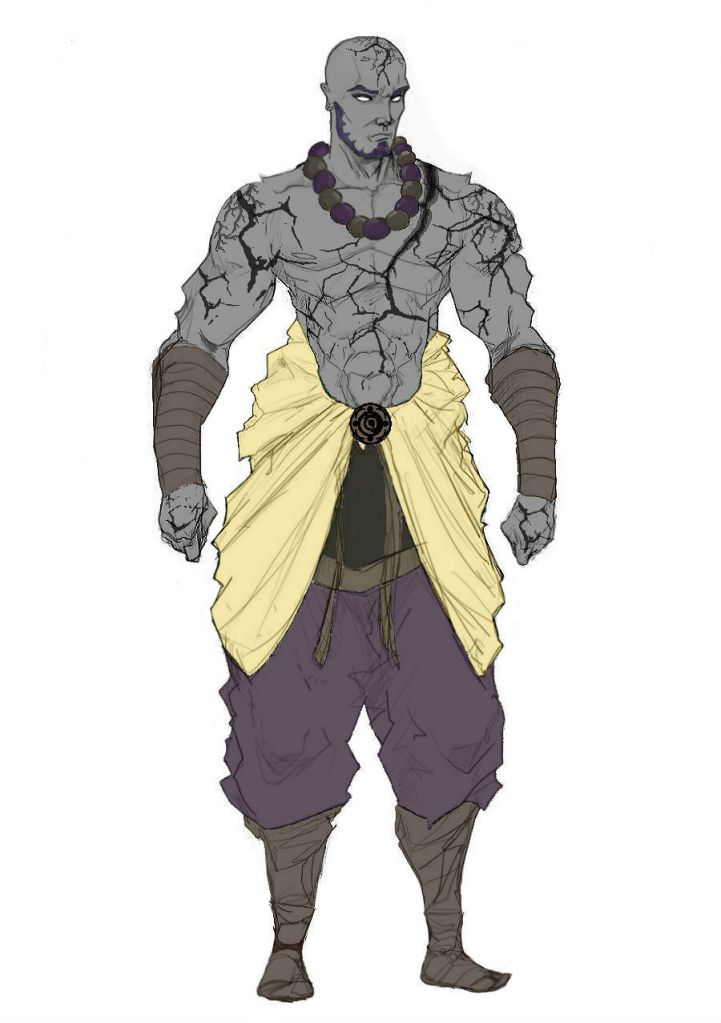
The Way of the Tortoise and Crane
Mystics who discipline their minds and bodies through the Way of the Tortoise and Crane achieve incredible mastery of and malleability over their physical form through the intense concentration of their psychic powers.
Known colloquially as “Immortals”, their very flesh becomes akin to iron, stone, or wood; unphased by the winds of time or the slings and arrows of their enemies. An Immortal walks softly into battle with unnerving calm, and walks out again just as unruffled.
The highest mystics of this order might remain secluded from outside knowledge for decades or even centuries, patiently waiting for the sign that they should once again enter the world to tread the bucking path of destiny.
3rd Level: Unflinching Flesh
Immortal psychic discipline feature
Your hit point maximum increases by 1 per mystic level.
3rd Level: Meditate Upon Eternity
Immortal psychic discipline feature
As an action while you are within 5 feet of your focus field, you can focus your ki energy to augment your body against any assault.
New Class: Mystic of Raz
\page
You gain temporary hit points equal to one roll of your Focus Die + your mystic level + your Intelligence modifier. While you have these temporary hit points, you do not age, and you don’t need to eat or drink.
You can use this action a number of times equal to your proficiency bonus, and regain all expended uses when you complete a short or long rest.
6th Level: Immortal Form
Immortal psychic discipline feature
When you gain temporary hit points through your Meditate Upon Eternity feature, you can transform your body into an enduring material of nature to become a living weapon or shield. You are immune to any effect that would reduce
your ability scores or hit point maximum while transformed. In addition, choose one of the following effects, which lasts until you lose these temporary hit points, or until you use this feature again:
- Changeless Crystal. You gain advantage on saving throws against spells and other magical effects. When you are subjected to a magical effect that allows you to make a saving throw to take only half damage, you can spend 1 ki point as a reaction to instead take no damage if you succeed on the saving throw.
- Immutable Metal. Your unarmed strikes deal 1d8 damage and become magical for the purpose of overcoming resistance and immunity to nonmagical attacks and damage. You gain a bonus to the damage rolls of your unarmed strikes equal to your Constitution modifier. As a bonus action, you can spend 1 ki point to gain a damage threshold equal to one roll of your Focus Die + your mystic level until the start of your next turn. You have immunity to all damage unless you take an amount of damage that equals or exceeds this threshold.
- Proud Tree. At the start of each of your turns, you add temporary hit points equal to one roll of your Focus Die to your pool of temporary hit points. You can spend 1 ki point to add additional temporary hit points to the result equal to your mystic level. Temporary hit points you gain in this way cannot exceed a total equal to half of your hit point maximum.
- Tenacious Stone. Your weight multiplies by ten, and you gain a bonus to your Armor Class equal to your Constitution modifier. As a bonus action, you can spend 1 ki point, reducing your speed to 0 and gaining resistance to all damage until the end of your next turn.
11th Level: Patience Unending
Immortal psychic discipline feature
You no longer need to eat, breathe, or sleep. In addition, you can no longer lose concentration while you retain temporary hit points granted by your Meditate Upon Eternity feature.
20th Level: Indestructible Spirit
Immortal psychic discipline feature
Whenever you are reduced to 0 hit points, roll your Focus Die. On a roll of 3 or higher, you do not fall unconscious, and you immediately regain hit points equal to twice the number rolled + your Intelligence modifier.
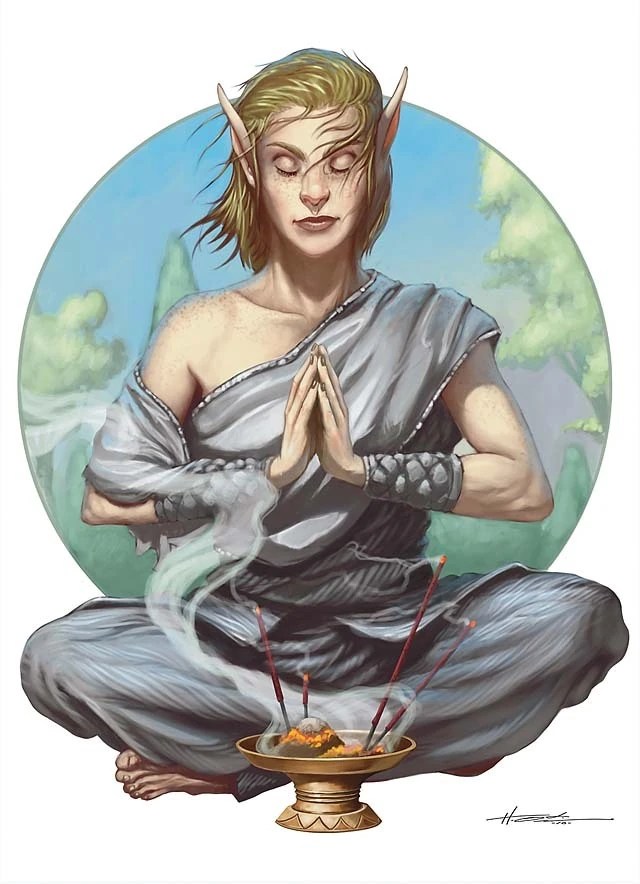
Expressive Mantras
If an expressive mantra has prerequisites, you must meet them to learn it. You can learn the mantra at the same time that you meet its prerequisites. A level prerequisite refers to your level in the Mystic of Raz class. If a mantra forces a target to make a saving throw, it makes the save against your Focus Save DC.
Argent Chains
Prerequisite: 5th-level mystic
As an action, you can spend 2 ki points to extend your preternatural power through the links that connect you to other creatures. For 1 minute, the attacks of creatures that form part of your telepathic link count as magical for the purpose of overcoming resistance and immunity to nonmagical attacks and damage.
Astral Entwinement
Prerequisite: Telepathy feature
As an action, you can pass a Tiny object weighing up to your Strength score in pounds to a conscious creature you can speak with using your telepathic link, as if beside it.
Attentive Mind
When a hostile creature leaves the space of your focus field or a space within 5 feet of it, you can use your reaction to make an opportunity attack with the field. This attack can take the form of your focus field’s special shove attack.
New Class: Mystic of Raz
\page
Blade Through The Veil
Prerequisite: 11th-level mystic
You can spend 7 ki points as an action to grant your focus field truesight within 30 feet of its space for 10 minutes.
When the effect expires, you can immediately spend 1 further ki point to extend the duration for a further 10 minutes.
Blossoming Ennui
Prerequisite: 9th-level mystic
Whenever you use your Dull Thoughts feature, you can spend 2 ki points and choose an additional number of creatures up to your Intelligence modifier within 60 feet of you to have their willpower diminished, along with the original target.
Broadened Horizons
Your focus field’s maximum range increases by 15 feet. You can learn this mantra multiple times, up to a total number of times equal to your proficiency bonus.
Calm Within Chaos
Prerequisite: 5th-level mystic
When a creature within 5 feet of your focus field is forced to make a Constitution saving throw to maintain concentration on a spell or similar effect, you can spend 2 ki points as a reaction and roll your Focus Die. The creature adds the number
rolled to its saving throw.
Cascading Thoughts
Once on each of your turns when you deal damage with a mystic spell , you can spend 1 ki point to roll your Focus Die and add additional psychic damage equal to the number rolled to one damage roll of the spell.
Compelling Notion
Prerequisite: 15th-level mystic
The space within 5 feet of your focus field is permanently under the effects of a zone of truth spell.
Crashing Realization
Whenever you deal damage or restore hit points to a target with a roll of your Focus Die, you can spend 1 ki point to double the number of Focus Dice rolled. Use the first die rolled to determine whether the size of your Focus Die changes after the triggering action is resolved.
Deny Distraction
As an action, you can spend 1 ki point to surround yourself with a cocoon of psychic power that helps you to deflect hindrances or anticipate assault. For 1 hour, your AC equals 10 + your Dexterity modifier + your Intelligence modifier. This effect ends early if you are incapacitated.
Dissever From Violence
Prerequisite: 7th-level mystic
As a reaction taken when a hostile creature no more than one size larger than your focus field moves within 5 feet of you and you are within 5 feet of the field, you can spend 1 ki point to flare the field and push yourself and the intruding creature apart.
The creature must succeed on a Strength saving throw or be pushed 5 feet horizontally backwards.
Whether the creature succeeds or fails its saving throw, you are pushed up to 15 feet horizontally backwards away from it.
Dissolve into the Universe
Prerequisite: 15th-level mystic
As an action, you can spend 10 ki points to safely sever your mind from your body and send it forth in your focus field, perceiving through its senses until the end of your next turn. When you are piloting your focus field in this way, it has no maximum range, it gains the benefit of your own senses, and its speed increases to 500 feet.
You can use your action on subsequent turns to maintain this connection, extending the duration until the end of your next turn.
While perceiving through the field, you are blinded and deafened to your own surroundings.
If your focus field is outside of its normal maximum range when this connection ends, you are stunned for 1 minute as your mind traverses time and space to return to your body.
Ebbing Resolve
Prerequisite: 7th-level mystic
When you reduce a creature’s damage dice using your Dull Thoughts feature, you can spend ki points to reduce the size of the dice for the duration by a further stage for each ki point spent, down to a minimum size of a d2.
Efforts of the Oracle
When you roll a 1 on the d20 for an attack roll, ability check, or saving throw, you can roll your Focus Die and use the result instead of the original roll.
Focused Outburst
Prerequisite: 5th-level mystic
Once per turn before you roll your Focus Die to deal damage, you can concentrate and compress your psychic power to reduce the die’s size by one. You must make this choice before you roll the die. If you then roll the highest number on the die, it increases by one die size after the roll as normal and you immediately roll it again, adding the result to the damage dealt. If you again roll the highest number on the die, the effect repeats, up until the die can no longer increase in size.
New Class: Mystic of Raz
\page
Force of Will
Prerequisite: 9th-level mystic
Psychic damage you deal ignores resistance. In addition, when you roll psychic damage, you can treat any 1 on a damage die as a 2.
Glimpse the Flow
When you roll initiative, you can spend 1 ki point to gain a bonus to the roll equal to 1 + your Intelligence modifier.
Halt Ire
Prerequisite: 5th-level mystic
When a ranged weapon attack passes within 5 feet of your focus field, you can spend 1 ki point using your reaction to deflect or catch the missile as it does so. The damage the target takes from the attack is reduced by one roll of your Focus Die + your Intelligence modifier + your mystic level.
If you reduce the damage to 0, you can seize the missile in your focus field. If you do so, you can spend 1 further ki point to make a ranged attack with the weapon or piece of ammunition you just caught as part of the same reaction. You make this attack with proficiency, and it uses the same damage dice as the original attack. Use your Intelligence modifier for the attack and damage rolls of the attack, which has a normal range of 20 feet and a long range of 60 feet.
Iron Bands of Ego
When a creature no more than one size larger than your focus field fails its saving throw against the special shove attack you make through the field as a bonus action, you can spend 1 ki point to immediately grapple the creature instead of moving it. While grappling a creature with your field, you must concentrate on the effect as if concentrating on a spell.
The focus field’s speed is halved while grappling a creature. As a bonus action on each of your turns while grappling a creature with your focus field, you can squeeze it with psychic force. The creature must succeed on a Strength saving throw or take bludgeoning damage equal to one roll of your Focus Die. A creature that takes this damage begins suffocating. Ending the grapple ends the suffocation. A creature grappled by the field can use its action to escape. To do so, it must succeed on a Strength (Athletics) or Dexterity (Acrobatics) check contested by your Intelligence (Athletics) check.
Let Pass These Woes
While you are within 5 feet of your focus field, you can spend any number of ki points as a bonus action to encourage your body to heal through telekinesis. You regain hit points equal to one roll of your Focus Die + the number of ki points spent.
Like Minds
Prerequisite: 7th-level mystic
When you cast a mystic spell, it can be delivered from the space of any creature you can currently speak with via your telepathic link.
Lucid Parasomnia
While sleeping, you can continue to perform light activity, such as reading, drawing, eating, meditating, or keeping watch. You cannot move more than 30 feet from where you fell asleep unless guided by another creature. Any ability checks you make as part of your tasks are made at disadvantage. Any information you take in through an activity such as reading can be recalled as normal upon waking.
If you are sleeping in this way as part of taking a long rest and the rest is interrupted, you gain the benefits of a short rest when you are woken by the interruption if you have been sleeping for at least 1 hour.
Meeting of the Paths
Prerquisite: 11th-level mystic
As an action, you can spend 6 ki points to swap minds with a willing creature within 5 feet of your focus field. Each of your game statistics are replaced by the statistics of the other creature, but you each retain your alignment, personality, and Intelligence, Wisdom, and Charisma scores. You each also retain all of your skill and saving throw proficiencies, in addition to gaining those of the other creature that use its Strength, Dexterity, or Constitution scores.
You each assume the hit points and Hit Dice of the other creature. You retain the benefit of any features from your class and can use them if the new form is physically capable of doing so. The effect lasts for 1 hour or until either creature is knocked unconscious, unless you choose to end it early as a bonus action. If your body is outside of the maximum range of your focus field when the effect ends, both you and the creature you swapped minds with are stunned for 1 minute as your minds traverse the distance to find their usual bodies.
Music of the Stone
You can spend 2 ki points as an action to grant your focus field tremorsense within 30 feet of its space for 10 minutes. When the effect expires, you can immediately spend 1 further ki point to extend the duration for a further 10 minutes.
Natural Talent
Choose a material: crystal, metal, stone, water, or wood.
Objects made of the chosen material count as half of their usual weight when carried, dragged, pushed, or lifted by your focus field, and are moved up to 10 feet,
New Class: Mystic of Raz
\page
instead of 5 feet, when moved using your telekinetic shove. In addition, creatures wearing the chosen material have disadvantage on saving throws made against being moved by your focus field.
Persona Major
Prerequisite: 11th-level mystic
When a creature fails a saving throw against an effect delivered through your focus field that you expended ki to create and is within 5 feet of the field, you can spend 2 further ki points to impress your dominance upon the creature’s
mind. The target becomes paralyzed for 1 minute, beginning after the triggering effect has taken place. The creature can make an Intelligence saving throw at the end of each of its turns, ending the paralyzing effect on itself on a success.
Ponderous Weight of Failure
Prerequisite: 5th-level mystic
When a creature within 5 feet of your focus field succeeds on a saving throw, you can spend 2 ki points using your reaction to squeeze the field and attempt to disrupt its focus.
The creature must reroll the saving throw against your Focus Save DC. On a failure, the creature is also considered to have failed the saving throw against the triggering effect.
Psionic Loom
Using this mantra, you can replicate a the effect of a spell from the Weave using your ki-fuelled mental powers. You can learn this mantra multiple times, up to a total number of times equal to your proficiency bonus; each time you do so, pick four spells from the mystic spell list to learn.
The Psionic Loom Spellcasting table tells you the level you must be in this class
to choose spells of a given spell level.
The first and second time you learn this mantra, you also learn two cantrips (0-level spells) from the mystic spell list (see the New Spells section of this text).
Psionic Loom Spellcasting
| Mystic Level | Spell Level |
|---|---|
| 2nd | 0 (cantrips), 1st |
| 3rd | 2nd |
| 5th | 3rd |
| 7th | 4th |
| 9th | 5th |
| 11th | 6th |
| 13th | 7th |
| 15th | 8th |
| 17th | 9th |
When you cast a mystic spell, it requires no verbal or somatic components, and it requires no material components unless they have a listed gold cost.
Intelligence is your spellcasting ability for your mystic spells: they are an extension of your psychic influence upon the world. You use your Intelligence whenever a mystic spell refers to your spellcasting ability. The saving throw DC for a mystic spell equals your Focus Save DC, and you use your Intelligence modifier when making an attack roll with a mystic spell.
Spell attack modifier = your proficiency bonus + your Intelligence modifier
You cast a mystic spell you know by spending ki points equal to 2 x the spell’s level. You can also cast spells at higher levels than normal in this way, up to a spell level equal to the highest level spell you can learn through this mantra. When you cast a mystic spell, it is delivered through your focus field. If the spell’s range is self, you must be within 5 feet of your focus field to cast it. Spell effects of 6th-level or higher are particularly taxing to recreate. Once you spend ki points to cast a spell of 6th-level or higher, you cannot spend ki points to create a spell effect of that level again until you complete a long rest. When you gain a level in this class, you can replace one of the mystic spells you know with another spell from the mystic spell list, provided it is of a level that you can learn.
Psychic Tension
You can spend 1 ki point as a bonus action to tense your focus field, turning the space within 5 feet of it into difficult terrain until the end of your next turn. While tensed in this way, the field cannot move, and it grants the benefits of halfcover to creatures behind it.
By spending 1 further ki point on your turn as a bonus action while the field is tensed, you can extend the effect until the end of your next turn.
A creature that has an Intelligence score of 4 or higher has disadvantage on Wisdom (Insight) checks made against any creatures on the other side of the half-cover your field grants when tensed in this way.
You can end the effect at any time (no action required).
Quick Wit
Your focus field’s speed increases by 10 feet. You can learn this mantra multiple times, up to a total number of times equal to your proficiency bonus.
Raveling Memory
Prerequisite: 11th-level mystic
As an action, you can spend 5 ki points to psychically harmonize with one object of size Large or smaller that is within 5 feet of your focus field. You must concentrate on this effect as though concentrating on a spell. Until the start of your next turn, you are blinded and deafened to your surroundings as your mind traces back the years of sentient contact the object has experienced. You witness flashes of times when creatures with an Intelligence score of 4 or higher interacted with the
New Class: Mystic of Raz
\page
object or moved within 10 feet of it, going back a number of years equal to your Intelligence modifier. If any of these creatures are individuals that you are aware of by description or have previously met, your attention is automatically drawn to any scenes involving them. Each scene begins six seconds before a creature approaches within 10 feet of the object, and ends six seconds after it moves more than 10 feet away. However long inspecting the memories gathered around an object seems to take from your erspective, it takes no more than six seconds in real time for you to process the information.
Rebounding Axiom
When you make a high or a long jump from within 5 feet of your focus field, you can spend 1 ki point using your reaction to roll your Focus Die and extend the distance of the jump, up to number of feet equal to fives times the number rolled. Regardless how long the jump is, this extra distance costs you only 5 feet of movement.
Sage of the Physic
Prerequisite: 9th-level mystic
As a bonus action when your focus field is within 5 feet of you, you can spend 2 ki points to gain proficiency in your choice of Strength, Dexterity, or Constitution saving throws while the field remains within that range. While you have this benefit, you can spend 1 further ki point as a bonus action to change which of these saving throws you have proficiency in.
Scales of the Will
Prerequisite: 7th-level mystic
When you use your Sentient Sense feature, you can spend 1 additional ki point to weigh the mental strength of creatures you detect with it against your own. The DM tells you if the creatures are your equal, superior, or inferior in regard to two of the following characteristics of your choice:
- Intelligence score
- Wisdom score
- Charisma score
- Total skill proficiencies known
- Total class levels (if any)
- Total mystic levels (if any)
You can choose to weigh more than two characteristics, spending an additional ki point for each characteristic per creature you wish to weigh yourself against.
Second Thought
Prerequisite: 9th-level mystic
When you use a ki point to take a reaction, you can immediately spend 1 further ki point to regain your reaction. You cannot do so again until the start of your next turn.
\column
Soothing Meditation
During a short rest, you can calm the minds of yourself and your allies to bring an extra sense of peace and replenishment to their respite. You can reduce your Focus Die by one size and choose a friendly creature within the maximum range of your focus field. Any Hit Dice the chosen creature spends during this short rest count as one die size higher than normal, up to a maximum size of a d20. For example, a bard chosen with this feature would roll d10s, rather than d8s, when spending their Hit Dice to regain hit points. You can affect multiple creatures with this mantra in one short rest, reducing your Focus Die by a further die size for each creature you affect, until it becomes a d2.
Sting of Doubt
When a creature up to one size larger than your focus field within 10 feet of it makes an attack, you can spend 1 ki point using your reaction to immediately move the field to the creature and tighten the field.
The creature must make a Strength saving throw. On a failed save, it is restrained until the start of its next turn.
Superiority Complex
Prerequisite: 9th-level mystic
You gain a hovering speed equal to your walking speed. When flying in this way, you cannot move further than the maximum range of your focus field away from a solid surface.
Tap Psyche
Prerequisite: Telepathy feature
When you roll your Focus Die to deal damage to a target, you can spend ki points to draw on the mental strength of other minds bonded to yours to empower the strike. Roll an additional number of Focus Dice up to the number of creatures you can currently speak with through your telepathic link, spending 1 ki point for every two creatures tapped (a minimum of 1 ki point), and add the result to the damage dealt. Use the first die rolled to determine whether the size of your Focus Die
changes after the triggering action is resolved. Once you use this mantra, you must complete a short or long rest before you can do so again.
The Shape of Things
Your focus field assists you in sensing the contours of what it surrounds. You have advantage on Intelligence (Investigation) and Wisdom (Perception) checks on creatures or objects within 5 feet of the field.
Time’s Mirror
Prequisite: 15th-level mystic
Once per turn when a creature your focus field is within 5 feet of makes an attack roll, you can spend 3 ki points to crystallize the moment in abstract time. As a bonus
New Class: Mystic of Raz
\page
action on your following turns, you can reflect the moment back out into the present, causing an apparition of the creature to emerge from your focus field and make the same attack against a creature of your choice within the attack’s range, using the same attack roll as when it was crystallized. You can make this special attack as a bonus action only once per minute, unless you voluntarily reduce your Focus Die by one die size to use it again. A moment crystallized in this way fades when you complete a short or long rest or use this feature again.
Titanic Will
Prerequisite: 7th-level mystic
Your focus field size is Large. This doubles the field’s carrying capacity & the amount it can push, drag, or lift.
Trace the Waves
You can spend 2 ki points as a bonus action to add your Intelligence modifier to Wisdom (Insight), Charisma (Deception), or Charisma (Persuasion) checks you make versus creatures within 5 feet of your focus field for 1 minute.
Turning of the Blade
When a melee attack must pass within 5 feet of your focus field, you can spend up to 4 ki points using your reaction to telekinetically defend the target of the attack.
The target gains a bonus to its AC equal to 1 + the number of ki points spent, possibly causing the triggering attack to miss. The bonus lasts until the start of your next turn, or until the target moves more than 5 feet away from the focus field’s space.
If this reaction causes the triggering attack to miss, you can spend 1 ki point to attempt to knock the weapon from the attacker’s hands as part of the same reaction. The attacking creature must make a Strength saving throw. On a failed save, it drops the weapon used to make the triggering attack, if it is capable of doing so. The weapon lands at its feet.
Unfurling Impulse
As an action, you can spend 2 ki points to push outwards from your focus field with a bloom of telekinetic force. All creatures other than you within 5 feet of the field must succeed on a Strength saving throw or be shunted away from it in a direction of your choice. A creature can choose to willingly fail this save. The total force of your push is equal in feet to 10 x your proficiency bonus, which you divide among creatures that failed their saves as you wish. Each creature is pushed the number of feet you allocate to it (a minimum of 5 feet).
Unknit Trauma
Prerequisite: Telepathy feature
As a bonus action, you can spend 1 ki point to target a creature you are telepathically linked with that is frightened, suffering short-term madness, or that has taken psychic damage since the start of its last turn. Roll your Focus Die. The target regains hit points equal to the number rolled, and any of the specified conditions affecting it immediately end.
Vital Balance
Prerequisite: 5th-level mystic
You can spend 3 ki points as an action to lend your own alacrity in body and mind to another, casting the haste spell on a creature within 5 feet of your focus field.
When you cast the spell in this way, it does not require concentration, though you can choose to end it at any time. You are under the effects of the slow spell while a target benefits from your speed. If you cast the spell in this way on another creature, the spell immediately ends on its original target.
Wax and Wane
Prerequisite: 5th-level mystic
As a bonus action, you can spend 2 ki points to reach into your reserves of psychic strength and increase your Focus Die size by one for 1 minute. Your Focus Die can increase beyond its starting size when empowered in this way, up to a maximum size of 1d12. When the effect ends, your Focus Die reverts to one die size smaller than it was before you used this feature.
Additionally, while your Focus Die is larger than a d2, you can expend a use of your Reorient Thoughts feature to immediately regain 1 ki point.
Web of the Silent Spider
As a bonus action, you can spend 1 ki point to entrap a creature within 5 feet of your focus field in a zone of psychic silence for 1 minute. All communication made by the target fails to travel more than 5 feet from it. You know whenever the target attempts to communicate, and you can spend 1 further ki point to overhear the words telepathically. This effect ends early if your focus field moves more than 5 feet from the entrapped creature.
Whatever Lingers On
Prerequisite: 5th-level mystic
As an action, you can spend 3 ki points to cast the speak with dead spell. When you cast the spell in this way, each creature that you can currently speak with through your telepathic link can also ask one additional question of the target. While the spell persists, any creature able to ask a question of the target can instead choose to ask its question to a creature it previously had a telepathic link with that has since died. The creature’s spirit answers as if contacted via the spell.
New Class: Mystic of Raz
\page
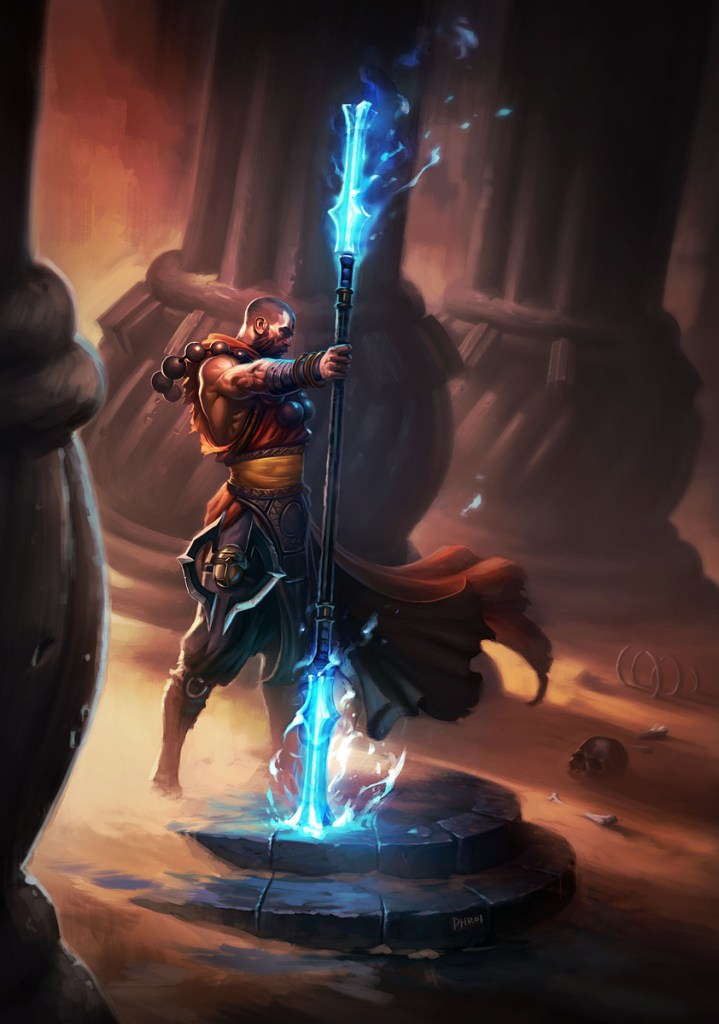
\page
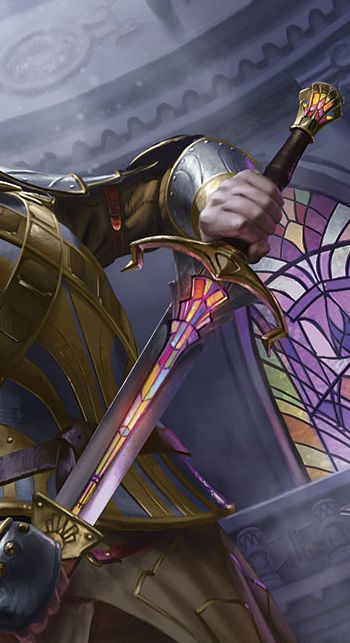
\page
New Subclasses
ARTIFICER: Glassworker

Glassworkers are crafters that pour their soul into super-heated sand; when it solidifies, the results are truly beautiful. These artificers can even create glass armours and weapons that draw the envy of even the most skilled of smiths and artisans.
3rd Level: Bonus Proficiencies
When you adopt this specialisation at 3rd level, you gain proficiency with glassblower’s tools. If you already have this proficiency, you gain proficiency with one other type of artisan’s tools of your choice. You also gain proficiency in heavy armour.
3rd Level: Glassworker Spells
Starting at 3rd level, you always have certain spells prepared after you reach particular levels in this class, as shown on the Glassworker Spells table beliw. These spells count as artificer spells for you, but they don’t count against the number of artificer spells you prepare.
Glassworker Spells Table
| Level | Spells |
|---|---|
| 3rd | burning hands, earth tremor |
| 5th | Aganazzar’s scorcher, shatter |
| 9th | fireball, wall of sand |
| 13th | fire shield, stone shape |
| 17th | immolation, passwall |
3rd Level: Glasswork Armoury
By 3rd level you have learnt how to create superior magical works of glass that can be used as weapons or armour. At the end of a long rest, you can create one suit of armour or weapon using your glassblower’s tools. These glasswork creations have the following properties:
- A set of glasswork armour or shield grants the wearer a +1 bonus AC and resistance to fire damage, yet cracks and ceases to provide these benefits if the wearer is critically hit.
- A glasswork weapon grants a +1 bonus to hit and deals an additional amount of damage equal to your proficiency bonus, yet cracks and loses these benefits if the wielder rolls a critical fail when making an attack roll with it.
- So long as you have your glassblower’s tools, you can expend a spell slot of 1st level or higher as a bonus action to mend the cracks in a glasswork creation and restore its beneficial properties. Otherwise, you can repair the item during a short rest without expending a spell slot.
- To glasswork piece requires attunement.
If you attempt to create a different glasswork armour set, shield or weapon, any existing glasswork pieces shatter completely.
5th Level: Extra Attack
Starting at 5th level, you can attack twice, rather than once, whenever you take the Attack action on your turn.
9th Level: Glasswork Warrior
At 9th level, you learn how to magically create living suits of armour made out of glass. At the end of a short or long rest, you create an Animated Amour made out of glass, which is friendly to you and your companions, and it obeys your commands. This Glasswork Animated Armour lasts until the end of your next rest.
In combat, the Glasswork Animated Armour shares your initiative count, but it takes its turn immediately after yours. It can move and uses its reaction on its own, but the only action it takes on its turn is the Dodge action, unless you take a bonus action on your turn to command it to take another action. That action can be one in its stat block or some other action. If you are incapacitated, the Glasswork Animated Armour can take any action of its choice, not just Dodge.
When your Glasswork Animated Armour dies in combat, it shatters and sends glass shards flying in all directions. When this happens, each creature within 10 feet of it must make a Dexterity saving throw versus your spell save DC, take 2d8 magical piercing damage on a failed save, or half as much on a successful save.
15th Level: Heart of Glass
Starting at 15th level, the pieces of your glasswork armoury become enhanced. You can now create up to two glasswork pieces at the end of a long rest, your glasswork armours and shields now provide a +2 bonus to AC, and your glasswork weapons provide a +2 bonus to hit.
New Subclasses: ARTIFICER: Glassworker
\page
BARBARIAN: Path of the Mounted Marauder
The Path of the Mounted Marauder is a long and perilous one, but a barbarian that chooses this route knows that he or she is never alone, for, together with their trusted steed, Mounted Marauders fight as one across the fields of battle.
3rd Level: Raging Rider
At 3rd level, your skills at combat while mounted are honed. Whenever you are mounted during combat, you and your mount share the same initiative order, and you use your mount’s movement speed as your own (meaning you are moving when your mount moves unless you dismount).
You also learn the spell find steed, and can cast it once without expending a spell slot immediately after finishing a short rest. While mounted and raging, you and your mount each gain a +1 bonus to AC.
Your mount’s maximum hit points is always equal to half of your maximum hit points.
6th Level: Born in the Saddle
Starting at 6th level, whenever you are mounted, you make all of your saving throws and skill checks to stay mounted with advantage.
You also gain your choice of one of the following features:
- Flyby. You and your mount don’t provoke opportunity attacks when you right out of an enemy’s reach.
- Charge. If you and your mount move at least 20 ft. straight toward a target and then you hit it with a melee attack while raging on the same turn, the target takes double the rage damage. If the target is a creature, it must succeed on a Strength saving throw or be knocked prone. The DC for this is 8 + your Strength modifier.
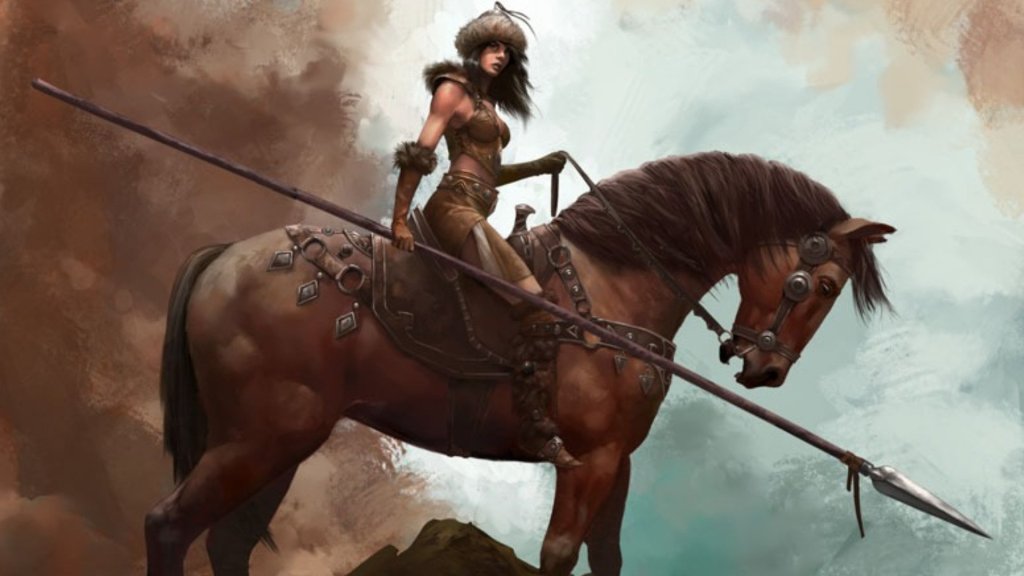
10th Level: Mount’s Bond
At 10th level, you and your steed synergise in the rage of battle. While mounted atop your steed, you gain an additional +1 bonus to hit with your melee attacks while raging, and your steed gains the same benefits as you while raging.
You also learn a special reaction you can use while raging, where you can redirect any attack at your mount towards you instead.
14th Level: Mythic Mount
Starting at 14th level, you learn how to conjure forth a mount of legendary report. You learn the spell find greater steed and can cast it once without expending a spell slot immediately after finishing a long rest.
Additionally, you cannot be dismounted by any non-magical means.
New Subclasses: BARBARIAN: Path of the Mounted Marauder
\page
BARBARIAN:
Path of the Tribal Rite
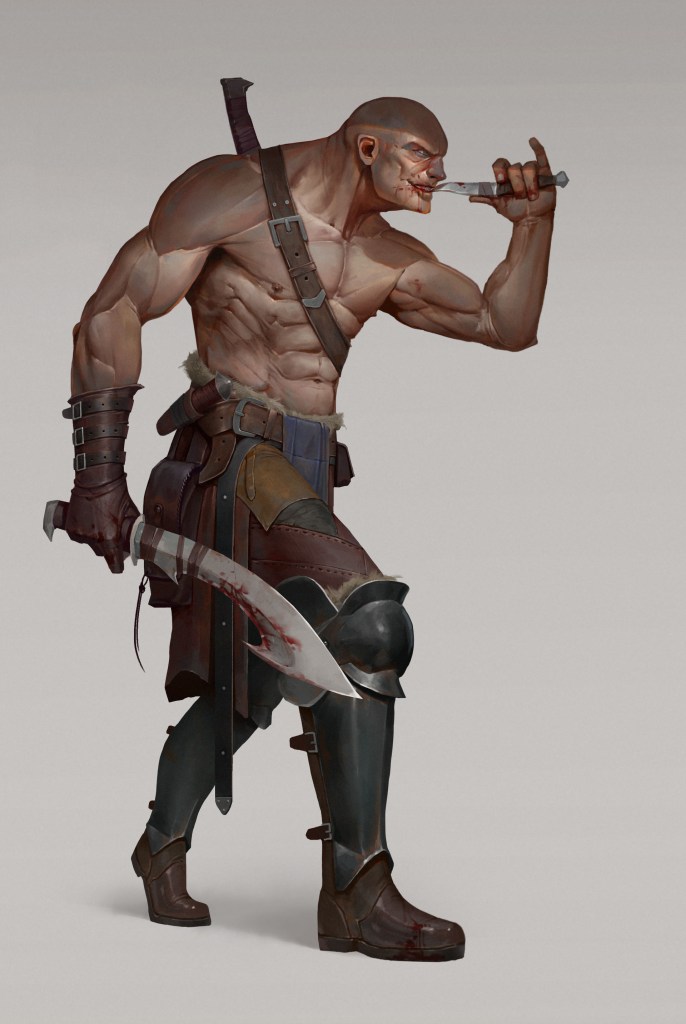
Barbarians who follow the Path of the Tribal Rite reside in remote areas, worshipping esoteric nature and war gods. In jungles, valleys and on top of mountains they perform their rites and sacraments of war.
Their gods bid them to sacrifice enemies and in return grant them powers far beyond their natural physical capabilities. It is said that by the few who have heard their battle roars and lived to tell it, that they eat their fallen foes and consider it a holy act to do so.
3rd Level: Tribal Ritual
When you choose this path at 3rd level, you gain access to the tribal rite of your ancestors. When you have slain an enemy, you can perform a ritual lasting 1 minute to prepare a body part from your vanquished foe and devour it. The next time you rage, you gain an effect as described in the Devoured Flesh table. The effect ends when your rage ends.
You can only have one effect active at a time, unless you have the Sacred Meal feature.
3rd Level: Natural Legacy
Barbarians of this path practice training in anatomy so they can eat the sacred parts of their foes. When you choose this path at 3rd level, you gain proficiency in Medicine. If you are already proficient in this skill, you may choose another skill from the barbarian skill list.
6th Level: Huntmen’s Call
When you reach 6th level you may unleash a primal roar whenever you rage and use the benefits from your Tribal Ritual feature. Enemies within 30 feet of you have disadvantage on their next attack against all creatures except you and additionally all allies within 30 feet gain advantage on their next attack.
10th Level: Bellowing Voice
When you reach 10th level your voice has grown in volume and can easily be used to intimidate others. It carries twice the distance and is twice as loud when you are yelling. If you bellow while intimidating a creature, you may add your Constitution modifier to the Charisma (Intimidation) roll.
14th Level: Sacred Meal
At 14th level you can make a sacred meal from the body of an enemy that you have slain during a short or long rest. When a meal is prepared in this way it lasts until it is eaten or affect by a dispel magic spell or similar antimagic effect.
Whenever you are raging, you can now, as a Bonus Action, devour the sacred meal you have prepared and gain the described effect according to the Devoured Flesh table for the duration of your rage. You can have both the effects of your Tribal Ritual and Sacred Meal feature active at the same time.
Once you use this feature, you can’t use it again until you finish a long rest.
Devoured Flesh Table
| Type | Effect |
|---|---|
| Humanoid | You eat the hands of a versatile humanoid. You gain Proficiency in one skill of your choice. |
| Beast or Plant | You eat the gifts of nature and gain its blessing. You gain temporary hit points equal to your barbarian level. |
| Aberration, Fey or Elemental | When you rage you have the ability to blink and strike. As an attack you can teleport within 5 feet of an enemy and make one melee attack. |
| Fiend, Demon or Celestial | You gain magic resistance. This gives you advantage on all saving throws against spells and other magical effects. |
| Undead or Ooze | You gain the gifts of the undying. You have resistance to necrotic damage and gain advantage on saving throws against exhaustion and poison. |
| Dragon, Monstrosity or Giant | Your arms grow one size larger although you retain your size. This extends your melee attack range by 5 feet and gives you advantage with thrown weapons. |
New Subclasses: BARBARIAN: Path of the Tribal Rite
\page
BARBARIAN: Path of the Urban Vagabond
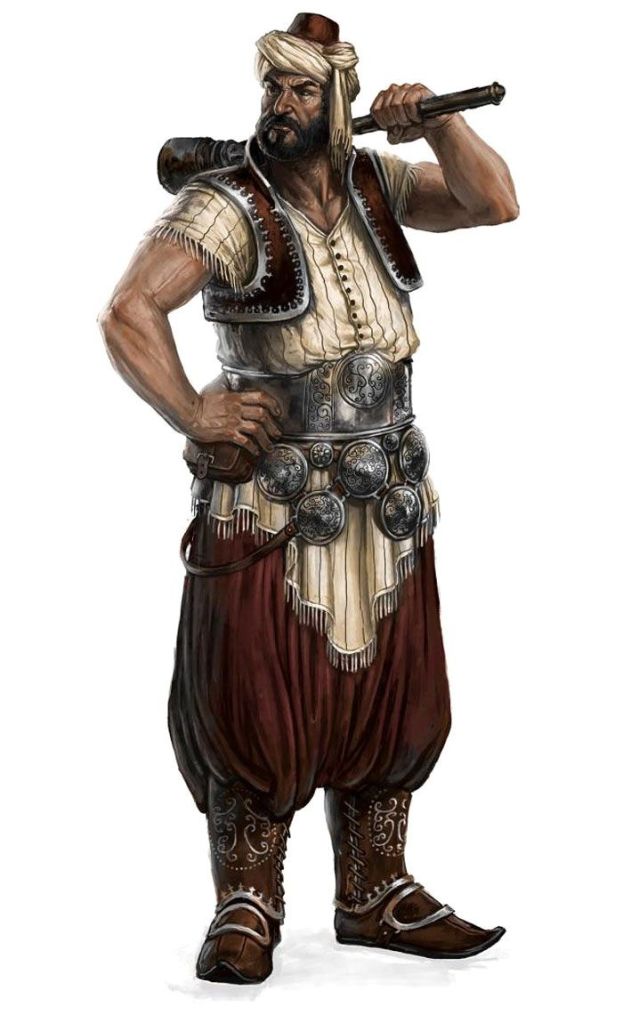
There are bruisers who dwell in cities who command respect among the common folk and other warriors alike. Their words respected, their deeds valued, their stern demeanor feared. They roam the streets and right wrongs, their own way. They know the code and creed of their city, just as they wrote it themselves.
An urban vagabond is a charismatic drifter, who has his own understanding of justice and injustice, law and fear in society. They are upheld by the people and they shine where the local guards fail to do so. Their shouts in combat inspire their allies, and dissolve the fighting spirit of their adversaries. They use their natural charisma in order to taunt and psychologically disarm enemies.
Level 3: Wrath of the Vagabond
Your wrath invokes fear in your enemies.
Starting at 3rd level when you rage, you invoke fear in the hearts of your enemies.
This fear can affect a number of people equal to your constitution modifier that you can see in 60 ft. and only during your rage; the targets of this effect will roll a Wisdom save (Difficulty 8 + proficiency bonus + your Constitution modifier) or be frightened for 1 minute. Affected creatures can repeat the saving throw at the end of their turns for 1 minute. You can use this feature once per rage.
Level 6: Anger of Mad Blood
When you are raging, your yelled and mocking words crush the spirit of your enemies. Starting at 6th level when you rage you use your shouts alongside your weaponry with great effect. When you are raging, the first creature you hit on each of your turns with a weapon attack takes extra damage equal to 1d6 + half your Barbarian level. The extra damage is psychic and the creature will have disadvantage on its next attack against any creatures other than against you.
Level 10: Inspiring Fury
Inspired by your shining example and prowess in battle, your allies are boosted by your fury. When you rage, all allies within 20 feet of you gain advantage on attacks and saving throws until the start of your next turn. Additionally, they gain 1d6 + half your barbarian level of psychic damage on the first successful attack they hit. You can use this feature once per rage.
Level 14: Shielding Fury
When you rage, you and any allies who are within 10 feet of you gain partial resistance to damage. You can use your reaction to prevent your barbarian level amount of damage against any kind of damage to your allies. This damage is subtracted separately from any damage each ally takes after any kind of resistance is applied. You can use this feature once per rage.
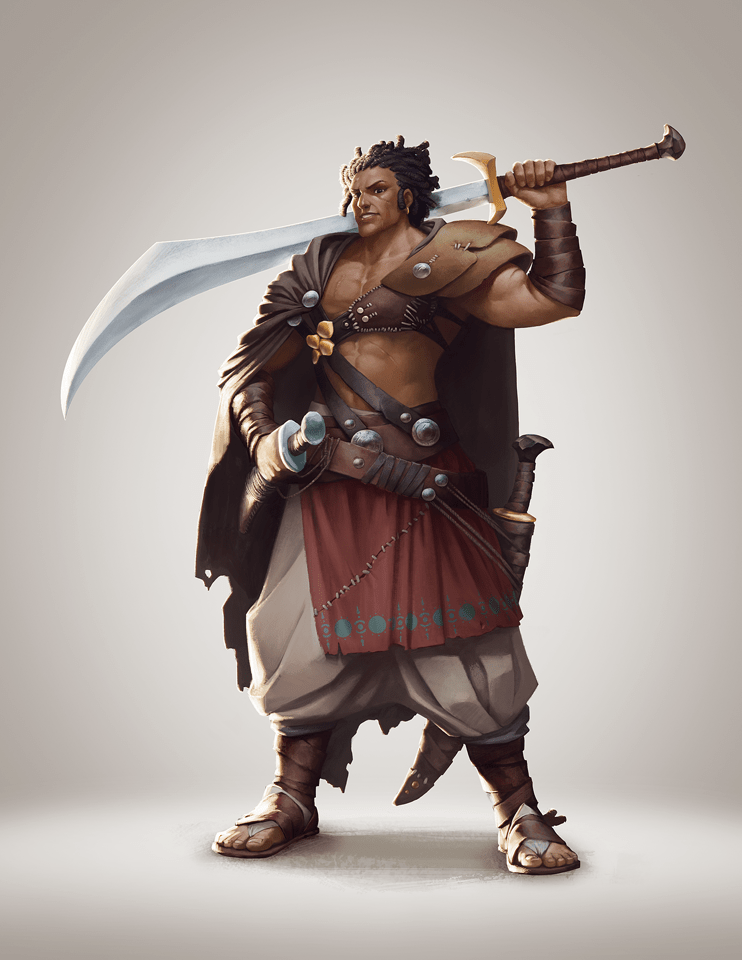
New Subclasses: BARBARIAN: Path of the Urban Vagabond
\page

\page
BARBARIAN:
Path of the Wild

Some people are raised by clans, some by families, others by single parents. The men and women who take up the path of the Wild are the children of the the environments they’ve grown around. Most of the time, these infants of mankind are taken in by various animals, whether it be a community of gorillas, a helpful panther or even a pack of wolves. They are children of the wilds, who look humanoid but move like beasts.
3rd Level: Mother Tongue
After years spent in the wilderness, you’ve learned to communicate with beasts and monsters. At 3rd level you gain proficiency in the Animal Handling skill. If you are already proficient in it, you gain proficiency in Nature or Survival.
Your proficiency bonus is doubled for any ability check you make that uses Animal Handling, and you can use that skill on Monstrosities and Beasts.
In addition, if you can hear a beast or monstrosity for at least 1 minute, you can understand its language. You can then communicate basic ideas and emotions with that creature and other creatures of the same species.
3rd Level: Animalistic Fighter
Because of the lack of tools given to you in the jungles or wildernesses you were raised in, you’ve learned to fight with the tools at your disposal, which oftentimes meant your bare hands. Also at 3rd level, You gain proficiency with improvised weapons. Any attack you make with an improvised weapon or with your unarmed strikes deals damage equal to ld6 + your Strength modifier.
This damage increases by ld6 when you reach the 6th level, then again at 14th level. Starting the 6th level, your unarmed strikes count as magical for the purpose of overcoming resistance and immunity.
Lastly, while you are not holding a weapon or shield, you gain an additional 10 feet of movement and you do not trigger attacks of opportunity. This benefit ends until the end of your next turn if you draw a weapon or shield.
6th Level: Climb & Swing
Your time spent swinging on vines and climbing trees has lead to you being an expert of moving in rough terrain. At 6th level you gain a climbing speed equal to your walking speed and gain advantage on all Dexterity (Acrobatics) and Strength (Athletics) checks made to climb difficult surfaces and swing on ropes or vines.
In addition, You learn to use ropes efficiently. With them you may target a surface or object within 20 feet. If the target is Small or Smaller, you can make a Strength (Athletics) grappling check to pull it to you and grab it (automatically succeeding against objects that are not being worn or carried unless the DM sets a difficulty for a particularly complicated scenario).
Alternatively, if the target is Medium or larger, you can choose to be pulled to it. This automatically succeeds, but this does not grapple it, though if it is a surface or large object, you can choose to hold onto at the point you grappled if there is something to grab onto. Attacks of opportunity generated by this movement have disadvantage.
10th Level: Wild Demeanor
Living in the wilderness requires awareness and resourcefulness, both of which you have in spades. At 10th level you gain the following benefits:
• You make all Wisdom (Perception) checks at advantage, due to your need to be on the lookout for predators.
• You cannot become lost, except by magical means.
• If you spend at least 1 hour foraging, you can find the materials needed to craft any type of artisan’s tools. This set of tools will break after one use.
• You sleep with one eye open. While asleep, you can keep watch, making a Wisdom (Perception) check. This check cannot benefit from advantage, only disadvantage.
14th Level: Soul of the Wilderness
You’ve grown to become one with the wild, not just the one where you were born, but the entire world’s. At 14th level your climbing speed becomes double your walking speed and you automatically succeed all Dexterity (Acrobatics) and Strength (Athletics) checks made to climb difficult surfaces and swing on ropes or vines.
Additionally, you can let the wilds control you. When you are raging, as an action you can cast polymorph on yourself (ignoring the Rage restriction on spellcasting), turning into your choice of Giant Ape or Tyrannosaurus Rex. Once you’ve used this ability you cannot use it again until you complete a short or long rest.
New Subclasses: BARBARIAN: Path of the Wild
\page

\page
BARD: College of Serpents
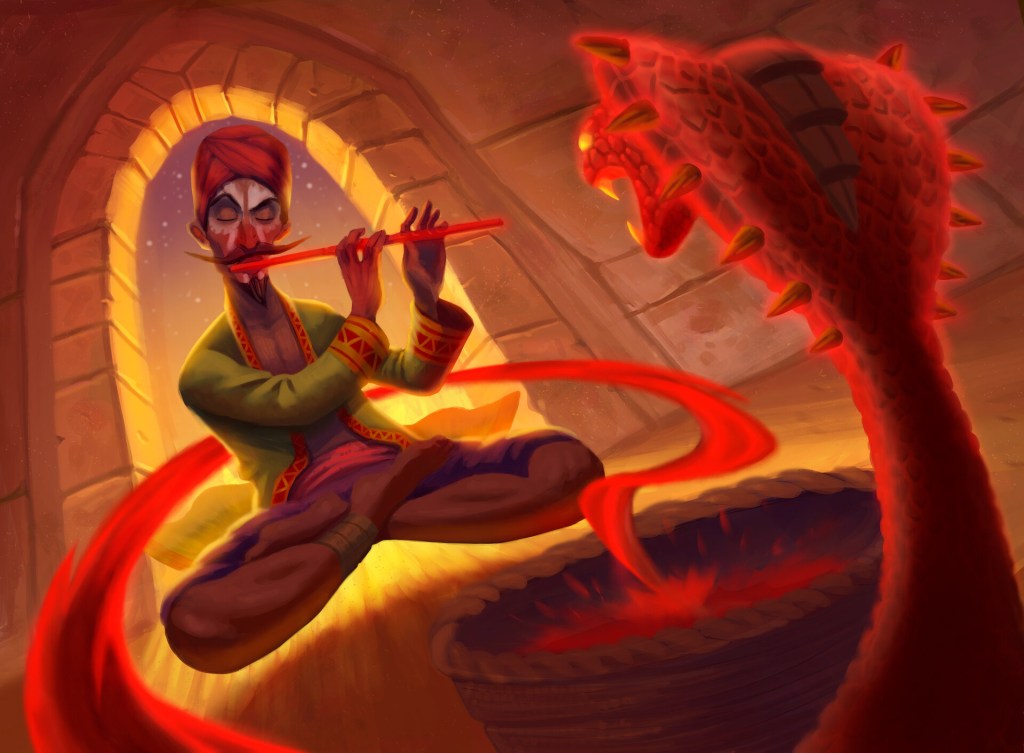
Scaled Performance
Bards from the college of Serpents are exceptional performers that use snakes as a part of their craft. These musicians have an affinity towards the serpentine, and have been known to keep snakes as pets and train them to do small tasks for them.
3rd Level: Serpent Tongue
When you select this college at 3rd level, you learn how to communicate with snakes. You speak to them through the playing of your instruments, and you understand them by reading their body language.
You also have advantage on all Charisma-based skill checks when interacting with snakes.

3rd Level: Snakes Abound
Also at 3rd level, you learn how to summon snakes to your aid.
Whenever a creature makes use of your bardic inspiration, you can use your reaction to play a musical tune on an instrument and summon a swarm of venomous snakes.
This swarm appears in an unoccupied space of your choice that you can see within 30 feet of you.
This snake swarm is friendly to you and your companions and obeys your commands. You must maintain your concentration, as if concentrating on a spell, to keep the swarm of venomous snakes under your control.
In combat, the swarm of venomous snakes shares your initiative count, but takes its turn immediately after yours.
The only action the swarm can take on its turn is the Dodge action, unless you take a bonus action on your turn to command it to take another action.
That action can be one in its stat block or some other action. If you are incapacitated, the swarm of venomous snakes attacks all creatures indiscriminately.
A swarm of venomous snakes summoned this way persists for 1 minute or until you use this feature to summon the snakes again.
6th Level: Ophidian Aspects
Starting at 6th level, you have learnt the ability to charm others through your snake-charming performances. You learn the spell find familiar, however you can only use this spell to summon a venomous or non-venomous snake.
You can cast spells with a range of touch through this familiar as normal; however, you can cast any spell that you know from the Enchantment school of magic through your familiar as well, disregarding the touch range limit.
You use the components of the spell as normal, but the snake is the deliverer of the spell.
14th Level: Serpentine Encore
At 14th level, your bond to snakes has reached its zenith.
You learn the spell conjure animals and can cast the spell without expending a spell slot, and without requiring concentration, a number of times equal to your proficiency bonus; however, you can’t have two versions of this spell active at the same time.
You must finish a long rest before using this ability in this way again.
When you cast this spell, you are limited to the types of beasts you can summon, as they can only be snakes.
You have advantage if you use this spell in conjunction with any Charisma-based skill check.
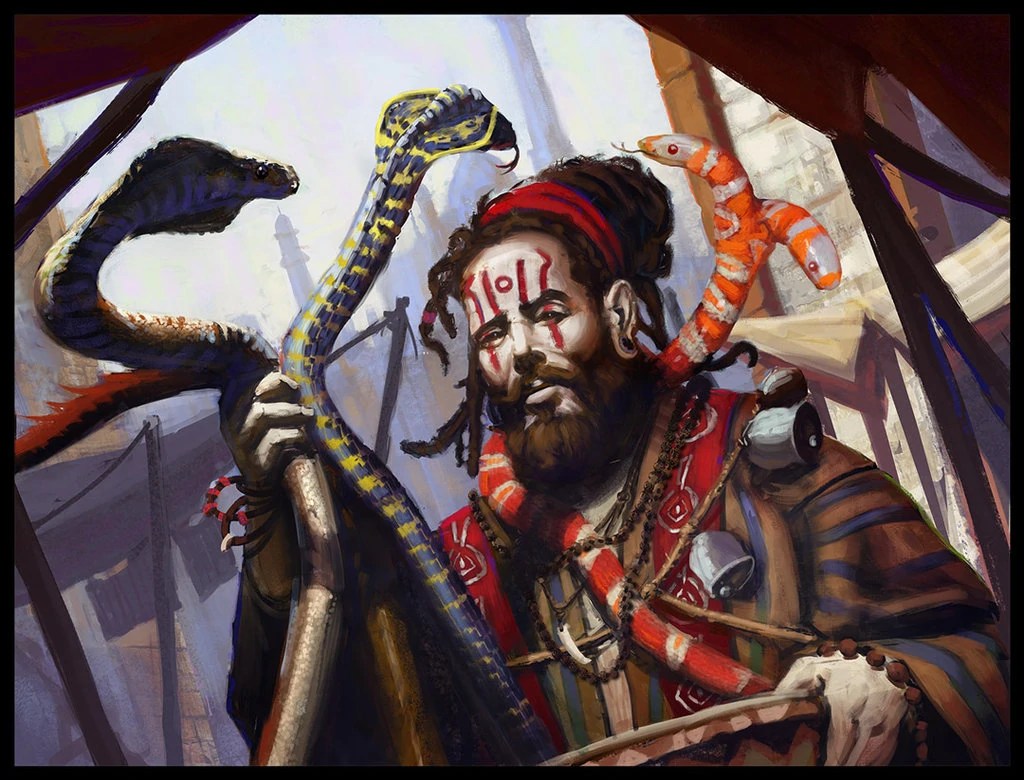
\page
Cleric: Agriculture Domain
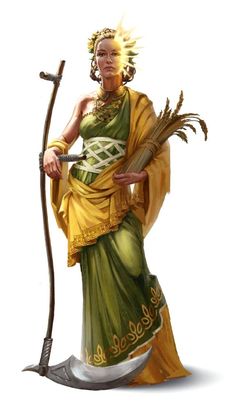
Even when they are use their powers to communicate directly with animals or plants, or turn the course of a river by their will alone to create irrigation ditches, nothing might seem more ordinary than a cleric of the Agriculture Domain.
Depending on the region of the world, however, agriculture clerics might be culturally in a more sublime position within their city, town or village. Wherever they belong, these ‘holy farmers’ as they are sometimes jovially referred to are nonetheless a key pillar of the society they are a part of, for without their spiritual connection to the land, the crops might fail and the people starve.
Many agriculture clerics juggle manny hats within their community, be it counsellor, doctor, vet, farmer, irrigator, priest, and – should the situation demand it – defender. As such, most clerics of the Agriculture Domain rarely have a moment to themselves, but in general they take on their responsibilities with an earthy gravitas and a good sense of humour.
Clerics who follow this Domain might worship Geb’ashura or Hedon in the Northern Vast; Harugami or Inara in the Eastern Realms; or Vesna The Emerald Queen or Tavaszi in the Western Lands.
Agriculture Domain Spells
| Cleric Level | Spells |
|---|---|
| 1st | create or destroy water, purify food and drink |
| 3rd | lesser restoration, locate animals and plants |
| 5th | plant growth, speak with plants |
| 7th | control water, fabricate |
| 9th | awaken, commune with nature |
Level 1: Wisdom of the Land
You gain proficiency in animal handling, survival, medicine and farmer’s tools. If you already have proficiency in any of these skills or tools because of a background, character kit or kin trait or feature, you may double your proficiency bonus as it applies to these.
Level 2: Channel Divinity: Seed
You may use your Channel Divinity feature to create enough seed to plant a quarter of a hectare with a staple crop; the DM will determine what is considered a staple crop in the area.
Alternatively, you may use this feature to turn over or till a quarter of a hectare of barren land or soil. Doing this works surface crop residues, animal manure and weeds deep into the field, blending it into the earth. It also aerates and warms the soil. Doing this often enough can transform even the most harsh terrain into a fertile top soil of a type suitable to a given geographical region; as determined by the DM. This feature is not without its limitations, however, and some geographical locations are not able to be terraformed this way, such as the Deadlands, antarctic tundras, some mountain regions, some coastal regions and so on. Your DM will inform you if this is not possible.
Level 6: Channel Divinity: Bless Village
In a fifteen minute ceremony you bless a community of no more than 100 people with good fortune. The effect lasts a year. Members of that community gain advantage on practising profession rolls and saving throws against disease.
Also, the incidence of violence in such communities falls dramatically. You may affect larger communities, up to 10,000 people, by using this ability on a number of consecutive days equal to 1 day per 100 villagers.
Level 8: Swords to Ploughshares
You gain a number of options to help you avoid combat. Your speed is increased by 10 feet so long as you have not attacked anyone or used hostile magic within the previous minute and you have advantage on any charisma checks made with the intention of preventing violence.
Level 17: Saint of the Fields
Your plant growth spell can now increase the fertility of fields within a 10 mile radius.
New Subclasses: CLERIC: Agriculture Domain
\page

\page
Cleric: Air Domain
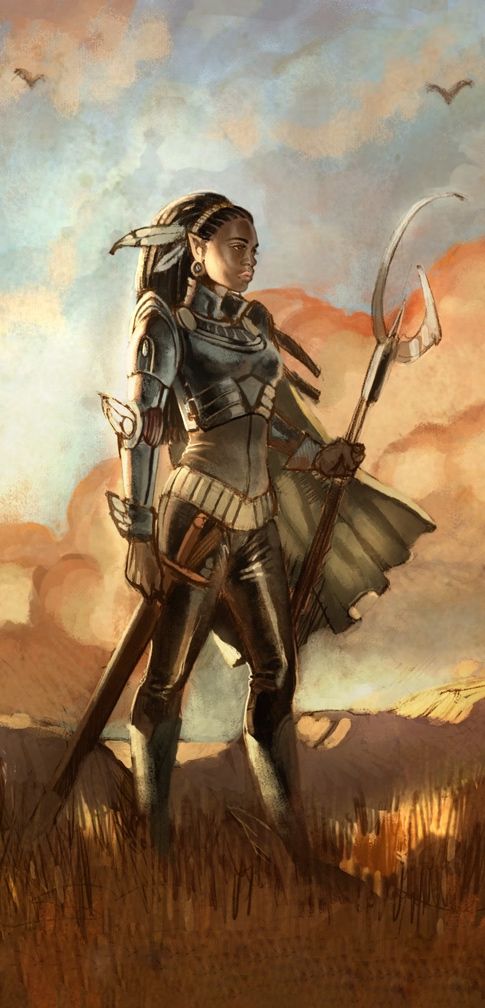
Free-willed and adventurous, these clerics worship deities of the Sky or Air, always letting the ever-flowing winds guide them in their lives. Deities that Air Domain clerics worship include Tarhun, the Windwalker, Emir of the Air, or Huvanavesh of the Northern Vast; Sora-no-gami or Tori of the Eastern Realms or, in some corners of the world, Perun of the Western Lands.
Air Domain Spells
| Cleric Level | Spells |
|---|---|
| 1st | feather fall, skywrite |
| 3rd | dust devil, warding wind |
| 5th | haste, wind wall |
| 7th | gust of wind, storm sphere |
| 9th | control winds, wind walk |
Bonus Cantrips
You learn the gust and thunder bolt cantrips if you do not already know them.
1st Level: Feather Blessing
At 1st level, your god has blessed you with the power of flight. If you do not have flying speed granted to you by your race, you can use a bonus action to sprout a pair of feathered, bird-like wings from your back, temporarily granting you a flying speed of 30 feet while they are out.
The wings cannot sprout through obstructions that cover your shoulder blades or back, such as a backpack, cape, thick clothing, or if you are tied up. Also, you cannot use this flying speed while wearing medium or heavy armour.
The wings remain sprouted until you touch the ground, or for as many hours as your proficiency bonus, whichever happens first, after which they dissipate. Once you have used this feature, you cannot use it again until you have finished a long rest. At 10th level, you can use this feature twice per long rest. At 16th level, you can use this feature three times per long rest. At 19th level, you can use this feature at will and no longer require long rests to reset it.
1st Level: Bonus Proficiencies
At 1st level, you also gain proficiency in Acrobatics and Insight skills.
2nd Level: Channel Divinity: Godspeed
At the 2nd level, your Channel Divinity feature allows you to call upon the winds to embody you. For one hour, your flying and walking speeds increase by 10 feet and you gain a +1 bonus to your AC.
6th Level: Air Guidance
As an Air Domain cleric, your deity has blessed you with the power to redirect projectiles. At 6th level, when a creature that you can see hits you with a non-magical ranged attack (or any ranged attack starting at 15th level), you can use your reaction to make a DC 25 Dexterity Saving Throw. On a failure, you take half the damage of the ranged attack, and on a success, the ranged attack is redirected back to the attacker and they take half the damage and receive any negative effects of the ranged attack instead. You can use this feature a number of times equal to your Wisdom modifier. You regain all expended uses after you finish a long rest.
8th Level: Divine Strike
At 8th level, you gain the ability to infuse your weapon strikes with divine energy. Once on each of your turns, when you hit a creature with a weapon attack, you can cause the attack to deal an extra 1d8 thunder damage to the target. When you reach 14th level, the extra damage increases to 2d8.
17th Level: At One with the Sky
At 17th level, you have become one with the sky around you. You are immune to thunder damage. You gain advantage on any saving throws made to resist (and gain resistance to any damage received from) any attack, spell, creature, terrain or feature that uses air or is made of air. This includes any weather-based spells or attacks that use air, such as clouds.
In addition, you can take the Dash action as a bonus action.
You also gain storm of vengeance as an additional domain spell. It is always prepared and doesn’t count towards your maximum number of prepared spells available. Your storm of vengeance spell is also treated as a cleric spell.
New Subclasses: CLERIC: Air Domain
\page
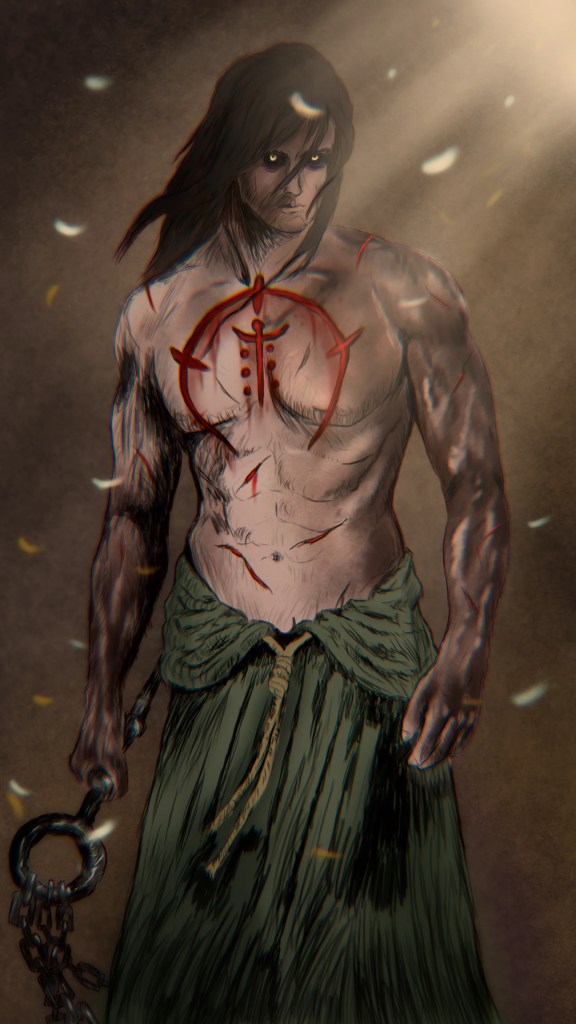
\page
Cleric: Anguish Domain
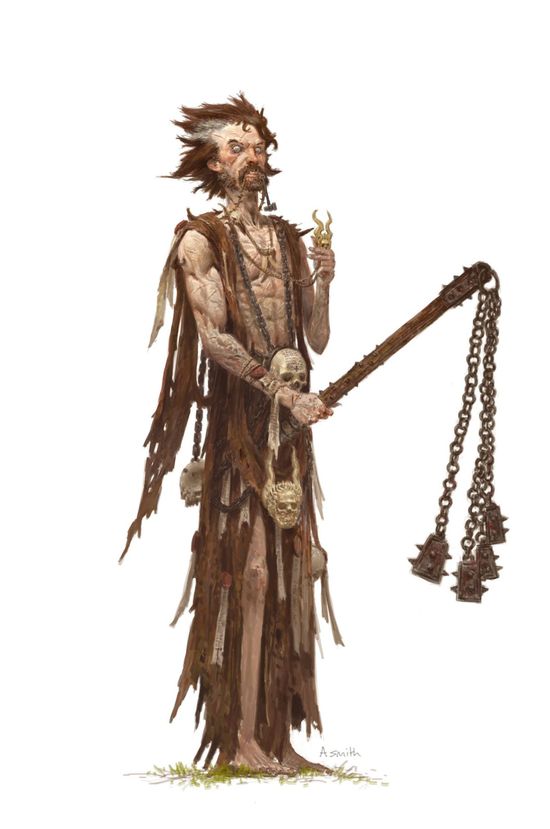
Many evil gods seek the subjugation and suffering of the material plane, but for a select few there is a deeper love of the agony, one that spreads across the lands in times of chaos. These dark gods see a world where pleasure and pain are one, and clerics of these deities seek to spread affliction and excruciation wherever they go. To them, pain is express path to enlightenment, and a life without it is one to be deeply pitied. Pain is the source of all growth, the source of all pleasure, and, for those that devote themselves, the source of true understanding.
Few clerics are as zealous as those who embody the domain of anguish. These fanatical devotees do not fear pain, suffering or even death itself if they are adhering to a path that they believe their god would approve of. Many try to sacrifice their lives in ritualistic service of their deity. While there are recent accounts of the more austere branches of Bijelobog’s church practicing this domain in the Rittersreich of the Western Lands, and, as Raz, in some corners of the Northern Vast, in general this is a domain practiced mostly by adherents of the evil deities Darash, the Crocodile, or Felaket, the Dream-Eater.
Anguish Domain Spells
| Cleric Level | Spells |
|---|---|
| 1st | arms of Hadar, ensnaring strike |
| 3rd | cloud of daggers, warding bond |
| 5th | conjure barrage, life transference |
| 7th | Evard’s black tentacles, vitriolic sphere |
| 9th | cloudkill, enervation |
1st Level: Blessing of Agony
Starting at 1st level you gain a special focus from pain. When a hostile creature deals damage to you, you can make your next attack roll with advantage (this benefit lasts until the end of your next turn).
You can use this feature a number of times equal to your Wisdom modifier (a minimum of once). You regain all expended uses when you finish a long rest.
1st Level: Bonus Proficiencies
Also at 1st level, you gain proficiency with whips. You also gain proficiency in the Intimidation skill.
2nd Level: Channel Divinity: Shared Torment
Starting at 2nd level, you can use your Channel Divinity to magically bind your pain to another creature.
As an action, you invoke your holy symbol and choose one creature you can see within 60 feet of you. A faint, non-physical tether with a coloured tint of your choosing appears to link you to your target. While active, each time you take damage, the target takes the same amount of damage as psychic damage.
This tether lasts for one minute or until you dismiss it or lose consciousness.
Each time the target takes damage from this effect, it can make a Wisdom saving throw, ending the tether on a success. It also ends immediately if you attack or otherwise cause damage to the target (other than through the tether).
If the target successfully saves against the effect, or if the effect on it ends for whatever reason, the target is immune to this ability for the next 24 hours.
You can only have one target tethered at a time. If you tether another, the effect on the previous target ends.
6th Level: Tolerance For Pain
Starting at 6th level, your experience with pain has dulled you to many of its negative effects. You gain proficiency in Constitution saving throws. Further, your hit point maximum increases by 6 (one for each Cleric level) and continues to increase by 1 every time you gain a level in this class.
8th Level: Divine Strike
At 8th level, you gain the ability to infuse your weapon strikes with agonising pain.
Once on each of your turns when you hit a creature with a weapon attack, you can cause the attack to deal an extra 1d8 piercing damage to the target. When you reach 14th level, the extra damage increases to 2d8.
17th Level: Master of Anguish
At 17th level, you learn to both give and receive pain at a level most mortals would think impossible.
- Once per long rest, you can cast the spell power word pain without using a spell slot.
- Power word pain becomes a domain spell for you. Like other domain spells, it is always prepared and counts as a cleric spell for you.
- You no longer suffer the ill-effects of the first 5 levels of exhaustion.
New Subclasses: CLERIC: Anguish Domain
\page
Cleric: Battle Domain

While they share much in common with clerics of War, clerics of the Battle Domain personify physical and martial violence in its many facets, which they glorify as a proactive means to achieve the goals of their deity. They see themselves as direct instruments of action and are typically zealous in their desires to further the reach of their religion or blunt the weapons or means of their foes. Battle clerics distinguish themselves from war clerics in their fervent devotion to the artistries of melee fighting, especially one-on-one or small scale skirmishes, rather than generalship or campaign warfare itself. Battle clerics don’t typically value the grand army strategies or the politics related to war; rather they focus on the pure martial combat aspect of it.
Some battle clerics are focused on the more brutal nature of melee and martial combat, like those who follow Kyz, The Red Agha, Shaset or Savaş; others focus more on the glory and righteousness of battle, like those who adhere to the tenets of Riya, The Emerald Leopard or Shikari. Clerics from the Battle Domain are divine warriors, who have trained obsessively with the intricacies of how to handle weapons, and they possess honed reflexes and instincts in combat.
Battle Domain Spells
| Cleric Level | Spells |
|---|---|
| 1st | false life, shield |
| 3rd | enlarge/reduce, magic weapon |
| 5th | fear, haste |
| 7th | death ward, stoneskin |
| 9th | steel wind strike, swift quiver |
1st Level: Bonus Proficiencies
Starting at 1st level, the war demigod is proficient with all martial weapons and heavy armor.
1st Level: Vicious Attacks
At 1st level, you score a critical hit on a roll of 19-20 on the d20 with your weapon attacks.
In addition, when you score a critical hit, you deal additional damage equal to half your level in this class (rounded up). This additional damage is considered magical, for the purposes of overcoming resistances and immunity to damage.
2nd Level: Channel Divinity: Warrior’s Blessing
At 2nd level, you can use your Action and spend a use of your Channel Divinity to infuse yourself with a divine propensity for battle.
For the next minute, you can’t cast or concentrate on spells, and gain the following benefits:
- You gain temporary hit points equal to your Cleric level. These temporary hit points are lost when the minute passes.
- For the duration, you can make an attack with a weapon using a bonus action in each of your turns.
6th Level: Godly Regeneration
At 6th level, right after you take damage, you can use your reaction and spend a spell slot to regain hit points equal to 5, plus 5 per level of the spell slot spent.
8th Level: Divine Strike
At 8th level, you gain the ability to infuse your weapon strikes with divine energy.
Once on each of your turns when you hit a creature with a weapon attack, you can cause the attack to deal an extra 1d8 damage of the same type dealt by the weapon to the target. When you reach 14th level, the extra damage increases to 2d8.
17th Level: Perfect Strike
At 17th level, when you miss a melee weapon attack, you can choose to hit instead. This hit is a critical. Once you use this feature, you can’t use it again until you finish a short or a long rest.
New Subclasses: CLERIC: Battle Domain
\page
Cleric: Blood Domain

The Blood domain centers around the understanding of the natural life force within one’s own physical body. The power of blood is the power of sacrifice, the balance of life and death, and the spirit’s anchor within the mortal shell. Clerics of blood seek to tap into the connection between body and soul through divine means, exploit the hidden reserves of will within one’s own vitality, and even manipulate or corrupt the body of others through these secret rites of crimson. Clerics who focus on this domain typically follow Kyz, The Red Agha, Savaş or Xūnšārān in the Northern Vast and Peklabog in the Western Lands.
Blood clerics gain proficiency with martial weapons.
Blood Domain Spells
| Cleric Level | Spell |
|---|---|
| 1st | false life, sleep |
| 3rd | hold person, ray of enfeeblement |
| 5th | haste, slow |
| 7th | blight, stoneskin |
| 9th | dominate person, hold monster |
1st Level: Bloodletting Focus
Whenever blood clerics deal damage to creatures with blood with any spell of 1st level or higher (including the weapon attacks of spiritual weapon), they deal extra necrotic damage by drawing blood from the wounds.
2nd Level: Channel Divinity: Crimson Bond
As an action, blood clerics can focus on a sample of a creature’s blood to learn that creature’s approximate distance from the cleric and in which direction, and the creature’s general state of health (based on percentage of hit points), as long as the creature is within 10 miles. The cleric can maintain concentration on this bond for up to one hour.
While the bond is maintained, the cleric can spend an action to force the target creature to make a Constitution saving throw. If they succeed, the bond ends. If the creature fails, the cleric can see through the target’s eyes or hear through the target’s ears instead of the cleric’s own for a number of rounds equal to the cleric’s Wisdom modifier (minimum of 1 round), after which the bond ends. Regardless of the outcome of the save, the cleric takes necrotic damage.
2nd Level: Channel Divinity: Blood Puppet
As an action, blood clerics can force a Large or smaller creature (at 17th level, Huge or smaller) to make a Wisdom saving throw. If they fail, they become charmed and physically controlled by the cleric. Unconscious and dead creatures automatically fail the save.
6th Level: Sanguinity
At 6th level, blood clerics can, as an action once per long rest, recover spell slots (up to 5th level) with a combined level of half the cleric’s class level (rounded up), taking damage based on the levels of spell slots recovered. In addition, your blood is inured against effects that would normally hard you. You gain the following special abilities:
- You gain resistance to poison and necrotic damage.
- You have advantage on saving throws against becoming poisoned.
- You are immune to disease.
8th Level: Divine Strike
At 8th level, blood clerics deal additional necrotic damage on weapon attacks.
17th Level: Vascular Corruption Aura
At 17th level, as an action once per long rest, a blood cleric can emit an aura for 30 feet for one minute that causes enemy creatures with blood to bleed, suffering necrotic damage each turn they enter or start their turn in the aura. Enemies that would regain hit points while within the aura only regain half of the intended number, rounded up.
New Subclasses: CLERIC: Blood Domain
\page
\page
Cleric: Chaos Domain

Chaos is the opposite of order, and so gods of chaos are opposed to stasis, preservation, and structure in almost all things. Deities of chaos are often unpredictable, but they usually favor change and transformation whenever possible, altering the status quo using both the forces of destruction and creation. Some gods of chaos (such as Arana, Khurun-Dar or Külrengi) delight in any deception that causes upheaval. Many of them (like Değişmek, Loon of Zul, Zu’lūsh or Zan’ni) are masters of change itself, whether that change is manmade, natural and uncontrollable, or sudden and magical. Some deities even represent the inevitable chaotic destruction of entropy (Felaket or Mokosh) or the chaotic nature of luck gone awry (Shaset). Clerics of the Chaos Domain often aspire to be just as unpredictable as their deity. They work to abolish every status quo and upset every unquestioned norm.
Chaos Domain Spells
| Cleric Level | Spells |
|---|---|
| 1st | bane, chaos bolt ◊ |
| 3rd | alter self, shatter |
| 5th | bestow curse, blink |
| 7th | jinx ◊, polymorph |
| 9th | animate objects, water to acid ◊ |
1st Level: Bonus Proficiency
When you choose this domain at 1st level you gain
proficiency with martial weapons.
1st Level: Chaotic Fate
Also at 1st level your link to chaos allows to you alter fate in minor ways. After a creature that you can see within 60 feet of you rolls a d20 for an attack roll or ability check or rolls a die for a table in a class feature or spell you can use your reaction to alter fate, forcing the creature to reroll the die and use the new result.
You can use this feature a number of times equal to
your Wisdom modifier (a minimum of once} You regain
all expended uses when you finish a long rest.
2nd Level: Channel Divinity: Wild Blessing
Starting at 2nd levei you can use your Channel Divinity to invoke a small miracle of chaotic divinity, bestowed by your deity to spark change and disrupt order. As an action, you present your holy symbol and cause a random effect. You roll on the Wild Blessing Table to determine the effect each time you use this feature.
WILD BLESSING TABLE
| d10 | Channel Divinity Effect |
|---|---|
| 1 | You teleport up to 60 feet to an unoccupied space that you can see. Each creature of your choice within 15 feet of either your starting position or your new position must make a Constitution saving throw, taking thunder damage equal to 2d6 + your cleric level on a failed save, or half as much damage on a successful one. Nonmagical objects of your choice in the area that aren’t being worn or carried also take full damage. |
| 2 | Each creature of your choice within 30 feet of you is surrounded by a barrier that grants it a +2 bonus to AC until the end of your next turn and advantage on the next saving throw it makes during that time. |
| 3 | A wave of necrotic flames bursts outward in a 15-foot radius sphere centered on a point that you can see within 60 feet of you. Each creature in the area must make a Dexterity saving throw, taking fire damage equal to 1d10 + half your cleric level (rounded up) and necrotic damage equal to 1d10 + half your cleric level (rounded up) on a failed save, or half as much damage on a successful one. The fire ignites any flammable objects in the area that aren’t being worn or carried. |
| 4 | Negative energy swirls as dark mist around you, lightly obscuring the area within 30 feet of you until the end of your next turn. Each creature of your choice within the area must succeed on a Constitution saving throw or be poisoned until the end of your next turn. If you target at least one creature with this effect, you and each creature of your choice in the area also gain temporary hit points equal to your cleric level. |
| 5 | A wave of positive energy fills the area within 30 feet of you with bright light until the end of your next turn. Up to four creatures of your choice within the area each regain a number of hit points equal to your cleric level. If a creature has more than O hit points when it receives this healing, it also gains temporary hit points equal to half your cleric level. |
| 6 | A bolt of lightning surges toward one creature or object that you can see within 60 feet of you. You may also choose up to two other creatures or objects within 15 feet of the first target. Each target must make a Dexterity saving throw. On a failed saving throw, a target takes lightning damage equal to 2d6 + your cleric level, and until the end of its next turn, it can’t take reactions and it has disadvantage on attack rolls. On a successful saving throw, a target takes half as much damage and suffers no other effects. |
| 7 | Each creature of your choice within 30 feet of you must succeed on a Wisdom saving throw or else it must use its reaction to make a melee weapon attack against one creature of your choice within its reach,dealing extra damage equal to your cleric level on a hit. |
New Subclasses: CLERIC: Chaos Domain
\page
| d10 | Channel Divinity Effect |
|---|---|
| 8 | Up to three creatures that you can see within 30 feet of you must make a Charisma saving throw. On a failed saving throw, a creature is transformed into a Small object chosen by the DM (such as a chair or a potted pant) until the end of its next turn. While transformed, it is stunned and it can’t speak. If it takes damage, the transformation ends immediately. |
| 9 | One willing creature that you can see within 60 feet of you regains hit points equal to 1d6 + two times your cleric level. Also, you can teleport the target up to 30 feet to an unoccupied space that you can see within 60 feet of you, and until the end of its next turn, it has either advantage on saving throws or enemies have disadvantage on attacks against it (choose one). |
| 10 | One creature that you can see within 60 feet of you must make a Constitution saving throw. On a failed saving throw, it takes cold damage equal to 3d6 + two times your cleric level and its speed is reduced to 0 feet until the end of its next turn. On a successful saving throw, it takes half as much damage and its speed isn’t reduced. |
6th Level: Inspired Chaos
At 6th level your deity grants you a measure of control over the chaos you receive from it. When you would roll a d10 for your Wild Blessing feature, you roll two d10s instead and choose which result to use. If both dice roll the same result, you instead can choose which effect from the table.

8th Level: Divine Strike
At 8th level you gain the ability to infuse your weapon strikes with divine energy. Once on each of your turns when you hit a creature with a weapon attack, you can cause the attack to deal an extra 1d8 damage to the target. When you reach 14th level the extra damage increases to 2d8.
The type of this extra damage is based on the result
of the d8. Starting at 14th level you choose which d8 to use to determine the damage type. If both d8s roll the same result, you instead choose a type from the table.
| d8 | Damage Type | d8 | Damage Type |
|---|---|---|---|
| 1 | Acid | 5 | Necrotic |
| 2 | Cold | 6 | Poison |
| 3 | Fire | 7 | Radiant |
| 4 | Lightning | 8 | Thunder |

17th Level: Controlled Chaos
When you reach 17th level you gain the ability to alter fate and control chaos directly. Whenever you use your Wild Blessing feature, you can choose the effect from the table instead of rolling.
In addition, whenever you use your Channel Divinity feature, you can cause one spell of 3rd-level or lower that is affecting you or a willing creature that you can see within 30 feet of you to stop affecting that creature and instead start affecting a different willing creature of your choice that you can see within 30 feet.
Once you transform a spell in this way, you can’t do so again until you finish a long rest.
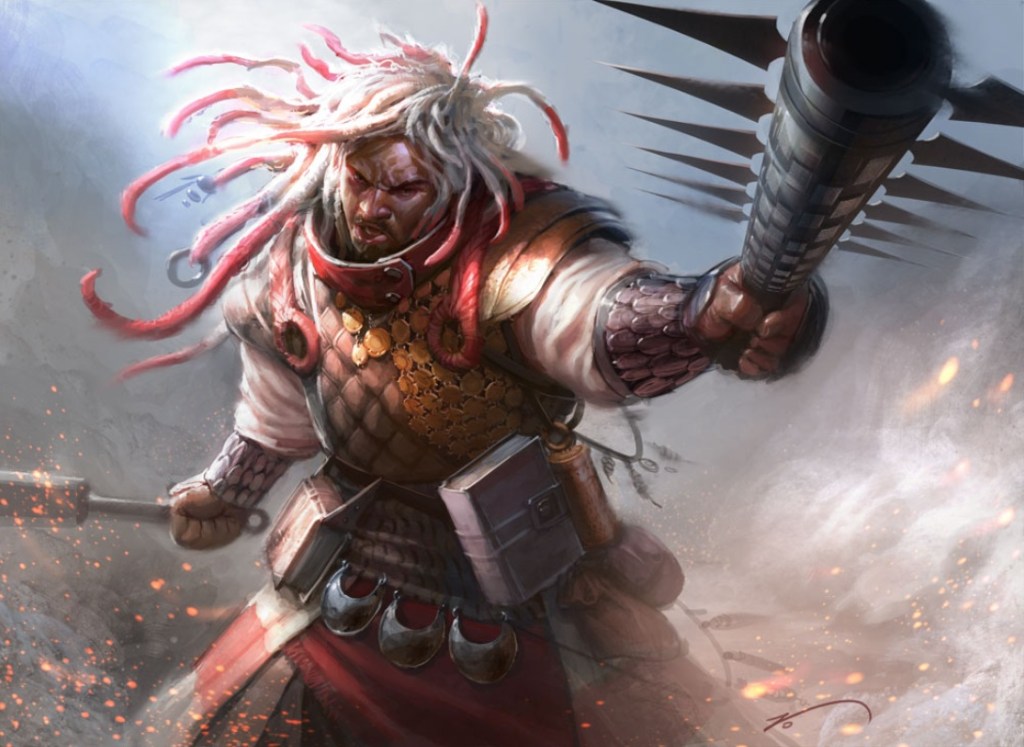
New Subclasses: CLERIC: Chaos Domain
\page

\page
Cleric: Cold Domain

Cold domain clerics have a reputation for being as harsh, frigid and vicious as the geographical locations their deities typically embody: the antarctic tundras and snow-peaked mountain ranges of the world, of which the far majority are found in the southern places, under the auspicious auroras.
Deities that cold domain clerics typically worship include the Cold Couple of the Western Lands (Moroz, the Pale Tsar and Morana, the Cold Queen); Zimora of the Northern Vast, and the Bear Tsar, Kumot.

Cold Domain Spells
| Cleric Level | Spells |
|---|---|
| 1st | absorb elements, ice knife |
| 3rd | flaming sphere, snilloc’s snowball swarm |
| 5th | fire shield, sleet storm |
| 7th | investiture of ice, primordial ward |
| 9th | dominate monster, mind blank |
1st Level: Acolyte of Cold
At 1st level you learn the frostbite cantrip and you gain resistance to cold.
2nd Level: Channel Divinity: Charm Creatures of the Cold
Starting at 2nd level, you can use your Channel Divinity to charm creatures of the cold. That includes beasts that live in cold environments as well as creatures with the cold subtype.
As an action, you present your holy symbol and invoke the name of your deity. Each creature that can see you within 30 feet of you must make a Wisdom saving throw. If the creature fails its saving throw, it is charmed by you for 1 minute or until it takes damage. While charmed by you, it is friendly to you and other creatures you designate.
6th Level: Initiate of Cold Fire
At 6th level you can no longer create magical fire. All your fire spells are automatically cold fire spells. The flames blaze white and blue and are not hot but ice cold to the touch. The damage type changes from fire to cold
8th Level: Master of Cold
Starting at 8th level you can use your power to increase the effectiveness of all your spells that deal cold damage. As a bonus action, you present your holy symbol and intone old verses from the Codicil of White. For the rest of your turn all your spells that deal cold damage increase in strength. Creatures not protected by any means take one-half the normal damage, creatures that have resistance against cold are treated as having no resistance and creatures that are immune to cold are treated as having just resistance to cold. You can use this ability once and regain its use after a short or long rest.
17th Level: Iceborn
At 17th level your resistance against cold increases with godly strength and makes you immune to any normal or magical cold effects. In addition snow and ice terrain is always normal terrain for you.

New Subclasses: CLERIC: Cold Domain
\page
\page
Cleric: Curse Domain
Most clerics who follow the Curse Domain wear turqoise robes and worship Nazar, the Evil Eye. Very few clerics of this domain openly exist in Seminus, for most citizens are terrified of the symbol that marks their faith: the Evil Eye within an open palm. Those who follow this domain delight in causing pain to those they believe deserve it. They seek to brinng misfortune and mayhem to those they consider targets of their deity, Nazar, who posits that in the destruction wrought by curses, a new cycle and form of life renew.
Curse Domain Spells
| Cleric Level | Spells |
|---|---|
| 1st | bane, hex |
| 3rd | mind spike, suggestion |
| 5th | bestow curse, vampiric touch |
| 7th | arcane eye, elemental bane |
| 9th | banishment, contagion |
1st Level: Minor Curse
Starting at 1st level, you can unleash a curse upon an individual who wronged you. As an action, you target another creature you can see within 30 feet. The target must succeed on a Wisdom saving throw against your spell save DC to avoid the curse. The curse lasts until ended with a remove curse spell, a greater restoration spell, or similar magic. When the curse ends, you suffer a harmful psychic backlash.
Choose one of the following effects for your curse:
- Bound Hands. The target is unable to perform a specific kind of act involving fine motor control (which you specify upon uttering the curse), such as tying knots, writing, playing an instrument, sewing, or casting spells that have somatic components. When this curse ends, you take psychic damage equal to 1d6 + your cleric level.
- Twisted Visage. The target’s appearance changes in a sinister way. For example, the curse can place a scar on the target’s face, turn the target’s teeth into yellow fangs, or give the target animalistic features. The first time the target sees its own appearance, such as in a reflective surface, it must succeed on a Wisdom saving throw or take 1d6 psychic damage as it is overcome with fear. When this curse ends, you take psychic damage equal to 1d6 + your cleric level.
- Lost Property. A nonmagical item in the target’s possession disappears and can’t be found until the curse ends. The lost item can weigh no more than 1 pound. You can suggest items upon casting the curse, but the DM has the ultimate say in which item is affected. When this curse ends, you take psychic damage equal to 1d6 + your cleric level.
Once you use this feature, or another Curse feature (Major Curse, Devastating Curse), you cannot utter another curse until you finish a long rest.
2nd Level: Channel Divinity: Evil Eye
Starting at 2nd level, you can use your Channel Divinity to dominate others using the Dark Powers’ sinister gifts. As an action, you target a creature within 10 feet that you can see and cast one of the following spells on the target, requiring no material or somatic components and without expending any spell slots: animal friendship, charm person, or hold person. If the target succeeds on its saving throw against your spell, you are blinded until the end of your next turn. Once a target succeeds on a saving throw against your Evil Eye, it is immune to its effects for 24 hours.
6th Level: Major Curse
At 6th level, your curses grow more powerful. When you use your action to curse a creature, you can choose a Minor Curse or one of the following effects:
- Hellish Pain. The target gains vulnerability to a damage type of your choice. When this curse ends, you take psychic damage equal to 3d6 + your cleric level.
- Hindered Life. The target has disadvantage on ability checks and saving throws tied to one ability score of your choice. When this curse ends, you take psychic damage equal to 3d6 + your cleric level. In addition, starting at 6th level, your curses become strong enough to last even when the target dies. If the target is returned to life, the curse remains in effect.
8th Level Devastating Curse
At 8th level, your curses have boundless destructive potential. When you use your action to curse a creature, you can choose a Minor Curse, Major Curse, or one of the following effects:
- Magic Bane. The target’s attunement to one magic item ends, and the target can’t attune to that item until the curse ends. You can suggest items upon casting the curse, but the DM has the ultimate say in which item is affected. When this curse ends, you take psychic damage equal to 5d6 + your cleric level.
- Destroyed Senses. The target is blinded, deafened, or both. When this curse ends, you take psychic damage equal to 5d6 + your cleric level.
17th Level: Aura of Malediction
Starting at 17th level, your curses are so strong that you are constantly surrounded by an aura of jinxes and malediction. Whenever a hostile creature within 10 feet of you makes an attack roll, ability check or saving throw, treat a roll of 20 as a
failure.
New Subclasses: CLERIC: Curse Domain
\page

\page
Cleric: Darkness Domain
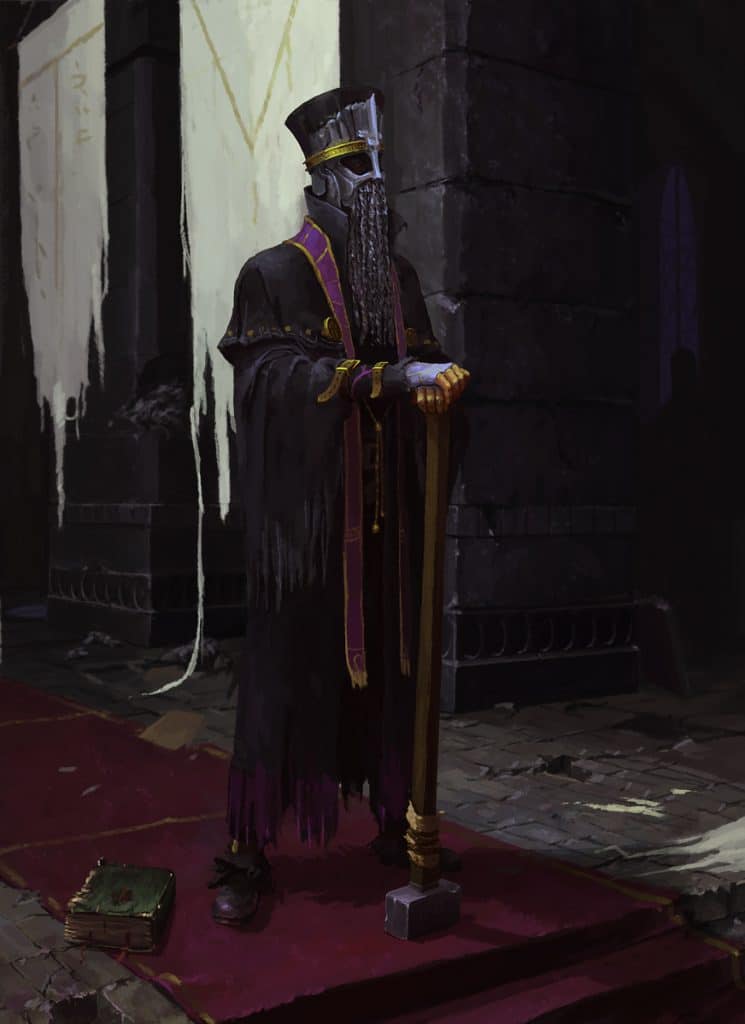
Those who follow the Darkness domain worship, among others, deities such as Al-Zalam, Crnobog, Felaket, Mokosh, Ningala or The Shadow In The Shadow; entities that rule over the shadows, night, darkness and The Shadowfell. Some of these gods are patrons of those who perform their activities in the dark, like thieves, assassins or wardens. Others are more elemental, primal or morality-based, representing the darkest phobias inside us, or the absence of altruism and the evil underbelly of the psyche of kin.
Clerics that devote the darkness domain can channel the power of their gods to summon the mantle of shadows as a form of protection, concealing their presence from their enemies’ eyes, to wander unnoticed. They also can use it to strike fear in the hearts of these foes, invoking the natural fear most creatures have from the unknown.
Darkness Domain Spells
| Cleric Level | Spells |
|---|---|
| 1st | disguise self, unseen servant |
| 3rd | darkness, invisibility |
| 5th | blink, nondetection |
| 7th | greater invisibility, mordenkainen’s private sanctum |
| 9th | dream, seeming |
1st Level: Eyes of Darkness
When you choose this domain at 1st level, you gain the ability to see on darkness, magical or otherwise, up to a range of 120 feet.
1st Level: Warding Shade
Also at 1st level, you can interpose divine darkness between yourself and an attacking enemy. When you are attacked by a creature within 30 feet of you that you can see, you can use your reaction to impose disadvantage on the attack roll, causing a shadow to envelope its mark before it hits or misses. An attacker that can’t be blinded is immune to this feature, as are those with a Darkvision of at least 120 feet. You can use this feature a number of times equal to your Wisdom modifier (a minimum of once). You regain all expended uses when you finish a long rest.
2nd Level: Channel Divinity: Shadow of the Nightmare
Starting at 2nd level, you can use your Channel Divinity to harness darkness, banishing light and dealing psychic damage to your foes. As an action, you present your holy symbol, and any magical light within 30 feet of you is dispelled.
Additionally, each hostile creature within 30 feet of you must make a Wisdom saving throw. A creature takes psychic damage equal to 2d10 + your cleric level on a failed saving throw, and half as much damage on a successful one. A creature that has total cover from you is not affected.
6th Level: Improved Shade
Starting at 6th level, you can also use your Warding Shade feature when a creature that you can see within 30 feet of you attacks a creature other than you.
8th Level: Light Siphon
At 8th level, the darkness you carry has become a part of you. You create a 5-foot sphere of darkness centered on yourself at all times. When in bright light this is dim light, when in dim light it is darkness, and when in darkness it is magical darkness.
14th Level: Umbral Body
Beginning at 14th level, you gain the ability to transform into pure shadow. You can cast umbral body at will, without expending a spell slot or material components. When you cast the spell using this feature, you may only target yourself, and it lasts until the end of the current turn.
17th Level: Improved Shadow of the Nightmare
At 17th level, your Shadow of the Nightmare has a range of 60 feet, and deals 3d10 + twice your cleric level psychic damage. Creatures without darkvision have disadvantage on their Wisdom saving throw against it.
New Subclasses: CLERIC: Darkness Domain
\page
Cleric: Desert Domain
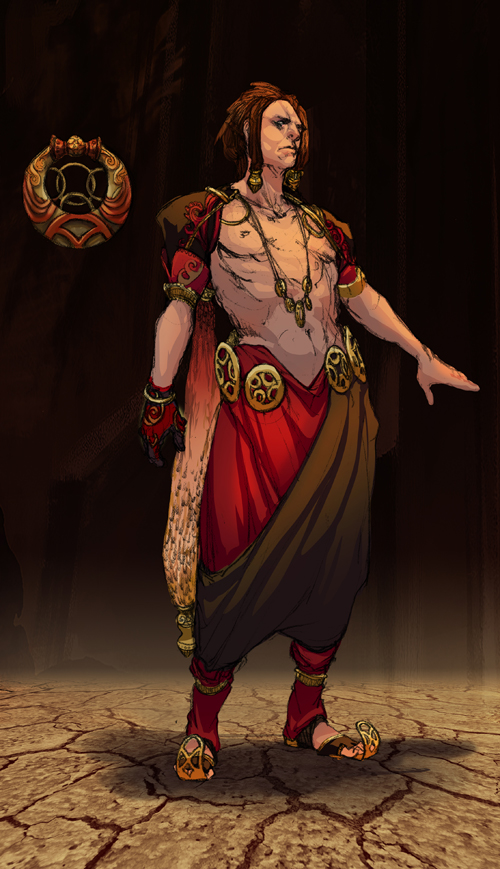
Clerics of the desert are often very spiritual, nomadic folk who commonly workship desert, fire, nature or travel deities, such as Ateşma and Shaset. This domain focuses on the hostility and majesty of the desert, and allows its acolytes to harness these aspects themselves in return for their respect and devotion, just as the Hara and other desert-dwellers survive through abiding by the laws of the desert.
Desert Domain Spells
| Cleric Level | Spells |
|---|---|
| 1st | create or destroy water, guiding bolt |
| 3rd | dust devil, scorching ray |
| 5th | daylight, wall of sand |
| 7th | blight, summon elemental (air, earth, fire or sand only) |
| 9th | control winds, insect plague |
1st Level: Bonus Proficiencies
When you choose this domain at 1st level, you gain proficiency with martial weapons.
1st Level: Shifting Sands
At 1st level you have learnt how to move like the sands that shift across the desert. As a bonus action, you can teleport to an unoccupied space you can see within 30 feet of you.
You can do this once per long rest starting at 1st level.
Beginning at 6th level you can use this feature twice between long rest, and beginning at 18th level, you can use it three times between long rests.
You regain all uses of this feature after a long rest.
2nd Level: Channel Divinity
At 2nd level, you gain the ability to channel divine energy directly from your deity, using that energy to fuel magical effects. You start with two such effects: Turn Undead and an effect determined by your domain (see Heat Wave below).
When you use your Channel Divinity, you choose which effect to create. You must then finish a short or long rest to use your Channel Divinity again. Some Channel Divinity effects require saving throws. When you use such an effect from this class, the DC equals your cleric spell save DC.
Beginning at 6th level, you can use your Channel Divinity twice between rests, and beginning at 18th level, you can use it three times between rests. When you finish a short or long rest, you regain your expended uses.
Channel Divinity: Heat Wave
Starting at 2nd level, you can use your Channel Divinity to produce a devastating heat wave. As an action, each creature in a 30-foot cone originating from you must make a Constitution saving throw against your spellcasting save DC. A creature takes fire damage equal to a number of d10s x half your level in this class (rounded down) on a failed save, or half as much damage on a successful one.
6th Level: Nomadic Resilience
Beginning at 6th level, you inherit the resilient attributes of those who make their home in the harsh deserts. You gain the following benefits:
- You have resistance to fire damage.
- You are unaffected by difficult terrain caused by desert areas or effects.
- You have advantage on saving throws against dehydration, heat exhaustion and exhaustion.
8th Level: Desert Sun Strike
At 8th level, you gain the ability to infuse your weapon strikes with the flaming energy of the desert sun. Once on each of your turns when you hit a creature with a weapon attack, you can cause the attack to deal an extra 1d8 fire damage to the target. When you reach 14th level, the extra damage increases to 2d8.
17th Level: Wrath of the Desert
Starting at 17th level, you can now invoke the wrath of the desert by conjuring a small sandstorm. As an action, a 15 by 30-foot cylindrical sandstorm apparates in a space that you can see within 60 feet of you. When it appears, and whenever a creature (except for you) starts its turn within the sandstorm, they have to make a Dexterity saving throw against your cleric spell save DC.
On a failed save, the creature takes 5d8 piercing damage and becomes blinded until the start of its next turn. On a successful save, the creature takes half as much damage and suffers no additional effects. As a bonus action on your turn, you can move the sandstorm up to 30 feet. This storm lasts for 1 minute, and requires concentration as if you were concentrating on a spell. After using this feature, you must complete a long rest before you can use it again.
New Subclasses: CLERIC: Desert Domain
\page
Cleric: Dragon Domain
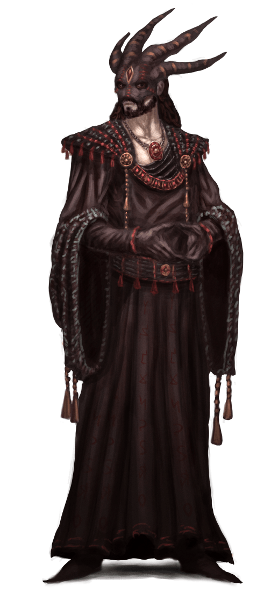
Dragon Domain Spells
| Cleric Level | Spells |
|---|---|
| 1st | burning hands, shield |
| 3rd | dragon’s breath, gust of wind |
| 5th | fear, fly |
| 7th | fire shield, stoneskin |
| 9th | cloudkill, cone of cold |
1st Level: Draconic Resilience
At 1st level, your hit point maximum increases by 1, and it increases by 1 again each time you gain a level in the cleric class.
Additionally, when you complete a long rest, you can choose one damage type, choosing from acid, cold, fire, lightning, or poison. You gain resistance to that damage type until you choose a different one with this feature.
1st Level: Extra Language
You can speak, read, and write Draconic.
2nd Level: Channel Divinity: Dragon Breath
You can use your Channel Divinity to expel elemental energy. The shape, damage type, and saving throw required of your breath weapon depends on the damage resistance chosen for your Draconic Resilience trait.
If you chose acid or lightning, your dragon breath affects creatures in a 30-foot long, 5-foot wide line. If you chose cold or poison, your dragon breath affects creatures in a 15-foot cone. If you chose fire, you can choose whether to affect a line or a cone. Creatures in the affected area must make a saving throw. If you chose acid, fire, or lightning, creatures in the affected area must make a Dexterity saving throw. If you chose cold or poison, creatures in the affected area must make a Constitution saving throw. Creatures take 2d6 damage of your chosen damage type on a failed saving throw, or half as much damage on a successful one.
This Channel Divinity option deals more damage as you gain levels in the cleric class. Your Dragon Breath’s damage increases to 3d6 when you reach 5th level, 4d6 when you reach 9th level, 5d6 when you reach 13th level, and 6d6 when you reach 17th level.
6th Level: Channel Divinity: Draconic Presence
Starting from 6th level, you can use your Channel Divinity to exude a terrifying presence. As an action, you force each creature of your choice that you can see within 30 feet of you to make a Wisdom saving throw.
On a failed save, a creature becomes frightened of you for 1 minute. The frightened creature can repeat this saving throw at the end of each of its turns, ending the effect on itself on a success.
8th Level: Divine Strike
At 8th level, you gain the ability to infuse your weapon strikes with intense draconic power. Once on each of your turns when you hit a creature with a weapon attack, you can cause the attack to deal an extra 1d8 damage to the target. This damage is of the type you chose with your Draconic Resilience ability. When you reach 14th level, the extra damage increases to 2d8.
17th Level: Dragon Wings
At 17th level, you gain the ability to sprout a pair of dragon wings from your back, gaining a flying speed equal to twice your current speed. You can create these wings as a bonus action on your turn. They last until you dismiss them as a bonus action on your turn.
You can’t manifest your wings while wearing armor unless the armor is made to accommodate them, and clothing not made to accommodate your wings might be destroyed when you manifest them.
New Subclasses: CLERIC: Dragon Domain
\page
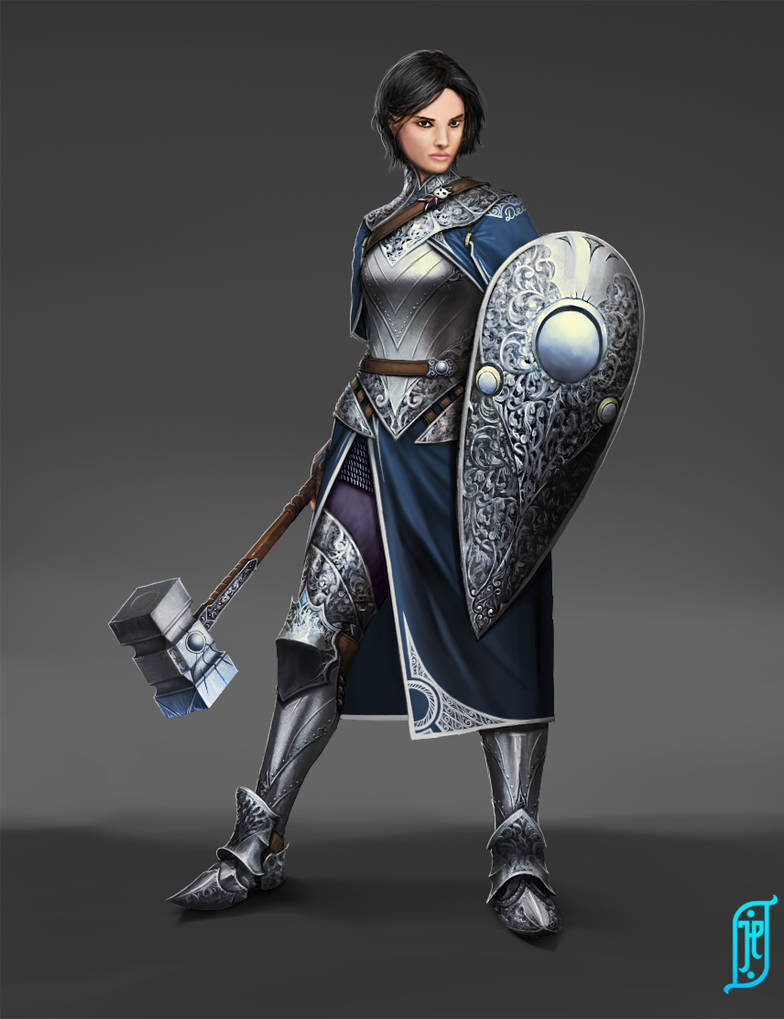
\page
Cleric: Dream Domain

Even though dreams are one of the few things that connect many of the peoples of the world, few people work to dedicate themselves to understanding dreams. Some cultures within the Northern Vast place more emphasis on the prophetic nature of dreams than others, but so-called Oneiromancers and Dream Clerics can be found in most cities, offering their services: dream-readings or cures for insomnia.
Clerics of the Dream Domain serve deities such as Dalarin, Felaket and Nepherem. Through their connection to dreams, clerics can influence the minds of others and even see the future through visions in dreams.
Dream Domain Spells
| Cleric Level | Spells |
|---|---|
| 1st | charm person, sleep |
| 3rd | augury, detect thoughts |
| 5th | catnap ◊, clairroyance |
| 7th | compulsion, divination |
| 9th | dream, modify memory |
1st Level: Sweet Lullaby
Starting when you choose this domain at 1st level, you are able to create a soothing energy that helps you allies recover.
Any creature of your choice who chooses to expend hit dice within 30 feet of you during a short rest to regain hit points regain an additional number of hit points equal to your cleric level.
1st Level: Lights Out
Also at 1st level, you can channel your deity’s power to induce slumber in your enemies.
You can cast the sleep spell as a 1st-level spell without expending a spell slot. You may do so a number of times equal to your Proficiency bonus per long rest.
When you reach 7th level you cast sleep as a 2nd level spell, at 11th level you can cast it as a 3rd level spell, and at 15th level you can cast it as a 4th level spell.
2nd Level: Channel Divninty: Living Nightmare
At 2nd level, you can use your Channel Divinity to force a creature to live through their worst fears. Choose a creature within 30 feet of you. As an action, you can force a creature to make a Wisdom saving throw.
On a failure, that creature sees the world around them is warped into nightmarish visions. For the next minute, that creature is frightened of every other creature it can see, but it can move towards other creatures if doing so is the quickest way to get away from all other creatures. A creature affected by this can
reattempt the saving throw at the end of it’s turn.
6th Level: Dream Interpreter
At 6th level, you are able to walk through your dreams in order to receive glimpses of the future, allowing you to adjust your actions to try and match that future.
You have a pool of energy represented by a number of d6s equal to your Proficiency bonus. Once on your turn, you can expend one of these d6s and add the amount rolled to an attack roll, ability check or saving throw.
Additionally, when a creature within 15 feet of you makes an attack roll, ability check or saving throw, you may use your reaction to expend a d6 and add the amount rolled to the triggering roll.
You regain any expended dice at the end of a long rest.
8th Level: Potent Spellcasting
Starting at 8th level, you add your Wisdom modifier to the damage you deal with any cleric cantrip.
17th Level: Lucid State
Starting at 17th level, you are able to walk between the world of dreams and the world of reality, causing your body to take on strange properties.
As a bonus action on your turn, you may enter into a dream-like state. For the next minute, you gain the following benefits:
- You gain resistance to all bludgeoning, piercing and slashing damage.
- When you cast the sleep spell, you roll an additional d8 and add it to the total.
- You can use the d6s granted by Dream Interpreter without expending any dice from the pool.
Once you use this ability, you may not do so again until you finish a long rest.
New Subclasses: CLERIC: Dream Domain
\page
Cleric: Earth Domain
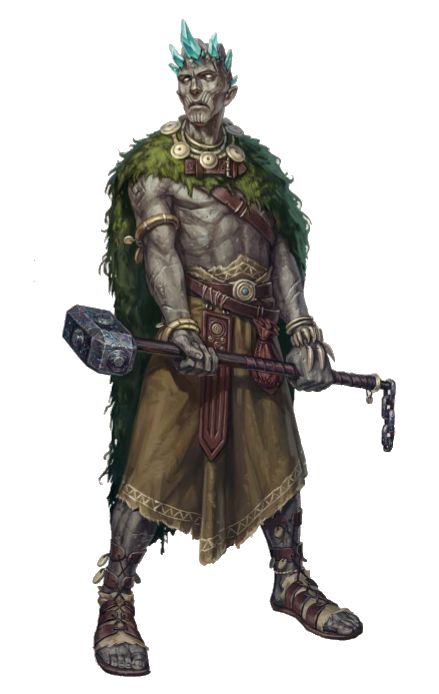
The element of earth is one of the four fundamental building blocks of matter: solid, stable, and unyielding in character. Those who live by the stone are strong-willed and indomitable. Clerics of the Earth Domain are typically related to the element itself: ad’amlar, earth or wood ezen, feral gnomes, ko, lin, zel’en and all manners of farmers and miners.
Deities whose worshippers might focus on this domain include Kara Topraklu, Kumot, Shaset and Veleš, although some who Geb’ashura focus specifically on this domain.
Earth Domain Spells
| Cleric Level | Spells |
|---|---|
| 1st | earth tremor, shield |
| 3rd | maximillian’s earthen grasp, spike growth |
| 5th | erupting earth, wall of sand |
| 7th | stone shape, stone skin |
| 9th | transmute rock, wall of stone |
1st Level: Bonus Proficiencies
When you choose this domain at 1st level, you gain proficiency with heavy armor. You also gain the primal savagery cantrip, which counts as a cleric cantrip for you.
When you cast the primal savagery ◊ cantrip, it deals bludgeoning damage, rather than the usual acid damage.
1st Level: Stone Shell
Also starting at 1st level, you can use a bonus action to gather stone and earth around you or a creature of your choice within 15ft. The target gains temporary hitpoints equal to your cleric level plus your Wisdom modifier, which disappear at the start of your next turn.
You can use this feature a number of times equal to your Wisdom modifier (a minimum of once). You regain all expended uses when you finish a long rest.
2nd Level: Channel Divinity: Localised Quake
At 2nd level, you can harness the power of earth to create earthquakes.
As an action, you present your holy symbol. Each hostile creature on the ground within 15 feet of you must make a Strength saving throw. A creature is knocked prone and takes magical Bludgeoning damage equal to 5 plus your cleric level on a failed saving throw. On a successful save the creature is not knocked prone and takes only half damage. Any objects and structures in this area take double damage.
6th Level: Earth Affinity
At 6th level, your connection to Earth grants you new benefits. You have advantage on saves and checks to resist being pushed or knocked prone. Additionally, you ignore difficult terrain made of stone, earth, and sand.
8th Level: Potent Spellcasting
At 8th level, you add your Wisdom modifier to the damage you deal with any Cleric cantrips.
17th Level: Soul of Earth
When you reach 17th level, your earthly affinity grants you increased durability. You have resistance to bludgeoning, piercing, and slashing damage from non-magical weapons. Additionally, you are immune to the Petrified condition, and any critical hit against you becomes a normal hit.
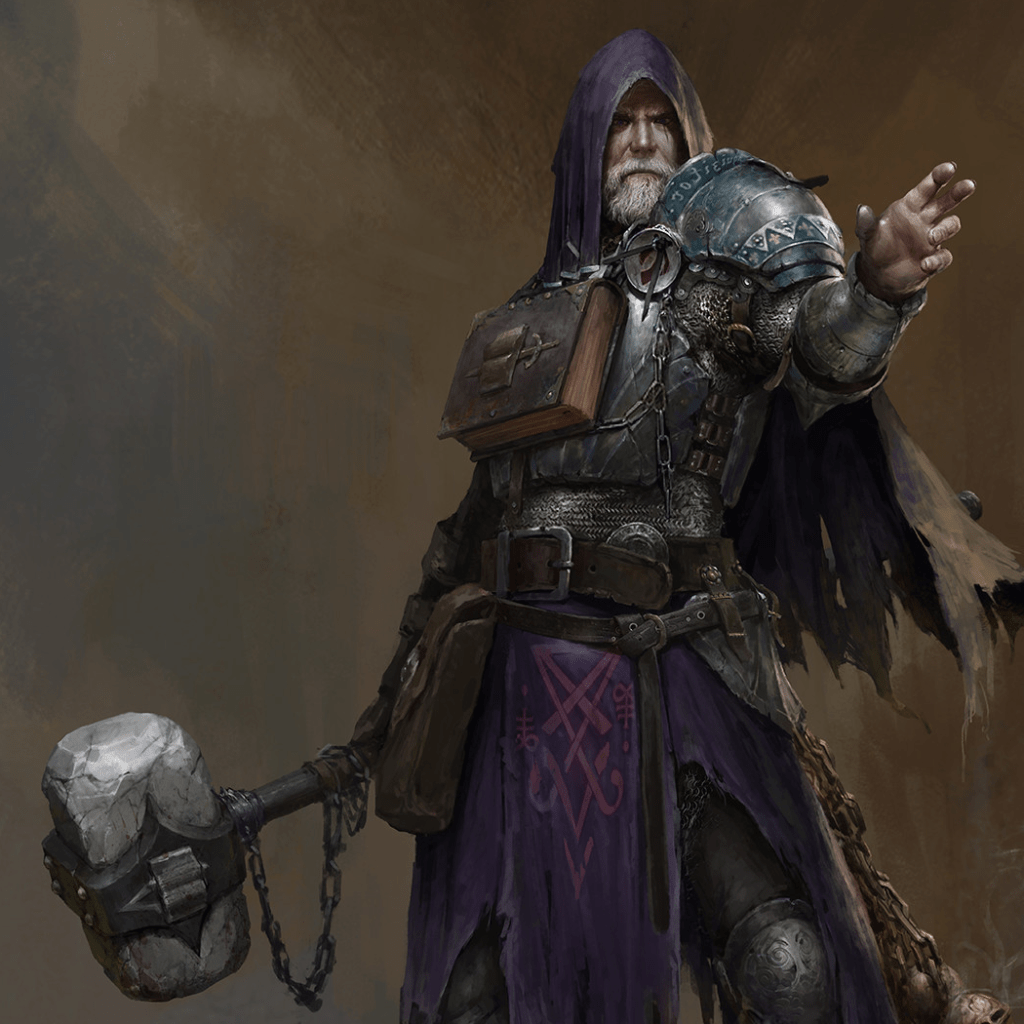
New Subclasses: CLERIC: Earth Domain
\page
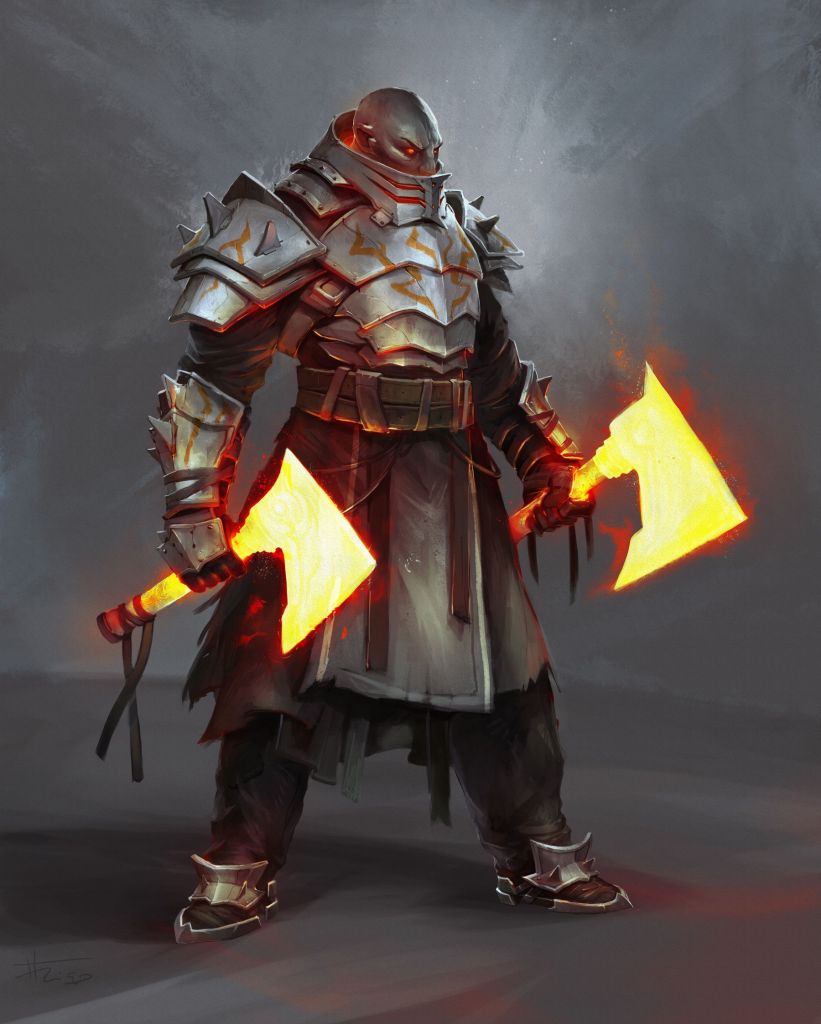
\page
Cleric: Fire Domain
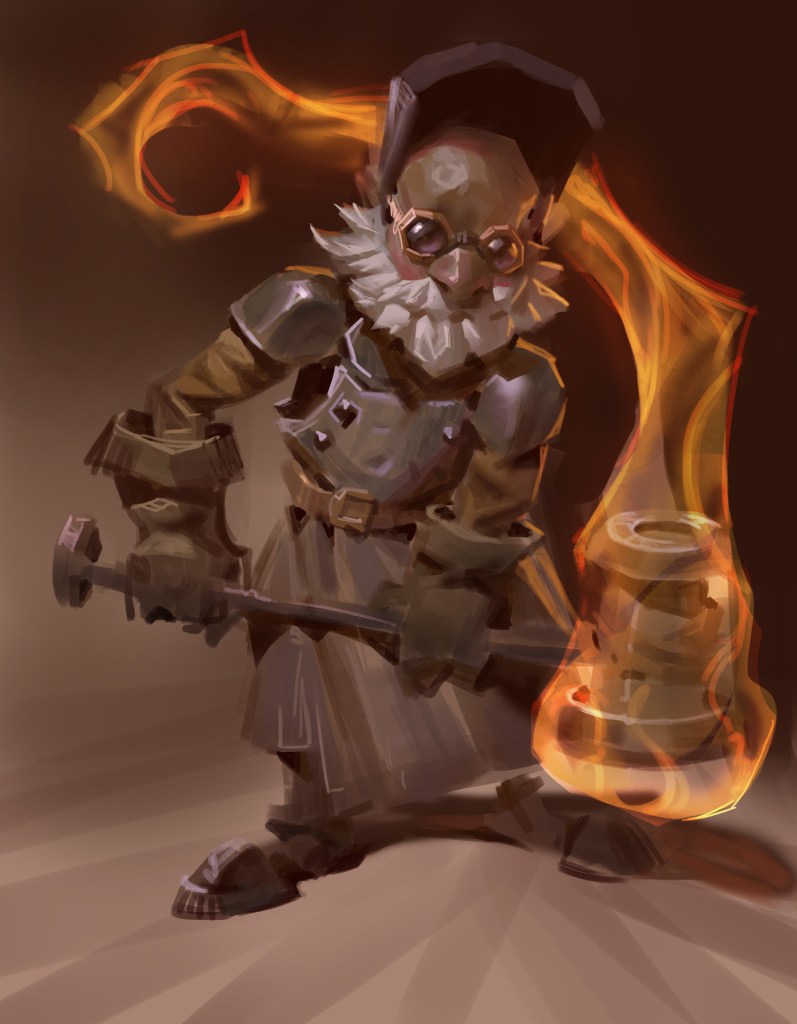
Destruction and creation, renewal and cleansing, wrath and hearth, war and peace. All of these aspects of flame are represented by various gods whose portfolios include fire. The Fire Domain is one that pairs the flames of emotion, the burning hearts and wishes of the faithful with the might of the primordial fire. Clerics of the Fire Domain can be stalwart defenders of their societies, unleashing blazing infernos upon those who would disrupt their idea of peace. They might offer guidance to lost souls, rekindling the sparks of hope and faith in their hearts with exemplary acts of strength, while also being spiritual leaders and a considerable military force on their own. Others may be firebrands that rail against perceived or real threats against the society they guide. Deities that include this Domain within their portfolio include Ateşma, Cehennem, The Firebird and Yangın-Ateş.
Fire Domain Spells
| Cleric Level | Spells |
|---|---|
| 1st | burning hands, searing smite |
| 3rd | flaming sphere, scorching ray |
| 5th | fireball, melf’s minute meteors ◊ |
| 7th | fire shield, wall of fire |
| 9th | conjure elemental, immolation ◊ |
1st Level: Bonus Cantrips
You learn the green flame blade and fire bolt cantrips if you do not already know then.
1st Level: Bonus Proficiencies
Also starting at 1st level, you gain proficiency with heavy armor and martial weapons.
1st Level: Wrath of the Inferno
Also at 1st level, you can blazingly rebuke attackers. When a creature within 5 feet of you that you can see hits you with an attack, you can use your reaction to cause the creature to make a Dexterity saving throw using your spell save DC. The creature takes 2d8 fire damage on a failed saving throw, and half as much damage on a successful one. You can use this feature a number of times equal to your Wisdom modifier (a minimum of once). You regain all expended uses when you finish a long rest.
2nd Level: Channel Divinity: Searing Wrath
Starting at 2nd level, you can use your Channel Divinity to wield the power of the blaze with unchecked ferocity. When you roll fire or radiant damage, you can use your Channel Divinity to deal maximum damage, instead of rolling.
6th Level: Blazing Enhancement
At 6th level, once per long rest, you can imbue a weapon of your choice with flaming power, granting the weapon a damage bonus equal to half your Wisdom modifier (rounded down). This bonus lasts until your next long rest, after which you may use this feature again.
8th Level: Divine Strike
At 8th level, you gain the ability to infuse your weapon strikes with divine energy. Once on each of your turns when you hit a creature with a weapon attack, you can cause the attack to deal an extra 1d8 fire damage to the target. When you reach 14th level, the extra damage increases to 2d8.
17th Level: Born of the Furnace
At 17th level, you have immunity to fire and radiant damage. Additionally fire and radiant damage you deal ignores resistances.

New Subclasses: CLERIC: Fire Domain
\page
Cleric: Freedom Domain

No society goes far without defining freedom. The free will and liberty to make one’s own choices, own what you own and move from one place to the next are present in any fair civilization’s code of laws. In the Northern Vast, freedom is such an ingrained aspect of daily life that many take it for granted. However there are those who see freedom itself as a deity, whom they venerate as Huvanavesh (often shortened to H’vesh).
Freedom Domain Spells
| Cleric Level | Spells |
|---|---|
| 1st | cause fear, hideous laughter |
| 3rd | phantasmal force, zone of truth |
| 5th | beacon of hope, fear |
| 7th | freedom of movement, phantasmal killer |
| 9th | dispel evil and good, skill empowerment |
1st Level: Eccentric Nature
At 1st Level, you gain advantage on saving throws against being Charmed, Frightened or similar states such as being Possessed.

1st Level: Initiate of Independence
Also starting at 1st Level, you gain the cantrip Friends, and any one Charisma skill of your choice.
2nd Level: Channel Divinity: Carefree Bond
Starting at 2nd level, you can use your Channel Divinity to lose yourself so far, that no-one may control you. As an action, you tap yourself and can choose one creature you can see within 30 ft and gain immunity to all mental affecting effects such as being charmed or frightened and you gain immunity to psychic damage.
You can use more charges of your channel divinity to target more than one other creature in this effect.
This effect lasts for one minute or until you are incapacitated.
6th Level: Protective Ward
At 6th Level, as a reaction you can choose a creature with hostile intent within 60 ft of you targeting you, cause them make a Wisdom Saving Throw against your spell save DC, If this creature is immune to the charmed condition this effect automatically fails, as well as if they have an intelligence score of 3 or less. If the creature fails the save they will not target yourself, and instead must choose a different target at random from among the creatures it can see within range of whichever harmful effect was targeted upon you. It must not include the original target within the area or effect, which has to be completed. If there are multiple targets within range, roll at random and the effect will centre this upon a randomly chosen creature.
Under these effects, the hostile creature is neutral towards all other creatures that are within range of the attack for the purposes of distinguishing friend from foe.
You can use this feature a number of times equal to your Wisdom Modifier (minimum of 1), and you regain uses back at the end of a long rest.
8th Level: Potent Spellcasting
Starting at 8th level, you add your Wisdom modifier to the damage you deal with any cleric cantrip.
17th Level: Valiance in Unity
At 17th level, the creatures under the effect of your Carefree Bond gain 2d8+ your wisdom modifier temporary hit points (minimum of 1), an extra 2d8 damage to each attack and resistance to one damage type of your choice when activated (except bludgeoning, piercing or slashing), these benefits remain for the duration of the Carefree Bond.
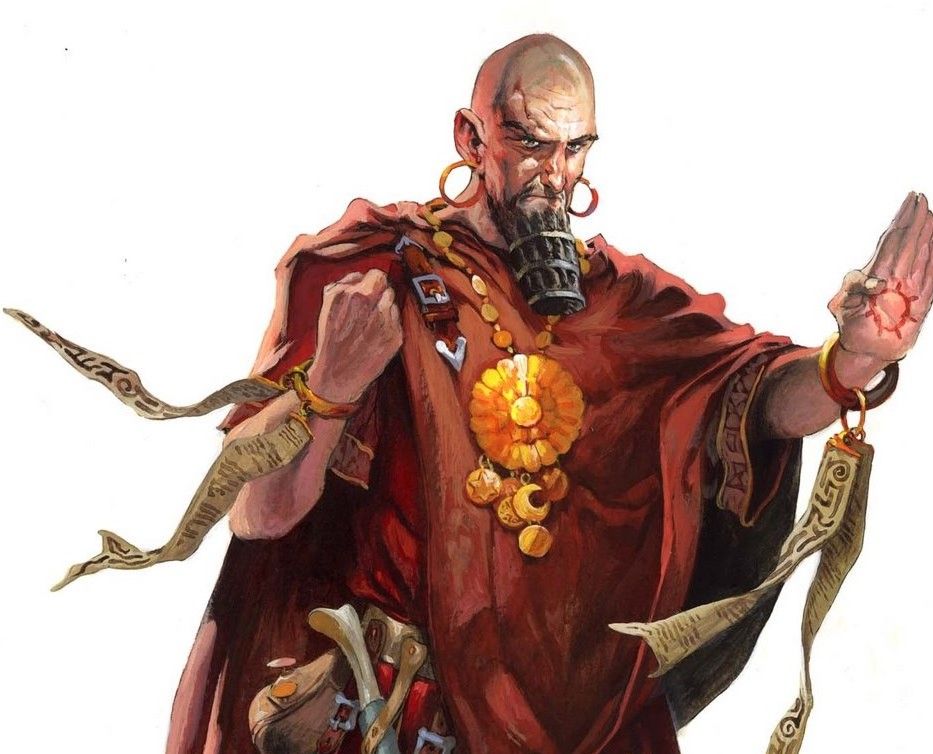
New Subclasses: CLERIC: Freedom Domain
\page
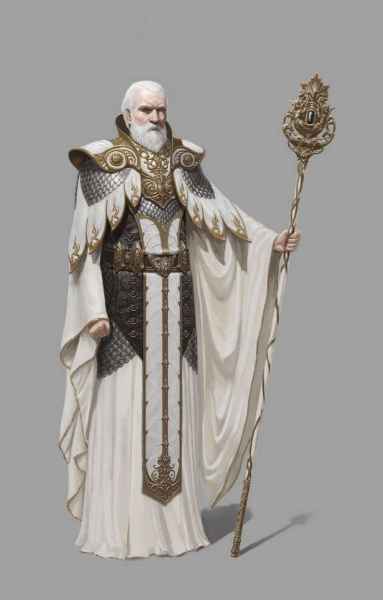
\page
Cleric: Gold Domain
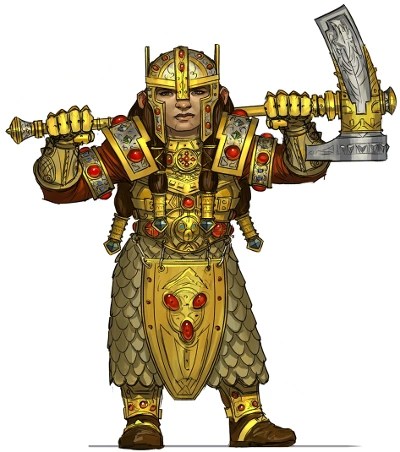
The gods of wealth oversee the workings of the financial world. Some of these deities – including Benzai and Mer’id-Argun – are patrons of fair trade and free commerce. However, others of this portfolio – such as Qaynun, The Gold-Diviner or Inara – are directly associated with greed, profiteering, or the hoarding of treasure. Merchants, bankers, aristocrats, and criminals tend to worship these gods, and work to advance their deity’s agenda in tandem with their own pecuniary interests.
Gold Domain Spells
| Cleric Level | Spells |
|---|---|
| 1st | charm person, identify |
| 3rd | heat metal, locate object |
| 5th | glyph of warding, tiny servant |
| 7th | fabricate, Leomund’s secret chest |
| 9th | Bigby’s hand, legend lore |
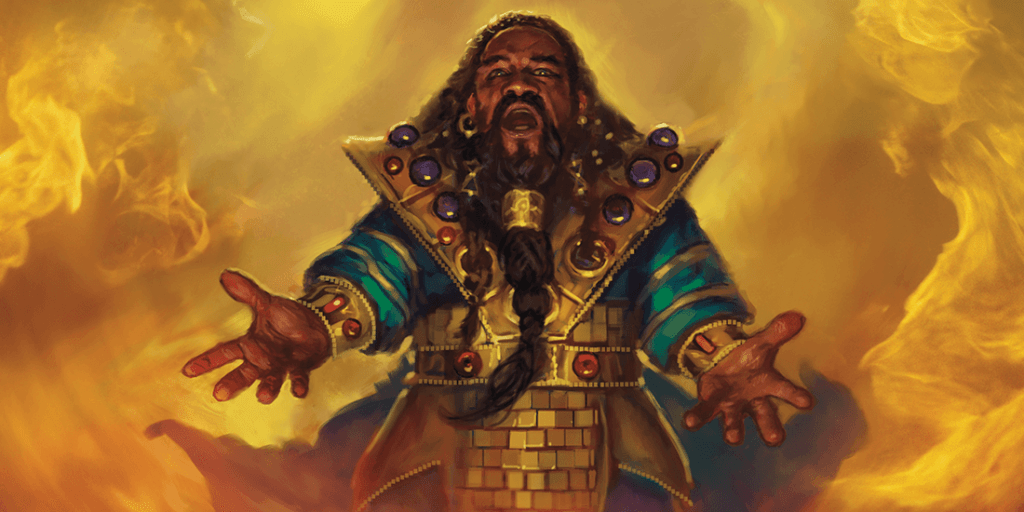
1st Level: Mercantile Mind
At 1st level, you gain proficiency in the Investigation and Persuasion skills. Whenever you make an ability check using these skills to value an object or broker a transaction, you can add double your proficiency bonus to the check.
1st Level: Treasure Sense
Starting when you choose this cleric domain at 1st level, as an action, you can open your awareness to magically detect valuable objects. Until the end of your next turn, you know the location of any valuable object within 60 feet of you that isn’t protected from divination magic. This sense doesn’t tell you any specific information about an object.
When you use this action, you must choose the minimum value that an object must surpass for it to be detected by this sense. The minimum value can be up to an amount in gold pieces equal to 50 times your cleric level.
You can use this feature a number of times equal to your Wisdom modifier (minimum of once), and regain any expended uses whenever you finish a long rest.
2nd Level: Channel Divinity: Font of Prosperity
Starting at 2nd level, your god allows you to spread the joy of mutual benefit. Whenever a creature within 120 feet of you that you can see regains hit points or gains temporary hit points, you can use your Channel Divinity as a reaction. When you do so, you can grant the same amount of hit points or temporary hit points to another creature within 120 feet of you that you can see, capped at an amount equal to five times your cleric level.
6th Level: Discerning Customer
At 6th level, your deity protects you from being swindled or misled. You gain immunity to the charmed condition.
6th Level: Potent Spellcasting
Starting at 8th level, you can add your Wisdom modifier to the damage you deal with any cleric cantrip.
17th Level: The Market Provides
From 17th level, you can ignore the material component requirements of your cleric spells that are 8th-level or lower.
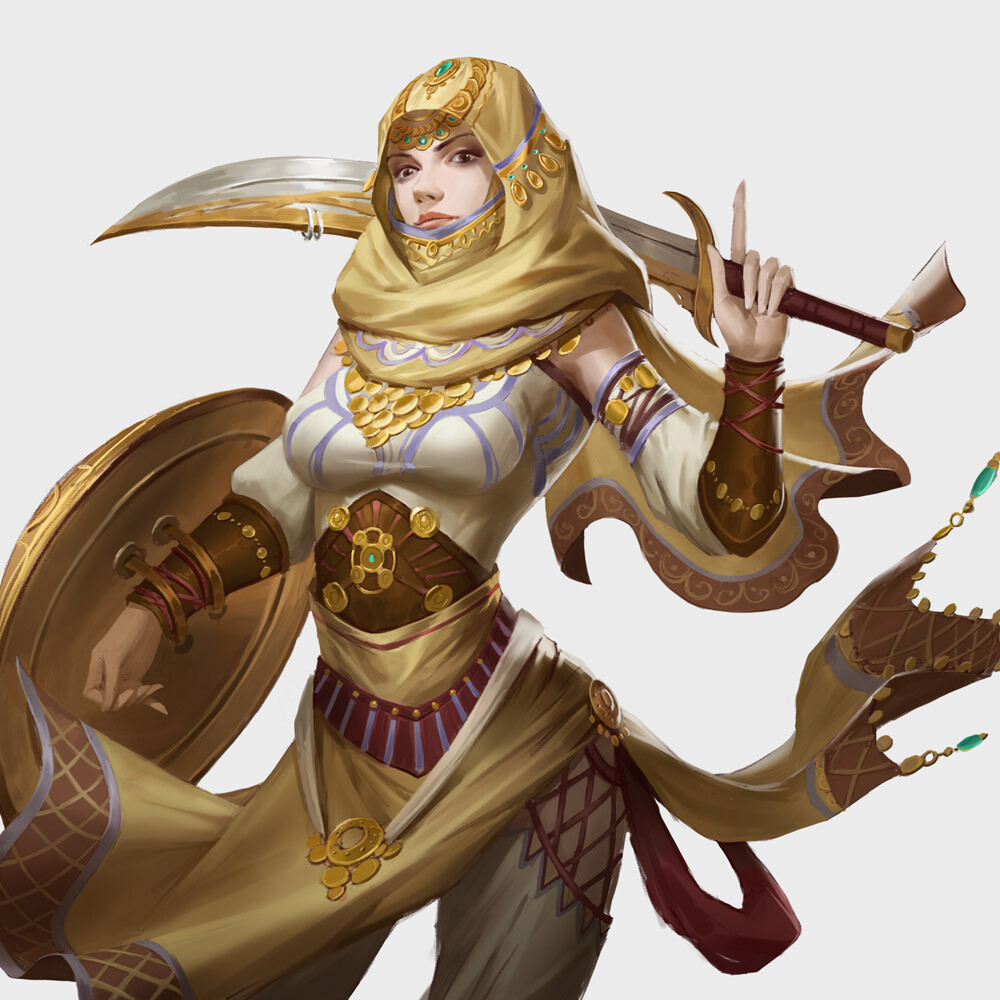
New Subclasses: CLERIC: Gold Domain
\page

\page
Cleric: Harvest Domain
Since the dawn of recorded history, for as long as kin have prayed to gods, they’ve prayed to deities of agriculture. Geb’ashura, Harugami, Hedon, Inara, Tavaszi, Vesna, and their compatriots have overseen countless harvests to ensure their followers do not go hungry.
It is only natural that such gods should have agents in the world acting to carry out this same will.
While many of their fellow clergy will focus more on the Agriculture Domain and the preparation of the land for tilling and farming, those clerics who specialise in the Harvest have a slightly different place in society and in the world, and they understand that their role is to support farmers, but not replace them; they may be called to feed a starving population, but this is a temporary solution rather than a permanent one. An area with no knowledgeable farmers is fertile ground for a Harvest Domain cleric to train new ones, offer them a guiding hand, and leave their community with the resources to continue having fruitful harvests for generations to come.
Rarely, however, does a god of agriculture care only for the success of the harvest. Their agents in the world are gifted powers far beyond those of feeding the hungry and guiding the needy.
Clerics of the Harvest Domain can cut down foes, halt battalions, and awaken the minds of livestock to be rallied against the forces of evil.
Harvest Domain Spells
| Cleric Level | Spells |
|---|---|
| 1st | goodberry, speak with animals |
| 3rd | enhance ability, find steed |
| 5th | erupting earth ◊, plant growth |
| 7th | control water, polymorph |
| 9th | awaken, geas |
1st Level: Initiate of the Harvest
When you select this domain at 1st level, you learn the mold earth ◊ cantrip, which counts as a cleric cantrip for you and doesn’t count against your number of known cantrips.
Additionally, you gain proficiency in the Animal Handling skill.
1st Level: Warrior of the Harvest
Also at 1st level, you are proficient with the scythe and the sickle. When you make a weapon attack with a scythe or a sickle, you may use your Wisdom modifier instead of your Strength modifier when determining the bonus to attack and damage rolls. For you, a sickle deals a base damage of 1d6 slashing rather than 1d4.
Scythe weapon stats
| Cost | Damage | Weight | Properties |
|---|---|---|---|
| 7gp | 2d4 slashing | 7 lbs | Heavy, Reach, Two-Handed |
New Subclasses: CLERIC: Harvest Domain
\page
2nd Level: Channel Divinity: Shepherd’s Call
Starting at 2nd level, you can use your Channel Divinity to command the movement of others as if herding livestock. As an action, you present your holy symbol, and each creature of your choice within 30 feet of you makes a Wisdom saving throw. Each creature that fails this saving throw cannot use its movement on its next turn except to move in a direction of your choice (you choose the same direction for all targeted creatures before they make their saving throw).
Beasts have disadvantage on this saving throw, and creatures that can’t be charmed succeed on this saving throw automatically.
5th Level: Irresistible Call
When a beast of CR 0 or lower fails its save against your Shepherd’s Call feature, it must use all available movement on its next turn to move in the specified direction, even if doing so would put it in harm’s way. Beginning at 5th level, the highest CR of beasts affected by this feature is equal to the highest CR of undead affected by your Destroy Undead feature.
6th Level: Channel Divinity: Food for the Hungry
Starting at 6th level, when you use your action to cast the plant growth spell, you may use your Channel Divinity to additionally gain the benefits of casting the spell over 8 hours.
(All plants in a half-mile radius centered on the point chosen as you cast the spell become enriched for 1 year. The plants yield twice the normal amount of food when harvested.)
8th Level: Divine Strike
At 8th level, you gain the ability to infuse your weapon strikes with divine energy. Once on each of your turns when you hit a creature with a weapon attack, you can cause the attack to deal an extra 1d8 radiant damage to the target. When you reach 14th level, the extra damage increases to 2d8.

17th Level: Shepherd’s Demand
At 17th level, when you use your Shepherd’s Call, you may designate one creature that fails its saving throw. On that creature’s next turn, it must use as much of its movement as possible to move in the direction you specified, and it ignores difficult terrain to do so. Only physical obstructions and other affects that restrict the creature’s movement can stop it. It does not stop as a result of obviously harmful obstacles.

New Subclasses: CLERIC: Harvest Domain
\page

\page
Cleric: Hearth Domain

The Hearth domain is not just about safety, security, and the gentle glow of a fire when the day is done. It’s about finding warmth in the love of friends and family. It’s about supporting each other through think and thin, and building a community that feels like home.
Deities who claim influence over the Hearth domain are usually Good and often Lawful. The clerics of the deity Finellen often follow this domain and the Domain is closely associated with faith in her.
Hearth Domain clerics are often found in taverns and inns across the world, bringing the comforts of home to those who find themselves in need of it. They can often make even the cruelest heart soften with good cheer and fine food.
While hearth clerics aren’t as driven to battle as other clerics they make up for it by supporting allies within their hearth. When the need arises they can leave a lasting scorch mark upon their enemies who seek to harm their friends.
Hearth Domain Spells
| Cleric Level | Spells |
|---|---|
| 1st | bless, sleep |
| 3rd | calm emotions, prayer of healing |
| 5th | catnap ◊, Leomund’s tiny hut |
| 7th | aura of purity, Mordenkainen’s private sanctum |
| 9th | hallow, greater restoration |
1st Level: Bonus Cantrips
When you choose this domain at first level you gain the sacred flame and create bonfire cantrips from the druids’ spell list. These spells count as cleric spells for you and your spellcasting modifier is Wisdom.
1st Level: Community Spirit
Also at 1st level, when you take a short rest within 30 feet of a fire lit by your create bonfire cantrip, you may share your health and fortune with your allies.
For each hit dice you expend to regain hit points, you may restore 1d8 hit points to one other creature you touch. You may expend hit dice to restore hit points to other creatures in this way even if you have reached your own hit point maximum.
In addition, when you take a long rest within 30 feet of a fire lit by your create bonfire cantrip, all creatures of your choice within 30 feet of the fire regain one additional hit dice.
2nd Level: Channel Divinity: Bring Them Home
Starting at 2nd level, you can use your Channel Divinity to save a worthy ally from attack. When a creature within 60 feet of you takes damage, you can use your reaction to grant resistance against the triggering instance of damage and teleport the creature to a space adjacent to you.
6th Level: Restful Hearth
Starting at 6th level, whenever creatures take a short rest within 30 feet of a fire lit by your create bonfire cantrip, those creatures find themselves exceptionally renewed. When creatures within that area spend hit dice to regain hit points, they may add your Wisdom modifier to each die roll.
In addition, when you take a long rest within 30 feet of a fire lit by your create bonfire cantrip, all creatures of your choice within 30 feet reduce their exhaustion level by 1.
8th Level: Potent Spellcasting
At 8th level, you add your Wisdom modifier to the damage you deal with any cleric cantrip.
17th Level: Legendary Feast
At 17th level, you add heroes’ feast to your list of domain spells. In addition, you can cast heroes’ feast without consuming material components. If you do, you cannot do so again until you finish a long rest.

New Subclasses: CLERIC: Hearth Domain
\page

\page
Cleric: Hedonism Domain
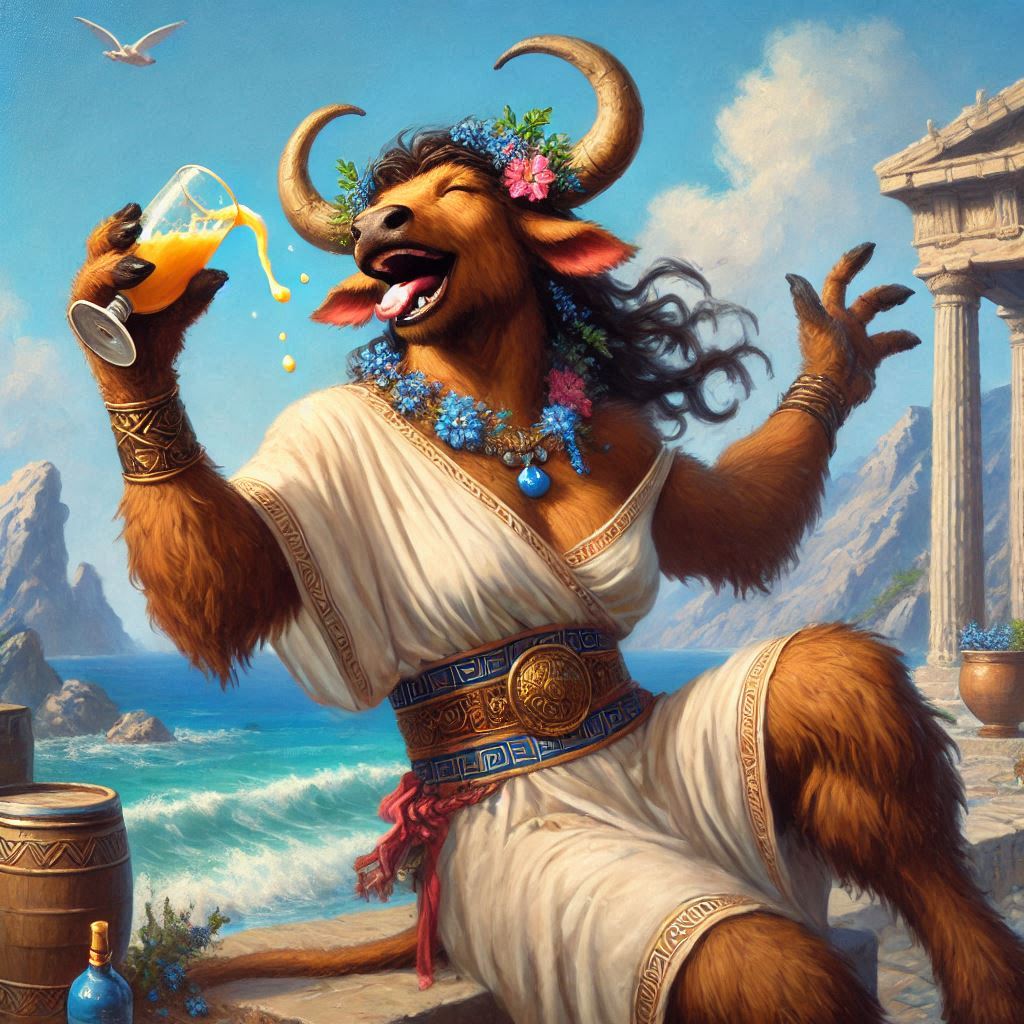
The Hedonism domain focuses on one thing and one thing only; having a good time. They do what they think feels good, and want others to join them in this pleasure-filled group with no concern about whatever others might think. You want to party all night long? Go ahead. You and that lady satyr want to head into the forest to do who knows what? More power to you.
Deities of this domain reward their followers for indulging themselves and helping others find liberation in pleasure. Although the two most famous deities of this domain are Inara and Hedon, and indeed the term ‘Hedonist’ is derived from the god Hedon’s name, there are some pockets of the clergy of other deities that follow this domain, such as Azgruil, the Emerald Queen and Geb’ashura.
Hedonism Domain Spells
| Cleric Level | Spells |
|---|---|
| 1st | charm person, goodberry |
| 3rd | alter self, suggestion |
| 5th | haste, hypnotic pattern |
| 7th | charm monster, compulsion |
| 9th | dispel evil and good, dominate person |
1st Level: Cloak of Confidence
At 1st level, your carefree lifestyle and strong confidence materializes into an incorporeal cloak that allows you to freely sidestep incoming attacks.
While you are wearing no armor and not wielding a shield, your AC equals 10 + your Dexterity modifier + your Wisdom modifier.
Additionally, while you are concious you gain a bonus to your Charisma (Persuasion) and Charisma (Performance) checks equal to your Wisdom modifier.

2nd Level: Invigorating Nectar
At 2nd level, you can conjure a vial of ambrosia-like substance that invigorates whoever drinks it. As a bonus action, you can create a vial of drinkable fluid that you can give to a creature within 5 feet of you. A creature with a vial can use it’s bonus
action to gain the following benefits:
- A creature gains 1d12 + your Wisdom modifier in temporary hit points.
- A creature has either one disease or one of the following conditions afflicting it ended: blinded, deafened, or poisoned.
You can only create one vial at a time.
You can use this feature an amount of times equal to your proficiency bonus per long rest. Vials magically dissipate after their liquid has been consumed.
2nd Level: Channel Divinity: Indulgent Presence
At 2nd level, you gain the ability to have people enjoy the party more or punish those who try to kill the vibe. You can approach a group of creatures, and can expend a use of your Channel Divinity as an action to convince them to partake in festivities.
New Subclasses: CLERIC: Hedonism Domain
\page
Choose a number of creatures within 30 feet of you that are not constructs or undead of your choice equal to your Wisdom modifier to make a Wisdom saving throw, with advantage if they are hostile to you.
On a failure, the creature is charmed by you for 10 minutes or until you or your companions do anything harmful to it, during which it views all creatures as beloved friends.
If the creature was originally hostile, the creature becomes intoxicated and suffers disadvantage on attack rolls and ability checks for 1 minute, or until it succeeds on another Wisdom saving throw at the end of it’s turn.
6th Level: Channel Divinity: Party Foul
At 6th level, if someone is truly killing the good vibes you can give them a nice shove out of the party and this dimension.
As a reaction when a creature damages or inflicts a condition on an allied creature within 15 feet of you, you can use your Channel Divinity to have them make a Charisma saving throw, banishing them until the end of your turn on a failure (as in the banishment spell, no concentration required), no banishing if they succeed.
At the end of the banished creature’s turn they can repeat this saving throw to return.
8th Level: Potent Spellcasting
At 8th level, you add your Wisdom modifier to the damage you deal with any cleric cantrip.
17th Level: Life of the Party
At 17th level, no one can keep from having fun while you are around. When you make a Charisma ability check you can treat any roll on a 9 or lower as a 10.
Additionally, any creature has disadvantage against being charmed by you.
If the creature has a CR lower than your cleric level and has immunity to the charmed condition, you can ignore its immunity and it can make its saving throws with advantage instead.


New Subclasses: CLERIC: Hedonism Domain
\page

\page
Cleric:Hunt Domain
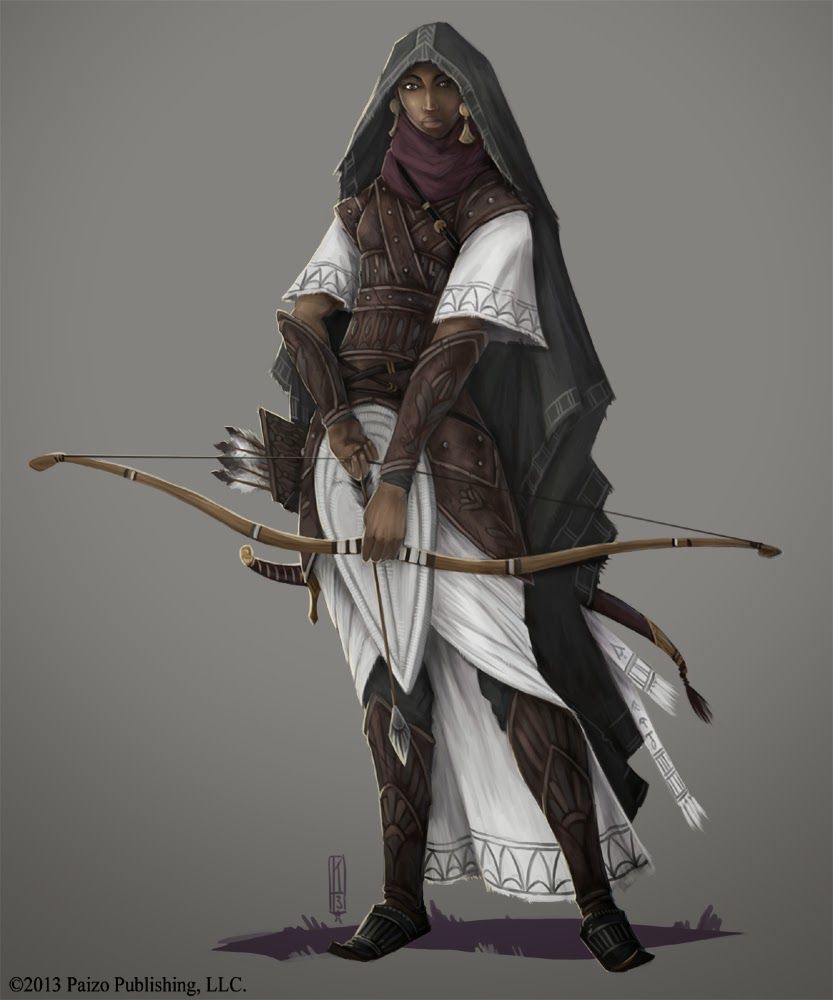
The Hunt Domain is most prominent amongst Al-Badawi peoples that venerate the hunt as an intrinsic cultural aspect of their society, like the Emerald Dwarves. A cleric of the Hunt Domain knows that a successful hunt means survival for their people, but nonetheless feels the thrill of the chase and the honourable kill. Deities of the Hunt Domain include the Emerald Leopard, especially in the Green Eternal, Riya and Shikari, although worshippers of Geb’ashura, Harugami or Tavaszi may follow this Domain.
Hunt Domain Spells:
| Cleric Level | Spells |
|---|---|
| 1st | hunter’s mark, speak with animals |
| 3rd | locate animals or plants, pass without trace |
| 5th | create food and water, phantom steed |
| 7th | faithful hound, locate creature |
| 9th | commune with nature, hold monster |
1st Level: Bonus Proficiencies
When you choose this domain at 1st level, you gain proficiency with Martial Weapons and the Survival skill.
1st Level: Thrill of the Chase
Also at 1st level, you learn one cantrip of your choice from the Druid spell list. In addition, while traveling in a natural environment, your group can travel at a fast pace without taking the -5 penalty to passive Wisdom (Perception) checks.
2nd Level: Channel Divinity: Mark of the Hunted
Starting at 2nd level, you can use your Channel Divinity to create a divine mark on your target, making it easier to hunt.
As an action, you present your holy symbol and choose one creature within 30 feet of you. That creature must succeed on a Charisma saving throw or be Marked for the next minute. While the creature is marked, its body sheds dim light in the space it occupies, you always know the direction to the creature, the creature cannot gain any benefit from being lightly obscured, and you automatically succeed on any Wisdom (Perception) check made against the creature’s Dexterity (Stealth) check made to hide unless it is heavily obscured or behind total cover.
6th Level: Leader of the Pack
Beginning at 6th level you are able to bolster the morale of your comrades even in the most dire of situations. When you cast a spell of 1st level or higher that restores hit points to a creature other than you, all of your allies within 30 feet of you gain temporary hit points equal to your Charisma modifier + the spell’s level.
8th Level: Divine Strike
At 8th level, you gain the ability to infuse your strikes with divine energy. Once on each of your turns when you hit a creature with a weapon attack, you can cause the attack to deal an extra 1d8 radiant or necrotic damage (your choice) to the target. When you reach 14th level, the extra damage becomes 2d8.
17th Level: Master of the Hunt
At 17th level, you are immune to non-magically induced Exhaustion, and you no longer need to eat or drink. In addition, when you are in a natural environment you have advantage on all Survival and Nature checks.
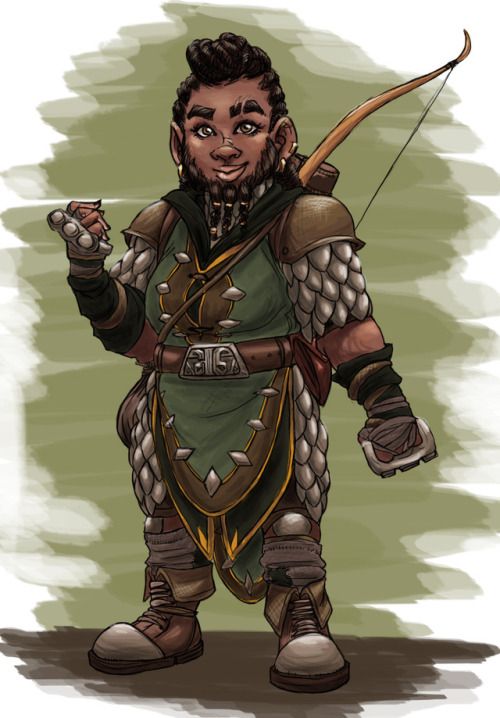
New Subclasses: CLERIC: Hunt Domain
\page
Cleric: Ice Domain

Ice Domain clerics are often as cold, calculating, and vicious as the icy forces of nature that they learn how to shape and control and, as such, they have a reputation that extends across the lands.
While clerics who follow Kumot are more accomodating of outsiders and are an exception to the rule, the vast majority of Ice clerics are viewed with fear and guarded hostility by those in the world at large.
Dieities that Ice Domain Clerics typically worship include: Kumot, Moroz, Morana and Zimora.
Ice Domain Spells
| Cleric Level | Spells |
|---|---|
| 1st | absorb elements, ice knife |
| 3rd | freezing sphere ◊, Snilloc’s snowball swarm |
| 5th | spirit shroud (cold only), sleet storm |
| 7th | fire shield (cold only), ice storm |
| 9th | cone of cold, conjure elemental |
1st Level: Acolyte of Cold
At 1st level you learn the frostbite cantrip and you gain resistance to cold.
2nd Level: Channel Divinity: Mark of (God’s Name)
Starting at 2nd level, you can choose one creature that you hit with a weapon attack to be covered in paralyzing frost, expending a Channel Divinity. Until the end of your next turn, this creature cannot move or be moved by any means except teleportation, and they gain vulnerability to bludgeoning, cold, and fire damage. If they have immunity to one of those damage types, they do not become vulnerable to that damage type.
4th Level: Initiate of Cold Fire
At 4th level you can no longer create magical fire. All your fire spells are automatically cold fire spells. The flames blaze white and blue and are not hot but ice cold to the touch. The damage type changes from fire to cold.

6th Level: Lethargic Frost
At 6th level, you can harness your powers of frost to protect yourself from cold and momentarily slow enemies. You gain immunity to cold damage. Additionally, when a creature within 60 feet of you that you can see takes a bonus action or reaction, you can use your reaction to force them to expend the triggering action, but not gain any of its effects. You can use this feature an amount of times equal to your Wisdom modifier (minimum of once). You regain all expended uses when you finish a long rest.
8th Level: Master of Cold
Starting at 8th level, your cantrips deal additional cold damage equal to your Wisdom modifier.
17th Level: Iceborn
At 17th level, your power over cold increases greatly, granting you the following:
- Choose one spell (from any class list) from the following levels: 6th, 7th, 8th, and 9th level that deals cold damage . You automatically prepare those spells, and they become cleric spells for you.
- Your cold damage now bypasses resistance and treats immunity as if they were resistant.
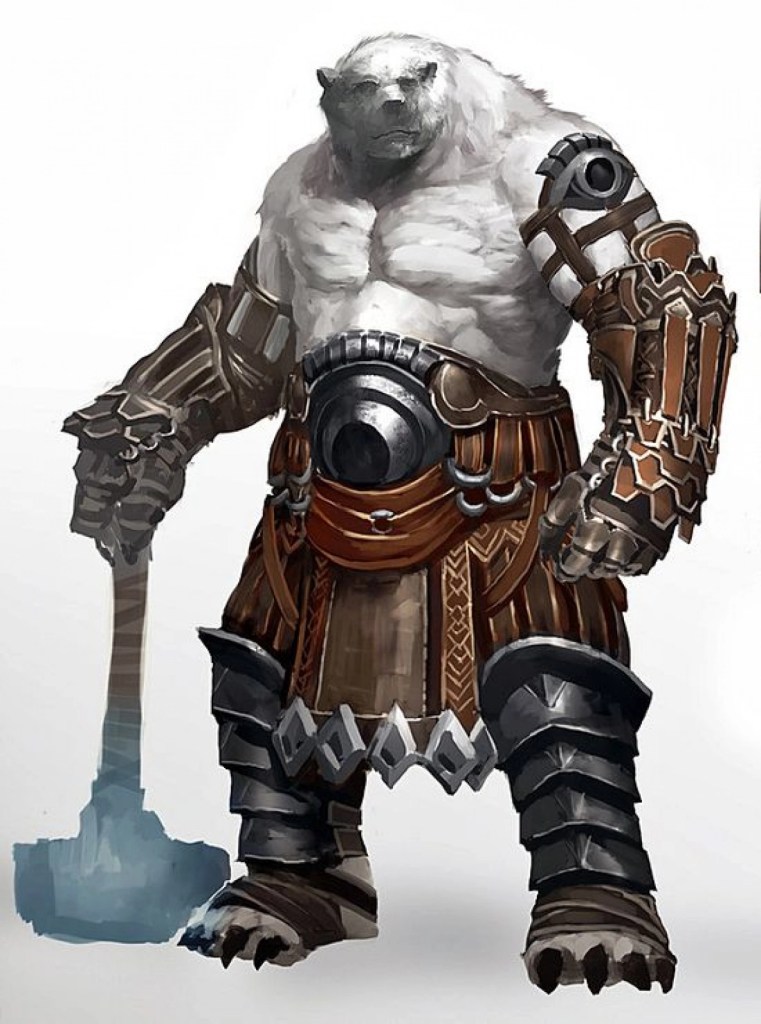
New Subclasses: CLERIC: Ice Domain
\page
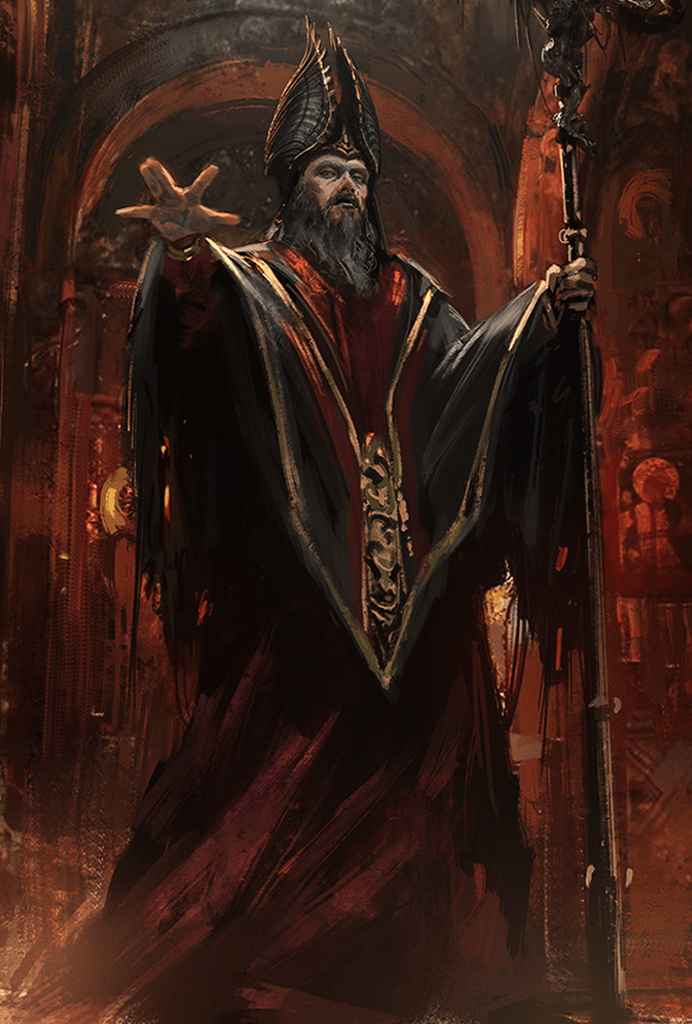
\page
Cleric: Infernal Domain
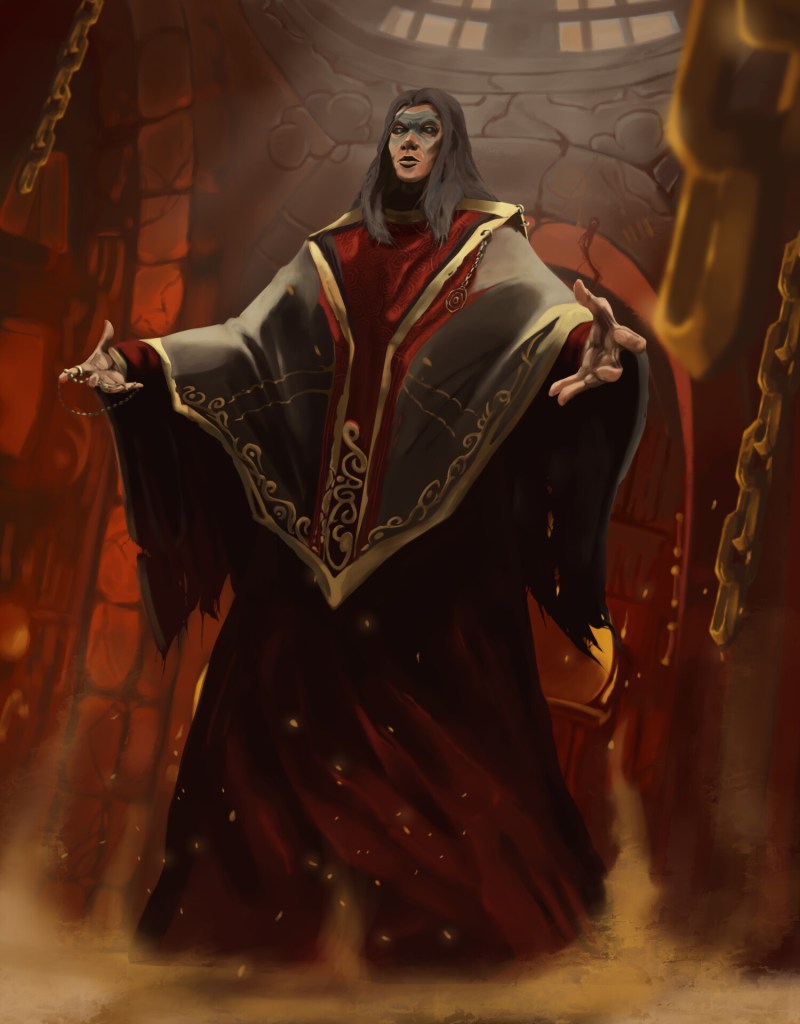
Clerics from the Infernal Domain worship the forces that rule the nine hells, and crave a hoped-for time where the gates that separate the Material Plane from the hellish flames will be forever shattered. They usually gather into cults, since the practice of devil-worshipping is commonly frowned upon and persecuted by societies. These clerics usually are devoted to a specific archdevil ruler from one of the Nine Circles, while others adore the power of hell itself. This will shape the method in which the cleric approaches his veneration, and his personality. For example, an infernal cleric of Glasya will be manipulative and charming, and will strive to gain power through controlling others actions and thoughts, while a cultist of Zariel will be a militant cleric, who fights in the Blood War even when in the Material Plane, hunting demons and sending them back to the abyss from were shouldn’t ever left. Some infernal clerics also worship Cehennem, the Burning One, in some communities known as The Devil-Monger, although these clerics are mostly ad’amlar.
Infernal Domain Spells
| Cleric Level | Spells |
|---|---|
| 1st | burning hands, hellish rebuke |
| 3rd | blindness/deafness, scorching ray |
| 5th | fireball, stinking cloud |
| 7th | fire shield, wall of fire |
| 9th | hold monster, infernal calling |
1st Level: Bonus Proficiencies
Starting at 1st level, you gain proficiency with martial weapons. In addition, you can speak, read and write in Infernal.
1st Level: Fiendish Skin
Also starting at 1st level, your skin starts to morph into diabolic scales. While not wearing armor, you gain an AC equals 10 + your proficiency bonus + your Wisdom modifier.
2nd Level: Channel Divinity: Pit Fiend Aura
At 2nd level, you can use your Channel Divinity to mimic the terrifying presence of a pit fiend. As an action, you create an aura of 30-foot radius centered on you. Any hostile creature that moves inside the area of your aura, or start its turn there must make a Wisdom saving throw. On a failed save, a creature becomes frightened of you until the start of your next turn. A creature who succeeds the save against this feature is immune to its effects for the next 24 hours.
The aura, once activated, lasts for 1 minute, or until you choose to end it on your turn, without taking an action, or until you are knocked unconscious.
6th Level: Diabolic Resilience
At 6th level, you gain resistance to poison damage and fire damage, and advantage on saving throws against the poisoned condition.
In addition, you gain advantage on saving throws against spells.
8th Level: Hellfire Strike
At 8th level, you cause additional 1d8 fire damage when you hit a creature with a weapon attack.
At 14th level, this fire damage ignore resistance to fire damage, and treat immunity as resistance. In addition, the damage increases to 2d8.
17th Level: Hellish Apotheosis
At 17th level, you ascend as a true representative of the nine hells. You grow a pair of leathery wings, that grant you a flying speed equal to your movement speed.
In addition, you become immune to fire and poison damage, and immune to the poisoned condition.
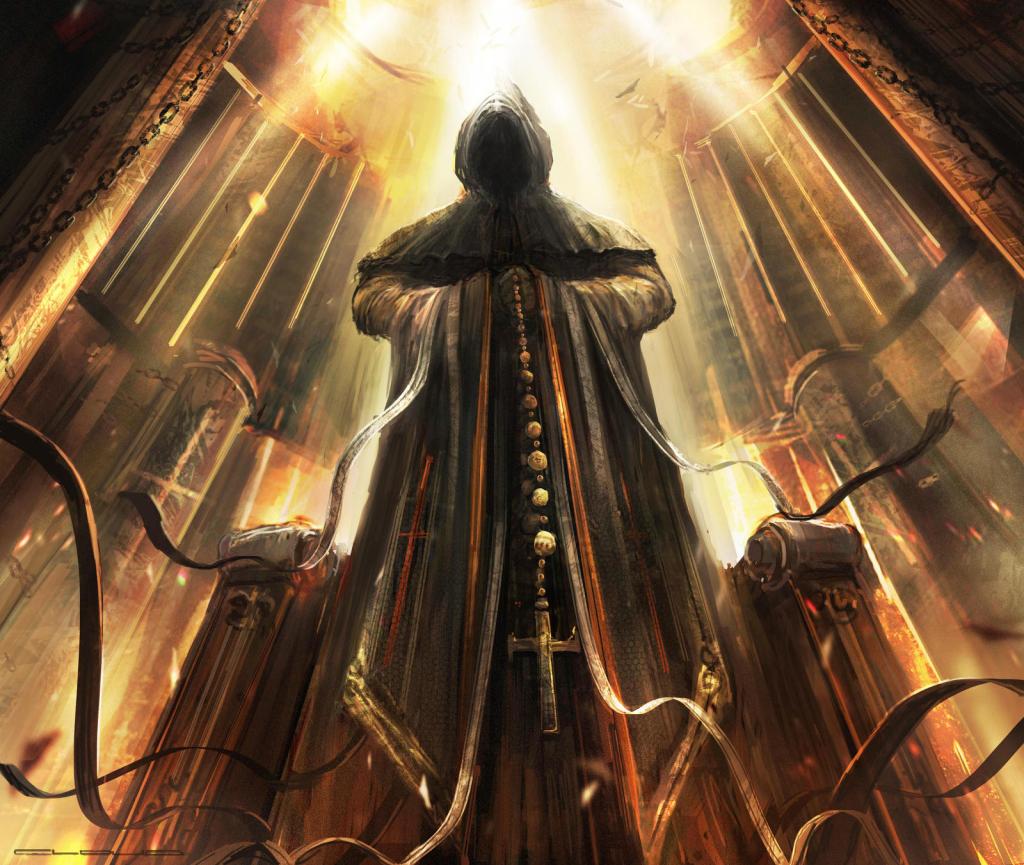
New Subclasses: CLERIC: Infernal Domain
\page
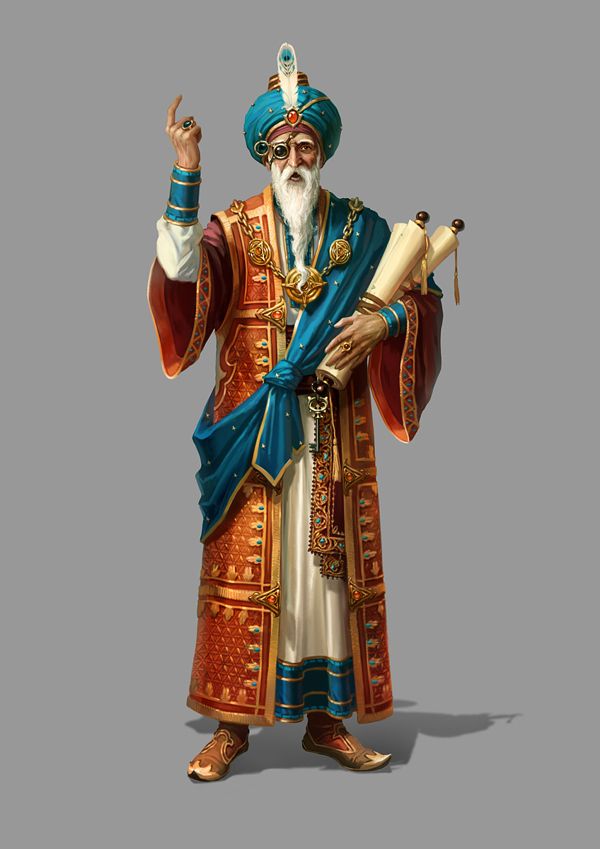
\page
Cleric: Law Domain
As a cleric of law you are charged with upholding your god’s divine mandates. Whether it’s bringing in suspects for questioning or passing judgement right there on the streets, the Law domain cleric seeks out violators of divine justice and seeks to punish them. You are bound by this same code and must adhere to it. You know the will of your god and their laws and concepts of justice. Clerics of the following deities may follow the Law domain: Eur, Halabat, Nǚshén, Sud and Yur.
Law Domain Spells
| Cleric Level | Spells |
|---|---|
| 1st | command, protection from evil and good |
| 3rd | arcane lock, zone of truth |
| 5th | beacon of hope, counterspell |
| 7th | banishment, private sanctum |
| 9th | dominate person, geas |
1st Level: A Lawful Friend
When you choose this domain at 1st level, you gain the friends cantrip if you don’t already know it. You also gain proficiency in the History and Persuasion skills, and one additional language of your choice.
Note:for this subclass to ‘make sense’ it is highly encouraged that you are of some sort of lawful alignment, preferably lawful good or lawful neutral.
2nd Level: Channel Divinity: Bringer of Law
Starting at 2nd level you can use your Channel Divinity to cast one of the spells from the expanded spell list of this subclass that you have access to based on your level. Casting one of these spells using Bringer of Law does not consume a spell slot, but is done at their base spell level only. Spells cast using Bringer of Law cannot be dispelled with counterspell, but are still subject to effects that prevent the use of magic, such as antimagic field.
Thus, at 2nd level you may use your channel divinity to cast command and protection from evil and good.
6th Level: Mantle of Justice
At 6th level, you exude an aura of divine justice to a 30-foot spherical radius from your space as long as you are not incapacitated. Everyone in the area will feel a sense of lawfulness and obedience at all times. If a creature does something you might deem unlawful or unjustified they will feel compelled to hesitate. You are unaffected by this feature, as you can justify your actions; but are expected to act within your alignment.
Mechanically this translates into disadvantage on rolls while a creature is in the aura. It is up to you and the GM to determine what constitutes an unlawful act, but typically the following actions will have disadvantage, and it should
apply to your allies as well as to your enemies:
- Attacks during a surprise round of combat. Quarter must be given, and enemies should be allowed to defend themselves.
- Attacking an incapacitated or dying creature, or attacking a creature that has clearly yielded in combat.
- Attacking from a hidden/stealth position, including from being invisible or disguised.
- Performing any ability/skill check to steal objects, break and enter into a home, or other clearly criminal act. Examples include: pickpocketing (Sleight of Hand), breaking and entering (Acrobatics, Athletics, Stealth), wearing a disguise for the purposes of robbing or conning someone (Deception, disguise kit), conning or lying for the purposes of selling or buying illicit or stolen goods (Deception, Intimidation, Persuasion).
- Exceptions can be made for rolls against clearly evil or chaotic creatures that have already committed a crime, especially against you.
If it is unclear how disadvantage should be applied using this feature, the GM may call for you to use your reaction to apply disadvantage in response to a single creature’s attack or ability/skill check within the aura that you wish to target. In this case you will need to be able to see your target.
In most cases, alignment in 5e is a roleplaying tool and not a mechanical rule. The GM, however may opt for this feature to apply disadvantage to attack and ability/skill checks to creatures that are chaotic or neutral in nature that are inside the aura.
8th Level: Binding Law
At 8th level, when you cast a spell that would cause a creature to be charmed or is from this subclass’s expanded spell list, saving throws against those spells have disadvantage. You are immune to being charmed, and have advantage on Wisdom and Charisma saving throws.
17th Level: Scion of Order
At 17th level, you may cast the spell command as bonus action or action without using spell slots. This spell cannot be counterspelled, dispelled, and is not subject to effects that prevent the use of magic, such as antimagic field, though it will still need verbal components.
Also at 17th level, if a creature succeeds on a Wisdom, or Charisma saving throw while inside aura of your Mantle of Justice, as a reaction you may choose to deal either radiant or psychic damage equal to your Cleric level + your Wisdom modifier to them.
New Subclasses: CLERIC: Law Domain
\page

\page
Cleric: Lightning Domain
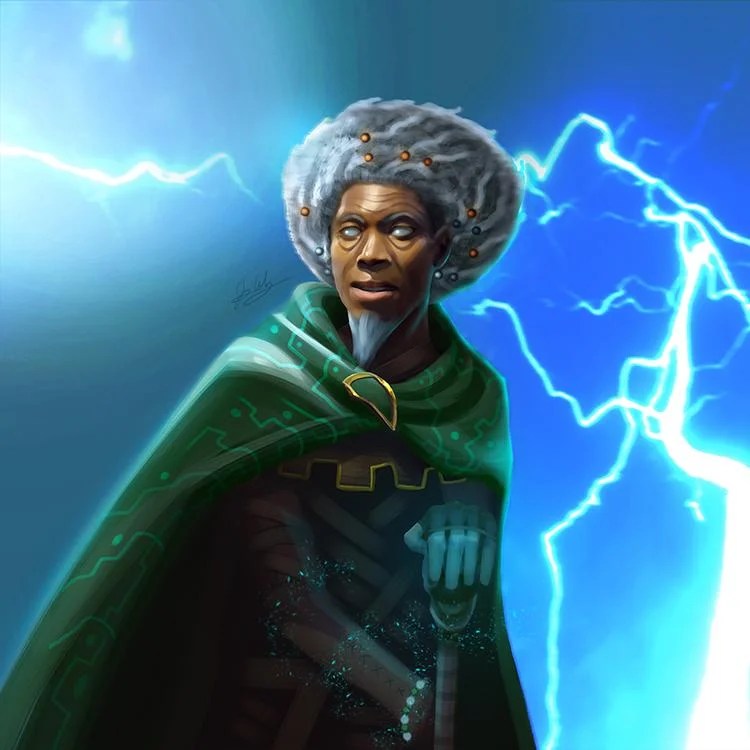
Clerics who follow the Lightning Domain are typically worshippers of deities who control the electrical storms of the world, such as Perun and Tarhun. These clerics are usually more violent and unpredictable than others and tend toward a more chaotic alignment. With a reputation for being forces to be reckoned with, some lightning clerics are hired by important trading hub cities and towns as wardens against storms and bad weather. Some caravans and trading companies also use them to guard precious loads.
Lightning Domain Spells
| Cleric Level | Spells |
|---|---|
| 1st | fog cloud, thunderwave |
| 3rd | misty step, shatter |
| 5th | call lightning, lightning bolt |
| 7th | control water, phantasmal killer |
| 9th | cloudkill, destructive wave |
1st Level: Bonus Cantrip
Starting at 1st level when you choose this domain, you learn the shocking grasp cantrip. This cantrip is a cleric cantrip for you.
1st Level: Superconductive Presence
Also starting at 1st level, when you use a Channel Divinity option or cast a cleric spell of 1st level and higher, you are enveloped in a barrier of lightning until the end of your next turn. When a creature touches you, or immediately after a creature hits you with a melee weapon attack while you are enveloped in barrier, it must succeed on a Constitution saving throw. A creature takes lightning damage equal to half your cleric level + your Wisdom modifier on a failed save, or half as much damage on a successful one (minimum of 1). During this time you have resistance to lightning and thunder damage.
2nd Level: Channel Divinity: Thunderous Rebuke
Starting at 2nd level, you can use your Channel Divinity to call forth your deity’s might into a bolt of lightning.
As an action, you can choose a point you can see within 30 feet of you. A bolt of lightning flashes down from the cloud to that point. Each creature within 5 feet of that point must make a Dexterity saving throw. A creature takes lightning damage equal to 3d8 + your cleric level on a failed save, or half as much damage on a successful one. Creatures that are submerged or wearing armor made of metal have disadvantage on the saving throw, and takes an additional 1d8 damage.
6th Level: Thunderstruck
At 6th level, when a creature fails on a saving throw against your cleric feature or cleric spell of 1st level and higher that deals lightning damage, it cannot take a reaction until the start of its next turn. Also, you have permanent resistance to lightning and thunder damage.
8th Level: Potent Spellcasting
Starting at 8th level, you add your Wisdom modifier to the damage you deal with any cleric cantrips.
17th Level: Improved Superconductive Presence
At 17th level, immediately after you use a Channel Divinity option or cast a cleric spell of 1st level and higher, a bolt of lightning radiates in a 10-foot sphere centered on you. Each creature within the sphere must make a Constitution saving throw. A creature takes lightning damage equal to 2d8 + your Wisdom modifier on a failed save, or half as much damage on a successful one (minimum of 1). Creatures that are submerged or wearing armour made of metal have disadvantage on the saving throw, and take an additional 1d8 damage. Also at this level, when you use your Thunderous Rebuke feature, your resistance to lightning and thunder damage becomes immunity (for the duration of that Channel Divinity feature).

New Subclasses: CLERIC: Lightning Domain
\page
Cleric: Love Domain
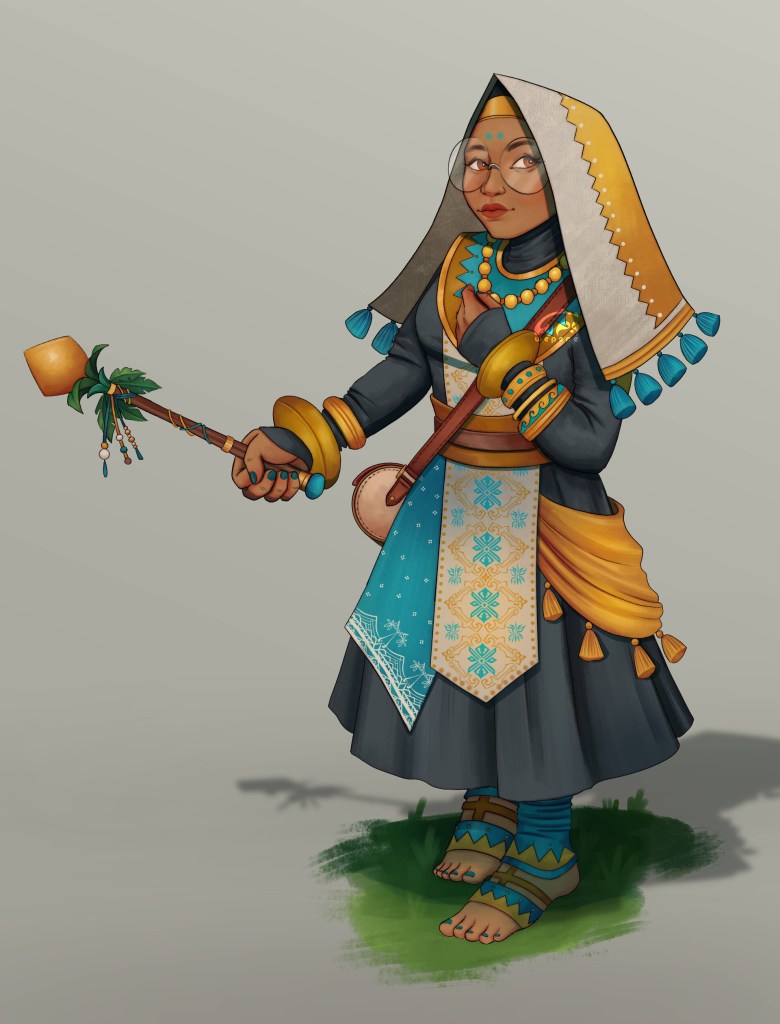
Clerics of these gods preside over marriages and other familial bonding customs, but they also nurture the emotional bonds of friendship and camaraderie. Their divine blessings bolster and protect allies in battle through these deep bonds and enkindle flares of infatuation to spur their allies and confound their foes.
Examples of deities whose adherents might follow this domain include Jahla, Lasu and Yedan.
Love Domain Spells
| Cleric Level | Spells |
|---|---|
| 1st | charm person, heroism |
| 3rd | enthrall, warding bond |
| 5th | beacon of hope, hypnotic pattern |
| 7th | aura of purity, confusion |
| 9th | greater restoration, hold monster |
1st Level: Emboldening Bond
Starting at 1st level, you can forge an empowering bond between allies.
As an action, you can choose two willing creatures you can see within 30 feet of you (this can include yourself) and create a magical bond between them. While either bonded creature is within 30 feet of the other, the creature can roll a d4 and add the number rolled to an attack roll, an ability check, or a saving throw it makes. Each creature can add the d4 no more than once per turn. The bond lasts for 1 hour or until you use this feature again.
You can use this feature once, and you regain the ability to do so when you finish a long rest. You can also expend a spell slot to use the feature again.
2nd Level: Channel Divinity: Impulsive Infatuation
Starting at 2nd level, you can use your Channel Divinity to overwhelm a creature with a flash of short-lived but intense admiration for you, driving them to rash action in your defense.
As an action, you present your holy symbol and choose one creature you can see within 30 feet of you. That creature must make a Wisdom saving throw; a creature can choose to fail this saving throw if it wishes.
On a success, the creature is unaffected.
On a failure, the creature is charmed by you until the start of your next turn, and it must immediately use its reaction to make a weapon attack against a target you designate. If there are no valid targets, it uses its reaction to admire you.
6th Level: Protective Bond
Beginning at 6th level, the bond you forge between people shields them from harm. While either creature chosen for your Emboldening Bond feature is within 30 feet of the other, the creature can use its reaction to grant resistance to all damage to the other creature when that other creature takes damage. This resistance lasts until the end of the current turn.
8th Level: Potent Spellcasting
At 8th level, you add your Wisdom modifier to the damage you deal with any cleric cantrip.
17th Level: Enduring Unity
At 17th level, the bonds you create endure across vast distances. Creatures affected by your Emboldening Bond feature gain its benefits, as well as those of your Protective Bond feature, while they are on the same plane of existence as each other.
Additionally, when a creature chosen for your Emboldening Bond is reduced to 0 hit points, their bonded partner gains the following benefits for 1 minute, or until the creature regains at least 1 hit point:
- The creature has advantage on attack rolls, ability checks, and saving throws.
- The creature gains resistance to all damage.
- As an action, the creature can touch their bonded partner to expend and roll any number of Hit Dice. Their bonded partner regains a number of hit points equal to the total rolled.
New Subclasses: CLERIC: Love Domain
\page
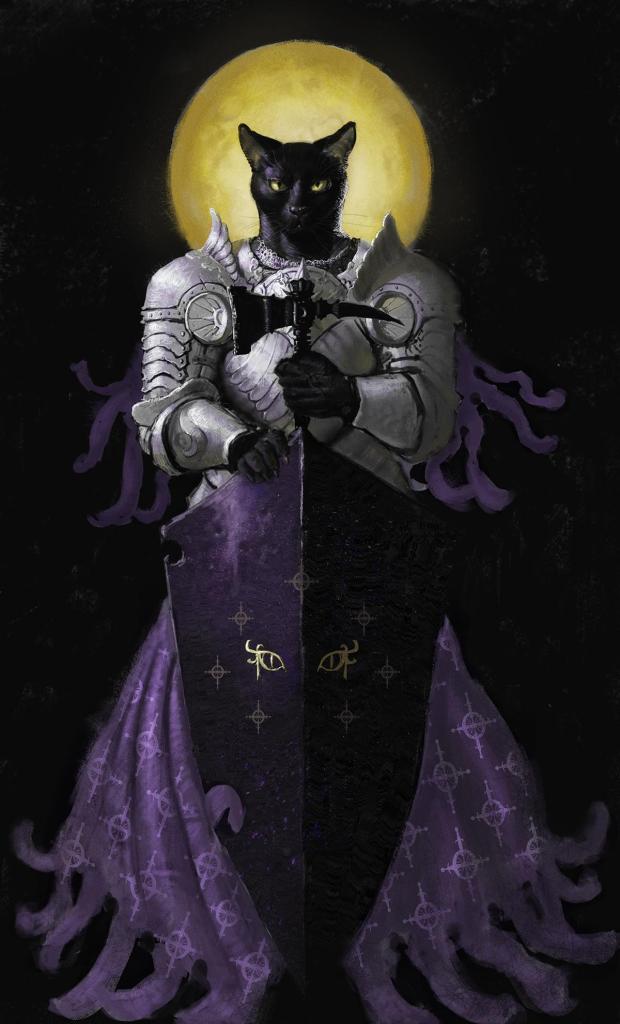
\page
Cleric: Lunar Domain

Since the very beginning, all living creatures have looked to the skies and sensed the power and mystery carried by Dalarin the Silver and Caravel the White, the two visible moons of Seminus.
Suen the Lunar Bull himself is said to guide his worshipers from within the pale white glow of his Lunar Caravel, revealing hidden paths and granting inspired visions to those who pray to that moon.
Argent, shining with its clear and silvery light, is often seen as Dalarin’s lantern, guiding the lost to home and sanctuary.
Those who follow the Lunar Domain, however, are aware of other moons, whose very presence is hidden to the casual observer.
Indeed, while most people of Seminus are even unaware of their very existence, let alone their name or associated powers, those of the Lunar Domain realise that the moons are actually the conduits for most magic, arcane and spiritual.
While there are several established arcane universities and societies in the Northern Vast, the Western Lands and the Eastern Realms that base their practice around this knowledge, it is so esoteric to the majority of people, that the only connection the average citizen might have to it is through clerics of this Domain, but these clerics typically focus on one of the moons above the others, and yet they see them all as a delicate balance.
One might be superior to them, but they all have their important position in the celestial ballet.
Moons of Seminus
| Name(s) | Colour | Associated powers |
|---|---|---|
| Argent, Dalarin | silver | Abjuration, guidance, protection |
| Ateş | fire | Evocation |
| Bad Moon, Nirsan | prismatic | the Bad Moon, madness, Wild Magic |
| Caravel, Suen | white | Divination, revealing the hidden |
| Dara | blood | Blood Magic, Enchantment |
| Saruluk | yellow | Conjuration |
| Tengri | golden | Transmutation |
| Umbra | black, dark, hidden | Illusion |
| Yeni’usha | green | Necromancy |
Clerics of the Lunar Domain draw on their divine connection to the moons to wield both light and shadow, invoke good fortune and ill favor, and reveal or conceal as they see fit.
Most Lunar clerics worship Caravel the White, also known as the Moon Bull (Suen), or else Argent the Silver, also known as Dalarin, but their followers are as varied as the stars in the sky.
Some seek to protect the vulnerable and do good in the world, while others meddle with impunity and distort the truth for selfish gain.
Some Lunar clerics follow The Mad One, Dei’sh’mek, also known as Loon of Zul. Yet other Lunar clerics worship not the gods but the moons themselves, especially those with an innate connection to the lunar cycles through lycanthropy.
Lunar Domain Spells
| Cleric Level | Spells |
|---|---|
| 1st | faerie fire, silent image |
| 3rd | invisibility, moonbeam |
| 5th | hypnotic pattern, major image |
| 7th | greater invisibility, hallucinatory terrain |
| 9th | dream, passwall |
1st Level: Clarity of Argent
When you choose this domain at 1st level, you learn to shine light upon the mind’s most dire moments, shielding those you protect. When a creature within 30 feet of you that you can see makes a Wisdom saving throw, you can use your reaction to grant that creature advantage on the save.
You can use this feature a number of times equal to your proficiency bonus, regaining all expended uses when you finish a long rest.
New Subclasses: CLERIC: Lunar Domain
\page

2nd Level: Channel Divinity: Blessing of the Full Moon
Starting at 2nd level, you can use your Channel Divinity to infuse your allies with primordial power. As an action, you instill a willing creature of your choice within 30 feet of you that you can see with one of the following blessings of your choice:
- Blessing of Argent. For 1 hour, the blessed creature’s speed increases by 10 feet, and it has advantage on Wisdom (Perception or Survival) checks involving smell or made to track a creature.
- Blessing of Ateş. For 1 minute, the blessed creature gains resistance to fire damage.
- Blessing of Caravel. For 1 hour, the blessed creature has advantage on Intelligence (Investigation) checks and Intelligence saving throws made against illusions. In addition, the blessed creature has advantage on Intelligence (Investigation) checks made to find hidden secrets.
- Blessing of Dara. For 10 minutes, the blessed creature has advantage on attack rolls against a target if at least one of the blessed creature’s allies is within 5 feet of the target and the ally isn’t incapacitated.
- Blessing of Saruluk. For 1 hour, the blessed creature can use a bonus action to misty step. Once they use this feature, it cannot be used again unless you use another Channel Divinity to give it to them again.
- Blessing of Tengri. For 1 hour, you can grant the blessed creature one of the effects of enhance ability, but only at 2nd level. The blessed creature retains this magical enhancement until the end of the hour.
- Blessing of Umbra. For 1 hour, the blessed creature has advantage on Dexterity (Stealth) checks when trying to Hide or Move Silently. They also have advantage on Intelligence (Disguise kit) checks.
- Blessing of Yeni’usha. For 1 minute, in addition to any other damage they do, when they make a melee attack, the blessed creature deals necrotic damage equal to 5 + half your Lunar Cleric level (rounded up).
6th Level: Channel Divinity: Mind of Two Moons
Starting at 6th level, you can use your Channel Divinity to invoke the twofold arcana of both Argent and Caravel. By expending one use of Channel Divinity, you can cast a second concentration spell while already concentrating on a first spell, as long as both spells are on your list of Lunar Domain spells. If you need to make a Constitution saving throw to maintain your concentration on both spells, you make the save with disadvantage. On a failure, you lose concentration on both spells.
8th Level: Empowered Cantrips
Starting at 8th level, your cleric cantrips deal extra damage equal to your Wisdom modifier (minimum of 1).
17th Level: Eclipse of Ill Omen
At 17th level, you can call upon Dara, the Blood Moon, to flare in the sky above you, eclipsing all other light. Its power surrounds you even where the sky can’t be seen, and even on other planes. As a bonus action, you can manifest an area of reddish, dim light in a 60-foot radius around you. In addition to the normal effects of dim light, creatures in the area make saving throws with disadvantage. When you create this eclipse, you can choose any number of creatures that are unaffected by it.
This eclipse lasts while you concentrate (as if concentrating on a spell) for up to 1 minute. Concentrating on this feature counts as concentrating on a Lunar Domain spell for the purpose of your Mind of Two Moons feature.
Additionally, once per turn when you deal radiant damage to any creatures in this area of dim light, you can curse one of those creatures until the eclipse ends (no action required). A creature cursed in this way has its speed halved and can’t regain hit points.
Once you use this feature, you can’t use it again until you finish a long rest.
New Subclasses: CLERIC: Lunar Domain
\page
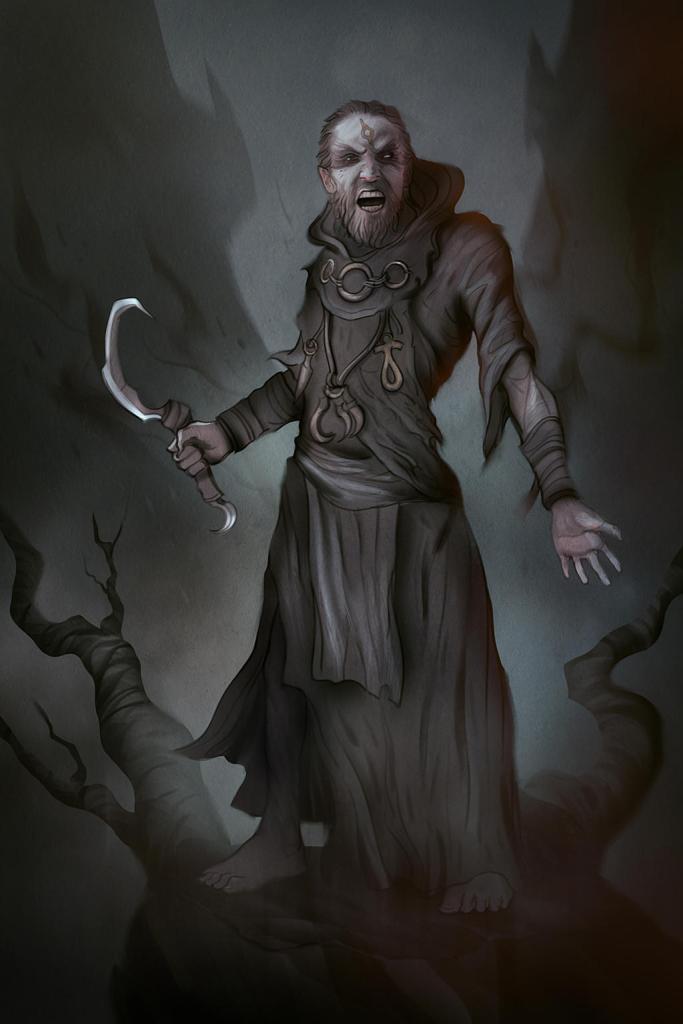
\page
Cleric: Madness Domain
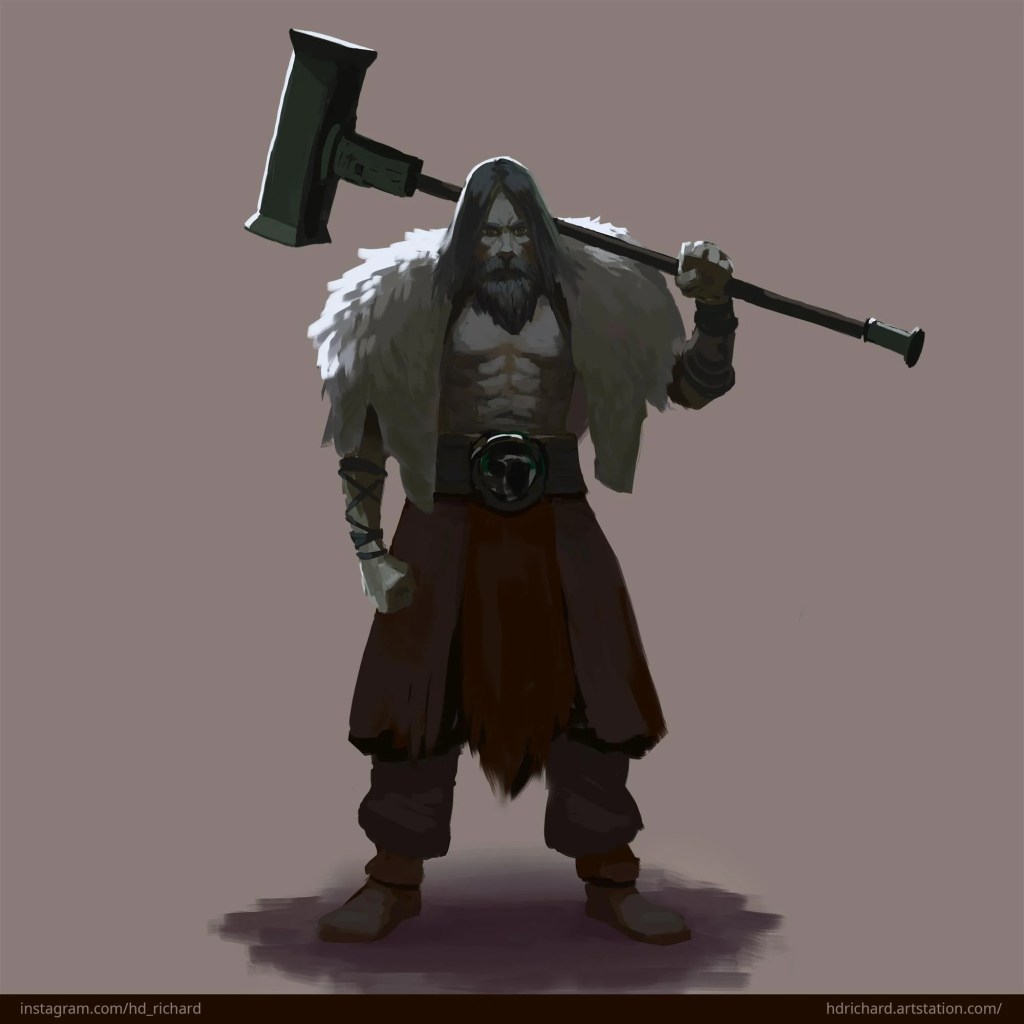
Wherever there are minds, there is madness. Where there is madness, there is chaos. And where there is chaos, there is power.
Some clerics choose to follow the mad deities to further their ambitions, while others worship them feverishly because of their own poisoned minds.
Gods of madness seek to spread insanity, or else their own convoluted and twisted interpretation of ‘sanity’, and thus their influence, throughout the entire world.
These deities include Dei’sh’mek, also known as Loon of Zul, as well as Felaket, Nazar and Zan’ni.
Madness Domain Spells
| Cleric Level | Spell |
|---|---|
| 1st | dissonant whispers, Tasha’s hideous laughter |
| 3rd | detect thoughts, suggestion |
| 5th | enemies abound, sending |
| 7th | confusion, phantasmal killer |
| 9th | synaptic static, modify memory |
1st Level: Bonus Cantrips and Proficiency
At 1st level, you learn the mind sliver and vicious mockery cantrips, which count as cleric cantrips for you but don’t count against the number of cantrips you know. In addition, you gain proficiency in the Deception skill.
1st Level: Muddled Mind
Starting at 1st level, your mind is shrouded in divine madness. You determine how your madness manifests by rolling on the Madness table or by choosing an option from it.
The flaw from the table lasts until cured by greater restoration or more powerful magic.

If you ever lose the flaw, you gain another one of your choice from the table the next time you finish a long rest.
In addition, while you have such a flaw, your thoughts can’t be read by telepathy or other means, unless you allow it.
Madness Table
| d12 | Flaw (lasts until cured) |
|---|---|
| 1 | “I am unable to feel joy or pleasure.” |
| 2 | “I am the smartest, wisest, strongest, fastest, and most beautiful person I know.” |
| 3 | “I feel an intense need to keep things orderly and symmetrical.” |
| 4 | “I am convinced that someone or something is out to get me. Its agents are behind every corner, watching and waiting for me to make a mistake.” |
| 5 | “I enjoy it when others feel pain—especially when I’m the cause of their misery.” |
| 6 | “I hear voices in my head that I can’t control.” |
| 7 | “I keep whatever I find.” |
| 8 | “I’ve discovered that I really like killing people.” |
| 9 | “Being drunk keeps me sane.” |
| 10 | “I have a special friend I trust that only I can see.” |
| 11 | “I am slowly becoming another person’s identity.” |
| 12 | “I can’t take anything – anything at all – seriously.” |

New Subclasses: CLERIC: Madness Domain
\page
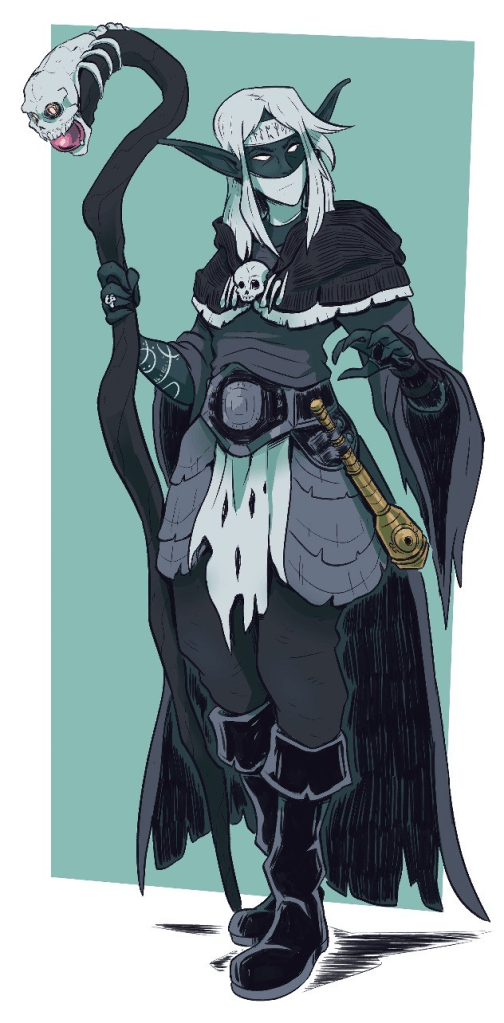
\page
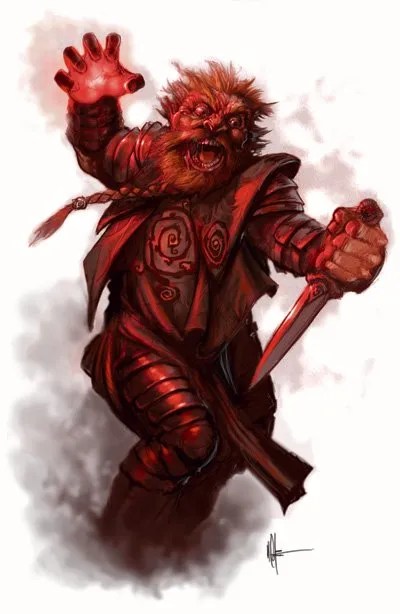
2nd Level: Channel Divinity: Instill Insanity
Starting at 2nd level, you can use your Channel Divinity cause temporary insanity in others.
As an action, each creature of your choice that can see you within 30 feet of you must succeed on a Wisdom saving throw or be driven insane for as many rounds as half your level in this class (rounded up).

\column
The effect ends early for an affected creature if it takes any damage, is a construct or undead, or if someone else uses an action to shake the creature out of its lunacy.
To determine the affects of the insanity, roll on the table below:
Instill Insanity table
| d100 | Effect (lasts half your cleric level in rounds) |
|---|---|
| 01–05 | The character becomes Incapacitated and spends each round affected in the following order: laughing, weeping, screaming, then curled up in the fetal position, mumbling. |
| 06-10 | The character breaks out into song for the duration of the fight. If the player does not sing a stanza or chorus during their turn, the character falls Unconscious. |
| 11-15 | The character suddenly feels the pain they witness. Any damage dealt to any creature within 15 ft is halved and taken by the character, for whom the Insanity then ends. The character can choose to close their eyes as a reaction, avoiding damage but becoming Blinded until their next turn. |
| 16-20 | The character retreats into his or her mind and becomes Paralyzed. The Effect ends if the character takes any damage. |
| 21–30 | The character becomes suffused with adrenaline for the Duration. During that time, the character gains +3 Strength and +3 Dex. After the effect wears off, the character is Stunned for 1 round and gains 1 level of Exhaustion. |
| 31–40 | The character becomes Frightened of the nearest creature and must use his or her Action and Movement each round to flee from the source of the fear.This ends if the source is eliminated or the character loses line of sight. |
| 41–50 | The character begins babbling and is incapable of normal Speech or Spellcasting. |
| 51–60 | The character must use his or her Action each round to Attack the nearest creature. |
| 61–70 | The character experiences vivid hallucinations and has disadvantage on attack rolls and Ability Checks. |
| 71–75 | The character does whatever anyone tells him or her to do that isn’t obviously self-destructive. |
| 76–80 | The character experiences an overpowering urge to eat something strange such as dirt, slime, or offal. |
| 81–85 | The character becomes hyper-aggressive for the Duration, during which they can increase their number of attacks by 1d4 (roll each round), however each attack is made at disadvantage. |
| 86-90 | The character is Stunned. |
| 91– 100 | The character becomes incredibly determined, making all attacks and saving throws with advantage for the Duration. |
New Subclasses: CLERIC: Madness Domain
\page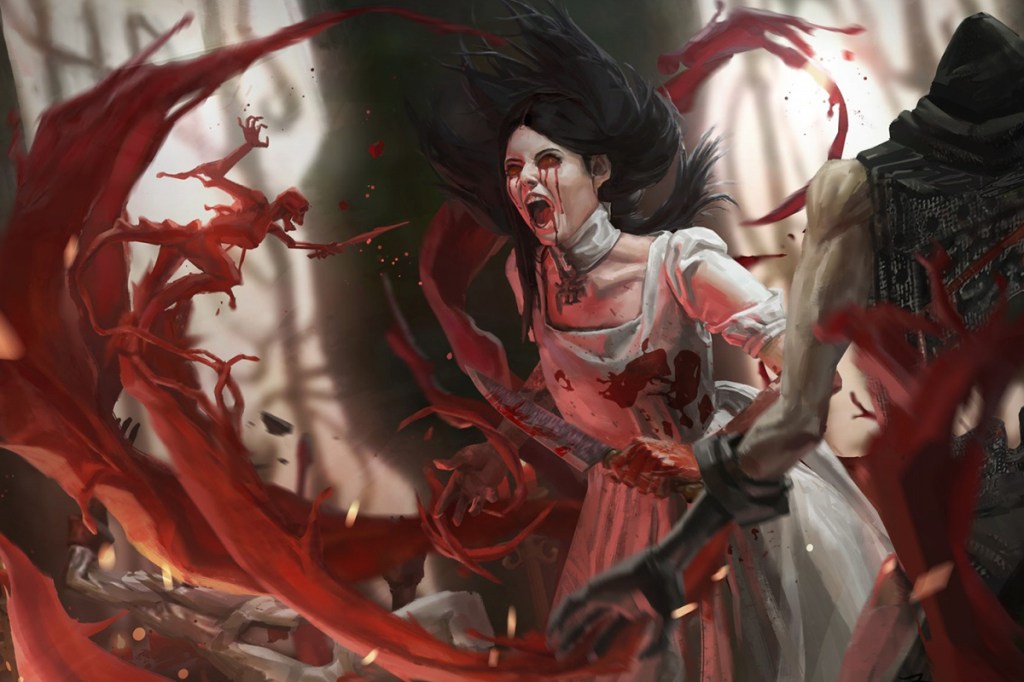
6th Level: Channel Divinity: Befuddling Curse
At 6th level, you can invoke intrusive thoughts that erode the psyches of others. Whenever a creature you can see fails an Intelligence, Wisdom, or Charisma saving throw against one of your cleric spells or features, you can use your Channel Divinity feature to curse that creature until the end of your next turn. The next time the creature makes a saving throw, it must subtract 1d4 from the save, and the curse ends.

6th Level: Channel Divinity: Shared Psychosis
Also at 6th level, you can use your Channel Divinity feature to inflict long-term madness on a creature within 60 feet of you. Roll twice on the Long-Term Madness table below and select one of the Effects.
If the target fails a Wisdom saving throw, both you and the creature are afflicted with the long-term madness you selected. It lasts 1d10 x 10 hours.
The long-term madness ends early for both of you if the madness is cured, one of you dies, or you use this feature again.
The long-term madness may be cured by a lesser restoration spell or more powerful restoration spell.
Long-Term Madness table
| d100 | Effect (lasts 1d10 × 10 hours) |
|---|---|
| 01–10 | The character feels compelled to repeat a specific activity over and over, such as washing hands, touching things, praying, or counting coins. |
| 11–20 | The character suffers vivid hallucinations and has disadvantage on attack rolls and Ability Checks. |
| 21–30 | The character suffers extreme paranoia and has disadvantage on Wisdom and Charisma checks. |
| 31–40 | The character regards something (usually the source of madness) with intense revulsion, as if affected by the antipathy Effect of the antipathy/sympathy spell. |
| 41–45 | The character experiences a powerful delusion. Choose a potion. The character imagines they are under its Effects. |
| 46–55 | The character becomes attached to a “lucky charm,” such as a person or object, and has disadvantage on Attack rolls, Ability Checks, and Saving Throws while more than 30 feet from it. |
| 56–65 | The character is Blinded (25%) or Deafened (75%). |
| 66–75 | The character experiences uncontrollable tremors or tics, and suffers disadvantage on Attack rolls, Ability Checks, and Saving Throws that involve Strength or Dexterity. |
| 76–85 | The character suffers from partial amnesia. The character knows who they are and retains racial Traits and class Features, but doesn’t recognize others or remember anything that happened before the madness took Effect. |
| 86–90 | Whenever the character takes damage, he or she must succeed on a DC 15 Wisdom saving throw or be affected as though he or she failed a saving throw against the confusion spell. The confusion Effect lasts for 1 minute. |
| 91–95 | The character loses the ability to speak. |
| 96–100 | The character falls Unconscious. No amount of jostling or damage can wake the character. |
8th Level: Perpetual Instability
From 8th level, your mind has become tougher through constant exposure to madness. You have resistance to psychic damage, and advantage on saving throws against being Charmed or Frightened.
8th Level: Potent Spellcasting
Also from 8th level, you can add your wisdom modifier to the damage you deal with any cleric cantrip.
17th Level: Lunatic Ward
At 17th level, when you or an ally within 5 feet of you make a Wisdom saving throw due to magic, you can try redirecting the attack back at the caster. You may use your reaction and your Channel Divinity to grant advantage to you or your ally’s saving throw. On a successful save, you escape and reflect the magic, damaging the enemy with 4d6 psychic damage and afflicting them with a random Instill Insanity madness Effect which lasts for one minute or until the creature takes damage, unless they are a construct or undead.
\page
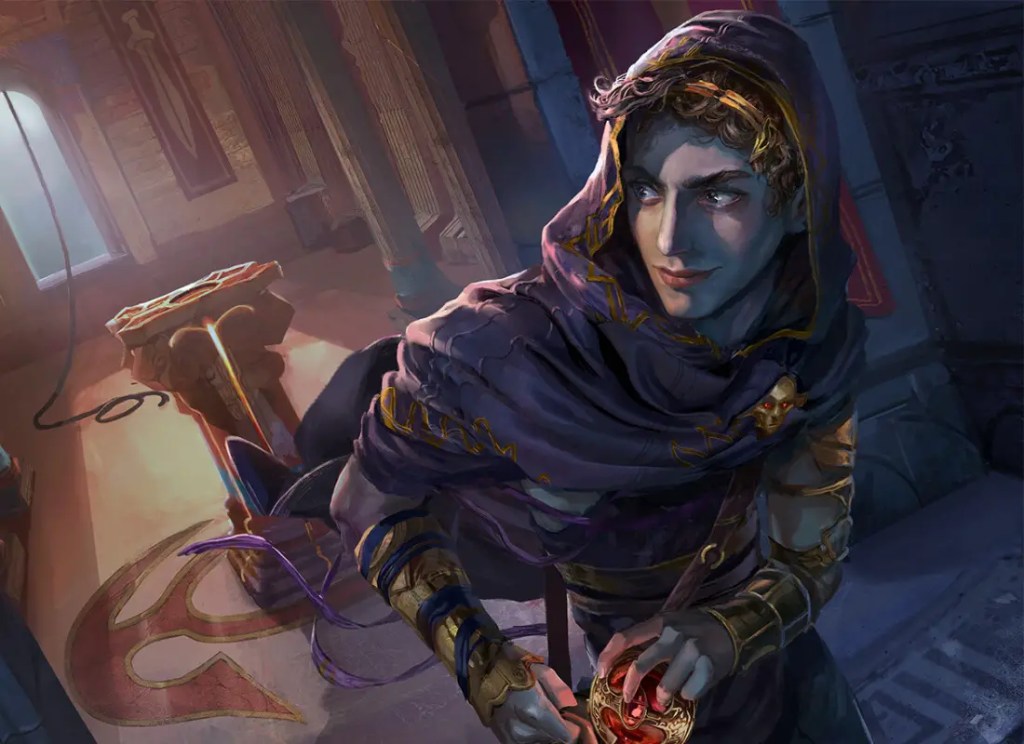
\page
Cleric: Mischief Domain
Gods of mischief — such as Dei’sh’mek, Loon of Zul, Ningala, Perun and Zan’ni — are mischief-makers and instigators who stand as a constant challenge to the accepted order among both gods and mortals.
They’re patrons of thieves, scoundrels, gamblers, rebels, and liberators. Their clerics are a disruptive force in the world, puncturing pride, mocking tyrants, stealing from the rich, freeing captives, and flouting hollow traditions. They prefer subterfuge, pranks, deception, and theft rather than direct confrontation.
Mischief Domain Spells
| Cleric Level | Spells |
|---|---|
| 1st | charm person, disguise self |
| 3rd | invisibility, detect thoughts |
| 5th | gaseous form, major image |
| 7th | greater invisibility, polymorph |
| 9th | modify memory, seeming |
1st Level: Acolyte of Mischief
When you choose this Domain at 1st level, you gain proficiency in Thieves Tools, and one of the following skills of your choice: Deception, Sleight of Hand, or Stealth.
1st Level: Mage Hand Legerdemain
Also starting at 1st level, you known the mage hand cantrip. This counts as a cleric cantrip for you, but does not count towards your number of cleric cantrips known. In addition, when you cast mage hand, you can make the spectral hand invisible, and you can perform the following additional tasks with it:
- You can stow one object the hand is holding in a container worn or carried by another creature.
- You can retrieve an object in a container worn or carried by another creature.
- You can use thieves’ tools to pick locks and disarm traps at range.
- You can perform one of these tasks without being noticed by a creature if you succeed on a Dexterity (Sleight of Hand) check contested by the creature’s Wisdom (Perception) check.
2nd Level: Mischief’s Blessing
Starting 2nd level you obtain the Sneak Attack feature. This is exactly like the rogue ability of the same name. The extra damage dealt increases by +1d6 every 4 levels (6th, 10th, 14th, 16th and 18th). If you get a sneak attack bonus from another source, the bonuses on damage stack.
\column
2nd Level: Channel Divinity: Invoke Duplicity
Starting at 2nd level, as an action, you create a perfect illusion of yourself that lasts for 1 minute, or until you lose your concentration (as if you were concentrating on a spell). The illusion appears in an unoccupied space that you can see within 30 feet of you. As a bonus action on your turn, you can move the illusion up to 30 feet to a space you can see, but it must remain within 120 feet of you. For the duration, you can cast spells as though you were in the illusion’s space, but you must use your own senses. Additionally, you and your allies have advantage on attack rolls made against enemy creatures within 5 feet of the illusion.
6th Level: Chaos Surge
Beginning at 6th level, once per long rest you can call upon the Chaos constant tide, you see the patterns of the world and with just one sentence create an effect that may harm, impose a condition, wound or even kill a creature (the target can be no more than 30 feet distant).
The target of a Chaos Surge loses any Dexterity bonus to AC, but only against this effect. The target of a Chaos Surge must roll a Charisma based save = 10 + Proficiency + Charisma Modifier. If the outcome of the Chaos Surge deals damage the current Sneak Attack bonus damage is added to the damage. The Chaos Surge could be used to perform the following actions: disarm, trip, stun, stagger, immobilize as well as an attack.
At 10th level, you can use this ability twice per long rest.
At 14th level, you can use this ability twice per short rest.
At 18th level, you can use this ability thrice per short rest.
8th Level: Divine Strike
At 8th level, you gain the ability to make your weapon strikes with divine energy. Once on each of your turns when you hit a creature with a weapon attack, you can cause the attack to deal an extra 1d8 psychic damage to the target. When you reach 14th level, the extra damage increases to 2d8.
8th Level: Potent Spellcasting
Also from 8th level, you add your Charisma modifier to your Save DC and your spell attacks.
17th Level: Improved Duplicity
At 17th level, you can create up to four duplicates of yourself, instead of one, when you use Invoke Duplicity. As a bonus action on your turn, you can move any number of them up to 30 feet, to a maximum range of 120 feet.
New Subclasses: CLERIC: Mischief Domain
\page
Cleric: Music Domain
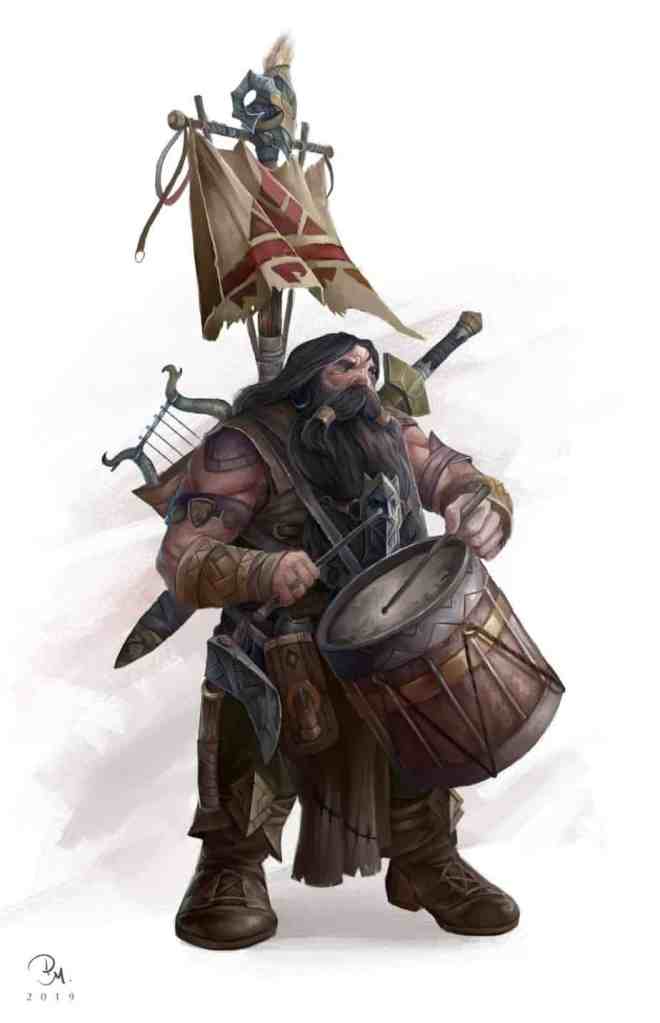
Gods of music bring many types of song to the world, whether joyful or sorrowful. They are often times patrons of bards, and often associated with dancing, art, poetry as well as their musical skills. Inara, Hedon, Maqami, Nǚshén and Oriç-Alkum are examples of deities whose adherents might follow the Music Domain.
The Northern Vast is a rich tapestry of cultural contributions to the oral traditions of Seminus, and many of the cities of the regions have legacies of diwans, collections of the songs and poems of a famous rawun (specialised story-tellers, poets, orators, historians, teachers and troubadours).
Music Domain Spells
| Cleric Level | Spells |
|---|---|
| 1st | charm person, comprehend languages |
| 3rd | calm emotions, suggestion |
| 5th | hypnotic pattern, tongues |
| 7th | charm monster, compulsion |
| 9th | legend lore, skill empowerment |
\column
1st Level: Bonus Proficiencies
When you choose this domain, at 1st level, you gain proficiency in Charisma checks (Performance and Persuasion), and one musical instrument of your choice.
1st Level: Godly Gospel
Also, at 1st level, as a bonus action you can play a tune that invokes imagery of your god, blessing one creature of your choice within 60 feet that can hear you. That creature gains one gospel die, a d4.
Once within the next 10 minutes, the creature can roll the die and add the number rolled to one saving throw it makes. The creature can wait until after it rolls the d20 before deciding to use the gospel die, but must decide before the GM says whether the roll succeeds or fails. Once the gospel die is rolled, it is lost. A creature can have only one gospel die at a time.
You can use this feature a number of times equal to your Wisdom modifier (a minimum of once). You regain any expended uses when you finish a long rest.
2nd Level: Channel Divinity: Respite’s Symphony
Beginning at 2nd level, over the course of a minute, you can play a short song using your Channel Divinity that allows your allies to feel rested.
Up to six creatures that heard your song (including yourself) can expend hit dice to restore hit points as though through a short rest, to a maximum amount of hit dice equal to your Wisdom modifier (a minimum of 1 hit die).
6th Level: Improved Godly Gospel
Starting at 6th level, your gospel die is now a d6, and you regain all expended gospel dice at the end of a short or long rest.
8th Level: Potent Spellcasting
At 8th level, you add your Wisdom modifier to the damage you deal with any cleric cantrip.
17th Level: Inspiring Concert
By 17th level, the melodies you play can turn the tide in any fight. As an action, you can begin playing a divine concert, which lasts for 1 minute, or until your lose your concentration (as if concentrating on a spell).
When you first begin the concert, and at the start of each of your turns for the concert’s duration, you can choose up to six creatures within 60 feet of yourself that can hear you. Each of those creatures gains a gospel die, which is a d8.
After using this feature, you must take a long rest before doing so, again.
New Subclasses: CLERIC: Music Domain
\page

\page
Cleric: Ocean Domain
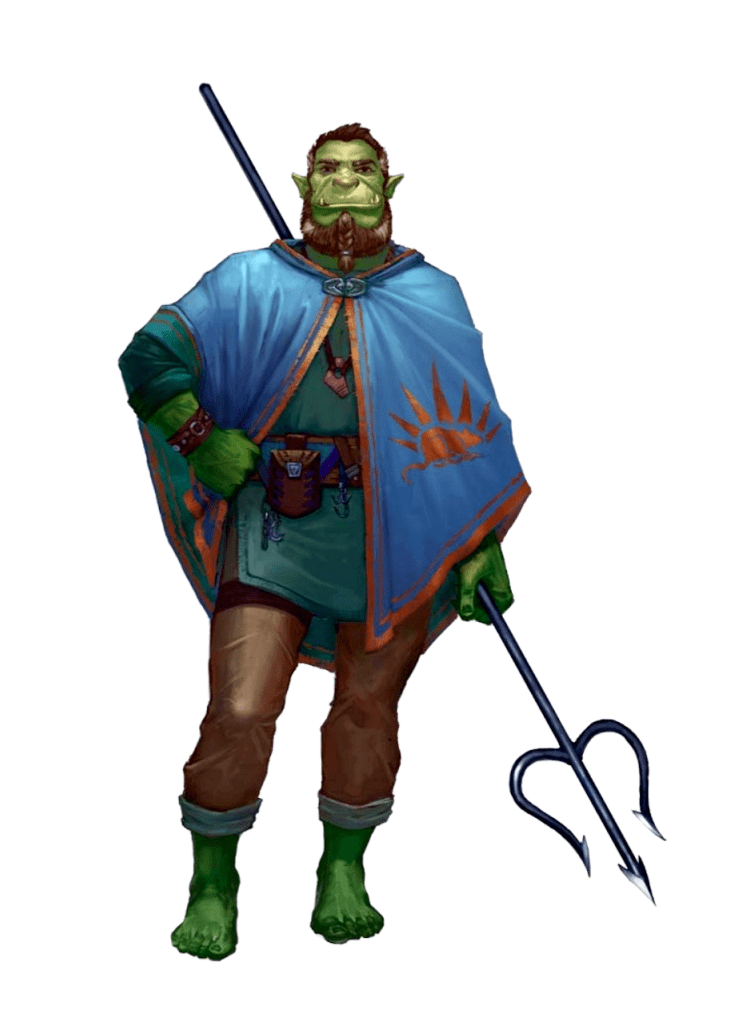
Clerics of the Ocean domain sway and pitch with the force and power of the tides themselves. They embody the rough, roiling temperament of the sea itself: striking with all the ferocity of a whirlpool, and healing with the tenderness of a gentle reef. Clerics of this domain are as slippery as a moray, and equally deadly.
This domain is mostly exclusive to the followers of Mah’ra, Sultana of the Sea, although there is evidence that perhaps Anlah, the forgotten deity of the Lin was also once an oceanic deity. That said, however, the Lin have long since ceased worshipping her and there are no more clerics who follow her creed in the Northern Vast, nor indeed in any other recorded places on Seminus.
Ocean Domain Spells
| Cleric Level | Spell |
|---|---|
| 1st | create or destroy water, fog cloud |
| 3rd | misty step, lesser restoration |
| 5th | water breathing, tidal wave XGtE |
| 7th | control water, freedom of movement |
| 9th | hold monster, cone of cold |
1st Level: Ebb and Flow
When you choose this domain at 1st level, your spells receive one alternating benefit, constantly swapping between High Tide and Low Tide as you cast spells. When you gain this feature, and whenever you finish a long rest, you return to High Tide.
- High Tide. When you cast a cleric spell of 1st level or higher that damages one or more creatures, you can choose one damaged creature that is Large or smaller. The target is pushed up to 10 feet away from you, and this feature is replaced with Low Tide.
- Low Tide. When you cast a cleric spell of 1st level or higher that restores hit points to one or more creatures, you can choose one such target that is Large or smaller. The target is pulled up to 10 feet towards you, and this feature is replaced with High Tide.
2nd Level: Riptide
Starting at 2nd level, you can use your channel divinity to turn the tide of combat. As an action, you can choose a creature within 90 feet of you. A gush of healing water descends onto the target, and then splashes outwards. The target regains 1d4 hit points for each level you have in this class. Additionally, each creature within 5 feet of the target must succeed on a Dexterity saving throw against your Spell Save DC, taking bludgeoning damage equal to the healing roll’s result on a failed save, or half as much on a success.
You can use your Ebb and Flow feature on this Channel Divinity, as if it were a spell of 1st level or higher.
6th Level: Guide of the Oceans
Beginning at 6th level, you ignore all difficult terrain caused by water, and you gain a swimming speed equal to your walking speed.
Additionally, you can talk to sea creatures. Beasts with an innate swimming speed can understand your speech, and you gain the ability to decipher the noises and motions of such beasts. Most beasts lack the intelligence to convey or understand sophisticated concepts, but a friendly beast could relay what it has seen or heard in the recent past.
8th Level: Potent Cantrip
Starting at 8th level, you add your Wisdom modifier to the damage you deal with any cleric cantrip.
17th Level: Grasp of the Depths
Beginning at 17th level, you use the crushing force of the waves to leave your foes gasping for air. Hostile creatures within 60 feet of you have disadvantage on Strength, Dexterity, and Constitution saving throws.
Additionally, you can manifest a 15 foot by 15 foot cube of water centred on one hostile creature within 60 feet of you. This creature (and any other creature caught in the cube) must immediately make a grapple check (contested against your Spell Save DC) or else be incapacitated and forced to hold their breath. At the end of each of their subsequent rounds, the creature may make an additional Strength (Athletics) or Dexterity (Acrobatics) check (at disadvantage) to break free of the crushing cube of water. If they fail, they remain incapacitated and may try again on the next round if they are still conscious. If they succeed they may immediately swim out of the cube.
You may use this ability three times per day.
New Subclasses: CLERIC: Ocean Domain
\page
\page
Cleric: Plague Domain

Diseases have been seen as a terrible force throughout all of history, able to destroy entire cultures and nations over the course of mere months. However, as everything this powerful, some people choose to worship it, in either an attempt to harness the power for themselves, or merely to please the beings that cause it to save their own lives.
Gods that reside over this domain may include gods of death (such as Khemiti), and gods of disease (such as Ruoh, The Festering Rat).
Plague Domain Spells
| Cleric Level | Spells |
|---|---|
| 1st | inflict wounds, ray of sickness |
| 3rd | lesser restoration, ray of enfeeblement |
| 5th | stinking cloud, vampiric touch |
| 7th | aura of purity, blight |
| 9th | contagion, mass cure wounds |
1st Level: Bonus Cantrip
When you choose this domain at 1st level, you learn the poison spray cantrip, which counts as a cleric cantrip for you, and does not count towards your number of cantrips known.
1st Level: Plague Doctor
Additionally, at 1st level, due to your constant dealings with plague and disease, your body has grown resistant to various toxins and poisons.
You gain resistance to poison damage, and have advantage on saving throws against disease and being poisoned.
2nd Level: Channel Divinity: Evoke Sickness
Starting at 2nd level, as an action you thrust your holy symbol forth and unleash a green mist in a 30-foot cone emanating from yourself, forcing creatures in the cone to make a Constitution saving throw.
On a failed saving throw, a creature takes poison damage equal to 1d8 + your cleric level, and is poisoned for 1 minute, or half damage and is not poisoned on a success. Creatures poisoned by this can repeat the saving throw at the end of each of their turns
6th Level: Piercing Pestilence
Beginning at 6th level, the poison you bring forth penetrates even the strongest defenses. Spells you cast and your Channel Divinity features ignore resistance to poison damage, and treat creatures that are immune to poison damage as only being resistant.
Additionally, creatures you target with spells or abilities are not immune to being diseased or poisoned. Instead, a creature that is immune to disease or poison makes a saving throw against your effect with advantage.
8th Level: Potent Spellcasting
Starting at 8th level, you add your Wisdom modifier to the damage you deal with any cleric cantrip.
17th Level: Deathly Pandemic
At 17th level, your diseases rot the very soul of those afflicted by them. When a creature starts its turn while being poisoned by your Evoke Sickness Channel Divinity, it takes 1d6 necrotic damage.
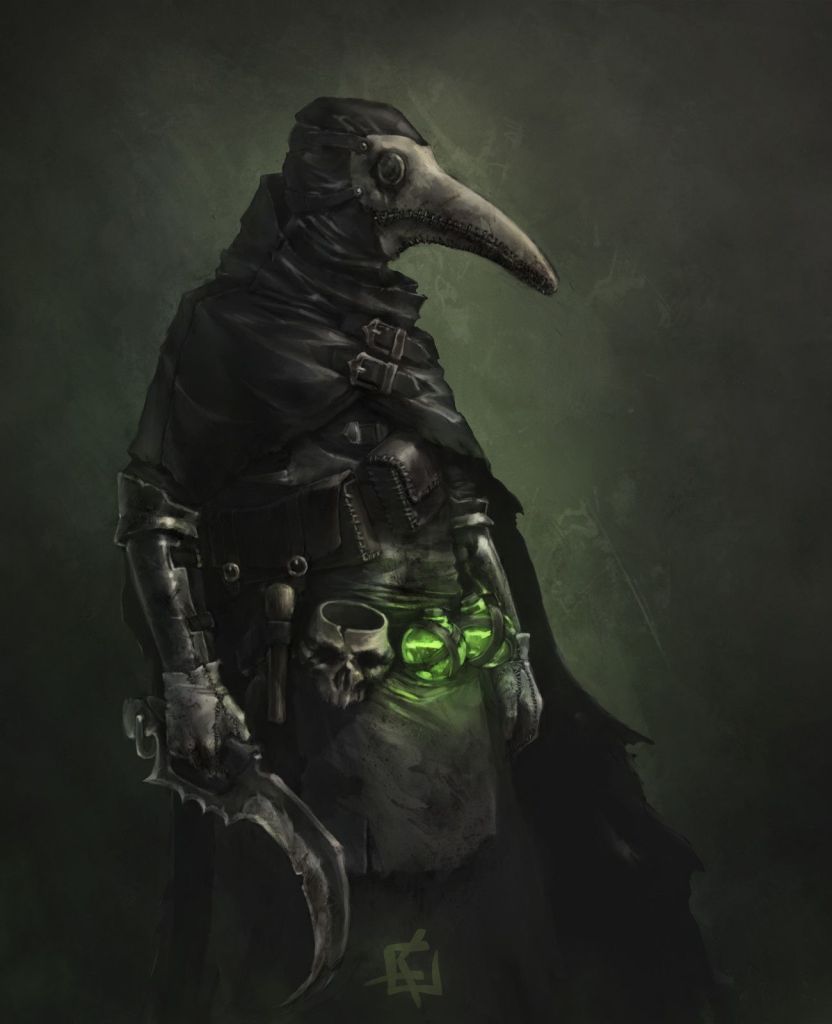
New Subclasses: CLERIC: Plague Domain
\page
Cleric: Protection Domain
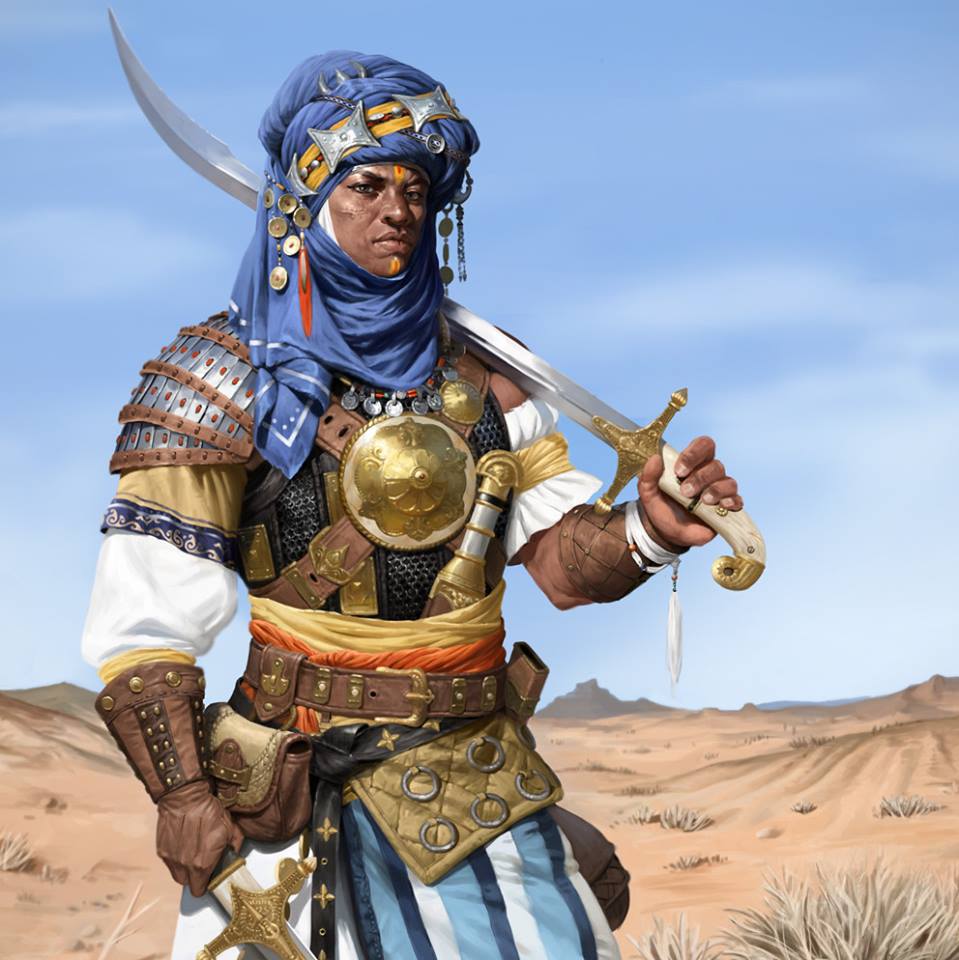
The protection domain is the purview of deities who charge their followers to shield the weak from the strong. Those who follow this domain help bolster communal defenses and seek out evils to defeat. These gods know that a strong shield and armor is a solid defense against evil. Deities who grant this domain include Al-Tanwir Jalib, Altan, Bijelobog, Dalarin, Finellen, Hafiz, Qaynun, Raz and Sürünen-Ejderha.
Protection Domain Spells
| Cleric Level | Spells |
|---|---|
| 1st | compelled duel, protection from evil and good |
| 3rd | aid, protection from poison |
| 5th | protection from energy, slow |
| 7th | guardian of faith, Otiluke’s resilient sphere |
| 9th | antilife shell, wall of force |
1st Level: Bonus Proficiency
When you choose this domain at 1st level, you gain proficiency with heavy armor.
1st Level: Shield of the Faithful
Also starting at 1st level, you gain the ability to hinder attacks intended for others. When a creature attacks a target other than you that is within 5 feet of you, you can use your reaction to impose disadvantage on the attack roll. To do so, you must be able to see both the attacker and the target. You interpose an arm, a shield, or some other part of yourself to try to throw the attack off target.
2nd Level: Channel Divinity: Radiant Defense
Starting at 2nd level, you can use your Channel Divinity to cloak your allies in radiant armor.
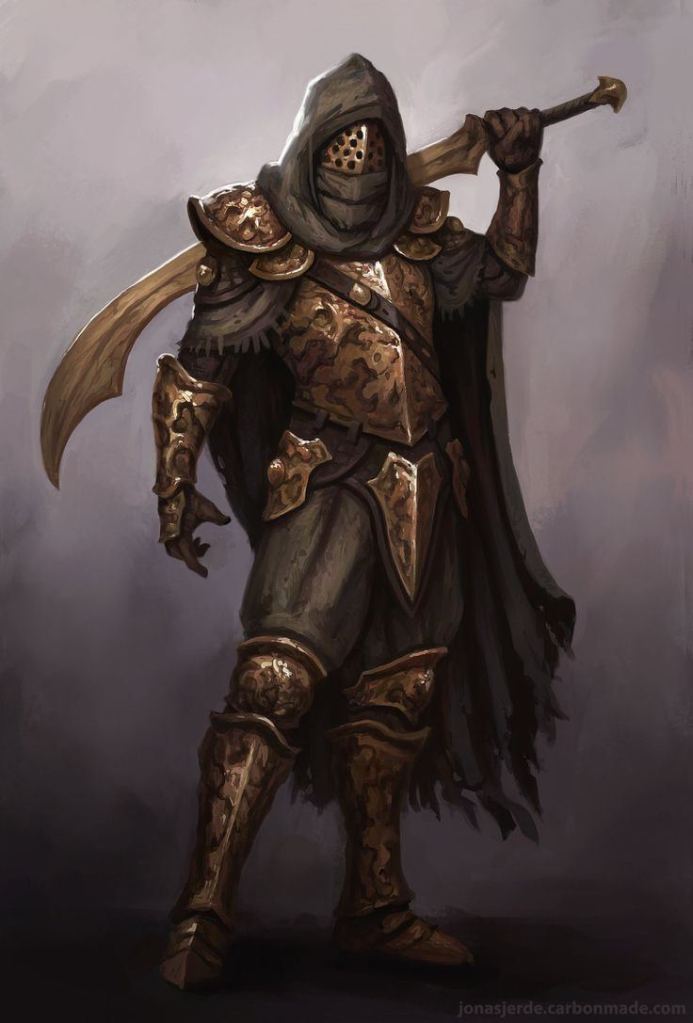
As an action, you channel blessed energy into an ally that you can see within 30 feet of you. The first time that ally is hit by an attack within the next minute, the attacker takes radiant damage equal to 2d10 + your cleric level.
6th Level: Blessed Healer
Beginning at 6th level, the healing spells you cast on others can heal you as well. When you cast a spell with a spell slot and it restores hit points to any creature other than you this turn, you regain hit points equal to 2 + the spell’s level.
8th Level: Divine Strike
At 8th level, you gain the ability to infuse your weapon strikes with divine energy. Once on each of your turns when you hit a creature with a weapon attack, you can cause the attack to deal an extra 1d8 radiant damage to the target. When you reach 14th level, the extra damage increases to 2d8.
17th Level: Indomitable Defense
At 17th level, you gain resistance to two damage types of your choice, choosing from bludgeoning, necrotic, piercing, radiant, and slashing. Whenever you finish a short or long rest, you can change the damage types you chose.
As an action, you can temporarily give up this resistance and transfer it to one creature you touch. The creature keeps the resistance until the end of your next short or long rest or until you transfer it back to yourself as a bonus action.
New Subclasses: CLERIC: Protection Domain
\page
Cleric: Shadow Domain
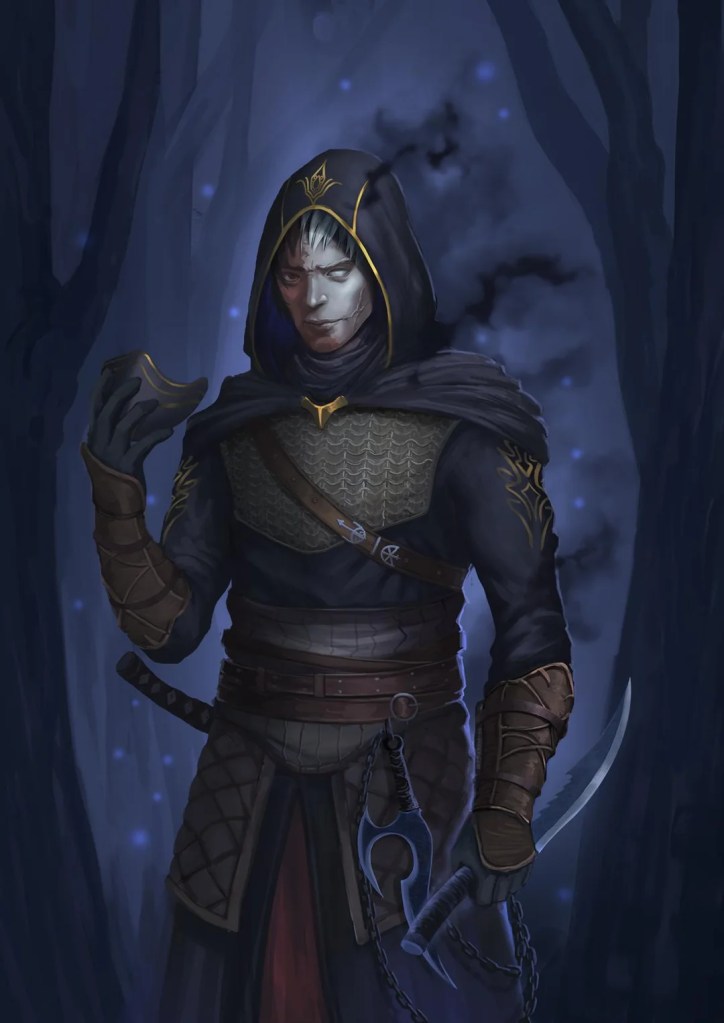
The shadow domain embraces the darkness that surrounds all things, manipulating that transitory edge between the light and the dark. Clerics of this domain see meaning in the imprints we make on the world around us, and they believe that it is from darkness we are born and into darkness that we return when we pass on from this world.
Most adherents of this domain follow cults that originated in Lemurija, the Shadow Fell, or else it is their deities that have a connection to that realm of unending darkness.
Deities that might have followers of this domain include Al-Zalam, Crnobog, Felaket, Mokosh and Ningala.
Shadow Domain Spells
| Cleric Level | Spells |
|---|---|
| 1st | bane, false life |
| 3rd | blindness/deafness, darkness |
| 5th | blink, fear |
| 7th | black tentacles, greater invisibility |
| 9th | cone of cold, dream |
1st Level: Cover of Night
When you choose this domain at 1st level, you gain proficiency in the Stealth skill and can see in non-magical darkness as if it were daylight. In addition, when you are in dim light or darkness, you can use a bonus action to Hide.
When you reach 6th level, you begin to be able to see into magical darkness as well as non-magical darkness.
1st Level: Lengthen Shadow
Also starting at 1st level, you can manipulate your own shadow to extend your reach. When you cast a cleric spell with a range of touch, your shadow can deliver the spell as if you had cast the spell. Your target must be within 15 feet of you, and you must be able to see the target. You can use this feature even if you are in an area where you cast no shadow, for a magical shadow extends from you in such situations.
When you reach 10th level in this class, your shadow can affect any target you can see within 30 feet of you.
2nd Level: Channel Divinity: Shadow Grasp
Starting at 2nd level, you can use your Channel Divinity to turn a creature’s shadow against them. As an action, choose one creature that you can see within 30 feet of you. That creature must make a Strength saving throw. If the creature fails the saving throw, it is restrained by its shadow until the end of your next turn. If the creature succeeds, it is grappled by its shadow until the end of your next turn.
You can use this feature even if the target is in an area where it casts no shadow.
6th Level: Fade to Black
At 6th level, you can conceal yourself in shadow. As a bonus action when you are in dim light or darkness, you can magically become invisible for 1 minute.
This effect ends early if you attack or cast a spell. You can use this feature a number of times equal to your proficiency bonus. You regain all expended uses when you finish a long rest.
8th Level: Potent Spellcasting
Starting at 8th level, you add your Wisdom modifier
to the damage you deal with any cleric cantrip.
17th Level: Army of Shadow
At 17th level, you can manipulate multiple shadows
simultaneously. When you use Shadow Grasp, you can affect a number of creatures equal to your
proficiency bonus.
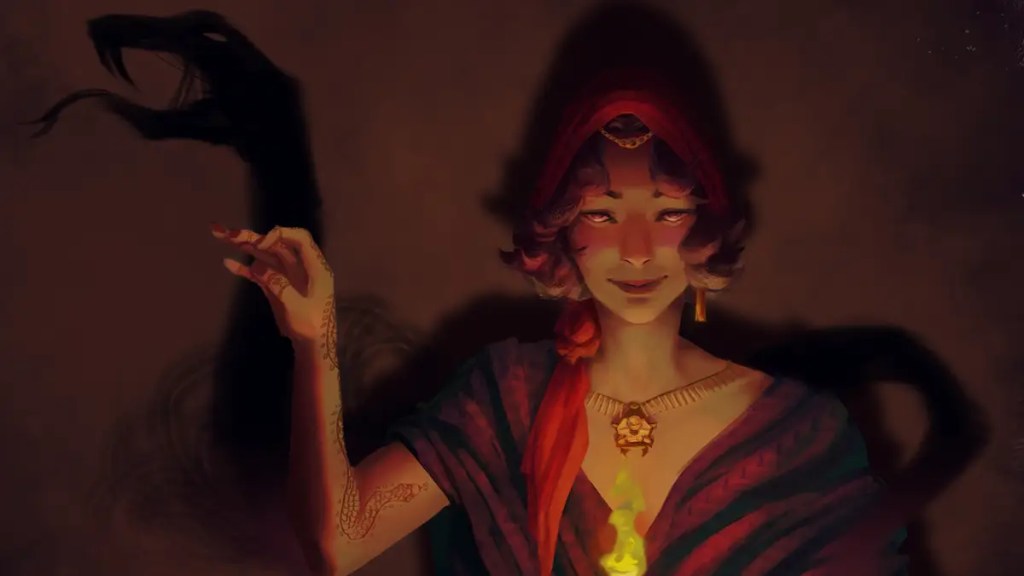
New Subclasses: CLERIC: Shadow Domain
\page
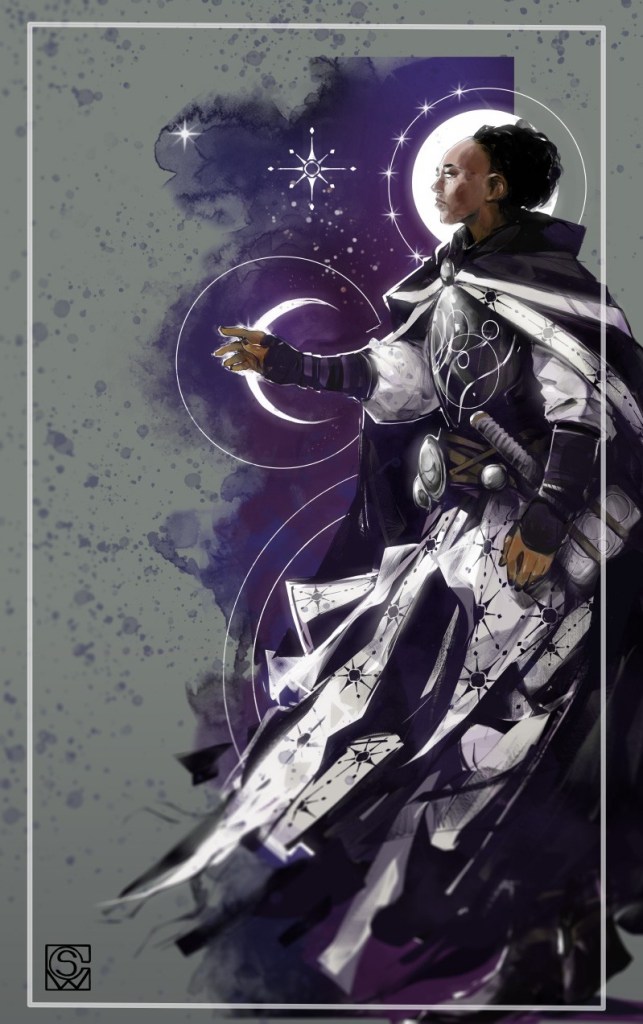
\page
Cleric: Star Domain

Clerics of the Star Domain are followers of the Stars. The Stars are a multitude of beings from other worlds and planes of existence, whose divinity is so distant that it appears merely as a tiny sparkling mote of brilliance in the night sky.
Some star clerics have discovered the identity of that distant deity who they have a deep-seated spiritual connection with, but, for the most part, the Stars are conceived as serving multitudinously under the one name, typically called The Silvered One, or the Wanderer-In-The Dark. This is also the title that Dalarin goes by and many clerics of that religious institution decorate their vestments in star motifs.
However, the Stars themselves, due to their multitudinous nature, do not technically have any avatar-like representations of themselves that other gods may have, such as Altan or Bijelobog. Rather, they are individually represented as the very stars themselves.
Star Domain Spells
| Cleric Level | Spells |
|---|---|
| 1st | detect good and evil, identify |
| 3rd | augury, moonbeam |
| 5th | clairvoyance, tongues |
| 7th | divination, locate creature |
| 9th | commune, scrying |
1st Level: Starlight
At 1st level, you are able to cast dancing lights as a cantrip that does not count towards you cleric cantrips. The lights are luminescent representations of the stars and constellations and shine with pure starlight. They shine with bright light in a 15 foot radius.
You also receive the ability to always sense the direction of the Southern Star, thus granting you knowledge of where exactly south is at any given time. You are able to sense this only when you are outside and under the heavens. While it doesn’t matter if it is day or night, too much cloud cover will hamper this ability, requiring you to make an Intelligence (Nature) check at disadvantage to locate the Southern Star in such circumstances.
1st Level: Day or Night
Also starting at 1st level, your deity bolsters your attacks, allowing you to do additional damage on your turn. When you hit with a melee weapon attack, you may use a bonus action to perform an additional attack using your Wisdom modifier plus proficiency bonus as the attack roll. On a hit, you deal 1d6 radiant or necrotic damage (your choice).
You may use this feature a number of times per day equal to your Wisdom modifier (minimum 1).
2nd Level: Channel Divinity: Stargaze
Starting on 2nd level, you are tied closer to your diety of the Stars and are blessed with Stargaze. When you Channel Divinity you are granted brief insight to the Astral plane. It gives you the ability to turn your eyes pure into two representations of the starry night heavens for 2 hours, granting you two abilities:
- You gain Darkvision up to 300 ft.
- You gain advantage on Investigation and Insight checks for the duration.
Being granted the vision of the Stars does not come without a price. For example, Stargaze might scare off ordinary people in bars and taverns. If you Stargaze in direct sunlight, you have disadvantage on any sight related skills.
Once per day, when you are Stargazing and the stars are out, you may cast augury without spending a spell slot. The omen you receive is within the next 24 hours instead of 30 minutes.
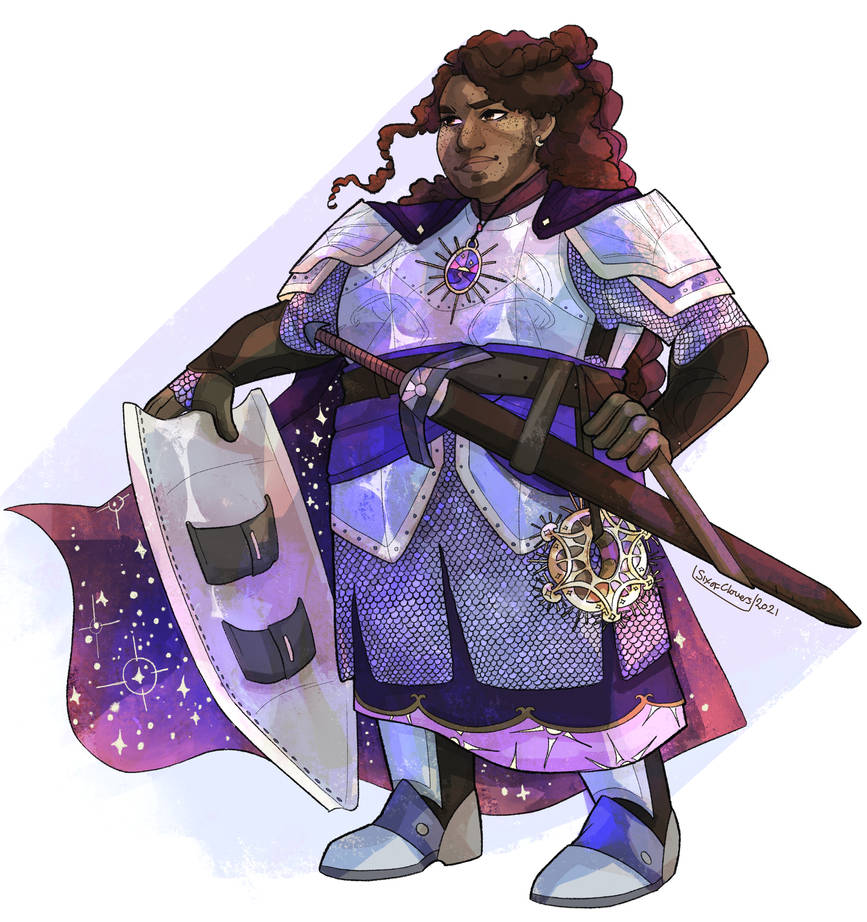
New Subclasses: CLERIC: Star Domain
\page

2nd Level: Channel Divinity: Aspect of the Constellations
You may use your Channel Divinity to attune yourself to one of the twelve major Aspects of the Constellations. This attunement lasts until the end of your next long rest or until you use this power again.
- Aspect of the Auroch. You grow a pair of bull’s horns. At the end of a Dash action, if you moved in line closer to a target, you may make a STR attack with proficiency against that target. If the attack hits, you knock the target prone. A successful hit with your Day or Night attack knocks the target prone.
- Aspect of the Awassi. You grow a pair of curved ram’s horns. You gain resistance against piercing, slashing or bludgeoning damage (your choice). Additionally, when you hit with Day or Night, you are able to push the target 10 feet away from you.
- Aspect of the Balancing Scales. You can neither gain advantage on attack rolls, nor can you be made to have disadvantage on attack rolls. On a hit with Day or Night, the target can neither gain advantage on attack rolls nor be made to have disadvantage on attack rolls. This effect lasts until the end of your next turn.
- Aspect of the Cherub. Your face takes on a youthful, cherubic appearance. You may heal a creature you can see for 1d6 healing points. You must be able to see the creature for this power to work. You may not use this power again until after a short or long rest. When Day or Night hits, you may heal a creature of your choosing that you can see and that can see and hear you for half of the amount of the damage you rolled (rounded up).
- Aspect of the Flower Prince. Your eyes glow with a dim white light. On a failed save against being poisoned, frightened or charmed, you may reroll the save. You may not use this ability again until after a long rest. When Day or Night hits, you grant advantage to the next saving throw (including death saves) to a creature of your choosing who you can see and who can see and hear you. This bonus lasts until the beginning of your next turn.
- Aspect of the Goat. You grow a goatee and gain a climb speed equal to your movement speed. On a successful hit with Day or Night, you receive all the benefits of having used the Dodge action. This effect lasts until the start of your next turn.
- Aspect of the Kesari. Your hair becomes a luxurious mane. You gain +2 Strength. On a successful Day or Night attack, the target must make a successful WIS save versus a DC of 8 + your CHA modifier + your proficiency bonus. On a failed save, the target is frightened until the end of your next turn.
- Aspect of the Koi. Portions of your skin take on a scaly quality. You gain a swim speed equal to your movement speed and can breathe underwater. When Day or Night hits, you have advantage on saving throws or ability checks against being restrained or grabbed until the end of your next turn.
- Aspect of the Lobster. Portions of your skin appear to be red and chitinous. Your movement speed increases by 5 feet. When you hit with Day or Night, you may Disengage as part of a move action, using half your speed to do so.
- Aspect of the Rider. You gain the find steed spell and can cast it without using a spell slot. The spell only lasts until the end of your next long rest or until you are no longer attuned to the steed. You may use Day or Night at a range of 30 feet against a creature you can see or use Day or Night as a bonus action after a successful attack with a ranged weapon.
- Aspect of the Scorpion. Portions of your skin appear black and chitinous. You gain a scorpion’s tail, complete with stinger. You are considered to have proficiency with your tail. With it you may make an unarmed attack as an action. It is considered a weapon attack for the purpose of using Day or Night. On a hit, you deal 1d4 poison damage and the target must make a CON save with a DC of 8 + your WIS mod + your profiency bonus or be poisoned. The target may then make a save against the poison at the start of each of its turns. A target must be able to be poisoned for this effect to succeed.
- Aspect of the Twins. Your shadow takes on a shimmering, otherworldly quality. Your shadow is considered a mirror image of yourself and works the same way as Unseen Servant. You have advantage with the Day or Night attack, and, on a hit, your mirror image deals damage equal to half the damage (rounded up) you rolled as psychic damage.
New Subclasses: CLERIC: Star Domain
\page
6th Level: Blessing of the Stars
Starting at 6th level, you may be blessed by the Stars and receive one of the 12 Aspects of the Constellations as a semi-permanent feature.
As a ritual once every full silver moon, you may pray to a certain Constellation and receive the perks of its corresponding Aspect.
Alternatively, you may roll a d12 and consult the table below:
Blessing of the Stars random prayer
| 1d12 | Aspect | 1d12 | Aspect |
|---|---|---|---|
| 1 | Aspect of the Auroch | 7 | Aspect of the Kesari |
| 2 | Aspect of the Awassi | 8 | Aspect of the Koi |
| 3 | Aspect of the Balancing Scales | 9 | Aspect of the Lobster |
| 4 | Aspect of the Cherub | 10 | Aspect of the Rider |
| 5 | Aspect of the Flower Prince | 11 | Aspect of the Scorpion |
| 6 | Aspect of the Goat | 12 | Aspect of the Twins |
You may only have one Blessing of the Stars active per month.
Regardless of whether you rolled or waited for the full silver moon to choose for yourself, on the following full silver moon your Blessing expires and you must either conduct the ritual or pray to a random star.
8th Level: Improved Day or Night
At 8th level, your Day or Night now does 2d6 radiant or necrotic damage (your choice) on a hit.
Also, you now regain all of your expended uses of Day or Night when you finish a short or long rest.
17th Level: Born Under a Bad Sign
Starting from 17th level, you may now attune yourself to two Blessings of the Stars per month, instead of just one.

New Subclasses: CLERIC: Star Domain
\page
Cleric: Strife Domain
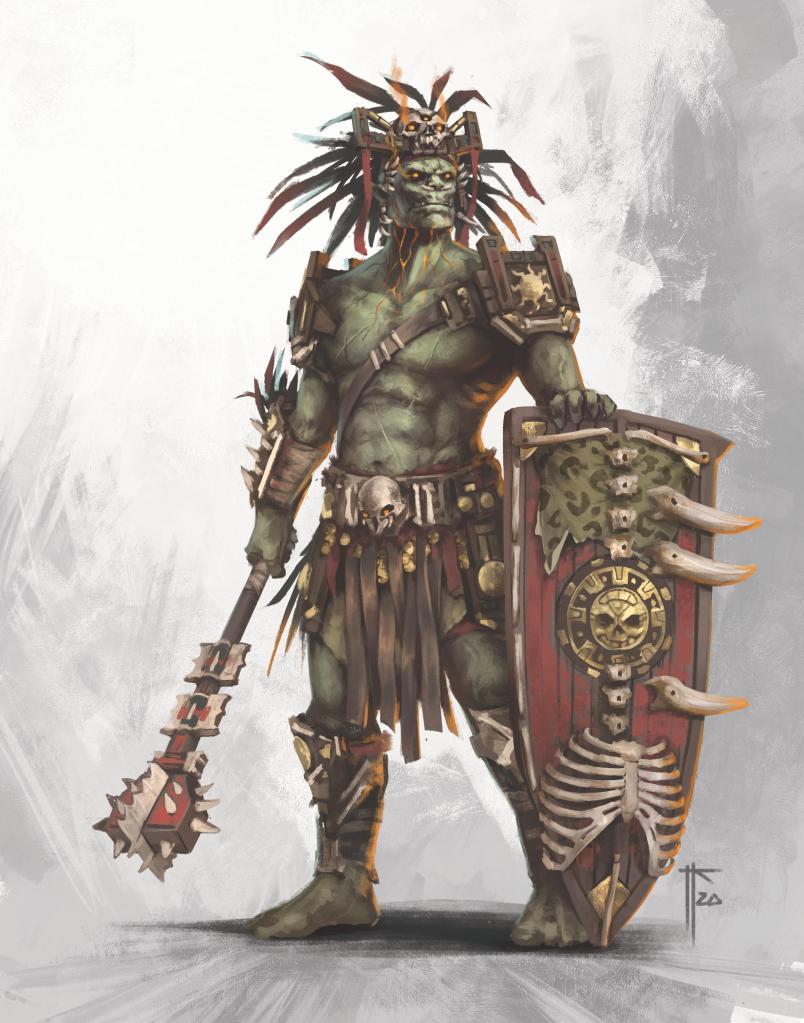
The Strife Domain contains all that which flourishes from kin disagreement: the ability to discover new points of view, but also to test your own. Only those beliefs that can withstand the test of peaceful disagreement can truly serve the people, instead of enslave them. However, the Strife Domain is also concerned with what happens when that balance is trodden upon, when a group or an individual attempts to impose their will forcefully (or cunningly) over others, restricting the modes of thought of others and placing them under their intellectual control.
Clerics who follow the Domain of Strife believe that the only way to reinstate balance in those cases is the natural way: to grab the scale and tip it back to its level position. By openly speaking about their beliefs and urging others to do so as well, without shying away from any conflict that might follow, they test the boundaries of what society deems acceptable. Ever-vigilant, they seek to prevent corruption from taking root by roughing up the ground, even if that means causing chaos. At least, this is often how they justify their actions.
Deities who might have adherents of this Domain include: Felaket, Nazar and Shaset.
Strife Domain Spells
| Cleric Level | Spells |
|---|---|
| 1st | bane, dissonant whispers |
| 3rd | incite discord ◊, suggestion |
| 5th | bestow curse, fear |
| 7th | confusion, phantasmal killer |
| 9th | contagion, dominate person |
1st Level: Blessings of the Gods of Strife
Starting at 1st level, you can touch an unsuspecting creature to give it disadvantage on Charisma (Persuasion) or Charisma (Deception) checks (your choice). This “blessing” lasts for 1 hour or until you use this feature again. When you choose the domain at 1st level, you also gain the vicious mockery cantrip. It counts as a cleric cantrip for you but does not count towards the total number of cantrips you can learn.
2nd Level: Channel Divinity: Agent of Strife
Starting at 2nd level, you can use your Channel Divinity to provoke mental anguish, negative emotions and discord. As an action, you silently invoke your deity’s power while touching your holy symbol. Choose any living creatures within 30 feet of you. They must make a Wisdom (Sanity) saving throw. On a failed save, friendly creatures become indifferent, and indifferent creatures become hostile. (See DMG p. 244 for social interaction guidelines). When you invoke this power, you can also choose to inflict psychic damage on the selected creatures equal to 1d12 + your cleric level, and half as much damage if they succeed their saving throw.
6th Level: Maddening Lies
At 6th level, when you successfully use the vicious mockery cantrip on a creature, you can use magically empowered lies and deceptions to redirect the creature’s anger to another creature of your choice within 30 feet of you. The target of your mockery enters a fit of rage that grants it advantage on melee weapon attack rolls against the designated creature and disadvantage on melee attack rolls against other creatures.
Furthermore, attack rolls against the target of your mockery have advantage. This reckless rage lasts for 1 minute. It ends early if the target of your mockery is knocked unconscious or if it spends an action to attempt (and succeed) another Wisdom saving throw against your spell DC.You can use this feature a number of times equal to your Wisdom modifier (a minimum of once). You regain all expended uses when you finish a long rest.
8th Level: Divine Strike
At 8th level, you gain the ability to infuse your weapon strikes with divine mental strife. Once on each of your turns when you hit a creature with a weapon attack, you can cause the attack to deal an extra 1d8 psychic damage to the target. When you reach 14th level, the extra damage increases to 2d8.
17th Level: Master of Conflicts
Starting at 17th level, you can use your action to produce an aura of discord in a 60-foot radius that lasts for 1 minute or until you dismiss it using another action. The aura moves with you, centered on you. Creatures caught in the radius have disadvantage on Charisma checks and Wisdom saving throws against any spell that affect the mind, and cannot maintain a friendly attitude.
New Subclasses: CLERIC: Strife Domain
\page
Cleric: Tech Domain
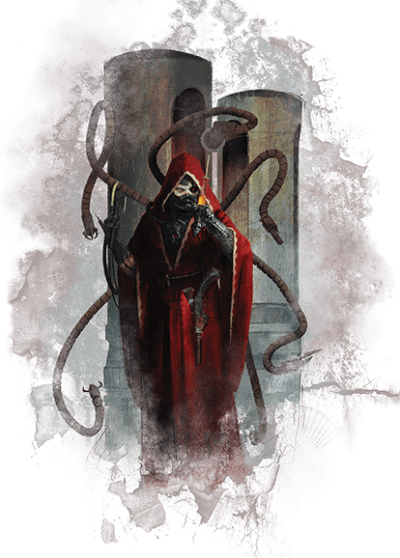
Despite what some may think, the Tech Domain is quite a bit different from those of the forge. Clerics of the Tech Domain believe that to truly create fantastic devices, they must be able to experiment in a wide range of work.
The more complex the tool, the more vast their craft, that is a true sign of worship to gods of the Tech Domain. To be a cleric of tech, it is not just about creating wonderful pieces, but standing for the betterment of the world and one’s self. Like the technology they create, there is always room for physical, mental, and spiritual improvement.
Most clerics of this domain follow Mühendis, The Prime Engineer, also known as Zilvergast.
Tech Domain Spells
| Cleric Level | Spells |
|---|---|
| 1st | feather fall, searing smite |
| 3rd | heat metal, kinetic jaunt |
| 5th | ashardalon’s stride, conjure barrage |
| 7th | fabricate, summon construct |
| 9th | animate objects, creation |
1st Level: Bonus Proficiencies
At 1st level, you gain proficiency with martial weapons and heavy armor.
1st Level: Tools of the Faith
At 1st level, you gain proficiency in firearms and tinker’s tools. You can use tinker’s tools as your spell casting focus.

1st Level: Crafter of Prayers
Starting at 1st level, tinkering with materials is your worship and can bring forth anything your mind conjures. You can now use tinker’s tools as your spellcasting focus.
Additionally, as an action, you can craft one nonmagical item of your choice in an unoccupied space within 5ft of you. The item must appear on a surface or in a liquid that can support it. The gp value of the item can’t be more than 20 times your Cleric level, and the item must be Medium or smaller. The item is perfectly polished, and a creature feels creatively inspired when holding it. The created item disappears after a number of hours equal to your proficiency bonus. For examples of items you can create, see the equipment chapter of the Player’s Handbook.
Once you create an item with this feature, you can’t do so again until you finish a long rest, unless you expend a use of your Channel Divinity to use this feature again.
The size of the item you can create with this feature increases by one size category when you reach 6th level (Large) and 17th level (Huge).
2nd Level: Channel Divinity: Tinker’s Tendrils
At 2nd level, you can use your Channel Divinity to create a marvel of magi-tech engineering.
\page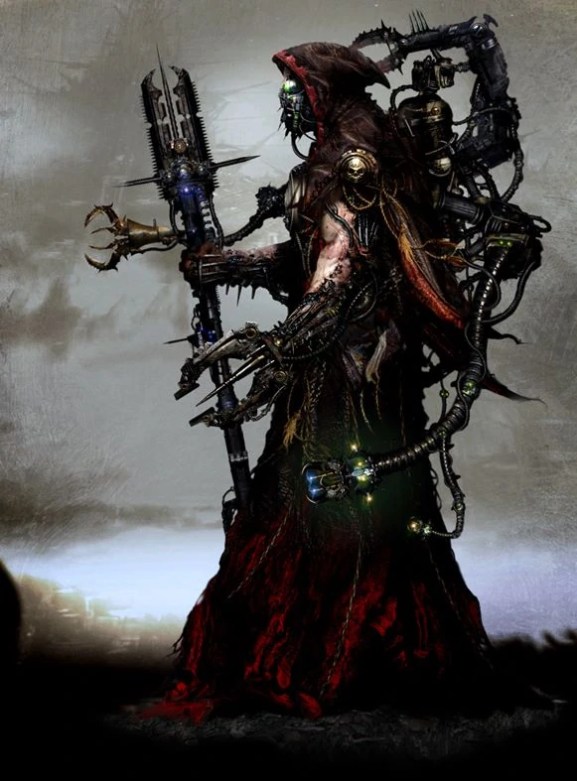
As an action, you channel your skills and magic to create a pair of magical, metal tendrils that extend from the back of your armor. You can only create these tendrils if you are wearing medium or heavy armor. They last for 1 hour or until you are knocked unconscious or die. While these tendrils are out, you gain a +1 bonus to AC.
When you create these tendrils, you can determine their design and type, choosing from the Tinker’s Tendrils table. On each of your turns, you can take a bonus action to activate the tendrils and cause the corresponding effects.
Tinker’s Tendrils table
| Tendrils | Activation |
|---|---|
| Plasma Forgers | The tendrils blast concentrated flames in an adjacent 15ft long, 10ft wide line that you designate. Each creature in that area must make a Dexterity saving throw against your spell save DC, taking 2d8 fire damage on a failed save or half as much damage on a successful one. The fire ignites any flammable objects in the area that aren’t being worn or carried. |
| Radiant Blasters | Make a ranged spell attack, originating from the tendrils, at one creature or object within 90 feet of it. On a hit, the target takes 1d8 + your spellcasting modifier radiant damage. |
| Hands of the Inventor | The tendrils manipulate an object, open an unlocked door or container, stow or retrieve an item from an open container, or pour out the contents of a container. The tendrils can’t attack, activate magic items, or carry more than 20 pounds. |
| Proof of Devotion | Starting at 6th level, you create the greatest of inventions as proof to your deity that you truly believe in their way of the craft. You learn 3 infusion from the artificer infusions list. You follow all of the same rules as the Artificer feature, and cannot take an infusion if it has a level prerequisite above 6th level. Whenever you gain a level in this class, you can replace one of the infusions you learned with a new one. |

8th Level: Divine Strike
At 8th level, you gain the ability to infuse your weapon strikes with the electrifying power of tech. Once on each of your turns when you hit a creature with a weapon attack, you can cause the attack to deal an extra 1d8 lightning damage to the target. When you reach 14th level, the extra damage increases to 2d8.
17th Level: Divine Creations
At 17th level, your craftsmanship is fit for the gods themselves. You now ignore all level prerequisites when choosing infusions and may replace any you know with others when reaching this level. Additionally, while your Tinker’s Tendrils are active, you have resistance to bludgeoning, piercing, and slashing damage.

New Subclasses: CLERIC: Tech Domain
\page
Cleric: Undeath Domain
Those clerics who follow the Undeath Domain blur the line between the living and the dead and revel in their mastery over both. Such priests have much in common with Death and Grave domain clergy, but are more specialised when it comes to the animation of corpses and the links between this world and Lemurija, also known as the Shadowfell. Many hunt down and consult arcane necromantic texts to refine their divinely gifted magical practices. They generally revere evil gods of the dead, such as Felaket, Kara Topraklu, Mokosh, Morana, Moroz or Zimora.
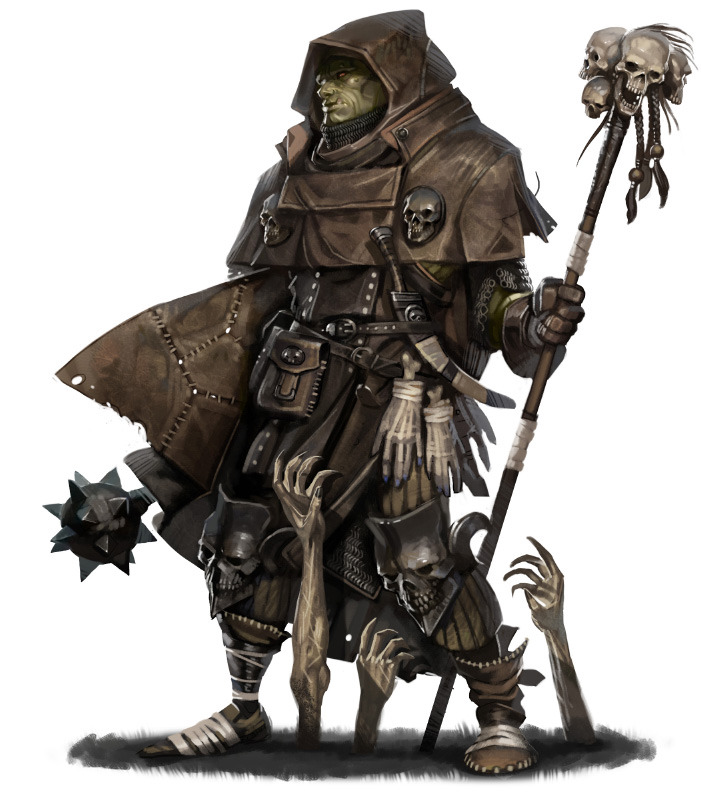
Undeath Domain Spells:
| Cleric Level | Spells |
|---|---|
| 1st | false life, ray of sickness |
| 3rd | blindness/deafness, ray of enfeeblement |
| 5th | animate dead, vampiric touch |
| 7th | blight, death ward |
| 9th | danse macabre, negative energy flood |
1st Level: Shepherd of the Haunted
At 1st level, the cleric learns one necromancy cantrip from from any spell list. In addition, the cleric’s healing spells now work on undead creatures, but only heal half the normal amount of Hit Points and can only target a single undead creature.
2nd Level: Channel Divinity: Control Undead
From 2nd level, as an action, the cleric targets one undead creature they can see within 30 feet of them. The target must make a Wisdom saving throw. If it succeeds, the target is immune to this effect for the next 24 hours.
On a failed save, the target must obey the cleric’s commands for the next 24 hours. You can have a number of undead controlled in this way equal to half your Wisdom modifier (rounded up).
If you use this feature and already control the maximum amount of undead, you lose control of one undead of your choice.
An undead whose Challenge Rating is greater than half the cleric’s level (rounded up) is immune to this effect.
6th Level: Forgotten Memories
At 6th level, whenever you create an undead using a necromancy spell, or take control of one with your Channel Divinity, it has additional benefits:
- Upon creation, and whenever you complete a long rest, the creature gains an amount of temporary hit points equal to your cleric level. Any remaining temporary hit points are replaced at the end of your next long rest.
- The creature retains any skill, weapon, armor, and tool proficiencies it once had in life, and uses your proficiency bonus.
6th Level: Undead Champion
Whenever you cast the animate dead spell, you can choose to make the casting time 1 hour and cause a single undead you animate with the spell to become an undead creature of a Challenge Rating equal to your Destroy Undead feature.
You can only have a single undead of this Challenge Rating under your control at any time with this feature. If you use this feature again, you lose any control over the previous higher Challenge Rating undead you animated with this feature. You can only use this feature once per day.
8th Level: Potent Spellcasting
Starting at 8th level, you can add your Wisdom modifier to the damage you deal with any cleric cantrip.
17th Level: A Soul For A Soul
Whenever you’re reduced to 0 hit points and are controlling a humanoid undead creature, as a reaction you can roll a DC 10 Charisma saving throw.
If you succeed, you instead drop to 1 hit point and your soul is transferred to a humanoid undead that you are controlling. All your statistics remain the same, but your body is now the body of that undead and you lose control of that undead creature.
Each time you use this feature after the first, the DC increases by 5, and you must use a new undead under your control. When you finish a short or long rest, the DC resets to 10.

New Subclasses: CLERIC: Undeath Domain
\page

\page
Cleric: Vengeance Domain
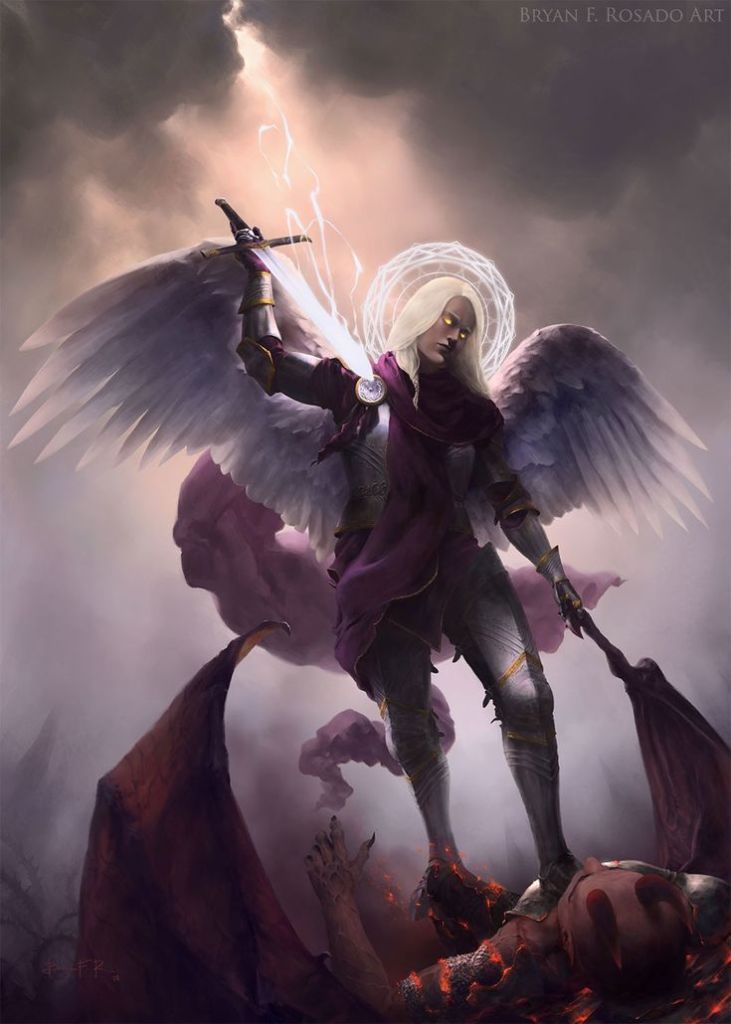
There will always be those who have been wronged, robbed, or wounded. So much is lost to greed, treachery, and murder. In a corrupt world, sworn alliances crumble and trust shatters. Some can indulge in the complacency of forgiveness and compassion.
For others, this is mere cowardice, a refusal to stand against the tyranny of injustice. When confronted with pain and devastation, the weak settle for acceptance. The strong choose vengeance.
Deities whose adherents have been known to follow this domain include Arana, Khurun-Dar, Külrengi, Kyz, Ningala the Red Agha and Savaş. While there are clerics of good deities who have individually followed this domain, such practices are not typically widespread and as such this domain is often perceived as being the domain of evil deities.
Vengeance Domain Spells
| Cleric Level | Spells |
|---|---|
| 1st | compelled duel, hellish rebuke |
| 3rd | see invisibility, zone of truth |
| 5th | bestow curse, counterspell |
| 7th | phantasmal killer, staggering smite |
| 9th | hold monster, immolation |
1st Level: Bonus Proficiency
Starting at level 1st level, you gain proficiency with martial weapons and the Intimidation skill.
1st Level: Divine Retribution
Also at 1st level, you can psychically rebuke attackers. When a creature within 5 feet of you that you can see hits you with an attack, you can use your reaction to force the creature to make an Intelligence saving throw. The creature takes 2d8 psychic damage on a failed save, and half as much damage on a successful one.
You can use this feature a number of times equal to your Wisdom modifier (a minimum of once). You regain all expended uses when you finish a long rest.
2nd Level: Channel Divinity: Marked for Vengeance
At 2nd level, you learn how to mark a creature as the target of your vengeance. With a bonus action, you place a magical mark on a creature within 30 feet of you that you can see. While marked, the creature takes an additional 1d8 psychic damage from your attacks, spells and Divine Retribution feature. The mark lasts until you dismiss it (requiring no action) or until the creature dies. Only one creature can be marked at a time — if you recast it, the current mark disappears.
You can use this feature a number of times equal to your Wisdom modifier (a minimum of once). You regain all expended uses when you finish a long rest.
6th Level: Nowhere to Hide
At 6th level, you learn how to locate the target of your vengeance. After spending 10 minutes in prayer, you learn the location of a creature that is marked with your Marked for Vengeance ability. When the targets location is revealed, you are aware of the general direction and distance to the marked target. When you are within 120 feet of the target, you know its exact location.
8th Level: Swift Retribution
At 8th level, when you or an ally that you can see within 30 feet of you, is hit by an attack from a creature you have marked with your Marked for Vengeance ability, you can strike them down with the wrath of your deity. When the creature hits you or your ally, you can use your reaction to deal 1d8 psychic damage to the target. At 14th level, this damage increases to 2d8.
17th Level: Vengeful Divinity
Starting at 17th level, you are a true bane to your marks. Once per long rest, while a creature is marked, you can become an Angel of Vengeance. While transformed, you gain spectral wings (any armor or clothing you’re wearing is unaffected), which grant you a flying speed of 60 feet. While you have your wings deployed and are not in the air, you can use your wings as a shield if you aren’t wielding one already. You can add half of your Wisdom modifier to your AC (rounded down, with a minimum of +1).
Additionally, while in this form, if a creature you’ve marked deals damage to you, you can force them to have disadvantage on their next saving throw against a spell you cast that deals damage as a bonus action. This form lasts for 1 hour, and during this time you can freely deploy or hide your wings, requiring no action.
New Subclasses: CLERIC: Vengeance Domain
\page
Cleric: Virtue Domain

Like the gods they venerate, clerics who follow the virtue domain encourage acts and behaviors often considered law-abiding, good, and socially desirable.
Deities that have followers who champion this Domain include Al-Tanwir Jalib, Altan, Bijelobog, Eanna, Eur, Hafiz, Halabat, Lasu and Nǚshén.
Followers of the deities of virtue can easily be found in civil services and charity campaigns.
A widespread belief among the devotees is that one’s faith should be represented with one’s actions, and as such, they promote altruism, compassion, honesty, diligence, and self-sacrifice.
Virtue Domain Spells
| Cleric Level | Spells |
|:-:|:-:|
| 1st | bless, sanctuary |
| 3rd | lesser restoration, zone of truth |
| 5th | aura of vitality, protection from energy |
| 7th | aura of purity, death ward |
| 9th | greater restoration, raise dead |
1st Level: Bonus Cantrip
When you choose this domain at 1st level, you gain the guidance cantrip, if you do not already know it.
1st Level: Helping Hands
Also starting at 1st level, when you use an action to the Help action, you can choose one of the following options for the Help action:
- You conjure a divine protection for a friendly creature within 5 feet of you. The creature gains advantage on the next saving throw it makes before the start of its next turn.
- You designate a divine guidance against a hostile creature you can see within 30 feet of you. The next time a creature other than yourself makes an attack against the creature before the start of your next turn, it gains advantage on the attack roll.
You can use this feature a number of times equal to your Wisdom modifier (minimum of once). You gain all expended uses when you finish a long rest.
2nd Level: Channel Divinity: Crown of Virtue
At 2nd level, you can use your Channel Divinity as a bonus action to bestow your deity’s divine energy upon a friendly creature you can see within 30 feet of you. A spectral crown appears on the creature’s head, and three spectral ball of light orbits around its body.
The bestowed creature gains three d6s. When the creature makes an ability check, attack roll, or saving throw, it can expend and roll a d6 and add the number to the d20 roll. The creature can roll the d6 before or after rolling the d20, it must be done before the DM says whether the roll succeeds or fails. The creature loses any remaining d6s when this feature ends.
This feature lasts for 1 minute or until your concentration is broken (as if concentrating on a spell). This feature ends early when the creature expends both d6s it gained from this feature.
6th Level: Shield of Virtue
Beginning at 6th level, when the creature bestowed with your Crown of Virtue is targeted by an attack, it can expend a d6 granted with your Crown of Virtue and add the number to its Armour Class against that attack. The creature can use this feature before or after the attacker makes the attack roll, but before the DM determines whether the attack hits or misses.
Additionally, while you are concentrating on a cleric spell or your Crown of Virtue, you gain a +1 bonus to Armor Class.
8th Level: Virtuous Might
When you reach 8th level, once on each of its turn when the creature bestowed with your Crown of Virtue hits a creature with a weapon attack, it can deal an extra 1d6 damage of the same type dealt by the weapon to the target.
When you reach 14th level, the extra damage increases to 2d6.
Additionally, while you are concentrating on a cleric spell or your Crown of Virtue, you add your Wisdom modifier to the damage you deal with a weapon attack or a cleric cantrip.
17th Level: Helm of Virtue
By 17th level, the creature bestowed with your Crown of Virtue gains resistance against bludgeoning, piercing, and slashing damage from nonmagical weapons.
Additionally, while you are concentrating on a cleric spell or your Crown of Virtue, you gain a +1 bonus to all ability checks, attack rolls, and saving throws.
New Subclasses: CLERIC: Virtue Domain
\page
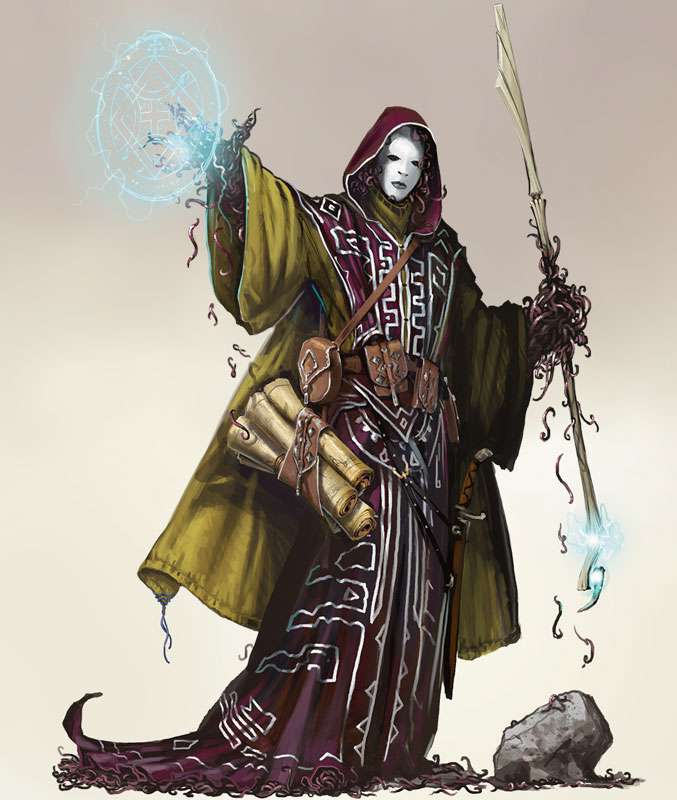
\page
Cleric: Vermin Domain
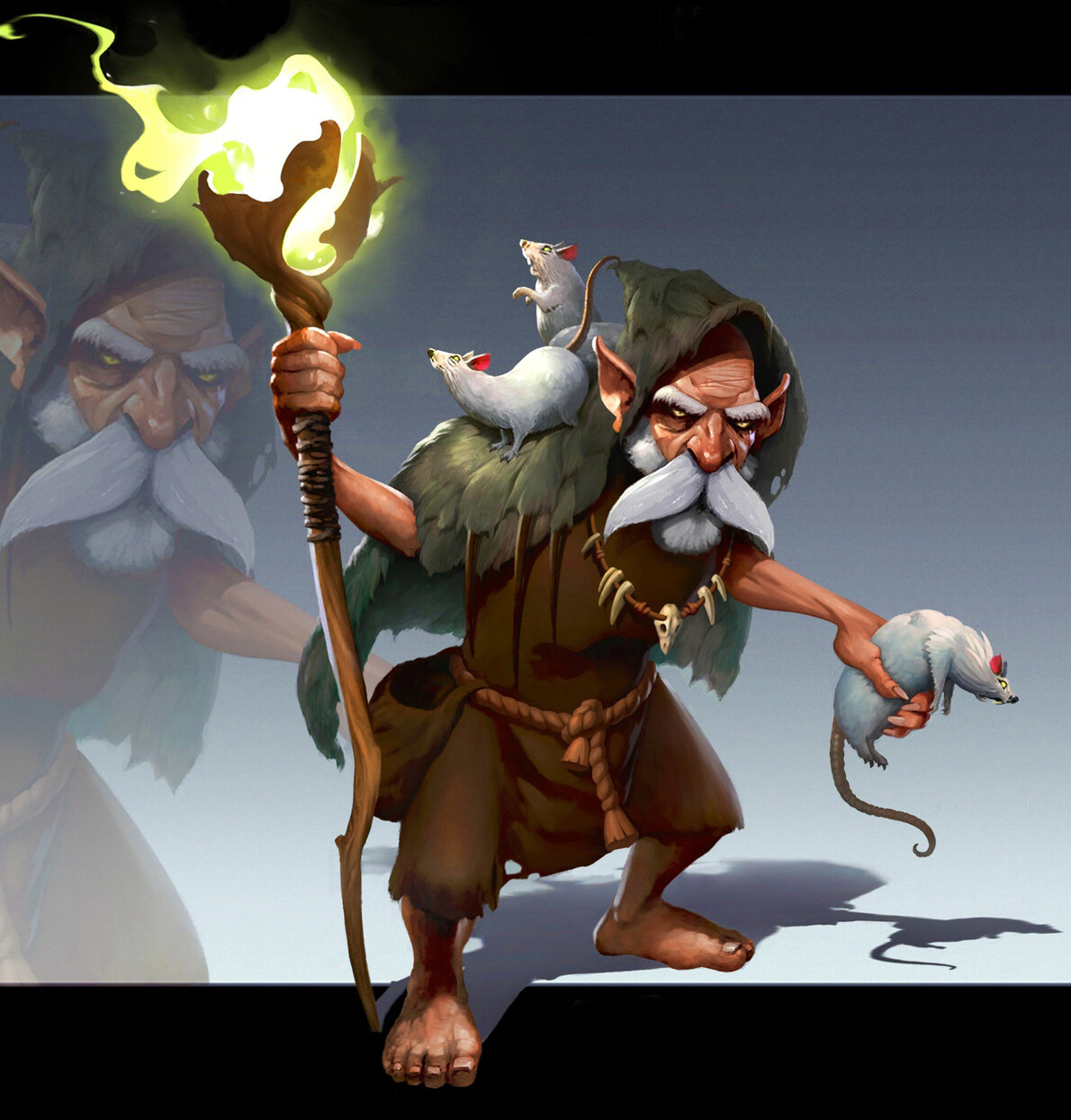
You exemplify the cunning, stealth, and invasiveness
of vermin (rodents, scorpions, spiders, ants, and
other insects). As your dedication to this domain
grows in strength, you realize a simple truth: vermin are everywhere, and you are legion. While this domain is almost exclusively followed by those who worship Ruoh, the Festering Rat, it is also followed by worshipers of Kara Dünya’nın, the Obsidian Scorpion, and also Arana, the Mending Queen.
Vermin Domain Spells
| Cleric Level | Spells |
|---|---|
| 1st | detect poison and disease, speak with animals (vermin only) |
| 3rd | spider climb, web |
| 5th | conjure animals (vermin only), fear |
| 7th | dominate beast (vermin only), giant insect |
| 9th | contagion, insect plague |
1st Level: The Unseen
When you choose this domain at 1st level, you gain
proficiency with shortswords and hand crossbows.
You also gain proficiency in Stealth and Survival. You can communicate simple ideas telepathically with
vermin, such as mice, spiders, and ants, within 100
feet of you. A vermin’s responses, if any, are limited by its intelligence and typically convey the creature’s current or most recent state, such as “hungry” or “in danger.”
2nd Level: Channel Divinity: Swarm Step
Starting at 2nd level, you can use your Channel
Divinity to evade attackers. As a bonus action, or
as reaction when you are attacked, you transform
into a swarm of vermin and move up to 30 feet
to an unoccupied space that you can see. This
movement doesn’t provoke opportunity attacks.
When you arrive at your destination, you revert
to your normal form.
6th Level: Legion of Bites
At 6th level, you can send hundreds of spectral
vermin to assail an enemy and aid your allies. As
an action, choose a creature you can see within
30 feet of you. That creature must succeed on a
Constitution saving throw against your spell
save DC or be covered in spectral vermin for 1
minute. Each time one of your allies hits the
target with a weapon attack, the target takes an
extra 1d4 poison damage. A creature that is immune
to disease is immune to this feature.
You can use this feature a number of times equal
to your Wisdom modifier (minimum of once). You
regain all expended uses when you finish a long rest.
8th Level: Divine Strike
At 8th level, you gain the ability to infuse your
weapon strikes with divine energy. Once on each of
your turns when you hit a creature with a weapon
attack, you can cause the attack to deal an extra 1d8 poison damage to the target. When you reach 14th
level, the extra damage increases to 2d8.
17th Level: Verminform Blessing
At 17th level, you become a natural lycanthrope.
You use the statistics of a wererat, though your form can take on insectoid aspects, such as mandibles, compound eyes, or antennae, instead of rat aspects; whichever aspects are most appropriate for your deity. Your alignment doesn’t change as a result of this lycanthropy, and you can’t spread the disease of lycanthropy.
New Subclasses: CLERIC: Vermin Domain
\page

\page
Cleric: Water Domain
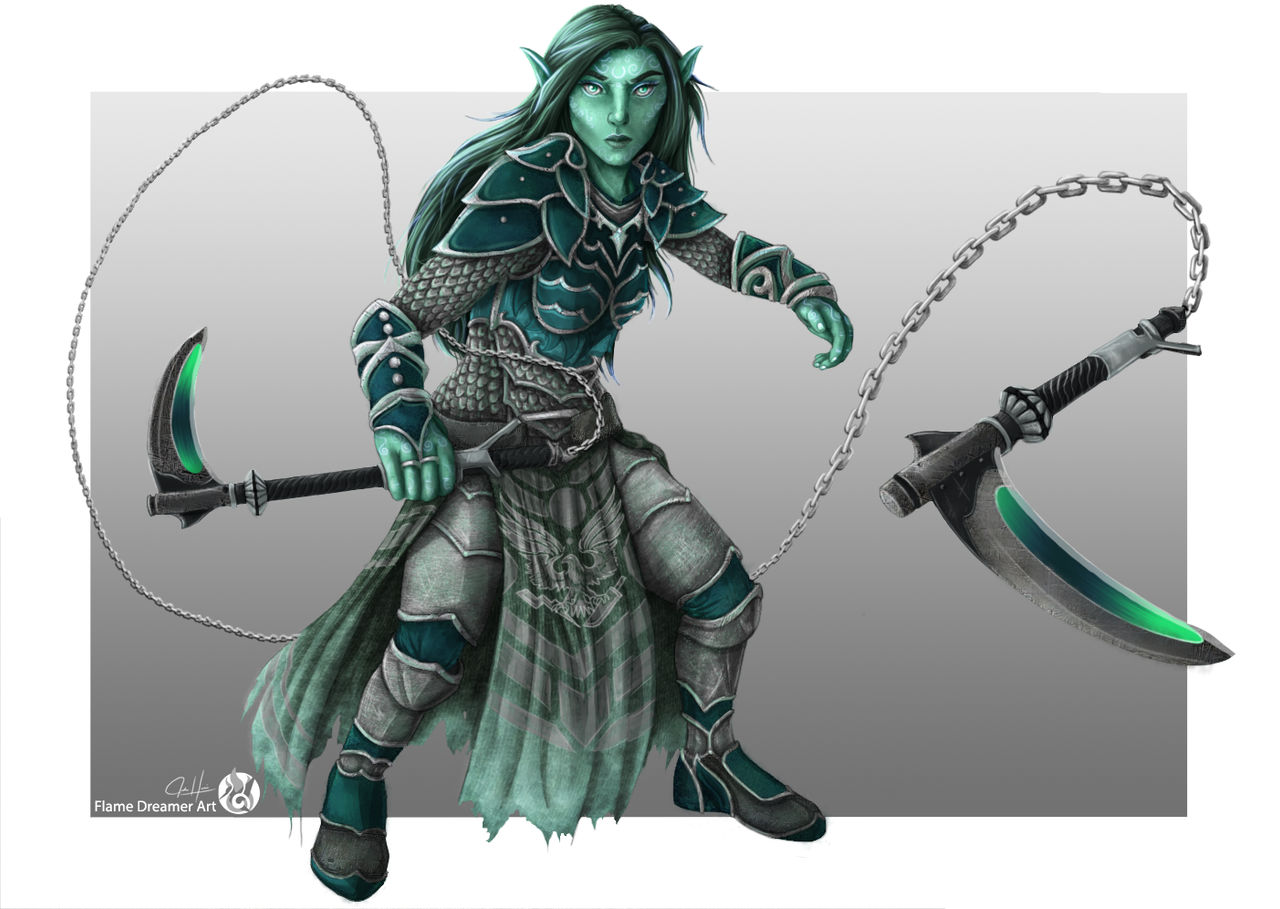
Gods of water symbolizes all bodies of natural water, up to and including streams, river, pond, and ocean. In the Northern Vast, Ma’har, the Sultana of the Sea is the main deity that represents the domain of water.
Worship of Ma’har is naturally found along coasts and shores, although she is also worshipped on farmsteads and oases. A more archaic form of her worship involved a devotee fully submerged in an open body of water for the entire course of ritual, but it has been simplified to merely dipping one’s face, hands and feet into water prior to commencing prayer.
Water Domain Spells
| Cleric Level | Spells |
|:-:|:-:|
| 1st | create or destroy water, fog cloud |
| 3rd | misty step, lesser restoration |
| 5th | tidal wave, wall of water |
| 7th | control water, watery sphere |
| 9th | conjure elemental (water only), maelstrom (water only) |
1st Level: Aquatic Affinity
Also starting at 1st level, you can hold your breath for a number of hours equal to 1 + your Constitution modifier, to a minimum of 30 minutes. Additionally, while you are not wearing heavy armor, you gain swimming speed equal to your walking speed.
1st Level: Bonus Cantrip
At 1st level you learn either the shape water or ray of frost cantrips. These are considered Cleric cantrips for you. If you already know both of those, you may learn another from the Cleric spell list.
2nd Level: Channel Divinity: Watery Spirit
Starting at 2nd level, you can use your Channel Divinity to protect an ally with a spirit of the ocean.
As an action, you present your Holy Symbol and touch an ally, granting him your god’s blessing.
A small watery spirit in the shape of an aquatic creature begins to hover over their shoulder, and for the next minute they are healed for an amount equal to half your Cleric level rounded down at the start of each of their turns, minimum of 1.
In addition, they are healed for the same amount whenever you cast a spell of first level or higher. Until this effect ends, you can use a bonus action to switch the spirit to another ally.
6th Level: Rejuvenating Waters
Starting at 6th level, as an action you may create a cylinder of magical water with a radius of 10 feet and a height of 5 feet.
The water is rough terrain for hostile creatures that do not have a swim speed, but allies may pass through it freely. When an ally begins their turn inside the pool, they may use their reaction to remove one poison, disease, blindness, deafness, or paralysis effect from them or to expend a hit die and heal themselves for the maximum amount.
This healing can only affect each ally once per usage of Rejuvenating Waters. This pool lasts for up to one minute. After creating this pool, you cannot create another until you have completed a long rest.
8th Level: Aquatic Blessings
When you reach 8th level, you are always under the effect of the water breathing spell.
Additionally, you add your Wisdom modifier to the damage you deal with any cleric cantrip.
17th Level: Mastery of the Sea
Starting at 17th level, you gain resistance to fire and cold damage and your swim speed increases to 60. Additionally, when you use Watery Spirit on an ally you choose to give them resistance to either fire or cold damage for the duration, and they also can breathe underwater and have a swim speed of 30.
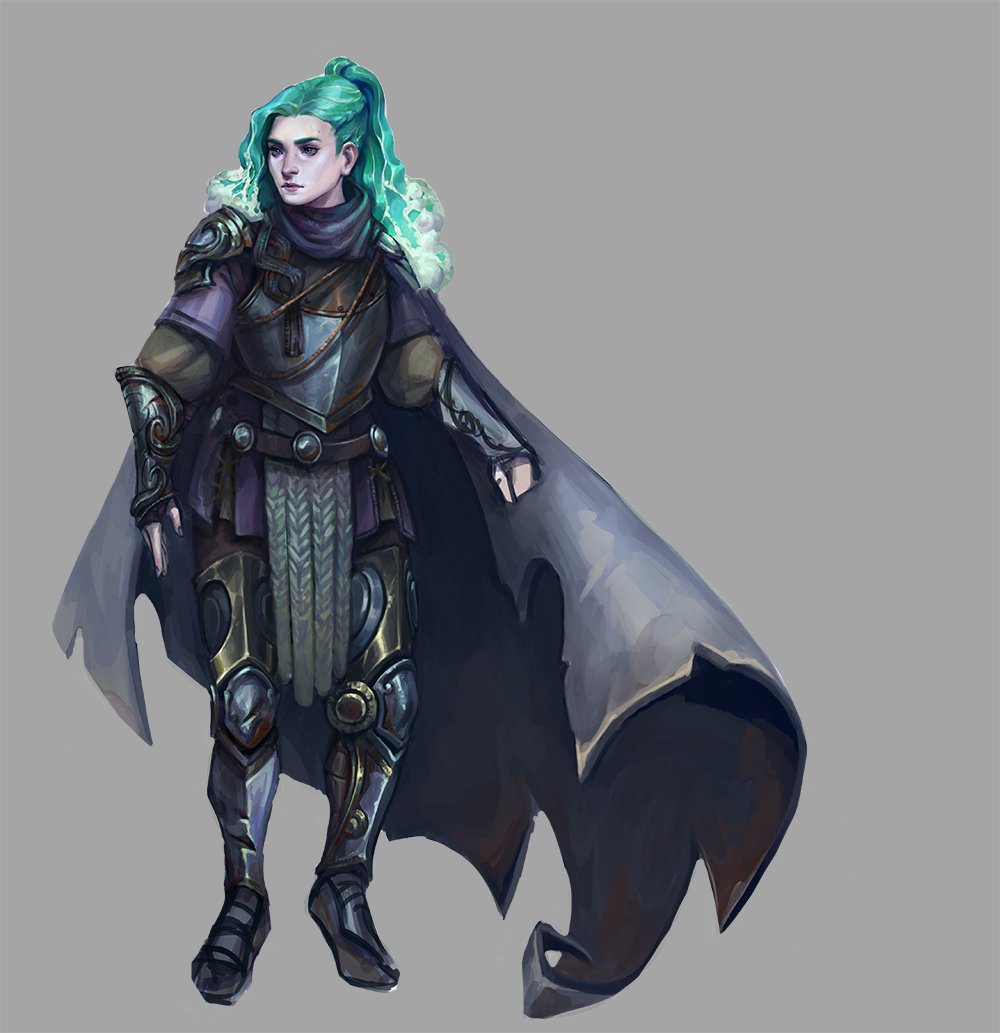
New Subclasses: CLERIC: Water Domain
\page
Cleric: Wayfare Domain

From tribal migrations to the march of the armies of empire, sentient creatures have always needed to travel, and they have called on the gods of road and river, of ship and path, to aid them getting from one place to another.
Servants of these gods are often explorers, leaving behind shrines and maps for those who follow, but are just often guides and guards on well-traveled paths. As they age, they become keepers of inns and archivists of maps. Some serve, in their travels, as cart-makers, merchants, and builders of bridges and roads. Their motto is “ever on, ever on.”
Throughout the Northern Vast, the deities whose followers may most likely adhere to the Wayfare Domain include those of Güçlü, Khach’meruk and Yolju.
Wayfare Domain Spells
| Cleric Level | Spells |
|---|---|
| 1st | feather fall, longstrider |
| 3rd | pass without trace, spider climb |
| 5th | fly, haste |
| 7th | freedom of movement, sonicstep ◊ |
| 9th | teleportation circle, passwall |
1st Level: Fleeting
At 1st level, your base walking speed increases by 10 feet. It increases another 10 feet at level 11. You also gain advantage on Constitution saving throws against exhaustion.
1st Level: Bonus Proficiencies
At level 1, you gain proficiency the use of Navigator’s tools. Additionally, if you can see the sun or the stars you can tell which direction south is.
1st Level: Well Traveled
Also at 1st level, you are skilled in leading groups on journeys. You gain the following benefits:
- Difficult terrain doesn’t slow your group’s travel.
- Your group gains a bonus to travel speed equal to your Wisdom Modifier x 10% (minimum 10%).
- Even when you are engaged in another activity while traveling (such as foraging, navigating, or tracking), you remain alert to danger.
- If you are traveling alone, you can move stealthily at a normal pace.
- You can double your proficiency modifier for Perception and Survival if you are proficient in these skills.
2nd Level: Channel Divinity: Tailwind
At 2nd level, you can present your holy symbol as a bonus action to invoke your deity’s blessing.
For 1 minute, you and up to 6 friendly creatures gain the following benefits.
- An increase in base walking speed equal to 5ft x your Wisdom modifier (minimum of 5 feet.)
- The ability to use the Dash action as a bonus action.
- An increase in Initiative equal to your wisdom modifier (minimum of 1).
6th Level: Freedom of the Road
At the 6th level, when you cast spells that increase your movement speed, or otherwise effect your movement and require concentration, you may maintain concentration on that spell while simultaneously maintaining concentration on another spell.
However, if you lose concentration for any reason, you lose the effects of both spells.
8th Level: Land’s Stride
At level 8, moving through nonmagical difficult terrain costs you no extra movement. You can also pass through nonmagical plants without being slowed by them and without taking damage from them if they have thorns, spines, or a similar hazard.
In addition, you have advantage on saving throws against plants that are magically created or manipulated to impede movement, such those created by the entangle spell.
17th Level: Divine Traveler
At 17th level, you can cast the spell teleport without expending a spell slot. When determining if you are on target, you get to roll the d100 twice and pick the most favourable result.
After using this feature, you must finish a long rest before you can use it again.
New Subclasses: CLERIC: Wayfare Domain
\page
Cleric: Wealth Domain
The Wealth domain focuses not only the gathering and the preservation of wealth, but also the flow of goods and money. Worshipers of gods of wealth pray for good fortune and the success of their business. Even the the most worldly merchants will pray to them for cunning insight and safe travel.
Clerics of gods of wealth, such as Benzai, The Gold-Diviner and Mer’id-Argun, are often sent to provide economic aid to struggling hamlets, act as a mediator in guild disputes, chase away pirates robbing merchant ships, and to “redistribute” the treasure hoards of chromatic dragons.
Domain Spells
| Cleric Level | Spells |
|---|---|
| 1st | alarm, identify |
| 3rd | arcane lock, cordon of arrows |
| 5th | glyph of warding, Leomund’s tiny hut |
| 7th | fabricate, guardian of faith |
| 9th | animate objects, teleportation circle |
1st Level: Wealth of Knowledge
When you choose this domain at 1st level, you become proficient in Persuasion or Deception, and with land vehicles, water vehicles, navigator’s tools or thieves’ tools.
Additionally, whenever you make an ability check related to valuing the monetary worth of something, you are considered proficient in the appropriate skill or tool and add double your proficiency bonus to the check instead of your normal proficiency bonus.
1st Level: Prosperity Gospel
Also at 1st level, you also gain the following benefits:
- When you cast a cleric spell of 1st level or higher that requires an expensive material component that is consumed, you can substitute currency you are carrying equal to the value of the required component.
- As an action, you can magically convert currency within 30 ft. into any other denomination or currency of the same value in the same space, including special coins specific to your deity worth 100 gp each. You can target any number of pieces of currency with this ability and create up to 100 pieces of currency with your action.
- You learn the coin shot ◊ cantrip, which is considered a cleric cantrip for you. When you cast coin shot, if you choose to use a deific coin, the spell deals radiant damage equal to 1d12 per damage die instead. When you score a critical hit with coin shot against a creature, a number of identical coins equal to the creature’s maximum number of Hit Dice x 5 shower from the target into its space.
2nd Level: Channel Divinity: Heavenly Market
Starting at 2nd level, you can conduct a 10 minute long ritual by expending a use of your Channel Divinity. Once the ritual is complete, an ethereal merchant appears next to you.
This merchant sells non-magical weapons, armor, tools, and adventuring gear at the prices listed in the Player’s Handbook. The merchant also sells various gems, precious metals and rare ingredients of high quality, which can be used as spell components. At the DM’s discretion, the merchant may also have other items for sale.
The merchant will purchase gems, art objects, trade goods and other mundane items, buying them at market value. At the DM’s discretion, the merchant may be willing to purchase other items of value.
The merchant is friendly and willing to trade with you and your allies, speaking any language you know, but it refuses to haggle prices. Any attempt to steal from, attack or cast a spell on the merchant will cause it to disappear. The merchant will stay and trade with you and your allies for up to 1 hour or until dismissed as an action.

New Subclasses: CLERIC: Wealth Domain
\page
6th Level: Channel Divinity: Fool’s Gold
At 6th level, as an action, you can expend a use of your Channel Divinity to create illusory treasure in a 5 ft. square within 60 ft. of you, affecting creatures in a 15 ft. radius centered on it. This illusion lasts for up to 10 minutes, as if you were concentrating on a spell. When you use this Channel Divinity, you may designate any number of creatures to be immune to its effect.
When a creature enters the illusion’s area for the first time on its turn or starts its turn there and can see the treasure, it must make a Wisdom saving throw or become charmed.
While charmed by this effect, the creature must use all of its speed to move towards the illusion by the safest available route on each of its turns.
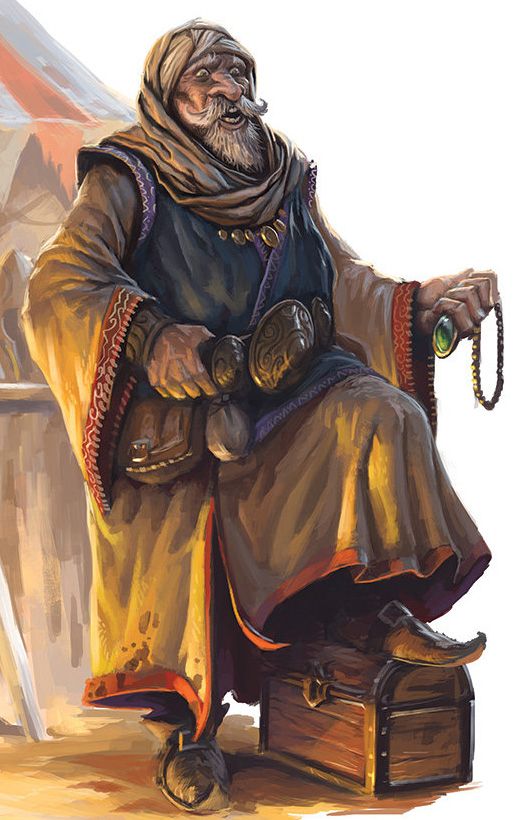
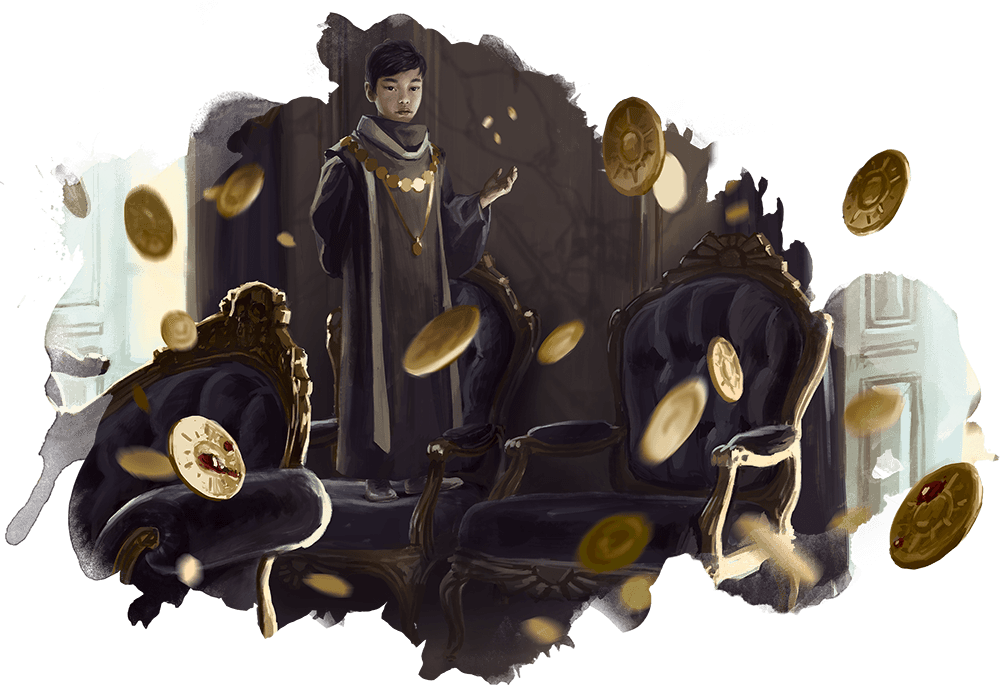
If the creature is adjacent to the illusion, it must use its action to interact with it. At the end of its turn, it can repeat the save, ending the effect on a success.
When a creature succeeds on its Wisdom saving throw against this effect, it is immune to this effect for 24 hours. Creatures with an Intelligence score lower than 5 or with the ability to see through illusions (such as truesight) are immune to this effect.
Potent Spellcasting
Starting at 8th level, you add your Wisdom modifier to the damage you deal with any cleric cantrip.
17th Level: Sacred Treasures
In your most dire times, you can borrow wealth and artifacts of great power from your deity’s own store of treasure. At 17th level, you can perform an hour long ritual, petitioning your deity for aid. Once you finish, one of the following appears at your feet:
- One magic weapon, ring, staff, ring, rod, shield or suit of armor of your choice with a rarity of very rare.
- Two magic weapons, rings, staffs, rings, rods, shields or suits of armor of your choice with a rarity of rare or uncommon.
- Four scrolls or potions of your choice of a rarity of very rare, rare or uncommon.
- Wealth in the form of mundane equipment, currency, art objects and precious gems with a total value of 50,000 gp or less.
At your DM’s discretion, other items and artifacts associated with your deity may also be available. Any magic items summoned by this ability remain in your possession for 24 hours, after which they disappear in a flash of golden light if not already destroyed or consumed. Once you use this ability, you cannot use it again until 7 days have passed.
New Subclasses: CLERIC: Wealth Domain
\page
\page
DRUID: Circle of the Blood Moon
Dara, the Blood Moon, sinister in its appearance, is so rare that the common belief is that it actually a temporary ‘aggrandisement’ of Argent, the Silver Moon, or Caravel, the White Moon. That some kind of cosmic skirmish is being waged in the heavens to turn one of the two obvious moons such a shockingly sanguine hue. Of course it is often Kyz, the Red Agha who bares the brunt of such accusations. But in actual fact, Dara, the Blood Moon, is a moon in her own right, and there are certain druidic circles that have formed in various locations around the world that channel her natural magicks.
Those who belong to the Circle of the Blood Moon often are cognizant of the fact that not all spirits of nature are benevolent beings. Those who wander this wilder path are often seen as savages, sacrificing both beasts and more intelligent creatures for their own ends. However, not all druids of the Circle of Blood Moon wantonly spill the blood of others so eagerly; rather, these more cautious druids see it as a last resort.
Druids of this circle often see themselves as ensurers of the balance of nature. Pacifiers of the darker aspects of the wild, performing rites that keep the malicious beings in check and granting boons in return. Other who join the circle are as violent as the spirits themselves, where both they and the spirits revel in the blood that is spilled. However, a price must always be paid, warm, red fluid dripping to the floor, keeping the ravenous spirits at bay.
Circle of the Blood Moon Spells
The potent powers of the Blood Moon infuse you with the ability to cast certain spells. At 3rd, 5th, 7th and 9th level you gain access to a number of circle spells, listed in the table below.
Once you gain access to a circle spell, you always have it prepared, and it doesn’t count against the number of spells you can prepare each day. If you gain access to a spell that doesn’t appear on the druid spell list, the spell is nonetheless a druid spell for you.
| Druid Level | Spells |
|---|---|
| 3rd | darkness, gentle repose |
| 5th | speak with dead, vampiric touch |
| 7th | death ward, blight |
| 9th | enervation, insect plague |
2nd Level: Blood Magic
Starting at 2nd level, the wild spirits have begun whispering their secrets to you, and reveal how to draw power from your own blood. You have a pool of blood magic represented by a number of d8s equal to your druid level.
When you cast a spell that deals damage or restores hit points to a creature, you can increase that damage or healing by spending dice from the pool, up to a maximum of half your druid level, rounded down. Roll the spent dice and add them to the damage dealt or hit points restored. When you spend dice this way, your current and maximum hit points are reduced by 2 for each die spent. This reduction to your maximum hit points lasts until you complete a long rest.
In addition, daggers, scimitars, and sickles can be used as a spellcasting focus for your druid spells.
2nd Level: Dark Rituals
When you choose this circle at 2nd level, you learn how to perform rituals using the corpse of a creature as sacrifice. By using the body of a creature that has died within the last hour, you can cast any of the druid spells you have prepared as a ritual, even if it doesn’t have the ritual tag. You can find the rules to ritual casting in the page 201 of the PHB.
In order to cast a spell in this manner, you need the corpse of a creature of a CR equal or greater to the one presented on the table below, and the spell must be of a level you have spell slots for. You can’t cast a spell of level higher than 6th with this method. The creature used can not be a construct nor an elemental.
The corpse replaces the material components of the spell you are trying to cast, but you still need to provide the other components as normal.
Once you complete the ritual, the body turns to dust, making it unusable for other rituals again, and protecting it from spells such as raise dead.
|Spell Level| CR |
|:-:|:–:|
| 1st | 1 |
| 2nd | 3 |
| 3rd | 5 |
| 4th | 7 |
| 5th | 9 |
| 6th | 10 |
Ritual Offering
Also at this level, you have begun to learn how to sate the more bloodthirsty spirits of nature. You can perform a ritual to regain blood magic dice. To perform a Ritual Offering, choose a number of Blood Magic Dice you wish to regain, up to half your druid level.
The ritual takes 10 minutes, and you deal damage to a willing, incapacitated, or restrained living creature equal to the number of Blood Magic Die you regain, you may choose to repeat this damage once per minute while you are performing the ritual. You can use this ability again after you finish a short or long rest.
New Subclasses: DRUID: Circle of the Blood Moon
\page
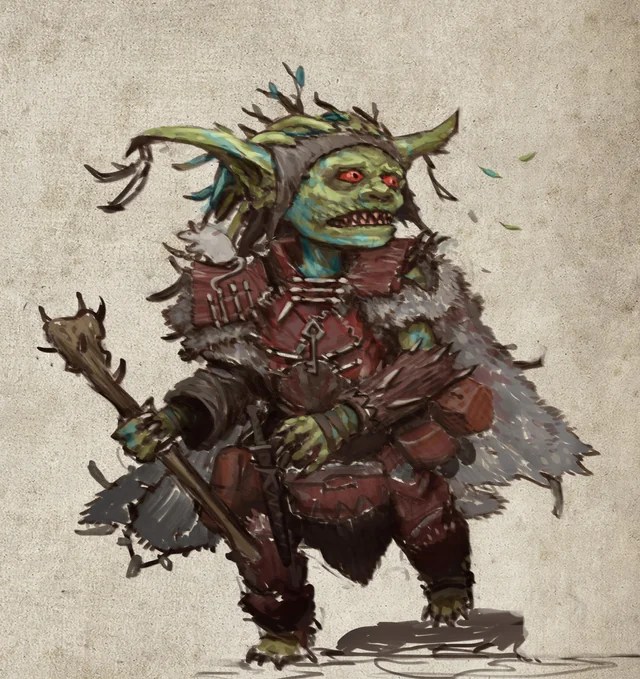
Performing the Ritual
The ritual you perform as part of your Ritual Offering feature is something that can truly shape the feel of your blood magic and provide a means to illustrate your craft to your fellow players and their characters. It can be your own unique invention, ancient and invariable, or anywhere in between.
Discuss your ideas with your DM and come to a conclusion about the type or types of damage dealt during the ritual. Also consider how the performance will be perceived by onlookers. For example, the ritual could involve clean and carefully placed cuts forming beautiful runic patterns on the surface of the subject, or be a brutal and messy ordeal; a revelry in the source of your power.
6th Level: Ravenous Influence
Beginning at 6th level, the spirits whose hunger you sate leave you with a craving of your own. You can use your Wild Shape ability to transform into a beast with a challenge rating as high as your druid level divided by 5, rounded down.
While you are in wild shape form you can use an action to eat the flesh from a dead corpse, or a bonus action after you deal damage to a living creature with a Bite attack. You can then spend up to one Hit Die for every 5 druid levels. For each Hit Die spent in this way, you roll the die and add your normal form’s Constitution modifier to it. Both your beast form and your normal form regain hit points equal to the total.
10th Level: Sacrificial Rites
The spirits are pleased with your dedication, and become more open with their secrets as you perform more sacrifices.
Beginning at 10th level, you may choose of the following spells when you begin your Ritual Offering: augury, death ward, find familiar, plant growth, scrying, or any druid spell with the ritual tag. If the living creature dies during your Ritual Offering, you may cast cast that spell without using a spell slot or material components. These spells are considered druid spells for you when you cast them.
14th Level: Blood Moon Rituals
You became a master on your trade, and you are able to channel even more energy from Dara, the blood moon. Beginning at 14th level, when you use your Dark Rituals trait, you can now cast spells of a level higher than 6th. The CR of the corpse needed to perform the ritual is detailed in the table below. Also, if you cast a spell as ritual of 6th level or lower, it takes you only half the time you previously need to complete the ritual, and also add to the duration of said spell half the total duration of the spell, rounded up. Additionally, whenever the Blood Moons are up in the sky, the CR of the creature only needs to be half of the CR needed to cast the spell level you are casting as ritual.
| Spell Level | CR |
|---|---|
| 6th | 12 |
| 7th | 14 |
| 8th | 16 |
| 9th | 18 |
14th Level: Tooth and Nail
Just as you are dealt a fatal blow, your body shifts as you cling to life. Additionally, beginning at 14th level, you can use your Wild Shape ability as a reaction if you take damage that would reduce you to 0 hit points, it reduces you to 1 instead before you transform. You can’t use this ability again until you finish a short or long rest.
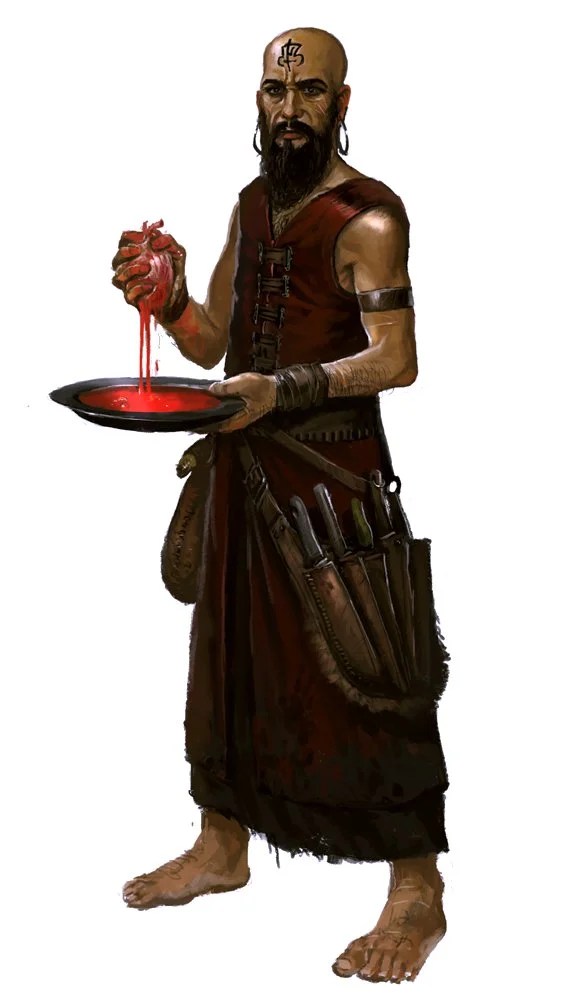
New Subclasses: DRUID: Circle of the Blood Moon
\page

\page

DRUID: Circle of Nazar
Nazar, ward of the evil eye. It is the common people’s belief that the blue beads with eyes drawn on them protect them from those with bad intentions. They do not know that it is not the beads that protect, but those who create and control them.
Circle of Nazar Druids seek to protect ordinary people from unintended magical effects or intended evil from charms and enchantments. They roam the wilderness, ruins and the cities to seek out curses, ill-intents, evil arcane, with the help of
beads with the sign of the Nazar.
Your archaic link with fate and your ability to manipulate fate grants you access to certain spells.
At 1st, 2nd, 3rd, 5th, 7th and 9th level you gain access to the spells listed for that level in the Circle of Nazar Spells table.
Once you gain access to one of these spells, you always have it prepared, and it doesn’t count against the number of spells you can prepare each day. If you gain access to a spell that doesn’t appear on the druid spell list, the spell is nonetheless a druid spell for you.
Circle of Nazar Spells
| Druid Levels | Spells |
|---|---|
| 1st | nazar, the bead |
| 2nd | mandate of the sophists: avicenna; nazar, the evil eye; protection from evil and good |
| 3rd | detect djinni; lesser restoration |
| 5th | exorcise djinni; remove curse |
| 7th | divination; polymorph |
| 9th | greater restoration; sense the sinner |
\column
Level 2: The Good Eye
When you choose this circle at 2nd level, you gain the following benefits:
- By touching a creature you can detect any nazars (such as the Nazar or Evil eye spells — see the New Spells section later in this text), curses (such as the bestow curse spell or other curses), and spells that are affecting it. You know exactly which effects are present (e.g. the curse of demon armor). You can use this feature a number of times equal to your proficiency bonus and regain expended uses after you finish a long rest.
- You learn either the spare the dying or purifying breath cantrip. You can cast that cantrip as a bonus action.
- By spending one of your Wild Shape features, your touch removes Djinnspeak effects and the evil eye cantrip’s effects immediately from a creature.
Level 6: The Pure Touch
Starting at 6th level, you gain following benefits:
- When you cast either remove curse or exorcize djinni spell, you regain a portion of your expended spell slots — either one 2nd level spell slot or two 1st level spell slots. Additionally you can regain one of your Wild Shape uses. You can use this feature twice and can’t use it again until you finish a long rest.
- The casting time for the exorcize djinni spell is 1 minute rather than 10 minutes. Alternatively, you can cast protection from evil and good as a ritual, and it only takes 1 minute to cast.
- Your damaging spells deal an extra 2d6 radiant damage against djinn, fiends and undead. This damage can’t be prevented or reduced in any way.
Level 10: Serenity of the Breath
Starting at 10th level you gain following benefits:
- You can’t be charmed or possessed.
- You can cast greater restoration without material components.
Level 14: The Banishing Eye
Starting at 14th level you unleash your powers upon the unholy. As an action you can cast the banishment spell without expending a spell slot and can target 3 creatures.
Celestials, djinn, fey, fiends and undead roll their saving throw at disadvantage if you cast this spell and target them. You can’t use this feature again until you finish a long rest.
New Subclasses: DRUID: Circle of Nazar
\page
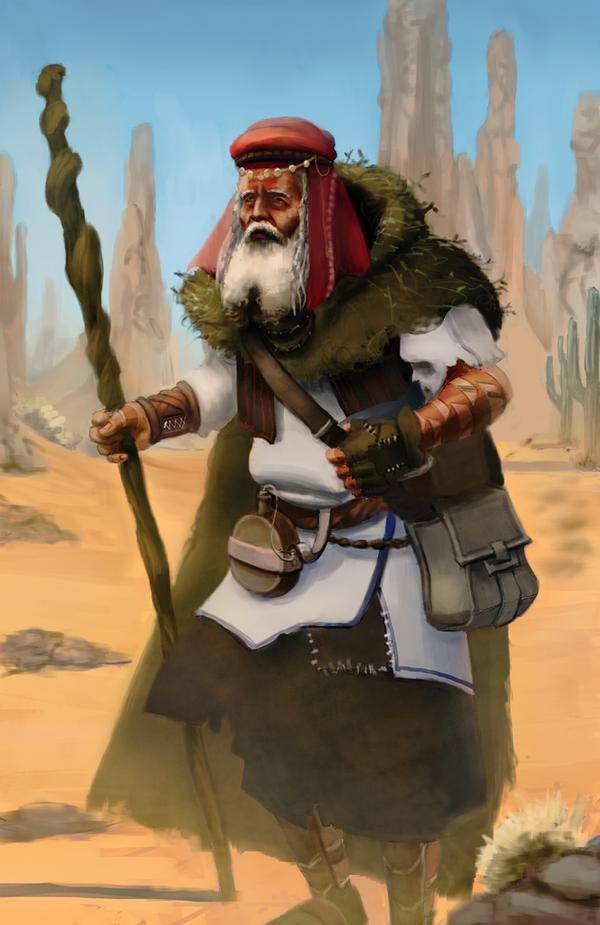
\page
DRUID: Circle of the Sands

The Circle of the Sands connects druids to the most primal powers within the deserts and dunes. These druids serve as guardians to old ruins and temples, as well as escorts to travelers who find themselves lost in the vast desert sands. In these tasks, members of this circle gain control over the earth itself, and the power that hides within. Many druids of this circle also find themselves with a unique relationship with the dead, and the undead. Desert tombs are home to many corpses, but all deserve respect and protection from raiders and thieves. Others use their physical power to defend temples to long lost gods.
2nd Level: Blessings of Strength
At 2nd level, your connection to sand gives you extra fortitude. Your hit point maximum increases by 2, and it increases by 1 whenever you gain a level in this class. You also learn the mold earth cantrip.
As an action, you can gain a base AC of 11 + your Constitution modifier if you aren’t wearing armor, and your skin assumes a stony or sandy appearance. This effect lasts until you end it as a bonus action, you are incapacitated, or you don armor other than a shield.
2nd Level: Force of the Desert Winds
Also at 2nd level, you gain the ability to channel the force of a sandstorm into your form. As an bonus action, you can expend a use of your Wild Shape feature to empower your body, rather than transforming into a beast form. While this feature is active, you gain the following benefits:
- Your unarmed strikes can deal nonmagical slashing damage equal to 1d8 + your Wisdom modifier on a hit, and you may add your Wisdom modifier instead of your Strength modifier to unarmed strike attack rolls.
- Any damage you deal does double damage to nonmagical objects or structures.
These benefits last for 10 minutes or until you use your Wild Shape again.
6th Level: Relentless Weathering
Starting at 6th level, you can attack twice, instead of once, whenever you take the Attack action on your turn. Attacks you make with Force of the Desert Winds effect active are now considered magical.
Additionally, you are hardened by the weather’s power that you invoke. You cannot be blinded or deafened by any weather effects or effects that deal thunder damage.
10th Level: Shifting Dunes
By the time you reach 10th level, you become a master of the earth and the arcane. Whenever you use your action to cast a Druid spell, you may use your bonus action to make one melee attack.
As the geomancy continues to flow through you, you have the wall of sand spell prepared. It counts as a druid spell for you, and it doesn’t count against the number of spells you can have prepared.
14th Level: Born of the Sands
At 14th level, you are cabable of fusing with the sands and earth beneath you. You cannot be stunned, knocked prone, or be forcibly moved by an effect if you are unwilling.
You also gain a burrowing speed equal to your walking speed, and are cabable of moving through a space as narrow as 1 inch wide without squeezing, as your body shifts into sand and flows.
Finally, the chronomancy innate to the mystical powers of sand empowers your mind and body. You no longer need to sleep, and cannot be put to sleep by magical means.

New Subclasses: DRUID: Circle of the Sands
\page
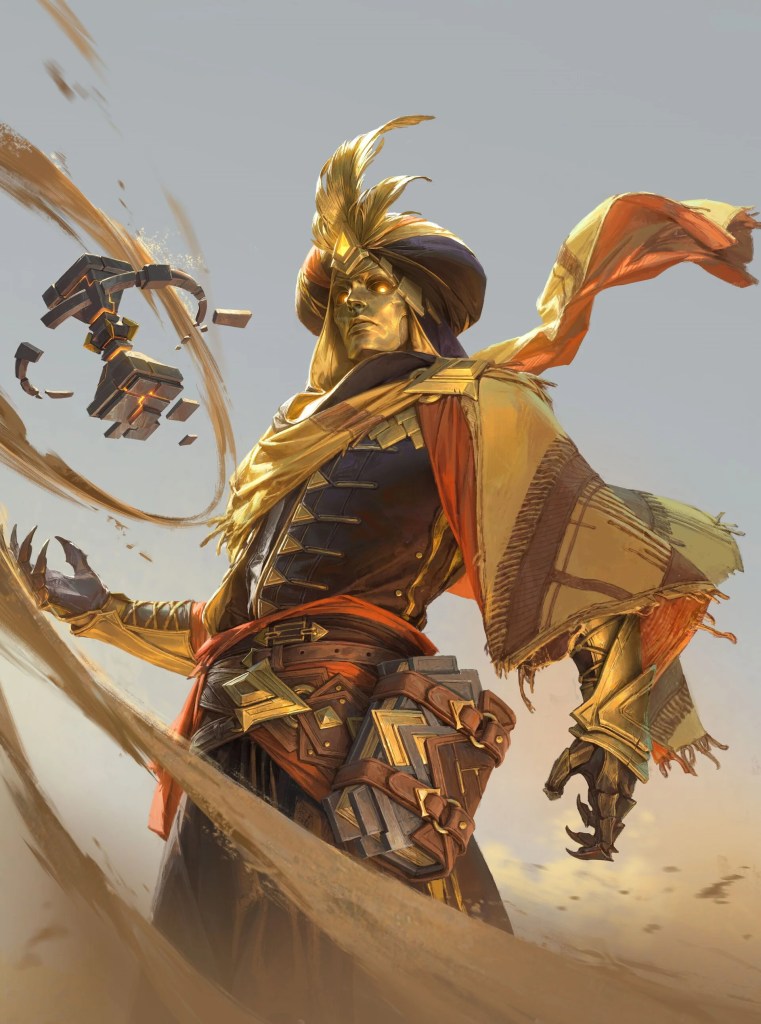
\page
FIGHTER: Dune Warrior
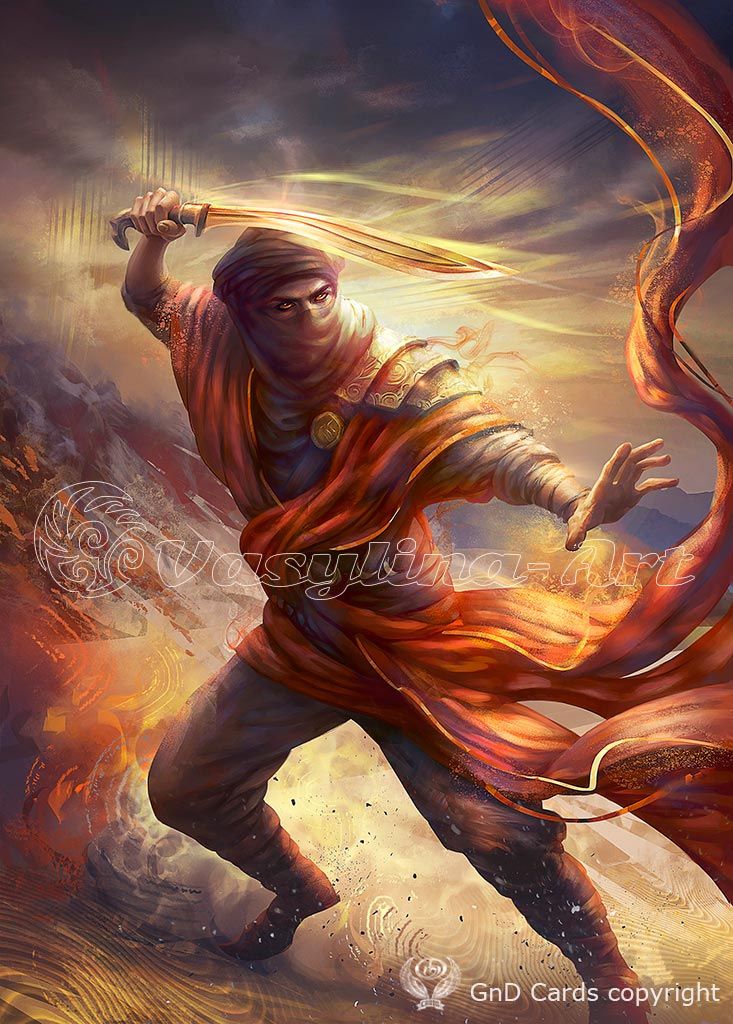
The dune warrior hones their combat prowess by focusing on their favoured weapon: the scimitar. They use this in tandem with throwing various magical dusts that allow for devastating combos.
3rd Level: Bonus Proficiencies
At 3rd level, you learn the ways of the warriors of the desert. You gain proficiency in your choice of the Arcana, Nature or Survival skills, and you learn your choice of the mold earth or shape water cantrips.
3rd Level: Scimitar Training
At 3rd level, you learn to unleash special magical effects with some of your attacks with a scimitar. When you gain this feature, you learn two Scimitar Flourishes of your choice from the list provided. You may change which of these flourishes you know whenever you gain a level in this class.
Once per turn when you make a melee attack with your scimitar as part of your Attack action, you can apply one of your Scimitar Flourishes to that attack. You decide to use this option when the attack hits, unless the option doesn’t involve an attack roll. You have a number of uses of this ability equal to your proficiency bonus, and you regain all expended uses of it when you finish a long rest.
You gain an additional Scimitar Flourish option of your choice when you reach 10th level, and another at 18th level.
Additionally, at 18th level you regain all expended uses of this feature when you finish a short rest, rather than a long rest.
Scimitar Flourishes
The Scimitar Flourish feature lets you choose options for it at certain levels. They are all magical effects, and each one is associated with an element.
If an option requires a saving throw, your Scimitar Flourish save DC equals 8 + your proficiency bonus + your Intelligence modifier.
- Burning Flourish. Immediately after your attack hits the creature, the target and all other creatures within a 15-foot cone on the opposite side of it must make a Dexterity saving throw or take 2d6 fire damage.
- Caustic Flourish. Immediately after your attack hits the creature, the target and all other creatures within a 15-foot line on the opposite side of it must make a Dexterity saving throw or take 2d6 acid damage.
- Icy Flourish. The creature hit by your attack takes an additional 2d6 cold damage. The target must also succeed on a Constitution saving throw, or its speed is halved until the start of your next turn.
- Lightning Flourish. Immediately after your attack hits the creature, the target and all other creatures within a 15-foot cone on the opposite side of it must make a Dexterity saving throw or take 2d6 lightning damage.
- Sandy Flourish The creature hit by your attack takes an additional 1d8 magical slashing damage. The target must also succeed on a Wisdom saving throw, or it is Blinded until the start of your next turn.
- Thunderous Flourish. The creature hit by your attack takes an additional 1d8 thunder damage. The target must also succeed on a Consitution saving throw, or it is deafened until the start of your next turn.
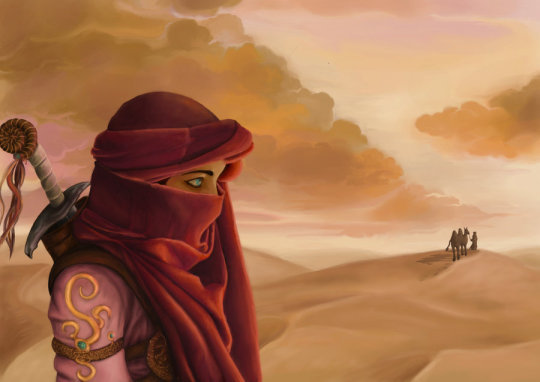
\page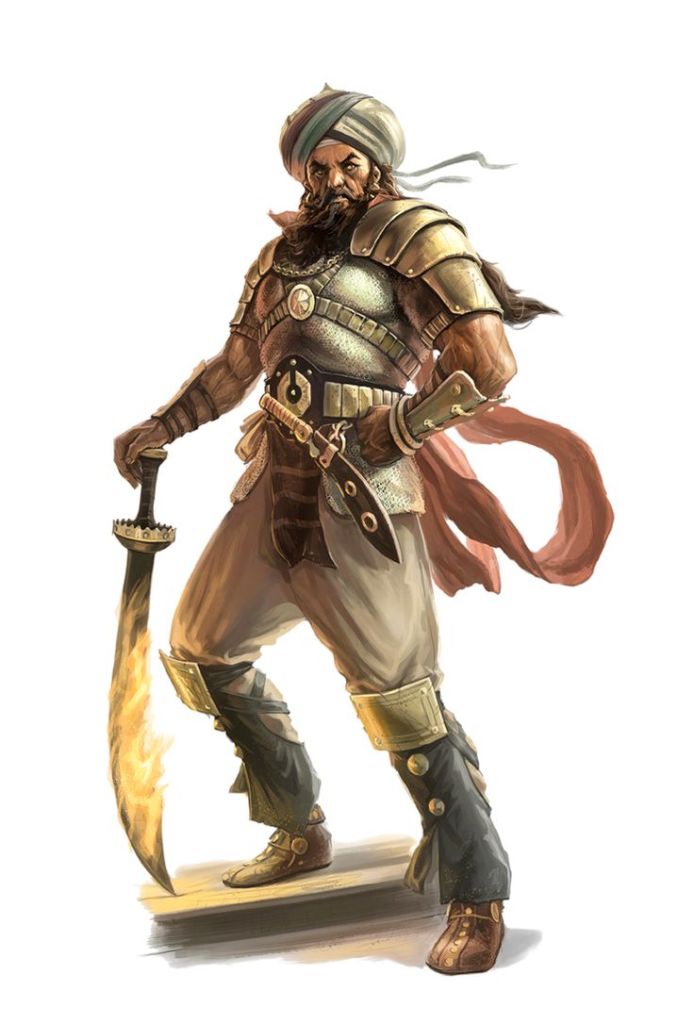
7th Level: Dusts of the Nomad
Starting at 7th level, the nomadic people of the desert, be them hara tribesfolk or Al-badawi herders, bestow upon you the secrets of making magical dusts. At the end of a long rest, you can create one of the following dusts:
- Dust of Blinding. You create 1d6 + 2 pinches of a fine white dust. A pinch of this dust can be blown into the eyes of a creature within 5 feet as a bonus action. The creature must make a Constitution saving throw or become blinded until the end of its next turn.
- Dust of Deliciousness. This reddish brown cumin-like dust can be sprinkled over any edible substance to greatly enhance its flavour. The dust also dulls the eater’s senses: anyone eating food that has been treated with this dust has disadvantage on Wisdom ability decks and Wisdom saving throws for 1 hour. There is enough dust to flavour 1d6 + 2 servings.
- Dust of Disappearance. One of the most elusive of the hara teachings, you only ever can create 1 pinch of this dust at a time. This is always only ever enough for one use. When you use an action to throw the dust into the air, you and each creature and object within 10 feet of you becomes invisible for 2d4 minutes. The duration is the same for all subjects, and the dust is consumed when its magic takes effect. If a creature affected by the dust attacks or casts a spell, the invisibility ends for that creature.
- Dust of Tracelessness. You create 1d6 + 4 pinches of this fine grey powder. A creature can sprinkle this dust while traveling to magically conceal its own and any of its companions’ tracks. Creatures roll with disadvantage when attempting to follow these tracks. Each pinch of dust allows for the concealment of 100 feet of movement.
- Dust of Choking. You make 1d4 + 2 pinches of this peppery black powder. A pinch of this dust can be blown into the face of a creature within 5 feet as a bonus action. The creature must make a Constitution saving throw or become unable to speak until the end of its next turn because of uncontrollable choking and sneezing. The creature can still move and attack as normal if affected, however.
Each type of dust becomes inert after 24 hours or if you create another container of dust.
You can create an additional container of dust after a long rest at 15th level.
10th Level
Starting at 10th level, moving through nonmagical difficult terrain costs you no extra movement. You also become immune to the effects of extreme heat.
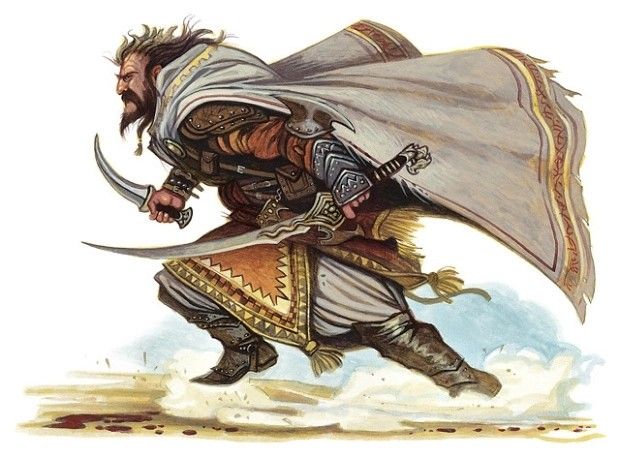
New Subclasses: FIGHTER: Dune Warrior
\page
FIGHTER: Janissary
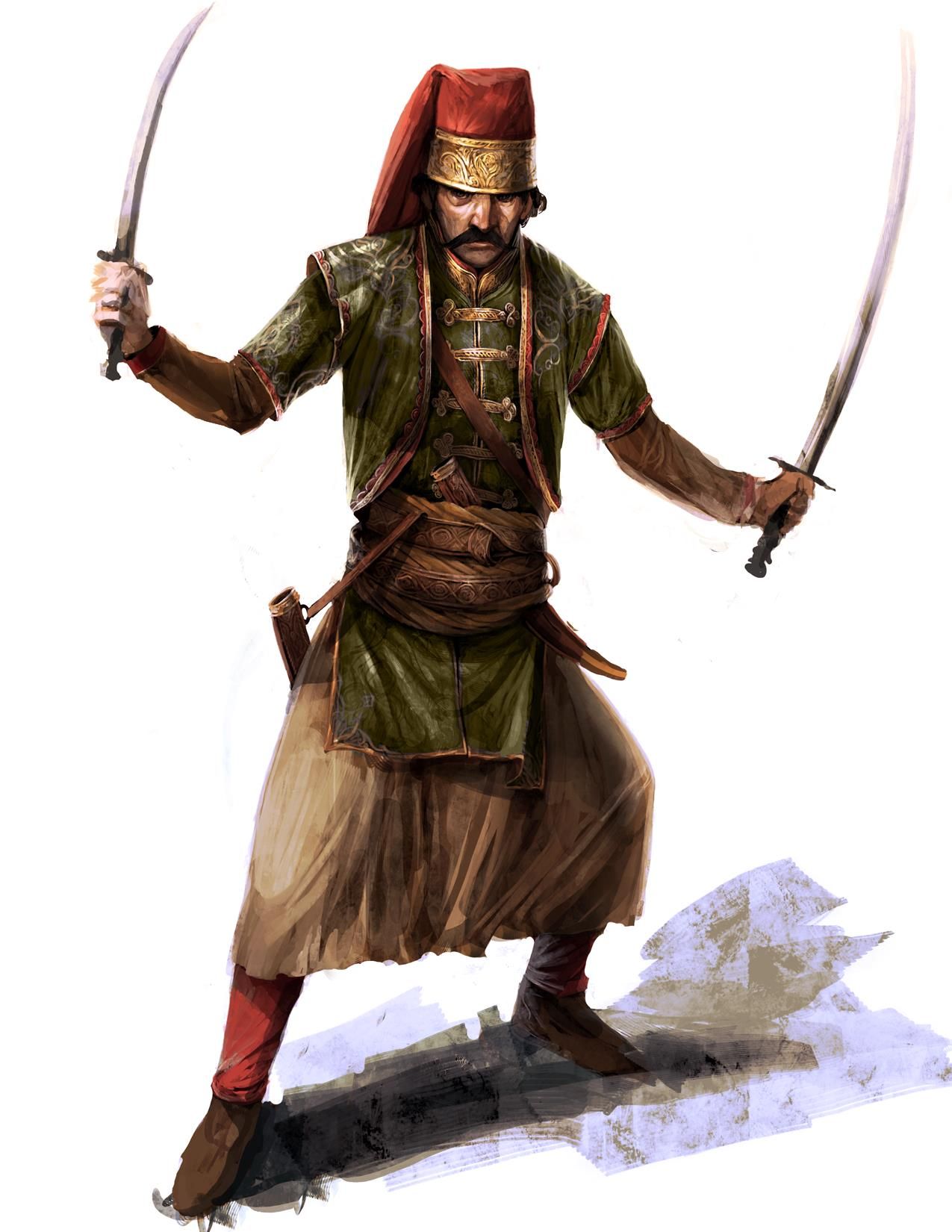
Although the majority of the Northern Vast has enjoyed a long peace in the past two generations, historically many Nazari and Mu’şüri conquests have owed their success to the discipline and mastery of the Janissaries.
Taken as children from freshly conquered lands, and trained since childhood as elite imperial soldiers, the Janissaries are masters of commanding a diverse range of weaponry in a single combat. Armed to the teeth with a large selection of weapons, their prowess shines in the battlefield as they utilize all in a bewildering flurry of gunpowder, arrow, bolt and blade.
Level 3: Janissary Training
Starting at 3rd level you adopt another fighting style as your specialty. Choose one of the following options. You can’t take a Fighting Style option more than once, even if you later get to choose again.
Firearms. You gain +2 bonus to damage with any kind of firearm.
Archery. You gain +2 bonus to attack rolls you make with ranged weapon.
Thrown Weapon Fighting. You can draw a weapon that has the thrown property as part of the attack you make with the weapon. In addition, when you hit with a ranged attack using a thrown weapon, you gain a +2 bonus to the damage rolls.
Two-Weapon Fighting. When you engage in two-weapon fighting, you can add your ability modifier to the damage of the second attack.
Level 3: Hidden Vigor
Starting at 3rd level, your diligent training and experience can turn the tides of the battle for you. As a bonus action, you can reroll any missed attack roll and accept the new outcome as a result. You can use this feature two times. You regain all expended uses of it when you finish a long rest.
Level 7: Marble-Hardened Slap
You use your marble hardened slap as a blunt weapon to critically strike an opponent. Starting at 7th level, you can use your bonus action to make an unarmed attack. When you do so, you can deal 1d6 bludgeoning damage and the creature makes a saving throw (DC = 8 + your Proficiency bonus + your Strength modifier), on a failed save this hit stuns the target until the end of your next turn. You can do this a number of times equal to half your Proficiency bonus. This damage increases to 2d6 in 10th, and 3d6 in 18th level.
Level 10: Refound Vigor
Starting at 10th level, when you roll initiative and have no uses for Hidden Vigor, you regain one use.
Level 15: Advanced Janissary Training
Starting at 15th level your adopted fighting style is improved. In other words, you get better in the fighting style you choose for this archetype.
Firearms.You gain an additional +1 bonus to damage with any kind of firearm.
Archery. You gain an additional +1 to attack rolls you make with ranged weapons.
Thrown Weapon Fighting. You can draw a weapon that has the thrown property as part of the attack you make with the weapon. In addition, when you hit with a ranged attack using a thrown weapon, you gain an additional +1 bonus to the damage rolls.
Two-Weapon Fighting. When you engage in two-weapon fighting, you can add your ability modifier to the damage of the second attack and have an additional +1 bonus.
Level 18: Superior Vigor
Starting at 18th level, when you roll initiative and have no uses for Hidden Vigor, you regain both uses. You regain all expended uses of Hidden Vigor when you finish a short rest.
New Subclasses: FIGHTER: Jannisary
\page
Monastic Tradition: Dervish of Ifus
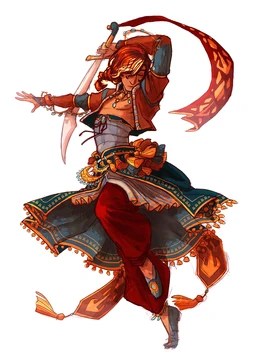
One hand looks upwards: “Take wisdom from heaven”; one hand faces the ground “…and share it with the Earth.” Start the whirl-like dance, spin as the Earth does; to lose thyself, and to find thyself.
Some monks seek enlightenment through combining a trancelike state of chanting and whirling to sever their link to reality. Yet these actions are not just a way of escaping the mundane world. Their martial skill is immense, thanks to their impeccable balance, and unorthodox fighting stance.
Ifusian dervishes call forth divine boons for their companions, and crack their foes’ stance and posture with their grappling attacks.
Level 3: Whirling Dance
Starting when you choose this tradition at 3rd level, you can manipulate your enemy’s movements as you dance around them.
You have a chance to do one of the three below as a bonus action:
- Move an extra 10 feet around your enemy that you attacked on top of your movement without provoking attacks of opportunity from other enemies.
- Swap places with a willing ally who is 10 feet from you; both of you don’t provoke attacks of opportunity.
- Move 10 feet away from your enemy without causing attacks of opportunity. This will end your movement.
Level 3: Bonus Proficiency
Your martial prowess mixes with the eloquent dance you perform. When you choose this tradition at 3rd level, you gain proficiency in Performance skill if you don’t already have it.
Additionally, you can choose a musical instrument and gain proficiency with it.
Level 6: Unyielding Balance
Starting from 6th level, you can go into a flurry of parrying blows. By spending your reaction and 2 ki points, you gain +5 armor class until the start of your next turn and can decrease any damage received during this time by your 1 of your monk martial arts dice + your dexterity modifier + your monk level.
Level 11: Meditative Trance
Starting at 11th level, you can enter a special trance for 1 minute as a bonus action. For the duration, attack rolls against you can’t benefit from advantage and you will not have a disadvantage for your melee attacks. During this trance, all Acrobatics and Athletics checks are made with advantage.
Once you use this bonus action, you can’t use it again until you finish a long rest.
Level 17: Existential Oneness
Starting at 17th level, your connection with the cosmos is complete. You use your bonus action to activate this power for 1 minute; you gain resistance against
every type of damage apart from slashing, piercing and bludgeoning. You gain advantage on saving throws against spells and similar effects.
Once you use this bonus action, you can’t use it again until you finish a long rest.

New Subclasses: MONASTIC TRADITION: Dervish of Ifus
\page
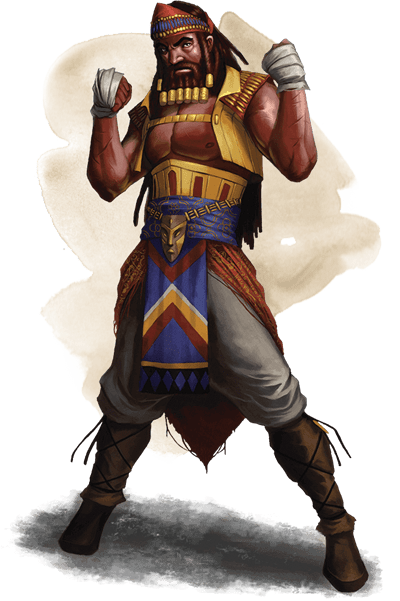
\page
MONASTIC TRADITION: Way of the Untamed

Monks following the Way of the Untamed learn from the wilds and deepest jungles. They learn to act as the beasts do and can transform their bodies to gain bestial power.
Way of the Untamed Features
| Monk Level | Feature |
|---|---|
| 3rd | Animal Understanding; Marks of the Untamed (2) |
| 6th | Untamed Savagery; Marks of the Untamed (3) |
| 11th | Beast Within; Marks of the Untamed (4) |
| 17th | Guardian of the Wilds; Marks of the Untamed (5) |
3rd Level: Marks of the Untamed
At 3rd level, you have studied the beasts and monsters of the jungle and can now transform in small ways to gain their natural powers.
When you reach 3rd level in this class you learn two Marks of the Untamed (see following page). You choose to gain an additional mark when you reach 6th, 11th and 17th level.
When you gain a Mark of the Untamed, you can also replace one Mark of the Untamed that you already had with a different mark.
You may use your Marks of the Untamed that have ongoing abilities in conjunction with each other and any other abilities in this class.
You cannot use multiple mark effects on the same unarmed strike attack.
Your Untamed Save DC = 8 + your Wisdom modifier + your proficiency bonus.
3rd Level: Animal Understanding
You have attuned to the ways of beasts and have learnt to understand and communicate with them. At 3rd level, you count as always being under the effects of the speak with animals spell.
You gain proficiency in the Animal Handling or Nature skill.
Your proficiency bonus is doubled for any ability check you make that uses your chosen proficiency.
6th Level: Untamed Savagery
At 6th level, you may channel the savagery that you’ve learned from your training with beasts. When you attack with your unarmed strikes, you may choose to deal acid damage instead of your usual damage.
Once per round, when you hit a creature with one of the unarmed strikes granted by your Flurry of Blows that deals acid damage, the creature takes additional acid damage equal to one roll of your martial arts die plus your Dexterity modifier at the end of its next turn.
11th Level: Beast Within
At 11th level, your attunement with beasts has enhanced and you are able to take on their properties in more drastic ways.
You may choose to use an action to transform your body to gain one of the following benefits, each transformation lasts 1 hour and you must complete a long rest before you may transform again:
- Your skin thickens into a tough hide. Your Unarmored Defence becomes 13 + your Dexterity modifier + your Wisdom modifier.
- Gills emerge from your neck and your feet form into flippers. You gain a swim speed equal to your walking speed and can breathe underwater when you aren’t wearing armor or wielding a shield.
- Wings sprout from your back. You gain a flying speed equal to your walking speed when you aren’t wearing armor or wielding a shield.
You may use these transformations in conjunction with your transformations caused by your Marks of the Untamed.
17th Level: Guardian of the Wilds
At 17th level, you have become a stalwart sentinel of the wilds and its magical energy flows through you. Using your bonus action, you can spend 8 ki points to cause wings to sprout from your back, gills to erupt from your neck, your skin to thicken and your fists to drip with noxious fluid. Your appearance will gain additional qualities based on your Marks of the Untamed.
For 10 minutes you gain the following benefits:
- Your unarmed strikes deal an additional 1d6 acid damage.
- You gain 10 temporary hit points at the start of each of your turns.
- You gain the benefits from all of the Beast Within transformations.
New Subclasses: MONASTIC TRADITION: Way of the Untamed
\page
Marks of the Untamed Options
The following is the list of Marks of the Untamed you may choose from at 3rd, 6th, 11th and 17th level.
Mark of the Badger.
Your fingers extend into spade-like claws. As an action, you may spend 2 ki points to gain a burrow speed of 10 feet for 10 minutes.
Mark of the Bat.
You focus your senses to see around you without the use of eyes. Using an action, you may spend 2 ki points to gain blindsight out to a range of 60ft for 1 hour. You cannot use this blindsight while you are deafened.
Mark of the Dinosaur.
You let out an ear-splitting roar, terrifying those around you. Using an action, you may spend 3 ki points to roar. Each creature in a 15-foot cone that isn’t deafened must make a Wisdom saving throw against your Untamed Save DC, taking thunder damage equal to two rolls of your martial arts die and becoming frightened of you until the end of your next turn on a fail, and taking half damage and not becoming frightened on a success.
Mark of the Frog.
Your legs arch and become poised for leaping. Using an action, you may spend 1 ki point to cause your jump distance to be tripled for 1 hour and your standing jumps move the same distance as your running jumps.
Mark of the Hawk.
Small feathers grow from your arms and legs and you move with breathtaking agility. Using your bonus action, you may spend 2 ki points to cause you to no longer provoke opportunity attacks when moving out of an enemy’s attack range for 1 minute.
Mark of the Lion.
A thick mane unfolds from your back, emboldening you. As a bonus action, you may spend 1 ki point to gain immunity to the frightened condition for 1 hour.
Mark of the Lizard.
Hungry teeth emerge from your body, eager to devour your prey. When you hit with an unarmed strike, you may spend 1 ki point to gain temporary hit points equal to one roll of your martial arts die plus your Wisdom modifier.
Mark of the Owl.
Your eyes widen and your keen senses hone into your surroundings. Using your action, you may spend 1 ki point to gain advantage on Wisdom (Perception) ability checks that rely on sight or hearing for 1 hour.
Mark of the Panther.
Your hands become soft paws and you tread with cat-like accuracy. As an action, you may spend 1 ki point to gain advantage on Dexterity (Stealth) checks for 1 hour.
Mark of the Rhino.
You charge recklessly at a target and grow small horns on top of your head ready to gore your foe. If you move 10ft straight towards a creature and hit it with a melee weapon attacm or unarmed strike, you may spend 1 ki point to deal additional damage equal to one roll of your martial arts die. The target must also succeed on a Strength saving throw against your Untamed Save DC or be knocked prone.
Mark of the Shark.
Your teeth grow long and serrated as you enter a bloody frenzy. Using a bonus action, you may spend 2 ki points to gain advantage on attack rolls against any creature that has been reduced to half or less of its hit point maximum for 1 minute.
Mark of the Snake.
Your fists begin to ooze poison from every pore. When you hit with an unarmed strike, you may spend 1 ki point to deal additional damage equal to one roll of your martial arts die. The target must also succeed on a Constitution saving throw against your Untamed Save DC or be poisoned until the end of your next turn.
Mark of the Spider.
Ropes of webbing magically erupt from your hands. You may spend 2 ki points to cast the web spell without any material components. Wisdom is your spellcasting modifier.
Mark of the Wolf.
You keenly follow the moves of your allies, using them to land strikes with ease. Using a bonus action, you may spend 2 ki points to gain advantage on attack rolls against a creature if at least one of your allies is within 5 feet of the creature and the ally isn’t incapacitated for 1 minute.

New Subclasses: MONASTIC TRADITION: Way of the Untamed
\page
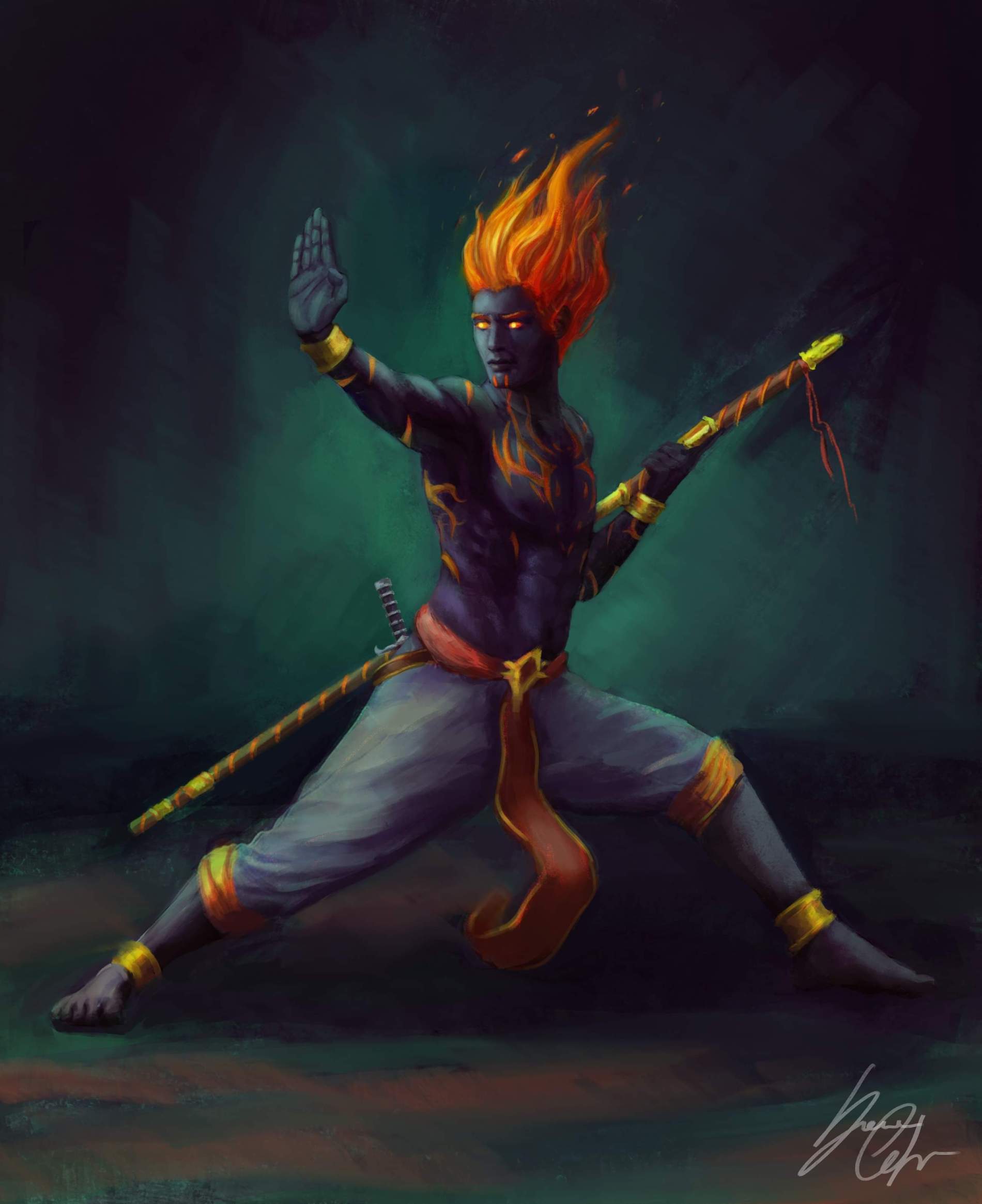
\page
Monastic Tradition:
Way of the Elements
This is a different version of the monk subclass to the one in the Player’s Handbook. The disciplines list has been given a thorough mechanics and flavour update. Some disciplines have been added, others have been removed or moved.
Spells marked with an asterisk can be found in the Spells section of this document, or in the Elemental Evil Player’s Companion.

MONK: Way of the Four Elements
You follow a monastic tradition that teaches you to harness the elements of air, earth, fire and water. When you focus your ki, you can align yourself with the elemental forces of creation and bend the four classical elements to your will, using them as an extension of your body. Some members of this tradition dedicate themselves to a single element, but others weave the elements together.
Many monks of this tradition tattoo their bodies with representations of their ki powers, commonly imagined as coiling dragons, but also as phoenixes, fish, plants,
mountains, and cresting waves.
3rd Level: Initiate of the Way
When you choose this tradition at 3rd level, you learn how to manipulate the four elements in subtle ways.
You learn two of the following cantrips: control flames*, gust*, mold earth*, or shape water*. You learn two additional cantrips from this list at 6th level.
3rd Level: Disciple of the Elements
At 3rd level, you learn magical disciplines that harness the power of the four elements. Some disciplines require you to spend ki points when you use them. You learn two elemental disciplines of your choice, which are detailed in the elemental disciplines sections below. You learn two additional elemental disciplines of
your choice at 6th, 11th, and 17th level.
Whenever you learn a new elemental discipline, you can also replace one elemental discipline that you already know with a different discipline.
Casting Elemental Spells.
Some elemental disciplines allow you to cast spells. See chapter 10 of the Player’s Handbook for the general rules of spellcasting.
To cast one of these spells, you use its casting time and other rules, but you don’t need to provide material components for it. When you cast a spell with a discipline, it is cast at the spell’s lowest level unless otherwise specified.
Once you reach 5th level in this class, you can spend additional ki points to increase the level of an elemental discipline spell that you cast, provided that the spell has an enhanced effect at a higher level, as burning hands does.
The spell’s level increases by 1 for each additional ki point you spend. For example, if you are a 5th-level monk and use Sweeping Cinder Strike to cast burning hands, you can spend 2 ki points to cast it as a 2nd-level spell (the discipline’s base cost of 1 ki point plus 1).
The maximum number of ki points (its base ki point cost plus any additional points) that you can spend on the spell is 2, unless a discipline specifies otherwise.
This maximum increases to 3 at 9th level, 4 at 13th level, and 5 at 17th level.

3rd Level: Elemental Disciplines
Starting at 3rd level, you can learn the following disciplines:
Become the Teapot.
You roll with the incoming energy, attuning to element, becoming it. You can spend 1 ki point to cast absorb elements*.
Subclasses: MONASTIC TRADITION: Way of the Four Elements
\page
Effortless Step.
The air around you works in unison with your movements, rising you up as you jump. Your jump height and distance are doubled (quadrupled with
Step of the Wind) and you gain advantage on Strength (Athletics) checks related to jumping.
Enduring Mountain Stance.
Your body and mind becomes as rigid and unyielding as the ground below you. Your ki roots your feet into the ground and you become immovable. When you use the Dodge action, you cannot be moved, pushed, grappled, frightened, or knocked prone against your will until the start of your next turn, even if magically compelled to do so. You must be standing on the ground to use this ability.
Fangs of the Fire Snake.
Your arms and legs become enveloped in roaring gouts of flame. When you make an unarmed attack on your turn, you can choose to strike out tendrils of flames which stretch out beyond your normal reach. Your reach increases by 5 feet for that attack, and it deals fire damage instead of bludgeoning damage. If the attack hits you can spend 1 ki point to deal an extra 1d10 fire damage.
Fang of the Frost Wolf.
You summon a shard of razor-sharp ice and fling it at your foe. You can spend 1 ki point to cast ice knife*.
Fist of Four Thunders.
You slam your fists together in front of you, causing a thunderous boom that blows away everything around you. You can spend 1 ki point
to cast thunderwave.
Fist of Unbroken Air.
You summon a swirling wind and concentrate it around your fist. When you make an unarmed attack on your turn, you can choose to strike out condensed bursts of air which stretch out beyond your normal reach. Your reach increases by 10 feet for that attack. If the attack hits you can spend 1 ki point to
force the target to make a Strength saving throw or be pushed back 10 feet and be knocked prone.
Golden Snake’s Icy Path.
Whenever you take the Dash action, until the end of your turn for any movement you make along a surface you can leave a trail of slippery ice. This ice counts as difficult terrain and lasts until the start of your next turn.
Rumbling Badger.
You shake the ground, causing a tremor that knocks over your foes. You can spend 1 ki point to cast earth tremor*.
Rush of the Gale Spirits.
You send a blast of air outward with a thrust of your open palm. You can spend 2 ki points to cast gust of wind.
Shape the Raincloud.
You can spend 1 ki point to cast create or destroy water.
Sweeping Cinder Strike.
With a wide sweeping gesture, you summon forth a barrage of hot cinders. You can spend 1 ki point to cast burning hands.
Water Whip.
You summon a long, rubbery whip of pure water that you grip by one end. You can spend 1 ki point as a bonus action to create a whip of water that shoves and pulls a creature to unbalance it. A creature that you can see that is within 30 feet of you must make a Dexterity saving throw.
On a failed save, the creature takes bludgeoning damage equal to your Martial Arts die + your Wisdom modifier, plus an extra 1d10 bludgeoning damage for each additional ki point you spend, and you can either knock it prone or pull it up to 25 feet closer to you.
On a successful save, the creature takes half as much damage, and you don’t pull it or knock it prone. You can’t use Water Whip and cast a spell during the same turn.

Subclasses: MONASTIC TRADITION: Way of the Four Elements
\page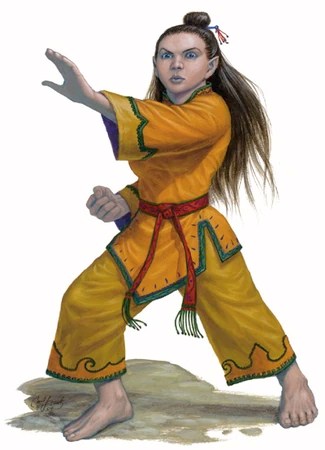
6th Level: Elemental Disciplines
Starting at 6th level, you can learn the following disciplines:
A Leaf on the Wind.
A powerful wind rises up to catch you as you fall. Your Slow Fall ability no longer requires a reaction to use, and instead you may use
it automatically whenever you are conscious and not incapacitated, and it negates all falling damage regardless of distance.
When you use the Slow Fall ability, you may also glide along the air to move 5 feet in any horizontal direction for every 5 feet that you fall.
Burning Ember Flourish.
You reach out with your ki to snuff out a source of fire, causing it to go out with a bang or to sputter black smoke. You can spend 2 ki
points to cast pyrotechnics*.
Crushing Hand of the Mountain.
You focus your strength into your outstretched fist, summoning a hand of earth from the ground. You can spend 2 ki points to cast Maximilian’s earthen grasp*.
Curtain of Unyielding Wind.
You let out a fierce howl as a mighty wind begins swirling around you. You can spend 2 ki points to cast warding wind*.
Gong of the Summit.
You strike the air as if it were a gong. You can spend 2 ki points to cast shatter.
Hatchling’s Flame.
You focus your ki into a torrent of fire that streaks away from you. You can spend 2 ki points to cast Aganazzar’s scorcher*.
Impenetrable Iron Tortoise Shell.
You summon an earthen barrier to defend yourself or an ally. As a reaction, you may spend 2 ki points to use your Deflect Missiles ability against an attack you can see within 30 feet of you. Any damage not prevented by this ability is taken by the original target of the attack. If you reduce the damage to 0, you can’t make an attack with it.

Mote of the Sun.
Your ki manifests as a roaring orb of fire. You can spend 2 ki points to cast flaming sphere.
Patient Lin Listens.
You reach out with your ki to the ground beneath you. You can spend 2 ki points as a bonus action to gain tremorsense with a range of 30 feet and a burrow speed equal to half of your walking speed for up to 1 minute. Your movement leaves behind a tunnel that remains for as long as this ability is active,
and then collapses.
Red Dragon’s Claws.
Rays of fire spring from your outstretched hand to sear your foes. You can spend 2 ki points to cast scorching ray.
Swarming Ice Rabbit.
A flurry of magic snowballs erupts from a point you choose within range. You can spend 2 ki points to cast Snilloc’s snowball swarm*.
Water Jet.
You can spend 2 ki points as an action to unleash a jet of water in a line that is 30 feet long and 5 feet wide. Each creature in the line must make a Strength saving throw, taking bludgeoning damage equal to your Martial Arts die + your Wisdom modifier on a failed save, or half as much damage on a successful one. In addition, you can move each target that fails its saving throw to any unoccupied space touching the line.
Subclasses: MONASTIC TRADITION: Way of the Four Elements
\page

\page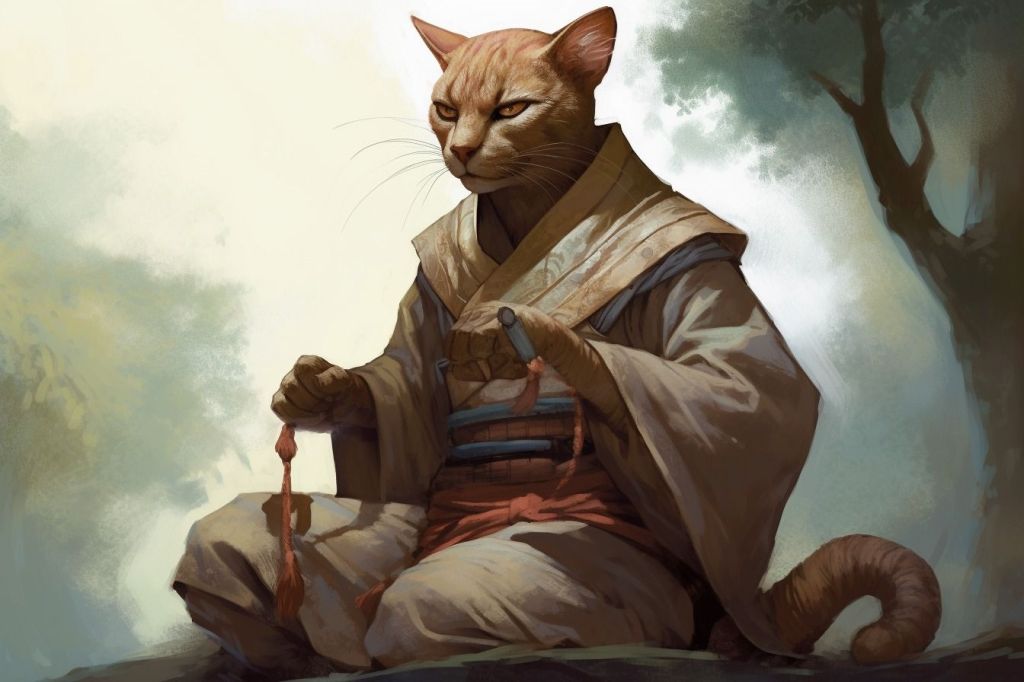
11th Level: Elemental Disciplines
Starting at 11th level, you can learn the following disciplines:
Dance of Three Ways.
You summon six spheres of earth from the ground, suspend them in the air around you, and ignite them with your fiery ki. With a thought, you launch these blazing meteors at your foe. You can spend 3 ki points to cast Melf’s minute meteors*.
Earth Reaches for Sky.
Focusing your strength with a deep, rumbling shout, you swing your arms up high, causing an eruption of churned earth and stone that engulfs your foes. You can spend 3 ki points to cast erupting earth*.
Eternal Mountain Defense.
Your body hardens to stone, nearly impervious to weapons. You can spend 4 ki points to cast stoneskin, targeting yourself.
Flames of the Phoenix.
With a hand motion, you conjure a tiny bead of burning energy. You spend 3 ki points to cast fireball.
Fist of the Elements.
The elements swirl around your weapon. You can spend 3 ki points to cast elemental weapon, choosing from only the damage types cold, fire, or thunder. Your unarmed strikes count as a weapon for the purposes of this discipline.
Hua’s Water Prison.
You conjure up a sphere of water that engulfs and imprisons foes that touch its surface. You can spend 4 ki to cast watery sphere*.
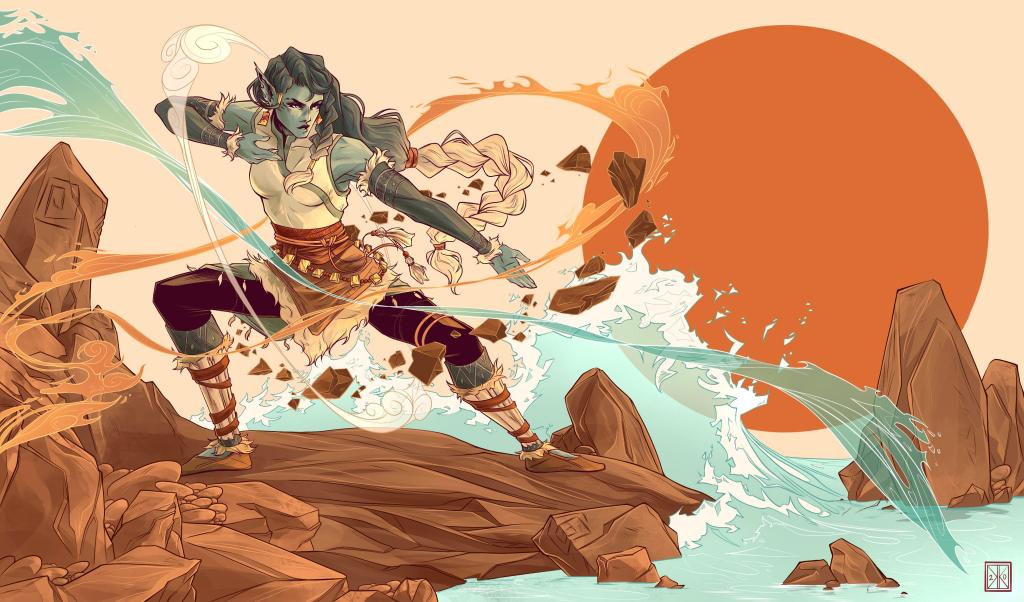
Mist Stance.
A swirling mist envelopes your body and you merge with it, becoming a cloud. You can spend 3 ki points to cast gaseous form, targeting yourself.
One with the Tides.
You reach out with your ki and become one with water. You spend 2 ki points as an action to gain underwater adaptations for 8 hours. While this ability is active, you can breath normally underwater, you gain a swim speed equal to your walking speed, and you gain blindsight with a radius of 60 feet while underwater.
Rain of the Frigid Glacier.
You cool the air in theskies above you, condensing the water droplets into freezing rain and sleet. You can spend 3 ki points to cast sleet storm.
Raise the Troubled Earth.
You stir the earth around you into action, summoning a wall of sand to serve as your barricade. You can spend 3 ki to cast wall of sand*.
Raise the Still Waters.
Though water can give way easily, it can just as easily offer great resistance. You can spend 3 ki to cast wall of water*.
Ride the Wind.
You summon a mighty wind that envelopes your body, sweeping you to where you want to go. You spend 3 ki points to cast fly, targeting yourself, except your fly speed is equal to your movement speed.
River of Hungry Flame.
You sweep your hands upward, causing a wall of blazing hot fire to leap up from the ground. You can spend 4 ki points to cast wall of fire.
Sea’s Fury.
You conjure up a mighty wave of water that crashes down on your foes. You can spend 3 ki to cast tidal wave*.
Subclasses: MONASTIC TRADITION: Way of the Four Elements
\page
Shape of the Flowing River.
You touch the body of water with your ki, coaxing it to change its form. You can spend 4 ki points to cast control water.
Spellfist Stance.
You effortlessly flow between martial and elemental assault. When you use your action to use an elemental discipline, you can make one unarmed strike as a bonus action, or you can use your Flurry of Blows.
Sweeping Crosswind.
A wall of strong wind rises from the ground, batting away anything in its path. You can spend 3 ki points to cast wind wall.

17th Level: Elemental Disciplines
Starting at 17th level, you can learn the following disciplines:
Avatar of the Elements.
As an ultimate display of your mastery of the elements, you can spend 5 ki as an action to have the elements of earth, fire, air, and water form a protective sphere around your body, gaining multiple benefits for 1 minute. While this ability is active you have resistance to bludgeoning, piercing, slashing, cold, fire, lightning, and thunder damage. Also, you gain a burrow, fly, and swim speed equal to your movement speed. Lastly, you can use any of the following abilities as a bonus action:
- You create a small earthquake on the ground in a 15-foot radius around you. Each creature in that area must make a Dexterity saving throw. On a failed save, a creature takes 1d6 bludgeoning damage and is knocked prone.
- You create a line of fire 15 feet long and 5 feet wide extending from you in a direction you choose. Each creature in the line must make a Dexterity saving throw. A creature takes 3d6 fire damage on a failed save, or half as much damage on a successful one.
- You create a 15-foot cube of swirling wind centered on a point you can see within 60 feet of you. Each creature in that area must make a Constitution saving throw. A creature takes 1d10 bludgeoning damage on a failed save, or half as much damage on a successful one. If a Large or smaller creature fails the save, that creature is also pushed up to 10 feet away from the center of the cube.
- You create a 15-foot cone of ice shards extending from your outstretched hand in a direction you choose. Each creature in the cone must make a Constitution save throw. A creature takes 2d6 cold damage on a failed save, or half as much damage on a successful one. A creature that fails its save against this effect has its speed halved until the start of your next turn.
Breath of Winter.
You inhale deeply and then exhale, blasting a cone of frigid air out in front of you that freezes everything in its path. You can spend 5 ki points to cast cone of cold.
Eyes of Fire.
Your foes may try to hide in darkness, but their ki lights up like a torch to you. You may cast see invisibility without expending any ki. In addition, while under the effects of see invisibility, you may spend 2 ki points as a bonus action to gain truesight until the end of your next turn.
Subclasses: MONASTIC TRADITION: Way of the Four Elements
\page
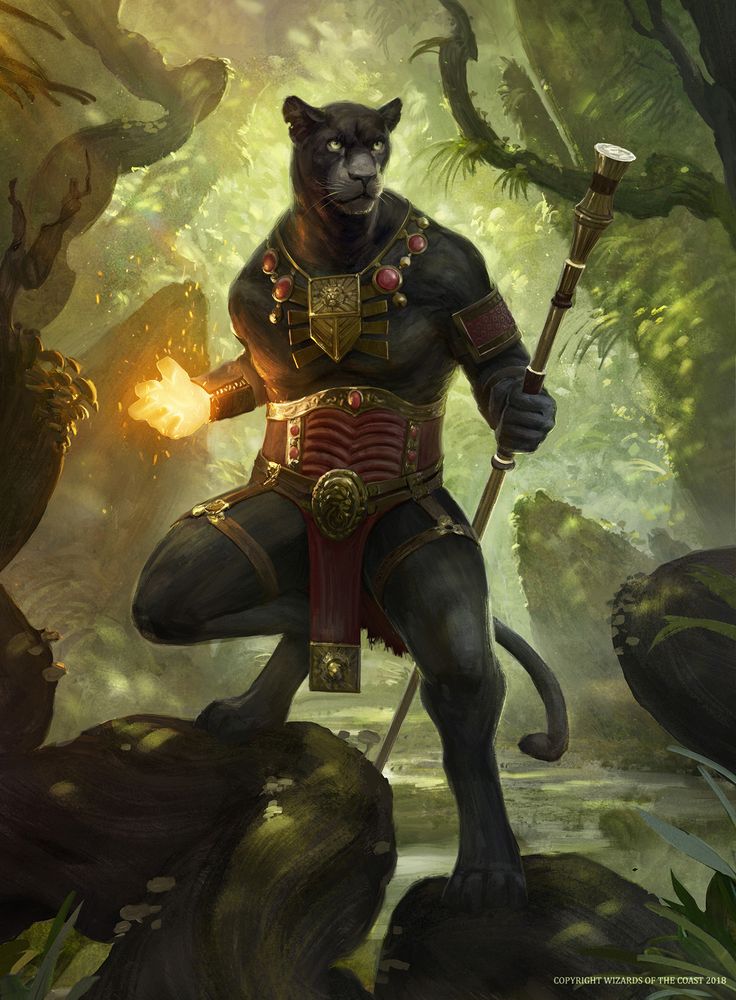
\page

Eye of the Hurricane.
You stretch out your ki to embrace the winds. You can spend 5 ki points to cast control winds*.
Mold the Mountain.
You master the many forms that earth may take. You can spend 5 ki to cast transmute rock*.
Swirling Crab’s Revenge.
Your ki manifests as a swirling pool of water, smashing and pulling your foes towards its center. You can spend 5 ki points to cast maelstrom*.
Wave of Rolling Earth.
The ground shakes and emits a low rumble as a wall of stone erupts up into being. You can spend 5 ki points to cast wall of stone.
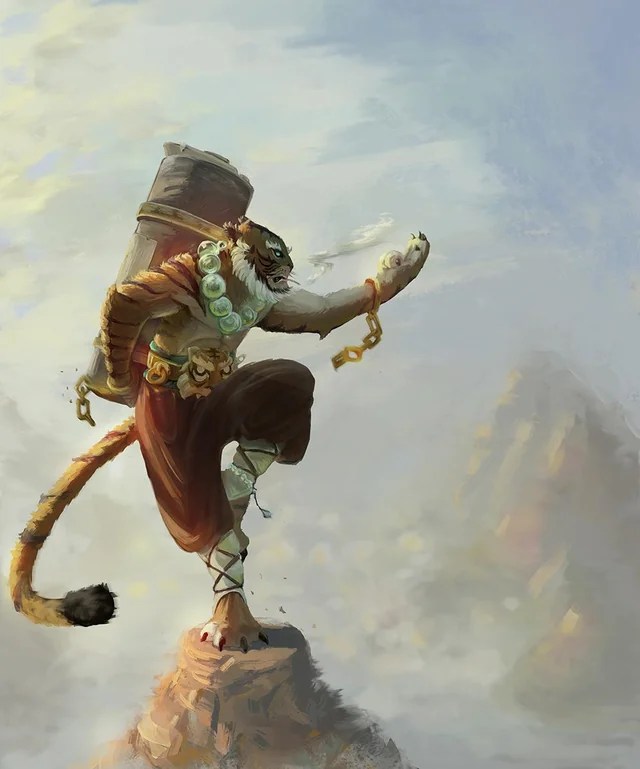

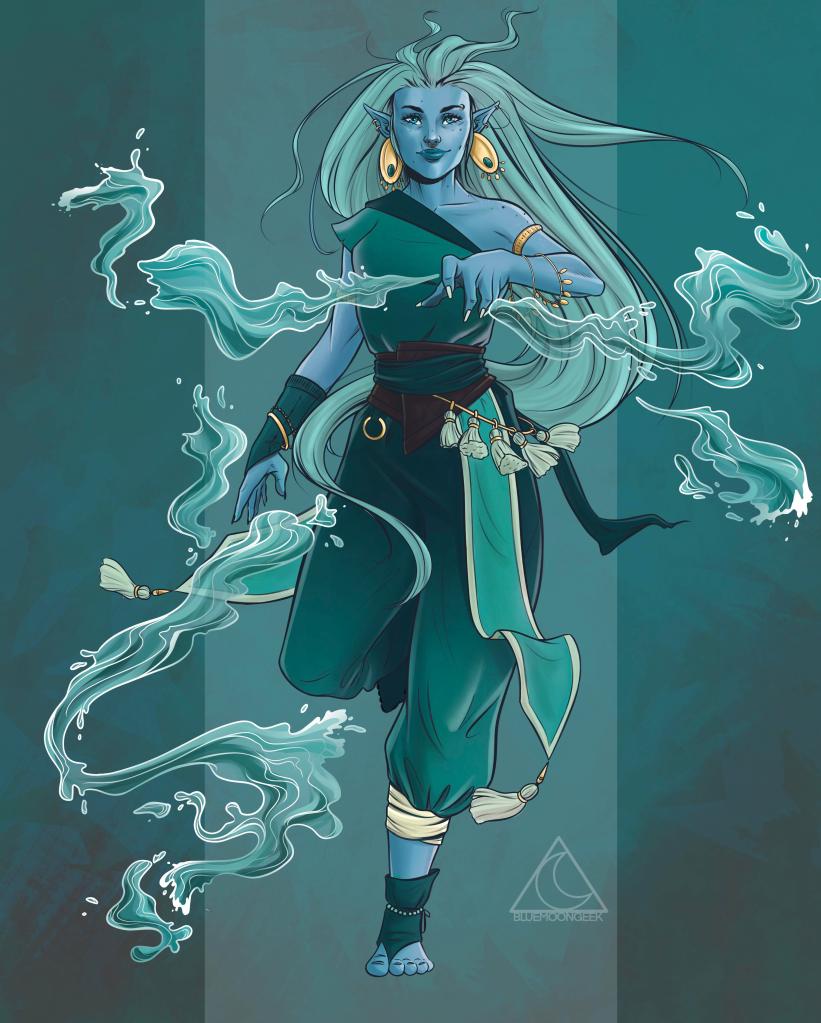
Subclasses: MONASTIC TRADITION: Way of the Four Elements
\page
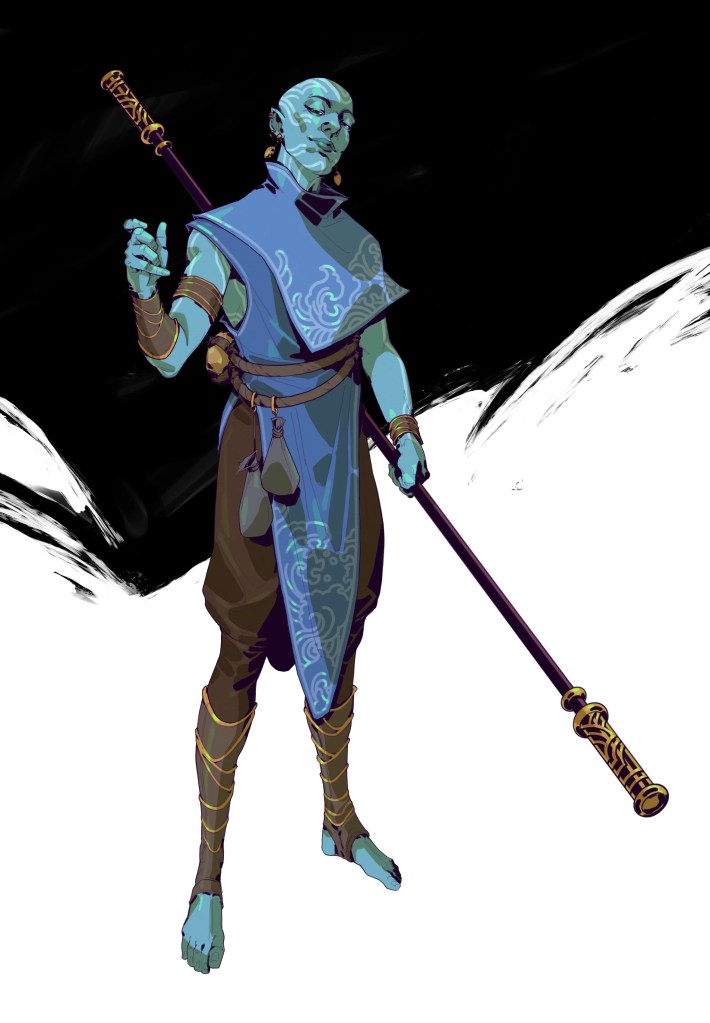
\page

\page
RANGER: Medjey

Although the medjey were founded by the Khemeti Pharoahs almost eight hundred years ago, they can also be found throughout Khepresh and Iteru. They originally began as a secret cabal of vindicators that were personally groomed and selected from a pool of candidates by the Khemeti royal family, typically the Pharaoh. These vindicators would then be tasked with clandestine operations that required the utmost discretion and plausible deniability on the Pharaoh’s part, such as assassinating corrupt officials and slaying rogue tyrants.
The medjeys originally worked independently of each other but would regularly communicate with the Pharoah via a trusted go-between; typically the High Priest of Khemiti, the Embalmer God, whose temple was accustomed to dealing with and in death. Howeve r, over time the medjey position became increasingly overt, and more like a special police branch. The medjey would work as part of a small task force (usually 3 to 5 members) that would cooperatively care for a given nome or region. In practice they remained solo operatives, who regularly meet at designated locations to share intelligence and assign missions.
Over the centuries they have become a roving extension of the Pharaoh’s righteous arm of justice, tracking down bandits and raiders who attack caravans and villages and make bloody work of them. They also hunt and put down arcane and undead horrors that awaken from long forgotten tombs and pyramids saturated with necrotic and dark energies.
Seeing how effective the medjey were in Khemet, the Pharoahs of Iteru and Khepresh formed their own medjey task forces.
The medjey are a strange hybrid of caster and skirmisher and they keep the ancient traditions alive by using magical hieroglyphs to inscribe their weapons with spells.
1st level: Conclave Spells
You gain conclave spells at the ranger levels listed:
| Ranger Level | Spells |
|---|---|
| 3rd | protection from evil and good |
| 5th | dust devil |
| 9th | remove curse |
| 13th | giant insect |
| 17th | hallow |
3rd Level: Deadly Shadow
Starting at 3rd level, you have been trained to eliminate the enemies of the Pharaoh, concealing your presence in the darkness. Once per turn when you hit a creature with an attack while you are unseen by it, your attack is a critical.
In addition, you can take the Hide action as a bonus action.
7th Level: Protective Glyphs
At 7th level, you can write magical hieroglyphs to ward the locations you must protect. You learn the alarm spell, which you can cast as a ritual.
9th Level: Glyph of Warding
At 9th level, you also add glyph of warding to your spell list.
11th Level: Blessing of the Sun
At 11th level, your attacks are infused with the glowing power of the sun. If you hit a single attack on your turn as part of the Attack action, you cause additional 1d8 fire damage.
If you hit the same creature twice as part of that action, you cause an additional 1d8 radiant damage and the target is blinded until the end of its next turn.
15th Level: Mark of the Scarab
When you reach the 15th level, the design of a scarab is branded on your body, offering you protection. Whenever you take damage from an attack, you can use your reaction to reduce the damage to half.
In addition, whenever you take necrotic damage, or damage that would reduce you to 0 hit points, you can use your reaction to reduce that damage to 0.
Subclasses: RANGER: Medjey
\page
\page
Sorcerous Origin:
The Blood Mage
Everyone touched with the gift of spellcraft can feel the dark pull of the power lying just beneath their skin: Blood Magic.
Originally taught to mortals by spirits and demons alike, those more in tune with the way magic flows through and intensifies within living creatures may free themselves from the ties of mana and foci, instead casting their spells through the sacrifice of blood — freely given or forcefully taken.
Some would see this act and the abilities it grants as perverse, monstrous, maybe even evil. But there is a reason the teachings of this ancient art continue to find refuge in the darker corners of the world century after century;
No one can deny its power.
{{descriptive
Caveat
This particular Origin relies on organic, natural blood present in its user to draw from. Therefore, undead, constructs, and other spellcasters without blood in the traditional sense will have to seek their power elsewhere. Vampires are the only undead exception to this rule for obvious reasons.
}}
Sanguine Spellcraft
The path of the Blood Mage offers abilties that some may consider…unnatural.
You learn additional spells when you reach certain levels in this class, as shown on the Sanguine Spells table. The spell counts as a sorcerer spell for you, but it doesn’t count against the number of sorcerer spells you know.
Sanguine Spells
| Sorcerer Level | Spells |
|---|---|
| 1st | cause fear, puppet |
| 3rd | enthrall, ray of enfeeblement |
| 5th | life transference, vampiric touch |
| 7th | shadow of Moil, summon greater demon |
| 9th | infernal calling, modify memory |
1st Level: Organic Focus
When you take this Origin at 1st level, you gain an innate awareness of the way magic uses your veins like leylines, strengthening your body with arcane force.
You eschew the need for an arcane focus to cast your spells. Your body becomes the focus for your spellwork, so long as you still have blood left in your body.
Additionally, your hit die increases from a d6 to a d8.
1st Level: Blood Magic
Starting at 1st level, you begin to understand the stakes of older magicks within the natural world, and how to place yourself as a wager in that gamble.
Any time you cast a spell, you may choose to do so by sacrificing your own hit points, instead of expending a spell slot. This is done at the moment of casting the spell, and no additional action is required to do this. The blood cost of a spell is equal to 5 x the spell’s level in hit points.
For example, say you wanted to cast Burning Hands at the 1st level with Blood Magic. You would sacrifice 5 of your own hit points to do so. But, if you wished to cast it at the 3rd level, it would cost 15 of your hit points.
Additionally, if you cast any of your Sanguine Spells this way, they do not require any material or verbal components. However, if you are bound or restrained in a way that prevents you from drawing blood, you may not cast spells using Blood Magic.
{{descriptive
A Note on Blood Rituals
A precendent has been set for the blood of others (however willing or not) being used by a devious-enough Blood Mage to power their spells and rituals. While this Origin isn’t going to cover the specifics of how to go about doing this as it pertains to individual spells, it should be said that this is absolutely within a Blood Mage’s arsenal.
If a player has the means to sacrifice or otherwise bleed multiple living creatures at once, then they would have access to some serious magical might. Such rituals, however, are rarely without metaphysical consequences. This is all left at the discretion of the DM.
}}
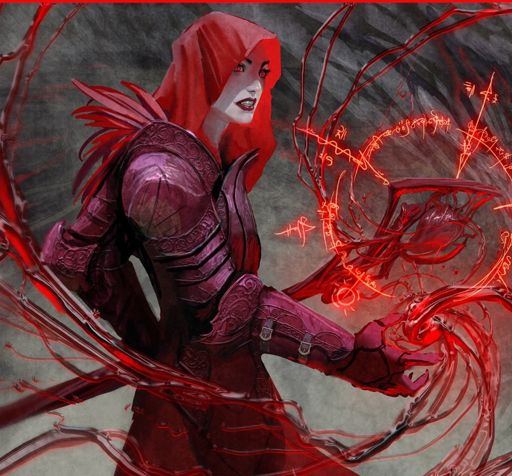
Subclasses: SORCEROUS ORIGIN: The Blood Mage
\page
6th Level: Crimson Sacrifice
At 6th level, you have learned to draw power not only from within, but from those who have stood — and fallen — in your path.
When you reduce a target to 0 hit points, you gain temporary hit points equal to your proficiency bonus + your Charisma modifier. These last for an hour. Targets without blood are unaffected.
You may attempt to initiate this siphon on a still-conscious target:
Blood Siphon
Blood Mage Origin Feature
- Casting Time: 1 action
- Range: 30ft
- Components: S (15+ hp sacrificed)
- Duration: Concentration, up to 1 minute
As an action, sacrifice 15 of your own hit points. The blood congeals and forms a horrific tether as it attempts to latch on to your target. They must roll a Constitution Saving Throw against your Spell Save DC. Allies may choose to fail the save.
On a failure, your life force is linked to theirs, and they take necrotic damage equal to two rolls of their own hit die. You gain temporary hit points equal to half of the damage taken. This link lasts a minute, and you may use your action on subsequent turns to force them to take this damage automatically. This link ends if you use your action to do anything else.
The number of damage hit die rolls increases by 1 for every additional 5 hit points you sacrifice when casting this spell.
Targets without blood automatically succeed their Saving Throw.
14th Level: Boiling Blood
At 14th level, your study of sanguimancy has given you finer control over your own blood, and the ability to seek and manipulate the blood of others with greater ferocity.
The hit point cost to cast your spells with Blood Magic has improved. Now you must only sacrifice hit points equal to 5 x half of the spell’s level, rounded down (minimum of 5).
Additionally, you gain access to the following;
Haemorrhage
Blood Mage Origin Feature
- Casting Time: 1 bonus action
- Range: 60ft
- Components: S (20+ hp sacrificed)
- Duration: Instantaneous
As a bonus action, sacrifice 20 of your hit points. Each creature in a 30ft radius must make a Constitution Saving Throw against your Spell Save DC. On a failure, their blood begins to boil within their veins, searing them from the inside out. Each creature takes fire damage equal to 8 rolls of their individual hit die and is paralysed until the end of your next turn.
On a success, the creature takes half damage and is not paralysed. The number of damage hit die rolls increases by 1 for every additional 5 hit points you sacrifice when casting this spell. Targets without blood are unaffected.
18th Level: Ultimate Control
At 18th level, few stand in your path and leave unchanged. Your feats of Blood Magic approach those of legend, for better or for worse.
Any hit points you receive from your Origin features are doubled. Demons summoned through your Blood Magic automatically have disadvantage on their Saving Throws to wrest free of your control.
Additionally, you gain the following feature;
Dark Marionette
Blood Mage Origin Feature
- Casting Time: 1 action
- Range: 60ft
- Components: S (20+ hp sacrificed)
- Duration: Concentration, up to 1 hour
As an action, you may sacrifice 20 hit points. Target one creature you can see within 60 ft. They must succeed on Wisdom Saving Throw against your Spell Save DC.
On a successful save, the target takes 6d6 psychic damage.
On a failure, the target’s blood comes under your deft command, as if attached to your mind with invisible puppet strings. The controlled target regards you as a trusted friend to be heeded and protected. As it is under your direct control, it takes your requests or actions in the most favorable way it can, following your direct orders, and is willing to use its life force for your Blood Magic.
On subsequent turns, you must use your bonus action to issue them commands. Non-fiend targets without blood automatically succeed the Saving Throw, and take no damage.
Each time you or your companions do anything harmful to the target, save for drawing blood from it, it can repeat the saving throw, ending the effect on itself on a success.
Otherwise, the effect lasts for an hour or until your concentration is broken, you fall unconscious, are on a different plane of existence than the target, or take a Bonus Action to end the effect.
You may increase the threshold of the Wisdom Saving Throw by 1 for every additional 5 hit points you sacrifice in the casting of this spell.
Subclasses: SORCEROUS ORIGIN: The Blood Mage
\page
Sorcerous Origin
The Emberheart
Whether you stole your power from a noble Efreeti lord, were gifted it by an ancient fire drake, or you were born near a gate to the elemental Plane of Fire, you now carry within you an ember of pure elemental flame.
This ember of arcane fire fuels your burning soul, inflames your passions, and allows you to perform wondrous and terrible feats of fire magic.

Emberheart Features
| Sorcerer Level | Feature |
|---|---|
| 1st | Emberheart Spells, Heart of Flame |
| 6th | Wild Fire |
| 14th | Kindle the Flame |
| 18th | Primordial Inferno |
Emberheart Spells
You learn certain spells at the sorcerer levels noted in the table below. They count as sorcerer spells for you, but they don’t count against your number of Spells Known.
Whenever you gain a sorcerer level, you can replace one spell from this feature with another spell of your choice of the same level, that deals only fire damage, from any spell list.
| Sorcerer Level | Spell |
|---|---|
| 1st | burning hands, hellish rebuke |
| 3rd | flaming sphere, scorching ray |
| 5th | fireball, minute meteors XGtE |
| 7th | summon elemental (fire) TCoE, wall of fire |
| 9th | flame strike, immolation XGtE |
1st Level: Heart of Flame
The primordial flame empowers your spirit. Beginning at 1st level, you are resistant to fire damage and you have advantage on saving throws to resist being charmed or frightened.
You can also speak, read, and write Ignan, the language of the Elemental Plane of Fire. By understanding Ignan you can communicate with any creature that speaks Primordial, or one of its four dialects; Aquan, Auran, Ignan, and Terran.
6th Level: Wild Fire
Starting at 6th level, you can cause fire to erupt from the ruin of your foes.
When you reduce a Small or larger creature to 0 hit points with a spell that deals fire damage, you can use your reaction to force creatures of your choice within 10 feet of that creature to make Dexterity saving throw against your Spellcasting DC.
They take fire damage based on the size of the creature, as indicated in the table below, on a failure, and half as much on a success.
| Tiny | 0 |
| Small | 1d6 |
| Medium | 2d6 |
| Large | 3d6 |
| Huge | 4d6 |
| Gargantuan | 5d6 |
You can use this reaction a number of times equal to your Charisma modifier (minimum of once), and you regain all of your expended uses when you finish a long rest.
14th Level: Kindle the Flame
Your body is restored when you draw on the elemental flame. Beginning at 14th level, when you cast a fire spell of 1st-level or higher, you can choose to gain temporary hit points equal to the level of the fire spell + your Charisma modifier.
18th Level: Primordial Inferno
Your flaming soul has become an inferno, making you more elemental then mortal. Starting at 18th level, you don’t need to eat, drink, or sleep, and you are immune to fire damage.
When you take damage from a creature within 30 feet, you can use your reaction to force it to make Dexterity saving throw against your spellcasting DC. On a failure, they take fire damage equal to your level.
You can use this ability as many times as your proficiency bonus. This ability resets on a long rest.
Subclasses: SORCEROUS ORIGIN: The Emberheart
\page
Sorcerous Origin
The Faeblood
Every so often, a mortal catches the attention of a lord or lady of the Fey. Often, the object of affection or offspring of this relationship is gifted wondrous arcane ability beyond that of other mortals.
However, these mortal infatuations are usually brief, and the mortals are left to learn to use their power with little supervision or instruction.
Whether you were chosen by a powerful Fey, or were the child of such a relationship or you have been blessed with the whimsical power of the Feywild.

Faeblood Features
| Sorcerer Level | Feature |
|---|---|
| 1st | Fey Spells, Heartsight |
| 6th | Seasonal Attunement |
| 14th | Gateway Magic |
| 18th | Intoxicating Presence |
Fey Spells
Your link to the Feywild grants you an affinity with charms.
When you learn a sorcerer spell, you can also choose from the bard spell list, and it becomes a sorcerer spell for you.
You learn certain spells at the sorcerer levels noted in the table below.
They count as sorcerer spells for you, but they don’t count against your number of Spells Known.
When you gain a sorcerer level, you can replace one spell from this feature with another bard spell of your choice.
| Sorcerer Level | Spell |
|---|---|
| 1st | charm person, faerie fire |
| 3rd | enthrall, misty step |
| 5th | blink, hypnotic pattern |
| 7th | compulsion, dominate beast |
| 9th | dominate person, seeming |
1st Level: Heartsight
At 1st level, your Fey magic grants you heightened empathic abilities. You gain proficiency in Insight, and you add double your proficiency bonus to any Insight checks you make.
As an action, you can touch a creature to read their heart. Make a Charisma (Insight) check, contested by the creature’s Charisma (Deception) check.
If you succeed, you learn its alignment. Celestials, fiends, and undead automatically fail. Creatures are unaware you attempted to read their heart.
6th Level: Seasonal Attunement
Beginning at 6th level, you can align yourself with one of the seasons like a true Fey.
At the end of each long rest, choose a season and gain the benefits listed below.
Each season grants you a resistance and advantage on certain rolls.
| Season | Damage Type | Roll With Advantage |
|---|---|---|
| Spring | Lightning | Hit Die Rolls |
| Summer | Fire | Initiative Rolls |
| Autumn | Poison | Concentration Checks |
| Winter | Cold | Death Saving Throws |
14th Level: Gateway Magic
Your magic allows you to slip between the Feywild and the material plane.
Starting at 14th level, after you cast a spell of 1st-level or higher, can choose to teleport to an unoccupied space of your choice within 30 feet that you can see.
When you use this feature, you can spend Sorcery Points to increase its range by 10 feet for each Sorcery Point.
18th Level: Intoxicating Presence
You exude the intoxicating presence of an Archfey. Starting at 18th level, creatures of your choice within 15 feet of you have disadvantage on saving throws to resist enchantment spells.
Subclasses: SORCEROUS ORIGIN: The Faeblood
\page
Sorcerous Origin
The Greensinger
There are many reclusive sages who learn to wield the magic of nature, but a rare few are born with an innate connection to that magic. Known as Greensingers, these wild sorcerers are able to magically manipulate plants, and can even sprout vines from their flesh in order to move about the world.

Greensinger Features
| Sorcerer Level | Feature |
|---|---|
| 1st | Verdant Spells, Vigorous Vines |
| 6th | Grasping Growth |
| 14th | Creeping Defense, Crushing Grip |
| 18th | Greensong |
1st Level: Verdant Spells
Your link with nature allows you to wield primal magic. When you learn a sorcerer spell, you can also choose to learn from the druid spell list, and it becomes a sorcerer spell for you.
You learn certain spells at the sorcerer levels noted in the table below. They count as sorcerer spells for you, but they don’t count against your number of Spells Known. When you gain a sorcerer level, you can replace one spell from this feature with another druid spell of your choice.
| Sorcerer Level | Spell |
|---|---|
| 1st | earth tremor XGtE, entangle |
| 3rd | earthbind XGtE, spike growth |
| 5th | plant growth, speak with plants |
| 7th | grasping vine, guardian of nature XGtE |
| 9th | tree stride, wrath of nature XGtE |
1st Level: Vigorous Vines
Beginning at 1st level, you can use a bonus action to extrude (or retract) a thin, yet vigorous, vine from your body up to 10 feet in length. You can use this vine to perform simple tasks, but it can’t be used to attack, manipulate tools, or activate items, and it cannot carry more than 10 pounds. You can extrude a total number of vines at one time equal to your proficiency bonus. The vines share your Armor Class and they each have hit points equal to your sorcerer level.
6th Level: Grasping Growth
Starting at 6th level, your vines can grow up to 15 feet in length. While your vines are extruded, you can use a bonus action to attempt to grapple a creature within reach of one of your vines by making a Charisma (Athletics) check. Also, while you have at least two vines extruded, you gain a climbing speed equal to your movement speed, and you can climb on difficult surfaces including upside down on ceilings, without needing to make an ability check. Your vines must be able to reach the surface you wish to climb.
14th Level: Creeping Defense
Upon reaching 14th level, your vines can grow up to 20 feet in length. Also, when you are hit by an attack, you can use your reaction to block the incoming blow with one of your vines. If the incoming damage destroys your vine, you take any additional damage that exceeds your vine’s hit points.
14th Level: Crushing Grip
At 14th level, your vines are able to drain the vitality of your foes. At the start of your turn, each creature grappled by your vines takes necrotic damage equal to your Charisma modifier (minimum of 1), and you gain temporary hit points equal to the total necrotic damage dealt to all grappled creatures.
18th Level: Greensong
You and the natural world have become one. Starting at 18th level, you can use an action to enter the Greensong, a state of pure harmony with nature. For the next minute, or until you are incapacitated, you gain the benefits listed below:
- You immediately extrude the maximum number of vines.
- The reach of your vines temporarily becomes 30 feet.
- When you take the Attack action, you can make an attack, or grapple, with each vine. You use your Charisma for the attack rolls, and your vines deal magical bludgeoning damage equal to 1d8 + your Charisma modifier on hit.
{{descriptive
Grappling from a Distance
Remember, a creature grappled by you, no matter how far from your body, is able to attack whatever limb, or vine, you are using to grapple them.
}}
Subclasses: SORCEROUS ORIGIN: The Greensinger
\page
Sorcerous Origin
The Ironmonger
Often born during times of great war and strife, Ironmonger sorcerers have an affinity for all things forged for use in war. They thrive in the midst of battle, wielding potent war magic on the front lines. Ironmongers are formidable foes, and are sought after by captains and conquerers for their ability to turn the tide of any battle, no matter how hopeless.

Ironmonger Features
| Sorcerer Level | Feature |
|---|---|
| 1st | Iron Spells, Armaments of War, Blade of Strife |
| 6th | Extra Attack |
| 14th | Dancing Blade |
| 18th | Storm of Blades |
1st Level: Iron Spells
You learn certain spells at the sorcerer levels noted in the table below. They count as sorcerer spells for you, but they don’t count against your number of Spells Known. Whenever you gain a level, you can replace one spell from this feature with another abjuration or conjuration spell of the same level from the sorcerer or wizard spell list.
| Sorcerer Level | Spell |
|---|---|
| 1st | command, compelled duel |
| 3rd | cloud of daggers, heat metal |
| 5th | conjure barrage, elemental weapon |
| 7th | summon construct (metal) TCoE, fabricate |
| 9th | animate objects, conjure volley |
1st Level: Armaments of War
The arcane power within your soul grants you an affinity with the armaments of war. At 1st level, you gain proficiency with light and medium armor, shields, and all simple and martial weapons that lack the heavy or two-handed properties.
1st Level: Blade of Strife
Beginning at 1st level, you can summon the Ironmonger’s signature weapon, the Blade of Strife.
As a bonus action, you create this mystical Blade at a point you can see within 60 feet. It lasts for 1 minute or until you use this feature again. When you create the Blade, you can make a melee spell attack against one creature within 10 feet of it. On a hit, the target takes 1d8 magical slashing damage. As a bonus action, you can move the Blade up to 30 feet and repeat the attack.
You can use this feature a number of times equal to your Charisma modifier (minimum of once), and you regain all of your expended uses when you finish a long rest, unless you expend a spell slot of 1st-level or higher to summon it again.
6th Level: Extra Attack
Starting at 6th level, you can attack twice, instead of once, when you take the Attack action. Moreover, you can cast one of your sorcerer cantrips in place of one of those attacks.
14th Level: Dancing Blade
At 14th level, you gain increased mastery with your Blade of Strife. As a reaction, when a creature within 10 feet of your Blade is hit by an attack, you can attempt to deflect the blow with your Blade, and grant the creature a bonus to its Armor Class equal to your Charisma modifier (minimum of +1).
In addition, your Blade now deals 2d8 damage on hit.
18th Level: Storm of Blades
You have become a god of warfare and lay waste to your foes. Starting at 18th level, you can use your action to destroy your Blade of Strife in a storm of arcane iron shards and force two creatures of your choice within 30 feet of your Blade to make a Dexterity saving throw. Targets take 6d8 magical slashing damage on a failure, and half as much on a success.
When you use this action, you can spend a spell slot to target additional creatures with of your choice within 30 feet of your Storm of Blades. You can target a single additional creature for a 1st-level spell slot, plus one additional creature for each level of spell slot above 1st.
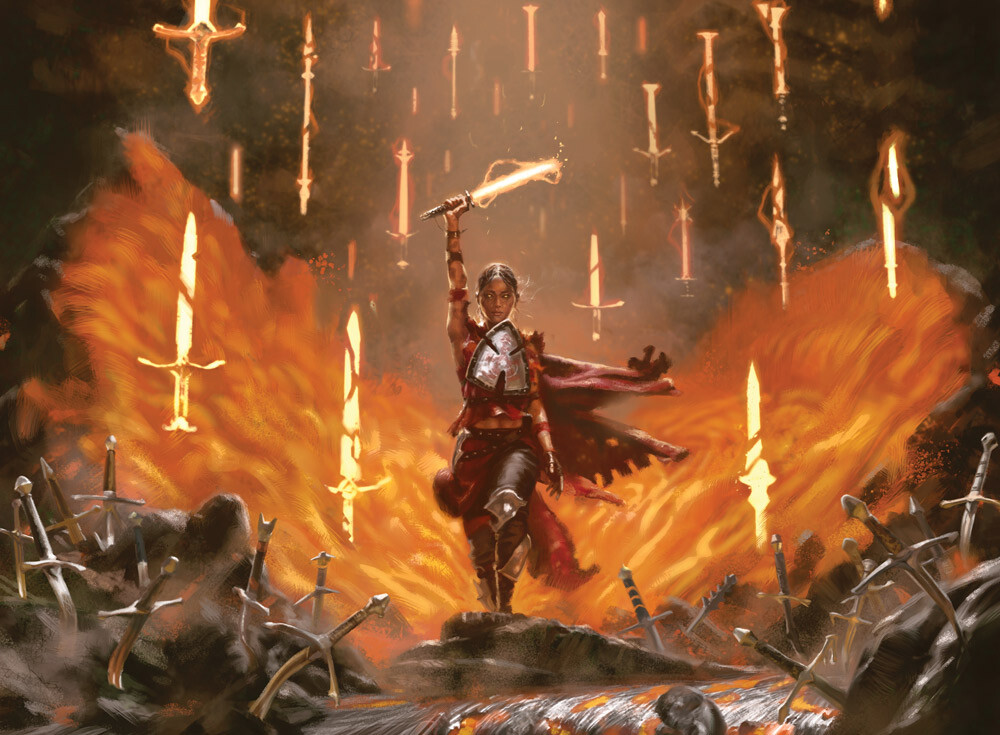
Subclasses: SORCEROUS ORIGIN: The Ironmonger
\page
Sorcerous Origin
The Metallic Soul
Metallic Souls are often forged rather than born, whether they were made by a god of metal, or were somehow struck with elemental energy from the elemental plane of metal. Perhaps their parents were a shakhta ezen?Like shakhta ezen themselves, a disproportionately large number of metallic soul sorcerers on Seminus seem to manifest amongst ad’amlar, gnomes and other kin with an innate and intrinsic connection to the element of metal. Regardless of how they came to possess their innate magic, these sorcerers are able to melt and reshape metal practically at will, and possess untold magnetic powers.
|Sorcerer Level|Feature
|:-:|:-:|
|1st|Metallic Spells, Magnetic Warrior
|6th|Forged By Fire
|14th|Lodestone Armament
|18th|Magnetic Lock
Metallic Spells
You learn additional spells when you reach certain levels in this class, as shown on the Metallic Spells table. Each spell counts as a sorcerer spell for you, but it doesn’t count against the number of sorcerer spells you know.
Whenever you gain a sorcerer level, you can replace one spell you gained from this feature with another spell of the same level. The new spell must be a transmutation or evocation spell from the cleric, druid, or sorcerer spell list.
Metallic Spells
| Sorcerer Level | Spells |
|---|---|
| 1st | searing smite, shield |
| 3rd | barkskin, heat metal |
| 5th | call lightning, elemental weapon |
| 7th | fire shield, stoneskin |
| 9th | flame strike, holy weapon |
Magnetic Warrior
At 1st level, you acquire the training necessary to effectively arm yourself for battle. You gain proficiency with light armor and medium armor, as well as simple weapons.
Your magnetic abilities allow you greater control of weapons. When wielding a metallic weapon with which you are proficient, you can use your Charisma Modifier, instead of Strength or Dexterity, for the attack and damage rolls.
Your reach with metallic weapons extends by 5 ft. at 1st level (10 ft.), 6th level (15 ft.), 14th level (20 ft.), and 18th level (25 ft.).
Forged By Fire
At 6th level, you have gained sufficient experience with metal and heat. You gain resistance to fire damage.
Additionally, when you fail a Constitution Saving throw made to maintain concentration on a spell that deals fire damage, you can expend one Sorcery Point to succeed instead.
Lodestone Armament
At 14th level, your affinity for using magnetism as a weapon increases. You learn animate objects, and it doesn’t count against the number of spells you know. When you cast animate objects and target only metallic objects, each object has double the amount of Hit Points it would normally have.
Magnetic Lock
Starting 18th level, you are able to bind metal in place with magnetic fields. As an action, you can choose a creature you can see within 60 feet of you that is made of or wearing a large amount of metal and force it to make a Strength Saving throw. The creature is paralyzed for 1 minute on a failed saving throw, and can remake the Saving throw as an action on each of its turns, ending the effect on a success.
Alternatively, as an action, you can choose a metallic object that is huge or smaller and lock it in place as if it were an immovable rod.
You can end either of these effects at any time; no action required.
You are able to use this ability as many times as your proficiency modifier per day. This ability resets on a long rest.

Subclasses: SORCEROUS ORIGIN: The Metallic Soul
\page
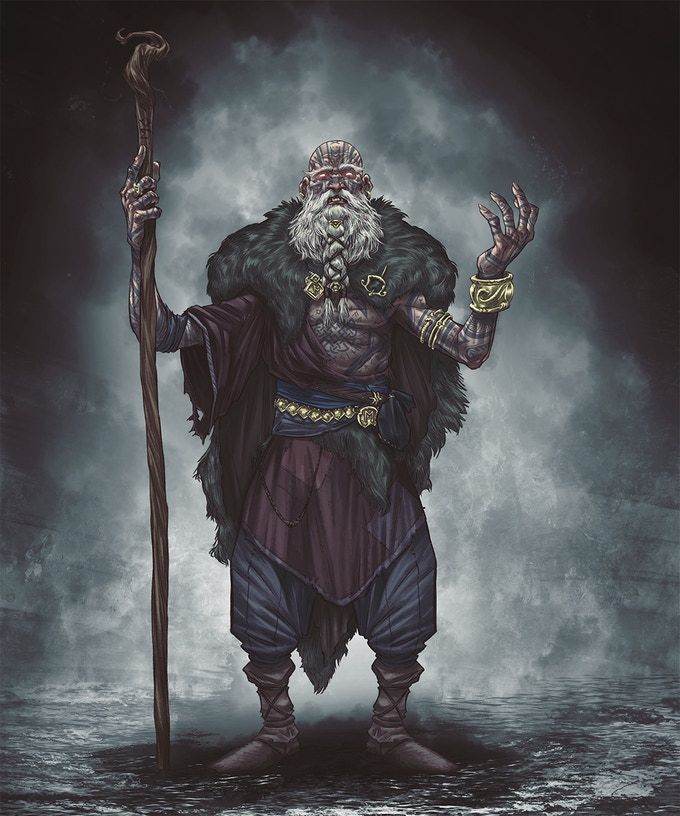
\page
Sorcerous Origin
The Stoneblood
You are a Stoneblood sorcerer, a mortal imbued with a shard of pure elemental earth who can access the powerful magics of rock and stone. Whether this power was given to you by a Dao, an elder earth elemental, or one of the ancient Adam’lu domovoi, you now wield the unyielding power of stone. Your magic makes you as unyielding as the mountains, and subtly drives you to hoard precious gems and metals.
Stoneblood Features
| Sorcerer Level | Feature |
|---|---|
| 1st | Stoneblood Spells, Heart of Earth |
| 6th | Crushing Blow, Extra Attack |
| 14th | Aegis of Stone |
| 18th | Primordial Bulwark |
1st Level: Stoneblood Spells
You learn certain spells at the sorcerer levels noted in the table below. They count as sorcerer spells for you, but they don’t count against your number of Spells Known. Whenever you gain a level in this class, you can replace one spell from this feature with another spell of the same level, that deals only bludgeoning damage, from any spell list.
| Sorcerer Level | Spell |
|---|---|
| 1st | earth tremor XGtE, sanctuary |
| 3rd | earthen grasp XGtE, spike growth |
| 5th | erupting earth XGtE, meld into stone |
| 7th | stone shape, summon elemental (earth)TCoE |
| 9th | steel wind strike XGtE, wall of stone |
1st Level: Heart of Earth
Beginning at 1st level, you can use a bonus action to take on an earthen Elemental Form, encasing your body in elemental stone and granting you the following benefits for 1 minute:
- You gain temporary hit points equal to your sorcerer level.
- If you are not wearing any armor or wielding a shield, your Armor Class becomes 13 + your Constitution modifier.
- Your unarmed strikes deal 1d10 bludgeoning damage. If you strike with two free hands, the d10 becomes a d12.
- You use your Constitution modifier, in place of Strength, for the attack and damage rolls of your unarmed strikes.
You can transform in this way a number of times equal to your Charisma modifier (minimum of once), and you regain all of your expended uses when you finish a long rest.
You can also speak, read, and write Terran, the language of the Elemental Plane of Earth. By understanding Terran you can communicate with any creature that speaks Primordial, or one of its four dialects; Aquan, Auran, Ignan, and Terran.
6th Level: Crushing Blow
Upon reaching 6th level, you can empower your strikes with crushing force. When you hit a target with an unarmed strike or melee weapon attack, you can expend a spell slot to deal extra magical bludgeoning damage to the target. This damage is 2d6 for a 1st-level slot, plus 1d6 for each higher level of the slot you expend, up to a maximum of 6d6.
6th Level: Extra Attack
Starting at 6th level, you can attack twice, instead of once, whenever you take the Attack action. Moreover, you can cast one of your sorcerer cantrips in place of one of those attacks.
Also, while you are in your earthen Elemental Form, your unarmed strikes count as magical for the sake of overcoming resistances and immunities to non-magical attacks.
14th Level: Aegis of Stone
You can ward yourself and others with the magic of elemental earth. Starting at 14th level, you can use your bonus action to expend 2 Sorcery Points and ward a creature you touch, with an Aegis of Stone.
The target gains resistance to non-magical bludgeoning, piercing, and slashing damage for 1 minute.
As a reaction, when a creature, other then you, that is warded by your Aegis is hit by an attack, you can teleport to an unoccupied space within 5 feet of the attacker and make one melee attack against it.
You can only teleport in this way if both you and the attacker are on the same surface.
Only one creature can be under the effect your Aegis, and warding another causes the previous Aegis to dispel.
18th Level: Primordial Bulwark
Your stalwart soul has become unbreakable diamond, making you more elemental then mortal. Starting at 18th level, you no longer need to eat, drink, or sleep, and you gain resistance to all bludgeoning, piercing, and slashing damage.
In addition, you can have up to three creatures of your choice under the effects of your Aegis of Stone at one time.
Subclasses: SORCEROUS ORIGIN: The Stone Blood
\page
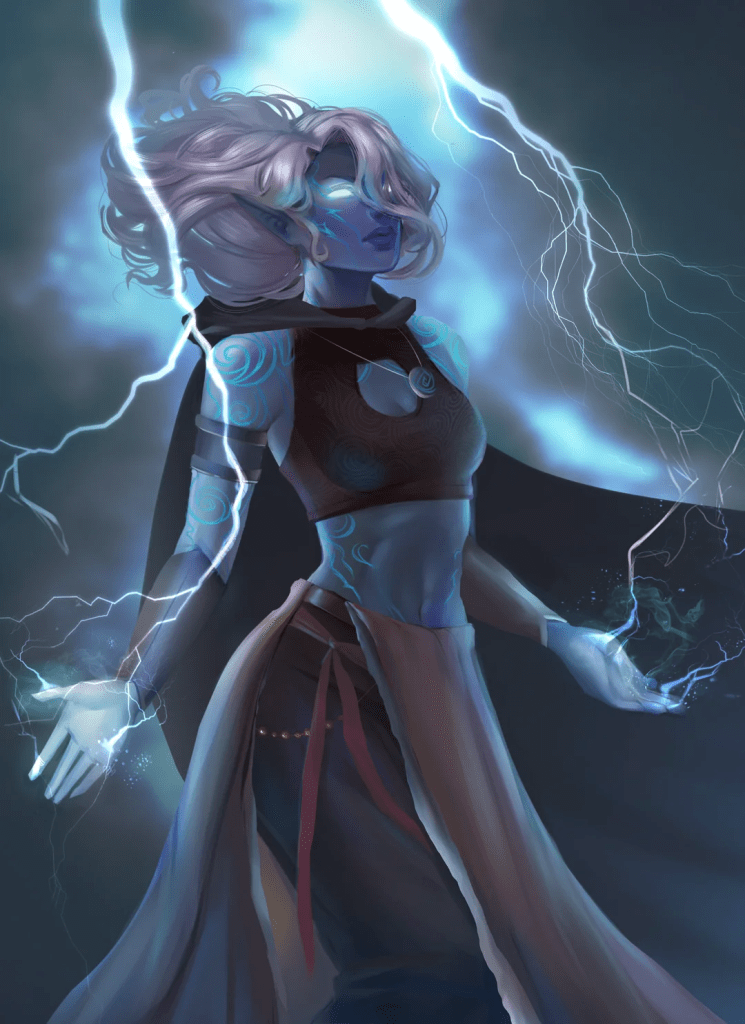
\page
Sorcerous Origin
The Stormsoul
Within you dwells a mote of pure elemental air, which grants you innate power over both breeze and storm.
Whatever the origin of your power, your inner primal storm can drive you from whimsical and calm, to wild violence with little warning.
Do you embrace the call of the winds, wandering the land, or do you seek to control the storm that rages inside you?
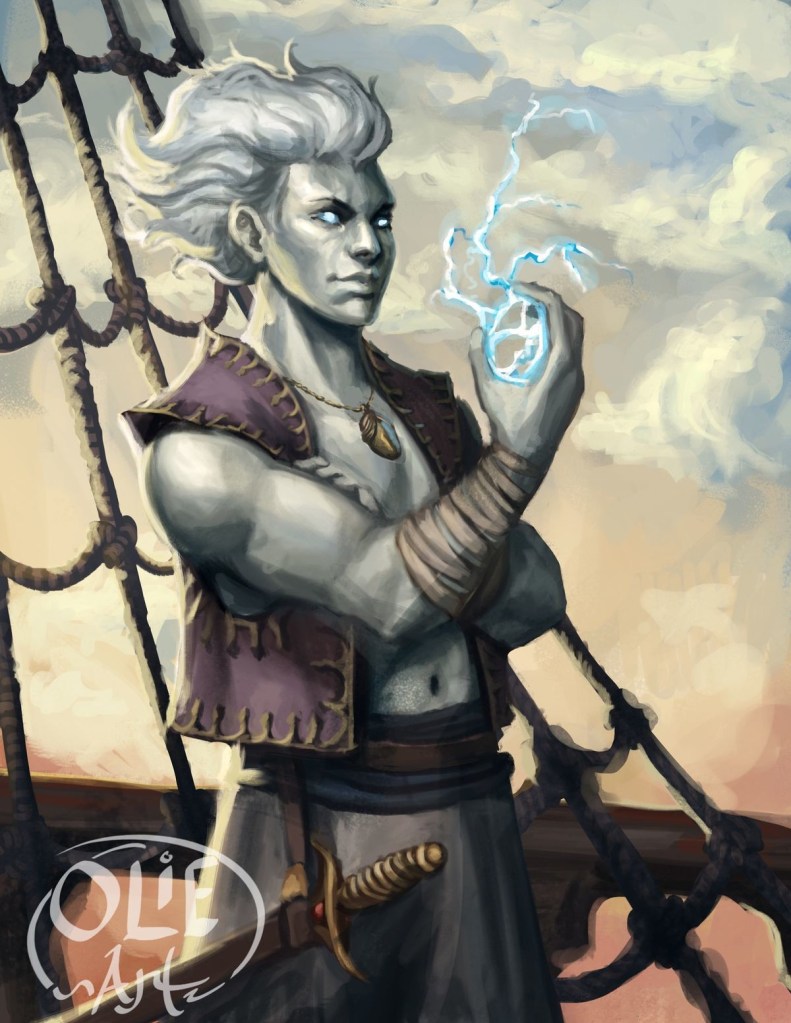
Stormsoul Features
| Sorcerer Level | Feature |
|---|---|
| 1st | Stormsoul Spells, Heart of Winds |
| 6th | Stormborn, Storm Guide |
| 14th | Windcaller |
| 18th | Primordial Storm |
1st Level: Stormsoul Spells
You learn certain spells at the sorcerer levels noted in the table below.
They count as sorcerer spells for you, but they don’t count against your number of Spells Known.
When you gain a sorcerer level, you can replace one spell from this feature with another spell of the same level, that deals only lightning or thunder damage, from any spell list.

Stormsoul Spells
| Sorcerer Level | Spell |
|---|---|
| 1st | feather fall, thunderwave |
| 3rd | shatter, warding wind XGtE |
| 5th | call lightning, wind wall |
| 7th | summon elemental (air) TCoE, storm sphere XGtE |
| 9th | arcane hand, control winds XGtE |
1st Level: Heart of Winds
Drawing upon the tempestuous magic within you allows you to take flight.
Beginning at 1st level, when you cast a spell of 1st-level or higher, you can use a Bonus Action to gain a temporary flying speed equal to your remaining movement speed, which lasts until the end of your current turn.
This tempestuous flight does not provoke opportunity attacks, but if you end your movement while you are mid-air you fall to the ground at the end of your turn.
You can also speak, read, and write Auran, the language of the Elemental Plane of Air. By understanding Auran you can communicate with any creature that speaks Primordial, or one of its four dialects; Aquan, Auran, Ignan, and Terran.
6th Level: Stormborn
The power of your inner storm has grown. At 6th level, you gain resistance to both lightning and thunder damage.
Also, whenever you cast a spell of 1st-level or higher that deals lightning or thunder damage, you can force creatures of your choice within 15 feet to make a Dexterity Saving throw. Creatures take 2d6 lighting or thunder damage (your choice) on a failed save, and half as much on a successful save. When you use this feature, you can expend additional Sorcery Points to increase the damage dealt by 1d6 for each additional Sorcery Point, up to a maximum of 6d6 damage.
Subclasses: SORCEROUS ORIGIN: The Stormsoul
\page

6th Level: Storm Guide
Also starting at 6th level, the storm within your soul allows you to control existing weather in the following ways:
- Rain. As a bonus action, you can stop (and start) the rain from falling in a 20-foot radius sphere centered on you.
- Wind. As a bonus action, you can change the direction the wind is blowing within a 100-foot radius sphere centered on you. Changes to the wind last until the end of your next turn.
14th Level: Windcaller
You bend the wind itself to your call.
At 14th level, you can use an action to give yourself a flying speed of 60 feet for one hour, and while flying in this way your lower half becomes a tempestuous gale of swirling winds.
You can use this action as many times per day as your proficiency bonus. This part of your Windcaller ability resets on a long rest.
You also learn the wind walk spell. It counts as a sorcerer spell for you, but doesn’t count against your total number of Spells Known.
As an action, you can cast wind walk without expending a spell slot. Once you do so, you must complete 1d6 long rests before you can cast it at no cost again.
{{descriptive
The Stormsoul & Storm Sorcery
The Stormsoul Origin presented here is meant to replace Storm Sorcery, and bring the power of the subclass in line with the other official Origins.
If you prefer to use Storm Sorcery, you can use the list of Stormsoul Spells as your Origin Spells.
}}

18th Level: Primordial Storm
Your stormy soul has made you more elemental then mortal. Starting at 18th level, you no longer need to eat, drink, or sleep, and you are immune to lightning and thunder damage.
In addition, when you take damage from a creature within 60 feet that you can see, you can use your reaction to rebuke them with elemental air. The attacker must make a Strength saving throw, and on a failed save, it takes thunder damage equal to your sorcerer level and is knocked back 20 feet. You can use this rebuke as many times per day as your proficiency modifier. It resets on a long rest.

\page
Sorcerous Origin
The Voidwielder
Before the primordial gods formed the world, there was only the Void. This formless, lightless, writhing chaos desires that all creation should return to it. Voidwielders are sorcerers who wield the entropic power of the Void, working to undo the very acts of creation. They are often nihilistic in their outlook on life, resigned to the fact that all will eventually dissolve into the nothingness of the great primordial Void.

Voidwielder Features
| Sorcerer Level | Feature |
|---|---|
| 1st | Entropic Magic, Entropic Touch |
| 6th | Negate Spell |
| 14th | Disciple of the Void |
| 18th | Ray of Annihilation |
1st Level: Entropic Magic
You learn certain spells at the sorcerer levels noted in the table below. They count as sorcerer spells for you, but they don’t count against your number of Spells Known.
Whenever you gain a level, you can replace one spell from this feature with another abjuration or necromancy spell of the same level from the sorcerer, warlock, or wizard spell list.
| Sorcerer Level | Spell |
|---|---|
| 1st | chill touch (cantrip), inflict wounds, ray of sickness |
| 3rd | darkness, ray of enfeeblement |
| 5th | counterspell, dispel magic |
| 7th | black tentacles, sickening radiance |
| 9th | antilife shell, maelstrom |
1st Level: Entropic Touch
Starting at 1st level, you can draw upon the power of the void and send one Tiny or smaller object that you touch into the Void. The item must be non-magical in nature, and cannot be on object that is being worn or carried by another creature.
It remains in the Void for as long as you concentrate on this ability, as if you were concentrating on a spell. If you maintain concentration for 1 hour, the object is permanently destroyed. If you loose concentration, the object reappears in an unoccupied space as close as possible to its last location.
You can use this feature once at no cost, and can’t do so again until you finish a long rest. If you have no uses left, you can expend a spell slot of 1st-level or higher to use it again.
The size of the non-magical item you can target with this feature increases as you gain levels in this class: at 6th level (Medium), 11th level (Large), and again 17th level (Huge).
6th Level: Negate Spell
Your connection to the Void allows you to undo arcane magic. Beginning at 6th level, when you cast counterspell or dispel magic and you need to make a spellcasting ability check, you can spend 1 Sorcery Point treat a roll of 9 or lower as a 10.
14th Level: Disciple of the Void
Starting at 14th level, when you use your Entropic Touch, you can send a total number of objects equal to your Charisma modifier (minimum of 1) into the Void at one time.
Only one object can be maximum size; the rest must be Small. If you use this ability again, you must choose an object to reappear.
18th Level: Ray of Annihilation
The overwhelming power you draw from the Void allows you to unmake creation itself.
At 18th level, you learn disintegrate, but it doesn’t count against your total number of Spells Known.
Once per long rest, you can cast disintegrate, at its lowest level, without expending a spell slot.
Subclasses: SORCEROUS ORIGIN: The Voidweaver
\page
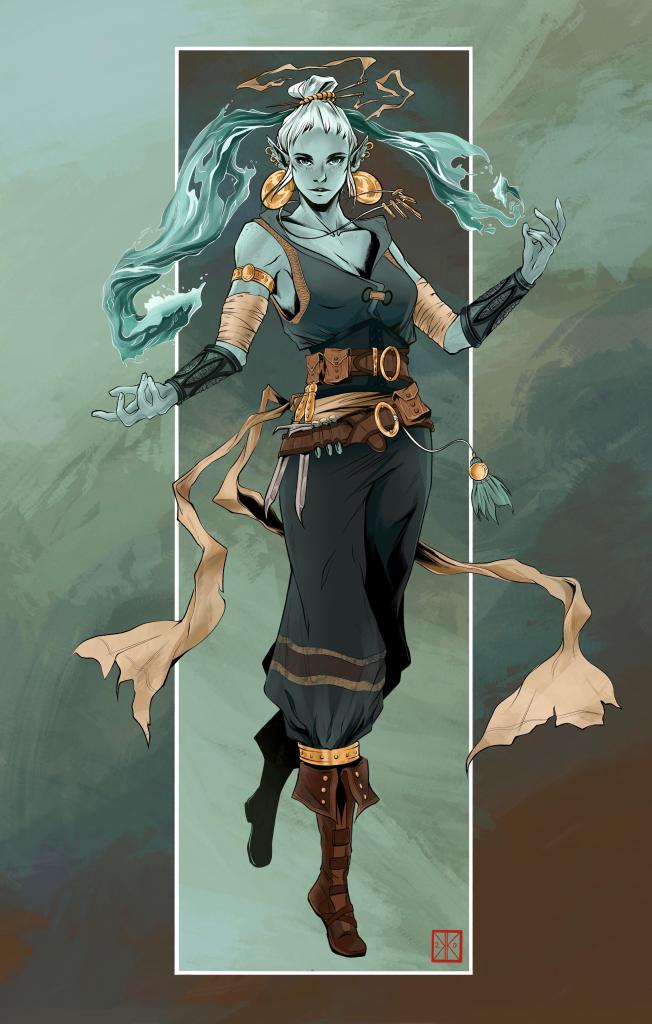
\page
Sorcerous Origin
The Waveborn
Within you dwells a drop of pure elemental water, connecting you to the waters of the deepest oceans, babbling brooks, and frozen lakes.
The gentle lapping of waves, the spray of the sea foam on the wind, the crushing darkness of the ocean depths; all these call you.
Your watery magic can be as refreshing as the rains, or as destructive as great waves and flood waters.
Waveborn Features
| Sorcerer Level | Feature |
|---|---|
| 1st | Curse of the Depths, Heart of Water, Waveborn Magic |
| 6th | Watery Resilience |
| 14th | Shifting Form |
| 18th | Primordial Deluge |
1st Level: Curse of the Depths
Your magic carries a frozen curse. Starting at 1st level, when you deal cold damage to a creature with a spell, you can use your bonus action to cover a single target of that spell in frost, reducing its speed by a number of feet equal to five times your Charisma modifier (minimum of 5 feet).
This reduction lasts until the start of your next turn, unless a creature uses an action to scrape the frost off the target.
1st Level: Heart of Water
The droplet of elemental water within your soul has altered your body. At 1st level, you gain the features detailed below:
- You are resistant to cold damage.
- You gain darkvision out to radius of 60-feet.
- You gain a swimming speed equal to your walking speed, and you can breathe both air and water.
- You can speak, read, and write Aquan, the language of the Elemental Plane of Water. By understanding Aquan you can communicate with creatures that speak Primordial, or its four dialects; Aquan, Auran, Ignan, and Terran.
1st Level: Waveborn Magic
You learn certain spells at the sorcerer levels noted in the table below. They count as sorcerer spells for you, but they don’t count against your number of Spells Known.
Whenever you gain a sorcerer level, you can replace one spell from this feature with another spell of your choice of the same level, that deals only cold damage, from any spell list.
| Sorcerer Level | Spell |
|---|---|
| 1st | armor of frost, fog cloud |
| 3rd | hold person, misty step |
| 5th | sleet storm, tidal wave XGtE |
| 7th | summon elemental (water) TCoE, watery sphere |
| 9th | cone of cold, maelstrom XGtE |
6th Level: Watery Resilience
Beginning at 6th level, you can temporarily take on a watery form to avoid harm. As a reaction when you are hit by an attack, you can grant yourself resistance to any bludgeoning, piercing, or slashing damage from the attack and move up to your full speed without provoking opportunity attacks.
You can use this reaction a number of times equal to your Charisma modifier (minimum of once), and you regain all uses when you finish a long rest. If you have no uses left, you can spend a spell slot of 1st-level or higher to use it again.
14th Level: Shifting Form
The elemental water within your soul allows you to move as a flowing liquid. At 14th level, you gain the following benefits:
- You are resistant to damage from opportunity attacks.
- You can move through the space of an enemy creature but you cannot willingly end your movement there.
- You can squeeze through gaps as narrow as 1 inch.
- When you are underwater or using your swimming speed, you can take the Dash action as a bonus action.
- As a bonus action, your body can extrude (or retract) a thin watery tentacle up to 10 feet long. You can use it to perform simple tasks, but it cannot attack, activate items, manipulate complex tools, or carry more than 10 pounds.
18th Level: Primordial Deluge
Your watery soul has become a great sea, making you more elemental then mortal. Starting at 18th level, you don’t need to eat, drink, or sleep, and you are immune to cold damage.
Also, as long as you are not incapacitated, when you are hit by an attack that is a critical hit, you can absorb the blow like flowing water, turning a critical hit into a normal hit.
Subclasses: SORCEROUS ORIGIN: The Waveborn
\page
WARLOCK OTHERWORLDLY PATRONS
At some point in each warlock’s life, they struck a bargain with an otherworldly entity. These entities can range from malicious to benign or simply be unknowable. Some warlocks choose to make bargains with genies or other beings of elemental power, some with primordial beings beyond the understanding of mortal, and some with the subtle intelligences behind the world’s oldest magical forests or even the land itself.
OPTIONAL ELDRITCH INVOCATIONS
When you choose Eldritch Invocations, you can choose from the following additional options. If an eldritch invocation has prerequisites, you must meet them to learn it.You can learn the invocation at the same time that you meet its prerequisites. A level prerequisite refers to your level in the warlock class.
Animating Will
Prerequisite: 9th level, Machine patron
You can cast animate objects or tiny servant using a warlock spell slot. Once you cast either spell, you can’t cast a spell with this invocation again until you finish a long rest.
Convulsions of the World
Prerequisite: 3rd level
Your mind reaches deep into the ground and an elder voice answers. You can use an action to cause
a localized tremor to shake the ground around you.
Each creature other than yourself within 20 feet of you must succeed on a Dexterity saving throw or be knocked prone. You can choose a number of creatures equal to half your proficiency bonus to automatically succeed on this saving throw. You must finish a long
rest before you can use this invocation again.
Echo of the First Words
Prerequisite: 9th level, Primordial patron
The echo of the first magical utterance reverberates across time, confounding those who hear it. You can cast babble once using a warlock spell slot. You can’t
do so again until you finish a long rest.
Elemental Blade
Prerequisites: 5th Level, Pact of the Blade, Elemental patron
You can cast elemental weapon on your pact weapon using a Warlock spell slot. You can’t do so again until you finish a long rest.
\column
Elemental Blast
Prerequisite: Elemental patron
When you cast eldritch blast, you can choose to change the damage type of the spell to a damage type of your choice from the following (lightning, thunder, magical bludgeoning, fire, radiant, cold or acid). The new damage type must be chosen prior to rolling to attack and applies to all attacks rolled when the spell is cast.
Embodied Blade
Prerequisite: Pact of the Blade feature, Machine Patron
While holding your pact weapon, you can perform a ritual over the course of 1 hour to integrate it into your own body if it lacks the heavy property.
While the weapon is integrated into your body, you cannot be disarmed of it while you live, and it is considered to have the Light and Finesse properties for you. You can retract the object into your body or extend it again as a bonus action. If the object ceases to be your pact weapon, it harmlessly detaches from your body.
Entangling Blast
Prerequisite: 5th level, eldritch blast cantrip, Ancient Forest patron
When you hit a creature with eldritch blast, the creature must succeed on a Dexterity saving throw or be grappled by roots, vines, and other vegetation until the end of its next turn. The DC for this saving throw and to escape this grapple is your spell save DC.
Forest-Trained
You gain proficiency in the Nature and Survival skills.

Subclasses: WARLOCK: Optional Eldritch Invocations
\page
Green Thumb
Prerequisite: 5th level, Ancient Forest patron
You can cast plant growth once using a warlock spell slot.
You can’t do so again until you finish a long rest.
Helping Hand
Prerequisite: 5th level, Machine Patron
You integrate an additional appendage into your body, which has the same functionality as an arm.
The additional appendage has a reach of 10 feet.
It cannot be used to wield a shield, and can only be used to wield weapons if they have the light property.
Strength checks made with the new appendage have disadvantage.
Herald of the March
Prerequisite: 15th level, Pact of the Chain feature, Machine patron
When you summon your pact of the chain familiar, it can take on the form of a monodrone or duodrone.
A summoned modron gains the ability to cast any warlock cantrip you know, using your warlock spell attack bonus and save DC.
It casts the cantrip as a 1st level spellcaster, and can cast it in place of an attack if it has a casting time of 1 action.
Iron Lungs
Prerequisite: 7th level, Machine patron
You can breathe normally in any environment and hold your breath indefinitely. In addition, you have advantage on saving throws against inhaled toxins and poisonous gases, such as that created by the cloudkill spell or a green dragon’s breath weapon.
Keeper of Crafts
Prerequisite: 9th level, Pact of the Blade feature, Machine patron
When your pact weapon is summoned, you can use an action to transmute it into a set of artisan’s tools of your choice. While transmuted, you have proficiency with the chosen set of tools. The transmutation lasts until you use an action to reverse it or transmute it into another set of tools, or until the chosen weapon ceases to be your pact weapon.
Knowledge of the Forest
Prerequisite: 15th level, Ancient Forest patron
When you are within 5 feet of a body of water in a forest, you can cast scrying on any creature in that forest at will, without expending a warlock spell slot or material components. You must remain within 5 feet of the body of water for the duration or the spell ends.
Nature’s Armor
Prerequisite: Ancient Forest patron
You can use your action to sprout hard thorns across your skin for 1 hour. Your Armor Class becomes 12 + your Dexterity modifier, and, when a creature hits you with a melee weapon attack while within 5 feet of you, it takes piercing damage equal to half your warlock level. You must finish a short or long rest before you can use this invocation again.
Primal Link
You can cast animal friendship at will, without expending a spell slot or material components.
Primordial Senses
Prerequisites: 15th Level, Elemental patron or Primordial patron
You gain Blindsight to a distance of 60 feet.
Silent Stalker
You gain proficiency in the Stealth and Survival skills.
Speaker with the Trees
Prerequisite: 9th level, Ancient Forest patron
You can cast speak with plants at will without expending a spell slot.
Touch of the Forest
Prerequisite: 9th level, Ancient Forest patron
You can cast awaken once using a warlock spell slot. You can’t do so again until you finish a long rest.

Subclasses: WARLOCK: Optional Eldritch Invocations
\page
Warlock: Pact of the Ancient Forest
You have made a pact with the ancient intelligence of a primeval forest. Before the rise of human civilization, before the time of the kedakai, before even the dragons, there were the forests. Empires rise
and fall around them, but the forests remain as a testament to nature’s endurance.
However, times are changing, and the unchecked growth of civilization threatens the green. The intelligences that imbue the antediluvian forests seek emissaries in the world that can act beyond their boughs, and one has heard your call for power.
You are a guardian of the Old Wood, a questing branch issuing from a vast, slumbering intelligence sent to act on its behalf, perhaps even to excise these lesser beings from its borders.
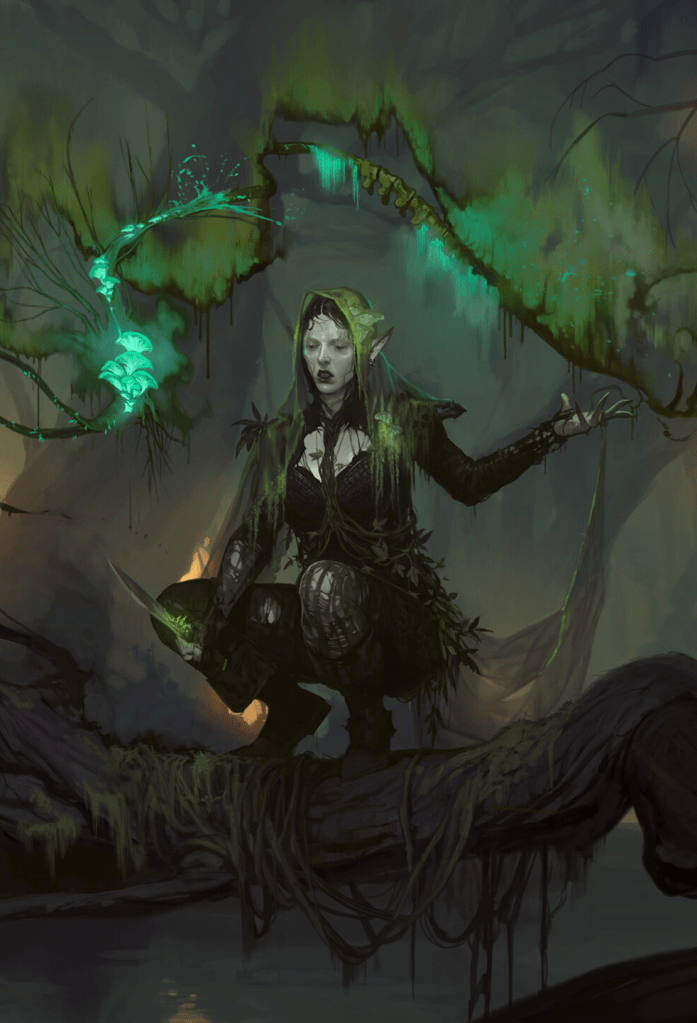
Ancient Forest Expanded Spell List
Your connection to the forest allows you to choose from an expanded list of spells when you learn a warlock spell.
The following spells are added to the warlock spell list for you.
ANCIENT FOREST EXPANDED SPELLS
| Spell Level | Spells |
|---|---|
| 1st | animal friendship, faerie fire |
| 2nd | animal messenger, spike growth |
| 3rd | conjure animals, protection from energy |
| 4th | conjure woodland beings, giant insect |
| 5th | greater restoration, tree stride |
1st Level: Sap Magic
At 1st level, your patron bestows upon you the ability to absorb magic from nearby spellcasting. When a
creature casts a spell of a level you can cast or lower within 30 feet of you, you can use your reaction to synthesize the magic. The spell resolves as normal, but you have a 25% chance of regaining hit points
equal to your warlock level + your Charisma modifier (minimum of 1 hit point).
1st Level: Forest’s Defender
At 1st level, your patron gifts you with the skills necessary to defend it. You gain proficiency with shields, and you learn the shillelagh cantrip. Shillelagh
counts as a warlock cantrip for you, but it doesn’t count against your number of cantrips known.
3rd Level: The Ancient Forest and Your Pact Boons
When you select your pact boon at 3rd level, it is altered by your patron in the following ways:
Pact of the Chain.
When you conjure your familiar or change its form, you can choose the form of an
awakened shrub or child of the briar (see below) in addition to the usual familiar choices.
Pact of the Blade.
The blade of the Ancient Forest is a weapon made of wood and thorns and grows out of
your palm. When you cast shillelagh, your Pact Blade is affected by the spell, regardless of the form your Pact Blade takes.
Pact of the Tome.
The Ancient Forest grows a tome for you. The tome’s cover is hardened bark from the forest’s native trees, and its pages are leaves whose color changes with the seasons.
If you want to add a new spell to your book, you must first plant it in the ground.
After 1 hour, the book emerges from the soil
with the new spell inscribed on its leaves.
If your tome is lost or destroyed, you must return to your patron forest for it to grow you a new one.
Subclasses: WARLOCK: Pact of the Ancient Forest
\page
{{monster,frame
Child Of The Briar
Tiny plant, neutral evil
Armor Class :: 13 (natural armour)
Hit Points :: 50(20d4)
Speed :: 20 ft., climb 10 ft.
| STR | DEX | CON | INT | WIS | CHA |
|---|---|---|---|---|---|
| 6 (-2) | 17 (+3) | 11 (+0) | 13 (+1) | 10 (+0) | 14 (+2) |
Damage Vulnerabilities :: Fire
Senses :: darkvision 60 ft., passive Perception 14
Languages :: Briarclick, Common, Sylvan
Challenge :: 1 (200 XP)
Fey Blood. Children of the briar count as both plant and fey for any effect related to type.
Actions
Multiattack. A child of the briar makes two claw attacks. If both attacks hit the same target, the target is grappled (escape DC 13) and the child of the briar uses its Thorny Grapple on it.
:
Claw. Melee Weapon Attack: +5 to hit, reach 5 ft., one target. Hit 6 (1d6 + 3) piercing damage.
:
Spitdart Tongue (Recharge 4-6). Ranged Weapon Attack: +5 to hit, range 20/60 ft., one target. Hit: 6 (1d6 + 3) piercing damage. Every child of the briar can shoot thorns from its mouth.
:
Entangle. Two children of the briar working together can cast a version of the entangle spell with no components, at will. Both creatures must be within 10 feet of each other, and both must use their action to cast the spell. The entangled area must include at least one of the casters but doesn’t need to be centered on either caster. Creatures in the area must make a DC 13 Strength saving throw or be restrained. All children of the briar are immune to the spell’s effects.
:
Thorny Grapple. A child of the briar’s long thorny limbs help it grapple creatures up to Medium size. A grappled creature takes 2 (1d4) piercing damage at the end of the child’s turn for as long as it remains grappled.
}}
6th Level: Predatory Grace
Starting at 6th level, you are able to cast pass without trace without expending a spell slot.
Once you use this feature, you can’t use it again until you finish a short or long rest.
In addition, difficult terrain
caused by roots, underbrush, and other natural forest terrain costs you no extra movement.
You can pass through nonmagical plants without being slowed by them and without taking damage from them if they have thorns, spines, or a similar hazard.
\column
10th Level: Nature’s Endurance
At 10th level, your patron has suffused your body with a portion of its ability to withstand harmful
magic. You gain resistance to damage from spells of a level you can cast or lower.
14th Level: Avatar of the Wood
Starting at 14th level, you can channel the power of the forest to physically transform, taking on many
of its aspects. Your legs, arms, and torso elongate, your body becomes covered in thick, dark bark, and branches sprout from your head as your hair recedes. You can transform as a bonus action and the transformation lasts 1 minute. While transformed, you gain the following benefits:
- Your Armor Class is 16 plus your Dexterity modifier.
- You gain tremorsense with a radius of 30 feet, and your attacks can reach 5 feet further.
- Your hands become branch-like claws, and you can use the Attack action to attack with the claws. You are proficient with the claws, and the claws count as magical for the purpose of overcoming resistance and immunity to nonmagical attacks
and damage. You add your Charisma modifier to your attack and damage rolls with the claws. The damage is slashing and the damage die is a d6. If you have the Pact of the Blade feature, your claw attack benefits from your invocations as if it was
a pact weapon.
- Your Sap Magic feature changes to Arcasynthesis: When a spell of 5th level or lower is cast within 60 feet of you, you can use your reaction to synthesize the magic. The spell resolves as normal, but you have a 50 percent chance of regaining 1d10 hp per level of the spell cast. Once you use this feature, you can’t use it again until you finish a short or long rest.
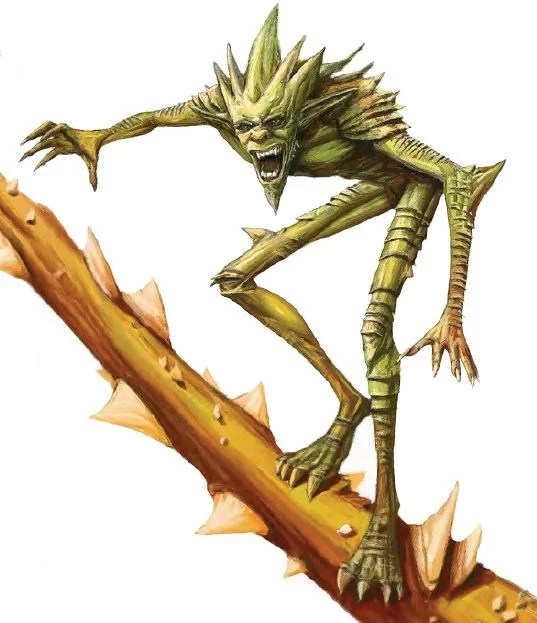
Subclasses: WARLOCK: Pact of the Ancient Forest
\page
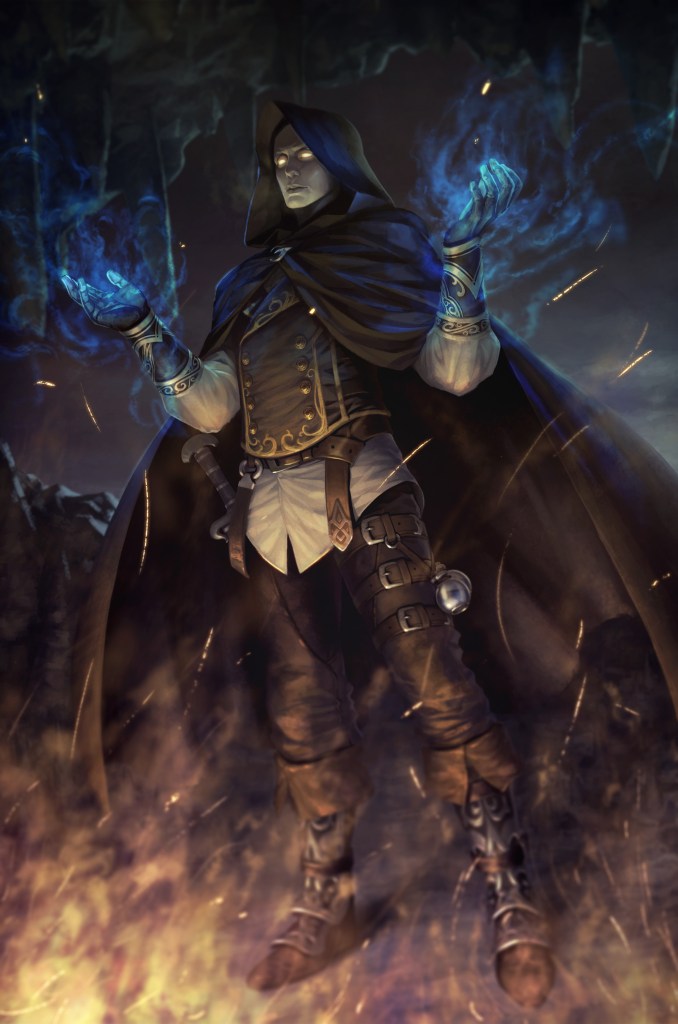
\page
Warlock: Pact of the Elemental
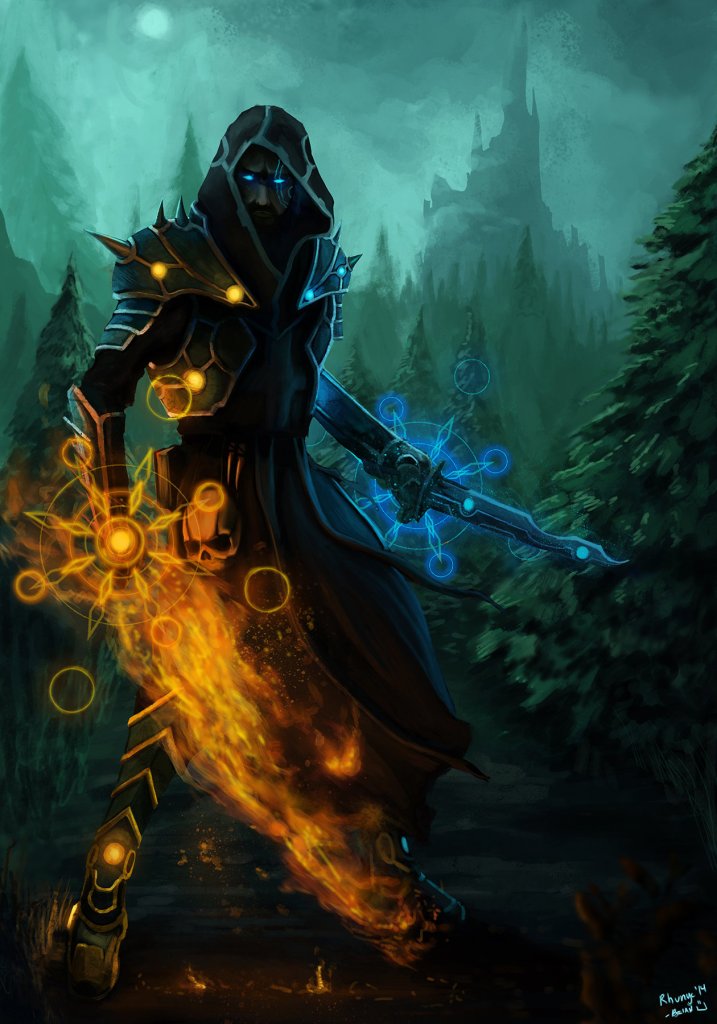
You have made a pact with a being of powerful elemental nature, whether it is a deity of an element such as Tarhun, the Emir of the Air, or an Elemental Lord – a being of raw elemental power native to one of the Elemental Planes.
Such beings carry with them overwhelming destructive power. Whether it be one of the Lords of Elemental Good who seek to protect the chaotic harmony of the elements through pacts struck or a Lord of Elemental Evil who grants power as a means to tear down the foundations on the Material Plane, the power with which they grant is often destructive and always tied to the Elemental Lord’s element.
See the table below for the primary options available for an Elemental patron.
Elemental Lords
| Elemental Type | Good | Evil |
|---|---|---|
| Air | Tarhun | Kasurga |
| Earth | Kumot | Shaset |
| Fire | Ateş, The Firebird | Cehennem |
| Water | Mah’ra | Tufan |
Pact of the Elemental Features
| Warlock Level | Feature |
|---|---|
| 1st | Expanded Spell List, Elemental Shroud, Primordial Tongue |
| 6th | Elemental Empowerment |
| 10th | Extraplanar Assistance |
| 14th | One With the Elements |
Elemental Expanded Spell List
The following spells are added to the warlock spell list for you.
| Spell Level | Air Spells | Earth Spells | Fire Spells | Water Spells |
|---|---|---|---|---|
| 1st | thunderous smite, zephyr strike | catapult, earth tremor | burning hands, searing smite | fog cloud, ice knife |
| 2nd | dust devil, warding wind | Maximilian’s earthen grasp, spike growth | Aganazzar’s scorcher, flame blade | Melf’s acid arrow, Snilloc’s snowball swarm |
| 3rd | call lightning, phantom steed | erupting earth, meld into stone | fireball, Melf’s minute meteors | tidal wave, water breathing |
| 4th | greater invisibility, storm sphere | stone shape, stoneskin | fire shield, wall of fire | ice storm, vitriolic sphere |
| 5th | control winds, steel wind strike | passwall, wall of stone | flame strike, immolation | cone of cold, maelstrom |
1st Level: Elemental Shroud
Starting at 1st level, your connection to your Elemental Lord allows you to call upon their favoured element to aid you in combat. As a bonus action, your patron’s power grants you one of the following abilities, based on their favoured element. Elemental Shroud lasts for 1 minute or until dismissed as a free action and cannot be used again until you have finished a short rest.
Air: Gale Force Aura
A gale of wind surrounds you, buffeting oncoming attacks and protecting you. While the aura is active, you have resistance against thunder or lightning damage (pick when you activate this ability). In addition, all ranged attacks have disadvantage against you.
Earth: Crystalline Skin
Crystals grow from your skin, protruding and covering your body. While this ability is active, you have resistance against all non-magical bludgeoning damage. As a bonus action, you can force the protrusions to forcibly eject from your skin, ending the effect, and causing all creatures within 15 feet to make a Dexterity saving throw where the saving throw is equal to your spellcasting DC or suffer 3d6 piercing damage.
Fire: Fire Shroud
You call upon the flames of your patron and engulf yourself in a shroud of magical fire, from head to toe. While this ability is active, you have resistance against fire or radiant damage (pick when you activate this ability). Whenever a creature touches you or hits you a melee attack from within 5 feet of you, the creature takes fire or radiant damage (depending on which damage type you picked on activation of the ability) equal to your Charisma modifier.
Subclasses: WARLOCK: Pact of the Elemental
\page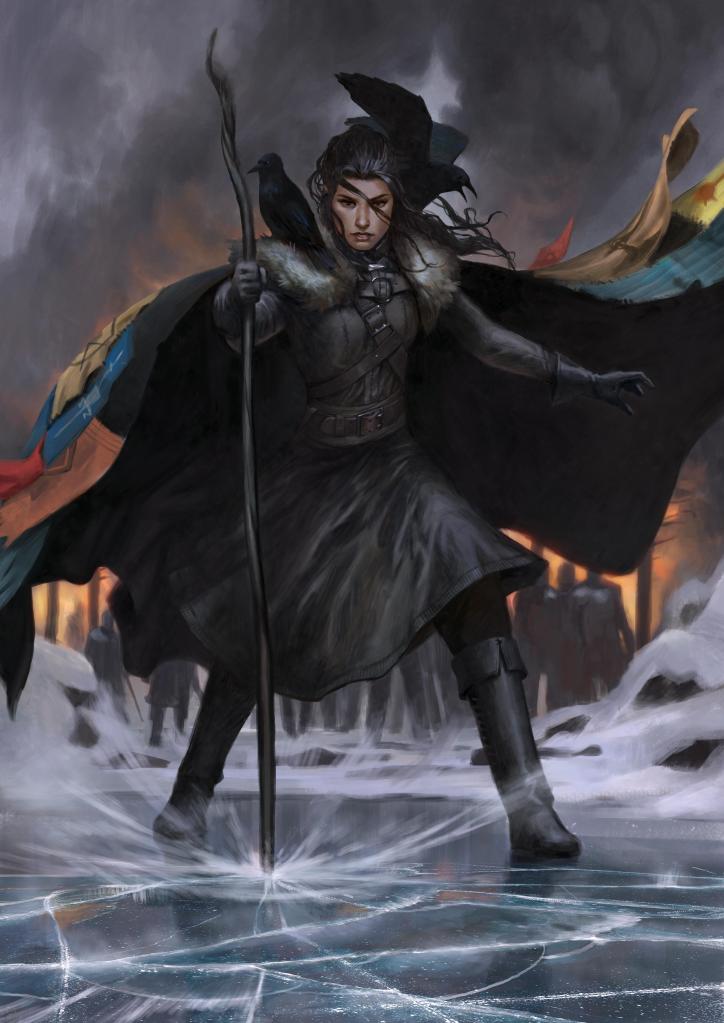
Water: Swirling Nimbus
You summon elemental water to surround and protect you as it swirls about you. While this ability is active, you have resistance against cold or acid damage (pick when you activate this ability).
In addition, while the nimbus surrounds you, your speed increases by 10 feet and you gain 5 temporary hit points at the start of each turn.
Rule Tip: Temporary Hit Points don’t stack. You choose which number you want to keep.
1st Level: Primordial Tongue
Your magical patronage comes from the Elemental Planes and with those gifts, comes knowledge.
You can speak, read, and write Primordial. Knowing this language allows you to understand and be understood by those who speak any of its dialects: Aquan, Auran, Ignan, and Terran.
6th Level: Elemental Empowerment
At 6th level, the power behind spells in line with your patron’s elemental domain is further empowered. When you cast a spell that deals damage of your patron’s element type (see table below), you can add your Charisma modifier to the damage roll. In addition, you ignore resistance to those damage types.
| Elemental Type | Damage Type Influenced |
|---|---|
| Air | Lightning, Thunder |
| Earth | Bludgeoning, Force |
| Fire | Fire, Radiant |
| Water | Cold, Acid |
10th Level: Extraplanar Assistance
Starting at 10th level, you learn the conjure elemental spell as if it were a Warlock spell.
When used to conjure creatures in line with your patron’s elemental type, you do not need to use a spell slot to cast this spell.
If the elemental you have summoned is of the same type as your patron, if you lose concentration on the spell, the elemental does not become hostile towards your and your allies, but returns to its home plane as if dismissed. You may use this feature to cast this spell again after a short rest.
14th Level: One With the Elements
At 14th level, you gain the ability to transform into the form of one of your patron’s greatest warriors for 1 hour.
As if casting the polymorph spell, you transform into a Genie per your patron’s elemental type (table below).
Your Genie form does not retain Elemental Demise and their Innate Spellcasting is replaced by your Pact Magic for the duration of the spell, when using this trait.
You must maintain concentration on your new form, just as if this ability was granted by the spell polymorph, but roll all concentration checks to maintain the form with Advantage.
Once you use this feature, you can’t use it again until you finish a long rest.
| Elemental Type | Genie Type |
|---|---|
| Air | Djinni |
| Earth | Dao |
| Fire | Efreeti |
| Water | Marid |
{{descriptive
New Pact of the Chain Familiars
In addition to the familiars available, you may choose from the following as a servant granted to you by your patron.
| Elemental Type | New Pact of the Chain Familiar Option |
|---|---|
| Air | Dust Mephit, Smoke Mephit |
| Earth | Dust Mephit, Mud Mephit |
| Fire | Fire Mephit, Magma Mephit |
| Water | Ice Mephit, Steam Mephit |
| }} |
Subclasses: WARLOCKS: Pact of the Elemental
\page
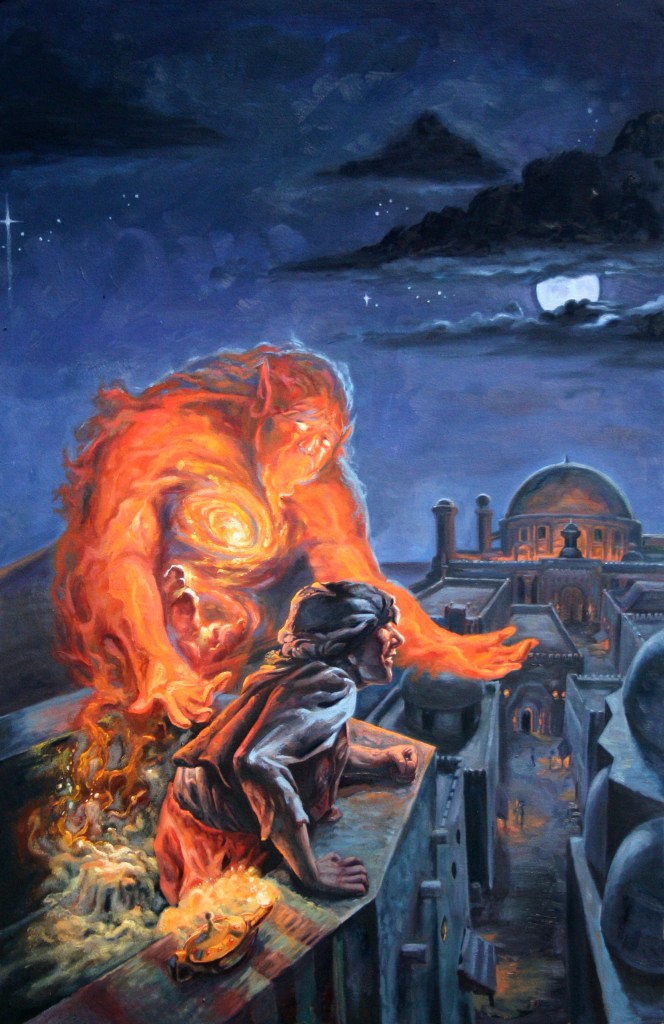
\page
WARLOCK: Pact of the Genie
Source: Tasha’s Cauldron of Everything
You have made a pact with one of the rarest kinds of genie, a noble genie. Such entities rule vast fiefs on the Elemental Planes and have great influence over lesser genies and other elemental creatures. Noble genies are varied in their motivations, but most are arrogant and wield power that rivals that of lesser deities.
They delight in turning the table on mortals, who often bind genies into servitude, and readily enter into pacts that expand their reach.
You choose your patron’s kind or determine it randomly, using the Genie Kind table.
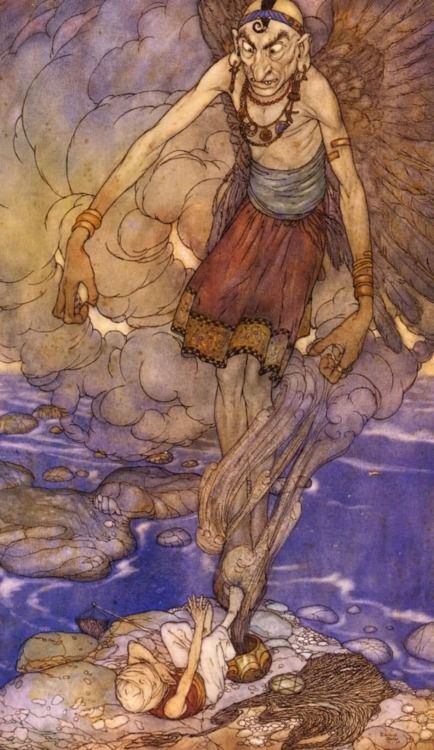
Genie Kind table
| d4 | Kind | Element |
|---|---|---|
| 1 | Dao | Earth |
| 2 | Djinni | Air |
| 3 | Efreeti | Fire |
| 4 | Marid | Water |
1st Level: Expanded Spell List
At 1st level, the Genie lets you choose from an expanded list of spells when you learn a warlock spell. The Genie Expanded Spells table shows the genie spells that are added to the warlock spell list for you, along with the spells associated in the table with your patron’s kind: dao, djinni, efreeti, or marid.
Genie Expanded Spells table
| Spell Level | Genie Spells | Dao Spells | Djinni Spells | Efreeti Spells | Marid Spells |
|---|---|---|---|---|---|
| 1st | detect evil and good | sanctuary | thunderwave | burning hands | fog cloud |
| 2nd | phantasmal force | spike growth | gust of wind | scorching ray | blur |
| 3rd | create food and water | meld into stone | wind wall | fireball | sleet storm |
| 4th | phantasmal killer | stone shape | greater invisibility | fire shield | control water |
| 5th | creation | wall of stone | seeming | flame Strike | cone of cold |
| 9th | wish | wish | wish | wish | wish |
1st Level: Genie’s Vessel
Also at 1st level, your patron gifts you a magical vessel that grants you a measure of the genie’s power. The vessel is a Tiny object, and you can use it as a spellcasting focus for your warlock spells. You decide what the object is, or you can determine what it is randomly by rolling on the Genie’s Vessel table.
Genie’s Vessel table
| d6 | Vessel |
|---|---|
| 1 | Canopic jar |
| 2 | Urn |
| 3 | Ring with a jewel |
| 4 | Stoppered bottle |
| 5 | Hollow statuette |
| 6 | Ornate lantern |
While you are touching the vessel, you can use it in the following ways:
- Bottled Respite: As an action, you can magically vanish and enter your vessel, which remains in the space you left. The interior of the vessel is an extradimensional space in the shape of a 20-foot-radius cylinder, 20 feet high, and resembles your vessel. The interior is appointed with cushions and low tables and is a comfortable temperature. While inside, you can hear the area around your vessel as if you were in its space. You can remain inside the vessel up to a number of hours equal to twice your proficiency bonus. You exit the vessel early if you use a bonus action to leave, if you die, or if the vessel is destroyed. When you exit the vessel, you appear in the unoccupied space closest to it. Any objects left in the vessel remain there until carried out, and if the vessel is destroyed, every object stored there harmlessly appears in the unoccupied spaces closest to the vessel’s former space. Once you enter the vessel, you can’t enter again until you finish a long rest.
Subclasses: WARLOCK: Pact of the Genie
\page
- Genie’s Wrath: Once during each of your turns when you hit with an attack roll, you can deal extra damage to the target equal to your proficiency bonus. The type of this damage is determined by your patron: bludgeoning (dao), thunder (djinni), fire (efreeti), or cold (marid).
The vessel’s AC equals your spell save DC.
Its hit points equal your warlock level plus your proficiency bonus, and it is immune to poison and psychic damage.
If the vessel is destroyed or you lose it, you can perform a 1-hour ceremony to receive a replacement from your patron.
This ceremony can be performed during a short or long rest, and the previous vessel is destroyed if it still exists. The vessel vanishes in a flare of elemental power when you die.
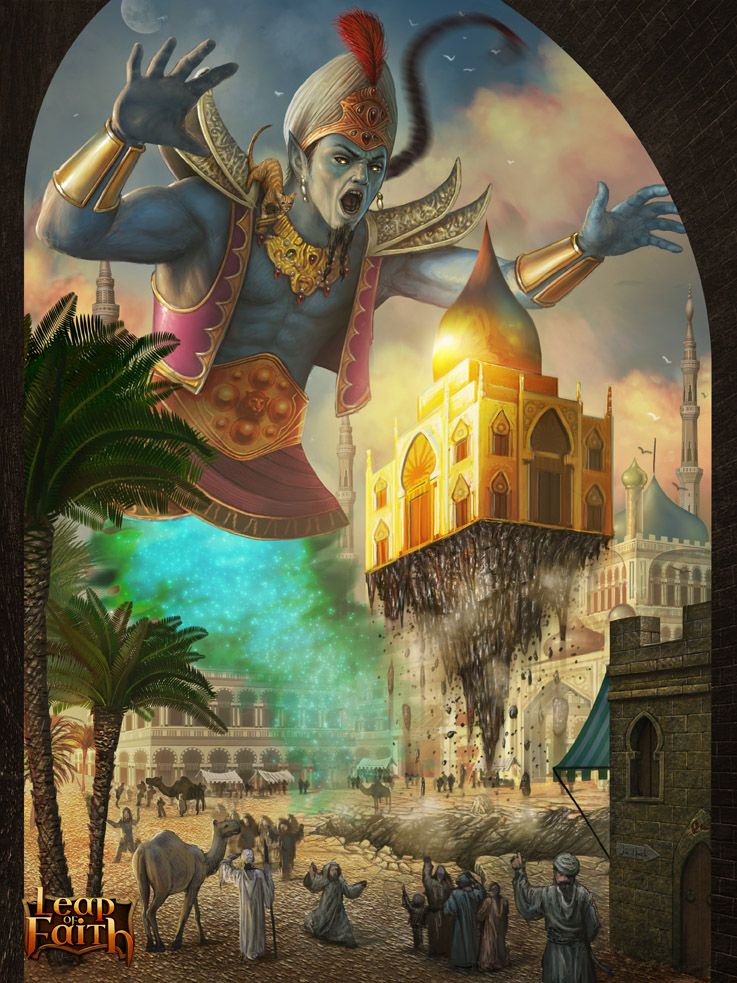
6th Level: Elemental Gift
At 6th level, you begin to take on characteristics of your patron’s kind.
You now have resistance to a damage type determined by your patron’s kind:
| patron type | damage resistance |
|---|---|
| dao | bludgeoning |
| djinni | thunder |
| efreeti | fire |
| marid | cold |
In addition, as a bonus action, you can give yourself a flying speed of 30 feet that lasts for 10 minutes, during which you can hover.
You can use this bonus action a number of times equal to your proficiency bonus, and you regain all expended uses when you finish a long rest.
10th Level: Sanctuary Vessel
At 10th level, when you enter your Genie’s Vessel via the Bottled Respite feature, you can now choose up to five willing creatures that you can see within 30 feet of you, and the chosen creatures are drawn into the vessel with you.
As a bonus action, you can eject any number of creatures from the vessel, and everyone is ejected if you leave or die or if the vessel is destroyed.
In addition, anyone (including you) who remains within the vessel for at least 10 minutes gains the benefit of finishing a short rest, and anyone can add your proficiency bonus to the number of hit points they regain if they spend any Hit Dice as part of a short rest there.
14th Level: Limited Wish
At 14th level, you entreat your patron to grant you a small wish.
As an action, you can speak your desire to your Genie’s Vessel, requesting the effect of one spell that is 6th level or lower and has a casting time of 1 action.
The spell can be from any class’s spell list, and you don’t need to meet the requirements in that spell, including costly components: the spell simply takes effect as part of this action.
Once you use this feature, you can’t use it again until you finish 1d4 long rests.

Subclasses: WARLOCK: Pact of the Genie
\page
WARLOCK: Pact of the Lamp
The Pact of the Lamp is a special variant of the Genie Warlock.
Genies that are associated with lamps are the most powerful of the noble genies, themselves some of the most powerful rulers of geniekind. This being may have tricked you into servitude or may itself have been tricked into providing you with power; you might also have simply come to mutually agreeable terms for your abilities.
In any case, the Pact of the Lamp operates slightly different to other Genie Warlock pacts.
Like all genies, your patron’s kind is one of the six major elements. You choose your patron’s kind or determine it randomly, using the Genie Kind table below.
Genie Kind table
| d6 | Kind | Element |
|---|---|---|
| 1 | Dao | Earth |
| 2 | Djinni | Air |
| 3 | Efreeti | Fire |
| 4 | Kizidhar | Wood |
| 5 | Marid | Water |
| 6 | Zuhra | Metal |
1st Level: Expanded Spell List
At 1st level, like all Genie Pacts, the Pact of the Lamp lets you choose from an expanded list of spells when you learn a warlock spell.
The Genie Expanded Spells table shows the genie spells that are added to the warlock spell list for you, along with the spells associated in the table with your patron’s kind: dao, djinni, efreeti, kizidhar, marid or zuhra.
{{descriptive,wide
Genie Expanded Spells table
| Spell Level | Genie Spells | Dao Spells | Djinni Spells | Efreeti Spells | Kizidhar Spells | Marid Spells | Zuhra Spells |
|---|---|---|---|---|---|---|---|
| 1st | detect evil and good | sanctuary | thunderwave | burning hands | goodberry | fog cloud | metalwave |
| 2nd | phantasmal force | spike growth | gust of wind | scorching ray | barkskin | blur | heat metal |
| 3rd | create food and water | meld into stone | wind wall | fireball | plant growth | sleet storm | sharpnel bomb |
| 4th | phantasmal killer | stone shape | greater invisibility | fire shield | grasping vine | control water | metalskin |
| 5th | creation | wall of stone | seeming | flame strike | tree stride | cone of cold | conjure elemental (metal) |
| 9th | wish | wish | wish | wish | wish | wish | wish |
| }} |
1st Level: Gen Familiar
At 1st level, your patron grants you the service of a genie familiar called a gen. Your gen is tied to one of the six elements of air, earth, fire, metal, wood or water, and is of the same element as your patron.
Your gen behaves in all ways like a creature summoned by the find familiar spell, except as noted below:
- Your gen has statistics as listed below under the entry for its gen type:
| patron | gen type |
|---|---|
| dao | sand gen or daolan |
| djinni | wind gen or djinnling |
| efreeti | flame gen or efreetikin |
| kizidhar | wood gen or kizidharan |
| marid | sea gen or maridan |
| zuhra | metal gen or zuhran |
- Your gen is a distinct individual and has its own personality and desires. It will always obey your commands, but it may resent doing so if you order it to perform actions that it opposes.
- Your gen always has the same form, and you cannot change its form by casting find familiar. In addition, the gen feels gravely insulted by you casting find familiar when the gen is bound to you, and you may need to appease it under such circumstances.
- If your gen drops to 0 hit points, it disappears, leaving behind no physical form. It reappears after you petition it to do so and complete a long rest. Depending on why the gen dropped to 0 hit points, it may hold a grudge or require additional penance from you before it returns.

Subclasses: WARLOCK: Pact of the Lamp
\page
Flame (Fire) Gens
Fire or flame gens, also known as efreetikin (plural and singular), look like fire spirits with ebony skin and long flame-red hair.
An efreetikin’s fingers end in long red claws that seem to be constantly moving and dancing, like fire.
Fire gens are fidgety and kinetic in general, and getting one to sit still is nigh impossible. Consummate pyromaniacs, efreetikin will set fire to everything in sight unless they are closely monitored.
{{monster,frame
Gen, Fire (Efreetikin)
Small elemental (fire), neutral
Armor Class :: 13 (natural armour)
Hit Points :: 10 (3d6)
Speed :: 30ft.
| STR | DEX | CON | INT | WIS | CHA |
|---|---|---|---|---|---|
| 6 (-3) | 13 (+1) | 10 (+0) | 10 (+0) | 10 (+0) | 8 (-1) |
Damage Immunities :: fire
Senses :: blindsight 20 ft., passive Perception 10
Languages :: Common, Ignan
Challenge :: 0 (10 XP) {{bonus Proficiency Bonus your proficiency bonus}}
Actions
Slam. Melee Weapon Attack: +3 to hit, reach 5ft., one target. Hit 3 (1d4 + 2) fire damage.
}}
Metal Gens
Metal gens, called zuhran (plural zuhrani), have skin that gleams like polished steel or tarnished bronze, and their hair resembles fine strands of metal wire or flowing liquid mercury.
Their bodies are unnervingly cool to the touch, with veins that glimmer faintly like molten ore. Zuhrani are meticulous and methodical, often fascinated by mechanisms, patterns, and anything that can be refined or perfected.
Despite their stoic appearance, they are prone to bouts of stubbornness and pride, particularly when their creations or expertise are questioned. A zuhran’s presence often carries a faint metallic tang, and they dislike salty water, which they claim “corrodes their soul.”
{{monster,frame
Gen, Metal (Zuhran)
Small elemental (metal), neutral
Armor Class :: 14 (natural armor)
Hit Points :: 11 (2d8 + 2)
Speed :: 25 ft.
| STR | DEX | CON | INT | WIS | CHA |
|---|---|---|---|---|---|
| 14 (+2) | 10 (+0) | 12 (+1) | 10 (+0) | 10 (+0) | 8 (-1) |
Damage Resistances :: bludgeoning, piercing, and slashing from nonmagical weapons
Damage Immunities :: poison
Condition Immunities :: Poisoned
Senses :: blindsight 20 ft., passive Perception 10
Languages :: Common, Ferran
Challenge :: 0 (10 XP) {{bonus Proficiency Bonus your proficiency bonus}}
Magnetic Pulse (Recharge 5-6). As a bonus action, the zuhran can emit a magnetic pulse. All metal objects weighing 5 pounds or less within 10 feet are pulled 5 feet closer to the zuhran.
Actions
Slam. Melee Weapon Attack: +4 to hit, reach 5 ft., one target. Hit 5 (1d6 + 2) bludgeoning damage.
}}
Sand (Earth) Gens
Sand gens, which call themselves daolani (singular daolan), generally have tan skin tones and hair that has a dark earth tone.
Their skin is textured like sand or soil, however they do not leave sand or dirt everywhere like you might expect.
Daolani move with a fluid grace through the ground, though they seem more ungainly and clumsy when they are on the surface and the majority of them is out of the ground.
Unlike many of their elemental brethren, sand gens view fine gems, coin-of-the-realm and jewelry as extremely tasty food that they have an immense passion to consume, that such things are valueless to them except as nourishment.
Left alone with precious metals and gemstones, a daolan might be unable to hold back the temptation to voraciously eat it all!
Subclasses: WARLOCK: Pact of the Lamp
\page
{{monster,frame
Gen, Sand (Daolan)
Small elemental (earth), neutral
Armor Class :: 13 (natural armour)
Hit Points :: 10 (3d6)
Speed :: 10 ft., burrow 20 ft.
| STR | DEX | CON | INT | WIS | CHA |
|---|---|---|---|---|---|
| 14 (+2) | 6 (-3) | 10 (+0) | 10 (+0) | 10 (+0) | 8 (-1) |
Condition Immunities :: Poisoned
Damage Immunities :: poison
Senses :: blindsight 20 ft., passive Perception 10
Languages :: Common, Terran
Challenge :: 0 (10 XP) {{bonus Proficiency Bonus your proficiency bonus}}
Actions
Slam. Melee Weapon Attack: +5 to hit, reach 5ft., one target. Hit 3 (1d4 + 2) bludgeoning damage.
}}
Sea (Water) Gens
Water gens, also known as maridani (singular maridan), resemble small sprites with oceanic skin tones that are translucent like water. Their hair is blue or else it resembles water flora. Water gens always seem damp, regardless of the actual environment, and they are graceful both within and outside of water. Many maridani are vain, and love to decorate themselves with pearls, corals or, when all else fails, even carefully-arranged flotsam. As a result, they are even more succeptible to flattery than most (they make Charisma (Persuasion) saving throws at disadvantage if the one trying to persuade them mentions how beautiful they are or how exquisite their decorations are.
{{monster,frame
Gen, Water (Maridan)
Small elemental (water), neutral
Armor Class :: 13 (natural armour)
Hit Points :: 7 (2d6)
Speed :: 20 ft., swim 30 ft.
| STR | DEX | CON | INT | WIS | CHA |
|---|---|---|---|---|---|
| 8 (-2) | 14 (+2) | 10 (+0) | 10 (+0) | 12 (+1) | 9 (+0) |
Damage Immunities :: bludgeoning, piercing, and slashing from nonmagical weapons
Senses :: blindsight 30 ft., passive Perception 12
Languages :: Aquan, Common
Challenge :: 0 (10 XP) {{bonus Proficiency Bonus your proficiency bonus}}
Actions
Slam. Melee Weapon Attack: +3 to hit, reach 5ft., one target. Hit 3 (1d4 + 2) bludgeoning damage.
}}
Wind (Air) Gens
Wind gens, also known as djinnlings (singular djinnling), resemble small genies with blue skin and cloud-like hair.
Some djinnlings are very translucent and almost seem to disappear in bright light.
A wind gen’s mood and body colour are sometimes affected by weather; before a storm, a djinnling might darken and become agitated, only to become quieter, paler and more lethargic on a calm and balmy day.
Air gens are among the haughtier of the gens, and many demand respect and due reverance for their services.
{{monster,frame
Gen, Wind (Djinnling)
Small elemental (air), neutral
Armor Class :: 15 (natural armour)
Hit Points :: 7 (2d6)
Speed :: 10 ft., fly 30 ft.
| STR | DEX | CON | INT | WIS | CHA |
|---|---|---|---|---|---|
| 4 (-3) | 11 (+0) | 10 (+0) | 10 (+0) | 10 (+0) | 10 (+0) |
Damage Immunities :: non-magical bludgeoning, piercing and slashing
Senses :: blindsight 30 ft., passive Perception 10
Languages :: Auran, Common
Challenge :: 0 (10 XP) {{bonus Proficiency Bonus your proficiency bonus}}
Actions
Slam. Melee Weapon Attack: +2 to hit, reach 5ft., one target. Hit 2 (1d4) bludgeoning damage.
}}
Wood Gens
Wood gens, known as kizidharan (plural kizidharani), have bark-like skin in hues of deep brown, mossy green, or pale birch, with hair that cascades like vines or leafy tendrils.
Kizidharani are deeply connected to nature and possess a calming aura, their bodies exuding faint scents of fresh pine, blooming flowers, or damp earth after rain.
They are adaptable and patient, but their slow, deliberate movements can irritate faster-paced beings.
Kizidharani are said to have an innate ability to communicate with plants and are particularly distressed when they witness deforestation or environmental harm, which they describe as feeling “wounds in the weave of life.”
Subclasses: WARLOCK: Pact of the Lamp
\page
{{monster,frame
Gen, Wood (Kizidharan)
Small elemental (wood), neutral
Armor Class :: 12 (natural armor)
Hit Points :: 7 (2d6)
Speed :: 20 ft., climb 20 ft.
| STR | DEX | CON | INT | WIS | CHA |
|---|---|---|---|---|---|
| 12 (+1) | 10 (+0) | 12 (+1) | 10 (+0) | 12 (+1) | 8 (-1) |
Damage Resistances :: bludgeoning from nonmagical weapons
Damage Immunities :: radiant
Senses :: blindsight 30 ft., passive Perception 11
Languages :: Common, Sylvan
Challenge :: 0 (10 XP) {{bonus Proficiency Bonus your proficiency bonus}}
Photosynthesis. When in direct sunlight, the kizidharan regains 1 hit point at the start of its turn if it has at least 1 hit point remaining.
:
Speak with Plants. The kizidharan can communicate simple ideas with plants within 30 feet of it.
Actions
Vine Whip. Melee Weapon Attack: +3 to hit, reach 10 ft., one target. Hit 4 (1d6 + 1) slashing damage.
}}
3rd Level: Pact Boon
At 3rd level, your gen is able to fetch spells for you. As an action, you provide the gen with one spell slot chosen by you and ask it to fetch you a spell to cast.
You can request the gen fetch any spell for you, even those normally restricted to other classes. The time it takes for the gen to return depends on the type of spell you request. Spells that are on your spell list and are of a level you can cast are fairly easy, but spells not on your spell list or of higher level than you can cast take longer since the gen must negotiate with powerful forces on your behalf to obtain the spell. Consult the Gens and Spell Fetching table below.
Gens and Spell Fetching table
| Spell Requested Is… | Time Required |
|---|---|
| On your class list and of a level you can cast | Spell level x 1 minute |
| On your class list but higher level than you can cast | Spell level x 10 minutes |
| Not on your class spell list but of a level you can cast | Spell level x 10 minutes |
| Not on your class spell list and a higher level than you can cast | Spell level x 1 hour |
If you request a spell of a level higher than you can normally cast, or that is not on your class spell list, you must provide your gen with two spell slots instead of one.
If a spell is of a higher level than you can cast, you can only cast it as a ritual (even if the spell itself usually lacks the ritual tag) and you must succeed on a Charisma saving throw with a Difficulty Class equal to 15 + the spell’s level. You can add one half (rounded down) of your warlock class level to this check.
If the spell is not on your class spell list, you must cast it as a ritual as above, but you do not add your warlock class level to the check. If the spell is of a higher level than you can cast and not on your class spell list, you make the check with disadvantage.
If you succeed on the check, your gen provides you with the spell and you can cast it using the slot(s) you provided to the gen or as a ritual as described above. You must cast the spell before you finish a short or long rest or the spell is lost.
If you fail the check, the spell and the slots are lost, and your gen must leave to apologise and explain itself to the powers from which it fetched the spell. The gen is gone for one hour per level of the spell if the spell was on your class list and of a level you can cast, or one day per level of the spell if it was not one you could normally cast. Repeated attempts to cast spells beyond your ability or power may also draw the attention or ire of powerful genies, demons or gods.

Subclasses: WARLOCK: Pact of the Lamp
\page
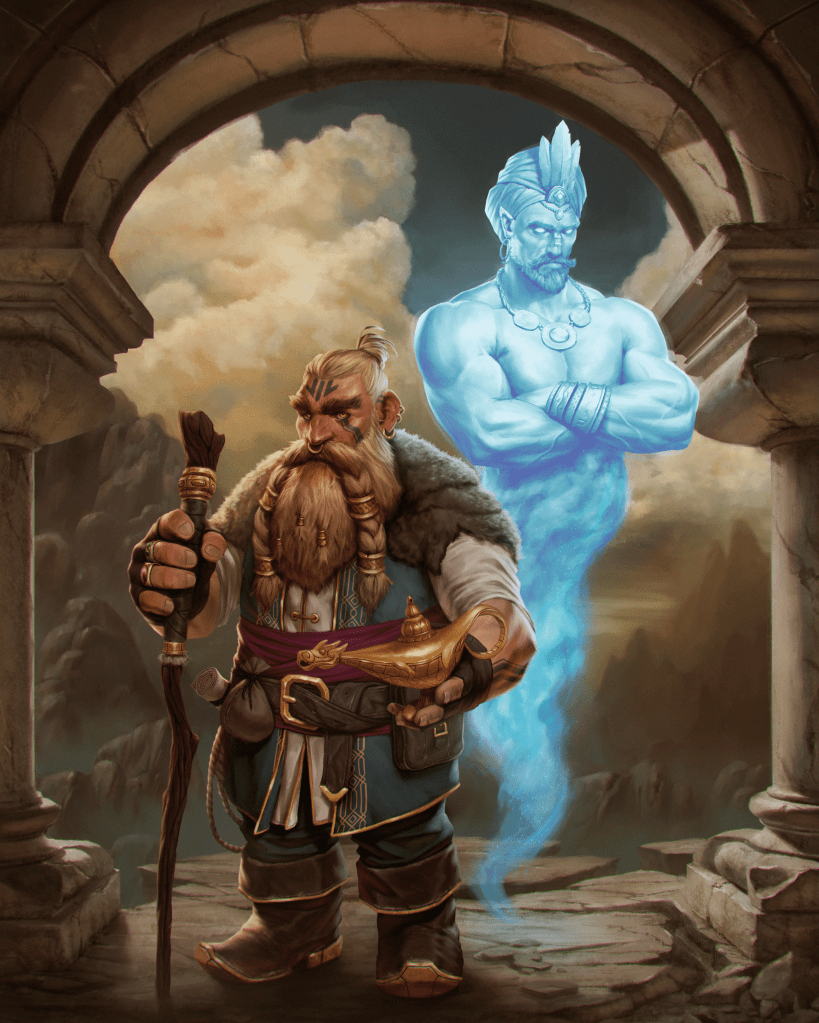
\page
6th Level: Genie Aid
Beginning at 6th level, you can call upon nearby genies for aid. Make a DC 20 Charisma skill check. On a success, genies arrive as described on the Genie Aid Results table below.
Genie Aid Results table
| Warlock Level | Effect |
|---|---|
| 6th | 1 janni arrives within 1 hour |
| 10th | 2d4 jann or one dao, djinni, efreeti, kizidhar, marid or zuhra arrives within 1 hour |
| 14th | 5d4 jann or 2d4 dao, djinn, efreet, kizidhari, marids or zuhras arrive within 1 hour |
Genies who arrive to aid you are friendly to you and your companions, but they will not engage in combat on your behalf unless you are attacked. The genies are not charmed or under your control, and if you behave in a hostile, demeaning or rude manner, the genies will likely abandon you; they may even return later with reinforcements.
If you are party to an attack on a genie after you summon it, this ability ceases to work until you have atoned for the assault. Such atonement may involve large gifts of gold, gems, or magic items to a noble genie house, a period of indentured servitude, the fulfilment of a quest, or a similar activity.
Once you use this ability, you must complete a long rest before you can use it again.
10th Level: Genie Protection
At 10th level, you have resistance to acid, cold, fire and lightning damage. When your gen is within 10 feet of you, you also have advantage on saving throws to resist the effects of the damage type associated with your gen: bludgeoning (daolan), thunder (djinnling), fire (efreetikin), poison (kizidhar), cold (maridan) or magical and non-magical slashing (zuhran).
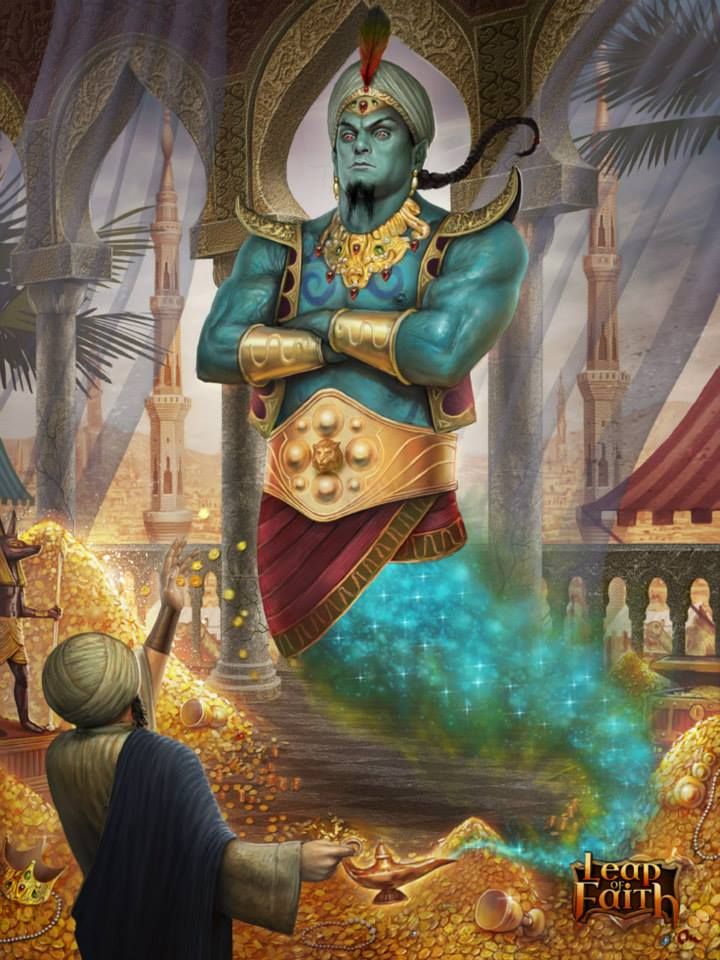
14th Level: Genie Binding
At 14th level, you are able to enter into a long-term contract with a normal genie of your choice. Once the contract period begins, the genie is your willing servant under agreed upon terms. The genie is always friendly to you unless you violate the terms of the agreement.
Contract terms vary, but typical contracts include the following:
- Assisting in the construction of a magic item
- Guarding a tower, keep, or other structure
- Providing magical transportation
Once the term of the contract has been fulfilled (normally 101 days or the completion of a specific task), the bound genie departs.
Normally, a genie will not agree to fight for a character, except under specific circumstances, the execution of which immediately releases the genie from its contract. Most genies will also demand other concessions from a warlock seeking to bind them, such as payment in gold, gems or other items of interest to them.
Alternatively, you can use this ability to demand (and receive) audience with a noble genie or genie ruler. In these situations, meeting with you counts as fulfilling the contract as far as the genie is concerned, and any other agreements or negotiations you reach are outside the scope of this ability.
You can only have one such Genie Binding contract in effect at any one given time, or else the previous genie will immediately be released from its contract with you — and subsequent genies might be increasingly less willing to negotiate with you, as your name becomes associated with malpractice amongst geniekind.
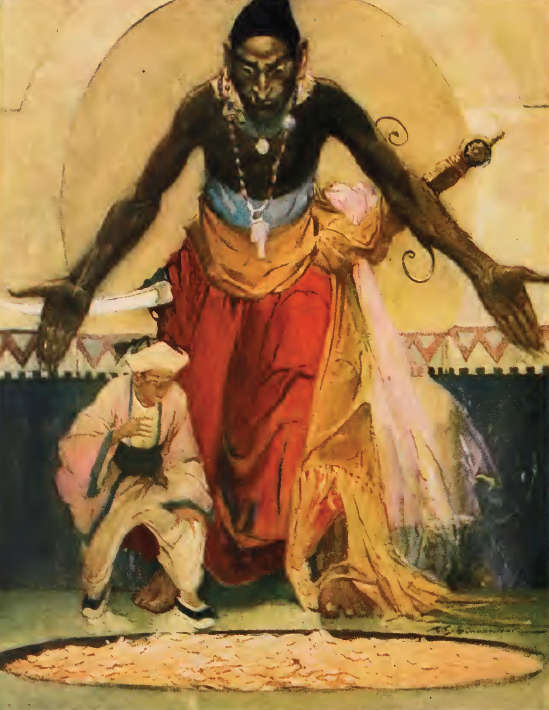
Subclasses: WARLOCK: Pact of the Lamp
\page

\page
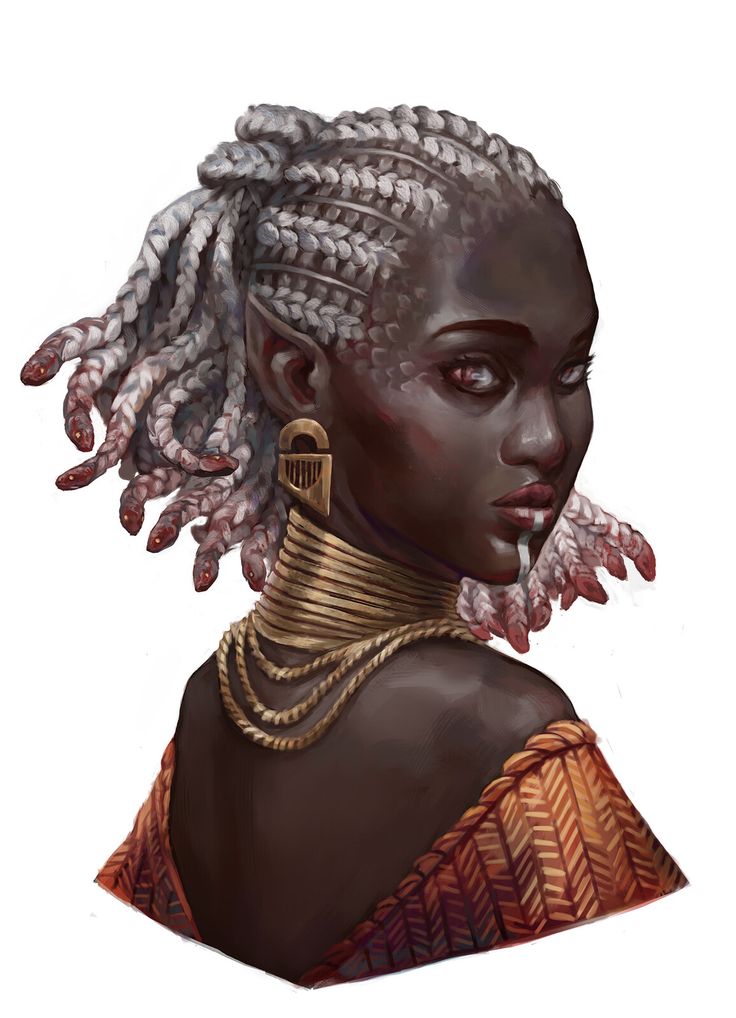
Warlock: Pact of the Gorgon
You have pacted with a Gorgon, an ancient mighty being with snakes for hair and overwhelming power against
those who gaze upon them. Such beings are rare and legendary, but not without purpose or drive. You serve some sort of use to one, whether you know it or not, and slowly take on their attributes as you grow in their
power. Gorgons are also symbols of protection against evil and overwhelming forces across the land, as they are known to stand up to those more powerful than they.
You, too, must embody their ideals of fear and bravery, though it might be for you alone, or for everyone.
1st Level Expanded Spell List
The Gorgon lets you choose from an expanded list of spells when you learn a warlock spell. The following
spells are added to the warlock spell list for you.
Gorgon Expanded Spells
| Spell Levels | Spells |
|---|---|
| 1st | command, detect evil and good |
| 2nd | alter self, skinscales * |
| 3rd | maim * , snakemake * |
| 4th | arcane eye, stoneskin |
| 5th | awaken, geas |
| *indicates a spell found in this book |
1st Level: Snakes of the Gorgon
At 1st level, you have the marking of a gorgon: snake hair.
They are disguised as normal hair by a constant illusion, which cannot be dispelled while you are alive. You can reveal them for a brief moment, freezing onlookers in terror. As an action you can cause each creature of your choice within 30 feet of you that can see you to make a Wisdom saving throw against your warlock spell save DC. The creatures that fail their saving throws have their speed reduced to 0 until the
end of your next turn. Additionally, if any creature makes an Intelligence (Investigation) check against your warlock spell save DC to perceive your hair as an illusion and succeeds, or views it with truesight, they must succeed on a Wisdom saving throw or their speed is reduced to 0 until the end of their next turn. They are then immune to this feature
for 1 hour. Once you use your action for this feature, you can’t do so again until you finish a short or long rest. Additionally, undead or constructs are not affected by this ability.
6th Level: Heart of Euryale
Beginning at 6th level, you begin to know the travelled and far-roaming secrets that legendary creatures like
Gorgons know – secrets that benefit their knowledge, as well as their ability to keep it. You know an additional number of languages equal to your Charisma modifier. Also, you can add your Charisma modifier to your initiative rolls as well as to any Intelligence check you
make to recall information.
10th Level: Might of Stheno
At 10th level, you are capable of a fraction of the ferocity and remarkable power that gorgons possess. When you reduce a creature’s speed to 0 with your Snakes of the
Gorgon feature, they are restrained for the duration.
Additionally, you can’t be surprised and are immune to being petrified, and when another creature attempts
to petrify you, you can use your reaction to reveal your Snakes of the Gorgon to them. The creature
must succeed on a Wisdom saving throw against your warlock spell save DC or be petrified to stone by you until the end of their next turn.
14th Level: Gaze of Medusa
Starting at 14th level, you truly gain the power to turn creatures who challenge you to stone. You can use your Snakes of the Gorgon feature thrice between rests, it has a range of 120 feet, and creatures who fail their saving throw are petrified for the duration. If you expend a use of this feature while the targets are still petrified from the previous use, it extends the duration instead of requiring new saving throws.
Subclasses: WARLOCK: Pact of the Gorgon
\page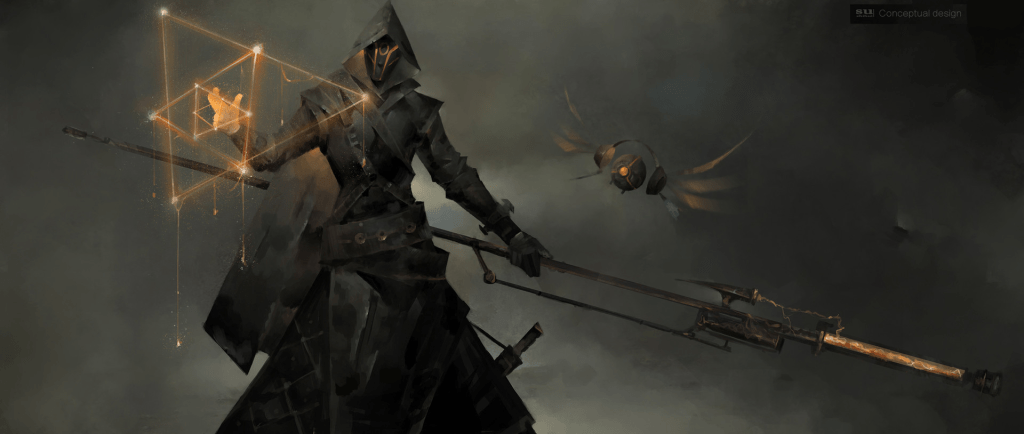


Warlock: Pact of The Machine
Your patron is a powerful construct, an unliving being of indomitable will and single-minded purpose. As an entity lacking in sentiment or emotion, it is likely your patron has made its pact with you as a means to an end, if it knows of your existence at all. It is common knowledge that some gnomish scientists become a little unhinged in their passionate drive to discover and create in the world of mechanics. In fact, there are rumours of Zilverhomian cults that worship a godlike machine entity known as the Omnicron. Whatever the nature of your patron, it drives you to abandon the vulnerability of flesh and shape the world around you as would a machine.
1st Level: Expanded Spell List
The Machine lets you choose from an expanded list of spells when you learn a warlock spell. The following spells are added to the warlock spell list for you.
Machine Expanded Spells
| Spell Level | Spells |
|---|---|
| 1st | command, identify |
| 2nd | detect thoughts, heat metal |
| 3rd | clairvoyance, sending |
| 4th | fabricate, summon construct |
| 5th | commune, creation |
1st Level: Clockwork Infection
You can use your action to attempt to infect a creature within 30 feet of you with eldritch machinery, supplanting its will with your own. The creature must make a Constitution saving throw against your warlock spell save DC, doing so with disadvantage if it is a construct. On a successful save, it suffers no effect and becomes immune to this feature until you finish a long rest. On a failed save, the target becomes infected for one minute.
\column
While infected, the target’s body is partially transmuted into clockwork.
The infected target has its movement speed halved, has disadvantage on Dexterity ability checks and saving throws, and cannot make use of magic abilities or items. An infected target cannot willingly cause direct harm to a creature or be compelled to do so.
When you infect the target, you can telepathically issue it a simple task of three words or fewer (e.g. “open that gate”, “run away”) which it is compelled to follow until the end of your next turn. You need not share a language with the creature to issue it a task. If the task is unclear or impossible, the infected creature can act as it chooses.
As an action on each of your turns, you can issue new tasks to any number of creatures you have infected, issuing a task of your choice to each.
This can be done as part of the action you use to attempt to infect a new creature. The creatures are then compelled to follow the new tasks until the end of your next turn, in place of any previous task.
An infected creature can repeat the saving throw at the end of each of its turns or whenever it takes damage, ending the effect on a success. The infection can also be ended early by any magic that cures disease.
You can successfully infect a creature with this ability a number of times equal to your proficiency bonus, and you regain all expended uses when you finish a long rest.
Subclasses: WARLOCK: Pact of the Machine
\page
1st Level: Gift of Artifice
You gain proficiency with tinker’s tools. In addition, you learn the mending cantrip if you don’t know it already. It becomes a warlock cantrip for you, but doesn’t count against the number of cantrips you know.
6th Level: Mechanised Mind
At 6th level, your patron has taught you to guard your mind with the discipline of a machine. You no longer require sleep.
In addition, when you make an Intelligence or Wisdom ability check or saving throw, you can expend one pact magic slot to gain a bonus to that check or saving throw. This bonus equals the level of the slot expended.
You can use this ability after seeing the initial roll but before any of the roll’s results occur.
\column
10th Level: Advanced Assimilation
Starting at 10th level, you can expend a use of your Clockwork Infection feature as an action to infect a huge or smaller mechanised object within range that isn’t warded against transmutation magic.
When you do, it makes no saving throws and immediately becomes infected until you finish a long rest. You can use issue simple tasks to an infected object in the same manner as a creature.
14th Level: Clockwork Thrall
At 14th level, when a creature falls under the influence of your Clockwork Infection feature, you can expend one use of your Mystic Arcanum feature and attempt to bring the creature under your permanent control.
The creature immediately repeats the saving throw against the infection. On a success, the infection on it ends and it becomes immune to the infection until you finish a long rest. On a failure, the infection becomes indefinite and it no longer makes saving throws to escape.
While suffering from an indefinite infection, the creature’s type changes to construct if it isn’t one already.
The creature’s Intelligence and Charisma scores become 4 if they are higher, and it loses any of its previous Legendary or Lair actions.
A creature infected indefinitely in this manner is friendly to you and obeys your telepathic commands, which do not require an action to issue.
Unlike like other infected creatures, a creature infected in this manner can be instructed to cause harm.
An indefinite infection can be cured by Greater Restoration or Heal. If you subject a new creature to this effect, the previously affected creature is cured of its infection.
A creature is immune to this effect if its challenge rating is greater than the slot level of the Mystic Arcanum used.
Eldritch Invocations
As a warlock of the machine, your invocations may take the form of mechanised upgrades to your body.
For example, your devil’s sight might manifest as an ocular replacement, or your agonizing blast may take the form of a focusing crystal integrated in the palm of your hand.
To better embody this, whenever you choose an eldritch invocation, your DM may allow you to choose it from the additional invocations listed on pages 415-416, provided you meet that invocation’s prerequisites as outlined on those pages.
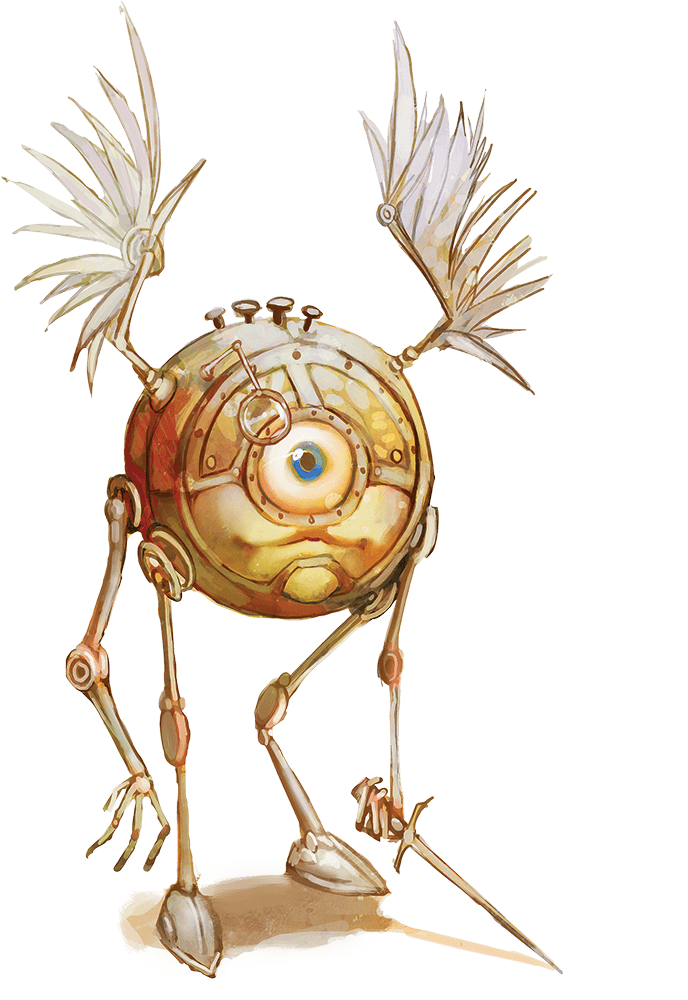
Subclasses: WARLOCK: Pact of the Machine
\page
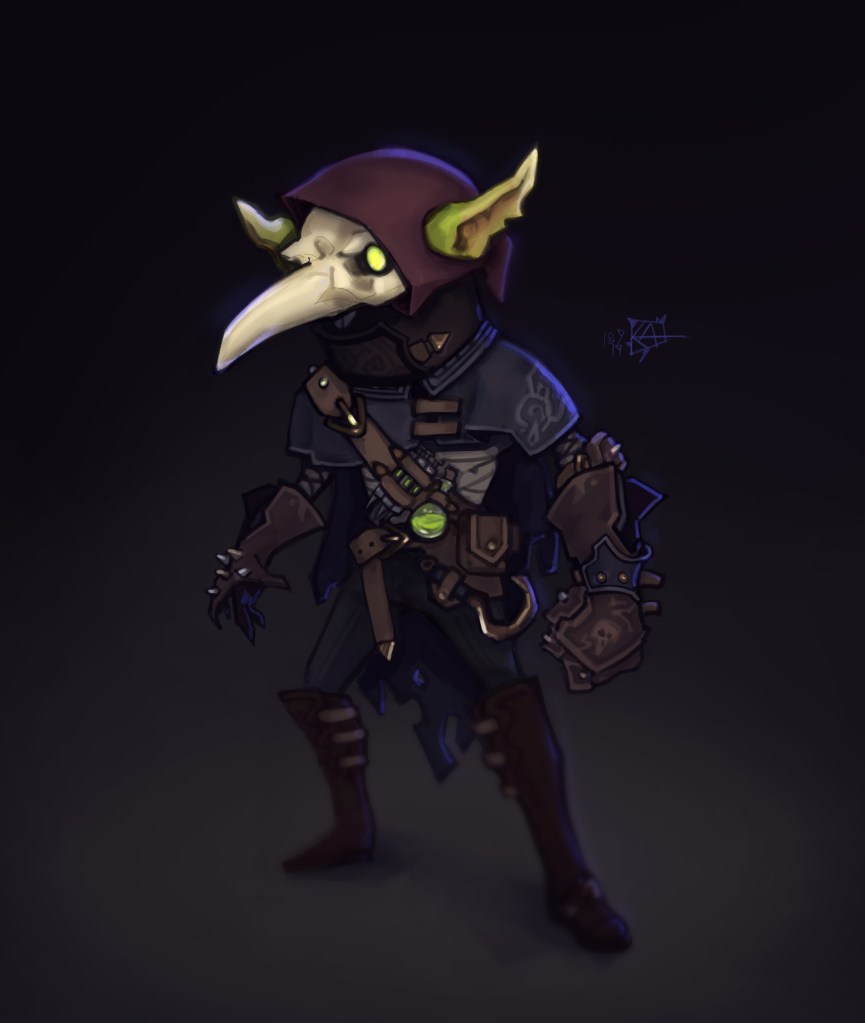
\page
Warlock: Pact of the Plaguebearer
Blood from the mouth; quivering pustules; weeping sores.
There are many signs of plague and death in the world. Most seek to hide from this dark and insidious force of nature; others succumb to it’s necrotic embrace. Doctors, shamans and wise women often attempt to cure or at least stop the unending tide of disease. Some, however, fully embrace the rot and death.
All may be reached out to by the Plaguebearer. A Plaguebearer is any powerful entity that is deeply connected to disease, death, and rot.
While Ruoh is the most likely patron in the Northern Vast, any powerful entity that revels in rot, death and disease could be a Plaguebearer patron.
Making a Pact
A Plaguebearer will reach out to different people for different reasons.
Sometimes it will seek out lepers and cancer patients as they lay upon their sickbeds, whispering hope into their ears; other times it will go to doctors or nurses and curse them for defying their creations.
Still other times people will seek out the Plaguebearer on their own, hoping to cure themselves or a loved one of a disease.
The Plaguebearer usually complies, quick to come to the aid of a sick individual; but this will always bear the cost of servitude to the Plaguebearer, living a life of spreading disease.
\column
Plaguebearer Expanded Spell List
| Spell | Level Spells |
|---|---|
| 1st | inflict wounds, ray of sickness |
| 2nd | blindness/deafness, ray of enfeeblement |
| 3rd | bestow curse, stinking cloud |
| 4th | death ward, giant insect |
| 5th | cloudkill, contagion |
1st Level: Blight Blessed
At 1st level, while you are not technically immune to disease, you suffer none of the ill effects of non-magical diseases; though you still show the symptoms of the disease, and can still transmit it to others.
1st Level: Plague
At 1st level you can target one humanoid creature that is neither undead nor a construct within 30 ft to become riddled with a horrendous disease. They need to make a Constitution saving throw against your spell save DC. Choose from the following list.
| Disease | Description |
|---|---|
| Berserker Fever | The target flies into an uncontrollable rage, and views all creatures in the area as enemies to be destroyed. It will spend its turn attacking the nearest creatures, using spells and magical abilities as normal. Creatures that are immune to charm can´t be affected by this ability. In addition, before attacking an ally, the affected target makes a saving throw to see if they shake off the effects of the disease. This potentially means they make a saving throw against this disease twice in their turn. |
| Black Hack | The target become Poisoned and starts to loudly cough up black, inky blood each turn; meaning it cannot hide while it can be heard. |
| Sightblight | The target’s vision becomes clouded and blurry; everything out to 30 ft is lightly obscured, and everything beyond that is heavily obscured. |
| Stupor Step | The target’s speed is halved, and any time it tries to move it must make a Dexterity saving throw against your spell save DC or fall prone. |
Plague lasts for 1 minute, and each affected target is allowed a saving throw at the end of each of their turns. Once you use Plague, you cannot use it again until you finish a short or long rest. At 5th level, you can use it twice between rests. At 11th level, three times.
6th Level: Purify
When you reach 6th level you can suck the disease from others. As an action, you can touch one creature and remove all diseases affecting it. In addition, you can touch an object-such as food or drink-and purify that of any disease as well. Any diseases you remove incubate inside of you.
Subclasses: WARLOCK: Pact of the Plaguebearer
\page
6th Level: Eldritch Vector
After reaching 6th level your plagues become more insidious and deadly. The diseases from your Plague ability are now able to affect non-humanoids, undead and even constructs as the eldritch affliction affects the very magic binding these creatures together.
Also whenever you score a critical hit with an attack with your pact weapon, or with a spell attack, that creature is also affected by one disease from your Plague ability.
10th Level: Carrier
At 10th level, your plagues are more devastating, and spread quickly through enemy ranks.
Whenever you use Plague, you can choose two different plagues; if the target fails its saving throw, it suffers the effects of both until it successfully saves.
Each time a creature that is being affected by one of your plagues is harmed, except from psychic damage, each creature within 10 ft of it must make a Constitution saving throw against your spell save DC or be affected by the same plagues themselves.
When you use your Plague ability, you are immune to this effect.
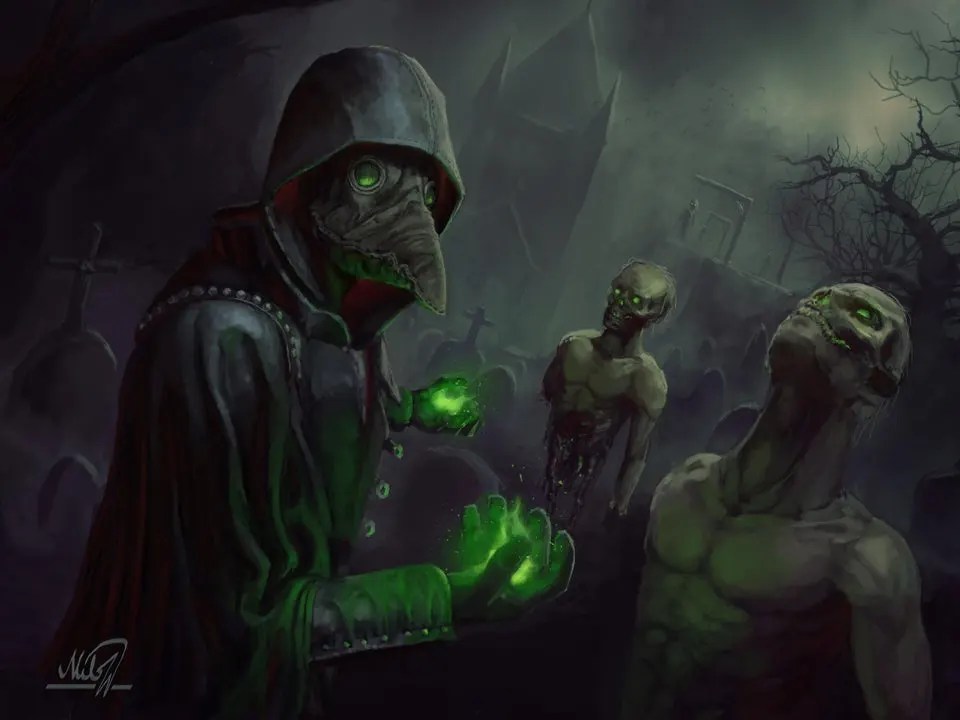
14th Level: Pus-Riddled Servants
Upon reaching 14th level you have become a walking cancer upon the world. Each time a creature who was being affected by one of your plagues dies, it raises as a zombie under your control at the start of your next turn, similar to the animate dead spell. However this zombie will die after 1 minute of animation.
Each time one of your pus-riddled servants hits with an attack, the target must make a Constitution saving throw against your spell save DC, or be affected by the same plague the zombie carried before it died.
When the zombie dies or is attacked, all creatures within 10 ft of it – except for you – must make Constitution saving throws against your spell save DC, or become infected by the plague.
Zombies created this way must remain within 120 feet of you or revert to being a simple corpse and cannot be animated in this way again.
You are also limited to 2 x your Charisma score number of pus-riddled servants.


Subclasses: WARLOCK: Pact of the Plaguebearer
\page
Warlock: Pact of the Primordial

Some who search for power delve into deeper mysteries until they touch upon elder entities who build worlds, crafting mountains and species as if sculpting clay, or annihilate them utterly. Embodying creation, destruction, and the land itself, your patron is an ancient power beyond mortal comprehension. Primordials stand in opposition to the Great Old Ones, the other side of the scale that maintains the balance of reality. Your primordial patron speaks to you in the language of omens, dreams, or intuition, and, in exchange for granting you arcane gifts and abilities, they may call upon you to defend the natural world, to root out the forces of the Void, or even to manipulate seemingly random people or locations for reasons known only to their unfathomable purpose.
1st Level: Expanded Spell List
Choosing the Primordial patron allows you to add the following spells your warlock spell list.
PRIMORDIAL EXPANDED SPELLS
| Spell Level | Spells |
|---|---|
| 1st | command, healing word |
| 2nd | lesser restoration, mud * |
| 3rd | power word fling *, revivify |
| 4th | power word rend *, stone shape |
| 5th | conjure elemental, creation |
*indicates a spell found in this book
1st Level: Convulsion of the Worldbuilder
At 1st level, you can use an action to call upon the bond between your primordial patron and the world
it created to ripple shockwaves through the ground.
Choose a point you can see within 60 feet of you, then choose if the ripples happen in a 30-foot cone, a 30-foot line that is 5 feet wide, or a 20-foot-radius burst. The ripples originate from or are centered on the point you chose, depending on the form the ripples take.
Each creature in the cone, line, or burst must succeed on a Dexterity saving throw or take 1d8 bludgeoning damage and be knocked prone. If the ground in the area is loose earth or stone, it becomes difficult terrain until the rubble is cleared. Each 5-foot-diameter portion of the area requires at least 1 minute to clear by hand.
Once you use this feature, you can’t use it again until you finish a short or long rest. When you reach certain levels in this class, the damage increases: at 5th level (2d8), 11th level (3d8), and 17th level (4d8).
6th Level: Redirection
At 6th level, you learn to channel the reality-bending powers of your patron to avoid attacks. When a
creature you can see attacks only you, you can use your reaction to redirect the attack to a target of
your choice within range of the
attacker’s weapon or spell. If no
other target is within range, you
can’t redirect the attack. If the attack is from a spell of 4th level or higher, you must succeed on an ability check using your spellcasting ability to redirect it.
The DC for this equals 12 + the spell’s level. Once you use this feature, you can’t use it again until you finish a short or long rest.
10th Level: Adaptive Shroud
At 10th level, your bond with your patron protects you by adapting itself when you are injured. When
you take damage, you can use your reaction to gain resistance to the triggering damage type until the
start of your next turn. If you expend a spell slot as part of this reaction, the resistance lasts for a number of rounds equal to your proficiency bonus. Once you use this feature, you can’t use it again until you finish a short or long rest.
14th Level: Crushing Regard of the Primordial One
At 14th level, you learn to direct the weight of your patron’s infinite gaze onto the unworthy. You can use
an action to cause of the following effects. Once you use this feature, you can’t use it again until you finish a long rest.
One Creature. One creature you can see within 60 feet of you must make a Wisdom saving throw. On a failed save, the creature takes 10d10 force damage and is paralyzed for 1 minute. On a successful save, the creature takes half as much damage and isn’t paralyzed. At the end of each of its turns, a paralyzed target can make another Wisdom saving throw. On a success, the condition ends on the target.
Multiple Creatures. Each creature in a 20-foot radius sphere centered on a point you can see within 100 feet of you must make a Constitution saving throw. On a failed save, a creature takes 5d10 force damage and is knocked prone. On a successful save, the creature takes half as much damage and isn’t knocked prone.
Subclasses: WARLOCK: Pact of the Primordial
\page
Mages in the Northern Vast
While mage and wizard are often interchangeable terms, in the Northern Vast the terms ‘mage’ and ‘wizard’ typically have different nuanced meanings. While both are mechanically ‘wizards’ in the D&D 5e system, they differ in many ways within the world of Seminus.
Mages in Seminus are usually self-taught or else apprenticed to another mage who instructs them in the arcane means and ways. They are not associated with an official arcane Academy, University, School or Society. By contrast, wizards are typically the products of such institutions and, in general, will frown upon mages as being lesser arcane practitioners.
While there are many kinds of possible mages, most tend to associate their arcane arts with the four classic elements of ‘flame’ (fire), ‘sand’ (earth), ‘sea’ (water) and ‘wind’ (air).
Many mages go so far as to focus their arcana around one specific element out of the four above the others, but, as mages they are not bound to any particular rules like those found in the more stringent Wizarding Institutions. If you would like to be a flame, sand, sea or wind mage, you can find the rules for these subclasses in the following pages.

WIZARD: Flame Mage
Of all the elements, Flame is by far the most feared by the general populace. Rightly or no, mages who weave their arcane practice around this element are considered by the average citizen to be more violent or destructive than others — however, sadly, this is not always the case.
Nonetheless, due to the social stigmata, many good flame mages will open shops in city bazaars and sell charcoal, braziers, incense and other flame-related merchandise to hide their true natures.
As a Flame Mage, you are not restricted in the nature of the spells you can learn and cast, provided they are wizard spells, however you tend to prefer those than involve fire, change and raw destructive power.
2nd Level: Flame Savant
Beginning when you select this path for your character at 2nd level, you learn Ignan if you don’t already know it and you have advantage on Charisma checks made to interact with creatures that are native to the Elemental Plane of Fire, or else have resistance or immunity to fire damage.
2nd Level: Nimbus
Also beginning at 2nd level, you can use an action to surround yourself with a thin barrier of flame. The barrier gives off light like a torch and lasts for a number of minutes equal to your Intelligence modifier.
While your Nimbus is active, any time a creature makes a successful melee attack against you it takes fire damage equal to the highest spell level you can cast.
For example, a creature that makes a successful melee attack against a 5th level flame mage would take 3 fire damage from this feature, whereas a creature that makes a successful melee attack against a 9th level flame mage would take 5 fire damage from this feature.

Subclasses: WIZARD: Flame Mage
\page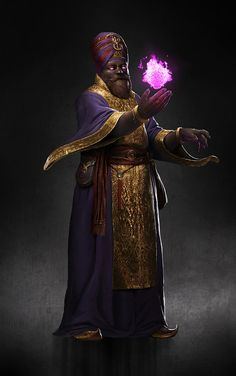
6th Level: Wildfire
Starting at 6th level, you learn the cantrip fire bolt if you don’t already know it. When you cast fire bolt you can choose additional targets; choose a number of creatures or objects up to your Intelligence modifier that are within 10 feet of the primary target of your fire bolt cantrip. The creatures or objects you choose are also affected by the spell (make a separate attack roll for each). You have disadvantage on the attack rolls against these additional targets.
10th Level: Steward of Flame
At 10th level, you have resistance to fire damage, and you can compel lesser flame creatures to follow your orders. As an action, you can choose one fire-resistant or fire-immune creature with a Challenge Rating of 5 or less that you can see within 60 feet of you. That creature must make a Charisma saving throw against your wizard spell save DC. If it succeeds, you can’t use this feature on it again. If it fails, the creature becomes friendly to you and obeys your commands until you use this feature again. It will not act in a way that will obviously cause itself self-harm. It will also know that you have commanded it when the effects wear off.
14th Level: Inferno
At 14th level, your mastery over fire is nearly complete. All targets who take fire damage from your spells are set on fire. Each target takes 1d6 fire damage at the start of their turns. A creature can end this samage by using its action to make a Dexterity saving throw against your wizard spell save DC to extinguish the flames.
In addition, when you cast a spell that deals fire damage, creatures usually immune to fire damage take half damage from your spell and creatures with resistance to fire damage take full damage from your spell.

WIZARD: Sand Mage
If you were to ask the average Vastlander what qualities best describe a sand mage, those qualities would probably be steadfastness, reliability, and a tendency to be opinionated. While there is no universal dictum that states that sand mages must be either lawful or stubborn, nonetheless the public perception persists. These perceptions aside, however, it does often ring true that sand mages tend to be more physically powerful than other mages and wizards.
As a Sand Mage you are not restricted in the nature of spells you can learn and cast, provided they are wizard spells, however you tend to prefer those that involve earth and sand, or else paralysation and incapacitation.
2nd Level: Sand Savant
Beginning when you select this path at 2nd level, you learn Terran if you don’t already know it. You also have advantage on Charisma checks made to interact with creatures that have resistance or immunity to paralysation or being moved, or else are native to the Elemental Plane of Earth.
2nd Level: Bedrock
Also beginning at 2nd level, you can use a bonus action to anchor yourself to your surroundings. While anchored in this manner, any creature attempting to move you against your will (by shoving, telekinesis, or other methods) must succeed on a Strength saving throw against your wizard spell save DC to do so.
Subclasses: WIZARD: Flame Mage | Sand Mage
\page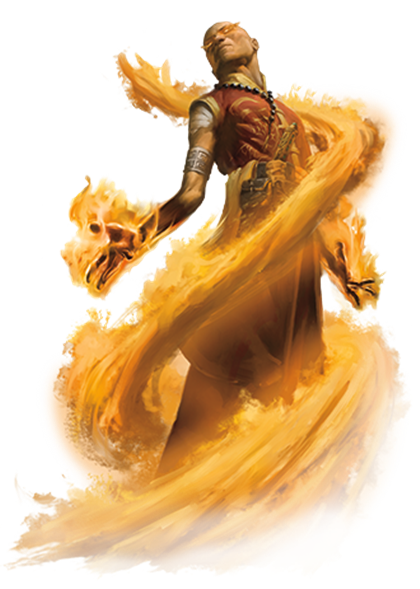
6th Level: Sand Shadow
Starting at 6th level, you can vanish in a puff of dust in response to harm. When you take damage, you can use your reaction to turn invisible and teleport up to 60 feet to an unoccupied space you can see. You remain invisible until the start of your next turn or until you attack or cast a spell.
Once you use this feature, you can’t use it again until you finish a short or long rest.
10th Level: Steward of Sand
At 10th level, you have advantage on saving throws against any effect that causes the Incapacitated condition, and you can compel lesser earth creatures to follow your orders.
As an action, choose one creature with a burrow speed and a Challenge Rating of 5 or less that you can see within 60 feet of you.
That creature must make a Charisma saving throw against your wizard spell save DC. If it succeeds, you can’t use this feature on it again.
If it fails, the creature becomes friendly to you and obeys your commands until you use this feature again. It will not act in a way that will obviously cause itself self-harm. It will also know that you have commanded it when the effects wear off.
14th Level: Entomb
At 14th level, the structure of reality obeys your command.
Choose a creature that you can see within 60 feet of you. It must make a Wisdom saving throw against your wizard spell save DC. On a failed save, the target falls into a sandy pit that opens up beneath its feet. While in this pit the creature cannot be targeted by attacks or spells and cannot be seen. Nothing else can enter this pit, nor can any creature teleport out of it.
At the end of your next turn, the target reappears in the space it left or in the nearest unoccupied space if that space is occupied and is stunned until the beginning of its next turn.
Once you use this feature, you can’t use it again until you finish a long rest.

WIZARD: Sea Mage
Water is precious and in many lands of the Northern Vast it is extremely rare, and in this places sea mages are far less numerous. However there are plenty of coastal regions, and in this localities there are more of these amazing arcane practitioners. Valued by the common folk for their ability to conjure and command that most valuable of all commodities, nonetheless, sea mages are not well trusted. Many of these mages know well enough the price and demand their services can fetch, and they have a reputation for being as capricious and inconstant as the waves of the ocean themselves.
Thus, while they are able to earn good coin for their services, few want them to linger around longer than good manners require.
As a Sea Mage, you are not restricted in the nature of the spells that you can learn and cast, so long as these are wizard spells, however, you tend to prefer those that involve water, or else misdirection and suffocation.
2nd Level: Sea Savant
Beginning when you select this path at 2nd level, you learn Aquan if you don’t already know it and you have advantage on Charisma checks made to interact with creatures that have a swim speed, or else are native to the Elemental Plane of Water.
Subclasses: WIZARD: Sand Mage | Sea Mage
\page
2nd Level: Thirst of Ages
Also beginning at 2nd level, you can control a creature’s need to drink when you touch it.
Make a melee spell attack against the target. On a hit, choose one of the following effects:
- Hydrate. The creature’s water needs are fulfilled for 24 hours.
- Dehydrate. The target must succeed on a Constitution saving throw against your wizard spell save DC or take 4d4 necrotic damage from overwhelming thirst. A creature who fails the save by 5 or more also gains one level of exhaustion.
Once you have used this feature, you can’t use it again until you finish a long rest.
6th Level: Ocean’s Child
Starting at 6th level, you have a Swim speed equal to your walking speed, and you can breathe air and water.
6th Level: Oceanic Mirage
Also at 6th level, you can use your action to create a mirage that looks like the rippling of the ocean.
Each creature within 30 feet of you who sees the mirage must make a Wisdom saving throw against your wizard spell save DC.
On a failed save, the creature is incapacitated and has a speed of 0. The effect ends for an affected creature if it takes any damage.
Once you use this feature, you must finish a short or long rest before you can use it again.
10th Level: Steward of the Waves
At 10th level, you have advantage on saving throws against any effect that causes suffocation or exhaustion, and you can compel lesser sea creatures to follow your orders.
As an action, you can choose one creature with a swim speed and a Challenge Rating of 5 or less that you can see within 60 feet of you.
That creature must make a Charisma saving throw against your wizard spell save DC.
If it succeeds, you can’t use this feature on it again.
If it fails, the creature becomes friendly to you and obeys your commands until you use this feature again. It will not act in a way that will obviously cause itself self-harm. It will also know that you have commanded it when the effects wear off.
14th Level: Ocean’s Crush
At 14th level, you can conjure the sea’s power and bend it to your will.
Choose a number of creatures equal to your Intelligence modifier within 60 feet of you that you can see. Each of these targets must succeed on an Intelligence saving throw against your wizard save DC or believe they are drowning and begin to suffocate.
At the start of its next turn, each target drops to 0 hit points and begins to die.
Each creature makes a death saving throw on their subsequent turns; for each death saving throw they pass they can make another attempt at the Intelligence saving throw against your wizard save DC.
They actually die if they fail three death saving throws, coughing up sea water.
If they pass any of the Intelligence saving throws, they return to whatever hit points they had before this Ocean’s Crush ability affected them, however, they suffer one level of exhaustion for each death saving throw they had failed.
A creature that has a swim speed has advantage on the Intelligence saving throws.
Once you use this feature, you must finish a long rest before you can use it again.
Subclasses: WIZARD: Sea Mage
\page

\page
WIZARD: Wind Mage
Some think wind mages are fickle and flighty as a summer breeze; others fear well the raw and unbridled power of a storm. While many wind mages tend towards the lighthearted side, quick with a carefree laugh and a casual dance in the twilight, their power is often at odds with those of other arcane means. As the ocean wind ripples the waves, as the desert gusts topple the dunes, and the quick puff quenches the flame, so move these mages of the wind.
As a Wind Mage, you are not restricted in the nature of spells you can learn and cast, providing they are wizard spells, but you tend to prefer those to do with the wind or air, or else those that involve interference, freedom and movement.
2nd Level: Wind Savant
Beginning when you select this path at 2nd level, you learn Auran, if you didn’t already know it. You also have advantage on Charisma checks made to interact with creatures that have a fly speed, or that are natives of the Elemental Plane of Air.
2nd Level: Wind Dancer
Also beginning at 2nd level, your feet seem to barely touch the ground when you walk.
If you fall 60 feet or less, you can use your action to take no falling damage and land on your feet. Once you use this ability, you must finish a long rest before you can use it again.
6th Level: Wind Rider
At 6th level, you add the fly spell to your spellbook if it is not there already. When you cast fly, the spell’s duration is doubled and it does not require concentration for you.

10th Level: Ruler of the Winds
At 10th level, you can cast fly as a bonus action instead of an action, and you can compel lesser air creatures to follow your orders.
As an action, you can choose one creature with a fly speed and a Challenge Rating of 5 or less that you can see within 60 feet of you. That creature must make a Charisma saving throw against your wizard spell save DC.
If it succeeds, you can’t use this feature on it again. If it fails, the creature becomes friendly to you and obeys your commands until you use this feature again. It will not act in a way that will obviously cause itself self-harm. It will also know that you have commanded it when the effects wear off.
14th Level: Whirlwind
At 14th level, you create a 15-foot-radius, 30-foot-tall cylinder of swirling air centered on a point you can see within 60 feet of you. The whirlwind lasts up to one minute as long as you maintain concentration (as if concentrating on a spell). Any creature but you that enters the whirlwind must succeed on a Strength saving throw against your wizard Spell Save DC or be restrained by it and take 4d6 bludgeoning and 4d6 force damage. You can move the whirlwind up to 60 feet as an action, and creatures restrained by the whirlwind move with it when it moves. The whirlwind ends if you lose sight of it for whatever reason.
A creature can use its action to free a creature restrained by the whirlwind, including itself, by succeeding on a Strength check against your Spell Save DC. If the check succeeds, the creature is no longer restrained and moves to the nearest space outside the whirlwind. Once you use this feature, you must finish a long rest before you can use it again.
Subclasses: WIZARD: Wind Mage
\page
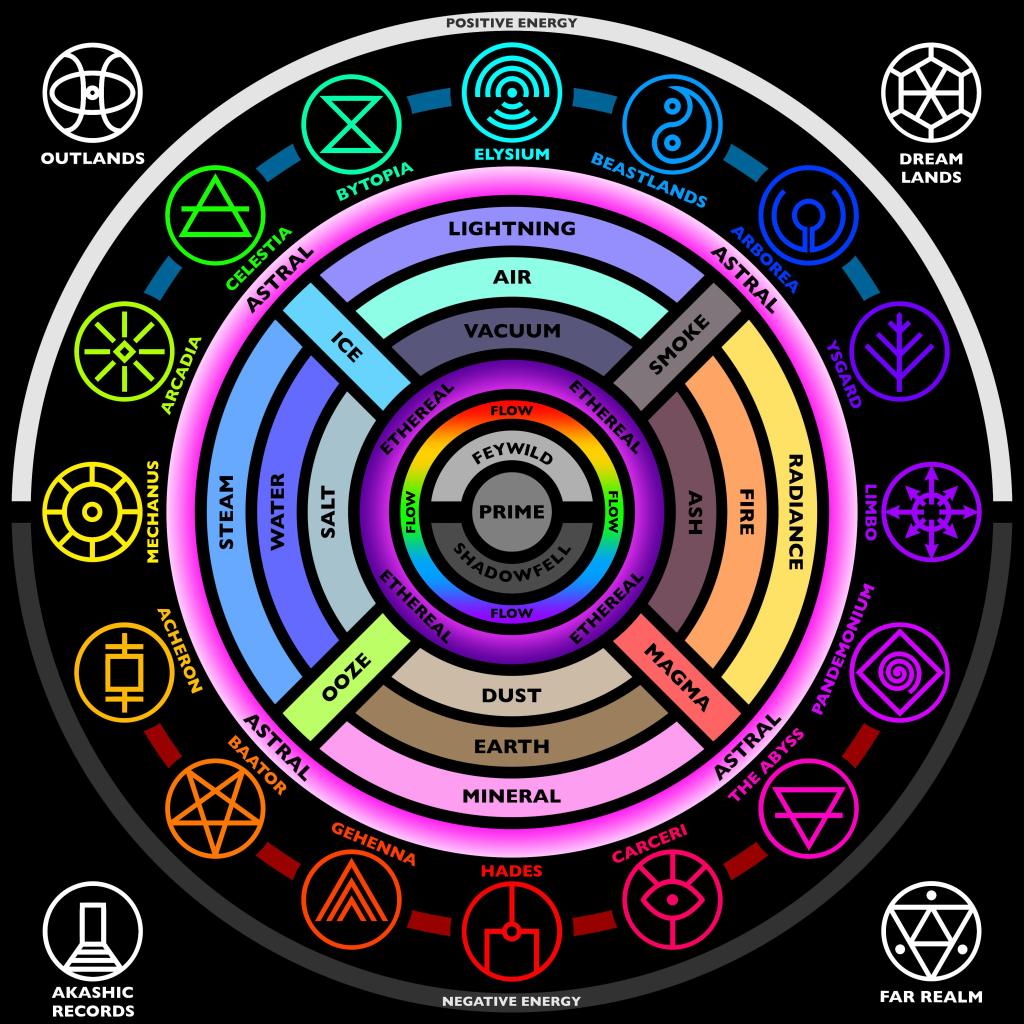
\page
WIZARD: Elementalist
Elementalism in Seminus
The arcane philosophies of Seminus are as diverse as its lands, with differing interpretations of Elementalism shaping the magical traditions of each region. Depending on cultural and historical influences, the number and nature of the elements vary across the world, leading to unique schools of thought and practices.
The Six Elements: The Agram Approach
In the Western Lands, the Southern Wastes, and parts of the Northern Vast, the teachings of Agram, the City of Magic, dominate. Practitioners in these regions recognize six major elements: air, earth, fire, metal, wood, and water.
This comprehensive system views the elements as interconnected yet distinct forces that influence the physical and metaphysical realms. Scholars of the Agram approach emphasize balance and integration, with each element contributing uniquely to the structure of existence.
The Four Elements: The Classical Tradition
In the Northern Vast, under the influence of the Mü’şuri Empire, and across the Middle Sea in regions such as Kýros and Khepresh, the classical tradition holds sway. Here, only four elements are recognized: air, earth, fire, and water.
This more streamlined view aligns with the philosophies of these lands, emphasizing simplicity and the fundamental building blocks of the natural world. The classical tradition often ties Elementalism to celestial and divine order, with the elements seen as manifestations of a higher cosmic balance.
The Five Elements: The Eastern Realms
In the Eastern Realms, spanning a variety of kingdoms and cultures, from Pantar to Inkido, the concept of ‘Ways’ focused around five classic elements is prevalent. These elements are earth, fire, metal, wood, and water.
Unlike the Agram approach, air is absent as a distinct element, with its qualities often subsumed within other elements. This system reflects the deep integration of Elementalism with the cycles of nature and philosophy in these regions, emphasizing harmony and transformation.
Contested Elementalisms
Some Agram scholars, ever at the forefront of arcane science, contend that the following elements qualify as major elemental arcane sources, with glimpses of their elemental planes having been “unlocked.”
The veracity of these claims are still hotly debated, often bitterly, however, with conservatives maintaining that they are part of one of the other six major elements, and proponents maintaining a separate arcane source of major magicks:
Shadow / Negative:
Advocates argue that shadow is not merely an extension of air or fire but an independent element, representing absence, concealment, and subtle power.
Light / Radiant / Positive:
Proponents claim light is a source of elemental magic tied to creation and purity, distinct from fire, and with its own planar resonance.
Oblivion / Negative:
Often described as the element of nothingness or negation, its theorists suggest it represents the boundary of existence itself, defying classification within the traditional six.
Blood / Life / Flow:
Supporters view life as a synthesis of wood, water, and other elements, yet argue it possesses a unique arcane vitality that cannot be fully explained as a derivative.
In addition to these debated elements, the ancient cosmology of Seminus describes a complex system of para- and quasi-elemental planes that interconnect the classical elemental planes (fire, earth, water, air) with either each other or the Positive and Negative Planes. These include:
Para-Elemental Planes:
- Smoke (Air + Fire)
- Ice (Air + Water)
- Ooze (Earth + Water)
- Magma (Fire + Earth)
Quasi-Elemental Planes:
Positive Planar Intersections:
- Lightning (Positive + Air)
- Minerals (Positive + Earth)
- Radiance (Positive + Fire)
- Steam (Positive + Water)
Negative Planar Intersections:
- Vacuum (Negative + Air)
- Dust (Negative + Earth)
- Ash (Negative + Fire)
- Salt (Negative + Water)
The debates over these contested elements and planes fuel passionate arguments in academic circles, with no consensus yet in sight. Explorations of these potential elemental planes remain dangerous and unpredictable, adding further complexity to the discourse.
Subclasses: WIZARD: Elementalist
\page
Among these debates, a peculiar and highly contentious claim has emerged from the Zilverhamian Gnomish Scientists, a group renowned for their outright rejection of magic in favor of “Science.” While these so-called “scientists” claim that all magical phenomena can be explained through natural laws, they undermine their own assertions by championing the existence of an additional “element” (if it can even be called that): Pizza.
In their famous treatise, ‘The Pizza Elemental – Fact or Fiction?’, they argue that Pizza represents the essence of well-roundedness, nourishment, and the ability to regain strength. According to these Gnomish theorists, Pizza is not bound by traditional arcane rules but exists in a dimension of unparalleled accessibility. Most importantly, they boast, “Pizza can be delivered in under half an hour in most areas.” Critics in academic circles often dismiss this notion as “half-baked,” but the treatise has gained a cult following among students of the arcane who claim its philosophy “delivers” on multiple fronts.
Regional Interpretations
The differing views of Elementalism are not merely academic; they influence everything from spellcasting techniques to architectural styles, religious practices, and societal structures. While the Agram approach favors intricate and inclusive magical theories, the classical tradition emphasizes elemental purity, and the Eastern philosophies focus on interconnectedness and natural cycles. Travelers and scholars often find opportunities for cross-cultural exchange, though disputes over the “true” nature of the elements are not uncommon.
As Seminus continues to evolve, the interplay of these elemental philosophies shapes both conflict and cooperation among its many regions, contributing to the rich tapestry of arcane knowledge that defines the world.
Agram, the City of Magic
In Agram, the following Arcane Schools can be found, each specialising in a different element.
University of Winds (Univerzitet Vetrova)
Specializing in air magic, this university features soaring towers and open-air classrooms, where students master currents, storms, and the art of flight.
College of the Earth (Koledž Zemlje)
Focused on earth magic, this institution is built into a hillside with stone halls and subterranean chambers, perfect for geomancy and terraforming studies.
Academy of Flames (Akademija Plamena)
Dedicated to fire magic, the academy boasts blazing forges and pyromantic amphitheaters where students manipulate fire in all its forms.
School of Metallurgy (Škola Kovanja)
This school teaches the manipulation of metal, combining magical metallurgy and enchanting with vast forges and alchemical workshops.
University of Woodcraft
(Univerzitet Drvodelja)
Nestled in a lush arboretum, this university specializes in wood magic and plant manipulation, blending artistry with magical growth techniques.
Hydrosophist Academy
(Akademija Vodoumja)
Situated along the river and featuring underwater chambers, this academy trains students in the fluid and versatile magic of water.
Hikmet, the City of Knowledge
While there are several cities with Universities of Elementalism in the Mü’şuri Empire, including the capital of Zarihshan, none are more prestigious than those of Hikmet, the City of Knowledge. Most Elementalists will graduate from a campus of one of these established institutions (whether in Hikmet itself or in a different city):
Dar al-Hawa (House of Air)
This university, with its delicate minarets and open courtyards, is devoted to the study of air magic, focusing on wind manipulation, storms, and the mysteries of the heavens.
Madrasa al-Ard (School of the Earth)
Built from sandstone and marble, this school delves into the secrets of the earth, from shaping landscapes to extracting the arcane power within minerals and stones.
Akademi al-Nar (Academy of Fire)
A grand institution surrounded by eternal flames and decorated with intricate mosaics, it trains students in the control of fire, from destructive infernos to forging and creation.
Kuliyet al-Ma (College of Water)
Situated near cascading aqueducts and serene reflecting pools, this college focuses on water magic, teaching the art of healing, hydromancy, and the control of tides and currents.
The Eastern Realms
Elementalism in the Eastern Realms is older than the other regions of Seminus, with evidence of it having been at least as old as the Second Age. In this part of the world it is less focused on a particular city of Magic, and more centred around the concept of ‘Ways’. There
Subclasses: WIZARD: Elementalist
are five established Ways, each with their own local cultural ‘temples’, ‘monasteries’ or ‘shrines’.
While each country or realm in the Eastern Realms will have their own cultural names for these Ways, they are all variations of the same fundamental five elements.
Listed here are five ‘examples’, taken from different regions of the Eastern Realms (Pantar, Inkido, Ryōppon, Şa’kal and Jinguo), but each realm will have their own local versions of the five ways and these examples are given to show how a local interpretation of the way might exist in that region of the world.
Pantar
Way of the Stone Path
(Shí Lù Zhī Dào, 石路之道)
A network of temples nestled in mountainous regions, focusing on earth magic, resilience, and the secrets of unyielding strength.
Way of the Sky’s Fire
(Tiānkōng Huǒ, 天空火)
Fire shrines atop mountain peaks and within great forges, where practitioners master the destructive and renewing forces of fire, harnessing it for both creation and purification.
Way of the Silver Hammer
(Yín Chuí, 银锤)
Temples built around grand forges and workshops where metalworking and arcane metallurgy are practiced to create enchanted weapons and armor imbued with spiritual power.
Way of the Verdant Rain
(Lù Yǔ, 陆雨)
Temples in sacred groves where the magic of wood is intertwined with water, representing harmony, growth, and the rejuvenation of the soul through the cycles of nature.
Way of the Flowing Dragon
(Liú Lóng, 流龙)
Riverside sanctuaries where water is revered for its healing and adaptive properties, used for purification rituals and the mastery of emotional and spiritual fluidity.
Inkido
Way of the Stone Spirit
(Ishi no Seirei, 石の精霊)
Temples carved into rocky cliffs where monks commune with the earth spirits, learning to embody the unmovable strength of stone and the wisdom it holds.
Way of the Sacred Flame
(Sei no Honō, 聖の炎)
Fire-lit monasteries devoted to the purification of body and soul through flame. Here, fire is a force of transformation, burning away the impure and illuminating the path to enlightenment.
Way of the Shining Sword
(Kagayaki no Ken, 輝きの剣)
Dedicated to the forging of both physical and spiritual weapons, this Way teaches the mastery of metal, creating sacred swords that channel both elemental and divine power.
Way of the Evergreens
(Furimuita Matsu, 振向いた松)
Wooden shrines hidden deep in serene forests where monks cultivate a deep connection with nature’s life force, using plants and trees as conduits for healing and spiritual growth.
Way of the Moonlit Waters
(Tsukimi no Mizu, 月見の水)
Serene lakeside temples where water rituals are practiced to cleanse the spirit and reflect on the fluidity of life, teaching adaptability and inner peace through still waters.
Ryōppon
Way of the Eternal Mountain
(Eien no Yama, 永遠の山)
Monasteries built into the highest mountains, where monks study the earth’s deep resilience and the timeless strength of nature, seeking spiritual fortitude through stillness.
Way of the Blazing Flame
(Gōka no Michi, 豪火の道)
This Way is dedicated to mastering the destructive and transformative power of fire, with practitioners studying fire in sacred temples to understand its cleansing and creative capabilities.
Way of the Forge King
(Cheongdo Gage, 청도 가게)
Craftsmen and sorcerers gather at this Way to unlock the magical properties of metal, refining tools and weapons through both mundane and mystical forging techniques to empower warriors and protectors.
Subclasses: WIZARD: Elementalist
\page
Way of the Whispering Leaves
(Sōen no Ha, 草園の葉)
Temples in tranquil, remote groves teach practitioners to attune themselves to the spiritual resonance of plants, using wood magic to heal, protect, and maintain the balance of nature.
Way of the Flowing Lotus
(Yamami no Mizu, 山見の水)
Water is revered as the medium for emotional and spiritual purification. Monks practice water magic through sacred rivers and lakes, seeking personal transformation and balance through the fluidity of life.
Şa’kal
Way of the Sacred Stone
(Pīṭha Pāṭhī, पीठ पाठी)
Sacred stone altars in the heart of temples represent the deep connection to the earth and the power of stone as a symbol of strength and spiritual endurance, teaching resilience through the earth’s essence.
Way of the Flaming Spirit
(Teja Prakāśa, तेज प्रकाश)
Monasteries built around eternal flames, where fire is honored as a purifying force. Here, practitioners learn to channel fire’s transformative properties for inner enlightenment and the burning away of impurities.
Way of the Golden Anvil
(Suvarna Bhāṇḍa, स्वर्ण भाण्डा)
Temples dedicated to metallurgy and craftsmanship, where the magical properties of gold and other metals are studied to create enchanted tools, jewelry, and spiritual artifacts that enhance life force.
Way of the Verdant Grove
(Vṛkṣa Rasa, वृक्ष रसा)
Hidden temples in vast jungles where monks commune with nature, learning wood magic and the ancient art of plant manipulation to heal, protect, and foster balance between all living things.
Way of the Lotus Waters
(Kamala Jala, कमल जल)
Lotus-filled sanctuaries along sacred rivers teach water magic, focusing on healing, purification, and transformation. The waters are seen as the source of divine life and regeneration.
\column
Jinguo
Way of the Mountain’s Heart
(Shān Xīn Dào, 山心道)
Temples carved into the heart of mountains represent stability and deep knowledge. Practitioners study the earth’s wisdom and gain strength through meditation in these sacred, stone-hewn halls.
Way of the Fiery Dragon
(Huǒ Lóng Dào, 火龙道)
Located near volcanoes and fire-temples, this Way teaches the mastery of fire as both a destructive and creative force. Practitioners study the dragons of fire to unlock the transformative power of the element.
Way of the Celestial Blade
(Tiānjiàn Dào, 天剑道)
An ancient tradition of forging sacred weapons from celestial metals, these temples create magical blades that channel elemental power and the will of the heavens, teaching warriors to wield both metal and magic.
Way of the Verdant Serenity
(Qīng Lín Dào, 青林道)
This Way is dedicated to nature, where practitioners build deep connections with the forests and sacred groves, using wood magic to heal and harmonize with the rhythms of the natural world.
Way of the Flowing Lotus
(Liú Lián Dào, 流莲道)
Water temples along rivers and lakes emphasize the purification and adaptability of water. Practitioners seek healing and spiritual clarity through the flowing waters, learning to adapt to the ever-changing currents of life.
Making an Elementalist
When you decide to play as this subclass, you need to decide on which region of Seminus your character will be from, because this will change how they view the arcane world. Are they a purist from Hikmet, steadfast in their belief of the four classic elements?
Are they a more fluid Eastern Realms elementalist, with their own local interpretation of one of the five elements classic to that region of the world? Or are they a more ‘cutting-edge’ arcane practitioner, positing the Six Major Elements as being the True Path of Knowledge?
While there are canonical elemental schools outside of Agram’s Six Major Powers, for mechanical reasons it is currently not possible for players to choose from these.
The choice of reason is important because it will decide your elementalist’s Opposition school(s) – see below.
Subclasses: WIZARD: Elementalist
\page
Elementalist Arcane Schools
Instead of specializing in a focused arcane school of magic, such as Illusion or Enchantment, a wizard can choose to specialize in one of the elemental schools of magic. These schools differ from region to region (as outlined above).
An elemental school grants a number of elemental school powers and one bonus spell slot of each level the wizard can cast. This bonus spell slot must be used to prepare a spell from the elemental school’s spell list.
Unlike a normal arcane school, each elemental school has one or two opposing elemental schools (see the Elementalist School Oppositions section below). An elementalist must expend two spell slots to prepare a spell from their opposed elemental school(s).
One of the main attractions for students of this type of wizardry is the mastery one can acquire over their chosen element – and this is represented by the fact that spells from an elementalist’s focus element (see each elementalist’s specific focus element spell table) only cost 0.5 regular spell slots. This 0.5 spell slot boon can not be used on the bonus spell slot per level, however. Additionally spells that have been memorised in this way can never be upcast and must be cast at the level they were memorised at. If a wizard chooses to memorise their own elemental school spell as a single spell slot (instead of using the 0.5 option), then that spell can be upcast if it was a lower level spell that had been memorised at a higher level. For example, if Dirk is a level 10 Fire Elementalist and chooses to memorise fireball using one of his level 5 spell slots, then that entire spell slot has been taken up by the upcast fireball and the 0.5 boon cannot be used on that spell slot.
For example, Pyro is a level 1 Elementalist, however, because he hasn’t reached level 2 and picked a particular element to focus on, he does not have any bonus spell slots to enjoy.
Suspira on the other hand is a level 3 Air Elementalist. She has 4 cantrips (plus 1 additional Air Elementalist cantrip), she has 4 level 1 spell slots (plus 1 additional Air Elementalist level 1 spell slot) and she has 2 level 2 spell slots (plus 1 bonus Air Elementalist level 2 spell slot). Each of her bonus Air Elementalist spell slots (regardless of level) can only be used to memorise one Air Elementalist school spell for that level. With the other spell slots, for example, the 4 level 1 spell slots, she could memorise 4 level 1 spells of non-elementalist schools, or she could memorise 2 level 1 spells of an opposition elementalist school, or she could memorise 8 level 1 spells that are on her air elementalist school list.
Elementalists believe in the superiority of their chosen element above all others, and they aren’t shy about making that fact known. Elementalists are sometimes secluded researchers, but more often they’re adventurous types who sign on with groups that can appreciate their singular talents.
The Elementalist
| — Spell Slots per Spell Level — | |||||||||||||
|---|---|---|---|---|---|---|---|---|---|---|---|---|---|
| Level | Proficiency Bonus | Features | Cantrips Known | 1st | 2nd | 3rd | 4th | 5th | 6th | 7th | 8th | 9th | |
| 1st | +2 | Spellcasting, Arcane Recovery | 3 | 2 | — | — | — | — | — | — | — | — | |
| 2nd | +2 | Elemental Savant, Elemental Mastery | 3 (1) | 3 (1) | — | — | — | — | — | — | — | — | |
| 3rd | +2 | ─ | 4 (1) | 4 (1) | 2 (1) | — | — | — | — | — | — | — | |
| 4th | +2 | Ability Score Improvement | 4 (1) | 4 (1) | 3 (1) | — | — | — | — | — | — | — | |
| 5th | +3 | ─ | 4 (1) | 4 (1) | 3 (1) | 2 (1) | — | — | — | — | — | — | |
| 6th | +3 | Elemental Mastery | 4 (1) | 4 (1) | 3 (1) | 3 (1) | — | — | — | — | — | — | |
| 7th | +3 | ─ | 4 (1) | 4 (1) | 3 (1) | 3 (1) | 1 (1) | — | — | — | — | — | |
| 8th | +3 | Ability Score Improvement | 4 (1) | 4 (1) | 3 (1) | 3 (1) | 2 (1) | — | — | — | — | — | |
| 9th | +4 | ─ | 4 (1) | 4 (1) | 3 (1) | 3 (1) | 3 (1) | 1 (1) | — | — | — | — | |
| 10th | +4 | Elemental Mastery | 5 (1) | 4 (1) | 3 (1) | 3 (1) | 3 (1) | 2 (1) | — | — | — | — | |
| 11th | +4 | ─ | 5 (1) | 4 (1) | 3 (1) | 3 (1) | 3 (1) | 2 (1) | 1 (1) | — | — | — | |
| 12th | +4 | Ability Score Improvement | 5 (1) | 4 (1) | 3 (1) | 3 (1) | 3 (1) | 2 (1) | 1 (1) | — | — | — | |
| 13th | +5 | ─ | 5 (1) | 4 (1) | 3 (1) | 3 (1) | 3 (1) | 2 (1) | 1 (1) | 1 (1) | — | — | |
| 14th | +5 | Elemental Mastery | 5 (1) | 4 (1) | 3 (1) | 3 (1) | 3 (1) | 2 (1) | 1 (1) | 1 (1) | — | — | |
| 15th | +5 | ─ | 5 (1) | 4 (1) | 3 (1) | 3 (1) | 3 (1) | 2 (1) | 1 (1) | 1 (1) | 1 (1) | — | |
| 16th | +5 | Ability Score Improvement | 5 (1) | 4 (1) | 3 (1) | 3 (1) | 3 (1) | 2 (1) | 1 (1) | 1 (1) | 1 (1) | — | |
| 17th | +6 | ─ | 5 (1) | 4 (1) | 3 (1) | 3 (1) | 3 (1) | 2 (1) | 1 (1) | 1 (1) | 1 (1) | 1 (1) | |
| 18th | +6 | Spell Mastery | 5 (1) | 4 (1) | 3 (1) | 3 (1) | 3 (1) | 3 (1) | 1 (1) | 1 (1) | 1 (1) | 1 (1) | |
| 19th | +6 | Ability Score Improvement | 5 (1) | 4 (1) | 3 (1) | 3 (1) | 3 (1) | 3 (1) | 2 (1) | 1 (1) | 1 (1) | 1 (1) | |
| 20th | +6 | Signature Spell | 5 (1) | 4 (1) | 3 (1) | 3 (1) | 3 (1) | 3 (1) | 2 (1) | 2 (1) | 1 (1) | 1 (1) | |
Subclasses: WIZARD: Elementalist
\page
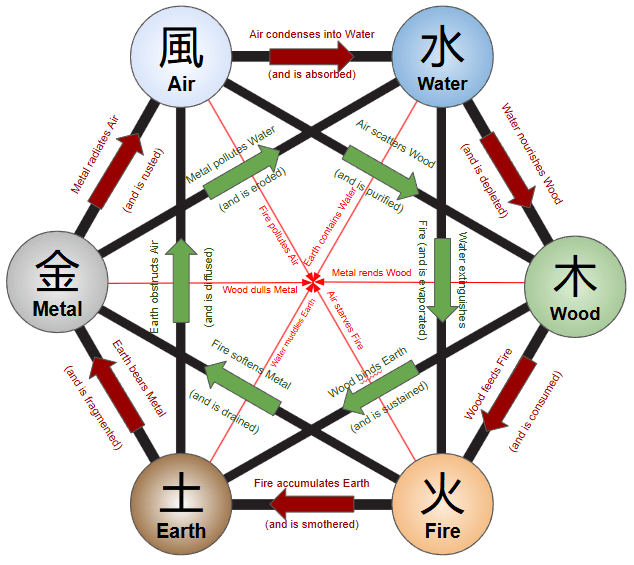
\page
Elementalist School Oppositions
Theories as to how the elements interact with each other differ from region to region, according to how many elements are considered to be Major Powers.
Agram Elementalists
Ever at the forefront of the ‘science’ of Magic, the consensus in Agram, the City of Magic is more complex than elsewhere in the world. The Universities of Agram have a very nuanced understanding of the relationship between the six major elements (although there are constant debates about the possible existence of other major elements as mentioned above).
In Agram there are elemental interactions called ‘Dominant’, ‘Submissive’ and ‘Antagonist’. Because of the complexity of the Agram approach, please refer to the graphical representation on the previous page.
Dominant and Submissive
Some elements have power over other elements. This power is known as ‘Dominant.’ Mechanically this often means that a Dominant element will cause more damage to a ‘Submissive’ element (i.e. the Submissive element suffers from vulnerability to that element’s damage). Each element has dominance over two other elements, but for different reasons. There is a Mediating / Constructive Cycle and a Despoiling / Weakening Cycle.
Despoiling / Weakening Cycle
- Air scatters Wood (and is purified)
- Wood binds Earth (and is sustained)
- Earth obstructs Air (and is diffused)
- Fire softens Metal (and is drained)
- Metal pollutes Water (and is eroded)
- Water extinguishes Fire (and is evaporated)
Mediating / Constructive Cycle
- Air condenses into Water (and is absorbed)
- Water nourishes Wood (and is depleted)
- Wood feeds Fire (and is burned)
- Fire accumulates Earth (and is smothered)
- Earth bears Metal (and is fragmented)
- Metal radiates Air (and is rusted)
| Dominant element | Submissive Elements |
|---|---|
| Air | Metal, Wood |
| Earth | Air, Fire |
| Fire | Wood, Metal |
| Metal | Earth, Water |
| Water | Air, Fire |
| Wood | Earth, Water |
Antagonisms
In the Agram Six Elements Theory, the following Antagonisms occur:
- Air starves Fire; Fire pollutes Air
- Metal rends Wood; Wood dulls Metal
- Earth contains Water; Water muddles Earth
Opposing Schools
If your Elementalist is from Agram, they have the following opposition schools:
| Elemental School | Opposing Schools | Dominates | Submits To | Antagonises |
|---|---|---|---|---|
| Air | Earth, Fire, Water | Metal, Wood | Earth, Water | Fire |
| Earth | Metal, Water, Wood | Air, Fire | Metal, Wood | Water |
| Fire | Air, Earth, Water | Metal, Wood | Earth, Water | Air |
| Metal | Air, Fire, Wood | Earth, Water | Air, Fire | Wood |
| Water | Earth | Air, Fire | Metal, Wood | Earth |
| Wood | Metal | Earth, Water | Air, Fire | Metal |
Agram Elementalists have more opposing schools, but they become absolute masters of their focus element.
Agram resistance. At level 6, an Agram Elementalist gains a natural resistance to the damage type associated with their focus element.
If an Agram Elementalist was to take the Elemental Bulwark Mastery (see below), they would instead gain immunity to the damage type associated with their damage type. This immunity comes at a cost, however, because such an elementalist is now vulnerable to the damage types of one of their opposing schools (they pick the vulnerability when they choose Elemental Bulwark Mastery).
Note: If an opposing school has the same damage type as the elementalist’s school, the other opposition school must be selected.
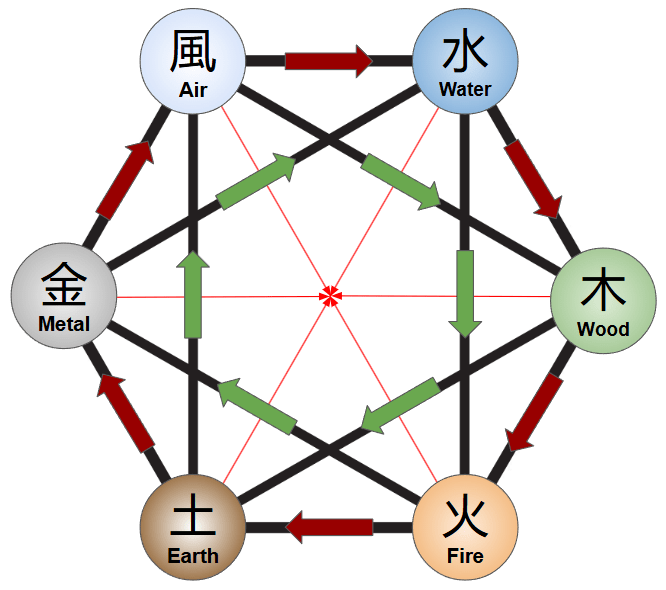
Subclasses: WIZARD: Elementalist
\page
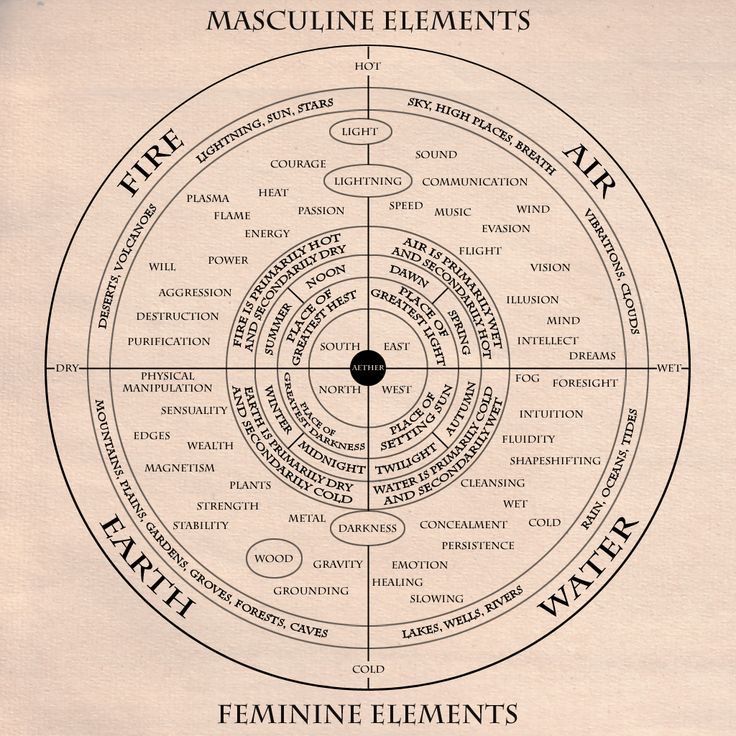
\page
Mu’şüri Elementalists
In the Mu’şüri Empire, the traditional universities and schools of Elementalism have the following opposition schools:
| Elemental School | Opposing School |
|---|---|
| Air | Earth |
| Earth | Fire |
| Fire | Water |
| Water | Air |
Elementalists from the Eastern Realms
Elementalists from the Eastern Realms have a different system again. Note, there are no Air elementalist schools in the Eastern Realms.
While Wind Mages exist in the East, and some wizards effectively become Air-based in their spell selections, there is no historical traditions of Air Elementalism in the Eastern Realms.
| Elemental School | Opposing Schools | Generates | Overcomes | Is Overcome By |
|---|---|---|---|---|
| Earth | Metal, Wood | Metal | Water | Wood |
| Fire | Earth, Water | Earth | Metal | Water |
| Metal | Fire, Water | Water | Wood | Fire |
| Water | Earth, Wood | Wood | Fire | Earth |
| Wood | Fire, Metal | Fire | Earth | Metal |
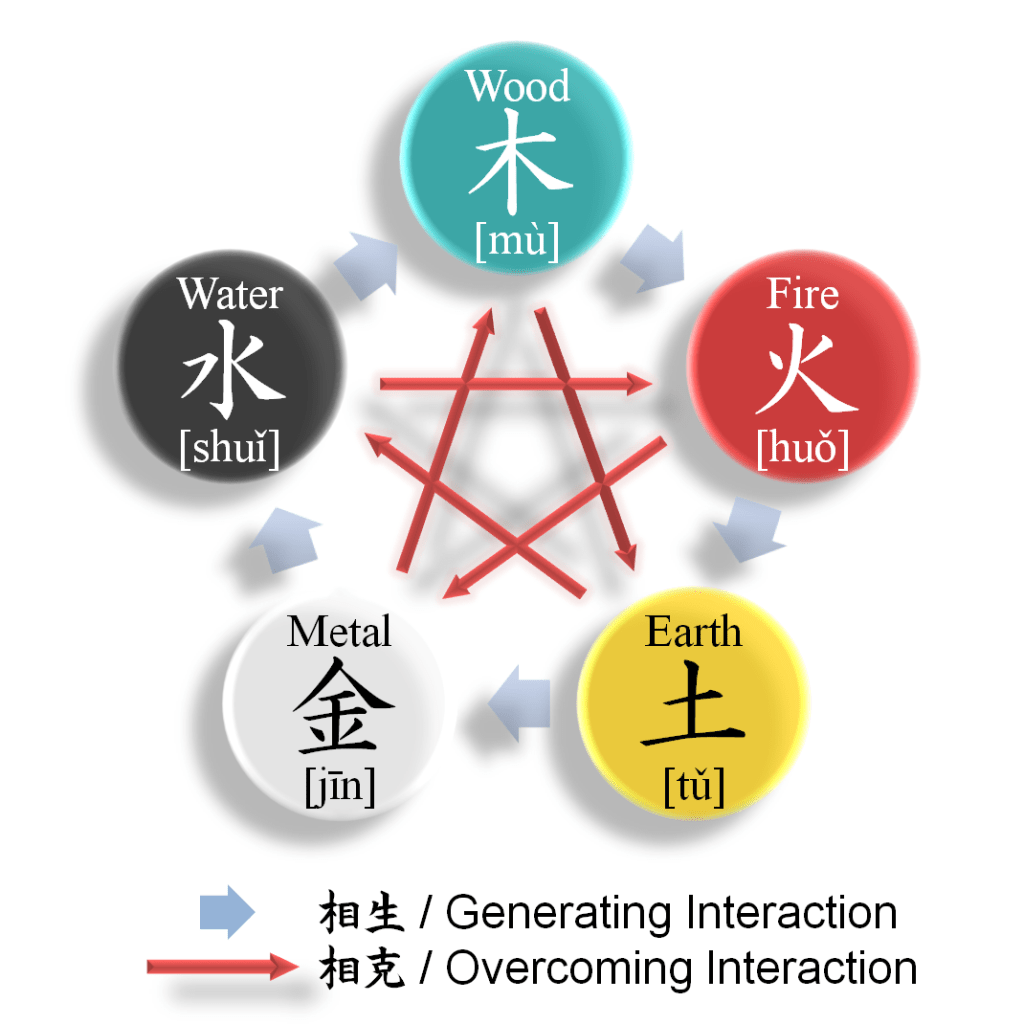

Subclasses: WIZARD: Elementalist
\page
2nd Level: Elemental Savant
Beginning at 2nd level, Elementalists devote their study to a Focus Element.
You can now speak, read, and write the language associated with your focus element, and the corresponding damage type is used by other features associated with your subclass as noted.
Elemental Focus
| Element | Language | Associated Damage Type |
|---|---|---|
| Air | Auran | Lightning or thunder (choose one) |
| Earth | Terran | Bludgeoning |
| Fire | Ignan | Fire |
| Metal | Ferran | Piercing or slashing (choose one) |
| Water | Aquan | Cold |
| Wood | Sylvan | Bludgeoning or poison (choose one) |
Some spells are associated with your focus element.
The gold and time you must spend to copy a spell associated with your chosen element into your spellbook is halved.
The spell list for each focus element is given below.
Spells marked with an asterisk appear in this book.

Focus Element: Air
The Air elementalist uses the forces of the wind, sky, clouds, and lightning to confuse and destroy their foes, all while flying through the air with ease. Air as an element represents adaptability, incorporeality, flexibility, freedom and dynamism.

Focus Element: Air
| Spell Level | Name of Spell |
|---|---|
| Cantrips | gust, lightning lure, shocking grasp, thunder bolt*, thunderclap*, wind lash* |
| 1st | feather fall, fog cloud, jump, thunderwave, wind tunnel* |
| 2nd | dust devil, gust of wind, rolling thunder, shatter, silence, warding wind* |
| 3rd | call lightning, fly, gaseous form, lightning arrow, lightning bolt, stinking cloud, wind wall |
| 4th | conjure minor elementals (air), storm sphere* |
| 5th | cloudkill, cone of cold, conjure elemental (air), control winds |
| 6th | chain lightning, freezing sphere, investiture of wind*, wind walk |
| 7th | etherealness, reverse gravity, whirlwind* |
| 8th | cloud barge*, control weather |
| 9th | storm of vengeance |
Subclasses: WIZARD: Elementalist
\page
Focus Element: Earth
The earth elementalist draws power from the stone around them, shaping it, shattering it, and bending it to their will. They can use it to defend themself or cause it to rise up and crush their foes. Earth as an element represents stoicness, defence, immutability, resolution, stamina, and timelessness.
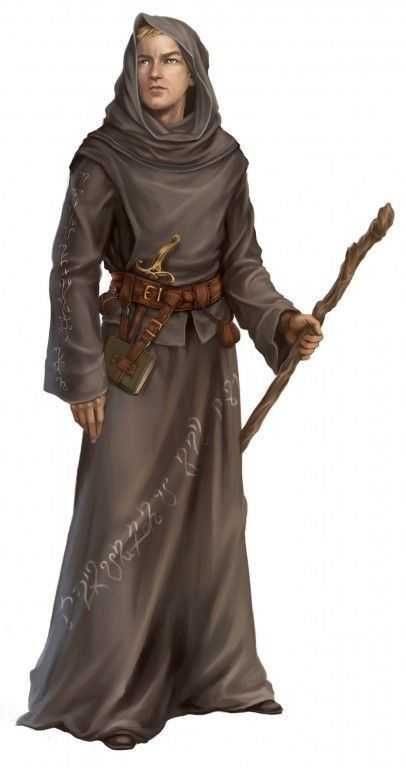
Focus Element: Earth
| Spell Level | Name of Spell |
|---|---|
| Cantrips | acid splash, magic stone*, mold earth*, monolith*, pummel stone* |
| 1st | earthern pillar*, earth tremor |
| 2nd | acid arrow, earthbind*, gem sanctuary*, Maximilian’s earthern grasp*, rockslide*, tremorsense* |
| 3rd | bolide*, erupting earth*, jeweled fissure*, meld into stone, wall of sand |
| 4th | conjure minor elementals (earth), earthern dome*, earthskimmer*, seismic barrage*, stone shape, stoneskin, summon construct (clay or stone) |
| 5th | conjure elemental (earth), destructive wave, tectonic carapace*, transmute rock*, wall of stone |
| 6th | bones of the earth*, entomb*, flesh to stone*, faultline*, investiture of stone*, move earth |
| 7th | tether essence* |
| 8th | caustic torrent*, earthquake |
| 9th | imprisonment*, meteor swarm |
Focus Element: Fire
The fire elementalist sees a world around them that is made to burn, and they can bring that fire to consume their foes. They have also learned that fire can purify and protect, if properly controlled. Fire is an essential aspect of some biomes, and there are plants that have adapted so that they only seed after wildfires. Fire as an element represents energy, change, power, wildness, consumption, capriciousness, conversion and danger.
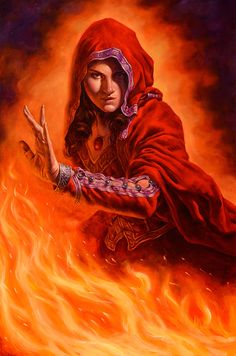
Focus Element: Fire
| Spell Level | Name of Spell |
|---|---|
| Cantrips | create bonfire, control flames, dancing lights, fire bolt, green-flame blade, produce flame |
| 1st | burning hands, faerie fire, hellish rebuke |
| 2nd | Aganazzar’s scorcher*, continual flame, elemental touch (fire)*, dragon’s breath (fire)*, fire darts*, flame blade, flaming sphere, heat metal, pyrotechnics*, scorching ray |
| 3rd | elemental weapon (fire), fireball, flame arrows* |
| 4th | conjure minor elementals (fire), fire shield, flame wave*, wall of fire |
| 5th | conjure elemental (fire), flame strike, immolation |
| 6th | investiture of flame* |
| 7th | delayed blast fireball, fire storm |
| 8th | incendiary cloud |
| 9th | meteor swarm, pyroclasm* |
Subclasses: WIZARD: Elementalist
\page
Focus Element: Metal
The metal elementalist knows well the value of their focus element, both intrinsically and socially. The metal elementalist tradition has a strong presence in ad’amlu, gnomish and zeleni cultures in particular, but has a long history amongst the Yami kedakai as well. Metal represents firmness, rigidity, persistence, strength, determination, and, to some extent, versality and malleability. It is commonly represented by gold and silver as its purest forms, though magic relating to iron and steel is a very big aspect of the metal school.
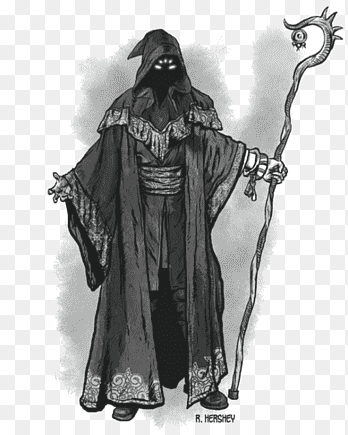
Focus Element: Metal
| Spell Level | Name of Spell |
|---|---|
| Cantrips | blade ward, coin shot*, ferrolance*, green-flame blade, mending, mold metal*, sword burst |
| 1st | metalwave*, silver cloud* |
| 2nd | chill metal*, cloud of daggers, cobalt chains*, heat metal, lance of needles*, shatter |
| 3rd | iron spear*, shrapnel bomb* |
| 4th | conjure minor elementals (metal), fabricate, manipulate metal*, metalskin*, spinning axes*, summon construct (metal) |
| 5th | animate objects, conjure elemental (metal), conjure iron sphere* |
| 6th | flesh to brass*, investiture of metal*, wall of iron* |
| 7th | hammer and anvil*, Mordenkainen’s sword |
| 8th | construct shapes* |
| 9th | blade of disaster, imprisonment*, rain of blades* |
Focus Element: Water
The water elementalist draws magic from the ocean depths, lakes and freshwater sources; even the very air around them. Their power is fluid as well, crushing foes in mighty waves or wearing them down through timeless erosion. Water as an element represents persistance, flow, impermanence, persuasion, formlessless, severity and contradiction.
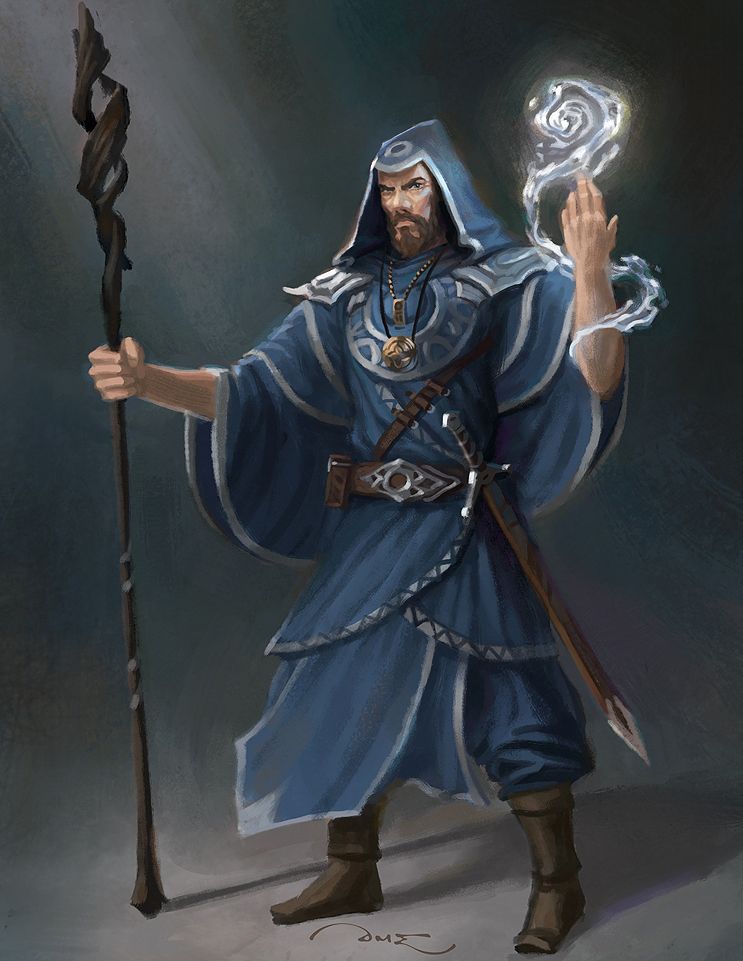
Focus Element: Water
| Spell Level | Name of Spell |
|---|---|
| Cantrips | acid splash, frostbite, glacial slide*, ray of frost, shape water |
| 1st | create or destroy water, detect poison and disease, fog cloud, grease, ice knife, tidal barrier |
| 2nd | acid arrow, armour of ice*, protection from poison, Snilloc’s snowball swarm* |
| 3rd | frozen razors, riptide, sleet storm, tidal wave, wall of water, water breathing, water walk |
| 4th | conjure minor elementals (water), control water, ice storm, snow boulder*, steam blast*, vitriolic sphere, watery sphere |
| 5th | cone of cold, conjure elemental (water), frostbite, maelstrom |
| 6th | drown, freezing sphere, investiture of ice*, wall of ice |
| 7th | triumph of ice* |
| 8th | steam whistle*, tsunami |
| 9th | frozen bombardment* |
Subclasses: WIZARD: Elementalist
\page
Focus Element: Wood
Wood represents adaptability, warmth, organicness, generosity, nature, communication, cooperation, toxicity, parasitism, symbiotism and idealism. Practitioners of this elemental magic often resemble druids in character and in the use of their magic. Many wood elementalists are fey in origin, but there is also a long kedakai tradition of this magical school. Other communities with a large number of wood elementalists include: emerald dwarves, feral gnomes and ko.
Focus Element: Wood
| Spell Level | Name of Spell |
|---|---|
| Cantrips | druidcraft, poison spray, thorn whip |
| 1st | animal friendship, entangle, find familiar, goodberry, speak with animals, unseen servant |
| 2nd | animal messenger, barkskin, find steed, locate animals or plants, peripheral fungi, spike growth |
| 3rd | conjure animals, nature’s fury*, plant growth, speak with dead, speak with plants |
| 4th | conjure swarm*, conjure woodland beings, conjure minor elementals (wood), dominate beast, faithful hound, grasping vine, giant insect, locate creature, mushroom mount*, toxic bloom* |
| 5th | antilife shell, awaken, commune with nature, contagion, creation, insect plague, tree stride |
| 6th | conjure fey, find the path, planar ally, wall of thorns, transport via plants |
| 7th | ironfibre* |
| 8th | animal shapes, spores of madness* |
| 9th | fungus amongus* |
2nd Level: Elemental Mastery
Starting at 2nd level, you learn techniques called masteries to channel elemental magic into your being and your spells.
Masteries. You learn two masteries of your choice, which are detailed under the “Masteries” section below.
You learn one additional mastery of your choice at 6th, 10th, and 14th levels.
Each time you learn a new mastery, you can also replace one mastery you know with a different one.
6th Level: Substitute Elements
Beginning at 6th level, you can funnel elemental essence through your damage-dealing spells. When you cast a spell that deals damage, you can change the damage to the type associated with your focus element.
10th Level: Absorb Elements
Starting at 10th level, when you would take damage of the type associated with your focus element, you can use a reaction to take no damage and regain a number of hit points equal to half the damage you would have taken. You can use this feature even if you have resistance or immunity to that damage type from another source. You can use this feature a number of times equal to your Intelligence modifier (minimum of once). You regain all expended uses when you finish a long rest.
14th Level: Irresistible Strike
At 14th level, your elemental damage spells are unstoppable. Your spells that deal damage of the type associated with your focus element ignore immunity to that damage type.
You can use this feature a number of times equal to your Intelligence modifier (minimum of once). You regain all expended uses when you finish a long rest.
Masteries
Masteries are specialized techniques that any Elementalist wizard can use to augment their spellcasting. Unless noted otherwise, you can use only one mastery on a given spell. The masteries are presented in alphabetical order.
Cooperative Defense
Prerequisite(s): Elemental focus (wood), 6th level
Whenever a spell or effect targets you and one or more allies within 30 feet, you can use a reaction to activate this ability so that your allies are able to use your saving throw against the effect in place of their own, at the cost of their reaction. Each ally must make this choice individually before the rolls are made. You can use this ability once per day at 6th level, and one additional time per day at 10th, 14th and 18th level.
Subclasses: WIZARD: Elementalist
\page
Dancing Flame
Prerequisite(s): 10th level, Elemental focus (fire)
As a standard action, you can sculpt fire to suit your desires. With one use of this ability you can move any nonmagical fire from where it is up to 30 feet.
Alternatively you can use this ability to alter any fire spell that you cast with a duration of instantaneous by removing any number of squares from its area of affect.
If the fire spell has a duration, you can use this ability to reposition the spell, within its original range (treat this as if you had just cast the spell, even though the duration is unchanged).
You cannot use this ability on a fire spell that you did not cast. If you move a nonmagical flame, it must have a new source of fuel.
If it does not, it is extinguished in one round.
You can use this ability a number of times per day equal to your proficiency bonus. This ability resets each dawn.
Elemental Adaptation
Prerequisite(s): 14th level
You add plane shift to your spellbook if you don’t already have it, and you can cast it once with this mastery without expending a spell slot.
You can travel only to the elemental plane associated with your focus element, or to the Material Plane.
While you are on the elemental plane, you aren’t harmed by the normal conditions of the plane, you can breathe normally, and you can use your speed to move in a manner appropriate to the plane (flying for air, burrowing for earth, and swimming for water).
You regain the ability to cast plane shift with this mastery when you finish a long rest.
Elemental Binding
Prerequisite(s): 10th level
You add planar binding to your spellbook if you don’t already have it, and you can cast it once with this mastery without expending a spell slot. When you cast the spell in this way, you must target an elemental creature associated with your focus element. If the elemental fails its saving throw, it gains temporary hit points equal to your wizard level. You regain the ability to cast planar binding with this mastery when you finish a long rest.
Elemental Bulwark
Prerequisite(s): 6th level
You gain resistance to the damage type associated with your focus element, and you have advantage on Constitution saving throws made to maintain concentration on spells that involve your focus element.
Subclasses: WIZARD: Elementalist
\column
Elemental Command
As an action, you can charm an elemental creature for as long as you maintain concentration as if concentrating on a spell, for up to 1 hour.
If you or your companions damage the charmed elemental or take any harmful action against it, the charmed condition ends immediately.
When this condition ends for a given elemental, it is immune to being charmed by you for 24 hours.
Elemental Erosion
Prerequisite(s): 10th level
After you damage a target with a spell that deals the damage type associated with your focus element, the target gains vulnerability to that damage type until the end of your next turn.
You can use this feature twice. You regain all expended uses when you finish a short or long rest.
Elemental Supremacy
Prerequisite(s): 20th level
Whenever you are in physical contact with the element of your focus, or within 5 feet of it, you can draw that element around you for 1 round as a bonus action or a reaction (but only one instance can be used at a time).
While you are surrounded by the drawn element, anyone striking you with a melee weapon or unarmed strike takes half your wizard level in damage of the type associated with your focus element. Weapons with reach avoid this damage.
Additionally, while you are surrounded by your drawn element, any spells you cast deal the maximum possible damage if they are of the damage type associated with your elemental focus.
Flexible Enhancement
Prerequisite(s):** Elemental focus (wood)
A master of the wood element is able to bend like bamboo when stressed and snap back into place. You gain a +1 enhancement bonus to your Dexterity, Constitution, or Wisdom ability score (choose one ability to enhance).
This bonus increases by +1 for every five Wizard levels you possess to a maximum of +5 at 20th level.
At 20th level, you can apply this bonus to two of these ability scores of your choice (Dexterity, Consitution or Wisdom).
Ignite
Prerequisite(s): Elemental focus (fire)
When you deal fire damage to a target with a spell of 1st level or higher, you can use a bonus action to cause the target to catch fire.
Subclasses: WIZARD: Elementalist
\page
At the start of its next turn, the creature takes 1d6 fire damage and the flames go out. This damage can be prevented if an ally within 5 feet uses an action to put out the flames.
If you damage more than one target with the spell, you can choose to ignite as many targets as your proficiency bonus modifier. You can use this ability as many times as your proficiency bonus until you finish a short rest.
Iron Skin
Prerequisite(s): Elemental focus (metal)
You gain a +2 armor bonus to your Armor Class for 10 minutes; this bonus increases by +1 for every 5 caster levels (maximum +6 at 20th level). You can use this ability a number of times per day equal to 3 + your Intelligence bonus.
Jet of Flame
Prerequisite(s): Elemental focus (fire), 6th level
As a standard action, you can send forth a 20-foot line of fire. Anyone in this line takes 1d6 points of fire damage + 1 point for every wizard level you have.
A successful Dexterity saving throw against your spellcasting DC halves this damage. Creatures that fail their saving throw catch fire and take 1d6 points of fire damage on the following round.
Creatures that catch fire can avoid this damage by taking a full-round action to extinguish the flames by making a DC 15 Dexterity save. Rolling on the ground gives a +2 circumstance bonus on the save. Dousing the creature with water automatically extinguishes the flame.
You can use this ability a number of times per day equal to your proficiency bonus. This ability resets each dawn.
Mercurial Form
Prerequisite(s): Elemental focus (metal)
When you cast a spell of 1st level or higher, you can use a bonus action to make your body turn mercurial in appearance and form so that it resembles liquid quicksilver. Everything you carry and wear is likewise changed in this way. Until the end of your next turn, you are able to manipulate your body so that it resembles a liquid metal.
You can move through enemy spaces, alter your form to almost any shape and even squeeze through spaces as small as 1 inch in diameter. If you end your turn within a space you couldn’t normally fit inside, you are ejected to the nearest unoccupied space and stunned until the end of your next turn.
Mercurial Speed
Prerequisite(s): Elemental focus (metal), 10th level
As a bonus action, you are able to take the Dash action. This does not stop you from taking the Dash action as part of your action.
You can use this feature as many times as your proficiency bonus per day. You regain all expended uses of this feature when you finish a long rest.
Overwhelming Onslaught
Prerequisite(s): 14th level
When you damage a creature with a spell of 1st level or higher that deals the damage type associated with your focus element, you can weave a lingering aura of elemental energy around the target. At the start of its turn, the creature must make a Constitution saving throw. On a failed save, it takes 4d6 damage of the type dealt by the spell and is stunned until the start of its next turn. On a successful save, it takes half the damage and the effect ends. You can use this feature twice. You regain all expended uses when you finish a short or long rest.
Rend Metal
Prerequisite(s): Elemental focus (metal), 10th level
Whenever you cast a spell that deals hit point damage, you deal extra damage to creatures made of metal or wearing medium or heavy metal armor. Affected creatures take additional damage equal to 1/2 your Wizard level (rounded up). This bonus damage is not increased by Empower Spell or similar effects.
This bonus only applies once to a spell, not once per missile or ray, and cannot be split between multiple missiles or rays.
The damage is of the same type as that associated with your elemental focus.
Shrapnel Burst
Prerequisite(s): Elemental focus (metal), 6th level
As a bonus action, you can cause jagged pieces of metal to explode outward from your body. These shards deal 1d6 points of piercing damage to all creatures within a 10-foot-radius burst. A Dexterity saving throw against your spellcasting DC halves this damage. In addition, the twisted scraps of metal make the area difficult terrain until your next turn (at which time they disappear). You can use this ability once per day, plus one additional time per day at 10th level and 14th level. At 10th-level, the shrapnel bypasses any resistance to piercing damage and is treated as if it were a magic weapon. At 10th level the shards deal 2d6 piercing damage; at 14th level they deal 3d6 piercing damage and at 20th level they deal 4d6 piercing damage.
Stony Refuge
Prerequisite(s): Elemental focus (earth)
When you cast a spell of 1st level or higher, you can use a bonus action to create a hovering slab of stone that interposes itself between you and one creature of your choice within 60 feet. Until the end of your next turn, the slab provides half cover to you against attacks from the chosen creature.
Subclasses: WIZARD: Elementalist
\page
Summoner
Prerequisite(s): 10th level
You learn the conjure elemental spell if you do not already know it, and are able to cast it without the use of a spell slot or material components. Once you cast it in this way you are unable to do so again until you finish a long rest.
Sweeping Swell
Prerequisite(s): Elemental focus (water)
When you cast a spell of 1st level or higher, you can use a bonus action to create a sweeping wave of water that drenches a target you can see within 20 feet. The creature must succeed on a Strength saving throw or be pushed 5 feet in the direction of your choice.
Wind Blast
Prerequisite(s): Elemental focus (air)
When you cast a spell of 1st level or higher, you can use a bonus action to create a line of wind 20 feet long and 5 feet wide. Each creature in the line must make a successful Strength saving throw or take 1d6 slashing damage and be pushed 10 feet away from you in the direction of the line.
Subclasses: WIZARD: Elementalist
\page
New Feats
In this section you can find new feats, if your game allows choosing of feats instead of Ability Score Improvements (ASI). Feats here can be classified into two types: Passive and Chosen. Passive Feats are granted by the player having selected a Kin type (for example: Kedakai, or Ad’am), whereas Chosen Feats are only applicable if the player has decided to forgo an ASI improvement in favour of the Feat they would like to choose. Feats can only be chosen if the Player Charcter meets the requirements for the feat, if any. Kin Feats can only be chosen by a chracter of the Feat’s Kin type. Typically with Kin Feats, you gain one Kin Feat at 1st level (and can often choose one from a selection), and you gain an additional Kin Feat roughly every 4 levels thereafter (at 5th, 9th, 13th and 17th level).
PASSIVE FEATS
AD’AMLU FEATS
1st level
Ad’amlu Doughtiness
Prerequisite: Ad’am kin type
You are naturall calm and collected in the face of imminent danger. Whenever you are required to roll to see if you become frightened, you may always make the roll with advantage.
Ad’amlu Lore
Prerequisite: Ad’am kin type
You eagerly absorbed all of the old stories and traditions of your ancestors, your gods, and your people, studying subjects and techniques passed down for generation upon generation. You may choose to become proficient in either Arcana, History, Insight, Performance or Religion. If you would automatically become proficient in all of these skills (due to a combination of background, character kit and / or class), then you may instead choose to become proficient in a skill of your choice.
Ad’amlu Weapon Familiarity
Prerequisite: Ad’am kin type
Your kin have instilled in you an affinity for hard-hitting weapons, and you prefer these to more elegant arms. For the purposes of proficiency, you become proficient in the battle axe, the handaxe, the warhammer, the maul, granite fists and the mace. If you would already be granted proficiency with these weapons because of your class, then you instead gain a +1 to hit with these weapons.
At 5th level, whenever you score a critical hit with one of these weapons, you may roll an additional damage die of that weapon’s damage type.

Mountain Strategy
Prerequisite: Ad’am kin type
Ad’amlar have a long history of fighting common foes, and you’ve mastered the ancient tactics to better face these enemies. You gain a +1 bonus to damage with weapons and unarmed attacks against creatures who are giants, trolls, orcs, goblins, kobolds, hobgoblins and the like. If your attack would deal more than one weapon die of damage (as is common at higher levels than 1st), the bonus is equal to the number of weapon dice or unarmed attack dice.
In addition, if any creature succeeds on a critical attack against you and deals damage to you, you gain your bonus to damage against that creature for 1 minute regardless of whether it is one of the types of creatures mentioned above.
Special: Your DM can add appropriate creature traits to the list of your ancestral foes if your character is from a community that commonly fights other types of enemies.
Rock Runner
Prerequisite: Ad’am kin type
Your innate connection to stone (or wood if you are an Emerald Dwarf) makes you adept at moving across
New Feats: Passive Feats: Ad’amlu Feats
\page
uneven surfaces. You can ignore difficult terrain caused by stone or earth (such as rubble, mud or gravel) – or caused by wood (such as dense foliage and underbrush in a forest or jungle) if you are an Emerald Dwarf. In addition, when you use the Acrobatics skill to balance on narrow surfaces or uneven ground made of stone or earth (or a log or tree branch if you are an Emerald Dwarf), or if you are required to make a Dexterity saving throw in such circumstances, you may do so with advantage.
Stonemason’s Eye
Prerequisite: Ad’am kin type
You understand the intricacies of stonework (or woodwork if you are an Emerald Dwarf). You become proficient with Stonemason’s tools (or woodworking tools if you are an Emerald Dwarf). If you’re already proficient with these tools (due to your background or class), you may instead add a +4 to your rolls using these tools.
Additionally, you gain a +2 bonus to Perception (Wisdom) checks to notice unusual stonework (or woodwork if you’re an Emerald Dwarf). This bonus applies to checks to discover mechanical traps made of stone (or wood if you’re an Emerald Dwarf) or hidden within stone (or wood if you’re an Emerald Dwarf).
This applies to your passive Perception (Wisdom) for these circumstances as well, but your DM should automatically account for this bonus when they determine if you passively become aware of such traps.
Unburdened Iron
Prerequisite: Ad’amlu kin type
You’ve learned techniques first devised by your First Age ancestors during their ancient wars, allowing you to comfortably wear massive suits of armour. You ignore the reduction to your Movement Speed from any armour you wear.
In addition, any time you’re taking a penalty to your Movement Speed for some other reason (such as from the encumbered condition or from a spell), deduct 5 feet from the penalty. For example, if you normally would have been given a -10 foot penalty, you instead only suffer a -5 foot penalty. If your Movement Speed is taking multiple penalties due to multiple reasons (such as a combination of factors), pick only one penalty to reduce.
5th level
Ad’amlu Reinforcement
Prerequisite: Ad’amlu kin type; Proficiency in smith’s tools (or Proficiency in woodcarver’s tools if you are an Emerald Dwarf)
You can use your knowledge of engineering and metalwork (or woodwork if you are an Emerald Dwarf) to temporarily strengthen thick objects and structures. By spending 1 hour working on an item, you can give it a +2 (plus your Proficiency bonus) to its AC for 24 hours.
You can reinforce a portion of a structure, though 1 hour usually reinforces only a door, a few windows, or another section that fits within a 10-foot cube.
Boulder Roll
Prerequisite: Rock Runner
Your ad’amlu build allows you to push foes around, just like pushing a mighty boulder down a subterranean cavern. You may use up half of your movement to step into the square of a foe that is your size or smaller, and the foe must move into the empty space directly behind it. The foe must move even if doing so places it in harm’s way. The foe can attempt an Athletics (Strength) or Constitution saving throw (whichever is better for it) against your Athletics DC to block your step into its square. If it succeeds the saving throw, you cannot move into its square, and it does not get forced backwards. However, if the foe chooses to attempt this saving throw, regardless of whether it succeeds or fails to block your step into its square, it takes blugeoning damage equal to your level plus your Strength modifier unless it rolls a natural 19 or 20.
If the foe cannot move into an empty space (for example, if it is surrounded by solid objects or other creatures), then your Boulder Roll has no effect.
Defy The Darkness
Prerequisites: Ad’amlu kin type; darkvision
Using ancient ad’amlu methods developed to fight enemies wielding magical darkness, you’ve honed your darkvision and sworn not to use such magic yourself. You gain greater darkvision, enabling you to see through magical darkness, even if it normally hampers darkvision (such as the darkness spell). You can’t cast spells that create magical darkness yourself, nor can you use items that create magical darkness, or make use of any other ability that would create magical darkness.
9th Level
Echoes In Stone (or Wood)
Prerequisites: Ad’amlu kin type; You are standing on a stone or earthern surface (or a wooden or forested area if you are an Emerald Dwarf)
As an Action, you pause a moment to attune your senses to the stone (or wood if you’re an Emerald Dwarf) around you. Until the end of your next turn, you gain Tremorsense with a range of 20 feet.
Tremorsense: A creature with tremorsense can detect and pinpoint the origin of vibrations within a specific radius, provided that creature and the source of the vibrations are in contact with the same ground or substance. Tremorsense can’t be used to detect flying or incorporeal creatures.
New Feats: Passive Feats: Ad’amlu Feats
\page
Mountain’s Stoutness
Prerequisite: Ad’amlu kin type
Your hardiness lets you withstand more punishment than most. Increase your Maximum Hit Points by your level. When you forced to make death saving throws, your DC is 9 or higher instead of the usual 10 or higher.
If you also have the Toughness feat, the Hit Points gained from it and this feat are cumulative.
Stone Bones
Prerequisite: You are struck by a critical hit that deals physical damage.
Your intractable nature can help you shrug off even the most grievous injuries. Attempt an unmodified DC 17 check. If you are successful, the attack becomes a normal hit.
Stonewalker (or Woodwalker)
Prerequisite: Ad’amlu kin type
You have a deep reverence for and connection to stone (or wood if you are an Emerald Dwarf). You can innately turn your skin as hard as stone (or petrified wood if you are an Emerald Dwarf). This ability can be used once per day, and resets every dawn. It functions like a special version of the spell barkskin, only you do not require any material components, and your AC cannot be lower than 20 for the duration of the ability. Like barkskin, you must actively concentrate to maintain the effect, which you can do for up to an hour, however, if you suffer any damage, you must make a concentration check to see if the effect ends early.
13th Level
March The Mines
Prerequisite: Ad’amlu kin type
You pause for a moment to attune yourself with the earth around you and lead an ally through the very ground itself. You use your Bonus Action and for one turn you gain a Burrow Speed equal to half of your Movement Speed (if you don’t already have a higher one). You may use your Action to dash with this Burrow Speed to move your full Movement Speed if you wish. Additionally, you can choose one willing ally adjacent to you at the start of your movement to move with you (on your turn). That ally ends its movement one square behind you. This costs them their movement on their next turn, however.
Telluric Power
Prerequisite: Ad’amlu kin type
You channel strength from the earth beneath your feet to pummel your enemies. When you make a melee Attack against a target who is standing on the same earth or stone surface as you are (or wood/plant material if you are an Emerald Dwarf), you gain a bonus to your damage roll equal to the number of weapon damage dice.
17th Level
Stonegate (or Woodgate)
Prerequisite: Ad’amlu kin type; Stonewalker (or Woodwalker)
Earthern (or wooden if you’re an Emerald Dwarf) barriers no longer impede your progress. You gain meld into stone (or, if you’re an Emerald Dwarf, you can tree stride) as an innate ability that requires no material components. You can use this innate ability once per day. It resets at dawn each morning.
Stonewall
Prerequisite: Ad’amlu kin type
Trigger: An enemy or hazard’s effect hits you or you fail a Dexterity or Constitution saving throw against one
Frequency: Once per day
The strength of stone (or petrified wood if you’re an Emerald Dwarf) overcomes you so strongly that it temporarily replaces your stout body. You become Petrified until the start of your next turn. While you are unable to move, you don’t take any damage from the triggering effect or attack or any other ill effects that couldn’t affect stone (or petrified wood if you’re an Emerald Dwarf).
Autognome and Automaton Feats
1st Level
Arcane Communication
Prerequisite: You are a construct creature type.
You can deliver silent messages. You gain touch telepathy, allowing you to communicate silently and mentally with any creature you’re touching, as long as you share a language.
Enhancement: You can send your messages even further. At level 3, your telepathy gains a range of 10 feet, at 7th level it gains a range of 20 feet and at 15th level it gains a range of 40 feet – but regardless of enhancement level, you always need to share a language with your target.
Arcane Eye
Prerequisites: You have the ability to see; You are a construct creature type.
Your eye has been magically enhanced to pierce darkness to a greater degree. You gain darkvision to 30 feet.
Enhancement: At 7th level, your eye can see invisible creatures in brief spurts. You now can cast see invisibility as an innate arcane spell once per hour.
New Feats: Passive Feats: Ad’amlu | Autognome / Automaton Feats
\page
Automaton Armament
Prerequisite: You are a construct creature type.
You’ve been provided a body part designed specifically for melee combat. You gain either a claw or pincer unarmed attack. The claw deals 1d4 slashing damage, and has the light, finesse, and unarmed weapon traits. The pincer deals 1d6 piercing damage, and has the light, unarmed and special weapon traits.
Your body can be reconfigured; you can select this feat at any level, and, any time you go up a level, you can retrain into or out of this feat or change the type of attack you gain. If you retrain out of this feat, then you must replace it with another suitable autognome/automaton passive feat.
Enhancement: Your attacking part is reinforced. At 3rd level, you may increase the damage die of the unarmed attack you gain from this feat by one step (i.e from 1d4 to 1d6 for the claw, or from 1d6 to 1d8 for the pincer). At 7th level you may increase the damage die of the unarmed attack from your attacking part up another step (i.e from 1d6 to 1d8 for the claw, or from 1d8 to 1d10 for the pincer). At 15th level you may increase the damage die of the attacking part a final step (i.e. from 1d8 to 1d10 for the claw, or from 1d10 to 1d12 for the pincer).
Special: Your pincer can automatically attempt to Grapple an opponent if you succeed on a melee attack roll using your pincer in that turn.
Automaton Lore
Prerequisite: You are a construct creature type.
You have come to better understand the process that made your body and the magic that powers it. You gain proficiency in Arcana or History and metallurgist’s or smith’s tools. If you would automatically become trained in one of those skills or tools (from your background or class, for example), you instead become trained in a skill of your choice.
{{descriptive
Metallurgist’s Tools:
Metallurgist’s tools come in a satchel with many smaller pouches attached inside to hold many smaller containers. The satchel contains a set vials, specially made and coated to contain allomantic materials, a metal tester or alloy analyzer, and a file to acquire mineral flakes. The vials come in two sets, one which hold 8 ounces each, and another which hold 1 ounce each.
Proficiency with these tools lets you add your proficiency bonus to Wisdom (Nature) checks when identifying metals, alloys, and their purity. If you are already proficient with the Nature skill, your proficiency bonus is doubled.
Rarity: Common
Weight: 8 lb.
}}
Energy Beam
Prerequisite: You are a construct creature type.
You can channel your core’s power through the magical gem that serves as your eye. You gain an energy beam ranged unarmed attack that deals 1d4 fire damage. The energy beam has a range increment of 20 feet. On a critical hit, the target takes persistent fire damage equal to the step of your energy beam for as many rounds as the step of your energy beam. For example, at the first step, your energy beam deals 1d4 fire damage. On a critical hit, it would persistantly deal 1d4 fire damage for 1d4 rounds. At the second step (see Enhancement below), on a critical hit, it would deal 1d6 persistant fire damage for 1d6 rounds and so on.
Enhancement: You channel greater power. At 3rd level, increase the damage die of your energy beam by one step, from 1d4 to 1d6. At 5th level, increase the damage die from 1d6 to 1d8. At 9th level, increase the damage die from 1d8 to 1d10. At 15th level increase the damage die from 1d10 to 1d12.
Reinforced Chassis
Prerequisite: You are a construct creature type.
Your body has built-in defensive layers, which determine your armour class. You gain no benefit from wearing armour, but if you are using a shield, you can apply its bonus as normal.
You can alter your body to enter different defensive modes; each time you finish a long rest, choose one mode to adopt from the Integrated Protection table (see below), provided you meet the mode’s prerequisite.
New Feats: Passive Feats: Autognome / Automaton Feats
\page
Integrated Protection
| Mode | Prerequisite | Effect |
|---|---|---|
| Darkwood Core (unarmoured) | None | AC = 11 + your Dexterity modifier (add proficiency bonus if proficient with light armor). |
| Composite Plating (armoured) | Medium armor proficiency | AC = 13 + your Dexterity modifier (maximum of 2) + your proficiency bonus. |
| Heavy Plating (armoured) | Heavy armour proficiency | AC = 16 + your proficiency bonus; disadvantage on Dexterity (Stealth) checks; -5 movement speed. |
Enhancement: Your chassis becomes particularly difficult to overcome. At 9th level, you gain the Chassis Deflection reaction.
Chassis Deflection
Reaction
Trigger: A critical hit deals physical damage to you
Attempt a flat DC 17 check. If you are successful, the attack becomes a normal hit.
5th Level
Arcane Safeguards
Prerequisite: You are a construct creature type.
The magic powering you makes it difficult for outside magic to affect you. You gain the Resist Magic reaction.
Resist Magic
Reaction
Trigger: You attempt a saving throw against a harmful magical effect but haven’t rolled yet.
Your innate magic protects you. You gain a +1 bonus to the triggering saving throw. You can use this ability as many times as your proficiency bonus per long rest.
Enhancement: Your safeguards improve. At 9th level, when you use your Resist Magic reaction, you gain a number of temporary Hit Points equal to the spell level of the triggering effect.
Integrated Armament
Prerequisite: You are a construct creature type.
Your mechanical body houses a weapon or shield that you can quickly draw and stow, leaving you prepared for combat at all times.
You can use an Action to spend 1 minute integrating a single, one-handed weapon or shield into one of your arms. Once the weapon or shield has been integrated in this way, you can draw or stow the item as a Use Magical Object Action. Creatures don’t automatically see this integrated weapon or shield when it is stowed and must actively Investigate in order to find it. They take a -2 penalty to their Investigation when they do try to find it. While you are wielding the item you have integrated, it can never be Disarmed, nor can you ever drop or release it; you must Use A Magical Object Action to store the weapon and free that hand. Alternatively you must spend an Action and 1 minute of time to unintegrate the item from you body. Another creature that is determined to retrieve the item from you can do so, but it requires either 1 minute of time for them to remove it, or else extreme violence to your limb – such as physically removing portions of the limb. You can only have one integrated armament at a time, although you can use the 1-minute integration Action to replace the item or to swap the arm in which it’s stored.
Enhancement: Your body has more space for integration. At 7th level, you can now either integrate two one-handed weapons, a one-handed weapon and a shield, or a single two-handed weapon which is split across both arms. You can use a single Use Magical Object Action to draw or store both integrated armaments. When you draw a single weapon, you can choose to hold it with either one hand or both hands. At 13th level, instead of a Use Magical Object Action to draw or store both integrated armaments, you can use a Bonus Action. You still require a 1-minute Action to integrate or unintegrate an item from being fused with your limb(s).
Magical Resistance
Prerequisite: You are a construct creature type.
Your animating magic provides some limited defense. Choose one of the following damage types: cold, lightning, or thunder. You gain limited resistance to that damage type. When you are damaged by that damage type, roll 1d12 and subtract that much damage from the incoming damage.
Enhancement: You tap deeper into your animating magic, and your resistances improve. At 9th level, you are now completely resistant to the damage type you chose earlier (out of cold, lightning or thunder). Any damage of that type you receive is halved.
At 13th level, not only is the damage halved, but roll 1d12 and subtract that much incoming damage from the halved amount.
At 15th level you are completely immune to the kind of damage you chose.
9th Level
Arcane Camouflage
Prerequisites: You are a construct creature type; Proficiency in Stealth
You have developed magical techniques to aid you with stalking your prey. You can cast blur and invisibility each once per day as 2nd-level arcane innate spells, even if you normally don’t can’t spells.
Enhancement: Your camouflage is more potent. Your blur spell now lasts 10 minutes and when you cast invisibility, you can choose instead to cast greater
New Feats: Passive Feats: Autognome / Automaton Feats
\page
invisibility. In addition, you can now cast blur and invisibility each twice per day.
Arcane Propulsion
Frequency: once per day
Prerequisite: You are a construct creature type.
You redirect energy from your core to ports on your back or feet, allowing you to fly for a short time. You can maintain this redirected energy for 5 minutes. You gain a Fly Speed equal to your Walking Speed while redirecting the energy.
Enhancement: You can maintain your flight for longer. At 13th level, instead of just once per day, you can use this ability as many times per long rest as your proficiency bonus.
Arcane Slam
Prerequisite: You are a construct creature type.
Prerequisites: Proficiency in Athletics or the Grappler feat.
Requirements: You have a creature Grappled or Restrained.
You channel magical power from your core into your arms, empowering your attack as you attempt to slam your foe into the ground. Make a contested Strength (Athletics) check against the foe. You take a –2 penalty to your check if the target is one size larger than you and a –4 penalty if it’s larger than that. You gain a +2 bonus to your check if the target is one size smaller than you and a +4 bonus if it’s smaller than that.
| Roll | Result | Effect |
|---|---|---|
| You roll higher than the foe by 5 or more | Critical Success | You slam the foe down and the magical energy overwhelms it. The creature is knocked Prone, becomes Stunned for 1 round, and takes damage equal to 2d6 plus your Strength modifier. The foe is no longer Grappled or Restrained by you. |
| You roll higher than the foe’s roll by 4 or less | Success | You slam the foe down. The creature is knocked Prone and takes damage equal to your Strength modifier. The foe is no longer Grappled or Restrained by you. |
| You roll less the foe by 4 or less | Failure | You are unable to slam the creature, but your hold on the creature remains. |
| You roll less than the foe by 5 or more | Critical Failure | The creature breaks free and is no longer Grappled or Restrained by you. |
Enhancement: Your arms better channel your core’s power. Your foe takes damage equal to 2d6 plus your Strength modifier on a success (or double that on a critical success).
\column
Core Attunement
Prerequisite: You are a construct creature type; You can cast arcane spells.
Your core allows you to draw more power from it. Select one 1st-level arcane spell and one 2nd-level or lower arcane spell, to which you have access. You can cast your chosen spells as arcane innate spells each once per day without using a spell slot.
Enhancement: Your attunement grows stronger. At 15th level, you can select one 5th-level or lower arcane spell and one 6th-level or lower arcane spell, to which you have access. You can cast them as arcane innate spells each once per day, in addition to the original spells.
Lesser Augmentation
Prerequisite: You are a construct creature type.
You’ve focused on enhancing yourself over many levels of experience and gain the benefits of one additional 1st-level or one 5th-level autognome/automaton ancestry feat (choose one that you haven’t already selected). However, if you acquire such an ancestry feat in this way, you cannot benefit from any of its enhancements, if those would apply normally.
You are also capable of reconfiguring your augmentations to meet your needs. You can spend one week of downtime to change the enhancement you gained with this feat to a different 1st-level or 5th-level automaton autognome/automaton ancestry feat.
Enhancement: At 13th level, you now gain the enhancement benefits of any of the 1st-level or 5th-level autognome/automaton ancestry feats you select with the Lesser Augmentation feat. Also, your reconfigurations take less time. You only need to spend 1 day of downtime to change any of your enhancements.
Rain of Bolts
Prerequisite: You are a construct creature type; Proficiency with a ranged weapon.
Please Note: For this feat, the DC is equal to your level + dexterity modifier
Frequency: once per day
Throughout the day, your body produces powerful projectiles within your chassis. You fire them all at once in either a 30-foot cone or a 10-foot emanation (you choose). Foes in the area take 6d6 piercing damage with a Dexterity save against the DC for this feat (see above).
Enhancement: This damage increases to 7d6 at 10th level, 8d6 at 12th level, 9d6 at 14th level, 10d6 at 16th level, 12d6 at 18th level and 13d6 at 20th level. Also, at 20th level, you can use this feat once per hour, rather than once per day.
New Feats: Passive Feats: Autognome / Automaton Feats
\page
13th Level
Arcane Locomotion
Prerequisite: You are a construct creature type.
You’ve modified your body to allow you to augment your movement. You gain either a Climbing Speed of 20 feet or a Swimming Speed of 20 feet, your choice.
Enhancement: Your body allows for even further forms of movement. At 15th level, you can either select the option from this feat you haven’t chosen yet (Climb Speed or Swim Speed), or you can increase your Walking Speed by 5 feet and increase the Speed you chose from this feat increase to be equal to your adjusted Walking Speed.
Astral Blink
Prerequisite: You are a construct creature type.
You’ve attuned your core to allow you to phase in and out of the Astral Plane, allowing you to teleport periodically. You can cast misty step once per hour as a 4th-level innate arcane spell (does not use a spell slot).
Core Rejuvenation
Prerequisite: You are a construct creature type.
Frequency: once per day
Trigger: You currently have 0 hit points and are about to make a death saving throw.
Your soul taps into your core’s power to push against the grasp of death and allow you to recover consciousness. You’re restored to 1 Hit Point, lose the dying and unconscious conditions, and can act normally on this turn. You gain one level of Exhaustion when you use this feat to recover consciousness in this way.
Enhancement: At level 15, your soul can draw even more power from your core, granting you additional benefits. When you use Core Rejuvenation, you also gain a number of temporary Hit Points equal to three times your level. These Hit Points remain for 1 minute.
Enlarged Chassis
Prerequisite: You are a construct creature type; You are Medium or Small size.
You’ve empowered your core to support a larger body, granting you size and additional reach. You gain the effects of the ‘enlarge’ section of the enlarge/reduce spell constantly. Your size doubles in all dimensions, and your weight is multiplied by eight. This growth increases your size by one category – from Medium to Large, for example. You also have advantage on Strength checks and Strength saving throws. Your weapons also grow to match your new size. While these weapons are enlarged, your attacks with them deal 1d4 extra damage.
Enhancement: At 15th level, your core’s empowerment has stabilized, allowing for greater support. You can now turn your Enlarged Chassis feat ‘on’ or ‘off’. If you turn it off, you revert back to your original size. You can make this change as many times as you would like, however if you make more than one change in a 24-hour period, each subsequent change gives you one level of Exhaustion.
17th Level
Mechanical Recall
Prerequisite: You are a construct creature type.
You have reconfigured the magical resonance of your core to attune to the planar energies of Mechanus. You can cast plane shift twice per week as an arcane innate spell that can only target yourself; you can travel only to Mechanus or the Material Plane, and your body serves as the material and arcane focus components.
Core Cannon
Prerequisite: You are a construct creature type.
Frequency: once per day
As an Action, your body transforms into a powerful magical cannon. This transformation gives you the Petrified condition with a notable exception to that condition: while you’re Incapacitated in your cannon form, you can nonetheless pivot in place up to 360° to fire blasts of energy directly from your core, devastating your foes. You remain in this special Petrified condition until you use a subsequent Action to revert back to your standard form. While in your cannon form, the only actions you can use are to Ranged Spell Attack with an energy blast or to use an Action to revert back to your standard form. Additionally, you can only remain in your cannon form for up to 1 minute or until you take the Action to revert back to your standard form, whichever comes first.
Energy blasts are a special ranged spell attack. You can only make energy blast Attacks while you’re in your cannon form. Your energy blasts deal 3d8 fire damage and 3d6 force damage, which increases to 4d8 fire damage and 3d6 force damage at level 20. Your energy blasts have a range of 120 feet. On a critical hit with an energy blast, the target takes 10 persistent fire damage for 1d4 rounds. If it matters for an effect dependent on weapon damage dice, an energy blast’s number of weapon damage dice is three, or four at level 20.
Greater Augmentation
Prerequisite: You are a construct creature type.
You’ve greatly improved your abilities and your core can support further augmentations. You gain all of the applicable benefits of one 1st-, 5th-, 9th-, or 13th-level autognome/automaton ancestry feat (choose one).
You are also capable of reconfiguring your augmentations to meet your needs. You can spend one week of downtime to change the feat you selected with this feat to another 1st-level, 5th-level, 9th level or 13-th level autognome/automaton feat.
New Feats: Passive Feats: Autognome / Automaton Feats
\page
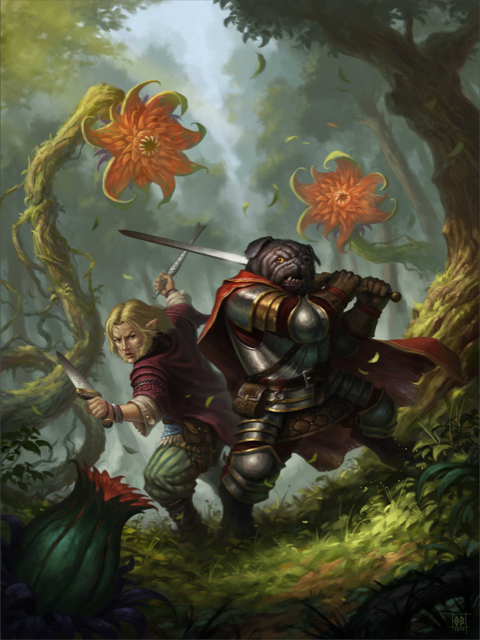
\page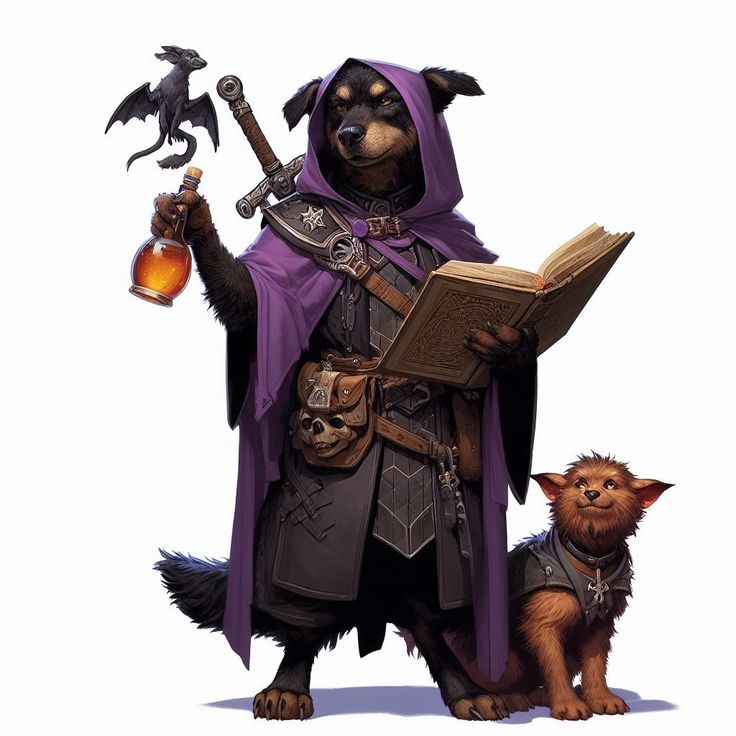
Dholf Feats
1st Level
Dholf Lore
Prequisite: Dholf kin type
You are attuned with your primal instincts and know much more about your varied kin than most others. You gain Proficiency in Survival. Additionally, if you are Medium, you gain Proficiency in Athletics; if you are Small, you gain Proficiency in Acrobatics. If you would automatically become trained in one of those skills (from your background or class, for example), you instead become trained in a skill of your choice. You also become Proficient in History or Religion related to Dholf culture, history and religion.
Dig Quickly
Prequisite: Dholf kin type
Trigger: You are standing on dirt, sand, snow, or similar particulate material.
Your hands work as effectively as shovels when you need to dig a quick hole. You dig a shallow pit in the square you currently occupy, turning the square into difficult terrain (including for you). In addition, you also kick up a 5-foot cone-shaped cloud of grit in a direction of your choice. The cloud extinguishes small, unattended, non-magical fires and helps smother the flames on burning creatures located within the cone; creatures in this cone that are taking persistent fire damage can immediately attempt an additional flat DC 12 check to end the persistent damage.
Esteemed Visitor
Prequisite: Dholf kin type
Your polite manners and natural ability to comfort others make it easy for you to break down cultural barriers and earn strangers’ trust. You gain Proficiency in Persuasion or Performance when interacting with someone for the first time. If you already have Proficiency in both of these skills, you instead gain advantage on one of them (choose one).
Fight the Odds
Prequisite: Teh’lar dholf kin type
You do your best to not let emotions get in the way of battle and press on. You gain your proficiency bonus to saving throws against magic that would induce the Frightened condition in you or any effect that would normally cause fear.
Handy with Your Paws
Prequisite: Dholf kin type
You gain a +1 bonus to checks to repair non-magical items, and you don’t need a specialised kit or tools for such repairs as long as you have any amount of junk, spare parts, or debris at your disposal. Mechanically, this feat works as if you have cast the mending cantrip, but you require junk, spare parts or debris as material components.
Improvisational Defender
Prequisite: Dholf kin type
You are always prepared for fights that frequently disrupt seemingly peaceful times. You are always proficient with improvised weapons. Additionally, as a reaction, you can use an improvised weapon you are holding to deflect an incoming melee or ranged attack. When you do so, the damage you take from the attack is reduced by 1d4 + your Dexterity modifier. If you are a Monk, however, this does not stack with your Deflect Missles ability, which would supercede this feat.
Leaps and Bounds
Prequisite: Dholf kin type
You have strong and well-toned legs that were made for jumping. When High Jumping, you can jump an additional number of feed equal to your proficiency bonus, whether you make a standing High Jump or a running High Jump. When Long Jumping, you can jump an additional distance equal to double your proficiency bonus. Regardless of the additional jumping distance granted to you by this feat, you can never jump further than your Movement Speed due to this feat.
Puppy-Dog Eyes
Prequisite: Dholf kin type; Small size
Trigger: You are attacked by a creature that you haven’t yet acted hostile toward. You must use this reaction before the creature rolls its attack.
You have a look that could warm even the coldest of hearts. Make a contested roll, adding your Charisma modifier to your roll and with your attacker adding their Wisdom modifier to their roll.
New Feats: Passive Feats: Dholf Feats
\page

Puppy-Dog Eyes Table
| Roll | Result | Effect |
|---|---|---|
| You beat the attacker by 5 or more | Critical Success | The creature immediately stops its attack, but has wasted its Action for this turn, and can’t use hostile actions against you until the beginning of its next turn. |
| You beat the attacker by 4 or less | Success | The creature’s attack suffers a penalty equal to your proficiency bonus. This might mean the attack misses altogether. If it does hit you, subtract your proficiency bonus from the damage inflicted by this attack. |
| You roll below the attacker | Failure | The creature’s attack is unaffected, and the creature is temporarily immune to your Puppy-Dog Eyes for 24 hours. |
Scamper Underfoot
Prequisite: Dholf kin type
You are used to ducking under foes and can scurry around the battlefield with ease. You can add your proficiency bonus to the contested Dexterity (Acrobatics) check against a hostile creature’s Dexterity (Acrobatics) roll you make as an action or bonus action to Tumble through the spaces of Medium or larger enemies, and the presence of an enemy doesn’t make the squares difficult terrain. If you are already Proficient in Acrobatics, you can make your roll with advantage. If you succeed on the roll, you move through the hostile creature’s space, but must stop when you land on the other side. Additionally, if you fail your Tumble roll, the hostile creature (and any enemies within 5 feet of you) may use their reaction to make an Attack of Opportunity.
Strong Jaw
Prequisite: Arbitar dholf kin type
You have teeth strong enough for biting into your foes if need be. You gain a jaws unarmed attack. If you are Small your jaws deal 1d4 piercing damage and have the finesse trait. If you are Medium your jaws deal 1d6 piercing. If you attack a creature one or more sizes smaller than you, they must make a Strenth saving throw against your Level + your Strength or Dexterity modifier (whichever is higher). If they fail, they are knocked Prone by your bite unless they are immune to the Prone condition.
5th Level
Brave Interposition
Prequisite: Vagtar dholf kin type
Frequency: Once per day
Trigger: An ally adjecent to you is hit or critically hit by an attack.
You quickly step in to shield your ally from an incoming blow. Your ally gains your proficiency bonus to their AC, which may mean the attack instead misses.
Crossed lineage
Prequisite: Blan’dar dholf kin type
Your family tree, while varied like most other dholves, is also incredibly complicated with many different kinds of dholve involed. Choose a dholven heritage of your size, this includes heritages that list multiple sizes. You gain that heritage including both its benefits, and the ability to meet prerequisites of that heritage.
Dholven Paddle
Prequisite: Dholf kin type; Proficiency in Survival
Not even being fully submerged in water can stop from getting where you need to go. You gain a Swim Speed equal to half your Walking Speed. If you combine this Feat with Practiced Paddler your Swim Speed becomes equal to your Walking Speed.
Loyal Empath
Prequisite: He’dar dholf kin type
You have incredible empathy for your friends and family, and you have an innate timing for helping others in distress. You can use your reaction to Help another creature and grant them advantage on a Wisdom saving throw. Doing this, however, means that you lose your Action on your next turn as you are encouraging the creature to bravely withstand the effect.
Practiced Paddler
Prequisite: Yeygar dholf kin type
You’re skilled at navigating bogs and marshes, and you can traverse through such terrain without suffering any movement penalties. Additionally, you gain a Swimming Speed of 15 feet. If you combine this Feat with Dholven Paddle your Swim Speed becomes equal to your Walking Speed.
Patient Study
Prequisite: Dholf kin type
You have an eagerness to learn and pursue knowledge granted to you by your kin, you also have a knack for learning things quickly. During your daily preparations,
New Feats: Passive Feats: Dholf Feats
\page
choose a willing creature that has a proficiency in a skill that you do not. This creature gives you their insight into the topic and you temporarily gain proficiency in that skill for 24 hours. As this knowledge is temporary you cannot use this training as a prerequisite to feats or spells.
Sharp-Eyed
Prequisite: Dholf kin type
Nothing gets past your eyes, not even in total darkness. You gain darkvision to 60 ft.
Swarm Hunter
Prequisite: Dholf kin type
You are particularly effective at taking down creatures in a swarm. Each time you attack a creature with the swarm trait with an attack that deals physical damage, you ignore half their resistance. In addition, you gain a +1 to all saves made against effects made by a swarm.
Tough Tumbler
Prequisite: Dholf kin type; the Scamper Underfoot feat
You’ve taken your share of licks while scurrying around the battlefield and know how to defend yourself against opportunistic attackers.
Your movement ends only when you roll a natural 1 on an Acrobatics check to Tumble through an enemy’s space (or when you don’t have enough Movement to move all the way through its space).
You still trigger Attack of Opportunity reactions on a failure to Tumble through, but you gain your proficiency bonus to your AC against attacks that you trigger in this way.
Additionally, if you succeed on your Tumble roll, you do not trigger any attacks of opportunity for the Tumble, but then, having landed on the other side of the hostile creature, if you would subsequently provoke an Attack of Opportunity when leaving the hostile creature’s melee range, this subsequent reaction can still be triggered (and you would not be able to benefit from the AC bonus granted by this feat).
9th Level
Blinking Blood
Prequisite: Dholf kin type
A fey creature may have blessed your bloodline long ago, or you may have a deep ancestral connection with the Ethereal Plane or Blink Dogs, but one way or another you can travel to the Ethereal Plane for brief periods of time.
You can cast blink once per day as an innate spell, even if you do not normally have the ability to cast spells. You do not need any material components for this spell and it is always prepared for you. This spell does not count towards any spells known to you, nor does it cost you a spell slot.
Courageous Order
Prequisite: Dholf kin type
You are able to lead your allies to victory in combat as well as anywhere else. You can use a reaction to sacrifice your bonus action on your subsequent turn to provide Help to an ally’s attack roll. Doing so grants them advantage on the roll and additionally, they can add your proficiency bonus to their damage rolls and any saving throws they might need to make against fear until the start of your next turn.
Dramatic Defeat
Prequisite: Dholf kin type; Proficient in either Performance or Deception
Frequency: Once per day
Trigger: You are hit and take damage from an enemy.
You have developed a very convincing ability to ‘play dead’. As a reaction, you can pretend to fall in battle to fool your opponents into not attacking you further. Make a Performance or Deception check and compare the result to each enemy that can observe you (they make a Wisdom (Insight) check).
You get a +2 bonus to this check if the triggering attack was a critical hit or if you had less than half your hit points remaining at the time you were hit.
Regardless of the result of your deceptive performance, you fall Prone.
Special: You can use Dramatic Defeat as a free action with the following Special Trigger (see below). When you use Dramatic Defeat in this way, you get a +4 bonus and creatures that are observing you make their Wisdom (Insight) check at disadvantage).
Special Trigger: You recover from the Dying condition.
Improvisational Warrior
Prequisite: Dholf kin type; the Improvisational Defender feat
When you use an improvised weapon to make a melee or ranged attack, you can always add double your proficiency bonus to any attack roll you make with it.
Jumping Catch
Prerequisites: Dholf kin type; Proficient in Acrobatics or Athletics.
Frequency: Once per day
Trigger: You are targeted by a non-magical ranged attack or magical ranged attack that launches a solid object at you, (such as the catapult spell)
You’ve learned how to catch any projectile as it’s being sent towards you. You gain a +4 bonus to AC against the triggering attack. If the attack misses, you catch the projectile. This does not require a free hand as you can use your jaws to catch the projectile, however, if you do not have your hands free when you catch the projectile, you cannot use it or speak until you release it. If you
New Feats: Passive Feats: Dholf Feats
\page
catch the projectile, it is not consumed and is still useable.
Pack Hunter
Prerequisite: Dholf kin type
You are more accustomed to hunting in a group, due to your lineage. If an enemy is within melee range of you and at least two of your allies, that enemy makes any attacks against you and those allies at disadvantage.
Powerhouse Guard
Prerequisite: Arbitar dholf kin type
As a dholf renowned for your size, you always find yourself looking out for the little people in your party. As a reaction, until the start of your next turn, provided you and the allies you choose for this feat are not moved from the locations you and they were in when you made this reaction (either by choice or by circumstance), you can choose to provide three quarters cover instead of half cover for any allies that are at least one size smaller than you and that are adjecent to you or within your space. Mechanically, this means you grant these allies a +5 bonus to both their AC and their Dexterity saving throws.
Sodbuster
Prequisite: Dholf kin type; Dig Quickly feat
Years toiling in soil have made you an expert digger. You gain a Burrow Speed of 10 feet through loose dirt, mud, sand, snow or soil.
Warning Call
Prerequisite: Dholf kin type
Frequency: Once per hour
You howl to warn your allies of oncoming danger and calling for them to be on their guard. You and every ally within 30 feet of you gain a +2 bonus to their AC and Saving Throws for one round.
13th Level
Danger Becon
Prerequisite: Dholf kin type; the Warning Call feat
You are like a beacon for danger being able to warn your allies about oncoming danger at all times. Remove the frequency for the Warning Call feat.
Interception!
Prerequisite: Dholf kin type; the Jumping Catch feat
You’re so good at catching projectiles that you can catch projectiles that aren’t even aimed at you. You can use Jumping Catch when you are providing cover for an ally against a ranged attack that would trigger Jumping Catch as if it were aimed at you. That ally gains the bonus to AC instead of you, but you still catch the projectile if the attack misses.
\column
Steadfast Ally
Prerequisites: Dholf kin type; the Loyal Empath feat
Your presence alone is enough to provide your allies with emotional support. You no longer need to sacrifice your Action on your subsequent turn to use your reaction to grant your allies the benefits of your Loyal Empath feat.
Unrivaled Builder
Prerequisites: Dholf kin type; the Handy with Your Paws feat
Building things is like solving a puzzle, and you know how to use anything at your disposal to get the job done. You gain creation as a 5th-level innate spell. Unlike the spell, you must have an equivalent bulk of material to create an item, such as wood or scrap metal to make a wheelbarrow. You can cast this spell once each day, even if you don’t normally have the ability to cast spells. This spell is always prepared for you. It does not count against any spells you might already know.
17th Level
Ancestor’s Rage
Prequisite: Dholf kin type; Not a Barbarian class
Frequency: 6 times per long rest
In battle, you fight with primal ferocity. On your turn, you can enter a rage as a bonus action. While raging in this way, you gain the following benefits if you aren’t wearing heavy armor:
- You have advantage on Strength checks and Strength saving throws.
- When you make a melee weapon attack using Strength, you gain a +2 bonus to the damage roll. This bonus increases as you level.
- You have resistance to bludgeoning, piercing, and slashing damage.
If you are able to cast spells, you can’t cast them or concentrate on them while raging.
Your rage lasts for 1 minute. It ends early if you are knocked unconscious or if your turn ends and you haven’t attacked a hostile creature since your last turn or taken damage since then. You can also end your rage on your turn as a bonus action.
Once you have raged 6 times, you must finish a long rest before you can rage again.
Bonekeeper’s Bane
Prequisite: Dholf kin type
Whenever an enemy starts its turn adjacent to you, it must attempt a DC 17 Wisdom saving throw. On a failure, the enemy takes a –1d4 penalty to any attack rolls and skill checks for as long as it remains adjacent to you. Regardless of the result of its save, the creature is then temporarily immune to your Bonekeeper’s Bane for 24 hours.
New Feats: Passive Feats: Dholf Feats
\page
Legendary Bark
Prerequisites: Dholf kin type; the Warning Call feat
Frequency: As many times per long or short rest as your proficiency bonus
Your bark echoes in the minds of your enemies. You can Demoralize creatures up to 60 feet away. Additionally, whenever you successfully Demoralize a creature, it takes 3d8 mental damage (or 6d8 mental damage on a critical success).
Demoralize: Target creature(s) must make a Wisdom saving throw or become Frightened of you for 1 round. The DC for the saving throw is equal to 8 + your proficiency modifier + your Charisma modifier.
Whether the creature saves or not, it cannot be affected by your bark in this way again for 24 hours.
Ezen Feats
1st Level

Ambersoul
Prerequisites: Orman (Wood) Ezen kin type
Your elemental heritage is reflected in the oils and fragrances of plants, in tree resin that fossilizes into amber, or in the gentle smell of a flower. Sticky, golden sap runs through your veins instead of blood. Each time a creature deals slashing or piercing damage to you with a melee Strike, your sap coats its weapon or unarmed attack. The creature takes a –1 penalty on any further attack rolls it makes with that weapon or unarmed attack until the end of its next turn.
Brightsoul
Prerequisites: Od (Fire) Ezen kin type
The fire inside you asserts itself as beaming, radiant light. Your body is naturally luminescent, glowing with the effects of the light cantrip. The light your body emits is involuntary and constant; if counteracted by magical means of some kind, it will naturally return within 1d4 rounds. You suffer a –2 penalty on Stealth checks to Hide or Stealth and gain a +1 bonus on saves against light effects and effects that inflict the Blinded or Stunned conditions.
Brinesoul
Prerequisites: Su (Water) Ezen kin type
Your elemental ancestor’s legacy asserts itself as brackish water, like the seawater of the ocean. You gain the Salt Wound reaction.
{{descriptive
Salt Wound
Reaction
Frequency: once per day
Requirements: A creature that has blood and is not at its maximum Hit Points hits you with a melee attack
Effect: You channel salt and brine from your blood into the creature’s wounds. On a hit, the target takes 1d6 acid damage and must pass a Constitution saving throw or suffer from the Poisoned condition (due to being sickened by the pain) and for 1d6 persistant acid damage at the start of its subsequent turns for 1d6 rounds. The DC for the saving throw is equal to 8 + your proficiency modifier + your Constitution modifier. At the end of each of its turns, the target may attempt another Constitution saving throw to remove the Poisoned condition and the persistant acid damage.
}}
Cindersoul
Prerequisites: Od (Fire) Ezen kin type
The fire of your elemental ancestor manifests like dying embers of a blaze, and your inner charcoal helps staunch bleeding, purify simple poisons, and absorb acid. The DC for you to recover from any persistent acid, bleeding, and poison damage is always 10.
Dustsoul
Prerequisites: Yer (Earth) Ezen kin type
Your earth elemental ancestor’s influence manifests in you as dust and dirt, like the soil of a field or the hot desert sands. You gain Proficiency in Nature or in Survival. If you would automatically become Proficient in Nature or in Survival (from your background or class, for example), you instead become trained in a skill of your choice. You can also sustain yourself on dirt, mud, small stones and pebbles, sand or ash instead of normal food and water.
Elemental Eyes
Prerequisites: Any Ezen kin type
You can see in the darkness as easily as an elemental. You gain darkvision to 60 ft.
New Feats: Passive Feats: Dholf Feats | Ezen Feats
\page
Elemental Lore
Prerequisites: Any Ezen kin type
You’ve devoted yourself to researching the secrets of the Material and Elemental Planes. You gain Proficiency in your choice of both Survival and either Arcana or Nature. If you would automatically become trained in Survival (from your background or class, for example), you instead become trained in a skill of your choice. You also become trained in the Lore associated with your Elemental Plane of origin:
| Ezen kin type | Elemental Plane of origin | Associated Geniekin |
|---|---|---|
| Od (Fire) | The Elemental Plane of Fire | Efreet |
| Orman (Wood) | The Endless Green, the Elemental Plane of Wood | Kizidhar |
| Shakhta (Metal) | Mechanus, the Elemental Plane of Metal | Zuhra |
| Su (Water) | The Elemental Plane of Water | Marid |
| Yel (Air) | The Elemental Plane of Air | Djinn |
| Yer (Earth) | The Elemental Plane of Earth | Dao |
Ferrosoul
Prerequisites: Shakhta (Metal) Ezen kin type
Whether in their pure elemental forms or as part of an alloy such as steel, the elemental metals in your soul resonate strongly with iron, bronze, and other sturdy, practical metals suitable for weaponry. Your unarmed attacks gain the bludgeoning, piercing or slashing damage properties (your choice each time you attack) and the damage die for such attacks increases to a base of 1d6.
This is relevant to the Martial Arts table for Monks should you choose to become a Monk. Mechanically, this would mean your Unarmed Strikes use the following damage die progression instead of the usual Martial Arts Monk progression:
| Monk Level | Martial Arts Unarmed Strike damage die |
|---|---|
| 1st | 1d6 |
| 2nd | 1d6 |
| 3rd | 1d6 |
| 4th | 1d6 |
| 5th | 1d8 |
| 6th | 1d8 |
| 7th | 1d8 |
| 8th | 1d8 |
| 9th | 1d8 |
| 10th | 1d8 |
| 11th | 1d10 |
| 12th | 1d10 |
| 13th | 1d10 |
| 14th | 1d10 |
| 15th | 1d10 |
| 16th | 1d10 |
| 17th | 1d12 |
| 18th | 1d12 |
| 19th | 1d12 |
| 20th | 1d12 |
Fumesoul
Prerequisites: Yel (Air) Ezen kin type
The air inside you asserts itself as a toxic miasma, inuring you to most poisons. You gain resistance to poison damage.
Additionally, whenever you do take poison damage, you can subtract an amount of poison damage equal to half your level (rounded down and to a minimum of 1).
Gemsoul
Prerequisites: Yer (Earth) Ezen kin type
The earth inside you asserts itself as crystallized gemstones, like a cluster of quartz or diamonds. This shimmering presence inside your being inspires you to flashy and flamboyant performances. You gain Proficiency in Performance. If you would automatically become Proficient in Performance (from your background or class, for example), you instead can double your Proficiency Bonus for Performance.
Geniekin Weapon Familiarity
Prerequisites: Any Ezen kin type
You’ve trained with weapons used by your genie ancestors. You are become proficient with falchions, scimitars and tridents. In addition, you may reroll any damage dice results of 1 or a 2 for melee attacks made with these weapons, but you must keep the rerolled result.
New Feats: Passive Feats: Ezen Feats
\page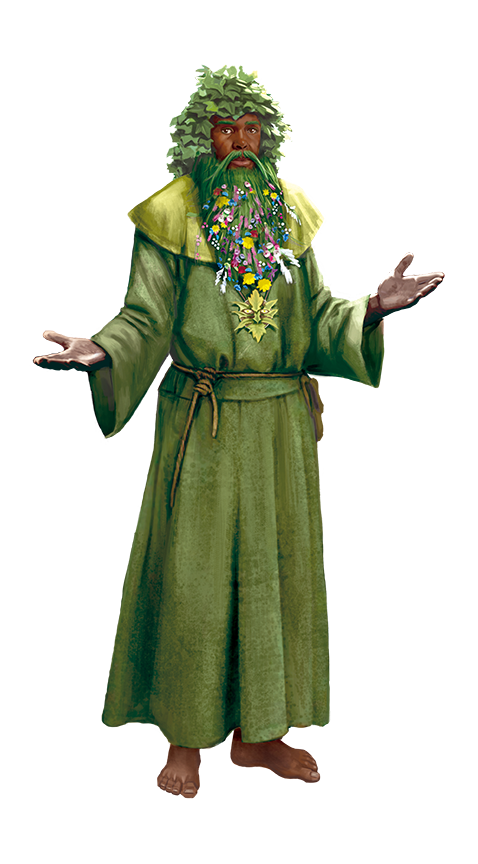
Grove-Harboured
Prerequisites: Orman (Wood) Ezen kin type
You are accustomed to exploring thick woodlands and defending yourself against the attacks of magical plants.
In woodlands and forests, you have advantage on Survival checks to find your way or food to sustain yourself while traveling.
Additionally, you gain a +2 bonus to saves against plant-based, poison-based, and wood-based effects.
Gildedsoul
Prerequisites: Shakhta (Metal) Ezen kin type
Your elemental lineage manifests in the polished gleam of precious metals, such as silver and gold, or even rare and valuable magical metals like orichalcum.
This natural luster enhances your charm; you become trained in your choice of Persuasion or Performance.
If you would automatically become trained in both of these skills (from your background or class, for example), you instead become trained in a skill of your choice.
Inner Fire
Prerequisites: Od (Fire) Ezen kin type
You can call the fire inside you into the palm of your hand.
You can cast the produce flame cantrip as an innate arcane spell at will. This cantrip does not count against the number of cantrips you may know, and you can cast it even if you can’t normally cast spells. This spell is always prepared for you.
Lavasoul
Prerequisites: Od (Fire) Ezen kin type
Your elemental lineage manifests as magma and molten rock, and you can focus the magma into your hand to attack your foes.
You gain a magma spike unarmed attack, which requires a free hand to use. This is an unarmed attack that deals 1d4 piercing damage on a hit, as well as 1 additional fire damage.
Additionally, on a hit, the target takes must pass a Dexterity saving throw or suffer from 1d4 persistant fire damage at the start of its subsequent turns for 1d4 rounds.
The DC for the saving throw is equal to 8 + your proficiency modifier + your Dexterity modifier.
At the end of each of its turns, the target may attempt another Dexterity saving throw to remove the persistant fire damage.
If the target drops Prone and rolls, or if one of their ally sacrifices their Action to Help the target, then the target may make this subsequent Dexterity saving throw with advantage.

New Feats: Passive Feats: Ezen Feats
\page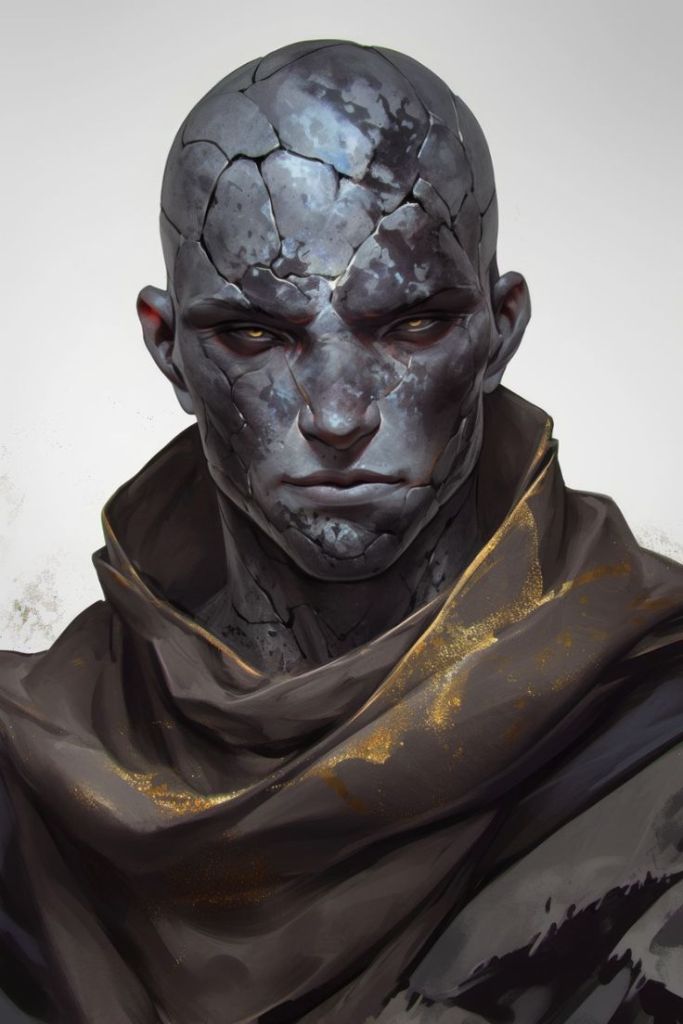
\page
Miresoul
Prerequisites: Yer (Earth) Ezen kin type
You have a connection to the muddier denizens of the Plane of Earth from its border with the Plane of Water, and your elemental lineage manifests as clay or mud, reflecting that bond.
Your body’s mudlike quality makes it easy for you to compress and squeeze yourself through smaller areas.
You gain Proficiency in Acrobatics.
If you would automatically become Proficient in Acrobatics (from your background or class, for example), you instead become Proficient in a skill of your choice.
You gain the Quick Squeeze skill feat (see below).
{{descriptive
Quick Squeeze
Prerequisites: Proficiency in Acrobatics
You contort yourself to squeeze through a space so small you can barely fit through. This action is for exceptionally small spaces; many tight spaces are difficult terrain that you can move through more quickly and without a check. You can squeeze through a length of 5 feet of confined space per round.
| Your Size | Narrowest confined space size you can squeeze through without movement penalty or a check | Narrowest confined space size you can squeeze through with a successful acrobatics check and incurred difficult terrain movement penalty |
|---|---|---|
| Tiny | 24 inches | 12 inches |
| Small | 2-3 feet | 1 foot |
| Medium | 3-4 feet | 2 feet |
| Large | 5-6 feet | 4 feet |
| Huge | 7-8 feet | 6 feet |
}}
Mistsoul
Prerequisites: Su (Water) Ezen kin type
You have a connection to vaporous forms of water, such as fog and mist and almost seem to become one with these kinds of wispy environments.
You have advantage on Dexterity (Stealth) checks to Hide in low-light, dark, foggy, hazy, misty or smoky conditions.
Additionally, in such conditions, any creature who is not aware of you must subtract 5 from their Passive Perception when determining whether they discover you hidden in such conditions.
Moldersoul
Prerequisites: Orman (Wood) Ezen kin type
Your connection to elemental wood asserts itself in the form of decay, like forgotten logs left to rot and the char that remains after a forest fire, cycles of devastation clearing away what was to make room for the next generation of life. You gain the Decompose action.
{{descriptive
Decompose
Action
Frequency: once per day
Effect: Necrotic energy seeps out of you, decaying everything within a 5-foot emanation and causing plants and foliage to age and decompose. Natural difficult terrain is destroyed, and creatures in the area with the plant or wood trait take 1d6 necrotic damage unless they pass a Constitution saving throw against a DC equal to 8 + your proficiency bonus or your spell DC, whichever is higher.
}}
Molten Wit
Prerequisites: Od (Fire) Ezen kin type
Your elemental soul has sparked not just your body but also your mind. You gain expertise with either Deception, Persuasion or Performance (choose one). Expertise means your proficiency bonus is doubled for any ability check you make with the skill you have expertise in. If you already have expertise in all three of these skills, you gain expertise in a different skill of your choice instead.
Native Waters
Prerequisites: Su (Water) Ezen kin type
You were born with or obtained a special connection to either fresh water or salt water (choose one of the two). Once made, this decision can’t be changed.
Whenever you take your full rest in a natural body of water of the type corresponding to your connection, you recover additional Hit Points equal to your level, and if you have the Exhausted condition, you reduce it by 2 levels instead of just 1.
New Feats: Passive Feats: Ezen Feats
\page
Quicksoul
Prerequisites: Shakhta (Metal) Ezen kin type
The elemental metal in your bloodline literally courses through your veins in the form of liquid metals like mercury, rubidium, gallium, and djezet, giving your actions a languid fluidity.
You gain Proficiency in Acrobatics.
If you would automatically become Proficient in Acrobatics (from your background or class, for example), you instead become Proficient in a skill of your choice.
As these metals are largely toxic to organic life, you also gain the Toxic Touch action.
{{descriptive
Toxic Touch
Action
Frequency: once per day
Requirements: Your most recent action was to successfully Tumble through an enemy’s space
Effect: Make a melee unarmed Strike against the enemy whose space you moved through. On a hit, the target takes 1d6 poison damage and must pass a Constitution saving throw or suffer from the Poisoned condition and for 1d6 persistant poison damage at the start of its subsequent turns for 1d6 rounds.
The DC for the saving throw is equal to 8 + your proficiency modifier + your Constitution modifier. At the end of each of its turns, the target may attempt another Constitution saving throw to remove the Poisoned condition and the persistant poison damage.
Undead and constructs are immune to your Toxic Touch Action.
}}
Reflective Defense
Reaction
Prerequisites: Shakhta (Metal) Ezen kin type
Frequency: once every 10 minutes
Trigger A creature within 30 feet of you targets you, and you can see the attacker.
Requirements: You are in dimly or brightly lit conditions.
Your body’s natural luster has been polished to a gleaming shine. You can use this to reflect light back into your enemy’s eyes, disrupting its aim and focus; it must succeed at a Dexterity saving throw or make any attacks against you at disadvantage until the end of your next turn. The DC for the saving throw is equal to 8 + your proficiency modifier.
Rimesoul
Prerequisites: Su (Water) Ezen kin type
The water inside you is cold and frozen, like sheets of ice and frigid glaciers. You gain resistance to cold damage.
Additionally, whenever you do take cold damage, you can subtract an amount of cold damage equal to half your level (rounded down and to a minimum of 1).
Silent Stone
Prerequisites: Yer (Earth) Ezen kin type
Your body might have veins of granite, sandstone, or similar sedimentary rocks that make it easier for you to camouflage yourself in certain regions. You become Proficient in Stealth and when you are in rocky, sandy or mountain terrain you can make your Dexterity (Stealth) check with advantage. If you’re already trained in Stealth from another source, you instead gain Expertise in that skill. If you’ve already acquired expertise in Stealth, you can gain Proficiency in a different skill of your choice instead.
Smokesoul
Prerequisites: Yel (Air) Ezen kin type
You have a connection to smoke and haze and almost seem to become one with these kinds of wispy environments. You have advantage on Dexterity (Stealth) checks to Hide in low-light, dark, foggy, hazy, misty or smoky conditions.
Additionally, in such conditions, any creature who is not aware of you must subtract 5 from their Passive Perception when determining whether they discover you hidden in such conditions.
Springsoul
Prerequisites: Orman (Wood) Ezen kin type
Your connection to elemental wood manifests as fresh blossoms, spring fruits, and the seeds of new life, and you harness this power to spread vitality and abundance.
New Feats: Passive Feats: Ezen Feats
\page
You can cast the druidcraft cantrip as an innate spell at will.
This spell does not count against any number of cantrips you know, nor does it require any material components for you to cast. It is always prepared for you.
Steady on Stone
Prerequisites: Yer (Earth) Ezen kin type
Your connection to the earth makes natural uneven surfaces less of a hindrance for you. You can ignore difficult terrain caused by rubble and uneven ground made of stone and earth.
In addition, when you use the Acrobatics skill to balance on narrow surfaces or uneven ground made of stone and earth, you can do so with advantage.
Stormsoul
Prerequisites: Yel (Air) Ezen kin type
Your elemental ancestor’s influence manifests in you as tumultuous, thundering storms, with dark clouds and bolts of lightning. You gain resistance to lightning damage.
Additionally, whenever you do take lightning damage, you can subtract an amount of lightning damage equal to half your level (rounded down and to a minimum of 1).
Sunlit Vitality
Prerequisites: Orman (Wood) Ezen kin type
You gain nourishment through photosynthesis, like trees and other green plants. You typically don’t need to pay for food, though you begin to starve if you go without sunlight for 1 week.
However, you still require water like most other kin do.
Tide-Hardened
Prerequisites: Su (Water) Ezen kin type
You’re at home in the unpredictable tides. You gain a +2 bonus to saves against cold-based and water-based spells and effects.
Woodworker
Prerequisites: Orman (Wood) Ezen kin type
Denizens of the Plane of Wood take immense pride in the magnificent works of art they can craft from wood, and practicing your own woodcraft helps you feel a connection with your planar heritage. You gain expertise in the use of both carpenter’s and woodcarver’s tools.
If you would automatically gain expertise in in one or both of these tools (from your background or class, for example), you instead gain expertise in two tools or kits of your choice.
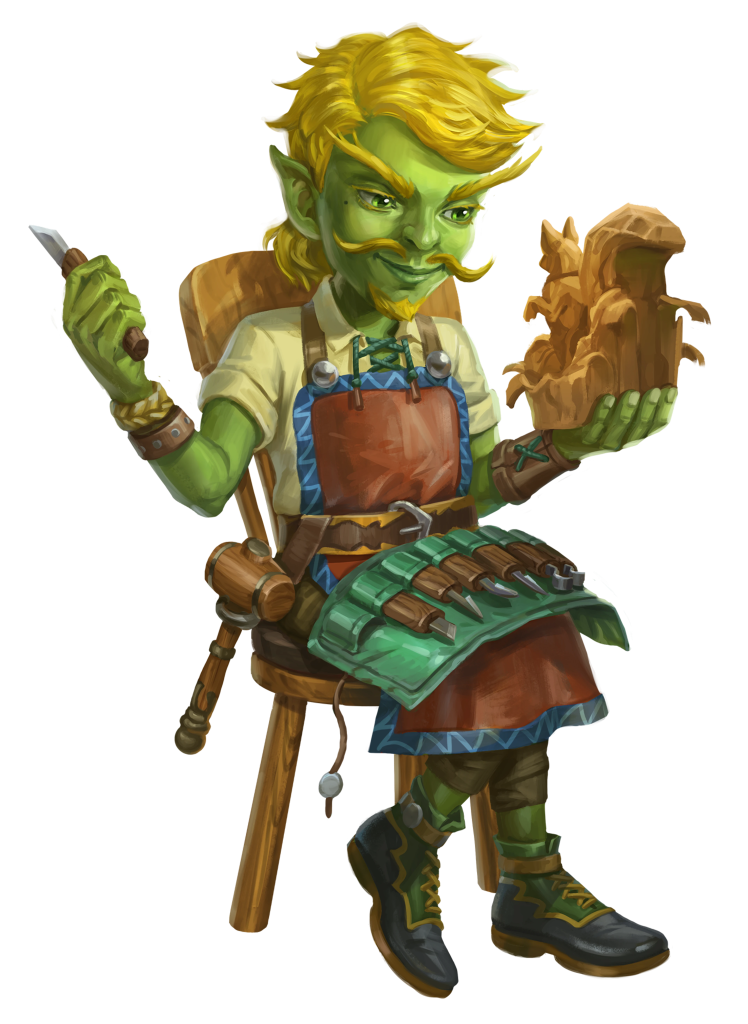
5th Level
Cloud Gazer
Prerequisites: Yel (Air) Ezen kin type
Your connection to air allows you to see through obscuring mist, fog or clouds as if they aren’t there. You do not suffer disadvantage when targeting a creature that is concealed only by mist, fog or clouds. Additionally, if a creature is concealed only by mist, fog or clouds, they are not concealed to you.
Conductor’s Redirection
Reaction
Prerequisites: Shakhta (Metal) Ezen kin type
Trigger: You are hit by an attack, spell, or other effect that deals lightning damage.
You conduct the damage through your body, taking damage as normal (if applicable) and redirecting it at one target within 10 feet that you can see. That target must make a Dexterity saving throw or take an equal amount of damage.
The DC for this Dexterity saving throw is your level + your proficiency modifier or your spell DC, whichever is higher.
The damage the target takes is based on the initial triggering damage, not modified by your own respective saving throw success or failure, lightning resistances, and so forth.
New Feats: Passive Feats: Ezen Feats
\page
Firesight
Prerequisites: Od (Fire) Ezen kin type
You can see through the haze of flame and smoke as if it isn’t there. You do not suffer disadvantage when targeting a creature that is concealed only by smoke and fire. Additionally, if a creature is concealed only by smoke and fire, they are not concealed to you.
Fluid Contortionist
Prerequisites: Su (Water) Ezen kin type
You have a connection to the fluidity of the Plane of Water, and your elemental lineage is one of flexibility and adaptability.
Your body’s fluid quality makes it easier for you to compress and squeeze yourself through smaller areas.
You gain Expertise in Acrobatics.
If you would automatically gain Expertise in Acrobatics (from your background or class, for example), you instead become Proficient in a skill of your choice.
Additionally, you gain the Liquid Squeeze skill feat (see below).
{{descriptive
Liquid Squeeze
Prerequisites: Expertise in Acrobatics
You contort yourself to squeeze through a space so small you can barely fit through. This action is for exceptionally small spaces; many tight spaces are difficult terrain that you can move through more quickly and without a check. You can squeeze through a length of 5 feet of confined space per round.
| Your Size | Narrowest confined space size you can squeeze through without movement penalty or a check | Narrowest confined space size you can squeeze through with a successful acrobatics check and incurred difficult terrain movement penalty |
|---|---|---|
| Tiny | 12 inches | 6 inches |
| Small | 2 feet | 1 foot |
| Medium | 3 feet | 2 feet |
| Large | 5 feet | 3 feet |
| Huge | 7 feet | 5 feet |
}}
Fortify Shield
Reaction
Prerequisites: Proficiency in shields; an equipped shield; Yer (Earth) Ezen kin type
Frequency: once per day
As a reaction, you raise your shield and reinforce it with a rocky outgrowth of extremely hard rock and stone. Until the start of your next turn, you may add your proficiency bonus to your AC.
\column
Genie Weapon Flourish
Prerequisites: Ezen kin type; the Genie Weapon Familiarity feat
Whenever you critically hit using a falchion, scimitar or trident, you may immediately make a single additional melee attack against the same target or an additional target within 5 feet of you. This additional attack roll may not generate an additional Genie Weapon Flourish if it is a critical hit.
Heatwave
Reaction
Prerequisites: Od (Fire) Ezen kin type
Frequency: once every 10 minutes
Trigger: An effect would deal fire damage to you, even if you resist all the damage.
You harness the oncoming flames and twist them into a screen of heat and smoke, granting you concealment until the beginning of your next turn.
Noble Resolve
Prerequisites: Ezen kin type
Once, genies ruled vast kingdoms, and a remnant of that confidence and power is reflected in your strong will.
You gain a +2 bonus to Wisdom or Charisma saving throws against spells and effects that attempt to charm you. Regardless of success or failure, you become aware of the person who used the effect on you if they were visible to you at the time of use.
Precious Alloys
Prerequisites: Shakhta (Metal) Ezen kin type
Your melee unarmed attacks count as having the special properties of a weapon made of silver. If you are at least 13th level, you can choose for your unarmed attacks to count as having the special properties of either silver or adamantine.
Read the Roots
Prerequisites: Orman (Wood) Ezen kin type
Requirements: You are standing on the ground, and there are plants rooted in the ground within 100 feet of you.
The root systems of trees are a far-reaching network of information, and you know how to access them and extract their secrets. As an Action, you pause a moment to attune your senses to the plants around you. Until the end of your next turn, you gain Tremorsense with a range of 20 feet.
Tremorsense: A creature with tremorsense can detect and pinpoint the origin of vibrations within a specific radius, provided that creature and the source of the vibrations are in contact with the same ground or substance. You can also detect subjects touching or burrowing through the surface you are standing on in
New Feats: Passive Feats: Ezen Feats
\page
this way. Tremorsense can’t be used to detect flying or incorporeal creatures.
Slip with the Breeze
Prerequisites: Yel (Air) Ezen kin type; Expertise in Athletics
Frequency: as many times per day as your proficiency bonus
You create gusts of wind when you jump, allowing you to carry yourself across greater distances.
You can cast the jump spell as an innate spell as many times per day as your proficiency bonus.
You can cast this spell without needing any material components. The spell is always prepared for you. It also doesn’t count towards any spells known for your class.
You can cast jump in this way without expending a spell slot.
You can cast it in this way even if you can’t normally cast spells.
Steam Spell
Prerequisites: Su (Water) Ezen kin type
You transform your fire spells into steam, making them more effective underwater. If your next action is to cast a fire-based spell, you can cast it underwater. When you do so, it takes the form of scalding steam. Underwater creatures do not gain the normal fire resistance for being underwater against this steam-based spells, but steam-based spells can never light things on fire or cause persistent fire damage, nor do they add other effects that would apply to fire but not steam (at the GM’s discretion).
Treacherous Earth
Prerequisites: Yer (Earth) Ezen kin type
Frequency: once every 10 minutes
You have the power to shatter earth around you. When you use this feat, you crack the ground beneath you, creating difficult terrain in a 20-foot spherical burst that is centered around you.
Treespeech
Prerequisites: Orman (Wood) Ezen kin type; You can speak Sylvan
Your connection to elemental wood allows you to communicate with trees and plants using Muan, the leafy language of wood elementals. You can ask questions of, receive answers from, and use the Persuasion, Performance, Intimidation, Insight and Deception skills with woody plants like trees and shrubs.
9th Level
Charred Remains
Prerequisites: Od (Fire) Ezen kin type
Frequency: once per day
Your next fire-based spell leaves embers in its wake. If your next action is to cast a fire-based spell that targets an area, for 1 minute, your spell’s area becomes difficult terrain and will additionally deal 1d4 fire damage for each square a creature moves through it.
Dao Magic
Prerequisites: Yer (Earth) Ezen kin type
Frequency: once per day
The magic of the dao runs through your blood. You can cast Maximillian’s earthen grasp and earthbind once per day each as 2nd-level arcane innate spells.
Djinni Magic
Prerequisites: Yel (Air) Ezen kin type
The magic of djinn runs through your blood. You can cast gust of wind and invisibility once per day each as 2nd-level innate spells.
Earthsense
Prerequisites: Yer (Earth) Ezen kin type
Your connection to earth and stone allows you to feel the slightest displacement that disturbs them, down to the shift of a pebble. As an Action, you pause a moment to attune your senses to the earth and stone around you. Until the end of your next turn, you gain Tremorsense with a range of 30 feet.
Tremorsense: A creature with tremorsense can detect and pinpoint the origin of vibrations within a specific radius, provided that creature and the source of the vibrations are in contact with the same ground or substance. You can also detect subjects touching or burrowing through the surface you are standing on in this way. Tremorsense can’t be used to detect flying or incorporeal creatures.
Efreeti Magic
Prerequisites: Od (Fire) Ezen kin type
Frequency: once per day
The magic of your efreeti ancestors flows through you. You can cast enlarge/reduce and flaming sphere once per day each as 2nd-level innate spells.
Flowering Path
Prerequisites: Orman (Wood) Ezen kin type
Frequency: once per day
Vitality and elemental wood flows out from your body and into the earth, infusing it with a stream of new life. When you walk, you leave blooming flowers and sprouting vines in your wake. For the next minute, each time you Walk or Dash, you create difficult terrain in each square you leave during your movement.
New Feats: Passive Feats: Ezen Feats
\page
Kizidhar Magic
Prerequisites: Orman (Wood) Ezen kin type
Frequency: once per day
You can wield the arcane magic of a kizidhar to cast spike growth and meld into plants (which is essentially meld with stone but using wood or plants as the medium, rather than stone).
You can cast both of these spells innately once per day.
Marid Magic
Prerequisites: Su (Water) Ezen kin type
Frequency: once per day
You channel the magic of marids. You can cast Snilloc’s snowball swarm and misty step each once per day as innate spells.
Miraculous Repair
Prerequisites: Ezen kin type
Frequency: once per day
Geniekin can’t grant magical wishes, but some echo of power lingers within you. Faced with a mechanism that is damaged but not destroyed, you can wish it back into a functional state for a period of 10 minutes.
The object must be mundane and no larger than 5 foot in size, such as a disabled locking mechanism in a door.
For 10 minutes, the object functions as it should, ignoring any damage to its mechanism.
This doesn’t grant you any knowledge of what a device might do or how it ought to function. Once the 10 minutes are up, the object falls back into disrepair and is temporarily immune to Miraculous Repair for 1 day.
Scorching Disarm
Prerequisites: Od (Fire) Ezen kin type
Frequency: once per day
You make a weapon unbearable to hold. Attempt a contested Athletics check to Disarm a target creature.
You don’t need to have a hand free to make this Disarm attempt.
If the Disarm attempt succeeds, the target takes 4d6 fire damage unless it drops the weapon, and, if your Athletics check roll beats the creature’s Athletics check roll by 5 or more, it takes 4d6 fire damage and drops the weapon.
If you have Expertise in Athletics, this fire damage increases to 8d6 fire damage.
Wings of Air
Prerequisites: Yel (Air) Ezen kin type
Frequency: once per day
As an Action, you can summon clouds to lift you, or feathered or cloudy wings to sprout from your shoulder blades. Once manifested, these lifting clouds or wings remain for 10 minutes. While they exist, you gain a Flying Speed equal to your Walking Speed.
Zuhra Magic
Prerequisites: Shakhta (Metal) Ezen kin type
Frequency: once per day
You can channel the primordial metallic magic of a zuhra to cast heat metal and sword burst.
You can cast both of these spells innately once per day.
13th Level
Airy Step
Prerequisites: Yel (Air) Ezen kin type
Frequency: once per day
Trigger: A creature targets you with an attack or other targeted effect, and you can see the attacker.
You create a blanket of fog in a 20–foot burst centered on yourself. All creatures within that area are concealed, and all others are concealed to them. This concealment applies to the triggering effect, which may mean that the spell cannot be cast if it requires the caster to be able to see you to target you, or else it might mean that the spell targets you with disadvantage. The fog lasts for 1 minute or until dispersed by a strong wind.
Dao Skin
Prerequisites: Yer (Earth) Ezen kin type
Frequency: three times per day
When in danger, you can harden the stone in your skin into armor, much like a dao can. You can cast stoneskin on yourself only, 3 times per day as an innate spell.
Elemental Emir
Prerequisites: Ezen kin type
You have power connected to the powerful jann emirs.
You can cast augury and scrying each once per day as arcane innate spells, and you can cast detect magic at will as if it was a cantrip.
Genie Weapon Expertise
Prerequisites: Ezen kin type; the Genie Weapon Familiarity feat
You have trained so expertly with falchions, scimitars and tridents that you rarely miss your what you intend to strike with these weapons. You may double your proficiency bonus for melee attack rolls made with these weapons.
One With Earth
Prerequisites: Yer (Earth) Ezen kin type
You’ve learned to harness your connection to the earth to travel through it. You gain a burrow Speed of 15 feet.
New Feats: Passive Feats: Ezen Feats
\page
One With Metal
Prerequisites: Shakhta (Metal) Ezen kin type
You’ve learned to harness your connection to metal and the earth that holds it so well that you can travel through it.
You gain a burrow Speed of 15 feet.
Additionally, you may use your burrow Speed to move through solid metal as if it was water.
Unfortunately you do not create a hole or tunnel for others to follow you. You move through the metal without disturbing it or breaking it in any way.
Planar Sidestep
Reaction
Prerequisites: Ezen kin type
Frequency: once per day
Trigger A creature hits you with a melee attack.
Once per day you can shift your body briefly between the elemental plane of your heritage and the Prime Material Plane, reducing the damage from your foe’s attack.
You gain resistance to all damage types against the triggering attack.
Observers simply see you shimmer with elemental energy for the briefest of moments, just as the attack lands.
Radiant Burst
Prerequisites: Od (Fire) Ezen kin type
Frequency: once per day
Your skin glows with intensity.
Creatures within 10 feet who can see you must succeed at a Constitution saving throw of DC 13 + your constituion modifier or your spell DC, whichever is higher.
| Roll | Result | Effect |
|---|---|---|
| The creature succeeds by more than 5 | Critical Success | The creature is complete unaffected. |
| The creature succeeds by 4 or less | Success | The creature is Dazzled for 1 round. |
| The creature fails by 4 or less | Failure | The creature is Blinded for 1 round as is Dazzled for 1d4 rounds. |
| The creature fails by 5 or more | Critical Failure | The creature is Stunned for 1 round and Blinded for 4 rounds. |
Dazzled: The creature’s vision, while not completely Blinded, is affected. The creature can see, and so it is not attacked with advantage, but it makes any of its own attacks at disadvantage.
\column
Summon Air Elemental
Prerequisites: Yel (Air) Ezen kin type
Frequency: once per day
You have a connection to the Inner Spheres, allowing you to summon an elemental ally. Once per day, you can cast summon elemental as an innate spell, but the elemental summoned must be an air elemental.
Summon Earth Elemental
Prerequisites: Yer (Earth) Ezen kin type
Frequency: once per day
You have a connection to the Inner Sphere, allowing you to summon an elemental ally. Once per day, you can cast summon elemental as an innate spell, but the elemental summoned must be an earth elemental.
Summon Fire Elemental
Prerequisites: Od (Fire) Ezen kin type
Frequency: once per day
You can summon an elemental ally. Once per day, you can cast summon elemental as an innate spell, but the elemental summoned must be a fire elemental.
Summon Metal Elemental
Prerequisites: Shakhta (Metal) Ezen kin type
Frequency: once per day
You can summon an elemental ally. Once per day, you can cast summon elemental as an innate spell, but the elemental summoned must be a metal elemental.
Summon Water Elemental
Prerequisites: Su (Water) Ezen kin type
Frequency: once per day
You can summon an elemental ally. Once per day, you can cast summon elemental as an innate spell, but the elemental summoned must be a water elemental.
Summon Wood Elemental
Prerequisites: Orman (Wood) Ezen kin type
Frequency: once per day
You can summon an elemental ally. Once per day, you can cast summon elemental as an innate spell, but the elemental summoned must be a wood elemental.
Translucent Skin
Prerequisites: Su (Water) Ezen kin type
Your body is translucent while underwater. Whenever you are fully submerged in water, you can Hide from other creatures even if you don’t have cover against them and aren’t concealed from them.
New Feats: Passive Feats: Ezen Feats
\page
Wooden Mantle
Prerequisites: Orman (Wood) Ezen kin type
Frequency: once per day
Duration: Ten minutes per level
Your connection to the magic of the Plane of Wood allows you to call upon the power of plants and trees to protect yourself. Vines and branches envelop you in an instant, growing a wild bloom of colors that open to reveal your new form.
Upon activating this feat, pick two of the options below.
As a single Action, which does require concentration as if it were a spell, you can change one of your chosen abilities to a different option from the list.
| Evergreen Vitality | Whenever you have to roll to see how much healing you recover, you instead get the maximum possible number. Additionally you have a +2 bonus to saves against poison and disease. |
| Overwhelming Perfume | A cloud of potent floral scent surrounds you in a 15-foot emanation. Creatures in the aura can’t benefit from olfactory senses and are Poisoned for as long as they remain in the aura. |
| Towering Trunk | You grow to a considerable height. Increase your size to Large. Your reach increases by 5 feet, and your unarmed attacks deal 2d8 bludgeoning damage plus they Grapple on a successful hit. |
| Unyielding Will | Your mind becomes incredibly resilient to change. You’re immune to being charmed, and you get a +2 bonus to saves and DCs against other kinds of mental effects. |
Zuhra Skin
Prerequisites: Shakhta (Metal) Ezen kin type
Frequency: three times per day
When in danger, you can harden the metal in your skin into armour, much like a zuhra can do at will.
You can cast stoneskin on yourself only, 3 times per day as an innate spell, only instead of turning into stone, you turn into a hard metal of your choice.
17th Level
Air Form
Prerequisites: Yel (Air) Ezen kin type
Frequency: once per day
You can transform your body into a pure primal manifestation of air, an elemental.
Once per day, you can Wild Shape into an air elemental form as if you were a Druid of the same level as yourself.
\column
Blazing Aura
Reaction
Prerequisites: Od (Fire) Ezen kin type
Frequency: once per day
Trigger: Your turn begins.
You explode in flame. Enemies in a 20-foot emanation take 7d6 fire damage (or half on a success). The saving throw for this is Dexterity and the DC is equal to Your Level or your Spell DC, whichever is higher. Allies in the area are hastened for 1 round (but do not suffer the Exhaustion debuff for the spell haste when the hastened effect wears off after that 1 round).
Eternal Wings
Prerequisites: Yel (Air) Ezen kin type; the Wings of Air feat
Your wings are now a permanent part of your body. You gain the effects of Wings of Air at all times rather than just once per day for 10 minutes.
Fire Form
Prerequisites: Od (Fire) Ezen kin type
Frequency: once per day
You can transform your body into a pure primal manifestation of fire, an elemental. Once per day, you can Wild Shape into a fire elemental form as if you were a Druid of the same level as yourself.
Metal Form
Prerequisites: Shakhta (Metal) Ezen kin type
Frequency: once per day
You can transform your body into a pure primal manifestation of metal, an elemental. Once per day, you can Wild Shape into a metal elemental form as if you were a Druid of the same level as yourself.
Metallic Skin
Prerequisites: Shakhta (Metal) Ezen kin type
Requirement: Concentration
Frequency: once per day
Duration: 1 minute
You fortify your natural resistances with elemental metal, covering your skin with thick metal. You gain a +2 bonus to your AC and resistance to all damage types (except for fire and psychic), but you take a –10-foot penalty to your Speed. In addition, you become vulnerable to fire damage while this feat is in effect.
Stone Form
Prerequisites: Yer (Earth) Ezen kin type
Frequency: once per day
You can transform your body into a pure primal manifestation of earth, an elemental. Once per day, you
New Feats: Passive Feats: Ezen Feats
\page
can Wild Shape into an earth elemental form as if you were a Druid of the same level as yourself.

Storm Form
Prerequisites: Yel (Air) Ezen kin type
Frequency: once per day
You can transform your body into a pure primal manifestation of lightning, an elemental. Once per day, you can Wild Shape into a lightning elemental form as if you were a Druid of the same level as yourself.
Tidal Shield
Prerequisites: Su (Water) Ezen kin type
Frequency: once per day
Duration: Concentration, up to 5 rounds
You conjure the force of the tides to gain a +4 bonus to AC until the end of your next turn. Any allies adjacent to you during this time gain a +2 bonus to their AC as long as they remain adjacent to you. You can concentrate and sustain the effect to a maximum duration of 5 rounds.
Additionally, when a creature receiving a bonus to their AC from your Tidal Shield would take damage from an attack, as a reaction, you can reduce the damage to that creature by 4d8; however, after you do so, Tidal Shield immediately ends.
Water Form
Prerequisites: Su (Water) Ezen kin type
Frequency: once per day
You can transform your body into a pure primal manifestation of water, an elemental. Once per day, you can Wild Shape into a water elemental form as if you were a Druid of the same level as yourself.

Wood Form
Prerequisites: Orman (Wood) Ezen kin type
Frequency: once per day
You can transform your body into a pure primal manifestation of wood, an elemental. Once per day, you can Wild Shape into a wood elemental form as if you were a Druid of the same level as yourself.
Wood Ward
Reaction
Prerequisites: Orman (Wood) Ezen kin type
Frequency: once per hour
Trigger: A creature targets you with an attack.
As a Reaction, with a sweep of your hand, vines and roots burst from the ground along the edge of your space between you and the attacker, creating a natural lattice of wood that grants half cover. The bonus from the cover applies to your AC when you’re determining the outcome of the triggering attack, which may result in the triggering attack missing altogether.
If the triggering attack still hits and deals physical damage to you, the ward reduces the damage by up to 40 (20 against fire-based damage) and is immediately destroyed. If the attack misses, the ward instead persists for up to 5 rounds before withering back into the earth. Creatures can cross the ward, but it’s difficult terrain.
New Feats: Passive Feats: Ezen Feats
\page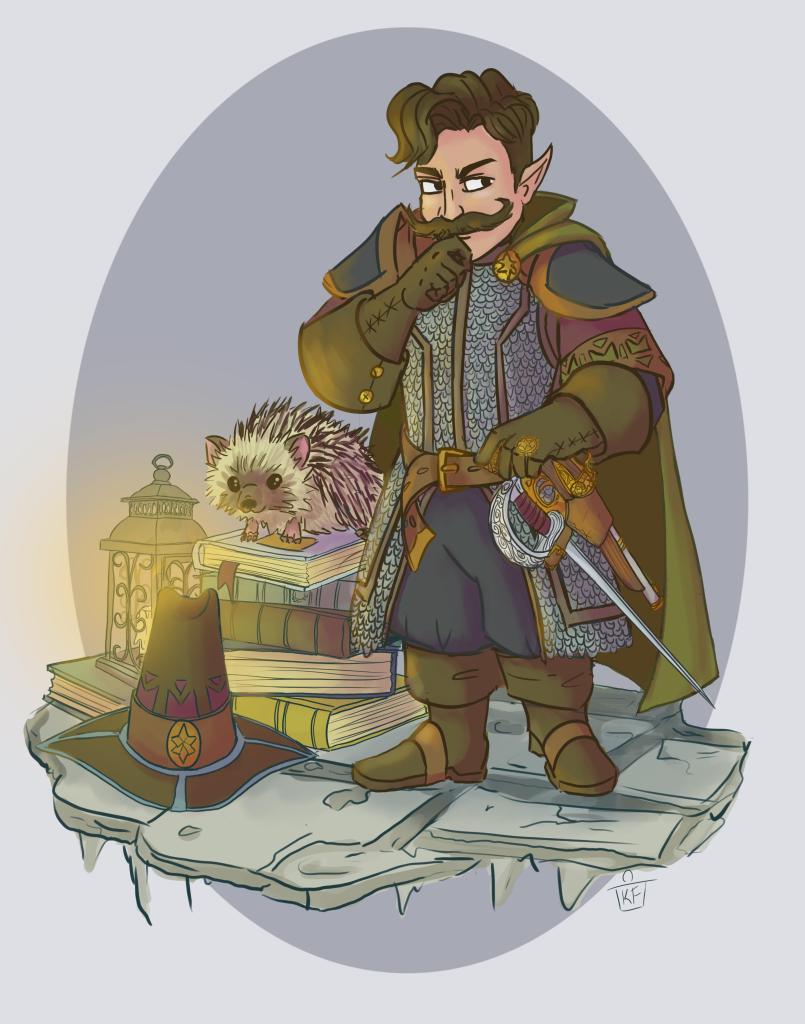
\page
Gnome Feats
1st Level
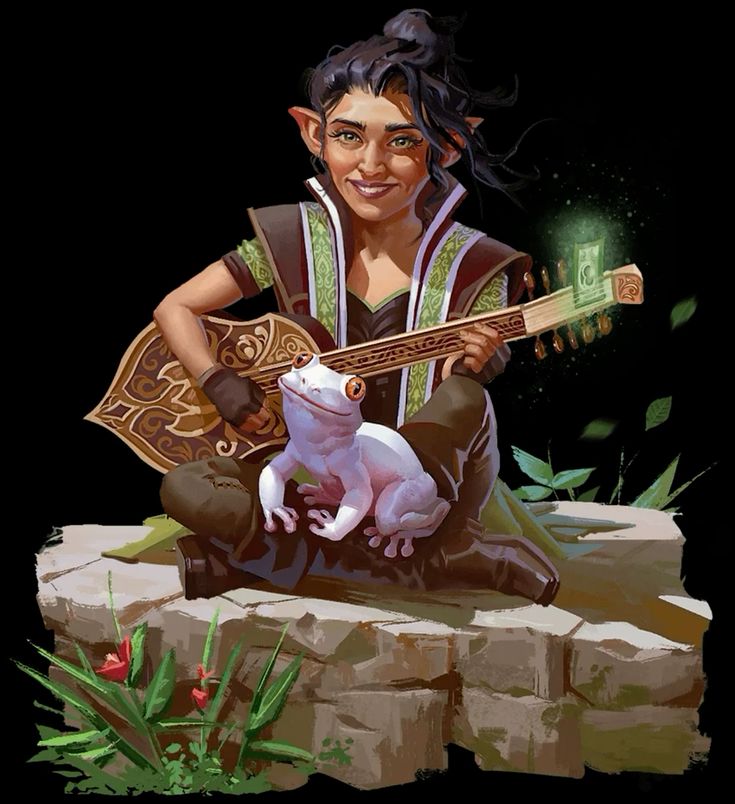
Animal Acomplice
Prerequisite: non-Zilverhamian Gnome kin type
You build a rapport with an animal, which becomes magically bonded to you. You gain a familiar as if you had cast the find familiar spell. You can only ever have one animal bonded to you in such a way at a time. If the bond between you and the animal is ever severed (typically due to one of you dying), you may build a rapport with another animal who would be on the find familiar animal list, but the process will take you spending at least 24 hours with the animal and passing three successive Animal Handling checks (which you may make with advantage in this case). These three successive Animal Handling checks occur once every 8 hours until you make 3 consecutive successes.
Animal Elocutionist
Prerequisite: non-Zilverhamian Gnome kin type
You hear animal sounds as conversations instead of as unintelligent noise, and you can respond in turn. You can ask questions of, receive answers from, and use the Persuasion skill with animals (with advantage). In most cases, wild animals will give you time to make your case. In additional, with this feat you also gain a +1 to Animal Handling checks.
Fey Fellowship
Prerequisite: Gnome kin type
Your enhanced fey connection (either through your bloodline or through prolonged contact with their kind) affords you a warmer reception from creatures of the Feywild, as well as tools to foil their tricks or withstand their magic. You gain a +2 bonus to both Perception (Wisdom) checks and Wisdom saving throws against fey and fey magicks.
In addition, whenever you meet a fey creature in a social situation, you gain advantage on any Charisma (Intimidation, Performance or Persuasion) checks (pick one).
Feywild Magic
Prerequisite: Gnome kin type
Your connection to the Feywild grants you a primal innate spell, much like those of the fey. Choose one cantrip from the Illusion, Enchantment or Transmutation school of magic. You can cast this spell as a primal innate spell at will. It does not count towards any spells known by you and never requires material components, even if that spell normally would.
Gnome Polyglot
Prerequisite: Gnome kin type
Your extensive travels, curiosity, and love of learning help you to learn languages quickly. You learn three new languages. These languages take the same form (signed or spoken) as your other languages. If you concurrently select the Multilingual feat, you learn three new languages instead of two.

Gnomish Obsession
Prerequisite: Gnome kin type
Whenever a topic captures your attention, you dive into it headfirst. You gain Proficiency in either Arcana, History, Investigation, Nature, Performance, Religion or Sleight of Hand. You can add a +1 to your roll in the Proficiency you have selected for this feat at 3rd level, a +2 at 7th level, a +3 at 15th level. Because Gnomish obsessions come and go quickly, you can retrain your
New Feats: Passive Feats: Gnome Feats
\page
Gnomish Obsession feat Proficiency skill choice to a different one of the skill choices offered by this feat, provided you have at least 24 hours of downtime to do so.
Gnomish Weapon Familiarity
Prerequisite: Gnome kin type
You favour unusual weapons that are tied to your people culturally, such as blades with curved and peculiar shapes. You gain proficiency with kukris, sickles and scimitars, even if your class doesn’t normally have such proficiencies. A kukri is essentially a dagger, but when rolling damage with a kukri, any die showing a natural roll of 1 is rerolled until it shows a natural roll of 2 or higher.
At 5th level, whenever you roll a natural 20 critical hit on your melee attack with a kukri, sickle or scimitar, you always do the maximum possible damage on the damage dice. For example, if you used a sickle, the sickle would always score a 4 on a natural 20 critical hit.

Grim Insight
Prerequisite: Deep Gnome kin type
Having grown up in the unforgiving, brutally harsh Great Underrealm Below, you have become accustomed to steeling yourself against fear. You make any saving throws against spells and effects that cause fear with advantage. Additionally, if you succeed against the spell or effect, you may attack the source of the spell or effect with advantage.

Illusion Sense
Prerequisite: Gnome kin type
Your ancestors spent their days cloaked and cradled in illusions, and, as a result, sensing illusion magic is second nature to you. You can add your proficiency bonus to any Wisdom (Perception) checks and saving throws against illusions. If you already can add your proficiency bonus in these situations, you may double your proficiency bonus for these rolls.
When you come within 10 feet of an illusion that can be disbelieved, the DM rolls a secret check for you to disbelieve it (adding your proficiency bonus as mentioned above), even if you didn’t spend an Action actively trying to interact with the illusion.
New Feats: Passive Feats: Gnome Feats
\page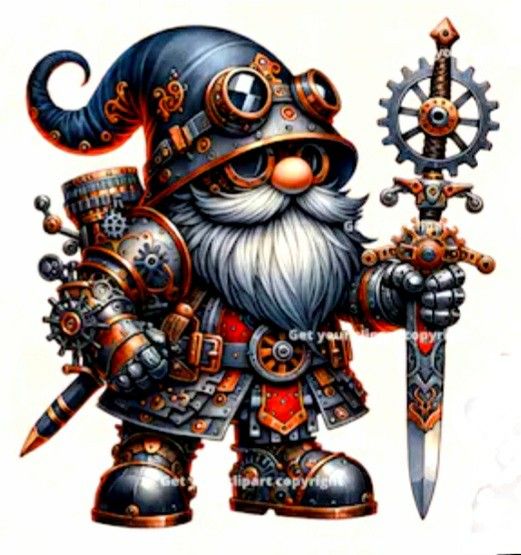
Inventive Offensive
Prerequisite: Zilverhame Gnome kin type
You can jury-rig your weapons to perform in unexpected ways. When you use this ability, roll a d12 and add one of the following weapon traits to a melee weapon you wield (see below). You cannot add a trait that the weapon already has. The weapon retains this trait until you a successfully hit and deal damage with the weapon. The weapon retains this trait only while you wield it, and you can have only one weapon modified in this way at any time.
Inventive Offensive Weapon Trait
| d12 | result | effect |
|---|---|---|
| 1 | “Huh?” | The jury-rigged component is a dud and doesn’t add anything to your attack. |
| 2 | ZAP! | deals 1d4 additional lightning damage. |
| 3 | Rubber Glove | all damage done by your weapon is non-lethal and capped at 1 (for that attack). |
| 4 | “Sonic BOOM!” | deals 1d4 additional thunder damage. |
| 5 | Brrrr! | deals 1d4 additional cold damage. |
| 6 | “The googles do nothing!” | deals 1d4 additional acid damage. |
| 7 | Stiletto | deals an additional 1d4 piercing damage. |
| 8 | “There it is!” | causes the target to be lit up for 1d4 turns as if they were affected by the faerie fire spell. |
| 9 | Mallet | deals an additional 1d4 bludgeoning damage. |
| 10 | “It slices! It dices!” | deals an additional 1d4 slashing damage. |
| 11 | Sizzle! | deals an additional 1d4 fire damage. |
| 12 | KA-POW! | Deals double damage for this one attack. This can stack with a critical hit. |

Life-Giving Magic
Reaction
Prerequisite: Gnome kin type
Frequency: once per minute
Trigger: You cast an innate spell from a gnome heritage or ancestry feat.
The upwelling of innate magic refreshes your body. You gain a number of temporary Hit Points equal to half your level (minimum 1) that last until the end of your next turn.
Natural Performer
Prerequisite: Gnome kin type
Entertainment comes naturally to you. You become Proficient in Performance. If you already were Proficient in Performance due to your class or background, you instead gain Expertise in Performance. If you already have Expertise in Performance, choose another skill to gain Proficiency in.

New Feats: Passive Feats: Gnome Feats
\page
Razzle-Dazzle
Frequency: Once per hour
Trigger: You Blind or Stun a creature
Prerequisite: Gnome kin type
You’ve spent considerable time practicing the manipulation of light, weaponising your blade’s reflection or bolstering the luminosity of magical displays to unconventional heights.
You can extend the duration of the Blinded or Stunned condition you give a target (through some other means) by 1 round.
Theoretical Acumen
Prerequisite: Zilverhame Gnome kin type
Frequency: once per day
Trigger: You succeed at a Creature Knowledge Check (see below) to identify a creature.
You study a creature’s form and behavior to hypothesize likely means of overcoming its strengths. Make a Creature Knowledge Check (refer to the Skill check).
Skill Check Associated With a Creature
| Creature | Skill |
|---|---|
| Aberration | Arcana |
| Beast | Nature |
| Celestial | Arcana/Religion |
| Construct | Arcana |
| Dragon | Arcana/History |
| Elemental | Arcana |
| Fey | Arcana/Nature |
| Fiend | Arcana/Religion |
| Giant | History/Nature |
| Humanoid | History |
| Monstrosity | Arcana/Nature |
| Ooze | Nature |
| Plant | Nature |
| Undead | Arcana/Religion |
Skill Check DC
The DC is increased by the CR of the creature.
Creatures below CR 1 do not raise the DC. If the creature is very commonly met or talked about in folklore, the check might have advantage (e.g. trolls, werewolves).
When talking about any of these traits and CR numbers, the DM should use natural language rather than giving the players a number.
A character might know a creature to be “faster than a riding horse”, or another creature to be “as dexterous as a 90-year-old grandparent”.
When referring to CR, a creature might be a “deadly foe” or a “trivial pest”.
| DC | Character Knowledge |
|---|---|
| – | One defining trait that is incorrect. |
| 5 | One defining trait that has a 50% chance of being incorrect. |
| 10 | One defining trait. |
| 15 | Name + two defining traits. |
| 20 | Name + three defining traits. |
| 25 | Name + four defining traits. |
| 30 | Name + five defining traits. |
Defining Trait Table
| 1d12 | Defining Trait |
|---|---|
| 1 | Trait |
| 2 | Creature Type |
| 3 | Challenge Rating |
| 4 | Speed |
| 5 | High Ability Score |
| 6 | Low Ability Score |
| 7 | Resistance |
| 8 | Damage/Condition Immunity |
| 9 | Important Lore |
| 10 | Vulnerability/Other weakness |
| 11 | Special Attack |
| 12 | Typical Alignment |
Note: if a roll is a duplicate that would reveal no additional information, roll again.
Technical Acumen
Additionally, if you succeed in learning a Defining Trait about a creature (i.e. you were successful in your Skill Check DC), then, and only then, once before the end of your next turn, you can use the skill modifier from the triggering check in place of your saving throw modifier against one of the creature’s abilities, in place of your Perception modifier to find the creature if it Hides, or in place of your Intimidation modifier to Demoralize the creature, should you choose to do so.
Alternatively, against one of the creature’s attacks, you can use your DC for the skill used in the triggering check in place of your AC if that would be higher.
New Feats: Passive Feats: Gnome Feats
\page
\page

Underrealm Defence
Prerequisites: Deep Gnome kin type
Frequency once every 10 minutes; as many times per day as your Proficiency Bonus
Your life in the brutal Underrealm has given you a natural defence mechanism. Whereas most gnomes’ coloration is static or changes slowly, you can cause your hair, eye, and skin color to change for brief amounts of time. This has proven life-saving in the past, when you were able to appear to be a zel’en or a myconoid.
Once every 10 minutes, you can cast the disguise self spell. This spell is an innate spell that you have that doesn’t count towards any spells known. You can cast this spell even if you don’t normally cast spells. This trait does not use up any spell slots. You can ast this spell using this trait as many times per day as your Proficiency Bonus.
While you can only cast a new instance of disguise self using this trait once every 10 minutes, you are able to cast the spell using other spell slots in between. Additionally, if you use this trait to cast the spell, you are able to maintain it for the full hour of the spell’s duration without expending any further uses of this trait.
Unexpected Shift
Reaction
Prerequisite: non-Zilverhamian Gnome kin type
Frequency: as many times per day as your Proficiency bonus; but can only use one of these per minute
Trigger: You would take damage from an attack, spell, or other effect.
Your deep connection to the Feywild or the Great Underrealm Below sometimes causes you to phase from reality when under threat, disappearing for split seconds before reappearing — often surprising you as much as your enemies. Roll a flat DC 16 check. On a success, you gain resistance to all damage against the triggering effect, as well as a +2 bonus to saving throws against that effect until the start of your turn. However, you gain the Dazzled condition for 1 round.
Dazzled: You make all attacks with disadvantage.
5th Level
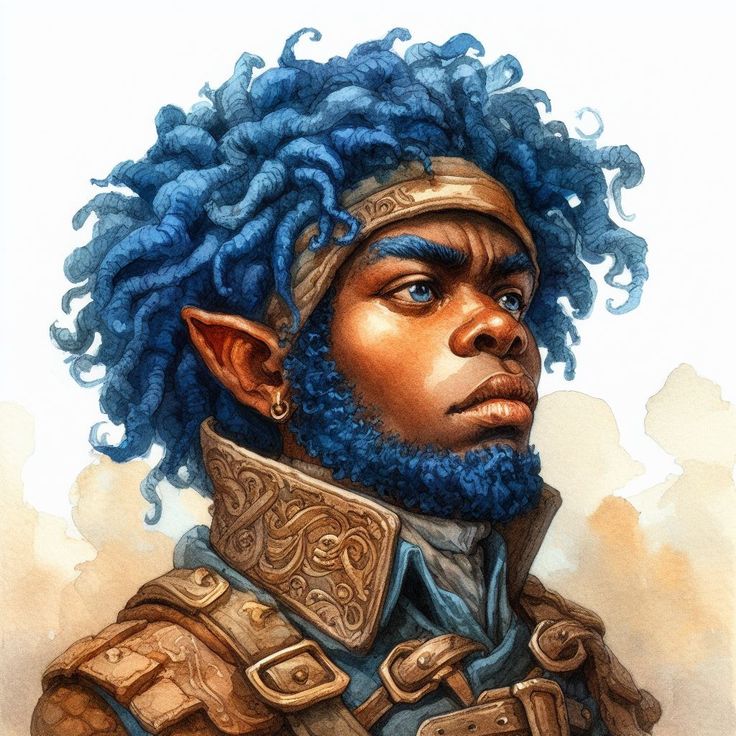
Briny Beverage
Prerequisite: Feral Gnome kin type
You can survive off the sea as well as gain insight from its waters. You can drink saltwater and quench your thirst as though it’s freshwater.
In addition, once per day, you can take a gulp of seawater using an Action to pause and attune with your briny surroundings. This grants you Wavesense with a range of 60 feet, which lasts for 1 minute. This Wavesense functions only within the body of water you drank from.
Wavesense: This sense allows a creature to feel vibrations caused by movement through a liquid. It’s usually an imprecise sense with a limited range (listed in the ability). Wavesense functions only if the creature and the target(s) are in the same body of liquid, and only if a target is moving through the liquid.
New Feats: Passive Feats: Gnome Feats
\page
Eclectic Obsession
Prerequisite: Gnome kin type; the Gnomish Obsession feat
Frequency: once per day
Your desire for stimulation has led you from one pursuit to another and granted you a smattering of expertise with myriad crafts and professions.
You reflect on snippets you’ve learned to temporarily gain Expertise in one of the following skills: Arcana, History, Investigation, Nature, Performance, Religion or Sleight of Hand. This Expertise stacks with the bonuses to your roll in the Proficiency you have selected for the Gnomish Obsession feat (+1 at 3rd level, +2 at 7th level and +3 at 15th level).
The Expertise granted by Eclectic Obsession lasts for 10 minutes or until you critically fail a check with that skill (rolling a natural 1). Since this Expertise is temporary, you can’t use it as a prerequisite for a permanent character option like a feat or a skill increase.
Energized Font
Prerequisite: Gnome kin type; at least one innate spell from a gnomish heritage or ancestry feat
Frequency: once per day
You can focus your mind more quickly thanks to the magic that flows within you. You can cast any innate spell granted to you by your kin type or ancestry feat that has a Casting Time of 1 Action as a Bonus Action instead.
Intuitive Illusions
Prerequisite: Gnome kin type; the Illusion Sense feat
Frequency: once per day
Trigger: Your turn begins.
Illusion magic comes to you so naturally that you can effortlessly sustain your magical ruses. You can double the duration of any Illusion-based spell that you cast. Additionally, you can make any Concentration checks required to maintain an Illusion-based spell that you have cast with advantage.
Natural Illusionist
Prerequisite: Gnome kin type; the Illusion Sense feat
Frequency: once per day
By drawing upon the Feywild’s magic, you can siphon a portion of that malleable world to create a convincing illusion. Once per day, you can cast one of the following spells: disguise self, distort value, illusory script, magic mouth, Nathair’s mischief, silent image, or major image. You cast these as innate spells that are always prepared for you. They do not count against the number of spells you know. You can cast these spells even if your class doesn’t normally cast spells.
\column
Project Persona
Prerequisite: Gnome kin type
Where others etch their armor to serve as a conduit for their imaginations, your vivid mind and bold personality allow you to project a more fitting persona over your lackluster armour. You change the shape and appearance of your armour to appear as ordinary or fine clothes of your imagining. The armour’s statistics don’t change. This effect lasts as long as you remain conscious and are wearing the armour. A creature can disbelieve the illusion by Investigating or touching your armor. The DC for their Investigation equals 8 + your proficiency bonus.
9th Level
Cautious Precaution
Prerequisite: Gnome kin type; at least one innate spell from a gnomish heritage or ancestry feat
Frequency: once per day
You’ve learned a few magical techniques for getting yourself both into and out of trouble unnoticed. You gain mirror image and silence as innate spells. You can cast each spell once per day and can target only yourself.
Feywild Adept
Prerequisite: Gnome kin type; at least one innate spell from a gnomish heritage or ancestry feat
Frequency: once per day
Over time your connection to fey magic has grown stronger. You gain invisibility and hypnotic pattern as
New Feats: Passive Feats: Gnome Feats
\page
innate spells. You can cast each of these innate spells once per day.
Fortuitous Shift
Prerequisite: non-Zilverhamian Gnome kin type; the Unexpected Shift feat
You have grown more comfortable with your penchant for phasing from reality. The flat DC 16 check of your Fortuitous Shift feat decreases to a flat DC 11 check, and you are no longer Dazzled if you succeed.
Life Leap
Prerequisite: non-Zilverhamian Gnome kin type
Requirements: You must be adjacent to a living creature
You phase through a space that a living creature occupies in a flash, spontaneously appearing on the opposite side of it in a vibrant display of colorful light. You move from your current location to another location that’s still adjacent to the same living creature, but on the opposite side or corner of the creature’s space. To determine whether a position is valid, use the same rules as for flanking: a line through the center of the two spaces must pass through opposite sides or corners of the creature’s space.
You pass through the creature’s life force, appearing in the selected location; this doesn’t trigger reactions based on movement. You must be able to see your destination, and you can’t move farther than your Walking Speed would allow.
Magical Strands
Prerequisite: non-Zilverhamian Gnome kin type
The innate magic in your blood turns your hair into more than just a stylish coiffure. If you pluck three strands of your hair and spend 1 minute braiding them together, they magically transform into a strong, 50-foot rope that is the same colour as your hair. This rope can hold 1,000 pounds — great for lashing down sails in a storm, rappelling down a cliff to a hidden treasure, or tying up a criminal with a sizable bounty on her head. You can have only one rope of your hair in existence at a time; if you braid a second, your first rope unravels back into three hairs.
Your hairs can also form a net to catch fish or foes. Once per day, you can cast web as an innate spell, which takes the form of a fishing net the same colour as your hair. You must have a hand free to pluck a few strands of your hair that you throw as part of the spell. Your hairs always regrow when the spell ends.
Vivacious Conduit
Prerequisite: Gnome kin type; at least one innate spell from a gnomish heritage or ancestry feat
Frequency: once per day
Your connection to the Feywild deepens and its vital energy flows into you rapidly. If you rest for 10 minutes, you regain Hit Points equal to your Constitution modifier × half your level (rounded down). This is a healing vitality effect and is cumulative with any healing you receive from another source. You can only benefit from this feat once per day.
13th Level

Arboreal Conversationalist
Prerequisite: Feral Gnome kin type; at least one innate spell from a gnomish heritage or ancestry feat
Frequency: twice per day
With your close connection to primal energies and the Feywild, you can communicate with trees. You can cast speak with plants as an innate spell twice per day.
Instinctive Obfuscation
Reaction
Prerequisite: Gnome kin type; at least one innate spell from a gnomish heritage or ancestry feat
Frequency: once per hour
Trigger: You are attacked by a foe, but they haven’t rolled yet
The magic within you manifests as a natural reaction to threats. An illusory double of you appears in your space for a brief moment. The triggering attacker must roll a flat DC 10 check; on a success, the attack targets you normally; if they fail, the attack targets the double and destroys it.
New Feats: Passive Feats: Gnome Feats
\page
Zarukandan Whistle
Prerequisite: Feral Gnome kin type
Frequency: once per day
Your connection to nature — and trees, in particular — has become so strong that you can summon the plants you befriended in the forests of your youth.
Once per day, you can whistle the distinct, cheery sound that’s a signature of the Zarukandan gnome community to cast one of the following spells: commune with nature, grasping vine or plant growth. You cast the spell as an innate spell. The spell loses the Somatic trait as the incantations and gestures used for this spell involve only whistling.
17th Level
Homeward Bound
Prerequisite: Gnome kin type; at least one innate spell from a gnomish heritage or ancestry feat
Frequency: twice per week
The connection between you and the Feywild resonates within your body stronger than it does for most gnomes, allowing you to cross the threshold between the Prime Material and the Eternal Green.
You gain plane shift as an innate spell. You can cast it twice per week. This can be used only to travel back and forth between the Feywild and the Prime Material Plane. Due to your body’s natural resonance, you can act as a locus for the spell, and you don’t require a specially attuned planar rod or key.
Persistent Boost
Prerequisites: Zilverhame Gnome kin type; the Inventive Offensive feat
You have spent many hours honing your ability to jury-rig your weapons and they now perform in the way that you expected them to. When you use your Inventive Offensive feat ability, you do not need to roll a d12 to add one of the weapon traits to a melee weapon you wield. You may choose the trait. However, if you choose the trait, you cannot choose the “Huh?” or the “KA-POW!” options (a 1 or a 12, respectively).
Alternatively, you may roll a d10 and use the following Persistant Boost Weapon Trait table:
Persistant Boost Weapon Trait
| d12 | result | effect |
|---|---|---|
| 1 | Tesla Coil | deals 1d8 additional lightning damage in a 15-foot cone. Creatures in the area of effect who pass a DC 17 Dexterity check take half damage. |
| 2 | Sonic Discharge | deals 1d8 additional thunder damage in a 15-foot cone. Creatures in the area of effect who pass a DC 17 Dexterity check take half damage. |
| 3 | Ice Blast | deals 1d8 additional cold damage in a 15-foot cone. Creatures in the area of effect who pass a DC 17 Dexterity check take half damage. |
| 4 | Corrosive Spray | deals 1d8 additional acid damage in a 15-foot cone. Creatures in the area of effect who pass a DC 17 Dexterity check take half damage. |
| 5 | Ice pick | deals an additional 1d10 piercing damage to the target. |
| 6 | Caltrops | deals an additional 1d8 piercing damage and releases caltrops (see below) in a 15-foot cone. |
| 7 | Hammertime | deals an additional d10 bludgeoning damage to the target. |
| 8 | Glitterdust | causes the target to be lit up for 1d8 turns as if they were affected by the faerie fire spell. |
| 9 | Buzzsaw | deals an additional 1d10 slashing damage. |
| 10 | Flame | deals 1d8 additional fire damage in a 15-foot cone. Creatures in the area of effect who pass a DC 17 Dexterity check take half damage. |
As with your Inventive Offensive feat, you cannot add a trait that the weapon already has. The weapon retains this trait until you a successfully hit and deal damage with the weapon. The weapon retains this trait only while you wield it, and you can have only one weapon modified in this way at any time.
Caltops: Any creature in the area must succeed on a DC 15 Dexterity saving throw or stop moving and take 1 piercing damage. Until the creature regains at least 1 hit point, its walking speed is reduced by 10 feet. A creature moving through the area at half speed doesn’t need to make the saving throw.
New Feats: Passive Feats: Gnome Feats
\page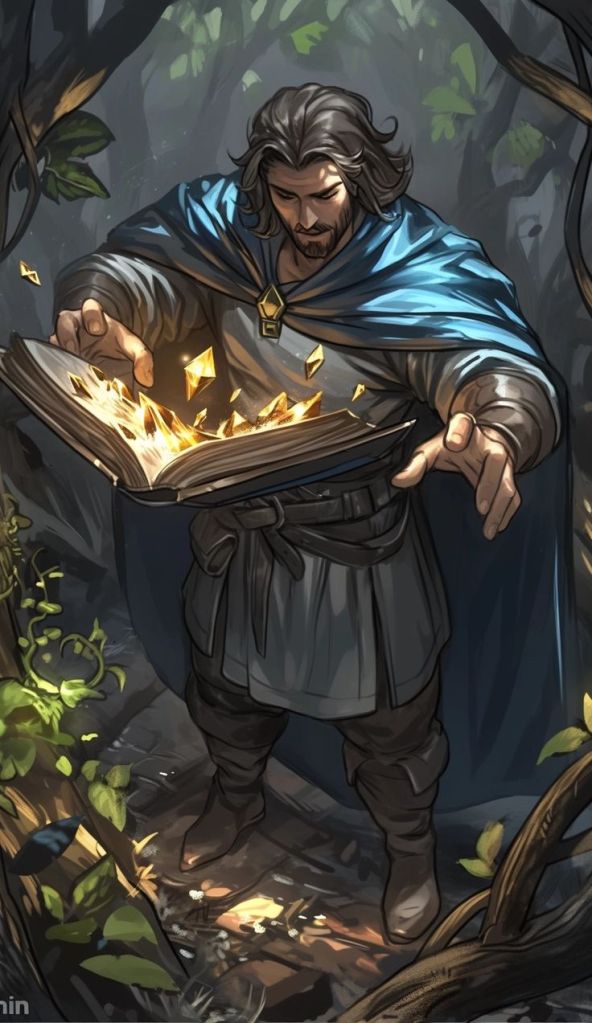
\page
Human Feats
1st Level
Adapted Cantrip
Prerequisite: spellcasting class feature
Through dilligent study of esoteric arcane traditions, you’ve altered a spell to suit your spellcasting style. Choose one cantrip from a magical tradition other than your own (from another spellcasting spell list). If you prepare spells, you can choose this spell when you prepare your cantrips, in addition to your other options. If you have a spell repertoire, such as a wizard might have a spellbook, replace one of your cantrips known with the chosen spell. If you swap or retrain this cantrip later, you can choose its replacement from the same alternate tradition or a different one. You always cast your adapted cantrip as a spell of your class’ tradition. You can only have one adapted cantrip at a time via this particular feat, but if another feat grants you spells from an alternate tradition, that is fine.
Cooperative Nature
Prerequisite: Human kin type
The short human life span lends perspective and has taught you from a young age to set aside differences and work with others to achieve greatness. Whenever you use your Action to Help another creature, in addition to granting that creature advantage on the roll, they may also add your proficiency bonus to the roll.
Courteous Comeback
Prerequisite: Human kin type; Mu’şüri nationality
Trigger: You critically fail a Charisma (Deception, Intimidation, Persuasion, Performance) check.
Requirements: You’re in a settlement or community, and you haven’t used Courteous Comeback in this settlement or community within the past month.
You grew up in the Enlightened Mu’şüri Empire, where even insults have a certain poetic wit. Reroll the triggering failed Charisma check, using the second result.
Fey’s Advocate
Prerequisite: Human kin type; Bezbjedanian, Eruvian, Oaxican, Zarukandan nationality
You know more about the habits of fey creatures than is entirely safe. You gain a +2 bonus to Perception checks against fey creatures and to saving throws against their abilities. In addition, whenever you meet a fey creature in a social situation, you can immediately attempt a contested Charisma check against the fey creature to make a positive impression on them.
Mechanically, if you succeed on this check, it grants you advantage on any subsequent Charisma checks when interacting with that fey creature.
If you fail, you make any subsequent Charisma checks with that fey creature with disadvantage.
Haughty Obstinacy
Prerequisite: Human kin type
Your powerful ego makes it harder for others to order you around. You have advantage on saving throws against being charmed or enchanted.
Natural Skill
Prerequisite: Human kin type
Your ingenuity allows you to learn a wide variety of skills. You gain Proficiency in two skills or tools of your choice.
Witch Warden
Prerequisite: Human kin type
You, your family or your community have fought long and hard against witches, and you’ve learned to be wary of their curses and the otherworldly powers their patrons grant. You gain a +1 bonus to saving throws against curses, and to saving throws against spells cast by a witch or hag.
5th Level
Adaptive Adept
Prerequisite: Human kin type, the Adapted Cantrip feat, able to cast 3rd-level spells
You’ve continued adapting your magic to blend your class’s tradition with your adapted tradition. Choose a cantrip or 1st-level spell from the same magical tradition as your cantrip from the Adapted Cantrip feat.
You gain that spell, adding it to your spell options just like the cantrip from Adapted Cantrip. You can cast this spell as often as you like if it is a cantrip, or once per day if you choose a 1st-level spell.
Clever Improviser
Prerequisite: Human kin type
You’ve learned how to handle situations when you’re out of your depth. Once per long rest, you may reroll a failed skill check, but you must take the second result, even if it is worse than the original roll.
Darkseer
Prerequisite: Human kin type
Al-Zalam smiles upon you — even if you curse His shadowy name — granting you pitch-black eyes that allow you to see in shadows and darkness. You gain darkvision to 30 feet.
Mountain-Climber
Prerequisite: Human kin type
You have proficiency in the use of mountaineering equipment such as a climber’s kit. Additionally, you are able to use the climber’s kit as an action to anchor
New Feats: Passive Feats: Human Feats
\page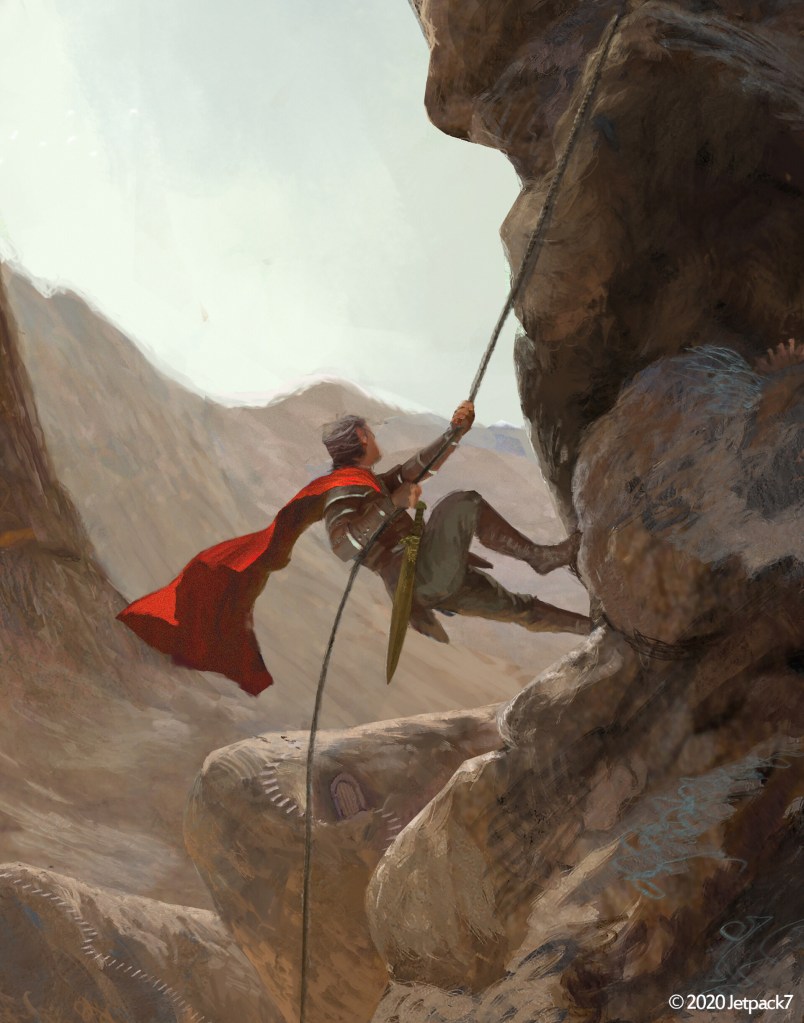
\page
yourself; when you do, you can’t fall more than 15 feet from the point where you anchored yourself, and you can’t climb more than 25 feet away from that point without undoing the anchor.
Urban Scout
Prerequisite: Human kin type
You are at home in urban environments. In fact, you typically have an almost innate ability to know your way around cities and towns.
You have advantage on Wisdom (Perception) and Intelligence (Investigation) checks made to locate general or specific buildings (e.g. “a library” or “the private library of the lord mayor”) in a settlement.
When you make a Dexterity (Stealth) check to hide outdoors while in a settlement, you are considered to have proficiency in the Stealth skill.
If you are already have proficiency in the Stealth skill, you add twice your proficiency bonus instead of your normal proficiency bonus.
You can move your normal speed through difficult terrain caused by staircases, roofs, market stalls, and other urban obstructions.
When at a settlement, you always know the direction and distance to the next nearest settlement.
Wave-touched
Prerequisite: Human kin type
You have been blessed by the sea, granting you the ability to swim like a fish. You gain a 15-foot Swim Speed.
9th Level
Cooperative Soul
Prerequisite: Human kin type, the Cooperative Nature feat
You have developed a soul-deep bond with your comrades and maintain an even greater degree of cooperation with them.
If you are Proficient in the skill you are Helping your comrade with, you may treat any roll of 9 or less on the d20 as a 10 before adding modifiers to the roll.
Group Aid
Prerequisite: Human kin type, the Cooperative Nature feat
Your upbringing emphasized teamwork, and helping your allies comes naturally to you.
After you Help an ally at a skill check that doesn’t have the Attack trait, you can also Help any other ally who attempts the same skill check for the same purpose that round.
You do so as a Free Action rather than as an Action for the second ally.
The preparation you did to Help must still apply to the other allies, and you can Help each ally only once.
For example, if you helped lift up an ally to Help them on an Athletics check to scale a wall, you could keep the same posture to give a boost to other allies attempting to scale the wall in the same round.
Hardy Traveler
Prerequisite: Human kin type
There’s no journey too far or burden too heavy when you have friends at your side or hope within your heart. Treat your maximum and encumbered carrying limits as if your Strength score was +2 higher than it actually is.
In addition, if you are traveling through wilderness with allies, make a Constitution Check (DC 10). If you succeed, you only need half as much food, water and sleep that day (make the check at the start of each traveling day).
Incredible Improvisation
Prerequisite: Human kin type, the Clever Improviser feat
Frequency: once per day
Trigger: You attempt a check using a skill you’re not proficient in
A stroke of brilliance gives you a major advantage with a skill despite your inexperience. Gain a +4 bonus to your roll for the triggering skill check.
Natural Climber
Prerequisite: Human kin type
You have become an excellent climber of most surfaces, providing their are hand and foot holds. You gain a natural Climbing Speed of half your Walking Speed, unless the climbing surface would not support your weight, or would require mountaineering equipment such as a climber’s kit to climb safely.
13th Level
Advanced Training
Prerequisite: Human kin type
Over the long course of your adventuring life, your adaptability has let you pick up numerous useful abilities. You gain a feat of your choice, provided you meet the feat’s prerequisites.
Special: You can select this feat again at 17th level, choosing a different feat at that time.
Bounce Back
Prerequisite: Human kin type
Frequency: once per day
Trigger: You lose the dying condition
You recover from near-death experiences with astounding resilience. If your table uses the ‘1 level of exhaustion’ house rule upon succeeding three death
New Feats: Passive Feats: Human Feats
\page
saving throws, you lose the dying the condition without any exhaustion.
Additionally, instead of stablising at 0 hit points, your eyes snap open with as many hit points as your Constitution modifier (minimum of 1).
Stubborn Persistance
Prerequisite: Human kin type
Humans are renowned for their ability to persist through the most grueling of trials that would leave others ready to drop. When you would gain a level of Exhaustion, attempt a flat DC 17 check. On a success, you aren’t affected by that level of Exhaustion.
However, if the fatigued condition has an underlying cause that you don’t address, such as lack of rest, you must attempt the check again at an interval determined by the DM until you fail the flat check or address the underlying cause.
17th Level
Heroic Presence
Prerequisite: Human kin type
The blood of heroes courses through your veins, and you inspire your allies to dig deep and find a new level of resolve. You grant up to 10 willing creatures within 30 feet the effects of Zealous Conviction (see below), although the effect automatically ends on a target if you give that target a command they would normally find repugnant.
{{note
Zealous Conviction:
Range: 30 feet; Targets up to 10 willing creatures
Duration: 10 minutes
You bypass your targets’ rational minds, instilling them with unshakable conviction and zeal. The targets each gain 12 temporary Hit Points and a +2 bonus to Wisdom saving throws against mental effects, as their faith overrides the signals from their own bodies and minds. If you tell a target to do something, it must comply with your request, though if it would normally find the task repugnant, it can attempt a Wisdom save at the end of its turn each round due to the cognitive dissonance. On a success, it ends the effect on itself entirely.
}}

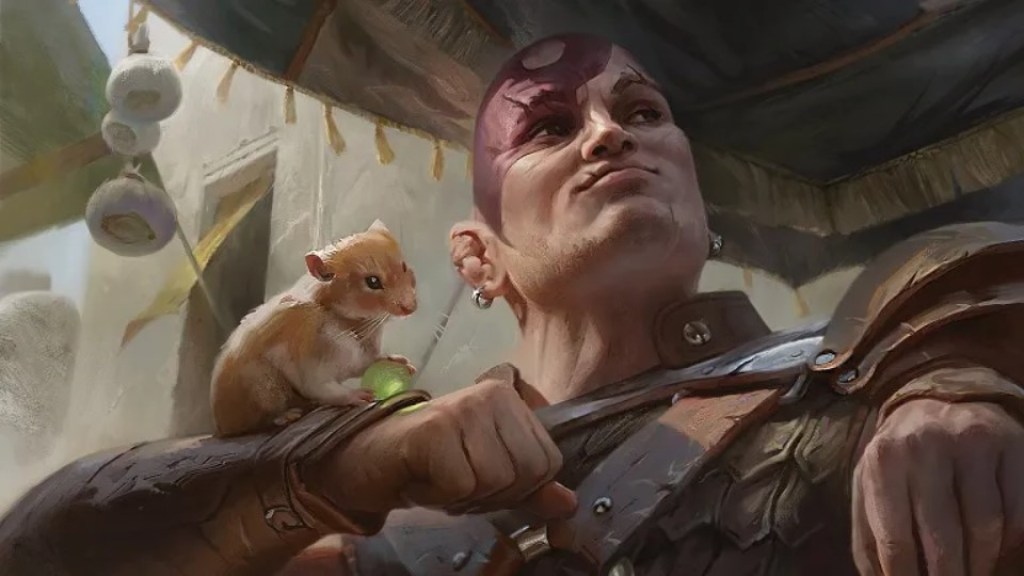
New Feats: Passive Feats: Human Feats
\page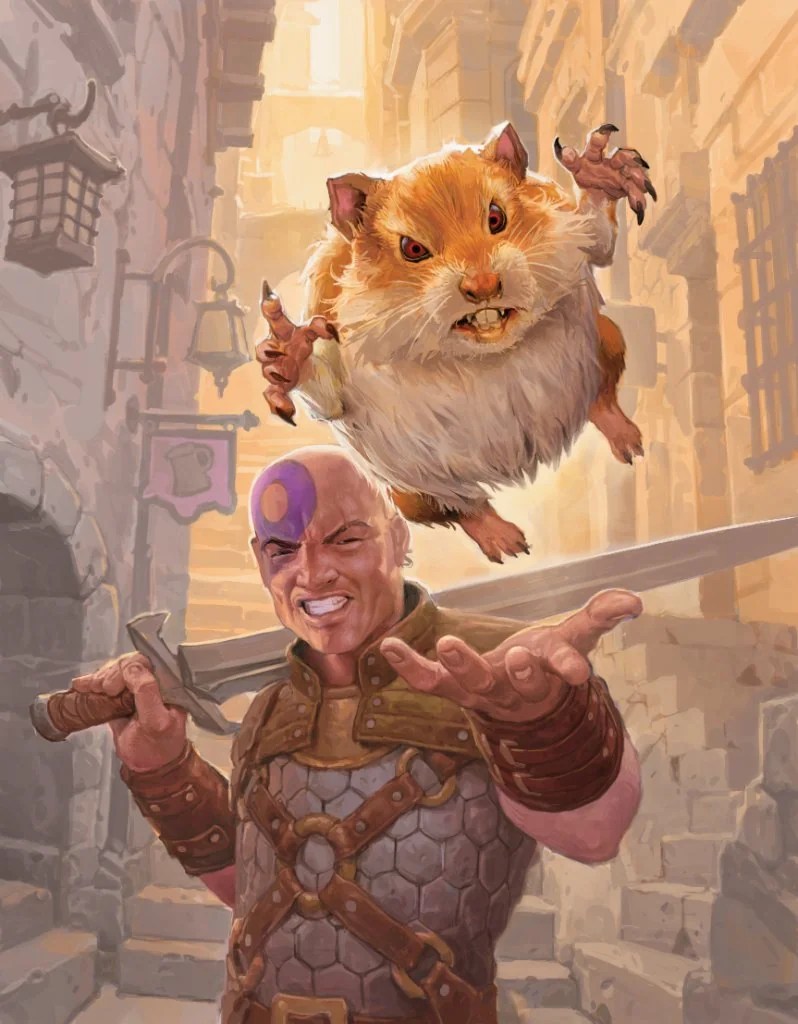
\page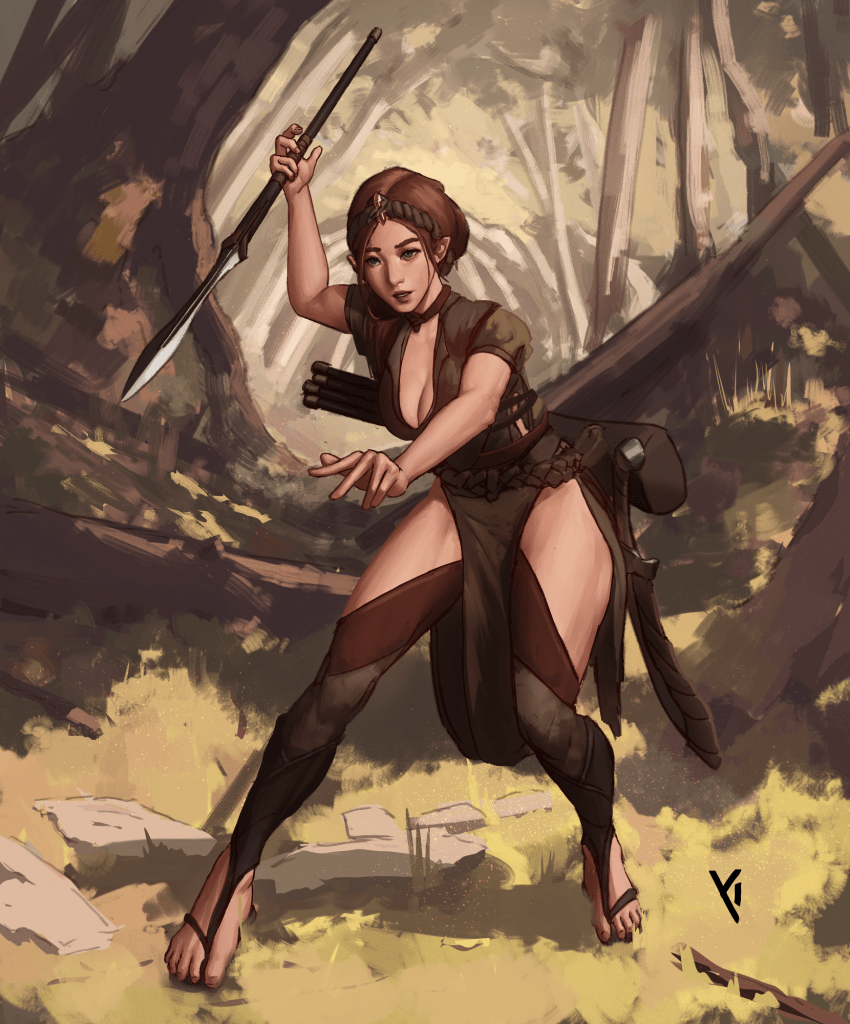
\page

Kedakai Feats
1st Level
Ancestral Linguistics
Prerequisite: Kedakai kin type; at least 100 years old
Over your extensive lifespan, you’ve studied many languages. During your daily preparations, you can recede into old memories to become fluent in one common language or one other language you have access to (check with your GM).
You know this language until you prepare again. Since this knowledge is temporary, you can’t use it as a prerequisite for a permanent character option.
Ancestral Longevity
Prerequisite: Kedakai kin type; at least 100 years old
You have accumulated a vast array of lived knowledge over the years. During your daily preparations, you can reflect upon your life experiences to gain Proficiency in one skill of your choice.
This proficiency lasts until you prepare again. Since this proficiency is temporary, you can’t use it as a prerequisite for a skill increase or a permanent character option like a feat.
Demonbane Warrior
Feat 1
Prerequisite: Kedakai kin type
You gain a +1 bonus to damage with weapons and unarmed attacks against demons. If your attack would deal more than one weapon die of damage, the bonus is equal to the number of weapon dice or unarmed attack dice.
At level 7, increase this bonus damage to +2.

Desertcraft
Prerequisite: Hara Kedakai kin type
You have a innate familiarity with desert and arid areas. When in a desert or other similarly sandy or arid environment, you may add double your proficiency bonus to a (Wisdom) Survival skill check to sense direction, hunt or subsist, or cover your tracks.
Elemental Wrath
Prerequisite: Kedakai kin type
You are so attuned to the land that you can call forth a bolt of energy from your surroundings. When you gain this feat, select acid, cold, electricity, or fire.
You can call to the land to cast the acid splash cantrip as an innate spell at will, except the spell has only verbal components and always deals the type of damage you chose instead of acid damage; otherwise it functions as per the original spell.
Forlorn
Prerequisite: Kedakai kin type
Watching your friends age and die fills you with a fundamental moroseness that somewhat protects you against harmful emotions. You gain a +1 bonus to saving throws against effects that would affect your emotions.
Kedakai Aloofness
Prerequisite: Kedakai kin type
As much as you might care for them, you’ve come to terms with the ephemeral nature of non-kedakai, and it makes their threats feel less troublesome. Non-kedakai must make Charisma (Intimidation) rolls against you at disadvantage.
Kedakai Lore
Prerequisite: Kedakai kin type
You’ve studied traditional kedakai arts, such as calligraphy, laquering, woodwork, flower arranging,
New Feats: Passive Feats: Kedakai Feats
\page
\page
poetry, as well as learning about arcane magic and the world around you. You gain Proficiency in Arcana and Nature.
If you would automatically become Proficient in one of those skills (from your background or class, for example), you instead become Doubly Proficient in them, or, alternatively, you may become Proficient in a skill of your choice.
Kedakai Verve
Prerequisite: Kedakai kin type
You are naturally more resilient to flesh-numbing magic and effects of all kinds.
You gain a +1 bonus to saves against effects that would immobilise, paralyse or slowed.
When you would be immobilized, paralyzed, or slowed for at least 2 rounds, reduce that duration by 1 round.

Kedakai Weapon Familiarity
Prerequisite: Kedakai kin type
You favour bows and other elegant weapons.
You have proficiency with longbows, composite longbows, rapiers, shortbows, and composite shortbows, even if your class doesn’t normally have proficiency in these weapons.
\column
Know Your Own
Prerequisite: Kedakai kin type
You’ve spent countless hours studying the history of kedakai on your world and beyond and are a studied expert in your people’s ways.
You get advantage on Intelligence (History) checks about kedakai, kedakai society or kedakai history.
Nimble and Lithe
Prerequisite: Kedakai kin type
Your muscles are tightly honed. Your Walking Speed increases by 5 feet.
Otherworldly Magic
Prerequisite: Kedakai kin type
Your primordial kedakai magic manifests as a simple arcane spell, even if you aren’t formally trained in magic.
Choose one cantrip from the bard, sorcerer or wizard arcane spell list.
You can cast this cantrip as an innate spell at will.

New Feats: Passive Feats: Kedakai Feats
\page
Share Thoughts
Prerequisite: Yama Kedakai kin type
You have an uncanny knack of communicating with other elves without speaking, though this habit that is often uncomfortable to observers.
You can cast Mindlink (see below) as an innate occult spell once per day, but you can target only other kedakai or half-kedakai.
{{note
Mindlink
1st-level divination
Casting Time: :: 1 action
Range: :: 25 ft. + 5 ft./2 levels
Components: :: V, S, M (2 cups with a tiny hole in the bottom, joined by a length of string)
Duration: :: 10 min./level
Target :: You and one other willing creature within range that has an Intelligence score of 3 or higher
You forge a telepathic bond with your target. You can communicate telepathically through the bond even if you do not share a common language. No special power or influence is established as a result of the bond.
Once the bond is formed, it works only within the range (which is 25 ft at 1st level, 30 ft at 3rd level, 35 ft at 5th level, 40 ft at 7th level, 45 ft at 9th level, 50 ft at 11th level, and so on, to a maximum of 60 ft at 15th level).
}}
Undercraft
Prerequisite: Yama Kedakai kin type
You have a innate familiarity with subterranean and underground areas. In such an environment you may add double your proficiency bonus to a (Wisdom) Survival skill check to sense direction, hunt or subsist, or cover your tracks.
Unwavering Mien
Prerequisite: Kedakai kin type
Your mystic control and meditations allow you to resist external influences upon your consciousness. Whenever you are affected by a mental effect that lasts at least 2 rounds, you can reduce the duration by 1 round.
You still require natural sleep, but you may make any saving throws against effects that would cause you to fall asleep with advantage.
This protects only against sleep effects, not against other forms of falling unconscious, such as drunkenness or poisoning.
Wildborn Magic
Prerequisite: Yama Kedakai kin type
You have learned to access the old magic of wild places. Choose one cantrip from the Druid spell list. You can cast this cantrip as an innate spell at will. This spell does not count towards any spells known by you. It is always prepared for you, and, regardless of needing any material components, you can always cast it. You may cast this spell even if you don’t normally have the ability to cast spells.

Woodcraft
Prerequisite: Kishin and Tsukimin Kedakai kin type
You have a innate familiarity with forested areas. When in a forest or jungle environment, you may add double your proficiency bonus to a (Wisdom) Survival skill check to sense direction, hunt or subsist, or cover your tracks.
5th Level
Ageless Patience
Prerequisite: Kedakai kin type
You work at a pace born from longevity that enhances your thoroughness. You can voluntarily spend twice as much time as normal on a Wisdom (Perception) check or skill check that takes 1 action or longer. If you do, you gain a +2 bonus to the check and can treat any natural roll of 9 or less as a 10.
Note, the DM might determine a situation doesn’t grant you a benefit if a delay would be directly counterproductive to your success, such as a tense negotiation with an impatient creature.
Ancestral Suspicion
Prerequisite: Kedakai kin type
Long-lived kedakai have seen civilizations rise and fall, often at the hands of outside forces. As a result, they have developed a wariness of others who might seek to influence or control them. You’ve been trained to resist such manipulation, gaining a +2 bonus to saving throws against effects that would make you controlled, such as the Dominate Person spell, and to Wisdom (Insight) checks when trying to determine if a creature is under the influence of such an effect.
New Feats: Passive Feats: Kedakai Feats
\page
Desert Stealth
Prerequisite: Hara Kedakai kin type
Prerequisites: Proficiency in Stealth
Requirements: You are in a sandy, desert or arid environment near an environmental feature that would allow you to Hide or take cover.
You are are one with the harsh and unforgiving Desert and know how to blend into the scenery to escape detection from others. You can make Stealth checks to Hide with advantage in desert or arid environments.
Forest Stealth
Prerequisite: Kishin or Tsukimin Kedakai kin type
Prerequisites: Proficiency in Stealth
Requirements: You are in a forest or jungle environment near an environmental feature that would allow you to Hide or take cover.
You are skilled at quickly hiding behind bits of underbrush or foliage. You can make Stealth checks to Hide with advantage in forest or jungle environments.
Kedakai Instincts
Feat 5
Legacy Content
Elf
Source Character Guide pg. 27 2.0
Your senses let you react rapidly. You gain a +2 circumstance bonus to Perception checks made as initiative rolls. Additionally, if your initiative roll result is tied with that of an opponent, you go first, regardless of whether you rolled Perception or not.
Martial Experience
Feat 5
Elf
Source Player Core pg. 48 2.0
You’ve crossed blades with a wide variety of foes wielding a wide variety of weapons, and you’ve learned the basics of fighting with nearly any of them. When wielding a weapon you aren’t proficient with, treat your level as your proficiency bonus.
At 11th level, you become trained in all weapons.
Subterranean Stealth
Prerequisite: Yama Kedakai kin type
Prerequisites: Proficiency in Stealth
Requirements: You are in a subterranean or underground environment near an environmental feature that would allow you to Hide or take cover.
You are are one with the Great Underrealm Below and know how to blend into the scenery to escape detection from others. You can make Stealth checks to Hide with advantage in subterranean or underground environments.
Wildborn Adept
Feat 5
Legacy Content
Elf
Source Character Guide pg. 27 2.0
Prerequisites Wildborn Magic
The whispers of the jungle grant you more diverse access to simple primal magic. You can cast dancing lights, disrupt undead, and tanglefoot as innate primal spells at will. If you chose one of those spells with Wildborn Magic, you can select a new spell for Wildborn Magic.
9th Level

Brightness Seeker
Feat 9
Legacy Content
Elf
Source Character Guide pg. 27 2.0
Once per day, you can spend 10 minutes studying your surroundings in search of omens related to a particular course of action to cast augury as an innate divine spell. Unless the result of the augury was “nothing,” you gain the following reaction for the next 30 minutes:
Call Upon the Brightness
[reaction]
Source Character Guide pg. 27 2.0
Trigger You attempt an attack roll, skill check, or saving throw while performing the course of action from your augury, but you haven’t rolled yet
You gain a +1 status bonus to the triggering check, or a +2 status bonus if the result of the augury was “woe” and you proceeded anyway.
Elf Step
[one-action]
Feat 9
Elf
Source Player Core pg. 48 2.0
You move in a graceful dance, and even your steps are broad. You Step 5 feet twice.
Expert Longevity
Feat 9
Elf
Source Player Core pg. 49 2.0
Prerequisites Ancestral Longevity
You’ve continued to refine the knowledge and skills you’ve gained through your life. When you choose a skill in which to become trained with Ancestral Longevity, you can also choose a skill in which you are already trained and become an expert in that skill. This lasts until your Ancestral Longevity expires.
When the effects of Ancestral Longevity and Expert Longevity expire, you can retrain one of your skill increases. The skill increase you gain from this retraining must either make you trained in the skill you chose with Ancestral Longevity or make you an expert in the skill you chose with Expert Longevity.
New Feats: Passive Feats: Kedakai Feats
Otherworldly Acumen
Feat 9
Elf
Source Player Core pg. 49 2.0
Prerequisites at least one innate spell gained from an elf ancestry feat
The arcane magic you possess grows in power and complexity. Choose one common 2nd-rank spell from the same tradition as an innate spell you previously gained from another elf ancestry feat (from the arcane list if you have Otherworldly Magic, for example). You can cast that spell as an innate spell once per day, using the same tradition as the list you chose the spell from.
Your magic is adaptable. By spending 1 day of downtime, you can change the spell you chose to a different common 2nd-rank spell from the same tradition.
Sense Thoughts
Feat 9
Legacy Content
Uncommon Elf
Source Character Guide pg. 27 2.0
Prerequisites Share Thoughts
You have an even stranger knack for knowing what other people are thinking. You can cast mind reading as an innate occult spell once per day.
Tree Climber
Feat 9
Elf
Source Player Core pg. 49 2.0
You’ve spent much of your life among the treetops and have become an expert at quickly and safely climbing them. You gain a climb Speed of 10 feet.
13th Level
Avenge Ally
[one-action]
Feat 13
Elf Fortune
Source Player Core pg. 49 2.0
Frequency once every 10 minutes
Requirements You are within 30 feet of an ally with the dying condition
Though you know that you will eventually outlive your companions, seeing them at death’s door brings clarity to your attacks. Make a Strike. Roll twice on the attack roll and use the higher result.
Universal Longevity
[one-action]
Feat 13
Elf
Source Player Core pg. 49 2.0
Frequency once per day
Prerequisites Expert Longevity
You’ve perfected your ability to keep up with all the skills you’ve learned over your long life, so you’re almost never truly untrained at a skill. You reflect on your life experiences, changing the skill you selected with Ancestral Longevity (and the skill you selected with Expert Longevity if you have that feat).
Wandering Heart
Feat 13
Legacy Content
Elf
Source Character Guide pg. 27 2.0
Prerequisites Arctic Elf, Cavern Elf, Desert Elf, Woodland Elf, or any other elf heritage based on adapting to an environment
While all elves adapt to their environments over time, you have traveled so widely and become attuned to so many environs that your body now changes more rapidly than other elves. After spending a week in an environment associated with an elf heritage (such as snow for arctic elf, or a forest or jungle for woodland elf) your heritage automatically changes to become that heritage. This never causes you to change to an elf heritage that isn’t related to an environment, such as ancient elf, seer elf, or whisper elf.
17th Level
Magic Rider
Feat 17
Elf
Source Player Core pg. 49 2.0
Your people used powerful magic to travel between distant worlds in the distant past, and the remnants of that magic make such transportation easier for you. When you are the target of a teleportation spell that transports more than one person, it can affect an additional person beyond the normal limit, chosen by the caster. Additionally, when you’re the target of a teleport spell, you and the other targets arrive no farther than 1 mile off target, regardless of distance traveled.
\page
Khemeti Feats
\page
Ko Feats
\page
Kumotai Feats
\page
Kýrosian Feats
1st Level
Artisanal Crafter
Prerequisite: Kýrosian kin type
Like many Kýrosians, you take pride in creating items made from stone or metal. You gain proficiency in your choice of tools related to either blacksmithing (Smith’s Tools), leatherworking (Leatherworker’s Tools), or stonemasonry (Mason’s Tools).
Cattle Tongue
Prerequisite: Kýrosian kin type
You can understand the lowing of cattle and similar animals as its own language. You can ask questions of, receive answers from, and use the Diplomacy skill with cattle, bison, antelopes, and other grazing mammals that travel in herds. The GM determines which other animals count for this ability.
Eye for Masonry
Prerequisite: Kýrosian kin type
Your familiarity with architecture allows you to easily spot subtle stonework. You gain a +2 bonus to Wisdom (Perception) checks to notice unusual stonework. This bonus applies to checks to discover mechanical traps made of stone or hidden within stone, as well as secret doors in stone.
When using Strength (Athletics) to Force Open a stone door or Dexterity (Sleight of Height) checks to disable a trap or device made primarily of stone or set within stonework, you gain a +1 bonus to that check.
Friendly Nudge
Prerequisite: Kýrosian kin type, Proficient in Athletics
Trigger: You want to move through an ally’s square or (as a Reaction) when an area of effect from a spell, trap, breath weapon, etc, would affect one of your allies who is adjacent to you
You don’t always have time to wait for your allies to make room, so it’s best to politely move them yourself. Attempt an Athletics check to (gently) Shove an ally. You don’t need to have a free hand to attempt this check.
If your ally is willing, you may make this check with advantage and they make it with disadvantage. Your ally must have a square to move into that is not blocked (otherwise the normal rules apply for moving through an ally’s square such as treating that square as difficult terrain). You then occupy the square that your ally was previously in without needing to treat the movement as difficult terrain.
If you use this feat as a Reaction when an area of effect would affect your ally, you may potentially push them out of the line of fire, however, you will then occupy the square that your ally was previously in, meaning that you will potentially be affected by the effect in their place.
Keen Nose
Prerequisite: Kýrosian kin type
The gods of Kýros have granted you a sense of smell that is honed and sharpened. If you spend a bonus action, you can potentially detect a hidden or invisible Creature that is within 30 feet of you. Make a Wisdom (Perception) check with advantage to do so.
You also gain a +2 bonus to saving throws against smokes, gases and clouds as your advanced olfactory senses give you additional warning of the impending effect.
Kýrosian Lore
Prerequisite: Kýrosian kin type
You were raised in a minotaur enclave or have spent a great deal of time studying your culture and ancestry. You become proficient in two of the following: History, Religion and Performance. If you would automatically become trained in one or more of those skills (from your background or class, for example), you instead become trained in a skill of your choice.
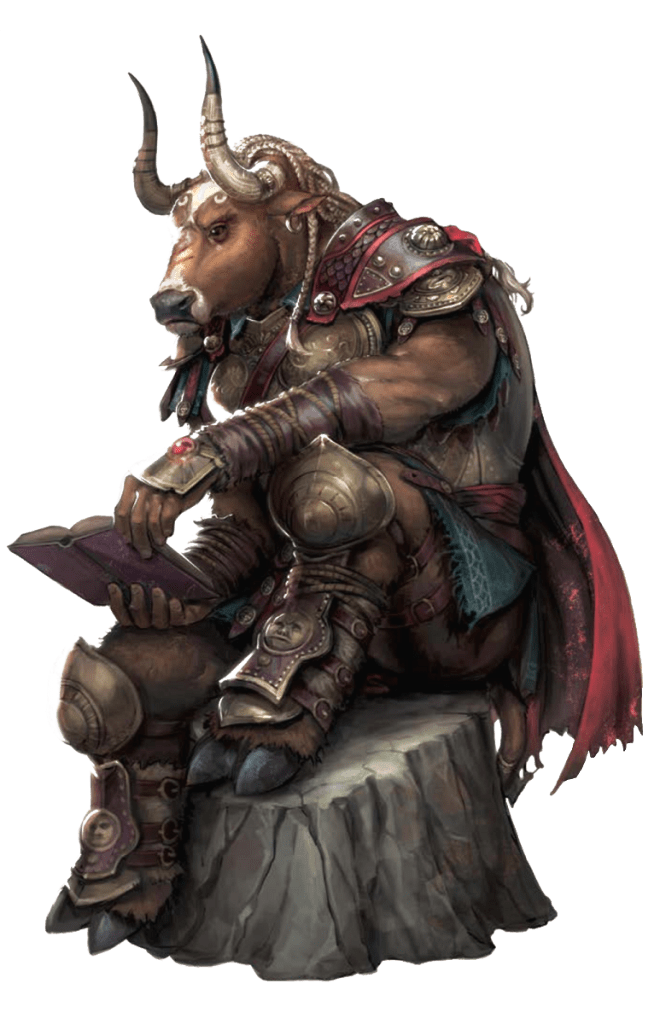
New Feats: Passive Feats: Kýrosian Feats
\page
Kýrosian Weapon Familiarity
Prerequisite: Kýrosian kin type
Your elders taught you to wield weapons that can split skulls and smash through shields. You have familiarity with the battle axe, falchion, glaive, and greataxe — for the purposes of proficiency, you treat these martial weapons as simple weapons.
Pantheon Magic
Prerequisite: Kýrosian kin type
The touch of divine meddling still runs through you, whether you want it or not. Choose one cantrip from the cleric spell list. You can cast this cantrip as a divine innate spell at will. It does not count towards any spells known by you and you’re able to cast it even if you don’t normally have any spell-casting abilities.
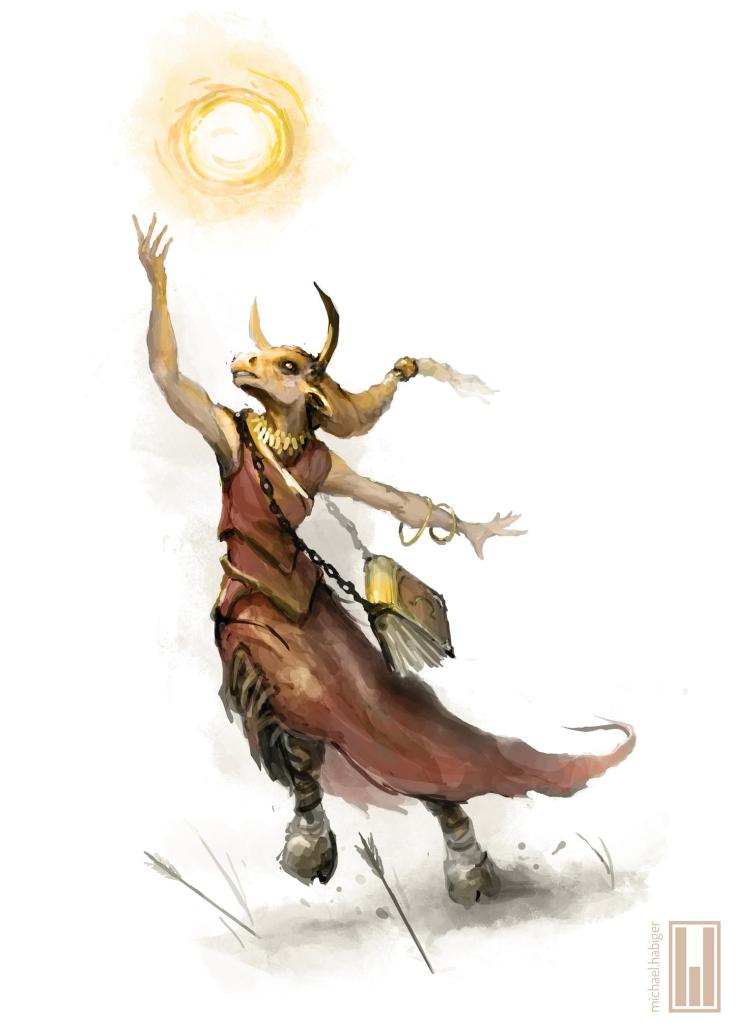
5th Level
Alarming Disappearance
Prerequisite: Kýrosian kin type; Proficient in Stealth
Your ability to move unseen is startling for one of your size and stature, causing mild panic among your enemies. When you successfully Hide when were previously observed, creatures you are hidden from must make a Wisdom saving throw (DC of your level + your proficiency bonus) or become Frightened for 1d4 turns. They may make the same saving throw again at the end of each of these turns if they previously failed. Once they pass the saving throw or the 1d4 turns have passed, they are then temporarily immune to Alarming Disappearance for 1 hour. Typically, creatures that have traveled with you for a significant time, such as your fellow party members, are immune to your Alarming Disappearance.
Beast of Burden
Prerequisite: Kýrosian kin type; Proficient in Stealth
Your broad frame can allow you to carry weights that immobilize smaller creatures. Increase your maximum and encumbered Bulk limits as if your Strength score was actually 4 higher than it actually is. (For example, if you had a Strength score of 13, this feat would allow you to treat it as 17 for the purposes of carrying limitations).
Additionally, you can rest normally while wearing medium armor without suffering any Exhaustion levels for doing so.
Labyrinthine Echoes
Prerequisite: Kýrosian kin type; Proficient in Stealth
You can make your voice reverberate off any surface. Once per day, you can cast Ventriloquism as an innate spell. Note, unless you have spell slots due to your class, you always cast this spell as a 1st-level spell until you reach level 3, then you cast it at 2nd-level. From level 5 you cast it at 3rd-level. From level 7 you cast it at 4th-level. From level 9 you cast it at 5th-level. From level 11 you cast it at 6th-level. From level 13 you cast it at 7th-level. From level 15 you cast it at 8th-level and from level 17 you cast it at 9th-level.
{{note
Ventriloquism
1st-level Illusion
Casting time: 1 action
Range: 30 feet
Components: V, M (a piece of parchment rolled up into a cone)
Duration: 1 minute
You can make your voice (or any sound that you can normally make vocally) seem to issue from someplace else. You can speak in any language you know. With respect to such voices and sounds, anyone who hears the sound can attempt an Intelligence (investigation) check against your spell save DC. On a success, they recognize it as illusory, but still hear it. You can dismiss it at will for the duration, no action required.
At Higher Levels. When you cast the spell using a spell slot of 2nd level or higher, the duration increases by 1 minute for every slot level above 1st. When you cast this spell using a spell slot of 3rd level or higher, the range increases by 5 ft for every two slot levels above 1st.
}}
Natural Orienteering
Prerequisite: Kýrosian kin type
There are few twisting paths that can disorient you. This feat gives you Double Proficiency in Survival and
New Feats: Passive Feats: Kýrosian Feats
\page
you always make Survival checks to sense direction, location or to track another Creature with advantage.
Puzzle Solver
Prerequisite: Kýrosian kin type
Frequency: once per hour
You have a natural affinity for problem-solving and the unknown. Whenever you attempt a History check to recall knowledge about a subject or creature, you gain a +1 bonus to your next skill check regarding that creature or subject (even if you didn’t succeed at the check). This bonus increases to +2 if you are already Proficient in History.
Stretching Reach
Prerequisite: Kýrosian kin type
You can use an Action to leverage your size and muscle to extend your reach and attack more distant foes. While in this stance, when you wield a melee weapon that requires two hands and doesn’t have reach, the weapon gains a reach of 10 feet.
At 7th level, you can use a Bonus Action instead of an Action to take the stance.
At 10th level, you can use a Free Action to take the stance instead of a Bonus Action.
9th level
Friendly Fling
Prerequisite: Kýrosian kin type
Requirements: You are adjacent to an ally.
You can scoop up your friends with your horns to hurl them across the battlefield. Pick up an adjacent willing ally who is smaller than you and toss them to an unoccupied space you can see within 20 feet. Since you are using your horns, you don’t need to have any hands free to do this.
Your ally’s movement doesn’t trigger reactions. Your ally ends this movement on their feet and doesn’t take damage from the fall but does take 1d6 piercing damage from your horns.
If your ally ends this movement within melee reach of at least one enemy, they can make a melee Strike against an enemy within their reach as a Reaction.
Goring Charge
Prerequisite: Kýrosian kin type
Driven by the momentum of your thundering steps and powerful mass, your horns can pierce your foes in a grievous manner.
Whenever you move at least 20 feet from your starting position and make a successful attack with your horns, the enemy also suffers as an additional persistent 1d6 bleed damage unless they take an Action to stop the blood flow with a successful Medicine check.
\column
Siphon Torment
Prerequisite: Kýrosian kin type
Your progenitors suffered greatly at the hands of a curse, a fate you willingly take upon yourself rather than let fall upon others. Once per day, you can cast Claim Curse (see below) as an innate spell. When you do, the target creature gains temporary Hit Points equal to your level. This spell does not count towards your spells known nor does it use any spell slots. You can cast this spell even if you normally otherwise don’t have access to spellcasting.
{{note
Claim Curse
3rd-level Necromancy
Casting Time: :: 1 action
Range: :: Touch; targets 1 creature affected by a curse
Components: :: V, S
Duration: :: 5 minutes
By burning threads of fate around a target and then retying them to yourself instead, you temporarily draw their curse to you and offer them brief succor from the worst of its effects. Choose a curse affecting the target that you don’t already have. For 5 minutes, you are affected by the curse (at the same stage as the target, if applicable), and the target isn’t. When the duration ends, the curse’s effects return to the target as normal.
}}
Stone Passage
Prerequisite: Kýrosian kin type
Frequency: once per hour
Calling upon your knowledge of stonework and inherent magic, you momentarily make a section of stone insubstantial, allowing you to pass through. Move up to your Walking Speed. You can move through stone or rock objects, such as walls, as if they were unoccupied spaces. If you end your movement inside a square that you normally would not be able to pass through, you are thrown back to the last unoccupied square you moved into. If this happens you suffer 4d6 force damage and are Stunned for 1d4 rounds.
13th Level
Positive Charm
Prerequisite: Kýrosian kin type
Frequency: once per day
Trigger: You attempt a skill check that would be subject to disadvantage.
You can harness the spiritual connection in your blood, allowing you to shift the negative threads of fate. You negate the misfortune effect of disadvantage and instead gain a +2 bonus to the triggering check.
New Feats: Passive Feats: Kýrosian Feats
\page
Shift the Little Ones
Prerequisite: Kýrosian kin type; Proficicency in Athletics; the Friendly Nudge feat
With your large size, you need to be careful around your smaller friends. You have learned to move in such a way that it gives others the chance to make room for you. Walk up to your Walking Speed (or Run up to double your Walking Speed). If you end your movement in a position where one or more of your spaces are occupied by an ally, each of those allies can immediately move 5 feet as a free action so that they are no longer occupying the same space as you (or the squares you move through during your movement). If this isn’t possible, you must end your movement so that you aren’t sharing a space with an ally, as normal.
Threatening Pursuit
Prerequisite: Kýrosian kin type; Proficient in Intimidation and Stealth
Requirements: You are not observed by any enemies within 60 feet.
You emit a terrifying roar, growl and snort, stamping your hooves for all to hear so that they know that you hunt them. Attempt a contested Charisma (Intimidation) check to demoralize all enemies within 30 feet, and you do not take a penalty for not sharing a language. If the targets are in a maze or similarly difficult-to-navigate location such as a dungeon or underground cave network, you gain a +2 bonus to this check, and the range increases to 60 feet. Demoralised targets make their next attack against you at disadvantage. Once they have made this attack, they are no longer demoralised. Targets who were demoralised and who no longer are demoralised are temporarily immune to your Threatening Pursuit feat affects for 1 hour.
17th Level
Begin Stampede
Prerequisite: Kýrosian kin type
The sight of you charging forward into battle emboldens your allies to follow. You move up to twice your Walking Speed and make a horns melee attack. If your horns attack hits and damages an enemy, each ally within 60 feet who saw you hit can use a Reaction to move up to twice their Walking Speed, but each must end their movement closer to you than where they started. Each such ally that moves in this manner gains a +1 bonus to their first melee attack on their next turn.
Into the Labyrinth
Prerequisite: Kýrosian kin type
Calling on your connection to your ancestors or to great Kýrosians of myth, you magically shunt an enemy into a complex maze full of puzzles of your own devising. Once per day, you can cast Maze as an 8th-rank innate spell. This spell does not count towards your spells known nor does it use any spell slots. You can cast this spell even if you normally otherwise don’t have access to spellcasting.
New Feats: Passive Feats: Kýrosian Feats
\page
Lin Feats
SHELL SHIELD
FEAT 1
TORTLE
You have learned to use your shell to great advantage during combat, interposing it between you and incoming attacks. You gain a +2 circumstance bonus to AC until the start of your next turn. While your shell is raised, you can use the Take Cover action to increase the circumstance bonus to AC to +4. This lasts until the shell is no longer raised.
Armor Traits
Most Tortle shells have the following trait:
Rigid: This armor does not take Dexterity into account when determining AC, though Clumsy still reduces AC as normal.
SHELL STORAGE
FEAT 1
TORTLE
Your roomy shell is quite convenient for storing a few small items. You can store up to four items of light Bulk or less in your shell. None of these items can have a dimension longer than 1 foot. Placing an item in your shell or retrieving one is an Interact action.
TORTLE LORE
FEAT 1
TORTLE
Your upbringing amongst the tortle peoples has given you a deep connection to the world around you, and taught you great compassion for others. You gain the trained proficiency rank in Nature and Diplomacy. If you would automatically become trained in one of those skills (from your background or class, for example), you instead become trained in a skill of your choice. You also become trained in Tortle Lore.
TORTLE WEAPON FAMILIARITY
FEAT 1
TORTLE
Some tortles are known for their martial prowess. You gain access to uncommon weapons that have the monk trait and become trained in simple and martial monk weapons. For the purpose of determining your proficiency, martial monk weapons are simple weapons and advanced monk weapons are martial weapons.
TURTLE FAMILIAR
FEAT 1
TORTLE
You have a pet turtle that has become magically bonded to you. You gain a familiar using the normal familiar rules (CRB pg. 217), and this familiar must be a turtle. It still gets the benefits of familiar abilities, but its base form remains a turtle.
5th Level
SHELL BLOCK
5TH LEVEL
TORTLE
Requirements Shell Shield
You have learned to absorb hits with your shell to protect your more vulnerable skin. Your shell has hardness 5, Hit Points 40, and Broken Threshold 20. If your shell is completely destroyed, you suffer from a -2 circumstance penalty to AC for 1 week as your shell slowly regrows. If the shell is not destroyed, it recovers its Hit Points at the beginning of each day, and is repairable via crafting as usual.
SHELL SHOCK
5TH LEVEL
TORTLEINCAPACITATE
You have learned to use your shell not only for defense, but offense as well. You smash your shell heavily into a target within reach. The target must succeed on a Fortitude save against your Class or Spell DC or be Stunned 1 for 1 round.
THICK SKIN
FEAT 5
TORTLE
Your skin is thick and leathery. Your DC on flat checks to end persistent bleed damage is reduced from 15 to 10, or from 10 to 5 after receiving especially appropriate assistance.
TORTLE WEAPON DISCIPLINE
5TH LEVEL
TORTLE
Your monastic training has made you particularly deadly with your ancestral weapons. Whenever you critically hit using a monk weapon, you apply the weapon’s critical specialization effect.
9th Level
RAPID SPIN
FEAT 9
TORTLE
Requirements Shell Shield, you are withdrawn into your shell after using the Take Cover action.
You spin rapidly while remaining in your shell. All non-magical hazardous terrain and difficult terrain within 5 feet of you are dispersed. You may make attempt to counteract a single source of magical hazardous or difficult terrain within 5 feet of you. Your counteract level is equal to half your level (rounded up), and your counteract check modifier is equal to your class or spell DC – 10.
REPTILIAN RESILIENCE
FEAT 9
TORTLE
Your hardiness lets you withstand more punishment than most before going down. Increase your maximum Hit Points by your level. When you have the dying condition, the DC of your recovery checks is equal to 9 + your dying value (instead of 10 + your dying value).
If you also have the Toughness feat, the Hit Points gained from it and this feat are cumulative, and the DC of your recovery checks is equal to 6 + your dying value.
TAKE SHELLTER!
FEAT 9
TORTLE
Trigger An enemy hits you with a melee Strike.
Requirements Shell Block
You have grown accustomed to interposing your shell between your vulnerable bits and the attacks of your enemies. You immediately use the Shell Shield action and gain your shell’s bonus to AC. The circumstance bonus from your shell applies to your AC when you’re determining the outcome of the triggering attack.
Special Your shell’s durability increases. It has Hardness 8, Hit Points 64, and Broken Threshold 32.
13th Level
SHELL SALVATION
FEAT 13
TORTLE
Requirements Shell Block, Take Shellter!
You can save your shell from total destruction, even after a devastating attack. If your shell would be destroyed due to damage taken during your Shell Block, the shell remains intact at 1 Hit Point instead. It is weakened until you take the time to repair it, preventing you from using Shield Salvation to save the same shield until your next daily preparations.
Special Your shell’s durability increases. It has Hardness 12, Hit Points 96, and Broken Threshold 48.
TORTLE WEAPON EXPERTISE
FEAT 13
TORTLE
Your monastic training blends with your class training. Whenever you gain a class feature that grants you expert or greater proficiency in certain weapons, you also gain that proficiency in all monk weapons in which you are trained.
TORTOISE AND THE HARE
FEAT 13
TORTLE
For generations, people have told fables of the placid determination of the tortoise winning over the erratic speed of the hare. You have learned to turn this around, taking your enemies by surprise. You can cast Tortoise and the Hare once per day as a primal innate spell. Rabbits and rabbitfolk enemies take a result one degree worse than what they rolled.
17th Level
HALFSHELL HERO
FEAT 17
TORTLE
Requirements Shell Block, Shell Salvation
You can bring your shell into place with hardly a thought. At the start of each of your turns, you gain an additional reaction that you can use only to Shell Block.
Special Your shell’s durability increases. It has Hardness 15, Hit Points 120, and Broken Threshold 60.
FORM OF THE ANCIENTS
FEAT 17
TORTLEPRIMALTRANSMUTATION
You go into hibernation for 24 hours as your ancient blood awakens, undergoing a one-time metamorphosis. You permanently gain the effects of enlarge, your maximum Hit Points increase by your level, and your expected lifespan doubles. The ritual transforms most of your gear to the appropriate size for your new body (though powerful items like artifacts or items strongly tied to their original size may not transform, at the GM’s discretion).
\page
Pantareï Feats
1st Level
Art Analyst
Prerequisites: Intelligence and Wisdom 15 or higher
To defeat an enemy, you must know them. Not simply their battle tactics, but their history, philosophy, art.
You gain proficiency with the History and Insight skills. If you are already proficient in either skill, you add double your proficiency bonus to checks you make with it.
If you spend 1 hour studying the cultural artwork of a certain society, you gain advantage on any History or Insight checks regarding its background or members’ behaviors for 1 day.
If you spend 1 hour studying the artwork of an individual artist, you gain advantage on all attacks against them and they gain disadvantage on all attacks against you for 1 day.
Artistic Soul
You have learned to draw upon the wellspring of creation that lies deep within us all, being able to manifest and project it into the world for all the see.
You gain proficiency with Painter’s supplies. You add double your proficiency bonus to all checks made with Painter’s supplies.
You learn the prestidigitation cantrip, which you can cast at will, and the silent image spell, which you can cast once, being able to do so again after finishing a long rest. Charisma is your spellcasting ability for these spells.
Pantareï Lore
Feat 1
Centaur
Source Howl of the Wild pg. 31 2.1
You’ve learned how to nurture your environment and to care for your people. You gain the trained proficiency rank in Medicine and Nature. If you would automatically become trained in one of those skills (from your background or class, for example), you instead become trained in a skill of your choice.
Pantareï Weapon Familiarity
Feat 1
Centaur
Source Howl of the Wild pg. 31 2.1
You’ve trained in the weapons favored by your people, becoming a skilled archer and jouster. You have familiarity with the lance, longbow, longspear, shortbow, and spear—for the purposes of proficiency, you treat any of these that are martial weapons as simple weapons.
At 5th level, whenever you get a critical hit with one of these weapons, you get its critical specialization effect.
Practiced Brawn
Feat 1
Centaur
Source Howl of the Wild pg. 31 2.1
You’re accustomed to long days filled with hard physical labor. You gain a +1 circumstance bonus to Athletics checks to Force Open and Shove, and to Fortitude saving throws to resist becoming fatigued. When you roll a success on an Athletics check to Shove, you get a critical success instead.
Skilled Herbalist
Feat 1
Centaur
Source Howl of the Wild pg. 31 2.1
You’ve been taught how to craft healing remedies with a variety of herbs and plants. You gain the Alchemical Crafting feat, except you must select the following items to add to your formula book: lesser antidote, lesser antiplague, and minor elixir of life, as well as a fourth 1st-level common alchemical formula of your choice. You can use Nature to Craft an alchemical item that has the healing trait, rather than Crafting.
Starving Artist
Prerequisites: Charisma 15 or higher, Constitution 9 or less
People in the art world know your name and admire your pieces, but that’s never translated to steady work or even high-paying commissions.
You gain proficiency in the Performance skill. If you are already proficient in the skill, you add double your proficiency bonus to checks you make with it.
You gain proficiency with 3 of the following: Calligrapher’s Supplies, Glassblower’s Tools, Mason’s Tools, Painter’s Supplies, Potter’s Tools, Weaver’s Tools, Woodcarver’s Tools, or 1 Musical Instrument.
You can survive on a ½ pound of food per day, but doing so gives you disadvantage on all Charisma saving throws and skill checks except Performance.
Any artistic work you produce will have a sale price of 1sp at most.
Steelpaw
Feat 1
Centaur
Source Howl of the Wild pg. 31 2.1
Prerequisites Ironhoof Centaur
You’ve girded your paws in steel or other reinforcements aimed to inflict maximum damage. Your paw attack deals 1d8 bludgeoning damage instead of 1d6.
5th Level
Distant Archer
Feat 5
Centaur
Source Howl of the Wild pg. 32 2.1
You’ve trained to harry your foes from great distances, using your swiftness to maintain distance and keen eyesight to stay on target. You reduce the penalty for attacking beyond your first range increment by 1, to a minimum of 0, when using weapons in the bow weapon group.
Proud Mentor
Feat 5
Centaur
Source Howl of the Wild pg. 32 2.1
You enjoy mentoring others and take pride in your students’ accomplishments. If you get a critical failure on an attempt to Aid, you get a failure instead. Whenever you successfully Aid an ally who critically succeeds on the check you Aided them on, you feel a rush of pride, gaining temporary Hit Points equal to your level, which last for 1 minute.
Speaker in Training
Feat 5
Centaur
Source Howl of the Wild pg. 32 2.1
Prerequisites Budding Speaker Centaur, or the ability to cast a divine or primal spell
You’ve begun your training as a Speaker. Select divine or primal. If you selected divine, you’re a Faithspeaker. If you selected primal, you’re a Greenspeaker. If you’ve already made this decision (such as due to being a budding speaker) you must select the same Speaker you previously chose. This choice can’t be changed. If you’re a Faithspeaker, you can cast bless once per day as a divine innate spell; if you’re a Greenspeaker, you can cast fleet step once per day as a primal innate spell.
9th Level
Fierce Competitor
[one-action]
Feat 9
Centaur Mental
Source Howl of the Wild pg. 32 2.1
Frequency once per day
You challenge a single ally to a physical competition. This competition must involve accomplishing a specific goal for a specific use of the Acrobatics or Athletics skill, such as Climbing to the top of a wall, Tripping a specific foe, or Long Jumping across a chasm. You and your selected ally gain a +2 circumstance bonus to the associated skill check for 1 minute or until one of you wins the challenge, whichever is first. If you win this competition, you gain a +2 status bonus to Intimidation checks for 1 hour.
\page
Sa’ren Feats
\page
Streng Feats
\page
Sujani Feats
Tekuâni Feats
1st Level
Cat Nap
Prerequisite: Tekuâni kin type
Frequency: once per hour
You can regain your energy quickly with a brief nap. You sleep for 10 minutes, after which you gain temporary Hit Points equal to your level that last for 1 hour.
Cat’s Luck
[free-action]
Feat 1
Catfolk Fortune
Source Player Core 2 pg. 10 1.1
Frequency once per day
Trigger You fail a Reflex saving throw
You instinctively twist away from danger. Reroll the triggering saving throw and use the better result.
Catfolk Dance
[one-action]
Feat 1
Catfolk
Source Player Core 2 pg. 10 1.1
You have a habit of always being in the way when other creatures attempt to move. Attempt an Acrobatics check against an adjacent creature’s Reflex DC.
Critical Success The target creature gains a –2 circumstance penalty to Reflex saves and is off-guard until the start of your next turn.
Success The target creature gains a –2 circumstance penalty to Reflex saves until the start of your next turn.
Catfolk Lore
Feat 1
Catfolk
Source Player Core 2 pg. 10 1.1
Growing up among catfolk has taught you the traditional values of freedom, stewardship, and quick reactions to trouble. You gain the trained proficiency rank in Acrobatics and Survival. If you would automatically become trained in one of those skills (from your background or class, for example), you instead become trained in a skill of your choice.
You also gain the Additional Lore general feat for Catfolk Lore.
Catfolk Weapon Familiarity
Feat 1
Catfolk
Source Player Core 2 pg. 10 1.1
You gain access to all uncommon weapons with the catfolk trait. You have familiarity with weapons with the catfolk trait plus the kama, kukri, scimitar, and sickle—for the purpose of proficiency, you treat any of these that are martial weapons as simple weapons and any that are advanced weapons as martial weapons.
At 5th level, whenever you get a critical hit with one of these weapons, you get its critical specialization effect.
Nine Lives
You become more accustomed to the violence of the adventurer’s life – and cats are famous for having nine lives, right?
Increase your Constitution by 1, to a maximum of 20.
Feline Tenacity: When you drop to 0 HP but are not killed outright, make a DC 13 Constitution saving throw. If you succeed, you drop to 1 HP instead. Alternatively, if you fail this roll, you can choose to succeed. However, this is not without consequence. You can only ever choose to succeed in the face of Feline Tenacity failure a maximum of 8 times. After that, you lose this feat (but can replace it with a different one. This may decrease your Constitution score, but is the cost of living so many lives in one.
Regardless of whether you succeed by luck or by choice, once you succeed on this saving throw you must finish a long rest before you can use this feature again.
Saber Teeth
Feat 1
Catfolk
Source Player Core 2 pg. 10 1.1
You have long fangs, natural or augmented. You gain a jaws unarmed attack that deals 1d6 piercing damage.
Well-Met Traveler
Feat 1
Catfolk
Source Player Core 2 pg. 10 1.1
You naturally adopt a pleasant and affable demeanor when meeting others. You are trained in Diplomacy. If you would automatically become trained in Diplomacy (from your background or class, for example), you instead become trained in a skill of your choice.
In addition, you gain the Hobnobber skill feat.
Winter Cat Senses
Feat 1
Legacy Content
Catfolk
Source Ancestry Guide pg. 18 3.0
Prerequisites Winter Catfolk
Your eyes are keen and accustomed to winter conditions. You ignore concealment caused by ice and snow.
5th Level
Climbing Claws
Feat 5
Catfolk
Source Player Core 2 pg. 10 1.1
You can extend your claws to aid you in climbing. You gain a climb Speed of 10 feet.
Expanded Luck
Feat 5
Legacy Content
Catfolk
Source Advanced Player’s Guide pg. 10 2.0
Prerequisites Cat’s Luck
You are luckier even than most catfolk. You can trigger Cat’s Luck when you fail or critically fail a Fortitude or Will saving throw in addition to Reflex saving throws. You still can use Cat’s Luck only once per day.
Focused Cat Nap
Feat 5
Legacy Content
Catfolk
Source Ancestry Guide pg. 18 3.0
Prerequisites Cat Nap; focus pool
When you Cat Nap, you can also Refocus as you dream of a relevant activity.
Graceful Guidance
Feat 5
Catfolk
Source Player Core 2 pg. 10 1.1
You can demonstrate how to quickly twist out of the way of dangerous effects. You can use the Aid reaction to grant a bonus to an ally’s Reflex save. As usual for Aid, you need to prepare by using an action on your turn to encourage the ally.
Light Paws
[two-actions]
Feat 5
Catfolk
Source Player Core 2 pg. 10 1.1
You can balance on your toes to step carefully over obstructions. You Stride and then Step, or Step and then Stride, ignoring difficult terrain during this movement.
Lucky Break
Feat 5
Catfolk
Source Player Core 2 pg. 10 1.1
Prerequisites Cat’s Luck
You are luckier even than most catfolk. You can trigger Cat’s Luck when you fail or critically fail a Fortitude saving throw, Will saving throw, Acrobatics check, or Athletics check in addition to Reflex saving throws. You still can use Cat’s Luck only once per day.
Pride Hunter
Feat 5
Catfolk
Source Player Core 2 pg. 10 1.1
You avoid the attention of creatures focused on your allies. You can use lesser cover from your allies to Hide.
Springing Leaper
Feat 5
Catfolk
Source Player Core 2 pg. 10 1.1
Prerequisites expert in Athletics
Your powerful legs allow you to make sudden and dramatic leaps. You can Leap as a 2-action activity to double the distance you can Leap vertically, or Leap as a 3-action activity to triple the distance you can Leap vertically. You don’t automatically fail Long Jumps for jumping in a different direction than your Stride.
Well-Groomed
Feat 5
Catfolk
Source Player Core 2 pg. 10 1.1
You are fastidious about keeping clean. You gain a +2 circumstance bonus to saving throws against diseases. If you roll a success on a saving throw against a disease, you get a critical success instead. If you have a different ability that would improve the save in this way (such as the battle hardened fighter class feature), if you roll a critical failure on the save you get a failure instead.
9th Level
Aggravating Scratch
Feat 9
Catfolk Disease
Source Player Core 2 pg. 11 1.1
Prerequisites claw unarmed attack
Your claws carry an irritant that is harmless to you but can be damaging to others. Your claw Strikes deal an additional 1d4 persistent poison damage on a critical hit.
Evade Doom
Feat 9
Catfolk
Source Player Core 2 pg. 11 1.1
You can elude supernatural disaster. When you would gain the doomed condition, you can attempt a DC 17 flat check. On a success, you don’t gain the doomed condition.
Luck of the Clowder
Feat 9
Catfolk
Source Player Core 2 pg. 11 1.1
Prerequisites Cat’s Luck
When you use Cat’s Luck to reroll, any creatures you choose within 10 feet who also just failed against the same effect (such as a single spell) can also reroll their saving throws and use the better result.
No Evidence
Feat 9
Legacy Content
Catfolk
Source Ancestry Guide pg. 19 3.0
Prerequisites expert in Survival
You leave little sign when attempting to remain unseen. When you Avoid Notice, you also gain the benefits of Cover Tracks unless you choose not to.
Predator’s Growl
[reaction]
Feat 9
Catfolk
Source Player Core 2 pg. 11 1.1
Prerequisites expert in Intimidation
Trigger You successfully Seek a hidden or undetected creature.
You give a throaty growl to attempt to Demoralize a creature you just found. You don’t take the –4 penalty for not sharing a language with the creature.
Sense for Trouble
Feat 9
Legacy Content
Catfolk
Source Ancestry Guide pg. 19 3.0
Prerequisites Cat’s Luck
You can tell when something’s off. You can trigger Cat’s Luck after you roll initiative, in addition to its normal trigger, to reroll your Initiative and take the higher of the two results. This still counts against Cat’s Luck’s frequency, as normal.
Silent Step
[one-action]
Feat 9
Catfolk Flourish
Source Player Core 2 pg. 11 1.1
You Step, then Hide or Sneak. You still need to meet the requirements to Hide or Sneak, as normal.
Wary Skulker
Feat 9
Catfolk
Source Player Core 2 pg. 11 1.1
You can perform the Scout exploration activity at the same time as the Avoid Notice exploration activity.
13th Level
Black Cat Curse
[reaction]
Feat 13
Catfolk Misfortune Occult
Source Player Core 2 pg. 11 1.1
Frequency once per day
Trigger A creature within 30 feet you can see would succeed at a save.
You hiss a spiteful curse. The target rerolls the triggering saving throw and use the worse result.
Caterwaul
[reaction]
Feat 13
Auditory Catfolk Concentrate Emotion Mental
Source Player Core 2 pg. 11 1.1
Frequency once per day
Trigger An ally within 30 feet would be reduced to 0 HP but not immediately killed.
You give a daring yowl, calling your companion back from the brink of unconsciousness. Your ally isn’t knocked out and remains at 1 Hit Point. Their wounded condition still increases by 1 as though they had been dying and recovered.
Inspirit Hazard
[reaction]
Feat 13
Legacy Content
Catfolk Concentrate Occult Transmutation
Source Ancestry Guide pg. 19 3.0
Frequency once per day
Trigger You Disable a hazard.
Requirements The hazard isn’t broken.
You awaken a spirit of creation within the hazard. You learn the hazard’s effects. Once in the next 10 minutes, when you observe a creature take an action that would trigger one of the hazard’s reactions or free actions if you hadn’t Disabled it, you can use a reaction to rearm the hazard, causing the observed creature to trigger it immediately.
17th Level
Elude Trouble
[reaction]
Feat 17
Catfolk
Source Player Core 2 pg. 11 1.1
Trigger A creature missed you with a melee attack.
Stride up to your Speed. This movement doesn’t trigger reactions from the creature that missed you.
Reliable Luck
Feat 17
Catfolk
Source Player Core 2 pg. 11 1.1
Prerequisites Cat’s Luck
You survive danger with surprising regularity. You can use Cat’s Luck once per hour, rather than once per day.
Ten Lives
Feat 17
Catfolk
Source Player Core 2 pg. 11 1.1
Prerequisites Evade Doom
When your character would die, you can attempt a DC 17 flat check. On a success, you’re instead reduced to 0 HP and a dying value 1 less than what would normally kill you (typically dying 3). This doesn’t change the result for any other creature affected.
Var’en Feats
Zel’en Feats
Firearm Expert
Thanks to extensive practice with firearms, you gain the following benefits:
- You ignore the loading quality of firearms with which you are proficient.
- Being within 5 feet of a hostile creature doesn’t impose disadvantage on your ranged attack rolls.
- When you use the Attack action and attack with a one-handed weapon, you can use a bonus action to attack with a one-handed repeating gun you are holding.
Fortune-teller
When you gain this feat, your Inner Eye will awaken, and you will get the ability to see glimpses into possible futures. Your Wisdom score increases by 1.
You can cast augury once a day, without expending a slot but only as a ritual. You can use drained coffee cups, marble mugs, tea leaves, scattered bones, someone else’s hands, tarot cards, arrow heads, or any other cultural fortune-telling items as your material component. By casting it this way augury chooses a target, instead of an event that will take place 30-minutes in the future. The DM may provide some omens and crypted messages about the future of the target of this spell, e.g. love life, death, birth, opportunities, wealth, family, friends, politics, failures, treachery, and more. Usually these omens are highly obscure and rarely constitute a direct prophecy.
The Urban Hunter:
You gain the following benefits:
- Increase your Intelligence or Wisdom score by 1.
- You gain the Survival or Investigation skill. If you are already proficient in the skill, you double your proficiency bonus for that skill.
\page - When you take the search action or make a Survival check to analyze clues and tracks in
an urban area, you can learn the creature’s type.
Strong Breath:
Your breath is considered one of
the strong breaths that have healing properties
among society. You gain the following benefits:
- You can cast exorcize djinni or remove curse
once a day, without using a spell slot. You
can’t do so again until you finish a long rest. - You learn the purifying breath or guidance
cantrips.
Djinn’s Foul Touch:
You were once in contact
with a djinn. This event affected you in the following ways:
- You learn evil eye, knot the luck, or viscious
mockery cantrips. - You can cast nazar or bestow curse once a
day, without using a spell slot. You can’t do so
again until you finish a long rest.
Enhanced Regeneration
Prerequisite: Sa’ren kin
You’ve further developed your innate sa’reni limited regeneration feature, making you even more difficult to kill. You gain the following benefits:
- Increase your Constitution score by 1, to a maximum of 20.
- You gain additional Sa’reni Regeneration Hit Dice equal to your proficiency modifier. These special Sa’reni Regeneration Hit Dice are d6s and can be used to regain hit points over a short rest just like your normal hit dice. Additionally, you can spend these special Sa’reni Regeneration Hit Dice to regain health using your limited regeneration feature without spending a use of that feature.
Ezen of the Medina
Prerequisite: Ezen kin
Your siraati path requires you to spend part of the year in the city, so you are accustomed to the urban environment. You don’t need to make a saving throw to avoid madness when you are away from the desert for more than a month unless you stay under the same roof for more than seven nights. You also gain the following benefits:
- Increase your Charisma or Wisdom score by 1, to a
maximum of 20. - You can’t be surprised while you are in the streets of a
city or town. - You make Dexterity (Stealth) checks with advantage
when attempting to sneak or hide on the streets of a
city or town.
Truly Favored
Prerequisite: Jinnborn (speaker)
Your jinn patron takes great interest in your exploits. You
gain the following benefits: - Increase your Constitution or Wisdom score by 1, to
a maximum of 20. - When you use your Favor of the Jinn feature and the
result is a success, you gain temporary hit points equal
to twice your proficiency bonus. When the result is a
failure, your use of Favor of the Jinn isn’t expended.
Warrior of the Hidden World
Prerequisite: Jinnborn (shaper)
The elements are part of you. By channeling inward, you
can unleash the power of the Hidden World. You gain the
following benefits: - You learn one cantrip relevant to your sab siraat—
acid splash (earth), fire bolt (fire), ray of frost (water),
or shocking grasp (air). When you gain this feat,
you can choose Constitution or Charisma as your
spellcasting ability score for the spell. - The damage die for your Elemental Strike feature
increases to a d10. You regain expended uses of this
feature when you finish a short or long rest.
\page
New Spells
This chapter offers new spells for many of the classes in the Player’s Handbook. Your DM determines whether these spells are available to you at character creation, whether they are discovered in a treasure trove, or whether you stumble upon them in an ancient library or other storehouse of magical knowledge. Your DM might add only a few of these spells to your caster’s spell list. For example, if your druid is from a coastal region, the druid might have access only to the new water-themed spells.
Spell Lists
The following spell lists show which of the new spells are for a class. A spell’s school of magic is noted in parentheses after its name. If a spell can be cast as a ritual, the ritual tag also appears within the parentheses.
Spells with a ◊ symbol can be later in this text under the Spell Descriptions Section.
Bard Spells
Cantrips (0 Level)
Belay ◊ (enchantment)
Thunderclap (evocation)
1st Level
Earth tremor (evocation)
2nd Level
Detect djinn ◊ (divination, ritual)
Earworm ◊ (enchantment)
Pyrotechnics (transmutation)
Skywrite (transmutation, ritual)
Warding wind (evocation)
5th Level
Karya’s dream flow ◊ (divination)
Cleric Spells
Cantrips (0 Level)
Knot the luck ◊ (enchantment)
1nd Level
Faithful Guidance ◊ (enchantment)
2nd Level
Detect djinn ◊ (divination, ritual)
3rd Level
Discord / Harmony ◊ (enchantment)
Djinnstrike ◊ (enchantment)
Exorcise djinni ◊ (abjuration)
4th Level
Consecrate Brethren ◊ (divination)
Infernal whispers ◊ (divination)
Druid Spells
Cantrips (0 Level)
Create bonfire (conjuration)
Control flames (transmutation)
Frostbite (evocation)
Gust (transmutation)
Magic stone (transmutation)
Mold earth (transmutation)
Shape water (transmutation)
Thunderclap (evocation)
1st Level
Absorb elements (abjuration)
Beast bond (divination)
Ice knife (conjuration)
Earth tremor (evocation)
2nd Level
Dust devil (conjuration)
Earthbind (transmutation)
Skywrite (transmutation, ritual)
Warding wind (evocation)
3rd Level
Erupting earth (transmutation)
Flame arrows (transmutation)
Tidal wave (conjuration)
Wall of water (evocation)
4th Level
Elemental bane (transmutation)
Watery sphere (conjuration)
5th Level
Control winds (transmutation)
Maelstrom (evocation)
Transmute rock (transmutation)
6th Level
Bones of the earth (transmutation)
Investiture of flame (transmutation)
Investiture of ice (transmutation)
Investiture of stone (transmutation)
Investiture of wind (transmutation)
Primordial ward (abjuration)
7th Level
Whirlwind (evocation)
Mystic Spell List
Cantrips (0 Level)
Belay ◊ (enchantment)
Blade ward (abjuration)
Control flames (transmutation)
Earworm ◊ (enchantment)
Friends (enchantment)
Gust XGtE (transmutation)
Mage hand (conjuration)
Message (transmutation)
Mind sliver TCoE (enchantment)
Mold earth (transmutation)
Shape water (transmutation)
Sword burst TCoE (conjuration)
Thaumaturgy (transmutation)
True strike (divination)
\page
1st Level
animal friendship
arcane abnegation
bane
beast bond
catapult
cause fear
charm person
command
compelled duel
comprehend languages
contest will
dissonant whispers
heroism
sanctuary
shield
sleep
speak with animals
tasha’s hideous laughter
thunderwave
wrathful smite
2nd Level
animal messenger
beast sense
blindess/deafness
blur
calm emotions
crown of madness
darkvision
detect thoughts
discord/harmony
drain potential
earthbind
enthrall
find traps
hold person
invisibility
knock
levitate
manifest memory
mind spike
misty step
phantasmal force
see invisibility
shadow blade
suggestion
tasha’s mind whip
warding wind
zone of truth
3rd Level
beacon of hope
blink
catnap
clairvoyance
counterspell
enemies abound
fear
feign death
fly
fugue bolt
intellect fortress
life transference
major image
psychic sound
rile emotions
sending
slow
thunder step
tongues
water walk
4th Level
charm monster
compulsion
confusion
control water
dimension door
dominate beast
freedom of movement
greater invisibility
locate creature
mind bridge
otiluke’s resilient sphere
phantasmal killer
rautholim’s psychic lance
staggering smite
stoneskin
summon figment
wall of doubt
5th Level
animate objects
awaken
bigby’s hand
contact other plane
control winds
deny wounds
dominate person
dream
famine
\page
far step
geas
mislead
modifiy memory
psychedelia
reincarnate
rary’s telepathic bond
skill empowerment
steel wind strike
synaptic static
telekinesis
wall of force
6th Level
blade barrier
bones of the earth
eyebite
find the path
fizban’s platinum shield
flesh to stone
globe of invulnerability
mass suggestion
mental prison
otto’s irresistible dance
scatter
tenser’s transformation
true seeing
7th Level
awestruck image
dream of the blue veil
etherealness
forcecage
mordenkainen’s sword
plane shift
power word pain
project image
regenerate
reverse gravity
sequester
8th Level
antipathy/sympathy
dominate monster
feeblemind
illusory dragon
maddening darkness
maze
mind blank
power word stun
telepathy
vainglory
9th Level
astral projection
blade of disaster
foresight
invulnerability
power word heal
psychic scream
time stop
weird
yin/yang ◊ (transmutation)
Paladin Spells
1st Level
Faithful Guidance ◊ (enchantment)
3rd Level
Exorcise djinni ◊ (abjuration)
4th Level
Consecrate Brethren ◊ (divination)
Ranger Spells
1st Level
Absorb elements (abjuration)
Beast bond (divination)
3rd Level
Flame arrows (transmutation)
Sorcerer Spells
Cantrips (0 Level)
Belay ◊ (enchantment)
Create bonfire (conjuration)
Control flames (transmutation)
Frostbite (evocation)
Gust (transmutation)
Knot the luck ◊ (enchantment)
Mold earth (transmutation)
Shape water (transmutation)
Thunderclap (evocation)
1st Level
Catapult (transmutation)
Ice knife (conjuration)
Earth tremor (evocation)
2nd Level
Aganazzar’s scorcher (evocation)
Detect djinn ◊ (divination, ritual)
Dust devil (conjuration)

\page
Earthbind (transmutation)
Maximilian’s earthen grasp (transmutation)
Pyrotechnics (transmutation)
Snilloc’s snowball swarm (evocation)
Warding wind (evocation)
3rd Level
Djinnstrike ◊ (enchantment)
Erupting earth (transmutation)
Flame arrows (transmutation)
Melf’s minute meteors (evocation)
Wall of water (evocation)
4th Level
Gaze of the unholy ◊ (necromancy)
Storm sphere (evocation)
Vitriolic sphere (evocation)
Watery sphere (conjuration)
5th Level
Control winds (transmutation)
Immolation (evocation)
6th Level
Investiture of flame (transmutation)
Investiture of ice (transmutation)
Investiture of stone (transmutation)
Investiture of wind (transmutation)
7th Level
Karya’s mind wipe ◊ (enchantment)
8th Level
Abi-Dalzim’s horrid wilting (necromancy)
Warlock Spells
Cantrips (0 Level)
Belay ◊ (enchantment)
Create bonfire (conjuration)
Frostbite (evocation)
Knot the luck ◊ (enchantment)
Magic stone (transmutation)
Thunderclap (evocation)
2nd Level
Detect djinn ◊ (divination, ritual)
Earthbind (transmutation)
3rd Level
Djinnstrike ◊ (enchantment)
Exorcise djinni ◊ (abjuration)
4th Level
Elemental bane (transmutation)
Gaze of the unholy ◊ (necromancy)
Infernal whispers ◊ (divination)
5th Level
Karya’s dream flow ◊ (divination)
6th Level
Investiture of flame (transmutation)
Investiture of ice (transmutation)
Investiture of stone (transmutation)
Investiture of wind (transmutation)
7th Level
Karya’s mind wipe ◊ (enchantment)
Wizard Spells
Cantrips (0 Level)
Belay ◊ (enchantment)
Create bonfire (conjuration)
Control flames (transmutation)
Frostbite (evocation)
Gust (transmutation)
Knot the luck ◊ (enchantment)
Mold earth (transmutation)
Shape water (transmutation)
Thunderclap (evocation)
1st Level
Absorb elements (abjuration)
Catapult (transmutation)
Ice knife (conjuration)
Earth tremor (evocation)
2nd Level
Aganazzar’s scorcher (evocation)
Detect djinn ◊ (divination, ritual)
Dust devil (conjuration)
Earthbind (transmutation)
Maximilian’s earthen grasp (transmutation)
Pyrotechnics (transmutation)
Skywrite (transmutation, ritual)
Snilloc’s snowball swarm (evocation)
3rd Level
Djinnstrike ◊ (enchantment)
Erupting earth (transmutation)
Flame arrows (transmutation)
Melf’s minute meteors (evocation)
Tidal wave (conjuration)
Wall of sand (evocation)
Wall of water (evocation)
4th Level
Elemental bane (transmutation)
Gaze of the unholy ◊ (necromancy)
Infernal whispers ◊ (divination)
Storm sphere (evocation)
Vitriolic sphere (evocation)
Watery sphere (conjuration)
5th Level
Control winds (transmutation)
Immolation (evocation)
Karya’s dream flow ◊ (divination)
Transmute rock (transmutation)
6th Level
Investiture of flame (transmutation)
Investiture of ice (transmutation)
Investiture of stone (transmutation)
Investiture of wind (transmutation)
7th Level
Karya’s mind wipe ◊ (enchantment)
Whirlwind (evocation)
8th Level
Abi-Dalzim’s horrid wilting (necromancy)
\page

Spell Descriptions
The spells are presented in alphabetical order.
Abi-Dalzim’s Horrid Wilting
8th-level necromancy
Casting Time: 1 action
Range: 150 feet
Components: V, S, M (a bit of sponge)
Duration: Instantaneous
You draw the moisture from every creature in a 30-foot cube centered on a point you choose within range. Each creature in that area must make a Constitution saving throw. Constructs and undead aren’t affected, and plants and water elementals make this saving throw with disadvantage. A creature takes 10d8 necrotic damage on a failed save, or half as much damage on a successful one.
Absorb Elements
1st-level abjuration
Casting Time: 1 reaction, which you take when you take acid, cold, fire, lightning, or thunder damage
Range: Self
Components: S
Duration: 1 round
The spell captures some of the incoming energy, lessening
its effect on you and storing it for your next melee attack. You have resistance to the triggering damage type until the start of your next turn. Also, the first time you hit with a melee attack on your next turn, the target takes an extra 1d6 damage of the triggering
type, and the spell ends.
At Higher Levels. When you cast this spell using a spell slot of 2nd level or higher, the extra damage increases by 1d6 for each slot level above 1st.
Aganazzar’s Scorcher
2nd-level evocation
Casting Time: 1 action
Range: 30 feet
Components: V, S, M (a red dragon’s scale)
Duration: Instantaneous
A line of roaring flame 30 feet long and 5 feet wide emanates from you in a direction you choose. Each creature in the line must make a Dexterity saving throw.
A creature takes 3d8 fire damage on a failed save, or half as much damage on a successful one.
At Higher Levels. When you cast this spell using a spell slot of 3rd level or higher, the damage increases by 1d8 for each slot level above 2nd.
Armour of Ice
2nd-level abjuration
Casting Time: 1 action
Range: Self
Components: V, S
Duration: 10 minutes
Your body becomes encased in a thick layer of ice, with fractal protrusions that extend outwards and end in sharp spikes. Until the spell ends, your AC can’t be less than 15, regardless of what kind of armour you are wearing, and your speed is reduced by 10 feet. Whenever a creature within 5 feet of you hits you with a melee attack, it takes 1d4 piercing and 1d4 cold damage.
You can end this spell early as a bonus action.
Beast Bond
1st-level divination
Casting Time: 1 action
Range: Touch
Components: V, S, M (a bit of fur wrapped in a cloth)
Duration: Concentration, up to 10 minutes
You establish a telepathic link with one beast you touch that is friendly to you or charmed by you. The spell fails if the beast’s Intelligence is 4 or higher. Until the spell ends, the link is active while you and the beast are within line of sight of each other. Through the link, the beast can understand your telepathic messages to it, and it can telepathically communicate simple emotions and concepts back to you. While the link is active, the beast gains advantage on attack rolls against any creature within 5 feet of you that you can see.
Belay
Enchantment cantrip
Casting time: 1 reaction, which you take when a creature receives a non-magical instruction or order that you can hear.
Range: 30 feet
Components: V
Duration: Instantaneous
You cause a creature to reevaluate its orders. If the target can hear you (though it need not understand you), it must succeed on a Wisdom saving throw or believe that the last instruction it received has been withdrawn by the speaker.
\page
Bolide
3rd-level transmutation
Casting Time: 1 action
Range: 240 feet
Components: S,M (1 cubic foot of earth, which the spell consumes)
Duration: Instantaneous
A 4-inch diameter sphere of hard-packed earth forms in front of you, launching toward a target you can see. The sphere flies in a straight line toward the target, building speed as it soars, stopping early if it impacts against a solid surface. If the sphere strikes a creature, that creature must make a Dexterity saving throw. On a failed save, the bolide strikes the target and stops moving. When the bolide strikes something, the sphere and whatever it strikes each take 1d6 bludgeoning damage per 20 feet the bolide traveled.
If the bolide travels more than 120 feet, the target has advantage on the saving throw. Unless the range is increased, the bolide crumbles after traveling 240 feet.
At Higher Levels. When you cast this spell using a spell slot of 4th level or higher, the range increases by 20 for each slot level above 4th.
Bones of the Earth
6th-level transmutation
Casting Time: 1 action
Range: 120 feet
Components: V, S
Duration: Instantaneous
You cause up to six pillars of stone to burst from places on the ground that you can see within range. Each pillar is a cylinder that has a diameter of 5 feet and a height of up to 30 feet. The ground where a pillar appears must be wide enough for its diameter, and you can target ground under a creature if that creature is Medium or smaller. Each pillar has AC 5 and 30 hit points. When reduced to 0 hit points, a pillar crumbles into rubble, which creates an area of difficult terrain with a 10-foot radius. The rubble lasts until cleared.
If a pillar is created under a creature, that creature must succeed on a Dexterity saving throw or be lifted by the pillar. A creature can choose to fail the save.
If a pillar is prevented from reaching its full height because of a ceiling or other obstacle, a creature on the pillar takes 6d6 bludgeoning damage and is
restrained, pinched between the pillar and the obstacle. The restrained creature can use an action to make a Strength or Dexterity check (the creature’s choice)
against the spell’s saving throw DC. On a success, the creature is no longer restrained and must either move off the pillar or fall off it.
At Higher Levels. When you cast this spell using a spell slot of 7th level or higher, you can create two additional pillars for each slot level above 6th.
Catapult
1st-level transmutation
Casting Time: 1 action
Range: 150 feet
Components: S
Duration: Instantaneous
Choose one object weighing 1 to 5 pounds within range
that isn’t being worn or carried. The object flies in a
straight line up to 90 feet in a direction you choose
before falling to the ground, stopping early if it impacts
against a solid surface. If the object would strike a
creature, that creature must make a Dexterity saving
throw. On a failed save, the object strikes the target and
stops moving. In either case, both the object and the
creature or solid surface take 3d8 bludgeoning damage.
At Higher Levels. When you cast this spell using a
spell slot of 2nd level or higher, the maximum weight of
objects that you can target with this spell increases by 5
pounds, and the damage increases by 1d8, for each slot
level above 1st.
Catnap
Source: Xanathar’s Guide to Everything
3rd-level Enchantment
Casting Time: 1 action
Range: 30 feet
Components: S, M (a pinch of sand)
Duration: 10 minutes
You make a calming gesture, and up to three willing creatures of your choice that you can see within range fall unconscious for the spell’s duration. The spell ends on a target early if it takes damage or someone uses an action to shake or slap it awake. If a target remains unconscious for the full duration, that target gains the benefit of a short rest, and it can’t be affected by this spell again until it finishes a long rest.
Spell Lists. Artificer, Bard, Sorcerer, Wizard
Caustic Torrent
8th-level conjuration
Casting Time: 1 action
Range: Self (60-foot line)
Components: V, S, M (a chip of bone pitted by acid)
Duration: Instantaneous
A swirling jet of acid sprays from you in a direction you choose. The acid fills a line 60 feet long and 5 feet wide.
Each creature in the line takes 14d6 acid damage, or half as much damage if it makes a successful Dexterity saving throw. A creature reduced to 0 hit points by this spell is killed, and its body is liquefied. In addition, each creature other than you that’s in the line or within 5 feet of it is poisoned for 1 minute by toxic fumes. Creatures that don’t breathe or that are immune to acid damage aren’t poisoned. A poisoned creature can repeat the Constitution saving throw at the end of each of its turns, ending the effect on itself on a success.
Chill Metal
2nd-level transmutation
Casting Time 1 action
Range 60 feet
Components V, S, M (a piece of iron and an ice cube)
Duration Concentration, up to 1 minute
Classes: Artificer, Bard, Druid, Witch Knight
Choose a manufactured metal object, such as a metal weapon or a suit of heavy or medium metal armor, that you can see within range. You cause the object to freeze to absolute zero. Any creature in physical contact with the object takes 2d8 cold damage when you cast the spell. Until the spell ends, you can use a bonus action on each of your subsequent turns to cause this damage again.
If a creature is holding or wearing the object and takes the damage from it, the creature must succeed on a Constitution saving throw or drop the object if it can. If it doesn’t drop the object, it has disadvantage on attack rolls and ability checks until the start of your next turn.
\page
At Higher Levels. When you cast this spell using a spell slot of 3rd level or higher, the damage increases by 1d8 for each slot level above 2nd.
Chaos Bolt
Source: Xanathar’s Guide to Everything
1st-level evocation
Casting Time: 1 action
Range: 120 feet
Components: V, S
Duration: Instantaneous
You hurl an undulating, warbling mass of chaotic energy at one creature in range. Make a ranged spell attack against the target. On a hit, the target takes 2d8 + 1d6 damage. Choose one of the d8s. The number rolled on that die determines the attack’s damage type, as shown below.
d8 Damage Type
1 Acid
2 Cold
3 Fire
4 Force
5 Lightning
6 Poison
7 Psychic
8 Thunder
If you roll the same number on both d8s, the chaotic energy leaps from the target to a different creature of your choice within 30 feet of it. Make a new attack roll against the new target, and make a new damage roll, which could cause the chaotic energy to leap again.
A creature can be targeted only once by each casting of this spell.
At Higher Levels. When you cast this spell using a spell slot of 2nd level or higher, each target takes 1d6 extra damage of the type rolled for each slot level above 1st.
Spell Lists. Sorcerer
Cloud Barge
8th-level conjuration
Casting Time: 1 action
Range: touch
Components: V, S, M (a small ball of cotton)
Duration: Concentration, up to 10 minutes
You create an elaborate vessel sculpted of ivory and alabaster, floating upon a cloud, which lifts you and up to five willing targets into the air and whisks you away at incredible speed. The cloud barge moves at a speed of 10 miles per minute and moves its passengers smoothly and without disturbance through any kind of weather; its passengers are unaffected by natural or magical precipitation or wind. Any creatures other than the ones you designate cannot ride the cloud barge, falling through it as if it were made of insubstantial mist.
While riding in the cloud barge, you and the other passengers are in gaseous form, but you can cast spells that affect yourselves and each other and can otherwise interact with each other normally. The cloud barge and its passengers are lightly obscured from creatures outside of it, or heavily obscured if they are in an area of mist or cloud. When the spell ends, whether from the expiration of its duration or being dispelled, the cloud barge and its passengers float gently to the ground (as feather fall) for 1 minute.
Cobalt Chains
2nd-level transmutation
Casting Time: 1 action
Ranged: 60 feet
Components: V, S, M (A cobalt ball worth 1gp)
Duration: Concentration, up to 1 minute.
You hurl a ball of cobalt towards a Large or smaller sized creature within range. Make a ranged spell attack, on a hit that creature takes 3d6 and must make an Strength (Athletics) or Dexterity (Acrobatics) saving throw (their choice) against your Spellcasting DC. On a failed save, the target is considered Grappled.
On subsequent rounds, as a bonus action, the caster may tighten the chains dealing 3d6 force damage to grappled targets.
At the start of each round that it is being affected, a creature grappled by this spell may attempt to escape by making a Strength (Athletics) ability check against your Spellcasting DC. If they pass, they are considered to have broken free of the grapple.
At Higher Levels. When this spell is cast at 3rd level or higher, the caster may choose 1 additional target per level above 3rd.
Coin Shot
Transmutation cantrip
- Casting Time: 1 action
- Range: 120 ft.
- Components: V, S, M (a coin worth at least 1 cp which is consumed by the spell)
- Duration: Instantaneous
- Class: Bard, Wizard
You imbue the coin with magic, causing it to streak towards a target within range. Make a ranged spell attack against the target. On hit, the target takes damage based on the value of the coin or piece of currency used.
| Component Value | Damage Die | Damage Type |
|---|---|---|
| 1 cp – 9 cp | 1d6 | psychic |
| 1 sp – 9 sp | 1d8 | cold |
| 1 gp or more | 1d10 | bludgeoning |
If you hit a creature with this spell, the coin falls into the creature’s space. Otherwise, the coin is destroyed by the spell.
This spell’s damage increases by one damage die when you reach 5th level (2 dice), 11th level (3 dice), and 17th level (4 dice).
Conjure Iron Sphere
5th-level conjuration (cleric, wizard)
Casting Time: 1 minute
Range: 90 feet
Components: V, S, M (one pound of unworked iron)
Duration: Concentration, up to 1 hour
You summon an iron sphere, which appears in an unoccupied space that you can see within range. If you are a cleric, you can replace the standard iron sphere with a temple sphere. The sphere disappears when it drops to 0 hit points or when the spell ends.
The iron sphere is friendly to you and your companions for the duration. Roll for initiative for the iron sphere, which has its own turns. It obeys commands that you issue to it (no action required by you). If you don’t issue any commands to the sphere, it defends itself from hostile creatures but otherwise takes no actions.
At Higher Levels. When you cast this spell using a 9th-level spell slot, you summon an additional iron sphere.
\page
Conjure Swarm
4th-level conjuration
Casting Time: 1 action
Range: 60 feet
Components: V, S
Duration: Concentration, up to 1 hour
You summon swarms of insects, rodents, or other tiny creatures that appear in a space within range that you can see. Choose one of the following options for what appears:
One swarm of challenge rating 2 or lower
Two swarms of challenge rating 1 or lower
Four swarms of challenge rating 1/2 or lower
Eight swarms of challenge rating 1/4 or lower
A summoned swarm disappears when it drops to 0 hit points or when the spell ends.
The summoned swarms are friendly to you and your companions. Roll initiative for the summoned creatures as a group, which have their own turns. They obey any verbal commands that you issue to them (no action required by you). If you don’t issue any commands to them, they defend themselves from hostile creatures, but otherwise take no actions.
At higher levels. When you cast this spell using certain higher level spell slots, you choose one of the summoning options above, and more creatures appear: twice as many with a 6th level slot and three times as many with an 8th level slot.
Construct Shapes
8th-level transmutation
Casting Time: 1 action
Range: 30 feet
Target: Any number of willing creatures that you can see within range
Components: V S
Duration: Up to 24 hours
Classes: Metal elementalist
Your magic turns others into metallic constructs. Choose any number of willing creatures that you can see within range. You transform each target into the form of a Large or smaller metallic construct with a challenge rating of 4 or lower (see examples below).
On subsequent turns, you can use your action to transform affected creatures into new forms.
The transformation lasts for the duration for each target, or until the target drops to 0 hit points or dies. You can choose a different form for each target. A target’s game statistics are replaced by the statistics of the chosen construct, though the target retains its alignment and Intelligence, Wisdom, and Charisma scores. The target assumes the hit points of its new form, and when it reverts to its normal form, it returns to the number of hit points it had before it transformed. If it reverts as a result of dropping to 0 hit points, any excess damage carries over to its normal form. As long as the excess damage doesn’t reduce the creature’s normal form to 0 hit points, it isn’t knocked unconscious. The creature is limited in the actions it can perform by the nature of its new form, and it can’t speak or cast spells.
The target’s gear melds into the new form. The target can’t activate, wield, or otherwise benefit from any of its equipment.
Examples of constructs by CR:
| Type | Size | CR |
|---|---|---|
| monodrone | medium | 1/8 |
| bite coin | tiny | 1/8 |
| clockwork mouse | tiny | 1/8 |
| duodrone | medium | 1/4 |
| flying sword | small | 1/4 |
| clockroach | small | 1/4 |
| iron defender | small | 1/4 |
| clockwork pest | tiny | 1/4 |
| animated armour | medium | 1 |
| bronze scout | medium | 1 |
| quadrone | medium | 1 |
| clockwork weaving spider | tiny | 1 |
| swarm of flying caltrops | medium | 1 |
| pentadrone | large | 2 |
| clockwork hount | medium | 2 |
| hammerer | medium | 2 |
| clockwork beetle swarm | large | 3 |
| clockwork huntsmen | medium | 3 |
| iron cobra | medium | 4 |
| helmed horror | medium | 4 |
Control Flames
Transmutation cantrip
Casting Time: 1 action
Range: 60 feet
Components: S
Duration: Instantaneous or 1 hour (see below)
You choose nonmagical flame that you can see within
range and that fits within a 5-foot cube. You affect it in
one of the following ways:
- You instantaneously expand the flame 5 feet in one
direction, provided that wood or other fuel is present
in the new location. - You instantaneously extinguish the flames
within the cube. - You double or halve the area of bright light and dim
light cast by the flame, change its color, or both. The
change lasts for 1 hour. - You cause simple shapes—such as the vague form of a
creature, an inanimate object, or a location—to appear
within the flames and animate as you like. The shapes
last for 1 hour.
If you cast this spell multiple times, you can have up to
three of its non-instantaneous effects active at a time,
and you can dismiss such an effect as an action.
Control Winds
5th-level transmutation
Casting Time: 1 action
Range: 300 feet
Components: V, S
Duration: Concentration, up to 1 hour
You take control of the air in a 100-foot cube that you
can see within range. Choose one of the following
effects when you cast the spell. The effect lasts for the
spell’s duration, unless you use your action on a later
turn to switch to a different effect. You can also use your action to temporarily halt the effect or to restart one you’ve halted.
\page
Gusts. A wind picks up within the cube, continually
blowing in a horizontal direction that you choose.
You choose the intensity of the wind: calm, moderate,
or strong. If the wind is moderate or strong, ranged
weapon attacks that pass through it or that are made
against targets within the cube have disadvantage on
their attack rolls. If the wind is strong, any creature
moving against the wind must spend 1 extra foot of
movement for each foot moved.
Downdraft. You cause a sustained blast of strong
wind to blow downward from the top of the cube.
Ranged weapon attacks that pass through the cube
or that are made against targets within it have
disadvantage on their attack rolls. A creature must
make a Strength saving throw if it flies into the cube for
the first time on a turn or starts its turn there flying. On a failed save, the creature is knocked prone.
Updraft. You cause a sustained updraft within the
cube, rising upward from the cube’s bottom edge.
Creatures that end a fall within the cube take only half
damage from the fall. When a creature in the cube
makes a vertical jump, the creature can jump up to 10
feet higher than normal.
Create Bonfire
Conjuration cantrip
Casting Time: 1 action
Range: 60 feet
Components: V, S
Duration: Concentration, up to 1 minute
You create a bonfire on ground that you can see within
range. Until the spells ends, the bonfire fills a 5-foot
cube. Any creature in the bonfire’s space when you cast
the spell must succeed on a Dexterity saving throw or
take 1d8 fire damage. A creature must also make the
saving throw when it enters the bonfire’s space for the
first time on a turn or ends its turn there.
The spell’s damage increases by 1d8 when you reach
5th level (2d8), 11th level (3d8), and 17th level (4d8).
Discord
3rd-level evocation
Casting time: 1 action
Range: 30 feet
Components: S
Duration: 1 minute (concentration)
You cast forth a ball of radiant energy which connects to your target by a thread of magic. For the duration, whenever the target takes radiant damage, it receives an additional 1d4 + your spellcasting modifier radiant damage.
Dragon’s Breath
2nd-level transmutation
Casting Time: 1 bonus action
Range: Touch
Components: V, S, M (a hot pepper)
Duration: Concentration, up to 1 minute
You touch one willing creature and imbue it with the power to spew magical energy from its mouth, provided it has one. Choose acid, cold, fire, lightning, or poison. Until the spell ends, the creature can use an action to exhale energy of the chosen type in a 15-foot cone. Each creature in that area must make a Dexterity saving throw, taking 3d6 damage of the chosen type on a failed save, or half as much damage on a successful one.
At Higher Levels. When you cast this spell using a spell slot of 3rd level or higher, the damage increases by 1d6 for each slot level above 2nd.
Spell Lists. Sorcerer, Wizard
Dust Devil
2nd-level conjuration
Casting Time: 1 action
Range: 60 feet
Components: V, S, M (a pinch of dust)
Duration: Concentration, up to 1 minute
Choose an unoccupied 5-foot cube of air that you can
see within range. An elemental force that resembles
a dust devil appears in the cube and lasts for the
spell’s duration.
Any creature that ends its turn within 5 feet of the
dust devil must make a Strength saving throw. On a
failed save, the creature takes 1d8 bludgeoning damage
and is pushed 10 feet away. On a successful save, the
creature takes half as much damage and isn’t pushed.
As a bonus action, you can move the dust devil up to
30 feet in any direction. If the dust devil moves over
sand, dust, loose dirt, or small gravel, it sucks up the
material and forms a 10-foot-radius cloud of debris
around itself that lasts until the start of your next turn.
The cloud heavily obscures its area.
At Higher Levels. When you cast this spell using a
spell slot of 3rd level or higher, the damage increases by
1d8 for each slot level above 2nd.
Earthbind
2nd-level transmutation
Casting Time: 1 action
Range: 300 feet
Components: V
Duration: Concentration, up to 1 minute
Choose one creature you can see within range. Yellow
strips of magical energy loop around the creature. The
target must succeed on a Strength saving throw or its
flying speed (if any) is reduced to 0 feet for the spell’s
duration. An airborne creature affected by this spell
descends at 60 feet per round until it reaches the ground
or the spell ends.
Earthen Dome
4th-level transmutation
Casting Time: 1 action
Range: 30 feet or Self (10-foot-radius hemisphere)
Components: S,M (a clay bowl)
Duration: Concentration, up to 1
minute or 8 hours (see below)
A dome of hardened earth encloses a creature or object of Large size or smaller within range. An unwilling creature must make a Dexterity saving throw. On a failed save, the creature is enclosed for the duration.
If cast as a ritual, a 10-foot-radius immobile dome of hardened earth springs into existence around and above you and up to 8 other creatures of Medium size or smaller and remains stationary for the duration. The spell ends if you leave its area.
The dome is 3 inches thick and has an AC of 18 and 200hp, and is vulnerable to Thunder damage.
\page
Earthern Pillar
1st-level transmutation
Casting Time: 1 action
Range: 30 feet
Components: V, S
Duration: instantaneous
Classes: druid, wizard
You call forth a column of dirt to rise out of the ground in a space you can see within range. The pillar has a diameter of 5 feet, a height of 20 feet, an AC of 10 and 15 hit points.
If the pillar is created under a Medium or smaller creature, that creature must succeed on a Dexterity save or be lifted by the pillar. Large creatures make the save with advantage.
Huge or larger creatures are unaffected as the earthen pillar is unable to be created under the creature’s weight. A Large or smaller creature can choose to fail the save.
If the pillar is prevented from reaching its full height due to contact with another solid surface, a creature on the pillar takes 2d6 bludgeoning damage and is restrained. The restrained creature can use an action to make a strength or dexterity check (creature’s choice) against the spell’s save DC.
On a success, the creature is no longer restrained and must either move or fall off the pillar.
At Higher Levels. When you cast this spell using a spell slot of 2nd level or higher, you can increase the height of the pillar by 5 feet and the potential damage it deals by 1d6 for each slot level above 1st.
Earthskimmer
4th-level transmutation
Casting Time: 1 action
Range: Self
Components: V, S, M (a piece of shale or slate)
Duration: Concentration, up to 1 minute
You cause earth and stone to rise up beneath your feet, lifting you up to 5 feet. For the duration, you can use your movement to cause the slab to skim along the ground or other solid, horizontal surface at a speed of 60 feet. This movement ignores difficult terrain. If you are pushed or moved against your will by any means other than teleporting, the slab moves with you.
Until the end of your turn, you can enter the space of a creature up to one size larger than yourself when you take the Dash action. The creature must make a Strength saving throw. It takes 4d6 bludgeoning damage and is knocked prone on a failed save, or takes half as much damage and isn’t knocked prone on a successful one.
Earth Tremor
1st-level evocation
Casting Time: 1 action
Range: Self (10-foot radius)
Components: V, S
Duration: Instantaneous
You cause a tremor in the ground in a 10-foot radius.
Each creature other than you in that area must make
a Dexterity saving throw. On a failed save, a creature
takes 1d6 bludgeoning damage and is knocked prone.
If the ground in that area is loose earth or stone, it
becomes difficult terrain until cleared.
At Higher Levels. When you cast this spell using a
spell slot of 2nd level or higher, the damage increases by
1d6 for each slot level above 1st.
Earworm
2nd-level enchantment
Casting Time:1 action
Range:Self (30-foot radius)
Components:V, S, M (a song sheet containing a catchy limerick)
Duration:Concentration, up to 5 rounds
You begin performing an infuriatingly catchy tune that makes it increasingly hard to concentrate on anything else. You cannot cast another spell through your spellcasting focus while concentrating on this spell.
A creature that is concentrating on a spell that starts its turn within the area or enters the area for the first time on its turn must make a concentration check with a DC equal to 10 + the number of rounds you’ve maintained concentration on this spell (including the turn you cast it). On a failure, it loses concentration on the spell.
At Higher Levels. When you cast this spell using a spell slot of 3rd level or higher, add +2 to the DC of concentration checks inflicted by this spell for each slot level above 2nd.
Elemental Bane
4th-level transmutation
Casting Time: 1 action
Range: 90 feet
Components: V, S
Duration: Concentration, up to 1 minute
Choose one creature you can see within range, and
choose one of the following damage types: acid, cold,
fire, lightning, or thunder. The target must succeed on
a Constitution saving throw or be affected by the spell
for its duration. The first time each turn the affected
target takes damage of the chosen type, the target
takes an extra 2d6 damage of that type. Moreover, the
target loses any resistance to that damage type until
the spell ends.
At Higher Levels. When you cast this spell using
a spell slot of 5th level or higher, you can target one
additional creature for each slot level above 4th. The
creatures must be within 30 feet of each other when you
target them.
Elemental Touch
2nd-level evocation
Casting Time: 1 action
Range: self
Components V, S, M (a bit of the chosen element: earth, water, air, or fire)
Duration: 1 minute
Upon completing the casting of this spell, elemental energy infuses your hands.
Choose an energy type: acid, cold, electricity, or fire. You gain a melee touch attack causing 1d6 points of damage of that energy type, along with a special effect described below. You also deal energy damage and the related special effect when you attack with your hands using an unarmed strike, a single claw, or a single slam attack. This bonus damage can never apply to multiple weapons.
Acid: Your touch attack causes 1 point of ongoing acid damage per round for 1 round per three caster levels. The target must make a Fortitude save or be sickened for the duration of the ongoing acid damage.
Cold: The target must make a Fortitude save or be fatigued. A creature that is already fatigued suffers no additional effect.
Electricity: The target must make a Fortitude save or be staggered for 1 round.
Fire: Your hands ignite and shed light as a torch. Your touch may cause targets to catch on fire.
Subsequent attacks inflict the normal damage, but the additional effects do not stack. This spell grants no special protection to anything held in or worn on your hands. When you cast this spell to deal acid, cold, electricity, or fire damage, it is a spell of that type.
\page
Entomb
6th-level transmutation
Classes: sorcerer, warlock, wizard
Casting Time: 1 action
Range: 90 feet
Components: V, S, M (a chip of granite)
Duration: 8 hours
You cause slabs of rock to burst out of the ground or another stone surface to form a 10-foot cube within range. When the cube forms, a creature inside must succeed on a Dexterity saving throw or be trapped in the stone tomb. The tomb is airtight, with enough air for a single Medium or Small creature to breathe for 8 hours. Divide the time evenly between the number of creatures trapped within. A Large creature counts as four Medium creatures. If the creature is still trapped inside when the air runs out, it begins to suffocate.
The tomb has an AC 18 and 50 hit points. It is resistant to fire, cold, lightning, bludgeoning, and slashing damage, is immune to poison and psychic damage, and is vulnerable to thunder damage. When reduced to 0 hit points, the tomb crumbles into harmless powder.
Erupting Earth
3rd-level transmutation
Casting Time: 1 action
Range: 120 feet
Components: V, S, M (a piece of obsidian)
Duration: Instantaneous
Choose a point you can see on the ground within
range. A fountain of churned earth and stone erupts in
a 20-foot cube centered on that point. Each creature
in that area must make a Dexterity saving throw. A
creature takes 3d12 bludgeoning damage on a failed
save, or half as much damage on a successful one.
Additionally, the ground in that area becomes difficult
terrain until cleared away. Each 5-foot-square portion of
the area requires at least 1 minute to clear by hand.
At Higher Levels. When you cast this spell using a
spell slot of 3rd level or higher, the damage increases by
1d12 for each slot level above 2nd.
Faultline
6th-level transmutation
Casting Time: 1 action
Range: Self (100-foot line)
Components: S,M (a fistful of obsidian)
Duration: Instantaneous
The earth splits, creating a ravine of jagged stone in a line originating from you that is 100 feet long and 15 feet wide. Each creature in that line must make a Dexterity saving throw, taking 8d8 piercing damage and falling prone on a failed save, or half as much damage on a successful one.
Additionally, the ground in that area becomes difficult terrain until cleared. Each 5-foot-square portion of the area requires at least 1 minute to clear by hand.
At Higher Levels. When you cast this spell using a spell slot of 7th level or higher, the damage increases by 1d8 for each slot level above 6th.
Ferrolance
Transmutation cantrip
Casting Time: 1 action
Range: 10 feet
Components: V,S,M (a foot long iron rod)
Duration: Instantaneous
You attempt to pierce a target within range with a metallic lance. Make a melee spell attack against the target. On a hit, the target takes 1d8 piercing damage. If there is another enemy within 5 feet of your target and your initial attack roll would also have hit their AC, they also suffer 1d6 piercing damage. If there is another enemy within 5 feet of the secondary target and the initial attack roll would have hit their AC, they also suffer 1d4 piercing damage. Only a maximum of three targets can be affected by one casting of this spell.
At Higher Levels. At 5th level, the melee attack deals an additional 1d8 piercing damage to the primary target, an additional 1d6 piercing damage to any second creature affected and an additional 1d4 piercing damage to any tertiary creature affected by the spell. All damage rolls increase by 1d8 for the primary target, 1d6 for the secondary target and 1d4 for the tertiary target at 11th level, and again at 17th level.
Flesh to Brass
6th-level transmutation
Casting Time 1 action
Range 60 feet
Components V, S, M (a pinch of brass dust)
Duration Concentration up to 1 minute
You attempt to turn one creature that you can see within range into brass. If the target’s body is made of flesh, the creature must make a Constitution saving throw. On a failed save, it is restrained as its flesh begins to harden. On a successful save, the creature isn’t affected.
A creature restrained by this spell must make another Constitution saving throw at the end of each of its turns. If it successfully saves against this spell three times, the spell ends. If it fails its saves three times, it is turned to brass and becomes subjected to the Petrified condition for the duration of the spell. The successes and failures don’t need to be consecutive; keep track of both until the target collects three of a kind.
If the creature is physically broken while petrified, it suffers from similar deformities if it reverts to its original state.
If you maintain your concentration on this spell for the entire possible duration, the creature is turned to brass until the effect is removed.
Flesh to Stone
6th-level transmutation
Casting Time:1 action
Range:60 feet
Components:V, S, M (a pinch of lime, water, and earth)
Duration:Concentration, up to 1 minute
You attempt to turn one creature that you can see within range into stone. If the target’s body is made of flesh, the creature must make a Constitution saving throw. On a failed save, it is restrained as its flesh begins to harden. On a successful save, the creature isn’t affected.
A creature restrained by this spell must make another Constitution saving throw at the end of each of its turns. If it successfully saves against this spell three times, the spell ends. If it fails its saves three times, it is turned to stone and subjected to the petrified condition for the duration. The successes and failures don’t need to be consecutive; keep track of both until the target collects three of a kind.
If the creature is physically broken while petrified, it suffers from similar deformities if it reverts to its original state.
\page
If you maintain your concentration on this spell for the entire possible duration, the creature is turned to stone until the effect is removed.
Flame Arrows
3rd-level transmutation
Casting Time: 1 action
Range: Touch
Components: V, S
Duration: Concentration, up to 1 hour
You touch a quiver containing arrows or bolts. When
a target is hit by a ranged weapon attack using a piece
of ammunition drawn from the quiver, the target takes
an extra 1d6 fire damage. The spell’s magic ends on
the piece of ammunition when it hits or misses, and the
spell ends when twelve pieces of ammunition have been
drawn from the quiver.
At Higher Levels. When you cast this spell using a
spell slot of 4th level or higher, the number of pieces of
ammunition you can affect with this spell increases by
two for each slot level above 3rd.
Flame Wave
4th-level evocation
Casting Time: 1 action
Range: Self (40-foot cone)
Components: V, S, M (a drop of tar, pitch, or oil)
Duration: Instantaneous
A rushing burst of fire rips out from you in a rolling wave, filling a 40-foot cone. Each creature in the area must make a Dexterity saving throw. A creature takes 6d8 fire damage and is pushed 20 feet away from you on a failed save; on a successful save, the creature takes half as much damage and isn’t pushed.
At Higher Levels. When you cast this spell using a spell slot of 5th level or higher, the damage increases by 1d8 for each slot level above 3rd.
Fire Darts
2nd-level evocation
Casting Time: 1 action
Range: 20 feet
Components: V, S, M (a fire the size of a small campfire or larger)
Duration: Instantaneous
When this spell is cast on any fire that’s at least as large as a small campfire or cooking fire, three darts of flame shoot out from the fire toward creatures within 30 feet of the fire. Darts can be directed against the same or separate targets as the caster chooses. Each dart deals 4d6 fire damage, or half as much damage if its target makes a successful Dexterity saving throw.
At Higher Levels. When you cast this spell using a spell slot of 3rd level or higher, the damage increases by 1d6 for each slot level above 2nd.
Freezing Sphere
2nd level conjuration
Casting Time: 1 action
Range: 60 feet
Target: An unoccupied space of your choice within range
Components: V S M (A bit of tallow, a pinch of mint, and a dusting of powdered iron)
Duration: Up to 1 minute
Classes: Druid, Wizard
A 5-foot-diameter sphere of ice appears in an unoccupied space of your choice within range and lasts for the duration. Any creature that ends its turn within 5 feet of the sphere must make a Dexterity saving throw. The creature takes 2d6 cold damage on a failed save, or half as much damage on a successful one. As a bonus action, you can move the sphere up to 30 feet.
If you ram the sphere into a creature, that creature must make the saving throw against the sphere’s damage, and the sphere stops moving this turn. When you move the sphere, you can direct it over barriers up to 5 feet tall and jump it across pits up to 10 feet wide. The sphere sheds very faint aurora-like dim light in a 20-foot radius.
At Higher Levels: When you cast this spell using a spell slot of 3rd level or higher, the damage increases by 1d6 for each slot level above 2nd.
Frostbite
Evocation cantrip
Casting Time: 1 action
Range: 60 feet
Components: V, S
Duration: Instantaneous
You cause numbing frost to form on one creature that
you can see within range. The target must make a
Constitution saving throw. On a failed save, the target
takes 1d6 cold damage, and it has disadvantage on
the next weapon attack roll it makes before the end of
its next turn.
The spell’s damage increases by 1d6 when you reach
5th level (2d6), 11th level (3d6), and 17th level (4d6).
Frozen Bombardment
9th-level evocation
Casting Time: 1 action
Range: 1 mile
Target: Four different points you can see within range
Components: V S
Duration: Instantaneous
Classes: Wizard
Glacial orbs of frozen rock plummet to the ground at four different points you can see within range. Each creature in a 40-foot-radius sphere centered on each point you choose must make a Dexterity saving throw. The sphere spreads around corners. A creature takes 20d6 cold damage and 20d6 bludgeoning damage on a failed save, or half as much damage on a successful one. A creature in the area of more than one icy burst is affected only once.
The spell damages objects in the area and freezes liquids that aren’t being worn or carried.
Fungus Amongus
9th-level transmutation
Casting Time: 1 action
Components: V, S, M (part of a carnivorous plant creature)
Range: Touch
Duration: Concentration, up to 10 minutes.
You touch a dead, restrained, unconscious or incapacitated creature. If the creature fails a Constitution saving throw, it instantly bursts open with 2d4+2 violet fungi (and the victim now requires a true resurrection or wish spell to return from the dead).
These vine blights are willing to do your bidding for the duration of fungus amongus but gain free will when the effect ends. This spell has no effect on creatures not suffering from aforementioned conditions.
Gem Sanctuary
2nd-level transmutation
Casting Time: 1 action
Components: V, S, M (a gem of a value equal to HD x 100 gp, see text)
Range: Touch
Duration: Concentration, up to 8 hours
\page
You touch a willing creature and shrink them, hiding them inside of a gem. Only gems of a value equal to the creature’s hit dice x 100 gp are able to contain them, but inside of these jewels they have luxurious comfort and enough air to be sustained for as long as the spell’s duration. A creature benefiting from gem sanctuary can end the effect at any time. The gem is consumed upon the end of the spell’s duration.
Glacial Slide
Transmutation cantrip
Casting Time: 1 action
Range: 30 feet
Components: V, S
Duration: Instantaneous
A wave of cold air washes over a point on the ground that you can see within range, creating slick ice. Every creature within 5 feet of this point must succeed on a Dexterity saving throw or be knocked prone.
Gust
Transmutation cantrip
Casting Time: 1 action
Range: 30 feet
Components: V, S
Duration: Instantaneous
You seize the air and compel it to create one of the
following effects at a point you can see within range:
- One Medium or smaller creature that you choose
must succeed on a Strength saving throw or be
pushed up to 5 feet away from you. - You create a small blast of air capable of moving one
object that is neither held nor carried and that weighs
no more than 5 pounds. The object is pushed up to 10
feet away from you. It isn’t pushed with enough force
to cause damage. - You create a harmless sensory affect using air, such as
causing leaves to rustle, wind to slam shutters shut, or
your clothing to ripple in a breeze.
Hammer and Anvil
7th-level evocation
Casting Time: 1 action
Range: 120 feet
Components: V, S, M
Duration: Instantaneous
You cause a large spectral hammer and anvil to appear next to your target, which smash together with a tremendous clang. The target must make a Constitution saving throw. On a failed save, the target takes 10d8 thunder damage and is stunned for 1d4+1 rounds, or half as much damage and is not stunned on a successful save.
At Higher Levels. When you cast this spell using a spell slot of 8th or higher, the damage increases by 1d8 for each slot level above 7th.
Imprisonment
9th-level abjuration
Casting Time: 1 minute
Range: 30 feet
Target: A creature that you can see within range
Components: V S M (A vellum depiction or a carved statuette in the likeness of the target, and a special component that varies according to the version of the spell you choose, worth at least 500 gp per Hit Die of the target)
Duration: Until dispelled
Classes: Warlock, Wizard
You create a magical restraint to hold a creature that you can see within range. The target must succeed on a Wisdom saving throw or be bound by the spell; if it succeeds, it is immune to this spell if you cast it again. While affected by this spell, the creature doesn’t need to breathe, eat, or drink, and it doesn’t age. Divination spells can’t locate or perceive the target.
When you cast the spell, you choose one of the following forms of imprisonment.
Burial. The target is entombed far beneath the earth in a sphere of magical force that is just large enough to contain the target. Nothing can pass through the sphere, nor can any creature teleport or use planar travel to get into or out of it.
The special component for this version of the spell is a small mithral orb.
Chaining. Heavy chains, firmly rooted in the ground, hold the target in place. The target is restrained until the spell ends, and it can’t move or be moved by any means until then.
The special component for this version of the spell is a fine chain of precious metal.
Hedged Prison. The spell transports the target into a tiny demiplane that is warded against teleportation and planar travel. The demiplane can be a labyrinth, a cage, a tower, or any similar confined structure or area of your choice.
The special component for this version of the spell is a miniature representation of the prison made from jade.
Minimus Containment. The target shrinks to a height of 1 inch and is imprisoned inside a gemstone or similar object. Light can pass through the gemstone normally (allowing the target to see out and other creatures to see in), but nothing else can pass through, even by means of teleportation or planar travel. The gemstone can’t be cut or broken while the spell remains in effect.
The special component for this version of the spell is a large, transparent gemstone, such as a corundum, diamond, or ruby.
Slumber. The target falls asleep and can’t be awoken. The special component for this version of the spell consists of rare soporific herbs.
Ending the Spell. During the casting of the spell, in any of its versions, you can specify a condition that will cause the spell to end and release the target. The condition can be as specific or as elaborate as you choose, but the GM must agree that the condition is reasonable and has a likelihood of coming to pass. The conditions can be based on a creature’s name, identity, or deity but otherwise must be based on observable actions or qualities and not based on intangibles such as level, class, or hit points.
A dispel magic spell can end the spell only if it is cast as a 9th-level spell, targeting either the prison or the special component used to create it.
You can use a particular special component to create only one prison at a time. If you cast the spell again using the same component, the target of the first casting is immediately freed from its binding.
Harmony
3rd-level evocation
Casting time: 1 action
Range: 30 feet
Components: S
Duration: 1 minute (concentration)
You cast forth a ball of radiant energy which connects to your target by a thread of magic. For the duration, at the beginning of your turn each round, the target is healed for 1d4 + your spellcasting modifier.
Ironfibre
7th-level transmutation (ritual)
Casting Time: 1 action
Components: V, S, M (mushrooms roughly shaped like the intended object)
Range: Touch
Duration: Permanent.
\page
You touch fungal material and transform it into ironfibre, a magical substance created by druids from normal molds, mushrooms or toadstools. While remaining naturally fibrous in almost every way, ironfibre is as strong, heavy, and as resistant to fire as steel. Spells that affect metal or iron do not function on ironfibre. Spells that affect plants do affect ironfibre, although ironfibre does not burn.
Using this spell with fiber shape or crafting, you can fashion fibrous items that function as metal items. Thus, fibrous plate armor and fibrous swords can be created that are as durable as their normal steel counterparts.
These items are freely usable by druids. Wood elementalists and fey creatures frequently use them as well.
Karya’s Dream Flow
5th level divination
Casting Time: 1 hour
Range: Self
Components: V, S, M (a silver mirror)
Duration: 10 minutes
When you cast this spell, you fall asleep and can
dream up to six humanoids you have seen before.
You can share your memories with those humanoids through dreams. The creatures dream
about your selected memories in their sleep and
remember it when they wake up. They experience
the memories as if watching from the side, rather
than directly in your perspective. You can share
your emotions.
Spell Lists: Bard, Sorcerer, Warlock, Wizard
Ice Knife
1st-level conjuration
Casting Time: 1 action
Range: 60 feet
Components: S, M (a drop of water or piece of ice)
Duration: Instantaneous
You create a shard of ice and fling it at one creature
within range. Make a ranged spell attack against the
target. On a hit, the target takes 1d10 piercing damage.
Hit or miss, the shard then explodes. The target and
each creature within 5 feet of the point where the ice
exploded must succeed on a Dexterity saving throw or
take 2d6 cold damage.
At Higher Levels. When you cast this spell using
a spell slot of 2nd level or higher, the cold damage
increases by 1d6 for each slot level above 1st.
Immolation
5th-level evocation
Casting Time: 1 action
Range: 90 feet
Components: V
Duration: Concentration, up to 1 minute
Flames wreathe one creature you can see within range.
The target must make a Dexterity saving throw. It
takes 7d6 fire damage on a failed save, or half as much
damage on a successful one. On a failed save, the target
also burns for the spell’s duration. The burning target
sheds bright light in a 30-foot radius and dim light for
an additional 30 feet. At the end of each of its turns, the
target repeats the saving throw. It takes 3d6 fire damage
on a failed save, and the spell ends on a successful one.
These magical flames can’t be extinguished through
nonmagical means.
If damage from this spell reduces a target to 0 hit
points, the target is turned to ash.
INCITE DISCORD
2nd-level enchantment Casting Time: 1 action Range: 60 feet Components: V,S,M (a nut shell) Duration: Concentration, up to 1 minute
This spell assaults minds, spawning anger, irritation, paranoia, mistrust, and hatred. Each creature in a 10-foot radius sphere centered on a point you choose within range must succeed on a Wisdom saving throw when you cast this spell or be affected by it. An affected target is drawn to engage verbal assault with surrounding creatures. Friendly and indifferent targets become hostile and creatures prone to violence may attack. For the duration, an affected target has disadvantage on attack rolls.
Investiture of Flame
6th-level transmutation
Casting Time: 1 action
Range: Self
Components: V, S
Duration: Concentration, up to 10 minutes
Flames race across your body, shedding bright light in
a 30-foot radius and dim light for an additional 30 feet
for the spell’s duration. The flames don’t harm you. Until
the spell ends, you gain the following benefits:
- You are immune to fire damage and have resistance to
cold damage. - Any creature that moves within 5 feet of you for the
first time on a turn or ends its turn there takes 1d10
fire damage. - You can use your action to create a line of fire 15 feet
long and 5 feet wide extending from you in a direction you choose. Each creature in the line must make
a Dexterity saving throw. A creature takes 4d8 fire
damage on a failed save, or half as much damage on a
successful one.
Investiture of Ice
6th-level transmutation
Casting Time: 1 action
Range: Self
Components: V, S
Duration: Concentration, up to 10 minutes
Until the spell ends, ice rimes your body, and you gain
the following benefits:
- You are immune to cold damage and have resistance
to fire damage. - You can move across difficult terrain created by ice or
snow without spending extra movement. - The ground in a 10-foot radius around you is icy and
is difficult terrain for creatures other than you. The
radius moves with you. - You can use your action to create a 15-foot cone of
freezing wind extending from your outstretched hand
in a direction you choose. Each creature in the cone
must make a Constitution saving throw. A creature
takes 4d6 cold damage on a failed save, or half as
much damage on a successful one. A creature that
fails its save against this effect has its speed halved
until the start of your next turn.
Investiture of Metal
6th-level transmutation
Casting Time: 1 action
Range: Self
Components: V, S
Duration: Concentration, up to 10 minutes
\page
Your skin turns a metallic sheen similar to quicksilver and you gain the following benefits:
- You are immune to non-magical piercing and slashing damage and have resistance to non-magical bludgeoning damage and magical piercing and slashing damage.
- You are able to manipulate your body to resemble a liquid metal. You can use this ability to enter a hostile creature’s space and stop there. Alternatively, you can move through a space as narrow as 1 inch wide without squeezing.
- You can move across difficult terrain made of metal or rock comprised mostly of metallic veings and ore without spending extra movement. You can move through solid metal as if it was air and without destabilizing it, but you can’t end your movement there. If you do so, you are ejected to the nearest unoccupied space, this spell ends, and you are stunned until the end of your next turn.
- You can use your action to create a line of molten metal 15 feet
long and 5 feet wide extending from you in a direction you choose. Each creature in the line must make
a Dexterity saving throw. A creature takes 4d8 fire damage on a failed save, or half as much damage on a
successful one.
Investiture of Stone
6th-level transmutation
Casting Time: 1 action
Range: Self
Components: V, S
Duration: Concentration, up to 10 minutes
Until the spell ends, bits of rock spread across your
body, and you gain the following benefits:
- You have resistance to bludgeoning, piercing, and
slashing damage from nonmagical weapons. - You can use your action to create a small earthquake
on the ground in a 15-foot radius centered on you.
Other creatures on that ground must succeed on a
Dexterity saving throw or be knocked prone.
- You can move across difficult terrain made of earth
or stone without spending extra movement. You can
move through solid earth or stone as if it was air
and without destabilizing it, but you can’t end your
movement there. If you do so, you are ejected to the
nearest unoccupied space, this spell ends, and you are
stunned until the end of your next turn.
Investiture of Wind
6th-level transmutation
Casting Time: 1 action
Range: Self
Components: V, S
Duration: Concentration, up to 10 minutes
Until the spell ends, wind whirls around you, and you
gain the following benefits:
- Ranged weapon attacks made against you have disadvantage on the attack roll.
- You gain a flying speed of 60 feet. If you are still flying
when the spell ends, you fall, unless you can somehow prevent it. - You can use your action to create a 15-foot cube of
swirling wind centered on a point you can see within
60 feet of you. Each creature in that area must make
a Constitution saving throw. A creature takes 2d10
bludgeoning damage on a failed save, or half as much
damage on a successful one. If a Large or smaller
creature fails the save, that creature is also pushed up
to 10 feet away from the center of the cube.
Iron Spear
3rd-level evocation
Casting Time: 1 action
Range: Self (100-foot line)
Target: Self (100-foot line)
Components: V S M (A small rod of iron worth 5gp)
Duration: Instantaneous
Classes: Wizard
You extend the small rod of iron before you and it magically sharpens and extends, forming a line 100 feet long and 5 feet wide from you in a direction you choose. Each creature in the line must make a Dexterity saving throw. A creature takes 8d6 magical piercing damage on a failed save, or half as much damage on a successful one.
At Higher Levels: When you cast this spell using a spell slot of 4th level or higher, the damage increases by 1d6 for each slot above 3rd.
Jeweled Fissure
3rd-level conjuration
Casting Time: 1 action
Range: 100 feet
Components: V, S, M (a shard of jasper)
Duration: Instantaneous
With a sweeping gesture, you cause jagged crystals to burst from the ground and hurtle directly upward.
Choose an origin point within the spell’s range that you can see. Starting from that point, the crystals burst out of the ground along a 30-foot line that is 5 feet wide. Each creature in that line and up to 100 feet above it takes 2d8 thunder damage plus 2d8 piercing damage; a successful Dexterity saving throw negates the piercing damage.
On a failed save, a creature is impaled by a chunk of crystal that halves the creature’s speed, prevents it from flying, and causes it to fall to the ground if it was flying. To remove a crystal, the creature or an ally within 5 feet of it must use an action and make a DC 13 Strength check. On a successful check, the impaled creature takes 1d8 piercing damage and its speed and flying ability are restored to normal.
Jinx
DISPLAY SPELL CARD ON VTT
Concentration
LEVEL
4th
CASTING TIME
1 Action
RANGE/AREA
30 ft
COMPONENTS
V, S, M *
DURATION
Concentration 1 Minute
SCHOOL
Divination
ATTACK/SAVE
None
DAMAGE/EFFECT
Debuff
You incant and point at one creature you can see within range, cursing it with a premonition of horrible luck. The target must make a Charisma saving throw. On a failed saving throw, the target is cursed until the spell ends. While affected by this curse, the target has disadvantage on attack rolls, ability checks, and saving throws.
A creature cursed by this spell repeats the saving throw at the end of each of its turns, ending the spell on a success.
- – (a shard of a shattered mirror)
Spell Tags: DEBUFF
Available For: BARD CLERIC WARLOCK WIZARD
Lance of Needles
2nd-level evocation
Casting Time: 1 action
Range: 120 feet
Target: Targets (one or several) within range
Components: V S
Duration: Instantaneous
Classes: Wizard
You create three ‘lances’ comprised of thousands of tiny monomolecularly sharp needles and hurl them at targets within range. You can hurl them at one target or several. Make a ranged spell attack for each ‘lance’. On a hit, the target takes 2d6 magical piercing damage.
At Higher Levels: When you cast this spell using a spell slot of 3rd level or higher, you create one additional ‘lance’ for each slot level above 2nd.
\page
Maelstrom
5th-level evocation
Casting Time: 1 action
Range: 120 feet
Components: V, S, M (paper or leaf in the shape of
a funnel)
Duration: Concentration, up to 1 minute
A mass of 5-foot-deep water appears and swirls in a
30-foot radius centered on a point you can see within
range. The point must be on ground or in a body of
water. Until the spell ends, that area is difficult terrain,
and any creature that starts its turn there must succeed
on a Strength saving throw or take 6d6 bludgeoning
damage and be pulled 10 feet toward the center.
Magic Stone
Transmutation cantrip
Casting Time: 1 bonus action
Range: Touch
Components: V, S
Duration: 1 minute
You touch one to three pebbles and imbue them with
magic. You or someone else can make a ranged spell
attack with one of the pebbles by throwing it or hurling
it with a sling. If thrown, it has a range of 60 feet. If
someone else attacks with the pebble, that attacker adds
your spellcasting ability modifier, not the attacker’s, to
the attack roll. On a hit, the target takes bludgeoning
damage equal to 1d6 + your spellcasting ability modifier.
Hit or miss, the spell then ends on the stone.
If you cast this spell again, the spell ends early on any
pebbles still affected by it.
Magnus’s Metallic Armor
4th-level transmutation
Casting Time: 1 action
Range: Touch
Components: V, S, M (robes worth 100 gold)
Duration: 4 hours or until dispelled.
You touch a set of robes, magically binding transmutative magic to it for up to 4 hours. The AC of any creature wearing these robes becomes 18. You can use this spell and still gain the benefit of a shield.
Maim
3rd-level necromancy
Casting Time: 1 action
Range: Touch
Components: V, S, M (a flake of skin or bone from an
undead)
Duration: Instantaneous
You touch a creature, transferring a virulent disease into
their body. The target must make a Constitution saving
throw. On a failed save, it takes 8d4 necrotic damage, or
half as much damage on a successful save. The damage
can’t reduce a target’s hit points below 1. If the target
fails the saving throw, it can’t take reactions for the next
10 minutes as the disease clouds their brain. Any effect
that removes a disease allows a creature to remove the
secondary effect.
At Higher Levels. When you cast this spell using a
spell slot of 4th level or higher, the damage increases by
2d4 for each slot level above 3rd.
This spell is from the Dark Arts Player’s Companion.
Manipulate Metal
4th-level transmutation
Casting Time: 1 action
Range: Touch
Components: V, S, M (cesium, which must be worked into roughly the desired shape of the stone object)
Duration: Instantaneous
You touch a metallic object of Medium size or smaller or a section of metal no more than 5 feet in any dimension and form it into any shape that suits your purpose. So, for example, you could shape a large metal bar into a weapon, idol, or coffer, or make a small passage through a metallic wall, as long as the wall is less than 5 feet thick. You could also shape a metal door or its frame to seal the door shut. The object you create can have up to two hinges and a latch, but finer mechanical detail isn’t possible.
Maximilian’s Earthen Grasp
2nd-level transmutation
Casting Time: 1 action
Range: 30 feet
Components: V, S, M (a miniature hand sculpted
from clay)
Duration: Concentration, up to 1 minute
You choose a 5-foot-square unoccupied space on the
ground that you can see within range. A Medium hand
made from compacted soil rises there and reaches
for one creature you can see within 5 feet of it. The
target must make a Strength saving throw. On a failed
save, the target takes 2d6 bludgeoning damage and is
restrained for the spell’s duration.
As an action, you can cause the hand to crush the
restrained target, who must make a Strength saving
throw. It takes 2d6 bludgeoning damage on a failed
save, or half as much damage on a successful one.
To break out, the restrained target can make a
Strength check against your spell save DC. On a
success, the target escapes and is no longer restrained
by the hand.
As an action, you can cause the hand to reach for a
different creature or to move to a different unoccupied
space within range. The hand releases a restrained
target if you do either.
Melf’s Minute Meteors
3rd-level evocation
Casting Time: 1 action
Range: Self
Components: V, S, M (niter, sulfur, and pine tar formed
into a bead)
Duration: Concentration, up to 10 minutes
You create six tiny meteors in your space. They float
in the air and orbit you for the spell’s duration. When
you cast the spell—and as a bonus action on each of
your turns thereafter—you can expend one or two of
the meteors, sending them streaking toward a point
or points you choose within 120 feet of you. Once a
meteor reaches its destination or impacts against a solid
surface, the meteor explodes. Each creature within 5
feet of the point where the meteor explodes must make
a Dexterity saving throw. A creature takes 2d6 fire
damage on a failed save, or half as much damage on a
successful one.
At Higher Levels. When you cast this spell using a
spell slot of 4th level or higher, the number of meteors
created increases by two for each slot level above 3rd.
Metalskin
4th-level abjuration
Casting Time: 1 action
Range: Touch
Target: A willing creature
Components: V S M (Ferrous dust worth 100 gp, which the spell consumes)
Duration: Up to 1 hour
Classes: Wizard
This spell turns the flesh of a willing creature you touch as hard as steel. Until the spell ends, the target has resistance to nonmagical bludgeoning, piercing, and slashing damage.
Metalwave
1st level evocation
Casting Time: 1 action
Range: Self (15-foot cube)
Target: Self (15-foot cube)
Components: V S
Duration: Instantaneous
Classes: Wizard
A wave of piercing metallic force sweeps out from you. Each creature in a 15-foot sphere originating from you must make a Constitution saving throw. On a failed save, a creature takes 2d8 magical piercing damage and is pushed 10 feet away from you. On a successful save, the creature takes half as much damage and isn’t pushed. In addition, unsecured objects that are completely within the area of effect are automatically pushed 10 feet away from you by the spell’s effect, and potentially riddled with thousands of tiny pinprick holes.
At Higher Levels: When you cast this spell using a spell slot of 2nd level or higher, the damage increases by 1d8 for each slot level above 1st.
Mold Earth
Transmutation cantrip
Casting Time: 1 action
Range: 30 feet
Components: S
Duration: Instantaneous or 1 hour (see below)
You choose a portion of dirt or stone that you can see
within range and that fits within a 5-foot cube. You
manipulate it in one of the following ways:
- If you target an area of loose earth, you can instantaneously excavate it, move it along the ground, and
deposit it up to 5 feet away. This movement doesn’t
have enough force to cause damage. - You cause shapes, colors, or both to appear on the dirt
or stone, spelling out words, creating images, or shaping patterns. The changes last for 1 hour. - If the dirt or stone you target is on the ground, you
cause it to become difficult terrain. Alternatively, you
can cause the ground to become normal terrain if it is
already difficult terrain. This change lasts for 1 hour.
If you cast this spell multiple times, you can have no
more than two of its non-instantaneous effects active at
a time, and you can dismiss such an effect as an action.
Mold Metal
Transmutation cantrip
Casting Time: 1 action
Range: 30 feet
Components: S
Duration: Instantaneous or 1 hour (see below)
You choose a portion of metal that you can see within range and that fits within a 5-foot cube. You
manipulate it in one of the following ways:
- If you target an area of naturally occuring metal, such as a lode or vein of ore, you can instantaneously excavate it, move it along the ground, and deposit it up to 5 feet away. This movement doesn’t
have enough force to cause damage. - You cause shapes, colors, or both to appear on the metal, spelling out words, creating images, or shaping patterns. The changes last for 1 hour.
- If the metal you target is on the ground, you cause it to become difficult terrain. Alternatively, you
can cause the metal to become normal terrain if it is already difficult terrain. This change lasts for 1 hour.
If you cast this spell multiple times, you can have no
more than two of its non-instantaneous effects active at
a time, and you can dismiss such an effect as an action.
\page
Monolith
Transmutation cantrip
Casting Time: 1 action
Range: 5 feet
Components: S,M (a shard of basalt)
Duration: 10 minutes
You stomp the ground, raising an earthen pillar that fills a 5-foot cube within range which can be used as cover. If a pillar is raised under a creature, that creature must succeed on Dexterity saving throw or be lifted by the pillar. A creature can choose to fail the save. The pillar crumbles if you cast this spell again or after 10 minutes.
You can also attack with the pillar, although doing so ends the spell. When you cast the spell, or as an action on a later turn, you can launch the pillar toward a creature of your choice within 60 feet of the pillar. Make a ranged spell attack, doing 1d8 bludgeoning damage on a hit.
This spell’s damage increases by 1d8 when you reach 5th level (2d8), 11th level (3d8), and 17th level (4d8).
Mushroom Mount
4th-level transmutation
Casting Time: 1 action
Components: V, S, M (mushroom)
Range: Touch
Duration: Concentration, up to 10 minutes.
You enchant a benign, unintelligent mushroom of large size or smaller; the fungus uproots itself and attaches to you. Wrapping rhizomorphs envelop your legs and you move as one. Your fused form has a speed of 20 feet, moving along in a violent hop (typically in small 5 foot high jumps—beware the ceiling!) and thus ignore difficult terrain. While fused to a mushroom mount you are immune to the prone condition and you do not provoke opportunity attacks (and may not make them either). Whenever any creature makes a melee attack against you, the mushroom mount, as a reaction, expels a forceful cloud of spores that momentarily muddle all of your assailant’s senses, making any extra attacks the target can perform against you beyond the first suffer from disadvantage.
Nature’s Fury
3rd-level transmutation
Classes: Druid, Ranger, Wood Elementalist
Casting Time: 1 action
Range: Touch
Components: V, S, M (cured meat)
Duration: Concentration, up to 1 minute
To cast this spell, you consume the cured meat and recite a sacred word that rings deep within you and the target of this spell. You then touch the target, imbuing them with the power of nature, augmenting their muscles.
You can also target yourself. As long as this spell is in effect, the target’s natural attacks count as magical and silvered and deal an additional 1d4 damage of the same type as the attack. This spell can affect you or any creature has a natural attack, and can specifically augment an unarmed strike.
Peripheral Fungi
2nd-level transmutation
Casting Time: 1 action
Components: V, S
Range: Self
Duration: Concentration, up to 10 minutes.
Calling upon the primal power of fungus, you grow miniature audire boletus around your ears. They instantly adapt to the contours of sound waves from where you are standing when the spell is cast, granting you blindsight with a reach of 10 feet. Whenever you move more than 5 ft. in a given round, you lose this blindsight until you stand still for one round and let the fungi readjust.
At Higher Levels. When you cast this spell using a spell slot of 3rd level or higher, you increase the range of your blindsight by + 10 feet for each spell slot above 2nd.
Primal Savagery
Source: Xanathar’s Guide to Everything
Transmutation cantrip
Casting Time: 1 action
Range: Self
Components: S
Duration: Instantaneous
You channel primal magic to cause your teeth or fingernails to sharpen, ready to deliver a corrosive attack. Make a melee spell attack against one creature within 5 feet of you. On a hit, the target takes 1d10 acid damage. After you make the attack, your teeth or fingernails return to normal.
At Higher Levels. The spell’s damage increases by 1d10 when you reach 5th level (2d10), 11th level (3d10), and 17th level (4d10).
Spell Lists. Druid
Primordial Ward
6th-level abjuration
Casting Time: 1 action
Range: Self
Components: V, S
Duration: Concentration, up to 1 minute
You have resistance to acid, cold, fire, lightning, and
thunder damage for the spell’s duration.
When you take damage of one of those types, you
can use your reaction to gain immunity to that type
of damage, including against the triggering damage.
If you do so, the resistances end, and you have the
immunity until the end of your next turn, at which time
the spell ends.
Pummel Stone
Conjuration cantrip
Classes: sorcerer, warlock, wizard
Casting Time: 1 action
Range: 60 feet
Components: V, S, M (a pebble)
Duration: Instantaneous
You cause a fist-sized chunk of stone to appear and hurl itself into the target. Make a ranged spell attack. On a hit, the target takes 1d6 bludgeoning damage.
During its next turn when it makes an attack roll or ability check, the target must roll a d4 and subtract the result from the check.
The spell’s damage increases by 1d6 when you reach 5th-level (2d6), 11th-level (3d6), and 17th-level (4d6).
Pyroclasm
9th-level evocation
Casting Time: 1 action
Range: 500 feet
Components: V, S, M (a shard of obsidian)
Duration: Concentration, up to 1 minute
You point toward an area of ground or a similar surface within range. A geyser of lava erupts from the chosen spot.
The geyser is 5 feet in diameter and 40 feet high. Each creature in the cylinder when it erupts or at the start of your turn takes 10d8 fire damage, or half as much damage if it makes a successful Dexterity saving throw.
The geyser also forms a pool of lava at its base. Initially, the pool is the same size as the geyser, but at the start of each of your turns for the duration, the pool’s radius increases by 5 feet. A creature in the pool of lava (but not in the geyser) at the start of your turn takes 5d8 fire damage.
\page
When a creature leaves the pool of lava, its speed is reduced by half and it has disadvantage on Dexterity saving throws, caused by a hardening layer of lava. These penalties last until the creature uses an action to break the hardened stone away from itself.
If you maintain concentration on pyroclasm for a full minute, the lava geyser and pool harden into permanent, nonmagical stone. A creature in either area when the stone hardens is restrained until the stone is broken away.
Pyrotechnics
2nd-level transmutation
Casting Time: 1 action
Range: 60 feet
Components: V, S
Duration: Instantaneous
Choose an area of flame that you can see and that
can fit within a 5-foot cube within range. You can
extinguish the fire in that area, and you create either
fireworks or smoke.
Fireworks. The target explodes with a dazzling
display of colors. Each creature within 10 feet of the
target must succeed on a Constitution saving throw or
become blinded until the end of your next turn.
Smoke. Thick black smoke spreads out from the
target in a 20-foot radius, moving around corners.
The area of the smoke is heavily obscured. The smoke
persists for 1 minute or until a strong wind disperses it.
Rain of Blades
5th-level conjuration
Casting Time: 1 action
Range: 1 mile
Components: V, S
Duration: Instantaneous
You call down a rain of swords, spears, and axes. The blades fill an area up to 160 square feet (four 40-foot squares, a circle 80 feet in diameter, or any other pattern you want as long as it forms one contiguous space at least 5 feet wide in all places. The blades deal 20d6 slashing damage and 20d6 piercing damage to each creature in the area at the moment the spell is cast, or half as much damage on a successful Dexterity saving throw.
The blades do not remain. Once the spell finishes, the blades disappear.
Rockslide
2nd-level transmutation
Casting Time: 1 action
Range: 30 feet
Components: S,M (a lump of clay)
Duration: Instantaneous
You control the ground beneath your feet, propelling you in a line toward an unoccupied space you can see within range. Each creature you pass through must make a Dexterity saving throw or be knocked prone.
Rusting Grasp
4th level transmutation
Casting Time: 1 action
Range: Self
Components: V, S, M (a piece of rust monster)
Duration: Concentration, up to 1 minute
For the duration, you corrode iron and iron alloys at a touch. Any iron or iron alloy item you touch becomes instantaneously rusted, pitted, and worthless, effectively destroyed. If the item is so large that it cannot fit within a 3-foot radius (a large iron door or a wall of iron), a 3-foot-radius volume of the metal is rusted and destroyed. Magical metal items are immune to this spell.
This spell can be used in combat. You can use your action to make a melee spell attack against an object that is worn or carried or a creature made mostly of metal (such as an Iron Golem or a Gorgon). An worn or carried item’s armor class is equal to the wielder’s armor class.
Armor. On a hit, the armor is partialy destroyed and the wearer’s AC is reduced by 1d6.
Weapon or other held item. On a hit, the weapon or item is destroyed or unusable. On a miss, the wielder of the weapon can make a melee weapon attack against you as a reaction.
Creatures. On a hit, a creature made of metal or partly metalic suffers 3d6+10 force damage.
Metal Elementalist spell
Seismic Barrage
4th-level transmutation
Casting Time: 1 action
Range: 60 feet
Components: S,M (a handful of stone arrowheads)
Duration: Instantaneous
You stomp the ground in front of you, launching earthen spikes towards up to five targets you can see within range. Each target must make a Dexterity saving throw, taking 8d6 piercing damage on a failed save, or half as much damage on a successful one.
Alternatively, all spikes can instead converge toward a single target, dealing 12d6 piercing damage on a failed save, or half as much damage on a successful one.
At Higher Levels. When you cast this spell using a spell slot of 5th level or higher, the damage increases by 1d6 for each slot level above 4th.
Shape Water
Transmutation cantrip
Casting Time: 1 action
Range: 30 feet
Components: S
Duration: Instantaneous or 1 hour (see below)
You choose an area of water that you can see within
range and that fits within a 5-foot cube. You manipulate
it in one of the following ways:
- You instantaneously move or otherwise change the
flow of the water as you direct, up to 5 feet in any
direction. This movement doesn’t have enough force
to cause damage. - You cause the water to form into simple shapes
and animate at your direction. This change
lasts for 1 hour. - You change the water’s color or opacity. The water
must be changed in the same way throughout. This
change lasts for 1 hour. - You freeze the water, provided that there are no creatures in it. The water unfreezes in 1 hour.
If you cast this spell multiple times, you can have no
more than two of its non-instantaneous effects active at
a time, and you can dismiss such an effect as an action.
Shrapnel Bomb
3rd-level evocation
Casting Time: 1 action
Range: 150 feet
Target: A point you choose within range
Components: V S M (A tiny pinch of black powder and a palmful of needles)
Duration: Instantaneous
Classes: Wizard
A metallic globule streaks from your pointing finger to a point you choose within range and then blossoms with a low roar into an explosion of shredding and piercing metallic shrapnel. Each creature in a 20-foot-radius sphere centered on that point must make a Dexterity saving throw. A target takes 8d6 damage, half of which is magical piercing damage and half of which is magical slashing damage on a failed save, or half as much damage on a successful one. The area the shrapnel affects spreads around corners. It damages or destroys fragile objects in the area that aren’t being worn or carried.
At Higher Levels: When you cast this spell using a spell slot of 4th level or higher, the damage increases by 1d6 for each slot level above 3rd, however half of the damage is always magical piercing damage and the other half is always magical slashing damage.
Silver Cloud
1st-level transmutation
Casting Time: 1 action
Range: Self (30-foot cone)
Components: V, S, M (ground silver worth 1gp, which the spell consumes)
You weave together a metallic dust cloud of silver before you, out of the cloud a hailfire of silvered spikes fires in a 20-foot cone. Each creature within the cone must make a Dexterity saving throw. A creature takes 3d6 piercing damage on a failed save, and half as much on a successful save. This damage counts as silvered for purposes of bypassing damage resistance.
At Higher Levels. When this spell is cast at 2nd level or higher, the damage increases by 1d6 per spell slot above 2nd level.
Skinscales
2nd-level abjuration
Casting Time: 1 action
Range: Touch
Components: V, S, M (a bit of shedded snakeskin)
Duration: 1 hour
You touch a willing creature and grant it supernatural
scaly defenses. For the duration the creature can reduce
incoming damage by twice the caster’s spellcasting
ability modifier as a reaction. The spell ends once the
creature has reduced damage in this way three times.
At Higher Levels. The creature can reduce damage
one additional time for every spell level above 2nd.
Skywrite
2nd-level transmutation (ritual)
Casting Time: 1 action
Range: Sight
Components: V, S
Duration: Concentration, up to 1 hour
You cause up to ten words to form in a part of the sky
you can see. The words appear to be made of cloud
and remain in place for the spell’s duration. The words
dissipate when the spell ends. A strong wind can
disperse the clouds and end the spell early.
\page
Snakemake
3rd-level transmutation
Casting Time: 1 action
Range: Touch
Components: V, S, M (an object you are holding)
Duration: Up to 1 minute
When you cast this spell, you turn any non-artifact item
you are holding into a giant constrictor snake under your
control, the stats of which can be found in the Monster
Manual on page 324. When you cast this spell, and as an
action on each of your subsequent turns, you can control
the action of the creature, using its senses when you do
so. If it could take a reaction, you must use your reaction
to do so. If you don’t control the creature, it takes the
Dodge action if there are hostile creatures around it, or
otherwise does nothing. When you are controlling the
creature and it deals damage, you are healed for half the
damage it dealt. The snake turns back into the object
when the spell ends or when it is killed.
At Higher Levels. When you cast this spell in a
spell slot of 4th level or higher, the creature gains one
additional hit die and deals an additional die of damage
for each of its actions for each slot level above 3rd.
Snilloc’s Snowball Swarm
2nd-level evocation
Casting Time: 1 action
Range: 90 feet
Components: V, S, M (a piece of ice or a small white
rock chip)
Duration: Instantaneous
A flurry of magic snowballs erupts from a point you
choose within range. Each creature in a 5-foot-radius
sphere centered on that point must make a Dexterity
saving throw. A creature takes 3d6 cold damage on a
failed save, or half as much damage on a successful one.
At Higher Levels. When you cast this spell using a
spell slot of 3rd level or higher, the damage increases by
1d6 for each slot level above 2nd.
Snow Boulder
4th-level transmutation (winter)
Casting Time: 1 action
Range: 90 feet
Components: V, S, M (a handful of snow)
Duration: Concentration, up to 4 rounds
A ball of snow forms 5 feet away from you and rolls in the direction you point at a speed of 30 feet, growing larger as it moves. To roll the boulder into a creature, you must make a successful ranged spell attack. If the boulder hits, the creature must make a successful Dexterity saving throw or be knocked prone and take the damage indicated below. Hitting a creature doesn’t stop the snow boulder’s movement or impede its growth, as long as you continue to maintain concentration on the effect. When the spell ends, the boulder stops moving.
| Round | Size | Damage |
|---|---|---|
| 1 | Small | 1d6 bludgeoning |
| 2 | Medium | 2d6 bludgeoning |
| 3 | Large | 4d6 bludgeoning |
| 4 | Huge | 6d6 bludgeoning |
Sonicstep
Conjuration 4th Level
Bard, Sorcerer, Wizard
Bonus Action or reaction to taking damage
S
60 feet
Instantaneous
-You teleport to an unoccupied space that you can see within range. Creatures within 5 feet of you before teleporting must make a Con save. On a failure, such creatures take 6d8 thunder damage and are pushed back 10 feet. On a success they simply take half damage. You cannot teleport to a space occupied by a creature pushed by this spell after it has been pushed. For each level beyond the 4th that this spell is cast, it deals an additional 1d8 thunder damage.
Spinning Axes
4th-level evocation
Casting Time: 1 action
Range: Self
Components: V, S, M (an iron ring)
Duration: Instantaneous
Spinning axes made of luminous metal burst out from you to strike all creatures within 10 feet of you. Each of those creatures takes 5d8 magical slashing damage, or half the damage with a successful Dexterity saving throw. Creatures damaged by this spell that aren’t undead or constructs begin bleeding. A bleeding creature takes 2d6 necrotic damage at the end of each of its turns for 1 minute. A creature can stop the bleeding for itself or another creature by using an action to make a successful Wisdom (Medicine) check against your spell save DC or by applying any amount of magical healing.
At Higher Levels. When you cast this spell using a spell slot of 5th level or higher, the damage increases by 1d8 for each slot level above 4th.
Spores of Madness
8th-level conjuration
Casting Time: 1 action
Components: V, S, M (mushrooms)
Range: Self
Duration: Concentration, up to 1 minute.
You exhale thousands of spores, conjured from the aether, coating the initial area, a 15 ft. cone with fungus. The cloud moves away from you at 10 feet per round, rolling along the surface of the ground.
Spores of madness simultaneously replicates the effects of cloudkill and confusion; each round a creature is within the affected area, exposure requires both a creature to succeed both a Constitution and Wisdom saving throw to resist the respective effects.
Steam Blast
4th-level evocation
Casting Time: 1 action
Range: Self (15-foot radius)
Components: V, S, M (a tiny copper kettle or boiler)
Duration: Instantaneous
You unleash a burst of superheated steam in a 15-foot radius around you. All other creatures in the area take 5d8 fire damage, or half as much damage on a successful Dexterity saving throw. Nonmagical fires smaller than a bonfire are extinguished, and everything becomes wet.
At Higher Levels. When you cast this spell using a spell slot of 5th level or higher, the damage increases by 1d8 for each slot level above 4th.
\page
Steam Whistle
8th-level evocation
Casting Time: 1 action
Range: Self (30-foot radius)
Components: V, S, M (a small brass whistle)
Duration: Instantaneous
You open your mouth and unleash a shattering scream of high-pressured steam.
All other creatures in a 30-foot radius around you take 10d10 thunder damage and are deafened for 1d8 hours. A successful Constitution saving throw halves the damage and reduces the deafness to 1 round.
Storm Sphere
4th-level evocation
Casting Time: 1 action
Range: 150 feet
Components: V, S
Duration: Concentration, up to 1 minute
A 20-foot-radius sphere of whirling air springs into
existence centered on a point you choose within range.
The sphere remains for the spell’s duration. Each
creature in the sphere when it appears or that ends its
turn there must succeed on a Strength saving throw or
take 2d6 bludgeoning damage. The sphere’s space is
difficult terrain.
Until the spell ends, you can use a bonus action on
each of your turns to cause a bolt of lightning to leap
from the center of the sphere toward one creature you
choose within 60 feet of the center. Make a ranged
spell attack. You have advantage on the attack roll if the
target is in the sphere. On a hit, the target takes 4d6
lightning damage.
Creatures within 30 feet of the sphere have
disadvantage on Wisdom (Perception) checks
made to listen.
At Higher Levels. When you cast this spell using a
spell slot of 5th level or higher, the damage increases for each of its effects by 1d6 for each slot level above 4th.
Tectonic Carapace
5th-level transmutation
Casting Time: 1 action
Range: Self
Components: S,M (5 cubic feet of earth, which the spell consumes)
Duration: Concentration, up to 10 minutes
Earth and rock coalesce around you, creating an earthen suit of armor. You gain 50 temporary hit points. While you have these hit points, your speed is halved and you have disadvantage on Dexterity saving throws. If any of these hit points remain when the spell ends, they are lost. While you have these hit points you gain the following benefits:
Your AC can’t be lower than 20
You gain resistance to nonmagical bludgeoning, piercing, and slashing
You can’t be forcibly moved.
At Higher Levels. When you cast this spell using a spell slot of 6th level or higher, the temporary hit points increase by 10 for each slot level above 5th.
Tether Essence
Source: Explorer’s Guide to Wildemount
7th-level necromancy (dunamancy)
Casting Time: 1 action
Range: 60 feet
Components: V, S, M (a spool of platinum cord worth at least 250 gp, which the spell consumes)
Duration: Concentration, up to 1 hour
Two creatures you can see within range must make a Constitution saving throw, with disadvantage if they are within 30 feet of each other. Either creature can willingly fail the save. If either save succeeds, the spell has no effect. If both saves fail, the creatures are magically linked for the duration, regardless of the distance between them. When damage is dealt to one of them, the same damage is dealt to the other one. If hit points are restored to one of them, the same number of hit points are restored to the other one. If either of the tethered creatures is reduced to 0 hit points, the spell ends on both. If the spell ends on one creature, it ends on both.
Spell Lists. Wizard
Thunder Bolt
cantrip evocation
Casting Time: 1 action
Range: 120 feet
Target: A creature or object within range
Components: V S
Duration: Instantaneous
Classes: Air Cleric, Sorcerer, Wizard
You hurl a mote of thunder at a creature or object within range. Make a ranged spell attack against the target. On a hit, the target takes 1d10 thunder damage. This spell’s damage increases by 1d10 when you reach 5th level (2d10), 11th level (3d10), and 17th level (4d10).
Thunderclap
Evocation cantrip
Casting Time: 1 action
Range: Self (5-foot radius)
Components: S
Duration: Instantaneous
You create a burst of thunderous sound, which can
be heard 100 feet away. Each creature other than
you within 5 feet of you must make a Constitution
saving throw. On a failed save, the creature takes 1d6
thunder damage.
The spell’s damage increases by 1d6 when you reach
5th level (2d6), 11th level (3d6), and 17th level (4d6).
Tidal Wave
3rd-level conjuration
Casting Time: 1 action
Range: 120 feet
Components: V, S, M (a drop of water)
Duration: Instantaneous
You conjure up a wave of water that crashes down on an
area within range. The area can be up to 30 feet long,
up to 10 feet wide, and up to 10 feet tall. Each creature
in that area must make a Dexterity saving throw. On a
failure, a creature takes 4d8 bludgeoning damage and
is knocked prone. On a success, a creature takes half
as much damage and isn’t knocked prone. The water
then spreads out across the ground in all directions,
extinguishing unprotected flames in its area and within
30 feet of it.
\page
Toxic Bloom
4th-level conjuration
Casting Time: 1 action
Range: 60 feet
Components: V, S, M (drop of poison, flower petals, pinch of dust)
Duration: 1 minute
Classes: druid
As an action, you call forth a 5 foot wide plant that erupts from the ground at a point you can see. Once sprouted, it immediately blossoms, releasing toxic fumes in a 15 foot radius. When a creature enters the affected area for the first time on a turn or starts its turn there, it must succeed on a Constitution saving throw or take 18 (4d8) poison damage and become poisoned until the end of its next turn.
The plant has an AC of 8, 50 hit points, and vulnerability to fire damage. The poison dissipates naturally after 1 minute, or until a strong wind blows it away. As long as the plant remains, if the caster is within 60 feet they can spend their bonus action to cause it to release additional fumes, restarting the effect.
Transmute Rock
5th-level transmutation
Casting Time: 1 action
Range: 120 feet
Components: V, S, M (clay and water)
Duration: Instantaneous
You choose an area of stone or mud that you can see
that fits within a 40-foot cube and that is within range,
and choose one of the following effects.
Transmute Rock to Mud. Nonmagical rock of any
sort in the area becomes an equal volume of thick and
flowing mud that remains for the spell’s duration.
If you cast the spell on an area of ground, it becomes
muddy enough that creatures can sink into it. Each foot
that a creature moves through the mud costs 4 feet of
movement, and any creature on the ground when you
cast the spell must make a Strength saving throw. A
creature must also make this save the first time it enters
the area on a turn or ends its turn there. On a failed
save, a creature sinks into the mud and is restrained,
though it can use an action to end the restrained
condition on itself by pulling itself free of the mud.
If you cast the spell on a ceiling, the mud falls.
Any creature under the mud when it falls must make
a Dexterity saving throw. A creature takes 4d8
bludgeoning damage on a failed save, or half as much
damage on a successful one.
Transmute Mud to Rock. Nonmagical mud or
quicksand in the area no more than 10 feet deep
transforms into soft stone for the spell’s duration. Any
creature in the mud when it transforms must make a
Dexterity saving throw. On a failed save, a creature
becomes restrained by the rock. The restrained creature
can use an action to try to break free by succeeding on
a Strength check (DC 20) or by dealing 25 damage to
the rock around it. On a successful save, a creature is
shunted safely to the surface to an unoccupied space.
Tremorsense
2nd-level transmutation
Casting Time: 1 action
Range: Self
Components: S, M (a pouch of sand)
Duration: 1 hour
You clear your mind, extending your senses into the earth around you. For the duration, you have Tremorsense out to a range of 30 feet.
Triumph of Ice
7th-level transmutation (winter)
Casting Time: 1 action
Range: 100 feet
Components: V, S, M (a stone extracted from glacial ice)
Duration: Concentration, up to 1 minute
You transform one of the four element (air, earth, fire, or water) into ice or snow. The affected area is a sphere with a radius of 100 feet, centered on you. The specific effect depends on the element you choose.
Air. Vapor condenses into snowfall. If the effect of a fog cloud spell, a stinking cloud, or similar magic is in the area, this spell negates it. A creature of elemental air within range takes 8d6 cold damage and, if airborne, it must make a successful Constitution saving throw at the start of its turn to avoid being knocked prone (no falling damage).
Earth. Soil freezes into permafrost to a depth of 10 feet.
A creature burrowing through the area has its speed halved until the area thaws, unless it can burrow through solid rock. A creature of elemental earth within range must make a successful Constitution saving throw or take 8d6 cold damage.
Fire. Flames or other sources of extreme heat (such as molten lava) on the ground within range transform into shards of ice, and the area they occupy becomes difficult terrain. Each creature in the previously burning area takes 2d6 slashing damage when the spell is cast and 1d6 slashing damage for every 5 feet it moves in the area (unless it is not hindered by icy terrain) until the spell ends; a successful Dexterity saving throw reduces the slashing damage by half. A creature of elemental fire within range must make a successful Constitution saving throw or take 8d6 cold damage and be stunned for 1d6 rounds.
Water. Open water (a pond, lake, or river) freezes to a depth of 4 feet. A creature on the surface of the water when it freezes must make a successful Dexterity saving throw to avoid being trapped in the ice. A trapped creature can free itself by using an action to make a successful Strength (Athletics) check. A creature of elemental water within range takes no damage from the spell but is paralyzed for 1d6 rounds unless it makes a successful Constitution saving throw, and it treats the affected area as difficult terrain.
Vitriolic Sphere
4th-level evocation
Casting Time: 1 action
Range: 150 feet
Components: V, S, M (a drop of giant slug bile)
Duration: Instantaneous
You point at a place within range, and a glowing 1-foot
ball of emerald acid streaks there and explodes in a
20-foot radius. Each creature in that area must make
a Dexterity saving throw. On a failed save, a creature
takes 10d4 acid damage and 5d4 acid damage at the end
of its next turn. On a successful save, a creature takes
half the initial damage and no damage at the end of
its next turn.
At Higher Levels. When you cast this spell using
a spell slot of 5th level or higher, the initial damage
increases by 2d4 for each slot level above 4th.
Wall of Iron
5th-level Conjuration
Components: V, S, M
Casting Time: 1 action
Range: 120 ft.
Target: A point you choose within range.
Duration: Concentration, up to 10 minutes
A nonmagical wall of solid iron springs into existence at a point you choose within range. The wall is 6 inches thick and is composed of ten 10-foot-by-10-foot panels. Each panel must be contiguous with at least one other panel. Alternatively, you can create 10-foot-by-20-foot panels that are only 3 inches thick.
If the wall cuts through a creature’s space when it appears, the creature is pushed to one side of the wall (your choice). If a creature would be surrounded on all sides by the wall (or the wall and another solid surface), that creature can make a Dexterity saving throw. On a success, it can use its reaction to move up to its speed so that it is no longer enclosed by the wall.
The wall can have any shape you desire, though it can’t occupy the same space as a creature or object. The wall doesn’t need to be vertical or rest on any firm foundation. It must, however, merge with and be solidly supported by existing rock, metal or stone. Thus, you can use this spell to bridge a chasm or create a ramp.
If you create a span greater than 20 feet in length, you must halve the size of each panel to create supports. You can shape the wall to create intricate ironwork, crenellations, battlements, and so on.
\page
The wall is an object made of iron that can be damaged and thus breached. Each panel has AC 18 and 45 hit points per inch of thickness. Reducing a panel to 0 hit points destroys it and might cause connected panels to collapse at the GM’s discretion.
If you maintain your concentration on this spell for its whole duration, the wall becomes permanent and can’t be dispelled. Otherwise, the wall disappears when the spell ends.
Like any iron wall, this wall is subject to rust, perforation, and other natural phenomena.
Wall of Sand
3rd-level evocation
Casting Time: 1 action
Range: 90 feet
Components: V, S, M (a handful of sand)
Duration: Concentration, up to 10 minutes
You conjure up a wall of swirling sand on the ground at
a point you can see within range. You can make the wall
up to 30 feet long, 10 feet high, and 10 feet thick, and it
vanishes when the spell ends. It blocks line of sight but
not movement. A creature is blinded while in the wall’s
space and must spend 3 feet of movement for every 1
foot it moves there.
Wall of Water
3rd-level evocation
Casting Time: 1 action
Range: 60 feet
Components: V, S, M (a drop of water)
Duration: Concentration, up to 10 minutes
You conjure up a wall of water on the ground at a point
you can see within range. You can make the wall up to
30 feet long, 10 feet high, and 1 foot thick, or you can
make a ringed wall up to 20 feet in diameter, 20 feet
high, and 1 foot thick. The wall vanishes when the spell
ends. The wall’s space is difficult terrain.
Any ranged weapon attack that enters the wall’s space
has disadvantage on the attack roll, and fire damage
is halved if the fire effect passes through the wall to
reach its target. Spells that deal cold damage that pass
through the wall cause the area of the wall they pass
through to freeze solid (at least a 5-foot square section is
frozen). Each 5-foot-square frozen section has AC 5 and
15 hit points. Reducing a frozen section to 0 hit points
destroys it. When a section is destroyed, the wall’s water
doesn’t fill it.
Warding Wind
2nd-level evocation
Casting Time: 1 action
Range: Self
Components: V
Duration: Concentration, up to 10 minutes
A strong wind (20 miles per hour) blows around you in a
10-foot radius and moves with you, remaining centered
on you. The wind lasts for the spell’s duration.
The wind has the following effects:
- It deafens you and other creatures in its area.
- It extinguishes unprotected flames in its area that are
torch-sized or smaller. - The area is difficult terrain for creatures
other than you. - The attack rolls of ranged weapon attacks have disadvantage if they pass in or out of the wind.
- It hedges out vapor, gas, and fog that can be dispersed
by strong wind.
Watery Sphere
4th-level conjuration
Casting Time: 1 action
Range: 90 feet
Components: V, S, M (a droplet of water)
Duration: Concentration, up to 1 minute
You conjure up a sphere of water with a 10-foot radius
on a point you can see within range. The sphere can
hover in the air, but no more than 10 feet off the ground.
The sphere remains for the spell’s duration.
Any creature in the sphere’s space must make a
Strength saving throw. On a successful save, a creature
is ejected from that space to the nearest unoccupied
space outside it. A Huge or larger creature succeeds
on the saving throw automatically. On a failed save, a
creature is restrained by the sphere and is engulfed by
the water. At the end of each of its turns, a restrained
target can repeat the saving throw.
The sphere can restrain a maximum of four Medium
or smaller creatures or one Large creature. If the
sphere restrains a creature in excess of these numbers,
a random creature that was already restrained by the
sphere falls out of it and lands prone in a space within
5 feet of it.
As an action, you can move the sphere up to 30 feet in
a straight line. If it moves over a pit, cliff, or other drop, it
safely descends until it is hovering 10 feet over ground.
Any creature restrained by the sphere moves with it. You
can ram the sphere into creatures, forcing them to make
the saving throw, but no more than once per turn.
When the spell ends, the sphere falls to the ground
and extinguishes all normal flames within 30 feet of it.
Any creature restrained by the sphere is knocked prone
in the space where it falls.
Wind Lash
Evocation cantrip
Casting Time: 1 action
Range: 20 feet
Components: V, S
Duration: Instantaneous
Your swift gesture creates a solid lash of howling wind.
Make a melee spell attack against the target. On a hit, the target takes 1d8 slashing damage from the shearing wind and is pushed 5 feet away from you.
The spell’s damage increases by 1d8 when you reach 5th level (2d8), 11th level (3d8), and 17th level (4d8).
\page
Whirlwind
7th-level evocation
Casting Time: 1 action
Range: 300 feet
Components: V, M (a piece of straw)
Duration: Concentration, up to 1 minute
A whirlwind howls down to a point on the ground you
specify. The whirlwind is a 10-foot-radius, 30-foot-high
cylinder centered on that point. Until the spell ends, you
can use your action to move the whirlwind up to 30 feet
in any direction along the ground. The whirlwind sucks
up any Medium or smaller objects that aren’t secured to
anything and that aren’t worn or carried by anyone.
A creature must make a Dexterity saving throw
the first time on a turn that it enters the whirlwind or
that the whirlwind enters its space, including when
the whirlwind first appears. A creature takes 10d6
bludgeoning damage on a failed save, or half as much
damage on a successful one. In addition, a Large or
smaller creature that fails the save must succeed on
a Strength saving throw or become restrained in the
whirlwind until the spell ends. When a creature starts
its turn restrained by the whirlwind, the creature is
pulled 5 feet higher inside it, unless the creature is at
the top. A restrained creature moves with the whirlwind
and falls when the spell ends, unless the creature has
some means to stay aloft.
A restrained creature can use an action to make a
Strength or Dexterity check against your spell save DC.
If successful, the creature is no longer restrained by the
whirlwind and is hurled 3d6 × 10 feet away from it in a
random direction.
Yin/Yang
9th level transmutation
Casting Time: 1 action
Range: 1000 feet
Components: V, S, M (a black pebble and a white pebble)
Duration: Instantaneous
You turn the wheel of universal balance between two creatures you can see within range. The targets must each make a Wisdom saving throw. If just one of the targets fails, you can choose one of the following effects to shift the balance between both of them.
- Causality. Choose one of the two creatures. The next time this creature attempts to cause a target to regain hit points, such as through a spell or magic item, their intended target instead takes force damage equal to the attempted healing given. The second creature affected by this spell is subject to the opposite: the next time it attempts to damage a target, its intended target instead regains hit points equal to the damage that would have been dealt. Neither creature affected by the spell is aware of this effect until it takes place, at which both both creatures make another Wisdom saving throw. If one of them fails, the spell continues, with the one who passed choosing their role in the causality. This process continues until both creatures pass a Wisdom saving throw.
- Celerity. Choose one of the affected creatures. For 1 minute, its speed is reduced to 0, and the second creature affected by this spell adds any movement speeds the chosen creature has to its own. An unwilling creature that is chosen by this effect can repeat its saving throw against the spell at the end of its turn, ending the effect on a success.
- Entropy. Choose one of the affected creatures to instantly age any number of years in multiples of 10. The second creature affected by this spell becomes younger by the same number of years. A creature cannot be aged past 1000 years old or past the point of natural death by this spell – nor can it be rejuvenated to any age younger than 10 years old. Each affected creature can repeat their saving throw against the spell at dusk every 7 days. If one of the creatures succeed their saving throw, their ages are reverted to normal.
- Mastery. The affected creatures immediately exchange their arcane control over the forces of nature. For this effect to be chosen, at least one of the creatures must have the ability to cast spells, such as through the Pact Magic or Spellcasting feature. Whatever spellcasting ability each creature has (including none) is lost to them and granted to the other affected creature for 1 minute. This exchange includes any spell slots a creature has remaining, its list of spells known or prepared, and any other details of its spellcasting feature or trait. An unwilling creature that is chosen by this effect can repeat its saving throw against the spell at the end of its turn, ending the effect on a success.
- Morality. The affected creatures immediately swap alignments. For this effect to be chosen, the alignments of both creatures must be opposing in at least one way (either chaotic vs lawful, or evil vs good). Each affected creature can repeat their saving throw against the spell at dusk every 7 days. If one of the creatures succeeds on this save, the alignments of both return to normal.
Consecrate Brethren
4th level abjuration
Casting Time: 10 minutes
Range: 30 ft.
Components: V, S, M (wine, essence, or purified water)
Duration: 8 hours
When you cast this spell, you choose up to five
creatures within range. You bolster the creatures
you choose with holy resolve. Each creature you
choose gains advantage against all saving throws
against poison and disease; they also gain 10
temporary hit points for the duration of this spell.
Spell Lists: Cleric, Paladin
Detect Djinn
2nd level divination (ritual)
Casting Time: 1 action
Range: Self
Components: V, S
Duration: Concentration, up to 10 minutes
For the duration, you sense the presence of any
Djinn or Djinn-possessed vessels within 30 feet
of you. If you sense any Djinni in this way, you
can use your action to see a faint aura around any
visible creature in the area to determine its type.
The spell can penetrate most barriers, but it is
blocked by 1 foot of stone, 1 inch of common metal, of thin sheet of lead, or 3 feet of wood or dirt.
Spell Lists: Bard, Cleric, Sorcerer, Warlock, Wizard
Djinnstrike
3rd-level enchantment
Casting Time: 1 action
Range: 30 ft.
Components: V
Duration: Instantaneous
You tap into the dark power of Al-Ghaib to utter
twisted words that spread madness. You choose
a creature within range. They must succeed on
a Charisma saving throw against your spell save
DC. On a failed save they will get one of the following effects, and they will take 3d6 psychic
damage. You choose one of the effects below:
- The target will lose the ability to speak for 1
minute. When it tries to talk, it will utter the
names of the great djinn lords. - The target’s speed is reduced to 0 until the
end of your next turn. - The target cannot use reactions.
- The target will have disadvantage on all its
ability checks for 1 hour.
On a success, they only take half damage and suffer no other ill effects.
Spell Lists: Cleric, Sorcerer, Warlock, Wizard
Exorcise Djinni
3rd level abjuration
Casting Time: 10 minutes
Range: Touch
Components: V, S, M (A vial of consecrated water)
Duration: Concentration, up to 10 minutes or until the Djinn is Exorcized
You focus on a Djinni-possessed vessel and force
the Djinni to lose its Al-Ghaib form and its grip
on the vessel. The Djinn rolls a Constitution save
with disadvantage each turn. On a failure, the
Djinn returns to its ethereal form. If it makes the
saving throw, then you may choose to force the
Djinni to repeat the saving throw on your next
turn. To fully exorcize the Djinn, it must either be
convinced to leave the possessed body, or must
be defeated in combat outside of its possessed
vessel.
Higher Levels: When you cast this spell using a
spell slot of 4th level the exorcism will affect a Zawbaw’ah. When you cast this spell using a spell
slot of 6th level the exorcism will affect a Nar-as
Samum or a Shamhuresh.
Spell Lists: Cleric, Paladin, Warlock
Faithful Guidance
1st level enchantment
Casting Time: 1 action
Range: 30 ft.
Components: V, S
Duration: Instantaneous.
Your hands glow and you utter words from your
holy scripture, summoning a faint aura of blessing that covers an ally of your choosing. Your ally
will make the next attack roll, saving throw or
skill check with advantage.
Higher Levels. When you cast this spell using a
spell slot of 2nd level or higher, the recipients of
this spell will increase for each slot level above
1st.
Spell Lists: Cleric, Paladin
Gaze of the Unholy
4th level necromancy
Cating Time: 1 action
Range: 30 ft.
Components: V
Duration: Instantaneous
When you cast this spell, choose up to three creatures with whom you have a direct, unobscured
line of sight within 30 ft. They make a Constitution saving throw. They take 5d10 necrotic damage on a failed save and half as much on a successful one. Upon failing the saving throw, any
creature which is not undead or a construct becomes frightened. A creature can repeat this saving throw at the end of each of its turns, ending
the effect on itself on a success. On a failed save
and if the creature dies, the creature will raise as
an undead under your control for the duration of
1 minute.
Higher Levels. When you cast this spell using a
spell slot of 5th level or higher, each slot above
4th will increase the targets of the spell by 1 and
damage taken by 1d10 necrotic damage.
Spell Lists: Sorcerer, Warlock, Wizard
Infernal Whispers
4th level divination
Cating Time: 1 minute
Range: Self
Components: V, S, M (an eye of a cat)
Duration: Instantaneous
You cut the cat eye in half and utter the accursed
words of the spell, and a powerful being of demonic nature will answer. You ask a single question
concerning a specific goal, event, or activity to occur within 7 days. The DM must offer a truthful
reply. The reply might be a short phrase, a cryptic
rhyme, or an omen. The spell doesn’t take into
account any possible circumstances that might
change the outcome, such as the casting of additional spells or the loss or gain of a companion.
Higher Levels: When you cast this spell using a
spell slot of 5th level or higher, each slot above
4th will increase the time of the occurrence by
7 days and the number of questions by 1, but for
each slot over 4th the caster will gain 1 level of
exhaustion.
Spell Lists: Cleric, Warlock, Wizard
Karya’s Mind Wipe
7th-level enchantment
Casting Time: 1 action
Range: 10 ft.
Components: V
Duration: Instantaneous
You attempt to twist the mind of a humanoid you
can see within 10 ft. of you. The target makes a
Wisdom saving throw against your spell save DC
or suffers one effect you choose from below:
- You choose some specific information from
the target’s mind and erase it completely.
This information can be the target’s name, a
language, a book it read, an event it saw, etc. - You plant new memories instead of the old
ones. You can change 1 minute of the target’s
memory with any memory you would like.
The victim suffers from violent fits when trying to
recall their altered memories, such as repeatedly
hitting their head.
Knot the Luck
Enchantment cantrip
Casting Time: 1 action
Range: 30 ft.
Components: S, M (a string of black cat fur)
Duration: One day, or until the knot is broken
You knot the fur string to make a sign of supernatural hex. You create one of the following magical
effects within range:
- The target’s fertility drops to 0.
- The target suffers from bad luck in all ordinary aspects of life.
- The target suffers from random mundane
mishaps.
Spell Lists: Cleric, Sorcerer, Warlock, Wizard
Mandate of the Sophists: Avicenna
1st level divination (Ritual)
Cating Time: 1 minute
Range: Self
Components: V, S, M (a piece of old parchment
with Arabic runes written on it by black ink)
Duration: Concentration, up to 10 minutes
You burn the paper, utter the words of the spell,
and inhale the smoke to tap into the wisdom
of Avicenna. You gain information on how the
human body works. For ten minutes, you gain
advantage on Medicine checks and detect any
natural disease and poison harming the body. Although the existence of poison and disease can
be detected, the natures of both will require a
medicine check with proper difficulties.
Spell Lists: Wizard, Druid, Cleric
Mandate of the Sophists: Rumi
5th level abjuration
Casting Time: 1 action
Range: 60 ft.
Components: V, M (a silver mirror worth 25 gp
which the spell consumes)
Duration: Instantaneous
You shatter the silvery mirror with your hand and
crumble the shards. Amidst the crackling sound,
you utter the truthful words of the sophist Rumi.
You affect any creature that can hear your voice.
All the creatures need to make a Charisma saving
throw, and on a failed save, every creature that
shape changed by magic or skill will forcefully revert back to its original form. Every illusion spell
that shows the target as someone or something
else and every transmutation spell that changes
the target’s shape will be broken. This spell only
works on sentient creatures; it does not work on
objects.
Spell Lists: Bard, Cleric, Paladin, Sorcerer, Warlock, Wizard
Nazar, the Bead
Enchantment cantrip
Casting Time: 1 action
Range: 30 ft.
Components: S, M (A small Nazar bead worth 1
cp which the spell consumes)
Duration: Varies
You crush the Nazar bead in your hand and blow
the dust at your target, a creature of your choice
within 30 ft. That creature makes a Wisdom saving throw or makes the next ability check or attack roll with disadvantage.
Spell Lists: Bard, Cleric, Sorcerer, Warlock, Wizard
Nazar, the Evil Eye
2nd level enchantment
Casting Time: 1 action
Range: 30 ft.
Components: S
Duration: Varies
Your eyes morph to the colors of the Evil Eye, momentarily, and you curse your target, a creature
of your choice within 30 ft. That creature will be
affected from one effect of your choice:
- The target must make a Strength saving
throw or gain one level of exhaustion (If the
target already has one, this will not have an
effect) - The target must make a Dexterity saving
throw or gain disadvantage on any one task
that needs fine manipulation. - The target must make a Constitution saving
throw or lose the use of hit dice during the
next short rest. - The target must make an Intelligence saving
throw or lose the ability to read for one hour. - The target must make a Wisdom saving
throw or gain disadvantage on the next spell
save it makes. - The target must make a Charisma saving
throw or gain disadvantage on the next Persuasion, Intimidation, Deception or Performance check.
Spell Lists: Bard, Cleric, Sorcerer, Warlock, Wizard
Purifying Breath
Evocation cantrip
Casting Time: 1 action
Range: 30 ft.
Components: S
Duration: Varies
You blow out a minor boon, a sign of supernatural
blessing. You create one of the following magical
effects within range:
- The target’s fertility chance increases.
- The target has good luck in all ordinary aspects of life.
- If the target has a hex or a curse placed on
itself, the spell offers ways to undo this curse
or hex.
Spell Lists: Cleric, Sorcerer, Warlock, Wizard
Serenity of Dervish
6th level abjuration
Casting Time: 1 action
Range: Self
Components: V, S, M (A piece of silk worth 250
gp which the spell consumes)
Duration: Concentration, up to 1 hour
By magically letting go of the chains that bind
you to this world, your body transcends its limitations. You gain resistance against all damage
types except for psychic, which you gain immunity against.
Spell Lists: Bard, Cleric, Sorcerer, Warlock, Wizard
Sense the Sinner
5th level divination (ritual)
Casting Time: 1 action
Range: Self
Components: V, S
Duration: Concentration, up to 10 minutes
Choose a creature within 30 ft. That creature
must make a Wisdom saving throw. On a failed
save you learn its past sinful actions. The DM will
decide what entails a sin depending on your character’s own beliefs. You learn the sins as a vision
where you see through the eyes of the sinner. The
most recent sin is the most vivid one; however, as
you delve deeper, the visions will get hazy – which
require a further casting of the spell. The creature is not aware of the spell the first time.
If you cast this spell on the same creature again,
you can probe deep into the older sins. The
creature will realize someone has reached into
their minds with magic in the second casting of
the spell. On the third time, they will know who
is probing into their minds, but you will be able
to choose a direct sin from the creature’s mind
(You can ask questions, like “What is your biggest
sin?” “What is the sin you regret the most?” etc.).
Spell Lists: Bard, Cleric, Warlock, Wizard
Shroud of Taqiyya
2nd level abjuration
Casting Time: 1 Reaction
Range: Self
Component: S, M (a stale bread)
Duration: 1 hour
Whenever you need to deceive, you may use the
Shroud of Taqiyya to help out in your lies, by
crumbling the stale bread between your fingers
with arcane hand gestures. You will have advantage on Deception skill checks, and you also gain
advantage on saving throws against any spells
such as zone of truth.
Higher Levels: When you cast this spell using a
spell slot of 3rd level or higher, each slot above
2nd will increase the duration by 1 hour.
Spell Lists: Bard, Sorcerer, Warlock, Wizard
Solomon’s Everlasting Wrath
5th level evocation
Casting Time: 1 action
Range: 90 ft.
Components: V, S
Duration: 1 minute
You call down smokeless white flames of Solomon, the Sultan of the Djinn, from Al-Ghaib,
spreading in a 60 ft. area. You have to choose a
resistance that an enemy creature possesses.
Any creature within the area will have to roll a
Constitution saving throw or lose that resistance
and also take 2d8 of that kind of damage each of
their turn for the duration of the spell.
Higher Levels: When you cast this spell using a
spell slot of 6th level or higher, each slot above
5th will increase the targets of the spell by 1.
Spell Lists: Sorcerer, Warlock, Wizard
Summon High Djinn
6th level conjuration
Casting Time: 1 minute
Range: 90 ft.
Components: V, S, M (a reverse text from any
holy book, written in spirals on a piece of blood
soaked papyrus)
Duration: Concentration, up to 1 hour.
As you chant a holy text in reverse, the papyrus in
your hand starts glowing an ominous hue. Reality
twists and turns as the papyrus consumes itself,
summoning beings from Al-Ghaib.
You summon 1 Nar-as Samum or Shamhuresh
that appears in an unoccupied space you can see
within range. Any djinni immediately returns to
Al-Ghaib when it drops to 0 hit points or when
the spell ends. The summoned djinn are hostile
against all except for any natives of the Al-Ghaib.
Roll initiative for the summoned djinni. Djinni
will attack the creatures they are hostile towards
to the best of their ability, prioritizing targets closer to them.
As a part of casting the spell, you can offer a live
sacrifice, and form a circle with blood. This will
let you form a circle that the summoned djinni
can’t pass, or inflict any kind of harm to the creatures on the other side of the circle. Djinni summoned this way can’t use their Form of the Ghaib
and Possession abilities.
Higher Levels: When you cast this spell using a
spell slot of 7th level or higher, each slot above
6th will summon another Nar-as Samum, or
Shamhuresh.
Spell Lists: Sorcerer, Warlock, Wizard
Summon Lesser Djinn
3rd level conjuration
Casting Time: 1 action
Range: 90 ft.
Components: V, S, M (a reverse text from any
holy book, written on a piece of papyrus)
Duration: Concentration, up to 1 hour.
As you chant a holy text in reverse, the papyrus in
your hand starts glowing an ominous hue. Reality
twists and turns as the papyrus consumes itself,
summoning beings from Al-Ghaib.
You summon 2 djinns that are CR 1 or one djinn
that is CR 2 of your choice that appear in unoccupied spaces you can see within range. Any
djinni immediately returns to Al-Ghaib when it
drops to 0 hit points or when the spell ends. The
summoned djinn are hostile against all except for
any natives of the Al-Ghaib. Roll initiative for the
summoned djinni as a group. Djinni will attack
the creatures they are hostile towards to the best
of their ability, prioritizing targets closer to them.
As a part of casting the spell, you can offer a live
sacrifice, and form a circle with blood. This will
let you form a circle that the summoned djinni
can’t pass, or inflict any kind of harm to the creatures on the other side of the circle. Djinni summoned this way can’t use their Form of the Ghaib
and Possession abilities.
Spell Lists: Sorcerer, Warlock, Wizard
Summon Noble Djinns
9th level conjuration
Casting Time: 1 minute
Range: 90 ft.
Components: V, S, M (a reverse text from any
holy book, carved in spirals on a bloodsoaked obsidian)
Duration: Concentration, up to 1 hour.
As you chant a holy text in reverse, the papyrus in
your hand starts glowing an ominous hue. Reality
twists and turns as the papyrus consumes itself,
summoning beings from Al-Ghaib.
You summon 1 noble djinni of your choice (Abu
Al Aswad, Abu Al Harid, Abu Mihriz, Abu Said)
that appears in an unoccupied space you can see
within range. Any djinni immediately returns to
Al-Ghaib when it drops to 0 hit points or when
the spell ends. The summoned djinn are hostile
against all except for any natives of the Al-Ghaib.
Roll initiative for the summoned djinni. Djinni
will attack the creatures they are hostile towards
to the best of their ability, prioritizing targets closer to them.
As a part of casting the spell, you can offer a live
sacrifice, and form a circle with blood. This will
let you form a circle that the summoned djinni
can’t pass, or inflict any kind of harm to the creatures on the other side of the circle. Djinni summoned this way can’t use their Form of the Ghaib
and Possession abilities.
Summon Zawbaw’ah
4th level conjuration
Casting Time: 1 minute
Range: 90 ft.
Components: V, S, M (a reverse text from any
holy book, written in spirals on a papyrus)
Duration: Concentration, up to 1 hour.
As you chant a holy text in reverse, the papyrus in
your hand starts glowing an ominous hue. Reality
twists and turns as the papyrus consumes itself,
summoning beings from Al-Ghaib.
You summon 1 Zawbaw’ah that appears in an
unoccupied space you can see within range. Any
djinni immediately returns to Al-Ghaib when it
drops to 0 hit points or when the spell ends. The
summoned djinn are hostile against all except for
any natives of the Al-Ghaib. Roll initiative for the
summoned djinni. Djinni will attack the creatures
they are hostile towards to the best of their ability,
prioritizing targets closer to them.
As a part of casting the spell, you can offer a live
sacrifice, and form a circle with blood. This will
let you form a circle that the summoned djinni
can’t pass, or inflict any kind of harm to the creatures on the other side of the circle. Djinni summoned this way can’t use their Form of the Ghaib
and Possession abilities.
Higher Levels: When you cast this spell using a
spell slot of 5th level or higher, each slot above
4th will summon another Zawbaw’ah.
Spell Lists: Sorcerer, Warlock, Wizard
Voice of the Inner Faith
8th level evocation
Casting Time: 1 action
Range: 120 ft.
Component: V
Duration: Instantaneous
You let loose a chant of your faith, altering the reality around you with the power of your belief. Any
friend and foe who is in hearing distance will be
affected. Each foe in the area must make a Wisdom saving throw. It takes 10d8 psychic damage
and becomes paralyzed on a failed save, or half
as much damage on a successful one. Any of the
targets can repeat the saving throw at the end of
each of its turns, ending the effect on itself on a
success. Any allies in the area of effect will gain
the same exact amount (of the original damage)
as temporary hit points for 1 minute.
Spell Lists: Cleric, Paladin
Warlord’s Bond
2nd level enchantment
Casting Time: 1 bonus action
Range: 15 ft.
Components: V, S, M (a piece of armor or armament that has been blessed by a priest)
Duration: Varies, up to 1 minute.
You choose one creature and yourself. Both of
you add your proficiency bonuses to the damage
of your next successful melee, ranged or spell attack.
Higher Levels: When you cast this spell using a
spell slot of 3th level or higher, each slot above
2nd will increase the targets of the spell by 1.
Spell Lists: Cleric, Paladin
Water to Acid
DISPLAY SPELL CARD ON VTT
Concentration
LEVEL
5th
CASTING TIME
1 Action
RANGE/AREA
120 ft (50 ft )
COMPONENTS
V, S, M *
DURATION
Concentration 10 Minutes
SCHOOL
Transmutation
ATTACK/SAVE
CON Save
DAMAGE/EFFECT
Acid
Choose a point you can see within range inside a body of water. The portions of that body of water that fit inside a 50-foot cube centered on that point become highly acidic until the spell ends. Any creature that ends its turn within the area takes 7d4 acid damage and must make a Constitution saving throw. On a failed saving throw, a creature is blinded until the end of its next turn. Objects in the area that aren’t being worn or carried also take damage at the end of each of your turns.
While the spell lasts, your magic keeps the acid in the area from mingling with the surrounding water. When the spell ends, the acid returns to its original form as water. This does not alter the composition of the water.
- – (a vial of acid and a lump of coal)
Spell Tags: DAMAGE DEBUFF ENVIRONMENT
Available For: DRUID WARLOCK WIZARD ARTIFICER
Weld
Transmutation cantrip
Casting time: 1 action
Range: Touch
Components: S
Duration: Instantaneous
You touch together two objects that are made out of metal and aren’t being worn or carried, and instantly weld them together. You can weld together any two metal surfaces together, as long as the total area being affected is no larger than 1 foot in any dimension, and as long as the metal objects are not being worn or carried by an unwilling target. This is because the two objects must be held as still as possible for the six seconds it takes to cast the spell, otherwise the spell does not work.
However, you can use this spell to torch foes with your touch. When you use weld in this manner, make a melee spell attack against a target, dealing 1d6 fire damage on a hit.
At Higher Levels. This spell’s damage increases by 1d6 when you reach 5th level (2d6), 11th level (3d6), and 17th level (4d6).
Wind Tunnel
1st-level evocation
Casting Time: 1 action
Range: Self (60-foot line)
Components: V, S, M (a paper straw)
Duration: Concentration, up to 1 minute
You create a swirling tunnel of strong wind extending from yourself in a direction you choose. The tunnel is a line 60 feet long and 10 feet wide. The wind blows from you toward the end of the line, which is stationary once created.
A creature in the line moving with the wind (away from you) adds 10 feet to its speed, and ranged weapon attacks launched with the wind don’t have disadvantage because of long range. Creatures in the line moving against the wind (toward you) spend 2 feet of movement for every 1 foot they move, and ranged weapon attacks launched along the line against the wind are made with disadvantage.
The wind tunnel immediately disperses gas or vapor, and it extinguishes candles, torches, and similar unprotected flames in the line. It causes protected flames, such as those of lanterns, to dance wildly and has a 50 percent chance of extinguishing them.
\page
Feats
Any time an active martial feat requires a saving throw, the DC is 8 + your Strength or Dexterity modifier (your choice) + your proficiency bonus.
Athlete
Prerequisite: 4th level and proficiency in Athletics
You can accomplish mythical feats of athletic prowess.
- Increase your Strength, Dexterity, or Constitution by 1, to a maximum of 20.
- Athletic Movement. Gain your choice of a climbing speed or swimming speed equal to your movement speed.
Athletic Feat
Active Ability (Special)
You can perform an outrageous athletic feat. You can do any of the following during your turn:
- Jump a distance equal to your movement speed.
- Lift twice your normal lifting capacity until the end of your turn.
- Move at normal speed while carrying or dragging another creature until the end of your turn.
- Make a free Strength or Dexterity saving throw or ability check against an ongoing effect or spell effecting you that would normally take an action or only occur at the end of your turn
- Take the dash action as a bonus action.
Once you use this feature, you cannot use it again until you complete a short or long rest. You can use the feature again before completing a rest by taking a level of exhaustion.
Body Guard
Prerequisite: 4th level and fighting style that uses your reaction to defend an allied creature
Your reflexes and techniques safeguard your allies.
- Increase Strength, Dexterity, or Constitution by 1, to a maximum of 20.
- Leaping Saves. When you use a reaction on a Fighting Style to defend an allied creature, you can swap positions with that ally after the attack completes as long as your movement speed isn’t zero.
Heroic Intervention
Active Ability (Reaction)
As a reaction, when an allied creature within range of your movement speed would take damage, you can move to them and into their space. If the damage came from an attack, you become the target of the attack.
They move to an unoccupied space of their choice within 5 feet, or the closest unoccupied space if there are no unoccupied spaces within 5 feet (potentially moving them out of an area of effect, but moving yourself into it).
You and the target creature have resistance to all damage until the start of your next turn.
Once you use this feature, you cannot use it again until you complete a short or long rest.
\pagebreakNum
Breaker
Prerequisite: 4th level
You master the breaking of any creature within your grasp.
- Increase your Strength or Constitution by 1, to a maximum of 20.
- Punishing Blows. You have advantage on attack rolls against a creature you are grappling.
Merciless Break
Active Ability (Attack)
When you take the Attack action on your turn, you can replace one of your attacks with inflicting a debilitating injury on a creature you are grappling.
The creature takes 2d6 + your Strength modifier bludgeoning damage and suffers an injury for 1 minute. The number of d6 increases by one when your proficiency bonus increases (with the total number of d6 equaling your proficiency bonus). While suffering from this injury, the creature subtracts d6 from attacks and ability checks, and must pass a DC 10 Constitution saving throw to successfully cast a spell.
The target creature makes a Constitution saving throw at the end of each of their turns, ending the effect of the injury on a success. A creature can spend their action treating their injury to automatically pass the saving throw.
Once you use this feature, you cannot use it again until you complete a short or long rest.
\columnbreak
Brute
Prerequisite: 4th level and proficiency in Intimidation
Your attacks leave your enemies devastated and cowering in fear.
- Increase your Strength or Constitution by 1, to a maximum of 20.
- Brutal Effort. When you roll damage for a melee weapon attack, you can reroll the weapon’s damage dice and use either total.
Brutal Threat
Active Ability (Attack)
When you take the Attack action on your turn, in place of taking an attack, you can summon your killing intent to issue a dire threat to a creature that can see or hear you within 60 feet. The target must make a Wisdom saving throw.
On failure, they become frightened for 1 minute. If it fails by 5 or more, it becomes frozen in terror, suffering the paralyzed condition while it is frightened. A frightened creature can repeat its saving throw at the end of each of its turns, ending the effect on success (if it fails by less than 5 it can end the paralyze effect, but cannot become paralyzed after the initial save).
If you kill a target while it is frightened in this way, you can repeat this action as a reaction targeting another creature within 30 feet that can see or hear you bypassing the usual usage restriction of the feature.
Once you use this feature, you cannot use it again until you complete a short or long rest.
Charger
Prerequisite: 4th level
You master the reckless rush of smashing into the enemy line.
- Increase your Strength or Constitution by 1, to a maximum of 20.
- Heavy Momentum. After moving at least 20 feet in a direction, your next melee weapon attack deals an additional 1d8 damage.
Wild Charge
Active Ability (Attack)
When you take the Attack action on your turn, you can replace one of your attacks with making a charge. You or a mount you are controlling can move up to 30 feet in a straight line, flinging your enemies out of your path.
This movement does not provoke attacks of opportunity. Large or smaller creatures in your path must make a Strength saving throw, or be knocked out of your way and prone. If a creature has no where they can move, they are knocked prone but not moved, and you pass over them. A creature takes 2d6 + your Strength modifier bludgeoning damage on a failed save. The number of d6 increases by one when your proficiency bonus increases (with the total number of d6 equaling your proficiency bonus). Your charge ends early if a creature passes their save. Creatures with a CR equal to less than half of your character level automatically fail their save.
Once you use this feature, you cannot use it again until you complete a short or long rest.
Destroyer
Prerequisite: 4th level
You bring ruin to the battlefield, cleaving through hordes.
- Increase your Strength or Constitution by 1, to a maximum of 20.
- Cleaving Blows. When you reduce a creature to 0 hit points with an attack, you can apply any overflow damage (damage dealt by the attack over what was required to bring the target to zero) to another creature within 5 feet of the target, if the attack roll would also hit that target.
Whirlwind Slash
Active Ability (Attack)
When you take the Attack action on your turn, you can replace one of your attacks with spinning your weapon in a massive arc with great force. All creatures of your choice within 5 feet of you must make a Dexterity saving throw. On failure, they take 2d6 + your Strength modifier damage, or half as much on a successful save. The number of d6 increases by one when your proficiency bonus increases (with the total number of d6 equaling your proficiency bonus)
Once you use this feature, you cannot use it again until you complete a short or long rest.
\columnbreak
Durable
Prerequisite: 4th level
You possess an implausible resilience and are capable of amazing feats of endurance. You gain the following the following benefits:
- Increase your Strength or Constitution modifier by 1, to a maximum of 20.
- Rapid Recovery. When you roll a Hit Die to regain hit points, the minimum number of hit points you regain from the roll equals twice your Constitution modifier (minimum of 2).
Unyielding Endurance
Active Ability (Reactuib)
As a reaction to taking damage, you can brace yourself to weather the blow and any additional blows. Until the start of your next turn, you can reduce all damage taken (including from the damage that triggered this reaction) by your Proficiency bonus and gain advantage on Strength and Constitution saving throws. Additionally for the duration, if an attack would reduce you to 0, you can make a Constitution saving throw with a DC to the amount of damage taken. On success, you are reduced to 1 instead. If you are not incapacitated at the start of your next turn after using this feature, you can expend a number of hit dice up to your Proficiency bonus, rolling them as normal.
Once you use this feature you cannot use it again until you complete a short or long rest.
Grappler
Prerequisite: 4th level
You master grappling and leverage to pin and fling your foes.
- Increase your Strength or Constitution by 1, to a maximum of 20.
- Quick Grabs. When you take the Attack action on your turn, you can make one unarmed strike or attempt to grapple as a bonus action.
Martial Toss
Active Ability (Attack)
When you take the Attack action on your turn, you can replace one of your attacks with attempting to hurl a creature your size or smaller. The target must make a Strength saving throw. An object or creature you are grappling automatically fails. If you successfully lift them, you can throw them 20 feet. The range is increased by 10 feet for each size smaller than you the target is.
The creature’s movement ends early if it collides with another creature or obstacle. The thrown creature and anything it collides with takes 2d6 + your Strength modifier, and the thrown target falls prone. The number of d6 increases by one when your proficiency bonus increases (with the total number of d6 equaling your proficiency bonus).
A creature can choose to fail their save against this ability. You can throw a willing creature more carefully, dealing no damage to them unless they collide with something during their flight.
Once you use this feature to successfully throw a creature or object, you cannot use it again until you complete a short or long rest.
\pagebreakNum
Martial Adept (Revised)
You have martial training that allows you to perform special combat maneuvers. You gain the following benefits:
- Increase your Strength, Dexterity, or Constitution by 1, to a maximum of 20.
- You learn two maneuvers of your choice from among those available to the Battle Master archetype in the fighter class. If a maneuver you use requires your target to make a saving throw to resist the maneuver’s effects, the saving throw DC equals 8 + your proficiency bonus + your Strength or Dexterity modifier (your choice).
- You gain one superiority die, which is a d6 (this die is added to any superiority dice you have from another source). This die is used to fuel your maneuvers. A superiority die is expended when you use it. You regain your expended superiority dice when you finish a short or long rest.
You can select this feat multiple times. Each time you do so, you must choose different maneuvers.
Ruffian
Prerequisite: 4th level
You have turned kicking people that are down into an art form. You gain the following benefits:
- Increase your Strength, Dexterity, or Constitution by 1, to a maximum of 20.
- Painful Critical. When you score a critical hit with a melee weapon attack against a creature, it must make a Constitution saving throw or become stunned until the start of your next turn. This does not affect undead, constructs, or other creatures that can feel no pain.
Dirty Strike
Active Ability (Special)
When you make a melee weapon attack, you can follow up with a dirty trick (a knee to the gut, handful of sand to eyes, etc). The creature must make a Constitution saving throw. On failure, they become your choice of blinded or dazed (your choice) for 1 minute. A dazed creature moves at half speed, it can use either an action or a bonus action, but not both, and regardless of the creature’s abilities, it can’t make more than one attack during its turn.
The target can repeat its saving throw at the end of each of their turns. A creature can spend their action treating their condition to automatically pass the saving throw. Once you use this against a target once, they are ready for subsequent attempts and automatically pass saving throws against it.
Once you use this feature to successfully blind or daze a creature, you cannot use it again until you complete a short or long rest.
\columnbreak
Striker
Prerequisite: 4th level
You move like the wind, striking faster than your foes can see.
- Increase your Strength, Dexterity or Constitution modifier by 1, to a maximum of 20.
- Slip Through. If you attack and hit a creature with a melee weapon attack, you can pass through it space treating it as difficult terrain.
Slashing Dash
Active Ability (Attack)
When you take the attack action on your turn, you can replace one of your attacks with a rapid burst of movement, moving up to 30 feet along any surface in a straight line.
You can move on vertical or horizontal surfaces with this movement, can pass through creatures, and do not provoke attacks of opportunity, but cannot pass through objects or terrain. If you are carrying a weapon you are proficient with when you take this action, each time you pass through a creature, it must make a Dexterity saving throw. A creature takes 2d6 + your Strength or Dexterity modifier (your choice) damage of your weapon type on a failed save, or half as much on a successful save. . The number of d6 increases by one when your proficiency bonus increases (with the total number of d6 equaling your proficiency bonus).
Once you use this feature you cannot use it again until you complete a short or long rest.
Weapon Thrower
Prerequisite: 4th level
You excel at hurling objects, with a remarkably lack of concern for aerodynamics.
- Increase your Strength or Constitution by 1, to a maximum of 20.
- Reckless Aerodynamics. All melee weapons gain the thrown 20/60 property for you.
Thunderbolt Throw
Active Ability (Attack)
When you take the Attack action on your turn, you can replace one of your attacks with hurling a small or smaller object (including weapons for medium sized creatures) at a target. Make an attack treating the object as a simple melee weapon with the thrown 60/180 property unless it already has a longer thrown range. On hit, the creature takes 2d6 + your Strength modifier bludgeoning damage (replaced by the weapons damage type when throwing a weapon) and must make a Constitution saving throw or be knocked prone and stunned until the start of its next turn. If it fails the save by 5 or more, it also becomes stunned until the end of your next turn. The number of d6 increases by one when your proficiency bonus increases (with the total number of d6 equaling your proficiency bonus).
Once you use this feature, you cannot use it again until you complete a short or long rest.
\pagebreakNum
Optional Features
The following are optional and variant rules that will allow you to use these feats in additional ways based on your use case.
Level 1 Feats
Allowing these feats at level 1 is not a significant problem in the long run, but they will be somewhat overtuned at level 1, being more akin to the power of a 2nd level spell.
You can make these feats more appropriate for level 1 by reducing their damage to 1d6 + modifier until level 4.
Cunning Martial Actions
Martial feats are primarily intended for Martial characters, but many of them may fit Rogues. If you would like to make them a better fit for Rogues, you can allow Rogues to an Active Ability (Attack) of an Active Martial Feat with the bonus action granted by their Cunning Action.
Martial Care Package
A common complaint of martial characters is that they struggle at the end if Tier 2 through 3 and 4, or at least the amount of cool features they get drops off sharply compared to the more magical kin. If you feel that’s true in your games, consider giving them some of the feats for free at the following levels based on their class. When giving feats in this way, they do not grant +1 to an ability score.
| Player Level | Classes That Get a Free Martial Feat |
|---|---|
| 9 | Barbarian, Fighter, Monk |
| 13 | Barbarian, Fighter, Monk, Paladin, Rogue, Ranger |
| 17 | Barbarian, Fighter |
| 20 | Fighter, Monk, Rogue, Ranger |
These levels take into account what levels the classes get very powerful features, the total power of the classes, and when casters grow significantly stronger. If you want to go one step further, consider granting feats from Kibbles’ Mythic Feats at the 17th and 20th levels.
Monk Charity
If you want to be nice to your Monk players, you can include allowing Breaker and Grappler to grant a Dexterity bonus and deal damage using your Dexterity bonus for Monks (with the assumption that they use some form of elegant martial arts to accomplish feats normally accomplished with brute strength).
No Free Stats
If you find these too powerful, they have the world’s easiest nerf built in: just make them full feats and remove the attribute point they grant. This may make sense in games that grant free feats, allow rolled stats, ban existing top tier feats, or otherwise think I’ve given leave to my sanity making these as strong as they are.
\columnbreak
Long Rest Only Variant
While I strongly encourage the use of Short Rests in games, and advocate for them being 10 minutes (max 2 per long rest), if you absolutely must play your game without taking any short rests, I’m obligated to recommend that you can simply make these feats Proficiency Bonus per Long Rest uses per day.
It won’t be necessarily balanced, but that’s probably a good thing, because Martial Classes need all the help they can get in a game without short rests.
Feats
\page
EQUIPMENT
The people of the Northern Vast (Northerners) use similar equipment to those in other regions of Seminus.
However, some items common to other regions (like heavy suits of full plate mail) are impractical or even suicidal in the extremely hot temperatures of the region. Bulky armour is practically unknown in the Northern Vast; see chapter 5 of the Fifth Edition Dungeon Master’s Guide for the effects of wearing Medium and Heavy armour in high-temperature climates.
The following lists detail the general extent of items typically found in one of the many great city bazaars in the Northern Vast.
The Common Tongue
The common or trade tongue in the Northern Vast is known as ‘Mu’şüri’, and, by default it is assumed to be distinct from the Common Tongue of other regions of Seminus. For simplicity’s sake, however, the term ‘Mu’şüri’ and ‘Common’ will be used interchangeably throughout this book.
## WEAPONS ### Simple Melee Weapons | Item | Cost | Damage | Weight | Properties| |:————————|:—–:|:—————:|:——–:|:———–| | Ankus | 3 gp | 1d4 piercing | 4 lbs | — | | Club | 1 sp | 1d4 bludgeoning | 2 lbs | Light | | Dagger | 2 gp | 1d4 piercing | 1 lb | Finesse, Light, Thrown (Range 20/60) | | Dart | 1 sp | 1d3 piercing | ¼ lbs | Finesse, Thrown (Range 20/60) | | Dirk | 3 gp | 1d4 slashing | 2 lbs | Finesse, Light | | Hand Axe | 1 gp | 1d6 slashing | 3 lbs | Light, Thrown (Range 20/60) | | Jambiya | 4 gp | 1d4 slashing | ¼ lbs | Finesse, Light | | Javelin | 5 sp | 1d6 piercing | 2 lbs | Thrown (Range 30/120) | | Knife | 5 sp | 1d3 piercing | 1/4 lbs | Light | | Mace | 15gp | 1d6 bludgeoning | 10 lbs | Versatile (1d8) | | Quarterstaff | 1 gp | 1d6 bludgeoning | 4 lbs | Versatile (1d8) | | Sap | 2 sp | 1d4 bludgeoning | 2 lbs | Special (see below) | | Scythe | 10gp | 1d8 slashing | 10 lbs | Heavy, Two-Handed | | Sickle | 6 sp | 1d4 slashing | 3 lbs | Light | | Spear | 8 sp | 1d6 piercing | 5 lbs | Thrown (Range 20/60), Versatile (1d8) | | Staff Sling | 5 gp | 1d4 piercing (ranged) / 1d6 bludgeoning | 4 lbs | Ammunition: Stones/Bullets (Range 30/120) |
Ankus. Also called an ‘elephant goad’, this 14-18″ instrument is typically used to control or direct the movement of large animals. It consists of a spiked blade and a hook at the end of a short rod.
Jambiya. The signature weapon of the Khemeti desert peoples, the jambiya (JAHM-bee-yah) is a double-edged knife with a curved blade, used for everything from eating to self-defense to assassination. It is a symbol of adulthood and honour and is very common throughout Khemet and Mu-şur.
Sap. On a successful attack against a small or medium opponent that is not aware of you and lacks a helmet, that creature is knocked unconscious for 1d4 hours if they do not succeed a Constitution Saving Throw equaling 8 + your Strength ability modifier.
Staff Sling. This Iteru weapon consists of a shortened quarterstaff with a sling carved or capped into one end. It can be used as either, though it lacks the versatile property.
Equipment
\page
### Simple Ranged Weapons | Item | Cost | Damage | Weight | Properties | |:————————|:—–:|:—————-:|:——–:|:———–| | Blowgun | 5 gp | 1d4 piercing | 2 lbs | Ammunition: Darts (Range 30/120), Two-Handed | | Bow, short | 30 gp | 1d6 piercing | 2 lbs | Ammunition: Arrows (Range 80/320), Two-Handed | | Crossbow, Light | 35 gp | 1d8 piercing | 5 lbs | Ammunition: Quarrels (Range 80/320), Loading, Two-Handed | | Sling | 5 cp | 1d4 bludgeoning | ¼ lbs | Ammunition: Stones/Bullets (Range 30/120) |
### Martial Melee Weapons |Item | Cost |Damage | Weight |Properties | |:———————————|:—–:|:—————-:|:——–:|:———————————-| | Battle-Axe | 5gp | 1d8 slashing | 7 lbs | Versatile (1d10) | | Flail | 15gp | 1d8 bludgeoning | 15 lbs | Ignores Shield AC, Vesatile (1d10)| | Katar | 3 gp | 1d4 piercing | ¼ lbs | Advantage vs Disarm, Finesse, Light| | Lance | 10 gp | 1d12 piercing | 6 lbs | Reach, Special (as per the PHB) | | Morningstar | 10 gp | 1d8 piercing | 4 lbs | — | | Pick | 8 gp | 1d8 piercing | 6 lbs | Versatile (1d10) | | Polearm, Awl Pike | 5 gp | 1d10 piercing | 15 lbs | Heavy, Reach, Two-Handed | | Polearm, Glaive | 6 gp | 1d10 slashing | 8 lbs | Heavy, Reach, Two-Handed | | Polearm, Halberd | 10 gp | 1d10 slashing | 15 lbs | Heavy, Reach, Two-Handed| | Scourge | 50 gp | 1d6 slashing | 2 lbs | Finesse, Reach | | Sword, Bastard | 50 gp | 2d4 slashing | 6 lbs | Versatile (1d10) | | Sword, Broad | 10 gp | 1d8 slashing | 5 lbs | — | | Sword, Cutlass | 12 gp | 1d6 slashing | 3 lbs | Finesse, Versatile (1d8) | | Sword, Falchion | 20 gp | 1d8 slashing | 5 lbs | Versatile (1d10) | | Sword, Great Scimitar | 50 gp | 2d6 slashing | 8 lbs | Heavy, Two-Handed | | | Sword, Khopesh | 50 gp | 2d4 slashing | 3 lbs | Finesse, Ignores Shield AC | | | Sword, Long | 15 gp | 1d8 slashing | 5 lbs | Versatile (1d10) | | | Sword, Scimitar | 15 gp | 1d6 slashing | 3 lbs | Finesse, Light | | | Sword, Shamshir | 25 gp | 1d8 slashing | 2 lbs | Finesse | | | Sword, Short | 10 gp | 1d6 slashing | 2 lbs | Finesse, Light | | | Sword, Two-Handed | 60 gp | 2d6 slashing | 8 lbs | Heavy, Two-Handed | | | Tiger Claws (bag nahk)| 5 gp | 1d6 slashing | 1 lb | Finesse, Light | | | Warhammer | 15 gp | 1d8 bludgeoning | 2 lbs | Versatile (1d10) | | | Whip | 5 gp | 1d4 slashing | 1 lb | Light, Finesse, Reach | | | Whip Sash | 25 gp | 1d4 slashing | 1 lb | Light, Finesse, Reach, Special ||
**Garrote.** You can grapple a surprised Small or Medium opponent with the garrote. As long as you maintain the grapple, the creature takes 1d4 damage at the start of your turn. You may add your sneak attack damage to each of these damage rolls. The creature grappled by you cannot make sounds or speak to alert others.
**Katar.** A ‘punch dagger’, the katar (kah-TAWR) is characterized by its H-shaped horizontal hand grip which results in the blade sitting above the user’s knuckles.
\page
Scourge. This is a whip-like weapon consisting of multiple knotted tendrils reinforced with metal barbs.
Sword, Cutlass. This curved sword has a wide blade weighted at one end and is a common sidearm among corsairs and other seafarers, although it is also favoured among certain Mu-şuri and Khemeti tribes.
Sword, Great Scimitar. This enormous curved two-handed sword is also known as a ‘headsman’s blade’ due to its popularity amongst executioners, most famously those of the Sultanate of Zarihshan.
Sword, Khopesh. A Khemeti sickle-shaped sword, the khopesh (ko-PESH) can be used to pull an opponent’s shield out of the way. The blade is only sharpened on the outside portion of the curved end.
Sword, Shamshir. A longer scimitar favoured by horse riders and the nobility, the shamshir (shawm-SHEER) is commonly decorated and worn as a fashion accessory, even by those unskilled in its martial use.
Whip Sash. This whip looks like a normal sash; no one can detect it is a weapon until you attack with it in front of them.
### Martial Ranged Weapons | Item | Cost | Damage | Weight | Properties | |:—————————–|:—–:|:—————:|:——–:|:————————————| | Bow, Composite Long | 150gp| 1d8+1 piercing | 3 lbs | Ammunition: Arrows (Range 150/600), Heavy, Two-Handed | | Bow, Composite Short | 110gp| 1d6+1 piercing | 2 lbs | Ammunition: Arrows (Range 80/320), Two-Handed | | Bow, Long | 75 gp | 1d8 piercing | 4 lbs | Ammunition: Arrows (Range 150/600), Heavy, Two-Handed | | Crossbow, Heavy |50 gp | 1d10 piercing | 14 lbs | Ammunition: Quarrels (Range 100/400), Heavy, Loading, Two-Handed |
## ARMOUR ### Light Armour | Item | Cost | AC | Strength | Stealth | Weight | |:—————————–|:—–:|:—————-:|:———-:|:———:|:———:| | Padded | 10 gp | 11+Dex Modifier | — | Disadvantage | 10 lbs | | Leather | 20 gp | 11+Dex Modifier | — | — | 15 lbs | | Studded Leather | 60 gp | 12+Dex Modifier | — | — | 25 lbs |
### Medium Armour |Item | Cost | AC | Strength | Stealth | Weight | |:—————————–|:—–:|:———————–:|:——–:|:————:|:——:| | Hide | 15 gp | 12+Dex Modifier (Max 2) | — | — | 30 lbs | | Bronze Hauberk | 45 gp | 13+Dex Modifier (Max 2) | — | Disadvantage | 30 lbs | | Chain Cuirass | 60 gp | 13+Dex Modifier (Max 2) | — | — | 20 lbs | | Scaled Mail | 75 gp | 14+Dex Modifier (Max 2) | — | Disadvantage | 35 lbs | | Brigandine | 500 gp| 14+Dex Modifier (Max 2) | — | — | 40 lbs | | Coat of Plates | 800 gp| 15+Dex Modifier (Max 2) | — | Disadvantage | 50 lbs |
\page
**Brigandine.** This is a heavier set of expertly made leather armor reinforced with metal plates and rivets, sacrificing some mobility for greater protection than normal leather or studded leather armor.
**Coat of Plates.** A set of padded armour with a coat that extends to the wearer’s knees, reinforced with large metal plates laced into the torso and skirt portion, often with a chain mail coif.
### Heavy Armour |Item | Cost | AC | Strength | Stealth | Weight | |:—————————–|:—–:|:———————–:|:——–:|:————:|:——:| | Ring Mail | 60 gp | 14 | — |Disadvantage | 40 lbs | | Lamellar | 75 gp | 15 | 12 |Disadvantage | 40 lbs | | Chain Mail | 100 gp| 16 | 13 |Disadvantage | 55 lbs | | Splinted Mail | 300 gp| 17 | 15 |Disadvantage | 60 lbs |
**Lamellar.** The most commonly seen heavy armour in the Northern Vast, lamellar (LAM-ell-awr) is made up of horizontal rows of boiled leather, iron or steel rectangular plates laced together. It is usually worn over a chain cuirass.
### Protectives |Item | Cost | AC | Weight | Properties | |:——————————-|:——:|:——-:|:——-:|:————| | Daraq | 1 gp | +1 | 3 lbs | Finesse, Special (see below) | | Shield, Wooden | 10 gp | +2 | 5 lbs | Flammable | | Shield, Steel | 25 gp | +2 | 15 lbs | — | | Shield, Tower | 200 gp | — | 30 lbs | Special (see below) | | Bascinet | 8 gp | — | 5 lbs | Special (see below)| | Kulah Khud | 100 gp | +1 | 10 lbs | Special (see below) |
**Bascinet.** Can be sacrificed to turn a non-magical critical hit into a normal hit, Disadvantage on Wisdom (Perception) Checks.
**Daraq.** A small buckler shield that is often made out of tortoise shell or reinforced hides, a daraq (daw-RACK) can be strapped to the arm, leaving a person’s hand free to use for other purposes. Due to its small size, however, the daraq can only be used against one specific attacker every round.
**Kulah Khud.** Can be sacrificed to turn a non-magical critical hit into a normal hit, Disadvantage on Wisdom (Perception) checks, Dexterity ability checks, and Dexterity saving throws.
**Shield, Tower.** Provides three quarters cover in the direction it is pointed. Bearer moves at half speed. Disadvantage on Dexterity ability checks and Dexterity saving throws.
\page
## ADVENTURING GEAR |Item | Cost | Weight | |:——————————-|:——:|:——-:| |Abacus |2 gp |2 lbs | |Acid (vial) |25 gp |1/4 lbs| |Alchemist’s Fire (flask) | 50 gp | 1 lb | |Astrolabe | 1000 gp | 1 lb | |*Ammunition* ||| | Arrows (20)| 1 gp | 1 lb | | Darts (10) | 1 gp | 1 lb | | Sling Bullets (20) | 4 cp | 1½ lbs| | Quarrels (20) | 1 gp | 1½ lbs | |Antitoxin (vial) | 50 gp | — | |*Arcane Focus* ||| | Crystal | 10 gp |1 lb| | Lamp | 30 gp | 1 lb | | Orb |20gp |3 lbs| | Rod |10 gp |2 lbs| | Silver Bell |50 gp |1 lb| | Staff |5 gp |4 lbs| | Wand |10 gp |1 lb| |Backpack |2 gp |2 lbs| |Ball bearings (bag of 1,000) |1 gp |2 lbs| |Barrel, small |2 gp| 30 lbs| |Barrel, large |4 gp |50 lbs| |Basket, large |3 sp |1 lb| |Basket, small |5 cp | —| |Bedroll |1 gp |7 lbs| |Bell |1 gp | — | |Belt pouch, large | 1 gp |1 lb| |Belt pouch, small |7 cp |½ lb| |Blanket, hide |5 sp |3 lbs| |Blanket, knitted |1 gp |2 lbs| |Block and tackle |5 gp |5 lbs| |*Book* ||| | Astronomy |10 gp |2 lbs| | Blank |10 gp |5 lbs| | Log| 6 gp |2 lbs| | Mathematics |7 gp |2 lbs| | Diwan (Common poems) |10 gp |2 lbs| | Religious |7 gp |2 lbs| | Spell book |50 gp |3 lbs|
**Astrolabe.** An expertly crafted navigational tool consisting of a disc with multiple moving parts used to measure various celestial movements. When used in conjunction with Navigator’s Tools, the user may double their proficiency bonus.
\page
### ADVENTURING GEAR (Continued) |Item | Cost | Weight | |:——————————-|:——:|:——-:| |Bucket, iron |1 sp |1 lb| |Bucket, wood |5 cp |2 lbs| |Caltrops (20) |1 gp| 2 lbs | |Candle |1 cp | — | |Carpet, large |20 gp |32 lbs| |Carpet, medium | 11 gp |18 lbs| |Carpet, small |4 gp |4 lbs| |Case, crossbow quarrels |1 gp |1 lb| |Case, map or scroll |1 gp |1 lb| |Cezve|5 sp|1¼ lbs| |Chain (10 feet) |15 gp |10 lbs| |Chalk |1 cp| —| |Chest, large |2 gp |25 lbs| |Chest, small |1 gp |10 lbs| |Copper Rod |5 gp |1 lb| |Crowbar |2 gp |5 lbs| |*Druidic Focus* ||| | Polished Horn |3 gp| 1 lb| | Olivewood Wand |10 gp |1 lb| | Sprig of Laurel |1 gp| — | | Totem |1 gp | — | | Wooden Staff |5 gp| 4 lbs| |Fishing Tackle |1 gp |2 lbs| |Flask |2 cp |1 lb| |Flint and steel |5 sp |—| |Glass Bottle |10 gp| ¼ lbs| |Grappling Hook |2 gp |4 lbs| |Hammer |1 gp |3 lbs| |Hammer, Sledge |2 gp |10 lbs| |*Holy Symbol*||| | Amulet |25 gp |1 lb| | Book or Scroll |15 gp| 1 lb| | Clay Disc |5 gp |1 lb| | Emblem |35 gp| —| | Reliquary |50 gp |2 lbs| | Vialed Relic |50 gp |¼ lbs| |Holy Water (flask) |25 gp |1 lb| |Hourglass |25 gp| 1 lb|
**Cezve.** A cezve (JEZ-veh) is a small long-handled pot with a pouring lip designed specifically to make Lazuli coffee. It is traditionally made of brass or copper, but in richer houses it can also be found fashioned from silver or gold.
\page
### ADVENTURING GEAR (Continued) |Item | Cost | Weight | |:——————————-|:——:|:——-:| |Ibrik| 5 sp| 1¼ lbs| |Ink and Quill |2 gp |¼ lbs| |Iron pot |5 sp |3 lbs| |Jug or Pitcher |2 cp |1¼ lbs| |Kohl (tin) |3 cp | —| |Ladder (10 feet) |1 sp |25 lbs| |Lamp, common |5 sp |2 lbs| |Lamp, silvered |5 gp |2 lbs| |Lantern, beacon |150 gp |50 lbs | |Lantern, bullseye |10 gp |2 lbs| |Lantern, hooded |7 gp |2 lbs| |*Locks*||| | Wretched |20 gp |1 lb| | Poor| 25 gp |1 lb| | Good |100 gp |1 lb| | Excellent |200 gp |1 lb| | Superior |400 gp |1 lb| | Masterful| 800 gp |1 lb| |Magnifying Glass |50 gp |—| |Manacles |2 gp |6 lbs| |Mirror, steel |10 gp| ½ lb| |Mirror, silvered |20 gp |½ lb| |Oil (flask) |6 cp |1 lb| |Paper (sheaf of 5) |1 gp |—| |Papyrus (sheaf of 10) |1 gp |—| |Parchment (sheet) |7 sp |—| |Pick, mining |2 gp |10 lbs| |Piton |5 cp |¼ lb| |Pole (10 foot) |1 sp |7 lbs| |Pouch, component |25 gp |2 lbs| |Quiver |1 gp |1 lb| |Rope, hemp (50 feet) |1 gp |10 lbs| |Rope, silk (50 feet) |10 gp |5 lbs| |Sack |5 cp |1 lb|
**Ibrik.** (ee-BRICK) An ibrik is an ornately decorated container with a handle and spout that is used for storing and pouring liquid contents, especially tea or coffee.
**Kohl (tin).** This contains a coal-colored cosmetic used by men and women alike. It is used as eyeliner for both aesthetic reasons and to help with the glare of the sun.
**Locks.** The DC to break into these locks is as follows: Wretched DC5, Poor DC10, Good DC15, Excellent DC20, Superior DC25, and Masterful DC30.
\page
### ADVENTURING GEAR (Continued) |Item | Cost | Weight | |:——————————-|:——:|:——-:| |Scale, Merchant’s |5 gp |3 lbs| |Samovar |200 gp |50 lbs| |Sealing wax |1 gp |1 lb| |Shovel |2 gp |5 lbs| |Signal Whistle |8 sp |—| |Signet ring |5 gp |—| |Soap |5 sp |1 lb| |Spikes, iron |1 gp |5 lbs | |Spyglass |500 gp |1 lb| |Tent, large |25 gp |20 lbs | |Tent, pavilion |100 gp| 50 lbs| |Tent, small |5 gp |10 lbs| |Torch |1 cp |1 lb| |Vial |1 gp |—| |Walking Staff| 1 sp |2 lbs| |Water skin |8 sp |1 lb| |Whetstone |1 cp |1 lb|
**Samovar.** This is a metal container used to boil water for coffee or tea.
## Kits and Tools |Item | Cost | Weight | |:——————————-|:——:|:——-:| |*Artisan’s Tools* ||| | Astronomer’s Tools | 70 gp |5 lbs| | Alchemist’s Supplies |50 gp |8 lbs| | Barber’s Supplies |25 gp |6 lbs| | Baker’s Supplies |2 gp |6 lbs| | Calligrapher’s Supplies |10 gp |5 lbs| | Carpenter’s Tools |8 gp |6 lbs| | Cartographer’s Tools |15 gp |6 lbs| | Cobbler’s Tools |5 gp |5 lbs| | Coffee Brewing Kit |25 gp |10 lbs| | Cooking Utensils |1 gp |8 lbs| | Glassblower’s Tools |30 gp |5 lbs| | Jeweler’s Tools |25 gp |2 lbs| | Leatherworker’s Tools |5 gp |5 lbs| | Mason’s Tools |10 gp |8 lbs| | Painter’s Supplies |10 gp |5 lbs|
\page
### Kits and Tools (Continued) |Item | Cost | Weight | |:——————————-|:——:|:——-:| |*Artisan’s Tools* ||| | Potter’s Tools |10 gp |3 lbs| | Prospector’s Tools |25 gp |8 lbs| | Sculptor’s Tools |15 gp |10 lbs| | Smith’s Tools |20 gp |8 lbs| | Tailor’s Tools |5 gp |4 lbs| | Tinker’s Tools |50 gp |10 lbs| | Weaver’s Tools |1 gp | 5 lbs| | Woodcarver’s tools |1 gp |5 lbs| |Climber’s Kit |25 gp |12 lbs| |Disguise Kit |25 gp |3 lbs| |Forgery Kit |15 gp |5 lbs| |Healer’s Kit |5 gp |3 lbs | |Henna Kit |10 gp |2 lbs| |*Musical Instruments*||| | Doumbek (drum) |6 gp |3 lbs| | Flute |2 gp |1 lb| | Finger cymbals |1 gp |1 lb| | Harp |50 gp |10 lbs| | Oud (stringed) |35 gp |2 lbs| | Pipes |30 gp |1 lb| | Rebab (stringed)| 40 gp |3 lbs| | Zither (lap harp) |100 gp |1 lb| |Navigator’s Tools | 25 gp |2 lbs| |Poisoner’s Kit |50 gp |2 lbs| |Thieves’ Tools |25 gp| 1 lb|
## Mounts and Other Animals |Animal | Cost | Size | Speed | Weight |AC | HP | Carrying Capacity | |:————————-|:——:|:——-:|:——:|:———–:|:–:|—————:|:—————–:| |Boar | 10 gp | Medium | 40 ft. | 132 – 220 lbs | 11 |11 | 150 lbs| |Camel, desert | 50 gp | Large | 50 ft. | 780 – 1,200 lbs |9|15| 480 lbs| |Camel, mountain | 70 gp | Large | 40 ft. | 660 – 1,100 lbs |11|15| 400 lbs| |Camel, war | 100 gp | Large | 50 ft. | 880 – 1,320 lbs|12|18| 480 lbs | |Cat, hunting (Caracal) | 5,000 gp | Medium | 50 ft. | 15 – 42 lbs |13|8|—| |Dog, guard | 25 gp | Medium | 40 ft. | 39 – 59 lbs | 11|5|150 lbs | |Dog, hunting | 17 gp | Medium | 40 ft. | 35 – 55 lbs | 10|5|-—| |Dog, mastiff | 25 gp | Medium | 40 ft. | 119 – 220 lbs | 12 |5|195 lbs |
\page
### Mounts and Other Animals (Continued) |Animal | Cost | Size | Speed | Weight |AC | HP | Carrying Capacity | |:————————-|:——:|:——-:|:——:|:———–:|:–:|—————:|:—————–:| |Donkey or Mule |8 gp | Large | 40 ft. | 174 – 500 lbs |10|11|420 lbs| |Elephant, draft | 150 gp | Huge | 40 ft. | 8,818 – 15,000 lbs| 12| 76| 1320 lbs| |Elephant, war | 400 gp | Huge| 40 ft. | 8,818 – 15,000 lbs|12|76| 1320 lbs | |Falcon or Hawk | 800 gp |Tiny|10 ft., fly 60 ft.|1½ – 3½ lbs|13|1|—| |Goat, domesticated |1 gp |Medium| 40 ft. |34 – 308 lbs|10|4|120 lbs| |Goat, mountain | 1 gp| Medium |40 ft., climb 30 ft. | 180 – 385 lbs|11|13|—| |Horse, draft |100 gp |Large | 40 ft. |1,400 – 2,000 lbs|10|19|540 lbs| |Horse, riding |150 gp |Large | 60 ft. |900 – 2,000 lbs|10|13|480 lbs| |Horse, war |800 gp |Large | 60 ft. |990-110 lbs|11|19|480 lbs| |Monkey, small |80 gp| Tiny | 40 ft., climb 40 ft. |1 – 15 lbs | 12 | 2 | 150 lbs| |Monkey, medium|100 gp| Tiny |40 ft., climb 40 ft. |15 – 30lbs | 12 | 3 | 180 lbs| |Monkey, large|200 gp | Small |40 ft., climb 40 ft. | 30 – 50 lbs | 12 | 5 | 220 lbs| |Pigeon, homing |100 gp |Tiny | 10ft., fly 50 ft. |¼ – ½ lb|13|2|—| |Pony |30 gp |Medium| 40 ft.| 200 – 1,400 lbs |10|11|225 lbs| |Ram |4 gp |Medium| 35 ft.| 262 – 280 lbs|10|10|100 lbs| |Sheep |2 gp | Medium| 35 ft.|240 – 262 lbs|10|5| 80 lbs| |Songbird |10 gp| Tiny |10ft., fly 50 ft.|¼ – ½ lb|13|2|—|
## Tack, Harness, and Drawn Vehicles |Item | Cost | Weight | |:————————-|:——:|:——-:| |*Barding*|||| | Camel |x3 |x2| | Elephant |x10 |x10| | Horse |x4 |x2| |Bit and bridle |15 sp| 1 lb| |Cart |15 gp| 200 lbs| |Chariot |250 gp| 100 lbs| |Feed (per day) |5 cp |10 lbs| |Litter, common |8 gp |35 lbs| |Litter, ornate | 80 gp| 70 lbs| |Palanquin |5,000 gp |150 lbs| |*Saddle* ||| | Kharj (camel saddle)| 4 gp |15 lbs| | Military |20 gp |30 lbs| | Pack |5 gp| 15 lbs| | Riding | 10 gp| 25 lbs| |Saddlebags, large |4 gp |8 lbs|
\page
### Tack, Harness, and Drawn Vehicles (Continued) |Item | Cost | Weight | |:————————-|:——:|:——-:| |Saddlebags, small |3 gp |5 lbs| |Sled |20 gp |300 lbs| |Stabling (per day) | 5 sp | —| |Wagon |35 gp |400 lbs|
## Waterborne Vehicles |Item | Cost | Speed | |:————————-|:——:|:——-:| |Baghla |40,000 gp | 4 mph| |Barijah |5,000 gp |3 mph| |Barge |500 gp |2 mph| |Boom |20,000 gp |3 mph| |Canoe, reed |30 gp |2 mph| |Canoe, outrigger |60 gp |2 mph| |Launch, dunij |30 gp |1 mph| |Launch, qarib |50 gp| 3 mph| |Sambuk |10,000 gp| 3 mph| |Zarug| 8,000 gp |5 mph|
**Baglha.** The largest and rarest dhow in the Northern Vast, this cargo ship is owned by rich merchants and sultans alike.
**Barijah.** This is the smallest merchant vessel found in the Northern Vast, often used by fishermen and pearl divers.
**Boom.** A standard large cargo dhow used by merchants and guilds.
**Launch, dunij.** A small shore boat that can seat 4 people.
**Launch, qarib.** A larger shore boat that can seat up to 15 people, and has a sail.
**Sambuk.** A medium sized dhow used by travelers and traders a like, the most common ocean travel vessel.
**Zarug.** A large and fast coastal ship that isn’t well-suited for deep water, the zarug is a favorite of pirates.
## Trade Goods |Item | Cost | Weight | |:———|:—-:|:—-:| |Barberries| 15 sp | 1 lb| |Butter |2 sp |1 lb|
\page
### Trade Goods (Continued) |Item | Cost | Weight | |:———|:—-:|:—-:| |Camel, calf |4 gp |75 lbs| |*Cattle* ||| | Bull |20 gp |2,400 lbs| | Calf |5 gp |85 lbs | | Cow |10 gp |1,600 lbs| | Plow Ox |15 gp |2,400 lbs| |Charcoal |7 cp |1 lb| |Chicken |2 cp |1 lb| |Coconuts |4 sp |12 lbs | |Coffee Beans |1 gp |1 lb| |Copper (ingots) |5 sp |1 lb| |Dates |2 sp |1 lb| |Dishes, china |1 gp | ½ lb| |Dishes, crockery |1 sp| ½ lb| |Eggs (1 dozen) |7 cp |1 lb| |Eggs (100) |8 sp | 10 lbs| |*Fabric* ||| | Canvas (20 yds.) |1gp |10 lbs| | Linen (20 yds.) |1 gp |7 lbs| | Ornate Brocade (10 yds.) |25 gp| 4 lbs| | Silk (5 yds.) |100 gp |1 lb| | Wool (20 yds.) |10 gp |12 lbs| | Velvet (10 yds.) |40 gp |5 lbs| |Figs |3 sp |1 lb| |Firewood |8 cp |5 lbs| |Fish, eggs | 15 gp | 1 lb| |Fish, fresh caught |2 gp| 10 lbs| |Flour |2 cp |1 lb| |Glassware |1 gp |1 lb| |Grapes |1 sp| 1 lb| |Gold |50 gp |1 lb | |*Herbs and Spices*| || | Anise |1 gp |1 lb| | Caraway |1 gp |1 lb| | Cardamom |1 gp |1 lb| | Cinnamon |2 gp| 1 lb | | Cloves |3 gp |1 lb| | Coriander |2 gp| 1 lb| | Cumin |5 sp |1 lb| | Garlic |1 gp |1 lb| | Ginger |1 gp |1 lb|
\page
### Trade Goods (Continued) |Item | Cost | Weight | |:———|:—-:|:—-:| | Mint |5 gp |1 lb| | Nigella Seeds |1 gp |1 lb| | Nutmeg | 7gp | 1 lb| | Parsley |7 sp |1 lb| | Pepper |2 gp |1 lb| | Ras El Hanout | 10 gp | 1 lb| | Saffron |15 gp |1 lb| | Sesame Seeds | 10 sp| 1 lb| |Honey |10 gp |5 lbs| |Horse, calf| 375 cp | 65 lbs| |Iron (ingots) |1 sp| 1 lb| |Lentils | 5 cp |1 lb| |*Nuts*| || | Hazelnuts | 1 gp | 1 lb| | Pine |5 gp| 1 lb| | Pistachios |7gp | 1 lb| | Walnuts | 6gp| 1 lb| |Pelts, common |40 gp |100 lbs| |Pelts, rare |200 gp |100 lbs| |Pig | 3 gp | 225 lbs| |Pomegranates |30 gp |10 lbs| |Olives |8 sp |1 lb| |Orange Blossom Water (vial) |3 sp |1 lb| |Oranges |10 cp| 1 lb| |Raisins |2 sp | 1 lb| |Rice |1 sp| 1 lb| |Rose Water (vial)| 4 sp| 1 lb| |Salt |1 sp| 1 lb| |Salted Fish |1 gp |10 lbs| |Silver |5 gp |1 lb| |Sugar |1 gp | 1 lb| |Tanned Skins |1 gp | 100 lbs| |Tea leaves |3 gp |1 lb| |Wheat |1 cp |1 lb| |Wine, common |10 gp |200 lbs| |Wine, good |20 gp | 200 lbs| |Wine, luxurious |200 gp | 200 lbs|
\page
## Food, Drink, and Lodgings |Item | Cost | |:———|:—-:| |Ayran (pitcher) | 9 sp| |Banquet Meal |10 gp| |Bread, flat |1 cp| |Bread, loaf |5 cp| |Candied Fruit (piece) |2 sp| |Cheese, curds |2 sp| |Cheese, halloumi | 5 sp| |Cheese, goat |2 sp| |Cheese, sheep |3 sp| |Cheese, white |4 sp| |Coffee (moja, per cup) |1 cp| |Eggs (each) |1 cp| |Fish, fresh |2 sp| |Fish, salted |1 sp| |Fowl |2 sp| |Fruits |3 sp| |Garlic (clove) |1 sp| |Honey (1/4 pound) |5 sp| |Kumis (pitcher) |8 sp| |Lassi (pitcher) |10 sp| |Meat, fresh |3 sp| |Meat, salted |2 sp| |*Meals per day*||| | Squalid |5 cp| | Poor |1 sp| | Modest |3 sp| | Comfortable |5 sp| | Wealthy |8 sp| | Decadent |2 gp| |Milk, camel’s (pitcher) |7 cp| |Milk, cow’s (pitcher) |1 gp| |Milk, goat’s (pitcher) |7 sp| |Milk, spiced mare’s (pitcher) |2 gp| |*Rooms and Accommodations*|| | City room, good (per month) | 40 gp| | City room, common (per month)| 20 gp| | City room, poor (per month)| 5 gp| | Inn Stay, good (per night)| 5 gp| | Inn Stay, common (per night)| 5 sp | | Inn Stay, poor (per night)| 5 cp | |Sherbet drink |1 cp|
\page
### Food, Drink, and Lodgings (Continued) |Item | Cost | |:———|:—-:| |Soup (lentils or rice) |5 cp| |Tea (pot) |5 sp| |Tea, mint (pot) |7 sp| |Vegetables, fresh or cooked |4 sp |*Wine*|| | Heart-of-Wine (bottle) | 10 gp| | Good (bottle)| 1 gp| | Common (pitcher) |2 sp|
## Clothing |Item | Cost | Worn | |:———|:—-:|:—–:| |Aba, common |7 sp |Robe| |Aba, sumptuous |15 gp |Robe| |Agal, common |4 sp |Head| |Agal, jeweled |40 gp |Head| |Anklets, iron |5 gp |Ankles| |Anklets, copper and silver |10 gp |Ankles| |Anklets, gold |40 gp| Ankles| |Belt |3 sp |Waist| |Boots, riding |3 gp |Feet| |Boots, soft |1 gp |Feet| |Brooch, plain |10 gp |Neck| |Brooch, ornate |50 gp |Neck| |Caftan, common |1 gp | Overgarment| |Caftan, embroidered |20 gp | Overgarment| |Cap, felt |2 sp |Head| |Cap, fez |1 sp |Head| |Cap, skull-cap| 7 cp |Head| |Chador |10 gp |Full Covering| |Dishdashah, common |8 sp |Tunic| |Dishdashah, silk |15 gp |Tunic| |Dolman |6 sp |Robe| |Girdle |3 gp |Waist| |Gloves, fur |10 gp |Hands| |Gloves, leather| 1 gp |Hands| |Gloves, falconer’s |3 gp |Hands|
\page
### Clothing (Continued) |Item | Cost | Worn | |:———|:—-:|:—–:| |Jellaba |8 gp |Overgarment| |Keffiyeh, linen |2 cp | Head| |Keffiyeh, silk |7 gp |Head| |Knife sheathe, common |3 cp |—| |Knife sheathe, ornate| 13 gp|—| |Jacket, silk |80 gp |Overgarment| |Parasol, linen |4 sp| —| |Parasol, silk |5 gp|—| |Pin |6 gp |—| |Sandals |5 cp |Feet| |Sash |2 sp |Waist| |Scabbard |4 gp| —| |Slippers, cloth |2 cp| Feet| |Slippers, leather |3 gp |Feet| |Slippers, silk |10 gp |Feet| |Shirt, linen |6 sp |Torso| |Shirt, silk |8 gp |Torso| |Smock |6 sp |Torso| |Stockings, leather| 2 sp |Legs| |Stockings, silk |2 gp| Legs| |Trousers |2 gp |Legs| |Trousers, short |1 gp |Legs| |Turban wrap |1 sp |Head| |Turban wrap with fez| 2 sp |Head| |Veil, chain |1 gp| Face| |Veil, linen |5 cp |Face| |Veil, silk |6 gp |Face| |Vest, linen |6 sp |Overgarment| |Vest, silk |8 gp |Overgarment| |Waistcoat, common | 6 sp |Overgarment| |Waistcoat, ornate |10 gp |Overgarment|
## Clothing Sets |Item | Clothing | |:———|:—–:| |Al-Badawi, common | common aba, linen keffiyeh, cloth slippers, common agal | |Al-Badawi, wealthy | sumptuous aba, linen keffiyeh, leather slippers, common agal, common knife sheathe| |Al-Badawi, sheik | sumptuous aba, silk keffiyeh or turban wrap, silk slippers, jeweled agal, ornate knife sheathe|
\page
### Clothing Sets (Continued) |Item | Clothing | |:———|:—–| |Al-Hadari, common | dolman, linen keffiyeh (w/common agal) or fez or turban wrap, cloth slippers, vest| |Al-Hadari, wealthy| dolman, turban wrap, leather slippers, common waistcoat or caftan, anklets| |Al-Hadari, nobility| dolman, turban wrap, silk slippers, ornate waistcoat or caftan, anklets, ornate knife sheathe, jellaba| |Barber |vest, short trousers, fez, leather slippers, belt or sash| |Beggar |sandals or cloth slippers, vest, short trousers, turban wrap | |Courtier |silk dishdashah, silk slippers, silk keffiyeh, jeweled agal, sash, ornate waistcoat| |Dancer |vest, linen or silk veil, trousers, anklets| |Preacher |sumptuous aba, turban wrap sometimes with fez or keffiyeh, jellaba, silk slippers, brooch |Sailor |linen shirt or linen vest, turban wrap or fez, short trousers, common knife sheathe, sandals| |Scholar |dolman, common caftan, turban wrap or keffiyeh, leather or silk slippers, silk vest | |Traveler | linen shirt or common dishdashah, linen keffiyeh with common agal or turban wrap, leather slippers or soft boots, vest or common waistcoat, linen veil, trousers, caftan or jellaba |
Al-Badawi. The various nomadic tribes of the Northern Vast.
Al-Hadari. The various urban peoples of the Northern Vast.
## Services |Service | Cost | |:———|:—–| |*Guide*|| | City |1 gp per day| | Desert |3 cp per mile| | Jungle| 1 sp per mile| | Mountain |5 cp per mile| |*Hirelings*|| | Laborer or Sailor| 1 sp per day| | Fighting Man or Woman |3 gp per day| | Servant |3 sp per day| | Messenger |2 cp per mile| |*Passage*|| | Cab Service |1 cp per mile| | Caravan |3 cp per mile| | Coastal Ship |1 sp per mile| | Far Voyaging Ship |10 gp per week| |*Spellcasting Services*|| | Cure wounds (1st level)| 20 gp| | Identify |40 gp| | Lesser restoration |40 gp| | Prayer of healing (2nd level) |40 gp| | Remove Curse |90 gp|
\page
Special Weapon Materials

The metal weapons and armour in the Player’s Handbook are assumed to be steel. In some areas of Seminus, such as parts of the Northern Vast, steel may not be available. In other areas more advanced materials such as Adamantine or Mithral might be available. Some of these materials grant the item the Fragile property – a property that can be applied to both weapons and armour.
The Fragile Property
Fragile Weapons
Fragile weapons cannot take the beating that sturdier weapons can. If you roll a natural 1 on an attack roll with a fragile weapon, you may treat the miss as a hit, however the weapon is damaged and only does half damage after that. If already damaged, the weapon is destroyed instead. Otherwise, if you choose to forego the ‘treat a miss as a hit’ option on a natural 1 on an attack roll with a fragile weapon, you must instead make a DC(10) Dexterity (Sleight of Hand) save or that weapon is damaged and only does half damage after that. If already damaged, the weapon is destroyed instead.
Fragile Armour
Armour with the fragile property falls apart when hit with heavy blows. If you are wearing fragile armour and are hit with a critical hit, you can either choose to damage the armour and turn the critical hit against you into a normal hit, which damages the armour, halving the AC bonus it provides. Alternatively, you must make a DC(10) Dexterity (Acrobatics) save or the armor is damaged and the AC bonus it provides is halved. In either case, if the armour is already damaged, then it is destroyed instead.
Adamantine
This is one of the hardest substances in existance.
Adamantine armour
Can be any Medium or Heavy armour, but not hide. While you’re wearing it, any critical hit against you becomes a normal hit.
Adamantine weapons
Melee weapons and ammunition made of or coated with adamantine are unusually effective when used to break objects. Whenever an adamantine weapon or piece of ammunition hits an object, the hit is a critical hit.
Cost
The adamantine version of a suit of armor, or a melee weapon or of ten pieces of ammunition costs 500 gp more than the normal version, whether the weapon or ammunition is made of the metal or coated with it.
Mithral
Mithral is a light, flexable metal.
Mithral armour
Can be any Medium or Heavy armour, but not hide. A mithral chain shirt or brestplate can be worn under normal cloths. If the armor normally imposes disadvantage on Dexterity (Stealth) checks or has a Strength requirement, the mithral version of the armour doesn’t.
Mithral weapons
An item made from mithral weighs half as much as the same item made from other metals. Mithral is too light to be used for Heavy weapons. If the weapon isn’t Heavy, it becomes Light. If it is already listed as Light it gains the Finesse property. If the weapon is Two-Handed it is now instead Versatile. Mithral ammunition it too light to be effective.
Cost
The mithral version of a suit of armor or a melee weapon costs 200 gp more than the normal version.
Cold Iron
This iron, mined deep underground, known for its effectiveness against fey creatures, is forged at a lower temperature to preserve its delicate properties. Items made of cold iron weighs one and one half times as much as the same item made from steel.
Cold Iron armour
Can be any Medium or Heavy armour, but not hide. Medium armour imposes a -1 penalty to the DEX modifier for calculating the Armour Class (AC). Heavy armour requires a Str score 2 points higher than that listed in the PHB. Cold iron armor grants a +2 bonus to armor class against any attacks from fey creatures.
Cold Iron weapons
Items without metal parts cannot be made from cold iron. An arrow could be made of cold iron, but a standard quarterstaff could not. Cold iron weapons lose all Light and Finesse properties. A cold iron weapon grants a +2 bonus to hit against fey creatures. If the creature wielding it has a strength score of 15 or higher, and the weapon does bludgeoning damage, a +1 bonus is added to damage rolls.
Cost
The cold iron version of a suit of armor or a melee weapon costs twice as much as the normal version.
\page
Steel
Steel is the default metal used for weapons and armor.
Steel is iron ore with unwanted impurities removed and other impurities introduced. These impurities strengthen iron, making it far more resilient.
Iron
Items made of iron weighs one and one half times as much as the same item made from steel.
Iron armour
Can be any Medium or Heavy armour, but not hide. Medium armour imposes a -1 penalty to the DEX modifier for calculating the Armor Class (AC). Heavy armour requires a Str score 2 points higher than that listed in the PHB.
Iron weapons
Items without metal parts cannot be made from iron. An arrow could be made of iron, but a standard quarterstaff could not. Iron weapons lose all Light and Finesse properties.
Cost
Armour and Weapons made from Iron cost the same as those made from steel.
Bronze
Before the advent of iron and steel, bronze ruled the world. This metal can be used in place of steel for both weapons and armor. Bronze is non-ferrous so it doesn’t rust and it is not corroded by Rust Monsters.
Bronze Armor
Bronze can be used to create any medium or light armor made entirely of metal or that has metal components. It protects a creature as well as steel armor does. Bronze armor has the same weight as normal steel armor of its type.
Bronze Weapons
Bronze weapons are cast, not forged so the larger ones (great sword and longsword) may be rare in your campaign. Bronze weapons have the same weight as steel weapons of the same type. Whenever a bronze weapon or piece of ammunition hits an object, the hit only does half damage.
Cost
Armor and Weapons made from bronze cost the same as those made from steel.
Copper
Copper was the first metal to be used for tools, weapons and armor. This easily worked metal can be used in place of steel for both weapons and armor. However, compared to the above metals, it is much softer and requires daily maintenance. Copper is non-ferrous so it doesn’t rust and it is not corroded by Rust Monsters.
Copper Armor
Coper can be used to create any medium or light armor made entirely of metal or that has metal components. It protects a creature as well as steel armor does, but it has the fragile property. Copper armor has the same weight as normal steel armor of its type.
Copper Weapons
Items without metal parts cannot be made from copper. Arrows and weapons with the reach property can be made of wood with only the tips made of copper. Copper weapons have the same weight and do the same damage as steel weapons of the same type but also have the fragile property.
Cost
Armor and Weapons made from copper cost half as much as those made from steel.
Stone
Stone Age weapons almost always utilize stone in some way. From rocks lashed to wooden hafts to create early maces and axes, to flint knives and stone arrowheads, these primitive weapons are still deadly.
Stone Armor
Armor cannot usually be constructed from stone, but advanced, often alchemically enhanced stone armor made by dwarves or other stone-working cultures does exist. They are one third the weight of their base armor, and have the fragile property.
Stone Weapons
Light and one-handed bludgeoning weapons, spears, axes, daggers, and arrowheads can all be made of stone. Weapons made of stone are one third the weight of their base weapons, and have the fragile property.
Cost
Alchemically enhanced stone armor cost twice its standard cost. Weapons made from stone cost one quarter as much as those made from steel.
Bone
Bone can be used in place of wood and steel in weapons and armor. Other animal-based materials like horn, shell, and ivory also use the rules for bone weapon and armor.
Bone Armor
Studded leather, scale mail, breastplates, and wooden shields can all be constructed using bone. Bone either replaces the metal components of the armor, or in the case of wooden shields, large pieces of bone or shell replace the wood. They are one quarter the weight of their base armor, and have the fragile property. The armor/shield bonus of bone armor is reduced by 1. If the armor normally imposes disadvantage on Dexterity (Stealth) checks or has a Strength requirement, the bone version of the armor doesn’t.
Bone Weapons
Light and one-handed melee weapons, as well as two-handed weapons that deal bludgeoning damage only, can be crafted from bone. Hafted two-handed weapons such as spears can be crafted with bone tips, as can arrowheads. Other two-handed weapons cannot be constructed of bone. Bone weapons have the the fragile property. Bone weapons take a –1 penalty on damage rolls (minimum 1 damage).
Cost
Armor and Weapons made from bone cost one tenth as much as those made from steel, but they are not normally available except in those cultures that use them.
Rustic Wood
We are talking here about non-tempered wood that is fashioned by hand with primitive tools into armor or weapons.
Rustic Wood Armor
Studded leather, scale mail, breastplates, and shields can all be constructed using roughly worked wood. Wood replaces the metal components of the armor. They are one quarter the weight of their base armor, and have the fragile property. The armor bonus of rustic wood armor is half that listed in the PHB, except no AC reduction for rustic wood shields. If the armor normally imposes disadvantage on Dexterity (Stealth) checks or has a Strength requirement, the wood version of the armor doesn’t.
Rustic Wooden Weapons
Light and one-handed melee weapons, as well as two-handed weapons that deal bludgeoning damage only, can be crafted from roughly worked wood. Hafted two-handed weapons such as spears can be crafted entirely of wood, as can arrows. Other two-handed weapons cannot be constructed of wood. Rustic Wood weapons have the the fragile property. Rustic Wood weapons take a –2 penalty on damage rolls (minimum 1 point damage).
Cost
Rustic Wood Armor and Weapons are not normally available except in those cultures that use them. A PC might make them himself, or barter for them.
 Paul Zula